

Leader prohibitive voice shapes employee voice through psychological safety moderated by self-efficacy and generational differences
Open accessThe DOI matches its Crossref record; 83 of the 83 references it cites were found in a registry or an index; 2 of the 36 sources its claims cite were checked for support.
Abstract
This study examines how leader prohibitive voice behavior shapes employees' own prohibitive voice under conditions of uncertainty. Drawing on Uncertainty Management Theory, we explore the mediating role of psychological safety and the moderating effects of self-efficacy and generational cohort. Using matched survey data from 302 leader-follower dyads in Chinese organizations, we tested a moderated mediation model. Results indicate that leader prohibitive voice promotes follower prohibitive voice both directly and indirectly via enhanced psychological safety. This indirect effect is stronger for employees with lower self-efficacy, who are more sensitive to contextual cues. Moreover, generational differences emerged: for Generation Z employees, leader modeling had a weaker effect, whereas psychological safety more strongly predicted their voice behavior compared to Millennials. These findings highlight that leaders reduce uncertainty not only through behavior modeling but also by fostering a psychologically safe climate, and that employee characteristics shape how such cues are interpreted. The study contributes to theory by integrating behavioral, cognitive, and generational perspectives on voice behavior and offers practical implications for leadership training, climate management, and generationally responsive organizational practices.
Overview
CoChat Summary
TL;DR
Leader prohibitive voice predicted follower prohibitive voice directly and indirectly through psychological safety in 302 matched Chinese leader–follower dyads. The indirect path was stronger for employees with lower self-efficacy and, among Generation Z, operated more through psychological safety than direct leader modeling.
Key findings
- Leader prohibitive voice was positively related to follower prohibitive voice (β = 0.29, p < 0.001), and the direct effect remained significant after including psychological safety (B = 0.237, 95% CI [0.091, 0.384]).
- Psychological safety partially mediated the relationship: indirect effect = 0.130, 95% CI [0.070, 0.212].
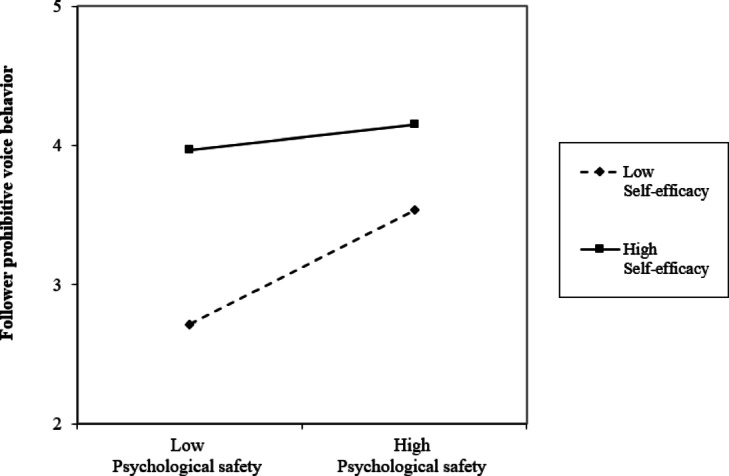
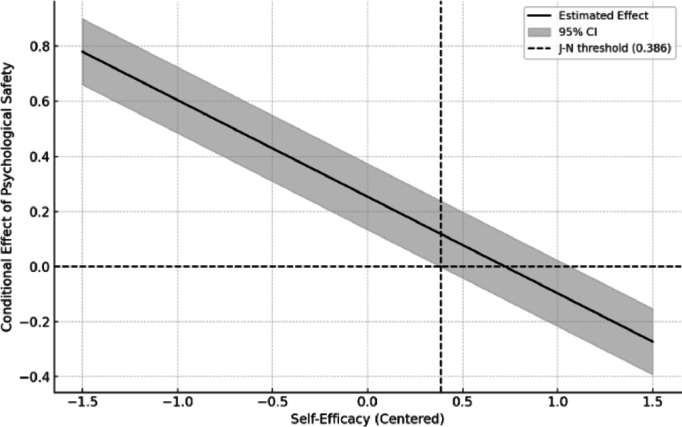
- Self-efficacy moderated the indirect effect: it was significant at low self-efficacy (point estimate = 0.14, 95% CI [0.07, 0.21]) but not at high self-efficacy (point estimate = 0.03, 95% CI [−0.03, 0.09]); Johnson–Neyman analysis found significance only below approximately 0.386 centered self-efficacy (raw score ≈ 2.82).
- Generational differences emerged: the direct effect was significant for Millennials (0.299, 95% CI [0.138, 0.461]) but not Generation Z (−0.004, 95% CI [−0.383, 0.375]); the indirect effect via psychological safety was stronger for Generation Z (0.228, 95% CI [0.056, 0.494]) than Millennials (0.100, 95% CI [0.043, 0.184]). Hypothesis 4c was partially supported: for Generation Z, the conditional indirect effect was significant only at low self-efficacy (0.286, 95% CI [0.006, 0.634]); for Millennials, it was significant at low (0.108, 95% CI [0.048, 0.203]) and mean (0.069, 95% CI [0.029, 0.140]) self-efficacy.
Methods
- Matched survey data from 56 Chinese organizations across manufacturing, finance, IT, services, and government; 350 leader–follower dyads were invited, 320 responded (91.4%), and 302 valid dyads were analyzed. Leaders rated follower prohibitive voice; followers rated leader prohibitive voice, psychological safety, self-efficacy, and demographics.
- Measures used 5-point Likert scales: Liang et al.’s prohibitive voice scale for leader and follower voice, Edmondson’s psychological safety scale, the New General Self-Efficacy Scale, and generation coded as 0 = Generation Z and 1 = Millennials. Controls included gender, age, education, tenure with leader, and leader promotive voice.
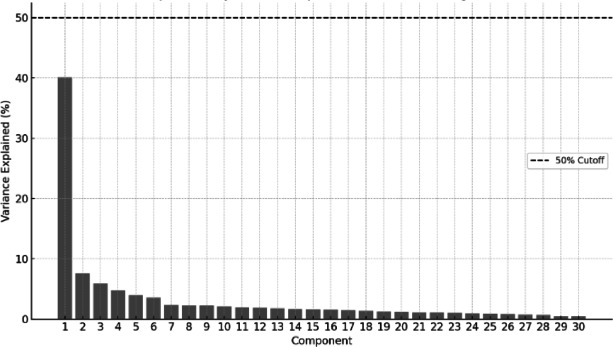
- Analyses included confirmatory factor analysis, Harman’s single-factor test, hierarchical regression, bootstrapping with 5,000 iterations for mediation and moderated mediation, and Johnson–Neyman analysis.
Limitations
- Stated: the cross-sectional design limits causal conclusions about psychological safety and the conditional indirect effect; despite matched dyads and common-method-bias tests, residual method variance may remain.
- Stated: the sample was drawn entirely from Chinese organizations, limiting generalizability; the study focused only on follower prohibitive voice, and future research should examine alternative mediators, contextual moderators, and other theoretical frameworks.
- Evident from the text: generational cohort was analyzed as a binary birth-year category (Generation Z vs. Millennials), and the paper does not report measurement invariance or within-cohort variation across generations.
Model-written summary. Check it against the paper before relying on it.
Integrity signals
Registry
Cites
Statistics
Figures
Verification
Claims the paper makes
1 Valid · 2 Not valid · 14 Not checked · 78 Own results and interpretations
The cited sources support only part of this claim — read each source’s verdict below.
In the paper
“prohibitive voice can lead to negative consequences for the speaker, including managerial retaliation, strained workplace relationships, or exclusion from important decision-making processes13–16.”
§ Leader prohibitive voice shapes employee voice through psychological safety moderated by self-efficacy and generational differences > Introduction
What the sources say
- Not checked — no full text of the sourcecites [13] Burris, E. R. The risks and rewards of speaking up: Managerial responses to employee voice. Acad. Manag. J. 55, 851–875 (2012). source
- Not checked — no full text of the sourcecites [14] Detert, J. R. & Edmondson, A. C. Implicit voice theories: Taken-for-granted rules of self-censorship at work. Acad. Manag. J. 54, 461–488 (2011). source
- Not checked — no full text of the sourcecites [15] Milliken, F. J., Morrison, E. W. & Hewlin, P. F. An exploratory study of employee silence: Issues that employees don’t communicate upward and why. J. Manag. Stud. 40, 1453–1476 (2003). source
- Partly supportedcites [16] Yang, X., Meng, Y., Qiu, Y. & Feng, Y. Why am I willing to speak up? The impact of spiritual leadership on employee voice behavior. Front. Psychol. 10, 2718. 10.3389/fpsyg.2019.02718 (2019). 31866907 PMC6906189 sourceExperimental — accuracy not yet measured
The Introduction (page not provided) says employee voice is risky and may upset workplace relationships, especially with managers who control resources and rewards. The Measures section also says voice may carry high personal costs. Neither passage specifically addresses prohibitive voice or identifies managerial retaliation or exclusion from decision-making as consequences. (LLM, conf=0.86)
plainstates a cause- Asserted: passes — The authors put it forward as true.
- Checkable: passes — It can be checked against evidence.
- Load-bearing: passes — The paper’s conclusions depend on it.
- Based: passes — The paper gives a reason why it holds.
A result the paper reports from its own data — it cites no other source for it, so there is none to check. The quote shows it is in the paper.
In the paper
“Results indicate that leader prohibitive voice promotes follower prohibitive voice both directly and indirectly via enhanced psychological safety.”
§ Leader prohibitive voice shapes employee voice through psychological safety moderated by self-efficacy and generational differences > Abstract
hedgedstates a cause- Asserted: passes — The authors put it forward as true.
- Checkable: passes — It can be checked against evidence.
- Load-bearing: passes — The paper’s conclusions depend on it.
- Based: passes — The paper gives a reason why it holds.
A result the paper states — it cites no source for it, so there is none to check. The quote shows it is in the paper.
In the paper
“This indirect effect is stronger for employees with lower self-efficacy, who are more sensitive to contextual cues.”
§ Leader prohibitive voice shapes employee voice through psychological safety moderated by self-efficacy and generational differences > Abstract
plainstates a cause- Asserted: passes — The authors put it forward as true.
- Checkable: passes — It can be checked against evidence.
- Load-bearing: passes — The paper’s conclusions depend on it.
- Based: passes — The paper gives a reason why it holds.
A result the paper reports from its own data — it cites no other source for it, so there is none to check. The quote shows it is in the paper.
In the paper
“for Generation Z employees, leader modeling had a weaker effect, whereas psychological safety more strongly predicted their voice behavior compared to Millennials.”
§ Leader prohibitive voice shapes employee voice through psychological safety moderated by self-efficacy and generational differences > Abstract
plainstates an association- Asserted: passes — The authors put it forward as true.
- Checkable: passes — It can be checked against evidence.
- Load-bearing: passes — The paper’s conclusions depend on it.
- Based: passes — The paper gives a reason why it holds.
A result the paper reports from its own data — it cites no other source for it, so there is none to check. The quote shows it is in the paper.
In the paper
“Results indicate that leader prohibitive voice promotes follower prohibitive voice both directly and indirectly via enhanced psychological safety.”
§ Leader prohibitive voice shapes employee voice through psychological safety moderated by self-efficacy and generational differences > Abstract
hedgedstates an association- Asserted: passes — The authors put it forward as true.
- Checkable: passes — It can be checked against evidence.
- Load-bearing: passes — The paper’s conclusions depend on it.
- Based: passes — The paper gives a reason why it holds.
52 more claims
Create a free account to see all 95 claims and to verify the 5 references still open.
- Probably not a substantial claim. 15
- It may state two separate claims as one. 28
- The quote only partly states this claim. 2
Self-check
Percentages, sums and reported differences re-computed from the paper’s own numbers.
Each contradiction between two passages listed here was confirmed by an independent check.
Rated major: it would touch a result — a value a result rests on, reported and recomputed p-values on opposite sides of the significance level, two passages that conflict with no sign which is right, or a cited work retracted before this paper was published.
In the paper
§ Leader prohibitive voice shapes employee voice through psychological safety moderated by self-efficacy and generational differences > Results > Hypothesis testing
“A: Direct path(Psychological safety not included) Leader prohibitive voice behavior → Follower prohibitive voice behavior”
§ Leader prohibitive voice shapes employee voice through psychological safety moderated by self-efficacy and generational differences > Results > Hypothesis testing
“Furthermore, the direct effect of leader prohibitive voice behavior on follower prohibitive voice behavior remained statistically significant (B = 0.237, 95% CI [0.091, 0.384]) even after including psychological safety in the model.”
Rated minor: it would not touch a result — a value no result rests on, a p-value that stays on the same side of the significance level, or a conflict that is clerical, resolved elsewhere in the paper, or outside its own findings.
In the paper
“| Model 1 | 3 factors: (LPHV + PS), SE, FPHV | 801.62 | 272 | 511.55** | 0.08 | 0.88 | 0.86 | 0.85 |”
§ Leader prohibitive voice shapes employee voice through psychological safety moderated by self-efficacy and generational differences > Results > Confirmatory factory analysis
Reported 511.55 · recomputed 314.49
Rated minor: it would not touch a result — a value no result rests on, a p-value that stays on the same side of the significance level, or a conflict that is clerical, resolved elsewhere in the paper, or outside its own findings.
In the paper
“| Model 3 | 2 factors: (LPHV + PSY + SE), FPHV | 1084.97 | 274 | 1986.13*** | 0.10 | 0.79 | 0.79 | 0.77 |”
§ Leader prohibitive voice shapes employee voice through psychological safety moderated by self-efficacy and generational differences > Results > Confirmatory factory analysis
Reported 1986.13 · recomputed 597.84
Rated minor: it would not touch a result — a value no result rests on, a p-value that stays on the same side of the significance level, or a conflict that is clerical, resolved elsewhere in the paper, or outside its own findings.
In the paper
§ Leader prohibitive voice shapes employee voice through psychological safety moderated by self-efficacy and generational differences > Results > Hypothesis testing
“β = 0.027, p < 0.001 in Model 2”
§ Leader prohibitive voice shapes employee voice through psychological safety moderated by self-efficacy and generational differences > Results > Hypothesis testing
“| Leader prohibitive voice behavior | | 0.27*** | 0.17** | 0.08 | 0.07 | 2.04 |”
Rated minor: it would not touch a result — a value no result rests on, a p-value that stays on the same side of the significance level, or a conflict that is clerical, resolved elsewhere in the paper, or outside its own findings.
In the paper
“| Leader prohibitivevoice behavior | Psychological safety | Follower prohibitive voice behavior | Self-efficacy | Generation Z | High (Mean + 1SD) | -0.042 | 0.118 | -0.04 | ns. | -0.250 | 0.209 |”
§ Leader prohibitive voice shapes employee voice through psychological safety moderated by self-efficacy and generational differences > Results > Hypothesis testing
Reported -0.04 · recomputed -0.355932
4 more findings
Create a free account to see every finding of this check.
Citations
Cites
Podsakoff, P. M., MacKenzie, S. B., Lee, J.-Y., & Podsakoff, N. P. (2003) · Journal of Applied Psychology · doi:10.1037/0021-9010.88.5.879 · Cited by 82,194 · cited 1×
“Additionally, researchers could further incorporate procedural remedies—such as using marker variables or collecting data at different time points—to enhance the validity and robustness of findings 74 .”
Psychological Safety and Learning Behavior in Work Teams
Edmondson, A. (1999) · Administrative Science Quarterly · doi:10.2307/2666999 · Cited by 12,026 · cited 4×
“…they convey that such behavior is legitimate and valued within the organization—thereby reducing ambiguity and enhancing employees’ sense of psychological safety, defined as a shared belief that the work environment is safe for interpersonal risk-taking without fear of negative repercussions 23 .”
InfluentialAddressing Moderated Mediation Hypotheses: Theory, Methods, and Prescriptions
Preacher, K. J., Rucker, D. D., & Hayes, A. F. (2007) · Multivariate Behavioral Research · doi:10.1080/00273170701341316 · Cited by 9,973 · cited 1×
“To test this mediation effect, a bootstrapping procedure was conducted based on Preacher et al. (2007) 76 .”
Ethical leadership: A social learning perspective for construct development and testing
Brown, M. E., Treviño, L. K., & Harrison, D. A. (2005) · Organizational Behavior and Human Decision Processes · doi:10.1016/j.obhdp.2005.03.002 · Cited by 5,435
A Social Information Processing Approach to Job Attitudes and Task Design
Salancik, G. R., & Pfeffer, J. (1978) · Administrative Science Quarterly · doi:10.2307/2392563 · Cited by 4,372 · cited 1×
“For example, Social Information Processing Theory 89 may serve as a useful framework for explaining how employees construct meaning from their social environment and interpret leader behaviors in making voice-related decisions.”
Validation of a New General Self-Efficacy Scale
Chen, G., Gully, S. M., & Eden, D. (2001) · Organizational Research Methods · doi:10.1177/109442810141004 · Cited by 3,542 · cited 1×
“We measured focal employees’ general self-efficacy with the eight item New General Self-Efficacy Scale 71 .”
Leadership Behavior and Employee Voice: Is the Door Really Open?
Detert, J. R., & Burris, E. R. (2007) · Academy of Management Journal · doi:10.5465/amj.2007.26279183 · Cited by 2,250
Employee Voice Behavior: Integration and Directions for Future Research
Morrison, E. W. (2011) · Academy of Management Annals · doi:10.5465/19416520.2011.574506 · Cited by 1,803
An Exploratory Study of Employee Silence: Issues that Employees Don’t Communicate Upward and Why*
Milliken, F. J., Morrison, E. W., & Hewlin, P. F. (2003) · Journal of Management Studies · doi:10.1111/1467-6486.00387 · Cited by 1,671 · cited 1×
“Employees who express concerns about harmful practices may be perceived as disruptive, face resistance from colleagues and supervisors, or experience negative career consequences 13,15 .”
Psychological Antecedents of Promotive and Prohibitive Voice: A Two-Wave Examination
Liang, J., Farh, C. I. C., & Farh, J.-L. (2012) · Academy of Management Journal · doi:10.5465/amj.2010.0176 · Cited by 1,647 · cited 4×
“It is broadly classified into two types: promotive voice and prohibitive voice 7 .”
InfluentialHow low does ethical leadership flow? Test of a trickle-down model
Mayer, D. M., Kuenzi, M., Greenbaum, R., Bardes, M., & Salvador, R. (. (2009) · Organizational Behavior and Human Decision Processes · doi:10.1016/j.obhdp.2008.04.002 · Cited by 1,598
Morrison, E. W. (2014) · Annual Review of Organizational Psychology and Organizational Behavior · doi:10.1146/annurev-orgpsych-031413-091328 · Cited by 1,595 · cited 2×
“Voice behavior is a discretionary and proactive communication process in which employees express ideas, suggestions, or concerns aimed at improving organizational effectiveness 27,28 .”
Colquitt, J. A., Scott, B. A., Rodell, J. B., Long, D. M., Zapata, C. P., Conlon, D. E., & Wesson, M. J. (2013) · Journal of Applied Psychology · doi:10.1037/a0031757 · Cited by 1,462 · cited 1×
“By introducing psychological safety as a mediator, this study adds psychological depth to UMT and responds to calls for more cognitively enriched perspectives 82 .”
Psychological safety: a systematic review of the literature
Newman, A., Donohue, R., & Eva, N. (2017) · Human Resource Management Review · doi:10.1016/j.hrmr.2017.01.001 · Cited by 1,408 · cited 1×
“Employees who perceive a psychologically safe environment experience lower perceived interpersonal risks, making them more likely to engage in prohibitive voice 53,54 .”
Psychological Safety: A Meta‐Analytic Review and Extension
Frazier, M. L., Fainshmidt, S., Klinger, R. L., Pezeshkan, A., & Vracheva, V. (2017) · Personnel Psychology · doi:10.1111/peps.12183 · Cited by 1,231
Predicting voice behavior in work groups.
LePine, J. A., & Van Dyne, L. (1998) · Journal of Applied Psychology · doi:10.1037/0021-9010.83.6.853 · Cited by 1,192 · cited 2×
“Voice behavior is a discretionary and proactive communication process in which employees express ideas, suggestions, or concerns aimed at improving organizational effectiveness 27,28 .”
New Generation, Great Expectations: A Field Study of the Millennial Generation
Ng, E. S. W., Schweitzer, L., & Lyons, S. T. (2010) · Journal of Business and Psychology · doi:10.1007/s10869-010-9159-4 · Cited by 1,133
Implicit Voice Theories: Taken-for-Granted Rules of Self-Censorship at Work
Detert, J. R., & Edmondson, A. C. (2011) · Academy of Management Journal · doi:10.5465/amj.2011.61967925 · Cited by 998
A Review of the Empirical Evidence on Generational Differences in Work Attitudes
Twenge, J. M. (2010) · Journal of Business and Psychology · doi:10.1007/s10869-010-9165-6 · Cited by 946 · cited 1×
“Prior research has shown that generational cohorts differ in their workplace values, attitudes toward authority, and expectations for leadership 63,64 which may influence how they engage in upward voice behaviors in response to uncertainty.”
Uncertainty management by means of fairness judgments
van den Bos, K., & Lind, E. A. (2002) · Advances in Experimental Social Psychology · doi:10.1016/s0065-2601(02)80003-x · Cited by 913 · cited 6×
“To address the dilemma of prohibitive voice—balancing organizational benefit with interpersonal risk—this study adopted UMT 22 as its framework.”
InfluentialWhen fairness works: Toward a general theory of uncertainty management
Lind, E. A., & van den Bos, K. (2002) · Research in Organizational Behavior · doi:10.1016/s0191-3085(02)24006-x · Cited by 804
The Risks and Rewards of Speaking Up: Managerial Responses to Employee Voice
Burris, E. R. (2012) · Academy of Management Journal · doi:10.5465/amj.2010.0562 · Cited by 800 · cited 3×
“Employees who express concerns about harmful practices may be perceived as disruptive, face resistance from colleagues and supervisors, or experience negative career consequences 13,15 .”
Generational differences in psychological traits and their impact on the workplace
Twenge, J. M., & Campbell, S. M. (2008) · Journal of Managerial Psychology · doi:10.1108/02683940810904367 · Cited by 749
Uncertainty During Organizational Change: Types, Consequences, and Management Strategies
Bordia, P., Hobman, E., Jones, E., Gallois, C., & Callan, V. J. (2004) · Journal of Business and Psychology · doi:10.1023/b:jobu.0000028449.99127.f7 · Cited by 665 · cited 1×
“In organizational contexts, uncertainty can arise when performance evaluation criteria are unclear, organizational policies are inconsistent, or employees are unsure how their actions will be perceived by colleagues and supervisors 34 .”
van den Bos, K. (2001) · Journal of Personality and Social Psychology · doi:10.1037//0022-3514.80.6.931 · Cited by 649 · cited 1×
“While past UMT research has focused on cues related to fairness, justice, or trust 77–79 little attention has been paid to leader communication, especially behaviors that involve expressing concerns or identifying risks.”
Generational Differences in Work-Related Attitudes: A Meta-analysis
Costanza, D. P., Badger, J. M., Fraser, R. L., Severt, J. B., & Gade, P. A. (2012) · Journal of Business and Psychology · doi:10.1007/s10869-012-9259-4 · Cited by 623
Liu, W., Zhu, R., & Yang, Y. (2010) · The Leadership Quarterly · doi:10.1016/j.leaqua.2009.10.014 · Cited by 555
Psychological Safety Comes of Age: Observed Themes in an Established Literature
Edmondson, A. C., & Bransby, D. P. (2023) · Annual Review of Organizational Psychology and Organizational Behavior · doi:10.1146/annurev-orgpsych-120920-055217 · Cited by 554 · cited 1×
“Employees who perceive a psychologically safe environment experience lower perceived interpersonal risks, making them more likely to engage in prohibitive voice 53,54 .”
Ilies, R., Scott, B. A., & Judge, T. A. (2006) · Academy of Management Journal · doi:10.5465/amj.2006.21794672 · Cited by 551 · cited 1×
“Employees who experience frequent positive emotions may be more inclined to engage in voice behavior, regardless of external cues, by virtue of their enhanced psychological resilience and optimism 86 .”
Chamberlin, M., Newton, D. W., & Lepine, J. A. (2017) · Personnel Psychology · doi:10.1111/peps.12185 · Cited by 532 · cited 3×
“While the primary focus of this study was on follower prohibitive voice due to its stronger association with uncertainty and interpersonal risk, prior research suggests that promotive and prohibitive voice often co-occur and may share similar antecedents 7,8 .”
Speaking up in groups: A cross-level study of group voice climate and voice.
Morrison, E. W., Wheeler-Smith, S. L., & Kamdar, D. (2011) · Journal of Applied Psychology · doi:10.1037/a0020744 · Cited by 530 · cited 1×
“For example, team voice climate—the shared belief among team members that speaking up is safe, encouraged, and valued—may significantly influence how leader cues are interpreted and acted upon 87 .”
Chen, A. S.-Y., & Hou, Y.-H. (2016) · The Leadership Quarterly · doi:10.1016/j.leaqua.2015.10.007 · Cited by 516 · cited 1×
“Prior research has examined how different leadership styles, such as transformational, ethical, inclusive, and humble leadership, contribute to creating a supportive climate for voice behaviors 41–43 .”
Fast, N. J., Burris, E. R., & Bartel, C. A. (2014) · Academy of Management Journal · doi:10.5465/amj.2012.0393 · Cited by 440
Liao, F., Hu, Y., & Ye, S. (2024) · Humanities and Social Sciences Communications · doi:10.1057/s41599-023-02237-1 · Cited by 430
Walumbwa, F. O., & Hartnell, C. A. (2011) · Journal of Occupational and Organizational Psychology · doi:10.1348/096317910x485818 · Cited by 356 · cited 1×
“This aligns with prior research 83 indicating that low self-efficacy employees are more attuned to external guidance under uncertainty.”
Career aspirations of generation Z: a systematic literature review
Barhate, B., & Dirani, K. M. (2022) · European Journal of Training and Development · doi:10.1108/ejtd-07-2020-0124 · Cited by 350 · cited 2×
“In contrast, Millennials, who entered the workforce under more stable conditions and with greater exposure to hierarchical organizational structures, may be less sensitive to uncertainty and more accustomed to speaking up even without strong contextual reassurance 68 .”
Sherf, E. N., Parke, M. R., & Isaakyan, S. (2021) · Academy of Management Journal · doi:10.5465/amj.2018.1428 · Cited by 349
Authentic Leadership and Employee Voice Behavior: A Multi-Level Psychological Process
Hsiung, H.-H. (2012) · Journal of Business Ethics · doi:10.1007/s10551-011-1043-2 · Cited by 347
A Test of Basic Assumptions of Affective Events Theory (AET) in Call Centre Work1
Wegge, J., Dick, R. V., Fisher, G. K., West, M. A., & Dawson, J. F. (2006) · British Journal of Management · doi:10.1111/j.1467-8551.2006.00489.x · Cited by 272
Why and When Leaders’ Affective States Influence Employee Upward Voice
Liu, W., Song, Z., Li, X., & Liao, Z. (2017) · Academy of Management Journal · doi:10.5465/amj.2013.1082 · Cited by 241 · cited 1×
“In environments characterized by uncertainty, psychological safety provides employees with a sense of predictability and assurance that their concerns will not lead to punitive repercussions or damaged workplace relationships 49,52 .”
Transformational leadership and employee voice behavior: A Pygmalion mechanism
Duan, J., Li, C., Xu, Y., & Wu, C. (2017) · Journal of Organizational Behavior · doi:10.1002/job.2157 · Cited by 226 · cited 1×
“This finding complements prior work emphasizing promotive voice and supportive leadership 39,42 highlighting that even cautionary expressions have modeling value under uncertainty.”
Li, A. N., Liao, H., Tangirala, S., & Firth, B. M. (2017) · Journal of Applied Psychology · doi:10.1037/apl0000215 · Cited by 188
APPLYING UNCERTAINTY MANAGEMENT THEORY TO EMPLOYEE VOICE BEHAVIOR: AN INTEGRATIVE INVESTIGATION
TAKEUCHI, R., CHEN, Z., & CHEUNG, S. Y. (2012) · Personnel Psychology · doi:10.1111/j.1744-6570.2012.01247.x · Cited by 143 · cited 1×
“According to UMT, when individuals face uncertainty, they rely on social cues and organizational norms to guide their behavior 35 .”
Discovering the Millennials’ Personal Values Orientation: A Comparison to Two Managerial Populations
Weber, J. (2017) · Journal of Business Ethics · doi:10.1007/s10551-015-2803-1 · Cited by 128 · cited 1×
“As a result, they tend to place greater emphasis on environmental signals of safety and fairness 65–67 which aligns with UMT’s assertion that individuals are more reliant on external cues when internal certainty is lacking.”
Transformational leadership and employee voices in the hospitality industry
Liang, T.-L., Chang, H.-F., Ko, M.-H., & Lin, C.-W. (2017) · International Journal of Contemporary Hospitality Management · doi:10.1108/ijchm-07-2015-0364 · Cited by 127 · cited 2×
“Similarly, Liang et al. 21 emphasized the mediating role of relational identification in promoting voice under transformational leadership.”
Liang, J., Shu, R., & Farh, C. I. C. (2019) · Journal of Organizational Behavior · doi:10.1002/job.2325 · Cited by 124
The dispositional antecedents of promotive and prohibitive voice.
Kakkar, H., Tangirala, S., Srivastava, N. K., & Kamdar, D. (2016) · Journal of Applied Psychology · doi:10.1037/apl0000130 · Cited by 119 · cited 1×
“…interpersonal and professional risks, as it is perceived as contributing positively to organizational growth, whereas prohibitive voice involves higher risks, including potential relational damage, managerial resistance, or negative repercussions, as it often challenges the status quo 7,8,29,30 .”
Silence is not Golden: Motivating Employee Voice through Inclusive Leadership
Jolly, P. M., & Lee, L. (2021) · Journal of Hospitality & Tourism Research · doi:10.1177/1096348020963699 · Cited by 102
Keeping it between us: Managerial endorsement of public versus private voice.
Isaakyan, S., Sherf, E. N., Tangirala, S., & Guenter, H. (2021) · Journal of Applied Psychology · doi:10.1037/apl0000816 · Cited by 100
Gao, A., & Jiang, J. (2019) · Frontiers in Psychology · doi:10.3389/fpsyg.2019.01484 · Cited by 93
Amplifying Voice in Organizations
Bain, K., Kreps, T. A., Meikle, N. L., & Tenney, E. R. (2021) · Academy of Management Journal · doi:10.5465/amj.2018.0621 · Cited by 91
Promotive and prohibitive ethical voice: Coworker emotions and support for the voice.
Chen, A., & Treviño, L. K. (2022) · Journal of Applied Psychology · doi:10.1037/apl0001003 · Cited by 85 · cited 1×
“This dilemma creates an internal conflict: while prohibitive voice behavior could prevent organizational failure and promote ethical behavior, it may also expose employees to backlash or social exclusion 31–33 .”
Liu, J., Cho, S., & Putra, E. D. (2017) · International Journal of Contemporary Hospitality Management · doi:10.1108/ijchm-10-2015-0539 · Cited by 77 · cited 1×
“For employees with low self-efficacy—who are more susceptible to uncertainty and less confident in managing potential interpersonal risks 59–61 —this increase in psychological safety acts as a crucial external cue.”
Humble leadership and its outcomes: A meta-analysis
Luo, Y., Zhang, Z., Chen, Q., Zhang, K., Wang, Y., & Peng, J. (2022) · Frontiers in Psychology · doi:10.3389/fpsyg.2022.980322 · Cited by 66 · cited 1×
“Humble leaders create an environment where employees feel secure in expressing concerns, reinforcing that their input is not only tolerated but essential for organizational improvement 49,50 .”
Zhao, Y. (2018) · Asia Pacific Business Review · doi:10.1080/13602381.2018.1451132 · Cited by 60
Transformational leadership and employee voice: a model of proactive motivation
Zhang, G., & Inness, M. (2019) · Leadership & Organization Development Journal · doi:10.1108/lodj-01-2019-0017 · Cited by 54 · cited 1×
“…past studies have examined the role of leadership in shaping employee voice, they have predominantly focused on promotive voice behaviors and voice-supportive leadership styles—such as servant, transformational, and inclusive leadership—which foster an open climate for upward communication 17–19 .”
Transformational leadership and change related voice behavior
Svendsen, M., & Joensson, T. S. (2016) · Leadership & Organization Development Journal · doi:10.1108/lodj-07-2014-0124 · Cited by 52
Jada, U. R., & Mukhopadhyay, S. (2019) · Personnel Review · doi:10.1108/pr-11-2017-0365 · Cited by 52
The role of voice efficacy in the formation of voice behaviour: A cross-level examination
Duan, J., Kwan, H. K., & Ling, B. (2014) · Journal of Management & Organization · doi:10.1017/jmo.2014.40 · Cited by 51 · cited 1×
“For employees with low self-efficacy—who are more susceptible to uncertainty and less confident in managing potential interpersonal risks 59–61 —this increase in psychological safety acts as a crucial external cue.”
Who says there’s a problem? Preferences on the sending and receiving of prohibitive voice
MacMillan, K., Hurst, C., Kelley, K., Howell, J. M., & Jung, Y. (2019) · Human Relations · doi:10.1177/0018726719850282 · Cited by 41 · cited 1×
“For example, MacMillan et al. 20 examined how high-quality LMX relationships can foster follower prohibitive voice, suggesting that strong relational ties provide psychological security that encourages employees to take interpersonal risks.”
Liu, X., Mao, J., Chiang, J. T., Guo, L., & Zhang, S. (2023) · Applied Psychology · doi:10.1111/apps.12432 · Cited by 39 · cited 2×
“Humble leaders create an environment where employees feel secure in expressing concerns, reinforcing that their input is not only tolerated but essential for organizational improvement 49,50 .”
Hao, Q., Zhang, B., Shi, Y., & Yang, Q. (2022) · Frontiers in Psychology · doi:10.3389/fpsyg.2022.899142 · Cited by 37 · cited 1×
“Similarly, Hao et al. 58 demonstrated that self-efficacy moderated the indirect effect of trust in coworkers on knowledge sharing behavior via psychological safety, with stronger effects for individuals lower in efficacy.”
Sun, S., Burke, M., Chen, H., Tan, Y. (., Zhang, J., & Hou, L. (2022) · Human Relations · doi:10.1177/0018726721992849 · Cited by 34 · cited 1×
“Leaders play a critical role in shaping employees’ perceptions of uncertainty by signaling which behaviors are acceptable and encouraged 1,3,14,36 .”
Hoogervorst, N., De Cremer, D., & van Dijke, M. (2013) · Human Relations · doi:10.1177/0018726713482150 · Cited by 33 · cited 2×
“Leaders play a critical role in shaping employees’ perceptions of uncertainty by signaling which behaviors are acceptable and encouraged 1,3,14,36 .”
Hans, S., & Gupta, R. (2018) · Leadership & Organization Development Journal · doi:10.1108/lodj-03-2018-0101 · Cited by 33
Temporary employment and voice behavior: the role of self‐efficacy and political savvy
Qian, X., Li, Q., Song, Y., & Wang, J. (2020) · Asia Pacific Journal of Human Resources · doi:10.1111/1744-7941.12232 · Cited by 31 · cited 1×
“For example, Qian et al. 57 found that employees with low self-efficacy were more sensitive to contextual cues such as supervisor support and psychological safety, and this sensitivity significantly shaped their willingness to engage in voice behaviors.”
Cheng, J., Sun, X., Lu, J., & He, Y. (2022) · Frontiers in Psychology · doi:10.3389/fpsyg.2021.732463 · Cited by 30 · cited 1×
“Ethical leaders, through their commitment to high moral standards, cultivate an environment where employees feel morally compelled and safe to express concerns 47,48 .”
Wang, G., Li, J., Liu, H., & Zaggia, C. (2025) · Educational Management Administration & Leadership · doi:10.1177/17411432221143452 · Cited by 26
Why Am I Willing to Speak Up? The Impact of Spiritual Leadership on Employee Voice Behavior
Yang, X., Meng, Y., Qiu, Y., & Feng, Y. (2019) · Frontiers in Psychology · doi:10.3389/fpsyg.2019.02718 · Cited by 24 · cited 1×
“Despite its potential to enhance organizational safety and effectiveness, prohibitive voice can lead to negative consequences for the speaker, including managerial retaliation, strained workplace relationships, or exclusion from important decision-making processes 13–16 .”
Zhao, D., Wu, J., & Gu, J. (2022) · Current Psychology · doi:10.1007/s12144-020-00985-w · Cited by 24 · cited 4×
“Unlike prior studies that predominantly examined leader-member exchange (LMX) 6 or leader identification 55 as mediating mechanisms, this study argues that psychological safety functions as a key mediator by transforming prohibitive voice from a personally risky action into a socially accepted and encouraged norm.”
InfluentialWang, J., Yuan, G. F., Shi, X., Tang, A., & Shi, W. (2022) · Archives of Psychiatric Nursing · doi:10.1016/j.apnu.2022.07.011 · Cited by 24 · cited 4×
“Consequently, the effect of leader prohibitive voice behavior as a social cue may resonate more strongly with Millennials, who are more attuned to top-down modeling processes, whereas Generation Z may rely more on broader contextual or peer-based cues 25 .”
InfluentialChallenges and strategies for incorporating Generation Z into the workplace
Knapp, C. A., Weber, C., & Moellenkamp, S. (2017) · Corporate Real Estate Journal · doi:10.69554/dojs4087 · Cited by 23 · cited 1×
“As a result, they tend to place greater emphasis on environmental signals of safety and fairness 65–67 which aligns with UMT’s assertion that individuals are more reliant on external cues when internal certainty is lacking.”
Choi, B. K., Moon, H. K., & Chun, J. U. (2015) · Asian Journal of Social Psychology · doi:10.1111/ajsp.12095 · Cited by 21
A meta-analysis of the relationship between demographic characteristics and employee voice behavior
DUAN, J.-Y., ZHANG, C., & XU, Y. (2016) · Advances in Psychological Science · doi:10.3724/sp.j.1042.2016.01568 · Cited by 14 · cited 1×
“Four participant characteristics—gender, age, education, and tenure with the leader— were statistically controlled based on prior studies linking them to voice behavior 2,7,28,73 .”
Prohibitive Voice as a Moral Act: The Role of Moral Identity, Leaders, and Workgroups
Mesdaghinia, S., Shapiro, D. L., & Eisenberger, R. (2022) · Journal of Business Ethics · doi:10.1007/s10551-021-04862-9 · Cited by 14 · cited 1×
“This dilemma creates an internal conflict: while prohibitive voice behavior could prevent organizational failure and promote ethical behavior, it may also expose employees to backlash or social exclusion 31–33 .”
Wang, X., & Zhou, F. (2021) · Frontiers in Psychology · doi:10.3389/fpsyg.2021.702964 · Cited by 14 · cited 2×
“Wang & Zhou 43 found that humble leaders—who acknowledge their limitations, appreciate employee contributions, and demonstrate openness to feedback— enhance psychological safety, thereby encouraging prohibitive voice behaviors.”
Justice climate and employee creativity in the work uncertainty context: a cross-level investigation
Sun, L., Li, C., Pan, W., & Leung, A. S. M. (2022) · Asian Business & Management · doi:10.1057/s41291-022-00191-5 · Cited by 14
How Can Servant Leadership Promote Employees’ Voice Behavior? A Moderated Chain Mediation Model
Chen, H., Wang, L., & Li, J. (2022) · Frontiers in Psychology · doi:10.3389/fpsyg.2022.938983 · Cited by 13 · cited 2×
“For instance, Wang et al. (2022) 25 found that Gen Z relies more on peer input or digital systems than traditional managerial modeling.”
Tian, X., & Chae, H. (2023) · Behavioral Sciences · doi:10.3390/bs13020180 · Cited by 12 · cited 2×
“This finding complements prior work emphasizing promotive voice and supportive leadership 39,42 highlighting that even cautionary expressions have modeling value under uncertainty.”
Self-citationLI, F., & ZHONG, X. (2020) · Advances in Psychological Science · doi:10.3724/sp.j.1042.2020.01939 · Cited by 7 · cited 2×
“Despite its challenges, prohibitive voice is essential for risk mitigation, ethical governance, and long-term organizational sustainability 8,30 .”
Tian, X., Chae, H., & Kim, Y. (2024) · Humanities and Social Sciences Communications · doi:10.1057/s41599-024-03740-9 · Cited by 5 · cited 1×
“Unlike prior studies that predominantly examined leader-member exchange (LMX) 6 or leader identification 55 as mediating mechanisms, this study argues that psychological safety functions as a key mediator by transforming prohibitive voice from a personally risky action into a socially accepted and…”
Self-citationKramer, M. W. (2022) · Springer eBooks · doi:10.1007/978-3-030-66252-3_3013 · Cited by 4
Amplifying Voice in Organizations
Bain, K., Kreps, T. A., Meikle, N., & Tenney, E. R. (2021) · doi:10.31234/osf.io/cz6fk
Research works printed but not linked: 2
- Ashford, S. J., Sutcliffe, K. M. & Christianson, M. K. Speaking up and speaking out: The leadership dynamics of voice in organizations in Voice and silence in organizations (eds. Greenberg, J. & Edwards, M.) 175–202 (Emerald, 2009).
- Weiss, H. M. & Cropanzano, R. Affective events theory. Res. Organ. Behav. 18, 1–74 (1996).
Cited by
The Bahramdipity Trap: Killing Ideas Before They Breathe
Balzano, M. (2026) · International series in advanced management studies · doi:10.1007/978-3-032-17576-2_6
Chen, H., & Mu, M. (2026) · Frontiers in Organizational Psychology · doi:10.3389/forgp.2026.1703522
Reed, W., & Owen, S. (2026) · American Journal of Theoretical and Applied Business · doi:10.11648/j.ajtab.20261202.11
Curcuruto, M., Lilleyman, N. T., Lancioni, R., Vincenti, A. D., Vinciarelli, V., Bazzoli, A., & Morgan, J. (2026) · Safety · doi:10.3390/safety12020055
“Outside of safety research, self-efficacy has been proven to be valuable in predicting a range of behavioral outcomes [7,8].”
Ashfan, M. A., Afrianty, T. W., Utami, H. N., & Prasеtya, A. (2026) · Cogent Social Sciences · doi:10.1080/23311886.2026.2659419 · Cited by 1
Metadata
- Authors
- Tian, X., Chae, H., Song, D., & Zhang, Y.
- Affiliations
- Suzhou City University (CN)
- Pukyong National University (KR)
- Soochow University (CN)
- Corresponding author
- Chae, Heesun
- Venue
- Scientific Reports
- Published
- 2025-08-26
- Volume
- 15
- Issue
- 1
- Pages
- 31469-31469
- ISSN
- 2045-2322 (ISSN-L)
- PMC
- PMC12381030
- OpenAlex
- W4413636104
- Cited by
- 10
- References
- 82
- Citations by year
- 2026: 10
- FWCI
- 12.29
- Type
- journal article
- Language
- en
- Open access
- gold
- doi.org
- Licence
- cc-by-nc-nd
- creativecommons.org/licenses/by-nc-nd/4.0 (tdm)
- creativecommons.org/licenses/by-nc-nd/4.0 (vor)
- Locations
- Scientific Reports (publishedVersion, cc-by-nc-nd)
- Europe PMC (PubMed Central) (publishedVersion, cc-by-nc-nd)
- PubMed Central (publishedVersion, cc-by-nc-nd)
- PubMed (publishedVersion)
- DOAJ (DOAJ: Directory of Open Access Journals) (submittedVersion, cc-by-sa)
- Funders
- Pukyong National University (202411460001)
- Jiangsu Province Social Science Applied Research Excellent Project Social Education (24SJA-09)
- Topics
- Social Sciences › Business, Management and Accounting › Organizational Behavior and Human Resource Management › Job Satisfaction and Organizational Behavior
- Social Sciences › Psychology › Social Psychology › Team Dynamics and Performance
- Social Sciences › Psychology › Social Psychology › Communication in Education and Healthcare
- Keywords
- prohibitive voice, employee voice, psychological safety, self-efficacy, generational differences, Generation Z, millennials, uncertainty management theory, leader-follower dyads, Chinese organizations
- MeSH terms
- Psychological Safety, Adult, China, Female, Humans, Leadership, Male, Middle Aged, Surveys and Questionnaires, Voice, Self Efficacy, Uncertainty
About these checks
Registry, retraction, Cites and statistics results are computed, not judged, with one exception: a printed reference that no index lists is read once by a model before it counts as a citation error. Claims are extracted by a model and kept only when their quote appears verbatim in the text; each cited source is then checked, with a model’s help, for whether it says what the claim relies on. Those verdicts can be wrong — read the claim’s quote and the cited source before relying on one.
The claim verdicts this report counts are experimental: their accuracy is not yet measured.
A language model drew the claims from the paper on 2026-10-10, under version 3 of the claim definition (model deepseek-v4.1-flash, prompt extract-v3).
A second model labelled each claim on 2026-10-10 (model jev-1.13-20260917, definition revision gold-guideline-v0.2).
Cited sources are checked with a language model’s help (gpt-6-sol).
Statistics and arithmetic are recomputed, not judged.
Confidence bands are shown only for fields calibrated on our annotated test set. None is calibrated yet, so no band is shown.
What counts as a claim ›How we measure confidence ›How we check this ›
Are you an author, or do you see a problem with this page? Request a review
Data sources
Bibliographic data: Semantic Scholar, OpenAlex, Crossref.
Contains information from the Semantic Scholar Academic Graph Datasets, made available under the ODC Attribution License (ODC-BY 1.0).
Semantic Scholar’s data is described in: Kinney, R., et al. (2023). The Semantic Scholar Open Data Platform. arXiv:2301.10140.
