

Fear and the Defense Cascade
Open accessThe DOI matches its Crossref record; 198 of the 210 references it cites were found in a registry or an index; 38 of the 262 sources its claims cite were checked for support.
Abstract
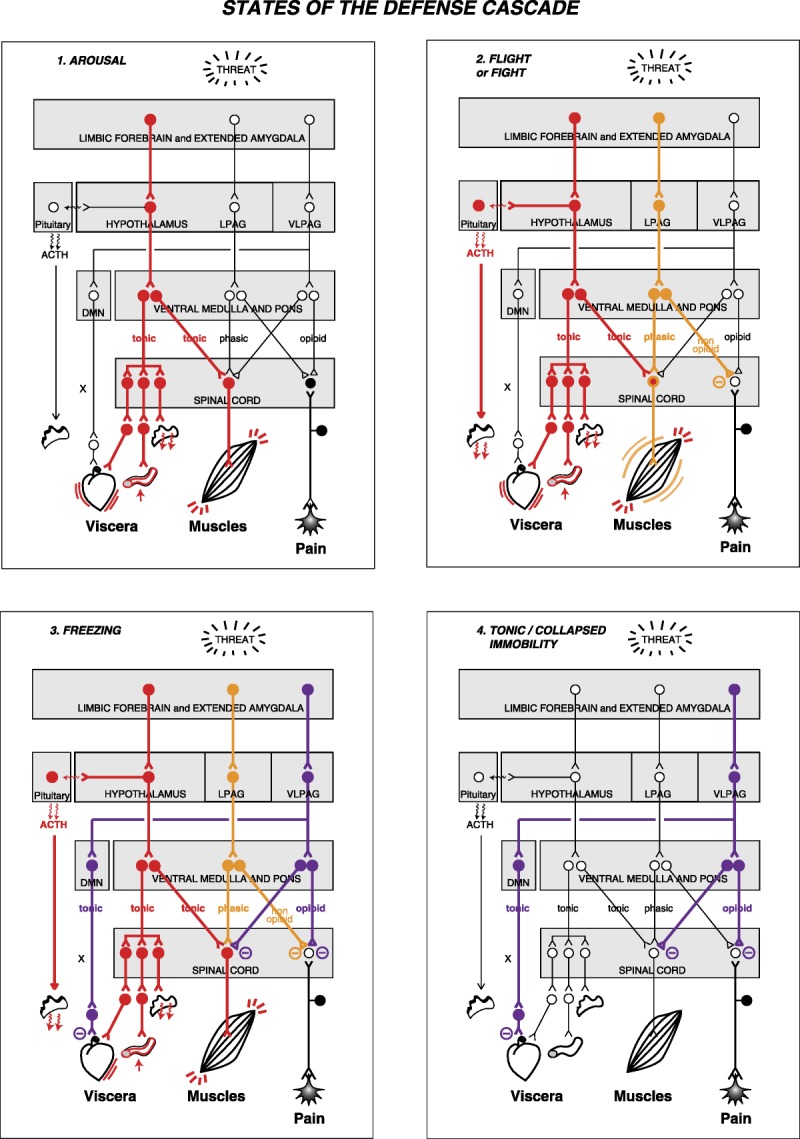
Evolution has endowed all humans with a continuum of innate, hard-wired, automatically activated defense behaviors, termed the defense cascade. Arousal is the first step in activating the defense cascade; flight or fight is an active defense response for dealing with threat; freezing is a flight-or-fight response put on hold; tonic immobility and collapsed immobility are responses of last resort to inescapable threat, when active defense responses have failed; and quiescent immobility is a state of quiescence that promotes rest and healing. Each of these defense reactions has a distinctive neural pattern mediated by a common neural pathway: activation and inhibition of particular functional components in the amygdala, hypothalamus, periaqueductal gray, and sympathetic and vagal nuclei. Unlike animals, which generally are able to restore their standard mode of functioning once the danger is past, humans often are not, and they may find themselves locked into the same, recurring pattern of response tied in with the original danger or trauma. Understanding the signature patterns of these innate responses--the particular components that combine to yield the given pattern of defense-is important for developing treatment interventions. Effective interventions aim to activate or deactivate one or more components of the signature neural pattern, thereby producing a shift in the neural pattern and, with it, in mind-body state. The process of shifting the neural pattern is the necessary first step in unlocking the patient's trauma response, in breaking the cycle of suffering, and in helping the patient to adapt to, and overcome, past trauma.
Overview
CoChat Summary
## TL;DR
This paper proposes a neuroscience-based model of the human defense cascade, organizing threat responses from arousal through flight/fight, freezing, tonic immobility, collapsed immobility, and quiescent immobility. It also maps these states to clinical interventions, emphasizing somatic, mindfulness-based, and trauma-processing approaches.
## Key findings
- The authors define the human defense cascade as six states: (1) arousal, (2) flight or fight, (3) freezing, (4) tonic immobility, (5) collapsed immobility, and (6) quiescent immobility.
- They argue that these responses are mediated by descending neural circuits involving the extended amygdala, hypothalamus, PAG, ventral pontine tegmentum, ventral and dorsal medulla, and spinal cord, with separate somatomotor, autonomic/visceromotor, and pain-processing components.
- The paper reports that in humans freezing is typically short-lived, often lasting only a few seconds, and that in laboratory/animal observations freezing has been reported for up to 20 minutes in rats and up to 60 minutes in wild rodents.
- It states that a third of patients in one imaging study showed both reexperiencing and dissociative responses in a single experimental session to different scripts.
## Methods
- Narrative review and integrative clinical-neuroscience synthesis; the authors state they conducted wide-ranging searches on PubMed, communicated with laboratories and clinical groups, and tracked seminal historical references.
- The paper combines animal-model evidence, human clinical vignettes, and neurophysiological/imaging studies to build and illustrate the defense-cascade framework.
- Main analysis is conceptual: the authors relate specific defense states to neural circuits and then infer corresponding clinical management strategies for arousal reduction and trauma processing.
## Limitations
- The paper itself states that for quiescent immobility in humans, “it is not possible to explore this subject further at this time” because of the dearth of literature.
- It also states that the mechanisms underpinning EMDR and tapping have yet to be identified, and that further outcome studies are needed for tapping.
- Evident from the text: much of the article is an integrative model built from heterogeneous animal and human studies plus clinical vignettes, rather than a single empirical study with a new sample or controlled primary data.
Model-written summary. Check it against the paper before relying on it.
Integrity signals
Registry
Cites
Statistics
Figures
Verification
Claims the paper makes
22 Valid · 18 Not valid · 87 Not checked · 64 Own results and interpretations
The cited sources support only part of this claim — read each source’s verdict below.
In the paper
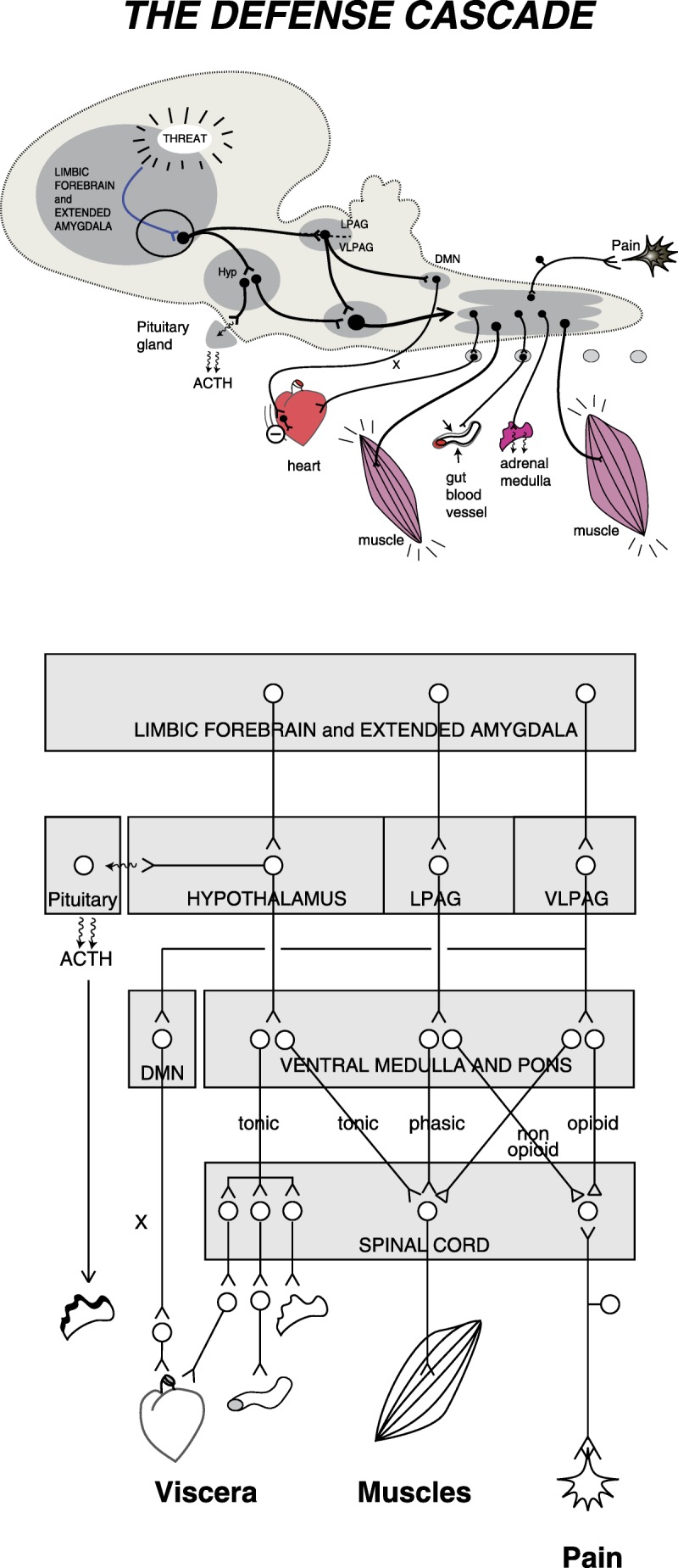
“All defense responses in the animal model of the defense cascade—arousal, freezing, flight or fight, tonic immobility, collapsed immobility, and quiescent immobility—are responses to threat mediated by neural circuits involving the extended amygdala, hypothalamus, periaqueductal gray (PAG), ventral pontine tegmentum, ventral and dorsal medulla, and spinal cord.22–25”
§ Fear and the Defense Cascade: Clinical Implications and Management > Abstract
What the sources say
- Partly supportedcites [22] Choi JS Cain CK LeDoux JE The role of amygdala nuclei in the expression of auditory signaled two-way active avoidance in rats. Learn Mem 2010; 17: 139– 47. 20189958 PMC2832923 sourceExperimental — accuracy not yet measured
Split into 2 atoms — 0 confirmed, 2 partially supported, 0 disputed, 0 misattributed, 0 unverifiable. Expand the claim to see per-atom verdicts.
- Not checked — no full text of the sourcecites [23] Gozzi A Jain A Giovanelli A A neural switch for active and passive fear. Neuron 2010; 67: 656– 66. 20797541 source
- Partly supportedcites [24] LeDoux JE Iwata J Cicchetti P Reis DJ Different projections of the central amygdaloid nucleus mediate autonomic and behavioral correlates of conditioned fear. J Neurosci 1988; 8: 2517– 29. 2854842 PMC6569498 sourceExperimental — accuracy not yet measured
Split into 2 atoms — 0 confirmed, 2 partially supported, 0 disputed, 0 misattributed, 0 unverifiable. Expand the claim to see per-atom verdicts.
- Not checked — no full text of the sourcecites [25] Bandler R Shipley MT Columnar organization in the midbrain periaqueductal gray: modules for emotional expression? Trends Neurosci 1994; 17: 379– 89. 7817403 source
plainstates a cause- Asserted: passes — The authors put it forward as true.
- Checkable: passes — It can be checked against evidence.
- Load-bearing: passes — The paper’s conclusions depend on it.
- Based: passes — The paper gives a reason why it holds.
- Partly supported
The cited sources support only part of this claim — read each source’s verdict below.
In the paper
“Studies suggest that flight or fight is the sum total of distinct components activated concurrently: a somatomotor (skeletal muscle) component, a visceromotor (autonomic) component, and a pain-modulation component (see Figures 1 and 2).24,45,46”
§ Fear and the Defense Cascade: Clinical Implications and Management > FLIGHT OR FIGHT: THE ANIMAL MODEL
What the sources say
- Partly supportedcites [24] LeDoux JE Iwata J Cicchetti P Reis DJ Different projections of the central amygdaloid nucleus mediate autonomic and behavioral correlates of conditioned fear. J Neurosci 1988; 8: 2517– 29. 2854842 PMC6569498 sourceExperimental — accuracy not yet measured
The section on conditioned fear-response pathways (page unavailable) describes defensive behavior accompanied by autonomic changes and distinguishes freezing from cardiovascular responses. It does not establish a pain-modulation component of the response or say that all three components are activated concurrently; its discussion of pain sensitivity concerns whether that could explain a lesion result. (LLM, conf=0.86)
- Partly supportedcites [45] Fanselow MS Neural organisation of defensive behavioural system responsible for fear. Psychon Bull Rev 1994; 1: 429– 38. 24203551 sourceExperimental — accuracy not yet measured
Fanselow's CIRCA-STRIKE DEFENSE and NEURAL CIRCUITRY MEDIATING POST-ENCOUNTER DEFENSES sections do state that the actions making up a defensive mode are 'physically compatible, so that they can occur simultaneously,' and enumerate exactly the three kinds of component the claim names: somatomotor (freezing, muscle-tone adjustment, escape locomotion, jump attack), visceromotor (tachycardia, hypertension, 'redirection of blood flow from viscera and skin to skeletal muscle'), and pain modulation (opioid and nonopioid analgesia). What the source does not support is the packaging: it does not treat 'flight or fight' as one sum total, but splits active defense into distinct, mutually inhibited modes (amygdala/vPAG-driven post-encounter freezing vs. dlPAG-driven circa-strike escape/attack), and it lists further concurrent components beyond the three cited (enhanced arousal, potentiated startle, vocalization). The evidence is also specific to the rat antipredator defensive behavior system, not a general fight-or-flight account. So the concurrent multi-component core is in the paper, while the unitary tripartite framing overstates and flattens it. (LLM, conf=0.72)
- Not checked — no full text of the sourcecites [46] Walker P Carrive P Role of ventrolateral periaqueductal gray neurons in the behavioral and cardiovascular responses to contextual conditioned fear and poststress recovery. Neuroscience 2003; 116: 897– 912. 12573728 source
hedged- Asserted: passes — The authors put it forward as true.
- Checkable: passes — It can be checked against evidence.
- Load-bearing: passes — The paper’s conclusions depend on it.
- Based: passes — The paper gives a reason why it holds.
- Partly supported
None of the sources cited for this claim have been checked yet.
In the paper
“This order differs from conceptualizations based on the distance of the predatory threat—in which freezing is discussed before flight or fight.2,8,9,17”
§ Fear and the Defense Cascade: Clinical Implications and Management > Abstract
What the sources say
- Not matchedcites [2] Lang PJ Simons RF Balaban MT Attention and orienting: sensory and motivational processes. Mahwah, NJ: Erlbaum, 1997.
Its entry has no title and year that we can search by.
- Not matchedcites [8] Ratner SC Comparative aspects of hypnosis. In: Gordon JE, ed. Handbook of clinical experimental hypnosis. New York: Macmillan, 1967.
We searched by its title and found no matching paper.
- Could not verifycites [9] Fanselow MS Lester LS A functional behavioristic approach to aversely motivated behavior: predatory imminence as a determinate of the topology of defensive behavior. In: Bolles RC Beecher MD, eds. Evolution and learning. Hillsdale, NJ: Erlbaum, 1988: 185– 211. sourceExperimental — accuracy not yet measured
The Discussion describes freezing as interfering with active avoidance in rats, but it does not describe a defense cascade ordered by distance from a predator. Searches for predatory-threat distance and freezing before flight or fight found no passage addressing that ordering; the cited claim cannot be verified from our copy. (LLM, conf=0.74)
- Not checked yetcites [17] Blanchard DC Blanchard RJ Ethoexperimental approaches to the biology of emotion. Ann Rev Psychol 1988; 39: 43– 68. 2894198 source
plain- Asserted: passes — The authors put it forward as true.
- Checkable: passes — It can be checked against evidence.
- Load-bearing: passes — The paper’s conclusions depend on it.
- Based: passes — The paper gives a reason why it holds.
- Not matched
The cited sources support only part of this claim — read each source’s verdict below.
In the paper
“Subsequent research with animals determined that, depending on the degree of threat and the distance between the predator and prey, distinct responses—freezing, flight or fight, tonic immobility, and quiescent immobility—proceed sequentially along a continuum, termed the defense cascade.”
§ Fear and the Defense Cascade: Clinical Implications and Management > Abstract
What the sources say
- Not matchedcites [2] Lang PJ Simons RF Balaban MT Attention and orienting: sensory and motivational processes. Mahwah, NJ: Erlbaum, 1997.
Its entry has no title and year that we can search by.
- Not matchedcites [8] Ratner SC Comparative aspects of hypnosis. In: Gordon JE, ed. Handbook of clinical experimental hypnosis. New York: Macmillan, 1967.
We searched by its title and found no matching paper.
- Partly supportedcites [9] Fanselow MS Lester LS A functional behavioristic approach to aversely motivated behavior: predatory imminence as a determinate of the topology of defensive behavior. In: Bolles RC Beecher MD, eds. Evolution and learning. Hillsdale, NJ: Erlbaum, 1988: 185– 211. sourceExperimental — accuracy not yet measured
Split into 2 atoms — 0 confirmed, 1 partially supported, 0 disputed, 0 misattributed, 1 unverifiable. Expand the claim to see per-atom verdicts.
- Not checked yetcites [17] Blanchard DC Blanchard RJ Ethoexperimental approaches to the biology of emotion. Ann Rev Psychol 1988; 39: 43– 68. 2894198 source
plainstates a cause- Asserted: passes — The authors put it forward as true.
- Checkable: passes — It can be checked against evidence.
- Load-bearing: passes — The paper’s conclusions depend on it.
- Based: passes — The paper gives a reason why it holds.
- Not matched
The cited sources support only part of this claim — read each source’s verdict below.
In the paper
“Flight or fight is mediated through the lateral periaqueductal gray (LPAG), which activates the basic, stereotypical motor patterns of flight or fight—for example, attack, running, treading, burying (see Figures 1 and 2).24,28,47,48”
§ Fear and the Defense Cascade: Clinical Implications and Management > FLIGHT OR FIGHT: THE ANIMAL MODEL > Skeletal Muscle (Somatomotor) Activation
What the sources say
- Partly supportedcites [24] LeDoux JE Iwata J Cicchetti P Reis DJ Different projections of the central amygdaloid nucleus mediate autonomic and behavioral correlates of conditioned fear. J Neurosci 1988; 8: 2517– 29. 2854842 PMC6569498 sourceExperimental — accuracy not yet measured
The discussion of defense-response pathways says the central gray is involved in defensive behavior, and the discussion of conditioned fear describes it as a possible link to motor systems. The paper does not identify the lateral periaqueductal gray as mediating flight or fight or attribute attack, running, treading, or burying to it; its lesion findings concern conditioned freezing. (LLM, conf=0.76)
- Not checked — no full text of the sourcecites [28] Keay KA Bandler R Parallel circuits mediating distinct emotional coping reactions to different types of stress. Neurosci Biobehav Rev 2001; 25: 669– 78. 11801292 source
- Not checked — no full text of the sourcecites [47] Carrive P The periaqueductal gray and defensive behavior: functional representation and neuronal organization. Behav Brain Res 1993; 58: 27– 47. 8136048 source
- Not checked — no full text of the sourcecites [48] Rizvi TA Ennis M Behbehani MM Shipley MT Connections between the central nucleus of the amygdala and the midbrain periaqueductal gray: topography and reciprocity. J Comp Neurol 1991; 303: 121– 31. 1706363 source
plainstates a cause- Asserted: passes — The authors put it forward as true.
- Checkable: passes — It can be checked against evidence.
- Load-bearing: passes — The paper’s conclusions depend on it.
- Based: passes — The paper gives a reason why it holds.
- Partly supported
97 more claims · 12 with their cited sources checked
Create a free account to see all 191 claims and to verify the 64 references still open.
- It may state two separate claims as one. 69
- Probably not a substantial claim. 32
- The quote only partly states this claim. 1
Claims other papers make about this one
Each is checked against this paper’s own text: does it say what the citing paper says it does?
The source backs part of the claim, not all of it — or backs it for a different population, condition or comparison.
In the citing paper
“The parasympathetic system may now activate defensive programsfear-induced bradycardia in the heart; nausea, vomiting, or diarrhea programs in the gut; expulsion of urine by the bladder -that work alongside the sympathetic system to defend the body from danger (Kozlowska et al., 2015;Wood et al., 1999).”
From Physiological feelings (2019) · cites this paper as Kozlowska et al., 2015
Experimental — accuracy not yet measuredThe source backs part of the claim, not all of it — or backs it for a different population, condition or comparison.
In the citing paper
“At the same time, cortical loops in the basal ganglia and cerebellum are activated to modulate basic motor patterns consistent with context and defence strategies (Kozlowska et al., 2015;Lanius et al., 2014).”
From A review of the relation between dissociation, memory, executive functioning and social cognition in military members and civilians with neuropsychiatric conditions (2016) · cites this paper as Kozlowska et al., 2015
Experimental — accuracy not yet measuredThe source backs part of the claim, not all of it — or backs it for a different population, condition or comparison.
In the citing paper
“Notably, the fight or flight response involves non-opioid (endocannabinoid-mediated) analgesia evoked by the lateral PAG (Keay and Bandler, 2001;Kozlowska et al., 2015).”
From A review of the relation between dissociation, memory, executive functioning and social cognition in military members and civilians with neuropsychiatric conditions (2016) · cites this paper as Kozlowska et al., 2015
Experimental — accuracy not yet measuredThe source backs part of the claim, not all of it — or backs it for a different population, condition or comparison.
In the citing paper
“Critically, in cases where the organism determines it has little to no chance of survival, unresponsive immobility or death feigning may occur in an attempt to decrease predator interest, which may lead to tonic or collapsed immobility (Kozlowska et al., 2015;Schauer and Elbert, 2010).”
From A review of the relation between dissociation, memory, executive functioning and social cognition in military members and civilians with neuropsychiatric conditions (2016) · cites this paper as Kozlowska et al., 2015
Experimental — accuracy not yet measuredThe source backs part of the claim, not all of it — or backs it for a different population, condition or comparison.
In the citing paper
“Here, Kozlowska et al. (2015) described defensive mind-body states as fixed action patterns that are repeated or reactivated by environmental triggers, including motor patterns, autonomic responses and opioid mediated analgesia (e.g., van der Kolk, 2001).”
From A review of the relation between dissociation, memory, executive functioning and social cognition in military members and civilians with neuropsychiatric conditions (2016) · cites this paper as Kozlowska et al., 2015
Experimental — accuracy not yet measured
8 more claims about this paper
Create a free account to see every claim other papers make about this one.
Citations
Cites
The expression of the emotions in man and animals.
Darwin, C. (1872) · J. Murray eBooks · doi:10.1037/10001-000 · Cited by 11,657
(1982) · Trends in Neurosciences · doi:10.1016/0166-2236(82)90076-5 · Cited by 9,089
Mindfulness-based interventions in context: Past, present, and future
Kabat-Zinn, J. (2003) · Clinical Psychology: Science and Practice · doi:10.1093/clipsy.bpg016 · Cited by 8,615
Mindfulness-based interventions in context: Past, present, and future.
Kabat-Zinn, J. (2003) · Clinical Psychology: Science and Practice · doi:10.1093/clipsy/bpg016 · Cited by 8,612
The feeling of what happens: body and emotion in the making of consciousness
(2000) · Choice Reviews Online · doi:10.5860/choice.37-6553 · Cited by 5,998
(2001) · Cited by 3,666
Etkin, A., & Wager, T. D. (2007) · American Journal of Psychiatry · doi:10.1176/appi.ajp.2007.07030504 · Cited by 3,391
Stress and disorders of the stress system
Chrousos, G. P. (2009) · Nature Reviews Endocrinology · doi:10.1038/nrendo.2009.106 · Cited by 3,215 · cited 1×
“system interact reciprocally as part of a larger stress-regulation system, downregulation of one system will have a correlative impact on the functioning of the other systems.(41,181)”
BackgroundAlterations in brain and immune function produced by mindfulness meditation
Davidson, R. J., Kabat-Zinn, J., Schumacher, J., Rosenkranz, M., Muller, D., Santorelli, S. F., Urbanowski, F., Harrington, A., Bonus, K., & Sheridan, J. F. (2003) · Psychosomatic Medicine · doi:10.1097/01.psy.0000077505.67574.e3 · Cited by 2,925 · cited 1×
“or that induce and maintain a mind state of optimism, compassion, hope, and expectancy (as in spiritual beliefs in a loving and protective Other) may function to reduce arousal by downregulating the HPA axis,(178) downregulating sympathetic activation,(172) and modulating immune function to respond in more adaptive wa…”
BackgroundA Multidimensional Meta-Analysis of Psychotherapy for PTSD
Bradley, R., Greene, J., Russ, E., Dutra, L., & Westen, D. (2005) · American Journal of Psychiatry · doi:10.1176/appi.ajp.162.2.214 · Cited by 1,938
Looking for Spinoza : Joy, Sorrow, and the Feeling Brain
Damásio, A. R. (2003) · Dominican Scholar (Dominican University of California) · Cited by 1,879
LeDoux, J., Iwata, J., Cicchetti, P., & Reis, D. (1988) · The Journal of Neuroscience · doi:10.1523/jneurosci.08-07-02517.1988 · Cited by 1,580 · cited 4×
“Direct projections from the amygdala and limbic forebrain activate specific areas within the LPAG to produce these basic patterns, which control not only limb muscles but also laryngeal muscles resulting in snarling, growling, and howling.(24,48,49) The LPAG, in turn, activates premotor centers in the pons andmedulla,…”
BackgroundInfluentialBiological studies of post-traumatic stress disorder
Pitman, R. K., Rasmusson, A. M., Koenen, K. C., Shin, L. M., Orr, S. P., Gilbertson, M. W., Milad, M. R., & Liberzon, I. (2012) · Nature Reviews Neuroscience · doi:10.1038/nrn3339 · Cited by 1,529 · cited 1×
“And because the insula is involved in neural representations of body state—including acute sympathetic arousal—increased activity there reflects the individual’s hyperaroused body state.(54,57,59)”
BackgroundAttending to the present: mindfulness meditation reveals distinct neural modes of self-reference
Farb, N. A. S., Segal, Z. V., Mayberg, H., Bean, J., McKeon, D., Fatima, Z., & Anderson, A. K. (2007) · Social Cognitive and Affective Neuroscience · doi:10.1093/scan/nsm030 · Cited by 1,307
Affect Dysregulation and Disorders of the Self
Schore, A. N. (2003) · Cited by 1,189
(2011) · Cited by 1,181
Fear and anxiety: Animal models and human cognitive psychophysiology
Lang, P. J., Davis, M., & Öhman, A. (2000) · Journal of Affective Disorders · doi:10.1016/s0165-0327(00)00343-8 · Cited by 1,162
Emotion Modulation in PTSD: Clinical and Neurobiological Evidence for a Dissociative Subtype
Lanius, R. A., Vermetten, E., Loewenstein, R. J., Brand, B., Schmahl, C., Bremner, J. D., & Spiegel, D. (2010) · American Journal of Psychiatry · doi:10.1176/appi.ajp.2009.09081168 · Cited by 1,123
Columnar organization in the midbrain periaqueductal gray: modules for emotional expression?
Bandler, R., & Shipley, M. T. (1994) · Trends in Neurosciences · doi:10.1016/0166-2236(94)90047-7 · Cited by 1,051
Neural organization of the defensive behavior system responsible for fear
Fanselow, M. S. (1994) · Psychonomic Bulletin & Review · doi:10.3758/bf03210947 · Cited by 1,000
Acute Exercise Remodels Promoter Methylation in Human Skeletal Muscle
Barrès, R., Yan, J., Egan, B., Treebak, J. T., Rasmussen, M., Fritz, T., Caidahl, K., Krook, A., O'Gorman, D. J., & Zierath, J. R. (2012) · Cell Metabolism · doi:10.1016/j.cmet.2012.01.001 · Cited by 965 · cited 1×
“The muscle contraction that occurs during exercise also causes intracellular perturbations that disturb metabolic homeostasis, thereby promoting a broad range of adaptive responses and increasing overall resilience in response to stress.(157,158) Even gentle movement is likely to have a significant impact; yoga, tai c…”
BackgroundWhen fear is near: threat imminence elicits prefrontal periaqueductal gray shifts in humans.
Mobbs, D., Petrovic, P., Marchant, J. L., Hassabis, D., Weiskopf, N., Seymour, B., Dolan, R. J., & Frith, C. D. (2007) · Science · doi:10.1126/science.1144298 · Cited by 951 · cited 1×
“Researchers likewise began to use the defense cascade to define the progressive defense/fear responses in humans.(2,15,18,19)”
Background(2006) · Cited by 900
(2008) · Cited by 889
Emotion regulation: taking stock and moving forward
Gross, J. J. (2013) · Emotion · doi:10.1037/a0032135 · Cited by 864
Building neural representations of habits.
Jog, M. S., Kubota, Y., Connolly, C. I., Hillegaart, V., & Graybiel, A. M. (1999) · Science · doi:10.1126/science.286.5445.1745 · Cited by 834 · cited 1×
“The dearth of studies of tonic immobility in humans make it difficult to clarify whether these variants of tonic immobility (acute responses and primed or habitual responses) are all mediated primarily by activation of neural circuits involving the extended amygdala, hypothalamus, and periaqueductal gray, or whether t…”
BackgroundBerntson, G. G., Cacioppo, J. T., & Quigley, K. S. (1991) · Psychological Review · doi:10.1037/0033-295x.98.4.459 · Cited by 819
(2013) · Psychology Press eBooks · doi:10.4324/9780203726457 · Cited by 794 · cited 3×
“Researchers likewise began to use the defense cascade to define the progressive defense/fear responses in humans.(2,15,18,19)”
BackgroundPrinciples of Neural Science, 4th ed.
SCHULTZ, S. K. (2001) · American Journal of Psychiatry · doi:10.1176/appi.ajp.158.4.662 · Cited by 753
Jhou, T. C., Fields, H. L., Baxter, M. G., Saper, C. B., & Holland, P. C. (2009) · Neuron · doi:10.1016/j.neuron.2009.02.001 · Cited by 696
Streeter, C. C., Gerbarg, P. L., Saper, R. B., Ciraulo, D. A., & Brown, R. P. (2012) · Medical Hypotheses · doi:10.1016/j.mehy.2012.01.021 · Cited by 694
(1954) · Medical Journal of Australia · doi:10.5694/j.1326-5377.1954.tb15286.x · Cited by 690
Cognitive therapy versus medication for depression: treatment outcomes and neural mechanisms
DeRubeis, R. J., Siegle, G. J., & Hollon, S. D. (2008) · Nature Reviews Neuroscience · doi:10.1038/nrn2345 · Cited by 690
Fears, Phobias, and Rituals. Panic, Anxiety, and Their Disorders.
(1987) · Annals of Internal Medicine · doi:10.7326/0003-4819-107-4-607_3 · Cited by 669 · cited 3×
“Its function is to deactivate the predator’s killing reflex or to discourage consumption, as many predators are reluctant to eat dead meat (see Figure 4).(16,45,52,85) In some species or strains within species, however, tonic immobility may be the front-line defense response to extreme threat, even when the animal is”
BackgroundMethodPierre Janet and the breakdown of adaptation in psychological trauma
(1989) · American Journal of Psychiatry · doi:10.1176/ajp.146.12.1530 · Cited by 658
Brown, R. P., & Gerbarg, P. L. (2005) · The Journal of Alternative and Complementary Medicine · doi:10.1089/acm.2005.11.189 · Cited by 655
Chiesa, A., & Serretti, A. (2011) · Psychiatry Research · doi:10.1016/j.psychres.2010.08.011 · Cited by 650 · cited 2×
“Whereas the beta range (13–50 Hz) is associated with narrow attention and is the zone in which we carry out task-focused activities, the alpha range (8–12 Hz) is produced during alert relaxed states, including states of mindfulness and other states characterized by open-focus attention, and the theta range (4–8 Hz) is…”
BackgroundShin, L. M., McNally, R. J., Kosslyn, S. M., Thompson, W. L., Rauch, S. L., Alpert, N. M., Metzger, L. J., Lasko, N. B., Orr, S. P., & Pitman, R. K. (1999) · American Journal of Psychiatry · doi:10.1176/ajp.156.4.575 · Cited by 647
Significance of the insula for the evolution of human awareness of feelings from the body
(Bud) Craig, A. D. (2011) · Annals of the New York Academy of Sciences · doi:10.1111/j.1749-6632.2011.05990.x · Cited by 646 · cited 3×
“com/HRP/A13).(59,204) For patients who are acutely aware of sensations but who are unable to move, the goal is to initiate a progressive approach that will, in”
BackgroundTreatment for PTSD Related to Childhood Abuse: a Randomized Controlled Trial
Cloitre, M., Stovall-McClough, K. C., Nooner, K., Zorbas, P., Cherry, S., Jackson, C. L., Gan, W., & Petkova, E. (2010) · American Journal of Psychiatry · doi:10.1176/appi.ajp.2010.09081247 · Cited by 642
The Haunted Self: Structural Dissociation and the Treatment of Chronic Traumatization
van der Hart, O., Nijenhuis, E. R. S., & Steele, K. (2006) · Medical Entomology and Zoology · Cited by 632
Forebrain emotional asymmetry: a neuroanatomical basis?
Craig, A. D. (. (2005) · Trends in Cognitive Sciences · doi:10.1016/j.tics.2005.10.005 · Cited by 626 · cited 1×
“Because the social-engagement system is interconnected with the autonomic regulation of the heart and lungs, the process of engaging with the patient (even in small ways through the use of gaze, tone of voice, or rhythm) can promote a concurrent shift in sympathovagal balance—upregulation of vagal activity and downreg…”
BackgroundEthoexperimental Approaches to the Biology of Emotion
Blanchard, D. C., & Blanchard, R. J. (1988) · Annual Review of Psychology · doi:10.1146/annurev.ps.39.020188.000355 · Cited by 624 · cited 1×
“This order differs from conceptualizations based on the distance of the predatory threat—in which freezing is discussed before flight or fight.(2,8,9,17) As indicated above, the reason for reversing the order of the first two patterns or states is that freezing is best understood as an inhibited flightor-fight respons…”
BackgroundCompassion training alters altruism and neural responses to suffering.
Weng, H. Y., Fox, A. S., Shackman, A. J., Stodola, D. E., Caldwell, J. Z. K., Olson, M. C., Rogers, G. M., & Davidson, R. J. (2013) · Psychological Science · doi:10.1177/0956797612469537 · Cited by 602
Treatment of complex PTSD: results of the ISTSS expert clinician survey on best practices.
Cloitre, M., Courtois, C. A., Charuvastra, A., Carapezza, R., Stolbach, B. C., & Green, B. L. (2011) · Journal of Traumatic Stress · doi:10.1002/jts.20697 · Cited by 593
Halligan, S. L., Michael, T., Clark, D. M., & Ehlers, A. (2003) · Journal of Consulting and Clinical Psychology · doi:10.1037/0022-006x.71.3.419 · Cited by 585
Pain pathways and parabrachial circuits in the rat.
Gauriau, C., & Bernard, J. (2002) · Experimental Physiology · doi:10.1113/eph8702357 · Cited by 572
Research review: attention bias modification (ABM): a novel treatment for anxiety disorders
Bar‐Haim, Y. (2010) · Journal of Child Psychology and Psychiatry · doi:10.1111/j.1469-7610.2010.02251.x · Cited by 556 · cited 1×
“Numerous other interventions—which utilize implicit training techniques designed to modify attention and attentional biases to threat stimuli—are currently being developed.(163,164)”
BackgroundIn an Unspoken Voice: How the Body Releases Trauma and Restores Goodness
Levine, P. A. (2010) · Medical Entomology and Zoology · Cited by 547
Interoception: The Inside Story—A Model for Psychosomatic Processes
Cameron, O. G. (2001) · Psychosomatic Medicine · doi:10.1097/00006842-200109000-00001 · Cited by 535
Optimism is associated with mood, coping, and immune change in response to stress.
Segerstrom, S. C., Taylor, S. E., Kemeny, M. E., & Fahey, J. L. (1998) · Journal of Personality and Social Psychology · doi:10.1037/0022-3514.74.6.1646 · Cited by 527 · cited 1×
“or that induce and maintain a mind state of optimism, compassion, hope, and expectancy (as in spiritual beliefs in a loving and protective Other) may function to reduce arousal by downregulating the HPA axis,(178) downregulating sympathetic activation,(172) and modulating immune function to respond in more adaptive wa…”
Background(1987) · Cited by 514
Parallel circuits mediating distinct emotional coping reactions to different types of stress
Keay, K. A., & Bandler, R. (2001) · Neuroscience & Biobehavioral Reviews · doi:10.1016/s0149-7634(01)00049-5 · Cited by 512 · cited 9×
“The move to release the VLPAG and vagal brakes—that is, to switch from freezing to flight or fight—is probably initiated by the amygdala and brought about by an inhibition of the central nucleus of the amygdala, the main controller of the VLPAG.”
BackgroundInfluentialPliakas, A. M., Carlson, R. R., Neve, R. L., Konradi, C., Nestler, E. J., & Carlezon, W. A. (2001) · The Journal of Neuroscience · doi:10.1523/jneurosci.21-18-07397.2001 · Cited by 509
Lanius, R. A., Williamson, P. C., Boksman, K., Densmore, M., Gupta, M., Neufeld, R. W. J., Gati, J. S., & Menon, R. S. (2002) · Biological Psychiatry · doi:10.1016/s0006-3223(02)01367-7 · Cited by 505
The periaqueductal gray and defensive behavior: functional representation and neuronal organization.
Carrive, P. (1993) · Behavioural Brain Research · doi:10.1016/0166-4328(93)90088-8 · Cited by 500 · cited 8×
“The move to release the VLPAG and vagal brakes—that is, to switch from freezing to flight or fight—is probably initiated by the amygdala and brought about by an inhibition of the central nucleus of the amygdala, the main controller of the VLPAG.”
BackgroundInfluentialSelf-citationRizvi, T. A., Ennis, M., Behbehani, M. M., & Shipley, M. T. (1991) · Journal of Comparative Neurology · doi:10.1002/cne.903030111 · Cited by 500 · cited 2×
“Direct projections from the amygdala and limbic forebrain activate specific areas within the LPAG to produce these basic patterns, which control not only limb muscles but also laryngeal muscles resulting in snarling, growling, and howling.(24,48,49) The LPAG, in turn, activates premotor centers in the pons andmedulla,…”
BackgroundBracha, H. S. (2004) · CNS Spectrums · doi:10.1017/s1092852900001954 · Cited by 497 · cited 7×
“Its function is to deactivate the predator’s killing reflex or to discourage consumption, as many predators are reluctant to eat dead meat (see Figure 4).(16,45,52,85) In some species or strains within species, however, tonic immobility may be the front-line defense response to extreme threat, even when the animal is”
BackgroundInfluentialFrom threat to fear: the neural organization of defensive fear systems in humans.
Mobbs, D., Marchant, J. L., Hassabis, D., Seymour, B., Tan, G., Gray, M., Petrovic, P., Dolan, R. J., & Frith, C. D. (2009) · The Journal of Neuroscience · doi:10.1523/jneurosci.2378-09.2009 · Cited by 476 · cited 1×
“Researchers likewise began to use the defense cascade to define the progressive defense/fear responses in humans.(2,15,18,19)”
BackgroundImagery rescripting in cognitive behaviour therapy: Images, treatment techniques and outcomes
Holmes, E. A., Arntz, A., & Smucker, M. R. (2007) · Journal of Behavior Therapy and Experimental Psychiatry · doi:10.1016/j.jbtep.2007.10.007 · Cited by 465
Desbordes, G., Negi, L. T., Pace, T. W. W., Wallace, B. A., Raison, C. L., & Schwartz, E. L. (2012) · Frontiers in Human Neuroscience · doi:10.3389/fnhum.2012.00292 · Cited by 458
Syncope: a videometric analysis of 56 episodes of transient cerebral hypoxia.
Lempert, T., Bauer, M., & Schmidt, D. (1994) · Annals of Neurology · doi:10.1002/ana.410360217 · Cited by 452 · cited 3×
“In some individuals cerebral hypoxia can compromise inhibitory control and manifest as increased anxiety, panic, weeping, or moaning.(116,117) Individual variations in physiology and in sensitivity to hypoxia(116) are likely to determine whether the immobility response will be tonic or collapsed immobility.”
BackgroundEckberg, D. L. (2003) · The Journal of Physiology · doi:10.1113/jphysiol.2002.037192 · Cited by 431 · cited 2×
“resistance or vibrations—are likely to engage a different mechanism, the peripheral activation of vagal lung afferents.(145,147) Although it is not yet known how this peripheral activation of vagal afferents works to influence the central respiratorygating mechanism, such activation will, in theory, activate central p…”
BackgroundMcLaughlin, J. P., Marton-Popovici, M., & Chavkin, C. (2003) · The Journal of Neuroscience · doi:10.1523/jneurosci.23-13-05674.2003 · Cited by 430
The Role of the Central Nucleus of the Amygdala in Mediating Fear and Anxiety in the Primate
Kalin, N. H., Shelton, S. E., & Davidson, R. J. (2004) · The Journal of Neuroscience · doi:10.1523/jneurosci.0292-04.2004 · Cited by 406
Early relationships as regulators of infant physiology and behavior
Hofer, M. A. (1994) · Acta Paediatrica · doi:10.1111/j.1651-2227.1994.tb13260.x · Cited by 397 · cited 1×
“This use of the therapeutic relationship— the dyadic regulation of affect—builds on developmental processes in which the attachment figure acts as a psychobiological regulator, and regulation is a dyadic interpersonal achievement.(141,142) Different models of therapy have different ways of describing this safe, physio…”
BackgroundDepersonalization: neurobiological perspectives.
Sierra, M., & Berrios, G. E. (1998) · Biological Psychiatry · doi:10.1016/s0006-3223(98)00015-8 · Cited by 394
Emotion and cognition interactions in PTSD: a review of neurocognitive and neuroimaging studies
Hayes, J. P., VanElzakker, M. B., & Shin, L. M. (2012) · Frontiers in Integrative Neuroscience · doi:10.3389/fnint.2012.00089 · Cited by 393 · cited 1×
“And because the insula is involved in neural representations of body state—including acute sympathetic arousal—increased activity there reflects the individual’s hyperaroused body state.(54,57,59)”
BackgroundOn the Phenomenon of Sudden Death in Animals and Man
RICHTER, C. P. (1957) · Psychosomatic Medicine · doi:10.1097/00006842-195705000-00004 · Cited by 391 · cited 2×
“Pattern of Autonomic (Visceromotor) Activation SYMPATHETIC Onset of tonic immobility in mammals is associated with a withdrawal of sympathetic activity, as is well documented in dogs and rats.(100,101)”
BackgroundCentral Control of the Cardiovascular and Respiratory Systems and Their Interactions in Vertebrates
Taylor, E. W., Jordan, D., & Coote, J. H. (1999) · Physiological Reviews · doi:10.1152/physrev.1999.79.3.855 · Cited by 388 · cited 1×
“In general, the gating of vagal activity by respiration is mediated centrally; cardiac vagal neurons from the nucleus ambiguous sit in close proximity to neurons involved in respiration and modulate heart function in synchrony with the respiratory cycle, with the consequence that if the breathing rate slows, vagal act…”
BackgroundA review of neuroimaging studies in PTSD: heterogeneity of response to symptom provocation
Lanius, R. A., Bluhm, R., Lanius, U., & Pain, C. (2006) · Journal of Psychiatric Research · doi:10.1016/j.jpsychires.2005.07.007 · Cited by 380
Hopper, J. W., Frewen, P. A., van der Kolk, B. A., & Lanius, R. A. (2007) · Journal of Traumatic Stress · doi:10.1002/jts.20284 · Cited by 376
Interoception and emotion: A neuroanatomical perspective.
Craig, A. D. (2008) · Cited by 376
Effects of Vagal Stimulation on Experimentally Induced Seizures in Rats
Woodbury, D. M., & Woodbury, J. W. (1990) · Epilepsia · doi:10.1111/j.1528-1157.1990.tb05852.x · Cited by 369
Objective assessment of peritraumatic dissociation: psychophysiological indicators
(1997) · American Journal of Psychiatry · doi:10.1176/ajp.154.8.1081 · Cited by 347
Introduction to Social Psychology
Vaughan, G. M., & Hogg, M. A. (2002) · Cited by 321
A freezing‐like posture to pictures of mutilation
Azevedo, T. M., Volchan, E., Imbiriba, L. A., Rodrigues, E. C., Oliveira, J. M., Oliveira, L. F., Lutterbach, L. G., & Vargas, C. D. (2005) · Psychophysiology · doi:10.1111/j.1469-8986.2005.00287.x · Cited by 320
Recall of emotional states in posttraumatic stress disorder: an fMRI investigation
Lanius, R. A., Williamson, P. C., Hopper, J., Densmore, M., Boksman, K., Gupta, M. A., Neufeld, R. W. J., Gati, J. S., & Menon, R. S. (2003) · Biological Psychiatry · doi:10.1016/s0006-3223(02)01466-x · Cited by 311
Defensive Behaviors in Infant Rhesus Monkeys: Environmental Cues and Neurochemical Regulation
Kalin, N. H., & Shelton, S. E. (1989) · Science · doi:10.1126/science.2564702 · Cited by 311 · cited 3×
“Freezing occurs in the context of predatory threats—detection of a predator—or in laboratory situations where the animal is reexposed to a context or discrete cues that have previously been associated with an aversive event.(9,46,60,61) In predator-prey interactions, this attentive immobility functions to decrease the…”
BackgroundBryant, R. A., Felmingham, K., Kemp, A., Das, P., Hughes, G., Peduto, A., & Williams, L. (2008) · Psychological Medicine · doi:10.1017/s0033291707002231 · Cited by 307
Attack and defense in rodents as ethoexperimental models for the study of emotion
Blanchard, R. J., & Blanchard, D. C. (1989) · Progress in Neuro-Psychopharmacology and Biological Psychiatry · doi:10.1016/0278-5846(89)90105-x · Cited by 296
Facing Freeze: Social Threat Induces Bodily Freeze in Humans
Roelofs, K., Hagenaars, M. A., & Stins, J. (2010) · Psychological Science · doi:10.1177/0956797610384746 · Cited by 288
Lanius, R. A., Williamson, P. C., Bluhm, R. L., Densmore, M., Boksman, K., Neufeld, R. W. J., Gati, J. S., & Menon, R. S. (2005) · Biological Psychiatry · doi:10.1016/j.biopsych.2005.01.011 · Cited by 260
Enadoline, a selective kappa opioid agonist: comparison with butorphanol and hydromorphone in humans
Walsh, S., Strain, E., Abreu, M., & Bigelow, G. (2001) · Psychopharmacology · doi:10.1007/s002130100788 · Cited by 258 · cited 1×
“Lanius (2014)(110) hypothesizes that symptoms of derealization and depersonalization during tonic immobility and other dissociative states may be mediated by kappa opioids—also known as dynorphins— because their activation has been documented in experiments of tonic immobility in animals and because they are known to…”
BackgroundSocial Defeat Stress-Induced Behavioral Responses are Mediated by the Endogenous Kappa Opioid System
McLaughlin, J. P., Li, S., Valdez, J., Chavkin, T. A., & Chavkin, C. (2006) · Neuropsychopharmacology · doi:10.1038/sj.npp.1300872 · Cited by 253
Evolution and Dissolution of the Nervous System
Jackson, J. H., & Wozniak, R. H. (1998) · Medical Entomology and Zoology · Cited by 238
The psychobiology of emotion: the role of the oxytocinergic system
Uvnäs-Moberg, K., Arn, I., & Magnusson, D. (2005) · International Journal of Behavioral Medicine · doi:10.1207/s15327558ijbm1202_3 · Cited by 238
A call to action: overcoming anxiety through active coping.
LeDoux, J. E., & Gorman, J. M. (2001) · American Journal of Psychiatry · doi:10.1176/appi.ajp.158.12.1953 · Cited by 238 · cited 1×
“Theoretically, movement is incompatible with tonic immobility and will, of necessity, induce a change of mind-body state.(207)Motor interventions commonly used to help patients shift out of states of tonic immobility—or to prevent that state from being activated when distressing memories are being processed during the…”
BackgroundLonergan, M. H., Olivera-Figueroa, L. A., Pitman, R. K., & Brunet, A. (2013) · Journal of Psychiatry and Neuroscience · doi:10.1503/jpn.120111 · Cited by 237
Feature selection of stabilometric parameters based on principal component analysis.
Rocchi, L., Chiari, L., & Cappello, A. (2004) · Medical & Biological Engineering & Computing · doi:10.1007/bf02351013 · Cited by 237
Tonic immobility as an evolved predator defense: implications for sexual assault survivors
Marx, B. P., Forsyth, J. P., Gallup, G. G., Fusé, T., & Lexington, J. M. (2008) · Clinical Psychology Science and Practice · doi:10.1111/j.1468-2850.2008.00112.x · Cited by 234 · cited 1×
“Copyright © 2015 President and Fellows of Harvard Colle not restrained.(8,26,86) In laboratory settings, tonic immobility is elicited under conditions in which restraint and fear cooccur—for example, turning the animal upside down and restraining it until it stops struggling.”
BackgroundAcupuncture for Posttraumatic Stress Disorder: A Randomized Controlled Pilot Trial
Hollifield, M., Sinclair-Lian, N., Warner, T. D., & Hammerschlag, R. (2007) · Journal of Nervous & Mental Disease · doi:10.1097/nmd.0b013e31803044f8 · Cited by 229
McLaughlin, J. P., Land, B. B., Li, S., Pintar, J. E., & Chavkin, C. (2006) · Neuropsychopharmacology · doi:10.1038/sj.npp.1300860 · Cited by 225
Wartime: Understanding and Behavior in the Second World War
Schlesinger, A. M., & Fussell, P. (1990) · The New England Quarterly · doi:10.2307/365807 · Cited by 221
The epidemiology of blood-injection-injury phobia
BIENVENU, O. J., & EATON, W. W. (1998) · Psychological Medicine · doi:10.1017/s0033291798007144 · Cited by 212
A neural switch for active and passive fear
Gozzi, A., Jain, A., Giovanelli, A., Bertollini, C., Crestan, V., Schwarz, A. J., Tsetsenis, T., Ragozzino, D., Gross, C. T., & Bifone, A. (2010) · Neuron · doi:10.1016/j.neuron.2010.07.008 · Cited by 209
"Scared Stiff": Catatonia as an Evolutionary-Based Fear Response.
Moskowitz, A. K. (2004) · Psychological Review · doi:10.1037/0033-295x.111.4.984 · Cited by 207
Cognitive behaviour therapy for posttraumatic stress disorder
Harvey, A. G., Bryant, R. A., & Tarrier, N. (2003) · Clinical Psychology Review · doi:10.1016/s0272-7358(03)00035-7 · Cited by 203 · cited 1×
“These interventions—which potentially include repeated exposure to traumatic memories and cognitive-restructuring techniques that aim to teach more realistic appraisals of the trauma—are thought to be a form of extinction learning in which conditioned fear responses are inhibited by new learning of safe associations,…”
BackgroundDo all psychological treatments really work the same in posttraumatic stress disorder?
Ehlers, A., Bisson, J., Clark, D. M., Creamer, M., Pilling, S., Richards, D., Schnurr, P. P., Turner, S., & Yule, W. (2010) · Clinical Psychology Review · doi:10.1016/j.cpr.2009.12.001 · Cited by 199
Escitalopram effects on insula and amygdala BOLD activation during emotional processing
Arce, E., Simmons, A. N., Lovero, K. L., Stein, M. B., & Paulus, M. P. (2008) · Psychopharmacology · doi:10.1007/s00213-007-1004-8 · Cited by 198
Gearon, J. S. (2001) · Clinical Psychology Review · doi:10.1016/s0272-7358(99)00061-6 · Cited by 195
Iwata, J., & LeDoux, J. E. (1988) · Behavioral Neuroscience · doi:10.1037/0735-7044.102.1.66 · Cited by 194
木島, 泰. (2005) · Medical Entomology and Zoology · Cited by 192
Barrowcliff, A. L., Gray, N. S., Freeman, T. C., & MacCulloch, M. J. (2004) · Journal of Forensic Psychiatry & Psychology · doi:10.1080/14789940410001673042 · Cited by 189
Midbrain Periaqueductal Gray Control of Defensive Behavior in the Cat and the Rat
Bandler, R., & Depaulis, A. (1991) · The Midbrain Periaqueductal Gray Matter · doi:10.1007/978-1-4615-3302-3_11 · Cited by 188
Emotion and motivated behavior: postural adjustments to affective picture viewing.
Hillman, C. H., Rosengren, K. S., & Smith, D. P. (2004) · Biological Psychology · doi:10.1016/j.biopsycho.2003.07.005 · Cited by 187
The role of amygdala nuclei in the expression of auditory signaled two-way active avoidance in rats.
Choi, J.-S., Cain, C. K., & LeDoux, J. E. (2010) · Learning & Memory · doi:10.1101/lm.1676610 · Cited by 187
Postural modulation induced by pictures depicting prosocial or dangerous contexts
Facchinetti, L. D., Imbiriba, L. A., Azevedo, T. M., Vargas, C. D., & Volchan, E. (2006) · Neuroscience Letters · doi:10.1016/j.neulet.2006.09.063 · Cited by 183
Exercise, Stress Resistance, and Central Serotonergic Systems
Greenwood, B. N., & Fleshner, M. (2011) · Exercise and Sport Sciences Reviews · doi:10.1097/jes.0b013e31821f7e45 · Cited by 183
Physiological responses in blood phobics
Öst, L.-G., Sterner, U., & Lindahl, I.-L. (1984) · Behaviour Research and Therapy · doi:10.1016/0005-7967(84)90099-8 · Cited by 177 · cited 2×
“Many different names are used as synonyms for collapsed immobility, including collapse,(7,21) flaccid immobility,(16,35) faint,(16,35) fear-induced fainting,(16) vasovagal syncope,(36) neurocardiogenic syncope,(37) and fainting in the context of a blood phobia.(16,35,38,39) Although certain animal species—for example,…”
BackgroundWalker, P., & Carrive, P. (2003) · Neuroscience · doi:10.1016/s0306-4522(02)00744-3 · Cited by 173 · cited 6×
“The cardiac brake is released when the animal switches back to flight or fight.(46) A number of parallel pathways that include projections from the amygdala and VLPAG to the DMN(28) are likely to mediate this inhibitory vagal response.”
BackgroundInfluentialSelf-citationBrain stem integration of vocalization: role of the midbrain periaqueductal gray
Zhang, S. P., Davis, P. J., Bandler, R., & Carrive, P. (1994) · Journal of Neurophysiology · doi:10.1152/jn.1994.72.3.1337 · Cited by 173 · cited 1×
“Direct projections from the amygdala and limbic forebrain activate specific areas within the LPAG to produce these basic patterns, which control not only limb muscles but also laryngeal muscles resulting in snarling, growling, and howling.(24,48,49) The LPAG, in turn, activates premotor centers in the pons andmedulla,…”
BackgroundSelf-citationRespiratory sinus arrhythmia in humans: an obligatory role for vagal feedback from the lungs
Taha, B. H., Simon, P. M., Dempsey, J. A., Skatrud, J. B., & Iber, C. (1995) · Journal of Applied Physiology · doi:10.1152/jappl.1995.78.2.638 · Cited by 170
Dispositional optimism and stress-induced changes in immunity and negative mood
Brydon, L., Walker, C., Wawrzyniak, A. J., Chart, H., & Steptoe, A. (2009) · Brain, Behavior, and Immunity · doi:10.1016/j.bbi.2009.02.018 · Cited by 165 · cited 1×
“or that induce and maintain a mind state of optimism, compassion, hope, and expectancy (as in spiritual beliefs in a loving and protective Other) may function to reduce arousal by downregulating the HPA axis,(178) downregulating sympathetic activation,(172) and modulating immune function to respond in more adaptive wa…”
BackgroundFelmingham, K., Kemp, A. H., Williams, L., Falconer, E., Olivieri, G., Peduto, A., & Bryant, R. (2008) · Psychological Medicine · doi:10.1017/s0033291708002742 · Cited by 165 · cited 1×
“Fear states can therefore be induced by combinations of internal and external triggers, some of which will be accessible to conscious processing, and some not.(42) In this context it is important to note that, although we focus primarily on the role of phylogenetically old circuits underpinning innate animal and human…”
BackgroundDoes “Fight or Flight” Need Updating?
Stefan Bracha, H., Ralston, T. C., Matsukawa, J. M., Williams, A. E., & Bracha, A. S. (2004) · Psychosomatics · doi:10.1176/appi.psy.45.5.448 · Cited by 164
The Psychophysiology of Mental Illness
LADER, M. H. (2026) · Routledge eBooks · doi:10.4324/9781003753490 · Cited by 163
Neurophysiologic studies of the immobility reflex (animal hypnosis).
Klemm, W. R. (1971) · Neurosciences Research · doi:10.1016/b978-0-12-512504-8.50011-1 · Cited by 154
Fear bradycardia and activation of the human periaqueductal grey
Hermans, E. J., Henckens, M. J. A. G., Roelofs, K., & Fernández, G. (2013) · NeuroImage · doi:10.1016/j.neuroimage.2012.10.063 · Cited by 151 · cited 1×
“Functional magnetic resonance imaging studies—performedwhile negatively arousing (aversive) stimuli, including pictures of mutilation and injury in humans, are being processed—provide clear evidence of PAG activation(82,83) and suggest increased functional connectivity between the amygdala and PAG, coupled with a brad…”
BackgroundDepaulis, A., Keay, K., & Bandler, R. (1994) · Experimental Brain Research · doi:10.1007/bf00241413 · Cited by 148
Neurobiological Correlates of EMDR Monitoring – An EEG Study
Pagani, M., Di Lorenzo, G., Verardo, A. R., Nicolais, G., Monaco, L., Lauretti, G., Russo, R., Niolu, C., Ammaniti, M., Fernandez, I., et al. (2012) · PLoS ONE · doi:10.1371/journal.pone.0045753 · Cited by 145 · cited 1×
“Although the mechanisms underpinning EMDR have yet to be identified, neuroimaging studies document changes in processing and brain connectivity following EMDR treatment, with a discernible shift in firing from prefrontal and limbic regions to the fusiform and visual cortex during exposure to the traumatic script.(198,…”
BackgroundAcupuncture Effect and Central Autonomic Regulation
Li, Q.-Q., Shi, G.-X., Xu, Q., Wang, J., Liu, C.-Z., & Wang, L.-P. (2013) · Evidence-Based Complementary and Alternative Medicine · doi:10.1155/2013/267959 · Cited by 138
Sharpe, L., Ianiello, M., Dear, B. F., Perry, K. N., Refshauge, K., & Nicholas, M. K. (2012) · Pain · doi:10.1016/j.pain.2011.12.014 · Cited by 136
Ludäscher, P., Valerius, G., Stiglmayr, C., Mauchnik, J., Lanius, R. A., Bohus, M., & Schmahl, C. (2010) · Journal of Psychiatry and Neuroscience · doi:10.1503/jpn.090022 · Cited by 131
Church, D., Hawk, C., Brooks, A. J., Toukolehto, O., Wren, M., Dinter, & Stein, P. (2013) · Journal of Nervous & Mental Disease · doi:10.1097/nmd.0b013e31827f6351 · Cited by 131 · cited 1×
“Like CBT and EMDR, the tapping technique—also known as energy psychology or the emotional freedom technique— uses imaginal exposure along with three additional elements: awareness of body state, the act of tapping a series of acupuncture points on the body, and repeating certain phrases related to the negative event i…”
MethodIdentification of discrete functional subregions of the human periaqueductal gray
Satpute, A. B., Wager, T. D., Cohen-Adad, J., Bianciardi, M., Choi, J.-K., Buhle, J. T., Wald, L. L., & Barrett, L. F. (2013) · Proceedings of the National Academy of Sciences · doi:10.1073/pnas.1306095110 · Cited by 131
Aversive life events enhance human freezing responses.
Hagenaars, M. A., Stins, J. F., & Roelofs, K. (2012) · Journal of Experimental Psychology General · doi:10.1037/a0024211 · Cited by 128 · cited 1×
“Individuals with a history of aversive life events show enhanced body stilling to aversive stimuli, suggesting that the freeze response can by primed by experience.(76)”
BackgroundEhring, T., Ehlers, A., Cleare, A. J., & Glucksman, E. (2008) · Psychiatry Research · doi:10.1016/j.psychres.2007.08.014 · Cited by 124 · cited 1×
“** For clinical articles regarding the primacy of data-driven processing—the processing of sensory impressions and perceptual characteristics—during trauma, see Halligan and colleagues (2003)(31) and Ehring and colleagues (2008).(32)”
BackgroundSome Effects of Noncontingent Aversive Stimulation
Myer, J. S. (1971) · Elsevier eBooks · doi:10.1016/b978-0-12-137950-6.50013-4 · Cited by 119
The Effect of Emotional Freedom Techniques on Stress Biochemistry: A Randomized Controlled Trial
Church, D., Yount, G., & Brooks, A. J. (2012) · Journal of Nervous & Mental Disease · doi:10.1097/nmd.0b013e31826b9fc1 · Cited by 115
Effects of affective picture viewing on postural control.
Stins, J. F., & Beek, P. J. (2007) · BMC Neuroscience · doi:10.1186/1471-2202-8-83 · Cited by 114
Chen-Scarabelli, C. A., Scarabelli, T. M., 孟晓梅, 冯凯, & 许贤豪 (2005) · doi:10.3760/cma.j.issn.1007-9742.2005.01.116 · Cited by 114
Neural mechanisms underlying heterogeneity in the presentation of anxious temperament
Shackman, A. J., Fox, A. S., Oler, J. A., Shelton, S. E., Davidson, R. J., & Kalin, N. H. (2013) · Proceedings of the National Academy of Sciences · doi:10.1073/pnas.1214364110 · Cited by 113
McDonald, J. L., Cripps, A. W., Smith, P. K., Smith, C. A., Xue, C. C., & Golianu, B. J. (2013) · Evidence-based Complementary and Alternative Medicine · doi:10.1155/2013/591796 · Cited by 112
Hyperventilation: analysis of clinical symptomatology.
ENGEL, G. L., FERRIS, E. B., & LOGAN, M. (1947) · Annals of Internal Medicine · doi:10.7326/0003-4819-27-5-683 · Cited by 109 · cited 3×
“In some individuals cerebral hypoxia can compromise inhibitory control and manifest as increased anxiety, panic, weeping, or moaning.(116,117) Individual variations in physiology and in sensitivity to hypoxia(116) are likely to determine whether the immobility response will be tonic or collapsed immobility.”
BackgroundCardiac and Respiratory Function During Sudden Prolonged Immobility in Wild Rodents
Hofer, M. A. (1970) · Psychosomatic Medicine · doi:10.1097/00006842-197011000-00008 · Cited by 107 · cited 2×
“posture of humans makes them especially prone to the bradycardia-induced hypoxia that leads to collapsed immobility.(34)”
BackgroundRosmarin, D. H., Bigda-Peyton, J. S., Kertz, S. J., Smith, N., Rauch, S. L., & Björgvinsson, T. (2013) · Journal of Affective Disorders · doi:10.1016/j.jad.2012.08.030 · Cited by 105
Fleshner, F. (2005) · Exercise and Sport Sciences Reviews · doi:10.1097/00003677-200507000-00004 · Cited by 103
Common representation of pain and negative emotion in the midbrain periaqueductal gray
Buhle, J. T., Kober, H., Ochsner, K. N., Mende-Siedlecki, P., Weber, J., Hughes, B. L., Kross, E., Atlas, L. Y., McRae, K., & Wager, T. D. (2013) · Social Cognitive and Affective Neuroscience · doi:10.1093/scan/nss038 · Cited by 100
Lanius, R. A., Hopper, J. W., & Menon, R. S. (2003) · American Journal of Psychiatry · doi:10.1176/appi.ajp.160.4.667 · Cited by 97
Laskowski, E. R., Newcomer-Aney, K. L., & Smith, J. (2000) · Physical Medicine and Rehabilitation Clinics of North America · doi:10.1016/s1047-9651(18)30132-3 · Cited by 96
Mouton, L. J., & Holstege, G. (1994) · Experimental Brain Research · doi:10.1007/bf00228745 · Cited by 93
Conditioned fear-induced tachycardia in the rat; vagal involvement
Nijsen, M. J. M. A., Croiset, G., Diamant, M., Stam, R., Delsing, D., de Wied, D., & Wiegant, V. M. (1998) · European Journal of Pharmacology · doi:10.1016/s0014-2999(98)00261-1 · Cited by 92
Diving bradycardia and withdrawal bradycardia in Caiman crocodilus.
GAUNT, A. S., & GANS, C. (1969) · Nature · doi:10.1038/223207a0 · Cited by 92
Horizontal rhythmical eye movements consistently diminish the arousal provoked by auditory stimuli.
Barrowcliff, A. L., Gray, N. S., MacCulloch, S., Freeman, T. C. A., & MacCulloch, M. J. (2003) · British Journal of Clinical Psychology · doi:10.1348/01446650360703393 · Cited by 91
Human freezing in response to affective films.
Hagenaars, M. A., Roelofs, K., & Stins, J. F. (2014) · Anxiety, Stress, & Coping · doi:10.1080/10615806.2013.809420 · Cited by 91
Rocha-Rego, V., Fiszman, A., Portugal, L. C., Garcia Pereira, M., de Oliveira, L., Mendlowicz, M. V., Marques-Portella, C., Berger, W., Freire Coutinho, E. S., Mari, J. J., et al. (2009) · Journal of Affective Disorders · doi:10.1016/j.jad.2008.09.005 · Cited by 88
Associative learning and conditioning theory : human and non-human applications
Schachtman, T. R., & Reilly, S. (2011) · Oxford University Press eBooks · Cited by 87
Hopper, J. W., Frewen, P. A., Sack, M., Lanius, R. A., & van der Kolk, B. A. (2007) · Journal of Psychopathology and Behavioral Assessment · doi:10.1007/s10862-007-9046-0 · Cited by 86
Primitive mechanisms of trauma response: an evolutionary perspective on trauma-related disorders.
Baldwin, D. V. (2013) · Neuroscience & Biobehavioral Reviews · doi:10.1016/j.neubiorev.2013.06.004 · Cited by 85
Wald, J., & Taylor, S. (2007) · Journal of Anxiety Disorders · doi:10.1016/j.janxdis.2006.10.010 · Cited by 85
Elliott, A. E., & Packard, M. G. (2008) · Neurobiology of Learning and Memory · doi:10.1016/j.nlm.2008.06.012 · Cited by 84
Carrive, P. (2006) · Clinical and Experimental Pharmacology and Physiology · doi:10.1111/j.1440-1681.2006.04519.x · Cited by 84 · cited 2×
“Freezing occurs in the context of predatory threats—detection of a predator—or in laboratory situations where the animal is reexposed to a context or discrete cues that have previously been associated with an aversive event.(9,46,60,61) In predator-prey interactions, this attentive immobility functions to decrease the…”
BackgroundSelf-citationJ.Carter, J., L.Gerbarg, P., Brown, R., Ware, R., & Katzman, M. (2013) · Journal of Traumatic Stress Disorders & Treatment · doi:10.4172/2324-8947.1000108 · Cited by 84
Multidisciplinary Approaches to Breathing Pattern Disorders
(2002) · Elsevier eBooks · doi:10.1016/b978-0-443-07053-2.x5001-1 · Cited by 82
Jobin, J., Wrosch, C., & Scheier, M. F. (2014) · Health Psychology · doi:10.1037/a0032736 · Cited by 81
Fanselow, M. S. (1989) · Springer eBooks · doi:10.1007/978-94-009-2403-1_9 · Cited by 78
Rostral Elements of Sympatho-motor Circuitry: A Virally Mediated Transsynaptic Tracing Study
Kerman, I. A., Akil, H., & Watson, S. J. (2006) · The Journal of Neuroscience · doi:10.1523/jneurosci.5283-05.2006 · Cited by 77
Leite-Panissi, C. R. A., Coimbra, N. C., & Menescal-de-Oliveira, L. (2003) · Brain Research Bulletin · doi:10.1016/s0361-9230(03)00031-5 · Cited by 75
The MBSR Body Scan in Clinical Practice
Dreeben, S. J., Mamberg, M. H., & Salmon, P. (2013) · Mindfulness · doi:10.1007/s12671-013-0212-z · Cited by 73
Eshkevari, L., Permaul, E., & Mulroney, S. E. (2013) · Journal of Endocrinology · doi:10.1530/joe-12-0404 · Cited by 72
Nishith, P., Duntley, S. P., Domitrovich, P. P., Uhles, M. L., Cook, B. J., & Stein, P. K. (2003) · Journal of Traumatic Stress · doi:10.1023/a:1023791906879 · Cited by 62 · cited 1×
“PFC function has been found to be enhanced duringCBTinterventions.(160,182)”
BackgroundThe parabrachial region as a possible region modulating simultaneously pain and tonic immobility
MENESCALDEOLIVEIRA, L. (1993) · Behavioural Brain Research · doi:10.1016/0166-4328(93)90030-t · Cited by 60
Darwin, C. R. (1845) · Hispana · Cited by 55
Graham, L. K., Yoon, T., Lee, H. J., & Kim, J. J. (2009) · Psychology & Neuroscience · doi:10.3922/j.psns.2009.2.015 · Cited by 55 · cited 1×
“There can be marked differences in freezing within species across different genetic strains and research paradigms.(61,64,65)”
BackgroundVaiva, G., Brunet, A., Lebigot, F., Boss, V., Ducrocq, F., Devos, P., Laffargue, P., & Goudemand, M. (2003) · The Canadian Journal of Psychiatry · doi:10.1177/070674370304800606 · Cited by 54 · cited 1×
“‡‡We do not use Bracha’s catchy mnemonic—freeze, flight, fight, fright, faint—to describe the defense cascade,(16) because the terms fright and effroi are commonly used by researchers to refer to individuals’ experience of subjective fear rather than as synonyms for tonic immobility.(40) We also do not use the term fa…”
BackgroundFreezing reaction in panic disorder patients associated with anticipatory anxiety.
Lopes, F. L., Azevedo, T. M., Imbiriba, L. A., Freire, R. C., Valença, A. M., Caldirola, D., Perna, G., Volchan, E., & Nardi, A. E. (2009) · Depression and Anxiety · doi:10.1002/da.20593 · Cited by 54
Exercise is associated with reduction in the anxiogenic effect of mCPP on acoustic startle.
Fox, J. H., Hammack, S. E., & Falls, W. A. (2008) · Behavioral Neuroscience · doi:10.1037/0735-7044.122.4.943 · Cited by 53
Sánchez-Navarro, J. P., Martínez-Selva, J. M., & Román, F. (2006) · International Journal of Psychophysiology · doi:10.1016/j.ijpsycho.2005.10.023 · Cited by 48
Bremazocine: A κ‐Opioid Agonist with Potent Analgesic and Other Pharmacologic Properties
Dortch‐Carnes, J., & Potter, D. E. (2005) · CNS Drug Reviews · doi:10.1111/j.1527-3458.2005.tb00270.x · Cited by 47
Genetic background differences and nonassociative effects in mouse trace fear conditioning.
Smith, D. R., Gallagher, M., & Stanton, M. E. (2007) · Learning & Memory · doi:10.1101/lm.614807 · Cited by 47 · cited 1×
“There can be marked differences in freezing within species across different genetic strains and research paradigms.(61,64,65)”
BackgroundNuseir, K., Heidenreich, B. A., & Proudfit, H. K. (1999) · Brain Research · doi:10.1016/s0006-8993(98)01195-0 · Cited by 46 · cited 1×
“Projections to the spinal cord block ascending pain signals.(30)”
BackgroundPagani, M., Högberg, G., Fernandez, I., & Siracusano, A. (2013) · Journal of EMDR Practice and Research · doi:10.1891/1933-3196.7.1.29 · Cited by 43 · cited 1×
“Although the mechanisms underpinning EMDR have yet to be identified, neuroimaging studies document changes in processing and brain connectivity following EMDR treatment, with a discernible shift in firing from prefrontal and limbic regions to the fusiform and visual cortex during exposure to the traumatic script.(198,…”
BackgroundBracha, H. S., Bracha, A. S., Williams, A. E., Ralston, T. C., & Matsukawa, J. M. (2005) · Clinical Autonomic Research · doi:10.1007/s10286-005-0245-z · Cited by 43
Evolution and Posttraumatic Stress
Cantor, C. (2005) · Routledge eBooks · doi:10.4324/9780203028445 · Cited by 42
Neurobiology and treatment of traumatic dissociation: Toward an embodied self
Smith, M. (2014) · Archives of Women s Mental Health · doi:10.1007/s00737-014-0487-7 · Cited by 41
Maia, D. B., Nóbrega, A., Marques-Portella, C., Mendlowicz, M. V., Volchan, E., Coutinho, E. S., & Figueira, I. (2014) · Revista Brasileira de Psiquiatria · doi:10.1590/1516-4446-2013-1267 · Cited by 41
Kozlowska, K. (2013) · Harvard Review of Psychiatry · doi:10.1097/hrp.0000000000000008 · Cited by 40 · cited 3×
“system interact reciprocally as part of a larger stress-regulation system, downregulation of one system will have a correlative impact on the functioning of the other systems.(41,181)”
BackgroundSelf-citationVieira, E. B., Menescal-de-Oliveira, L., & Leite-Panissi, C. R. A. (2011) · Behavioural Brain Research · doi:10.1016/j.bbr.2010.07.013 · Cited by 38 · cited 3×
“The “waxy” immobility that characterizes tonic immobility is also mediated by activation of the VLPAG.28,47,97 Because tonic immobility occurs when freezing and flight or fight are switched off, it can be conceptualized as the unhindered expression of VLPAG output (see Figures 1 and 2).47 Further downstream, descendin…”
BackgroundRole of the Amygdaloid Nuclei in the Modulation of Tonic Immobility in Guinea Pigs
Andrade Leite–Panissi, C. R., Monassi, C. R., & Menescal-De-Oliveira, L. (1999) · Physiology & Behavior · doi:10.1016/s0031-9384(99)00133-x · Cited by 37
Endogenous opiate analgesia induced by tonic immobility in guinea pigs
Leite-Panissi, C. R. A., Rodrigues, C. L., Brentegani, M. R., & Menescal-de-Oliveira, L. (2001) · Brazilian Journal of Medical and Biological Research · doi:10.1590/s0100-879x2001000200013 · Cited by 36
Pagani, M., Di Lorenzo, G., Monaco, L., Niolu, C., Siracusano, A., Verardo, A. R., Lauretti, G., Fernandez, I., Nicolais, G., Cogolo, P., et al. (2011) · Journal of EMDR Practice and Research · doi:10.1891/1933-3196.5.2.42 · Cited by 34
da Silva, L. F. S., & Menescal-de-Oliveira, L. (2007) · Brain Research Bulletin · doi:10.1016/j.brainresbull.2006.12.005 · Cited by 32
Taylor, E. W., Al‐Ghamdi, M. S., Ihmied, I. H., Wang, T., & Abe, A. S. (2001) · Experimental Physiology · doi:10.1111/j.1469-445x.2001.tb00043.x · Cited by 32
Allen, D. (1999) · L Évolution Psychiatrique · doi:10.1016/s0014-3855(00)80083-3 · Cited by 24
Tortorici, V., Aponte, Y., Acevedo, H., Nogueira, L., & Vanegas, H. (2009) · European Journal of Neuroscience · doi:10.1111/j.1460-9568.2009.06678.x · Cited by 23 · cited 2×
“Pain Processing The integrated freeze response includes an opioid-mediated analgesia,(28,29) which is itself mediated by the PAG and the rostral ventromedial medulla pain circuit.(71)”
BackgroundInduced Immobility in Nervous and Normal Pointer Dogs
REESE, W. G., NEWTON, J. E. O., & ANGEL, C. (1982) · The Journal of Nervous and Mental Disease · doi:10.1097/00005053-198210000-00004 · Cited by 23 · cited 2×
“Pattern of Autonomic (Visceromotor) Activation SYMPATHETIC Onset of tonic immobility in mammals is associated with a withdrawal of sympathetic activity, as is well documented in dogs and rats.(100,101)”
BackgroundThe Motor Theory of Voluntary Thinking
Cohen, B. H. (1986) · Springer eBooks · doi:10.1007/978-1-4757-0629-1_2 · Cited by 20
ELECTROENCEPHALOGRAPHIC CHANGES IN ANIMALS UNDER THE INFLUENCE OF HYPNOSIS
SCHWARZ, B. E., & BICKFORD, R. G. (1956) · The Journal of Nervous and Mental Disease · doi:10.1097/00005053-195611000-00001 · Cited by 19 · cited 1×
“Tonic immobility can be induced in animals without a cerebrum.(93) The components that make up tonic immobility are described below and are depicted visually in Figures 1 and 2.”
BackgroundPopova, N. K., Barykina, N. N., Plyusnina, T. A., Alekhina, T. A., & Колпаков, В. Г. (2000) · Neuroscience and Behavioral Physiology · doi:10.1007/bf02471785 · Cited by 17 · cited 1×
“Copyright © 2015 President and Fellows of Harvard Colle not restrained.(8,26,86) In laboratory settings, tonic immobility is elicited under conditions in which restraint and fear cooccur—for example, turning the animal upside down and restraining it until it stops struggling.”
BackgroundEffects of VNS on regional cerebral blood flow in depressed subjects
Devous, M. D., Husain, M., Harris, T. S., & Rush, A. J. (2002) · European Psychiatry · doi:10.1016/s0924-9338(02)80506-5 · Cited by 15
da Silva, L. F. S., Coimbra, N. C., & Menescal-de-Oliveira, L. (2012) · Behavioural Brain Research · doi:10.1016/j.bbr.2012.05.020 · Cited by 11
Dissociation and Endogenous Opioids: A Foundational Role
Ulrich, F. (2014) · Springer Publishing Company eBooks · doi:10.1891/9780826106322.0005 · Cited by 7 · cited 1×
“Lanius (2014)110 hypothesizes that symptoms of derealization and depersonalization during tonic immobility and other dissociative states may be mediated by kappa opioids—also known as dynorphins— because their activation has been documented in experiments of tonic immobility in animals111–113 and…”
BackgroundCoping strategies: a psychoeducational approach to post-traumatic symptomatology.
Benham, E. (1995) · Journal of Psychosocial Nursing and Mental Health Services · doi:10.3928/0279-3695-19950601-07 · Cited by 6 · cited 1×
“Commonly used sensorimotor interventions help patients focus attention on interoceptive, proprioceptive, and classic sensory sensations as a means of orientating them back to the here and now—often referred to as grounding interventions.(136,138,143,203,205,206) As a means of improving patients’ awareness of interocep…”
BackgroundOgden, P., & Janina, F. (2014) · Springer Publishing Company eBooks · doi:10.1891/9780826106322.0019 · Cited by 6
Reexperiencing/Hyperaroused and Dissociative States in Posttraumatic Stress Disorder
Lanius, R. A., & Hopper, J. W. (2008) · Cited by 5
Ulrich, F., & Uri, B. (2014) · Springer Publishing Company eBooks · doi:10.1891/9780826106322.0011 · Cited by 2 · cited 1×
“U of possible mechanisms underlying EMDR, see Lanius and Bergmann (2014).200 Like CBT and EMDR, the tapping technique—also known as energy psychology or the emotional freedom technique— uses imaginal exposure along with three additional elements: awareness of body state, the act of tapping a series…”
Method(2000) · doi:10.1002/1096-9861(20000925)425:3
Research works printed but not linked: 5
- Rivers WHR The danger-instincts. In: Instinct and the unconscious: a contribution to a biological theory of the psycho-neuroses. London: Cambridge University Press, 1920: 52– 60.
- Gowers WR A lecture on vaso-vagal attacks. Lancet 1907; 1: 1551– 4.
- Ramos C Leite-Panissi R Monassi R Menescal-De-Oliveira L Role of the amygdaloid nuclei in the modulation of tonic immobility in guinea pigs. Physiol Behav 1999; 67: 717– 24. 10604843 · DOI · Paper page
- Gevirtz R Resonant frequency training to restore homeostasis for treatment of psychophysiological disorders. Biofeedback 2000; 27: 7– 9.
- Posner MI Attention in cognitive neuroscience: an overview. In: Gazzaniga MS Bizzi E, eds. The cognitive neurosciences. Cambridge, MA: MIT Press, 1995: 615– 24.
Cited by
Freeze for action: neurobiological mechanisms in animal and human freezing
Roelofs, K. (2017) · Philosophical Transactions of the Royal Society B: Biological Sciences · doi:10.1098/rstb.2016.0206 · Cited by 653
Boyd, J. E., Lanius, R. A., & McKinnon, M. C. (2018) · Journal of Psychiatry and Neuroscience · doi:10.1503/jpn.170021 · Cited by 407
Dolcos, F., Katsumi, Y., Moore, M., Berggren, N., de Gelder, B., Derakshan, N., Hamm, A. O., Koster, E. H. W., Ladouceur, C. D., Okon-Singer, H., et al. (2020) · Neuroscience & Biobehavioral Reviews · doi:10.1016/j.neubiorev.2019.08.017 · Cited by 221
Pace-Schott, E. F., Amole, M. C., Aue, T., Balconi, M., Bylsma, L. M., Critchley, H., Demaree, H. A., Friedman, B. H., Gooding, A. E. K., Gosseries, O., et al. (2019) · Neuroscience & Biobehavioral Reviews · doi:10.1016/j.neubiorev.2019.05.002 · Cited by 221
“(Kozlowska et al., 2015) that co-occur along with “feelings of fear”.”
Self-citationA Trauma-Informed Approach to Sexual Violence Research Ethics and Open Science
Campbell, R., Goodman-Williams, R., & Javorka, M. (2019) · Journal of Interpersonal Violence · doi:10.1177/0886260519871530 · Cited by 175
Metadata
- Authors
- Kozlowska, K., Walker, P., McLean, L., & Carrive, P.
- Affiliations
- The University of Sydney (AU)
- Corresponding author
- Kozlowska, Kasia
- Venue
- Harvard Review of Psychiatry
- Published
- 2015-07
- Volume
- 23
- Issue
- 4
- Pages
- 263-287
- ISSN
- 1067-3229 (ISSN-L)
- PMC
- PMC4495877
- OpenAlex
- W2405345309
- Cited by
- 468
- References
- 210
- Citations by year
- 2026: 53 · 2025: 40 · 2024: 83 · 2023: 52 · 2022: 55 · 2021: 40 · 2020: 33 · 2019: 39 · 2018: 28 · 2017: 29 · 2016: 14 · 2015: 2
- FWCI
- 3.49
- Type
- journal article
- Language
- en
- Open access
- hybrid
- doi.org
- Licence
- cc-by-nc-nd
- Locations
- Harvard Review of Psychiatry (publishedVersion, cc-by-nc-nd)
- PubMed Central (publishedVersion, cc-by-nc-nd)
- PubMed (publishedVersion)
- Topics
- Social Sciences › Psychology › Clinical Psychology › Posttraumatic Stress Disorder Research
- Social Sciences › Psychology › Clinical Psychology › Psychoanalysis and Psychopathology Research
- Life Sciences › Neuroscience › Behavioral Neuroscience › Stress Responses and Cortisol
- Keywords
- fear, fight-or-flight response, freezing response, tonic immobility, amygdala, hypothalamus, periaqueductal gray, neural pathways, trauma response, post-traumatic stress disorder
- MeSH terms
- Animals, Arousal, Dogs, Fear, Humans, Perceptual Defense, Psychophysiology, Models, Animal, Freezing Reaction, Cataleptic, Immobility Response, Tonic, Rats
About these checks
Registry, retraction, Cites and statistics results are computed, not judged, with one exception: a printed reference that no index lists is read once by a model before it counts as a citation error. Claims are extracted by a model and kept only when their quote appears verbatim in the text; each cited source is then checked, with a model’s help, for whether it says what the claim relies on. Those verdicts can be wrong — read the claim’s quote and the cited source before relying on one.
The claim verdicts this report counts are experimental: their accuracy is not yet measured.
A language model drew the claims from the paper on 2026-10-09, under version 3 of the claim definition (model deepseek-v4.1-flash, prompt extract-v3).
A second model labelled each claim on 2026-10-09 (model jev-1.13-20260917, definition revision gold-guideline-v0.2).
Cited sources are checked with a language model’s help (gpt-6-sol and qwen3.8-omni-flash).
Statistics and arithmetic are recomputed, not judged.
Confidence bands are shown only for fields calibrated on our annotated test set. None is calibrated yet, so no band is shown.
What counts as a claim ›How we measure confidence ›How we check this ›
Are you an author, or do you see a problem with this page? Request a review
Data sources
Bibliographic data: Semantic Scholar, OpenAlex, Crossref.
Contains information from the Semantic Scholar Academic Graph Datasets, made available under the ODC Attribution License (ODC-BY 1.0).
Semantic Scholar’s data is described in: Kinney, R., et al. (2023). The Semantic Scholar Open Data Platform. arXiv:2301.10140.
