

The DOI matches its Crossref record; 202 of the 202 references it cites were found in a registry or an index; none of the 197 sources its claims cite is checked for support yet.
Autism, Gastrointestinal Symptoms and Modulation of Gut Microbiota by Nutritional Interventions
Open accessAbstract
Autism spectrum disorder (ASD) is a complex behavioral syndrome that is characterized by speech and language disorders, intellectual impairment, learning and motor dysfunctions. Several genetic and environmental factors are suspected to affect the ASD phenotype including air pollution, exposure to pesticides, maternal infections, inflammatory conditions, dietary factors or consumption of antibiotics during pregnancy. Many children with ASD shows abnormalities in gastrointestinal (GI) physiology, including increased intestinal permeability, overall microbiota alterations, and gut infection. Moreover, they are “picky eaters” and the existence of specific sensory patterns in ASD patients could represent one of the main aspects in hampering feeding. GI disorders are associated with an altered composition of the gut microbiota. Gut microbiome is able to communicate with brain activities through microbiota-derived signaling molecules, immune mediators, gut hormones as well as vagal and spinal afferent neurons. Since the diet induces changes in the intestinal microbiota and in the production of molecules, such as the SCFA, we wanted to investigate the role that nutritional intervention can have on GI microbiota composition and thus on its influence on behavior, GI symptoms and microbiota composition and report which are the beneficial effect on ASD conditions.
Overview
AI snapshot
Written from the paper’s full text.
TL;DR
This narrative review examines links among autism spectrum disorder (ASD), gastrointestinal symptoms, gut microbiota, and nutritional interventions. It concludes that food selectivity and altered microbiota/metabolite pathways may contribute to GI and behavioral symptoms, but evidence for specific diets remains limited.
Key findings
- GI symptoms are common but variably reported in ASD, with prevalence ranging from 23% to 70%; in one study of 150 children, 70% of ASD children had GI symptoms versus 28% of typically developing children and 42% of children with other developmental disabilities, and studies of 140–170 ASD children found 24–63% had at least one GI symptom.
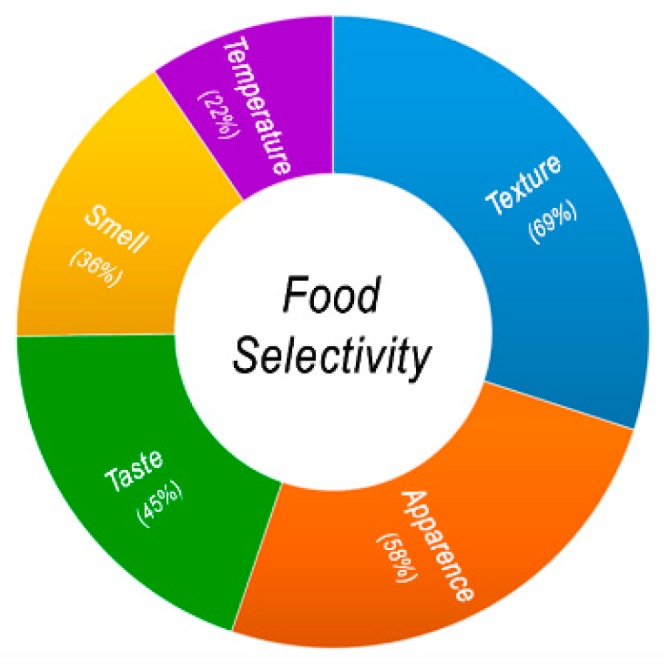
- Food selectivity in ASD is driven by texture (69%), appearance (58%), taste (45%), smell (36%), temperature (22%), reluctance to try new foods (69%), and a small repertoire of accepted foods (60%); presentation factors were reported at 48.6% and utensil/tableware characteristics at 13.8%, and nearly 90% of preschool and school-age ASD children were reported not to process sensory information the same way as typically developing peers.
- ASD children show altered gut microbiota profiles, including reduced relative abundance of *Prevotella*, *Coprococcus*, *Enterococcus*, *Lactobacillus*, *Streptococcus*, *Lactococcus*, *Staphylococcus*, *Ruminococcus*, and *Bifidobacterium*, and higher *Clostridia*, *Desulfovibrio*, *Sutterella*, and *Ruminococcus torques*; one study of 40 ASD and 40 non-ASD participants found *Candida* representation up to 2 times greater in ASD.
- Proposed metabolite pathways include elevated acetic acid and propionic acid, lower butyric acid, increased SCFA-producing bacteria, and elevated whole-blood/platelet serotonin in approximately 30% of children with ASD; dietary evidence is mixed or limited for gluten-free/casein-free diet, ketogenic diet, and specific carbohydrate diet, and no studies were found on the Mediterranean diet in ASD patients.
Methods
- Design: narrative literature review conducted on PubMed from 1955 to 2019 using terms including “autism,” “autism spectrum disorder,” “diet,” “nutritional status,” “microbiota,” “microbiome,” “metabolites,” “dysbiosis,” and “gastrointestinal symptoms.”
- Inclusion criteria: observational prospective and retrospective studies, case–control studies, cohort studies, or systematic reviews; studies investigating gut microbiota profiles and metabolites in ASD children; studies with information on nutritional intervention or nutritional status in ASD patients; and studies written in English.
- Analysis: qualitative synthesis of included literature; no meta-analysis or quantitative pooling is described.
Limitations
- The paper states that evidence for gluten-free/casein-free diet is limited and inadequate in quantity, quality, and methodological rigor; ketogenic diet evidence is based on a limited number of reports and is insufficient to establish practicability; specific carbohydrate diet evidence comes from few studies, including one case report; and no studies were found on the Mediterranean diet in ASD patients.
- The paper states that GI symptom prevalence varies widely due to differences in criteria, symptoms considered, data sources, reporting periods, and population characteristics, and that dietary data may be inaccurate because parental concern may influence reporting; it also states that the physiological processes linking food selectivity and GI problems remain difficult to decipher.
- Evident from the text: as a narrative review, it does not report a systematic quality appraisal, risk-of-bias assessment, or meta-analysis, and many cited intervention findings are small, animal-based, or case-level.
Model-written summary. Check it against the paper before relying on it.
Integrity signals
Registry
Cites
Statistics
Figures
Verification
Claims the paper makes
92 Not checked yet · 11 Own interpretation · 4 No basis given
None of the sources cited for this claim have been checked yet.
In the paper
“GI disorders such as intestinal pain, constipation and diarrhea are often associated with an altered composition of the gut microbiota [28,132,140,141,142].”
§ Autism, Gastrointestinal Symptoms and Modulation of Gut Microbiota by Nutritional Interventions > 4. The role of GI Symptoms, Gut Microbiota and Gut-Brain Axis in ASD > 4.2. GI Disorders, Microbiota and Microbiota-Gut-Brain Axis Alteration in ASD
What the sources say
- Not checked yetcites [28] McElhanon, 2014, Gastrointestinal Symptoms in Autism Spectrum Disorder: A Meta-analysis, Pediatrics source
- Not checked yetcites [132] Adams, 2006, Analyses of toxic metals and essential minerals in the hair of Arizona children with autism and associated conditions, and their mothers, Biol. Trace Elem. Res. source
- Not checked yetcites [140] Adams, 2007, Mercury, lead, and zinc in baby teeth of children with autism versus controls, J. Toxicol. Environ. Health Part A source
- Not checked yetcites [141] Konstantareas, 1987, Ear infections in autistic and normal children, J. Autism Dev. Disord. source
- Not checked yetcites [142] Niehus, 2006, Early medical history of children with autism spectrum disorders, J. Dev. Behav. Pediatr. source
plaincorrelational- Asserted: passes — The authors put it forward as true.
- Checkable: passes — It can be checked against evidence.
- Load-bearing: passes — The paper’s conclusions depend on it.
- Based: passes — The paper gives a reason why it holds.
In the paper
“Miller identified three different cluster of modulating sensory sensitivity in ASDs and found a positive correlation between sensory overresponsivity (SOR) in ASDs and the severity level of food selectivity, expressed by number of foods accepted by the child [66].”
§ Autism, Gastrointestinal Symptoms and Modulation of Gut Microbiota by Nutritional Interventions > 3. The role of Nutrition and Interventions in ASD > 3.1. Food Selectivity and ASD
What the sources say
- Not checked yetcites [66] Miller, 2007, Concept evolution in sensory integration: A proposed nosology for diagnosis, Am. J. Occup. Ther. source
plaincorrelational- Asserted: passes — The authors put it forward as true.
- Checkable: passes — It can be checked against evidence.
- Load-bearing: unclear — It is unclear whether the paper’s conclusions depend on it.
- Based: passes — The paper gives a reason why it holds.
In the paper
“Recent evidences in human gut microbiota studies highlighted the existence of a close connection between gut and brain functions, the so called “gut-brain axis”, including neural, hormonal, immune, and metabolic pathways [45].”
§ Autism, Gastrointestinal Symptoms and Modulation of Gut Microbiota by Nutritional Interventions > 1. Introduction
What the sources say
- Not checked yetcites [45] Berding, 2016, Microbiome and nutrition in autism spectrum disorder: Current knowledge and research needs, Nutr. Rev. source
plaindirect- Asserted: passes — The authors put it forward as true.
- Checkable: passes — It can be checked against evidence.
- Load-bearing: unclear — It is unclear whether the paper’s conclusions depend on it.
- Based: passes — The paper gives a reason why it holds.
A conclusion the paper draws from its own results — it cites no other source for it, so there is none to check. The quote shows it is in the paper.
In the paper
“To date evidence to support or refute GF/CF in ASD is limited and inadequate in terms of quantity, quality and multiple methodological limitations of studies in the literature.”
§ Autism, Gastrointestinal Symptoms and Modulation of Gut Microbiota by Nutritional Interventions > 3. The role of Nutrition and Interventions in ASD > 3.3. Effects of Dietary Interventions in ASD
plain- Asserted: passes — The authors put it forward as true.
- Checkable: passes — It can be checked against evidence.
- Load-bearing: passes — The paper’s conclusions depend on it.
- Based: passes — The paper gives a reason why it holds.
None of the sources cited for this claim have been checked yet.
In the paper
“Substantial number of subjects with ASDs had inadequate intakes of micronutrients.”
- Also stated in: § 3.2. Nutrient Intake and ASDs. · plain
“In particularly they showed deficiencies of few minerals such as calcium [67,69,71,73,75,77,79], iron [73,77], zinc [75,77,80], potassium [81], copper [81] and vitamins as vitamin A [71,75,77], vitamin D [67,69,73,78], vitamin E [71,73], riboflavin [77], vitamin C [75,78], vitamin B-12 [69,77,82], folic acid [75,82], and choline [80,83].”
§ Autism, Gastrointestinal Symptoms and Modulation of Gut Microbiota by Nutritional Interventions > 3. The role of Nutrition and Interventions in ASD > 3.2. Nutrient Intake and ASDs.
What the sources say
- Not checked yetcites [67] Bandini, 2010, Food selectivity in children with autism spectrum disorders and typically developing children, J. Pediatr. source
- Not checked yetcites [69] Zimmer, 2012, Food variety as a predictor of nutritional status among children with autism, J. Autism Dev. Disord. source
- Not checked yetcites [71] Lockner, 2008, Dietary intake and parents’ perception of mealtime behaviors in preschool-age children with autism spectrum disorder and in typically developing children, J. Am. Diet. Assoc. source
- Not checked yetcites [73] Herndon, 2009, Does nutritional intake differ between children with autism spectrum disorders and children with typical development?, J. Autism Dev. Disord. source
- Not checked yetcites [75] Xia, 2010, A preliminary study on nutritional status and intake in Chinese children with autism, Eur. J. Pediatr. source
- Not checked yetcites [77] Cornish, 2002, Gluten and casein free diets in autism: A study of the effects on food choice and nutrition, J. Hum. Nutr. Diet. source
- Not checked yetcites [79] Bicer, 2013, Body mass index, dietary intake and feeding problems of Turkish children with autism spectrum disorder (ASD), Res. Dev. Disabil. source
- Not checked yetcites [80] Hyman, 2012, Nutrient intake from food in children with autism, Pediatrics source
plain- Asserted: passes — The authors put it forward as true.
- Checkable: passes — It can be checked against evidence.
- Load-bearing: unclear — It is unclear whether the paper’s conclusions depend on it.
- Based: passes — The paper gives a reason why it holds.
- Also stated in: § 3.2. Nutrient Intake and ASDs. · plain
In the paper
“KD was shown to improve behavioral ASD deficits (such as sociability, repetitive behaviors, and social communication) in BTBR T+Itpr3tf/J mouse model of ASD (BTBR) [108].”
§ Autism, Gastrointestinal Symptoms and Modulation of Gut Microbiota by Nutritional Interventions > 3. The role of Nutrition and Interventions in ASD > 3.3. Effects of Dietary Interventions in ASD
What the sources say
- Not checked yetcites [108] Ruskin, D.N., Svedova, J., Cote, J.L., Sandau, U., Rho, J.M., Kawamura, M., Boison, D., and Masino, S.A. (2013). Ketogenic diet improves core symptoms of autism in BTBR mice. PLoS ONE, 8. source
plaindirect- Asserted: passes — The authors put it forward as true.
- Checkable: passes — It can be checked against evidence.
- Load-bearing: unclear — It is unclear whether the paper’s conclusions depend on it.
- Based: passes — The paper gives a reason why it holds.
In the paper
“while other studies highlighted that the adoption of this elimination diet could decrease fiber intake [103], thus probably aggravating the GI problems.”
§ Autism, Gastrointestinal Symptoms and Modulation of Gut Microbiota by Nutritional Interventions > 3. The role of Nutrition and Interventions in ASD > 3.3. Effects of Dietary Interventions in ASD
What the sources say
- Not checked yetcites [103] Zazpe, 2014, Evidence of the gluten-free and casein-free diet in autism spectrum disorders: A systematic review, J. Child Neurol. source
hedgedconditional- Asserted: passes — The authors put it forward as true.
- Checkable: passes — It can be checked against evidence.
- Load-bearing: unclear — It is unclear whether the paper’s conclusions depend on it.
- Based: passes — The paper gives a reason why it holds.
In the paper
“Furthermore this changes has been associated with altered SCFA composition, energy homeostasis, and inflammation [99].”
§ Autism, Gastrointestinal Symptoms and Modulation of Gut Microbiota by Nutritional Interventions > 3. The role of Nutrition and Interventions in ASD > 3.2. Nutrient Intake and ASDs.
What the sources say
- Not checked yetcites [99] Groen, 2016, Gut Microbiota in Obesity and Undernutrition, Adv. Nutr. source
plaincorrelational- Asserted: passes — The authors put it forward as true.
- Checkable: passes — It can be checked against evidence.
- Load-bearing: unclear — It is unclear whether the paper’s conclusions depend on it.
- Based: passes — The paper gives a reason why it holds.
None of the sources cited for this claim have been checked yet.
In the paper
“In fact, it has been shown that this two conditions are associated with an altered composition and diversity of the gut microbiota compared to healthy individuals [96,97,98].”
§ Autism, Gastrointestinal Symptoms and Modulation of Gut Microbiota by Nutritional Interventions > 3. The role of Nutrition and Interventions in ASD > 3.2. Nutrient Intake and ASDs.
What the sources say
- Not checked yetcites [96] Turnbaugh, 2006, An obesity-associated gut microbiome with increased capacity for energy harvest, Nature source
- Not checked yetcites [97] Genton, 2015, Alterations of gut barrier and gut microbiota in food restriction, food deprivation and protein-energy wasting, Clin. Nutr. source
- Not checked yetcites [98] Tremaroli, 2010, A role for the gut microbiota in energy harvesting?, Gut source
boostedcorrelational- Asserted: passes — The authors put it forward as true.
- Checkable: passes — It can be checked against evidence.
- Load-bearing: passes — The paper’s conclusions depend on it.
- Based: passes — The paper gives a reason why it holds.
None of the sources cited for this claim have been checked yet.
In the paper
“Indeed, some studies have revealed significant reductions in the relative abundance of Prevotella, Coprococcus, Enterococcus, Lactobacillus, Streptococcus, Lactococcus, Staphylococcus, Ruminococcus, and Bifidobacterium species in children with ASD compared with healthy controls [36,128,143].”
§ Autism, Gastrointestinal Symptoms and Modulation of Gut Microbiota by Nutritional Interventions > 4. The role of GI Symptoms, Gut Microbiota and Gut-Brain Axis in ASD > 4.2. GI Disorders, Microbiota and Microbiota-Gut-Brain Axis Alteration in ASD
What the sources say
- Not checked yetcites [36] De Angelis, M., Piccolo, M., Vannini, L., Siragusa, S., De Giacomo, A., Serrazzanetti, D.I., Cristofori, F., Guerzoni, M.E., Gobbetti, M., and Francavilla, R. (2013). Fecal Microbiota and Metabolome of Children with Autism and Pervasive Developmental Disorder Not Otherwise Specified. PLoS ONE, 8. source
- Not checked yetcites [128] Wang, 2011, The prevalence of gastrointestinal problems in children across the United States with autism spectrum disorders from families with multiple affected members, J. Dev. Behav. Pediatr. source
- Not checked yetcites [143] Kang, D.W., Park, J.G., Ilhan, Z.E., Wallstrom, G., Labaer, J., Adams, J.B., and Krajmalnik-Brown, R. (2013). Reduced incidence of Prevotella and other fermenters in intestinal microflora of autistic children. PLoS ONE, 8. source
hedgedcorrelational- Asserted: passes — The authors put it forward as true.
- Checkable: passes — It can be checked against evidence.
- Load-bearing: unclear — It is unclear whether the paper’s conclusions depend on it.
- Based: passes — The paper gives a reason why it holds.
- Probably not a substantial claim. 8
- It may state two separate claims as one. 52
The paper states this without a source or data behind it here, so there is nothing to check it against. The quote shows it is in the paper.
In the paper
“Actually, at our knowledge, no studies have reported the effect of MD on ASD patients.”
§ Autism, Gastrointestinal Symptoms and Modulation of Gut Microbiota by Nutritional Interventions > 3. The role of Nutrition and Interventions in ASD > 3.3. Effects of Dietary Interventions in ASD
hedged- Asserted: passes — The authors put it forward as true.
- Checkable: passes — It can be checked against evidence.
- Load-bearing: fails — The paper’s conclusions may not depend on it.
- Based: fails — The paper may give no reason why it holds.
Probably not a substantial claim. The paper’s conclusions may not depend on it. The paper may give no reason why it holds.
None of the sources cited for this claim have been checked yet.
In the paper
“However, in many studies children with ASDs show a considerably smaller variety of foods, but authors report no overall differences in their total calories, carbohydrates, or fat intakes [62,71,72,73,74], suggesting that their satiety mechanisms are not impaired.”
§ Autism, Gastrointestinal Symptoms and Modulation of Gut Microbiota by Nutritional Interventions > 3. The role of Nutrition and Interventions in ASD > 3.2. Nutrient Intake and ASDs.
What the sources say
- Not checked yetcites [62] Schmitt, 2008, A Comparison of Nutrient Intake and Eating Behaviors of Boys with and Without Autism, Top. Clin. Nutr. source
- Not checked yetcites [71] Lockner, 2008, Dietary intake and parents’ perception of mealtime behaviors in preschool-age children with autism spectrum disorder and in typically developing children, J. Am. Diet. Assoc. source
- Not checked yetcites [72] Emond, 2010, Feeding symptoms, dietary patterns, and growth in young children with autism spectrum disorders, Pediatrics source
- Not checked yetcites [73] Herndon, 2009, Does nutritional intake differ between children with autism spectrum disorders and children with typical development?, J. Autism Dev. Disord. source
- Not checked yetcites [74] Levy, 2007, Relationship of dietary intake to gastrointestinal symptoms in children with autistic spectrum disorders, Biol. Psychiatry source
hedged- Asserted: passes — The authors put it forward as true.
- Checkable: passes — It can be checked against evidence.
- Load-bearing: unclear — It is unclear whether the paper’s conclusions depend on it.
- Based: passes — The paper gives a reason why it holds.
It may state two separate claims as one.
None of the sources cited for this claim have been checked yet.
In the paper
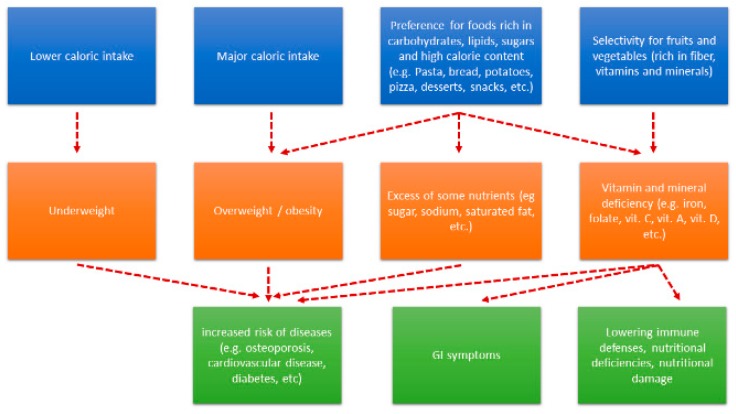
“From a nutritional point of view this leads to an inadequate caloric intake and hence to nutritional deficits [49,50].”
§ Autism, Gastrointestinal Symptoms and Modulation of Gut Microbiota by Nutritional Interventions > 3. The role of Nutrition and Interventions in ASD > 3.1. Food Selectivity and ASD
What the sources say
plaindirect- Asserted: passes — The authors put it forward as true.
- Checkable: passes — It can be checked against evidence.
- Load-bearing: unclear — It is unclear whether the paper’s conclusions depend on it.
- Based: passes — The paper gives a reason why it holds.
It may state two separate claims as one.
In the paper
“Increased consumption of snack foods and calorie-dense foods can lead to excessive weight gain, with related higher rates of obesity in ASD children than in unaffected children [58].”
§ Autism, Gastrointestinal Symptoms and Modulation of Gut Microbiota by Nutritional Interventions > 3. The role of Nutrition and Interventions in ASD > 3.1. Food Selectivity and ASD
What the sources say
- Not checked yetcites [58] Berry, 2015, Nutrition Management of Gastrointestinal Symptoms in Children with Autism Spectrum Disorder: Guideline from an Expert Panel, J. Acad. Nutr. Diet. source
plaindirect- Asserted: passes — The authors put it forward as true.
- Checkable: passes — It can be checked against evidence.
- Load-bearing: unclear — It is unclear whether the paper’s conclusions depend on it.
- Based: passes — The paper gives a reason why it holds.
It may state two separate claims as one.
None of the sources cited for this claim have been checked yet.
In the paper
“studies have indicated that food selectivity is being determined by the following factors: texture (69%), appearance (58%), taste (45%), smell (36%), and temperature (22%), as well as reluctance to try new foods (69%) and a small repertoire of accepted foods (60%) (Figure 1) [52,53,54,55].”
§ Autism, Gastrointestinal Symptoms and Modulation of Gut Microbiota by Nutritional Interventions > 3. The role of Nutrition and Interventions in ASD > 3.1. Food Selectivity and ASD
What the sources say
- Not checked yetcites [52] Williams, 2000, Eating habits of children with autism, Pediatr. Nurs.
- Not checked yetcites [53] Schreck, 2006, Food preferences and factors influencing food selectivity for children with autism spectrum disorders, Res. Dev. Disabil. source
- Not checked yetcites [54] Klein, 1999, Characteristics of patients with autistic disorder (AD) presenting for dental treatment: A survey and chart review, Spec. Care Dentist. source
- Not checked yetcites [55] Zazpe, 2014, Food selectivity in autism spectrum disorders: A systematic review, J. Child Neurol. source
hedgeddirect- Asserted: passes — The authors put it forward as true.
- Checkable: passes — It can be checked against evidence.
- Load-bearing: unclear — It is unclear whether the paper’s conclusions depend on it.
- Based: passes — The paper gives a reason why it holds.
It may state two separate claims as one.
In the paper
“Nadon et al. found that nearly 90% of preschool and school age ASD children do not process sensory information, in particular related to touch, smell, sight, and hearing, in the same way as their typically developing peers [60].”
§ Autism, Gastrointestinal Symptoms and Modulation of Gut Microbiota by Nutritional Interventions > 3. The role of Nutrition and Interventions in ASD > 3.1. Food Selectivity and ASD
What the sources say
- Not checked yetcites [60] Nadon, 2011, Mealtime problems in children with autism spectrum disorder and their typically developing siblings: A comparison study, Autism source
plain- Asserted: passes — The authors put it forward as true.
- Checkable: passes — It can be checked against evidence.
- Load-bearing: fails — The paper’s conclusions may not depend on it.
- Based: passes — The paper gives a reason why it holds.
Probably not a substantial claim. The paper’s conclusions may not depend on it.
None of the sources cited for this claim have been checked yet.
In the paper
“Indeed, children with ASD are very selective eaters (“picky eaters”) and most of them show aversions to specific food colors, texture, smells or other foods’ characteristics [26,27].”
§ Autism, Gastrointestinal Symptoms and Modulation of Gut Microbiota by Nutritional Interventions > 1. Introduction
What the sources say
plain- Asserted: passes — The authors put it forward as true.
- Checkable: passes — It can be checked against evidence.
- Load-bearing: unclear — It is unclear whether the paper’s conclusions depend on it.
- Based: passes — The paper gives a reason why it holds.
It may state two separate claims as one.
None of the sources cited for this claim have been checked yet.
In the paper
“Protein intake was adequate or quite similar to that of typically developing children [69,72,73,74,75,76,77].”
§ Autism, Gastrointestinal Symptoms and Modulation of Gut Microbiota by Nutritional Interventions > 3. The role of Nutrition and Interventions in ASD > 3.2. Nutrient Intake and ASDs.
What the sources say
- Not checked yetcites [69] Zimmer, 2012, Food variety as a predictor of nutritional status among children with autism, J. Autism Dev. Disord. source
- Not checked yetcites [72] Emond, 2010, Feeding symptoms, dietary patterns, and growth in young children with autism spectrum disorders, Pediatrics source
- Not checked yetcites [73] Herndon, 2009, Does nutritional intake differ between children with autism spectrum disorders and children with typical development?, J. Autism Dev. Disord. source
- Not checked yetcites [74] Levy, 2007, Relationship of dietary intake to gastrointestinal symptoms in children with autistic spectrum disorders, Biol. Psychiatry source
- Not checked yetcites [75] Xia, 2010, A preliminary study on nutritional status and intake in Chinese children with autism, Eur. J. Pediatr. source
- Not checked yetcites [76] Johnson, 2008, Eating habits and dietary status in young children with autism, J. Dev. Phys. Disabil. source
- Not checked yetcites [77] Cornish, 2002, Gluten and casein free diets in autism: A study of the effects on food choice and nutrition, J. Hum. Nutr. Diet. source
plain- Asserted: passes — The authors put it forward as true.
- Checkable: passes — It can be checked against evidence.
- Load-bearing: unclear — It is unclear whether the paper’s conclusions depend on it.
- Based: passes — The paper gives a reason why it holds.
It may state two separate claims as one.
None of the sources cited for this claim have been checked yet.
In the paper
“A strong preference for starches, snacks and processed foods, along with a rejection of fruits, vegetables or protein, is particularly common [56,57].”
§ Autism, Gastrointestinal Symptoms and Modulation of Gut Microbiota by Nutritional Interventions > 3. The role of Nutrition and Interventions in ASD > 3.1. Food Selectivity and ASD
What the sources say
- Not checked yetcites [56] Sharp, 2013, Feeding problems and nutrient intake in children with autism spectrum disorders: A meta-analysis and comprehensive review of the literature, J. Autism. Dev. Disord. source
- Not checked yetcites [57] Curtin, C., Anderson, S.E., Must, A., and Bandini, L. (2010). The prevalence of obesity in children with autism: A secondary data analysis using nationally representative data from the National Survey of Children’s Health. BMC Pediatr., 10. source
boosted- Asserted: passes — The authors put it forward as true.
- Checkable: passes — It can be checked against evidence.
- Load-bearing: unclear — It is unclear whether the paper’s conclusions depend on it.
- Based: passes — The paper gives a reason why it holds.
It may state two separate claims as one.
None of the sources cited for this claim have been checked yet.
In the paper
“Many ASD children have also been shown to carry abnormalities in GI physiology, including: increased intestinal permeability [34,35], overall microbiota alterations [36,37,38,39,40], and gut infection with cresol-producing Clostridium difficile [39,41,42,43,44].”
§ Autism, Gastrointestinal Symptoms and Modulation of Gut Microbiota by Nutritional Interventions > 1. Introduction
What the sources say
- Not checked yetcites [34] Celli, 1996, Abnormal intestinal permeability in children with autism, Acta Paediatr. source
- Not checked yetcites [35] Familiari, 2010, Alterations of the intestinal barrier in patients with autism spectrum disorders and in their first-degree relatives, J. Pediatr. Gastroenterol. Nutr. source
- Not checked yetcites [36] De Angelis, M., Piccolo, M., Vannini, L., Siragusa, S., De Giacomo, A., Serrazzanetti, D.I., Cristofori, F., Guerzoni, M.E., Gobbetti, M., and Francavilla, R. (2013). Fecal Microbiota and Metabolome of Children with Autism and Pervasive Developmental Disorder Not Otherwise Specified. PLoS ONE, 8. source
- Not checked yetcites [37] Finegold, 2010, Pyrosequencing study of fecal microflora of autistic and control children, Anaerobe source
- Not checked yetcites [38] Mulle, 2013, The Gut Microbiome: A New Frontier in Autism Research, Curr. Psychiatry Rep. source
- Not checked yetcites [39] Parracho, 2005, Differences between the gut microflora of children with autistic spectrum disorders and that of healthy children, J. Med. Microbiol. source
- Not checked yetcites [40] Wang, 2011, Normal gut microbiota modulates brain development and behavior, Proc. Natl. Acad. Sci. USA source
- Not checked yetcites [41] Elsden, 1976, The end products of the metabolism of aromatic amino acids by Clostridia, Arch. Microbiol. source
- Not checked yetcites [42] Finegold, 2002, Gastrointestinal microflora studies in late-onset autism, Clin. Infect. Dis. source
- Not checked yetcites [43] Selmer, 2001, p-Hydroxyphenylacetate decarboxylase from Clostridium difficile. A novel glycyl radical enzyme catalysing the formation of p-cresol, Eur. J. Biochem. source
plaincorrelational- Asserted: passes — The authors put it forward as true.
- Checkable: passes — It can be checked against evidence.
- Load-bearing: passes — The paper’s conclusions depend on it.
- Based: passes — The paper gives a reason why it holds.
It may state two separate claims as one.
A conclusion the paper draws from its own results — it cites no other source for it, so there is none to check. The quote shows it is in the paper.
In the paper
“Overall, the available evidence suggests that this food selectivity and an altered elaboration of sensory stimuli could imply a higher risk of nutritional deficiencies that could, in turn, affect gastrointestinal symptom and microbiota.”
§ Autism, Gastrointestinal Symptoms and Modulation of Gut Microbiota by Nutritional Interventions > 3. The role of Nutrition and Interventions in ASD > 3.1. Food Selectivity and ASD
hedgedconditional- Asserted: passes — The authors put it forward as true.
- Checkable: passes — It can be checked against evidence.
- Load-bearing: passes — The paper’s conclusions depend on it.
- Based: passes — The paper gives a reason why it holds.
It may state two separate claims as one.
None of the sources cited for this claim have been checked yet.
In the paper
“Children with ASDs eat fewer vegetables and eat more energy-dense foods [76,78], so fiber intake was inadequate in a considerable number of children with ASDs [71,73,79,80].”
§ Autism, Gastrointestinal Symptoms and Modulation of Gut Microbiota by Nutritional Interventions > 3. The role of Nutrition and Interventions in ASD > 3.2. Nutrient Intake and ASDs.
What the sources say
- Not checked yetcites [76] Johnson, 2008, Eating habits and dietary status in young children with autism, J. Dev. Phys. Disabil. source
- Not checked yetcites [78] Evans, 2012, Dietary Patterns and Body Mass Index in Children with Autism and Typically Developing Children, Res. Autism Spectr. Disord. source
- Not checked yetcites [71] Lockner, 2008, Dietary intake and parents’ perception of mealtime behaviors in preschool-age children with autism spectrum disorder and in typically developing children, J. Am. Diet. Assoc. source
- Not checked yetcites [73] Herndon, 2009, Does nutritional intake differ between children with autism spectrum disorders and children with typical development?, J. Autism Dev. Disord. source
- Not checked yetcites [79] Bicer, 2013, Body mass index, dietary intake and feeding problems of Turkish children with autism spectrum disorder (ASD), Res. Dev. Disabil. source
- Not checked yetcites [80] Hyman, 2012, Nutrient intake from food in children with autism, Pediatrics source
plaindirect- Asserted: passes — The authors put it forward as true.
- Checkable: passes — It can be checked against evidence.
- Load-bearing: unclear — It is unclear whether the paper’s conclusions depend on it.
- Based: passes — The paper gives a reason why it holds.
It may state two separate claims as one.
In the paper
“The KD is a high fat and low-carbohydrate diet and it is an effective treatment for epileptic patients that fails in responding to anticonvulsant medications [84].”
§ Autism, Gastrointestinal Symptoms and Modulation of Gut Microbiota by Nutritional Interventions > 3. The role of Nutrition and Interventions in ASD > 3.3. Effects of Dietary Interventions in ASD
What the sources say
- Not checked yetcites [84] Castro, 2015, Effect of a ketogenic diet on autism spectrum disorder: A systematic review, Res. Autism Spectr. Disord. source
plaindirect- Asserted: passes — The authors put it forward as true.
- Checkable: passes — It can be checked against evidence.
- Load-bearing: fails — The paper’s conclusions may not depend on it.
- Based: passes — The paper gives a reason why it holds.
Probably not a substantial claim. The paper’s conclusions may not depend on it.
None of the sources cited for this claim have been checked yet.
In the paper
“The administration of KD to individuals with ASD underlined positive effects especially for mild and moderate cases and some reports of improvements in seizure symptoms and behavioral deficits [84,107].”
§ Autism, Gastrointestinal Symptoms and Modulation of Gut Microbiota by Nutritional Interventions > 3. The role of Nutrition and Interventions in ASD > 3.3. Effects of Dietary Interventions in ASD
What the sources say
- Not checked yetcites [84] Castro, 2015, Effect of a ketogenic diet on autism spectrum disorder: A systematic review, Res. Autism Spectr. Disord. source
- Not checked yetcites [107] Evangeliou, 2003, Application of a ketogenic diet in children with autistic behavior: Pilot study, J. Child Neurol. source
plaindirect- Asserted: passes — The authors put it forward as true.
- Checkable: passes — It can be checked against evidence.
- Load-bearing: unclear — It is unclear whether the paper’s conclusions depend on it.
- Based: passes — The paper gives a reason why it holds.
It may state two separate claims as one.
None of the sources cited for this claim have been checked yet.
In the paper
“Some studies reported decreased bone development lower mineral density and a greater risk of fractures in children with ASD compared to controls (TDs), linked to a lack of calcium and vitamin D in the diet, despite good anthropometric growth [85,86,87,88].”
§ Autism, Gastrointestinal Symptoms and Modulation of Gut Microbiota by Nutritional Interventions > 3. The role of Nutrition and Interventions in ASD > 3.2. Nutrient Intake and ASDs.
What the sources say
- Not checked yetcites [85] Hediger, 2008, Reduced bone cortical thickness in boys with autism or autism spectrum disorder, J. Autism Dev. Disord. source
- Not checked yetcites [86] Neumeyer, 2015, Brief report: Bone fractures in children and adults with autism spectrum disorders, J. Autism Dev. Disord. source
- Not checked yetcites [87] Clark, 1993, Symptomatic vitamin A and D deficiencies in an eight-year-old with autism, J. Parenter. Enter. Nutr. source
- Not checked yetcites [88] Stewart, 2008, Symptomatic nutritional rickets in a teenager with autistic spectrum disorder, Child Care Health Dev. source
hedgedcorrelational- Asserted: passes — The authors put it forward as true.
- Checkable: passes — It can be checked against evidence.
- Load-bearing: unclear — It is unclear whether the paper’s conclusions depend on it.
- Based: passes — The paper gives a reason why it holds.
It may state two separate claims as one.
None of the sources cited for this claim have been checked yet.
In the paper
“Evidences on healthy subjects showed that gluten-free diet has been associated with the reduction of beneficial gut bacteria populations, the increase in opportunistic pathogens and with immune-suppressive effects [100,101,102].”
§ Autism, Gastrointestinal Symptoms and Modulation of Gut Microbiota by Nutritional Interventions > 3. The role of Nutrition and Interventions in ASD > 3.3. Effects of Dietary Interventions in ASD
What the sources say
- Not checked yetcites [100] Nistal, 2012, Differences of small intestinal bacteria populations in adults and children with/without celiac disease: Effect of age, gluten diet, and disease, Inflamm. Bowel Dis. source
- Not checked yetcites [101] Di Cagno, R., De Angelis, M., De Pasquale, I., Ndagijimana, M., Vernocchi, P., Ricciuti, P., Gagliardi, F., Laghi, L., Crecchio, C., and Guerzoni, M.E. (2011). Duodenal and faecal microbiota of celiac children: Molecular, phenotype and metabolome characterization. BMC Microbiol., 11. source
- Not checked yetcites [102] Nadal, 2009, Effects of a gluten-free diet on gut microbiota and immune function in healthy adult human subjects, Br. J. Nutr. source
plaincorrelational- Asserted: passes — The authors put it forward as true.
- Checkable: passes — It can be checked against evidence.
- Load-bearing: unclear — It is unclear whether the paper’s conclusions depend on it.
- Based: passes — The paper gives a reason why it holds.
It may state two separate claims as one.
None of the sources cited for this claim have been checked yet.
In the paper
“some evidence supports the use of this diet in the amelioration of ASD symptoms showing that the GF/CF diet decreases urine peptides, improves behavior [105] and decreases GI symptoms [106]”
§ Autism, Gastrointestinal Symptoms and Modulation of Gut Microbiota by Nutritional Interventions > 3. The role of Nutrition and Interventions in ASD > 3.3. Effects of Dietary Interventions in ASD
What the sources say
- Not checked yetcites [105] Reichelt, 2009, The possibility and probability of a gut-to-brain connection in autism, Ann. Clin. Psychiatry
- Not checked yetcites [106] Ghalichi, 2016, Effect of gluten free diet on gastrointestinal and behavioral indices for children with autism spectrum disorders: A randomized clinical trial, World J. Pediatr. source
hedgeddirect- Asserted: passes — The authors put it forward as true.
- Checkable: passes — It can be checked against evidence.
- Load-bearing: unclear — It is unclear whether the paper’s conclusions depend on it.
- Based: passes — The paper gives a reason why it holds.
It may state two separate claims as one.
A conclusion the paper draws from its own results — it cites no other source for it, so there is none to check. The quote shows it is in the paper.
In the paper
“Therefore food selectivity and an inadequate nutrient intake could increase the risk of malnutrition in ASDs that ultimately leads to either obesity or undernutrition.”
§ Autism, Gastrointestinal Symptoms and Modulation of Gut Microbiota by Nutritional Interventions > 3. The role of Nutrition and Interventions in ASD > 3.2. Nutrient Intake and ASDs.
hedgedconditional- Asserted: passes — The authors put it forward as true.
- Checkable: passes — It can be checked against evidence.
- Load-bearing: passes — The paper’s conclusions depend on it.
- Based: passes — The paper gives a reason why it holds.
It may state two separate claims as one.
None of the sources cited for this claim have been checked yet.
In the paper
“Excessive consumption of sodium was reported [79,84], probably due to the consumption of packaged foods.”
§ Autism, Gastrointestinal Symptoms and Modulation of Gut Microbiota by Nutritional Interventions > 3. The role of Nutrition and Interventions in ASD > 3.2. Nutrient Intake and ASDs.
What the sources say
- Not checked yetcites [79] Bicer, 2013, Body mass index, dietary intake and feeding problems of Turkish children with autism spectrum disorder (ASD), Res. Dev. Disabil. source
- Not checked yetcites [84] Castro, 2015, Effect of a ketogenic diet on autism spectrum disorder: A systematic review, Res. Autism Spectr. Disord. source
hedgedconditional- Asserted: passes — The authors put it forward as true.
- Checkable: passes — It can be checked against evidence.
- Load-bearing: unclear — It is unclear whether the paper’s conclusions depend on it.
- Based: passes — The paper gives a reason why it holds.
It may state two separate claims as one.
None of the sources cited for this claim have been checked yet.
In the paper
“In the scientific literature, some studies highlight a higher abundance of Clostridia and Desulfovibrio bacteria and a lower ratio of Bacteroidetes to Firmicutes in ASD [37,39,143,145].”
§ Autism, Gastrointestinal Symptoms and Modulation of Gut Microbiota by Nutritional Interventions > 4. The role of GI Symptoms, Gut Microbiota and Gut-Brain Axis in ASD > 4.2. GI Disorders, Microbiota and Microbiota-Gut-Brain Axis Alteration in ASD
What the sources say
- Not checked yetcites [37] Finegold, 2010, Pyrosequencing study of fecal microflora of autistic and control children, Anaerobe source
- Not checked yetcites [39] Parracho, 2005, Differences between the gut microflora of children with autistic spectrum disorders and that of healthy children, J. Med. Microbiol. source
- Not checked yetcites [143] Kang, D.W., Park, J.G., Ilhan, Z.E., Wallstrom, G., Labaer, J., Adams, J.B., and Krajmalnik-Brown, R. (2013). Reduced incidence of Prevotella and other fermenters in intestinal microflora of autistic children. PLoS ONE, 8. source
- Not checked yetcites [145] Tomova, 2015, Gastrointestinal microbiota in children with autism in Slovakia, Physiol. Behav. source
hedgedcorrelational- Asserted: passes — The authors put it forward as true.
- Checkable: passes — It can be checked against evidence.
- Load-bearing: unclear — It is unclear whether the paper’s conclusions depend on it.
- Based: passes — The paper gives a reason why it holds.
It may state two separate claims as one.
In the paper
“In addition, a high consumption of sugar and candy, cola beverages, and noncola soft drinks and a low consumption of fatty fish were also associated with a higher prevalence of ADHD diagnosis.”
§ Autism, Gastrointestinal Symptoms and Modulation of Gut Microbiota by Nutritional Interventions > 3. The role of Nutrition and Interventions in ASD > 3.3. Effects of Dietary Interventions in ASD
What the sources say
- Not checked yetcites [123] Alda, 2017, The Mediterranean Diet and ADHD in Children and Adolescents, Pediatrics source
plaincorrelational- Asserted: passes — The authors put it forward as true.
- Checkable: passes — It can be checked against evidence.
- Load-bearing: unclear — It is unclear whether the paper’s conclusions depend on it.
- Based: passes — The paper gives a reason why it holds.
It may state two separate claims as one.
In the paper
“Another study on 150 children (50 ASD, 50 controls, and 50 children with other developmental disabilities (DD)) found that 70% of children with ASD presented GI symptoms, compared to 28% of typically developing children and 42% of DD children [126].”
§ Autism, Gastrointestinal Symptoms and Modulation of Gut Microbiota by Nutritional Interventions > 4. The role of GI Symptoms, Gut Microbiota and Gut-Brain Axis in ASD > 4.1. GI symptoms in Children with Autism
What the sources say
- Not checked yetcites [126] McVicar, 2006, Frequency of gastrointestinal symptoms in children with autistic spectrum disorders and association with family history of autoimmune disease, J. Dev. Behav. Pediatr. source
plaincorrelationaln = 50- Asserted: passes — The authors put it forward as true.
- Checkable: passes — It can be checked against evidence.
- Load-bearing: unclear — It is unclear whether the paper’s conclusions depend on it.
- Based: passes — The paper gives a reason why it holds.
It may state two separate claims as one.
In the paper
“Moreover, food selectivity can exacerbate or determine GI symptoms (e.g., constipation) due to a diet rich in carbohydrates and poor in fiber that do not promote intestinal transit and can lead to constipation [127].”
§ Autism, Gastrointestinal Symptoms and Modulation of Gut Microbiota by Nutritional Interventions > 4. The role of GI Symptoms, Gut Microbiota and Gut-Brain Axis in ASD > 4.1. GI symptoms in Children with Autism
What the sources say
- Not checked yetcites [127] Ibrahim, 2009, Incidence of gastrointestinal symptoms in children with autism: A population-based study, Pediatrics source
plaindirect- Asserted: passes — The authors put it forward as true.
- Checkable: passes — It can be checked against evidence.
- Load-bearing: unclear — It is unclear whether the paper’s conclusions depend on it.
- Based: passes — The paper gives a reason why it holds.
It may state two separate claims as one.
None of the sources cited for this claim have been checked yet.
In the paper
“In the literature it has been reported that ASD children have altered gut microbiota profiles compared with NT children, although in some studies, no significant difference has been reported [19,20]”
§ Autism, Gastrointestinal Symptoms and Modulation of Gut Microbiota by Nutritional Interventions > 4. The role of GI Symptoms, Gut Microbiota and Gut-Brain Axis in ASD > 4.2. GI Disorders, Microbiota and Microbiota-Gut-Brain Axis Alteration in ASD
What the sources say
hedgedcorrelational- Asserted: passes — The authors put it forward as true.
- Checkable: passes — It can be checked against evidence.
- Load-bearing: passes — The paper’s conclusions depend on it.
- Based: passes — The paper gives a reason why it holds.
It may state two separate claims as one.
None of the sources cited for this claim have been checked yet.
In the paper
“The SCD was developed in the 1930s as a dietary protocol intended for patients with celiac disease [111] but it is also employed to treat Crohn’s disease, ulcerative colitis, diverticulitis and chronic diarrhea [112,113,114].”
§ Autism, Gastrointestinal Symptoms and Modulation of Gut Microbiota by Nutritional Interventions > 3. The role of Nutrition and Interventions in ASD > 3.3. Effects of Dietary Interventions in ASD
What the sources say
- Not checked yetcites [111] Haas, 1955, The treatment of celiac disease with the specific carbohydrate diet; report on 191 additional cases, Am. J. Gastroenterol.
- Not checked yetcites [112] Gottschall, 2004, Digestion-gut-autism connection: The Specific Carbohydrate Diet, Med. Veritas J. Med. Truth source
- Not checked yetcites [113] Suskind, 2014, Nutritional therapy in pediatric Crohn disease: The specific carbohydrate diet, J. Pediatr. Gastroenterol. Nutr. source
- Not checked yetcites [114] Obih, 2016, Specific carbohydrate diet for pediatric inflammatory bowel disease in clinical practice within an academic IBD center, Nutrition source
plaindirect- Asserted: passes — The authors put it forward as true.
- Checkable: passes — It can be checked against evidence.
- Load-bearing: fails — The paper’s conclusions may not depend on it.
- Based: passes — The paper gives a reason why it holds.
Probably not a substantial claim. The paper’s conclusions may not depend on it. It may state two separate claims as one.
In the paper
“This was the first study showing that low adherence to the MD is associated with odds of an ADHD diagnosis in children and adolescents.”
§ Autism, Gastrointestinal Symptoms and Modulation of Gut Microbiota by Nutritional Interventions > 3. The role of Nutrition and Interventions in ASD > 3.3. Effects of Dietary Interventions in ASD
What the sources say
- Not checked yetcites [123] Alda, 2017, The Mediterranean Diet and ADHD in Children and Adolescents, Pediatrics source
plaincorrelationaln = 60- Asserted: passes — The authors put it forward as true.
- Checkable: passes — It can be checked against evidence.
- Load-bearing: fails — The paper’s conclusions may not depend on it.
- Based: passes — The paper gives a reason why it holds.
Probably not a substantial claim. The paper’s conclusions may not depend on it.
In the paper
“Indeed, abdominal pain, constipation, and/or diarrhea likely to produce frustration and may contribute to the severity of the disorder, with decreased ability to concentrate on tasks, behavior problems, and possibly aggression and self-abuse, especially in children unable to communicate their discomfort [29].”
§ Autism, Gastrointestinal Symptoms and Modulation of Gut Microbiota by Nutritional Interventions > 4. The role of GI Symptoms, Gut Microbiota and Gut-Brain Axis in ASD > 4.1. GI symptoms in Children with Autism
What the sources say
- Not checked yetcites [29] Adams, J.B., Johansen, L.J., Powell, L.D., Quig, D., and Rubin, R.A. (2011). Gastrointestinal flora and gastrointestinal status in children with autism—Comparisons to typical children and correlation with autism severity. BMC Gastroenterol., 11. source
hedgedconditional- Asserted: passes — The authors put it forward as true.
- Checkable: passes — It can be checked against evidence.
- Load-bearing: unclear — It is unclear whether the paper’s conclusions depend on it.
- Based: passes — The paper gives a reason why it holds.
It may state two separate claims as one.
In the paper
“KD treatment of BTBR mice also improved deficits typical of ASD related to myelin formation and white matter development/connectivity, acting on neurotransmitter signaling pathways including glutamate, serotonin, neuronal nitric acid synthase, and dopamine [109].”
§ Autism, Gastrointestinal Symptoms and Modulation of Gut Microbiota by Nutritional Interventions > 3. The role of Nutrition and Interventions in ASD > 3.3. Effects of Dietary Interventions in ASD
What the sources say
- Not checked yetcites [109] Mychasiuk, 2017, Genetic modifications associated with ketogenic diet treatment in the BTBRT+Tf/J mouse model of autism spectrum disorder, Autism Res. source
plaindirect- Asserted: passes — The authors put it forward as true.
- Checkable: passes — It can be checked against evidence.
- Load-bearing: unclear — It is unclear whether the paper’s conclusions depend on it.
- Based: passes — The paper gives a reason why it holds.
It may state two separate claims as one.
In the paper
“We found one study that examined the implementation of an SCD protocol in a child with ASD, which showed that the SCD protocol was well tolerated in this 4 year old child diagnosed with ASD and fragile X syndrome (FXS), leading to improvements in growth status, gastrointestinal symptoms, and behaviors [112].”
§ Autism, Gastrointestinal Symptoms and Modulation of Gut Microbiota by Nutritional Interventions > 3. The role of Nutrition and Interventions in ASD > 3.3. Effects of Dietary Interventions in ASD
What the sources say
- Not checked yetcites [112] Gottschall, 2004, Digestion-gut-autism connection: The Specific Carbohydrate Diet, Med. Veritas J. Med. Truth source
plaindirectSingle case- Asserted: passes — The authors put it forward as true.
- Checkable: passes — It can be checked against evidence.
- Load-bearing: unclear — It is unclear whether the paper’s conclusions depend on it.
- Based: passes — The paper gives a reason why it holds.
It may state two separate claims as one.
In the paper
“However, a study conducted in 2009 on people with ASD followed longitudinally up to 18 years, did not report an increased risk of GI diseases of an inflammatory and/or malabsorption nature compared to the typical development controls; the only significant difference found was the higher incidence of food selectivity and constipation in ASD people [127].”
§ Autism, Gastrointestinal Symptoms and Modulation of Gut Microbiota by Nutritional Interventions > 4. The role of GI Symptoms, Gut Microbiota and Gut-Brain Axis in ASD > 4.1. GI symptoms in Children with Autism
What the sources say
- Not checked yetcites [127] Ibrahim, 2009, Incidence of gastrointestinal symptoms in children with autism: A population-based study, Pediatrics source
plain- Asserted: passes — The authors put it forward as true.
- Checkable: passes — It can be checked against evidence.
- Load-bearing: unclear — It is unclear whether the paper’s conclusions depend on it.
- Based: passes — The paper gives a reason why it holds.
It may state two separate claims as one.
None of the sources cited for this claim have been checked yet.
In the paper
“However, the accumulation of SCFAs, and specifically of propionate, has also been shown to have broad effects on the nervous system physiology, and it is associated to the pathogenesis of ASD [175,176].”
§ Autism, Gastrointestinal Symptoms and Modulation of Gut Microbiota by Nutritional Interventions > 4. The role of GI Symptoms, Gut Microbiota and Gut-Brain Axis in ASD > 4.3. Focus on Bacterial Metabolites and Gut-Brain Axis
What the sources say
- Not checked yetcites [175] Thomas, 2012, The enteric bacterial metabolite propionic acid alters brain and plasma phospholipid molecular species: Further development of a rodent model of autism spectrum disorders, J. Neuroinflamm. source
- Not checked yetcites [176] MacFabe, 2015, Enteric short-chain fatty acids: Microbial messengers of metabolism, mitochondria, and mind: Implications in autism spectrum disorders, Microb. Ecol. Health Dis.
plaincorrelational- Asserted: passes — The authors put it forward as true.
- Checkable: passes — It can be checked against evidence.
- Load-bearing: passes — The paper’s conclusions depend on it.
- Based: passes — The paper gives a reason why it holds.
It may state two separate claims as one.
None of the sources cited for this claim have been checked yet.
In the paper
“Others studies observed, in ASD children, high abundance of: Akkermansia muciniphilia, [36,143,148] Desulfovibrio, [37] and Faecalibacterium prausnitzii [36].”
§ Autism, Gastrointestinal Symptoms and Modulation of Gut Microbiota by Nutritional Interventions > 4. The role of GI Symptoms, Gut Microbiota and Gut-Brain Axis in ASD > 4.2. GI Disorders, Microbiota and Microbiota-Gut-Brain Axis Alteration in ASD
What the sources say
- Not checked yetcites [36] De Angelis, M., Piccolo, M., Vannini, L., Siragusa, S., De Giacomo, A., Serrazzanetti, D.I., Cristofori, F., Guerzoni, M.E., Gobbetti, M., and Francavilla, R. (2013). Fecal Microbiota and Metabolome of Children with Autism and Pervasive Developmental Disorder Not Otherwise Specified. PLoS ONE, 8. source
- Not checked yetcites [143] Kang, D.W., Park, J.G., Ilhan, Z.E., Wallstrom, G., Labaer, J., Adams, J.B., and Krajmalnik-Brown, R. (2013). Reduced incidence of Prevotella and other fermenters in intestinal microflora of autistic children. PLoS ONE, 8. source
- Not checked yetcites [148] Xu, 2019, Association Between Gut Microbiota and Autism Spectrum Disorder: A Systematic Review and Meta-Analysis, Front. Psychiatry source
- Not checked yetcites [37] Finegold, 2010, Pyrosequencing study of fecal microflora of autistic and control children, Anaerobe source
plaincorrelational- Asserted: passes — The authors put it forward as true.
- Checkable: passes — It can be checked against evidence.
- Load-bearing: unclear — It is unclear whether the paper’s conclusions depend on it.
- Based: passes — The paper gives a reason why it holds.
It may state two separate claims as one.
In the paper
“Short-chain fatty acids (SCFAs) as acetic acid (AA), propionic acid (PPA), and butyric acid (BA), are the fermatation end-products of non-digested carbohydrates in the colon and have been suggested to have various health benefits to the host related to weight control, lipid profiles, and colon health [174].”
§ Autism, Gastrointestinal Symptoms and Modulation of Gut Microbiota by Nutritional Interventions > 4. The role of GI Symptoms, Gut Microbiota and Gut-Brain Axis in ASD > 4.3. Focus on Bacterial Metabolites and Gut-Brain Axis
What the sources say
- Not checked yetcites [174] Byrne, 2015, The role of short chain fatty acids in appetite regulation and energy homeostasis, Int. J. Obes. source
hedgedcorrelational- Asserted: passes — The authors put it forward as true.
- Checkable: passes — It can be checked against evidence.
- Load-bearing: fails — The paper’s conclusions may not depend on it.
- Based: passes — The paper gives a reason why it holds.
Probably not a substantial claim. The paper’s conclusions may not depend on it. It may state two separate claims as one.
In the paper
“Indeed, microbiota and their ligands are crucial in maintaining the cell–cell junctions critical to barrier integrity, with GI barrier defects seen with dysbiosis [144].”
§ Autism, Gastrointestinal Symptoms and Modulation of Gut Microbiota by Nutritional Interventions > 4. The role of GI Symptoms, Gut Microbiota and Gut-Brain Axis in ASD > 4.2. GI Disorders, Microbiota and Microbiota-Gut-Brain Axis Alteration in ASD
What the sources say
- Not checked yetcites [144] Hsiao, 2013, Microbiota modulate behavioral and physiological abnormalities associated with neurodevelopmental disorders, Cell source
plaindirect- Asserted: passes — The authors put it forward as true.
- Checkable: passes — It can be checked against evidence.
- Load-bearing: passes — The paper’s conclusions depend on it.
- Based: passes — The paper gives a reason why it holds.
It may state two separate claims as one.
In the paper
“A recent study, conducted on a set of 40 people with ASD and a control group of 40 NT, confirmed a different bacterial composition of the GI tract, but also showed an altered fungal colonization, in particular, the genus Candida was identified as the most important distribution, with a representation up to 2 times greater than that of the control population [149].”
§ Autism, Gastrointestinal Symptoms and Modulation of Gut Microbiota by Nutritional Interventions > 4. The role of GI Symptoms, Gut Microbiota and Gut-Brain Axis in ASD > 4.2. GI Disorders, Microbiota and Microbiota-Gut-Brain Axis Alteration in ASD
What the sources say
- Not checked yetcites [149] Strati, 2017, New evidences on the altered gut microbiota in autism spectrum disorders, Microbiome source
plaincorrelationaln = 40- Asserted: passes — The authors put it forward as true.
- Checkable: passes — It can be checked against evidence.
- Load-bearing: unclear — It is unclear whether the paper’s conclusions depend on it.
- Based: passes — The paper gives a reason why it holds.
It may state two separate claims as one.
In the paper
“Moreover, a higher intestinal permeability allow the increase in circulating bacteria-derived lipopolysaccharide (LPS) which leads to an immunological and inflammatory response, with an augmented systemic pro-inflammatory cytokines [151].”
§ Autism, Gastrointestinal Symptoms and Modulation of Gut Microbiota by Nutritional Interventions > 4. The role of GI Symptoms, Gut Microbiota and Gut-Brain Axis in ASD > 4.2. GI Disorders, Microbiota and Microbiota-Gut-Brain Axis Alteration in ASD
What the sources say
- Not checked yetcites [151] Qin, 2007, Systemic LPS causes chronic neuroinflammation and progressive neurodegeneration, Glia source
plaindirect- Asserted: passes — The authors put it forward as true.
- Checkable: passes — It can be checked against evidence.
- Load-bearing: passes — The paper’s conclusions depend on it.
- Based: passes — The paper gives a reason why it holds.
It may state two separate claims as one.
In the paper
“A study conducted on early adolescence in mice showed that the modification of the intestinal microbiota alters their behavior and significantly reduces the neurotrophic factor (BDNF), oxytocin and vasopressin expression in the adult brain [166].”
§ Autism, Gastrointestinal Symptoms and Modulation of Gut Microbiota by Nutritional Interventions > 4. The role of GI Symptoms, Gut Microbiota and Gut-Brain Axis in ASD > 4.2. GI Disorders, Microbiota and Microbiota-Gut-Brain Axis Alteration in ASD
What the sources say
- Not checked yetcites [166] Desbonnet, 2015, Gut microbiota depletion from early adolescence in mice: Implications for brain and behaviour, Brain Behav. Immun. source
plaindirect- Asserted: passes — The authors put it forward as true.
- Checkable: passes — It can be checked against evidence.
- Load-bearing: unclear — It is unclear whether the paper’s conclusions depend on it.
- Based: passes — The paper gives a reason why it holds.
It may state two separate claims as one.
In the paper
“Candida spp., Streptococcus spp., Escherichia spp. and Enterococcus spp. produce serotonin;”
§ Autism, Gastrointestinal Symptoms and Modulation of Gut Microbiota by Nutritional Interventions > 4. The role of GI Symptoms, Gut Microbiota and Gut-Brain Axis in ASD > 4.3. Focus on Bacterial Metabolites and Gut-Brain Axis
What the sources say
- Not checked yetcites [172] Dinan, 2013, Melancholic microbes: A link between gut microbiota and depression?, Neurogastroenterol. Motil. source
plaindirect- Asserted: passes — The authors put it forward as true.
- Checkable: passes — It can be checked against evidence.
- Load-bearing: unclear — It is unclear whether the paper’s conclusions depend on it.
- Based: passes — The paper gives a reason why it holds.
It may state two separate claims as one.
In the paper
“However, communication is bidirectional and the intestinal microbiota is able to control the activity of the CNS through neural, endocrine, immune, and metabolic mechanisms that could have a possible influence on behaviours typical of ASD patients. [156].”
§ Autism, Gastrointestinal Symptoms and Modulation of Gut Microbiota by Nutritional Interventions > 4. The role of GI Symptoms, Gut Microbiota and Gut-Brain Axis in ASD > 4.2. GI Disorders, Microbiota and Microbiota-Gut-Brain Axis Alteration in ASD
What the sources say
- Not checked yetcites [156] Wang, 2014, The role of microbiome in central nervous system disorders, Brain Behav. Immun. source
hedgedconditional- Asserted: passes — The authors put it forward as true.
- Checkable: passes — It can be checked against evidence.
- Load-bearing: passes — The paper’s conclusions depend on it.
- Based: passes — The paper gives a reason why it holds.
It may state two separate claims as one.
In the paper
“Furthermore, the hypothalamic–pituitary–adrenal (HPA) axis releases cortisol, which regulates intestinal motility, integrity and hypersecretion of CRH is a crucial factor in depression and anxiety disorders [155].”
§ Autism, Gastrointestinal Symptoms and Modulation of Gut Microbiota by Nutritional Interventions > 4. The role of GI Symptoms, Gut Microbiota and Gut-Brain Axis in ASD > 4.2. GI Disorders, Microbiota and Microbiota-Gut-Brain Axis Alteration in ASD
What the sources say
- Not checked yetcites [155] Trevarthen, 2006, Collaborative Regulations of Vitality in Early Childhood: Stress in Intimate Relationships and Postnatal Psychopathology, Developmental Psychopathology
plaindirect- Asserted: passes — The authors put it forward as true.
- Checkable: passes — It can be checked against evidence.
- Load-bearing: fails — The paper’s conclusions may not depend on it.
- Based: passes — The paper gives a reason why it holds.
Probably not a substantial claim. The paper’s conclusions may not depend on it. It may state two separate claims as one.
In the paper
“The role of microglia deficits in neurological development disorders in a mouse model has emerged [154].”
§ Autism, Gastrointestinal Symptoms and Modulation of Gut Microbiota by Nutritional Interventions > 4. The role of GI Symptoms, Gut Microbiota and Gut-Brain Axis in ASD > 4.2. GI Disorders, Microbiota and Microbiota-Gut-Brain Axis Alteration in ASD
What the sources say
- Not checked yetcites [154] Zhan, 2014, Deficient neuron-microglia signaling results in impaired functional brain connectivity and social behavior, Nat. Neurosci. source
plain- Asserted: passes — The authors put it forward as true.
- Checkable: passes — It can be checked against evidence.
- Load-bearing: fails — The paper’s conclusions may not depend on it.
- Based: passes — The paper gives a reason why it holds.
Probably not a substantial claim. The paper’s conclusions may not depend on it.
In the paper
“Although most serotonin, or 5′-HT, is produced in the GI tract and can also be metabolized directly by the gut microbiota, it modulates neurodevelopment and might be important in social function and repetitive behavior [188].”
§ Autism, Gastrointestinal Symptoms and Modulation of Gut Microbiota by Nutritional Interventions > 4. The role of GI Symptoms, Gut Microbiota and Gut-Brain Axis in ASD > 4.3. Focus on Bacterial Metabolites and Gut-Brain Axis
What the sources say
- Not checked yetcites [188] Muller, 2016, The serotonin system in autism spectrum disorder: From biomarker to animal models, Neuroscience source
hedgedconditional- Asserted: passes — The authors put it forward as true.
- Checkable: passes — It can be checked against evidence.
- Load-bearing: unclear — It is unclear whether the paper’s conclusions depend on it.
- Based: passes — The paper gives a reason why it holds.
It may state two separate claims as one.
A conclusion the paper draws from its own results — it cites no other source for it, so there is none to check. The quote shows it is in the paper.
In the paper
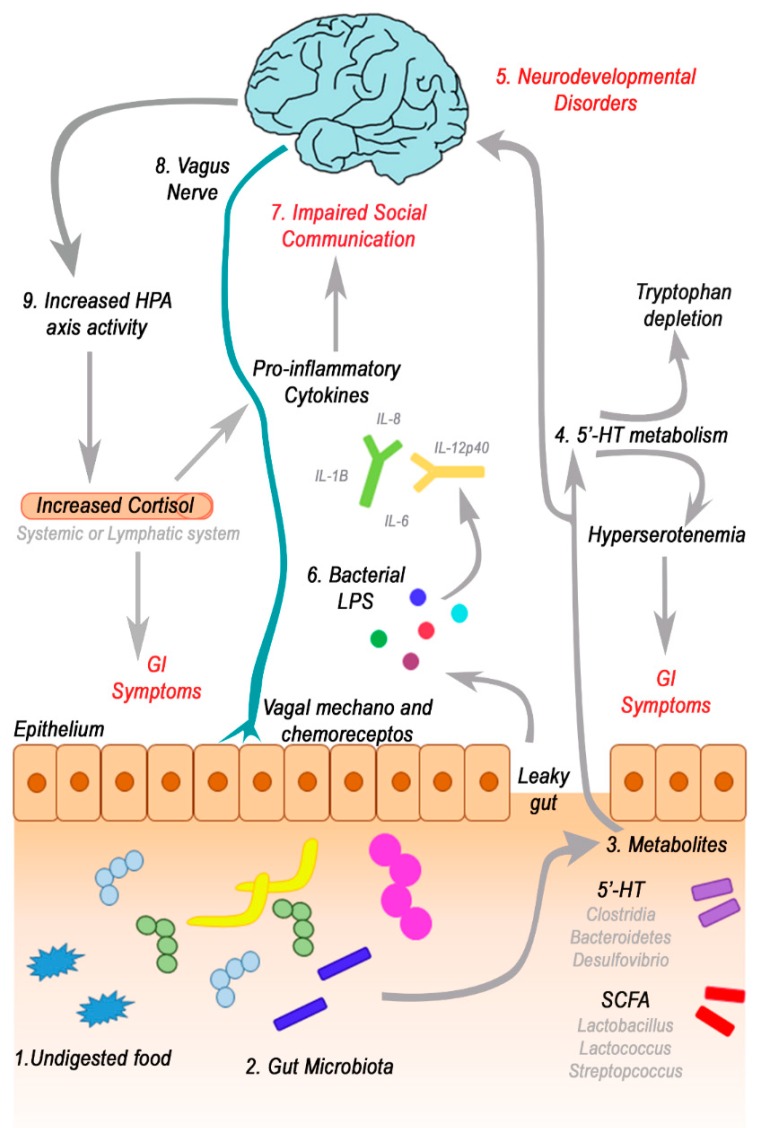
“This picture shows how there is a bidirectional influence between microbiota and diet, through the production of metabolites, which can be characterized through metabolomics and can help to delineate new therapeutical strategies in autistic patients.”
§ Autism, Gastrointestinal Symptoms and Modulation of Gut Microbiota by Nutritional Interventions > 4. The role of GI Symptoms, Gut Microbiota and Gut-Brain Axis in ASD > 4.3. Focus on Bacterial Metabolites and Gut-Brain Axis
plaindirect- Asserted: passes — The authors put it forward as true.
- Checkable: passes — It can be checked against evidence.
- Load-bearing: passes — The paper’s conclusions depend on it.
- Based: passes — The paper gives a reason why it holds.
It may state two separate claims as one.
None of the sources cited for this claim have been checked yet.
In the paper
“In addition to direct effects on the brain, propionate has been shown to modulate 5-hydroxytryptamine (5’-HT) secretion in the gut and deplete 5’-HT and dopamine levels in the brain, which could potentially contribute to the hyperserotonemia observed in children with ASD [182,183,184].”
§ Autism, Gastrointestinal Symptoms and Modulation of Gut Microbiota by Nutritional Interventions > 4. The role of GI Symptoms, Gut Microbiota and Gut-Brain Axis in ASD > 4.3. Focus on Bacterial Metabolites and Gut-Brain Axis
What the sources say
- Not checked yetcites [182] Reigstad, 2015, Gut microbes promote colonic serotonin production through an effect of short-chain fatty acids on enterochromaffin cells, FASEB J. source
- Not checked yetcites [183] 2014, Relative abundance of short chain and polyunsaturated fatty acids in propionic acid-induced autistic features in rat pups as potential markers in autism, Lipids Health Dis. source
- Not checked yetcites [184] Al-Ghamdi, M., Al-Ayadhi, L., and El-Ansary, A. (2014). Selected biomarkers as predictive tools in testing efficacy of melatonin and coenzyme Q on propionic acid—Induced neurotoxicity in rodent model of autism. BMC Neurosci., 15. source
hedgedconditional- Asserted: passes — The authors put it forward as true.
- Checkable: passes — It can be checked against evidence.
- Load-bearing: unclear — It is unclear whether the paper’s conclusions depend on it.
- Based: passes — The paper gives a reason why it holds.
It may state two separate claims as one.
None of the sources cited for this claim have been checked yet.
In the paper
“In ASD, abnormal intestinal permeability could allow 5′-HT to translocate into the systemic circulation, leading to elevated levels of blood 5′-HT [34,35,127,193].”
§ Autism, Gastrointestinal Symptoms and Modulation of Gut Microbiota by Nutritional Interventions > 4. The role of GI Symptoms, Gut Microbiota and Gut-Brain Axis in ASD > 4.3. Focus on Bacterial Metabolites and Gut-Brain Axis
What the sources say
- Not checked yetcites [34] Celli, 1996, Abnormal intestinal permeability in children with autism, Acta Paediatr. source
- Not checked yetcites [35] Familiari, 2010, Alterations of the intestinal barrier in patients with autism spectrum disorders and in their first-degree relatives, J. Pediatr. Gastroenterol. Nutr. source
- Not checked yetcites [127] Ibrahim, 2009, Incidence of gastrointestinal symptoms in children with autism: A population-based study, Pediatrics source
- Not checked yetcites [193] Gabriele, 2014, Blood serotonin levels in autism spectrum disorder: A systematic review and meta-analysis, Eur. Neuropsychopharmacol. source
hedgedconditional- Asserted: passes — The authors put it forward as true.
- Checkable: passes — It can be checked against evidence.
- Load-bearing: unclear — It is unclear whether the paper’s conclusions depend on it.
- Based: passes — The paper gives a reason why it holds.
It may state two separate claims as one.
In the paper
“5′-HT is elevated in whole blood and platelets in approximately 30% of children with ASD, making it a potential candidate as a biomarker for ASD [193].”
§ Autism, Gastrointestinal Symptoms and Modulation of Gut Microbiota by Nutritional Interventions > 4. The role of GI Symptoms, Gut Microbiota and Gut-Brain Axis in ASD > 4.3. Focus on Bacterial Metabolites and Gut-Brain Axis
What the sources say
- Not checked yetcites [193] Gabriele, 2014, Blood serotonin levels in autism spectrum disorder: A systematic review and meta-analysis, Eur. Neuropsychopharmacol. source
hedgedcorrelational- Asserted: passes — The authors put it forward as true.
- Checkable: passes — It can be checked against evidence.
- Load-bearing: unclear — It is unclear whether the paper’s conclusions depend on it.
- Based: passes — The paper gives a reason why it holds.
It may state two separate claims as one.
A conclusion the paper draws from its own results — it cites no other source for it, so there is none to check. The quote shows it is in the paper.
In the paper
“These data indicate that the gut microbiota could be involved in higher 5′-HT production, thus identifying 5′-HT as a potential pathway through which the gut microbiota and brain communicate in ASD.”
§ Autism, Gastrointestinal Symptoms and Modulation of Gut Microbiota by Nutritional Interventions > 4. The role of GI Symptoms, Gut Microbiota and Gut-Brain Axis in ASD > 4.3. Focus on Bacterial Metabolites and Gut-Brain Axis
hedgedconditional- Asserted: passes — The authors put it forward as true.
- Checkable: passes — It can be checked against evidence.
- Load-bearing: passes — The paper’s conclusions depend on it.
- Based: passes — The paper gives a reason why it holds.
It may state two separate claims as one.
None of the sources cited for this claim have been checked yet.
In the paper
“Furthermore, ASD patients have high level of free amino acids (FAAs) [186], which are derived from hydrolysis of proteins and peptides, like glutamate that may be involved in the etiopathogenesis of neurodevelopmental disorders [187].”
§ Autism, Gastrointestinal Symptoms and Modulation of Gut Microbiota by Nutritional Interventions > 4. The role of GI Symptoms, Gut Microbiota and Gut-Brain Axis in ASD > 4.3. Focus on Bacterial Metabolites and Gut-Brain Axis
What the sources say
- Not checked yetcites [186] Ming, 2012, Metabolic perturbance in autism spectrum disorders: A metabolomics study, J. Proteome Res. source
- Not checked yetcites [187] Shimmura, C., Suda, S., Tsuchiya, K.J., Hashimoto, K., Ohno, K., Matsuzaki, H., Iwata, K., Matsumoto, K., Wakuda, T., and Kameno, Y. (2011). Alteration of plasma glutamate and glutamine levels in children with high-functioning autism. PLoS ONE, 6. source
hedgedconditional- Asserted: passes — The authors put it forward as true.
- Checkable: passes — It can be checked against evidence.
- Load-bearing: unclear — It is unclear whether the paper’s conclusions depend on it.
- Based: passes — The paper gives a reason why it holds.
It may state two separate claims as one.
None of the sources cited for this claim have been checked yet.
In the paper
“In fact, higher levels of AA and PPA that is used as a preservative in the food industry and can also induce autistic-like behaviors in rodents have been reported in ASD children [177,178].”
§ Autism, Gastrointestinal Symptoms and Modulation of Gut Microbiota by Nutritional Interventions > 4. The role of GI Symptoms, Gut Microbiota and Gut-Brain Axis in ASD > 4.3. Focus on Bacterial Metabolites and Gut-Brain Axis
What the sources say
- Not checked yetcites [177] Peppelenbosch, 2010, Biological effects of propionic acid in humans; metabolism, potential applications and underlying mechanisms, Biochim. Biophys. Acta source
- Not checked yetcites [178] Liu, 2019, Altered composition and function of intestinal microbiota in autism spectrum disorders: A systematic review, Transl. Psychiatry source
plaindirect- Asserted: passes — The authors put it forward as true.
- Checkable: passes — It can be checked against evidence.
- Load-bearing: unclear — It is unclear whether the paper’s conclusions depend on it.
- Based: passes — The paper gives a reason why it holds.
It may state two separate claims as one.
In the paper
“At the same time, lower levels of BA, that can positively modulates neurotransmitter gene expression and can rescue behavioural abnormalities in mouse model, have been reported in ASD [179].”
§ Autism, Gastrointestinal Symptoms and Modulation of Gut Microbiota by Nutritional Interventions > 4. The role of GI Symptoms, Gut Microbiota and Gut-Brain Axis in ASD > 4.3. Focus on Bacterial Metabolites and Gut-Brain Axis
What the sources say
- Not checked yetcites [179] Kratsman, 2016, Sodium butyrate attenuates social behavior deficits and modifies the transcription of inhibitory/excitatory genes in the frontal cortex of an autism model, Neuropharmacology source
plaindirect- Asserted: passes — The authors put it forward as true.
- Checkable: passes — It can be checked against evidence.
- Load-bearing: unclear — It is unclear whether the paper’s conclusions depend on it.
- Based: passes — The paper gives a reason why it holds.
It may state two separate claims as one.
In the paper
“High levels of 5′HT may be caused by a gastrointestinal 5′HT hypersecretion, produced by the enterochromaffin cells in the gut and it is involved in functions such as motility and secretion [189].”
§ Autism, Gastrointestinal Symptoms and Modulation of Gut Microbiota by Nutritional Interventions > 4. The role of GI Symptoms, Gut Microbiota and Gut-Brain Axis in ASD > 4.3. Focus on Bacterial Metabolites and Gut-Brain Axis
What the sources say
- Not checked yetcites [189] Gheorghe, 2019, Focus on the essentials: Tryptophan metabolism and the microbiome-gut-brain axis, Curr. Opin. Pharmacol. source
hedgedconditional- Asserted: passes — The authors put it forward as true.
- Checkable: passes — It can be checked against evidence.
- Load-bearing: unclear — It is unclear whether the paper’s conclusions depend on it.
- Based: passes — The paper gives a reason why it holds.
It may state two separate claims as one.
None of the sources cited for this claim have been checked yet.
In the paper
“Moreover, ASD patients seem to be characterized by both elevated levels of SCFA concentrations in stool and serum, and increased level of SCFA-producing bacteria (e.g., Clostridia, Desulfovibrio, and Bacteroides) [29,36,180].”
§ Autism, Gastrointestinal Symptoms and Modulation of Gut Microbiota by Nutritional Interventions > 4. The role of GI Symptoms, Gut Microbiota and Gut-Brain Axis in ASD > 4.3. Focus on Bacterial Metabolites and Gut-Brain Axis
What the sources say
- Not checked yetcites [29] Adams, J.B., Johansen, L.J., Powell, L.D., Quig, D., and Rubin, R.A. (2011). Gastrointestinal flora and gastrointestinal status in children with autism—Comparisons to typical children and correlation with autism severity. BMC Gastroenterol., 11. source
- Not checked yetcites [36] De Angelis, M., Piccolo, M., Vannini, L., Siragusa, S., De Giacomo, A., Serrazzanetti, D.I., Cristofori, F., Guerzoni, M.E., Gobbetti, M., and Francavilla, R. (2013). Fecal Microbiota and Metabolome of Children with Autism and Pervasive Developmental Disorder Not Otherwise Specified. PLoS ONE, 8. source
- Not checked yetcites [180] Wang, 2012, Elevated fecal short chain fatty acid and ammonia concentrations in children with autism spectrum disorder, Dig. Dis. Sci. source
hedgedcorrelational- Asserted: passes — The authors put it forward as true.
- Checkable: passes — It can be checked against evidence.
- Load-bearing: unclear — It is unclear whether the paper’s conclusions depend on it.
- Based: passes — The paper gives a reason why it holds.
It may state two separate claims as one.
In the paper
“Lastly, higher levels of 5′-HT in children with ASD can be linked to intestinal inflammation and play an important role in intestinal inflammatory responses [200], so there is a connection between enteric serotonin production and dysbiosis.”
§ Autism, Gastrointestinal Symptoms and Modulation of Gut Microbiota by Nutritional Interventions > 4. The role of GI Symptoms, Gut Microbiota and Gut-Brain Axis in ASD > 4.3. Focus on Bacterial Metabolites and Gut-Brain Axis
What the sources say
- Not checked yetcites [200] Bischoff, 2009, Role of serotonin in intestinal inflammation: Knockout of serotonin reuptake transporter exacerbates 2,4,6-trinitrobenzene sulfonic acid colitis in mice, Am. J. Physiol. Gastrointest. Liver Physiol. source
plaincorrelational- Asserted: passes — The authors put it forward as true.
- Checkable: passes — It can be checked against evidence.
- Load-bearing: passes — The paper’s conclusions depend on it.
- Based: passes — The paper gives a reason why it holds.
It may state two separate claims as one.
In the paper
“On the other hand, dysbiosis can decrease the number of amino acids that are absorbed from the diet and reduce the availability of tryptophan [201], that is a precursor for a number of metabolites as serotonin, thus creating a vicious cycle.”
§ Autism, Gastrointestinal Symptoms and Modulation of Gut Microbiota by Nutritional Interventions > 4. The role of GI Symptoms, Gut Microbiota and Gut-Brain Axis in ASD > 4.3. Focus on Bacterial Metabolites and Gut-Brain Axis
What the sources say
- Not checked yetcites [201] Kraneveld, 2016, Gut-to-Brain Axis in Autism Spectrum Disorders: Central Role for the Microbiome, Int. Rev. Neurobiol. source
plaindirect- Asserted: passes — The authors put it forward as true.
- Checkable: passes — It can be checked against evidence.
- Load-bearing: unclear — It is unclear whether the paper’s conclusions depend on it.
- Based: passes — The paper gives a reason why it holds.
It may state two separate claims as one.
None of the sources cited for this claim have been checked yet.
In the paper
“This corresponds to data showing decreased capacity for 5′-HT synthesis in children with ASD as well as to reports showing a worsening in repetitive behaviors in individuals with ASD after tryptophan depletion [191,199].”
§ Autism, Gastrointestinal Symptoms and Modulation of Gut Microbiota by Nutritional Interventions > 4. The role of GI Symptoms, Gut Microbiota and Gut-Brain Axis in ASD > 4.3. Focus on Bacterial Metabolites and Gut-Brain Axis
What the sources say
- Not checked yetcites [191] Chugani, 1999, Developmental changes in brain serotonin synthesis capacity in autistic and nonautistic children, Ann. Neurol. source
- Not checked yetcites [199] McDougle, 1996, Effects of tryptophan depletion in drug-free adults with autistic disorder, Arch. Gen. Psychiatry source
plaindirect- Asserted: passes — The authors put it forward as true.
- Checkable: passes — It can be checked against evidence.
- Load-bearing: passes — The paper’s conclusions depend on it.
- Based: passes — The paper gives a reason why it holds.
It may state two separate claims as one.
A conclusion the paper draws from its own results — it cites no other source for it, so there is none to check. The quote shows it is in the paper.
In the paper
“Increased levels of 5′-HT result in a different modulation of 5′-HT metabolism in the host, leading to tryptophan depletion and hyperserotoninemia, which may affect GI symptoms.”
§ Autism, Gastrointestinal Symptoms and Modulation of Gut Microbiota by Nutritional Interventions > 5. Conclusions
hedgeddirect- Asserted: passes — The authors put it forward as true.
- Checkable: passes — It can be checked against evidence.
- Load-bearing: passes — The paper’s conclusions depend on it.
- Based: unclear — It is unclear why the paper says it holds.
It may state two separate claims as one.
The paper states this without a source or data behind it here, so there is nothing to check it against. The quote shows it is in the paper.
In the paper
“As a consequence, an increase in pro-inflammatory cytokines (e.g., IL-1B, IL-6, IL-8, and IL-12p40) was observed, which are associated with impaired social communication and neurodevelopmental disorders.”
§ Autism, Gastrointestinal Symptoms and Modulation of Gut Microbiota by Nutritional Interventions > 5. Conclusions
plaincorrelational- Asserted: passes — The authors put it forward as true.
- Checkable: passes — It can be checked against evidence.
- Load-bearing: passes — The paper’s conclusions depend on it.
- Based: unclear — It is unclear why the paper says it holds.
It may state two separate claims as one.
The paper relies on this without support.
Diet induces changes in the intestinal microbiota and in the production of molecules such as short-chain fatty acids (SCFAs).
“Since the diet induces changes in the intestinal microbiota and in the production of molecules, such as the SCFA, we wanted to investigate the role that nutritional intervention can have on GI microbiota composition and thus on its influence on behavior, GI symptoms and microbiota composition and report which are the beneficial effect on ASD conditions.”
The paper relies on this without support.
Ketogenic diet is associated with higher inflammatory and defective mitochondria risk, and its side effects of constipation and reflux may worsen GI comorbidities in ASD.
“However, KD is associated with higher inflammatory and defective mitochondria risk and its side effects of constipation and reflux may worsen GI comorbidities in ASD.”
Claims other papers make about this one
Each is checked against this paper’s own text: does it say what the citing paper says it does?
In the citing paper
“Furthermore, a decrease in the abundance of Eubacterium and Enterococcus populations within the gastrointestinal tracts of patients diagnosed with ASD has been observed when compared to healthy populations [52,107,109].”
From The Gut–Brain–Microbiota Connection and Its Role in Autism Spectrum Disorders (2025) · cites this paper as [107]
In the citing paper
“In addition, the presence of Staphylococcus, Coprococcus, Lactococcus, and Flavonifractor may be detected in lower quantities [8,52,107,111,114,115].”
From The Gut–Brain–Microbiota Connection and Its Role in Autism Spectrum Disorders (2025) · cites this paper as [107]
In the citing paper
“Moreover, a decrease in the populations of Akkermansia and Sutterella, with a particular emphasis on Akkermansia muciniphila species, was observed in healthy controls [52,89,107,109,110].”
From The Gut–Brain–Microbiota Connection and Its Role in Autism Spectrum Disorders (2025) · cites this paper as [107]
In the citing paper
“The scientific research on the genus Prevotella, including the species P. copri, yielded equivocal results [102,103,107,110,112,114,115].”
From The Gut–Brain–Microbiota Connection and Its Role in Autism Spectrum Disorders (2025) · cites this paper as [107]
In the citing paper
“As the nature of these alterations is multifactorial, and includes genetical, morphophysiological, nutritional, psychological alterations, as well as sociodemographic and environmental factors, among others”
From Food Selectivity and Its Implications Associated with Gastrointestinal Disorders in Children with Autism Spectrum Disorders (2022) · cites this paper as [69]
Citations
Cites
Diagnostic and Statistical Manual of Mental Disorders
American Psychiatric Association (2013) · doi:10.1176/appi.books.9780890425596 · Cited by 116,369
An obesity-associated gut microbiome with increased capacity for energy harvest
Turnbaugh, P. J., Ley, R. E., Mahowald, M. A., Magrini, V., Mardis, E. R., & Gordon, J. I. (2006) · Nature · doi:10.1038/nature05414 · Cited by 12,444
Baio, J., Wiggins, L., Christensen, D. L., Maenner, M. J., Daniels, J., Warren, Z., Kurzius-Spencer, M., Zahorodny, W., Robinson, C., Rosenberg, et al. (2018) · MMWR. Surveillance Summaries · doi:10.15585/mmwr.ss6706a1 · Cited by 6,078
Indigenous bacteria from the gut microbiota regulate host serotonin biosynthesis
Yano, J. M., Yu, K., Donaldson, G. P., Shastri, G. G., Ann, P., Ma, L., Nagler, C. R., Ismagilov, R. F., Mazmanian, S. K., & Hsiao, E. Y. (2015) · Cell · doi:10.1016/j.cell.2015.02.047 · Cited by 3,614
Host microbiota constantly control maturation and function of microglia in the CNS
Erny, D., Hrabě de Angelis, A. L., Jaitin, D., Wieghofer, P., Staszewski, O., David, E., Keren-Shaul, H., Mahlakoiv, T., Jakobshagen, K., Buch, T., et al. (2015) · Nature Neuroscience · doi:10.1038/nn.4030 · Cited by 3,569
Hsiao, E. Y., McBride, S. W., Hsien, S., Sharon, G., Hyde, E. R., McCue, T., Codelli, J. A., Chow, J., Reisman, S. E., Petrosino, J. F., et al. (2013) · Cell · doi:10.1016/j.cell.2013.11.024 · Cited by 3,283
Normal gut microbiota modulates brain development and behavior
Heijtz, R. D., Wang, S., Anuar, F., Qian, Y., Björkholm, B., Samuelsson, A., Hibberd, M. L., Forssberg, H., & Pettersson, S. (2011) · Proceedings of the National Academy of Sciences · doi:10.1073/pnas.1010529108 · Cited by 3,228
de Lorgeril, M., Salen, P., Martin, J.-L., Monjaud, I., Delaye, J., & Mamelle, N. (1999) · Circulation · doi:10.1161/01.cir.99.6.779 · Cited by 2,910
Sudo, N., Chida, Y., Aiba, Y., Sonoda, J., Oyama, N., Yu, X., Kubo, C., & Koga, Y. (2004) · The Journal of Physiology · doi:10.1113/jphysiol.2004.063388 · Cited by 2,735
Genetic relationship between five psychiatric disorders estimated from genome-wide SNPs
Cross-Disorder Group of the Psychiatric Genomics Consortium (2013) · Nature Genetics · doi:10.1038/ng.2711 · Cited by 2,263
Neuroglial activation and neuroinflammation in the brain of patients with autism
Vargas, D. L., Nascimbene, C., Krishnan, C., Zimmerman, A. W., & Pardo, C. A. (2005) · Annals of Neurology · doi:10.1002/ana.20315 · Cited by 2,149 · cited 1×
“In a study that analyzed autopsy and cerebrospinal fluid (CSF) of individuals with ASD, a neuroinflammatory response involving excess microglial activation and increased proinflammatory cytokine profiles as compared to non-ASD controls was found [153].”
Systemic LPS causes chronic neuroinflammation and progressive neurodegeneration
Qin, L., Wu, X., Block, M. L., Liu, Y., Breese, G. R., Hong, J., Knapp, D. J., & Crews, F. T. (2007) · Glia · doi:10.1002/glia.20467 · Cited by 2,144
Durand, C. M., Betancur, C., Boeckers, T. M., Bockmann, J., Chaste, P., Fauchereau, F., Nygren, G., Rastam, M., Gillberg, I. C., Anckarsäter, H., et al. (2007) · Nature Genetics · doi:10.1038/ng1933 · Cited by 1,602
Shank3 mutant mice display autistic-like behaviours and striatal dysfunction
Peça, J., Feliciano, C., Ting, J. T., Wang, W., Wells, M. F., Venkatraman, T. N., Lascola, C. D., Fu, Z., & Feng, G. (2011) · Nature · doi:10.1038/nature09965 · Cited by 1,570
Neufeld, K. M., Kang, N., Bienenstock, J., & Foster, J. A. (2011) · Neurogastroenterology & Motility · doi:10.1111/j.1365-2982.2010.01620.x · Cited by 1,392
Reigstad, C. S., Salmonson, C. E., III, J. F. R., Szurszewski, J. H., Linden, D. R., Sonnenburg, J. L., Farrugia, G., & Kashyap, P. C. (2015) · The FASEB Journal · doi:10.1096/fj.14-259598 · Cited by 1,335
Most genetic risk for autism resides with common variation
Gaugler, T., Klei, L., Sanders, S. J., Bodea, C. A., Goldberg, A. P., Lee, A. B., Mahajan, M., Manaa, D., Pawitan, Y., Reichert, J., et al. (2014) · Nature Genetics · doi:10.1038/ng.3039 · Cited by 1,239
Zhan, Y., Paolicelli, R. C., Sforazzini, F., Weinhard, L., Bolasco, G., Pagani, F., Vyssotski, A. L., Bifone, A., Gozzi, A., Ragozzino, D., et al. (2014) · Nature Neuroscience · doi:10.1038/nn.3641 · Cited by 1,236
γ-Aminobutyric acid production by culturable bacteria from the human intestine
Barrett, E., Ross, R. P., O'Toole, P. W., Fitzgerald, G. F., & Stanton, C. (2012) · Journal of Applied Microbiology · doi:10.1111/j.1365-2672.2012.05344.x · Cited by 1,156
Control of brain development, function, and behavior by the microbiome
Sampson, T. R., & Mazmanian, S. K. (2015) · Cell Host & Microbe · doi:10.1016/j.chom.2015.04.011 · Cited by 1,093
Adams, J. B., Johansen, L. J., Powell, L. D., Quig, D., & Rubin, R. A. (2011) · BMC Gastroenterology · doi:10.1186/1471-230x-11-22 · Cited by 1,076
New evidences on the altered gut microbiota in autism spectrum disorders
Strati, F., Cavalieri, D., Albanese, D., De Felice, C., Donati, C., Hayek, J., Jousson, O., Leoncini, S., Renzi, D., Calabrò, A., et al. (2017) · Microbiome · doi:10.1186/s40168-017-0242-1 · Cited by 1,040
Pyrosequencing study of fecal microflora of autistic and control children
Finegold, S. M., Dowd, S. E., Gontcharova, V., Liu, C., Henley, K. E., Wolcott, R. D., Youn, E., Summanen, P. H., Granpeesheh, D., Dixon, D., et al. (2010) · Anaerobe · doi:10.1016/j.anaerobe.2010.06.008 · Cited by 977
Reduced incidence of Prevotella and other fermenters in intestinal microflora of autistic children
Kang, D.-W., Park, J. G., Ilhan, Z. E., Wallstrom, G., LaBaer, J., Adams, J. B., & Krajmalnik-Brown, R. (2013) · PLoS ONE · doi:10.1371/journal.pone.0068322 · Cited by 976
Concept Evolution in Sensory Integration: A Proposed Nosology for Diagnosis
Miller, L. J., Anzalone, M. E., Lane, S. J., Cermak, S. A., & Osten, E. T. (2007) · American Journal of Occupational Therapy · doi:10.5014/ajot.61.2.135 · Cited by 953
Ashwood, P., Krakowiak, P., Hertz-Picciotto, I., Hansen, R., Pessah, I., & Van de Water, J. (2011) · Brain, Behavior, and Immunity · doi:10.1016/j.bbi.2010.08.003 · Cited by 940
Bacterial infection causes stress-induced memory dysfunction in mice
Gareau, M. G., Wine, E., Rodrigues, D. M., Cho, J. H., Whary, M. T., Philpott, D. J., MacQueen, G., & Sherman, P. M. (2011) · Gut · doi:10.1136/gut.2009.202515 · Cited by 909
De Angelis, M., Piccolo, M., Vannini, L., Siragusa, S., De Giacomo, A., Serrazzanetti, D. I., Cristofori, F., Guerzoni, M. E., Gobbetti, M., & Francavilla, R. (2013) · PLoS ONE · doi:10.1371/journal.pone.0076993 · Cited by 887
Buie, T., Campbell, D. B., Fuchs, G. J., Furuta, G. T., Levy, J., VandeWater, J., Whitaker, A. H., Atkins, D., Bauman, M. L., Beaudet, A. L., et al. (2010) · Pediatrics · doi:10.1542/peds.2009-1878c · Cited by 872
Microbiota is essential for social development in the mouse
Desbonnet, L., Clarke, G., Shanahan, F., Dinan, T. G., & Cryan, J. F. (2014) · Molecular Psychiatry · doi:10.1038/mp.2013.65 · Cited by 866
Gastrointestinal Symptoms in Autism Spectrum Disorder: A Meta-analysis
McElhanon, B. O., McCracken, C., Karpen, S., & Sharp, W. G. (2014) · Pediatrics · doi:10.1542/peds.2013-3995 · Cited by 831 · cited 1×
“Immune dysfunction and gastrointestinal (GI) inflammation are also common in individuals with ASD and contribute to severity of behaviors [28,32,33].”
BackgroundAutism risk factors: genes, environment, and gene-environment interactions
Chaste, P., & Leboyer, M. (2012) · Dialogues in Clinical Neuroscience · doi:10.31887/dcns.2012.14.3/pchaste · Cited by 807
The role of microbiome in central nervous system disorders
Wang, Y., & Kasper, L. H. (2014) · Brain Behavior and Immunity · doi:10.1016/j.bbi.2013.12.015 · Cited by 803
Mediterranean diet, stroke, cognitive impairment, and depression: A meta‐analysis
Psaltopoulou, T., Sergentanis, T. N., Panagiotakos, D. B., Sergentanis, I. N., Kosti, R., & Scarmeas, N. (2013) · Annals of Neurology · doi:10.1002/ana.23944 · Cited by 793
Parracho, H. M., Bingham, M. O., Gibson, G. R., & McCartney, A. L. (2005) · Journal of Medical Microbiology · doi:10.1099/jmm.0.46101-0 · Cited by 784
The Heritability of Autism Spectrum Disorder
Sandin, S., Lichtenstein, P., Kuja-Halkola, R., Hultman, C., Larsson, H., & Reichenberg, A. (2017) · JAMA · doi:10.1001/jama.2017.12141 · Cited by 776
Gut microbiota depletion from early adolescence in mice: implications for brain and behaviour
Desbonnet, L., Clarke, G., Traplin, A., O’Sullivan, O., Crispie, F., Moloney, R. D., Cotter, P. D., Dinan, T. G., & Cryan, J. F. (2015) · Brain Behavior and Immunity · doi:10.1016/j.bbi.2015.04.004 · Cited by 760
Food selectivity and sensory sensitivity in children with autism spectrum disorders
Cermak, S. A., Curtin, C., & Bandini, L. G. (2010) · Journal of the American Dietetic Association · doi:10.1016/j.jada.2009.10.032 · Cited by 750
Long-term benefit of microbiota transfer therapy on autism symptoms and gut microbiota
Kang, D.-W., Adams, J. B., Coleman, D. M., Pollard, E. L., Maldonado, J., McDonough-Means, S., Caporaso, J. G., & Krajmalnik-Brown, R. (2019) · Scientific Reports · doi:10.1038/s41598-019-42183-0 · Cited by 749
Gastrointestinal Microflora Studies in Late‐Onset Autism
Finegold, S. M., Molitoris, D., Song, Y., Liu, C., Vaisanen, M., Bolte, E., McTeague, M., Sandler, R., Wexler, H., Marlowe, E. M., et al. (2002) · Clinical Infectious Diseases · doi:10.1086/341914 · Cited by 742
The role of short chain fatty acids in appetite regulation and energy homeostasis
Byrne, C. S., Chambers, E. S., Morrison, D. J., & Frost, G. (2015) · International Journal of Obesity · doi:10.1038/ijo.2015.84 · Cited by 707
Food Selectivity in Children with Autism Spectrum Disorders and Typically Developing Children
Bandini, L. G., Anderson, S. E., Curtin, C., Cermak, S., Evans, E. W., Scampini, R., Maslin, M., & Must, A. (2010) · The Journal of Pediatrics · doi:10.1016/j.jpeds.2010.02.013 · Cited by 664
Sharp, W. G., Berry, R. C., McCracken, C., Nuhu, N. N., Marvel, E., Saulnier, C. A., Klin, A., Jones, W., & Jaquess, D. L. (2013) · Journal of Autism and Developmental Disorders · doi:10.1007/s10803-013-1771-5 · Cited by 643
The role of immune dysfunction in the pathophysiology of autism
Onore, C., Careaga, M., & Ashwood, P. (2012) · Brain, Behavior, and Immunity · doi:10.1016/j.bbi.2011.08.007 · Cited by 635
Gastrointestinal microbiota in children with autism in Slovakia
Tomova, A., Husarova, V., Lakatosova, S., Bakos, J., Vlkova, B., Babinska, K., & Ostatnikova, D. (2015) · Physiology & Behavior · doi:10.1016/j.physbeh.2014.10.033 · Cited by 632
Leblond, C. S., Nava, C., Polge, A., Gauthier, J., Huguet, G., Lumbroso, S., Giuliano, F., Stordeur, C., Depienne, C., Mouzat, K., et al. (2014) · PLoS Genetics · doi:10.1371/journal.pgen.1004580 · Cited by 630
Al-Lahham, S. H., Peppelenbosch, M. P., Roelofsen, H., Vonk, R. J., & Venema, K. (2010) · Biochimica et Biophysica Acta (BBA) - Molecular and Cell Biology of Lipids · doi:10.1016/j.bbalip.2010.07.007 · Cited by 614
Reconceptualizing functional brain connectivity in autism from a developmental perspective
Uddin, L. Q., Supekar, K., & Menon, V. (2013) · Frontiers in Human Neuroscience · doi:10.3389/fnhum.2013.00458 · Cited by 606
Studies on 5-hydroxyindole metabolism in autistic and other mentally retarded children
Schain, R. J., & Freedman, D. X. (1961) · The Journal of Pediatrics · doi:10.1016/s0022-3476(61)80261-8 · Cited by 579
de Magistris, L., Familiari, V., Pascotto, A., Sapone, A., Frolli, A., Iardino, P., Carteni, M., De Rosa, M., Francavilla, R., Riegler, G., et al. (2010) · Journal of Pediatric Gastroenterology and Nutrition · doi:10.1097/mpg.0b013e3181dcc4a5 · Cited by 546
The serotonin system in autism spectrum disorder: From biomarker to animal models
Muller, C. L., Anacker, A. M. J., & Veenstra-VanderWeele, J. (2016) · Neuroscience · doi:10.1016/j.neuroscience.2015.11.010 · Cited by 531
Gastrointestinal Problems in Children with Autism, Developmental Delays or Typical Development
Chaidez, V., Hansen, R. L., & Hertz-Picciotto, I. (2014) · Journal of Autism and Developmental Disorders · doi:10.1007/s10803-013-1973-x · Cited by 528
Carruth, B. R., Ziegler, P. J., Gordon, A. R., & Barr, S. I. (2003) · Journal of the American Dietetic Association · doi:10.1016/j.jada.2003.10.024 · Cited by 527
Abnormal melatonin synthesis in autism spectrum disorders
Melke, J., Goubran Botros, H., Chaste, P., Betancur, C., Nygren, G., Anckarsäter, H., Rastam, M., Ståhlberg, O., Gillberg, I. C., Delorme, R., et al. (2008) · Molecular Psychiatry · doi:10.1038/sj.mp.4002016 · Cited by 511
Williams, B. L., Hornig, M., Buie, T., Bauman, M. L., Cho Paik, M., Wick, I., Bennett, A., Jabado, O., Hirschberg, D. L., & Lipkin, W. I. (2011) · PLoS ONE · doi:10.1371/journal.pone.0024585 · Cited by 492
Gastrointestinal abnormalities in children with autistic disorder
Horváth, K., Papadimitriou, J. C., Rabsztyn, A., Drachenberg, C. B., & Tildón, J. T. (1999) · The Journal of Pediatrics · doi:10.1016/s0022-3476(99)70052-1 · Cited by 489
The Genetic Landscapes of Autism Spectrum Disorders
Huguet, G., Ey, E., & Bourgeron, T. (2013) · Annual Review of Genomics and Human Genetics · doi:10.1146/annurev-genom-091212-153431 · Cited by 486
Autism Spectrum Disorders and the Gut Microbiota
Fattorusso, A., Di Genova, L., Dell’Isola, G., Mencaroni, E., & Esposito, S. (2019) · Nutrients · doi:10.3390/nu11030521 · Cited by 484
Correlates of specific childhood feeding problems
Field, D. G., Garland, M., & Williams, K. E. (2003) · Journal of Paediatrics and Child Health · doi:10.1046/j.1440-1754.2003.00151.x · Cited by 483
Melancholic microbes: a link between gut microbiota and depression
Dinan, T. G., & Cryan, J. F. (2013) · Neurogastroenterology & Motility · doi:10.1111/nmo.12198 · Cited by 424
Wang, L., Christophersen, C. T., Sorich, M. J., Gerber, J. P., Angley, M. T., & Conlon, M. A. (2013) · Molecular Autism · doi:10.1186/2040-2392-4-42 · Cited by 418
Abnormal intestinal permeability in children with autism
D'Eufemia, P., Celli, M., Finocchiaro, R., Pacifico, L., Viozzi, L., Zaccagnini, M., Cardi, E., & Giardini, O. (1996) · Acta Paediatrica · doi:10.1111/j.1651-2227.1996.tb14220.x · Cited by 416
Feeding and eating disorders in childhood
Bryant‐Waugh, R., Markham, L., Kreipe, R. E., & Walsh, B. T. (2010) · International Journal of Eating Disorders · doi:10.1002/eat.20795 · Cited by 416
Wang, L., Christophersen, C. T., Sorich, M. J., Gerber, J. P., Angley, M. T., & Conlon, M. A. (2012) · Digestive Diseases and Sciences · doi:10.1007/s10620-012-2167-7 · Cited by 412
The Possible Role of the Microbiota-Gut-Brain-Axis in Autism Spectrum Disorder
Srikantha, P., & Mohajeri, M. H. (2019) · International Journal of Molecular Sciences · doi:10.3390/ijms20092115 · Cited by 400
The end products of the metabolism of aromatic amino acids by Clostridia
Elsden, S. R., Hilton, M. G., & Waller, J. M. (1976) · Archives of Microbiology · doi:10.1007/bf00425340 · Cited by 396
Mediterranean diet and cardiovascular health: teachings of the PREDIMED study
Ros, E., Martínez-González, M. A., Estruch, R., Salas-Salvadó, J., Fitó, M., Martínez, J. A., & Corella, D. (2014) · Advances in Nutrition · doi:10.3945/an.113.005389 · Cited by 393
Curtin, C., Anderson, S. E., Must, A., & Bandini, L. (2010) · BMC Pediatrics · doi:10.1186/1471-2431-10-11 · Cited by 376
Raz, R., Roberts, A. L., Lyall, K., Hart, J. E., Just, A. C., Laden, F., & Weisskopf, M. G. (2014) · Environmental Health Perspectives · doi:10.1289/ehp.1408133 · Cited by 370
Herbert, M. R. (2010) · Current Opinion in Neurology · doi:10.1097/wco.0b013e328336a01f · Cited by 356
SCHRECK, K., & WILLIAMS, K. (2006) · Research in Developmental Disabilities · doi:10.1016/j.ridd.2005.03.005 · Cited by 355
Blood serotonin levels in autism spectrum disorder: A systematic review and meta-analysis
Gabriele, S., Sacco, R., & Persico, A. M. (2014) · European Neuropsychopharmacology · doi:10.1016/j.euroneuro.2014.02.004 · Cited by 346
Effects of a gluten-free diet on gut microbiota and immune function in healthy adult human subjects
De Palma, G., Nadal, I., Collado, M. C., & Sanz, Y. (2009) · British Journal Of Nutrition · doi:10.1017/s0007114509371767 · Cited by 344
Feeding Symptoms, Dietary Patterns, and Growth in Young Children With Autism Spectrum Disorders
Emond, A., Emmett, P., Steer, C., & Golding, J. (2010) · Pediatrics · doi:10.1542/peds.2009-2391 · Cited by 338
Liu, F., Li, J., Wu, F., Zheng, H., Peng, Q., & Zhou, H. (2019) · Translational Psychiatry · doi:10.1038/s41398-019-0389-6 · Cited by 336
Gastrointestinal dysfunction in autism: parental report, clinical evaluation, and associated factors
Gorrindo, P., Williams, K. C., Lee, E. B., Walker, L. S., McGrew, S. G., & Levitt, P. (2012) · Autism Research · doi:10.1002/aur.237 · Cited by 325
Di Cagno, R., De Angelis, M., De Pasquale, I., Ndagijimana, M., Vernocchi, P., Ricciuti, P., Gagliardi, F., Laghi, L., Crecchio, C., Guerzoni, M. E., et al. (2011) · BMC Microbiology · doi:10.1186/1471-2180-11-219 · Cited by 317
Whole blood serotonin in autistic and normal subjects
Anderson, G. M., Freedman, D. X., Cohen, D. J., Volkmar, F. R., Hoder, E. L., McPhedran, P., Minderaa, R. B., Hansen, C. R., & Young, J. G. (1987) · Journal of Child Psychology and Psychiatry · doi:10.1111/j.1469-7610.1987.tb00677.x · Cited by 313
Autism spectrum disorders and intestinal microbiota
De Angelis, M., Francavilla, R., Piccolo, M., De Giacomo, A., & Gobbetti, M. (2015) · Gut Microbes · doi:10.1080/19490976.2015.1035855 · Cited by 311
Xu, M., Xu, X., Li, J., & Li, F. (2019) · Frontiers in Psychiatry · doi:10.3389/fpsyt.2019.00473 · Cited by 309
VALICENTI-McDERMOTT, M., McVICAR, K., RAPIN, I., WERSHIL, B. K., COHEN, H., & SHINNAR, S. (2006) · Journal of Developmental & Behavioral Pediatrics · doi:10.1097/00004703-200604002-00011 · Cited by 302
Effects of tryptophan depletion in drug-free adults with autistic disorder
McDougle, C. (1996) · Archives of General Psychiatry · doi:10.1001/archpsyc.1996.01830110029004 · Cited by 301
Incidence of Gastrointestinal Symptoms in Children With Autism: A Population-Based Study
Ibrahim, S. H., Voigt, R. G., Katusic, S. K., Weaver, A. L., & Barbaresi, W. J. (2009) · PEDIATRICS · doi:10.1542/peds.2008-2933 · Cited by 298
Holingue, C., Newill, C., Lee, L., Pasricha, P. J., & Daniele Fallin, M. (2018) · Autism Research · doi:10.1002/aur.1854 · Cited by 296
Keita, Å. V., & Söderholm, J. D. (2010) · Neurogastroenterology & Motility · doi:10.1111/j.1365-2982.2010.01498.x · Cited by 286
Dietary patterns, Mediterranean diet, and cardiovascular disease
Martínez‐González, M. Á., & Bes‐Rastrollo, M. (2013) · Current Opinion in Lipidology · doi:10.1097/mol.0000000000000044 · Cited by 281
Application of a ketogenic diet in children with autistic behavior: Pilot study
Evangeliou, A., Vlachonikolis, I., Mihailidou, H., Spilioti, M., Skarpalezou, A., Makaronas, N., Prokopiou, A., Christodoulou, P., Liapi-Adamidou, G., Helidonis, E., et al. (2003) · Journal of Child Neurology · doi:10.1177/08830738030180020501 · Cited by 279
Developmental changes in large-scale network connectivity in autism
Nomi, J. S., & Uddin, L. Q. (2015) · NeuroImage: Clinical · doi:10.1016/j.nicl.2015.02.024 · Cited by 274
Ketogenic diet modifies the gut microbiota in a murine model of autism spectrum disorder
Newell, C., Bomhof, M. R., Reimer, R. A., Hittel, D. S., Rho, J. M., & Shearer, J. (2016) · Molecular Autism · doi:10.1186/s13229-016-0099-3 · Cited by 272
Autism spectrum disorders: Concurrent clinical disorders
Ming, X., Brimacombe, M., Chaaban, J., Zimmerman-Bier, B., & Wagner, G. C. (2008) · Journal of Child Neurology · doi:10.1177/0883073807307102 · Cited by 266
MacFabe, D. F. (2015) · Microbial Ecology in Health and Disease · doi:10.3402/mehd.v26.28177 · Cited by 263
The Gut Microbiome: A New Frontier in Autism Research
Mulle, J. G., Sharp, W. G., & Cubells, J. F. (2013) · Current Psychiatry Reports · doi:10.1007/s11920-012-0337-0 · Cited by 262
Wang, L. W., Tancredi, D. J., & Thomas, D. W. (2011) · Journal of Developmental & Behavioral Pediatrics · doi:10.1097/dbp.0b013e31821bd06a · Cited by 258
CACNA1H mutations in autism spectrum disorders
Splawski, I., Yoo, D. S., Stotz, S. C., Cherry, A., Clapham, D. E., & Keating, M. T. (2006) · Journal of Biological Chemistry · doi:10.1074/jbc.m603316200 · Cited by 255
Nutrient Intake From Food in Children With Autism
Hyman, S. L., Stewart, P. A., Schmidt, B., Cain, U., Lemcke, N., Foley, J. T., Peck, R., Clemons, T., Reynolds, A., Johnson, C., et al. (2012) · Pediatrics · doi:10.1542/peds.2012-0900l · Cited by 255
Food variety as a predictor of nutritional status among children with autism
Zimmer, M. H., Hart, L. C., Manning-Courtney, P., Murray, D. S., Bing, N. M., & Summer, S. (2012) · Journal of Autism and Developmental Disorders · doi:10.1007/s10803-011-1268-z · Cited by 254
Molloy, C. A., & Manning-Courtney, P. (2003) · Autism · doi:10.1177/1362361303007002004 · Cited by 249
Gastrointestinal symptoms in a sample of children with pervasive developmental disorders
Nikolov, R. N., Bearss, K. E., Lettinga, J., Erickson, C., Rodowski, M., Aman, M. G., McCracken, J. T., McDougle, C. J., Tierney, E., Vitiello, B., et al. (2009) · Journal of Autism and Developmental Disorders · doi:10.1007/s10803-008-0637-8 · Cited by 240
Zazpe (2014) · doi:10.1177/0883073813498821 · Cited by 239
Kratsman, N., Getselter, D., & Elliott, E. (2016) · Neuropharmacology · doi:10.1016/j.neuropharm.2015.11.003 · Cited by 239
The emerging role of SHANK genes in neuropsychiatric disorders
Guilmatre, A., Huguet, G., Delorme, R., & Bourgeron, T. (2014) · Developmental Neurobiology · doi:10.1002/dneu.22128 · Cited by 237
Metabolic Perturbance in Autism Spectrum Disorders: A Metabolomics Study
Ming, X., Stein, T. P., Barnes, V., Rhodes, N., & Guo, L. (2012) · Journal of Proteome Research · doi:10.1021/pr300910n · Cited by 234
Stilling, R. M., Ryan, F. J., Hoban, A. E., Shanahan, F., Clarke, G., Claesson, M. J., Dinan, T. G., & Cryan, J. F. (2015) · Brain Behavior and Immunity · doi:10.1016/j.bbi.2015.07.009 · Cited by 233
Hyperserotonemia and amine metabolites in autistic and retarded children
Hanley, H. G. (1977) · Archives of General Psychiatry · doi:10.1001/archpsyc.1977.01770170031002 · Cited by 230
Buie, T., Fuchs, G. J., Furuta, G. T., Kooros, K., Levy, J., Lewis, J. D., Wershil, B. K., & Winter, H. (2010) · Pediatrics · doi:10.1542/peds.2009-1878d · Cited by 228
Herndon, A. C., DiGuiseppi, C., Johnson, S. L., Leiferman, J., & Reynolds, A. (2009) · Journal of Autism and Developmental Disorders · doi:10.1007/s10803-008-0606-2 · Cited by 227
Autistic disorder and gastrointestinal disease
Horvath, K., & Perman, J. A. (2002) · Current Opinion in Pediatrics · doi:10.1097/00008480-200210000-00004 · Cited by 224
Adherence to Mediterranean diet reduces the risk of metabolic syndrome: A 6-year prospective study
Kesse‐Guyot, E., Ahluwalia, N., Lassale, C. M., Herçberg, S., Fezeu, L., & Lairon, D. (2012) · Nutrition Metabolism and Cardiovascular Diseases · doi:10.1016/j.numecd.2012.02.005 · Cited by 223
Mediterranean diet and metabolic diseases
Giugliano, D., & Esposito, K. (2008) · Current Opinion in Lipidology · doi:10.1097/mol.0b013e3282f2fa4d · Cited by 217
Eating habits of children with autism.
Williams, P. G., Dalrymple, N. J., & Neal, J. (2002) · PubMed · Cited by 216
Selmer, T., & Andrei, P. I. (2001) · European Journal of Biochemistry · doi:10.1046/j.1432-1327.2001.02001.x · Cited by 214
de Theije, C. G. M., Wu, J., da Silva, S. L., Kamphuis, P. J. G. H., Garssen, J., Korte, S. M., & Kraneveld, A. D. (2011) · European Journal of Pharmacology · doi:10.1016/j.ejphar.2011.07.013 · Cited by 212
Focus on the essentials: tryptophan metabolism and the microbiome-gut-brain axis
Gheorghe, C. E., Martin, J. A., Manriquez, F. V., Dinan, T. G., Cryan, J. F., & Clarke, G. (2019) · Current Opinion in Pharmacology · doi:10.1016/j.coph.2019.08.004 · Cited by 212
Mercury, lead, and zinc in baby teeth of children with autism versus controls
Adams, J. B., Romdalvik, J., Ramanujam, V. M. S., & Legator, M. S. (2007) · Journal of Toxicology and Environmental Health, Part A · doi:10.1080/15287390601172080 · Cited by 211
Lane, A. E., Molloy, C. A., & Bishop, S. L. (2014) · Autism Research · doi:10.1002/aur.1368 · Cited by 207
Bischoff, S. C., Mailer, R., Pabst, O., Weier, G., Sedlik, W., Li, Z., Chen, J. J., Murphy, D. L., & Gershon, M. D. (2009) · American Journal of Physiology-Gastrointestinal and Liver Physiology · doi:10.1152/ajpgi.90685.2008 · Cited by 206
Evidence for latent classes of IQ in young children with autism spectrum disorder
Munson, J., Dawson, G., Sterling, L., Beauchaine, T., Zhou, A., Koehler, E., Lord, C., Rogers, S., Sigman, M., Estes, A., et al. (2008) · American Journal on Mental Retardation · doi:10.1352/2008.113:439-452 · Cited by 204
Dietary Patterns and Body Mass Index in Children with Autism and Typically Developing Children
Evans, E. W., Must, A., Anderson, S. E., Curtin, C., Scampini, R., Maslin, M., & Bandini, L. (2012) · Research in Autism Spectrum Disorders · doi:10.1016/j.rasd.2011.06.014 · Cited by 201
Thomas, R. H., Meeking, M. M., Mepham, J. R., Tichenoff, L., Possmayer, F., Liu, S., & MacFabe, D. F. (2012) · Journal of Neuroinflammation · doi:10.1186/1742-2094-9-153 · Cited by 200
Reduced bone cortical thickness in boys with autism or autism spectrum disorder
Hediger, M. L., England, L. J., Molloy, C. A., Yu, K. F., Manning-Courtney, P., & Mills, J. L. (2008) · Journal of Autism and Developmental Disorders · doi:10.1007/s10803-007-0453-6 · Cited by 193
Griswold, A. J., Ma, D., Cukier, H. N., Nations, L. D., Schmidt, M. A., Chung, R.-H., Jaworski, J. M., Salyakina, D., Konidari, I., Whitehead, P. L., et al. (2012) · Human Molecular Genetics · doi:10.1093/hmg/dds164 · Cited by 191
Nadon, G., Feldman, D. E., Dunn, W., & Gisel, E. (2011) · Autism · doi:10.1177/1362361309348943 · Cited by 191
Gastrointestinal symptoms and behavioral problems in preschoolers with Autism Spectrum Disorder
Fulceri, F., Morelli, M., Santocchi, E., Cena, H., Del Bianco, T., Narzisi, A., Calderoni, S., & Muratori, F. (2016) · Digestive and Liver Disease · doi:10.1016/j.dld.2015.11.026 · Cited by 191
Alteration of Plasma Glutamate and Glutamine Levels in Children with High-Functioning Autism
Shimmura, C., Suda, S., Tsuchiya, K. J., Hashimoto, K., Ohno, K., Matsuzaki, H., Iwata, K., Matsumoto, K., Wakuda, T., Kameno, Y., et al. (2011) · PLoS ONE · doi:10.1371/journal.pone.0025340 · Cited by 189
Immunomodulation by commensal and probiotic bacteria
Forsythe, P., & Bienenstock, J. (2010) · Immunological Investigations · doi:10.3109/08820131003667978 · Cited by 189
Urinary p-cresol in autism spectrum disorder
Persico, A. M., & Napolioni, V. (2013) · Neurotoxicology and Teratology · doi:10.1016/j.ntt.2012.09.002 · Cited by 189
Nistal, E., Caminero, A., Herrán, A. R., Arias, L., Vivas, S., de Morales, J. M. R., Calleja, S., de Miera, L. E. S., Arroyo, P., & Casqueiro, J. (2012) · Inflammatory Bowel Diseases · doi:10.1002/ibd.21830 · Cited by 187
Adherence to the Mediterranean diet is associated with better mental and physical health
Muñoz, M.-A., Fíto, M., Marrugat, J., Covas, M.-I., & Schröder, H. (2008) · British Journal Of Nutrition · doi:10.1017/s0007114508143598 · Cited by 181
Revisiting the Picky Eater Phenomenon: Neophobic Behaviors of Young Children
Carruth, B. R., & Skinner, J. D. (2000) · Journal of the American College of Nutrition · doi:10.1080/07315724.2000.10718077 · Cited by 176
Ketogenic Diet Improves Core Symptoms of Autism in BTBR Mice
Ruskin, D. N., Svedova, J., Cote, J. L., Sandau, U., Rho, J. M., Kawamura, M., Boison, D., & Masino, S. A. (2013) · PLoS ONE · doi:10.1371/journal.pone.0065021 · Cited by 173
Obih, C., Wahbeh, G., Lee, D., Braly, K., Giefer, M., Shaffer, M. L., Nielson, H., & Suskind, D. L. (2016) · Nutrition · doi:10.1016/j.nut.2015.08.025 · Cited by 171
Evidence supporting an altered immune response in ASD
Mead, J., & Ashwood, P. (2015) · Immunology Letters · doi:10.1016/j.imlet.2014.11.006 · Cited by 165
The Mediterranean Diet and ADHD in Children and Adolescents
Ríos-Hernández, A., Alda, J. A., Farran-Codina, A., Ferreira-García, E., & Izquierdo-Pulido, M. (2017) · PEDIATRICS · doi:10.1542/peds.2016-2027 · Cited by 160
Nutritional Therapy in Pediatric Crohn Disease: The Specific Carbohydrate Diet
Suskind, D. L., Wahbeh, G., Gregory, N., Vendettuoli, H., & Christie, D. (2014) · Journal of Pediatric Gastroenterology and Nutrition · doi:10.1097/mpg.0000000000000103 · Cited by 158
Adams, J. B., Holloway, C. E., George, F., & Quig, D. (2006) · Biological Trace Element Research · doi:10.1385/bter:110:3:193 · Cited by 154
A balanced approach towards healthy eating in autism
Cornish, E. (1998) · Journal of Human Nutrition and Dietetics · doi:10.1046/j.1365-277x.1998.00132.x · Cited by 153 · cited 2×
“, hypertension, diabetes) are generally more prevalent among adults with ASD [59].”
BackgroundEarly medical history of children with autism spectrum disorders
NIEHUS, R., & LORD, C. (2006) · Journal of Developmental & Behavioral Pediatrics · doi:10.1097/00004703-200604002-00010 · Cited by 152
Lockner, D. W., Crowe, T. K., & Skipper, B. J. (2008) · Journal of the American Dietetic Association · doi:10.1016/j.jada.2008.05.003 · Cited by 152 · cited 12×
“Amongst the others, food restriction, difficult eating behaviors and GI disorders were easily recorded among medical conditions associated to ASDs.”
BackgroundInfluentialGhalichi, F., Ghaemmaghami, J., Malek, A., & Ostadrahimi, A. (2016) · World Journal of Pediatrics · doi:10.1007/s12519-016-0040-z · Cited by 150
Genton, L., Cani, P. D., & Schrenzel, J. (2015) · Clinical Nutrition · doi:10.1016/j.clnu.2014.10.003 · Cited by 148
Syndromes associated with nutritional deficiency and excess
Jen, M. V., & Yan, A. C. (2010) · Clinics in Dermatology · doi:10.1016/j.clindermatol.2010.03.029 · Cited by 147
Microbiome and nutrition in autism spectrum disorder: Current knowledge and research needs
Berding, K., & Donovan, S. M. (2016) · Nutrition Reviews · doi:10.1093/nutrit/nuw048 · Cited by 146
Feeding Problems and Nutrient Intake in Children with and without Autism: A Comparative Study
Malhi, P., Venkatesh, L., Bharti, B., & SINGHI, P. D. (2017) · The Indian Journal of Pediatrics · doi:10.1007/s12098-016-2285-x · Cited by 142
Gut Microbiota in Obesity and Undernutrition
de Clercq, N. C., Groen, A. K., Romijn, J. A., & Nieuwdorp, M. (2016) · Advances in Nutrition · doi:10.3945/an.116.012914 · Cited by 140
Poot, M., Beyer, V., Schwaab, I., Damatova, N., van’t Slot, R., Prothero, J., Holder, S. E., & Haaf, T. (2010) · neurogenetics · doi:10.1007/s10048-009-0205-1 · Cited by 137
Gluten and casein free diets in autism: A study of the effects on food choice and nutrition
Cornish, E. (2002) · Journal of Human Nutrition and Dietetics · doi:10.1046/j.1365-277x.2002.00372.x · Cited by 137
Evidence of the Gluten-Free and Casein-Free Diet in Autism Spectrum Disorders: A Systematic Review
Marí-Bauset, S., Zazpe, I., Mari-Sanchis, A., Llopis-González, A., & Morales-Suárez-Varela, M. (2014) · Journal of Child Neurology · doi:10.1177/0883073814531330 · Cited by 136
Levy, S. E., Souders, M. C., Ittenbach, R. F., Giarelli, E., Mulberg, A. E., & Pinto-Martin, J. A. (2007) · Biological Psychiatry · doi:10.1016/j.biopsych.2006.07.013 · Cited by 130
Brief Report: Scurvy as a Manifestation of Food Selectivity in Children with Autism
Ma, N. S., Thompson, C., & Weston, S. (2015) · Journal of Autism and Developmental Disorders · doi:10.1007/s10803-015-2660-x · Cited by 130
Maternal Dietary Fat Intake in Association With Autism Spectrum Disorders
Lyall, K., Munger, K. L., O'Reilly, É. J., Santangelo, S. L., & Ascherio, A. (2013) · American Journal of Epidemiology · doi:10.1093/aje/kws433 · Cited by 128
A preliminary study on nutritional status and intake in Chinese children with autism
Xia, W., Zhou, Y., Sun, C., Wang, J., & Wu, L. (2010) · European Journal of Pediatrics · doi:10.1007/s00431-010-1203-x · Cited by 124
Klein, U., & Nowak, A. J. (1999) · Special Care in Dentistry · doi:10.1111/j.1754-4505.1999.tb01386.x · Cited by 124
The Reliability of the Mediterranean Diet Quality Index (KIDMED) Questionnaire
Štefan, L., Prosoli, R., Juranko, D., Čule, M., Milinović, I., Novak, D., & Sporiš, G. (2017) · Nutrients · doi:10.3390/nu9040419 · Cited by 123
Serotonin as a link between the gut-brain-microbiome axis in autism spectrum disorders
Israelyan, N., & Margolis, K. G. (2018) · Pharmacological Research · doi:10.1016/j.phrs.2018.03.020 · Cited by 122
Low folate and vitamin B12 nourishment is common in Omani children with newly diagnosed autism
Al-Farsi, Y. M., Waly, M. I., Deth, R. C., Al‐Sharbati, M. M., Al‐Shafaee, M., Al-Farsi, O. A., Al‐Khaduri, M., Gupta, I., Ali, A., Al‐Khalili, M., et al. (2013) · Nutrition · doi:10.1016/j.nut.2012.09.014 · Cited by 119
Eating habits and dietary status in young children with autism
Johnson, C. R., Handen, B. L., Mayer-Costa, M., & Sacco, K. (2008) · Journal of Developmental and Physical Disabilities · doi:10.1007/s10882-008-9111-y · Cited by 114
Brief report: Ear infections in autistic and normal children
Konstantareas, M. M., & Homatidis, S. (1987) · Journal of Autism and Developmental Disorders · doi:10.1007/bf01486973 · Cited by 108
Wilkinson, B., Grepo, N., Thompson, B. L., Kim, J. Y., Wang, K., Evgrafov, O. V., Lu, W., Knowles, J. A., & Campbell, D. B. (2015) · Translational Psychiatry · doi:10.1038/tp.2015.62 · Cited by 101
A Comparison of Nutrient Intake and Eating Behaviors of Boys with and Without Autism
Schmitt, L., Heiss, C. J., & Campbell, E. E. (2008) · Topics in Clinical Nutrition · doi:10.1097/01.tin.0000312077.45953.6c · Cited by 101
Gluten-free and casein-free diets in the therapy of autism
Lange, K. W., Hauser, J., & Reißmann, A. (2015) · Current Opinion in Clinical Nutrition & Metabolic Care · doi:10.1097/mco.0000000000000228 · Cited by 100
Brief Report: Whole Blood Serotonin Levels and Gastrointestinal Symptoms in Autism Spectrum Disorder
Marler, S., Ferguson, B. J., Lee, E. B., Peters, B., Williams, K. C., McDonnell, E., Macklin, E. A., Levitt, P., Gillespie, C. H., Anderson, G. M., et al. (2016) · Journal of Autism and Developmental Disorders · doi:10.1007/s10803-015-2646-8 · Cited by 95
Bicer, A. H., & Alsaffar, A. A. (2013) · Research in Developmental Disabilities · doi:10.1016/j.ridd.2013.08.024 · Cited by 93
Nutritional status of children with Autism Spectrum Disorders (ASDs): A case—Control study
Marí-Bauset, S., Llopis-González, A., Zazpe-García, I., Marí-Sanchis, A., & Morales-Suárez-Varela, M. (2015) · Journal of Autism and Developmental Disorders · doi:10.1007/s10803-014-2205-8 · Cited by 87
Maternal folate status as a risk factor for autism spectrum disorders: a review of existing evidence
DeVilbiss, E. A., Gardner, R. M., Newschaffer, C. J., & Lee, B. K. (2015) · British Journal Of Nutrition · doi:10.1017/s0007114515002470 · Cited by 85
Julio-Pieper, M., Bravo, J. A., Aliaga, E., & Gotteland, M. (2014) · Alimentary Pharmacology & Therapeutics · doi:10.1111/apt.12950 · Cited by 84
MRI findings in pediatric patients with scurvy
Gulko, E., Collins, L. K., Murphy, R. C., et al. (2014) · Skeletal Radiology · doi:10.1007/s00256-014-1962-y · Cited by 83
Behavioral Phenotype of ASD Preschoolers with Gastrointestinal Symptoms or Food Selectivity
Prosperi, M., Santocchi, E., Balboni, G., Narzisi, A., Bozza, M., Fulceri, F., Apicella, F., Igliozzi, R., Cosenza, A., Tancredi, R., et al. (2017) · Journal of Autism and Developmental Disorders · doi:10.1007/s10803-017-3271-5 · Cited by 82
Duggan, C., Westra, S. J., & Rosenberg, A. E. (2007) · New England Journal of Medicine · doi:10.1056/nejmcpc079017 · Cited by 81
Trevarthen, C., Aitken, K. J., Vandekerckhove, M. M. P., Delafield‐Butt, J. T., & Nagy, E. (2015) · Wiley eBooks · doi:10.1002/9780470939390.ch2 · Cited by 80
Karlsson, L., Råstam, M., & Wentz, E. (2013) · Research in Developmental Disabilities · doi:10.1016/j.ridd.2013.03.035 · Cited by 80
How common are gastrointestinal disorders in children with autism?
Kuddo, T., & Nelson, K. B. (2003) · Current Opinion in Pediatrics · doi:10.1097/00008480-200306000-00020 · Cited by 78
Brief report: Bone fractures in children and adults with autism spectrum disorders
Neumeyer, A. M., O’Rourke, J. A., Massa, A., Lee, H., Lawson, E. A., McDougle, C. J., & Misra, M. (2015) · Journal of Autism and Developmental Disorders · doi:10.1007/s10803-014-2228-1 · Cited by 77
Kerwin, M. E., Eicher, P. S., & Gelsinger, J. (2005) · Children s Health Care · doi:10.1207/s15326888chc3403_4 · Cited by 76
Beyond picky eating: Avoidant/restrictive food intake disorder
Kreipe, R. E., & Palomaki, A. (2012) · Current Psychiatry Reports · doi:10.1007/s11920-012-0293-8 · Cited by 72
Altered heavy metals and transketolase found in autistic spectrum disorder
Obrenovich, M. E., Shamberger, R. J., & Lonsdale, D. (2011) · Biological Trace Element Research · doi:10.1007/s12011-011-9146-2 · Cited by 67
Pulmonary Hypertension Associated With Scurvy and Vitamin Deficiencies in an Autistic Child
Duvall, M. G., Pikman, Y., Kantor, D. B., Ariagno, K. A., Summers, L., Sectish, T. C., & Mullen, M. P. (2013) · PEDIATRICS · doi:10.1542/peds.2012-3054 · Cited by 67
Berry, R. C., Novak, P., Withrow, N., Schmidt, B., Rarback, S., Feucht, S., Criado, K. K., & Sharp, W. G. (2015) · Journal of the Academy of Nutrition and Dietetics · doi:10.1016/j.jand.2015.05.016 · Cited by 67
Eating Problems in Men and Women with an Autism Spectrum Disorder
Spek, A. A., van Rijnsoever, W., van Laarhoven, L., & Kiep, M. (2020) · Journal of Autism and Developmental Disorders · doi:10.1007/s10803-019-03931-3 · Cited by 66
Symptomatic vitamin A and D deficiencies in an eight-year-old with autism
Clark, J. H., Rhoden, D. K., & Turner, D. S. (1993) · Journal of Parenteral and Enteral Nutrition · doi:10.1177/0148607193017003284 · Cited by 65
Characterization of alpha-keto acid transport across blood-brain barrier in rats
Conn, A. R., Fell, D. I., & Steele, R. D. (1983) · American Journal of Physiology-Endocrinology and Metabolism · doi:10.1152/ajpendo.1983.245.3.e253 · Cited by 65
Effect of a ketogenic diet on autism spectrum disorder: A systematic review
Castro, K., Faccioli, L. S., Baronio, D., Gottfried, C., Perry, I. S., & dos Santos Riesgo, R. (2015) · Research in Autism Spectrum Disorders · doi:10.1016/j.rasd.2015.08.005 · Cited by 64 · cited 4×
“In a systematic review of KD in ASD it was concluded that the limited number of reports of improvements after treatment with the diet is not sufficient to attest to the practicability of KD as a treatment for the disorder [84].”
BackgroundInfluentialBehavioral Microbiomics: A Multi-Dimensional Approach to Microbial Influence on Behavior
Wong, A. C.-N., Holmes, A., Ponton, F., Lihoreau, M., Wilson, K., Raubenheimer, D., & Simpson, S. J. (2015) · Frontiers in Microbiology · doi:10.3389/fmicb.2015.01359 · Cited by 61
The treatment of celiac disease with the specific carbohydrate diet; report on 191 additional cases.
Haas, S. V., & Haas, M. P. (1955) · PubMed · Cited by 58
Clostridium bartlettii sp. nov., isolated from human faeces
Song, Y., Liu, C. X., McTeague, M., Summanen, P. H., & Finegold, S. M. (2004) · Anaerobe · doi:10.1016/j.anaerobe.2004.04.004 · Cited by 57
The Possibility and probability of a Gut-to-Brain Connection in Autism
Reichelt, K. L., & Knivsberg, A. M. (2009) · Annals of Clinical Psychiatry · doi:10.1177/104012370902100403 · Cited by 56
Role of Microbiome in Regulating the HPA Axis and Its Relevance to Allergy
Sudo, N. (2012) · Chemical Immunology and Allergy · doi:10.1159/000336510 · Cited by 54
Dietary Intake and Plasma Levels of Choline and Betaine in Children with Autism Spectrum Disorders
Hamlin, J. C., Pauly, M., Melnyk, S., Pavliv, O., Starrett, W., Crook, T. A., & James, S. J. (2013) · Autism Research and Treatment · doi:10.1155/2013/578429 · Cited by 49
Gut-to-Brain Axis in Autism Spectrum Disorders
Kraneveld, A. D., Szklany, K., de Theije, C. G. M., & Garssen, J. (2016) · International review of neurobiology · doi:10.1016/bs.irn.2016.09.001 · Cited by 47
Jönsson, L., Zettergren, A., Pettersson, E., Hovey, D., Anckarsäter, H. S., Westberg, L., Lichtenstein, P., Lundström, S., & Melke, J. (2014) · Molecular Autism · doi:10.1186/2040-2392-5-55 · Cited by 45
Mychasiuk, R., & Rho, J. M. (2017) · Autism Research · doi:10.1002/aur.1682 · Cited by 45
Scurvy Revealed by Difficulty Walking
Kitcharoensakkul, M., Schulz, C. G., Kassel, R., Khanna, G., Liang, S., Ngwube, A. I., Baszis, K. W., Hunstad, D. A., & White, A. J. (2014) · JCR Journal of Clinical Rheumatology · doi:10.1097/rhu.0000000000000101 · Cited by 42
Scurvy in an autistic child: MRI findings
Gongidi, P., Johnson, C. M., & Dinan, D. (2013) · Pediatric Radiology · doi:10.1007/s00247-013-2688-z · Cited by 38
A role for the gut microbiota in energy harvesting?
Tremaroli, V., Kovatcheva-Datchary, P., & Bäckhed, F. (2010) · Gut · doi:10.1136/gut.2010.223594 · Cited by 38
El-Ansary, A., & Al-Ayadhi, L. (2014) · Lipids in Health and Disease · doi:10.1186/1476-511x-13-140 · Cited by 35
Symptomatic nutritional rickets in a teenager with autistic spectrum disorder
Stewart, C., & Latif, A. (2008) · Child Care Health and Development · doi:10.1111/j.1365-2214.2007.00806.x · Cited by 29
Digestion-gut-autism connection: The Specific Carbohydrate Diet
Gottschall, E. (2004) · Medical Veritas: The Journal of Medical Truth · doi:10.1588/medver.2004.01.00029 · Cited by 29 · cited 1×
“We found one study that examined the implementation of an SCD protocol in a child with ASD, which showed that the SCD protocol was well tolerated in this 4 year old child diagnosed with ASD and fragile X syndrome (FXS), leading to improvements in growth status, gastrointestinal symptoms, and behaviors [112].”
BackgroundAl-Ghamdi, M., Al-Ayadhi, L., & El-Ansary, A. (2014) · BMC Neuroscience · doi:10.1186/1471-2202-15-34 · Cited by 25
Environment and autism: current state of the science
Schmidt, R. J., Lyall, K., & Hertz‐Picciotto, I. (2014) · Cutting Edge Psychiatry in Practice · doi:10.65031/ibek1613 · Cited by 24
WHITEHOUSE, A. J. O., MAYBERY, M., WRAY, J. A., & HICKEY, M. (2011) · Developmental Medicine & Child Neurology · doi:10.1111/j.1469-8749.2011.03915.x · Cited by 15
Nutritional implications of selective eating in a child with autism spectrum disorder
Keown, K., Bothwell, J. E., & Jain, S. (2014) · BMJ Case Reports · doi:10.1136/bcr-2013-202581 · Cited by 12
Cited by
Sorted by citations
Gastrointestinal involvement of autism spectrum disorder: focus on gut microbiota
Settanni, C. R., Bibbò, S., Ianiro, G., Rinninella, E., Cintoni, M., Mele, M. C., Cammarota, G., & Gasbarrini, A. (2021) · Expert Review of Gastroenterology & Hepatology · doi:10.1080/17474124.2021.1869938 · Cited by 98
Self-citationDargenio, V. N., Dargenio, C., Castellaneta, S., De Giacomo, A., Laguardia, M., Schettini, F., Francavilla, R., & Cristofori, F. (2023) · Nutrients · doi:10.3390/nu15071620 · Cited by 98
Valenzuela-Zamora, A. F., Ramírez-Valenzuela, D. G., & Ramos-Jiménez, A. (2022) · Nutrients · doi:10.3390/nu14132660 · Cited by 78
An investigation of the diet, exercise, sleep, BMI, and health outcomes of autistic adults
Weir, E., Allison, C., Ong, K. K., & Baron-Cohen, S. (2021) · Molecular Autism · doi:10.1186/s13229-021-00441-x · Cited by 58
The Influence of Food Intake Specificity in Children with Autism on Gut Microbiota
Tomova, A., Soltys, K., Kemenyova, P., Karhanek, M., & Babinska, K. (2020) · International Journal of Molecular Sciences · doi:10.3390/ijms21082797 · Cited by 53
Metadata
- Authors
- Ristori, M. V., Quagliariello, A., Reddel, S., Ianiro, G., Vicari, S., Gasbarrini, A., & Putignani, L.
- Affiliations
- Bambino Gesù Children's Hospital (IT)
- Università Cattolica del Sacro Cuore (IT)
- Corresponding author
- Gasbarrini, Antonio
- Putignani, Lorenza
- ORCID
- Venue
- Nutrients
- Publisher
- MDPI AG
- Published
- 2019-11-18
- Volume
- 11
- Issue
- 11
- Pages
- 2812
- ISSN
- 2072-6643 (ISSN-L)
- PMC
- PMC6893818
- OpenAlex
- W2985368039
- Cited by
- 214
- References
- 202
- Citations by year
- 2026: 20 · 2025: 35 · 2024: 29 · 2023: 38 · 2022: 48 · 2021: 30 · 2020: 13 · 2019: 1
- FWCI
- 2.02
- Type
- journal article
- Language
- en
- Open access
- gold
- dx.doi.org
- Licence
- Locations
- Nutrients (publishedVersion, cc-by)
- Europe PMC (PubMed Central) (publishedVersion, cc-by)
- PubMed Central (publishedVersion, cc-by)
- PubMed (publishedVersion)
- Florence Research (University of Florence) (submittedVersion, other-oa)
- Padua Research Archive (University of Padova) (submittedVersion, cc-by)
- DOAJ (DOAJ: Directory of Open Access Journals) (submittedVersion)
- PubliCatt (Università Cattolica del Sacro Cuore) (submittedVersion, other-oa)
- Topics
- Life Sciences › Biochemistry, Genetics and Molecular Biology › Molecular Biology › Gut microbiota and health
- Life Sciences › Neuroscience › Cognitive Neuroscience › Autism Spectrum Disorder Research
- Health Sciences › Medicine › Psychiatry and Mental health › Child Nutrition and Feeding Issues
- Keywords
- autism spectrum disorder, gastrointestinal symptoms, gut microbiota, dietary intervention, short-chain fatty acids, intestinal permeability, gut-brain axis, dietary factors, picky eating, sensory processing, intestinal infection
- MeSH terms
- Autism Spectrum Disorder, Gastrointestinal Microbiome, Child, Child Nutritional Physiological Phenomena, Child, Preschool, Diet, Fatty Acids, Volatile, Food Preferences, Gastrointestinal Diseases, Humans, Nutritional Status, Serotonin, Neurotransmitter Agents
About these checks
Registry, retraction, Cites and statistics results are computed, not judged, with one exception: a printed reference that no index lists is read once by a model before it counts as a citation error. Claims are extracted by a model and kept only when their quote appears verbatim in the text; each cited source is then checked, with a model’s help, for whether it says what the claim relies on. Those verdicts can be wrong — read the claim’s quote and the cited source before relying on one.
A language model drew the claims from the paper on 2026-10-10, under version 3 of the claim definition (model deepseek-v4.1-flash, prompt extract-v3).
A second model labelled each claim on 2026-10-10 (model jev-1.13-20260917, definition revision gold-guideline-v0.2).
Statistics and arithmetic are recomputed, not judged.
Confidence bands are shown only for fields calibrated on our annotated test set. None is calibrated yet, so no band is shown.
What counts as a claim ›How we measure confidence ›How we check this ›
Are you an author, or do you see a problem with this page? Request a review
