

The DOI matches its Crossref record; 209 of the 209 references it cites were found in a registry or an index; none of the 253 sources its claims cite is checked for support yet.
The Perineuronal ‘Safety’ Net? Perineuronal Net Abnormalities in Neurological Disorders
Open accessAbstract
Perineuronal nets (PNN) are extracellular matrix (ECM) assemblies that preferentially ensheath parvalbumin (PV) expressing interneurons. Converging evidence indicates that PV cells and PNN are impaired in a variety of neurological disorders. PNN development and maintenance is necessary for a number of processes within the CNS, including regulation of GABAergic cell function, protection of neurons from oxidative stress, and closure of developmental critical period plasticity windows. Understanding PNN functions may be essential for characterizing the mechanisms of altered cortical excitability observed in neurodegenerative and neurodevelopmental disorders. Indeed, PNN abnormalities have been observed in post-mortem brain tissues of patients with schizophrenia and Alzheimer's disease. There is impaired development of PNNs and enhanced activity of its key regulator matrix metalloproteinase-9 (MMP-9) in Fragile X Syndrome, a common genetic cause of autism. MMP-9, a protease that cleaves ECM, is differentially regulated in a number of these disorders. Despite this, few studies have addressed the interactions between PNN expression, MMP-9 activity and neuronal excitability. In this review, we highlight the current evidence for PNN abnormalities in CNS disorders associated with altered network function and MMP-9 levels, emphasizing the need for future work targeting PNNs in pathophysiology and therapeutic treatment of neurological disorders.
Overview
AI snapshot
Written from the paper’s full text.
TL;DR
This review synthesizes evidence that perineuronal nets (PNNs) around parvalbumin (PV) interneurons are abnormal in multiple neurological disorders, often alongside dysregulated MMP-9. It proposes that MMP-9-mediated PNN cleavage contributes to impaired PV cell function and cortical hyperexcitability, highlighting PNN/MMP-9 pathways as potential therapeutic targets.
Key findings
- PNNs preferentially ensheath PV interneurons and are implicated in regulating GABAergic cell function, protecting neurons from oxidative stress, and closing developmental critical period plasticity; PNN abnormalities are reported in schizophrenia, Alzheimer’s disease, epilepsy, CNS injury/stroke, hearing loss, and Fragile X syndrome (FXS).
- In FXS, Fmr1 knockout mice show delayed PNN development and increased MMP-9 activity in developing auditory cortex, mostly between P14 and P21; genetic reduction of MMP-9 normalized PV/PNN development and reversed auditory cortical neuron hyperresponsiveness. FXS is reported to occur in 1 in 4000 males and 1 in 8000 females.
- In schizophrenia, post-mortem brains show reduced WFA-labeled PNN cells and reduced CSPGs and PV expression in prefrontal cortex; elevated plasma MMP-9 has been reported, and minocycline trials are cited as showing overall improvement in negative symptoms and executive functioning.
- In Alzheimer’s disease, post-mortem hippocampus shows reduced PNN expression; PNN-ensheathed cells were more resistant to Aβ1-42 and iron-induced oxidative stress. Table 1 reports that in adult sensory cortices a majority of PV cells express PNNs, e.g., visual cortex ∼70% at 3–5 months, somatosensory layer 4 young adult ∼80%, and auditory cortex CBA young adult 50%.
Methods
- Narrative review; no new experimental data are presented. It synthesizes published human post-mortem, rodent model, in vitro, EEG/electrophysiology, and clinical trial evidence.
- Includes Table 1 compiling studies of PV cells enwrapped by PNNs across visual, somatosensory, and auditory cortices, with mouse strain, staining methods, and percentages by age and layer where available.
- Main analysis is qualitative integration around a working hypothesis linking MMP-9 activity, PNN cleavage/reorganization, PV cell dysfunction, and altered network excitability.
Limitations
- Stated in the paper: the precise role of PNNs in network function and development is not known; future studies should compare intrinsic and synaptic properties of the same cell types with and without PNNs; chABC likely has broader effects, so genetic removal of specific PNN components is needed; PNNs are heterogeneous and composition may be brain-region- and age-specific; mechanisms of PNN loss and restructuring in disease remain unclear.
- Evident from the text: as a narrative review, there is no systematic search strategy or quantitative meta-analysis; causal direction between MMP-9, PNN changes, and excitability is often inferred from correlational animal and human data; therapeutic suggestions such as minocycline or MMP-9 inhibitors are based largely on preliminary or indirect evidence.
Model-written summary. Check it against the paper before relying on it.
Integrity signals
Registry
Cites
Statistics
Figures
Verification
Claims the paper makes
172 Not checked yet · 33 Own interpretation · 31 No basis given · 2 Own result
None of the sources cited for this claim have been checked yet.
In the paper
“Studies of postmortem human tissues also suggest developmental changes in lectican levels in human CNS.”
§ The Perineuronal ‘Safety’ Net? Perineuronal Net Abnormalities in Neurological Disorders > PNN Structure and Developmental Regulation of its Components > Chondroitin Sulfate Proteoglycans
hedgedcorrelational- Asserted: passes — The authors put it forward as true.
- Checkable: passes — It can be checked against evidence.
- Load-bearing: unclear — It is unclear whether the paper’s conclusions depend on it.
- Based: passes — The paper gives a reason why it holds.
The paper states this without a source or data behind it here, so there is nothing to check it against. The quote shows it is in the paper.
In the paper
“In contrast, the expression of beta isoform increased 2–3 fold from embryonic day (E) 14 until birth and then decreased in adulthood.”
§ The Perineuronal ‘Safety’ Net? Perineuronal Net Abnormalities in Neurological Disorders > PNN Structure and Developmental Regulation of its Components > Chondroitin Sulfate Proteoglycans
plaindirect- Asserted: passes — The authors put it forward as true.
- Checkable: passes — It can be checked against evidence.
- Load-bearing: unclear — It is unclear whether the paper’s conclusions depend on it.
- Based: passes — The paper gives a reason why it holds.
None of the sources cited for this claim have been checked yet.
In the paper
“In parallel, a number of these CNS diseases exhibit dysregulated expression of enzymes necessary for PNN cleavage and reorganization (Backstrom et al., 1996; Lorenzl et al., 2003; Rybakowski et al., 2009; Kim et al., 2009; Zhang et al., 2011; Yamamori et al., 2013; Liu et al., 2014; Rankin-Gee et al., 2015; Lepeta et al., 2017).”
§ The Perineuronal ‘Safety’ Net? Perineuronal Net Abnormalities in Neurological Disorders > Introduction
What the sources say
plaincorrelational- Asserted: passes — The authors put it forward as true.
- Checkable: passes — It can be checked against evidence.
- Load-bearing: unclear — It is unclear whether the paper’s conclusions depend on it.
- Based: passes — The paper gives a reason why it holds.
The paper states this without a source or data behind it here, so there is nothing to check it against. The quote shows it is in the paper.
In the paper
“There is impaired development of PNNs and enhanced activity of its key regulator matrix metalloproteinase-9 (MMP-9) in Fragile X Syndrome, a common genetic cause of autism.”
§ The Perineuronal ‘Safety’ Net? Perineuronal Net Abnormalities in Neurological Disorders > Abstract
plaincorrelational- Asserted: passes — The authors put it forward as true.
- Checkable: passes — It can be checked against evidence.
- Load-bearing: passes — The paper’s conclusions depend on it.
- Based: passes — The paper gives a reason why it holds.
In the paper
“For example, high levels of brevican mRNA expression were detected in postmortem human cortex during early development until 8 years of age, and the expression levels were lower in the adult human brain (Gary et al., 2000).”
§ The Perineuronal ‘Safety’ Net? Perineuronal Net Abnormalities in Neurological Disorders > PNN Structure and Developmental Regulation of its Components > Chondroitin Sulfate Proteoglycans
What the sources say
- Not checked yetcites Gary et al., 2000 source
plaincorrelational- Asserted: passes — The authors put it forward as true.
- Checkable: passes — It can be checked against evidence.
- Load-bearing: unclear — It is unclear whether the paper’s conclusions depend on it.
- Based: passes — The paper gives a reason why it holds.
None of the sources cited for this claim have been checked yet.
In the paper
“Neurocan expression also increased between E14 and postnatal day (P) 3 and then decreased during early-late adolescence and into adulthood (Meyer-Puttlitz et al., 1996; Miller et al., 1996; Milev et al., 1998; Brückner et al., 2000).”
§ The Perineuronal ‘Safety’ Net? Perineuronal Net Abnormalities in Neurological Disorders > PNN Structure and Developmental Regulation of its Components > Chondroitin Sulfate Proteoglycans
What the sources say
plaindirect- Asserted: passes — The authors put it forward as true.
- Checkable: passes — It can be checked against evidence.
- Load-bearing: unclear — It is unclear whether the paper’s conclusions depend on it.
- Based: passes — The paper gives a reason why it holds.
The paper states this without a source or data behind it here, so there is nothing to check it against. The quote shows it is in the paper.
In the paper
“MMP-9, a protease that cleaves ECM, is differentially regulated in a number of these disorders.”
§ The Perineuronal ‘Safety’ Net? Perineuronal Net Abnormalities in Neurological Disorders > Abstract
plaincorrelational- Asserted: passes — The authors put it forward as true.
- Checkable: passes — It can be checked against evidence.
- Load-bearing: passes — The paper’s conclusions depend on it.
- Based: passes — The paper gives a reason why it holds.
The paper states this without a source or data behind it here, so there is nothing to check it against. The quote shows it is in the paper.
In the paper
“Indeed, PNN abnormalities have been observed in post-mortem brain tissues of patients with schizophrenia and Alzheimer’s disease.”
§ The Perineuronal ‘Safety’ Net? Perineuronal Net Abnormalities in Neurological Disorders > Abstract
plaincorrelational- Asserted: passes — The authors put it forward as true.
- Checkable: passes — It can be checked against evidence.
- Load-bearing: passes — The paper’s conclusions depend on it.
- Based: passes — The paper gives a reason why it holds.
None of the sources cited for this claim have been checked yet.
In the paper
“A developmental upregulation of aggrecan and brevican, which peak in adulthood, was reported in rat brain (Milev et al., 1998; Brückner et al., 2000; Popp et al., 2003).”
§ The Perineuronal ‘Safety’ Net? Perineuronal Net Abnormalities in Neurological Disorders > PNN Structure and Developmental Regulation of its Components > Chondroitin Sulfate Proteoglycans
What the sources say
plaindirect- Asserted: passes — The authors put it forward as true.
- Checkable: passes — It can be checked against evidence.
- Load-bearing: unclear — It is unclear whether the paper’s conclusions depend on it.
- Based: passes — The paper gives a reason why it holds.
In the paper
“The expression of alpha isoform was low during embryonic development, first and second postnatal weeks, and then increased steadily until around 3.5 months of age (Bignami et al., 1993b).”
§ The Perineuronal ‘Safety’ Net? Perineuronal Net Abnormalities in Neurological Disorders > PNN Structure and Developmental Regulation of its Components > Chondroitin Sulfate Proteoglycans
What the sources say
- Not checked yetcites Bignami et al., 1993b
plaindirect- Asserted: passes — The authors put it forward as true.
- Checkable: passes — It can be checked against evidence.
- Load-bearing: unclear — It is unclear whether the paper’s conclusions depend on it.
- Based: passes — The paper gives a reason why it holds.
- Probably not a substantial claim. 44
- It may state two separate claims as one. 55
In the paper
“By week 4, tenascin expression is reduced to adult levels (Brückner et al., 2000).”
§ The Perineuronal ‘Safety’ Net? Perineuronal Net Abnormalities in Neurological Disorders > PNN Structure and Developmental Regulation of its Components > Tenascins and Hyaluronan
What the sources say
- Not checked yetcites Brückner et al., 2000 source
plaindirect- Asserted: passes — The authors put it forward as true.
- Checkable: passes — It can be checked against evidence.
- Load-bearing: fails — The paper’s conclusions may not depend on it.
- Based: passes — The paper gives a reason why it holds.
Probably not a substantial claim. The paper’s conclusions may not depend on it.
None of the sources cited for this claim have been checked yet.
In the paper
“In the mouse cortex, tenascin immunolabeling is first detected around E16 (Sheppard et al., 1991) and tenascin levels increase after birth until the third postnatal week (Brückner et al., 2000).”
§ The Perineuronal ‘Safety’ Net? Perineuronal Net Abnormalities in Neurological Disorders > PNN Structure and Developmental Regulation of its Components > Tenascins and Hyaluronan
What the sources say
plaindirect- Asserted: passes — The authors put it forward as true.
- Checkable: passes — It can be checked against evidence.
- Load-bearing: fails — The paper’s conclusions may not depend on it.
- Based: passes — The paper gives a reason why it holds.
Probably not a substantial claim. The paper’s conclusions may not depend on it. It may state two separate claims as one.
None of the sources cited for this claim have been checked yet.
In the paper
“Similar to lecticans, tenascin and hyaluronan are also developmentally regulated.”
§ The Perineuronal ‘Safety’ Net? Perineuronal Net Abnormalities in Neurological Disorders > PNN Structure and Developmental Regulation of its Components > Tenascins and Hyaluronan
plaincorrelational- Asserted: passes — The authors put it forward as true.
- Checkable: passes — It can be checked against evidence.
- Load-bearing: fails — The paper’s conclusions may not depend on it.
- Based: passes — The paper gives a reason why it holds.
Probably not a substantial claim. The paper’s conclusions may not depend on it.
None of the sources cited for this claim have been checked yet.
In the paper
“Peak MMP-9 expression is observed during postnatal development and is reduced during adulthood (Bednarek et al., 2009; Reinhard et al., 2015; Wen et al., 2017).”
§ The Perineuronal ‘Safety’ Net? Perineuronal Net Abnormalities in Neurological Disorders > Parvalbumin Expressing Interneurons, PNNs and MMP-9
What the sources say
plaincorrelational- Asserted: passes — The authors put it forward as true.
- Checkable: passes — It can be checked against evidence.
- Load-bearing: unclear — It is unclear whether the paper’s conclusions depend on it.
- Based: passes — The paper gives a reason why it holds.
It may state two separate claims as one.
The paper states this without a source or data behind it here, so there is nothing to check it against. The quote shows it is in the paper.
In the paper
“While lecticans, tenascins, and hyaluronan are expressed during embryonic development, the classic net-like structure of PNNs is not typically seen until later during postnatal development.”
§ The Perineuronal ‘Safety’ Net? Perineuronal Net Abnormalities in Neurological Disorders > PNN Structure and Developmental Regulation of its Components > Tenascins and Hyaluronan
hedged- Asserted: passes — The authors put it forward as true.
- Checkable: passes — It can be checked against evidence.
- Load-bearing: fails — The paper’s conclusions may not depend on it.
- Based: fails — The paper may give no reason why it holds.
Probably not a substantial claim. The paper’s conclusions may not depend on it. The paper may give no reason why it holds. It may state two separate claims as one.
In the paper
“Hyaluronan is expressed during postnatal development and adulthood but peaks during embryonic development (Bignami et al., 1993a).”
§ The Perineuronal ‘Safety’ Net? Perineuronal Net Abnormalities in Neurological Disorders > PNN Structure and Developmental Regulation of its Components > Tenascins and Hyaluronan
What the sources say
- Not checked yetcites Bignami et al., 1993a
plaincorrelational- Asserted: passes — The authors put it forward as true.
- Checkable: passes — It can be checked against evidence.
- Load-bearing: fails — The paper’s conclusions may not depend on it.
- Based: passes — The paper gives a reason why it holds.
Probably not a substantial claim. The paper’s conclusions may not depend on it. It may state two separate claims as one.
The paper states this without a source or data behind it here, so there is nothing to check it against. The quote shows it is in the paper.
In the paper
“Interestingly, developing auditory cortex appears to exhibit fewer PNN and PV expressing cells than visual or somatosensory cortex, but in adult sensory cortices, a majority of PV cells express PNNs as seen with WFA staining.”
§ The Perineuronal ‘Safety’ Net? Perineuronal Net Abnormalities in Neurological Disorders > Parvalbumin Expressing Interneurons, PNNs and MMP-9
hedgedcorrelational- Asserted: passes — The authors put it forward as true.
- Checkable: passes — It can be checked against evidence.
- Load-bearing: fails — The paper’s conclusions may not depend on it.
- Based: passes — The paper gives a reason why it holds.
Probably not a substantial claim. The paper’s conclusions may not depend on it.
None of the sources cited for this claim have been checked yet.
In the paper
“Auditory hypersensitivity is also evident in Fmr1 knockout (KO) mice, a mouse model of FXS, which exhibit increased susceptibility to audiogenic seizures (Musumeci et al., 2000) and abnormal auditory startle (Frankland et al., 2004).”
§ The Perineuronal ‘Safety’ Net? Perineuronal Net Abnormalities in Neurological Disorders > Fragile X Syndrome
What the sources say
plaincorrelational- Asserted: passes — The authors put it forward as true.
- Checkable: passes — It can be checked against evidence.
- Load-bearing: passes — The paper’s conclusions depend on it.
- Based: passes — The paper gives a reason why it holds.
It may state two separate claims as one.
None of the sources cited for this claim have been checked yet.
In the paper
“Hyaluronan expression precedes the detection of both tenascin and lecticans, and is first observed near the notochord in E11-12 rat embryos (Delpech and Delpech, 1984; Bignami et al., 1993a).”
§ The Perineuronal ‘Safety’ Net? Perineuronal Net Abnormalities in Neurological Disorders > PNN Structure and Developmental Regulation of its Components > Tenascins and Hyaluronan
What the sources say
- Not checked yetcites Delpech and Delpech, 1984
- Not checked yetcites Bignami et al., 1993a
plaincorrelational- Asserted: passes — The authors put it forward as true.
- Checkable: passes — It can be checked against evidence.
- Load-bearing: fails — The paper’s conclusions may not depend on it.
- Based: passes — The paper gives a reason why it holds.
Probably not a substantial claim. The paper’s conclusions may not depend on it. It may state two separate claims as one.
In the paper
“In this study, monocular deprivation followed by light exposure in adult mice was associated with reduced WFA-expressing PNNs, lower aggrecan levels, and increased MMP-9 activity, as well as reduced PV cell output, increased firing of regular-spiking cells, and reduced gamma power (Murase et al., 2017).”
§ The Perineuronal ‘Safety’ Net? Perineuronal Net Abnormalities in Neurological Disorders > Parvalbumin Expressing Interneurons, PNNs and MMP-9
What the sources say
- Not checked yetcites Murase et al., 2017 source
plaincorrelational- Asserted: passes — The authors put it forward as true.
- Checkable: passes — It can be checked against evidence.
- Load-bearing: passes — The paper’s conclusions depend on it.
- Based: passes — The paper gives a reason why it holds.
It may state two separate claims as one.
In the paper
“A large proportion of PNN-expressing PV cells is found within layer 4 of neocortex (Table 1).”
§ The Perineuronal ‘Safety’ Net? Perineuronal Net Abnormalities in Neurological Disorders > Parvalbumin Expressing Interneurons, PNNs and MMP-9
What the sources say
- Not checked yetcites Table 1
plaincorrelational- Asserted: passes — The authors put it forward as true.
- Checkable: passes — It can be checked against evidence.
- Load-bearing: fails — The paper’s conclusions may not depend on it.
- Based: passes — The paper gives a reason why it holds.
Probably not a substantial claim. The paper’s conclusions may not depend on it.
In the paper
“Studies of rodent visual cortex development indicate that Otx2 is localized to GABAergic cells, and is more likely found in PV cells that are enwrapped with PNNs, which contain a specific Otx2 binding site (Beurdeley et al., 2012).”
§ The Perineuronal ‘Safety’ Net? Perineuronal Net Abnormalities in Neurological Disorders > Fragile X Syndrome
What the sources say
- Not checked yetcites Beurdeley et al., 2012 source
hedgedcorrelational- Asserted: passes — The authors put it forward as true.
- Checkable: passes — It can be checked against evidence.
- Load-bearing: passes — The paper’s conclusions depend on it.
- Based: passes — The paper gives a reason why it holds.
It may state two separate claims as one.
A result the paper reports from its own data — it cites no other source for it, so there is none to check. The quote shows it is in the paper.
In the paper
“These phenotypes were mostly observed between P14 and P21 suggesting a window of abnormal development that can be targeted for therapeutic applications.”
§ The Perineuronal ‘Safety’ Net? Perineuronal Net Abnormalities in Neurological Disorders > Fragile X Syndrome
hedgedcorrelational- Asserted: passes — The authors put it forward as true.
- Checkable: passes — It can be checked against evidence.
- Load-bearing: passes — The paper’s conclusions depend on it.
- Based: passes — The paper gives a reason why it holds.
It may state two separate claims as one.
In the paper
“RNA sequencing analysis of PV cells containing Otx2 indicates that Otx2 may be necessary for mitochondrial function, cellular respiration, and redox regulation (Sakai et al., 2017).”
§ The Perineuronal ‘Safety’ Net? Perineuronal Net Abnormalities in Neurological Disorders > Fragile X Syndrome
What the sources say
- Not checked yetcites Sakai et al., 2017 source
hedgedconditional- Asserted: passes — The authors put it forward as true.
- Checkable: passes — It can be checked against evidence.
- Load-bearing: unclear — It is unclear whether the paper’s conclusions depend on it.
- Based: passes — The paper gives a reason why it holds.
It may state two separate claims as one.
In the paper
“There is also enhanced N1 amplitude and reduced gamma phase locking in auditory ERPs (Lovelace et al., 2018).”
§ The Perineuronal ‘Safety’ Net? Perineuronal Net Abnormalities in Neurological Disorders > Fragile X Syndrome
What the sources say
- Not checked yetcites Lovelace et al., 2018 source
plaincorrelational- Asserted: passes — The authors put it forward as true.
- Checkable: passes — It can be checked against evidence.
- Load-bearing: passes — The paper’s conclusions depend on it.
- Based: passes — The paper gives a reason why it holds.
It may state two separate claims as one.
A result the paper reports from its own data — it cites no other source for it, so there is none to check. The quote shows it is in the paper.
In the paper
“At P14, the responses of single neurons were similar across genotypes, while at P21, Fmr1 KO neurons show hyper-responsiveness.”
§ The Perineuronal ‘Safety’ Net? Perineuronal Net Abnormalities in Neurological Disorders > Fragile X Syndrome
plain- Asserted: passes — The authors put it forward as true.
- Checkable: passes — It can be checked against evidence.
- Load-bearing: passes — The paper’s conclusions depend on it.
- Based: passes — The paper gives a reason why it holds.
It may state two separate claims as one.
None of the sources cited for this claim have been checked yet.
In the paper
“Genetic reduction of MMP-9 levels in the Fmr1 KO mice normalized PV/PNN development and also reversed the hyperresponsiveness of auditory cortical neurons.”
§ The Perineuronal ‘Safety’ Net? Perineuronal Net Abnormalities in Neurological Disorders > Fragile X Syndrome
plaindirect- Asserted: passes — The authors put it forward as true.
- Checkable: passes — It can be checked against evidence.
- Load-bearing: passes — The paper’s conclusions depend on it.
- Based: passes — The paper gives a reason why it holds.
It may state two separate claims as one.
None of the sources cited for this claim have been checked yet.
In the paper
“Redox dysregulation has been observed in schizophrenic patients, who have defective antioxidant systems and exhibit increased lipid peroxidation (Do et al., 2000; Yao et al., 2006; Flatow et al., 2013).”
§ The Perineuronal ‘Safety’ Net? Perineuronal Net Abnormalities in Neurological Disorders > Schizophrenia
What the sources say
plaincorrelational- Asserted: passes — The authors put it forward as true.
- Checkable: passes — It can be checked against evidence.
- Load-bearing: passes — The paper’s conclusions depend on it.
- Based: passes — The paper gives a reason why it holds.
It may state two separate claims as one.
None of the sources cited for this claim have been checked yet.
In the paper
“Post-mortem brains from patients with schizophrenia exhibit reduced density of WFA-labeled cells (Mauney et al., 2013) and reduced levels of CSPGs and PV expression in prefrontal cortex (Enwright et al., 2016).”
§ The Perineuronal ‘Safety’ Net? Perineuronal Net Abnormalities in Neurological Disorders > Schizophrenia
What the sources say
plaincorrelational- Asserted: passes — The authors put it forward as true.
- Checkable: passes — It can be checked against evidence.
- Load-bearing: passes — The paper’s conclusions depend on it.
- Based: passes — The paper gives a reason why it holds.
It may state two separate claims as one.
None of the sources cited for this claim have been checked yet.
In the paper
“In contrast, gamma-band activity that is driven by rapid presentation of auditory stimuli and synchrony or phase-locking of electrocortical activity to these stimuli are reduced in schizophrenic patients compared to healthy controls (Kwon et al., 1999; Light et al., 2006).”
§ The Perineuronal ‘Safety’ Net? Perineuronal Net Abnormalities in Neurological Disorders > Schizophrenia
What the sources say
- Not checked yetcites Kwon et al., 1999
- Not checked yetcites Light et al., 2006
plaincorrelational- Asserted: passes — The authors put it forward as true.
- Checkable: passes — It can be checked against evidence.
- Load-bearing: passes — The paper’s conclusions depend on it.
- Based: passes — The paper gives a reason why it holds.
It may state two separate claims as one.
None of the sources cited for this claim have been checked yet.
In the paper
“While this mechanism has not been confirmed, chABC-mediated removal of chondroitin sulfate side chains from PNNs reduced spiking of PV cells in adult rats (Balmer, 2016; Lensjø et al., 2017) and increased spiking variability (Lensjø et al., 2017).”
§ The Perineuronal ‘Safety’ Net? Perineuronal Net Abnormalities in Neurological Disorders > Schizophrenia
What the sources say
hedgeddirect- Asserted: passes — The authors put it forward as true.
- Checkable: passes — It can be checked against evidence.
- Load-bearing: passes — The paper’s conclusions depend on it.
- Based: passes — The paper gives a reason why it holds.
It may state two separate claims as one.
In the paper
“Analysis of molecular mechanisms indicates that chondroitin sulfate promotes activation of protein kinase pathways including PKC and PI3K/Akt, and subsequent production of a neuronal antioxidant, heme oxygenase-1 (Cañas et al., 2007).”
§ The Perineuronal ‘Safety’ Net? Perineuronal Net Abnormalities in Neurological Disorders > Schizophrenia
What the sources say
- Not checked yetcites Cañas et al., 2007
hedgeddirect- Asserted: passes — The authors put it forward as true.
- Checkable: passes — It can be checked against evidence.
- Load-bearing: passes — The paper’s conclusions depend on it.
- Based: passes — The paper gives a reason why it holds.
It may state two separate claims as one.
None of the sources cited for this claim have been checked yet.
In the paper
“Drug-induced seizures led to increased expression of aggrecan cleavage products around PV cells and reduced expression of PNN components in rodent hippocampus, including Ctrl1 and hyaluronan synthase 3, both of which help to stabilize PNNs (McRae and Porter, 2012; Rankin-Gee et al., 2015).”
§ The Perineuronal ‘Safety’ Net? Perineuronal Net Abnormalities in Neurological Disorders > Seizures and Epilepsy
plaindirect- Asserted: passes — The authors put it forward as true.
- Checkable: passes — It can be checked against evidence.
- Load-bearing: passes — The paper’s conclusions depend on it.
- Based: passes — The paper gives a reason why it holds.
It may state two separate claims as one.
None of the sources cited for this claim have been checked yet.
In the paper
“Tenascins are fibrous, matricellular proteins, which bind to the C-terminal domain of lecticans (Aspberg et al., 1997; Day et al., 2004).”
§ The Perineuronal ‘Safety’ Net? Perineuronal Net Abnormalities in Neurological Disorders > PNN Structure and Developmental Regulation of its Components > Tenascins and Hyaluronan
What the sources say
plaincorrelational- Asserted: passes — The authors put it forward as true.
- Checkable: passes — It can be checked against evidence.
- Load-bearing: fails — The paper’s conclusions may not depend on it.
- Based: passes — The paper gives a reason why it holds.
Probably not a substantial claim. The paper’s conclusions may not depend on it.
In the paper
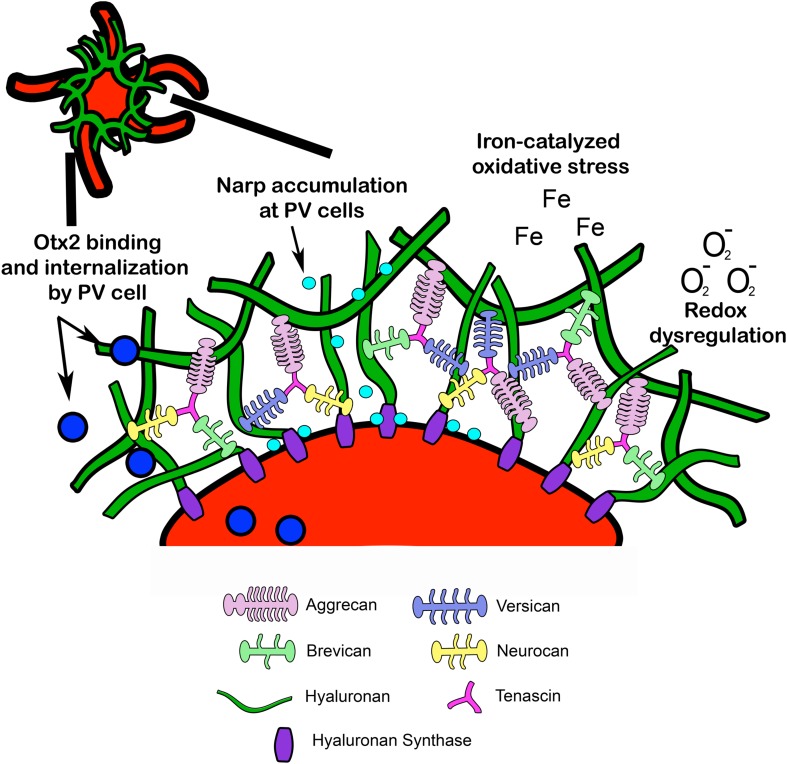
“PNNs are composed of CSPGs, tenascin, and link proteins, which facilitate binding to a hyaluronan backbone (Yamaguchi, 1999) (Figure 2).”
§ The Perineuronal ‘Safety’ Net? Perineuronal Net Abnormalities in Neurological Disorders > PNN Structure and Developmental Regulation of its Components
What the sources say
- Not checked yetcites Yamaguchi, 1999 source
plaindirect- Asserted: passes — The authors put it forward as true.
- Checkable: passes — It can be checked against evidence.
- Load-bearing: unclear — It is unclear whether the paper’s conclusions depend on it.
- Based: passes — The paper gives a reason why it holds.
It may state two separate claims as one.
The paper states this without a source or data behind it here, so there is nothing to check it against. The quote shows it is in the paper.
In the paper
“Versican consists of two different alpha and beta isoforms, which are differentially expressed during development.”
§ The Perineuronal ‘Safety’ Net? Perineuronal Net Abnormalities in Neurological Disorders > PNN Structure and Developmental Regulation of its Components > Chondroitin Sulfate Proteoglycans
plaincorrelational- Asserted: passes — The authors put it forward as true.
- Checkable: passes — It can be checked against evidence.
- Load-bearing: fails — The paper’s conclusions may not depend on it.
- Based: passes — The paper gives a reason why it holds.
Probably not a substantial claim. The paper’s conclusions may not depend on it. It may state two separate claims as one.
In the paper
“Perineuronal nets are specialized assemblies of ECM proteins which ensheath neurons and proximal dendrites (Celio et al., 1998).”
§ The Perineuronal ‘Safety’ Net? Perineuronal Net Abnormalities in Neurological Disorders > PNN Structure and Developmental Regulation of its Components
What the sources say
- Not checked yetcites Celio et al., 1998 source
plain- Asserted: passes — The authors put it forward as true.
- Checkable: passes — It can be checked against evidence.
- Load-bearing: passes — The paper’s conclusions depend on it.
- Based: passes — The paper gives a reason why it holds.
Probably not a substantial claim.
The paper states this without a source or data behind it here, so there is nothing to check it against. The quote shows it is in the paper.
In the paper
“Chondroitin sulfate proteoglycans consist of a core protein and varying amounts of chondroitin sulfate chains covalently bound to a central region of the protein.”
§ The Perineuronal ‘Safety’ Net? Perineuronal Net Abnormalities in Neurological Disorders > PNN Structure and Developmental Regulation of its Components > Chondroitin Sulfate Proteoglycans
plain- Asserted: passes — The authors put it forward as true.
- Checkable: passes — It can be checked against evidence.
- Load-bearing: fails — The paper’s conclusions may not depend on it.
- Based: passes — The paper gives a reason why it holds.
Probably not a substantial claim. The paper’s conclusions may not depend on it.
The paper states this without a source or data behind it here, so there is nothing to check it against. The quote shows it is in the paper.
In the paper
“Since then, PNNs have been implicated in a wide range of functions including neuroprotection, regulation of neural activity and experience-dependent plasticity.”
§ The Perineuronal ‘Safety’ Net? Perineuronal Net Abnormalities in Neurological Disorders > Introduction
plaincorrelational- Asserted: passes — The authors put it forward as true.
- Checkable: passes — It can be checked against evidence.
- Load-bearing: fails — The paper’s conclusions may not depend on it.
- Based: passes — The paper gives a reason why it holds.
Probably not a substantial claim. The paper’s conclusions may not depend on it.
The paper states this without a source or data behind it here, so there is nothing to check it against. The quote shows it is in the paper.
In the paper
“MMP-9, a protease that cleaves ECM, is differentially regulated in a number of these disorders.”
§ The Perineuronal ‘Safety’ Net? Perineuronal Net Abnormalities in Neurological Disorders > Abstract
plaindirect- Asserted: passes — The authors put it forward as true.
- Checkable: passes — It can be checked against evidence.
- Load-bearing: passes — The paper’s conclusions depend on it.
- Based: passes — The paper gives a reason why it holds.
Probably not a substantial claim.
In the paper
“These include aggrecan, neurocan, versican, and brevican, which vary in core protein size and the number of GAG side chains (Yamaguchi, 1999).”
§ The Perineuronal ‘Safety’ Net? Perineuronal Net Abnormalities in Neurological Disorders > PNN Structure and Developmental Regulation of its Components > Chondroitin Sulfate Proteoglycans
What the sources say
- Not checked yetcites Yamaguchi, 1999 source
plain- Asserted: passes — The authors put it forward as true.
- Checkable: passes — It can be checked against evidence.
- Load-bearing: fails — The paper’s conclusions may not depend on it.
- Based: passes — The paper gives a reason why it holds.
Probably not a substantial claim. The paper’s conclusions may not depend on it. It may state two separate claims as one.
A conclusion the paper draws from its own results — it cites no other source for it, so there is none to check. The quote shows it is in the paper.
In the paper
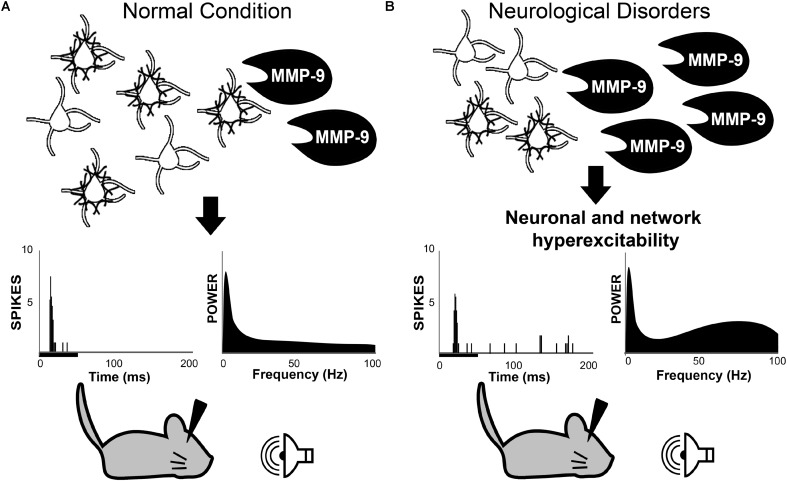
“we propose a novel working hypothesis in which MMP-9 mediated cleavage and/or reorganization of PNN structures around PV-expressing cells contributes to abnormal PV cell development and cortical hyperexcitability (Figure 1).”
§ The Perineuronal ‘Safety’ Net? Perineuronal Net Abnormalities in Neurological Disorders > Introduction
hedgedconditional- Asserted: fails — The authors may not put it forward as true.
- Checkable: passes — It can be checked against evidence.
- Load-bearing: passes — The paper’s conclusions depend on it.
- Based: fails — The paper may give no reason why it holds.
Probably not a substantial claim. The authors may not put it forward as true. The paper may give no reason why it holds.
The paper states this without a source or data behind it here, so there is nothing to check it against. The quote shows it is in the paper.
In the paper
“Since then, PNNs have been implicated in a wide range of functions including neuroprotection, regulation of neural activity and experience-dependent plasticity.”
§ The Perineuronal ‘Safety’ Net? Perineuronal Net Abnormalities in Neurological Disorders > Introduction
plaincorrelational- Asserted: passes — The authors put it forward as true.
- Checkable: passes — It can be checked against evidence.
- Load-bearing: fails — The paper’s conclusions may not depend on it.
- Based: passes — The paper gives a reason why it holds.
Probably not a substantial claim. The paper’s conclusions may not depend on it.
The paper states this without a source or data behind it here, so there is nothing to check it against. The quote shows it is in the paper.
In the paper
“However, the functional impact of developmental changes in PNN lectican composition is unknown.”
§ The Perineuronal ‘Safety’ Net? Perineuronal Net Abnormalities in Neurological Disorders > PNN Structure and Developmental Regulation of its Components > Chondroitin Sulfate Proteoglycans
plain- Asserted: passes — The authors put it forward as true.
- Checkable: passes — It can be checked against evidence.
- Load-bearing: fails — The paper’s conclusions may not depend on it.
- Based: passes — The paper gives a reason why it holds.
Probably not a substantial claim. The paper’s conclusions may not depend on it.
The paper states this without a source or data behind it here, so there is nothing to check it against. The quote shows it is in the paper.
In the paper
“Despite this, few studies have addressed the interactions between PNN expression, MMP-9 activity and neuronal excitability.”
§ The Perineuronal ‘Safety’ Net? Perineuronal Net Abnormalities in Neurological Disorders > Abstract
plain- Asserted: passes — The authors put it forward as true.
- Checkable: passes — It can be checked against evidence.
- Load-bearing: passes — The paper’s conclusions depend on it.
- Based: fails — The paper may give no reason why it holds.
Probably not a substantial claim. The paper may give no reason why it holds.
In the paper
“Hyaluronan is an unsulfated GAG that is synthesized at the cell surface by the membrane-bound enzymes called HAS and protrudes through the plasma membrane into the extracellular space (Fraser et al., 1997).”
§ The Perineuronal ‘Safety’ Net? Perineuronal Net Abnormalities in Neurological Disorders > PNN Structure and Developmental Regulation of its Components > Tenascins and Hyaluronan
What the sources say
- Not checked yetcites Fraser et al., 1997 source
plaindirect- Asserted: passes — The authors put it forward as true.
- Checkable: passes — It can be checked against evidence.
- Load-bearing: fails — The paper’s conclusions may not depend on it.
- Based: passes — The paper gives a reason why it holds.
Probably not a substantial claim. The paper’s conclusions may not depend on it. It may state two separate claims as one.
In the paper
“These chondroitin sulfate side chains are a type of GAG polysaccharide consisting of disaccharide blocks of N-acetylgalactosamine and glucuronic acid (Sherman and Back, 2007).”
§ The Perineuronal ‘Safety’ Net? Perineuronal Net Abnormalities in Neurological Disorders > PNN Structure and Developmental Regulation of its Components > Chondroitin Sulfate Proteoglycans
What the sources say
- Not checked yetcites Sherman and Back, 2007 source
plain- Asserted: passes — The authors put it forward as true.
- Checkable: passes — It can be checked against evidence.
- Load-bearing: fails — The paper’s conclusions may not depend on it.
- Based: passes — The paper gives a reason why it holds.
Probably not a substantial claim. The paper’s conclusions may not depend on it.
None of the sources cited for this claim have been checked yet.
In the paper
“However, the role of PNNs in neural and network excitability is only beginning to be understood (Balmer, 2016; Murase et al., 2017; Wen et al., 2017).”
§ The Perineuronal ‘Safety’ Net? Perineuronal Net Abnormalities in Neurological Disorders > Introduction
What the sources say
plain- Asserted: passes — The authors put it forward as true.
- Checkable: fails — It may be too vague to check against evidence.
- Load-bearing: fails — The paper’s conclusions may not depend on it.
- Based: passes — The paper gives a reason why it holds.
Probably not a substantial claim. It may be too vague to check against evidence. The paper’s conclusions may not depend on it.
The paper states this without a source or data behind it here, so there is nothing to check it against. The quote shows it is in the paper.
In the paper
“Although lecticans are developmentally regulated, their function in CNS development remains unclear.”
§ The Perineuronal ‘Safety’ Net? Perineuronal Net Abnormalities in Neurological Disorders > PNN Structure and Developmental Regulation of its Components > Chondroitin Sulfate Proteoglycans
plain- Asserted: passes — The authors put it forward as true.
- Checkable: passes — It can be checked against evidence.
- Load-bearing: fails — The paper’s conclusions may not depend on it.
- Based: passes — The paper gives a reason why it holds.
Probably not a substantial claim. The paper’s conclusions may not depend on it.
The paper states this without a source or data behind it here, so there is nothing to check it against. The quote shows it is in the paper.
In the paper
“Various CSPGs exist in the ECM throughout the body, but the lectican family of CSPGs is most prominent in PNNs of the CNS.”
§ The Perineuronal ‘Safety’ Net? Perineuronal Net Abnormalities in Neurological Disorders > PNN Structure and Developmental Regulation of its Components > Chondroitin Sulfate Proteoglycans
plaincorrelational- Asserted: passes — The authors put it forward as true.
- Checkable: passes — It can be checked against evidence.
- Load-bearing: fails — The paper’s conclusions may not depend on it.
- Based: passes — The paper gives a reason why it holds.
Probably not a substantial claim. The paper’s conclusions may not depend on it.
A conclusion the paper draws from its own results — it cites no other source for it, so there is none to check. The quote shows it is in the paper.
In the paper
“we bring together evidence from studies of schizophrenia, AD, and epilepsy to suggest that systematic studies of the interplay between MMP-9, PNN and PV cells may be key to understanding mechanisms of multiple CNS disorders at the cellular and circuit levels.”
§ The Perineuronal ‘Safety’ Net? Perineuronal Net Abnormalities in Neurological Disorders > Introduction
hedgedconditional- Asserted: passes — The authors put it forward as true.
- Checkable: fails — It may be too vague to check against evidence.
- Load-bearing: passes — The paper’s conclusions depend on it.
- Based: passes — The paper gives a reason why it holds.
Probably not a substantial claim. It may be too vague to check against evidence.
In the paper
“FXS is a leading genetic cause of autism, occurring in 1 in 4000 males and 1 in 8000 females (Murray et al., 1997).”
§ The Perineuronal ‘Safety’ Net? Perineuronal Net Abnormalities in Neurological Disorders > Fragile X Syndrome
What the sources say
- Not checked yetcites Murray et al., 1997 source
plain- Asserted: passes — The authors put it forward as true.
- Checkable: passes — It can be checked against evidence.
- Load-bearing: fails — The paper’s conclusions may not depend on it.
- Based: passes — The paper gives a reason why it holds.
Probably not a substantial claim. The paper’s conclusions may not depend on it. It may state two separate claims as one.
The paper states this without a source or data behind it here, so there is nothing to check it against. The quote shows it is in the paper.
In the paper
“Parvalbumin cells are a major class of GABAergic, fast-spiking inhibitory interneurons in the neocortex.”
§ The Perineuronal ‘Safety’ Net? Perineuronal Net Abnormalities in Neurological Disorders > Parvalbumin Expressing Interneurons, PNNs and MMP-9
plain- Asserted: passes — The authors put it forward as true.
- Checkable: passes — It can be checked against evidence.
- Load-bearing: fails — The paper’s conclusions may not depend on it.
- Based: passes — The paper gives a reason why it holds.
Probably not a substantial claim. The paper’s conclusions may not depend on it.
None of the sources cited for this claim have been checked yet.
In the paper
“It is unclear how these molecules are assembled to form PNN around neurons, but some studies suggest that both neurons and glial cells are involved in the process (Miyata et al., 2007; Pyka et al., 2011).”
§ The Perineuronal ‘Safety’ Net? Perineuronal Net Abnormalities in Neurological Disorders > PNN Structure and Developmental Regulation of its Components > Tenascins and Hyaluronan
What the sources say
hedgedconditional- Asserted: passes — The authors put it forward as true.
- Checkable: passes — It can be checked against evidence.
- Load-bearing: fails — The paper’s conclusions may not depend on it.
- Based: passes — The paper gives a reason why it holds.
Probably not a substantial claim. The paper’s conclusions may not depend on it.
None of the sources cited for this claim have been checked yet.
In the paper
“As aggrecan has been previously identified as an MMP-9 target (Mercuri et al., 2000; Madsen et al., 2010; Rankin-Gee et al., 2015), aggrecan-rich PNNs may be unstable in the presence of MMP-9, leading to abnormal development and neural excitability (Murase et al., 2017; Wen et al., 2017).”
§ The Perineuronal ‘Safety’ Net? Perineuronal Net Abnormalities in Neurological Disorders > Parvalbumin Expressing Interneurons, PNNs and MMP-9
What the sources say
hedgedconditional- Asserted: passes — The authors put it forward as true.
- Checkable: passes — It can be checked against evidence.
- Load-bearing: passes — The paper’s conclusions depend on it.
- Based: passes — The paper gives a reason why it holds.
It may state two separate claims as one.
In the paper
“This leads to loss of Fragile X Mental Retardation protein (FMRP), which is necessary for regulation of protein synthesis (Verkerk et al., 1991).”
§ The Perineuronal ‘Safety’ Net? Perineuronal Net Abnormalities in Neurological Disorders > Fragile X Syndrome
What the sources say
- Not checked yetcites Verkerk et al., 1991 source
plaindirect- Asserted: passes — The authors put it forward as true.
- Checkable: passes — It can be checked against evidence.
- Load-bearing: unclear — It is unclear whether the paper’s conclusions depend on it.
- Based: passes — The paper gives a reason why it holds.
It may state two separate claims as one.
The paper states this without a source or data behind it here, so there is nothing to check it against. The quote shows it is in the paper.
In the paper
“The most common cause of FXS is an expansion of CGG trinucleotide repeats in 5′ region of the Fragile X mental retardation 1 (Fmr1) gene that results in its hypermethylation and inactivation.”
§ The Perineuronal ‘Safety’ Net? Perineuronal Net Abnormalities in Neurological Disorders > Fragile X Syndrome
plaindirect- Asserted: passes — The authors put it forward as true.
- Checkable: passes — It can be checked against evidence.
- Load-bearing: fails — The paper’s conclusions may not depend on it.
- Based: passes — The paper gives a reason why it holds.
Probably not a substantial claim. The paper’s conclusions may not depend on it.
None of the sources cited for this claim have been checked yet.
In the paper
“Astrocytes extend their processes into PNNs localized near the synapse (Brückner et al., 1993; Blümcke et al., 1995), suggesting a tetrapartite synaptic organization involving ECM, pre/post synaptic sites and astrocytes (Dityatev and Rusakov, 2011; Smith et al., 2015) whose synergistic functions remain unexplored.”
§ The Perineuronal ‘Safety’ Net? Perineuronal Net Abnormalities in Neurological Disorders > PNN Structure and Developmental Regulation of its Components > Tenascins and Hyaluronan
What the sources say
- Not checked yetcites Dityatev and Rusakov, 2011
- Not checked yetcites Smith et al., 2015 source
hedged- Asserted: passes — The authors put it forward as true.
- Checkable: passes — It can be checked against evidence.
- Load-bearing: fails — The paper’s conclusions may not depend on it.
- Based: passes — The paper gives a reason why it holds.
Probably not a substantial claim. The paper’s conclusions may not depend on it.
None of the sources cited for this claim have been checked yet.
In the paper
“It is unclear how these molecules are assembled to form PNN around neurons, but some studies suggest that both neurons and glial cells are involved in the process (Miyata et al., 2007; Pyka et al., 2011).”
§ The Perineuronal ‘Safety’ Net? Perineuronal Net Abnormalities in Neurological Disorders > PNN Structure and Developmental Regulation of its Components > Tenascins and Hyaluronan
What the sources say
plain- Asserted: passes — The authors put it forward as true.
- Checkable: passes — It can be checked against evidence.
- Load-bearing: fails — The paper’s conclusions may not depend on it.
- Based: passes — The paper gives a reason why it holds.
Probably not a substantial claim. The paper’s conclusions may not depend on it.
None of the sources cited for this claim have been checked yet.
In the paper
“Individuals with this neurodevelopmental disorder suffer from social and communication deficits, sensory hypersensitivity, and anxiety disorders (Abbeduto and Hagerman, 1997; Rogers et al., 2001).”
§ The Perineuronal ‘Safety’ Net? Perineuronal Net Abnormalities in Neurological Disorders > Fragile X Syndrome
What the sources say
- Not checked yetcites Abbeduto and Hagerman, 1997
- Not checked yetcites Rogers et al., 2001
plain- Asserted: passes — The authors put it forward as true.
- Checkable: passes — It can be checked against evidence.
- Load-bearing: fails — The paper’s conclusions may not depend on it.
- Based: passes — The paper gives a reason why it holds.
Probably not a substantial claim. The paper’s conclusions may not depend on it. It may state two separate claims as one.
In the paper
“Like PNNs, PV expression is developmentally regulated and experience-dependent (Hensch, 2005).”
§ The Perineuronal ‘Safety’ Net? Perineuronal Net Abnormalities in Neurological Disorders > Parvalbumin Expressing Interneurons, PNNs and MMP-9
What the sources say
- Not checked yetcites Hensch, 2005 source
plaincorrelational- Asserted: passes — The authors put it forward as true.
- Checkable: passes — It can be checked against evidence.
- Load-bearing: fails — The paper’s conclusions may not depend on it.
- Based: passes — The paper gives a reason why it holds.
Probably not a substantial claim. The paper’s conclusions may not depend on it. It may state two separate claims as one.
In the paper
“MMP-9 is a zinc-dependent endopeptidase expressed in various cells within the CNS which is capable of cleaving ECM proteins, including collagen and laminin (reviewed in Reinhard et al., 2015).”
§ The Perineuronal ‘Safety’ Net? Perineuronal Net Abnormalities in Neurological Disorders > Parvalbumin Expressing Interneurons, PNNs and MMP-9
What the sources say
- Not checked yetcites Reinhard et al., 2015 source
plaindirect- Asserted: passes — The authors put it forward as true.
- Checkable: passes — It can be checked against evidence.
- Load-bearing: passes — The paper’s conclusions depend on it.
- Based: passes — The paper gives a reason why it holds.
It may state two separate claims as one.
None of the sources cited for this claim have been checked yet.
In the paper
“One mechanism that has been proposed to explain some symptoms of schizophrenia is a reduction in GABAergic signaling in specific cortical regions.”
§ The Perineuronal ‘Safety’ Net? Perineuronal Net Abnormalities in Neurological Disorders > Schizophrenia
hedgedconditional- Asserted: passes — The authors put it forward as true.
- Checkable: passes — It can be checked against evidence.
- Load-bearing: fails — The paper’s conclusions may not depend on it.
- Based: passes — The paper gives a reason why it holds.
Probably not a substantial claim. The paper’s conclusions may not depend on it.
A conclusion the paper draws from its own results — it cites no other source for it, so there is none to check. The quote shows it is in the paper.
In the paper
“We found delayed PNN development and increased MMP-9 activity levels in the developing auditory cortex of Fmr1 KO mice (Wen et al., 2017), which may lead to impaired PV cell development and reduced inhibition.”
§ The Perineuronal ‘Safety’ Net? Perineuronal Net Abnormalities in Neurological Disorders > Fragile X Syndrome
hedgedconditional- Asserted: passes — The authors put it forward as true.
- Checkable: passes — It can be checked against evidence.
- Load-bearing: passes — The paper’s conclusions depend on it.
- Based: passes — The paper gives a reason why it holds.
It may state two separate claims as one.
None of the sources cited for this claim have been checked yet.
In the paper
“This suggests that during development, sensory stimuli can activate Narp expression which promotes PV interneuron excitation, leading to feed-forward inhibition (O’Brien et al., 1999; Gu et al., 2013).”
§ The Perineuronal ‘Safety’ Net? Perineuronal Net Abnormalities in Neurological Disorders > Fragile X Syndrome
What the sources say
- Not checked yetcites O’Brien et al., 1999 source
- Not checked yetcites Gu et al., 2013
hedgeddirect- Asserted: passes — The authors put it forward as true.
- Checkable: passes — It can be checked against evidence.
- Load-bearing: passes — The paper’s conclusions depend on it.
- Based: passes — The paper gives a reason why it holds.
It may state two separate claims as one.
A conclusion the paper draws from its own results — it cites no other source for it, so there is none to check. The quote shows it is in the paper.
In the paper
“An orthodenticle homeoprotein, Otx2, may play a role in PV cell maturation and refinement of cortical inhibition.”
§ The Perineuronal ‘Safety’ Net? Perineuronal Net Abnormalities in Neurological Disorders > Fragile X Syndrome
hedgedconditional- Asserted: passes — The authors put it forward as true.
- Checkable: passes — It can be checked against evidence.
- Load-bearing: passes — The paper’s conclusions depend on it.
- Based: passes — The paper gives a reason why it holds.
It may state two separate claims as one.
A conclusion the paper draws from its own results — it cites no other source for it, so there is none to check. The quote shows it is in the paper.
In the paper
“These results indicate that there is altered E/I balance in auditory cortex, which may underlie auditory hypersensitivity phenotypes.”
§ The Perineuronal ‘Safety’ Net? Perineuronal Net Abnormalities in Neurological Disorders > Fragile X Syndrome
hedgedconditional- Asserted: passes — The authors put it forward as true.
- Checkable: passes — It can be checked against evidence.
- Load-bearing: passes — The paper’s conclusions depend on it.
- Based: passes — The paper gives a reason why it holds.
It may state two separate claims as one.
A conclusion the paper draws from its own results — it cites no other source for it, so there is none to check. The quote shows it is in the paper.
In the paper
“In FXS, delayed development of PNNs may contribute to abnormal Narp expression, impairing the ability of PV cells to scale cortical networks, resulting in cortical hyperexcitability.”
§ The Perineuronal ‘Safety’ Net? Perineuronal Net Abnormalities in Neurological Disorders > Fragile X Syndrome
hedgedconditional- Asserted: passes — The authors put it forward as true.
- Checkable: passes — It can be checked against evidence.
- Load-bearing: passes — The paper’s conclusions depend on it.
- Based: passes — The paper gives a reason why it holds.
It may state two separate claims as one.
None of the sources cited for this claim have been checked yet.
In the paper
“Perineuronal net dysfunction in schizophrenia may also drive changes in GABAergic cell function leading to network dysfunction, as normal PNN expression regulates excitability of PV cells (Liu et al., 2013; Balmer, 2016).”
§ The Perineuronal ‘Safety’ Net? Perineuronal Net Abnormalities in Neurological Disorders > Schizophrenia
What the sources say
hedgedconditional- Asserted: passes — The authors put it forward as true.
- Checkable: passes — It can be checked against evidence.
- Load-bearing: passes — The paper’s conclusions depend on it.
- Based: passes — The paper gives a reason why it holds.
It may state two separate claims as one.
None of the sources cited for this claim have been checked yet.
In the paper
“Recent studies show that PNNs may protect PV cells from oxidative stress (Cabungcal et al., 2013; Morishita et al., 2015), and thus serve as a ‘safety net’ to support the rapid firing properties of PV cells.”
§ The Perineuronal ‘Safety’ Net? Perineuronal Net Abnormalities in Neurological Disorders > Schizophrenia
What the sources say
hedgedconditional- Asserted: passes — The authors put it forward as true.
- Checkable: passes — It can be checked against evidence.
- Load-bearing: passes — The paper’s conclusions depend on it.
- Based: passes — The paper gives a reason why it holds.
It may state two separate claims as one.
None of the sources cited for this claim have been checked yet.
In the paper
“Scn1a is a gene that encodes Nav1.1, a sodium channel necessary for PV cell firing (Ogiwara et al., 2007; Hedrich et al., 2014).”
§ The Perineuronal ‘Safety’ Net? Perineuronal Net Abnormalities in Neurological Disorders > Seizures and Epilepsy
What the sources say
plaindirect- Asserted: passes — The authors put it forward as true.
- Checkable: passes — It can be checked against evidence.
- Load-bearing: passes — The paper’s conclusions depend on it.
- Based: passes — The paper gives a reason why it holds.
It may state two separate claims as one.
None of the sources cited for this claim have been checked yet.
In the paper
“Beside its antibiotic activity, minocycline can reduce plasma levels of MMP-9 (Dziembowska et al., 2013) and inhibit MMP-9 activity (Lee et al., 2006), suggesting a possible role of MMP-9 inhibition in the beneficial effects of minocycline in schizophrenia.”
§ The Perineuronal ‘Safety’ Net? Perineuronal Net Abnormalities in Neurological Disorders > Schizophrenia
What the sources say
hedgeddirect- Asserted: passes — The authors put it forward as true.
- Checkable: passes — It can be checked against evidence.
- Load-bearing: passes — The paper’s conclusions depend on it.
- Based: passes — The paper gives a reason why it holds.
It may state two separate claims as one.
None of the sources cited for this claim have been checked yet.
In the paper
“which lead to denervation of upstream pathways and inactivation of parts of somatosensory cortex (Davies et al., 1999; Kaas et al., 2008).”
§ The Perineuronal ‘Safety’ Net? Perineuronal Net Abnormalities in Neurological Disorders > CNS Injury and Stroke
What the sources say
plaindirect- Asserted: passes — The authors put it forward as true.
- Checkable: passes — It can be checked against evidence.
- Load-bearing: passes — The paper’s conclusions depend on it.
- Based: passes — The paper gives a reason why it holds.
It may state two separate claims as one.
In the paper
“The molecules can react with free radicals generated by cellular metabolism to generate even more free radicals, resulting in lipid peroxidation, oxidative stress, and cell death (Stohs and Bagchi, 1995).”
§ The Perineuronal ‘Safety’ Net? Perineuronal Net Abnormalities in Neurological Disorders > Alzheimer’S Disease
What the sources say
- Not checked yetcites Stohs and Bagchi, 1995 source
plaindirect- Asserted: passes — The authors put it forward as true.
- Checkable: passes — It can be checked against evidence.
- Load-bearing: passes — The paper’s conclusions depend on it.
- Based: passes — The paper gives a reason why it holds.
It may state two separate claims as one.
In the paper
“CSPG immunoreactivity is down regulated although they remain detectable up to 14 days post-injury (Hobohm et al., 2005).”
§ The Perineuronal ‘Safety’ Net? Perineuronal Net Abnormalities in Neurological Disorders > CNS Injury and Stroke
What the sources say
- Not checked yetcites Hobohm et al., 2005 source
plaindirect- Asserted: passes — The authors put it forward as true.
- Checkable: passes — It can be checked against evidence.
- Load-bearing: passes — The paper’s conclusions depend on it.
- Based: passes — The paper gives a reason why it holds.
It may state two separate claims as one.
None of the sources cited for this claim have been checked yet.
In the paper
“reduced PV-immunoreactivity and PV cell function have also been observed following stroke”
§ The Perineuronal ‘Safety’ Net? Perineuronal Net Abnormalities in Neurological Disorders > CNS Injury and Stroke
What the sources say
plaincorrelational- Asserted: passes — The authors put it forward as true.
- Checkable: passes — It can be checked against evidence.
- Load-bearing: unclear — It is unclear whether the paper’s conclusions depend on it.
- Based: passes — The paper gives a reason why it holds.
It may state two separate claims as one.
None of the sources cited for this claim have been checked yet.
In the paper
“This may lead to hippocampal and cortical hyperexcitability as well as increased seizure susceptibility in both AD humans and rodent models (Palop et al., 2007; Roberson et al., 2011).”
§ The Perineuronal ‘Safety’ Net? Perineuronal Net Abnormalities in Neurological Disorders > Alzheimer’S Disease
What the sources say
- Not checked yetcites Palop et al., 2007 source
- Not checked yetcites Roberson et al., 2011
hedgedconditional- Asserted: passes — The authors put it forward as true.
- Checkable: passes — It can be checked against evidence.
- Load-bearing: unclear — It is unclear whether the paper’s conclusions depend on it.
- Based: passes — The paper gives a reason why it holds.
It may state two separate claims as one.
None of the sources cited for this claim have been checked yet.
In the paper
“As PNNs regulate PV cell activity (Balmer, 2016; Lensjø et al., 2017) and protect PV cells from oxidative stress (Cabungcal et al., 2013), PNNs can be potentially targeted to control seizures.”
§ The Perineuronal ‘Safety’ Net? Perineuronal Net Abnormalities in Neurological Disorders > Seizures and Epilepsy
What the sources say
hedgedconditional- Asserted: passes — The authors put it forward as true.
- Checkable: passes — It can be checked against evidence.
- Load-bearing: passes — The paper’s conclusions depend on it.
- Based: passes — The paper gives a reason why it holds.
Probably not a substantial claim. It may state two separate claims as one.
In the paper
“The number of PNN expressing cells is reduced in aging mouse auditory cortex with a particular impact on PV/PNN co-localized cells (Brewton et al., 2016).”
§ The Perineuronal ‘Safety’ Net? Perineuronal Net Abnormalities in Neurological Disorders > Hearing Loss and Central Auditory Processing
What the sources say
- Not checked yetcites Brewton et al., 2016 source
plaindirect- Asserted: passes — The authors put it forward as true.
- Checkable: passes — It can be checked against evidence.
- Load-bearing: passes — The paper’s conclusions depend on it.
- Based: passes — The paper gives a reason why it holds.
It may state two separate claims as one.
In the paper
“Overexposure to loud sounds can cause hair cell damage (Puel et al., 1998)”
§ The Perineuronal ‘Safety’ Net? Perineuronal Net Abnormalities in Neurological Disorders > Hearing Loss and Central Auditory Processing
What the sources say
- Not checked yetcites Puel et al., 1998 source
plaindirect- Asserted: passes — The authors put it forward as true.
- Checkable: passes — It can be checked against evidence.
- Load-bearing: fails — The paper’s conclusions may not depend on it.
- Based: passes — The paper gives a reason why it holds.
Probably not a substantial claim. The paper’s conclusions may not depend on it.
In the paper
“Recent studies indicate that minocycline administration may reverse both schizophrenia and FXS phenotypes, perhaps due to its ability to lower MMP-9 levels or activity (Dziembowska et al., 2013).”
§ The Perineuronal ‘Safety’ Net? Perineuronal Net Abnormalities in Neurological Disorders > Conclusion and Future Studies
What the sources say
- Not checked yetcites Dziembowska et al., 2013 source
hedgedconditional- Asserted: passes — The authors put it forward as true.
- Checkable: passes — It can be checked against evidence.
- Load-bearing: passes — The paper’s conclusions depend on it.
- Based: passes — The paper gives a reason why it holds.
It may state two separate claims as one.
In the paper
“GABAergic signaling is involved in shaping these properties, with fast-spiking PV cells shaping both spectral and temporal selectivity (Moore and Wehr, 2012).”
§ The Perineuronal ‘Safety’ Net? Perineuronal Net Abnormalities in Neurological Disorders > Hearing Loss and Central Auditory Processing
What the sources say
- Not checked yetcites Moore and Wehr, 2012 source
plaindirect- Asserted: passes — The authors put it forward as true.
- Checkable: passes — It can be checked against evidence.
- Load-bearing: passes — The paper’s conclusions depend on it.
- Based: passes — The paper gives a reason why it holds.
It may state two separate claims as one.
A conclusion the paper draws from its own results — it cites no other source for it, so there is none to check. The quote shows it is in the paper.
In the paper
“activity-dependent synaptogenesis and the development of stable neuronal networks may be a result of normal PNN interactions with inhibitory interneurons, in particular fast spiking PV cells.”
§ The Perineuronal ‘Safety’ Net? Perineuronal Net Abnormalities in Neurological Disorders > Conclusion and Future Studies
hedgedconditional- Asserted: passes — The authors put it forward as true.
- Checkable: passes — It can be checked against evidence.
- Load-bearing: passes — The paper’s conclusions depend on it.
- Based: fails — The paper may give no reason why it holds.
Probably not a substantial claim. The paper may give no reason why it holds.
The paper states this without a source or data behind it here, so there is nothing to check it against. The quote shows it is in the paper.
In the paper
“PNNs are also implicated in experience-dependent plasticity during development.”
§ The Perineuronal ‘Safety’ Net? Perineuronal Net Abnormalities in Neurological Disorders > Conclusion and Future Studies
plaincorrelational- Asserted: passes — The authors put it forward as true.
- Checkable: passes — It can be checked against evidence.
- Load-bearing: fails — The paper’s conclusions may not depend on it.
- Based: fails — The paper may give no reason why it holds.
Probably not a substantial claim. The paper’s conclusions may not depend on it. The paper may give no reason why it holds.
In the paper
“Age-related hearing loss, also known as presbycusis, is associated with difficulty interpreting speech and slower auditory processing (Gates and Mills, 2005)”
§ The Perineuronal ‘Safety’ Net? Perineuronal Net Abnormalities in Neurological Disorders > Hearing Loss and Central Auditory Processing
What the sources say
- Not checked yetcites Gates and Mills, 2005
plaincorrelational- Asserted: passes — The authors put it forward as true.
- Checkable: passes — It can be checked against evidence.
- Load-bearing: unclear — It is unclear whether the paper’s conclusions depend on it.
- Based: passes — The paper gives a reason why it holds.
It may state two separate claims as one.
A conclusion the paper draws from its own results — it cites no other source for it, so there is none to check. The quote shows it is in the paper.
In the paper
“Altered PNN formation may contribute to abnormal GABAergic signaling and impaired temporal processing with age, leading to deficits in speech comprehension.”
§ The Perineuronal ‘Safety’ Net? Perineuronal Net Abnormalities in Neurological Disorders > Hearing Loss and Central Auditory Processing
hedgedconditional- Asserted: passes — The authors put it forward as true.
- Checkable: passes — It can be checked against evidence.
- Load-bearing: passes — The paper’s conclusions depend on it.
- Based: passes — The paper gives a reason why it holds.
It may state two separate claims as one.
A conclusion the paper draws from its own results — it cites no other source for it, so there is none to check. The quote shows it is in the paper.
In the paper
“While the use of chABC has been useful in addressing PNN function, this enzyme likely has broader effects.”
§ The Perineuronal ‘Safety’ Net? Perineuronal Net Abnormalities in Neurological Disorders > Conclusion and Future Studies
hedgedconditional- Asserted: passes — The authors put it forward as true.
- Checkable: passes — It can be checked against evidence.
- Load-bearing: passes — The paper’s conclusions depend on it.
- Based: fails — The paper may give no reason why it holds.
Probably not a substantial claim. The paper may give no reason why it holds.
In the paper
“hearing loss and reduced afferent input in the auditory system (Syka, 2002).”
§ The Perineuronal ‘Safety’ Net? Perineuronal Net Abnormalities in Neurological Disorders > Hearing Loss and Central Auditory Processing
What the sources say
- Not checked yetcites Syka, 2002 source
plaindirect- Asserted: passes — The authors put it forward as true.
- Checkable: passes — It can be checked against evidence.
- Load-bearing: passes — The paper’s conclusions depend on it.
- Based: passes — The paper gives a reason why it holds.
It may state two separate claims as one.
In the paper
“in the rodent hippocampus, aggrecan-expressing PNNs overlap with WFA labeling in stratum oriens, but stratum pyramidale exhibits aggrecan-rich PNNs, which are not WFA-positive (Yamada and Jinno, 2017).”
§ The Perineuronal ‘Safety’ Net? Perineuronal Net Abnormalities in Neurological Disorders > Conclusion and Future Studies
What the sources say
- Not checked yetcites Yamada and Jinno, 2017
plaincorrelational- Asserted: passes — The authors put it forward as true.
- Checkable: passes — It can be checked against evidence.
- Load-bearing: unclear — It is unclear whether the paper’s conclusions depend on it.
- Based: passes — The paper gives a reason why it holds.
It may state two separate claims as one.
In the paper
“While iron-induced oxidative stress resulted in apoptotic cell death in cells without PNNs, neurons with PNNs were more likely to survive (Suttkus et al., 2012, 2014).”
§ The Perineuronal ‘Safety’ Net? Perineuronal Net Abnormalities in Neurological Disorders > Alzheimer’S Disease
What the sources say
- Not checked yetcites Suttkus et al., 2012, 2014
hedgeddirect- Asserted: passes — The authors put it forward as true.
- Checkable: passes — It can be checked against evidence.
- Load-bearing: passes — The paper’s conclusions depend on it.
- Based: passes — The paper gives a reason why it holds.
It may state two separate claims as one.
A conclusion the paper draws from its own results — it cites no other source for it, so there is none to check. The quote shows it is in the paper.
In the paper
“elevated MMP-9 levels may contribute to both PNN degradation and altered levels of Aβ in AD.”
§ The Perineuronal ‘Safety’ Net? Perineuronal Net Abnormalities in Neurological Disorders > Alzheimer’S Disease
hedgedconditional- Asserted: passes — The authors put it forward as true.
- Checkable: passes — It can be checked against evidence.
- Load-bearing: passes — The paper’s conclusions depend on it.
- Based: passes — The paper gives a reason why it holds.
It may state two separate claims as one.
- Rests on an assumption: MMP-9 is involved in PNN maintenance.
In the paper
“Tenascin-R expressing PNNs are not observed in rodent PFC, but are prominent in other cortical areas (Ueno et al., 2017a).”
§ The Perineuronal ‘Safety’ Net? Perineuronal Net Abnormalities in Neurological Disorders > Conclusion and Future Studies
What the sources say
- Not checked yetcites Ueno et al., 2017a
plain- Asserted: passes — The authors put it forward as true.
- Checkable: passes — It can be checked against evidence.
- Load-bearing: unclear — It is unclear whether the paper’s conclusions depend on it.
- Based: passes — The paper gives a reason why it holds.
It may state two separate claims as one.
In the paper
“and may be indicators for risk of stroke mortality (Hansson et al., 2011).”
§ The Perineuronal ‘Safety’ Net? Perineuronal Net Abnormalities in Neurological Disorders > Conclusion and Future Studies
What the sources say
- Not checked yetcites Hansson et al., 2011 source
hedgedcorrelational- Asserted: passes — The authors put it forward as true.
- Checkable: passes — It can be checked against evidence.
- Load-bearing: fails — The paper’s conclusions may not depend on it.
- Based: passes — The paper gives a reason why it holds.
Probably not a substantial claim. The paper’s conclusions may not depend on it.
In the paper
“TIMP levels are increased in postmortem brains of AD patients (Peress et al., 1995)”
§ The Perineuronal ‘Safety’ Net? Perineuronal Net Abnormalities in Neurological Disorders > Conclusion and Future Studies
What the sources say
- Not checked yetcites Peress et al., 1995 source
plaincorrelational- Asserted: passes — The authors put it forward as true.
- Checkable: passes — It can be checked against evidence.
- Load-bearing: fails — The paper’s conclusions may not depend on it.
- Based: passes — The paper gives a reason why it holds.
Probably not a substantial claim. The paper’s conclusions may not depend on it.
A conclusion the paper draws from its own results — it cites no other source for it, so there is none to check. The quote shows it is in the paper.
In the paper
“the ADAMTs family of aggrecanases may also cause PNN cleavage and reorganization.”
§ The Perineuronal ‘Safety’ Net? Perineuronal Net Abnormalities in Neurological Disorders > Conclusion and Future Studies
hedgedconditional- Asserted: passes — The authors put it forward as true.
- Checkable: passes — It can be checked against evidence.
- Load-bearing: fails — The paper’s conclusions may not depend on it.
- Based: passes — The paper gives a reason why it holds.
Probably not a substantial claim. The paper’s conclusions may not depend on it.
A conclusion the paper draws from its own results — it cites no other source for it, so there is none to check. The quote shows it is in the paper.
In the paper
“this may allow for axonal outgrowth and synaptogenesis, particularly in surviving cortical areas, which exhibit reduced CSPG and PNN expression and are therefore growth permissive (2014).”
§ The Perineuronal ‘Safety’ Net? Perineuronal Net Abnormalities in Neurological Disorders > Conclusion and Future Studies
hedgedconditional- Asserted: passes — The authors put it forward as true.
- Checkable: passes — It can be checked against evidence.
- Load-bearing: passes — The paper’s conclusions depend on it.
- Based: passes — The paper gives a reason why it holds.
It may state two separate claims as one.
None of the sources cited for this claim have been checked yet.
In the paper
“tissue inhibitors of MMPs, known as TIMPs, which form 1:1 complexes with MMPs in order to inhibit MMP activity (Gomis-Rüth et al., 1997; Brew and Nagase, 2010).”
§ The Perineuronal ‘Safety’ Net? Perineuronal Net Abnormalities in Neurological Disorders > Conclusion and Future Studies
What the sources say
- Not checked yetcites Gomis-Rüth et al., 1997 source
- Not checked yetcites Brew and Nagase, 2010
plaindirect- Asserted: passes — The authors put it forward as true.
- Checkable: passes — It can be checked against evidence.
- Load-bearing: fails — The paper’s conclusions may not depend on it.
- Based: passes — The paper gives a reason why it holds.
Probably not a substantial claim. The paper’s conclusions may not depend on it.
In the paper
“these may be crucial in understanding MMP-9 dysregulation in CNS disorders”
§ The Perineuronal ‘Safety’ Net? Perineuronal Net Abnormalities in Neurological Disorders > Conclusion and Future Studies
What the sources say
- Not checked yetcites Papa et al., 2014 source
hedgedconditional- Asserted: passes — The authors put it forward as true.
- Checkable: passes — It can be checked against evidence.
- Load-bearing: passes — The paper’s conclusions depend on it.
- Based: passes — The paper gives a reason why it holds.
Probably not a substantial claim.
The paper relies on this without support.
Re-establishing neuronal plasticity is key for re-innervation and recovery after CNS injury and stroke.
“In CNS injury and stroke, re-establishing neuronal plasticity appears to be key for re-innervation and recovery.”
The paper relies on this without support.
MMP-9 is involved in PNN maintenance.
“As MMP-9 is also involved in PNN maintenance”
The paper relies on this without support.
Neurotrophins are necessary for neuronal growth and plasticity.
“Neurotrophins are necessary for neuronal growth and plasticity”
Claims other papers make about this one
Each is checked against this paper’s own text: does it say what the citing paper says it does?
The cited source says what the claim attributes to it.
In the citing paper
“Importantly, PNN regulate the synaptic plasticity (Kochlamazashvili et al., 2010) and rewiring the network (Pollock et al., 2014) of the interneurons (Wen et al., 2018).”
From Disrupted structural connectivity in ArcAβ mouse model of Aβ amyloidosis (2020) · cites this paper as Wen et al., 2018
In the citing paper
“microglia undergo activation and subsequently release matrix metalloproteinases (e.g. MMP9) or other ECM-degrading proteases that act on PNN components [33].”
From Microglia facilitate loss of perineuronal nets in the Alzheimer's disease brain (2020) · cites this paper as [33]
Citations
Cites
Oxidative mechanisms in the toxicity of metal ions
Stohs, S. J., & Bagchi, D. (1995) · Free Radical Biology and Medicine · doi:10.1016/0891-5849(94)00159-h · Cited by 4,219
Verkerk, A. J. M. H., Pieretti, M., Sutcliffe, J. S., Fu, Y.-H., Kuhl, D. P. A., Pizzuti, A., Reiner, O., Richards, S., Victoria, M. F., Zhang, F., et al. (1991) · Cell · doi:10.1016/0092-8674(91)90397-h · Cited by 3,481
Parvalbumin neurons and gamma rhythms enhance cortical circuit performance
Sohal, V. S., Zhang, F., Yizhar, O., & Deisseroth, K. (2009) · Nature · doi:10.1038/nature07991 · Cited by 2,606
Driving fast-spiking cells induces gamma rhythm and controls sensory responses
Cardin, J. A., Carlén, M., Meletis, K., Knoblich, U., Zhang, F., Deisseroth, K., Tsai, L.-H., & Moore, C. I. (2009) · Nature · doi:10.1038/nature08002 · Cited by 2,603
Chondroitinase ABC promotes functional recovery after spinal cord injury
Bradbury, E. J., Moon, L. D. F., Popat, R. J., King, V. R., Bennett, G. S., Patel, P. N., Fawcett, J. W., & McMahon, S. B. (2002) · Nature · doi:10.1038/416636a · Cited by 2,357
Critical period plasticity in local cortical circuits
Hensch, T. K. (2005) · Nature Reviews Neuroscience · doi:10.1038/nrn1787 · Cited by 2,323
Hyaluronan: its nature, distribution, functions and turnover.
Fraser, J. R. E., Laurent, T. C., & Laurent, U. B. G. (1997) · Journal of Internal Medicine · doi:10.1046/j.1365-2796.1997.00170.x · Cited by 2,031
Reactivation of Ocular Dominance Plasticity in the Adult Visual Cortex
Pizzorusso, T., Medini, P., Berardi, N., Chierzi, S., Fawcett, J. W., & Maffei, L. (2002) · Science · doi:10.1126/science.1072699 · Cited by 1,679
Palop, J. J., Chin, J., Roberson, E. D., Wang, J., Thwin, M. T., Bien-Ly, N., Yoo, J., Ho, K. O., Yu, G.-Q., Kreitzer, A., et al. (2007) · Neuron · doi:10.1016/j.neuron.2007.07.025 · Cited by 1,653
Brew, K., & Nagase, H. (2010) · Biochimica et Biophysica Acta (BBA) - Molecular Cell Research · doi:10.1016/j.bbamcr.2010.01.003 · Cited by 1,432
De Novo Mutations in the Sodium-Channel Gene SCN1A Cause Severe Myoclonic Epilepsy of Infancy
Claes, L., Del-Favero, J., Ceulemans, B., Lagae, L., Van Broeckhoven, C., & De Jonghe, P. (2001) · The American Journal of Human Genetics · doi:10.1086/320609 · Cited by 1,292
Gates, G. A., & Mills, J. H. (2005) · The Lancet · doi:10.1016/s0140-6736(05)67423-5 · Cited by 1,155
Hoover, B. R., Reed, M. N., Su, J., Penrod, R. D., Kotilinek, L. A., Grant, M. K., Pitstick, R., Carlson, G. A., Lanier, L. M., Yuan, L.-L., et al. (2010) · Neuron · doi:10.1016/j.neuron.2010.11.030 · Cited by 1,118
Manczak, M., Anekonda, T. S., Henson, E., Park, B. S., Quinn, J., & Reddy, P. H. (2006) · Human Molecular Genetics · doi:10.1093/hmg/ddl066 · Cited by 1,104
Akbarian, S. (1995) · Archives of General Psychiatry · doi:10.1001/archpsyc.1995.03950160008002 · Cited by 1,002
Hashimoto, T., Volk, D. W., Eggan, S. M., Mirnics, K., Pierri, J. N., Sun, Z., Sampson, A. R., & Lewis, D. A. (2003) · The Journal of Neuroscience · doi:10.1523/jneurosci.23-15-06315.2003 · Cited by 938
De Felice, F. G., Velasco, P. T., Lambert, M. P., Viola, K., Fernandez, S. J., Ferreira, S. T., & Klein, W. L. (2007) · Journal of Biological Chemistry · doi:10.1074/jbc.m607483200 · Cited by 882
Ogiwara, I., Miyamoto, H., Morita, N., Atapour, N., Mazaki, E., Inoue, I., Takeuchi, T., Itohara, S., Yanagawa, Y., Obata, K., et al. (2007) · The Journal of Neuroscience · doi:10.1523/jneurosci.5270-06.2007 · Cited by 879
Review: Alzheimer's Amyloid β-Peptide-Associated Free Radical Oxidative Stress and Neurotoxicity
Varadarajan, S., Yatin, S., Aksenova, M., & Butterfield, D. A. (2000) · Journal of Structural Biology · doi:10.1006/jsbi.2000.4274 · Cited by 735
Gamma frequency-range abnormalities to auditory stimulation in schizophrenia
Kwon, J. S., O'Donnell, B. F., Wallenstein, G. V., Greene, R. W., Hirayasu, Y., Nestor, P. G., Hasselmo, M. E., Potts, G. F., Shenton, M. E., & McCarley, R. W. (1999) · Archives of General Psychiatry · doi:10.1001/archpsyc.56.11.1001 · Cited by 654
Roberson, E. D., Halabisky, B., Yoo, J. W., Yao, J., Chin, J., Yan, F., Wu, T., Hamto, P., Devidze, N., Yu, G.-Q., et al. (2011) · The Journal of Neuroscience · doi:10.1523/jneurosci.4152-10.2011 · Cited by 654
Lecticans: organizers of the brain extracellular matrix
Yamaguchi, Y. (2000) · Cellular and Molecular Life Sciences · doi:10.1007/pl00000690 · Cited by 642
Mechanism of inhibition of the human matrix metalloproteinase stromelysin-1 by TIMP-1.
Gomis-R¨th, F.-X., Maskos, K., Betz, M., Bergner, A., Huber, R., Suzuki, K., Yoshida, N., Nagase, H., Brew, K., Bourenkov, G. P., et al. (1997) · Nature · doi:10.1038/37995 · Cited by 619
Davies, S. J. A., Goucher, D. R., Doller, C., & Silver, J. (1999) · The Journal of Neuroscience · doi:10.1523/jneurosci.19-14-05810.1999 · Cited by 606
Schizophrenia: glutathione deficit in cerebrospinal fluid and prefrontal cortex in vivo
Do, K. Q., Trabesinger, A. H., Kirsten‐Krüger, M., Lauer, C. J., Dydak, U., Hell, D., Holsboer, F., Boesiger, P., & Cuénod, M. (2000) · European Journal of Neuroscience · doi:10.1046/j.1460-9568.2000.00229.x · Cited by 540
Deibel, M. A., Ehmann, W. D., & Markesbery, W. R. (1996) · Journal of the Neurological Sciences · doi:10.1016/s0022-510x(96)00203-1 · Cited by 540
Gibson, J. R., Bartley, A. F., Hays, S. A., & Huber, K. M. (2008) · Journal of Neurophysiology · doi:10.1152/jn.90752.2008 · Cited by 529
Perineuronal nets protect fast-spiking interneurons against oxidative stress
Cabungcal, J.-H., Steullet, P., Morishita, H., Kraftsik, R., Cuenod, M., Hensch, T. K., & Do, K. Q. (2013) · Proceedings of the National Academy of Sciences · doi:10.1073/pnas.1300454110 · Cited by 512
Perineuronal nets: past and present
Celio, M. R., Spreafico, R., De Biasi, S., & Vitellaro-Zuccarello, L. (1998) · Trends in Neurosciences · doi:10.1016/s0166-2236(98)01298-3 · Cited by 497
Meta-analysis of oxidative stress in schizophrenia.
Flatow, J., Buckley, P., & Miller, B. J. (2013) · Biological Psychiatry · doi:10.1016/j.biopsych.2013.03.018 · Cited by 491
Sugiyama, S., Di Nardo, A. A., Aizawa, S., Matsuo, I., Volovitch, M., Prochiantz, A., & Hensch, T. K. (2008) · Cell · doi:10.1016/j.cell.2008.05.054 · Cited by 491
Hashimoto, T., Arion, D., Unger, T., Maldonado-Avilés, J. G., Morris, H. M., Volk, D. W., Mirnics, K., & Lewis, D. A. (2008) · Molecular Psychiatry · doi:10.1038/sj.mp.4002011 · Cited by 490
Rogers, S. J., Wehner, E. A., & Hagerman, R. J. (2001) · Journal of Developmental & Behavioral Pediatrics · doi:10.1097/00004703-200112000-00008 · Cited by 487
Synaptic clustering of AMPA receptors by the extracellular immediate-early gene product narp.
O’Brien, R. J., Xu, D., Petralia, R. S., Steward, O., Huganir, R. L., & Worley, P. (1999) · Neuron · doi:10.1016/s0896-6273(00)80782-5 · Cited by 471
Bilousova, T. V., Dansie, L., Ngo, M., Aye, J., Charles, J. R., Ethell, D. W., & Ethell, I. M. (2009) · Journal of Medical Genetics · doi:10.1136/jmg.2008.061796 · Cited by 465
Self-citationHashimoto, T., Bazmi, H. H., Mirnics, K., Wu, Q., Sampson, A. R., & Lewis, D. A. (2008) · American Journal of Psychiatry · doi:10.1176/appi.ajp.2007.07081223 · Cited by 457
Casting a Wide Net: Role of Perineuronal Nets in Neural Plasticity
Sorg, B. A., Berretta, S., Blacktop, J. M., Fawcett, J. W., Kitagawa, H., Kwok, J. C. F., & Miquel, M. (2016) · The Journal of Neuroscience · doi:10.1523/jneurosci.2351-16.2016 · Cited by 454
Neurobiological after-effects of non-invasive brain stimulation
Cirillo, G., Di Pino, G., Capone, F., Ranieri, F., Florio, L., Todisco, V., Tedeschi, G., Funke, K., & Di Lazzaro, V. (2017) · Brain Stimulation · doi:10.1016/j.brs.2016.11.009 · Cited by 446
Wisteria floribunda agglutinin-labelled nets surround parvalbumin-containing neurons
Härtig, W., Brauer, K., & Brückner, G. (1992) · NeuroReport · doi:10.1097/00001756-199210000-00012 · Cited by 440
Light, G. A., Hsu, J., Hsieh, M. H., Meyer-Gomes, K., Sprock, J., Swerdlow, N. R., & BRAFF, D. L. (2006) · Biological Psychiatry · doi:10.1016/j.biopsych.2006.03.055 · Cited by 430
Parvalbumin-immunoreactive neurons are reduced in the prefrontal cortex of schizophrenics
BEASLEY, C., & REYNOLDS, G. (1997) · Schizophrenia Research · doi:10.1016/s0920-9964(96)00122-3 · Cited by 426
Excitotoxicity and repair of cochlear synapses after noise-trauma induced hearing loss.
Puel, J.-L., Ruel, J., dʼAldin, C. G., & Pujol, R. (1998) · NeuroReport · doi:10.1097/00001756-199806220-00037 · Cited by 425
Carmichael, S. T., Archibeque, I., Luke, L., Nolan, T., Momiy, J., & Li, S. (2005) · Experimental Neurology · doi:10.1016/j.expneurol.2005.01.004 · Cited by 421
Otx2 Binding to Perineuronal Nets Persistently Regulates Plasticity in the Mature Visual Cortex
Beurdeley, M., Spatazza, J., Lee, H. H. C., Sugiyama, S., Bernard, C., Di Nardo, A. A., Hensch, T. K., & Prochiantz, A. (2012) · Journal of Neuroscience · doi:10.1523/jneurosci.0394-12.2012 · Cited by 398
Favuzzi, E., Marques-Smith, A., Deogracias, R., Winterflood, C. M., Sánchez-Aguilera, A., Mantoan, L., Maeso, P., Fernandes, C., Ewers, H., & Rico, B. (2017) · Neuron · doi:10.1016/j.neuron.2017.06.028 · Cited by 397
Extracellular matrix and perineuronal nets in CNS repair
Kwok, J. C. F., Dick, G., Wang, D., & Fawcett, J. W. (2011) · Developmental Neurobiology · doi:10.1002/dneu.20974 · Cited by 395
Levkovitz, Y., Mendlovich, S., Riwkes, S., Braw, Y., Levkovitch-Verbin, H., Gal, G., Fennig, S., Treves, I., & Kron, S. (2010) · The Journal of Clinical Psychiatry · doi:10.4088/jcp.08m04666yel · Cited by 387
Perineuronal nets — a specialized form of extracellular matrix in the adult nervous system
Celio, M. R., & Blümcke, I. (1994) · Brain Research Reviews · doi:10.1016/0165-0173(94)90006-x · Cited by 386
The perineuronal net and the control of CNS plasticity
Wang, D., & Fawcett, J. (2012) · Cell and Tissue Research · doi:10.1007/s00441-012-1375-y · Cited by 373
Syka, J. (2002) · Physiological Reviews · doi:10.1152/physrev.00002.2002 · Cited by 369 · cited 2×
“, 1998), hearing loss and reduced afferent input in the auditory system (Syka, 2002).”
BackgroundDityatev, A., Brückner, G., Dityateva, G., Grosche, J., Kleene, R., & Schachner, M. (2007) · Developmental Neurobiology · doi:10.1002/dneu.20361 · Cited by 365
Brückner, G., Brauer, K., Härtig, W., Wolff, J. R., Rickmann, M. J., Derouiche, A., Delpech, B., Girard, N., Oertel, W. H., & Reichenbach, A. (1993) · Glia · doi:10.1002/glia.440080306 · Cited by 358
Uhlhaas, P. J., Roux, F., Singer, W., Haenschel, C., Sireteanu, R., & Rodriguez, E. (2009) · Proceedings of the National Academy of Sciences · doi:10.1073/pnas.0900390106 · Cited by 356
Sloviter, R. S., Sollas, A. L., Barbaro, N. M., & Laxer, K. D. (1991) · Journal of Comparative Neurology · doi:10.1002/cne.903080306 · Cited by 349
Fujiwara, T. (2003) · Brain · doi:10.1093/brain/awg053 · Cited by 345 · cited 1×
“Genomic sequencing data indicate that a number of mutations in the Scn1a gene contribute to a spectrum of different epileptic disorders affecting children, including de novo (Claes et al., 2001; Fujiwara et al., 2003) as well as missense, frame-shift, and nonsense mutations (Fujiwara et al., 2003).”
BackgroundBruno, M. A., & Cuello, A. C. (2006) · Proceedings of the National Academy of Sciences · doi:10.1073/pnas.0510645103 · Cited by 344
Aggrecan Glycoforms Contribute to the Molecular Heterogeneity of Perineuronal Nets
Matthews, R. T., Kelly, G. M., Zerillo, C. A., Gray, G., Tiemeyer, M., & Hockfield, S. (2002) · The Journal of Neuroscience · doi:10.1523/jneurosci.22-17-07536.2002 · Cited by 341
Härtig, W., Derouiche, A., Welt, K., Brauer, K., Grosche, J., Mäder, M., Reichenbach, A., & Brückner, G. (1999) · Brain Research · doi:10.1016/s0006-8993(99)01784-9 · Cited by 339
Vascular remodeling after ischemic stroke: mechanisms and therapeutic potentials.
Liu, J., Wang, Y., Akamatsu, Y., Lee, C. C., Stetler, R. A., Lawton, M. T., & Yang, G.-Y. (2014) · Progress in Neurobiology · doi:10.1016/j.pneurobio.2013.11.004 · Cited by 335
Backstrom, J. R., Lim, G. P., Cullen, M. J., & Tökés, Z. A. (1996) · The Journal of Neuroscience · doi:10.1523/jneurosci.16-24-07910.1996 · Cited by 331 · cited 2×
“Interestingly, some studies suggest that MMP-9 may be a key molecular target in treating AD, as MMP-9 is capable of cleaving Aβ in vitro (Backstrom et al., 1996), and plasma levels of MMP-9 are elevated in AD patients (Backstrom et al., 1996; Lorenzl et al., 2003).”
BackgroundAltered glutathione redox state in schizophrenia.
Yao, J. K., Leonard, S., & Reddy, R. (2006) · Disease Markers · doi:10.1155/2006/248387 · Cited by 321
Massey, J. M., Hubscher, C. H., Wagoner, M. R., Decker, J. A., Amps, J., Silver, J., & Onifer, S. M. (2006) · The Journal of Neuroscience · doi:10.1523/jneurosci.5467-05.2006 · Cited by 320
Narp regulates homeostatic scaling of excitatory synapses on parvalbumin-expressing interneurons
Chang, M. C., Park, J. M., Pelkey, K. A., Grabenstatter, H. L., Xu, D., Linden, D. J., Sutula, T. P., McBain, C. J., & Worley, P. F. (2010) · Nature Neuroscience · doi:10.1038/nn.2621 · Cited by 316
Leigh, M. J. S., Nguyen, D. V., Mu, Y., Winarni, T. I., Schneider, A., Chechi, T., Polussa, J., Doucet, P., Tassone, F., Rivera, S. M., et al. (2013) · Journal of Developmental & Behavioral Pediatrics · doi:10.1097/dbp.0b013e318287cd17 · Cited by 298
MMP-9 Inhibition: a Therapeutic Strategy in Ischemic Stroke
Chaturvedi, M., & Kaczmarek, L. (2013) · Molecular Neurobiology · doi:10.1007/s12035-013-8538-z · Cited by 296
Kann, O., Papageorgiou, I. E., & Draguhn, A. (2014) · Journal of Cerebral Blood Flow & Metabolism · doi:10.1038/jcbfm.2014.104 · Cited by 295
Important role of matrix metalloproteinase 9 in epileptogenesis
Wilczynski, G. M., Konopacki, F. A., Wilczek, E., Lasiecka, Z., Gorlewicz, A., Michaluk, P., Wawrzyniak, M., Malinowska, M., Okulski, P., Kolodziej, L. R., et al. (2008) · The Journal of Cell Biology · doi:10.1083/jcb.200708213 · Cited by 292
Mauney, S. A., Athanas, K. M., Pantazopoulos, H., Shaskan, N., Passeri, E., Berretta, S., & Woo, T.-U. W. (2013) · Biological Psychiatry · doi:10.1016/j.biopsych.2013.05.007 · Cited by 291
Audiogenic Seizures Susceptibility in Transgenic Mice with Fragile X Syndrome
Musumeci, S. A., Bosco, P., Calabrese, G., Bakker, C., De Sarro, G. B., Elia, M., Ferri, R., & Oostra, B. A. (2000) · Epilepsia · doi:10.1111/j.1528-1157.2000.tb01499.x · Cited by 289
Curley, A. A., Arion, D., Volk, D. W., Asafu-Adjei, J. K., Sampson, A. R., Fish, K. N., & Lewis, D. A. (2011) · American Journal of Psychiatry · doi:10.1176/appi.ajp.2011.11010052 · Cited by 283 · cited 1×
“Reduced PV and GAD67 protein levels are also seen in both prefrontal and temporal cortex of post-mortem brain tissues (Beasley and Reynolds, 1997; Curley et al., 2011; Glausier et al., 2014).”
BackgroundLensjø, K. K., Lepperød, M. E., Dick, G., Hafting, T., & Fyhn, M. (2017) · The Journal of Neuroscience · doi:10.1523/jneurosci.2504-16.2016 · Cited by 281
Sensorimotor gating abnormalities in young males with fragile X syndrome and Fmr1-knockout mice.
Frankland, P. W., Wang, Y., Rosner, B., Shimizu, T., Balleine, B. W., Dykens, E. M., Ornitz, E. M., & Silva, A. J. (2004) · Molecular Psychiatry · doi:10.1038/sj.mp.4001432 · Cited by 275
Aspberg, A., Miura, R., Bourdoulous, S., Shimonaka, M., Heinegård, D., Schachner, M., Ruoslahti, E., & Yamaguchi, Y. (1997) · Proceedings of the National Academy of Sciences · doi:10.1073/pnas.94.19.10116 · Cited by 275
Gandal, M. J., Edgar, J. C., Klook, K., & Siegel, S. J. (2012) · Neuropharmacology · doi:10.1016/j.neuropharm.2011.02.007 · Cited by 269
Molecular signals of plasticity at the tetrapartite synapse
Dityatev, A., & Rusakov, D. A. (2011) · Current Opinion in Neurobiology · doi:10.1016/j.conb.2010.12.006 · Cited by 267
Mellios, N., Huang, H.-S., Baker, S. P., Galdzicka, M., Ginns, E., & Akbarian, S. (2009) · Biological Psychiatry · doi:10.1016/j.biopsych.2008.11.019 · Cited by 266
Sheppard, A., Hamilton, S., & Pearlman, A. (1991) · The Journal of Neuroscience · doi:10.1523/jneurosci.11-12-03928.1991 · Cited by 249
Perineuronal nets potentially protect against oxidative stress
Morawski, M., Brückner, M. K., Riederer, P., Brückner, G., & Arendt, T. (2004) · Experimental Neurology · doi:10.1016/j.expneurol.2004.04.017 · Cited by 246
Metabolic cost as a unifying principle governing neuronal biophysics.
Hasenstaub, A., Otte, S., Callaway, E., & Sejnowski, T. J. (2010) · Proceedings of the National Academy of Sciences · doi:10.1073/pnas.0914886107 · Cited by 246
Increased plasma levels of matrix metalloproteinase-9 in patients with Alzheimer’s disease.
Lorenzl, S. (2003) · Neurochemistry International · doi:10.1016/s0197-0186(03)00004-4 · Cited by 243
Caspary, D., Raza, A., Lawhorn Armour, B., Pippin, J., & Arneric, S. (1990) · The Journal of Neuroscience · doi:10.1523/jneurosci.10-07-02363.1990 · Cited by 235
Schizophrenia and Oxidative Stress: Glutamate Cysteine Ligase Modifier as a Susceptibility Gene
Tosic, M., Ott, J., Barral, S., Bovet, P., Deppen, P., Gheorghita, F., Matthey, M.-L., Parnas, J., Preisig, M., Saraga, M., et al. (2006) · The American Journal of Human Genetics · doi:10.1086/507566 · Cited by 234
Parvalbumin-Expressing Inhibitory Interneurons in Auditory Cortex Are Well-Tuned for Frequency
Moore, A. K., & Wehr, M. (2013) · The Journal of Neuroscience · doi:10.1523/jneurosci.0663-13.2013 · Cited by 225
Hyaluronic acid and hyaluronic acid-binding proteins in brain extracellular matrix
Bignami, A., Hosley, M., & Dahl, D. R. (1993) · Anatomy and Embryology · doi:10.1007/bf00190136 · Cited by 224
Open-label add-on treatment trial of minocycline in fragile X syndrome.
Paribello, C., Tao, L., Folino, A., Berry-Kravis, E., Tranfaglia, M., Ethell, I. M., & Ethell, D. W. (2010) · BMC Neurology · doi:10.1186/1471-2377-10-91 · Cited by 223
Self-citationEnwright, J. F., Sanapala, S., Foglio, A., Berry, R., Fish, K. N., & Lewis, D. A. (2016) · Neuropsychopharmacology · doi:10.1038/npp.2016.24 · Cited by 223
Perineuronal Nets Enhance the Excitability of Fast-Spiking Neurons
Balmer, T. S. (2016) · eneuro · doi:10.1523/eneuro.0112-16.2016 · Cited by 220
Reinhard, S. M., Razak, K., & Ethell, I. M. (2015) · Frontiers in Cellular Neuroscience · doi:10.3389/fncel.2015.00280 · Cited by 219
Self-citationMilev, P., Maurel, P., Chiba, A., Mevissen, M., Popp, S., Yamaguchi, Y., Margolis, R. K., & Margolis, R. U. (1998) · Biochemical and Biophysical Research Communications · doi:10.1006/bbrc.1998.8759 · Cited by 219
Perineuronal net formation and structure in aggrecan knockout mice
Giamanco, K. A., Morawski, M., & Matthews, R. T. (2010) · Neuroscience · doi:10.1016/j.neuroscience.2010.08.032 · Cited by 207
Sun, B., Halabisky, B., Zhou, Y., Palop, J. J., Yu, G., Mucke, L., & Gan, L. (2009) · Cell Stem Cell · doi:10.1016/j.stem.2009.10.003 · Cited by 205
Juvenile Antioxidant Treatment Prevents Adult Deficits in a Developmental Model of Schizophrenia
Cabungcal, J.-H., Counotte, D. S., Lewis, E. M., Tejeda, H. A., Piantadosi, P., Pollock, C., Calhoon, G. G., Sullivan, E. M., Presgraves, E., Kil, J., et al. (2014) · Neuron · doi:10.1016/j.neuron.2014.07.028 · Cited by 204
Galtrey, C. M., Kwok, J. C. F., Carulli, D., Rhodes, K. E., & Fawcett, J. W. (2008) · European Journal of Neuroscience · doi:10.1111/j.1460-9568.2008.06108.x · Cited by 203
Sinclair, D., Oranje, B., Razak, K. A., Siegel, S. J., & Schmid, S. (2017) · Neuroscience & Biobehavioral Reviews · doi:10.1016/j.neubiorev.2016.05.029 · Cited by 198
Self-citationBrückner, G., Hausen, D., Härtig, W., Drlicek, M., Arendt, T., & Brauer, K. (1999) · Neuroscience · doi:10.1016/s0306-4522(99)00071-8 · Cited by 196
Kaas, J. H., Qi, H.-X., Burish, M. J., Gharbawie, O. A., Onifer, S. M., & Massey, J. M. (2008) · Experimental Neurology · doi:10.1016/j.expneurol.2007.06.014 · Cited by 191
Ethridge, L. E., White, S. P., Mosconi, M. W., Wang, J., Byerly, M. J., & Sweeney, J. A. (2016) · Translational Psychiatry · doi:10.1038/tp.2016.48 · Cited by 188
Massey, J. M., Amps, J., Viapiano, M. S., Matthews, R. T., Wagoner, M. R., Whitaker, C. M., Alilain, W., Yonkof, A. L., Khalyfa, A., Cooper, N. G. F., et al. (2008) · Experimental Neurology · doi:10.1016/j.expneurol.2007.03.029 · Cited by 185
Extracellular matrix abnormalities in schizophrenia
Berretta, S. (2012) · Neuropharmacology · doi:10.1016/j.neuropharm.2011.08.010 · Cited by 179
Wang, J., Ethridge, L. E., Mosconi, M. W., White, S. P., Binder, D. K., Pedapati, E. V., Erickson, C. A., Byerly, M. J., & Sweeney, J. A. (2017) · Journal of Neurodevelopmental Disorders · doi:10.1186/s11689-017-9191-z · Cited by 176
Self-citationDendritic sprouting in Alzheimer's presenile dementia
Scheibel, A. B., & Tomiyasu, U. (1978) · Experimental Neurology · doi:10.1016/0014-4886(78)90164-4 · Cited by 176
Schwaller, B., Tetko, I. V., Tandon, P., Silveira, D. C., Vreugdenhil, M., Henzi, T., Potier, M.-C., Celio, M. R., & Villa, A. E. P. (2004) · Molecular and Cellular Neuroscience · doi:10.1016/j.mcn.2003.12.006 · Cited by 169
Suttkus, A., Rohn, S., Weigel, S., Glöckner, P., Arendt, T., & Morawski, M. (2014) · Cell Death & Disease · doi:10.1038/cddis.2014.25 · Cited by 168
Wen, T. H., Afroz, S., Reinhard, S. M., Palacios, A. R., Tapia, K., Binder, D. K., Razak, K. A., & Ethell, I. M. (2018) · Cerebral Cortex · doi:10.1093/cercor/bhx258 · Cited by 165
Self-citationHedrich, U. B. S., Liautard, C., Kirschenbaum, D., Pofahl, M., Lavigne, J., Liu, Y., Theiss, S., Slotta, J., Escayg, A., Dihné, M., et al. (2014) · The Journal of Neuroscience · doi:10.1523/jneurosci.0721-14.2014 · Cited by 164
Zhang, H., Chang, M., Hansen, C. N., Basso, D. M., & Noble-Haeusslein, L. J. (2011) · Neurotherapeutics · doi:10.1007/s13311-011-0038-0 · Cited by 163
High MMP-9 activity levels in fragile X syndrome are lowered by minocycline
Dziembowska, M., Pretto, D. I., Janusz, A., Kaczmarek, L., Leigh, M. J., Gabriel, N., Durbin‐Johnson, B., Hagerman, R. J., & Tassone, F. (2013) · American Journal of Medical Genetics Part A · doi:10.1002/ajmg.a.36023 · Cited by 161
Morawski, M., Brückner, G., Jäger, C., Seeger, G., & Arendt, T. (2010) · Neuroscience · doi:10.1016/j.neuroscience.2010.05.022 · Cited by 156
Translation-relevant EEG phenotypes in a mouse model of Fragile X Syndrome.
Lovelace, J. W., Ethell, I. M., Binder, D. K., & Razak, K. A. (2018) · Neurobiology of Disease · doi:10.1016/j.nbd.2018.03.012 · Cited by 154
Self-citationKosaka, T., & Heizmann, C. W. (1989) · Brain Research · doi:10.1016/0006-8993(89)90048-6 · Cited by 153
Berretta, S., Pantazopoulos, H., Markota, M., Brown, C., & Batzianouli, E. T. (2015) · Schizophrenia Research · doi:10.1016/j.schres.2014.12.040 · Cited by 152
Quantitative analysis of parvalbumin-immunoreactive cells in the human epileptic hippocampus.
Andrioli, A., Alonso-Nanclares, L., Arellano, J. I., & DeFelipe, J. (2007) · Neuroscience · doi:10.1016/j.neuroscience.2007.07.029 · Cited by 147
Glausier, J. R., Fish, K. N., & Lewis, D. A. (2014) · Molecular Psychiatry · doi:10.1038/mp.2013.152 · Cited by 147
Minocycline as Adjunctive Therapy for Schizophrenia: An Open-Label Study
Miyaoka, T., Yasukawa, R., Yasuda, H., Hayashida, M., Inagaki, T., & Horiguchi, J. (2008) · Clinical Neuropharmacology · doi:10.1097/wnf.0b013e3181593d45 · Cited by 146
The perineuronal net component of the extracellular matrix in plasticity and epilepsy
McRae, P. A., & Porter, B. E. (2012) · Neurochemistry International · doi:10.1016/j.neuint.2012.08.007 · Cited by 143
de Ruiter, J. P., & Uylings, H. B. M. (1987) · Brain Research · doi:10.1016/0006-8993(87)90028-x · Cited by 141
Altered auditory processing in a mouse model of fragile X syndrome
Rotschafer, S. E., & Razak, K. A. (2013) · Brain Research · doi:10.1016/j.brainres.2013.02.038 · Cited by 138
Self-citationPyka, M., Wetzel, C., Aguado, A., Geissler, M., Hatt, H., & Faissner, A. (2011) · European Journal of Neuroscience · doi:10.1111/j.1460-9568.2011.07690.x · Cited by 131
Oohashi, T., Edamatsu, M., Bekku, Y., & Carulli, D. (2015) · Experimental Neurology · doi:10.1016/j.expneurol.2015.09.010 · Cited by 131
Rotschafer, S. E., Trujillo, M. S., Dansie, L. E., Ethell, I. M., & Razak, K. A. (2012) · Brain Research · doi:10.1016/j.brainres.2011.12.041 · Cited by 130
Self-citationKöppe, G., Brückner, G., Brauer, K., Härtig, W., & Bigl, V. (1997) · Cell and Tissue Research · doi:10.1007/s004410050790 · Cited by 129
Day, J. M., Olin, A. I., Murdoch, A. D., Canfield, A., Sasaki, T., Timpl, R., Hardingham, T. E., & Aspberg, A. (2004) · Journal of Biological Chemistry · doi:10.1074/jbc.m400242200 · Cited by 127 · cited 1×
“Tenascins are fibrous, matricellular proteins, which bind to the C-terminal domain of lecticans (Aspberg et al., 1997; Day et al., 2004).”
BackgroundObligatory Role for the Immediate Early Gene NARP in Critical Period Plasticity
Gu, Y., Huang, S., Chang, M., Worley, P. F., Kirkwood, A., & Quinlan, E. M. (2013) · Neuron · doi:10.1016/j.neuron.2013.05.016 · Cited by 124
Augmentation of auditory N1 in children with fragile X syndrome.
Castrén, M., Pääkkönen, A., Tarkka, I. M., Ryynänen, M., & Partanen, J. (2003) · Brain Topography · doi:10.1023/a:1022606200636 · Cited by 123
Inan, M., Zhao, M., Manuszak, M., Karakaya, C., Rajadhyaksha, A. M., Pickel, V. M., Schwartz, T. H., Goldstein, P. A., & Manfredi, G. (2016) · Neurobiology of Disease · doi:10.1016/j.nbd.2016.04.004 · Cited by 118
A ‘GAG’ reflex prevents repair of the damaged CNS
Sherman, L. S., & Back, S. A. (2008) · Trends in Neurosciences · doi:10.1016/j.tins.2007.11.001 · Cited by 116
Auditory Processing in Fragile X Syndrome
Rotschafer, S. E., & Razak, K. A. (2014) · Frontiers in Cellular Neuroscience · doi:10.3389/fncel.2014.00019 · Cited by 116
Self-citationLovelace, J. W., Wen, T. H., Reinhard, S., Hsu, M. S., Sidhu, H., Ethell, I. M., Binder, D. K., & Razak, K. A. (2016) · Neurobiology of Disease · doi:10.1016/j.nbd.2016.02.002 · Cited by 115
Self-citationMiller, B., Sheppard, A. M., Bicknese, A. R., & Pearlman, A. L. (1995) · Journal of Comparative Neurology · doi:10.1002/cne.903550410 · Cited by 114
Loss of perineuronal net N-acetylgalactosamine in Alzheimer’s disease
Baig, S., Wilcock, G. K., & Love, S. (2005) · Acta Neuropathologica · doi:10.1007/s00401-005-1060-2 · Cited by 112
The Fragile X mental retardation protein regulates matrix metalloproteinase 9 mRNA at synapses.
Janusz, A., Miłek, J., Perycz, M., Pacini, L., Bagni, C., Kaczmarek, L., & Dziembowska, M. (2013) · The Journal of Neuroscience · doi:10.1523/jneurosci.2207-13.2013 · Cited by 112
Nowicka, D., Soulsby, S., Skangiel‐Kramska, J., & Glazewski, S. (2009) · European Journal of Neuroscience · doi:10.1111/j.1460-9568.2009.06996.x · Cited by 110
Bignami, A., Perides, G., & Rahemtulla, F. G. (1993) · Journal of Neuroscience Research · doi:10.1002/jnr.490340110 · Cited by 109
Electrocortical changes associated with minocycline treatment in fragile X syndrome
Schneider, A., Leigh, M. J., Adams, P., Nanakul, R., Chechi, T., Olichney, J., Hagerman, R., & Hessl, D. (2013) · Journal of Psychopharmacology · doi:10.1177/0269881113494105 · Cited by 108
Wegner, F., Härtig, W., Bringmann, A., Grosche, J., Wohlfarth, K., Zuschratter, W., & Brückner, G. (2003) · Experimental Neurology · doi:10.1016/s0014-4886(03)00313-3 · Cited by 107
Astrocyte–neuron interplay in maladaptive plasticity.
Papa, M., De Luca, C., Petta, F., Alberghina, L., & Cirillo, G. (2014) · Neuroscience & Biobehavioral Reviews · doi:10.1016/j.neubiorev.2014.01.010 · Cited by 104
Khodaie-Ardakani, M.-R., Mirshafiee, O., Farokhnia, M., Tajdini, M., Hosseini, S.-M.-R., Modabbernia, A., Rezaei, F., Salehi, B., Yekehtaz, H., Ashrafi, M., et al. (2014) · Psychiatry Research · doi:10.1016/j.psychres.2013.12.051 · Cited by 104
Hansson, J., Vasan, R. S., Ärnlöv, J., Ingelsson, E., Lind, L., Larsson, A., Michaëlsson, K., & Sundström, J. (2011) · PLoS ONE · doi:10.1371/journal.pone.0016185 · Cited by 103
Hobohm, C., Günther, A., Grosche, J., Roßner, S., Schneider, D., & Brückner, G. (2005) · Journal of Neuroscience Research · doi:10.1002/jnr.20459 · Cited by 103
Otx2-PNN interaction to regulate cortical plasticity
Bernard, C., & Prochiantz, A. (2016) · Neural Plasticity · doi:10.1155/2016/7931693 · Cited by 102
Perineuronal nets protect against amyloid β-protein neurotoxicity in cultured cortical neurons
Miyata, S., Nishimura, Y., & Nakashima, T. (2007) · Brain Research · doi:10.1016/j.brainres.2007.02.066 · Cited by 101
Yamamori, H., Hashimoto, R., Ishima, T., Kishi, F., Yasuda, Y., Ohi, K., Fujimoto, M., Umeda-Yano, S., Ito, A., Hashimoto, K., et al. (2013) · Neuroscience Letters · doi:10.1016/j.neulet.2013.09.059 · Cited by 101
Parvalbumin and calbindin-D28k immunocytochemistry in human neocortical epileptic foci.
Ferrer, I., Oliver, B., Russi, A., Casas, R., & Rivera, R. (1994) · Journal of the Neurological Sciences · doi:10.1016/0022-510x(94)90198-8 · Cited by 100
Perineuronal net degradation in epilepsy
Rankin‐Gee, E. K., McRae, P. A., Baranov, E., Rogers, S., Wandrey, L., & Porter, B. E. (2015) · Epilepsia · doi:10.1111/epi.13026 · Cited by 100
ADAMTS proteoglycanases in the physiological and pathological central nervous system.
Lemarchant, S., Pruvost, M., Montaner, J., Emery, E., Vivien, D., Kanninen, K., & Koistinaho, J. (2013) · Journal of Neuroinflammation · doi:10.1186/1742-2094-10-133 · Cited by 96
Long-lasting effects of minocycline on behavior in young but not adult Fragile X mice.
Dansie, L. E., Phommahaxay, K., Okusanya, A. G., Uwadia, J., Huang, M., Rotschafer, S. E., Razak, K. A., Ethell, D. W., & Ethell, I. M. (2013) · Neuroscience · doi:10.1016/j.neuroscience.2013.04.058 · Cited by 95
Self-citationLendvai, D., Morawski, M., Négyessy, L., Gáti, G., Jäger, C., Baksa, G., Glasz, T., Attems, J., Tanila, H., Arendt, T., et al. (2013) · Acta Neuropathologica · doi:10.1007/s00401-012-1042-0 · Cited by 93
Cañas, N., Valero, T., Villarroya, M., Montell, E., Vergés, J., García, A. G., & López, M. G. (2007) · The Journal of Pharmacology and Experimental Therapeutics · doi:10.1124/jpet.107.123505 · Cited by 92
Prolonged Period of Cortical Plasticity upon Redox Dysregulation in Fast-Spiking Interneurons
Morishita, H., Cabungcal, J.-H., Chen, Y., Do, K. Q., & Hensch, T. K. (2015) · Biological Psychiatry · doi:10.1016/j.biopsych.2014.12.026 · Cited by 92
(2012) · Europe PMC (PubMed Central) · Cited by 88
Van der Molen, M. J. W., Van der Molen, M. W., Ridderinkhof, K. R., Hamel, B. C. J., Curfs, L. M. G., & Ramakers, G. J. A. (2012) · Clinical Neurophysiology · doi:10.1016/j.clinph.2011.08.023 · Cited by 88
Sinclair, D., Featherstone, R. E., Naschek, M. J., Nam, A. J., Du, A., Wright, S., Pance, K., Melnychenko, O., Weger, R., Akuzawa, S., et al. (2017) · eNeuro · doi:10.1523/eneuro.0380-16.2017 · Cited by 88
Murase, S., Lantz, C. L., & Quinlan, E. M. (2017) · eLife · doi:10.7554/elife.27345 · Cited by 87
The crosstalk of hyaluronan-based extracellular matrix and synapses
Frischknecht, R., & Seidenbecher, C. I. (2008) · Neuron Glia Biology · doi:10.1017/s1740925x09990226 · Cited by 85
Changes in parvalbumin immunoreactivity with aging in the central auditory system of the rat.
Ouda, L., Druga, R., & Syka, J. (2008) · Experimental Gerontology · doi:10.1016/j.exger.2008.04.001 · Cited by 83
Madinier, A., Quattromani, M. J., Sjölund, C., Ruscher, K., & Wieloch, T. (2014) · PLoS ONE · doi:10.1371/journal.pone.0093121 · Cited by 82
Gao, F., Wang, G., Ma, W., et al. (2014) · NeuroImage · doi:10.1016/j.neuroimage.2014.11.023 · Cited by 82
PERESS, N., PERILLO, E. D., & ZUCKER, S. (1995) · Journal of Neuropathology and Experimental Neurology · doi:10.1097/00005072-199501000-00002 · Cited by 81
Parvalbumin neurons and perineuronal nets in the mouse prefrontal cortex
Ueno, H., Suemitsu, S., Okamoto, M., Matsumoto, Y., & Ishihara, T. (2016) · Neuroscience · doi:10.1016/j.neuroscience.2016.11.035 · Cited by 79
Lee, C. Z., Yao, J. S., Huang, Y., Zhai, W., Liu, W., Guglielmo, B. J., Lin, E., Yang, G.-Y., & Young, W. L. (2006) · Journal of Cerebral Blood Flow & Metabolism · doi:10.1038/sj.jcbfm.9600268 · Cited by 78
Lazarus, M. S., & Huang, Z. J. (2011) · Journal of Neurophysiology · doi:10.1152/jn.00729.2010 · Cited by 77
Diverse functions of perineuronal nets
Karetko, M., & Skangiel-Kramska, J. (2009) · Acta Neurobiologiae Experimentalis · doi:10.55782/ane-2009-1766 · Cited by 76
Functional polymorphism of the matrix metalloproteinase-9 (MMP-9) gene in schizophrenia.
Rybakowski, J. K., Skibinska, M., Kapelski, P., Kaczmarek, L., & Hauser, J. (2009) · Schizophrenia Research · doi:10.1016/j.schres.2009.02.005 · Cited by 76
Parvalbumin immunoreactivity in the auditory cortex of a mouse model of presbycusis.
Martin del Campo, H. N., Measor, K. R., & Razak, K. A. (2012) · Hearing Research · doi:10.1016/j.heares.2012.08.017 · Cited by 76
Self-citationMetalloproteinase inhibition prevents inhibitory synapse reorganization and seizure genesis
Pollock, E., Everest, M., Brown, A., & Poulter, M. O. (2014) · Neurobiology of Disease · doi:10.1016/j.nbd.2014.06.003 · Cited by 75
Pizzo, R., Gurgone, A., Castroflorio, E., Amendola, E., Gross, C. T., Sassoé‐Pognetto, M., & Giustetto, M. (2016) · Frontiers in Cellular Neuroscience · doi:10.3389/fncel.2016.00261 · Cited by 75
Blosa, M., Sonntag, M., Jäger, C., Weigel, S., Seeger, J., Frischknecht, R., Seidenbecher, C. I., Matthews, R. T., Arendt, T., Rübsamen, R., et al. (2015) · The Journal of Physiology · doi:10.1113/jp270849 · Cited by 74
Auditory evoked magnetic fields in adults with fragile X syndrome.
Rojas, D. C., Benkers, T. L., Rogers, S. J., Teale, P. D., Reite, M. L., & Hagerman, R. J. (2001) · Neuroreport · doi:10.1097/00001756-200108080-00056 · Cited by 73
Ueno, H., Takao, K., Suemitsu, S., Murakami, S., Kitamura, N., Wani, K., Okamoto, M., Aoki, S., & Ishihara, T. (2018) · Neurochemistry International · doi:10.1016/j.neuint.2017.11.001 · Cited by 72
Smith, A. C. W., Scofield, M. D., & Kalivas, P. W. (2015) · Brain Research · doi:10.1016/j.brainres.2015.03.027 · Cited by 71
Harris, N. G., Mironova, Y. A., Hovda, D. A., & Sutton, R. L. (2010) · Journal of Neuropathology & Experimental Neurology · doi:10.1097/nen.0b013e3181cb5bee · Cited by 70
Nakagawa, F., Schulte, B. A., Wu, J. Y., & Spicer, S. S. (1986) · Journal of Neurocytology · doi:10.1007/bf01611440 · Cited by 67
Nomura, T., Musial, T. F., Marshall, J. J., Zhu, Y., Remmers, C. L., Xu, J., Nicholson, D. A., & Contractor, A. (2017) · The Journal of Neuroscience · doi:10.1523/jneurosci.2893-16.2017 · Cited by 64
Kim, G. W., Kim, H.-J., Cho, K.-J., Kim, H.-W., Cho, Y.-J., & Lee, B. I. (2009) · Neurobiology of Disease · doi:10.1016/j.nbd.2009.07.008 · Cited by 63
Screening for fragile X syndrome.
Murray, Cuckle, Taylor, & Hewison (1997) · Health Technology Assessment · doi:10.3310/hta1040 · Cited by 60
Yamada, J., & Jinno, S. (2017) · Journal of Comparative Neurology · doi:10.1002/cne.24132 · Cited by 59
Brauer, K., Werner, L., & Leibnitz, L. (1982) · PubMed · Cited by 59
Expression of hyaluronic acid-binding glycoprotein, hyaluronectin, in the developing rat embryo
DELPECH, A., & Delpech, B. (1984) · Developmental Biology · doi:10.1016/0012-1606(84)90153-2 · Cited by 59
Localization of aggrecan and versican in the developing rat central nervous system.
Popp, S., Andersen, J. S., Maurel, P., & Margolis, R. U. (2003) · Developmental Dynamics · doi:10.1002/dvdy.10282 · Cited by 55
Irvine, S., & Kwok, J. C. F. (2018) · International Journal of Molecular Sciences · doi:10.3390/ijms19041172 · Cited by 55
The natural history of drug resistant epilepsy: epidemiologic considerations.
Hauser, W. A. (1992) · PubMed · Cited by 55
Age-Related Deterioration of Perineuronal Nets in the Primary Auditory Cortex of Mice
Brewton, D. H., Kokash, J., Jimenez, O., Pena, E. R., & Razak, K. A. (2016) · Frontiers in Aging Neuroscience · doi:10.3389/fnagi.2016.00270 · Cited by 54
Self-citationLuca, C. D., & Papa, M. (2016) · Neurochemical Research · doi:10.1007/s11064-016-1876-2 · Cited by 54
Relationship between astrocytic processes and “perineuronal nets” in rat neocortex.
Blümcke, I., Eggli, P., & Celio, M. R. (1995) · Glia · doi:10.1002/glia.440150205 · Cited by 53
Härtig, W., Mages, B., Aleithe, S., Nitzsche, B., Altmann, S., Barthel, H., Krueger, M., & Michalski, D. (2017) · Frontiers in Integrative Neuroscience · doi:10.3389/fnint.2017.00015 · Cited by 53
On the nature of communication and language impairment in autism
Mundy, P. C., & Markus, J. (1997) · Mental Retardation and Developmental Disabilities Research Reviews · doi:10.1002/(sici)1098-2779(1997)3:4 · Cited by 52
Structural and cytochemical features of perineuronal glial nets in the rat brain
Brauer, K., Brückner, G., Leibnitz, L., & Werner, L. (1984) · Acta Histochemica · doi:10.1016/s0065-1281(84)80026-4 · Cited by 51
Involvement of chondroitin 6-sulfation in temporal lobe epilepsy
Yutsudo, N., & Kitagawa, H. (2015) · Experimental Neurology · doi:10.1016/j.expneurol.2015.07.009 · Cited by 50
Steullet, P., Cabungcal, J.-H., Cuénod, M., & Do, K. Q. (2014) · Frontiers in Cellular Neuroscience · doi:10.3389/fncel.2014.00244 · Cited by 49
Ueno, H., Suemitsu, S., Okamoto, M., Matsumoto, Y., & Ishihara, T. (2017) · Neuroscience · doi:10.1016/j.neuroscience.2017.04.041 · Cited by 49
A potential role for glia‐derived extracellular matrix remodeling in postinjury epilepsy
Kim, S. Y., Porter, B. E., Friedman, A., & Kaufer, D. (2016) · Journal of Neuroscience Research · doi:10.1002/jnr.23758 · Cited by 47
Luca, C. D., Savarese, L., Colangelo, A. M., Bianco, M. R., Cirillo, G., Alberghina, L., & Papa, M. (2015) · Cellular and Molecular Neurobiology · doi:10.1007/s10571-015-0218-2 · Cited by 40
Extracellular matrix modulation is driven by experience-dependent plasticity during stroke recovery.
Quattromani, M. J., Pruvost, M., Guerreiro, C., Backlund, F., Englund, E., Aspberg, A., Jaworski, T., Hakon, J., Ruscher, K., Kaczmarek, L., et al. (2018) · Molecular Neurobiology · doi:10.1007/s12035-017-0461-2 · Cited by 39
Lepeta, K., Purzycka, K. J., Pachulska‐Wieczorek, K., Mitjans, M., Begemann, M., Vafadari, B., Bijata, K., Adamiak, R. W., Ehrenreich, H., Dziembowska, M., et al. (2017) · EMBO Molecular Medicine · doi:10.15252/emmm.201707723 · Cited by 39
Karetko, M., Skangiel-Kramska, J., & Nowicka, D. (2014) · Neuroscience · doi:10.1016/j.neuroscience.2014.07.049 · Cited by 37
Gary, S. C., Zerillo, C. A., Chiang, V. L., Gaw, J. U., Gray, G., & Hockfield, S. (2000) · Gene · doi:10.1016/s0378-1119(00)00362-0 · Cited by 36
Nguyen, A., Khaleel, H. M., & Razak, K. A. (2017) · Hearing Research · doi:10.1016/j.heares.2017.04.015 · Cited by 36
Self-citationOntogeny of MMPs and TIMPs in the murine neocortex.
Bednarek, N., Clément, Y., Lelièvre, V., Olivier, P., Loron, G., Garnotel, R., & Gressens, P. (2009) · Pediatric Research · doi:10.1203/pdr.0b013e3181973aee · Cited by 35
Xie, Y., Chen, S., Wu, Y., & Murphy, T. H. (2014) · The Journal of Neuroscience · doi:10.1523/jneurosci.1775-14.2014 · Cited by 35
Quantitative microanalysis of perineuronal nets in brain tissue
Reinert, T., Morawski, M., Arendt, T., & Butz, T. (2003) · Nuclear Instruments and Methods in Physics Research Section B: Beam Interactions with Materials and Atoms · doi:10.1016/s0168-583x(03)01041-3 · Cited by 33
Research works printed but not linked: 5
- Berardi, 2004, Extracellular matrix and visual cortical plasticity: freeing the synapse., Neuron, 44, 905, 10.1016/j.neuron.2004.12.008 · DOI
- Golgi, 1893, Intorno all’origine del quarto nervo cerebrale e una questione istofisiologica che a questo argomento si collega., Rend. R Accademia Lincei, 2, 378
- Mercuri, 2000, Mutations in the interglobular domain of aggrecan alter matrix metalloproteinase and aggrecanase cleavage patterns. Evidence that matrix metalloproteinase cleavage interferes with aggrecanase activity., J. Biol. Chem., 275, 33038, 10.1074/jbc.275.42.33038 · DOI · Paper page
- Ramón, 1897, Las células de cilindro-eje corto de la capa molecular del cerebro., Rev. Trim Micrográf., 2, 105
- Volk, 2000, Decreased GAD67 mRNA expression in a subset of prefrontal cortical GABA neurons in subjects with schizophrenia., Arch. Gen. Psychiatry, 57, 237, 10.1001/archpsyc.57.3.237 · DOI · Paper page
Cited by
Sorted by citations
Microglia facilitate loss of perineuronal nets in the Alzheimer's disease brain
Crapser, J. D., Spangenberg, E. E., Barahona, R. A., Arreola, M. A., Hohsfield, L. A., & Green, K. N. (2020) · EBioMedicine · doi:10.1016/j.ebiom.2020.102919 · Cited by 280
MMPs in learning and memory and neuropsychiatric disorders
Beroun, A., Mitra, S., Michaluk, P., Pijet, B., Stefaniuk, M., & Kaczmarek, L. (2019) · Cellular and Molecular Life Sciences · doi:10.1007/s00018-019-03180-8 · Cited by 207
Yu, Z., Chen, N., Hu, D., Chen, W., Yuan, Y., Meng, S., Zhang, W., Lu, L., Han, Y., & Shi, J. (2020) · Frontiers in Molecular Neuroscience · doi:10.3389/fnmol.2020.00004 · Cited by 52
Reinhard, S. M., Abundez-Toledo, M., Espinoza, K., & Razak, K. A. (2019) · Hearing Research · doi:10.1016/j.heares.2019.107781 · Cited by 15
Self-citationDisrupted structural connectivity in ArcAβ mouse model of Aβ amyloidosis
Al-Amin, M. M., Grandjean, J., Klohs, J., & Kim, J. (2020) · doi:10.1101/2020.04.27.064634 · Cited by 2
“Importantly, PNN regulate the synaptic plasticity (Kochlamazashvili et al., 2010) and rewiring the network (Pollock et al., 2014) of the interneurons (Wen et al., 2018).”
Background
Metadata
- Authors
- Wen, T. H., Binder, D. K., Ethell, I. M., & Razak, K. A.
- Affiliations
- University of California, Riverside (US)
- Corresponding author
- Ethell, Iryna M.
- Razak, Khaleel A.
- Venue
- Frontiers in Molecular Neuroscience
- Publisher
- Frontiers Media SA
- Published
- 2018-08-03
- Volume
- 11
- Pages
- 270-270
- ISSN
- 1662-5099 (ISSN-L)
- PMC
- PMC6085424
- OpenAlex
- W2886787141
- Cited by
- 170
- References
- 209
- Citations by year
- 2026: 15 · 2025: 21 · 2024: 16 · 2023: 26 · 2022: 27 · 2021: 27 · 2020: 24 · 2019: 12 · 2018: 2
- FWCI
- 2.10
- Type
- journal article
- Language
- en
- Open access
- gold
- doi.org
- Locations
- Frontiers in Molecular Neuroscience (publishedVersion, cc-by)
- Europe PMC (PubMed Central) (publishedVersion, cc-by)
- PubMed Central (publishedVersion, cc-by)
- PubMed (publishedVersion)
- DOAJ (DOAJ: Directory of Open Access Journals) (submittedVersion, cc-by-sa)
- eScholarship (California Digital Library) (submittedVersion)
- eScholarship (California Digital Library) (submittedVersion, cc-by)
- Funders
- National Institutes of Health (U54 HD082008)
- Topics
- Life Sciences › Neuroscience › Cellular and Molecular Neuroscience › Neuroscience and Neuropharmacology Research
- Life Sciences › Biochemistry, Genetics and Molecular Biology › Genetics › Genetics and Neurodevelopmental Disorders
- Life Sciences › Biochemistry, Genetics and Molecular Biology › Cancer Research › Protease and Inhibitor Mechanisms
- Keywords
- perineuronal nets, extracellular matrix, parvalbumin interneurons, MMP-9, fragile X syndrome, autism spectrum disorder, schizophrenia, Alzheimer's disease, cortical excitability, critical period plasticity, GABAergic inhibition, oxidative stress, neurodevelopmental disorders, neurodegenerative diseases
About these checks
Registry, retraction, Cites and statistics results are computed, not judged, with one exception: a printed reference that no index lists is read once by a model before it counts as a citation error. Claims are extracted by a model and kept only when their quote appears verbatim in the text; each cited source is then checked, with a model’s help, for whether it says what the claim relies on. Those verdicts can be wrong — read the claim’s quote and the cited source before relying on one.
A language model drew the claims from the paper on 2026-10-06, under version 3 of the claim definition (model deepseek-v4.1-flash, prompt extract-v3).
A second model labelled each claim on 2026-10-06 (model jev-1.13-20260917, definition revision gold-guideline-v0.2).
Statistics and arithmetic are recomputed, not judged.
Confidence bands are shown only for fields calibrated on our annotated test set. None is calibrated yet, so no band is shown.
What counts as a claim ›How we measure confidence ›How we check this ›
Are you an author, or do you see a problem with this page? Request a review
