

2018 ESC Guidelines for the diagnosis and management of syncope
Open accessThe DOI matches its Crossref record; 482 of the 483 references it cites were found in a registry or an index, and 1 are not checked yet; 231 of the 582 sources its claims cite were checked for support.
Abstract
The Task Force for the diagnosis and management of syncope of the European Society of Cardiology (ESC) Developed with the special contribution of the European Heart Rhythm Association (EHRA) Endorsed by: European Academy of Neurology (EAN), European Federation of Autonomic Societies (EFAS), European Federation of Internal Medicine (EFIM), European Union Geriatric Medicine Society (EUGMS), European Society of Emergency Medicine (EuSEM) The disclosure forms of all experts involved in the development of these Guidelines are available on the ESC website http://www.escardio.org/guidelines. For the Supplementary Data which include background information and detailed discussion of the data that have provided the basis for the Guidelines see https://academic.oup.com/eurheartj/article-lookup/doi/10.1093/eurheartj/ehy037#supplementary-data Click here to access the corresponding chapter in ESC CardioMed - Section 39 Syncope ... ... Guidelines summarize and evaluate available evidence with the aim of assisting health professionals in selecting the best management strategies for an individual patient with a given condition. Guidelines and their recommendations should facilitate decision making of health professionals in their daily practice. However, the final decisions concerning an individual patient must be made by the responsible health professional(s) in consultation with the patient and caregiver as appropriate.
Verified 2026-11-25 · 1 reference not checked yet
Overview
CoChat Summary
TL;DR
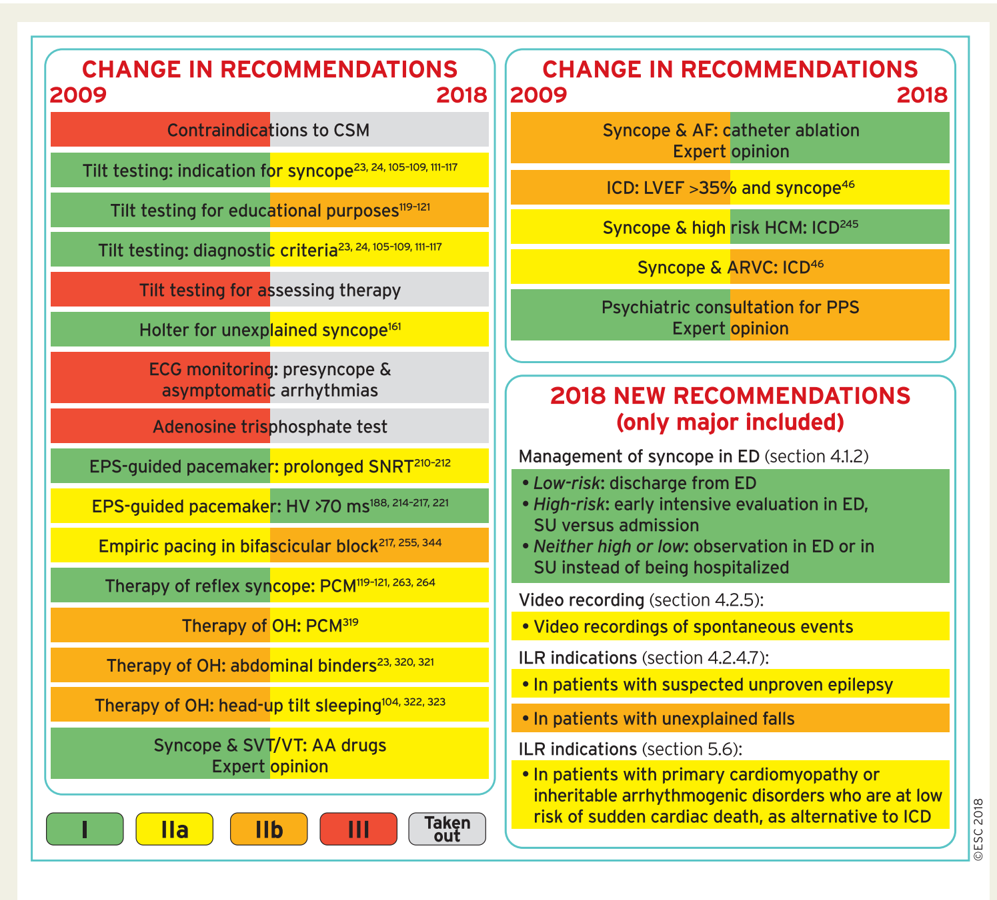
These 2018 ESC Guidelines provide a multidisciplinary, evidence-graded framework for diagnosing and managing syncope and transient loss of consciousness (TLOC), emphasizing initial evaluation, risk stratification, and mechanism-guided therapy. They update prior versions with new/revised concepts including prolonged ECG monitoring, syncope units, tilt-testing as hypotensive susceptibility, and refined pacing/ICD indications.
Key findings
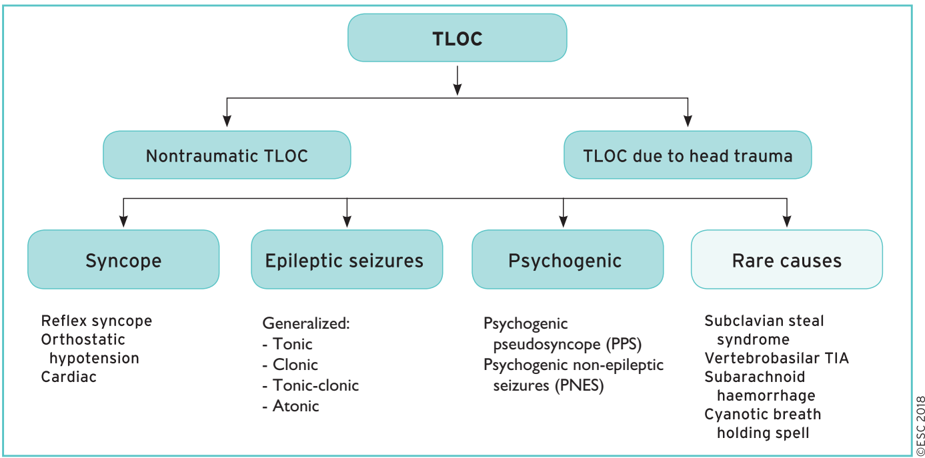
- Syncope is defined as TLOC due to cerebral hypoperfusion with rapid onset, short duration, and spontaneous complete recovery; initial evaluation (history, physical examination including standing blood pressure, and ECG) can differentiate syncope from other forms of TLOC in approximately 60% of cases.
- In the emergency department, approximately 50% of syncope patients are admitted (range 12–86%), but composite outcomes in the next 7–30 days include 0.8% death, 6.9% non-fatal severe outcome while in the ED, and another 3.6% post-ED serious outcome; risk stratification scores perform no better than clinical judgment and should not be used alone.
- Implantable loop recorder (ILR) use in unexplained syncope: a meta-analysis of five RCTs in 660 patients showed a 3.7-fold (95% CI 2.7–5.0) increased relative probability of diagnosis versus conventional strategy; pooled data from nine studies in 506 patients found syncope–ECG correlation in 35%, with asystole/bradycardia in 56%, tachycardia in 11%, and no arrhythmia in 33%.
- Treatment recommendations include education/lifestyle modification for reflex syncope; physical counter-pressure manoeuvres reduced recurrence in the PC-Trial (223 patients, relative risk reduction 39%, 95% CI 11–53); beta-blockers are not indicated (Class III, Level A); cardiac pacing for documented asystolic reflex syncope reduced 2-year recurrence from 57% (pacemaker off) to 25% (pacemaker on) in ISSUE-3; fludrocortisone in POST 2 showed a marginal non-significant reduction (hazard ratio 0.69, 95% CI 0.46–1.03; P=0.069; 44% vs 60.5% syncope at 12 months).
Methods
- Design: clinical practice guideline developed by the ESC Task Force for the diagnosis and management of syncope, with special contribution from the European Heart Rhythm Association and endorsement by multiple societies.
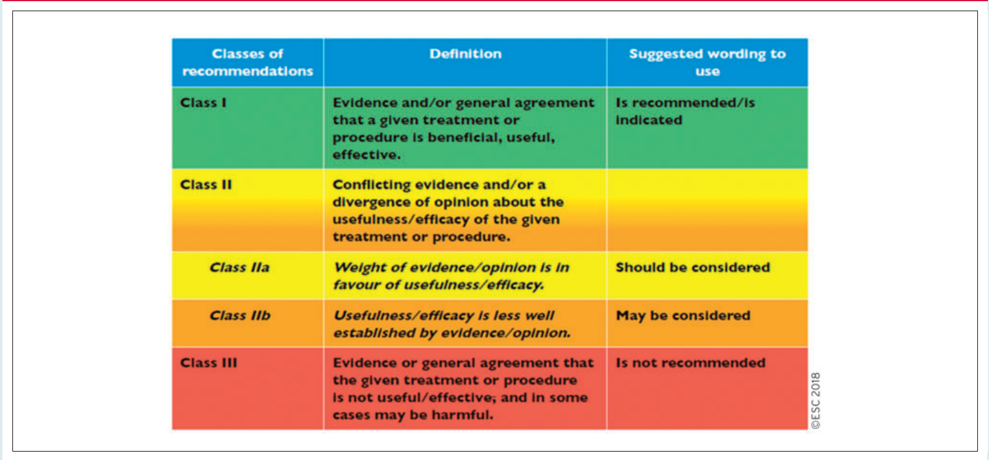
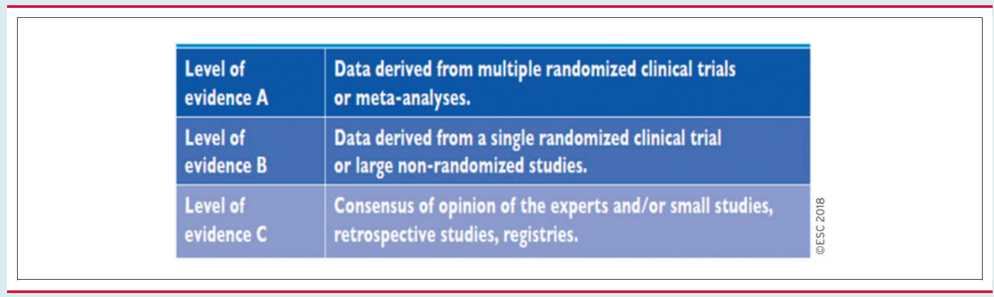
- Data/sample: no primary study sample; the Task Force performed a comprehensive review of published evidence, including randomized trials, observational studies, registries, and consensus documents, and graded recommendations using ESC Classes of recommendations (I–III) and Levels of evidence (A–C).
- Main analysis: evidence synthesis and expert consensus, with practical algorithms and care pathways for initial evaluation, emergency department risk stratification, diagnostic testing, treatment, syncope units, and special populations.
Limitations
- The paper states that many recommendations rely on moderate or weak evidence and consensus rather than large randomized trials; examples include pacing in carotid sinus syndrome, tilt-induced vasovagal syncope, and adenosine-sensitive syncope, where it notes “lack of large RCTs,” “contrasting results,” and “divergence of opinion.”
- The paper explicitly notes diagnostic limitations: tilt testing “offers little diagnostic value in patients for whom it is most needed,” risk stratification scores “perform no better than good clinical judgement,” EPS has a low negative predictive value, and ECG monitoring cannot record blood pressure alongside ECG.
- Evident from the text: this is a guideline document, not a primary empirical study, and it includes a section on “Gaps in evidence and areas for future research”; the provided text is also truncated, so some later sections and supplementary details are not fully available here.
Model-written summary of a shortened version of the paper’s full text (it is longer than we read). Check it against the paper before relying on it.
Integrity signals
Registry
Cites
Statistics
Figures
Verification
Claims the paper makes
151 Valid · 22 Not valid · 111 Not checked · 74 Own results and interpretations
Some cited sources support this claim and some don’t — read each source’s verdict below.
In the paper
“There is strong consensus that the diagnosis of CSS requires both the reproduction of spontaneous symptoms during CSM and clinical features of spontaneous syncope compatible with a reflex mechanism.”
What the sources say
- Not checked — no full text of the sourcecites [89] Kerr SR, Pearce MS, Brayne C, Davis RJ, Kenny RA. Carotid sinus hypersensitivity in asymptomatic older persons: implications for diagnosis of syncope and falls. Arch Intern Med 2006; 166 :515-520. source
- Not checked — no full text of the sourcecites [90] Puggioni E, Guiducci V, Brignole M, Menozzi C, Oddone D, Donateo P, Croci F, Solano A, Lolli G, Tomasi C, Bottoni N. Results and complications of the carotid sinus massage performed according to the 'method of symptoms'. Am J Cardiol 2002; 89 :599-601. source
- Partly supportedcites [92] Solari D, Maggi R, Oddone D, Solano A, Croci F, Donateo P, Brignole M. Clinical context and outcome of carotid sinus syndrome diagnosed by means of the 'method of symptoms'. Europace 2014; 16 :928-934. sourceExperimental — accuracy not yet measured
The Methods state that, under the ‘method of symptoms,’ CSS was diagnosed when carotid sinus massage reproduced spontaneous syncope or pre-syncope in the presence of carotid sinus hypersensitivity; the Discussion likewise says symptom reproduction is required. Our copy does not state that clinical features of spontaneous syncope compatible with a reflex mechanism are an additional requirement. The Results also include 14 diagnosed patients who had pre-syncope only. (LLM, conf=0.86)
- Partly supportedcites [93] Solari D, Maggi R, Oddone D, Solano A, Croci F, Donateo P, Wieling W, Brignole M. Assessment of the vasodepressor reflex in carotid sinus syndrome. Circ Arrhythm Electrophysiol 2014; 7 :505-510. sourceExperimental — accuracy not yet measured
The Methods (page unavailable) state that CSS was diagnosed when carotid sinus massage reproduced spontaneous syncope or presyncope in the presence of carotid sinus hypersensitivity. They do not state that clinical features compatible with a reflex mechanism are an additional diagnostic requirement; the study included patients whose syncope remained unexplained after initial evaluation. (LLM, conf=0.86)
- Not checked — no full text of the sourcecites [98] Brignole M, Menozzi C, Lolli G, Bottoni N, Gaggioli G. Long-term outcome of paced and nonpaced patients with severe carotid sinus syndrome. Am J Cardiol 1992; 69 :1039-1043. source
- Disputedcites [99] Claesson JE, Kristensson BE, Edvardsson N, Wahrborg P. Less syncope and milder symptoms in patients treated with pacing for induced cardioinhibitory carotid sinus syndrome: a randomized study. Europace 2007; 9 :932-936. sourceExperimental — accuracy not yet measured
The Definitions section says cardioinhibitory carotid sinus syndrome may be diagnosed even when a close relationship between carotid-sinus manipulation and syncope has not been demonstrated. That contradicts the claim that reproducing spontaneous symptoms during massage is required. The Introduction also notes continuing controversy rather than strong consensus. Page numbers are unavailable in our copy. (LLM, conf=0.88)
Checked by a reasoning model — may be wrong.
- Not checked — no full text of the sourcecites [100] Menozzi C, Brignole M, Lolli G, Bottoni N, Oddone D, Gianfranchi L, Gaggioli G. Follow-up of asystolic episodes in patients with cardioinhibitory, neurally mediated syncope and VVI pacemaker. Am J Cardiol 1993; 72 :1152-1155. source
- Not checked yetcites [101] Maggi R, Menozzi C, Brignole M, Podoleanu C, Iori M, Sutton R, Moya A, Giada F, Orazi S, Grovale N. Cardioinhibitory carotid sinus hypersensitivity predicts an asystolic mechanism of spontaneous neurally mediated syncope. Europace 2007; 9 :563-567. source
Checked before — its earlier verdict is held back until a new check runs.
- Not checked — no full text of the sourcecites [102] Thomas JE. Hyperactive carotid sinus reflex and carotid sinus syncope. Mayo Clin Proc 1969; 44 :127-139. doi:10.1016/s0025-6196(25)05256-5
boosted- Asserted: passes — The authors put it forward as true.
- Checkable: passes — It can be checked against evidence.
- Load-bearing: passes — The paper’s conclusions depend on it.
- Based: passes — The paper gives a reason why it holds.
At least one cited source doesn’t support this claim or points to a different paper, and none confirmed it — see the verdicts below.
In the paper
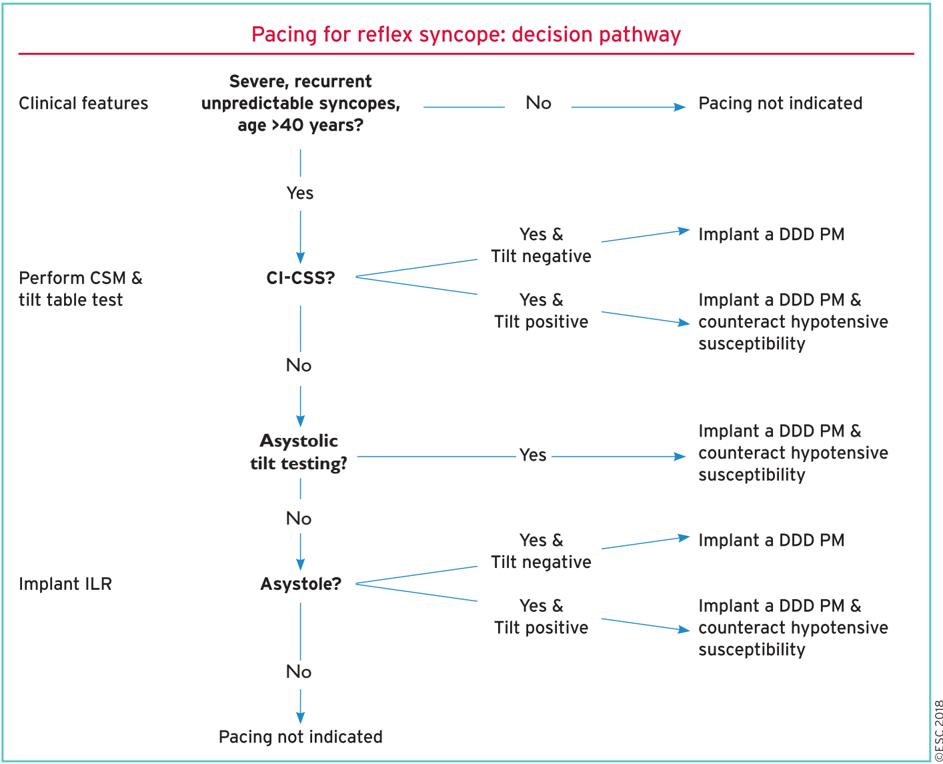
“A positive cardioinhibitory response to tilt testing predicts, with high probability, asystolic spontaneous syncope; this finding is relevant for therapeutic implications when cardiac pacing is considered (see section 5.2.6).”
What the sources say
- Disputedcites [122] Deharo JC, Jego C, Lanteaume A, Djiane P. An implantable loop recorder study of highly symptomatic vasovagal patients: the heart rhythm observed during a spontaneous syncope is identical to the recurrent syncope but not correlated with the head-up tilt test or adenosine triphosphate test. J Am Coll Cardiol 2006; 47 :587-593. sourceExperimental — accuracy not yet measured
The Discussion states that the response during head-up tilt testing was not predictive of the mechanism of spontaneous syncope. It reports spontaneous syncope without severe bradycardia in two of four patients with a type 2 tilt response, contrary to the claimed high-probability prediction of asystole. The paper instead discusses documented rhythm during spontaneous syncope as relevant to pacing decisions (Discussion, p. 591). (LLM, conf=0.94)
Checked by a reasoning model — may be wrong.
- Not checked — no full text of the sourcecites [123] Brignole M, Sutton R, Menozzi C, Garcia-Civera R, Moya A, Wieling W, Andresen D, Benditt DG, Grovale N, De Santo T, Vardas P, International Study on Syncope of Uncertain Etiology 2 (ISSUE 2) Group. Lack of correlation between the responses to tilt testing and adenosine triphosphate test and the mechanism of spontaneous neurally mediated syncope. Eur Heart J 2006; 27 :2232-2239. source
boostedstates an association- Asserted: passes — The authors put it forward as true.
- Checkable: passes — It can be checked against evidence.
- Load-bearing: passes — The paper’s conclusions depend on it.
- Based: passes — The paper gives a reason why it holds.
- Disputed
At least one cited source doesn’t support this claim or points to a different paper, and none confirmed it — see the verdicts below.
In the paper
“While a positive cardioinhibitory response to tilt testing predicts, with a high probability, an asystolic spontaneous syncope, the presence of a positive vasodepressor, mixed response, or even a negative response, does not exclude the presence of asystole during spontaneous syncope. 122,123”
What the sources say
- Disputedcites [122] Deharo JC, Jego C, Lanteaume A, Djiane P. An implantable loop recorder study of highly symptomatic vasovagal patients: the heart rhythm observed during a spontaneous syncope is identical to the recurrent syncope but not correlated with the head-up tilt test or adenosine triphosphate test. J Am Coll Cardiol 2006; 47 :587-593. sourceExperimental — accuracy not yet measured
The Discussion says that the tilt-test response was not predictive of the mechanism of spontaneous syncope. It also reports spontaneous syncope without severe bradycardia in two of four patients with a type 2 (cardioinhibitory) tilt response, contrary to the claimed high-probability prediction of asystole. (LLM, conf=0.92)
Checked by a reasoning model — may be wrong.
- Not checked — no full text of the sourcecites [123] Brignole M, Sutton R, Menozzi C, Garcia-Civera R, Moya A, Wieling W, Andresen D, Benditt DG, Grovale N, De Santo T, Vardas P, International Study on Syncope of Uncertain Etiology 2 (ISSUE 2) Group. Lack of correlation between the responses to tilt testing and adenosine triphosphate test and the mechanism of spontaneous neurally mediated syncope. Eur Heart J 2006; 27 :2232-2239. source
boostedstates an association- Asserted: passes — The authors put it forward as true.
- Checkable: passes — It can be checked against evidence.
- Load-bearing: passes — The paper’s conclusions depend on it.
- Based: passes — The paper gives a reason why it holds.
- Disputed
At least one cited source doesn’t support this claim or points to a different paper, and none confirmed it — see the verdicts below.
In the paper
“Because up to now smartphone applications have recorded real-time ECG, their current role in syncope is limited for the same reason as for prospective event recorders. 164,165”
What the sources say
- Disputedcites [164] Bruining N, Caiani E, Chronaki C, Guzik P, van der Velde E, Task Force of the e-Cardiology Working. Acquisition and analysis of cardiovascular signals on smartphones: potential, pitfalls and perspectives: by the Task Force of the eCardiology Working Group of European Society of Cardiology. Eur J Prev Cardiol 2014; 21 :4-13. sourceExperimental — accuracy not yet measured
The ECG monitoring section says smartphone ECG technology can be used for diagnostic or monitoring purposes in patients with recurrent syncope. It also describes eMotion continuously transmitting ECG to a smartphone, with recordings uploaded in real time for up to five days. That contradicts the claim's premise that smartphone ECG recording is limited in the same way as a prospective event recorder; the paper does not make that comparison. (LLM, conf=0.83)
Checked by a reasoning model — may be wrong.
- Not checked — no full text of the sourcecites [165] Waks JW, Fein AS, Das S. Wide complex tachycardia recorded with a smartphone cardiac rhythm monitor. JAMA Intern Med 2015; 175 :437-439. source
plainstates a cause- Asserted: passes — The authors put it forward as true.
- Checkable: passes — It can be checked against evidence.
- Load-bearing: passes — The paper’s conclusions depend on it.
- Based: passes — The paper gives a reason why it holds.
- Disputed
At least one cited source doesn’t support this claim or points to a different paper, and none confirmed it — see the verdicts below.
In the paper
“For patients with suspected heart disease, echocardiography serves to confirm or refute the suspicions in equal proportions”
What the sources say
- Not checked — no full text of the sourcecites [235] Recchia D, Barzilai B. Echocardiography in the evaluation of patients with syncope. J Gen Intern Med 1995; 10 :649-655. source
- Disputedcites [236] Sarasin FP, Junod AF, Carballo D, Slama S, Unger PF, Louis-Simonet M. Role of echocardiography in the evaluation of syncope: a prospective study. Heart 2002; 88 :363-367. sourceExperimental — accuracy not yet measured
The Results report that echocardiography confirmed severe aortic stenosis in 8 of 20 patients in whom it was suspected—40%, not an equal proportion. The study concerns selected patients with syncope and suspected aortic stenosis, rather than patients with suspected heart disease generally. (LLM, conf=0.85)
Checked by a reasoning model — may be wrong.
plain- Asserted: passes — The authors put it forward as true.
- Checkable: passes — It can be checked against evidence.
- Load-bearing: unclear — It is unclear whether the paper’s conclusions depend on it.
- Based: passes — The paper gives a reason why it holds.
222 more claims · 98 with their cited sources checked
Create a free account to see all 358 claims and to verify the 18 references still open.
- Probably not a substantial claim. 35
- It may state two separate claims as one. 103
Claims other papers make about this one
Each is checked against this paper’s own text: does it say what the citing paper says it does?
The source backs part of the claim, not all of it — or backs it for a different population, condition or comparison.
In the citing paper
“While international guidelines recommend ILR implantation in patients with unexplained recurrent syncope after a standard workup [5,22,23,24],”
From Diagnostic Yield and Clinical Implications of Implantable Loop Recorders in Patients with Syncope in Germany: A National Database Analysis (2024) · cites this paper as [5]
Experimental — accuracy not yet measuredThe source backs part of the claim, not all of it — or backs it for a different population, condition or comparison.
In the citing paper
“These criteria were subsequently endorsed by major international neurologic, autonomic and cardiologic societies with slight modifications [1,3,4]”
From Postural orthostatic tachycardia syndrome: clinical presentation, aetiology and management (2019) · cites this paper as [4]
Experimental — accuracy not yet measuredThe source backs part of the claim, not all of it — or backs it for a different population, condition or comparison.
In the citing paper
“Direct a1-adrenoreceptor agonist.”
From Postural orthostatic tachycardia syndrome: clinical presentation, aetiology and management (2019) · cites this paper as [4]
Experimental — accuracy not yet measuredThe source backs part of the claim, not all of it — or backs it for a different population, condition or comparison.
In the citing paper
“It may be effective in 'hypovolaemic' subtype and low-BP phenotype with pronounced orthostatic intolerance.”
From Postural orthostatic tachycardia syndrome: clinical presentation, aetiology and management (2019) · cites this paper as [4]
Experimental — accuracy not yet measuredThe source backs part of the claim, not all of it — or backs it for a different population, condition or comparison.
In the citing paper
“However, the cause of syncope remains unknown in up to one third of patients [5,6].”
From Diagnostic Yield and Clinical Implications of Implantable Loop Recorders in Patients with Syncope in Germany: A National Database Analysis (2024) · cites this paper as [5]
Experimental — accuracy not yet measured
3 more claims about this paper
Create a free account to see every claim other papers make about this one.
Self-check
Percentages, sums and reported differences re-computed from the paper’s own numbers.
Each contradiction between two passages listed here was confirmed by an independent check.
Rated minor: it would not touch a result — a value no result rests on, a p-value that stays on the same side of the significance level, or a conflict that is clerical, resolved elsewhere in the paper, or outside its own findings.
In the paper
§ Additional advice and clinical perspectives · p. 14
“Around 10% of patients with syncope in the ED will suffer from a serious outcome within 7-30 days of their visit, with just under half occurring after their stay in the ED”
§ Question 3: Should the patient be admitted to hospital? · p. 13
“only 0.8% die and 6.9% have a non-fatal severe outcome whilst in the ED, while another 3.6% have a post-ED serious outcome”
Citations
Cites
Items 201–400 of 483
Loss of nocturnal blood pressure fall in various extrapyramidal syndromes
Schmidt, C., Berg, D., Herting, Prieur, S., Junghanns, S., Schweitzer, K., Globas, C., Schöls, L., Reichmann, H., & Ziemssen, T. (2009) · Movement Disorders · doi:10.1002/mds.22767 · Cited by 113
Head-up tilt testing for diagnosing vasovagal syncope: a meta-analysis
Forleo, C., Guida, P., Iacoviello, M., Resta, M., Monitillo, F., Sorrentino, S., & Favale, S. (2013) · International Journal of Cardiology · doi:10.1016/j.ijcard.2012.09.023 · Cited by 112
Maury, P., Rollin, A., Sacher, F., Gourraud, J.-B., Raczka, F., Pasquié, J.-L., Duparc, A., Mondoly, P., Cardin, C., Delay, M., et al. (2013) · The American Journal of Cardiology · doi:10.1016/j.amjcard.2013.06.033 · Cited by 111
Self-citationAn Implantable Loop Recorder Study of Highly Symptomatic Vasovagal Patients
Deharo, J.-C., Jego, C., Lanteaume, A., & Djiane, P. (2006) · Journal of the American College of Cardiology · doi:10.1016/j.jacc.2005.09.043 · Cited by 110 · cited 3×
“positive vasodepressor, mixed response, or even a negative response, does not exclude the presence of asystole during spontaneous syncope.(122,123) Tilt testing has an acceptable sensitivity(124) and specificity(106,124,125) when these are calculated in patients with true VVS or without a history of syncope.”
Self-citationASH Position Paper: Evaluation and Treatment of Orthostatic Hypotension
Shibao, C., Lipsitz, L. A., & Biaggioni, I. (2013) · The Journal of Clinical Hypertension · doi:10.1111/jch.12062 · Cited by 110
Does the use of a syncope diagnostic protocol improve the investigation and management of syncope?
Farwell, D. J., & Sulke, A. N. (2004) · Heart · doi:10.1136/heart.90.1.52 · Cited by 109
Psychogenic pseudosyncope: An underestimated and provable diagnosis
Benbadis, S. R., & Chichkova, R. I. (2006) · Epilepsy & Behavior · doi:10.1016/j.yebeh.2006.02.011 · Cited by 109
SASAKI, Y., SHIMOTORI, M., AKAHANE, K., YONEKURA, H., HIRANO, K., ENDOH, R., KOIKE, S., KAWA, S., FURUTA, S., & HOMMA, T. (1988) · Pacing and Clinical Electrophysiology · doi:10.1111/j.1540-8159.1988.tb06277.x · Cited by 109
Amnesia for loss of consciousness is common in vasovagal syncope
O'Dwyer, C., Bennett, K., Langan, Y., Fan, C. W., & Kenny, R. A. (2011) · Europace · doi:10.1093/europace/eur069 · Cited by 109
Self-citationBreningstall, G. N. (1996) · Pediatric Neurology · doi:10.1016/0887-8994(96)00006-9 · Cited by 107
Effectiveness of fludrocortisone and salt in preventing syncope recurrence in children
Salim, M. A., & Di Sessa, T. G. (2005) · Journal of the American College of Cardiology · doi:10.1016/j.jacc.2004.11.033 · Cited by 107 · cited 1×
“Fludrocortisone was ineffective in a small randomized double-blind trial in children.(276)”
Exercise-induced distal atrioventricular block
Woelfel, A. K., Simpson, R. J., Gettes, L. S., & Foster, J. R. (1983) · Journal of the American College of Cardiology · doi:10.1016/s0735-1097(83)80288-5 · Cited by 106
Do Symptoms Predict Cardiac Arrhythmias and Mortality in Patients With Syncope?
Oh, J. H., Hanusa, B. H., & Kapoor, W. N. (1999) · Archives of Internal Medicine · doi:10.1001/archinte.159.4.375 · Cited by 105
Croci, F. (2002) · Europace · doi:10.1053/eupc.2002.0267 · Cited by 105
Orthostatic hypotension in de novo Parkinson disease
Bonuccelli, U., Lucetti, C., Del Dotto, P., Ceravolo, R., Gambaccini, G., Bernardini, S., Rossi, G., & Piaggesi, A. (2003) · Archives of Neurology · doi:10.1001/archneur.60.10.1400 · Cited by 103
Marwick, T. H., Nakatani, S., Haluska, B. A., Thomas, J. D., & Lever, H. M. (1995) · The American Journal of Cardiology · doi:10.1016/s0002-9149(99)80416-0 · Cited by 103
Amnesia for Loss of Consciousness in Carotid Sinus Syndrome
Parry, S. W., Steen, I. N., Baptist, M., & Kenny, R. A. (2005) · Journal of the American College of Cardiology · doi:10.1016/j.jacc.2005.02.060 · Cited by 102 · cited 12×
“(2) The eyes are usually open in epileptic seizures and syncope but are usually closed in psychogenic TLOC.”
InfluentialSelf-citationCardiac pacing for severe childhood neurally mediated syncope with reflex anoxic seizures
McLeod, K. A., Wilson, N., Hewitt, J., Norrie, J., & Stephenson, J. B. P. (1999) · Heart · doi:10.1136/hrt.82.6.721 · Cited by 102
Verheyden, B., Liu, J., van Dijk, N., Westerhof, B. E., Reybrouck, T., Aubert, A. E., & Wieling, W. (2008) · Heart Rhythm · doi:10.1016/j.hrthm.2008.09.003 · Cited by 101
Risk stratification of patients with syncope in an accident and emergency department
Crane, S. D. (2002) · Emergency Medicine Journal · doi:10.1136/emj.19.1.23 · Cited by 101
REYBROUCK, T., HEIDBÜCHEL, H., VAN DE WERF, F., & ECTOR, H. (2002) · Pacing and Clinical Electrophysiology · doi:10.1046/j.1460-9592.2002.01441.x · Cited by 100
Maury, P., Sacher, F., Gourraud, J.-B., Pasquié, J.-L., Raczka, F., Bongard, V., Duparc, A., Mondoly, P., Sadron, M., Chatel, S., et al. (2015) · Heart Rhythm · doi:10.1016/j.hrthm.2015.07.029 · Cited by 99
Self-citationClaydon, V. E., & Hainsworth, R. (2004) · Hypertension · doi:10.1161/01.hyp.0000122269.05049.e7 · Cited by 99
The semiology of tilt-induced psychogenic pseudosyncope
Tannemaat, M. R., van Niekerk, J., Reijntjes, R. H., Thijs, R. D., Sutton, R., & van Dijk, J. G. (2013) · Neurology · doi:10.1212/wnl.0b013e3182a1aa88 · Cited by 99 · cited 20×
“PPS and PNES differ pathophysiologically from the TLOC forms that they resemble: in PPS, BP and HR are normal or high rather than low, and the EEG is normal instead of showing the slowing or flattening typical of syncope; in contrast to epileptic seizures, the EEG in PNES shows no epileptiform brain activity during an…”
InfluentialSelf-citationFrequency of neurologic complications following carotid sinus massage
Davies, A. J., & Kenny, R. A. (1998) · The American Journal of Cardiology · doi:10.1016/s0002-9149(98)00130-1 · Cited by 98
Self-citationBrignole, M., Gaggioli, G., Menozzi, C., Gianfranchi, L., Bartoletti, A., Bottoni, N., Lolli, G., Oddone, D., Rosso, A. D., & Pellinghelli, G. (1997) · Circulation · doi:10.1161/01.cir.96.11.3921 · Cited by 98 · cited 1×
“In parallel, the adenosine/adenosine triphosphate (ATP) provocation test has been performed to demonstrate the utility of adenosine sensitivity and paroxysmal cardioinhibitory propensity for the selection of appropriate pacemaker candidates.(4,227,228) The test requires rapid (<2 s) injection of a 20 mg bolus of ATP/a…”
Self-citationHauser, R. A., Hewitt, L. A., & Isaacson, S. (2014) · Journal of Parkinson’s Disease · doi:10.3233/jpd-130259 · Cited by 97
Englund, A., Bergfeldt, L., Rehnqvist, N., Åström, H., & Rosenqvist, M. (1995) · Journal of the American College of Cardiology · doi:10.1016/0735-1097(95)00354-1 · Cited by 96 · cited 1×
“Unfortunately, ventricular programmed stimulation does not seem to identify these patients correctly, and the finding of inducible ventricular arrhythmia (VA) should therefore be interpreted with caution.(345,346) Therefore, an implantable cardioverter defibrillator (ICD) or a cardiac resynchronization therapy defibri…”
Carotid sinus hypersensitivity: beneficial effects of dual-chamber pacing
Madigan, N. P., Flaker, G. C., Curtis, J. J., Reid, J., Mueller, K. J., & Murphy, T. J. (1984) · The American Journal of Cardiology · doi:10.1016/0002-9149(84)90632-5 · Cited by 95
Olde Nordkamp, L. R. A., Wilde, A. A. M., Tijssen, J. G. P., Knops, R. E., van Dessel, P. F. H. M., & de Groot, J. R. (2013) · Circulation: Arrhythmia and Electrophysiology · doi:10.1161/circep.112.975268 · Cited by 95
(1990) · Mac Keith Press eBooks · Cited by 95
Orthostatic hypotension as a risk factor for symptomatic occlusive cerebrovascular disease
Dobkin, B. H. (1989) · Neurology · doi:10.1212/wnl.39.1.30 · Cited by 95 · cited 2×
“This may rarely result in repetitive, orthostatic, short-lasting, and stereotyped TIAs.(423,424) A TIA of the vertebrobasilar system can cause LOC, but there are always focal signs, usually limb weakness, gait and limb ataxia, vertigo, diplopia, nystagmus, dysarthria, and oropharyngeal dysfunction.”
Locati, E. T., Moya, A., Oliveira, M., Tanner, H., Willems, R., Lunati, M., & Brignole, M. (2016) · Europace · doi:10.1093/europace/euv311 · Cited by 95
Self-citationSulke, N., Sugihara, C., Hong, P., Patel, N., & Freemantle, N. (2016) · Europace · doi:10.1093/europace/euv228 · Cited by 95
2013 ESC GUIDELINES ON CARDIAC PACING AND CARDIAC RESYNCHRONIZATION THERAPY
Brignole, M., Auricchio, A., Barón‐Esquivias, G., Bordachar, P., Boriani, G., Breithardt, O. A., Cleland, J. G. F., Deharo, J., Delgado, V., Elliot, P. M., et al. (2014) · Russian Journal of Cardiology · doi:10.15829/1560-4071-2014-4-5-63 · Cited by 95
Self-citationChronic sinus node disease: natural course and indications for pacing
RASMUSSEN, K. (1981) · European Heart Journal · doi:10.1093/oxfordjournals.eurheartj.a061236 · Cited by 94
The origin of vasovagal syncope: to protect the heart or to escape predation?
Alboni, P., Alboni, M., & Bertorelle, G. (2008) · Clinical Autonomic Research · doi:10.1007/s10286-008-0479-7 · Cited by 93
Menozzi, C., Brignole, M., Lolli, G., Bottoni, N., Oddone, D., Gianfranchi, L., & Gaggioli, G. (1993) · The American Journal of Cardiology · doi:10.1016/0002-9149(93)90985-l · Cited by 93 · cited 1×
“Recordings of long pauses were very common in the two trials that employed this method.(100,101) These results suggest that a positive response to CSM, reproducing symptoms, in patients with syncope is highly predictive of the occurrence of spontaneous asystolic episodes.”
Self-citationPodoleanu, C., DaCosta, A., Defaye, P., Taieb, J., Galley, D., Bru, P., Maury, P., Mabo, P., Boveda, S., Cellarier, G., et al. (2014) · Archives of Cardiovascular Diseases · doi:10.1016/j.acvd.2014.05.009 · Cited by 93
Self-citationFlammang, D., Church, T. R., De Roy, L., Blanc, J.-J., Leroy, J., Mairesse, G. H., Otmani, A., Graux, P. J., Frank, R., Purnode, P., et al. (2012) · Circulation · doi:10.1161/circulationaha.111.022855 · Cited by 93 · cited 3×
“Cardiac pacing may be considered to reduce syncope recurrences in patients with the clinical features of adenosine-sensitive syncope.(5,227,286) IIb B”
Self-citationIncidence and prognosis of syncope
Soteriades, E. S., Evans, J. C., & Larson, M. G. (2003) · ACC Current Journal Review · doi:10.1016/s1062-1458(02)01060-7 · Cited by 92
Orthostatic hypotension in very old individuals living in nursing homes: the PARTAGE study
Valbusa, F., Labat, C., Salvi, P., Vivian, M. E., Hanon, O., & Benetos, A. (2012) · Journal of Hypertension · doi:10.1097/hjh.0b013e32834d3d73 · Cited by 91
Carotid sinus syndrome, should we pace? A multicentre, randomised control trial (Safepace 2)
Ryan, D. J., Nick, S., Colette, S. M., & Roseanne, K. (2010) · Heart · doi:10.1136/hrt.2009.176206 · Cited by 91
SYNCOPE IN A POPULATION OF HEALTHY YOUNG ADULTS: INCIDENCE, MECHANISMS, AND SIGNIFICANCE
Dermksian, G. (1958) · Journal of the American Medical Association · doi:10.1001/jama.1958.03000090030007 · Cited by 91
(1996) · Journal of the Neurological Sciences · doi:10.1016/s0022-510x(96)00206-7 · Cited by 90
Claesson, J.-E., Kristensson, B.-E., Edvardsson, N., & Wahrborg, P. (2007) · Europace · doi:10.1093/europace/eum180 · Cited by 89
External validation of the San Francisco Syncope Rule in the Canadian setting
Thiruganasambandamoorthy, V., Hess, E. P., Alreesi, A., Perry, J. J., Wells, G. A., & Stiell, I. G. (2010) · Annals of Emergency Medicine · doi:10.1016/j.annemergmed.2009.10.001 · Cited by 88
Assessment of sympathetic index from the Valsalva maneuver
Novak, P. (2011) · Neurology · doi:10.1212/wnl.0b013e31821e5563 · Cited by 88
The normal response to prolonged passive head up tilt testing
Petersen, M. E. V., Williams, T. R., Gordon, C., Chamberlain-Webber, R., & Sutton, R. (2000) · Heart · doi:10.1136/heart.84.5.509 · Cited by 85
Self-citationAnoxic-epileptic seizures: observational study of epileptic seizures induced by syncopes
Stephenson, J. B. P. (2005) · Archives of Disease in Childhood · doi:10.1136/adc.2005.075408 · Cited by 85 · cited 1×
“Hypoxia can trigger epileptic seizures.(208,421) Such syncopal epileptic seizures have been described in infants with reflex syncope or cyanotic breath-holding spells.”
Santini, M., Castro, A., Giada, F., Ricci, R., Inama, G., Gaggioli, G., Calò, L., Orazi, S., Viscusi, M., Chiodi, L., et al. (2013) · Circulation: Arrhythmia and Electrophysiology · doi:10.1161/circep.112.975102 · Cited by 84 · cited 6×
“Cardiac pacing may be considered in patients with unexplained syncope and bifascicular BBB.(217,255,344) IIb B”
InfluentialSelf-citationStuebner, E., Vichayanrat, E., Low, D. A., Mathias, C. J., Isenmann, S., & Haensch, C.-A. (2013) · Frontiers in Neurology · doi:10.3389/fneur.2013.00049 · Cited by 84 · cited 2×
“ABPM should be considered to detect and monitor the degree of OH and supine hypertension in daily life in patients with autonomic failure.(152,153) IIa C”
Ictal Asystole and Ictal Syncope: Insights Into Clinical Management
Bestawros, M., Darbar, D., Arain, A., Abou-Khalil, B., Plummer, D., Dupont, W. D., & Raj, S. R. (2015) · Circulation: Arrhythmia and Electrophysiology · doi:10.1161/circep.114.001667 · Cited by 82
Bruining, N., Caiani, E., Chronaki, C., Guzik, P., & van der Velde, E. (2014) · European Journal of Preventive Cardiology · doi:10.1177/2047487314552604 · Cited by 81
Echocardiography in the evaluation of patients with syncope
Recchia, D., & Barzilai, B. (1995) · Journal of General Internal Medicine · doi:10.1007/bf02602755 · Cited by 81 · cited 2×
“For patients with suspected heart disease, echocardiography serves to confirm or refute the suspicions in equal proportions and plays an important role in risk stratification.(235,236) Echocardiography identifies the cause of syncope in very few patients when no more tests are needed (i.”
Ungar, A., Mussi, C., Ceccofiglio, A., Bellelli, G., Nicosia, F., Bo, M., Riccio, D., Martone, A. M., Guadagno, L., Noro, G., et al. (2016) · Journal of the American Geriatrics Society · doi:10.1111/jgs.14225 · Cited by 80
Olde Nordkamp, L. R. A., Vink, A. S., Wilde, A. A. M., de Lange, F. J., de Jong, J. S. S. G., Wieling, W., van Dijk, N., & Tan, H. L. (2015) · Heart Rhythm · doi:10.1016/j.hrthm.2014.10.014 · Cited by 80
Brignole, M., Ammirati, F., Arabia, F., Quartieri, F., Tomaino, M., Ungar, A., Lunati, M., Russo, V., Del Rosso, A., & Gaggioli, G. (2015) · European Heart Journal · doi:10.1093/eurheartj/ehv069 · Cited by 80 · cited 3×
“those >_40 years of age (mostly >60 years), affected by severe forms of reflex syncope with frequent recurrences associated with a high risk of injury, often due to the lack of prodrome.(186) While there is growing scepticism over the diagnostic accuracy of tilt testing for syncope diagnosis, emerging evidence support…”
InfluentialSelf-citationMaggi, R., Menozzi, C., Brignole, M., Podoleanu, C., Iori, M., Sutton, R., Moya, A., Giada, F., Orazi, S., & Grovale, N. (2007) · EP Europace · doi:10.1093/europace/eum092 · Cited by 79 · cited 1×
“Recordings of long pauses were very common in the two trials that employed this method.(100,101) These results suggest that a positive response to CSM, reproducing symptoms, in patients with syncope is highly predictive of the occurrence of spontaneous asystolic episodes.”
Self-citationSyncope associated with exercise, a manifestation of neurally mediated syncope
Sakaguchi, S., Shultz, J. J., Remole, S. C., Adler, S. W., Lurie, K. G., & Benditt, D. G. (1995) · The American Journal of Cardiology · doi:10.1016/s0002-9149(99)80584-0 · Cited by 79
Olshansky, B., Hahn, E. A., Hartz, V. L., Prater, S. P., & Mason, J. W. (1999) · American Heart Journal · doi:10.1016/s0002-8703(99)70412-6 · Cited by 78
DUYGU, H., ZOGHI, M., TURK, U., AKYUZ, S., OZERKAN, F., AKILLI, A., ERTURK, U., ONDER, R., & AKIN, M. (2008) · Pacing and Clinical Electrophysiology · doi:10.1111/j.1540-8159.2008.01046.x · Cited by 78
Is home orthostatic self-training effective in preventing neurally mediated syncope?
ON, Y. K., PARK, J., HUH, J., & SOO KIM, J. (2007) · Pacing and Clinical Electrophysiology · doi:10.1111/j.1540-8159.2007.00725.x · Cited by 78
FURUKAWA, T., MAGGI, R., BERTOLONE, C., FONTANA, D., & BRIGNOLE, M. (2012) · Journal of Cardiovascular Electrophysiology · doi:10.1111/j.1540-8167.2011.02133.x · Cited by 77
Self-citationThe potential prognostic role of cardiovascular autonomic failure in α‐synucleinopathies
Fanciulli, A., Strano, S., Colosimo, C., Caltagirone, C., Spalletta, G., & Pontieri, F. E. (2013) · European Journal of Neurology · doi:10.1111/j.1468-1331.2012.03819.x · Cited by 77
Self-citationBraune, S., Auer, A., Schulte‐Mönting, J., Schwerbrock, S., & Lücking, C. H. (1996) · Clinical Autonomic Research · doi:10.1007/bf02291400 · Cited by 77
Brignole, M., Arabia, F., Ammirati, F., Tomaino, M., Quartieri, F., Rafanelli, M., Del Rosso, A., Rita Vecchi, M., Russo, V., & Gaggioli, G. (2016) · Europace · doi:10.1093/europace/euv343 · Cited by 76 · cited 4×
“The SUP 2 study population was characterized by higher mean age, history of recurrent syncope beginning in middle or older age, and frequent injuries, probably due to presentation without warning.(292)”
InfluentialSelf-citationFrewen, J., Finucane, C., Savva, G. M., Boyle, G., & Kenny, R. A. (2014) · The Journals of Gerontology Series A: Biological Sciences and Medical Sciences · doi:10.1093/gerona/glt171 · Cited by 76
Self-citationDetection of asymptomatic arrhythmias in unexplained syncope
Krahn, A. D., Klein, G. J., Yee, R., & Skanes, A. C. (2004) · American Heart Journal · doi:10.1016/j.ahj.2004.01.024 · Cited by 76
Sick Sinus Syndrome Treated with Permanent Pacemaker in 109 Patients: A Follow‐Up Study
Breivik, K., Ohm, O., & Segadal, L. (1979) · Acta Medica Scandinavica · doi:10.1111/j.0954-6820.1979.tb13486.x · Cited by 73
Canney, M., O’Connell, M. D. L., Murphy, C. M., O’Leary, N., Little, M. A., O’Seaghdha, C. M., & Kenny, R. A. (2016) · PLoS ONE · doi:10.1371/journal.pone.0146156 · Cited by 73
Value of history-taking in syncope patients: in whom to suspect long QT syndrome?
Colman, N., Bakker, A., Linzer, M., Reitsma, J. B., Wieling, W., & Wilde, A. A. M. (2009) · EP Europace · doi:10.1093/europace/eup101 · Cited by 73
Dimitrow, P. P., Bober, M., Michałowska, J., & Sorysz, D. (2009) · Echocardiography · doi:10.1111/j.1540-8175.2008.00851.x · Cited by 72
Sudden cardiac arrest in people with epilepsy in the community: Circumstances and risk factors
Lamberts, R. J., Blom, M. T., Wassenaar, M., Bardai, A., Leijten, F. S., de Haan, G.-J., Sander, J. W., Thijs, R. D., & Tan, H. L. (2015) · Neurology · doi:10.1212/wnl.0000000000001755 · Cited by 72
Dipaola, F., Costantino, G., Perego, F., Borella, M., Galli, A., Cantoni, G., Barbic, F., Casella, F., Duca, P. G., & Furlan, R. (2010) · The American Journal of Emergency Medicine · doi:10.1016/j.ajem.2008.12.039 · Cited by 69
Self-citationPsychogenic pseudosyncope: diagnosis and management
Raj, V., Rowe, A. A., Fleisch, S. B., Paranjape, S. Y., Arain, A. M., & Nicolson, S. E. (2014) · Autonomic Neuroscience · doi:10.1016/j.autneu.2014.05.003 · Cited by 69 · cited 13×
“In epilepsy, advances are made towards prolonged video and EEG recording in patients’ homes.206,207 For syncope or PPS, experience suggests that the chances of obtaining a video record are higher for PPS than for syncope, which is probably the effect of a high frequency and long duration of attacks in PPS.”
InfluentialAronow, W. S. (2006) · Medical Clinics of North America · doi:10.1016/j.mcna.2006.05.009 · Cited by 68
Mechanism of syncope in patients with positive adenosine triphosphate tests
Donateo, P., Brignole, M., Menozzi, C., Bottoni, N., Alboni, P., Dinelli, M., Del Rosso, A., Croci, F., Oddone, D., Solano, A., et al. (2003) · Journal of the American College of Cardiology · doi:10.1016/s0735-1097(02)02621-9 · Cited by 68
Self-citationOMBONI, S., SMIT, A. A. J., VAN LIESHOUT, J. J., SETTELS, J. J., LANGEWOUTERS, G. J., & WIELING, W. (2001) · Clinical Science · doi:10.1042/cs1010609 · Cited by 68
Psychogenic syncope diagnosed by prolonged head-up tilt testing
(1995) · QJM: An International Journal of Medicine · doi:10.1093/oxfordjournals.qjmed.a069047 · Cited by 68
Self-citationTreatment of sinoatrial syndrome with permanent cardiac pacing in 90 patients
Härtel, G., & Talvensaari, T. (1975) · Acta Medica Scandinavica · doi:10.1111/j.0954-6820.1975.tb19555.x · Cited by 68
Stop vasodepressor drugs in reflex syncope: a randomised controlled trial
Solari, D., Tesi, F., Unterhuber, M., Gaggioli, G., Ungar, A., Tomaino, M., & Brignole, M. (2017) · Heart · doi:10.1136/heartjnl-2016-309865 · Cited by 68 · cited 1×
“Conversely, the discontinuation or reduction of hypotensive therapy reduces such risk.(260) Negative dromotropic and chronotropic medications should be carefully evaluated in older patients presenting with syncope or falls.”
Self-citationFanciulli, A., Strano, S., Ndayisaba, J. P., Goebel, G., Gioffrè, L., Rizzo, M., Colosimo, C., Caltagirone, C., Poewe, W., Wenning, G. K., et al. (2014) · Journal of Neurology · doi:10.1007/s00415-014-7339-2 · Cited by 67
Self-citationPalmisano, P., Dell’Era, G., Russo, V., Zaccaria, M., Mangia, R., Bortnik, M., De Vecchi, F., Giubertoni, A., Patti, F., Magnani, A., et al. (2018) · EP Europace · doi:10.1093/europace/eux015 · Cited by 66
Implications of mechanism of bradycardia on response to pacing in patients with unexplained syncope
Sud, S., Klein, G. J., Skanes, A. C., Gula, L. J., Yee, R., & Krahn, A. D. (2007) · EP Europace · doi:10.1093/europace/eum020 · Cited by 66
Galizia, G., Abete, P., Mussi, C., Noro, G., Morrione, A., Langellotto, A., Landi, A., Cacciatore, F., Masotti, G., Rengo, F., et al. (2009) · Journal of the American Geriatrics Society · doi:10.1111/j.1532-5415.2008.02070.x · Cited by 65 · cited 1×
“Older patients frequently have abnormal findings on more than one investigation and may have more than one possible cause of syncope.(372,374,376) Conversely, coincidental findings of Implantable cardioverter defibrillator indications in patients with unexplained syncope and long QT syndrome”
Elastic Abdominal Binders Attenuate Orthostatic Hypotension in Parkinson's Disease
Fanciulli, A., Goebel, G., Metzler, B., Sprenger, F., Poewe, W. H., Wenning, G. K., & Seppi, K. (2015) · Movement Disorders Clinical Practice · doi:10.1002/mdc3.12270 · Cited by 65
Self-citationThe diagnostic value of EEGs in patients with syncope
Abubakr, A., & Wambacq, I. (2005) · Epilepsy & Behavior · doi:10.1016/j.yebeh.2005.01.003 · Cited by 64
Da Costa, A., Defaye, P., Romeyer-Bouchard, C., Roche, F., Dauphinot, V., Deharo, J.-C., Jacon, P., Lamaison, D., Bathélemy, J.-C., Isaaz, K., et al. (2013) · Archives of Cardiovascular Diseases · doi:10.1016/j.acvd.2012.12.002 · Cited by 63
Self-citationLong-term cardiac monitoring in older adults with unexplained falls and syncope
Bhangu, J., McMahon, C. G., Hall, P., Bennett, K., Rice, C., Crean, P., Sutton, R., & Kenny, R.-A. (2016) · Heart · doi:10.1136/heartjnl-2015-308706 · Cited by 63
Self-citationSCHUCHERT, A., MAAS, R., KRETZSCHMAR, C., BEHRENS, G., KRATZMANN, I., & MEINERTZ, T. (2003) · Pacing and Clinical Electrophysiology · doi:10.1046/j.1460-9592.2003.t01-1-00277.x · Cited by 62 · cited 1×
“External loop recorders should be considered, early after the index event, in patients who have an inter-symptom interval <_4 weeks.(162,166,168,201) IIa B”
Novel cardiovascular biomarkers in unexplained syncopal attacks: the SYSTEMA cohort
Fedorowski, A., Burri, P., Struck, J., Juul‐Möller, S., & Melander, O. (2013) · Journal of Internal Medicine · doi:10.1111/joim.12043 · Cited by 62
Self-citationExercise induced vasodepressor syncope
Sneddon, J. F., Scalia, G., Ward, D. E., McKenna, W. J., Camm, A. J., & Frenneaux, M. P. (1994) · Heart · doi:10.1136/hrt.71.6.554 · Cited by 61
Chiu, D. T., Shapiro, N. I., Sun, B. C., Mottley, J. L., & Grossman, S. A. (2014) · The Journal of Emergency Medicine · doi:10.1016/j.jemermed.2014.01.018 · Cited by 61
Withdrawal of Fall-Risk-Increasing Drugs in Older Persons: Effect on Mobility Test Outcomes
van der Velde, N., Stricker, B. H. C., Pols, H. A. P., & van der Cammen, T. J. M. (2007) · Drugs & Aging · doi:10.2165/00002512-200724080-00006 · Cited by 61
Rockx, M. A., Hoch, J. S., Klein, G. J., Yee, R., Skanes, A. C., Gula, L. J., & Krahn, A. D. (2005) · American Heart Journal · doi:10.1016/j.ahj.2005.08.003 · Cited by 60
KAUL, U., DEV, V., NARULA, J., MALHOTRA, A. K., TALWAR, K. K., & BHATIA, M. L. (1988) · Pacing and Clinical Electrophysiology · doi:10.1111/j.1540-8159.1988.tb05006.x · Cited by 60
Petkar, S., Hamid, T., Iddon, P., Clifford, A., Rice, N., Claire, R., McKee, D., Curtis, N., Cooper, P. N., & Fitzpatrick, A. P. (2012) · Europace · doi:10.1093/europace/eus185 · Cited by 60
Unnecessary hospitalization and related harm for patients with low-risk syncope
Canzoniero, J. V., Afshar, E., Hedian, H., Koch, C., & Morgan, D. J. (2015) · JAMA Internal Medicine · doi:10.1001/jamainternmed.2015.0945 · Cited by 60 · cited 1×
“Unnecessary admission in low-risk patients can be harmful.(87) Whereas it is crucial to identify these high-risk patients to ensure early, rapid, and intensive investigation, not all patients at high risk need hospitalization.”
Mechanism of syncope without prodromes with normal heart and normal electrocardiogram
Brignole, M., Guieu, R., Tomaino, M., Iori, M., Ungar, A., Bertolone, C., Unterhuber, M., Bottoni, N., Tesi, F., & Claude Deharo, J. (2017) · Heart Rhythm · doi:10.1016/j.hrthm.2016.08.046 · Cited by 59 · cited 3×
“Cardiac pacing may be considered to reduce syncope recurrences in patients with the clinical features of adenosine-sensitive syncope.(5,227,286) IIb B”
Self-citationRusso, V., Rago, A., Papa, A. A., Golino, P., Calabrò, R., Russo, M. G., & Nigro, G. (2013) · Heart · doi:10.1136/heartjnl-2013-303878 · Cited by 59 · cited 1×
“A comparison between dual-chamber closed-loop stimulation and conventional dual-chamber pacing has been performed by means of a crossover design in two small studies; these studies showed fewer syncope recurrences with closed-loop stimulation, both in the acute setting during repeated tilt testing(307) and during 18-m…”
Ruwald, M. H., Hansen, M. L., Lamberts, M., Hansen, C. M., Numé, A.-K., Vinther, M., Køber, L., Torp-Pedersen, C., Hansen, J., & Gislason, G. H. (2013) · The American Journal of Cardiology · doi:10.1016/j.amjcard.2013.07.041 · Cited by 59
Drop attacks in older adults: systematic assessment has a high diagnostic yield
Parry, S. W., & Kenny, R. A. (2005) · Journal of the American Geriatrics Society · doi:10.1111/j.1532-5415.2005.53013.x · Cited by 59
Is DDD superior to VVI pacing in mixed carotid sinus syndrome? An acute and medium-term study
BRIGNOLE, M., SARTORE, B., BARRA, M., MENOZZI, C., & LOLLI, G. (1988) · Pacing and Clinical Electrophysiology · doi:10.1111/j.1540-8159.1988.tb06327.x · Cited by 59
Self-citationAn abnormal neural reflex plays a role in causing syncope in sinus bradycardia
Alboni, P., Menozzi, C., Brignole, M., Paparella, N., Lolli, G., Oddone, D., & Dinelli, M. (1993) · Journal of the American College of Cardiology · doi:10.1016/0735-1097(93)90427-3 · Cited by 59 · cited 2×
“Thus, an increased susceptibility to neurally mediated bradycardia/ hypotension is often the cause of syncope.(135,136) A reflex mechanism of syncope fits well with the unpredictable natural history of syncope recurrence.”
Self-citationWithdrawal of fall-risk-increasing drugs in older persons: effect on tilt-table test outcomes
Van Der Velde, N., Van Den Meiracker, A. H., Pols, H. A. P., Stricker, B. H. C., & Van Der Cammen, T. J. M. (2007) · Journal of the American Geriatrics Society · doi:10.1111/j.1532-5415.2007.01137.x · Cited by 59
Verheyden, B., Gisolf, J., Beckers, F., Karemaker, J. M., Wesseling, K. H., Aubert, A. E., & Wieling, W. (2007) · Clinical Science · doi:10.1042/cs20070042 · Cited by 58
Ungar, A., Sgobino, P., Russo, V., Vitale, E., Sutton, R., Melissano, D., Beiras, X., Bottoni, N., Ebert, H. H., Gulizia, M., et al. (2013) · Heart · doi:10.1136/heartjnl-2013-304399 · Cited by 58
Self-citationTan, M. P., Newton, J. L., Chadwick, T. J., Gray, J. C., Nath, S., & Parry, S. W. (2010) · Europace · doi:10.1093/europace/eup368 · Cited by 58
Ermiş, C., Zhu, A. X., Pham, S., Li, J. M., Guerrero, M., Vrudney, A., Hiltner, L., Lü, F., Sakaguchi, S., Lurie, K. G., et al. (2003) · The American Journal of Cardiology · doi:10.1016/s0002-9149(03)00889-0 · Cited by 57
Saal, D. P., Thijs, R. D., van Zwet, E. W., Bootsma, M., Brignole, M., Benditt, D. G., & van Dijk, J. G. (2017) · JACC: Clinical Electrophysiology · doi:10.1016/j.jacep.2017.07.006 · Cited by 57 · cited 18×
“(2) The eyes are usually open in epileptic seizures and syncope but are usually closed in psychogenic TLOC.”
InfluentialSelf-citationBergfeldt, L., Edvardsson, N. G., Rosenqvist, M., Vallin, H., & Edhag, O. (1994) · The American Journal of Cardiology · doi:10.1016/0002-9149(94)90465-0 · Cited by 57
Self-citationTilt-induced vasovagal syncope and psychogenic pseudosyncope: Overlapping clinical entities
Blad, H., Lamberts, R. J., van Dijk, J. G., & Thijs, R. D. (2015) · Neurology · doi:10.1212/wnl.0000000000002184 · Cited by 57 · cited 15×
“In epilepsy, advances are made towards prolonged video and EEG recording in patients’ homes.206,207 For syncope or PPS, experience suggests that the chances of obtaining a video record are higher for PPS than for syncope, which is probably the effect of a high frequency and long duration of attacks in PPS.”
InfluentialClinical cues for detecting ictal asystole
Ghearing, G. R., Munger, T. M., Jaffe, A. S., Benarroch, E. E., & Britton, J. W. (2007) · Clinical Autonomic Research · doi:10.1007/s10286-007-0429-9 · Cited by 57
Effectiveness of remote monitoring in the management of syncope and palpitations
Furukawa, T., Maggi, R., Bertolone, C., Ammirati, F., Santini, M., Ricci, R., Giada, F., & Brignole, M. (2011) · Europace · doi:10.1093/europace/euq503 · Cited by 57
Self-citationIctal asystole: life-threatening vagal storm or a benign seizure self-termination mechanism?
Benditt, D. G., van Dijk, G., & Thijs, R. D. (2015) · Circulation: Arrhythmia and Electrophysiology · doi:10.1161/circep.114.002546 · Cited by 57 · cited 2×
“Bradycardia precedes asystole and AV block may occur, resembling the ECG pattern of reflex syncope.(412,414) Epileptic asystole occurs during partial complex seizures, not during generalized seizures.”
Kubala, M., Aïssou, L., Traullé, S., Gugenheim, A.-L., & Js, H. (2011) · EP Europace · doi:10.1093/europace/eur319 · Cited by 57
Two-year morbidity and mortality in elderly patients with syncope
Ungar, A., Galizia, G., Morrione, A., Mussi, C., Noro, G., Ghirelli, L., Masotti, G., Rengo, F., Marchionni, N., & Abete, P. (2011) · Age and Ageing · doi:10.1093/ageing/afr109 · Cited by 56 · cited 1×
“• Orthostatic BP measurements, CSM, and tilt testing are well tolerated, even in the frail elderly with cognitive impairment.(96,396,397) • Not infrequently, patients who present with unexplained falls— although orthostatic BP measurements, CSM, and tilt testing reproduce syncope—may deny TLOC, thus demonstrating amne…”
Self-citationTheodorakis, G. N., Markianos, M., Zarvalis, E., Livanis, E. G., Flevari, P., & Kremastinos, D. T. (2000) · Journal of the American College of Cardiology · doi:10.1016/s0735-1097(00)00719-1 · Cited by 56 · cited 1×
“Conversely, human studies with different subtypes of serotonin-receptor antagonists demonstrated a decreased tolerance to tilt.(1,282) In a small randomized trial, benzodiazepine was as effective as metoprolol.”
Kinay, O., Yazici, M., Nazli, C., Acar, G., Gedikli, O., Altinbas, A., Kahraman, H., Dogan, A., Ozaydin, M., Tuzun, N., et al. (2004) · Japanese Heart Journal · doi:10.1536/jhj.45.833 · Cited by 56
Cryptogenic drop attacks: an affliction of women
Stevens, D. L., & Matthews, W. B. (1973) · BMJ · doi:10.1136/bmj.1.5851.439 · Cited by 55 · cited 1×
“A specific condition also labelled drop attacks concerns middle-aged women (rarely men) who suddenly find themselves falling.(428) They usually remember hitting the floor and can stand up immediately afterwards.”
Incidence and predictors of syncope in paced patients with sick sinus syndrome
SGARBOSSA, E. B., PINSKI, S. L., JAEGER, F. J., TROHMAN, R. G., & MALONEY, J. D. (1992) · Pacing and Clinical Electrophysiology · doi:10.1111/j.1540-8159.1992.tb03021.x · Cited by 55
Colivicchi, F. (2002) · European Heart Journal · doi:10.1053/euhj.2001.3042 · Cited by 55
Baschieri, F., Calandra-Buonaura, G., Doria, A., Mastrolilli, F., Palareti, A., Barletta, G., Solieri, L., Guaraldi, P., Martinelli, P., & Cortelli, P. (2015) · Parkinsonism & Related Disorders · doi:10.1016/j.parkreldis.2015.02.011 · Cited by 55
Recurrent Postural Vasovagal Syncope: Sympathetic Nervous System Phenotypes
Vaddadi, G., Guo, L., Esler, M., Socratous, F., Schlaich, M., Chopra, R., Eikelis, N., Lambert, G., Trauer, T., & Lambert, E. (2011) · Circulation: Arrhythmia and Electrophysiology · doi:10.1161/circep.111.962332 · Cited by 54 · cited 6×
“There are contrasting results from multiple trials that alpha- agonists may be effective in reducing syncopal recurrences in patients with the orthostatic form of VVS.”
InfluentialRomero-Ortuno, R., O’Connell, M. D., Finucane, C., Soraghan, C., Fan, C. W., & Kenny, R. A. (2013) · BMC Geriatrics · doi:10.1186/1471-2318-13-73 · Cited by 54
Self-citationOrthostatic Changes in Hemodynamics and Cardiovascular Biomarkers in Dysautonomic Patients
Nilsson, D., Sutton, R., Tas, W., Burri, P., Melander, O., & Fedorowski, A. (2015) · PLOS ONE · doi:10.1371/journal.pone.0128962 · Cited by 54 · cited 2×
“2 Cardiovascular biomarkers Some cardiovascular biomarkers are increased in autonomic dysfunction underlying syncope, such as elevated copeptin (vasopressin), endothelin-1, and N-terminal pro-B-type natriuretic peptide in OH,(113,230,231) whereas atrial natriuretic peptide may be reduced in POTS.(113) At present, the…”
InfluentialSelf-citationGronda, M., Magnani, A., Occhetta, E., Sauro, G., D'Aulerio, M., Carfora, A., & Rossi, P. (1984) · PubMed · Cited by 54
Gaggioli, G., Brignole, M., Menozzi, C., Devoto, G., Oddone, D., Gianfranchi, L., Gostoli, E., Bottoni, N., & Lolli, G. (1995) · The American Journal of Cardiology · doi:10.1016/s0002-9149(99)80207-0 · Cited by 54
Self-citationAnoxic-epileptic seizures: home video recordings of epileptic seizures induced by syncopes
Stephenson, J., Breningstall, G., Steer, C., Kirkpatrick, M., Horrocks, I., Nechay, A., & Zuberi, S. (2004) · Epileptic Disorders · doi:10.1684/j.1950-6945.2004.tb00044.x · Cited by 53 · cited 3×
“atives to obtain home video recordings of spontaneous events.(206,208) IIa C”
Meta-analysis of the safety and efficacy of droxidopa for neurogenic orthostatic hypotension
Elgebaly, A. S., Abdelazeim, B., Mattar, O. M., Gadelkarim, M., Salah, R., & Negida, A. (2016) · Clinical Autonomic Research · doi:10.1007/s10286-016-0349-7 · Cited by 53
Operating theatre related syncope in medical students: a cross sectional study
Jamjoom, A., Nikkar‐Esfahani, A., & Fitzgerald, J. (2009) · BMC Medical Education · doi:10.1186/1472-6920-9-14 · Cited by 53
Syncope Without Prodromes in Patients With Normal Heart and Normal Electrocardiogram
Deharo, J.-C., Guieu, R., Mechulan, A., Peyrouse, E., Kipson, N., Ruf, J., Gerolami, V., Devoto, G., Marrè, V., & Brignole, M. (2013) · Journal of the American College of Cardiology · doi:10.1016/j.jacc.2013.05.060 · Cited by 53 · cited 9×
“(3) In all patients, perform a complete history taking, physical examina- tion (including standing BP measurement), and standard ECG. (4) Perform immediate ECG monitoring (in bed or telemetry) in high- risk patients when there is a suspicion of arrhythmic syncope.”
InfluentialSelf-citationSolari, D., Maggi, R., Oddone, D., Solano, A., Croci, F., Donateo, P., & Brignole, M. (2014) · Europace · doi:10.1093/europace/eut283 · Cited by 52
Self-citationLink, M. S., Kim, K.-M. S., Homoud, M. K., Estes, N. A. M., & Wang, P. J. (1999) · The American Journal of Cardiology · doi:10.1016/s0002-9149(99)00096-x · Cited by 52
McCarthy, F., McMahon, C. G., Geary, U., Plunkett, P. K., Kenny, R. A., & Cunningham, C. J. (2009) · EP Europace · doi:10.1093/europace/eun323 · Cited by 52
Self-citationThe value of home video with ambulatory EEG: a prospective service review
Goodwin, E., Kandler, R. H., & Alix, J. J. P. (2014) · Seizure · doi:10.1016/j.seizure.2014.02.008 · Cited by 51 · cited 1×
“In epilepsy, advances are made towards prolonged video and EEG recording in patients’ homes.(206,207) For syncope or PPS, experience suggests that the chances of obtaining a video record are higher for PPS than for syncope, which is probably the effect of a high frequency and long duration of attacks in PPS.”
Agonistic Autoantibodies as Vasodilators in Orthostatic Hypotension: A New Mechanism
Li, H., Kem, D. C., Reim, S., Khan, M., Vanderlinde-Wood, M., Zillner, C., Collier, D., Liles, C., Hill, M. A., Cunningham, M. W., et al. (2012) · Hypertension · doi:10.1161/hypertensionaha.111.184937 · Cited by 51
STEINBERG, J. S., BECKMAN, K., GREENE, H. L., MARINCHAK, R., KLEIN, R. C., GREER, S. G., EHLERT, F., FOSTER, P., MENCHAVEZ, E., RAITT, M., et al. (2001) · Journal of Cardiovascular Electrophysiology · doi:10.1046/j.1540-8167.2001.00996.x · Cited by 51
Ruwald, M. H., Okumura, K., Kimura, T., Aonuma, K., Shoda, M., Kutyifa, V., Ruwald, A.-C. H., McNitt, S., Zareba, W., & Moss, A. J. (2014) · Circulation · doi:10.1161/circulationaha.113.004196 · Cited by 50 · cited 2×
“• The presence of syncope increases mortality regardless of its cause.(348) Thus, syncope is a risk factor for life-threatening”
Vlahos, A. P., Tzoufi, M. S., Katsouras, C. S., Barka, T., Sionti, I., Michalis, L. K., Siamopoulou, A., & Kolettis, T. M. (2007) · PEDIATRICS · doi:10.1542/peds.2006-1862 · Cited by 50
Mittal, S., Hao, S. C., Iwai, S., Stein, K. M., Markowitz, S. M., Slotwiner, D. J., & Lerman, B. B. (2001) · Journal of the American College of Cardiology · doi:10.1016/s0735-1097(01)01379-1 · Cited by 49 · cited 1×
“In patients with a previous myocardial infarction and preserved left ventricular ejection fraction (LVEF), induction of sustained monomorphic VT is strongly predictive of the cause of syncope,(218) whereas the induction of ventricular fibrillation (VF) is considered a non-specific finding.(37) The absence of induction…”
Long-term outcome in symptomatic carotid sinus hypersensitivity
Brignole, M., Oddone, D., Cogorno, S., Menozzi, C., Gianfranchi, L., & BERTULLA, A. (1992) · American Heart Journal · doi:10.1016/0002-8703(92)90507-r · Cited by 49
Self-citationOrthostatic hypotension is associated with nocturnal change in systolic blood pressure
Voichanski, S., Grossman, C., Leibowitz, A., Peleg, E., Koren-Morag, N., Sharabi, Y., Shamiss, A., & Grossman, E. (2012) · American Journal of Hypertension · doi:10.1038/ajh.2011.191 · Cited by 49
Brembilla-Perrot, B., Suty-Selton, C., Beurrier, D., Houriez, P., Nippert, M., Terrier de la Chaise, A., Louis, P., Claudon, O., Andronache, M., Abdelaah, A., et al. (2004) · Journal of the American College of Cardiology · doi:10.1016/j.jacc.2004.03.075 · Cited by 49 · cited 4×
“Data from observational studies in selected cohorts show a high rate of occurrence of ventricular arrhythmias, ICD discharge, and death in patients with a history of unexplained syncope but, owing to a lack of control groups, are unable to show the benefit of an ICD.(27,28,359,360) This Task Force believes that an ICD…”
InfluentialIs ambulatory blood pressure monitoring useful in patients with chronic autonomic failure?
Norcliffe-Kaufmann, L., & Kaufmann, H. (2014) · Clinical Autonomic Research · doi:10.1007/s10286-014-0229-y · Cited by 49
Outcomes in Presyncope Patients: A Prospective Cohort Study
Thiruganasambandamoorthy, V., Stiell, I. G., Wells, G. A., Vaidyanathan, A., Mukarram, M. A., & Taljaard, M. (2014) · Annals of Emergency Medicine · doi:10.1016/j.annemergmed.2014.07.452 · Cited by 49
The natural history of carotid sinus syncope and the effect of cardiac pacing
Brignole, M., & Menozzi, C. (2011) · Europace · doi:10.1093/europace/euq516 · Cited by 49
Self-citationUsefulness of physical maneuvers for prevention of vasovagal syncope
Kim, K. H., Cho, J. G., Lee, K. O., Seo, T. J., Shon, C. Y., Lim, S. Y., Yun, K. H., Sohn, I. S., Hong, Y. J., Park, H. W., et al. (2005) · Circulation Journal · doi:10.1253/circj.69.1084 · Cited by 48
Predictive value of presyncope in patients monitored for assessment of syncope
Krahn, A. D., Klein, G. J., Yee, R. K., & Skanes, A. C. (2001) · American Heart Journal · doi:10.1067/mhj.2001.114196 · Cited by 47
The use of an implantable loop recorder in the investigation of unexplained syncope in older people
Armstrong, V. L. (2003) · Age and Ageing · doi:10.1093/ageing/32.2.185 · Cited by 47
Is there any point to vasovagal syncope?
van Dijk, J. G., & Sheldon, R. (2008) · Clinical Autonomic Research · doi:10.1007/s10286-008-0484-x · Cited by 47
Adenosine and clinical forms of neurally-mediated syncope
Guieu, R., Deharo, J.-C., Ruf, J., Mottola, G., Kipson, N., Bruzzese, L., Gerolami, V., Franceschi, F., Ungar, A., Tomaino, M., et al. (2015) · Journal of the American College of Cardiology · doi:10.1016/j.jacc.2015.04.066 · Cited by 46
Self-citationAksu, T., Guler, T., Bozyel, S., Özcan, K., Yalın, K., & Mutluer, F. (2017) · Türk Kardiyoloji Derneği arşivi : Türk Kardiyoloji Derneğinin yayın organıdır · doi:10.5543/tkda.2016.55250 · Cited by 45
Norepinephrine transporter inhibition prevents tilt-induced pre-syncope
Schroeder, C., Birkenfeld, A. L., Mayer, A. F., Tank, J., Diedrich, A., Luft, F. C., & Jordan, J. (2006) · Journal of the American College of Cardiology · doi:10.1016/j.jacc.2006.04.073 · Cited by 45 · cited 1×
“In double-blind, randomized, crossover fashion, reboxetine and sibutramine block or attenuate the vasovagal reflex during tilt testing.(288) In an open-label prospective clinical study in seven very symptomatic patients who had not responded to any previous treatment, sibutramine achieved 94% suppression of syncopal e…”
Application of San Francisco Syncope Rule in elderly ED patients
Schladenhaufen, R., Feilinger, S., Pollack, M., Benenson, R., & Kusmiesz, A. L. (2008) · The American Journal of Emergency Medicine · doi:10.1016/j.ajem.2007.10.042 · Cited by 45
Clinical and electrophysiologic features of exercise-induced atrioventricular block
Sumiyoshi, M., Nakata, Y., Yasuda, M., Tokano, T., Ogura, S., Nakazato, Y., & Yamaguchi, H. (1996) · American Heart Journal · doi:10.1016/s0002-8703(96)90476-7 · Cited by 44 · cited 1×
“A resting ECG frequently shows intraventricular conduction abnormalities,(253,254) but cases with a normal resting ECG have also been described.(256,257) There are no data supporting an indication for exercise testing in a general population with syncope.”
Thomson, H. L., Morris-Thurgood, J., Atherton, J., & Frenneaux, M. (1998) · Journal of the American College of Cardiology · doi:10.1016/s0735-1097(98)00102-8 · Cited by 44
Berecki-Gisolf, J., Sheldon, A., Wieling, W., van Dijk, N., Costantino, G., Furlan, R., Shen, W.-K., & Sheldon, R. (2013) · PLoS ONE · doi:10.1371/journal.pone.0075255 · Cited by 44
Self-citationAdverse drug events are a major cause of acute medical admission
McLachlan, C. Y. L., Yi, M., Ling, A., & Jardine, D. L. (2014) · Internal Medicine Journal · doi:10.1111/imj.12455 · Cited by 44
Del Greco, M., Cozzio, S., Scillieri, M., Caprari, F., Scivales, A., & Disertori, M. (2003) · PubMed · Cited by 43
Wieling, W., Krediet, C. T. P., Solari, D., de Lange, F. J., van Dijk, N., Thijs, R. D., van Dijk, J. G., Brignole, M., & Jardine, D. L. (2013) · Journal of Internal Medicine · doi:10.1111/joim.12042 · Cited by 43
Self-citationParry, S. W., Gray, J. C., Newton, J. L., Reeve, P., O'shea, D., & Kenny, R. A. (2008) · Age and Ageing · doi:10.1093/ageing/afn098 · Cited by 42
Self-citationPacing in patients with carotid sinus and vasovagal syndromes
Sutton, R. (1989) · Pacing and Clinical Electrophysiology · doi:10.1111/j.1540-8159.1989.tb01982.x · Cited by 41
Self-citationBrignole, M., Deharo, J. C., Menozzi, C., Moya, A., Sutton, R., Tomaino, M., & Ungar, A. (2018) · EP Europace · doi:10.1093/europace/eux321 · Cited by 39
Self-citationAF is associated with self-reported syncope and falls in a general population cohort
Jansen, S., Frewen, J., Finucane, C., de Rooij, S. E., van der Velde, N., & Kenny, R. A. (2015) · Age and Ageing · doi:10.1093/ageing/afv017 · Cited by 39
Self-citationNeurally mediated cardiac syncope: autonomic modulation after normal saline infusion
Burklow, T. R., Moak, J. P., Bailey, J. J., & Makhlouf, F. T. (1999) · Journal of the American College of Cardiology · doi:10.1016/s0735-1097(99)00133-3 · Cited by 39 · cited 1×
“The mechanism of action can be compared with that of saline infusion, which has also proved effective in acute tilt test studies.(274) The Prevention of Syncope Trial (POST) 2(275) enrolled 210 young (median age 30 years) patients with low–normal values of arterial BP and without comorbidities, and randomized them to…”
Moya, A., Brignole, M., Sutton, R., Menozzi, C., Garcia-Civera, R., Wieling, W., Andresen, D., Benditt, D. G., Garcia-Sacristán, J. F., Beiras, X., et al. (2008) · The American Journal of Cardiology · doi:10.1016/j.amjcard.2008.07.043 · Cited by 38
Self-citationFlevari, P., Leftheriotis, D., Komborozos, C., Fountoulaki, K., Dagres, N., Theodorakis, G., & Kremastinos, D. (2009) · European Heart Journal · doi:10.1093/eurheartj/ehp255 · Cited by 38
Utility of in-hospital cardiac remote telemetry in patients with unexplained syncope
Benezet-Mazuecos, J., Ibanez, B., Rubio, J. M., Navarro, F., Martin, E., Romero, J., & Farre, J. (2007) · Europace · doi:10.1093/europace/eum239 · Cited by 38
Russo, A. M., Verdino, R., Schorr, C., Nicholas, M., Dias, D., Hsia, H., Callans, D., & Marchlinski, F. E. (2001) · The American Journal of Cardiology · doi:10.1016/s0002-9149(01)02133-6 · Cited by 38
Maggi, R., Rafanelli, M., Ceccofiglio, A., Solari, D., Brignole, M., & Ungar, A. (2014) · Europace · doi:10.1093/europace/euu051 · Cited by 37 · cited 1×
“Management of falls in such circumstances is the same as that for syncope.(191,194,390)”
Self-citationRafanelli, M., Ruffolo, E., Chisciotti, V. M., Brunetti, M. A., Ceccofiglio, A., Tesi, F., Morrione, A., Marchionni, N., & Ungar, A. (2014) · Aging Clinical and Experimental Research · doi:10.1007/s40520-013-0124-8 · Cited by 37 · cited 1×
“Management of falls in such circumstances is the same as that for syncope.(191,194,390)”
Self-citation901–45 Etiology of Syncope in Patients with Negative Electrophysiologic and Tilt Table Testing
Krahn, A. D., Klein, G. J., Norris, C., & Yee, R. K. (1995) · Journal of the American College of Cardiology · doi:10.1016/0735-1097(95)91522-y · Cited by 37
Prognostic value of cardiac biomarkers in the risk stratification of syncope: a systematic review
Thiruganasambandamoorthy, V., Ramaekers, R., Rahman, M. O., Stiell, I. G., Sikora, L., Kelly, S.-L., Christ, M., Claret, P.-G., & Reed, M. J. (2015) · Internal and Emergency Medicine · doi:10.1007/s11739-015-1318-1 · Cited by 36
Self-citationEffectiveness and Safety of Remote Monitoring of Patients With an Implantable Loop Recorder
Hernández, Y. D., Toquero‐Ramos, J., Fernández, J. M., Pérez-Pereira, E., Castro‐Urda, V., & Lozano, I. F. (2013) · Revista Española de Cardiología (English Edition) · doi:10.1016/j.rec.2013.06.009 · Cited by 36
Self-citationUngar, A., Tesi, F., Chisciotti, V. M., Pepe, G., Vanni, S., Grifoni, S., Balzi, D., Rafanelli, M., Marchionni, N., & Brignole, M. (2016) · Europace · doi:10.1093/europace/euv106 · Cited by 36 · cited 8×
“‘What to do’ and ‘what not to do’ messages from the Guidelines Management of syncope in the ED It is recommended that patients with low-risk features, likely to have reflex or situational syncope or syncope due to OH, are discharged from the ED.27,35,36,49–54,58,62,69 I B It is recommended that patients with high-risk…”
InfluentialSelf-citationGiustetto, C., Cerrato, N., Ruffino, E., Gribaudo, E., Scrocco, C., Barbonaglia, L., Bianchi, F., Bortnik, M., Rossetti, G., Carvalho, P., et al. (2017) · International Journal of Cardiology · doi:10.1016/j.ijcard.2017.03.019 · Cited by 36 · cited 1×
“ILR is increasingly used in doubtful cases to exclude a VA as the cause of syncope.(365,366) The final decision to implant an ICD in patients with Brugada syndrome and unexplained syncope should also take into account other risk factors for arrhythmic events, including spontaneous type 1 Brugada ECG pattern, family hi…”
NT-pro-BNP for diagnostic and prognostic evaluation in patients hospitalized for syncope
Pfister, R., Hagemeister, J., Esser, S., Hellmich, M., Erdmann, E., & Schneider, C. A. (2012) · International Journal of Cardiology · doi:10.1016/j.ijcard.2010.10.013 · Cited by 35
Syncope in patients paced for atrioventricular block
Aste, M., Oddone, D., Donateo, P., Solano, A., Maggi, R., Croci, F., Solari, D., & Brignole, M. (2016) · Europace · doi:10.1093/europace/euv425 · Cited by 35 · cited 8×
“Cardiac pacing may be considered in patients with unexplained syncope and bifascicular BBB.(217,255,344) IIb B”
InfluentialSelf-citationBlood pressure lowering therapy in older people: Does it really cause postural hypotension or falls?
Zia, A., Kamaruzzaman, S. B., & Tan, M. P. (2015) · Postgraduate Medicine · doi:10.1080/00325481.2015.996505 · Cited by 35
Safety and tolerability of Tilt Testing and Carotid Sinus Massage in the octogenarians
Ungar, A., Rivasi, G., Rafanelli, M., Toffanello, G., Mussi, C., Ceccofiglio, A., McDonagh, R., Drumm, B., Marchionni, N., Alboni, P., et al. (2016) · Age and Ageing · doi:10.1093/ageing/afw004 · Cited by 35
Ho, R. T., Wicks, T., Wyeth, D., & Nei, M. (2006) · Heart Rhythm · doi:10.1016/j.hrthm.2006.03.026 · Cited by 35
Lacunza-Ruiz, F. J., Moya-Mitjans, A., Martínez-Alday, J., Barón-Esquivias, G., Ruiz-Granell, R., Rivas-Gándara, N., González-Enríquez, S., Leal-del-Ojo, J., F. Arcocha-Torres, M., Pérez-Villacastín, J., et al. (2013) · Circulation Journal · doi:10.1253/circj.cj-13-0201 · Cited by 34
Efficacy and safety of two treatment combinations of hypertension in very elderly patients
Fogari, R., Zoppi, A., Mugellini, A., Corradi, L., Lazzari, P., Preti, P., & Derosa, G. (2009) · Archives of Gerontology and Geriatrics · doi:10.1016/j.archger.2008.03.012 · Cited by 33
Jansen, S., Kenny, R. A., de Rooij, S. E., & van der Velde, N. (2015) · Age and Ageing · doi:10.1093/ageing/afu164 · Cited by 33
Reed, M. J., Henderson, S. S., Newby, D. E., & Gray, A. J. (2011) · Annals of Emergency Medicine · doi:10.1016/j.annemergmed.2010.12.021 · Cited by 32
Self-citationAssessment of the vasodepressor reflex in carotid sinus syndrome
Solari, D., Maggi, R., Oddone, D., Solano, A., Croci, F., Donateo, P., Wieling, W., & Brignole, M. (2014) · Circulation Arrhythmia and Electrophysiology · doi:10.1161/circep.113.001093 · Cited by 32 · cited 2×
“• History of syncope and its reproduction by CSM defines CSS; positive CSM without a history of syncope defines carotid sinus hypersensitivity.(89,90,92,93) Carotid sinus hypersensitivity in patients with unexplained syncope may be a non-specific finding because it is present in <_40% of”
Self-citationKALSCHEUR, M. M., DONATEO, P., WENZKE, K. E., ASTE, M., ODDONE, D., SOLANO, A., MAGGI, R., CROCI, F., PAGE, R. L., BRIGNOLE, M., et al. (2016) · Pacing and Clinical Electrophysiology · doi:10.1111/pace.12946 · Cited by 32
Sex and age effects on cardiovascular autonomic function in healthy adults
Ndayisaba, J., Fanciulli, A., Granata, R., Duerr, S., Hintringer, F., Goebel, G., Krismer, F., & Wenning, G. K. (2015) · Clinical Autonomic Research · doi:10.1007/s10286-015-0310-1 · Cited by 32
Self-citationManaging psychogenic pseudosyncope: facts and experiences
Tannemaat, M. R., Thijs, R. D., & Van Dijk, J. G. (2014) · Cardiology Journal · doi:10.5603/cj.a2014.0070 · Cited by 32 · cited 15×
“In epilepsy, advances are made towards prolonged video and EEG recording in patients’ homes.206,207 For syncope or PPS, experience suggests that the chances of obtaining a video record are higher for PPS than for syncope, which is probably the effect of a high frequency and long duration of attacks in PPS.”
InfluentialZeng, H., Ge, K., Zhang, W., Wang, G., & Guo, L. (2008) · International Heart Journal · doi:10.1536/ihj.49.707 · Cited by 32
Donateo, P. (2002) · Europace · doi:10.1053/eupc.2002.0265 · Cited by 32
Tomaino, M., Romeo, C., Vitale, E., Kus, T., Moya, A., van Dijk, N., Giuli, S., D'Ippolito, G., Gentili, A., Sutton, R., et al. (2014) · EP Europace · doi:10.1093/europace/euu125 · Cited by 32
Self-citationRocchi, C., Pierantozzi, M., Galati, S., Chiaravalloti, A., Pisani, V., Prosperetti, C., Lauretti, B., Stampanoni Bassi, M., Olivola, E., Schillaci, O., et al. (2015) · CNS Neuroscience & Therapeutics · doi:10.1111/cns.12437 · Cited by 31
Course of symptoms and spontaneous ECG in pacemaker patients: a 5-year follow-up study
LANGENFELD, H., GRIMM, W., MAISCH, B., & KOGHSIEK, K. (1988) · Pacing and Clinical Electrophysiology · doi:10.1111/j.1540-8159.1988.tb05986.x · Cited by 30 · cited 2×
“Langenfeld et al.(341) observed a decline in the rate of syncope from 44 to 3.”
InfluentialEdvardsson, N., Wolff, C., Tsintzos, S., Rieger, G., & Linker, N. J. (2015) · Europace · doi:10.1093/europace/euu412 · Cited by 29 · cited 1×
“ILR was more cost-effective than a conventional strategy.(172,173,177,178) In pooled data from nine studies(179) performed in 506 patients with unexplained syncope at the end of complete negative work-up, a correlation between syncope and ECG was found in 176 patients (35%); of these, 56% had asystole (or bradycardia…”
Efficacy of theophylline in patients affected by low adenosine syncope
Brignole, M., Solari, D., Iori, M., Bottoni, N., Guieu, R., & Deharo, J. C. (2016) · Heart Rhythm · doi:10.1016/j.hrthm.2015.12.016 · Cited by 29
Self-citationThe role of autonomic testing in syncope
Jones, P. K., & Gibbons, C. H. (2014) · Autonomic Neuroscience · doi:10.1016/j.autneu.2014.05.011 · Cited by 28
Research works printed but not linked: 1
- Stephenson, 1990, Fits and faints, 41
Cited by
2021 ESC guidelines for the diagnosis and treatment of acute and chronic heart failure
McDonagh, T. A., Metra, M., Adamo, M., Gardner, R. S., Baumbach, A., Böhm, M., Burri, H., Butler, J., Čelutkienė, J., Chioncel, O., et al. (2021) · European Heart Journal · doi:10.1093/eurheartj/ehab368 · Cited by 13,344
Self-citationZeppenfeld, K., Tfelt-Hansen, J., de Riva, M., Winkel, B. G., Behr, E. R., Blom, N. A., Charron, P., Corrado, D., Dagres, N., de Chillou, C., et al. (2022) · European Heart Journal · doi:10.1093/eurheartj/ehac262 · Cited by 3,140
Self-citation2023 ESC guidelines for the management of cardiomyopathies
Arbelo, E., Protonotarios, A., Gimeno, J. R., Arbustini, E., Barriales-Villa, R., Basso, C., Bezzina, C. R., Biagini, E., Blom, N. A., de Boer, R. A., et al. (2023) · European Heart Journal · doi:10.1093/eurheartj/ehad194 · Cited by 2,844
Self-citationThijs, R. D., Surges, R., O'Brien, T. J., & Sander, J. W. (2019) · The Lancet · doi:10.1016/s0140-6736(18)32596-0 · Cited by 2,183
Authors/Task Force Members:, McDonagh, T. A., Metra, M., Adamo, M., Gardner, R. S., Baumbach, A., Böhm, M., Burri, H., Butler, J., Čelutkienė, J., et al. (2022) · European Journal of Heart Failure · doi:10.1002/ejhf.2333 · Cited by 2,171
Self-citation
Metadata
- Authors
- Brignole, M., Moya, A., de Lange, F. J., Deharo, J.-C., Elliott, P. M., Fanciulli, A., Fedorowski, A., Furlan, R., Kenny, R. A., Martín, A., Probst, V., Reed, M. J., Rice, C. P., Sutton, R., Ungar, A., van Dijk, J. G., ESC Scientific Document Group, Torbicki, A., Moreno, J., Aboyans, V., Agewall, S., Asteggiano, R., Blanc, J.-J., Bornstein, N., Boveda, S., Bueno, H., Burri, H., Coca, A., Collet, J.-P., Costantino, G., Díaz-Infante, E., Delgado, V., Dolmans, F., Gaemperli, O., Gajek, J., Hindricks, G., Kautzner, J., Knuuti, J., Kulakowski, P., Lambrinou, E., Leclercq, C., Mabo, P., Morillo, C. A., Piepoli, M. F., Roffi, M., Shen, W. K., Simpson, I. A., Stockburger, M., Vanbrabant, P., Windecker, S., Zamorano, J. L., Windecker, S., Aboyans, V., Agewall, S., Barbato, E., Bueno, H., Coca, A., Collet, J.-P., Coman, I. M., Dean, V., Delgado, V., Fitzsimons, D., Gaemperli, O., Hindricks, G., Iung, B., Jüni, P., Katus, H. A., Knuuti, J., Lancellotti, P., Leclercq, C., McDonagh, T., Piepoli, M. F., Ponikowski, P., Richter, D. J., Roffi, M., Shlyakhto, E., Sousa-Uva, M., Simpson, I. A., Zamorano, J. L., Roithinger, F. X., Chasnoits, A., Vandekerckhove, Y., Traykov, V. B., Puljevic, D., Papasavvas, E., Kautzner, J., Mølgaard, H., Nawar, M., Parikka, H., Vavlukis, M., Piot, O., Etsadashvili, K., Klingenheben, T., Deftereos, S., Sághy, L., Gudmundsson, K., Beinart, R., Raviele, A., Abdrakhmanov, A., Mirrakhimov, E., Kalejs, O., Benlamin, H. A., Puodziukynas, A., Dimmer, C., Sammut, M. A., Raducan, A., Vukmirović, M., Abdelali, S., Hemels, M. E. W., Haugaa, K. H., Baranowski, R., Cunha, P. S., Dan, G.-A., Tyurina, T., Bertelli, L., Mitro, P., Lozano, I. F., Bergfeldt, L., Osswald, S., Afef, B. H., Özdemír, H. M., & Lim, P. B.
- Affiliations
- Presidio Ospedaliero (IT)
- University of Florence (IT)
- Corresponding author
- Brignole, Michele
- ORCID
- Brignole, Michele
- Deharo, Jean-Claude
- Fanciulli, Alessandra
- Fedorowski, Artur
- Furlan, Raffaello
- Kenny, Rose Anne
- Probst, Vincent
- Reed, Matthew J
- Sutton, Richard
- Ungar, Andrea
- Torbicki, Adam
- Moreno, Javier
- Asteggiano, Riccardo
- Burri, Haran
- Costantino, Giorgio
- Gajek, Jacek
- Lambrinou, Ekaterini
- Mabo, Philippe
- Morillo, Carlos A
- Stockburger, Martin
- Vanbrabant, Peter
- Barbato, Emanuele
- Fitzsimons, Donna
- Iung, Bernard
- Jüni, Peter
- Katus, Hugo Albert
- Lancellotti, Patrizio
- McDonagh, Theresa
- Ponikowski, Piotr
- Richter, Dimitrios J
- Shlyakhto, Evgeny
- Chasnoits, Alexandr
- Vandekerckhove, Yves
- Vavlukis, Marija
- Piot, Olivier
- Etsadashvili, Kakhaber
- Deftereos, Spyridon
- Sághy, László
- Beinart, Roy
- Raviele, Antonio
- Abdrakhmanov, Ayan
- Mirrakhimov, Erkin
- Sammut, Mark A
- Vukmirović, Mihailo
- Hemels, Martin E W
- Haugaa, Kristina H
- Baranowski, Rafał
- Cunha, Pedro Silva
- Dan, Gheorghe-Andrei
- Mitro, Peter
- Lozano, Ignacio Fernández
- Bergfeldt, Lennart
- Osswald, Stefan
- Lim, P Boon
- Venue
- European Heart Journal
- Publisher
- Oxford University Press (OUP)
- Published
- 2018-03-19
- Volume
- 39
- Issue
- 21
- Pages
- 1883-1948
- ISSN
- 0195-668X (ISSN-L)
- 1522-9645
- OpenAlex
- W2790615343
- Semantic Scholar
- de18443817d3e0f9cea42b595dd097ee951bef6f
- Cited by
- 1,951
- References
- 464
- Citations by year
- 2026: 206 · 2025: 218 · 2024: 236 · 2023: 258 · 2022: 241 · 2021: 273 · 2020: 245 · 2019: 186 · 2018: 84
- FWCI
- 204.82
- Type
- journal article
- Language
- en
- Open access
- bronze
- doi.org
- Locations
- European Heart Journal (publishedVersion)
- PubMed (publishedVersion)
- Florence Research (University of Florence) (submittedVersion, other-oa)
- Open Repository and Bibliography (University of Liège) (submittedVersion, other-oa)
- Pure Amsterdam UMC (submittedVersion, cc-by)
- Trinity's Access to Research Output (TARA) (Trinity College Dublin) (submittedVersion)
- Data Archiving and Networked Services (DANS) (submittedVersion, other-oa)
- Arrow@dit (Dublin Institute of Technology) (submittedVersion, cc-by-nc-sa)
- Data Archiving and Networked Services (DANS) (submittedVersion)
- Leiden Repository (Leiden University) (submittedVersion)
- Bern Open Repository and Information System (University of Bern) (submittedVersion, other-oa)
- IRIS Research product catalog (Sapienza University of Rome) (submittedVersion)
- Lund University Publications (Lund University) (submittedVersion)
- Research Portal (Queen's University Belfast) (submittedVersion, other-oa)
- Spiral (Imperial College London) (submittedVersion)
- Topics
- Health Sciences › Medicine › Cardiology and Cardiovascular Medicine › Cardiovascular Syncope and Autonomic Disorders
- Health Sciences › Medicine › Cardiology and Cardiovascular Medicine › Heart Rate Variability and Autonomic Control
- Life Sciences › Neuroscience › Neurology › Vestibular and auditory disorders
- Keywords
- syncope, autonomic dysfunction, syncope risk stratification, syncope triggers
About these checks
Registry, retraction, Cites and statistics results are computed, not judged, with one exception: a printed reference that no index lists is read once by a model before it counts as a citation error. Claims are extracted by a model and kept only when their quote appears verbatim in the text; each cited source is then checked, with a model’s help, for whether it says what the claim relies on. Those verdicts can be wrong — read the claim’s quote and the cited source before relying on one.
The claim verdicts this report counts are experimental: their accuracy is not yet measured.
A language model drew the claims from the paper on 2026-10-12, under version 3 of the claim definition (model deepseek-v4.1-flash, prompt extract-v3).
A second model labelled each claim on 2026-10-12 (model jev-1.13-20260917, definition revision gold-guideline-v0.2).
Cited sources are checked with a language model’s help (gpt-6-sol).
Statistics and arithmetic are recomputed, not judged.
Confidence bands are shown only for fields calibrated on our annotated test set. None is calibrated yet, so no band is shown.
What counts as a claim ›How we measure confidence ›How we check this ›
Are you an author, or do you see a problem with this page? Request a review
Data sources
Bibliographic data: Semantic Scholar, OpenAlex, Crossref.
Contains information from the Semantic Scholar Academic Graph Datasets, made available under the ODC Attribution License (ODC-BY 1.0).
Semantic Scholar’s data is described in: Kinney, R., et al. (2023). The Semantic Scholar Open Data Platform. arXiv:2301.10140.
