

The DOI matches its Crossref record; 242 of the 247 references it cites were found in a registry or an index; 2 of the 160 sources its claims cite were checked for support.
The promising future of microalgae: current status, challenges, and optimization of a sustainable and renewable industry for biofuels, feed, and other products
Open accessAbstract
Microalgae have recently attracted considerable interest worldwide, due to their extensive application potential in the renewable energy, biopharmaceutical, and nutraceutical industries. Microalgae are renewable, sustainable, and economical sources of biofuels, bioactive medicinal products, and food ingredients. Several microalgae species have been investigated for their potential as value-added products with remarkable pharmacological and biological qualities. As biofuels, they are a perfect substitute to liquid fossil fuels with respect to cost, renewability, and environmental concerns. Microalgae have a significant ability to convert atmospheric CO 2 to useful products such as carbohydrates, lipids, and other bioactive metabolites. Although microalgae are feasible sources for bioenergy and biopharmaceuticals in general, some limitations and challenges remain, which must be overcome to upgrade the technology from pilot-phase to industrial level. The most challenging and crucial issues are enhancing microalgae growth rate and product synthesis, dewatering algae culture for biomass production, pretreating biomass, and optimizing the fermentation process in case of algal bioethanol production. The present review describes the advantages of microalgae for the production of biofuels and various bioactive compounds and discusses culturing parameters.
Overview
AI snapshot
Written from the paper’s full text.
TL;DR
This review argues that microalgae are promising renewable feedstocks for biofuels, feed, and bioactive products, but commercialization requires overcoming growth, harvesting, pretreatment, and fermentation bottlenecks. It surveys cultivation parameters, strain improvement, and product classes while noting costs and technical limitations.
Key findings
- Microalgae can fix 1.83 kg of CO2 per kg of algal biomass, and CO2 constitutes 50% of dry weight of algal biomass; many species accumulate 50–70% lipids, with *B. braunii* reaching up to 80%.
- Reported algal oil productivity is 58,700 L/ha, which can yield 121,104 L/ha biodiesel; bioethanol production from microalgae is limited by low carbohydrate content, pretreatment, and fermentation efficiency.
- Techno-economic estimates cited include biodiesel below $5/gallon gasoline equivalent and bioethanol at $2.95/gal as economically viable, while some studies suggest $1/L as feasible; commercial algal bioethanol output is cited at 1 billion gallons/year at 85 cents/L.
- Microalgae produce valuable bioproducts including carotenoids, sterols, proteins, polyunsaturated fatty acids, vitamins, and toxic metabolites with antioxidant, anticancer, anti-obesity, and antimicrobial activities.
Methods
- Design: narrative review; no primary experiments or systematic literature-search strategy are described.
- Data/sample: synthesizes published literature and examples across microalgal species, cultivation systems, pretreatment and fermentation, and bioproducts; no original dataset is reported.
- Main analysis: qualitative synthesis of advantages, challenges, and optimization parameters including light, temperature, nutrients, mixing, pH/salinity, mixotrophic cultivation, genetic modification, biomass pretreatment, and fermentation.
Limitations
- The paper states that major challenges remain: enhancing microalgae growth rate and product synthesis, dewatering algae culture for biomass production, pretreating biomass, and optimizing fermentation for algal bioethanol.
- It states that algal biofuels are not yet economically feasible, with high operational, maintenance, harvesting, and conversion costs, and that at least 10 more years of research and development are needed for economic viability.
- Evident from the text: as a narrative review, it does not report systematic inclusion criteria, search methods, or quantitative synthesis, and many yield and cost figures rely on cited secondary sources rather than primary validation.
Model-written summary. Check it against the paper before relying on it.
Integrity signals
Registry
Cites
Statistics
Figures
Verification
Claims the paper makes
108 Not checked yet · 23 No basis given · 15 Own interpretation · 1 Supported so far · 1 Couldn’t confirm · accuracy not yet measured
The cited sources that could be checked couldn’t confirm or dispute this claim.
In the paper
“The selection and development of biomass is a crucial, cost-limiting phase in biofuels generation for adjusting and optimizing energy structure and cost.”
§ The promising future of microalgae: current status, challenges, and optimization of a sustainable and renewable industry for biofuels, feed, and other products > Introduction > Bioenergy and microalgae
What the sources say
- Could not verifycites [12] Cerri CEP, You X, Cherubin MR, et al. Assessing the greenhouse gas emissions of Brazilian soybean biodiesel production. PLoS ONE. 2017;12(5):e0176948. https://doi.org/10.1371/journal.pone.0176948 . sourceExperimental — accuracy not yet measured
The Introduction identifies soybean as Brazil’s predominant biodiesel feedstock, and Results and discussion identifies agriculture as a major contributor to greenhouse gas emissions. Neither passage addresses whether selecting and developing biomass is a cost-limiting phase or optimizes energy structure and cost. Searches for feedstock selection, biomass development, and costs found no passage establishing that claim. (LLM, conf=0.74)
plaindirect- Asserted: passes — The authors put it forward as true.
- Checkable: passes — It can be checked against evidence.
- Load-bearing: unclear — It is unclear whether the paper’s conclusions depend on it.
- Based: passes — The paper gives a reason why it holds.
- Could not verify
In the paper
“The industrial cultivation of microalgae to produce biofuels and bioproducts has increased dramatically over the last few decades [4].”
§ The promising future of microalgae: current status, challenges, and optimization of a sustainable and renewable industry for biofuels, feed, and other products > Introduction
What the sources say
- Not checked yetcites [4] Plaza M, Herrero M, Cifuentes A, Ibanez E. Innovative natural functional ingredients from microalgae. J Argic Food Chem. 2009;57:7159–70. source
plaindirect- Asserted: passes — The authors put it forward as true.
- Checkable: passes — It can be checked against evidence.
- Load-bearing: unclear — It is unclear whether the paper’s conclusions depend on it.
- Based: passes — The paper gives a reason why it holds.
In the paper
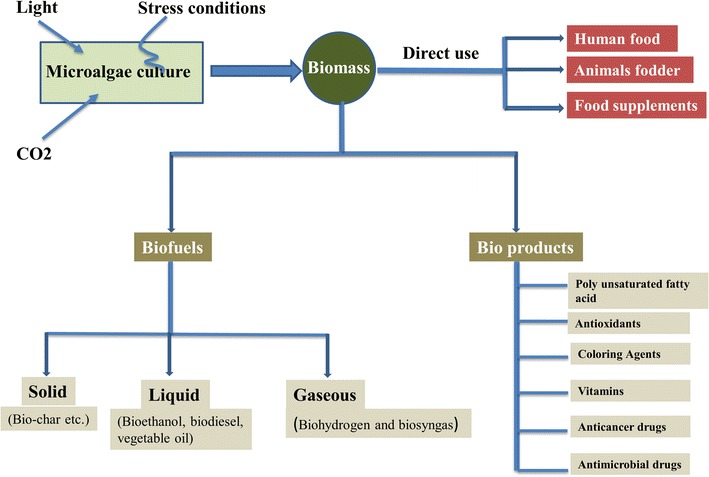
“Microalgae produce a wide range of bioproducts, including polysaccharides, lipids, pigments, proteins, vitamins, bioactive compounds, and antioxidants (Fig. 1) [3].”
§ The promising future of microalgae: current status, challenges, and optimization of a sustainable and renewable industry for biofuels, feed, and other products > Introduction
What the sources say
- Not checked yetcites [3] Brennan L, Owende P. Biofuels from microalgae- a review of technologies for production, processing, and extractions of biofuels and co-products. Renew Sustain Energy Rev. 2010;14:557–77. source
plain- Asserted: passes — The authors put it forward as true.
- Checkable: passes — It can be checked against evidence.
- Load-bearing: unclear — It is unclear whether the paper’s conclusions depend on it.
- Based: passes — The paper gives a reason why it holds.
In the paper
“Microalgae can be a rich source of carbon compounds, which can be utilized in biofuels, health supplements, pharmaceuticals, and cosmetics [2].”
§ The promising future of microalgae: current status, challenges, and optimization of a sustainable and renewable industry for biofuels, feed, and other products > Introduction
What the sources say
- Not checked yetcites [2] Das P, Aziz SS, Obbard JP. Two phase microalgae growth in the open system for enhanced lipid productivity. Renew Energy. 2011;36(9):2524–8. source
plain- Asserted: passes — The authors put it forward as true.
- Checkable: passes — It can be checked against evidence.
- Load-bearing: passes — The paper’s conclusions depend on it.
- Based: passes — The paper gives a reason why it holds.
None of the sources cited for this claim have been checked yet.
In the paper
“The current focus is on microalgae as a feedstock for bioenergy production as the most promising raw material to compensate and balance the ever-increasing demands for biofuels, food, feed and valuable chemicals production [9, 10].”
§ The promising future of microalgae: current status, challenges, and optimization of a sustainable and renewable industry for biofuels, feed, and other products > Introduction > Bioenergy and microalgae
What the sources say
- Not checked yetcites [9] Ho SH, Chen WM, Chang G. Scenedesmus obliquus CNW-N as a potential candidate for CO2 mitigation and biodiesel production. Bioresour Technol. 2010;101(22):8725–30. source
- Not checked yetcites [10] Paul Abishek M, Patel J, Prem Rajan A. Algae oil: a sustainable renewable fuel of future. Biotechnol Res Int. 2014;2014:272814. https://doi.org/10.1155/2014/272814 . source
plain- Asserted: passes — The authors put it forward as true.
- Checkable: passes — It can be checked against evidence.
- Load-bearing: passes — The paper’s conclusions depend on it.
- Based: passes — The paper gives a reason why it holds.
The paper states this without a source or data behind it here, so there is nothing to check it against. The quote shows it is in the paper.
In the paper
“Acid strength, duration of treatment, and temperature considerably affect the yield of acid hydrolysis.”
§ The promising future of microalgae: current status, challenges, and optimization of a sustainable and renewable industry for biofuels, feed, and other products > Pretreatment of algal biomass
plaindirect- Asserted: passes — The authors put it forward as true.
- Checkable: passes — It can be checked against evidence.
- Load-bearing: unclear — It is unclear whether the paper’s conclusions depend on it.
- Based: passes — The paper gives a reason why it holds.
None of the sources cited for this claim have been checked yet.
In the paper
“In addition, furfural and its derivatives are toxic for the fermenting microorganisms, diminishing or even completely inhibiting fermentation [112, 113].”
§ The promising future of microalgae: current status, challenges, and optimization of a sustainable and renewable industry for biofuels, feed, and other products > Pretreatment of algal biomass
What the sources say
- Not checked yetcites [112] Park JH, Yoon JJ, Park HD, Kim YJ, Lim DJ, Kim SH. Feasibility of biohydrogen production from Gelidium amansii. Int J Hydrogen Energy. 2011;36(21):13997–4003. source
- Not checked yetcites [113] Park JH, Cheon HC, Yoon JJ, Park HD, Kim SH. Optimization of batch dilute-acid hydrolysis for biohydrogen production from red algal biomass. Int J Hydrogen Energy. 2013;38(14):6130–6. source
plaindirect- Asserted: passes — The authors put it forward as true.
- Checkable: passes — It can be checked against evidence.
- Load-bearing: unclear — It is unclear whether the paper’s conclusions depend on it.
- Based: passes — The paper gives a reason why it holds.
The paper states this without a source or data behind it here, so there is nothing to check it against. The quote shows it is in the paper.
In the paper
“At lager scale cultivation this yield is lower both in outdoor and indoor culture system.”
§ The promising future of microalgae: current status, challenges, and optimization of a sustainable and renewable industry for biofuels, feed, and other products > Introduction > Bioenergy and microalgae
plaindirect- Asserted: passes — The authors put it forward as true.
- Checkable: passes — It can be checked against evidence.
- Load-bearing: unclear — It is unclear whether the paper’s conclusions depend on it.
- Based: unclear — It is unclear why the paper says it holds.
None of the sources cited for this claim have been checked yet.
In the paper
“Hydrolysis with acids or enzymes can release fermentable sugars from algal carbohydrates for bioethanol production [8, 110, 111].”
§ The promising future of microalgae: current status, challenges, and optimization of a sustainable and renewable industry for biofuels, feed, and other products > Pretreatment of algal biomass
What the sources say
- Not checked yetcites [8] Harun R, Danquah MK, Forde GM. Microalgal biomass as a fermentation feedstock for bioethanol production. J Chem Technol Biotechnol. 2010;85:199–203. source
- Not checked yetcites [110] Doan Q, Moheimani N, Mastrangelo A, Lewis D. Microalgal biomass for bioethanol fermentation: implications for hypersaline systems with an industrial focus. Biomass Bioenergy. 2012;46:79–88. source
- Not checked yetcites [111] Ho SH, Huang SW, Chen CY, Hasunuma T, Kondo A. Chang JS Bioethanol production using carbohydrate-rich microalgae biomass as feedstock. Bioresour Technol. 2013;135:191–8. source
plaindirect- Asserted: passes — The authors put it forward as true.
- Checkable: passes — It can be checked against evidence.
- Load-bearing: unclear — It is unclear whether the paper’s conclusions depend on it.
- Based: passes — The paper gives a reason why it holds.
In the paper
“The infeasibility of algal biodiesel is due to the associated high operational, maintenance, harvesting and conversion cost [30].”
§ The promising future of microalgae: current status, challenges, and optimization of a sustainable and renewable industry for biofuels, feed, and other products > Introduction > Bioenergy and microalgae
What the sources say
- Not checked yetcites [30] Patil V, Tran KQ, Giselrød HR. Towards sustainable production of bio-fuels from microalgae. Int J Mol Sci. 2008;9:1188–95. source
plaindirect- Asserted: passes — The authors put it forward as true.
- Checkable: passes — It can be checked against evidence.
- Load-bearing: unclear — It is unclear whether the paper’s conclusions depend on it.
- Based: passes — The paper gives a reason why it holds.
- It may state two separate claims as one. 52
- Probably not a substantial claim. 51
The sources with a verdict support this claim; the rest weren’t checked yet, have no full text we could read, or their verdicts aren’t rated yet.
In the paper
“Microalgae are rapidly growing photosynthetic organisms having potential of transforming 9–10% of solar energy (average sunlight irradiance) into biomass with a theoretical yield of about 77 g/biomass/m2/day which is about 280 ton/ha/year [13, 14].”
§ The promising future of microalgae: current status, challenges, and optimization of a sustainable and renewable industry for biofuels, feed, and other products > Introduction > Bioenergy and microalgae
What the sources say
- Not checked yetcites [13] Formighieri C, Franck F, Bassi R. Regulation of the pigment optical density of an algal cell: filling the gap between photosynthetic productivity in the laboratory and in mass culture. J Biotechnol. 2012;162:115–23. source
- Supportedcites [14] Melis A. Solar energy conversion efficiencies in photosynthesis: minimizing the chlorophyll antennae to maximize efficiency. Plant Sci. 2009;177:272–80. source
The productivity table lists a theoretical solar-to-biomass conversion efficiency of 8–10%, a yield of 77 g dry biomass m⁻² day⁻¹, and its equivalent of 280 tons ha⁻¹ year⁻¹. Section 3 calculates these maxima using average daily sunlight; the claim correctly presents the yield as theoretical, not an achieved production rate. (LLM, conf=0.94)
plaindirect- Asserted: passes — The authors put it forward as true.
- Checkable: passes — It can be checked against evidence.
- Load-bearing: unclear — It is unclear whether the paper’s conclusions depend on it.
- Based: passes — The paper gives a reason why it holds.
It may state two separate claims as one.
In the paper
“It has been reported that 1 kg of algal biomass is can fix 1.83 kg of CO2 furthermore some species use SOx and NOx as nutrient flow along with CO2 [11].”
§ The promising future of microalgae: current status, challenges, and optimization of a sustainable and renewable industry for biofuels, feed, and other products > Introduction > Bioenergy and microalgae
What the sources say
- Not checked yetcites [11] Gendy TS, El-Temtamy SA. Commercialization potential aspects of microalgae for biofuel production: an overview. Egypt J Pet. 2013;22:43–51. source
plaindirect- Asserted: passes — The authors put it forward as true.
- Checkable: passes — It can be checked against evidence.
- Load-bearing: unclear — It is unclear whether the paper’s conclusions depend on it.
- Based: passes — The paper gives a reason why it holds.
It may state two separate claims as one.
A conclusion the paper draws from its own results — it cites no other source for it, so there is none to check. The quote shows it is in the paper.
In the paper
“Microalgae have recently attracted considerable interest worldwide, due to their extensive application potential in the renewable energy, biopharmaceutical, and nutraceutical industries.”
§ The promising future of microalgae: current status, challenges, and optimization of a sustainable and renewable industry for biofuels, feed, and other products > Abstract
plain- Asserted: passes — The authors put it forward as true.
- Checkable: passes — It can be checked against evidence.
- Load-bearing: passes — The paper’s conclusions depend on it.
- Based: passes — The paper gives a reason why it holds.
Probably not a substantial claim.
The paper states this without a source or data behind it here, so there is nothing to check it against. The quote shows it is in the paper.
In the paper
“Several microalgae species have been investigated for their potential as value-added products with remarkable pharmacological and biological qualities.”
§ The promising future of microalgae: current status, challenges, and optimization of a sustainable and renewable industry for biofuels, feed, and other products > Abstract
plain- Asserted: passes — The authors put it forward as true.
- Checkable: passes — It can be checked against evidence.
- Load-bearing: fails — The paper’s conclusions may not depend on it.
- Based: fails — The paper may give no reason why it holds.
Probably not a substantial claim. The paper’s conclusions may not depend on it. The paper may give no reason why it holds.
The paper states this without a source or data behind it here, so there is nothing to check it against. The quote shows it is in the paper.
In the paper
“Biofuels including algal fuels have oxygen levels of 10–45% and very low levels of sulphur emission while petroleum-based fuels have no oxygen levels with high sulphur emission.”
§ The promising future of microalgae: current status, challenges, and optimization of a sustainable and renewable industry for biofuels, feed, and other products > Introduction > Bioenergy and microalgae
plain- Asserted: passes — The authors put it forward as true.
- Checkable: passes — It can be checked against evidence.
- Load-bearing: fails — The paper’s conclusions may not depend on it.
- Based: fails — The paper may give no reason why it holds.
Probably not a substantial claim. The paper’s conclusions may not depend on it. The paper may give no reason why it holds. It may state two separate claims as one.
The paper states this without a source or data behind it here, so there is nothing to check it against. The quote shows it is in the paper.
In the paper
“Microalgae have a significant ability to convert atmospheric CO2 to useful products such as carbohydrates, lipids, and other bioactive metabolites.”
§ The promising future of microalgae: current status, challenges, and optimization of a sustainable and renewable industry for biofuels, feed, and other products > Abstract
plaindirect- Asserted: passes — The authors put it forward as true.
- Checkable: passes — It can be checked against evidence.
- Load-bearing: passes — The paper’s conclusions depend on it.
- Based: fails — The paper may give no reason why it holds.
Probably not a substantial claim. The paper may give no reason why it holds.
A conclusion the paper draws from its own results — it cites no other source for it, so there is none to check. The quote shows it is in the paper.
In the paper
“Microalgae are renewable, sustainable, and economical sources of biofuels, bioactive medicinal products, and food ingredients.”
§ The promising future of microalgae: current status, challenges, and optimization of a sustainable and renewable industry for biofuels, feed, and other products > Abstract
plain- Asserted: passes — The authors put it forward as true.
- Checkable: passes — It can be checked against evidence.
- Load-bearing: passes — The paper’s conclusions depend on it.
- Based: fails — The paper may give no reason why it holds.
Probably not a substantial claim. The paper may give no reason why it holds. It may state two separate claims as one.
None of the sources cited for this claim have been checked yet.
In the paper
“Algae are produced in quantity and sold directly as food and nutrient supplements, while their processed products or extracts are used in biopharmaceuticals and cosmetics [5–7].”
§ The promising future of microalgae: current status, challenges, and optimization of a sustainable and renewable industry for biofuels, feed, and other products > Introduction
What the sources say
- Not checked yetcites [5] Luiten EE, Akkerman I, Koulman A, Kamermans P, Reith H, Barbosa MJ, Sipkema D, Wijffels RH. Realizing the promises of marine biotechnology. Biomol Eng. 2003;20:429–39. source
- Not checked yetcites [6] Michael A. Borowitzka high-value products from microalgae their development and commercialization. J Appl Phycol. 2013;25:743–56. source
- Not checked yetcites [7] Pulz O, Gross G. Valuable products from biotechnology of microalgae. Appl Microbiol Biotechnol. 2004;65(6):635–48. source
plain- Asserted: passes — The authors put it forward as true.
- Checkable: passes — It can be checked against evidence.
- Load-bearing: fails — The paper’s conclusions may not depend on it.
- Based: passes — The paper gives a reason why it holds.
Probably not a substantial claim. The paper’s conclusions may not depend on it. It may state two separate claims as one.
The paper states this without a source or data behind it here, so there is nothing to check it against. The quote shows it is in the paper.
In the paper
“Microalgae algae-based fuels are ecofriendly, nontoxic and with strong potential of fixing global CO2.”
§ The promising future of microalgae: current status, challenges, and optimization of a sustainable and renewable industry for biofuels, feed, and other products > Introduction > Bioenergy and microalgae
boosted- Asserted: passes — The authors put it forward as true.
- Checkable: passes — It can be checked against evidence.
- Load-bearing: passes — The paper’s conclusions depend on it.
- Based: fails — The paper may give no reason why it holds.
Probably not a substantial claim. The paper may give no reason why it holds. It may state two separate claims as one.
The paper states this without a source or data behind it here, so there is nothing to check it against. The quote shows it is in the paper.
In the paper
“The advantageous features of biofuels produced from biomass are renewability and a significantly smaller contribution to environmental pollution and global warming.”
§ The promising future of microalgae: current status, challenges, and optimization of a sustainable and renewable industry for biofuels, feed, and other products > Introduction > Bioenergy and microalgae
plaindirect- Asserted: passes — The authors put it forward as true.
- Checkable: passes — It can be checked against evidence.
- Load-bearing: fails — The paper’s conclusions may not depend on it.
- Based: passes — The paper gives a reason why it holds.
Probably not a substantial claim. The paper’s conclusions may not depend on it. It may state two separate claims as one.
The paper states this without a source or data behind it here, so there is nothing to check it against. The quote shows it is in the paper.
In the paper
“CO2 constitutes 50% of dry weight of algal biomass.”
§ The promising future of microalgae: current status, challenges, and optimization of a sustainable and renewable industry for biofuels, feed, and other products > Introduction > Bioenergy and microalgae
plain- Asserted: passes — The authors put it forward as true.
- Checkable: passes — It can be checked against evidence.
- Load-bearing: fails — The paper’s conclusions may not depend on it.
- Based: fails — The paper may give no reason why it holds.
Probably not a substantial claim. The paper’s conclusions may not depend on it. The paper may give no reason why it holds.
A conclusion the paper draws from its own results — it cites no other source for it, so there is none to check. The quote shows it is in the paper.
In the paper
“As biofuels, they are a perfect substitute to liquid fossil fuels with respect to cost, renewability, and environmental concerns.”
§ The promising future of microalgae: current status, challenges, and optimization of a sustainable and renewable industry for biofuels, feed, and other products > Abstract
plain- Asserted: passes — The authors put it forward as true.
- Checkable: passes — It can be checked against evidence.
- Load-bearing: fails — The paper’s conclusions may not depend on it.
- Based: fails — The paper may give no reason why it holds.
Probably not a substantial claim. The paper’s conclusions may not depend on it. The paper may give no reason why it holds.
A conclusion the paper draws from its own results — it cites no other source for it, so there is none to check. The quote shows it is in the paper.
In the paper
“The most challenging and crucial issues are enhancing microalgae growth rate and product synthesis, dewatering algae culture for biomass production, pretreating biomass, and optimizing the fermentation process in case of algal bioethanol production.”
§ The promising future of microalgae: current status, challenges, and optimization of a sustainable and renewable industry for biofuels, feed, and other products > Abstract
plain- Asserted: passes — The authors put it forward as true.
- Checkable: passes — It can be checked against evidence.
- Load-bearing: passes — The paper’s conclusions depend on it.
- Based: fails — The paper may give no reason why it holds.
Probably not a substantial claim. The paper may give no reason why it holds. It may state two separate claims as one.
None of the sources cited for this claim have been checked yet.
In the paper
“Biofuels such as biodiesel and bioethanol are proving to be excellent alternative fuels and can be produced from several resources of biomass, such as food crops, crop wastes or fruits, woody parts of plants, garbage, and algae [8, 9].”
§ The promising future of microalgae: current status, challenges, and optimization of a sustainable and renewable industry for biofuels, feed, and other products > Introduction > Bioenergy and microalgae
What the sources say
- Not checked yetcites [8] Harun R, Danquah MK, Forde GM. Microalgal biomass as a fermentation feedstock for bioethanol production. J Chem Technol Biotechnol. 2010;85:199–203. source
- Not checked yetcites [9] Ho SH, Chen WM, Chang G. Scenedesmus obliquus CNW-N as a potential candidate for CO2 mitigation and biodiesel production. Bioresour Technol. 2010;101(22):8725–30. source
plaindirect- Asserted: passes — The authors put it forward as true.
- Checkable: passes — It can be checked against evidence.
- Load-bearing: fails — The paper’s conclusions may not depend on it.
- Based: passes — The paper gives a reason why it holds.
Probably not a substantial claim. The paper’s conclusions may not depend on it. It may state two separate claims as one.
A conclusion the paper draws from its own results — it cites no other source for it, so there is none to check. The quote shows it is in the paper.
In the paper
“Although microalgae are feasible sources for bioenergy and biopharmaceuticals in general, some limitations and challenges remain, which must be overcome to upgrade the technology from pilot-phase to industrial level.”
§ The promising future of microalgae: current status, challenges, and optimization of a sustainable and renewable industry for biofuels, feed, and other products > Abstract
plain- Asserted: passes — The authors put it forward as true.
- Checkable: passes — It can be checked against evidence.
- Load-bearing: passes — The paper’s conclusions depend on it.
- Based: passes — The paper gives a reason why it holds.
It may state two separate claims as one.
The paper states this without a source or data behind it here, so there is nothing to check it against. The quote shows it is in the paper.
In the paper
“Biofuels are non-polluting, locally available, accessible, sustainable and reliable fuel obtained from renewable sources.”
§ The promising future of microalgae: current status, challenges, and optimization of a sustainable and renewable industry for biofuels, feed, and other products > Introduction > Bioenergy and microalgae
plain- Asserted: passes — The authors put it forward as true.
- Checkable: passes — It can be checked against evidence.
- Load-bearing: fails — The paper’s conclusions may not depend on it.
- Based: fails — The paper may give no reason why it holds.
Probably not a substantial claim. The paper’s conclusions may not depend on it. The paper may give no reason why it holds. It may state two separate claims as one.
None of the sources cited for this claim have been checked yet.
In the paper
“Some researchers have used mechanical methods, such as ultra-sonication, microwaves, and beating, to degrade algal biomass [114, 115].”
§ The promising future of microalgae: current status, challenges, and optimization of a sustainable and renewable industry for biofuels, feed, and other products > Pretreatment of algal biomass
What the sources say
- Not checked yetcites [114] Passos F, Hernandez-Marine M, Garcia J, Ferrer I. Long-term anaerobic digestion of microalgae grown in HRAP for wastewater treatment. Effect of microwave pretreatment. Water Res. 2014;49:351–9. source
- Not checked yetcites [115] Zhao G, Chen X, Wang L, Zhou S, Feng H, Chen WN, et al. Ultrasound assisted extraction of carbohydrates from microalgae as feedstock for yeast fermentation. Bioresour Technol. 2013;128:337–44. source
plaindirect- Asserted: passes — The authors put it forward as true.
- Checkable: passes — It can be checked against evidence.
- Load-bearing: fails — The paper’s conclusions may not depend on it.
- Based: passes — The paper gives a reason why it holds.
Probably not a substantial claim. The paper’s conclusions may not depend on it.
None of the sources cited for this claim have been checked yet.
In the paper
“Microalgae can feed on industrial wastes and the processing energy is less than the energy produced by the algae [20–22].”
§ The promising future of microalgae: current status, challenges, and optimization of a sustainable and renewable industry for biofuels, feed, and other products > Introduction > Bioenergy and microalgae
What the sources say
- Not checked yetcites [20] Paniagua-Michel J, Farfan BC, Buckle Ramirez LF. Culture of marine microalgae with natural biodigested resources. Aquaculture. 2011;64:249–56. source
- Not checked yetcites [21] Singh A, Ohlsen SI. A critical review of biochemical conversion, sustainability and life cycle assessment of algal biofuels. Appl Energy. 2011;88:3548–55. source
- Not checked yetcites [22] Zamora Castro JE, Paniagua-Michel J, Lezama- Cervantes C. A novel approach for bioremediation of a coastal marine wastewater effluent based on artificial microbial mats. Mar Biotechnol. 2008;10:181–9. source
plaindirect- Asserted: passes — The authors put it forward as true.
- Checkable: passes — It can be checked against evidence.
- Load-bearing: unclear — It is unclear whether the paper’s conclusions depend on it.
- Based: passes — The paper gives a reason why it holds.
It may state two separate claims as one.
None of the sources cited for this claim have been checked yet.
In the paper
“In several aspects, microalgae feedstock is competent and preferable to produce biofuels for examples microalgae don not require cultivable land and fresh water for cultivation, they are not edible therefore no effect on human and animal’s food chain, can be grown to serval folds irrespective to seasonal conditions, mitigation of atmospheric CO2 and treatment of waste water [18, 19].”
§ The promising future of microalgae: current status, challenges, and optimization of a sustainable and renewable industry for biofuels, feed, and other products > Introduction > Bioenergy and microalgae
What the sources say
- Not checked yetcites [18] Park H, Lee C. Theoretical calculations on the feasibility of microalgal biofuels: utilization of marine resources could help realizing the potential of microalgae. Biotechnol J. 2016;11(11):1461–70. https://doi.org/10.1002/biot.201600041 . source
- Not checked yetcites [19] Pandey A. Microalgae biomass production for CO2 mitigation and biodiesel production. J Microbiol Exp. 2017;4(4):00117. https://doi.org/10.15406/jmen.2017.04.00117 . source
plaindirect- Asserted: passes — The authors put it forward as true.
- Checkable: passes — It can be checked against evidence.
- Load-bearing: passes — The paper’s conclusions depend on it.
- Based: passes — The paper gives a reason why it holds.
It may state two separate claims as one.
The paper states this without a source or data behind it here, so there is nothing to check it against. The quote shows it is in the paper.
In the paper
“Absence of lignocellulosic materials in microalgae cell wall facilitate the pretreatment process and reduce overall cost of production.”
§ The promising future of microalgae: current status, challenges, and optimization of a sustainable and renewable industry for biofuels, feed, and other products > Introduction > Bioenergy and microalgae
plaindirect- Asserted: passes — The authors put it forward as true.
- Checkable: passes — It can be checked against evidence.
- Load-bearing: fails — The paper’s conclusions may not depend on it.
- Based: fails — The paper may give no reason why it holds.
Probably not a substantial claim. The paper’s conclusions may not depend on it. The paper may give no reason why it holds. It may state two separate claims as one.
A conclusion the paper draws from its own results — it cites no other source for it, so there is none to check. The quote shows it is in the paper.
In the paper
“Proper shaking and mixing of the culture in the bioreactor is necessary for uniform distribution of light energy to avail the same strength to all the cells to convert maximum light energy to biomass.”
§ The promising future of microalgae: current status, challenges, and optimization of a sustainable and renewable industry for biofuels, feed, and other products > Introduction > Bioenergy and microalgae
plaindirect- Asserted: passes — The authors put it forward as true.
- Checkable: passes — It can be checked against evidence.
- Load-bearing: fails — The paper’s conclusions may not depend on it.
- Based: fails — The paper may give no reason why it holds.
Probably not a substantial claim. The paper’s conclusions may not depend on it. The paper may give no reason why it holds.
None of the sources cited for this claim have been checked yet.
In the paper
“In several aspects, microalgae feedstock is competent and preferable to produce biofuels for examples microalgae don not require cultivable land and fresh water for cultivation, they are not edible therefore no effect on human and animal’s food chain, can be grown to serval folds irrespective to seasonal conditions, mitigation of atmospheric CO2 and treatment of waste water [18, 19].”
§ The promising future of microalgae: current status, challenges, and optimization of a sustainable and renewable industry for biofuels, feed, and other products > Introduction > Bioenergy and microalgae
What the sources say
- Not checked yetcites [18] Park H, Lee C. Theoretical calculations on the feasibility of microalgal biofuels: utilization of marine resources could help realizing the potential of microalgae. Biotechnol J. 2016;11(11):1461–70. https://doi.org/10.1002/biot.201600041 . source
- Not checked yetcites [19] Pandey A. Microalgae biomass production for CO2 mitigation and biodiesel production. J Microbiol Exp. 2017;4(4):00117. https://doi.org/10.15406/jmen.2017.04.00117 . source
plaindirect- Asserted: passes — The authors put it forward as true.
- Checkable: passes — It can be checked against evidence.
- Load-bearing: passes — The paper’s conclusions depend on it.
- Based: passes — The paper gives a reason why it holds.
It may state two separate claims as one.
The paper states this without a source or data behind it here, so there is nothing to check it against. The quote shows it is in the paper.
In the paper
“Microalgae store photosynthetic products as cellulose, starch, and hemicellulose; some species also accumulate galactan.”
§ The promising future of microalgae: current status, challenges, and optimization of a sustainable and renewable industry for biofuels, feed, and other products > Pretreatment of algal biomass
plain- Asserted: passes — The authors put it forward as true.
- Checkable: passes — It can be checked against evidence.
- Load-bearing: fails — The paper’s conclusions may not depend on it.
- Based: fails — The paper may give no reason why it holds.
Probably not a substantial claim. The paper’s conclusions may not depend on it. The paper may give no reason why it holds. It may state two separate claims as one.
None of the sources cited for this claim have been checked yet.
In the paper
“Currently, the USA and Brazil are the world leaders in the production of bioethanol. Their contribution is approximately 75–80% of the world total bioethanol production [32, 34].”
§ The promising future of microalgae: current status, challenges, and optimization of a sustainable and renewable industry for biofuels, feed, and other products > Introduction > Bioenergy and microalgae
What the sources say
- Not checked yetcites [32] Walker GM. Fuel alcohol: current production and future challenges. J Inst Brew. 2011;117(1):3–22. source
- Not checked yetcites [34] Jegannathan KR, Chan ES, Ravindra P. Harnessing biofuels: a global Renaissance in energy production? Renew Sustain Energy Rev. 2009;13(8):2163–8. source
plain- Asserted: passes — The authors put it forward as true.
- Checkable: passes — It can be checked against evidence.
- Load-bearing: fails — The paper’s conclusions may not depend on it.
- Based: passes — The paper gives a reason why it holds.
Probably not a substantial claim. The paper’s conclusions may not depend on it. It may state two separate claims as one.
None of the sources cited for this claim have been checked yet.
In the paper
“Additionally, crop foods require arable land and large amounts of water, which makes their use for fuel production unsustainable and thus, incomputable as alternative liquid fuels [23, 24].”
§ The promising future of microalgae: current status, challenges, and optimization of a sustainable and renewable industry for biofuels, feed, and other products > Introduction > Bioenergy and microalgae
What the sources say
- Not checked yetcites [23] Gavrilescu M, Chisti Y. Biotechnology a sustainable alternative for chemical industry. Biotechnol Adv. 2005;23:471–99. source
- Not checked yetcites [24] Hannon M, Gimpel J, Tran M, Rasala B, Mayfield S. Biofuels from algae: challenges and potential. Biofuels. 2010;1(5):763–84. source
plaindirect- Asserted: passes — The authors put it forward as true.
- Checkable: passes — It can be checked against evidence.
- Load-bearing: passes — The paper’s conclusions depend on it.
- Based: passes — The paper gives a reason why it holds.
It may state two separate claims as one.
None of the sources cited for this claim have been checked yet.
In the paper
“Depending on the purpose of pretreatment, chemical, biological, thermochemical, or thermophysical methods are used, sometimes in combination [105, 106].”
§ The promising future of microalgae: current status, challenges, and optimization of a sustainable and renewable industry for biofuels, feed, and other products > Pretreatment of algal biomass
What the sources say
- Not checked yetcites [105] Alvira P, Tomas-Pejo E, Ballesteros M, Negro MJ. Pretreatment technologies for an efficient bioethanol production process based on enzymatic hydrolysis: a review. Bioresour Technol. 2010;101:4851–61. source
- Not checked yetcites [106] Chandra RP, Bura R, Mabee WE, Berlin A, Pan X, Saddler JN. Substrate pretreatment: the key to effective enzymatic hydrolysis of lignocellulosics? Adv Biochem Eng Biotechnol. 2007;108:67–93.
plainconditional- Asserted: passes — The authors put it forward as true.
- Checkable: passes — It can be checked against evidence.
- Load-bearing: fails — The paper’s conclusions may not depend on it.
- Based: passes — The paper gives a reason why it holds.
Probably not a substantial claim. The paper’s conclusions may not depend on it.
None of the sources cited for this claim have been checked yet.
In the paper
“Most of the microalgae species are favorable for biodiesel production due to high lipids contents 50–70% and may reach to 80% such as in case of the microlaga B. braunii which accumulate up to 80% of oil in it biomass [25–27].”
§ The promising future of microalgae: current status, challenges, and optimization of a sustainable and renewable industry for biofuels, feed, and other products > Introduction > Bioenergy and microalgae
What the sources say
- Not checked yetcites [25] Chisti Y. Biodiesel from microalgae. Biotechnol Adv. 2007;25(3):294–306. source
- Not checked yetcites [26] Powell EE, Hill GA. Economic assessment of an integrated bioethanol-biodiesel-microbial fuel cell facility utilizing yeast and photosynthetic algae. Chem Eng Res Des. 2009;87(9):1340–8. source
- Not checked yetcites [27] Mata TM, Martins AA, Caetano NS. Microalgae for biodiesel production and other applications: a review. Renew Sust Energy Rev. 2010;14(1):217–32. source
hedgeddirect- Asserted: passes — The authors put it forward as true.
- Checkable: passes — It can be checked against evidence.
- Load-bearing: unclear — It is unclear whether the paper’s conclusions depend on it.
- Based: passes — The paper gives a reason why it holds.
It may state two separate claims as one.
The paper states this without a source or data behind it here, so there is nothing to check it against. The quote shows it is in the paper.
In the paper
“Bioethanol is one of the major and clean biofuel used as transportation fuel.”
§ The promising future of microalgae: current status, challenges, and optimization of a sustainable and renewable industry for biofuels, feed, and other products > Introduction > Bioenergy and microalgae
plain- Asserted: passes — The authors put it forward as true.
- Checkable: passes — It can be checked against evidence.
- Load-bearing: fails — The paper’s conclusions may not depend on it.
- Based: passes — The paper gives a reason why it holds.
Probably not a substantial claim. The paper’s conclusions may not depend on it.
The paper states this without a source or data behind it here, so there is nothing to check it against. The quote shows it is in the paper.
In the paper
“Many countries in Asia, Europe, and America have started industrialization of bioenergy from microalgae biomass.”
§ The promising future of microalgae: current status, challenges, and optimization of a sustainable and renewable industry for biofuels, feed, and other products > Introduction > Bioenergy and microalgae
plain- Asserted: passes — The authors put it forward as true.
- Checkable: passes — It can be checked against evidence.
- Load-bearing: fails — The paper’s conclusions may not depend on it.
- Based: fails — The paper may give no reason why it holds.
Probably not a substantial claim. The paper’s conclusions may not depend on it. The paper may give no reason why it holds.
In the paper
“After lysis of the cells the macromolecules of sugars need saccharification which mean to break the α-(1 → 4), α-(1 → 6), β-(1 → 3) and β-(1 → 6) glycosidic linkages between the monomers to release the monomers units [107].”
§ The promising future of microalgae: current status, challenges, and optimization of a sustainable and renewable industry for biofuels, feed, and other products > Pretreatment of algal biomass
What the sources say
- Not checked yetcites [107] Rajarapu SP, Scharf ME. Saccharification of agricultural lignocellulose feedstocks and protein-level responses by a termite gut-microbe bioreactor. Front Energy Res. 2017;5:5. source
plaindirect- Asserted: passes — The authors put it forward as true.
- Checkable: passes — It can be checked against evidence.
- Load-bearing: fails — The paper’s conclusions may not depend on it.
- Based: passes — The paper gives a reason why it holds.
Probably not a substantial claim. The paper’s conclusions may not depend on it.
None of the sources cited for this claim have been checked yet.
In the paper
“In several aspects, microalgae feedstock is competent and preferable to produce biofuels for examples microalgae don not require cultivable land and fresh water for cultivation, they are not edible therefore no effect on human and animal’s food chain, can be grown to serval folds irrespective to seasonal conditions, mitigation of atmospheric CO2 and treatment of waste water [18, 19].”
§ The promising future of microalgae: current status, challenges, and optimization of a sustainable and renewable industry for biofuels, feed, and other products > Introduction > Bioenergy and microalgae
What the sources say
- Not checked yetcites [18] Park H, Lee C. Theoretical calculations on the feasibility of microalgal biofuels: utilization of marine resources could help realizing the potential of microalgae. Biotechnol J. 2016;11(11):1461–70. https://doi.org/10.1002/biot.201600041 . source
- Not checked yetcites [19] Pandey A. Microalgae biomass production for CO2 mitigation and biodiesel production. J Microbiol Exp. 2017;4(4):00117. https://doi.org/10.15406/jmen.2017.04.00117 . source
plaindirect- Asserted: passes — The authors put it forward as true.
- Checkable: passes — It can be checked against evidence.
- Load-bearing: passes — The paper’s conclusions depend on it.
- Based: passes — The paper gives a reason why it holds.
It may state two separate claims as one.
The paper states this without a source or data behind it here, so there is nothing to check it against. The quote shows it is in the paper.
In the paper
“Weak acids cannot successfully lyse the cells to extract the inner sugars, while excessively strong acids reduce sugars to furfural, thereby decreasing the final yield of monomeric sugars.”
§ The promising future of microalgae: current status, challenges, and optimization of a sustainable and renewable industry for biofuels, feed, and other products > Pretreatment of algal biomass
plaindirect- Asserted: passes — The authors put it forward as true.
- Checkable: passes — It can be checked against evidence.
- Load-bearing: unclear — It is unclear whether the paper’s conclusions depend on it.
- Based: passes — The paper gives a reason why it holds.
It may state two separate claims as one.
The paper states this without a source or data behind it here, so there is nothing to check it against. The quote shows it is in the paper.
In the paper
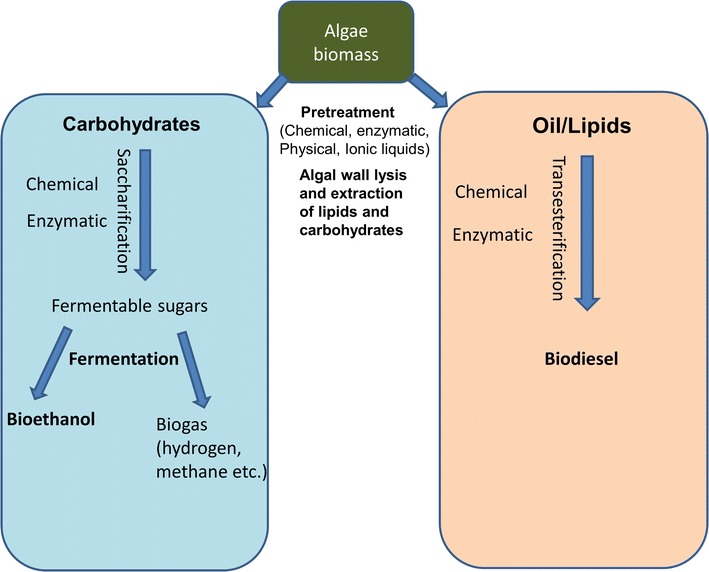
“Thus, mechanical methods of pretreatment yield biodiesel, while enzymatic and chemical methods (including acidic hydrolysis) are used in bioethanol production, because fermentative bioethanol production requires degradation of cellulose, hemicellulose, and starch.”
§ The promising future of microalgae: current status, challenges, and optimization of a sustainable and renewable industry for biofuels, feed, and other products > Pretreatment of algal biomass
plaindirect- Asserted: passes — The authors put it forward as true.
- Checkable: passes — It can be checked against evidence.
- Load-bearing: unclear — It is unclear whether the paper’s conclusions depend on it.
- Based: passes — The paper gives a reason why it holds.
It may state two separate claims as one.
A conclusion the paper draws from its own results — it cites no other source for it, so there is none to check. The quote shows it is in the paper.
In the paper
“The algal fuels technology is still incipient, and much improvement is required to make it commercially attractive to both, investors and consumers.”
§ The promising future of microalgae: current status, challenges, and optimization of a sustainable and renewable industry for biofuels, feed, and other products > Introduction > Bioenergy and microalgae
plain- Asserted: passes — The authors put it forward as true.
- Checkable: passes — It can be checked against evidence.
- Load-bearing: passes — The paper’s conclusions depend on it.
- Based: fails — The paper may give no reason why it holds.
Probably not a substantial claim. The paper may give no reason why it holds. It may state two separate claims as one.
None of the sources cited for this claim have been checked yet.
In the paper
“Second generation biofuels involve terrestrial plants, especially food crops as feedstocks, a highly controversial issue, since biofuels production from food crops can only occur at the expense of their use as food and feed.”
§ The promising future of microalgae: current status, challenges, and optimization of a sustainable and renewable industry for biofuels, feed, and other products > Introduction > Bioenergy and microalgae
What the sources say
- Not checked yetcites [23] Gavrilescu M, Chisti Y. Biotechnology a sustainable alternative for chemical industry. Biotechnol Adv. 2005;23:471–99. source
- Not checked yetcites [24] Hannon M, Gimpel J, Tran M, Rasala B, Mayfield S. Biofuels from algae: challenges and potential. Biofuels. 2010;1(5):763–84. source
plaindirect- Asserted: passes — The authors put it forward as true.
- Checkable: passes — It can be checked against evidence.
- Load-bearing: passes — The paper’s conclusions depend on it.
- Based: passes — The paper gives a reason why it holds.
It may state two separate claims as one.
None of the sources cited for this claim have been checked yet.
In the paper
“Microalgae are capable of producing algal oil 58,700 L/hac which can produce 121,104 L/hac biodiesels [11, 28, 29].”
§ The promising future of microalgae: current status, challenges, and optimization of a sustainable and renewable industry for biofuels, feed, and other products > Introduction > Bioenergy and microalgae
What the sources say
- Not checked yetcites [11] Gendy TS, El-Temtamy SA. Commercialization potential aspects of microalgae for biofuel production: an overview. Egypt J Pet. 2013;22:43–51. source
- Not checked yetcites [28] Medipally SR, Fatimah M, Banerjee YS, Shariff M. Microalgae as sustainable renewable energy feedstock for biofuel production. Biomed Res Int. 2015. https://doi.org/10.1155/2015/519513 . source
- Not checked yetcites [29] Gouveia L, Oliveira AC. Microalgae as a raw material for biofuels production. J Ind Microbiol Biot. 2009;36:269–74. source
plaindirect- Asserted: passes — The authors put it forward as true.
- Checkable: passes — It can be checked against evidence.
- Load-bearing: unclear — It is unclear whether the paper’s conclusions depend on it.
- Based: passes — The paper gives a reason why it holds.
It may state two separate claims as one.
None of the sources cited for this claim have been checked yet.
In the paper
“They produce vitamins, which elevates their importance as a nutritional food for people and animals [136, 142].”
§ The promising future of microalgae: current status, challenges, and optimization of a sustainable and renewable industry for biofuels, feed, and other products > Use of microalgae for food feed and bioproducts
What the sources say
- Not checked yetcites [136] Borowitzka MA. Vitamins and fine chemicals from microalgae. In: Borowitzka MA, Borowitzka LJ, editors. Micro-algal biotechnology. Cambridge: Cambridge University Press; 1998. p. 153–96.
- Not checked yetcites [142] Cuellar-Bermudez SP, Aguilar-Hernandez I, Cardenas-Chavez DL, Ornelas-Soto N, Romero-Ogawa MA, Parra-Saldivar R. Extraction and purification of high-value metabolites from microalgae: essential lipids, astaxanthin and phycobiliproteins. Microb Biotechnol. 2015;8:190–209. source
plaindirect- Asserted: passes — The authors put it forward as true.
- Checkable: passes — It can be checked against evidence.
- Load-bearing: unclear — It is unclear whether the paper’s conclusions depend on it.
- Based: passes — The paper gives a reason why it holds.
It may state two separate claims as one.
The paper states this without a source or data behind it here, so there is nothing to check it against. The quote shows it is in the paper.
In the paper
“Microalgae synthesize starch, cellulose, hemicelluloses, and other polysaccharides from simple monomeric sugars: basically, glucose.”
§ The promising future of microalgae: current status, challenges, and optimization of a sustainable and renewable industry for biofuels, feed, and other products > Use of microalgae for food feed and bioproducts
plaindirect- Asserted: passes — The authors put it forward as true.
- Checkable: passes — It can be checked against evidence.
- Load-bearing: fails — The paper’s conclusions may not depend on it.
- Based: fails — The paper may give no reason why it holds.
Probably not a substantial claim. The paper’s conclusions may not depend on it. The paper may give no reason why it holds.
None of the sources cited for this claim have been checked yet.
In the paper
“Microalgae are an excellent source of food and other important bioproducts, such as natural antibiotics [137–139].”
§ The promising future of microalgae: current status, challenges, and optimization of a sustainable and renewable industry for biofuels, feed, and other products > Use of microalgae for food feed and bioproducts
What the sources say
- Not checked yetcites [137] Becker W. Microalgae in human and animal nutrition. In: Richmond A, editor. Handbook of microalgal culture. Oxford: Blackwell; 2004. p. 312–51.
- Not checked yetcites [138] Borowitzka MA. Microalgae as sources of pharmaceuticals and other biologically active compounds. J Appl Phycol. 1995;7:3–15. source
- Not checked yetcites [139] Cornet JF. Le technoscopeles photobioreacteurs. Biofutur. 1998;176:1–10.
plain- Asserted: passes — The authors put it forward as true.
- Checkable: passes — It can be checked against evidence.
- Load-bearing: unclear — It is unclear whether the paper’s conclusions depend on it.
- Based: passes — The paper gives a reason why it holds.
It may state two separate claims as one.
In the paper
“Cultivation of microalgae started only a few decades ago, when it became clear that the fast-growing world population was likely to suffer a lack of protein-rich food stuffs [136].”
§ The promising future of microalgae: current status, challenges, and optimization of a sustainable and renewable industry for biofuels, feed, and other products > Use of microalgae for food feed and bioproducts
What the sources say
- Not checked yetcites [136] Borowitzka MA. Vitamins and fine chemicals from microalgae. In: Borowitzka MA, Borowitzka LJ, editors. Micro-algal biotechnology. Cambridge: Cambridge University Press; 1998. p. 153–96.
plaindirect- Asserted: passes — The authors put it forward as true.
- Checkable: passes — It can be checked against evidence.
- Load-bearing: fails — The paper’s conclusions may not depend on it.
- Based: passes — The paper gives a reason why it holds.
Probably not a substantial claim. The paper’s conclusions may not depend on it.
The paper states this without a source or data behind it here, so there is nothing to check it against. The quote shows it is in the paper.
In the paper
“Lipids in algal cells are present mainly in the form of glycerol, esterified sugars to different types of fatty acids (12–22 carbon atoms).”
§ The promising future of microalgae: current status, challenges, and optimization of a sustainable and renewable industry for biofuels, feed, and other products > Use of microalgae for food feed and bioproducts
plain- Asserted: passes — The authors put it forward as true.
- Checkable: passes — It can be checked against evidence.
- Load-bearing: fails — The paper’s conclusions may not depend on it.
- Based: fails — The paper may give no reason why it holds.
Probably not a substantial claim. The paper’s conclusions may not depend on it. The paper may give no reason why it holds.
None of the sources cited for this claim have been checked yet.
In the paper
“They do not contaminate the environment, but they do impose higher costs, due to the consumption of energy [116, 117].”
§ The promising future of microalgae: current status, challenges, and optimization of a sustainable and renewable industry for biofuels, feed, and other products > Pretreatment of algal biomass
What the sources say
- Not checked yetcites [116] Goettel M, Eing C, Gusbeth C, Straessner R, Frey W. Pulsed electric field assisted extraction of intracellular valuables from microalgae. Algal Res. 2013;2(4):401–8. source
- Not checked yetcites [117] Sheng J, Vannela R, Rittmann BE. Evaluation of cell-disruption effects of pulsed-electric-field treatment of Synechocystis PCC 6803. Environ Sci Technol. 2011;45(8):3795–802. source
plaindirect- Asserted: passes — The authors put it forward as true.
- Checkable: passes — It can be checked against evidence.
- Load-bearing: unclear — It is unclear whether the paper’s conclusions depend on it.
- Based: passes — The paper gives a reason why it holds.
It may state two separate claims as one.
In the paper
“Algae biomass contains different types of fermentable sugars, therefore combination of the fermenter microorganisms is preferable and effective, because different microorganisms have different rates of conversion for different substrates [134].”
§ The promising future of microalgae: current status, challenges, and optimization of a sustainable and renewable industry for biofuels, feed, and other products > Fermentation of the algal sugars to generate bioethanol
What the sources say
- Not checked yetcites [134] Khan MI, Lee MG, Shin JH, Kim JD. Pretreatment optimization of the biomass of Microcystis aeruginosa for efficient bioethanol production. AMB Express. 2017;7:19. source
plaindirect- Asserted: passes — The authors put it forward as true.
- Checkable: passes — It can be checked against evidence.
- Load-bearing: passes — The paper’s conclusions depend on it.
- Based: passes — The paper gives a reason why it holds.
It may state two separate claims as one.
The paper states this without a source or data behind it here, so there is nothing to check it against. The quote shows it is in the paper.
In the paper
“For bioethanol production to be viable, all the different types of sugars (pentoses and hexoses) must be converted to bioethanol.”
§ The promising future of microalgae: current status, challenges, and optimization of a sustainable and renewable industry for biofuels, feed, and other products > Fermentation of the algal sugars to generate bioethanol
plaindirect- Asserted: passes — The authors put it forward as true.
- Checkable: passes — It can be checked against evidence.
- Load-bearing: passes — The paper’s conclusions depend on it.
- Based: fails — The paper may give no reason why it holds.
Probably not a substantial claim. The paper may give no reason why it holds.
None of the sources cited for this claim have been checked yet.
In the paper
“The world energy crisis in the 1970s led to the identification of algae as renewable and sustainable sources for biofuels production, prompting the exploration of microalgae as a new field of research for fuels and other valuable products [10, 140].”
§ The promising future of microalgae: current status, challenges, and optimization of a sustainable and renewable industry for biofuels, feed, and other products > Use of microalgae for food feed and bioproducts
What the sources say
- Not checked yetcites [10] Paul Abishek M, Patel J, Prem Rajan A. Algae oil: a sustainable renewable fuel of future. Biotechnol Res Int. 2014;2014:272814. https://doi.org/10.1155/2014/272814 . source
- Not checked yetcites [140] Pulz O, Gross W. Valuable products from biotechnology of microalgae. Appl Microbiol Biotechnol. 2004;65:635–48. source
plaindirect- Asserted: passes — The authors put it forward as true.
- Checkable: passes — It can be checked against evidence.
- Load-bearing: fails — The paper’s conclusions may not depend on it.
- Based: passes — The paper gives a reason why it holds.
Probably not a substantial claim. The paper’s conclusions may not depend on it. It may state two separate claims as one.
In the paper
“Scenedesmus dimorphus accumulated 53.7 w/w carbohydrate contents which on hydrolysis with sulfuric acids produced 80% fermentable sugars, indicating its feasibility for bioethanol production [132].”
§ The promising future of microalgae: current status, challenges, and optimization of a sustainable and renewable industry for biofuels, feed, and other products > Fermentation of the algal sugars to generate bioethanol
What the sources say
- Not checked yetcites [132] Chng LM, Lee KT, Chan DJ. Evaluation on microalgae biomass for bioethanol production. Mater Sci Eng A. 2017;206:12–8.
hedgeddirectSingle case- Asserted: passes — The authors put it forward as true.
- Checkable: passes — It can be checked against evidence.
- Load-bearing: unclear — It is unclear whether the paper’s conclusions depend on it.
- Based: passes — The paper gives a reason why it holds.
It may state two separate claims as one.
In the paper
“According to one estimate, about 5000 metric tons of dry algal biomass processed for bioproducts generates US$ 1.25 × 10⁹ each year [140].”
§ The promising future of microalgae: current status, challenges, and optimization of a sustainable and renewable industry for biofuels, feed, and other products > Use of microalgae for food feed and bioproducts
What the sources say
- Not checked yetcites [140] Pulz O, Gross W. Valuable products from biotechnology of microalgae. Appl Microbiol Biotechnol. 2004;65:635–48. source
hedgeddirect- Asserted: passes — The authors put it forward as true.
- Checkable: passes — It can be checked against evidence.
- Load-bearing: fails — The paper’s conclusions may not depend on it.
- Based: passes — The paper gives a reason why it holds.
Probably not a substantial claim. The paper’s conclusions may not depend on it.
In the paper
“However, the carbohydrates in algal biomass are mostly in polymeric form and need conversion to monomers unit to be readily fermented by microorganisms to produce bioethanol [131].”
§ The promising future of microalgae: current status, challenges, and optimization of a sustainable and renewable industry for biofuels, feed, and other products > Fermentation of the algal sugars to generate bioethanol
What the sources say
- Not checked yetcites [131] Al Abdallah Q, Nixon BT, Fortwendel JR. The enzymatic conversion of major algal and cyanobacterial carbohydrates to bioethanol. Front Energy Res. 2016. https://doi.org/10.3389/fenrg.2016.00036 . source
plaindirect- Asserted: passes — The authors put it forward as true.
- Checkable: passes — It can be checked against evidence.
- Load-bearing: unclear — It is unclear whether the paper’s conclusions depend on it.
- Based: passes — The paper gives a reason why it holds.
It may state two separate claims as one.
In the paper
“Microalgae also produce and accumulate large amounts of lipids, which vary among species and are affected by various factors [145].”
§ The promising future of microalgae: current status, challenges, and optimization of a sustainable and renewable industry for biofuels, feed, and other products > Use of microalgae for food feed and bioproducts
What the sources say
- Not checked yetcites [145] Duong VT, Ahmed F, Thomas-Hall SR, Quigley S, Nowak E, Schenk PM. High protein- and high lipid-producing microalgae from northern australia as potential feedstock for animal feed and biodiesel. Front Bioeng Biotechnol. 2015;3:53. https://doi.org/10.3389/fbioe.2015.00053 . source
plaincorrelational- Asserted: passes — The authors put it forward as true.
- Checkable: passes — It can be checked against evidence.
- Load-bearing: unclear — It is unclear whether the paper’s conclusions depend on it.
- Based: passes — The paper gives a reason why it holds.
It may state two separate claims as one.
The paper states this without a source or data behind it here, so there is nothing to check it against. The quote shows it is in the paper.
In the paper
“These pigments are crucial in therapies for tumorigenesis, neuronal disorders, and optical diseases.”
§ The promising future of microalgae: current status, challenges, and optimization of a sustainable and renewable industry for biofuels, feed, and other products > Use of microalgae for food feed and bioproducts
plaindirect- Asserted: passes — The authors put it forward as true.
- Checkable: passes — It can be checked against evidence.
- Load-bearing: fails — The paper’s conclusions may not depend on it.
- Based: fails — The paper may give no reason why it holds.
Probably not a substantial claim. The paper’s conclusions may not depend on it. The paper may give no reason why it holds.
In the paper
“The first large-scale culture of the microalga Chlorella for commercial purposes was reported in Japan, in the 1960s [141].”
§ The promising future of microalgae: current status, challenges, and optimization of a sustainable and renewable industry for biofuels, feed, and other products > Use of microalgae for food feed and bioproducts
What the sources say
- Not checked yetcites [141] Iwamoto H. Industrial production of microalgal cell-mass and secondary products major industrial species Chlorella. In: Richmond A, editor. Handbook of microalgal culture. Oxford: Blackwell; 2004. p. 255–63.
plain- Asserted: passes — The authors put it forward as true.
- Checkable: passes — It can be checked against evidence.
- Load-bearing: fails — The paper’s conclusions may not depend on it.
- Based: passes — The paper gives a reason why it holds.
Probably not a substantial claim. The paper’s conclusions may not depend on it.
In the paper
“It has been reported that the genetically engineered strain of P. tricornutum produce a maximum yield of 36.5 and 23.6% of DHA and EPA per total fatty acids of biomass indicating its feasibility for production of EPA and DHA at commercial scale [199].”
§ The promising future of microalgae: current status, challenges, and optimization of a sustainable and renewable industry for biofuels, feed, and other products > Use of microalgae for food feed and bioproducts > Significant compounds produced by microalgae
What the sources say
- Not checked yetcites [199] Chauton MS, Kjell IR, Niels HN, Ragnar T, Hans TK. A techno-economic analysis of industrial production of marine microalgae as a source of EPA and DHA-rich raw material for aquafeed: research challenges and possibilities. Aquaculture. 2015;436:95–103. source
hedgeddirect- Asserted: passes — The authors put it forward as true.
- Checkable: passes — It can be checked against evidence.
- Load-bearing: unclear — It is unclear whether the paper’s conclusions depend on it.
- Based: passes — The paper gives a reason why it holds.
It may state two separate claims as one.
The paper states this without a source or data behind it here, so there is nothing to check it against. The quote shows it is in the paper.
In the paper
“Among all the microcystins produced by M. aeruginosa, microcystin LR is the most toxic and causes the death of animals and humans upon oral contact.”
§ The promising future of microalgae: current status, challenges, and optimization of a sustainable and renewable industry for biofuels, feed, and other products > Use of microalgae for food feed and bioproducts > Significant compounds produced by microalgae
plaindirect- Asserted: passes — The authors put it forward as true.
- Checkable: passes — It can be checked against evidence.
- Load-bearing: fails — The paper’s conclusions may not depend on it.
- Based: passes — The paper gives a reason why it holds.
Probably not a substantial claim. The paper’s conclusions may not depend on it. It may state two separate claims as one.
None of the sources cited for this claim have been checked yet.
In the paper
“EPA, DHA are produced by serval microalgae species sustainable and promising source and the only alternative to fish oils which are limited and unable to fulfill the required demands of EPA and DHA [193, 194].”
§ The promising future of microalgae: current status, challenges, and optimization of a sustainable and renewable industry for biofuels, feed, and other products > Use of microalgae for food feed and bioproducts > Significant compounds produced by microalgae
What the sources say
- Not checked yetcites [193] Sarrobert B, Dermoun D. Extraction et valorisation de molecules à haute valeur ajoutée chez la microalgae Porphyridium cruentum. Premier Colloque Scientifique Français sur la Biotechnologie des Microalgues et des Cyanobacteries Appliquée au Thermalisme, vol. 24. France: Centre d’Études Nucléaires de Cadarache; 2008. p. 109–14.
- Not checked yetcites [194] Armenta RE, Valentine MC. Single-cell oils as a source of omega-3 fatty acids: an overview of recent advances. J Am Oil Chem Soc. 2013;90:167–82. source
plain- Asserted: passes — The authors put it forward as true.
- Checkable: passes — It can be checked against evidence.
- Load-bearing: unclear — It is unclear whether the paper’s conclusions depend on it.
- Based: passes — The paper gives a reason why it holds.
It may state two separate claims as one.
The paper states this without a source or data behind it here, so there is nothing to check it against. The quote shows it is in the paper.
In the paper
“Microcystis aeruginosa produces blooms in response to unfavorable environmental conditions, with excessive synthesis and release of toxic metabolites known as microcystins.”
§ The promising future of microalgae: current status, challenges, and optimization of a sustainable and renewable industry for biofuels, feed, and other products > Use of microalgae for food feed and bioproducts > Stress conditions
plaindirect- Asserted: passes — The authors put it forward as true.
- Checkable: passes — It can be checked against evidence.
- Load-bearing: fails — The paper’s conclusions may not depend on it.
- Based: passes — The paper gives a reason why it holds.
Probably not a substantial claim. The paper’s conclusions may not depend on it. It may state two separate claims as one.
In the paper
“P. cruentum produces high quantities of vitamins E and C, as well as β-carotene (vitamin A) [204].”
§ The promising future of microalgae: current status, challenges, and optimization of a sustainable and renewable industry for biofuels, feed, and other products > Use of microalgae for food feed and bioproducts > Significant compounds produced by microalgae
What the sources say
- Not checked yetcites [204] Mus F, Toussaint JP, Cooksey KE, Fields MW, Gerlach R, Peyton BM, et al. Physiological and molecular analysis of carbon source supplementation and pH stress- induced lipid accumulation in the marine diatom Phaeodactylum tricornutum. Appl Microbiol Biotechnol. 2013;97:3625–42. source
plaindirect- Asserted: passes — The authors put it forward as true.
- Checkable: passes — It can be checked against evidence.
- Load-bearing: unclear — It is unclear whether the paper’s conclusions depend on it.
- Based: passes — The paper gives a reason why it holds.
It may state two separate claims as one.
In the paper
“The microalga Chaetoceros has been reported to produce 27.7 μg sterols per gram of dry weight [177].”
§ The promising future of microalgae: current status, challenges, and optimization of a sustainable and renewable industry for biofuels, feed, and other products > Use of microalgae for food feed and bioproducts > Significant compounds produced by microalgae
What the sources say
- Not checked yetcites [177] Santhosh S, Dhandapani R, Hemalatha R. Bioactive compounds from Microalgae and its different applications—a review. Adv Appl Sci Res. 2016;7(4):153–8.
plain- Asserted: passes — The authors put it forward as true.
- Checkable: passes — It can be checked against evidence.
- Load-bearing: fails — The paper’s conclusions may not depend on it.
- Based: passes — The paper gives a reason why it holds.
Probably not a substantial claim. The paper’s conclusions may not depend on it.
In the paper
“Nostoc produce the protein Cyanovirin which have been reported for its antiviral activities against HIV an influenza virus [189].”
§ The promising future of microalgae: current status, challenges, and optimization of a sustainable and renewable industry for biofuels, feed, and other products > Use of microalgae for food feed and bioproducts > Significant compounds produced by microalgae
What the sources say
- Not checked yetcites [189] Zappe H, Snell ME, Bossard MJ. PEGylation of cyanovirin-N, an entry inhibitor of HIV. Adv Drug Deliv Rev. 2008;60(1):79–87. source
plaindirect- Asserted: passes — The authors put it forward as true.
- Checkable: passes — It can be checked against evidence.
- Load-bearing: fails — The paper’s conclusions may not depend on it.
- Based: passes — The paper gives a reason why it holds.
Probably not a substantial claim. The paper’s conclusions may not depend on it.
None of the sources cited for this claim have been checked yet.
In the paper
“DHA, linoleic acid, eicosapentaenoic acid, arachidonic acid, and gamma-linolenic acid have been shown to suppress cholesterol levels, delay aging, guard membrane integrity, and prevent cardiovascular diseases [190, 191].”
§ The promising future of microalgae: current status, challenges, and optimization of a sustainable and renewable industry for biofuels, feed, and other products > Use of microalgae for food feed and bioproducts > Significant compounds produced by microalgae
What the sources say
- Not checked yetcites [190] Bannenberg G, Mallon C, Edwards H, Yeadon D, Yan K, Johnson H, Ismail A. Omega-3 long-chain polyunsaturated fatty acid content and oxidation state of fish oil supplements in New Zealand. Scientific Reports. 2017;7:1488. source
- Not checked yetcites [191] Hu FB, Bronner L, Willett WC, Stampfer MJ, Rexrode KM, Albert CM. Fish and omega-3 fatty acid intake and risk of coronary heart disease in women. JAMA. 2002;287:1815–21. source
plaindirect- Asserted: passes — The authors put it forward as true.
- Checkable: passes — It can be checked against evidence.
- Load-bearing: unclear — It is unclear whether the paper’s conclusions depend on it.
- Based: passes — The paper gives a reason why it holds.
It may state two separate claims as one.
None of the sources cited for this claim have been checked yet.
In the paper
“β-Carotene protects membrane lipids from peroxidation, which is linked with many severe and lethal diseases, such as cancer, cardiovascular disease, Parkinson’s disease, and atherosclerosis [167–169].”
§ The promising future of microalgae: current status, challenges, and optimization of a sustainable and renewable industry for biofuels, feed, and other products > Use of microalgae for food feed and bioproducts > Significant compounds produced by microalgae
What the sources say
- Not checked yetcites [167] Lobo V, Patil A, Phatak A, Chandra N. Free radicals, antioxidants and functional foods: impact on human health. Pharmacogn Rev. 2010;4(8):118–26. source
- Not checked yetcites [168] Uttara B, Singh AV, Zamboni P, Mahajan R. Oxidative stress and neurodegenerative diseases: a review of upstream and downstream antioxidant therapeutic options. Curr Neuropharmacol. 2009;7(1):65–74. https://doi.org/10.2174/157015909787602823 . source
- Not checked yetcites [169] Pham-Huy LA, He H, Pham-Huy C. Free radicals, antioxidants in disease and health. Int J Biomed Sci. 2008;4(2):89–96. source
plaindirect- Asserted: passes — The authors put it forward as true.
- Checkable: passes — It can be checked against evidence.
- Load-bearing: unclear — It is unclear whether the paper’s conclusions depend on it.
- Based: passes — The paper gives a reason why it holds.
It may state two separate claims as one.
None of the sources cited for this claim have been checked yet.
In the paper
“Microalgal sterols have some beneficial health effects like hypo-cholesterolemia, anticancer, anti-inflammatory and neurological diseases like Parkinson disease [171, 172].”
§ The promising future of microalgae: current status, challenges, and optimization of a sustainable and renewable industry for biofuels, feed, and other products > Use of microalgae for food feed and bioproducts > Significant compounds produced by microalgae
What the sources say
- Not checked yetcites [171] Devaraj S, Jialal I. Vega-Lopez. Plant sterol-fortified orange juice effectively lowers cholesterol levels in mildly hypercholesterolemic healthy individuals. Arterioscler Thromb Vasc Biol. 2004;24:25–8. source
- Not checked yetcites [172] Kim HJ, Fan X, Gabbi C, Yakimchuk K, Parini P, Warner M. Liver X receptor β (LXRβ): a link between β-sitosterol and amyotrophic lateral sclerosis—Parkinson’s dementia Proc. Natl Acad Sci USA. 2008;105(6):2094–9. source
hedgeddirect- Asserted: passes — The authors put it forward as true.
- Checkable: passes — It can be checked against evidence.
- Load-bearing: unclear — It is unclear whether the paper’s conclusions depend on it.
- Based: passes — The paper gives a reason why it holds.
It may state two separate claims as one.
None of the sources cited for this claim have been checked yet.
In the paper
“M. aeruginosa is the dominant microalga of the bloom-secreting microcystins, which have been reported to be lethal for animals and humans.”
§ The promising future of microalgae: current status, challenges, and optimization of a sustainable and renewable industry for biofuels, feed, and other products > Use of microalgae for food feed and bioproducts > Significant compounds produced by microalgae
plaindirect- Asserted: passes — The authors put it forward as true.
- Checkable: passes — It can be checked against evidence.
- Load-bearing: fails — The paper’s conclusions may not depend on it.
- Based: passes — The paper gives a reason why it holds.
Probably not a substantial claim. The paper’s conclusions may not depend on it. It may state two separate claims as one.
In the paper
“The microcystins are hepatocyclic peptides with a C20 amino acid chain, which determines the degree of toxicity [206].”
§ The promising future of microalgae: current status, challenges, and optimization of a sustainable and renewable industry for biofuels, feed, and other products > Use of microalgae for food feed and bioproducts > Significant compounds produced by microalgae
What the sources say
- Not checked yetcites [206] Jungblut AD, Neilan BA. Molecular identification and evolution of the cyclic peptide hepatotoxins, microcystin and nodularin, synthetase genes in three orders of cyanobacteria. Arch Microbiol. 2006;185:107–14. source
plaindirect- Asserted: passes — The authors put it forward as true.
- Checkable: passes — It can be checked against evidence.
- Load-bearing: fails — The paper’s conclusions may not depend on it.
- Based: passes — The paper gives a reason why it holds.
Probably not a substantial claim. The paper’s conclusions may not depend on it. It may state two separate claims as one.
In the paper
“Lyngbya majuscula produces microcolin-A, an immunosuppressive agent [188].”
§ The promising future of microalgae: current status, challenges, and optimization of a sustainable and renewable industry for biofuels, feed, and other products > Use of microalgae for food feed and bioproducts > Significant compounds produced by microalgae
What the sources say
- Not checked yetcites [188] Arya V, Gupta VK. A review on marine immunomodulators. Int J PharmLife Sci. 2001;2(5):751–8.
plaindirect- Asserted: passes — The authors put it forward as true.
- Checkable: passes — It can be checked against evidence.
- Load-bearing: fails — The paper’s conclusions may not depend on it.
- Based: passes — The paper gives a reason why it holds.
Probably not a substantial claim. The paper’s conclusions may not depend on it.
In the paper
“Stress conditions are unfavorable environmental factors, such as strong light, high salinity, high temperature, deprivation of nitrogen or other nutrients, short-term exposure to UV radiation, or a combination of these factors [152].”
§ The promising future of microalgae: current status, challenges, and optimization of a sustainable and renewable industry for biofuels, feed, and other products > Use of microalgae for food feed and bioproducts > Stress conditions
What the sources say
- Not checked yetcites [152] Nobre BP, Villalobos F, Barragan BE, Oliveira AC, Batista AP, Marques PA, et al. A biorefinery from Nannochloropsis sp. microalga—extraction of oils and pigments. Production of biohydrogen from the leftover biomass. Bioresour Technol. 2013;135:128–36. source
plain- Asserted: passes — The authors put it forward as true.
- Checkable: passes — It can be checked against evidence.
- Load-bearing: fails — The paper’s conclusions may not depend on it.
- Based: passes — The paper gives a reason why it holds.
Probably not a substantial claim. The paper’s conclusions may not depend on it.
In the paper
“Okada et al. [252] reported that neoxanthin and fucoxanthin inhibited the accumulation of fats and stated that allenic and hydroxyl groups must be present to differentiate adipocytes.”
§ The promising future of microalgae: current status, challenges, and optimization of a sustainable and renewable industry for biofuels, feed, and other products > Biological activities of natural products from microalgae > Anti-obesity activity of algal products
What the sources say
- Not checked yetcites [252] Okada T, Nakai M, Maeda H, Hosokawa M, Sashima T, Miyashita K. Suppressive effect of neoxanthin on the differentiation of 3T3-L1 adipose cells. J Oleo Sci. 2008;57(6):345–51. source
plaindirect- Asserted: passes — The authors put it forward as true.
- Checkable: passes — It can be checked against evidence.
- Load-bearing: fails — The paper’s conclusions may not depend on it.
- Based: passes — The paper gives a reason why it holds.
Probably not a substantial claim. The paper’s conclusions may not depend on it. It may state two separate claims as one.
In the paper
“Cyanobacteria produce various metabolites by the ribosomal or non-ribosomal pathway. Most of these compounds are either peptides or alkaloids [241].”
§ The promising future of microalgae: current status, challenges, and optimization of a sustainable and renewable industry for biofuels, feed, and other products > Biological activities of natural products from microalgae > Anti-angiogenic, cytotoxic, and anticancer activities
What the sources say
- Not checked yetcites [241] Sivonen K, Leikoski N, Fewer DP, Jokela J. Cyanobactins—ribosomal cyclic peptides produced by cyanobacteria. App Microbiol Biotechnol. 2010;86(5):1213–25. source
plaindirect- Asserted: passes — The authors put it forward as true.
- Checkable: passes — It can be checked against evidence.
- Load-bearing: unclear — It is unclear whether the paper’s conclusions depend on it.
- Based: passes — The paper gives a reason why it holds.
It may state two separate claims as one.
In the paper
“Moreover, fucoxanthin has been shown to protect DNA from photooxidation [237].”
§ The promising future of microalgae: current status, challenges, and optimization of a sustainable and renewable industry for biofuels, feed, and other products > Biological activities of natural products from microalgae > Anti-angiogenic, cytotoxic, and anticancer activities
What the sources say
- Not checked yetcites [237] Heo SJ, Jeon YJ. Protective effect of fucoxanthin isolated from Sargassum siliquastrum on UV-B induced cell damage. J Photochem Photobiol B. 2009;95:101–7. source
plaindirect- Asserted: passes — The authors put it forward as true.
- Checkable: passes — It can be checked against evidence.
- Load-bearing: fails — The paper’s conclusions may not depend on it.
- Based: passes — The paper gives a reason why it holds.
Probably not a substantial claim. The paper’s conclusions may not depend on it.
In the paper
“Aerucyclamide is used in pharmaceutical products as an anti-plasmodial agent isolated from the blooming of M. aeruginosa [238].”
§ The promising future of microalgae: current status, challenges, and optimization of a sustainable and renewable industry for biofuels, feed, and other products > Biological activities of natural products from microalgae > Anti-angiogenic, cytotoxic, and anticancer activities
What the sources say
- Not checked yetcites [238] Pen S, Scarone L, Manta E, Stewart L, Yardley V, et al. Synthesis of a Microcystis aeruginosa predicted metabolite with antimalarial activity. Bioorg Med Chem Lett. 2012;22(15):4994–7. source
plaindirect- Asserted: passes — The authors put it forward as true.
- Checkable: passes — It can be checked against evidence.
- Load-bearing: fails — The paper’s conclusions may not depend on it.
- Based: passes — The paper gives a reason why it holds.
Probably not a substantial claim. The paper’s conclusions may not depend on it.
In the paper
“Phycobiliproteins (e.g., C-phycocyanin, R-phycoerythrin) are commercially used in the food and cosmetic industries as natural dyes [226].”
§ The promising future of microalgae: current status, challenges, and optimization of a sustainable and renewable industry for biofuels, feed, and other products > Biological activities of natural products from microalgae > Antioxidant activity
What the sources say
- Not checked yetcites [226] Sekar S, Chandramohan M. Phycobiliproteins as a commodity: trends in applied research, patents and commercialization. J Appl Phycol. 2008;20:113–36. source
plain- Asserted: passes — The authors put it forward as true.
- Checkable: passes — It can be checked against evidence.
- Load-bearing: fails — The paper’s conclusions may not depend on it.
- Based: passes — The paper gives a reason why it holds.
Probably not a substantial claim. The paper’s conclusions may not depend on it.
In the paper
“ROS (reactive oxygen species) and NOS (nitrogen reactive species) attack biomolecules like DNA, proteins, and membrane lipids, leading to many severe diseases including cancer, coronary arteries disease, obesity, diabetes, ischemic stroke, and Alzheimer disease [216].”
§ The promising future of microalgae: current status, challenges, and optimization of a sustainable and renewable industry for biofuels, feed, and other products > Biological activities of natural products from microalgae > Antioxidant activity
What the sources say
- Not checked yetcites [216] Ngo DN, Kim MM, Kim SK. Chitin oligosaccharides inhibit oxidative stress in live cells. Carbohydr Polym. 2006;74:228–34. source
plaindirect- Asserted: passes — The authors put it forward as true.
- Checkable: passes — It can be checked against evidence.
- Load-bearing: fails — The paper’s conclusions may not depend on it.
- Based: passes — The paper gives a reason why it holds.
Probably not a substantial claim. The paper’s conclusions may not depend on it.
In the paper
“Karatungiols are active antimycotic agents produced by Amphidinium, which also have antiprotozoal activities [215].”
§ The promising future of microalgae: current status, challenges, and optimization of a sustainable and renewable industry for biofuels, feed, and other products > Use of microalgae for food feed and bioproducts > Significant compounds produced by microalgae
What the sources say
- Not checked yetcites [215] Washida K, Koyama T, Yamada K, Kitab M, Urmura D, et al. Karatungiols A and B two novel antimicrobial polyol compounds, from the symbiotic marine dinoflagellate Amphidinium sp. Tetrahedron Lett. 2006;47(15):2521–5. source
plaindirect- Asserted: passes — The authors put it forward as true.
- Checkable: passes — It can be checked against evidence.
- Load-bearing: fails — The paper’s conclusions may not depend on it.
- Based: passes — The paper gives a reason why it holds.
Probably not a substantial claim. The paper’s conclusions may not depend on it. It may state two separate claims as one.
In the paper
“Fucoxanthin also has therapeutic effects for diabetes and induced the synthesis of arachidonic acid and DHA content in mouse livers [235].”
§ The promising future of microalgae: current status, challenges, and optimization of a sustainable and renewable industry for biofuels, feed, and other products > Biological activities of natural products from microalgae > Anti-angiogenic, cytotoxic, and anticancer activities
What the sources say
- Not checked yetcites [235] Tsukui T, Baba N, Hosokawa M, Sashima T, Miyashit K. Enhancement of hepatic docosahexaenoic acid and arachidonic acid contents in C57BL/6J mice by dietary fucoxanthin. Fish Sci. 2009;75:261–3. source
plaindirect- Asserted: passes — The authors put it forward as true.
- Checkable: passes — It can be checked against evidence.
- Load-bearing: unclear — It is unclear whether the paper’s conclusions depend on it.
- Based: passes — The paper gives a reason why it holds.
It may state two separate claims as one.
In the paper
“The diatom Nitzschia pungens produces domoic acid, which causes poisoning of shellfish [213].”
§ The promising future of microalgae: current status, challenges, and optimization of a sustainable and renewable industry for biofuels, feed, and other products > Use of microalgae for food feed and bioproducts > Significant compounds produced by microalgae
What the sources say
- Not checked yetcites [213] Mos Lizzy. Domoic acid: a fascinating marine toxin. Environ Toxicol Pharmacol. 2001;9:79–85. source
plaindirect- Asserted: passes — The authors put it forward as true.
- Checkable: passes — It can be checked against evidence.
- Load-bearing: fails — The paper’s conclusions may not depend on it.
- Based: passes — The paper gives a reason why it holds.
Probably not a substantial claim. The paper’s conclusions may not depend on it. It may state two separate claims as one.
In the paper
“As synthetic antioxidants have been shown to have side effects, natural antioxidants are sought after [218].”
§ The promising future of microalgae: current status, challenges, and optimization of a sustainable and renewable industry for biofuels, feed, and other products > Biological activities of natural products from microalgae > Antioxidant activity
What the sources say
- Not checked yetcites [218] Pena-Ramos E, Xiong Y. Antioxidative activity of whey protein hydrolysates in a liposomal system. J Dairy Sci. 2001;84:2577–83. source
plaindirect- Asserted: passes — The authors put it forward as true.
- Checkable: passes — It can be checked against evidence.
- Load-bearing: fails — The paper’s conclusions may not depend on it.
- Based: passes — The paper gives a reason why it holds.
Probably not a substantial claim. The paper’s conclusions may not depend on it. It may state two separate claims as one.
In the paper
“Gambierdiscus toxicus produces gambieric acids, which have antifungal activities [214].”
§ The promising future of microalgae: current status, challenges, and optimization of a sustainable and renewable industry for biofuels, feed, and other products > Use of microalgae for food feed and bioproducts > Significant compounds produced by microalgae
What the sources say
- Not checked yetcites [214] Donia M, Hamann MT. Marine natural products and their potential applications as anti-infective agents (review). Lancet Infect Dis. 2003;3:338–48. source
plaindirect- Asserted: passes — The authors put it forward as true.
- Checkable: passes — It can be checked against evidence.
- Load-bearing: fails — The paper’s conclusions may not depend on it.
- Based: passes — The paper gives a reason why it holds.
Probably not a substantial claim. The paper’s conclusions may not depend on it.
In the paper
“Antimycotic activities have been reported for karatungiols, a group of compounds synthesized by the dinoflagellate Amphidinium [215].”
§ The promising future of microalgae: current status, challenges, and optimization of a sustainable and renewable industry for biofuels, feed, and other products > Biological activities of natural products from microalgae > Antimicrobial activities of microalgae metabolites
What the sources say
- Not checked yetcites [215] Washida K, Koyama T, Yamada K, Kitab M, Urmura D, et al. Karatungiols A and B two novel antimicrobial polyol compounds, from the symbiotic marine dinoflagellate Amphidinium sp. Tetrahedron Lett. 2006;47(15):2521–5. source
plaindirect- Asserted: passes — The authors put it forward as true.
- Checkable: passes — It can be checked against evidence.
- Load-bearing: fails — The paper’s conclusions may not depend on it.
- Based: passes — The paper gives a reason why it holds.
Probably not a substantial claim. The paper’s conclusions may not depend on it.
A conclusion the paper draws from its own results — it cites no other source for it, so there is none to check. The quote shows it is in the paper.
In the paper
“Microalgae useful in mitigation of elevated CO2 level and treatment of waste water.”
§ The promising future of microalgae: current status, challenges, and optimization of a sustainable and renewable industry for biofuels, feed, and other products > Conclusions
plaindirect- Asserted: passes — The authors put it forward as true.
- Checkable: passes — It can be checked against evidence.
- Load-bearing: passes — The paper’s conclusions depend on it.
- Based: fails — The paper may give no reason why it holds.
Probably not a substantial claim. The paper may give no reason why it holds. It may state two separate claims as one.
A conclusion the paper draws from its own results — it cites no other source for it, so there is none to check. The quote shows it is in the paper.
In the paper
“Microalgae are tiny factories and renewable, sustainable and economical sources of biofuels, bioactive medicinal products and food ingredients.”
§ The promising future of microalgae: current status, challenges, and optimization of a sustainable and renewable industry for biofuels, feed, and other products > Conclusions
plain- Asserted: passes — The authors put it forward as true.
- Checkable: passes — It can be checked against evidence.
- Load-bearing: passes — The paper’s conclusions depend on it.
- Based: unclear — It is unclear why the paper says it holds.
It may state two separate claims as one.
In the paper
“which shows potential as an anti-cancer, anti-oxidant, anti-obesity, anti-diabetic, and anti-inflammatory agent [257].”
§ The promising future of microalgae: current status, challenges, and optimization of a sustainable and renewable industry for biofuels, feed, and other products > Biological activities of natural products from microalgae > Anti-obesity activity of algal products
What the sources say
- Not checked yetcites [257] Maeda H, Hosokawa M, Sashima T, Funayama K, Miyashita K. Effect of medium-chain triacylglycerols on anti-obesity effect of fucoxanthin. J Oleo Sci. 2007;56(12):615–21. source
hedgedconditional- Asserted: passes — The authors put it forward as true.
- Checkable: passes — It can be checked against evidence.
- Load-bearing: unclear — It is unclear whether the paper’s conclusions depend on it.
- Based: passes — The paper gives a reason why it holds.
It may state two separate claims as one.
A conclusion the paper draws from its own results — it cites no other source for it, so there is none to check. The quote shows it is in the paper.
In the paper
“Upgradation of algal fuel and bioproducts technology from pilot scale to commercial level is possible by overcoming the associated challenges and limitations.”
§ The promising future of microalgae: current status, challenges, and optimization of a sustainable and renewable industry for biofuels, feed, and other products > Conclusions
hedgedconditional- Asserted: passes — The authors put it forward as true.
- Checkable: fails — It may be too vague to check against evidence.
- Load-bearing: passes — The paper’s conclusions depend on it.
- Based: fails — The paper may give no reason why it holds.
Probably not a substantial claim. It may be too vague to check against evidence. The paper may give no reason why it holds.
The paper relies on this without support.
On a large scale, algal biomass pretreatment is a bottleneck and potentially costly step in biofuel production.
“On a large scale, biomass pretreatment is a bottleneck and potentially costly step in biofuels production.”
The paper relies on this without support.
There is still no optimal, highly productive method for pretreatment of algal biomass.
“Many different methods have been described for the pretreatment of algal biomass, but there is still no optimal, highly productive method.”
The paper relies on this without support.
Microalgae production has not been fully commercialized because of several obstacles and challenges.
“Although microalgae have many potential applications for biofuel and other useful products, 48 their production has not been fully commercialized because of several obstacles and challenges.”
Claims other papers make about this one
Each is checked against this paper’s own text: does it say what the citing paper says it does?
The cited source says what the claim attributes to it.
In the citing paper
“Although this is an attractive and renewable feedstock, microalgae lipid production still possesses limitations and challenges that must be overcome to upgrade the technology from the lab to the industrial level [10].”
From Microalgae Lipids Detection and Quantification Method Towards Online Real-Time Monitoring: A Review (2023) · cites this paper as [10]
In the citing paper
“This means that the yield of algal biomass is much higher compared to conventional crops, which further allows the production of a hundred times more oil than crops such as oilseed rape and soybeans [8].”
From The Perspective of Large-Scale Production of Algae Biodiesel (2020) · cites this paper as [8]
Self-check
Percentages, sums and reported differences re-computed from the paper’s own numbers.
Each contradiction between two passages listed here was confirmed by an independent check.
Rated major: it would touch a result — a value a result rests on, reported and recomputed p-values on opposite sides of the significance level, two passages that conflict with no sign which is right, or a cited work retracted before this paper was published.
In the paper
§ The promising future of microalgae: current status, challenges, and optimization of a sustainable and renewable industry for biofuels, feed, and other products > Introduction > Modifications and improvement of the algal strains
“At present, microalgae biomass production does not permit commercial production of bioethanol [99].”
§ The promising future of microalgae: current status, challenges, and optimization of a sustainable and renewable industry for biofuels, feed, and other products > Introduction > Bioenergy and microalgae
“Several companies, e.g. Algenol, Sapphire Energy and Seambiotic etc. are involved in commercial scale production of bioethanol with output 1 billion gallons/year costing at 85 cents/l [48].”
Rated minor: it would not touch a result — a value no result rests on, a p-value that stays on the same side of the significance level, or a conflict that is clerical, resolved elsewhere in the paper, or outside its own findings.
In the paper
§ The promising future of microalgae: current status, challenges, and optimization of a sustainable and renewable industry for biofuels, feed, and other products > Introduction > Algae culturing
“Photoinhibition can be prevented by increasing the light intensity or by thoroughly mixing the culture continuously.”
§ The promising future of microalgae: current status, challenges, and optimization of a sustainable and renewable industry for biofuels, feed, and other products > Introduction > Algae culturing
“Higher light intensities will increase photosynthetic rate to some maximum point, after which it levels off until the photosynthetic rate is balanced by photorespiration and photoinhibition.”
Rated minor: it would not touch a result — a value no result rests on, a p-value that stays on the same side of the significance level, or a conflict that is clerical, resolved elsewhere in the paper, or outside its own findings.
In the paper
§ The promising future of microalgae: current status, challenges, and optimization of a sustainable and renewable industry for biofuels, feed, and other products > Biological activities of natural products from microalgae > Anti-obesity activity of algal products
“Cylindrotheca closterium and Phaeodactylum tricornutum are the two microalgae species that produce fucoxanthin, [256]”
§ The promising future of microalgae: current status, challenges, and optimization of a sustainable and renewable industry for biofuels, feed, and other products > Biological activities of natural products from microalgae > Anti-angiogenic, cytotoxic, and anticancer activities
“Fucoxanthin, found in many species of microalgae, significantly inhibits human blood cell proliferation and tube formation of HUVECs (human umbilical vein endothelial cells).”
Rated minor: it would not touch a result — a value no result rests on, a p-value that stays on the same side of the significance level, or a conflict that is clerical, resolved elsewhere in the paper, or outside its own findings.
In the paper
§ The promising future of microalgae: current status, challenges, and optimization of a sustainable and renewable industry for biofuels, feed, and other products > Introduction > Bioenergy and microalgae
“they are not edible therefore no effect on human and animal’s food chain”
§ The promising future of microalgae: current status, challenges, and optimization of a sustainable and renewable industry for biofuels, feed, and other products > Use of microalgae for food feed and bioproducts
“Microalgae are an excellent source of food and other important bioproducts, such as natural antibiotics [137–139].”
Citations
Cites
1 retracted
Algae Oil: A Sustainable Renewable Fuel of Future
Paul Abishek, M., Patel, J., & Prem Rajan, A. (2014) · Biotechnology Research International · doi:10.1155/2014/272814 · Cited by 88
RetractedChisti, Y. (2007) · Biotechnology Advances · doi:10.1016/j.biotechadv.2007.02.001 · Cited by 9,524
The metabolic phenotype in obesity: Fat mass, body fat distribution, and adipose tissue function
Goossens, G. H. (2017) · Obesity Facts · doi:10.1159/000471488 · Cited by 8,481
Microalgae for biodiesel production and other applications: A review
Mata, T. M., Martins, A. A., & Caetano, N. S. (2010) · Renewable and Sustainable Energy Reviews · doi:10.1016/j.rser.2009.07.020 · Cited by 5,685
Free radicals, antioxidants and functional foods: impact on human health
Lobo, V, Patil, A., Phatak, A., & Chandra, N. (2010) · Pharmacognosy Reviews · doi:10.4103/0973-7847.70902 · Cited by 5,435
Brennan, L., & Owende, P. (2010) · Renewable and Sustainable Energy Reviews · doi:10.1016/j.rser.2009.10.009 · Cited by 4,894
Kopelman, P. G. (2000) · Nature · doi:10.1038/35007508 · Cited by 4,795
Angiogenesis in health and disease
Carmeliet, P. (2003) · Nature Medicine · doi:10.1038/nm0603-653 · Cited by 4,379
Alvira, P., Tomás-Pejó, E., Ballesteros, M., & Negro, M. J. (2010) · Bioresource Technology · doi:10.1016/j.biortech.2009.11.093 · Cited by 3,912 · cited 1×
“Depending on the purpose of pretreatment, chemical, biological, thermochemical, or thermophysical methods are used, sometimes in combination [105, 106].”
MethodMicroalgal triacylglycerols as feedstocks for biofuel production: perspectives and advances
Hu, Q., Sommerfeld, M., Jarvis, E., Ghirardi, M., Posewitz, M., Seibert, M., & Darzins, A. (2008) · The Plant Journal · doi:10.1111/j.1365-313x.2008.03492.x · Cited by 3,745
Uttara, B., Singh, A., Zamboni, P., & Mahajan, R. (2009) · Current Neuropharmacology · doi:10.2174/157015909787602823 · Cited by 3,378
Free Radicals, Antioxidants in Disease and Health
Department of Pharmacy, L. S. P. C. H., Pham-Huy, L. A., He, H., Department of Analytical Chemistry, C. P. U., Pham-Huyc, C., & Laboratory of Toxicology, F. O. P. (2008) · International Journal of Biomedical Science · doi:10.59566/ijbs.2008.4089 · Cited by 3,058
Rodolfi, L., Chini Zittelli, G., Bassi, N., Padovani, G., Biondi, N., Bonini, G., & Tredici, M. R. (2009) · Biotechnology and Bioengineering · doi:10.1002/bit.22033 · Cited by 2,879
National Renewable Energy Laboratory
Sbihi, K., Faissal, A., & Noureddine, E. B. (2021) · Elsevier eBooks · doi:10.1016/b978-0-12-823764-9.00006-6 · Cited by 2,567
Jönsson, L. J., & Martín, C. (2016) · Bioresource Technology · doi:10.1016/j.biortech.2015.10.009 · Cited by 2,147
Valuable Products from Biotechnology of Microalgae
Pulz, O., & Gross, W. (2004) · Applied Microbiology and Biotechnology · doi:10.1007/s00253-004-1647-x · Cited by 2,132 · cited 1×
“The world energy crisis in the 1970s led to the identification of algae as renewable and sustainable sources for biofuels production, prompting the exploration of microalgae as a new field of research for fuels and other valuable products [10, 140].”
BackgroundA review of sterol markers for marine and terrigenous organic matter
Volkman, J. K. (1986) · Organic Geochemistry · doi:10.1016/0146-6380(86)90089-6 · Cited by 1,951
Trends in biotechnological production of fuel ethanol from different feedstocks
Sánchez, Ó. J., & Cardona, C. A. (2008) · Bioresource Technology · doi:10.1016/j.biortech.2007.11.013 · Cited by 1,826
Heterotrophic cultures of microalgae: Metabolism and potential products
Perez‐Garcia, O., Escalante, F. M. E., de‐Bashan, L. E., & Yoav Bashan, A. (2010) · Water Research · doi:10.1016/j.watres.2010.08.037 · Cited by 1,820
High-value products from microalgae—their development and commercialisation
Borowitzka, M. A. (2013) · Journal of Applied Phycology · doi:10.1007/s10811-013-9983-9 · Cited by 1,585
Progress in bioethanol processing
Balat, M., Balat, H., & Öz, C. (2008) · Progress in Energy and Combustion Science · doi:10.1016/j.pecs.2007.11.001 · Cited by 1,490
Converti, A., Casazza, A. A., Ortiz, E. Y., Perego, P., & Del Borghi, M. (2009) · Chemical Engineering and Processing: Process Intensification · doi:10.1016/j.cep.2009.03.006 · Cited by 1,466
Ethanol for a Sustainable Energy Future
Goldemberg, J. (2007) · Science · doi:10.1126/science.1137013 · Cited by 1,423
Microalgae as a raw material for biofuels production
Gouveia, L., & Oliveira, A. C. (2009) · Journal of Industrial Microbiology & Biotechnology · doi:10.1007/s10295-008-0495-6 · Cited by 1,284
Algal Proteins: Extraction, Application, and Challenges Concerning Production
Bleakley, S., & Hayes, M. (2017) · Foods · doi:10.3390/foods6050033 · Cited by 1,092
Extraction of oil from microalgae for biodiesel production: A review
Halim, R., Danquah, M. K., & Webley, P. A. (2012) · Biotechnology Advances · doi:10.1016/j.biotechadv.2012.01.001 · Cited by 1,043
Fuel ethanol production: Process design trends and integration opportunities
Cardona, C. A., & Sánchez, Ó. J. (2007) · Bioresource Technology · doi:10.1016/j.biortech.2007.01.002 · Cited by 1,032
Fish and Omega-3 Fatty Acid Intake and Risk of Coronary Heart Disease in Women
Hu, F. B. (2002) · JAMA · doi:10.1001/jama.287.14.1815 · Cited by 1,018
Effect of temperature and light on the growth of algae species: A review
Singh, S. P., & Singh, P. (2015) · Renewable and Sustainable Energy Reviews · doi:10.1016/j.rser.2015.05.024 · Cited by 1,017 · cited 1×
“The optimum temperature range for most algal species is 20–30 °C [76] although thermophile algae such as Anacystis nidulans and Chaetoceros can endure temperatures up to 40 °C and algae growing in hot spring near temperature 80 °C”
BackgroundCommercialization potential of microalgae for biofuels production
Singh, J., & Gu, S. (2010) · Renewable and Sustainable Energy Reviews · doi:10.1016/j.rser.2010.06.014 · Cited by 1,001 · cited 1×
“The key factor for economic feasibility of microalgae biofuels are maximizing the algal biomass with reduction of operational and maintenance cost [43].”
BackgroundPhotobioreactors: Production systems for phototrophic microorganisms
O., P. (2001) · Applied Microbiology and Biotechnology · doi:10.1007/s002530100702 · Cited by 987
Substrate Pretreatment: The Key to Effective Enzymatic Hydrolysis of Lignocellulosics?
Chandra, R. P., Bura, R., Mabee, W., Berlin, A., Pan, X., & Saddler, J. N. (2007) · Springer eBooks · doi:10.1007/10_2007_064 · Cited by 925
Handbook of Microalgal Culture: Biotechnology and Applied Phycology
(2003) · doi:10.1002/9780470995280 · Cited by 886
Volkman, J. K. (2003) · Applied Microbiology and Biotechnology · doi:10.1007/s00253-002-1172-8 · Cited by 873
Microalgae Metabolites: A Rich Source for Food and Medicine
Sathasivam, R., Radhakrishnan, R., Hashem, A., & Abd_Allah, E. F. (2019) · Saudi Journal of Biological Sciences · doi:10.1016/j.sjbs.2017.11.003 · Cited by 872
Marine cyanobacteria—a prolific source of natural products
Burja, A. M., Banaigs, B., Abou-Mansour, E., Grant Burgess, J., & Wright, P. C. (2001) · Tetrahedron · doi:10.1016/s0040-4020(01)00931-0 · Cited by 841
Juneja, A., Ceballos, R., & Murthy, G. (2013) · Energies · doi:10.3390/en6094607 · Cited by 835
Biofuels from algae: Challenges and potential
Hannon, M., Gimpel, J., Tran, M., Rasala, B., & Mayfield, S. (2010) · Biofuels · doi:10.4155/bfs.10.44 · Cited by 813
Cyanobacterial peptides — Nature's own combinatorial biosynthesis
Welker, M., & von Döhren, H. (2006) · FEMS Microbiology Reviews · doi:10.1111/j.1574-6976.2006.00022.x · Cited by 803
Ho, S., Chen, C., & Chang, J. (2011) · Bioresource Technology · doi:10.1016/j.biortech.2011.11.133 · Cited by 798
Melis, A. (2009) · Plant Science · doi:10.1016/j.plantsci.2009.06.005 · Cited by 796
Cheirsilp, B., & Torpee, S. (2012) · Bioresource Technology · doi:10.1016/j.biortech.2012.01.125 · Cited by 782
Siaut, M., Cuiné, S., Cagnon, C., Fessler, B., Nguyen, H. M., Carrier, P., Beyly, A., Beisson, F., Triantaphylidès, C., Li‐Beisson, Y., et al. (2011) · BMC Biotechnology · doi:10.1186/1472-6750-11-7 · Cited by 754
Batch kinetics of nitrogen and phosphorus removal from synthetic wastewater by algae
Aslan, S., & Karapınar, İ. (2006) · Ecological Engineering · doi:10.1016/j.ecoleng.2006.04.003 · Cited by 749
Biotechnology—a sustainable alternative for chemical industry
Gavrilescu, M., & Chisti, Y. (2005) · Biotechnology Advances · doi:10.1016/j.biotechadv.2005.03.004 · Cited by 713
Antioxidants in Photosynthesis and Human Nutrition
Demmig‐Adams, B., & Adams, W. W. (2002) · Science · doi:10.1126/science.1078002 · Cited by 685
Bioethanol production using carbohydrate-rich microalgae biomass as feedstock
Ho, S.-H., Huang, S.-W., Chen, C.-Y., Hasunuma, T., Kondo, A., & Chang, J.-S. (2013) · Bioresource Technology · doi:10.1016/j.biortech.2012.10.015 · Cited by 683
Biotechnological processes for conversion of corn into ethanol
Bothast, R. J., & Schlicher, M. A. (2004) · Applied Microbiology and Biotechnology · doi:10.1007/s00253-004-1819-8 · Cited by 681
HANDBOOK OF MICROALGAL CULTURE: BIOTECHNOLOGY AND APPLIED PHYCOLOGY
Henry, E. C. (2004) · Journal of Phycology · doi:10.1111/j.1529-8817.2004.40502.x · Cited by 653
Microalgal biofactories: A promising approach towards sustainable omega-3 fatty acid production
Adarme-Vega, T. C., Lim, D. K. Y., Timmins, M., Vernen, F., Li, Y., & Schenk, P. M. (2012) · Microbial Cell Factories · doi:10.1186/1475-2859-11-96 · Cited by 641
Microalgae as versatile cellular factories for valued products
Koller, M., Muhr, A., & Braunegg, G. (2014) · Algal Research · doi:10.1016/j.algal.2014.09.002 · Cited by 639
Vascular endothelial growth factor (VEGF) signaling in tumor progression
Roskoski, R. J. (2007) · Critical Reviews in Oncology/Hematology · doi:10.1016/j.critrevonc.2007.01.006 · Cited by 617
Microalgal biomass as a fermentation feedstock for bioethanol production
Harun, R., Danquah, M. K., & Forde, G. M. (2010) · Journal of Chemical Technology & Biotechnology · doi:10.1002/jctb.2287 · Cited by 616
Microalgae in Human and Animal Nutrition
Becker, W. (2003) · Handbook of Microalgal Culture · doi:10.1002/9780470995280.ch18 · Cited by 613
The promise and challenges of microalgal‐derived biofuels
Pienkos, P. T., & Darzins, A. (2009) · Biofuels, Bioproducts and Biorefining · doi:10.1002/bbb.159 · Cited by 602
Phycobiliproteins as a commodity: Trends in applied research, patents and commercialization
Sekar, S., & Chandramohan, M. (2008) · Journal of Applied Phycology · doi:10.1007/s10811-007-9188-1 · Cited by 589
Salvucci, M. E., & Crafts-Brandner, S. J. (2004) · Plant Physiology · doi:10.1104/pp.103.038323 · Cited by 563
Møller, A. P., Biard, C., Blount, J. D., Houston, D. C., Ninni, P., Saino, N., & Surai, P. F. (2000) · Avian and Poultry Biology Reviews · Cited by 522
Light requirements in microalgal photobioreactors: an overview of biophotonic aspects
Carvalho, A. P., Silva, S. O., Baptista, J. M., & Malcata, F. X. (2011) · Applied Microbiology and Biotechnology · doi:10.1007/s00253-010-3047-8 · Cited by 521
Microalgae as sources of pharmaceuticals and other biologically active compounds
Borowitzka, M. A. (1995) · Journal of Applied Phycology · doi:10.1007/bf00003544 · Cited by 520
Sachindra, N. M., Sato, E., Maeda, H., Hosokawa, M., Niwano, Y., Kohno, M., & Miyashita, K. (2007) · Journal of Agricultural and Food Chemistry · doi:10.1021/jf071848a · Cited by 516
Innovative natural functional ingredients from microalgae
Plaza, M., Herrero, M., Cifuentes, A., & Ibáñez, E. (2009) · Journal of Agricultural and Food Chemistry · doi:10.1021/jf901070g · Cited by 509
Towards Sustainable Production of Biofuels from Microalgae
Patil, V., Tran, K.-Q., & Giselrød, H. R. (2008) · International Journal of Molecular Sciences · doi:10.3390/ijms9071188 · Cited by 495
Cuellar‐Bermudez, S. P., Aguilar‐Hernandez, I., Cardenas‐Chavez, D. L., Ornelas‐Soto, N., Romero‐Ogawa, M. A., & Parra‐Saldivar, R. (2015) · Microbial Biotechnology · doi:10.1111/1751-7915.12167 · Cited by 486
Je, J., Park, P., & Kim, S. (2004) · Food Research International · doi:10.1016/j.foodres.2004.07.005 · Cited by 478
Singh, A., & Olsen, S. I. (2011) · Applied Energy · doi:10.1016/j.apenergy.2010.12.012 · Cited by 471
Food commodities from microalgae
Draaisma, R. B., Wijffels, R. H., (Ellen) Slegers, P., Brentner, L. B., Roy, A., & Barbosa, M. J. (2013) · Current Opinion in Biotechnology · doi:10.1016/j.copbio.2012.09.012 · Cited by 432
Khozin‐Goldberg, I., & Cohen, Z. (2006) · Phytochemistry · doi:10.1016/j.phytochem.2006.01.010 · Cited by 427
Marine natural products and their potential applications as anti-infective agents
Donia, M., & Hamann, M. T. (2003) · The Lancet Infectious Diseases · doi:10.1016/s1473-3099(03)00655-8 · Cited by 425
A Potential Commercial Source of Fucoxanthin Extracted from the Microalga Phaeodactylum tricornutum
Kim, S. M., Jung, Y.-J., Kwon, O.-N., Cha, K. H., Um, B.-H., Chung, D., & Pan, C.-H. (2012) · Applied Biochemistry and Biotechnology · doi:10.1007/s12010-012-9602-2 · Cited by 417
Cyanotoxins: Bioaccumulation and Effects on Aquatic Animals
Ferrão‐Filho, A. D. S., & Kozlowsky‐Suzuki, B. (2011) · Marine Drugs · doi:10.3390/md9122729 · Cited by 410
Enzymatic pretreatment of Chlamydomonas reinhardtii biomass for ethanol production
Choi, S. P., Nguyen, M. T., & Sim, S. J. (2010) · Bioresource Technology · doi:10.1016/j.biortech.2010.02.026 · Cited by 408
Laboratory evolution of copper tolerant yeast strains
Adamo, G. M., Brocca, S., Passolunghi, S., Salvato, B., & Lotti, M. (2012) · Microbial Cell Factories · doi:10.1186/1475-2859-11-1 · Cited by 392
Secondary ketocarotenoid astaxanthin biosynthesis in algae: a multifunctional response to stress
Lemoine, Y., & Schoefs, B. (2010) · Photosynthesis Research · doi:10.1007/s11120-010-9583-3 · Cited by 384
Protists decrease in size linearly with temperature:ca. 2.5% °C−1
Atkinson, D., Ciotti, B. J., & Montagnes, D. J. S. (2003) · Proceedings of the Royal Society B Biological Sciences · doi:10.1098/rspb.2003.2538 · Cited by 375
Heterotrophic production of eicosapentaenoic acid by microalgae
Wen, Z.-Y., & Chen, F. (2003) · Biotechnology Advances · doi:10.1016/s0734-9750(03)00051-x · Cited by 372
Yongmanitchai, W., & Ward, O. P. (1991) · Applied and Environmental Microbiology · doi:10.1128/aem.57.2.419-425.1991 · Cited by 371
Cyanobacteria: an emerging source for drug discovery
Singh, R. K., Tiwari, S. P., Rai, A. K., & Mohapatra, T. M. (2011) · The Journal of Antibiotics · doi:10.1038/ja.2011.21 · Cited by 370
Phytosterols: Applications and recovery methods
Fernandes, P. C. D. B., & Cabral, J. M. S. (2006) · Bioresource Technology · doi:10.1016/j.biortech.2006.10.006 · Cited by 369
Introduction to the Algae. Structure and Reproduction.
McLean, R. J. C., Bold, H. C., & Wynne, M. J. (1978) · Bulletin of the Torrey Botanical Club · doi:10.2307/2484125 · Cited by 362
Khoeyi, Z. A., Seyfabadi, J., & Ramezanpour, Z. (2011) · Aquaculture International · doi:10.1007/s10499-011-9440-1 · Cited by 355
Scenedesmus obliquus CNW-N as a potential candidate for CO2 mitigation and biodiesel production
Ho, S.-H., Chen, W.-M., & Chang, J.-S. (2010) · Bioresource Technology · doi:10.1016/j.biortech.2010.06.112 · Cited by 350
Dunaliella biotechnology: methods and applications
Hosseini Tafreshi, A., & Shariati, M. (2009) · Journal of Applied Microbiology · doi:10.1111/j.1365-2672.2009.04153.x · Cited by 343
Nobre, B. P., Villalobos, F., Barragán, B. E., Oliveira, A. C., Batista, A. P., Marques, P. A. S. S., Mendes, R. L., Sovová, H., Palavra, A. F., & Gouveia, L. (2013) · Bioresource Technology · doi:10.1016/j.biortech.2012.11.084 · Cited by 333
Rastogi, R. P., Madamwar, D., & Incharoensakdi, A. (2015) · Frontiers in Microbiology · doi:10.3389/fmicb.2015.01254 · Cited by 329
Chauton, M. S., Reitan, K. I., Norsker, N. H., Tveterås, R., & Kleivdal, H. T. (2015) · Aquaculture · doi:10.1016/j.aquaculture.2014.10.038 · Cited by 323
Maeda, H., Hosokawa, M., Sashima, T., & Miyashita, K. (2007) · Journal of Agricultural and Food Chemistry · doi:10.1021/jf071569n · Cited by 319
Hamilton, M. L., Haslam, R. P., Napier, J. A., & Sayanova, O. V. (2013) · Metabolic Engineering · doi:10.1016/j.ymben.2013.12.003 · Cited by 316
Microalgae as Sustainable Renewable Energy Feedstock for Biofuel Production
Medipally, S. R., Yusoff, F. M., Banerjee, S., & Shariff, M. (2015) · BioMed Research International · doi:10.1155/2015/519513 · Cited by 316
Toxins produced in cyanobacterial water blooms - toxicity and risks
Bláha, L., Babica, P., & Maršálek, B. (2009) · Interdisciplinary Toxicology · doi:10.2478/v10102-009-0006-2 · Cited by 316
Factors affecting ethanol fermentation using Saccharomyces cerevisiae BY4742
Lin, Y., Zhang, W., Li, C., Sakakibara, K., Tanaka, S., & Kong, H. (2012) · Biomass and Bioenergy · doi:10.1016/j.biombioe.2012.09.019 · Cited by 313
Sforza, E., Simionato, D., Giacometti, G. M., Bertucco, A., & Morosinotto, T. (2012) · PLoS ONE · doi:10.1371/journal.pone.0038975 · Cited by 313
Pulsed electric field assisted extraction of intracellular valuables from microalgae
Goettel, M., Eing, C., Gusbeth, C., Straessner, R., & Frey, W. (2013) · Algal Research · doi:10.1016/j.algal.2013.07.004 · Cited by 313 · cited 1×
“They do not contaminate the environment, but they do impose higher costs, due to the consumption of energy [116, 117].”
BackgroundPhototrophic pigment production with microalgae: biological constraints and opportunities
Mulders, K. J. M., Lamers, P. P., Martens, D. E., & Wijffels, R. H. (2014) · Journal of Phycology · doi:10.1111/jpy.12173 · Cited by 302
Lopes, E. J., Scoparo, C. H. G., Lacerda, L. M. C. F., & Franco, T. T. (2008) · Chemical Engineering and Processing - Process Intensification · doi:10.1016/j.cep.2008.04.007 · Cited by 300
Microalgae bioengineering: From CO2 fixation to biofuel production
Zeng, X., Danquah, M. K., Chen, X. D., & Lu, Y. (2011) · Renewable and Sustainable Energy Reviews · doi:10.1016/j.rser.2011.04.014 · Cited by 299
Protective effect of fucoxanthin isolated from Sargassum siliquastrum on UV-B induced cell damage
Heo, S.-J., & Jeon, Y.-J. (2009) · Journal of Photochemistry and Photobiology B: Biology · doi:10.1016/j.jphotobiol.2008.11.011 · Cited by 293
Antioxidants from macroalgae: potential applications in human health and nutrition
Cornish, M. L., & Garbary, D. J. (2010) · ALGAE · doi:10.4490/algae.2010.25.4.155 · Cited by 290
In vivo antioxidant activity of carotenoids from Dunaliella salina — a green microalga
Murthy, K. N. C., Vanitha, A., Rajesha, J., Swamy, M. M., Sowmya, P. R., & Ravishankar, G. A. (2005) · Life Sciences · doi:10.1016/j.lfs.2004.10.015 · Cited by 280
Abidov, M., Ramazanov, Z., Seifulla, R., & Grachev, S. (2010) · Diabetes, Obesity and Metabolism · doi:10.1111/j.1463-1326.2009.01132.x · Cited by 278
Cyanobactins—ribosomal cyclic peptides produced by cyanobacteria
Sivonen, K., Leikoski, N., Fewer, D. P., & Jokela, J. (2010) · Applied Microbiology and Biotechnology · doi:10.1007/s00253-010-2482-x · Cited by 275
Influence of photoperiods on the growth rate and biomass productivity of green microalgae
Krzemińska, I., Pawlik‐Skowrońska, B., Trzcińska, M., & Tys, J. (2013) · Bioprocess and Biosystems Engineering · doi:10.1007/s00449-013-1044-x · Cited by 260
Soletto, D., Binaghi, L., Lodi, A., Carvalho, J. C. M., & Converti, A. (2005) · Aquaculture · doi:10.1016/j.aquaculture.2004.10.005 · Cited by 256
Towards sustainable sources for omega-3 fatty acids production
Adarme-Vega, T. C., Thomas-Hall, S. R., & Schenk, P. M. (2014) · Current Opinion in Biotechnology · doi:10.1016/j.copbio.2013.08.003 · Cited by 250
Volk, R.-B., & Furkert, F. H. (2006) · Microbiological Research · doi:10.1016/j.micres.2005.08.005 · Cited by 247
Antioxidant properties of extract and fractions from Enteromorpha prolifera, a type of green seaweed
Cho, M., Lee, H.-S., Kang, I., Won, M., & You, S. (2011) · Food Chemistry · doi:10.1016/j.foodchem.2011.01.072 · Cited by 238
Extraction and purification of C-phycocyanin from Spirulina platensis (CCC540)
Kumar, D., Dhar, D. W., Pabbi, S., Kumar, N., & Walia, S. (2014) · Indian Journal of Plant Physiology · doi:10.1007/s40502-014-0094-7 · Cited by 229
Jungblut, A.-D., & Neilan, B. A. (2006) · Archives of Microbiology · doi:10.1007/s00203-005-0073-5 · Cited by 229
Advances in Microalgae-Derived Phytosterols for Functional Food and Pharmaceutical Applications
Luo, X., Su, P., & Zhang, W. (2015) · Marine Drugs · doi:10.3390/md13074231 · Cited by 226
Fucoxanthin and its metabolite, fucoxanthinol, suppress adipocyte differentiation in 3T3-L1 cells
Maeda, H., Hosokawa, M., Sashima, T., Takahashi, N., Kawada, T., & Miyashita, K. (2006) · International Journal of Molecular Medicine · doi:10.3892/ijmm.18.1.147 · Cited by 226
Nonklang, S., Abdel-Banat, B. M. A., Cha-aim, K., Moonjai, N., Hoshida, H., Limtong, S., Yamada, M., & Akada, R. (2008) · Applied and Environmental Microbiology · doi:10.1128/aem.01854-08 · Cited by 215
Energy from algae: Current status and future trends
Yusuf Chisti, B., & Yan, J. (2011) · Applied Energy · doi:10.1016/j.apenergy.2011.04.038 · Cited by 210
Heo, S., Ko, S., Kang, S., Kang, H., Kim, J.-P., Kim, S.-H., Lee, K.-W., Cho, M.-G., & Jeon, Y. (2008) · European Food Research and Technology · doi:10.1007/s00217-008-0918-7 · Cited by 210
Self-citationPharmaceutical applications of cyanobacteria—A review
Vijayakumar, S., & Menakha, M. (2015) · Journal of Acute Medicine · doi:10.1016/j.jacme.2015.02.004 · Cited by 205
Mixotrophic growth of the microalga Phaeodactylum tricornutum
Cerón-García, M. C., Sánchez‐Mirón, A., Fernández-Sevilla, J. M., Grima, E. M., & García-Camacho, F. (2004) · Process Biochemistry · doi:10.1016/j.procbio.2004.01.016 · Cited by 197
Antioxidative Activity of Whey Protein Hydrolysates in a Liposomal System
Peña-Ramos, E. A., & Xiong, Y. L. (2001) · Journal of Dairy Science · doi:10.3168/jds.s0022-0302(01)74711-x · Cited by 195
New paradigms for the treatment of cancer: The role of anti-angiogenesis agents
Cherrington, J. M., Strawn, L. M., & Shawver, L. K. (2000) · Advances in cancer research · doi:10.1016/s0065-230x(00)79001-4 · Cited by 194
Advances in microalgae engineering and synthetic biology applications for biofuel production
Gimpel, J. A., Specht, E. A., Georgianna, D. R., & Mayfield, S. P. (2013) · Current Opinion in Chemical Biology · doi:10.1016/j.cbpa.2013.03.038 · Cited by 193
Angiogenesis and oxidative stress: Common mechanisms linking psoriasis with atherosclerosis
Armstrong, A. W., Voyles, S. V., Armstrong, E. J., Fuller, E. N., & Rutledge, J. C. (2011) · Journal of Dermatological Science · doi:10.1016/j.jdermsci.2011.04.007 · Cited by 184
Feasibility of biohydrogen production from Gelidium amansii
Park, J.-H., Yoon, J.-J., Park, H.-D., Kim, Y. J., Lim, D. J., & Kim, S.-H. (2011) · International Journal of Hydrogen Energy · doi:10.1016/j.ijhydene.2011.04.003 · Cited by 183
Yanagisawa, M., Nakamura, K., Ariga, O., & Nakasaki, K. (2011) · Process Biochemistry · doi:10.1016/j.procbio.2011.08.001 · Cited by 182
Potential of using organic fertilizer to cultivate Chlorella vulgaris for biodiesel production
Lam, M. K., & Lee, K. T. (2012) · Applied Energy · doi:10.1016/j.apenergy.2012.01.075 · Cited by 180
Commercialization potential aspects of microalgae for biofuel production: An overview
Gendy, T. S., & El-Temtamy, S. A. (2013) · Egyptian Journal of Petroleum · doi:10.1016/j.ejpe.2012.07.001 · Cited by 179
Production of ethanol from mannitol by Zymobacter palmae
Horn, S. J., Aasen, I. M., & �stgaard, K. (2000) · Journal of Industrial Microbiology & Biotechnology · doi:10.1038/sj.jim.2900771 · Cited by 179
Synthetic Biology and Metabolic Engineering Approaches To Produce Biofuels
Rabinovitch-Deere, C. A., Oliver, J. W. K., Rodriguez, G. M., & Atsumi, S. (2013) · Chemical Reviews · doi:10.1021/cr300361t · Cited by 177
Functional properties of the biomass of three microalgal species
Guil-Guerrero, J. L., Navarro-Juárez, R., López-Martı́nez, J. C., Campra-Madrid, P., & Rebolloso-Fuentes, M. (2004) · Journal of Food Engineering · doi:10.1016/j.jfoodeng.2004.02.014 · Cited by 173
Zhu, L., Li, Z., & Ketola, T. (2011) · Ecological Engineering · doi:10.1016/j.ecoleng.2011.03.010 · Cited by 173
LIU, R., & SHEN, F. (2008) · Bioresource Technology · doi:10.1016/j.biortech.2007.01.009 · Cited by 173
Heterotrophic cultivation of microalgae: production of metabolites of commercial interest
Morales‐Sánchez, D., Martinez-Rodriguez, O. A., & Martı́nez, A. (2016) · Journal of Chemical Technology & Biotechnology · doi:10.1002/jctb.5115 · Cited by 171
Schuurmans, R. M., van Alphen, P., Schuurmans, J. M., Matthijs, H. C. P., & Hellingwerf, K. J. (2015) · PLoS ONE · doi:10.1371/journal.pone.0139061 · Cited by 169
A Holistic Approach to Managing Microalgae for Biofuel Applications
Show, P., Tang, M., Nagarajan, D., Ling, T., Ooi, C.-W., & Chang, J.-S. (2017) · International Journal of Molecular Sciences · doi:10.3390/ijms18010215 · Cited by 169
Vitamins and fine chemicals from micro-algae
Borowitzka, M. A. (1988) · Murdoch University Research Portal · Cited by 168
Impact of Environmental Factors on the Regulation of Cyanotoxin Production
Boopathi, T., & Ki, J.-S. (2014) · Toxins · doi:10.3390/toxins6071951 · Cited by 167
Chitin oligosaccharides inhibit oxidative stress in live cells
Ngo, D.-N., Kim, M.-M., & Kim, S.-K. (2008) · Carbohydrate Polymers · doi:10.1016/j.carbpol.2008.02.005 · Cited by 163
Optimizing microalgae cultivation and wastewater treatment in large-scale offshore photobioreactors
Novoveská, L., Zapata, A. K. M., Zabolotney, J. B., Atwood, M. C., & Sundstrom, E. R. (2016) · Algal Research · doi:10.1016/j.algal.2016.05.033 · Cited by 162
An overview of the potential environmental impacts of large-scale microalgae cultivation.
Usher, P. K., Ross, A. B., Camargo-Valero, M. A., Tomlin, A. S., & Gale, W. F. (2014) · Biofuels · doi:10.1080/17597269.2014.913925 · Cited by 160 · cited 1×
“Some carbohydrates rich microalgae like Chlamydomonas reinhardtii and Chlorella vulgaris are considered to be potential for techno-economic analysis (TEA) of bioethanol production [41].”
BackgroundIwamoto, H. (2003) · doi:10.1002/9780470995280.ch11 · Cited by 157
Shimoda, H., Tanaka, J., Shan, S.-J., & Maoka, T. (2010) · Journal of Pharmacy and Pharmacology · doi:10.1111/j.2042-7158.2010.01139.x · Cited by 152
Passos, F., Hernández-Mariné, M., García, J., & Ferrer, I. (2014) · Water Research · doi:10.1016/j.watres.2013.10.013 · Cited by 150
Antiangiogenic Activity of Brown Algae Fucoxanthin and Its Deacetylated Product, Fucoxanthinol
Sugawara, T., Matsubara, K., Akagi, R., Mori, M., & Hirata, T. (2006) · Journal of Agricultural and Food Chemistry · doi:10.1021/jf062204q · Cited by 148
Investigation of optimal condition for Chlorella vulgaris microalgae growth
Daliry, S., Hallajsani, A., Roshandeh, J. M., Nouri, H., & Golzary, A. (2017) · DOAJ (DOAJ: Directory of Open Access Journals) · doi:10.22034/gjesm.2017.03.02.010 · Cited by 147
Ultrasound assisted extraction of carbohydrates from microalgae as feedstock for yeast fermentation
Zhao, G., Chen, X., Wang, L., Zhou, S., Feng, H., Chen, W. N., & Lau, R. (2013) · Bioresource Technology · doi:10.1016/j.biortech.2012.10.038 · Cited by 146
Gardner, R. D., Cooksey, K. E., Mus, F., Macur, R., Moll, K., Eustance, E., Carlson, R. P., Gerlach, R., Fields, M. W., & Peyton, B. M. (2012) · Journal of Applied Phycology · doi:10.1007/s10811-011-9782-0 · Cited by 144
Evaluation of Cell-Disruption Effects of Pulsed-Electric-Field Treatment of Synechocystis PCC 6803
Sheng, J., Vannela, R., & Rittmann, B. E. (2011) · Environmental Science & Technology · doi:10.1021/es103339x · Cited by 144 · cited 1×
“They do not contaminate the environment, but they do impose higher costs, due to the consumption of energy [116, 117].”
BackgroundTwo phase microalgae growth in the open system for enhanced lipid productivity
Das, P., Aziz, S. S., & Obbard, J. P. (2011) · Renewable Energy · doi:10.1016/j.renene.2011.02.002 · Cited by 144
Life cycle cost analysis and payback period of lighting retrofit at the University of Malaya
Mahlia, T. M. I., Razak, H. A., & Nursahida, M. A. (2010) · Renewable and Sustainable Energy Reviews · doi:10.1016/j.rser.2010.10.014 · Cited by 142
Lin, J., Huang, L., Yu, J., Xiang, S., Wang, J., Zhang, J., Yan, X., Cui, W., He, S., & Wang, Q. (2016) · Marine Drugs · doi:10.3390/md14040067 · Cited by 142
Utilization of microalgae feedstock for concomitant production of bioethanol and biodiesel
Sivaramakrishnan, R., & Incharoensakdi, A. (2018) · Fuel · doi:10.1016/j.fuel.2017.12.119 · Cited by 141
A screening model to predict microalgae biomass growth in photobioreactors and raceway ponds
Huesemann, M. H., Wagenen, J. V., Miller, T. W., Chavis, A., Hobbs, S. J., & Crowe, B. (2012) · Biotechnology and Bioengineering · doi:10.1002/bit.24814 · Cited by 140
Devaraj, S., Jialal, I., & Vega-López, S. (2004) · Arteriosclerosis, Thrombosis, and Vascular Biology · doi:10.1161/01.atv.0000120784.08823.99 · Cited by 140
Washida, K., Koyama, T., Yamada, K., Kita, M., & Uemura, D. (2006) · Tetrahedron Letters · doi:10.1016/j.tetlet.2006.02.045 · Cited by 140
Tutour, B. L., Benslimane, F., Gouleau, M., Gouygou, J., Saadan, B., & Quéméneur, F. (1998) · Journal of Applied Phycology · doi:10.1023/a:1008007313731 · Cited by 138
Kim, H.-J., Fan, X., Gabbi, C., Yakimchuk, K., Parini, P., Warner, M., & Gustafsson, J.-Å. (2008) · Proceedings of the National Academy of Sciences · doi:10.1073/pnas.0711599105 · Cited by 136
Mus, F., Toussaint, J.-P., Cooksey, K. E., Fields, M. W., Gerlach, R., Peyton, B. M., & Carlson, R. P. (2013) · Applied Microbiology and Biotechnology · doi:10.1007/s00253-013-4747-7 · Cited by 132
Mechanistic Modeling of Broth Temperature in Outdoor Photobioreactors
Béchet, Q., Shilton, A., Fringer, O. B., Muñoz, R., & Guieysse, B. (2010) · Environmental Science & Technology · doi:10.1021/es903214u · Cited by 129
Domoic acid: a fascinating marine toxin
Mos, L. (2001) · Environmental Toxicology and Pharmacology · doi:10.1016/s1382-6689(00)00065-x · Cited by 129
Sangeetha, R. K., Bhaskar, N., & Baskaran, V. (2009) · Molecular and Cellular Biochemistry · doi:10.1007/s11010-009-0145-y · Cited by 126
Effect of Medium-chain Triacylglycerols on Anti-obesity Effect of Fucoxanthin
Maeda, H., Hosokawa, M., Sashima, T., Funayama, K., & Miyashita, K. (2007) · Journal of Oleo Science · doi:10.5650/jos.56.615 · Cited by 122
Duong, V. T., Ahmed, F., Thomas-Hall, S. R., Quigley, S., Nowak, E., & Schenk, P. M. (2015) · Frontiers in Bioengineering and Biotechnology · doi:10.3389/fbioe.2015.00053 · Cited by 121 · cited 1×
“Microalgae also produce and accumulate large amounts of lipids, which vary among species and are affected by various factors [145].”
BackgroundHamilton, M., Powers, S. J., Napier, J. A., & Sayanova, O. V. (2016) · Marine Drugs · doi:10.3390/md14030053 · Cited by 121
Single-Cell Oils as a Source of Omega-3 Fatty Acids: An Overview of Recent Advances
Armenta, R. E., & Valentine, M. C. (2013) · Journal of the American Oil Chemists Society · doi:10.1007/s11746-012-2154-3 · Cited by 120
Antimicrobial and Cytotoxic Assessment of Marine Cyanobacteria - Synechocystis and Synechococcus
Martins, R., Ramos, M., Herfindal, L., Sousa, J., Skærven, K., & Vasconcelos, V. (2008) · Marine Drugs · doi:10.3390/md6010001 · Cited by 117
Anti-angiogenic effect of siphonaxanthin from green alga, Codium fragile
Ganesan, P., Matsubara, K., Ohkubo, T., Tanaka, Y., Noda, K., Sugawara, T., & Hirata, T. (2010) · Phytomedicine · doi:10.1016/j.phymed.2010.05.005 · Cited by 112
Vijayavel, K., Anbuselvam, C., & Balasubramanian, M. P. (2007) · Molecular and Cellular Biochemistry · doi:10.1007/s11010-007-9453-2 · Cited by 112
Current microalgal health food R & D activities in China
Liang, S., Liu, X., Chen, F., & Chen, Z. (2004) · Springer eBooks · doi:10.1007/978-94-007-0944-7_7 · Cited by 112
Henríquez, V., Escobar, C., Galarza, J. I., & Gimpel, J. A. (2016) · Sub-cellular biochemistry/Subcellular biochemistry · doi:10.1007/978-3-319-39126-7_8 · Cited by 112
Optimization of batch dilute-acid hydrolysis for biohydrogen production from red algal biomass
Park, J.-H., Cheon, H.-C., Yoon, J.-J., Park, H.-D., & Kim, S.-H. (2013) · International Journal of Hydrogen Energy · doi:10.1016/j.ijhydene.2013.01.050 · Cited by 111
Devi, M. P., & Mohan, S. V. (2012) · Bioresource Technology · doi:10.1016/j.biortech.2012.02.095 · Cited by 110
Antimicrobial and cytotoxic assessment of marine cyanobacteria - Synechocystis and Synechococcus.
Martins, R. F., Ramos, M. F., Herfindal, L., Sousa, J. A., Skærven, K., & Vasconcelos, V. M. (2008) · PubMed Central · Cited by 108
Wu, H. (2016) · BioMed Research International · doi:10.1155/2016/7383918 · Cited by 108
Treatment of influenza A (H1N1) virus infections in mice and ferrets with cyanovirin-N
Smee, D. F., Bailey, K. M., WONG, M., O’Keefe, B. R., Gustafson, K. R., Mishin, V. P., & Gubareva, L. V. (2008) · Antiviral Research · doi:10.1016/j.antiviral.2008.06.003 · Cited by 105
Kitaya, Y., Azuma, H., & Kiyota, M. (2005) · Advances in Space Research · doi:10.1016/j.asr.2005.03.039 · Cited by 105
Blue-Green Algae as an Immuno-Enhancer and Biomodulator
Jensen, G. S., Ginsberg, D. I., & Drapeau, C. (2001) · Cited by 104
Formighieri, C., Franck, F., & Bassi, R. (2012) · Journal of Biotechnology · doi:10.1016/j.jbiotec.2012.02.021 · Cited by 102
The Enzymatic Conversion of Major Algal and Cyanobacterial Carbohydrates to Bioethanol
Al Abdallah, Q., Nixon, B. T., & Fortwendel, J. R. (2016) · Frontiers in Energy Research · doi:10.3389/fenrg.2016.00036 · Cited by 102
Volkman, J. K. (2016) · Springer eBooks · doi:10.1007/978-3-319-24945-2_19 · Cited by 100
Suppressive Effect of Neoxanthin on the Differentiation of 3T3-L1 Adipose Cells
Okada, T., Nakai, M., Maeda, H., Hosokawa, M., Sashima, T., & Miyashita, K. (2008) · Journal of Oleo Science · doi:10.5650/jos.57.345 · Cited by 98
125th Anniversary Review: Fuel Alcohol: Current Production and Future Challenges
Walker, G. M. (2011) · Journal of the Institute of Brewing · doi:10.1002/j.2050-0416.2011.tb00438.x · Cited by 97
Modeling the impact of high temperatures on microalgal viability and photosynthetic activity
Béchet, Q., Laviale, M., Arsapin, N., Bonnefond, H., & Bernard, O. (2017) · Biotechnology for Biofuels · doi:10.1186/s13068-017-0823-z · Cited by 97
Pavlova lutheri is a high-level producer of phytosterols
Ahmed, F., Zhou, W., & Schenk, P. M. (2015) · Algal Research · doi:10.1016/j.algal.2015.05.013 · Cited by 96
Powell, E. E., & Hill, G. A. (2009) · Chemical Engineering Research and Design · doi:10.1016/j.cherd.2009.06.018 · Cited by 96
Current microalgal health food R & D activities in China
Liang, S., Liu, X., Chen, F., & Chen, Z. (2004) · Hydrobiologia · doi:10.1023/b:hydr.0000020366.65760.98 · Cited by 93
Bannenberg, G., Mallon, C., Edwards, H., Yeadon, D., Yan, K., Johnson, H., & Ismail, A. (2017) · Scientific Reports · doi:10.1038/s41598-017-01470-4 · Cited by 87
Ito, T., Tanaka, M., Shinkawa, H., Nakada, T., Ano, Y., Kurano, N., Soga, T., & Tomita, M. (2012) · Metabolomics · doi:10.1007/s11306-012-0463-z · Cited by 83
YABUTA, Y., FUJIMURA, H., KWAK, C. S., ENOMOTO, T., & WATANABE, F. (2010) · Food Science and Technology Research · doi:10.3136/fstr.16.347 · Cited by 82
Antimicrobial Activity of Sub- and Supercritical CO2 Extracts of the Green Alga Dunaliella salina
Mendiola, J. A., Santoyo, S., Cifuentes, A., Reglero, G., Ibáñez, E., & Señoráns, F. J. (2008) · Journal of Food Protection · doi:10.4315/0362-028x-71.10.2138 · Cited by 80
Khan, M. I., Lee, M. G., Shin, J. H., & Kim, J. D. (2017) · AMB Express · doi:10.1186/s13568-016-0320-y · Cited by 78
Self-citationPurification of industrially contaminated groundwaters using controlled ecosystems
Adey, W. H., Luckett, C., & Smith, M. (1996) · Ecological Engineering · doi:10.1016/0925-8574(96)00008-0 · Cited by 74
Gardner-Dale, D. A., Bradley, I., & Guest, J. S. (2017) · Water Research · doi:10.1016/j.watres.2017.05.033 · Cited by 70
Béchet, Q., Muñoz, R., Shilton, A. N., & Guieysse, B. (2012) · Biotechnology and Bioengineering · doi:10.1002/bit.24603 · Cited by 69
Anti-obesity effect of sulfated glucosamine by AMPK signal pathway in 3T3-L1 adipocytes
Kong, C., Kim, J.-A., & Kim, S. (2009) · Food and Chemical Toxicology · doi:10.1016/j.fct.2009.06.010 · Cited by 67
Self-citationZhang, D., Wan, M., del Rio‐Chanona, E. A., Huang, J., Wang, W., Li, Y., & Vassiliadis, V. S. (2015) · Algal Research · doi:10.1016/j.algal.2015.11.019 · Cited by 67
Realizing the promises of marine biotechnology
Luiten, E. E. M., Akkerman, I., Koulman, A., Kamermans, P., Reith, H., Barbosa, M. J., Sipkema, D., & Wijffels, R. H. (2003) · Biomolecular Engineering · doi:10.1016/s1389-0344(03)00074-1 · Cited by 66
Solvent Extraction for Microalgae Lipids
Grima, E. M., González, M. J. I., & Giménez, A. G. (2013) · Algae for Biofuels and Energy · doi:10.1007/978-94-007-5479-9_11 · Cited by 65
Yonezawa, T., Mase, N., Sasaki, H., Teruya, T., Hasegawa, S., Cha, B., Yagasaki, K., Suenaga, K., Nagai, K., & Woo, J. (2012) · Journal of Cellular Biochemistry · doi:10.1002/jcb.23213 · Cited by 65
Chen, C.-Y., Bai, M.-D., & Chang, J.-S. (2013) · Biochemical Engineering Journal · doi:10.1016/j.bej.2013.10.014 · Cited by 65
Park, H., & Lee, C. (2016) · Biotechnology Journal · doi:10.1002/biot.201600041 · Cited by 63
Oddities and Curiosities in the Algal World
Barsanti, L. A., Coltelli, P., Evangelista, V., Frassanito, A. M., Passarelli, V., Vesentini, N., & Gualtieri, P. (2008) · NATO science for peace and security series. A, Chemistry and biology · doi:10.1007/978-1-4020-8480-5_17 · Cited by 62
Oftedal, L., Selheim, F., Wahlsten, M., Sivonen, K., Døskeland, S. O., & Herfindal, L. (2010) · Marine Drugs · doi:10.3390/md8102659 · Cited by 62
Doan, Q. C., Moheimani, N. R., Mastrangelo, A. J., & Lewis, D. M. (2012) · Biomass and Bioenergy · doi:10.1016/j.biombioe.2012.08.022 · Cited by 61
Research works printed but not linked: 20
- Medipally SR, Fatimah M, Banerjee YS, Shariff M. Microalgae as sustainable renewable energy feedstock for biofuel production. Biomed Res Int. 2015. https://doi.org/10.1155/2015/519513 . · DOI · Paper page
- Gendy Tahani S, Seham A. El-temtamy commercialization potential aspects of microalgae for biofuel production: an overview. Egyptian J Pet. 2013;22:43–51. · DOI · Paper page
- Duvall MN, Fraker RN. Algae-based biofuels attract incentives and investments. Washington, D.C.: Beveridge & Diamond, P.C.; 2009.
- Ozkurt I. Qualifying of safflower and algae for energy. Energy Educ Sci Tech. 2009;23:145–51.
- Craggs RJ. Wastewater treatment by algal turf scrubbing. In: 7th international conference on wetland systems for water pollution control, Lake Buena Vista: I Wa Publishing; 2000.
- Mata TM, Martins AA, Caetano NS. Microalgae for biodiesel production and other applications: a review. Renew Sust Energy Rev. 2010;14:217–32. · DOI · Paper page
- Alabi AO, Tampier M, Bibeau E. Microalgae technologies and processes for biofuels bioenergy production in british columbia. Current technology, suitability and barriers to implementation. Final report submitted to The British Columbia innovation council. Cambridge: Seed Science Press; 2009.
- Carvalho AP. Light requirements in microalgal photobioreactors. Berlin: Springer; 2010.
- Dragone G, Fernandes B, Vicente A, Teixeira JA. Third generation biofuels from microalgae, current research, technology and education. Appl Microbiol Biotechnol. 2010;2:1355–66.
- Jensen GS, Ginsberg DI, Drapeau MS. Bluegreen algae as an immuno-enhancer and biomodulator. J Am Nutraceutical Assoc. 2001;3:24–30.
- Cornet JF. Le technoscopeles photobioreacteurs. Biofutur. 1998;176:1–10.
- Pulz O, Gross W. Valuable products from biotechnology of microalgae. Appl Microbiol Biotechnol. 2004;65:635–48. · DOI · Paper page
- Sathasivam R, Juntawong N. Modified medium for enhanced growth of Dunaliella strains. Int J Curr Sci. 2013;5:67–73.
- Raposo MFJ, Mendes-Pinto MM, Morais R. Carotenoids, foodstuff and human health. In: Morais R, editor. Functional foods an introductory course. Porto: Universidade Católica Portuguesa—Escola Superior de Biotecnologia; 2001.
- Cuvelier M-E. Antioxidants. In: Morais R, editor. Functional foods: an introductory course. Portugal: Escola Superior de Biotecnologia/UCP; 2001. p. 97–108.
- . Zhang Y. Sterols in Microalgae: Euglena gracilis and Selenastrum sp. master’s thesis University of Helsinki, Faculty of Agriculture and Forestry, Department of Food and Environmental Sciences.
- Gouveia L, Batista AP, Sousa I, Raymundo A, Bandarra N. Microalgae in novel food products. In: Konstantinos N, Papadopoulos PP, editors. food chemistry research development. New York: Nova Science Publishers; 2008. p. 75–112.
- . Guedes ACA. Production, extraction and characterization of selected metabolites from microalgae and cyanobacteria. Ph.D. Thesis Porto,: Escola Superior de Biotecnologia, Universidade Católica Portuguesa; 2010.
- Sarrobert B, Dermoun D. Extraction et valorisation de molecules à haute valeur ajoutée chez la microalgae Porphyridium cruentum. Premier Colloque Scientifique Français sur la Biotechnologie des Microalgues et des Cyanobacteries Appliquée au Thermalisme, vol. 24. France: Centre d’Études Nucléaires de Cadarache; 2008. p. 109–14.
- Nair S, Bhimba BV. Bioactive potency of cyanobacteria Oscillatoria spp. Int J Pharm Pharm Sci. 2013;5:611–2.
Cited by
Sorted by citations
Tan, J. S., Lee, S. Y., Chew, K. W., Lam, M. K., Lim, J. W., Ho, S.-H., & Show, P. L. (2020) · Bioengineered · doi:10.1080/21655979.2020.1711626 · Cited by 524
RetractedKumar, M., Sun, Y., Rathour, R., Pandey, A., Thakur, I. S., & Tsang, D. C. W. (2020) · Science of The Total Environment · doi:10.1016/j.scitotenv.2020.137116 · Cited by 472
Siddiki, S. Y. A., Mofijur, M., Kumar, P. S., Ahmed, S. F., Inayat, A., Kusumo, F., Badruddin, I. A., Khan, T. M. Y., Nghiem, L. D., Ong, H. C., et al. (2021) · Fuel · doi:10.1016/j.fuel.2021.121782 · Cited by 489
The lipid biochemistry of eukaryotic algae
Li-Beisson, Y., Thelen, J. J., Fedosejevs, E., & Harwood, J. L. (2019) · Progress in Lipid Research · doi:10.1016/j.plipres.2019.01.003 · Cited by 453
Sidhu, A. K., Verma, N. K., & Kaushal, P. (2022) · Frontiers in Nanotechnology · doi:10.3389/fnano.2021.801620 · Cited by 432
Metadata
- Authors
- Khan, M. I., Shin, J. H., & Kim, J. D.
- Affiliations
- Chonnam National University (KR)
- Corresponding author
- Kim, Jong Deog
- ORCID
- Khan, Muhammad Imran
- Venue
- Microbial Cell Factories
- Published
- 2018-03-05
- Volume
- 17
- Issue
- 1
- Pages
- 36-36
- ISSN
- 1475-2859 (ISSN-L)
- PMC
- PMC5836383
- OpenAlex
- W2802803660
- Semantic Scholar
- 89c399e10b8d1fec2fcb0f811c2564b58cdff92a
- Cited by
- 2,082
- References
- 247
- Citations by year
- 2026: 162 · 2025: 274 · 2024: 301 · 2023: 317 · 2022: 352 · 2021: 321 · 2020: 223 · 2019: 121 · 2018: 9
- FWCI
- 9.01
- Type
- journal article
- Language
- en
- Open access
- gold
- doi.org
- Licence
- cc-by
- Locations
- Microbial Cell Factories (publishedVersion, cc-by)
- Europe PMC (PubMed Central) (publishedVersion, cc-by)
- PubMed Central (publishedVersion, cc-by)
- PubMed (publishedVersion)
- DOAJ (DOAJ: Directory of Open Access Journals) (submittedVersion)
- Topics
- Physical Sciences › Energy › Renewable Energy, Sustainability and the Environment › Algal biology and biofuel production
- Life Sciences › Biochemistry, Genetics and Molecular Biology › Molecular Biology › Microbial Metabolic Engineering and Bioproduction
- Life Sciences › Agricultural and Biological Sciences › Aquatic Science › Seaweed-derived Bioactive Compounds
- Keywords
- microalgae, algal biofuels, bioethanol production, CO2 fixation, biomass pretreatment, fermentation optimization, bioactive compounds, microalgae feed, biopharmaceuticals, nutraceuticals, industrial scale-up
- MeSH terms
- Biopharmaceutics, Fermentation, Industrial Microbiology, Biomass, Biofuels, Microalgae
About these checks
Registry, retraction, Cites and statistics results are computed, not judged, with one exception: a printed reference that no index lists is read once by a model before it counts as a citation error. Claims are extracted by a model and kept only when their quote appears verbatim in the text; each cited source is then checked, with a model’s help, for whether it says what the claim relies on. Those verdicts can be wrong — read the claim’s quote and the cited source before relying on one.
A language model drew the claims from the paper on 2026-10-09, under version 3 of the claim definition (model deepseek-v4.1-flash, prompt extract-v3).
A second model labelled each claim on 2026-10-09 (model jev-1.13-20260917, definition revision gold-guideline-v0.2).
Cited sources are checked with a language model’s help (gpt-6-sol).
Statistics and arithmetic are recomputed, not judged.
Confidence bands are shown only for fields calibrated on our annotated test set. None is calibrated yet, so no band is shown.
What counts as a claim ›How we measure confidence ›How we check this ›
Are you an author, or do you see a problem with this page? Request a review
