

The DOI matches its Crossref record; 240 of the 249 references it cites were found in a registry or an index; none of the 156 sources its claims cite is checked for support yet.
Muscle–Organ Crosstalk: The Emerging Roles of Myokines
Open accessAbstract
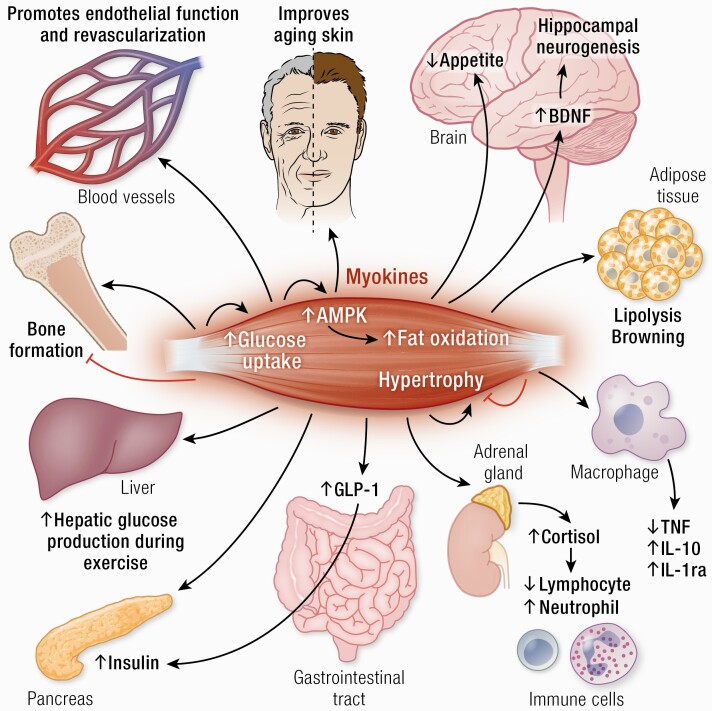
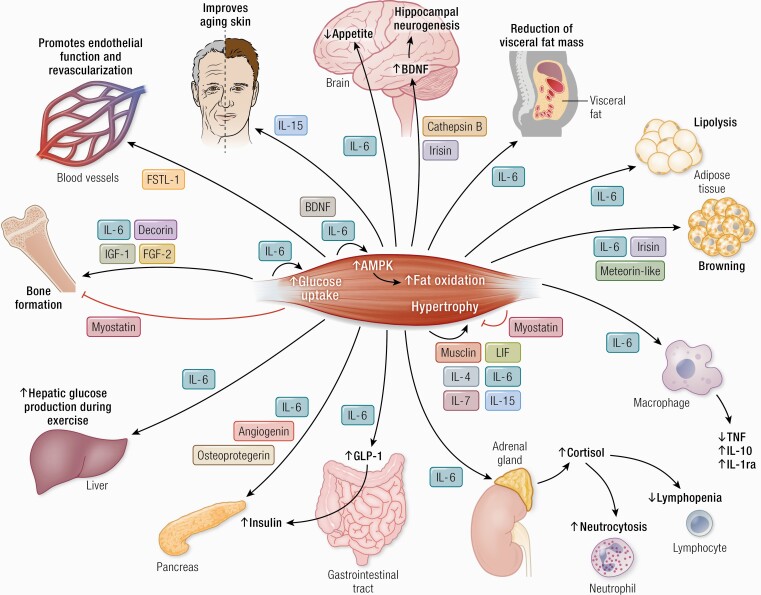
Physical activity decreases the risk of a network of diseases, and exercise may be prescribed as medicine for lifestyle-related disorders such as type 2 diabetes, dementia, cardiovascular diseases, and cancer. During the past couple of decades, it has been apparent that skeletal muscle works as an endocrine organ, which can produce and secrete hundreds of myokines that exert their effects in either autocrine, paracrine, or endocrine manners. Recent advances show that skeletal muscle produces myokines in response to exercise, which allow for crosstalk between the muscle and other organs, including brain, adipose tissue, bone, liver, gut, pancreas, vascular bed, and skin, as well as communication within the muscle itself. Although only few myokines have been allocated to a specific function in humans, it has been identified that the biological roles of myokines include effects on, for example, cognition, lipid and glucose metabolism, browning of white fat, bone formation, endothelial cell function, hypertrophy, skin structure, and tumor growth. This suggests that myokines may be useful biomarkers for monitoring exercise prescription for people with, for example, cancer, diabetes, or neurodegenerative diseases.
Overview
AI snapshot
Written from the paper’s full text.
TL;DR
Skeletal muscle acts as an endocrine organ, releasing myokines in response to exercise that mediate crosstalk with brain, adipose tissue, bone, liver, gut, pancreas, vascular bed, skin, immune system, and tumors. This review updates myokine biology, emphasizing IL-6 and the potential for myokines as exercise biomarkers and therapeutic targets, while noting that specific human functions remain defined for only a small fraction of myokines.
Key findings
- Myokines are defined as cytokines and other peptides produced, expressed, and released by muscle fibers that exert autocrine, paracrine, or endocrine effects; more than 650 myokines have been identified, but biological function has been described for only 5% of known myokines.
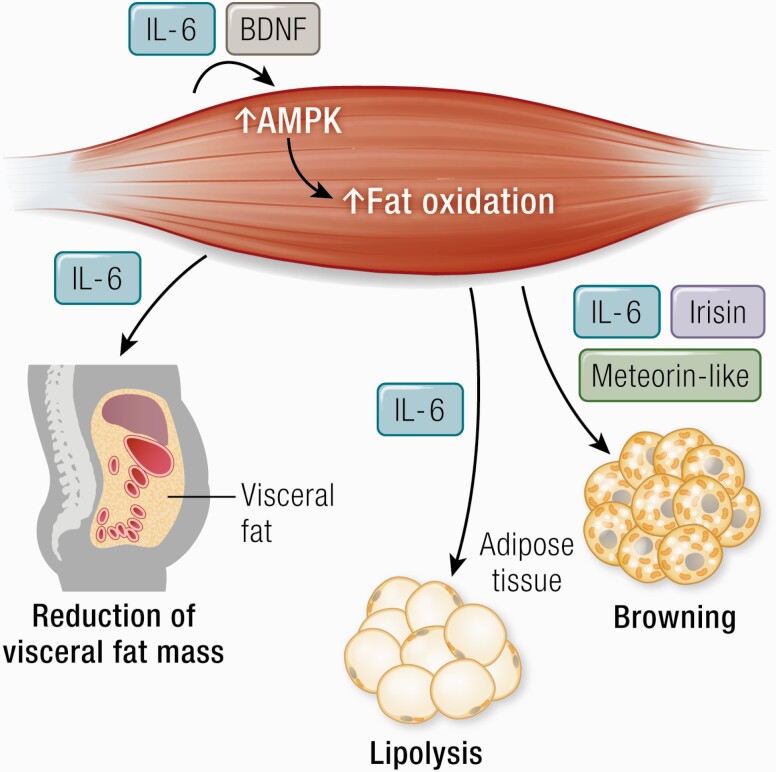
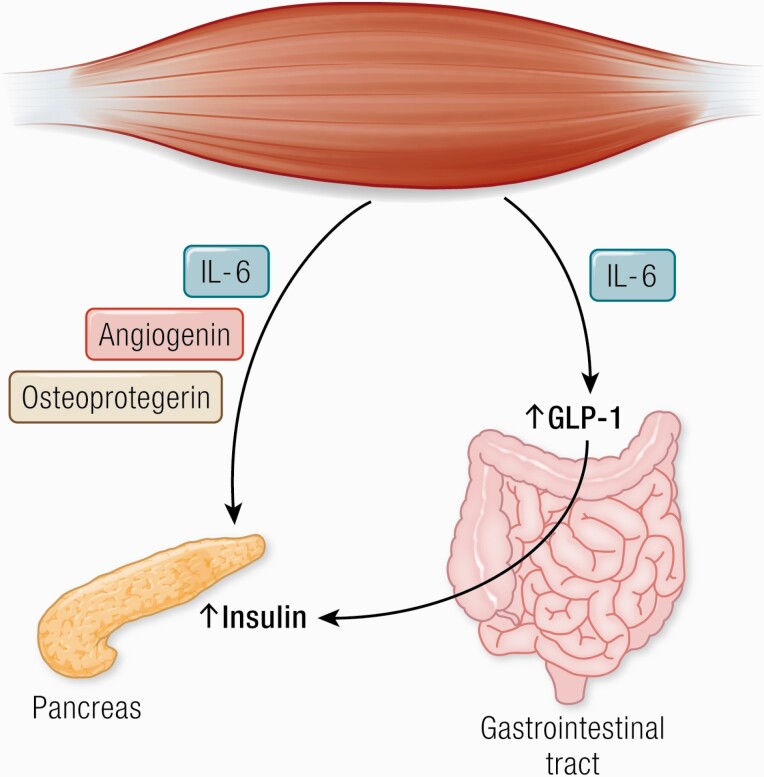
- IL-6 is a central exercise-induced myokine: it mediates anti-inflammatory effects by increasing IL-1ra and IL-10 and inhibiting endotoxin-induced TNF, delays gastric emptying, stimulates GLP-1 and insulin secretion, contributes to hepatic glucose output during exercise, and in a 12-week randomized controlled trial in abdominally obese humans, IL-6 receptor blockade abolished exercise-induced reduction in visceral adipose tissue mass.
- Muscle–organ crosstalk includes brain effects via cathepsin B and irisin, which may cross the blood–brain barrier and stimulate BDNF; aerobic exercise training for 3 months increased hippocampal volume by 12% in healthy individuals and by 16% in patients with schizophrenia.
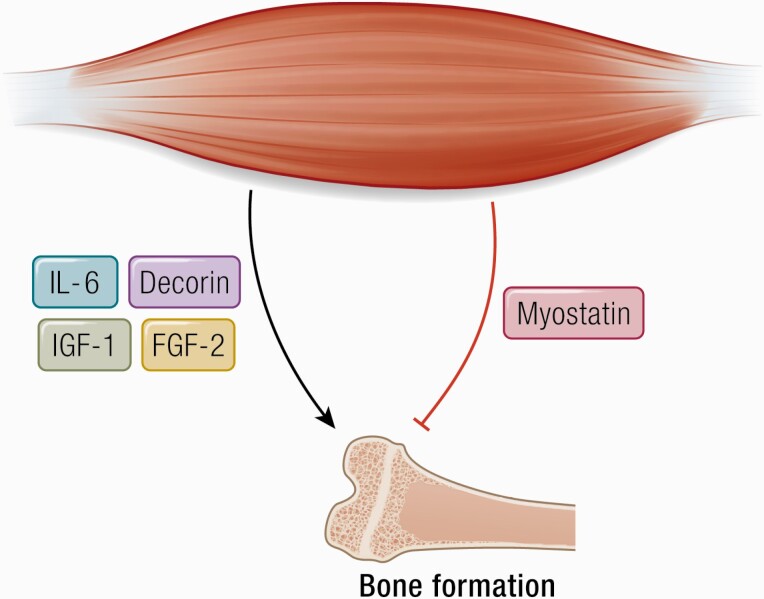
- Other reported roles include browning of white adipose tissue (irisin, meteorin-like, IL-6), bone regulation (decorin, IL-6, IGF-1, FGF-2 positively; myostatin negatively), skin aging via IL-15, endothelial/revascularization effects via FSTL1, and anticancer effects in mice, where running reduced tumor volume and incidence across 6 tumor models via natural killer cell mobilization and IL-6-dependent redistribution.
Methods
- Narrative review/update of recent advances in the myokine field; no systematic review protocol, meta-analysis, or primary data collection is described.
- Synthesizes preclinical and human literature across multiple organs, including cited human infusion studies, exercise trials, and a randomized controlled trial of abdominally obese humans receiving tocilizumab or placebo with aerobic exercise or no exercise for 12 weeks.
- Main analysis is qualitative synthesis of published findings; no statistical analysis or formal evidence grading is reported.
Limitations
- The paper states that biological function has been described for only 5% of known myokines; many browning findings are largely restricted to rodents and have not been consistently demonstrated in humans; the exercise-induced rise in plasma irisin in humans is controversial, partly due to unspecific commercial ELISA kits; whether cathepsin B mediates enhanced cognitive function in humans is unknown; the role of meteorin-like in humans remains to be identified; and it remains to be shown that physiological exercise-released IL-6 concentrations have browning effects.
- Evident from the text: as a narrative review, it lacks a systematic search strategy, explicit inclusion criteria, risk-of-bias assessment, and quantitative synthesis, and many mechanistic conclusions rely on animal or preclinical models.
Model-written summary. Check it against the paper before relying on it.
Integrity signals
Registry
Cites
Statistics
Figures
Verification
Claims the paper makes
92 Not checked yet · 10 Own interpretation · 4 No basis given
In the paper
“Exercise prior to endotoxin totally blunted the increase in circulating levels of TNF‐α that was observed during a resting situation.”
§ Muscle–Organ Crosstalk: The Emerging Roles of Myokines > Muscle–Immune Inflammation Crosstalk > The anti-inflammatory effects of exercise
What the sources say
- Not checked yetcites [113] Starkie, 2003, Exercise and IL-6 infusion inhibit endotoxin-induced TNF-alpha production in humans, FASEB J. source
plaindirect- Asserted: passes — The authors put it forward as true.
- Checkable: passes — It can be checked against evidence.
- Load-bearing: passes — The paper’s conclusions depend on it.
- Based: passes — The paper gives a reason why it holds.
In the paper
“It was therefore expected that an infusion of rhIL-6 prior to endotoxin administration would also blunt the TNF‐α response in humans and this was in fact what was found (113).”
§ Muscle–Organ Crosstalk: The Emerging Roles of Myokines > Muscle–Immune Inflammation Crosstalk > The anti-inflammatory effects of exercise
What the sources say
- Not checked yetcites [113] Starkie, 2003, Exercise and IL-6 infusion inhibit endotoxin-induced TNF-alpha production in humans, FASEB J. source
plaindirect- Asserted: passes — The authors put it forward as true.
- Checkable: passes — It can be checked against evidence.
- Load-bearing: passes — The paper’s conclusions depend on it.
- Based: passes — The paper gives a reason why it holds.
In the paper
“Our finding in 2000 that skeletal muscle produced and released interleukin-6 (IL-6) into the circulation (5)”
§ Muscle–Organ Crosstalk: The Emerging Roles of Myokines > Abstract
What the sources say
- Not checked yetcites [5] Steensberg, 2000, Production of interleukin-6 in contracting human skeletal muscles can account for the exercise-induced increase in plasma interleukin-6, J Physiol. source
plaindirect- Asserted: passes — The authors put it forward as true.
- Checkable: passes — It can be checked against evidence.
- Load-bearing: passes — The paper’s conclusions depend on it.
- Based: passes — The paper gives a reason why it holds.
In the paper
“research during the subsequent years, demonstrating that IL-6 has multiple metabolic effects in other parts of the body (6)”
§ Muscle–Organ Crosstalk: The Emerging Roles of Myokines > Abstract
What the sources say
- Not checked yetcites [6] Pedersen, 2008, Muscle as an endocrine organ: focus on muscle-derived interleukin-6, Physiol Rev. source
boosteddirect- Asserted: passes — The authors put it forward as true.
- Checkable: passes — It can be checked against evidence.
- Load-bearing: passes — The paper’s conclusions depend on it.
- Based: passes — The paper gives a reason why it holds.
In the paper
“Thus, it was obvious that 1 or several humoral factors had to be released from contracting muscles to the blood (3).”
§ Muscle–Organ Crosstalk: The Emerging Roles of Myokines > Abstract
What the sources say
- Not checked yetcites [3] Goldstein, 1961, Humoral nature of hypoglycemia in muscular activity, Am J Physiol. source
boosteddirect- Asserted: passes — The authors put it forward as true.
- Checkable: passes — It can be checked against evidence.
- Load-bearing: passes — The paper’s conclusions depend on it.
- Based: passes — The paper gives a reason why it holds.
None of the sources cited for this claim have been checked yet.
In the paper
“It was clear that signaling pathways from exercising skeletal muscle to other organs were not solely mediated via the nervous system, since electrical stimulation of paralyzed muscles in patients with no efferent or afferent nerve impulses induced the same types of physiological changes as were found in healthy human beings (1, 2).”
§ Muscle–Organ Crosstalk: The Emerging Roles of Myokines > Abstract
What the sources say
- Not checked yetcites [1] Kjaer, 1996, Hormonal and metabolic responses to electrically induced cycling during epidural anesthesia in humans, J Appl Physiol (1985). source
- Not checked yetcites [2] Mohr, 1997, Long-term adaptation to electrically induced cycle training in severe spinal cord injured individuals, Spinal Cord. source
boosteddirect- Asserted: passes — The authors put it forward as true.
- Checkable: passes — It can be checked against evidence.
- Load-bearing: passes — The paper’s conclusions depend on it.
- Based: passes — The paper gives a reason why it holds.
None of the sources cited for this claim have been checked yet.
In the paper
“During the past couple of decades, it has been apparent that skeletal muscle works as an endocrine organ, which can produce and secrete hundreds of myokines that exert their effects in either autocrine, paracrine, or endocrine manners.”
§ Muscle–Organ Crosstalk: The Emerging Roles of Myokines > Abstract
What the sources say
- Not checked yetcites [5] Steensberg, 2000, Production of interleukin-6 in contracting human skeletal muscles can account for the exercise-induced increase in plasma interleukin-6, J Physiol. source
- Not checked yetcites [6] Pedersen, 2008, Muscle as an endocrine organ: focus on muscle-derived interleukin-6, Physiol Rev. source
plaindirect- Asserted: passes — The authors put it forward as true.
- Checkable: passes — It can be checked against evidence.
- Load-bearing: passes — The paper’s conclusions depend on it.
- Based: passes — The paper gives a reason why it holds.
In the paper
“Although the myokine IL-6 is mostly recognized for its regulatory effects in lipid and glucose metabolism, IL-6 also plays important roles in myogenesis.”
§ Muscle–Organ Crosstalk: The Emerging Roles of Myokines > Muscle–Muscle Crosstalk > Myogenesis
What the sources say
- Not checked yetcites [49] Serrano, 2008, Interleukin-6 is an essential regulator of satellite cell-mediated skeletal muscle hypertrophy, Cell Metab. source
plaincorrelational- Asserted: passes — The authors put it forward as true.
- Checkable: passes — It can be checked against evidence.
- Load-bearing: unclear — It is unclear whether the paper’s conclusions depend on it.
- Based: passes — The paper gives a reason why it holds.
None of the sources cited for this claim have been checked yet.
In the paper
“Myokines are also involved in muscle proliferation, differentiation, and regeneration independent of exercise (39, 40).”
§ Muscle–Organ Crosstalk: The Emerging Roles of Myokines > Abstract
What the sources say
plaincorrelational- Asserted: passes — The authors put it forward as true.
- Checkable: passes — It can be checked against evidence.
- Load-bearing: unclear — It is unclear whether the paper’s conclusions depend on it.
- Based: passes — The paper gives a reason why it holds.
In the paper
“Physical inactivity is associated with high circulating basal levels of IL-6 in humans (55).”
§ Muscle–Organ Crosstalk: The Emerging Roles of Myokines > Muscle–Muscle Crosstalk > Metabolic actions
What the sources say
- Not checked yetcites [55] Fischer, 2006, Interleukin-6 in acute exercise and training: what is the biological relevance?, Exerc Immunol Rev.
plaincorrelational- Asserted: passes — The authors put it forward as true.
- Checkable: passes — It can be checked against evidence.
- Load-bearing: unclear — It is unclear whether the paper’s conclusions depend on it.
- Based: passes — The paper gives a reason why it holds.
- It may state two separate claims as one. 36
- Probably not a substantial claim. 3
In the paper
“The myokine IL-6 mediates the exercise-associated anti-inflammatory effects both acutely with each bout of exercise and as a consequence of training adaptation, including reduction in abdominal adiposity.”
§ Muscle–Organ Crosstalk: The Emerging Roles of Myokines > Abstract
What the sources say
- Not checked yetcites [136] Wedell-Neergaard, 2019, Exercise-induced changes in visceral adipose tissue mass are regulated by IL-6 signaling: a randomized controlled trial, Cell Metab. source
plaindirect- Asserted: passes — The authors put it forward as true.
- Checkable: passes — It can be checked against evidence.
- Load-bearing: passes — The paper’s conclusions depend on it.
- Based: passes — The paper gives a reason why it holds.
It may state two separate claims as one.
A conclusion the paper draws from its own results — it cites no other source for it, so there is none to check. The quote shows it is in the paper.
In the paper
“Myokines can be useful biomarkers for monitoring the type and amount of exercise that are required for the prescription of exercise for people with, for example, cancer, diabetes, or neurodegenerative diseases”
§ Muscle–Organ Crosstalk: The Emerging Roles of Myokines > Abstract
plaincorrelational- Asserted: passes — The authors put it forward as true.
- Checkable: passes — It can be checked against evidence.
- Load-bearing: passes — The paper’s conclusions depend on it.
- Based: fails — The paper may give no reason why it holds.
Probably not a substantial claim. The paper may give no reason why it holds.
None of the sources cited for this claim have been checked yet.
In the paper
“identified IL-6 as an exercise factor and skeletal muscle as a secretory organ with endocrine functions.”
§ Muscle–Organ Crosstalk: The Emerging Roles of Myokines > Abstract
What the sources say
- Not checked yetcites [5] Steensberg, 2000, Production of interleukin-6 in contracting human skeletal muscles can account for the exercise-induced increase in plasma interleukin-6, J Physiol. source
- Not checked yetcites [6] Pedersen, 2008, Muscle as an endocrine organ: focus on muscle-derived interleukin-6, Physiol Rev. source
plain- Asserted: passes — The authors put it forward as true.
- Checkable: passes — It can be checked against evidence.
- Load-bearing: passes — The paper’s conclusions depend on it.
- Based: passes — The paper gives a reason why it holds.
It may state two separate claims as one.
None of the sources cited for this claim have been checked yet.
In the paper
“Myokines mediate communication between muscle and other organs, including brain, adipose tissue, bone, liver, gut, pancreas, vascular bed, and skin, as well as within the muscle itself”
- Also stated in: § Abstract · plain
“During exercise, myokines signal within the muscle and mediate muscle–organ crosstalk to the brain, adipose tissue, bone, liver, gut, pancreas, vascular bed, and skin (7, 29, 30).”
§ Muscle–Organ Crosstalk: The Emerging Roles of Myokines > Abstract
What the sources say
- Not checked yetcites [7] Pedersen, 2012, Muscles, exercise and obesity: skeletal muscle as a secretory organ, Nat Rev Endocrinol. source
- Not checked yetcites [29] Benatti, 2015, Exercise as an anti-inflammatory therapy for rheumatic diseases-myokine regulation, Nat Rev Rheumatol. source
- Not checked yetcites [30] Pedersen, 2019, Physical activity and muscle-brain crosstalk, Nat Rev Endocrinol. source
plaindirect- Asserted: passes — The authors put it forward as true.
- Checkable: passes — It can be checked against evidence.
- Load-bearing: passes — The paper’s conclusions depend on it.
- Based: passes — The paper gives a reason why it holds.
It may state two separate claims as one.
- Also stated in: § Abstract · plain
The paper states this without a source or data behind it here, so there is nothing to check it against. The quote shows it is in the paper.
In the paper
“Myokines exert their effects on, for example, cognition, lipid and glucose metabolism, browning of white fat, bone formation, endothelial cell function, hypertrophy, skin structure, and tumor growth”
§ Muscle–Organ Crosstalk: The Emerging Roles of Myokines > Abstract
plaindirect- Asserted: passes — The authors put it forward as true.
- Checkable: passes — It can be checked against evidence.
- Load-bearing: passes — The paper’s conclusions depend on it.
- Based: unclear — It is unclear why the paper says it holds.
It may state two separate claims as one.
In the paper
“identifying more than 650 myokines (38).”
§ Muscle–Organ Crosstalk: The Emerging Roles of Myokines > Abstract
What the sources say
- Not checked yetcites [38] Khan, 2019, Myokines: discovery challenges and therapeutic impediments, J Pak Med Assoc.
plain- Asserted: passes — The authors put it forward as true.
- Checkable: passes — It can be checked against evidence.
- Load-bearing: fails — The paper’s conclusions may not depend on it.
- Based: passes — The paper gives a reason why it holds.
Probably not a substantial claim. The paper’s conclusions may not depend on it.
None of the sources cited for this claim have been checked yet.
In the paper
“During exercise, myokines signal within the muscle and mediate muscle–organ crosstalk to the brain, adipose tissue, bone, liver, gut, pancreas, vascular bed, and skin (7, 29, 30).”
§ Muscle–Organ Crosstalk: The Emerging Roles of Myokines > Abstract
What the sources say
- Not checked yetcites [7] Pedersen, 2012, Muscles, exercise and obesity: skeletal muscle as a secretory organ, Nat Rev Endocrinol. source
- Not checked yetcites [29] Benatti, 2015, Exercise as an anti-inflammatory therapy for rheumatic diseases-myokine regulation, Nat Rev Rheumatol. source
- Not checked yetcites [30] Pedersen, 2019, Physical activity and muscle-brain crosstalk, Nat Rev Endocrinol. source
plaindirect- Asserted: passes — The authors put it forward as true.
- Checkable: passes — It can be checked against evidence.
- Load-bearing: passes — The paper’s conclusions depend on it.
- Based: passes — The paper gives a reason why it holds.
It may state two separate claims as one.
In the paper
“Myostatin is a member of the transforming growth factor β (TGF-β) superfamily and negatively regulates myogenesis in an autocrine manner (43).”
§ Muscle–Organ Crosstalk: The Emerging Roles of Myokines > Muscle–Muscle Crosstalk > Myogenesis
What the sources say
- Not checked yetcites [43] McPherron, 1997, Regulation of skeletal muscle mass in mice by a new TGF-beta superfamily member, Nature. source
plaindirect- Asserted: passes — The authors put it forward as true.
- Checkable: passes — It can be checked against evidence.
- Load-bearing: unclear — It is unclear whether the paper’s conclusions depend on it.
- Based: passes — The paper gives a reason why it holds.
It may state two separate claims as one.
None of the sources cited for this claim have been checked yet.
In the paper
“LIF protein has been shown to be secreted from human cultured myotubes; when electrically stimulated (50) LIF stimulates satellite cell proliferation (51).”
§ Muscle–Organ Crosstalk: The Emerging Roles of Myokines > Muscle–Muscle Crosstalk > Myogenesis
What the sources say
- Not checked yetcites [50] Broholm, 2008, Exercise induces expression of leukaemia inhibitory factor in human skeletal muscle, J Physiol. source
- Not checked yetcites [51] Broholm, 2010, Leukaemia inhibitory factor–an exercise-induced myokine, Exerc Immunol Rev.
plaindirect- Asserted: passes — The authors put it forward as true.
- Checkable: passes — It can be checked against evidence.
- Load-bearing: unclear — It is unclear whether the paper’s conclusions depend on it.
- Based: passes — The paper gives a reason why it holds.
It may state two separate claims as one.
In the paper
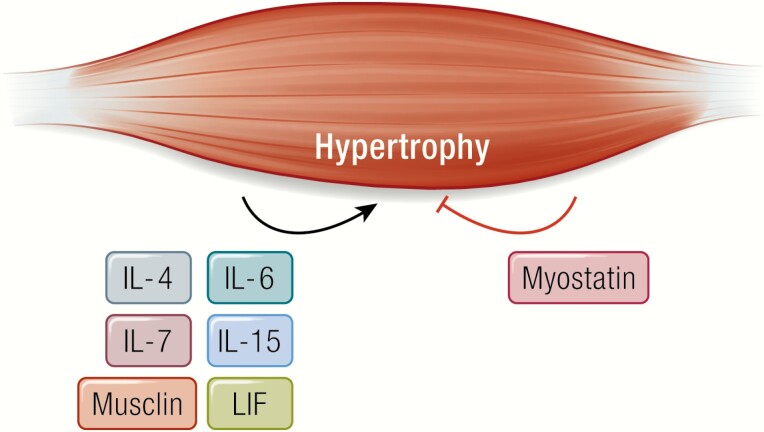
“Some myokines exert their effect within skeletal muscle itself and are involved in the regulation of muscle mass (14) (Fig. 1).”
§ Muscle–Organ Crosstalk: The Emerging Roles of Myokines > Muscle–Muscle Crosstalk > Myogenesis
What the sources say
- Not checked yetcites [14] Lee, 2019, Role of myokines in regulating skeletal muscle mass and function, Front Physiol. source
plaindirect- Asserted: passes — The authors put it forward as true.
- Checkable: passes — It can be checked against evidence.
- Load-bearing: unclear — It is unclear whether the paper’s conclusions depend on it.
- Based: passes — The paper gives a reason why it holds.
It may state two separate claims as one.
In the paper
“It is well documented that IL-6 increases both basal glucose uptake and glucose transporter GLUT4 translocation (58).”
§ Muscle–Organ Crosstalk: The Emerging Roles of Myokines > Muscle–Muscle Crosstalk > Metabolic actions
What the sources say
- Not checked yetcites [58] Carey, 2006, Interleukin-6 increases insulin-stimulated glucose disposal in humans and glucose uptake and fatty acid oxidation in vitro via AMP-activated protein kinase, Diabetes. source
boosteddirect- Asserted: passes — The authors put it forward as true.
- Checkable: passes — It can be checked against evidence.
- Load-bearing: unclear — It is unclear whether the paper’s conclusions depend on it.
- Based: passes — The paper gives a reason why it holds.
It may state two separate claims as one.
None of the sources cited for this claim have been checked yet.
In the paper
“Massive muscle hypertrophy is seen in myostatin knockout mice, cattle, sheep, and dogs (43-45) that demonstrate an increase in fiber cross-sectional area and in fiber number.”
§ Muscle–Organ Crosstalk: The Emerging Roles of Myokines > Muscle–Muscle Crosstalk > Myogenesis
What the sources say
- Not checked yetcites [43] McPherron, 1997, Regulation of skeletal muscle mass in mice by a new TGF-beta superfamily member, Nature. source
- Not checked yetcites [44] Mosher, 2007, A mutation in the myostatin gene increases muscle mass and enhances racing performance in heterozygote dogs, PLoS Genet. source
- Not checked yetcites [45] Grobet, 1997, A deletion in the bovine myostatin gene causes the double-muscled phenotype in cattle, Nat Genet. source
boostedcorrelational- Asserted: passes — The authors put it forward as true.
- Checkable: passes — It can be checked against evidence.
- Load-bearing: unclear — It is unclear whether the paper’s conclusions depend on it.
- Based: passes — The paper gives a reason why it holds.
It may state two separate claims as one.
In the paper
“In contrast, the muscular expression of the IL-6 receptor (IL-6R) is elevated in trained human muscle (57), suggesting that muscular sensitivity to IL-6 is increased by training adaptation.”
§ Muscle–Organ Crosstalk: The Emerging Roles of Myokines > Muscle–Muscle Crosstalk > Metabolic actions
What the sources say
- Not checked yetcites [57] Keller, 2005, Effect of exercise, training, and glycogen availability on IL-6 receptor expression in human skeletal muscle, J Appl Physiol (1985). source
hedgeddirect- Asserted: passes — The authors put it forward as true.
- Checkable: passes — It can be checked against evidence.
- Load-bearing: unclear — It is unclear whether the paper’s conclusions depend on it.
- Based: passes — The paper gives a reason why it holds.
It may state two separate claims as one.
The paper states this without a source or data behind it here, so there is nothing to check it against. The quote shows it is in the paper.
In the paper
“Musclin, LIF, IL-4, IL-6, IL-7, and IL-15 promote muscle hypertrophy. Myostatin inhibits muscle hypertrophy.”
§ Muscle–Organ Crosstalk: The Emerging Roles of Myokines > Muscle–Muscle Crosstalk > Myogenesis
plaindirect- Asserted: passes — The authors put it forward as true.
- Checkable: passes — It can be checked against evidence.
- Load-bearing: unclear — It is unclear whether the paper’s conclusions depend on it.
- Based: passes — The paper gives a reason why it holds.
It may state two separate claims as one.
In the paper
“Decorin has been identified as a myokine that is regulated by exercise and acts as an antagonist to myostatin (46).”
§ Muscle–Organ Crosstalk: The Emerging Roles of Myokines > Muscle–Muscle Crosstalk > Myogenesis
What the sources say
- Not checked yetcites [46] Kanzleiter, 2014, The myokine decorin is regulated by contraction and involved in muscle hypertrophy, Biochem Biophys Res Commun. source
plaindirect- Asserted: passes — The authors put it forward as true.
- Checkable: passes — It can be checked against evidence.
- Load-bearing: unclear — It is unclear whether the paper’s conclusions depend on it.
- Based: passes — The paper gives a reason why it holds.
It may state two separate claims as one.
In the paper
“Genetic loss of IL-6 impaired muscle hypertrophy in vivo, whereas myotube-produced IL-6 stimulated muscle cell proliferation in a paracrine fashion (49).”
§ Muscle–Organ Crosstalk: The Emerging Roles of Myokines > Muscle–Muscle Crosstalk > Myogenesis
What the sources say
- Not checked yetcites [49] Serrano, 2008, Interleukin-6 is an essential regulator of satellite cell-mediated skeletal muscle hypertrophy, Cell Metab. source
plaindirect- Asserted: passes — The authors put it forward as true.
- Checkable: passes — It can be checked against evidence.
- Load-bearing: passes — The paper’s conclusions depend on it.
- Based: passes — The paper gives a reason why it holds.
It may state two separate claims as one.
None of the sources cited for this claim have been checked yet.
In the paper
“Circulating levels of decorin are increased in response to exercise in humans (46), whereas exercise training reduces the levels of myostatin within muscles and blood (47, 48).”
§ Muscle–Organ Crosstalk: The Emerging Roles of Myokines > Muscle–Muscle Crosstalk > Myogenesis
What the sources say
- Not checked yetcites [46] Kanzleiter, 2014, The myokine decorin is regulated by contraction and involved in muscle hypertrophy, Biochem Biophys Res Commun. source
- Not checked yetcites [47] Saremi, 2010, Effects of oral creatine and resistance training on serum myostatin and GASP-1, Mol Cell Endocrinol. source
- Not checked yetcites [48] Hittel, 2010, Myostatin decreases with aerobic exercise and associates with insulin resistance, Med Sci Sports Exerc. source
plaindirect- Asserted: passes — The authors put it forward as true.
- Checkable: passes — It can be checked against evidence.
- Load-bearing: unclear — It is unclear whether the paper’s conclusions depend on it.
- Based: passes — The paper gives a reason why it holds.
It may state two separate claims as one.
In the paper
“Brain-derived neurotrophic factor (BDNF) is also expressed in human skeletal muscles, but BDNF is not released into the circulation and does not work in an endocrine way.”
§ Muscle–Organ Crosstalk: The Emerging Roles of Myokines > Muscle–Muscle Crosstalk > Metabolic actions
What the sources say
- Not checked yetcites [63] Matthews, 2009, Brain-derived neurotrophic factor is produced by skeletal muscle cells in response to contraction and enhances fat oxidation via activation of AMP-activated protein kinase, Diabetologia. source
plain- Asserted: passes — The authors put it forward as true.
- Checkable: passes — It can be checked against evidence.
- Load-bearing: unclear — It is unclear whether the paper’s conclusions depend on it.
- Based: passes — The paper gives a reason why it holds.
It may state two separate claims as one.
None of the sources cited for this claim have been checked yet.
In the paper
“Physical activity and exercise training decrease the risk of dementia (69-71) and appear to play a role in the treatment of this disease (72).”
§ Muscle–Organ Crosstalk: The Emerging Roles of Myokines > Muscle–Brain Crosstalk
What the sources say
- Not checked yetcites [69] Aarsland, 2010, Is physical activity a potential preventive factor for vascular dementia? A systematic review, Aging Ment Health. source
- Not checked yetcites [70] Williams, 2010, Preventing Alzheimer’s disease and cognitive decline, Evid Rep Technol Assess (Full Rep).
- Not checked yetcites [71] Santos-Lozano, 2016, Physical activity and Alzheimer disease: a protective association, Mayo Clin Proc. source
- Not checked yetcites [72] Pedersen, 2015, Exercise as medicine - evidence for prescribing exercise as therapy in 26 different chronic diseases, Scand J Med Sci Sports. source
hedgeddirect- Asserted: passes — The authors put it forward as true.
- Checkable: passes — It can be checked against evidence.
- Load-bearing: unclear — It is unclear whether the paper’s conclusions depend on it.
- Based: passes — The paper gives a reason why it holds.
It may state two separate claims as one.
None of the sources cited for this claim have been checked yet.
In the paper
“Studies in rodents (81) and humans (82) have shown that exercise increases hippocampus volume and the blood flow to this part of the brain (81).”
§ Muscle–Organ Crosstalk: The Emerging Roles of Myokines > Muscle–Brain Crosstalk
What the sources say
plaindirect- Asserted: passes — The authors put it forward as true.
- Checkable: passes — It can be checked against evidence.
- Load-bearing: unclear — It is unclear whether the paper’s conclusions depend on it.
- Based: passes — The paper gives a reason why it holds.
It may state two separate claims as one.
None of the sources cited for this claim have been checked yet.
In the paper
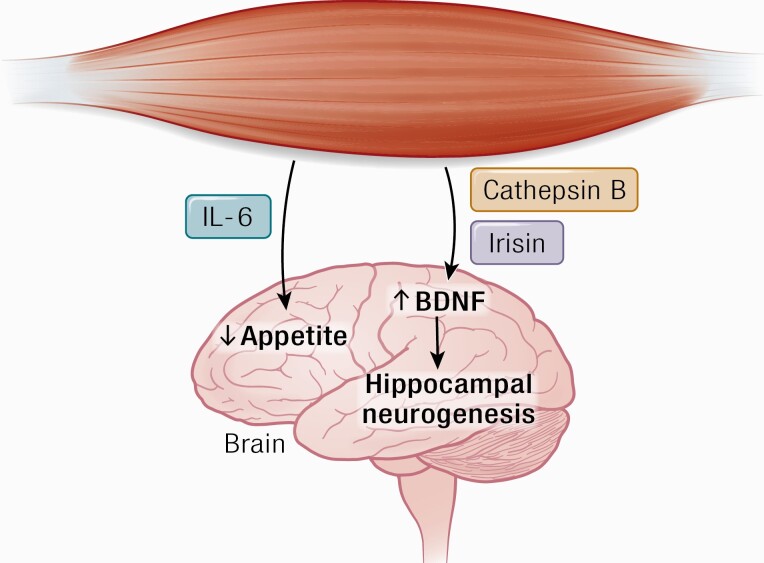
“The finding that muscle contraction is sensed by the brain suggests that peripheral factors induced by exercise may be involved in direct crosstalk between working muscle and brain function (7, 29, 30, 83) (Fig. 2).”
§ Muscle–Organ Crosstalk: The Emerging Roles of Myokines > Muscle–Brain Crosstalk
What the sources say
- Not checked yetcites [7] Pedersen, 2012, Muscles, exercise and obesity: skeletal muscle as a secretory organ, Nat Rev Endocrinol. source
- Not checked yetcites [29] Benatti, 2015, Exercise as an anti-inflammatory therapy for rheumatic diseases-myokine regulation, Nat Rev Rheumatol. source
- Not checked yetcites [30] Pedersen, 2019, Physical activity and muscle-brain crosstalk, Nat Rev Endocrinol. source
- Not checked yetcites [83] Leardini-Tristao, 2019, Beneficial effect of exercise on cognitive function during peripheral arterial disease: potential involvement of myokines and microglial anti-inflammatory phenotype enhancement, J Clin Med. source
hedgedconditional- Asserted: passes — The authors put it forward as true.
- Checkable: passes — It can be checked against evidence.
- Load-bearing: passes — The paper’s conclusions depend on it.
- Based: passes — The paper gives a reason why it holds.
It may state two separate claims as one.
None of the sources cited for this claim have been checked yet.
In the paper
“In particular, exercise has been shown to influence neurogenesis in the dentate gyrus (67, 68) and to increase synapse plasticity (67, 68).”
§ Muscle–Organ Crosstalk: The Emerging Roles of Myokines > Muscle–Brain Crosstalk
What the sources say
- Not checked yetcites [67] Cotman, 2007, Exercise builds brain health: key roles of growth factor cascades and inflammation, Trends Neurosci. source
- Not checked yetcites [68] Mattson, 2012, Energy intake and exercise as determinants of brain health and vulnerability to injury and disease, Cell Metab. source
plaindirect- Asserted: passes — The authors put it forward as true.
- Checkable: passes — It can be checked against evidence.
- Load-bearing: unclear — It is unclear whether the paper’s conclusions depend on it.
- Based: passes — The paper gives a reason why it holds.
It may state two separate claims as one.
None of the sources cited for this claim have been checked yet.
In the paper
“Carbohydrate ingestion during exercise blunted the exercise-induced IL-6 response, the increase in lymphocyte number as well as the cortisol (204, 205).”
§ Muscle–Organ Crosstalk: The Emerging Roles of Myokines > Muscle–Immune Inflammation Crosstalk > Lymphocyte and neutrophil trafficking
What the sources say
- Not checked yetcites [204] Nieman, 1997, Carbohydrate supplementation affects blood granulocyte and monocyte trafficking but not function after 2.5 h or running, Am J Clin Nutr. source
- Not checked yetcites [205] Nehlsen-Cannarella, 1997, Carbohydrate and the cytokine response to 2.5 h of running, J Appl Physiol (1985). source
plaindirect- Asserted: passes — The authors put it forward as true.
- Checkable: passes — It can be checked against evidence.
- Load-bearing: unclear — It is unclear whether the paper’s conclusions depend on it.
- Based: passes — The paper gives a reason why it holds.
It may state two separate claims as one.
None of the sources cited for this claim have been checked yet.
In the paper
“Following long-duration exercise of high intensity, the concentration of lymphocytes falls below pre-exercise values whereas the neutrophil number continues to increase (202, 203).”
§ Muscle–Organ Crosstalk: The Emerging Roles of Myokines > Muscle–Immune Inflammation Crosstalk > Lymphocyte and neutrophil trafficking
What the sources say
plaindirect- Asserted: passes — The authors put it forward as true.
- Checkable: passes — It can be checked against evidence.
- Load-bearing: unclear — It is unclear whether the paper’s conclusions depend on it.
- Based: passes — The paper gives a reason why it holds.
It may state two separate claims as one.
The paper states this without a source or data behind it here, so there is nothing to check it against. The quote shows it is in the paper.
In the paper
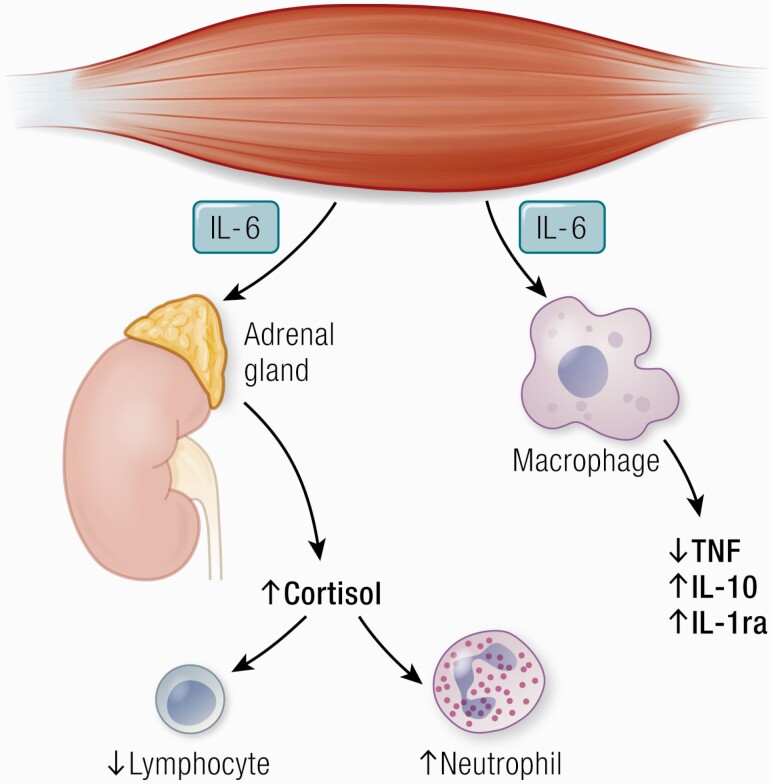
“IL-6 stimulates cortisol production and thereby induces neutrocytosis and lymphopenia.”
§ Muscle–Organ Crosstalk: The Emerging Roles of Myokines > Muscle–Immune Inflammation Crosstalk
plaindirect- Asserted: passes — The authors put it forward as true.
- Checkable: passes — It can be checked against evidence.
- Load-bearing: unclear — It is unclear whether the paper’s conclusions depend on it.
- Based: unclear — It is unclear why the paper says it holds.
It may state two separate claims as one.
In the paper
“Moreover, antioxidant supplementation totally inhibited the release of IL-6 from exercising human muscle as well as the exercise-induced increase in systemic levels of cortisol (206).”
§ Muscle–Organ Crosstalk: The Emerging Roles of Myokines > Muscle–Immune Inflammation Crosstalk > Lymphocyte and neutrophil trafficking
What the sources say
- Not checked yetcites [206] Fischer, 2004, Supplementation with vitamins C and E inhibits the release of interleukin-6 from contracting human skeletal muscle, J Physiol. source
plaindirect- Asserted: passes — The authors put it forward as true.
- Checkable: passes — It can be checked against evidence.
- Load-bearing: passes — The paper’s conclusions depend on it.
- Based: passes — The paper gives a reason why it holds.
It may state two separate claims as one.
The paper states this without a source or data behind it here, so there is nothing to check it against. The quote shows it is in the paper.
In the paper
“IL-6 has anti-inflammatory effects as it inhibits TNF production and stimulates the production of IL-1ra and IL-10.”
§ Muscle–Organ Crosstalk: The Emerging Roles of Myokines > Muscle–Immune Inflammation Crosstalk
plaindirect- Asserted: passes — The authors put it forward as true.
- Checkable: passes — It can be checked against evidence.
- Load-bearing: passes — The paper’s conclusions depend on it.
- Based: unclear — It is unclear why the paper says it holds.
It may state two separate claims as one.
In the paper
“The infusion of IL-6 to mimic the effects of exercise led to an increase in cortisol and, consequently, a decrease in the lymphocyte number accompanied by an increase in neutrophil number (112).”
§ Muscle–Organ Crosstalk: The Emerging Roles of Myokines > Muscle–Immune Inflammation Crosstalk > Lymphocyte and neutrophil trafficking
What the sources say
- Not checked yetcites [112] Steensberg, 2003, IL-6 enhances plasma IL-1ra, IL-10, and cortisol in humans, Am J Physiol Endocrinol Metab. source
plaindirect- Asserted: passes — The authors put it forward as true.
- Checkable: passes — It can be checked against evidence.
- Load-bearing: passes — The paper’s conclusions depend on it.
- Based: passes — The paper gives a reason why it holds.
It may state two separate claims as one.
- Rests on an assumption: IL-6 infusion mimics the effects of exercise.
None of the sources cited for this claim have been checked yet.
In the paper
“FSTL1 has been shown to possess cardioprotective effects, promoting endothelial cell function and thereby revascularization in animal models of cardiac injury through a mechanism that includes nitric oxide synthase (194, 195).”
§ Muscle–Organ Crosstalk: The Emerging Roles of Myokines > Muscle–Vascular Bed Crosstalk
What the sources say
- Not checked yetcites [194] Ouchi, 2008, Follistatin-like 1, a secreted muscle protein, promotes endothelial cell function and revascularization in ischemic tissue through a nitric-oxide synthase-dependent mechanism, J Biol Chem. source
- Not checked yetcites [195] Oshima, 2008, Follistatin-like 1 is an Akt-regulated cardioprotective factor that is secreted by the heart, Circulation. source
plaindirect- Asserted: passes — The authors put it forward as true.
- Checkable: passes — It can be checked against evidence.
- Load-bearing: unclear — It is unclear whether the paper’s conclusions depend on it.
- Based: passes — The paper gives a reason why it holds.
It may state two separate claims as one.
A conclusion the paper draws from its own results — it cites no other source for it, so there is none to check. The quote shows it is in the paper.
In the paper
“The acute exercise effect on lymphocytes and neutrophils is mediated by adrenaline, but the post-exercise reduction in lymphocyte number and the continuous increase in neutrophil number are mediated by both adrenaline and cortisol.”
§ Muscle–Organ Crosstalk: The Emerging Roles of Myokines > Muscle–Immune Inflammation Crosstalk > Lymphocyte and neutrophil trafficking
plaindirect- Asserted: passes — The authors put it forward as true.
- Checkable: passes — It can be checked against evidence.
- Load-bearing: passes — The paper’s conclusions depend on it.
- Based: passes — The paper gives a reason why it holds.
It may state two separate claims as one.
A conclusion the paper draws from its own results — it cites no other source for it, so there is none to check. The quote shows it is in the paper.
In the paper
“Lack of exercise provokes accumulation of more visceral fat and thereby further enhances inflammation and hence a network of chronic diseases.”
§ Muscle–Organ Crosstalk: The Emerging Roles of Myokines > Muscle–Immune Inflammation Crosstalk > The anti-inflammatory effects of exercise
plaindirect- Asserted: passes — The authors put it forward as true.
- Checkable: passes — It can be checked against evidence.
- Load-bearing: passes — The paper’s conclusions depend on it.
- Based: passes — The paper gives a reason why it holds.
It may state two separate claims as one.
A conclusion the paper draws from its own results — it cites no other source for it, so there is none to check. The quote shows it is in the paper.
In the paper
“It is obvious, that many cancers are accompanied by systemic low-grade chronic inflammation and that such inflammation may drive tumor progression.”
§ Muscle–Organ Crosstalk: The Emerging Roles of Myokines > Muscle–Cancer Crosstalk
hedgedconditional- Asserted: passes — The authors put it forward as true.
- Checkable: passes — It can be checked against evidence.
- Load-bearing: passes — The paper’s conclusions depend on it.
- Based: unclear — It is unclear why the paper says it holds.
It may state two separate claims as one.
In the paper
“Using a mouse model with conditional expression of the Il6 gene, it was found that IL6 derived from adipocytes increased, while IL6 derived from myeloid cells and muscle suppressed, macrophage infiltration of adipose tissue.”
§ Muscle–Organ Crosstalk: The Emerging Roles of Myokines > Muscle–Immune Inflammation Crosstalk > The anti-inflammatory effects of exercise
What the sources say
- Not checked yetcites [215] Han, 2020, Regulation of adipose tissue inflammation by interleukin 6, Proc Natl Acad Sci U S A. source
plaindirect- Asserted: passes — The authors put it forward as true.
- Checkable: passes — It can be checked against evidence.
- Load-bearing: passes — The paper’s conclusions depend on it.
- Based: passes — The paper gives a reason why it holds.
It may state two separate claims as one.
A conclusion the paper draws from its own results — it cites no other source for it, so there is none to check. The quote shows it is in the paper.
In the paper
“In humans, exercise training can induce anti-inflammatory effects both acutely with each bout of exercise and via long-term training adaptation including reduction in abdominal adiposity.”
§ Muscle–Organ Crosstalk: The Emerging Roles of Myokines > Muscle–Immune Inflammation Crosstalk > The anti-inflammatory effects of exercise
plaindirect- Asserted: passes — The authors put it forward as true.
- Checkable: passes — It can be checked against evidence.
- Load-bearing: passes — The paper’s conclusions depend on it.
- Based: passes — The paper gives a reason why it holds.
It may state two separate claims as one.
A conclusion the paper draws from its own results — it cites no other source for it, so there is none to check. The quote shows it is in the paper.
In the paper
“Accumulation of visceral fat, which is more inflamed than subcutaneous fat, leads to chronic systemic inflammation that predisposes to atherosclerosis, elevated blood lipids, insulin resistance, neurodegeneration, muscle waste, and anemia, factors that are likely to lead to decreased physical activity.”
§ Muscle–Organ Crosstalk: The Emerging Roles of Myokines > Muscle–Immune Inflammation Crosstalk > The anti-inflammatory effects of exercise
hedgeddirect- Asserted: passes — The authors put it forward as true.
- Checkable: passes — It can be checked against evidence.
- Load-bearing: passes — The paper’s conclusions depend on it.
- Based: passes — The paper gives a reason why it holds.
It may state two separate claims as one.
None of the sources cited for this claim have been checked yet.
In the paper
“Exercise training will lead to a decrease in visceral and cardiac fat mass (136, 138, 221) and hence a decrease in circulating inflammatory molecules via a mechanism that involves exercise-induced increase in IL-6 (136), as described above.”
§ Muscle–Organ Crosstalk: The Emerging Roles of Myokines > Muscle–Immune Inflammation Crosstalk > The anti-inflammatory effects of exercise
What the sources say
- Not checked yetcites [136] Wedell-Neergaard, 2019, Exercise-induced changes in visceral adipose tissue mass are regulated by IL-6 signaling: a randomized controlled trial, Cell Metab. source
- Not checked yetcites [138] Christensen, 2019, Aerobic exercise induces cardiac fat loss and alters cardiac muscle mass through an interleukin-6 receptor-dependent mechanism: cardiac analysis of a double-blind randomized controlled clinical trial in abdominally obese humans, Circulation. source
- Not checked yetcites [221] Christensen, 2019, Effect of aerobic and resistance exercise on cardiac adipose tissues: secondary analyses from a randomized clinical trial, JAMA Cardiol. source
plaindirect- Asserted: passes — The authors put it forward as true.
- Checkable: passes — It can be checked against evidence.
- Load-bearing: passes — The paper’s conclusions depend on it.
- Based: passes — The paper gives a reason why it holds.
It may state two separate claims as one.
None of the sources cited for this claim have been checked yet.
In the paper
“Lack of physical activity is associated with a large network of diseases, including type 2 diabetes, cardiovascular diseases, cancer, dementia, and osteoporosis (72, 121)”
§ Muscle–Organ Crosstalk: The Emerging Roles of Myokines > Myokines and Other “Kines”: Adipokines, Hepatokines, and Batokines
What the sources say
- Not checked yetcites [72] Pedersen, 2015, Exercise as medicine - evidence for prescribing exercise as therapy in 26 different chronic diseases, Scand J Med Sci Sports. source
- Not checked yetcites [121] Pedersen, 2019, The physiology of optimizing health with a focus on exercise as medicine, Annu Rev Physiol. source
plaincorrelational- Asserted: passes — The authors put it forward as true.
- Checkable: passes — It can be checked against evidence.
- Load-bearing: fails — The paper’s conclusions may not depend on it.
- Based: passes — The paper gives a reason why it holds.
Probably not a substantial claim. The paper’s conclusions may not depend on it.
In the paper
“These hepatokines increase in the circulation after muscle work and appear to be involved in mediating some of the metabolic effects of exercise.”
§ Muscle–Organ Crosstalk: The Emerging Roles of Myokines > Myokines and Other “Kines”: Adipokines, Hepatokines, and Batokines
What the sources say
- Not checked yetcites [232] Weigert, 2019, Hepatokines-a novel group of exercise factors, Pflugers Arch. source
hedgeddirect- Asserted: passes — The authors put it forward as true.
- Checkable: passes — It can be checked against evidence.
- Load-bearing: unclear — It is unclear whether the paper’s conclusions depend on it.
- Based: passes — The paper gives a reason why it holds.
It may state two separate claims as one.
In the paper
“Hepatokines include FGF-21, follistatin, angiopoietin-like protein 4, heat shock protein 72, and IGF binding protein, which are all released from the liver during or immediately after an exercise bout (232).”
§ Muscle–Organ Crosstalk: The Emerging Roles of Myokines > Myokines and Other “Kines”: Adipokines, Hepatokines, and Batokines
What the sources say
- Not checked yetcites [232] Weigert, 2019, Hepatokines-a novel group of exercise factors, Pflugers Arch. source
plaindirect- Asserted: passes — The authors put it forward as true.
- Checkable: passes — It can be checked against evidence.
- Load-bearing: unclear — It is unclear whether the paper’s conclusions depend on it.
- Based: passes — The paper gives a reason why it holds.
It may state two separate claims as one.
The paper relies on this without support.
Recombinant human IL-6 infused to mimic exercise-induced plasma IL-6 levels has the same physiological effects as endogenous muscle-derived IL-6 during exercise.
“Healthy young males underwent 2 hours of bicycle exercise on 3 separate occasions at (1) a relatively high intensity; (2) a low intensity, and (3) a low intensity + infusion of IL-6 to mimic the plasma levels of IL-6 observed during high-intensity exercise.”
The paper relies on this without support.
IL-6 receptor blockade with tocilizumab specifically isolates IL-6's role in exercise-induced visceral fat loss.
“Abdominally obese humans were randomized to tocilizumab (IL-6 receptor antibody) or placebo during an intervention of 12 weeks with either aerobic exercise or no exercise (136, 137).”
“However, this effect was abolished by IL-6 receptor blockade (136).”
The paper relies on this without support.
IL-6 infusion mimics the effects of exercise.
“The infusion of IL-6 to mimic the effects of exercise led to an increase in cortisol and, consequently, a decrease in the lymphocyte number accompanied by an increase in neutrophil number (112).”
Claims other papers make about this one
Each is checked against this paper’s own text: does it say what the citing paper says it does?
The cited source says what the claim attributes to it.
In the citing paper
“Skeletal muscle also functions as an endocrine organ.”
From Strategies for minimizing muscle loss during use of incretin‐mimetic drugs for treatment of obesity (2025) · cites this paper as [109]
The cited source says what the claim attributes to it.
In the citing paper
“Though human research on this topic is limited, preclinical studies suggest that loss of muscle mass or function can detrimentally affect numerous physiological systems.”
From Strategies for minimizing muscle loss during use of incretin‐mimetic drugs for treatment of obesity (2025) · cites this paper as [109]
The cited source says what the claim attributes to it.
In the citing paper
“Muscle contraction during exercise triggers the release of numerous autocrine, paracrine, and endocrine mediators collectively known as myokines.”
From Strategies for minimizing muscle loss during use of incretin‐mimetic drugs for treatment of obesity (2025) · cites this paper as [109]
The cited source says what the claim attributes to it.
In the citing paper
“skeletal muscle also functions as an autocrine, endocrine, and paracrine tissue, especially during physical exercise, via the secretion of myokines [35].”
From Exercise-Induced Muscle–Fat Crosstalk: Molecular Mediators and Their Pharmacological Modulation for the Maintenance of Metabolic Flexibility in Aging (2025) · cites this paper as [35]
In the citing paper
“Dysregulation in myokine secretion can arise in the pathogenesis of age-related conditions, such as sarcopenia [104,105].”
From Exerkines and Sarcopenia: Unveiling the Mechanism Behind Exercise-Induced Mitochondrial Homeostasis (2025) · cites this paper as [105]
Self-check
Percentages, sums and reported differences re-computed from the paper’s own numbers.
Each contradiction between two passages listed here was confirmed by an independent check.
Rated minor: it would not touch a result — a value no result rests on, a p-value that stays on the same side of the significance level, or a conflict that is clerical, resolved elsewhere in the paper, or outside its own findings.
In the paper
§ Muscle–Organ Crosstalk: The Emerging Roles of Myokines > Muscle–Gut Crosstalk
“A classic study by Ellingsgaard et al. (108) elegantly showed that acute elevations in IL-6 stimulates GLP-1 secretion from both intestinal L‐cells and pancreatic β‐cells, leading to improved secretion of insulin.”
§ Muscle–Organ Crosstalk: The Emerging Roles of Myokines > References
“108. Ellingsgaard H, Hauselmann I, Schuler B, et al. Interleukin-6 enhances insulin secretion by increasing glucagon-like peptide-1 secretion from L cells and alpha cells. Nat Med. 2011; 17(11): 1481- 1489. 22037645 PMC4286294”
Rated minor: it would not touch a result — a value no result rests on, a p-value that stays on the same side of the significance level, or a conflict that is clerical, resolved elsewhere in the paper, or outside its own findings.
In the paper
§ Muscle–Organ Crosstalk: The Emerging Roles of Myokines > Muscle–Brain Crosstalk
“Figure: Figure 2. Cathepsin B and irisin cross the blood–brain barrier and stimulate BDNF production, which leads to hippocampal neurogenesis. IL-6 stimulates appetite.”
§ Muscle–Organ Crosstalk: The Emerging Roles of Myokines > Muscle–Brain Crosstalk > Appetite
“Thus, it is likely that muscle-derived IL-6, elicited by exercise of long duration and high intensity, may inhibit appetite.”
Rated minor: it would not touch a result — a value no result rests on, a p-value that stays on the same side of the significance level, or a conflict that is clerical, resolved elsewhere in the paper, or outside its own findings.
In the paper
§ Muscle–Organ Crosstalk: The Emerging Roles of Myokines > Muscle–Bone Crosstalk
“myostatin reduces osteoclast formation and bone destruction in a TNF-α transgenic mouse model of rheumatoid arthritis (162).”
§ Muscle–Organ Crosstalk: The Emerging Roles of Myokines > Muscle–Bone Crosstalk
“Thus, whereas myostatin is a negative regulator of bone, it is a positive regulator of bone resorption.”
Citations
Cites
Positional cloning of the mouse obese gene and its human homologue
Zhang, Y., Proenca, R., Maffei, M., Barone, M., Leopold, L., & Friedman, J. M. (1994) · Nature · doi:10.1038/372425a0 · Cited by 13,419
Exercise training increases size of hippocampus and improves memory
Erickson, K. I., Voss, M. W., Prakash, R. S., Basak, C., Szabo, A., Chaddock, L., Kim, J. S., Heo, S., Alves, H., White, S. M., et al. (2011) · Proceedings of the National Academy of Sciences · doi:10.1073/pnas.1015950108 · Cited by 4,855 · cited 1×
“Studies in rodents (81) and humans (82) have shown that exercise increases hippocampus volume and the blood flow to this part of the brain (81).”
BackgroundA PGC1-α-dependent myokine that drives brown-fat-like development of white fat and thermogenesis
Boström, P., Wu, J., Jedrychowski, M. P., Korde, A., Ye, L., Lo, J. C., Rasbach, K. A., Boström, E. A., Choi, J. H., Long, J. Z., et al. (2012) · Nature · doi:10.1038/nature10777 · Cited by 4,810
Regulation of skeletal muscle mass in mice by a new TGF-p superfamily member
McPherron, A. C., Lawler, A. M., & Lee, S.-J. (1997) · Nature · doi:10.1038/387083a0 · Cited by 4,013
Type 2 diabetes as an inflammatory disease
Donath, M. Y., & Shoelson, S. E. (2011) · Nature Reviews Immunology · doi:10.1038/nri2925 · Cited by 3,737 · cited 1×
“Whereas TNF-α may inhibit β‐cell function indirectly, IL‐1β has been identified as a direct key player in β‐cell damage (183-189), although IL-1β inhibition with canakinumab did not reduce the incidence of diabetes (190).”
BackgroundExercise as medicine - evidence for prescribing exercise as therapy in 26 different chronic diseases
Pedersen, B. K., & Saltin, B. (2015) · Scandinavian Journal of Medicine & Science in Sports · doi:10.1111/sms.12581 · Cited by 3,514 · cited 2×
“Physical activity and exercise training decrease the risk of dementia (69-71) and appear to play a role in the treatment of this disease (72).”
BackgroundSelf-citationThe anti-inflammatory effect of exercise
Petersen, A. M. W., & Pedersen, B. K. (2005) · Journal of Applied Physiology · doi:10.1152/japplphysiol.00164.2004 · Cited by 3,100 · cited 1×
“The anti-inflammatory effects of exercise Physical inactivity is associated with low-grade chronic inflammation, not least when a physical inactive lifestyle is associated with obesity (29, 142, 144, 145, 207-210).”
BackgroundSelf-citationMuscles, exercise and obesity: skeletal muscle as a secretory organ
Pedersen, B. K., & Febbraio, M. A. (2012) · Nature Reviews Endocrinology · doi:10.1038/nrendo.2012.49 · Cited by 2,909 · cited 6×
“The role of myokines has previously been reviewed (7, 11-37), identifying more than 650 myokines (38).”
BackgroundInfluentialSelf-citationKahn, B. B., Alquier, T., Carling, D., & Hardie, D. G. (2005) · Cell Metabolism · doi:10.1016/j.cmet.2004.12.003 · Cited by 2,799 · cited 1×
“Several other studies have described that IL-6 can increase intramyocellular (58-60) or whole body (61) fatty acid oxidation via AMPK activation (58, 62).”
BackgroundExercise: a behavioral intervention to enhance brain health and plasticity
Cotman, C. (2002) · Trends in Neurosciences · doi:10.1016/s0166-2236(02)02143-4 · Cited by 2,739 · cited 1×
“Other studies have shown that an active lifestyle is associated with learning and memory (74), executive functions (75), language and reaction time (76), academic achievement in children, and intelligence in adolescents (77).”
BackgroundMuscle as an Endocrine Organ: Focus on Muscle-Derived Interleukin-6
Pedersen, B. K., & Febbraio, M. A. (2008) · Physiological Reviews · doi:10.1152/physrev.90100.2007 · Cited by 2,388 · cited 3×
“Metabolic actions While IL-6 is characterized as a myokine with endocrine effects, it also works in a paracrine manner exerting metabolic effects within the muscle itself (6, 7).”
BackgroundSelf-citationExercise builds brain health: key roles of growth factor cascades and inflammation
Cotman, C. W., Berchtold, N. C., & Christie, L.-A. (2007) · Trends in Neurosciences · doi:10.1016/j.tins.2007.06.011 · Cited by 2,268 · cited 2×
“In particular, exercise has been shown to influence neurogenesis in the dentate gyrus (67, 68) and to increase synapse plasticity (67, 68).”
BackgroundLocal and systemic insulin resistance resulting from hepatic activation of IKK-β and NF-κB
Cai, D., Yuan, M., Frantz, D. F., Melendez, P. A., Hansen, L., Lee, J., & Shoelson, S. E. (2005) · Nature Medicine · doi:10.1038/nm1166 · Cited by 2,245
General and abdominal adiposity and risk of death in Europe
Pischon, T., Boeing, H., Hoffmann, K., Bergmann, M., Schulze, M. B., Overvad, K., van der Schouw, Y. T., Spencer, E., Moons, K. G. M., Tjønneland, A., et al. (2008) · New England Journal of Medicine · doi:10.1056/nejmoa0801891 · Cited by 2,155 · cited 1×
“Abdominal adiposity is also associated with all‐cause mortality, both in obese people and in people with a normal body weight (128).”
BackgroundSmith, P. J., Blumenthal, J. A., Hoffman, B. M., Cooper, H., Strauman, T. A., Welsh-Bohmer, K., Browndyke, J. N., & Sherwood, A. (2010) · Psychosomatic Medicine · doi:10.1097/psy.0b013e3181d14633 · Cited by 1,714 · cited 1×
“Other studies have shown that an active lifestyle is associated with learning and memory (74), executive functions (75), language and reaction time (76), academic achievement in children, and intelligence in adolescents (77).”
BackgroundExercise and the immune system: regulation, integration, and adaptation
Pedersen, B. K., & Hoffman-Goetz, L. (2000) · Physiological Reviews · doi:10.1152/physrev.2000.80.3.1055 · Cited by 1,710 · cited 1×
“Following longduration exercise of high intensity, the concentration of lymphocytes falls below pre-exercise values whereas the neutrophil number continues to increase (202, 203).”
BackgroundSelf-citationA deletion in the bovine myostatin gene causes the double–muscled phenotype in cattle
Grobet, L., Royo Martin, L. J., Poncelet, D., Pirottin, D., Brouwers, B., Riquet, J., Schoeberlein, A., Dunner, S., Ménissier, F., Massabanda, J., et al. (1997) · Nature Genetics · doi:10.1038/ng0997-71 · Cited by 1,556 · cited 1×
“596 Endocrine Reviews, August 2020, 41(4):594–609 Severinsen and Pedersen Myokines in Muscle–Organ Crosstalk in myostatin knockout mice, cattle, sheep, and dogs (43-45) that demonstrate an increase in fiber cross-sectional area and in fiber number.”
BackgroundAssociation of Leisure-Time Physical Activity With Risk of 26 Types of Cancer in 1.44 Million Adults
Moore, S. C., Lee, I.-M., Weiderpass, E., Campbell, P. T., Sampson, J. N., Kitahara, C. M., Keadle, S. K., Arem, H., Berrington de Gonzalez, A., Hartge, P., et al. (2016) · JAMA Internal Medicine · doi:10.1001/jamainternmed.2016.1548 · Cited by 1,487 · cited 2×
“Pernille Hojman and her team explored the effect of exercise on tumor growth in preclinical models (42, 222).”
BackgroundHippocampal BDNF mediates the efficacy of exercise on synaptic plasticity and cognition
Vaynman, S., Ying, Z., & Gomez‐Pinilla, F. (2004) · European Journal of Neuroscience · doi:10.1111/j.1460-9568.2004.03720.x · Cited by 1,460 · cited 1×
“Furthermore, BDNF has been shown to be mechanistically linked to exerciseinduced improvement in cognitive functions, such as memory and learning (93, 94).”
BackgroundIncreased Osteoclast Development After Estrogen Loss: Mediation by Interleukin-6
Jilka, R. L., Hangoc, G., Girasole, G., Passeri, G., Williams, D. C., Abrams, J. S., Boyce, B. F., Broxmeyer, H. E., & Manolagas, S. C. (1992) · Science · doi:10.1126/science.1621100 · Cited by 1,440 · cited 1×
“IL-6 appears to induce bone resorption through receptor activator of nuclear factor kappa-Β ligand (RANKL) -dependent enhanced osteoclastogenesis/osteoclast differentiation (164, 165) as well as via osteoblastderived prostaglandin E2 (PGE2)-dependent osteoclast activation (166-168).”
BackgroundExercise induces hippocampal BDNF through a PGC-1α/FNDC5 pathway
Wrann, C. D., White, J. P., Salogiannnis, J., Laznik-Bogoslavski, D., Wu, J., Ma, D., Lin, J. D., Greenberg, M. E., & Spiegelman, B. M. (2013) · Cell Metabolism · doi:10.1016/j.cmet.2013.09.008 · Cited by 1,440 · cited 2×
“The PGC-1α-dependent myokine irisin, known for its browning effects (101), may also be involved in mediating effects of physical activity on the brain (98).”
BackgroundRoss, R., Dagnone, D., Jones, P. J. H., Smith, H., Paddags, A., Hudson, R., & Janssen, I. (2000) · Annals of Internal Medicine · doi:10.7326/0003-4819-133-2-200007180-00008 · Cited by 1,435
Interleukin-6-deficient mice develop mature-onset obesity
Wallenius, V., Wallenius, K., Ahrén, B., Rudling, M., Carlsten, H., Dickson, S. L., Ohlsson, C., & Jansson, J.-O. (2002) · Nature Medicine · doi:10.1038/nm0102-75 · Cited by 1,213 · cited 2×
“Systemic IL-6 knockout mice accumulate adipose tissue (106, 107), whereas central overexpression of IL-6 (116, 117) leads to a decrease in body weight, indicating that IL-6 is a player in body weight control.”
BackgroundIL-6 enhances plasma IL-1ra, IL-10, and cortisol in humans
Steensberg, A., Fischer, C. P., Keller, C., Møller, K., & Pedersen, B. K. (2003) · American Journal of Physiology-Endocrinology and Metabolism · doi:10.1152/ajpendo.00074.2003 · Cited by 1,135 · cited 5×
“(Endocrine Reviews 41: 594 – 609, 2020) Graphical Abstract Improves aging skin Promotes endothelial function and revascularization Bone formation Lipolysis Browning Adipose tissue Immune cells Liver Pancreas Hepatic glucose production during exercise Blood vessels Hypertrophy Glucose uptake AMPK Myokines Gastrointesti…”
BackgroundInfluentialSelf-citationSteensberg, A., van Hall, G., Osada, T., Sacchetti, M., Saltin, B., & Pedersen, B. K. (2000) · The Journal of Physiology · doi:10.1111/j.1469-7793.2000.00237.x · Cited by 1,095 · cited 1×
“Our finding in 2000 that skeletal muscle produced and released interleukin-6 (IL-6) into the circulation (5) as well as research during the subsequent years, demonstrating that IL-6 has multiple metabolic effects in other parts of the body (6), identified IL-6 as an exercise factor and skeletal muscle as a secretory o…”
BackgroundSelf-citationScherer, P. E. (2006) · Diabetes · doi:10.2337/db06-0263 · Cited by 1,092
The role of exercise and PGC1α in inflammation and chronic disease
Handschin, C., & Spiegelman, B. M. (2008) · Nature · doi:10.1038/nature07206 · Cited by 1,083
Exercise and brain neurotrophins
Neeper, S. A., Góauctemez-Pinilla, F., Choi, J., & Cotman, C. (1995) · Nature · doi:10.1038/373109a0 · Cited by 1,066 · cited 1×
“Rodent studies demonstrate increased BDNF mRNA and BDNF protein within the hippocampus in response to wheel running for 1-8 weeks (87-92).”
BackgroundSchindler, R., Mancilla, J., Endres, S., Ghorbani, R., Clark, S., & Dinarello, C. (1990) · Blood · doi:10.1182/blood.v75.1.40.40 · Cited by 1,012
Rao, R. R., Long, J. Z., White, J. P., Svensson, K. J., Lou, J., Lokurkar, I., Jedrychowski, M. P., Ruas, J. L., Wrann, C. D., Lo, J. C., et al. (2014) · Cell · doi:10.1016/j.cell.2014.03.065 · Cited by 973 · cited 1×
“In 2014, Spiegelman’s group (141) identified meteorin-like (Metrnl), a circulating muscle-derived factor, that is induced in muscle after exercise.”
BackgroundEllingsgaard, H., Hauselmann, I., Schuler, B., Habib, A. M., Baggio, L. L., Meier, D. T., Eppler, E., Bouzakri, K., Wueest, S., Muller, Y. D., et al. (2011) · Nature Medicine · doi:10.1038/nm.2513 · Cited by 922 · cited 2×
“Other rodent studies show that IL-6 triggers proliferation of pancreatic alpha cells in the obese state (108) and stimulates the production of glucagon-like peptide (GLP)-1 and hence insulin secretion (108).”
BackgroundEvidence for a release of brain-derived neurotrophic factor from the brain during exercise
Rasmussen, P., Brassard, P., Adser, H., Pedersen, M. V., Leick, L., Hart, E., Secher, N. H., Pedersen, B. K., & Pilegaard, H. (2009) · Experimental Physiology · doi:10.1113/expphysiol.2009.048512 · Cited by 914
Self-citationCarey, A. L., Steinberg, G. R., Macaulay, S. L., Thomas, W. G., Holmes, A. G., Ramm, G., Prelovsek, O., Hohnen-Behrens, C., Watt, M. J., James, D. E., et al. (2006) · Diabetes · doi:10.2337/db05-1404 · Cited by 898 · cited 9×
“It is well documented that IL-6 increases both basal glucose uptake and glucose transporter GLUT4 translocation (58).”
BackgroundInfluentialSelf-citationPedersen, L., Idorn, M., Olofsson, G. H., Lauenborg, B., Nookaew, I., Hansen, R. H., Johannesen, H. H., Becker, J. C., Pedersen, K. S., Dethlefsen, C., et al. (2016) · Cell Metabolism · doi:10.1016/j.cmet.2016.01.011 · Cited by 888 · cited 3×
“Pernille Hojman and her team explored the effect of exercise on tumor growth in preclinical models (42, 222).”
BackgroundSelf-citationMuscle‐derived interleukin‐6: mechanisms for activation and possible biological roles
FEBBRAIO, M. A., & PEDERSEN, B. K. (2002) · The FASEB Journal · doi:10.1096/fj.01-0876rev · Cited by 875 · cited 1×
“During muscle work, IL-6 is produced by human contracting skeletal muscle and released into the blood (114) in a TNF-independent fashion (115).”
BackgroundSelf-citationInterleukin-6 Is an Essential Regulator of Satellite Cell-Mediated Skeletal Muscle Hypertrophy
Serrano, A. L., Baeza-Raja, B., Perdiguero, E., Jardí, M., & Muñoz-Cánoves, P. (2008) · Cell Metabolism · doi:10.1016/j.cmet.2007.11.011 · Cited by 873 · cited 1×
“Genetic loss of IL-6 impaired muscle hypertrophy in vivo, whereas myotube-produced IL-6 stimulated muscle cell proliferation in a paracrine fashion (49).”
BackgroundCirculating levels of IGF-1 directly regulate bone growth and density
Yakar, S., Rosen, C. J., Beamer, W. G., Ackert‐Bicknell, C. L., Wu, Y., Liu, J., Ooi, G. T., Setser, J., Frystyk, J., Boisclair, Y. R., et al. (2002) · Journal of Clinical Investigation · doi:10.1172/jci15463 · Cited by 845 · cited 1×
“Insulin-like growth factor 1 (IGF-1) has been shown to have a positive effect on bone formation (170).”
BackgroundRole of Myokines in Exercise and Metabolism
Pedersen, B. K., Åkerström, T. C. A., Nielsen, A. R., & Fischer, C. P. (2007) · Journal of Applied Physiology · doi:10.1152/japplphysiol.00080.2007 · Cited by 841 · cited 1×
“The role of myokines has previously been reviewed (7, 11-37), identifying more than 650 myokines (38).”
BackgroundSelf-citationFarmer, J., Zhao, X., van Praag, H., Wodtke, K., Gage, F. H., & Christie, B. R. (2004) · Neuroscience · doi:10.1016/j.neuroscience.2003.09.029 · Cited by 836 · cited 1×
“Rodent studies demonstrate increased BDNF mRNA and BDNF protein within the hippocampus in response to wheel running for 1-8 weeks (87-92).”
BackgroundMosher, D. S., Quignon, P., Bustamante, C. D., Sutter, N. B., Mellersh, C. S., Parker, H. G., & Ostrander, E. A. (2007) · PLoS Genetics · doi:10.1371/journal.pgen.0030079 · Cited by 826 · cited 1×
“596 Endocrine Reviews, August 2020, 41(4):594–609 Severinsen and Pedersen Myokines in Muscle–Organ Crosstalk in myostatin knockout mice, cattle, sheep, and dogs (43-45) that demonstrate an increase in fiber cross-sectional area and in fiber number.”
BackgroundInterleukin-6 in acute exercise and training: what is the biological relevance?
Fischer, C. P. (2026) · PubMed · doi:10.22029/eir.2006.1620 · Cited by 817
Increased Number of Islet-Associated Macrophages in Type 2 Diabetes
Ehses, J. A., Perren, A. A., Eppler, E., Ribaux, P., Pospisilik, J. A., Maor-Cahn, R., Guéripel, X., Ellingsgaard, H., Schneider, M. K. J., Biollaz, G., et al. (2007) · Diabetes · doi:10.2337/db06-1650 · Cited by 804 · cited 1×
“Whereas TNF-α may inhibit β‐cell function indirectly, IL‐1β has been identified as a direct key player in β‐cell damage (183-189), although IL-1β inhibition with canakinumab did not reduce the incidence of diabetes (190).”
BackgroundCentral obesity and increased risk of dementia more than three decades later
Whitmer, R. A., Gustafson, D. R., Barrett-Connor, E., Haan, M. N., Gunderson, E. P., & Yaffe, K. (2008) · Neurology · doi:10.1212/01.wnl.0000306313.89165.ef · Cited by 803 · cited 1×
“Abdominal adiposity is associated with type 2 diabetes (123), cardiovascular disease (124), dementia (125), colon cancer (126), and breast cancer (127).”
BackgroundExercise benefits in cardiovascular disease: beyond attenuation of traditional risk factors
Fiuza-Luces, C., Santos-Lozano, A., Joyner, M., Carrera-Bastos, P., Picazo, O., Zugaza, J. L., Izquierdo, M., Ruilope, L. M., & Lucia, A. (2018) · Nature Reviews Cardiology · doi:10.1038/s41569-018-0065-1 · Cited by 803 · cited 1×
“The role of myokines has previously been reviewed (7, 11-37), identifying more than 650 myokines (38).”
BackgroundExercise and IL‐6 infusion inhibit endotoxin‐induced TNF‐α production in humans
Starkie, R., Ostrowski, S. R., Jauffred, S., Febbraio, M., & Pedersen, B. K. (2003) · The FASEB Journal · doi:10.1096/fj.02-0670fje · Cited by 790 · cited 3×
“We infused a very low dose of Escherichia coli endotoxin to healthy subjects, who were randomized to either rest or exercise prior to the endotoxin administration (113).”
BackgroundMethodResultSelf-citationThe interleukin‐1 family: 10 years of discovery 1
Dinarello, C. A. (1994) · The FASEB Journal · doi:10.1096/fasebj.8.15.8001745 · Cited by 783 · cited 1×
“IL‐1ra inhibits IL‐1β signal transduction (211) and IL‐10 inhibits synthesis of TNF‐α (212).”
Physical activity and muscle-brain crosstalk
Pedersen, B. K. (2019) · Nature Reviews Endocrinology · doi:10.1038/s41574-019-0174-x · Cited by 772 · cited 4×
“Other possible mediators include various metabolites (84), noncoding RNAs (85), hormonal responses, and muscular enzymes with impact on circulating compounds (30).”
BackgroundInfluentialSelf-citationInterleukin-6 stimulates lipolysis and fat oxidation in humans
van Hall, G., Steensberg, A., Sacchetti, M., Fischer, C., Keller, C., Schjerling, P., Hiscock, N., Møller, K., Saltin, B., Febbraio, M. A., et al. (2003) · The Journal of Clinical Endocrinology & Metabolism · doi:10.1210/jc.2002-021687 · Cited by 767 · cited 3×
“In vivo studies show that rhIL-6 enhances lipolysis and fat oxidation in healthy young and elderly humans (60, 61) and IL-6 autoantibodies appear to be involved in the pathogenesis of a subset of type 2 diabetes (122).”
BackgroundSelf-citationCirculating levels of IGF-1 directly regulate bone growth and density
Yakar, S., Rosen, C. J., Beamer, W. G., Ackert-Bicknell, C. L., Wu, Y., Liu, J.-L., Ooi, G. T., Setser, J., Frystyk, J., Boisclair, Y. R., et al. (2002) · Journal of Clinical Investigation · doi:10.1172/jci0215463 · Cited by 739
Mauer, J., Chaurasia, B., Goldau, J., Vogt, M. C., Ruud, J., Nguyen, K. D., Theurich, S., Hausen, A. C., Schmitz, J., Brönneke, H. S., et al. (2014) · Nature Immunology · doi:10.1038/ni.2865 · Cited by 727 · cited 1×
“Studies in murine macrophages and hepatocytes show that IL-6 improves glucose homeostasis (109, 110).”
Matthews, V. B., Åström, M.-B., Chan, M. H. S., Bruce, C. R., Krabbe, K. S., Prelovsek, O., Åkerström, T., Yfanti, C., Broholm, C., Mortensen, O. H., et al. (2009) · Diabetologia · doi:10.1007/s00125-009-1364-1 · Cited by 722 · cited 2×
“In contrast, BDNF is identified as a myokine capable of enhancing AMPK activation and hence lipid oxidation in an autocrine or paracrine manner (63).”
BackgroundSelf-citationExtracellular Vesicles Provide a Means for Tissue Crosstalk during Exercise
Whitham, M., Parker, B. L., Friedrichsen, M. H., Hingst, J. R., Hjorth, M., Hughes, W. E., Egan, C. L., Cron, L., Watt, K. I., Kuchel, R. P., et al. (2018) · Cell Metabolism · doi:10.1016/j.cmet.2017.12.001 · Cited by 700 · cited 1×
“Exerkines may be released within extracellular vesicles known as exosomes (10), which may contain nucleic acids, peptides, messenger ribonucleic acid (mRNA), microRNA and mitochondrial deoxyribonucleic acid.”
BackgroundRoberts, L. D., Boström, P., O’Sullivan, J. F., Schinzel, R. T., Lewis, G. D., Dejam, A., Lee, Y.-K., Palma, M. J., Calhoun, S., Georgiadi, A., et al. (2014) · Cell Metabolism · doi:10.1016/j.cmet.2013.12.003 · Cited by 643
The diseasome of physical inactivity – and the role of myokines in muscle–fat cross talk
Pedersen, B. K. (2009) · The Journal of Physiology · doi:10.1113/jphysiol.2009.179515 · Cited by 631 · cited 1×
“The role of myokines has previously been reviewed (7, 11-37), identifying more than 650 myokines (38).”
BackgroundSelf-citationRunning-induced systemic cathepsin B secretion is associated with memory function
Moon, H. Y., Becke, A., Berron, D., Becker, B., Sah, N., Benoni, G., Janke, E., Lubejko, S. T., Greig, N. H., Mattison, J. A., et al. (2016) · Cell Metabolism · doi:10.1016/j.cmet.2016.05.025 · Cited by 628 · cited 6×
“(99) recently identified a novel myokine, cathepsin B (CTSB) (99) and demonstrated in a series of elegant studies that exercise leads to elevated systemic levels of CTSB, which promote expression of BDNF in the hippocampus and stimulate neurogenesis.”
BackgroundInfluentialPlomgaard, P., Bouzakri, K., Krogh-Madsen, R., Mittendorfer, B., Zierath, J. R., & Pedersen, B. K. (2005) · Diabetes · doi:10.2337/diabetes.54.10.2939 · Cited by 627
Self-citationAnti-inflammatory effects of exercise: role in diabetes and cardiovascular disease
Pedersen, B. K. (2017) · European Journal of Clinical Investigation · doi:10.1111/eci.12781 · Cited by 617 · cited 2×
“Together these data show that an acute bout of exercise induces anti‐inflammatory effects that may at least partially be mediated by IL‐6, not excluding other anti-inflammatory factors such as adrenaline and cortisol, as previously discussed (142).”
BackgroundSelf-citationExercise, brain, and cognition across the life span.
Voss, M. W., Nagamatsu, L. S., Liu-Ambrose, T., & Kramer, A. F. (2011) · Journal of Applied Physiology · doi:10.1152/japplphysiol.00210.2011 · Cited by 601 · cited 1×
“com/edrv people and in people with neurodegenerative disorders across the life span (73).”
BackgroundMolecular mechanisms linking exercise to cancer prevention and treatment
Hojman, P., Gehl, J., Christensen, J. F., & Pedersen, B. K. (2018) · Cell Metabolism · doi:10.1016/j.cmet.2017.09.015 · Cited by 600 · cited 4×
“com/edrv A few mechanistic studies have demonstrated a potential role of other myokines, including Oncostatin M, irisin, and SPARC in the suppression of breast and colon cancer growth (41, 224-227).”
BackgroundInfluentialHippocampal Plasticity in Response to Exercise in Schizophrenia
Pajonk, F.-G., Wobrock, T., Gruber, O., Scherk, H., Berner, D., Kaizl, I., Kierer, A., Müller, S., Oest, M., Meyer, T., et al. (2010) · Archives of General Psychiatry · doi:10.1001/archgenpsychiatry.2009.193 · Cited by 592 · cited 1×
“Studies in humans show that BDNF is released from the brain during a bout of bicycle exercise (95, 96), and aerobic exercise training for 3 months increases the volume of the hippocampus in healthy individuals by 12% and by 16% in patients with schizophrenia (97).”
BackgroundSearching for the exercise factor: is IL-6 a candidate?
Pedersen (2003) · Journal of Muscle Research and Cell Motility · doi:10.1023/a:1026070911202 · Cited by 564 · cited 7×
“596 Endocrine Reviews, August 2020, 41(4):594–609 Severinsen and Pedersen Myokines in Muscle–Organ Crosstalk in myostatin knockout mice, cattle, sheep, and dogs (43-45) that demonstrate an increase in fiber cross-sectional area and in fiber number.”
BackgroundInfluentialNorheim, F., Langleite, T. M., Hjorth, M., Holen, T., Kielland, A., Stadheim, H. K., Gulseth, H. L., Birkeland, K. I., Jensen, J., & Drevon, C. A. (2014) · The FEBS Journal · doi:10.1111/febs.12619 · Cited by 563 · cited 1×
“The finding that circulating factors during exercise may induce browning of white adipose tissue has so far largely been restricted to rodents and has not been consistently demonstrated in humans (155, 156).”
BackgroundMetabolic syndrome, hyperinsulinemia, and colon cancer: a review.
Giovannucci, E. (2007) · American Journal of Clinical Nutrition · doi:10.1093/ajcn/86.3.836s · Cited by 562 · cited 1×
“Abdominal adiposity is associated with type 2 diabetes (123), cardiovascular disease (124), dementia (125), colon cancer (126), and breast cancer (127).”
BackgroundYudkin, J. S., Eringa, E. C., & Stehouwer, C. D. A. (2005) · The Lancet · doi:10.1016/s0140-6736(05)66585-3 · Cited by 551 · cited 1×
“Epidemiological studies clearly show that an association exists between abdominal adiposity and low fitness (129, 130) as well as between abdominal adiposity and low-grade inflammation (129-132).”
BackgroundJespersen, N. Z., Larsen, T. J., Peijs, L., Daugaard, S., Homøe, P., Loft, A., de Jong, J. M. A., Mathur, N., Cannon, B., Nedergaard, J., et al. (2013) · Cell Metabolism · doi:10.1016/j.cmet.2013.04.011 · Cited by 550
Self-citationDifferential Effects of Interleukin-6 and -10 on Skeletal Muscle and Liver Insulin Action In Vivo
Kim, H.-J., Higashimori, T., Park, S.-Y., Choi, H., Dong, J., Kim, Y.-J., Noh, H.-L., Cho, Y.-R., Cline, G., Kim, Y.-B., et al. (2004) · Diabetes · doi:10.2337/diabetes.53.4.1060 · Cited by 534 · cited 1×
“Appetite Elevated levels of IL-6 accompany, for example, obesity and type 2 diabetes (7), and IL-6 is often linked with the metabolic syndrome, not least in animal models (104, 105).”
BackgroundExercise-Mediated Neurogenesis in the Hippocampus via BDNF
Liu, P. Z., & Nusslock, R. (2018) · Frontiers in Neuroscience · doi:10.3389/fnins.2018.00052 · Cited by 533 · cited 1×
“Rodent studies demonstrate increased BDNF mRNA and BDNF protein within the hippocampus in response to wheel running for 1-8 weeks (87-92).”
BackgroundMizuhara, H., O'Neill, E., Seki, N., Ogawa, T., Kusunoki, C., Otsuka, K., Satoh, S., Niwa, M., Senoh, H., & Fujiwara, H. (1994) · The Journal of Experimental Medicine · doi:10.1084/jem.179.5.1529 · Cited by 517 · cited 14×
“Moreover, it was shown that IL‐6‐deficient knockout mice have elevated levels of TNF‐α (214).”
BackgroundInfluentialPedersen, B. K. (2013) · Comprehensive physiology · doi:10.1002/cphy.c120033 · Cited by 516
Self-citationEndurance training enhances BDNF release from the human brain
Seifert, T., Brassard, P., Wissenberg, M., Rasmussen, P., Nordby, P., Stallknecht, B., Adser, H., Jakobsen, A. H., Pilegaard, H., Nielsen, H. B., et al. (2010) · American Journal of Physiology-Regulatory, Integrative and Comparative Physiology · doi:10.1152/ajpregu.00525.2009 · Cited by 502 · cited 1×
“Studies in humans show that BDNF is released from the brain during a bout of bicycle exercise (95, 96), and aerobic exercise training for 3 months increases the volume of the hippocampus in healthy individuals by 12% and by 16% in patients with schizophrenia (97).”
BackgroundPalmqvist, P., Persson, E., Conaway, H. H., & Lerner, U. H. (2002) · The Journal of Immunology · doi:10.4049/jimmunol.169.6.3353 · Cited by 489
Exercise as an anti-inflammatory therapy for rheumatic diseases—Myokine regulation
Benatti, F. B., & Pedersen, B. K. (2015) · Nature Reviews Rheumatology · doi:10.1038/nrrheum.2014.193 · Cited by 474 · cited 6×
“The role of myokines has previously been reviewed (7, 11-37), identifying more than 650 myokines (38).”
BackgroundInfluentialSelf-citationThe potential of endurance exercise-derived exosomes to treat metabolic diseases
Safdar, A., Saleem, A., & Tarnopolsky, M. A. (2016) · Nature Reviews Endocrinology · doi:10.1038/nrendo.2016.76 · Cited by 463 · cited 1×
“It has been proposed that the total sum of all exercise-induced factors (such as peptides and nucleic acids) released from muscle and other organs into the blood should be named “exerkines” (8, 9).”
BackgroundInterleukin-6 Is a Novel Factor Mediating Glucose Homeostasis During Skeletal Muscle Contraction
Febbraio, M. A., Hiscock, N., Sacchetti, M., Fischer, C. P., & Pedersen, B. K. (2004) · Diabetes · doi:10.2337/diabetes.53.7.1643 · Cited by 455 · cited 2×
“Mediators of endogenous glucose production include an increase in the portal venous glucagon-to-insulin ratio, epinephrine, and norepinephrine, but these factors cannot alone account for the rapid increase in glucose production (reviewed in, eg, (176)).”
BackgroundSelf-citationThe Role of Exercise-Induced Myokines in Muscle Homeostasis and the Defense against Chronic Diseases
Brandt, C., & Pedersen, B. K. (2010) · BioMed Research International · doi:10.1155/2010/520258 · Cited by 443 · cited 1×
“The role of myokines has previously been reviewed (7, 11-37), identifying more than 650 myokines (38).”
BackgroundSelf-citationCan physical activity ameliorate immunosenescence and thereby reduce age-related multi-morbidity?
Duggal, N. A., Niemiro, G., Harridge, S. D. R., Simpson, R. J., & Lord, J. M. (2019) · Nature Reviews Immunology · doi:10.1038/s41577-019-0177-9 · Cited by 436
Energy intake and exercise as determinants of brain health and vulnerability to injury and disease
Mattson, M. P. (2012) · Cell Metabolism · doi:10.1016/j.cmet.2012.08.012 · Cited by 434 · cited 2×
“In particular, exercise has been shown to influence neurogenesis in the dentate gyrus (67, 68) and to increase synapse plasticity (67, 68).”
BackgroundRole of Myokines in Regulating Skeletal Muscle Mass and Function
Lee, J. H., & Jun, H.-S. (2019) · Frontiers in Physiology · doi:10.3389/fphys.2019.00042 · Cited by 432 · cited 2×
“Myogenesis Some myokines exert their effect within skeletal muscle itself and are involved in the regulation of muscle mass (14) (Fig.”
BackgroundAdipsin: A Circulating Serine Protease Homolog Secreted by Adipose Tissue and Sciatic Nerve
Cook, K. S., Min, H. Y., Johnson, D., Chaplinsky, R. J., Flier, J. S., Hunt, C. R., & Spiegelman, B. M. (1987) · Science · doi:10.1126/science.3299705 · Cited by 427
Skeletal muscle as an endocrine organ: PGC-1α, myokines and exercise
Schnyder, S., & Handschin, C. (2015) · Bone · doi:10.1016/j.bone.2015.02.008 · Cited by 419 · cited 1×
“The role of myokines has previously been reviewed (7, 11-37), identifying more than 650 myokines (38).”
BackgroundVersatile functions for IL-6 in metabolism and cancer
Mauer, J., Denson, J. L., & Brüning, J. C. (2015) · Trends in Immunology · doi:10.1016/j.it.2014.12.008 · Cited by 415 · cited 1×
“Studies in murine macrophages and hepatocytes show that IL-6 improves glucose homeostasis (109, 110).”
BackgroundWedell-Neergaard, A.-S., Lang Lehrskov, L., Christensen, R. H., Legaard, G. E., Dorph, E., Larsen, M. K., Launbo, N., Fagerlind, S. R., Seide, S. K., Nymand, S., et al. (2019) · Cell Metabolism · doi:10.1016/j.cmet.2018.12.007 · Cited by 403 · cited 3×
“Exercise training will lead to a decrease in visceral and cardiac fat mass (136, 138, 221) and hence a decrease in circulating inflammatory molecules via a mechanism that involves exercise-induced increase in IL-6 (136), as described above.”
BackgroundMethodFast/Glycolytic Muscle Fiber Growth Reduces Fat Mass and Improves Metabolic Parameters in Obese Mice
Izumiya, Y., Hopkins, T., Morris, C., Sato, K., Zeng, L., Viereck, J., Hamilton, J. A., Ouchi, N., LeBrasseur, N. K., & Walsh, K. (2008) · Cell Metabolism · doi:10.1016/j.cmet.2007.11.003 · Cited by 395 · cited 1×
“By stimulating the in vivo growth of functional type II muscle fibers, the Walsh group identified novel muscle-secreted factors (192).”
BackgroundSkeletal Muscle as an Endocrine Organ: The Role of Myokines in Exercise Adaptations
Hoffmann, C., & Weigert, C. (2017) · Cold Spring Harbor Perspectives in Medicine · doi:10.1101/cshperspect.a029793 · Cited by 393
Running is the neurogenic and neurotrophic stimulus in environmental enrichment
Kobilo, T., Liu, Q.-R., Gandhi, K., Mughal, M., Shaham, Y., & van Praag, H. (2011) · Learning & Memory · doi:10.1101/lm.2283011 · Cited by 385 · cited 1×
“Studies in rodents (81) and humans (82) have shown that exercise increases hippocampus volume and the blood flow to this part of the brain (81).”
BackgroundCardiovascular fitness is associated with cognition in young adulthood
Åberg, M. A. I., Pedersen, N. L., Torén, K., Svartengren, M., Bäckstrand, B., Johnsson, T., Cooper-Kuhn, C. M., Åberg, N. D., Nilsson, M., & Kuhn, H. G. (2009) · Proceedings of the National Academy of Sciences · doi:10.1073/pnas.0905307106 · Cited by 382 · cited 1×
“Other studies have shown that an active lifestyle is associated with learning and memory (74), executive functions (75), language and reaction time (76), academic achievement in children, and intelligence in adolescents (77).”
BackgroundThe Leucocytosis of Exercise: A Review and Model
McCarthy, D. A., & Dale, M. M. (1988) · Sports Medicine · doi:10.2165/00007256-198806060-00002 · Cited by 370 · cited 1×
“Following longduration exercise of high intensity, the concentration of lymphocytes falls below pre-exercise values whereas the neutrophil number continues to increase (202, 203).”
BackgroundExercise-induced myokines and their role in chronic diseases
Pedersen, B. K. (2011) · Brain Behavior and Immunity · doi:10.1016/j.bbi.2011.02.010 · Cited by 370 · cited 1×
“The role of myokines has previously been reviewed (7, 11-37), identifying more than 650 myokines (38).”
BackgroundSelf-citationOliff, H. S., Berchtold, N. C., Isackson, P., & Cotman, C. W. (1998) · Molecular Brain Research · doi:10.1016/s0169-328x(98)00222-8 · Cited by 361 · cited 1×
“Rodent studies demonstrate increased BDNF mRNA and BDNF protein within the hippocampus in response to wheel running for 1-8 weeks (87-92).”
BackgroundBeyond adiponectin and leptin: adipose tissue-derived mediators of inter-organ communication
Funcke, J., & Scherer, P. E. (2019) · Journal of Lipid Research · doi:10.1194/jlr.r094060 · Cited by 357
Irisin – a myth rather than an exercise-inducible myokine
Albrecht, E., Norheim, F., Thiede, B., Holen, T., Ohashi, T., Schering, L., Lee-Ødegård, S., Brenmoehl, J., Thomas, S., Drevon, C. A., et al. (2015) · Scientific Reports · doi:10.1038/srep08889 · Cited by 355 · cited 2×
“It is controversial whether exercise raises plasma concentrations of irisin in humans (102, 103), and whether irisin is involved in a muscle–brain endocrine loop.”
BackgroundThe role of IL-6 in mediating the anti-inflammatory effects of exercise.
Petersen, A. M. W., & Pedersen, B. K. (2006) · PubMed · Cited by 354
Self-citationDiabetes, metabolic syndrome, and breast cancer: a review of the current evidence
Xue, F., & Michels, K. B. (2007) · American Journal of Clinical Nutrition · doi:10.1093/ajcn/86.3.823s · Cited by 354 · cited 1×
“Abdominal adiposity is associated with type 2 diabetes (123), cardiovascular disease (124), dementia (125), colon cancer (126), and breast cancer (127).”
BackgroundThe anti-inflammatory effect of exercise: its role in diabetes and cardiovascular disease control
Pedersen, B. K. (2006) · Essays in Biochemistry · doi:10.1042/bse0420105 · Cited by 349 · cited 1×
“The anti-inflammatory effects of exercise Physical inactivity is associated with low-grade chronic inflammation, not least when a physical inactive lifestyle is associated with obesity (29, 142, 144, 145, 207-210).”
BackgroundSelf-citationAoi, W., Naito, Y., Takagi, T., Tanimura, Y., Takanami, Y., Kawai, Y., Sakuma, K., Hang, L. P., Mizushima, K., Hirai, Y., et al. (2013) · Gut · doi:10.1136/gutjnl-2011-300776 · Cited by 347 · cited 1×
“com/edrv A few mechanistic studies have demonstrated a potential role of other myokines, including Oncostatin M, irisin, and SPARC in the suppression of breast and colon cancer growth (41, 224-227).”
BackgroundAppetite control and energy balance: Impact of exercise
Blundell, J. E., Gibbons, C., Caudwell, P., Finlayson, G., & Hopkins, M. (2015) · Obesity Reviews · doi:10.1111/obr.12257 · Cited by 346 · cited 1×
“Physical activity has also beneficial effects on appetite (78), sleep (79), and mood (80).”
BackgroundAnti-Inflammatory Therapy With Canakinumab for the Prevention and Management of Diabetes
Everett, B. M., Donath, M. Y., Pradhan, A. D., Thuren, T. Y., Pais, P. S., Nicolau, J. C., Glynn, R. J., Libby, P., & Ridker, P. M. (2018) · Journal of the American College of Cardiology · doi:10.1016/j.jacc.2018.03.002 · Cited by 345 · cited 1×
“Whereas TNF-α may inhibit β‐cell function indirectly, IL‐1β has been identified as a direct key player in β‐cell damage (183-189), although IL-1β inhibition with canakinumab did not reduce the incidence of diabetes (190).”
BackgroundRegulation of Adipose Tissue Inflammation by Interleukin 6
Han, M. S., White, A., Perry, R. J., Camporez, J.-P., Hidalgo, J., Shulman, G. I., & Davis, R. J. (2020) · Proceedings of the National Academy of Sciences · doi:10.1073/pnas.1920004117 · Cited by 344 · cited 2×
“The finding of opposite actions of IL-6, depending of the cell source, appeared to be due to a switch of IL6 signaling from a canonical mode (myeloid cells) to a noncanonical trans-signaling mode (adipocytes and muscle) which involved increased expression of the ADAM10/17 metalloprotease that enhances transsignaling v…”
BackgroundOuchi, N., Oshima, Y., Ohashi, K., Higuchi, A., Ikegami, C., Izumiya, Y., & Walsh, K. (2008) · Journal of Biological Chemistry · doi:10.1074/jbc.m803440200 · Cited by 338 · cited 1×
“FSTL1 has been shown to possess cardioprotective effects, promoting endothelial cell function and thereby revascularization in animal models of cardiac injury through a mechanism that includes nitric oxide synthase (194, 195).”
BackgroundInterleukin-6-deficient mice develop hepatic inflammation and systemic insulin resistance
Matthews, V. B., Allen, T. L., Risis, S., Chan, M. H. S., Henstridge, D. C., Watson, N., Zaffino, L. A., Babb, J. R., Boon, J., Meikle, P. J., et al. (2010) · Diabetologia · doi:10.1007/s00125-010-1865-y · Cited by 334 · cited 2×
“Systemic IL-6 knockout mice accumulate adipose tissue (106, 107), whereas central overexpression of IL-6 (116, 117) leads to a decrease in body weight, indicating that IL-6 is a player in body weight control.”
BackgroundPerrini, S., Laviola, L., Carreira, M. C., Cignarelli, A., Natalicchio, A., & Giorgino, F. (2010) · Journal of Endocrinology · doi:10.1677/joe-09-0431 · Cited by 317 · cited 1×
“Muscle-derived IGF-1 can act on local osteoblasts that express the IGF-1 receptor and thereby promote bone formation (171).”
BackgroundMetabolic Responses to Reduced Daily Steps in Healthy Nonexercising Men
(2008) · JAMA · doi:10.1001/jama.299.11.1259 · Cited by 313 · cited 2×
“Intervention studies show that physical inactivity promotes an increase in the amount of visceral adipose tissue (29, 133), whereas exercise training diminishes visceral adipose tissue mass (134, 135).”
BackgroundSelf-citationA 2-wk reduction of ambulatory activity attenuates peripheral insulin sensitivity
Krogh-Madsen, R., Thyfault, J. P., Broholm, C., Mortensen, O. H., Olsen, R. H., Mounier, R., Plomgaard, P., van Hall, G., Booth, F. W., & Pedersen, B. K. (2010) · Journal of Applied Physiology · doi:10.1152/japplphysiol.00977.2009 · Cited by 311 · cited 1×
“In fact, an association has been established between physical inactivity and visceral fat in both rodents (217) and humans (133, 218-220).”
BackgroundSelf-citationCarbohydrate and the cytokine response to 2.5 h of running
Nehlsen-Cannarella, S. L., Fagoaga, O. R., Nieman, D. C., Henson, D. A., Butterworth, D. E., Schmitt, R. L., Bailey, E. M., Warren, B. J., Utter, A., & Davis, J. M. (1997) · Journal of Applied Physiology · doi:10.1152/jappl.1997.82.5.1662 · Cited by 311 · cited 1×
“Carbohydrate ingestion during exercise blunted the exercise-induced IL-6 response, the increase in lymphocyte number as well as the cortisol (204, 205).”
BackgroundPetersen, E. W., Carey, A. L., Sacchetti, M., Steinberg, G. R., Macaulay, S. L., Febbraio, M. A., & Pedersen, B. K. (2005) · American Journal of Physiology-Endocrinology and Metabolism · doi:10.1152/ajpendo.00257.2004 · Cited by 311
Self-citationSarcopenia and its relationship with bone mineral density in middle-aged and elderly European men
Verschueren, S., Gielen, E., O’Neill, T. W., Pye, S. R., Adams, J. E., Ward, K. A., Wu, F. C. W., Szulc, P., Laurent, M. R., Claessens, F., et al. (2012) · Osteoporosis International · doi:10.1007/s00198-012-2057-z · Cited by 307 · cited 2×
“(159), muscle mass, measured as lean body mass, can only explain up to 20% of the variety in bone mineral density (158) and decreased mechanical loading, as seen with muscle atrophy alone, is not likely to fully explain the loss of bone mass.”
BackgroundDynamics of the skeletal muscle secretome during myoblast differentiation
Henningsen, J., Rigbolt, K. T. G., Blagoev, B., Pedersen, B. K., & Kratchmarova, I. (2010) · Molecular & Cellular Proteomics · doi:10.1074/mcp.m110.002113 · Cited by 303 · cited 1×
“Myokines are also involved in muscle proliferation, differentiation, and regeneration independent of exercise (39, 40).”
BackgroundSelf-citationDe Benedetti, F., Rucci, N., Del Fattore, A., Peruzzi, B., Paro, R., Longo, M., Vivarelli, M., Muratori, F., Berni, S., Ballanti, P., et al. (2006) · Arthritis & Rheumatism · doi:10.1002/art.22175 · Cited by 296 · cited 1×
“Overexpression of IL-6 in IL-6 transgenic mice resulted in increased osteoclastogenesis (163).”
BackgroundAdipo-myokines: two sides of the same coin–mediators of inflammation and mediators of exercise
Raschke, S., & Eckel, J. (2013) · Mediators of Inflammation · doi:10.1155/2013/320724 · Cited by 296 · cited 1×
“The role of myokines has previously been reviewed (7, 11-37), identifying more than 650 myokines (38).”
BackgroundFischer, C. P., Hiscock, N. J., Penkowa, M., Basu, S., Vessby, B., Kallner, A., Sjöberg, L., & Pedersen, B. K. (2004) · The Journal of Physiology · doi:10.1113/jphysiol.2004.066779 · Cited by 293 · cited 1×
“Moreover, antioxidant supplementation totally inhibited the release of IL-6 from exercising human muscle as well as the exercise-induced increase in systemic levels of cortisol (206).”
BackgroundMyokines: The endocrine coupling of skeletal muscle and bone
Gomarasca, M., Banfi, G., & Lombardi, G. (2019) · Advances in clinical chemistry · doi:10.1016/bs.acc.2019.07.010 · Cited by 283 · cited 1×
“It is obvious that bone mass could also be regulated by muscle-derived biochemical factors such as myokines (160) (Fig.”
BackgroundThe Ever-Expanding Myokinome: Discovery Challenges and Therapeutic Implications
Whitham, M., & Febbraio, M. A. (2016) · Nature Reviews Drug Discovery · doi:10.1038/nrd.2016.153 · Cited by 279 · cited 1×
“The role of myokines has previously been reviewed (7, 11-37), identifying more than 650 myokines (38).”
BackgroundFollistatin-like 1 is an Akt-regulated cardioprotective factor that is secreted by the heart
Oshima, Y., Ouchi, N., Sato, K., Izumiya, Y., Pimentel, D. R., & Walsh, K. (2008) · Circulation · doi:10.1161/circulationaha.108.767673 · Cited by 275 · cited 1×
“FSTL1 has been shown to possess cardioprotective effects, promoting endothelial cell function and thereby revascularization in animal models of cardiac injury through a mechanism that includes nitric oxide synthase (194, 195).”
BackgroundMyostatin decreases with aerobic exercise and associates with insulin resistance
HITTEL, D. S., AXELSON, M., SARNA, N., SHEARER, J., HUFFMAN, K. M., & KRAUS, W. E. (2010) · Medicine & Science in Sports & Exercise · doi:10.1249/mss.0b013e3181e0b9a8 · Cited by 271 · cited 1×
“Circulating levels of decorin are increased in response to exercise in humans (46), whereas exercise training reduces the levels of myostatin within muscles and blood (47, 48).”
BackgroundInterleukin-6 regulates pancreatic α-cell mass expansion
Ellingsgaard, H., Ehses, J. A., Hammar, E. B., Van Lommel, L., Quintens, R., Martens, G., Kerr-Conte, J., Pattou, F., Berney, T., Pipeleers, D., et al. (2008) · Proceedings of the National Academy of Sciences · doi:10.1073/pnas.0801059105 · Cited by 269 · cited 1×
“It has clearly been shown that IL‐6 positively regulates β‐cell mass in vivo by stimulating β‐cell proliferation and preventing apoptosis induced by metabolic stress (191).”
BackgroundNielsen, A. R., Mounier, R., Plomgaard, P., Mortensen, O. H., Penkowa, M., Speerschneider, T., Pilegaard, H., & Pedersen, B. K. (2007) · The Journal of Physiology · doi:10.1113/jphysiol.2007.139618 · Cited by 266 · cited 6×
“A number of other myokines, including IL-15 (53) and IL-7 (54) have further been demonstrated to possess anabolic features in rodent models.”
BackgroundInfluentialInhibition of interleukin-6 receptor directly blocks osteoclast formation in vitro and in vivo
Axmann, R., Böhm, C., Krönke, G., Zwerina, J., Smolen, J., & Schett, G. (2009) · Arthritis & Rheumatism · doi:10.1002/art.24781 · Cited by 263 · cited 1×
“IL-6 appears to induce bone resorption through receptor activator of nuclear factor kappa-Β ligand (RANKL) -dependent enhanced osteoclastogenesis/osteoclast differentiation (164, 165) as well as via osteoblastderived prostaglandin E2 (PGE2)-dependent osteoclast activation (166-168).”
BackgroundMohr, T., Andersen, J. L., Biering-Sørensen, F., Galbo, H., Bangsbo, J., Wagner, A., & Kjaer, M. (1997) · Spinal Cord · doi:10.1038/sj.sc.3100343 · Cited by 263
Dankbar, B., Fennen, M., Brunert, D., Hayer, S., Frank, S., Wehmeyer, C., Beckmann, D., Paruzel, P., Bertrand, J., Redlich, K., et al. (2015) · Nature Medicine · doi:10.1038/nm.3917 · Cited by 262 · cited 1×
“Studies in mice show that inhibition of the myokine myostatin pathway leads to an increase in bone mass, whereas (161) myostatin reduces osteoclast formation and bone destruction in a TNF-α transgenic mouse model of rheumatoid arthritis (162).”
BackgroundThe exercise-induced expression of BDNF within the hippocampus varies across life-span
Adlard, P. A., Perreau, V. M., & Cotman, C. W. (2005) · Neurobiology of Aging · doi:10.1016/j.neurobiolaging.2004.05.006 · Cited by 260
Exercise and type 2 diabetes: focus on metabolism and inflammation
Karstoft, K., & Pedersen, B. K. (2016) · Immunology & Cell Biology · doi:10.1038/icb.2015.101 · Cited by 260
Self-citationPreventing Alzheimer's disease and cognitive decline.
(2010) · PubMed Central · Cited by 259
Exercise-induced muscle-derived cytokines inhibit mammary cancer cell growth
Hojman, P., Dethlefsen, C., Brandt, C., Hansen, J., Pedersen, L., & Pedersen, B. K. (2011) · American Journal of Physiology-Endocrinology and Metabolism · doi:10.1152/ajpendo.00520.2010 · Cited by 259 · cited 1×
“com/edrv A few mechanistic studies have demonstrated a potential role of other myokines, including Oncostatin M, irisin, and SPARC in the suppression of breast and colon cancer growth (41, 224-227).”
BackgroundFrom cytokine to myokine: The emerging role of interleukin-6 in metabolic regulation
Pal, M., Febbraio, M. A., & Whitham, M. (2014) · Immunology & Cell Biology · doi:10.1038/icb.2014.16 · Cited by 258 · cited 1×
“The role of myokines has previously been reviewed (7, 11-37), identifying more than 650 myokines (38).”
BackgroundExercise and sleep: a systematic review of previous meta‐analyses
Kelley, G. A., & Kelley, K. S. (2017) · Journal of Evidence-Based Medicine · doi:10.1111/jebm.12236 · Cited by 258 · cited 1×
“Physical activity has also beneficial effects on appetite (78), sleep (79), and mood (80).”
BackgroundSnowden, M. B., Steinman, L. E., Mochan, K. N., Grodstein, F., PROHASKA, T. R., Thurman, D. J., Brown, D. R., Laditka, J. N., Soares, J., Zweiback, D. J., et al. (2011) · Journal of the American Geriatrics Society · doi:10.1111/j.1532-5415.2011.03323.x · Cited by 245 · cited 1×
“Other studies have shown that an active lifestyle is associated with learning and memory (74), executive functions (75), language and reaction time (76), academic achievement in children, and intelligence in adolescents (77).”
BackgroundIL-7 is expressed and secreted by human skeletal muscle cells
Haugen, F., Norheim, F., Lian, H., Wensaas, A. J., Dueland, S., Berg, O., Funderud, A., Skålhegg, B. S., Raastad, T., & Drevon, C. A. (2010) · American Journal of Physiology-Cell Physiology · doi:10.1152/ajpcell.00094.2009 · Cited by 237 · cited 2×
“Musclin, LIF, IL-4, IL-6, IL-7, and IL-15 promote muscle hypertrophy.”
Background“Sick Fat,” Metabolic Disease, and Atherosclerosis
Bays, H. E. (2008) · The American Journal of Medicine · doi:10.1016/j.amjmed.2008.10.015 · Cited by 234 · cited 1×
“Abdominal adiposity is associated with type 2 diabetes (123), cardiovascular disease (124), dementia (125), colon cancer (126), and breast cancer (127).”
BackgroundIL-6 Improves Energy and Glucose Homeostasis in Obesity via Enhanced Central IL-6 trans-Signaling
Timper, K., Denson, J. L., Steculorum, S. M., Heilinger, C., Engström-Ruud, L., Wunderlich, C. M., Rose-John, S., Wunderlich, F. T., & Brüning, J. C. (2017) · Cell Reports · doi:10.1016/j.celrep.2017.03.043 · Cited by 233 · cited 1×
“A study showed that IL-6 improves glucose tolerance and suppresses feeding when it is applied centrally in mice, but not intraperitoneally at the same dose (119).”
BackgroundWestwell-Roper, C. Y., Ehses, J. A., & Verchere, C. B. (2013) · Diabetes · doi:10.2337/db13-0863 · Cited by 232 · cited 1×
“Whereas TNF-α may inhibit β‐cell function indirectly, IL‐1β has been identified as a direct key player in β‐cell damage (183-189), although IL-1β inhibition with canakinumab did not reduce the incidence of diabetes (190).”
BackgroundMuscle-derived interleukin-6: lipolytic, anti-inflammatory and immune regulatory effects
Pedersen, B. K., Steensberg, A., Keller, P., Keller, C., Fischer, C., Hiscock, N., van Hall, G., Plomgaard, P., & Febbraio, M. A. (2003) · Pflügers Archiv - European Journal of Physiology · doi:10.1007/s00424-002-0981-z · Cited by 228 · cited 1×
“The anti-inflammatory effects of exercise Physical inactivity is associated with low-grade chronic inflammation, not least when a physical inactive lifestyle is associated with obesity (29, 142, 144, 145, 207-210).”
BackgroundSelf-citationKnudsen, J. G., Murholm, M., Carey, A. L., Biensø, R. S., Basse, A. L., Allen, T. L., Hidalgo, J., Kingwell, B. A., Febbraio, M. A., Hansen, J. B., et al. (2014) · PLoS ONE · doi:10.1371/journal.pone.0084910 · Cited by 219 · cited 1×
“Daily intraperitoneal injections of IL-6 to mice for 1 week increased UCP1 mRNA in inguinal white adipose tissue (146).”
BackgroundTrayhurn, P., Drevon, C. A., & Eckel, J. (2011) · Archives of Physiology and Biochemistry · doi:10.3109/13813455.2010.535835 · Cited by 214 · cited 1×
“The role of myokines has previously been reviewed (7, 11-37), identifying more than 650 myokines (38).”
BackgroundThe myokine decorin is regulated by contraction and involved in muscle hypertrophy
Kanzleiter, T., Rath, M., Görgens, S. W., Jensen, J., Tangen, D. S., Kolnes, A. J., Kolnes, K. J., Lee, S., Eckel, J., Schürmann, A., et al. (2014) · Biochemical and Biophysical Research Communications · doi:10.1016/j.bbrc.2014.06.123 · Cited by 209 · cited 2×
“Circulating levels of decorin are increased in response to exercise in humans (46), whereas exercise training reduces the levels of myostatin within muscles and blood (47, 48).”
BackgroundPharmacologic Effects of FGF21 Are Independent of the “Browning” of White Adipose Tissue
Véniant, M. M., Sivits, G., Helmering, J., Komorowski, R., Lee, J., Fan, W., Moyer, C., & Lloyd, D. J. (2015) · Cell Metabolism · doi:10.1016/j.cmet.2015.04.019 · Cited by 204 · cited 4×
“The Fibroblast growth factor 21 (FGF-21) (150) and Follistatin (151) are released from human liver during exercise and this release is controlled by the glucagon-to-insulin ratio (152).”
BackgroundInfluentialExercise induces BDNF and synapsin I to specific hippocampal subfields
Vaynman, S., Ying, Z., & Gómez‐Pinilla, F. (2004) · Journal of Neuroscience Research · doi:10.1002/jnr.20077 · Cited by 203 · cited 1×
“Furthermore, BDNF has been shown to be mechanistically linked to exerciseinduced improvement in cognitive functions, such as memory and learning (93, 94).”
BackgroundExosomes as Mediators of the Systemic Adaptations to Endurance Exercise
Safdar, A., & Tarnopolsky, M. A. (2018) · Cold Spring Harbor Perspectives in Medicine · doi:10.1101/cshperspect.a029827 · Cited by 203 · cited 1×
“It has been proposed that the total sum of all exercise-induced factors (such as peptides and nucleic acids) released from muscle and other organs into the blood should be named “exerkines” (8, 9).”
BackgroundExercise training in cancer control and treatment
Christensen, J. F., Simonsen, C., & Hojman, P. (2018) · Comprehensive physiology · doi:10.1002/cphy.c180016 · Cited by 203
Exercise and the Hallmarks of Cancer
Ruiz‐Casado, A., Martín-Ruiz, A., Pérez, L. M., Provencio, M., Fiuza‐Luces, C., & Lucía, A. (2017) · Trends in cancer · doi:10.1016/j.trecan.2017.04.007 · Cited by 201 · cited 1×
“The role of myokines has previously been reviewed (7, 11-37), identifying more than 650 myokines (38).”
BackgroundMusclin is an activity-stimulated myokine that enhances physical endurance
Subbotina, E., Sierra, A., Zhu, Z., Gao, Z., Koganti, S. R. K., Reyes, S., Stepniak, E., Walsh, S. A., Acevedo, M. R., Perez-Terzic, C. M., et al. (2015) · Proceedings of the National Academy of Sciences · doi:10.1073/pnas.1514250112 · Cited by 198 · cited 1×
“Musclin has been identified as an exerciseinduced factor (64) promoting skeletal muscle mitochondrial biogenesis in mice (65).”
BackgroundCrosstalk between adipokines and myokines in fat browning
Rodríguez, A., Becerril, S., Ezquerro, S., Méndez-Giménez, L., & Frühbeck, G. (2016) · Acta Physiologica · doi:10.1111/apha.12686 · Cited by 196 · cited 2×
“The fact that white adipose tissue can shift into a brown-like phenotype, the discovery of brown fat in humans, and the potentially beneficial effects of these depots have stimulated a number of studies to explore whether lifestyle, such as exercise, can contribute to induce browning of white fat (12, 17, 139).”
BackgroundIs physical activity a potential preventive factor for vascular dementia? A systematic review
Aarsland, D., Sardahaee, F. S., Anderssen, S., Ballard, C., & the Alzheimer's Society Systematic Review group (2010) · Aging & Mental Health · doi:10.1080/13607860903586136 · Cited by 195
Low brown adipose tissue activity in endurance-trained compared with lean sedentary men
Vosselman, M. J., Hoeks, J., Brans, B., Pallubinsky, H., Nascimento, E. B. M., van der Lans, A. A. J. J., Broeders, E. P. M., Mottaghy, F. M., Schrauwen, P., & van Marken Lichtenbelt, W. D. (2015) · International Journal of Obesity · doi:10.1038/ijo.2015.130 · Cited by 193 · cited 1×
“The finding that circulating factors during exercise may induce browning of white adipose tissue has so far largely been restricted to rodents and has not been consistently demonstrated in humans (155, 156).”
BackgroundAbdominal Adiposity and Cardiometabolic Risk: Do We Have All the Answers?
Haffner, S. M. (2007) · The American Journal of Medicine · doi:10.1016/j.amjmed.2007.06.006 · Cited by 191 · cited 1×
“Abdominal adiposity is associated with type 2 diabetes (123), cardiovascular disease (124), dementia (125), colon cancer (126), and breast cancer (127).”
BackgroundA Role for Myokines in Muscle-Bone Interactions
Hamrick, M. W. (2010) · Exercise and Sport Sciences Reviews · doi:10.1097/jes.0b013e318201f601 · Cited by 190 · cited 1×
“The role of myokines has previously been reviewed (7, 11-37), identifying more than 650 myokines (38).”
BackgroundTherapeutic impact of follistatin-like 1 on myocardial ischemic injury in preclinical models
Ogura, Y., Ouchi, N., Ohashi, K., Shibata, R., Kataoka, Y., Kambara, T., Kito, T., Maruyama, S., Yuasa, D., Matsuo, K., et al. (2012) · Circulation · doi:10.1161/circulationaha.112.115089 · Cited by 183 · cited 1×
“Circulating levels of FSTL1 may work as a biomarker as high concentrations of FSTL1 are seen in patients with systolic and diastolic heart failure (196, 197), and as FSTL1 levels exhibit prognostic significance in the acute coronary syndrome (198).”
BackgroundMusclin, a novel skeletal muscle-derived secretory factor
Nishizawa, H., Matsuda, M., Yamada, Y., Kawai, K., Suzuki, E., Makishima, M., Kitamura, T., & Shimomura, I. (2004) · Journal of Biological Chemistry · doi:10.1074/jbc.c400066200 · Cited by 182 · cited 1×
“Musclin has been identified as an exerciseinduced factor (64) promoting skeletal muscle mitochondrial biogenesis in mice (65).”
BackgroundExercise‐stimulated interleukin‐15 is controlled by AMPK and regulates skin metabolism and aging
Crane, J. D., MacNeil, L. G., Lally, J. S., Ford, R. J., Bujak, A. L., Brar, I. K., Kemp, B. E., Raha, S., Steinberg, G. R., & Tarnopolsky, M. A. (2015) · Aging Cell · doi:10.1111/acel.12341 · Cited by 179 · cited 1×
“Tarnopolsky and colleagues (200) demonstrated that endurance exercise improves age-associated skin changes in both mice and humans.”
BackgroundKeller, C., Steensberg, A., Hansen, A. K., Fischer, C. P., Plomgaard, P., & Pedersen, B. K. (2005) · Journal of Applied Physiology · doi:10.1152/japplphysiol.00590.2005 · Cited by 179 · cited 1×
“In contrast, the muscular expression of the IL-6 receptor (IL-6R) is elevated in trained human muscle (57), suggesting that muscular sensitivity to IL-6 is increased by training adaptation.”
BackgroundSelf-citationAdipokines, Myokines and Cardiovascular Disease
Walsh, K. X. (2008) · Circulation Journal · doi:10.1253/circj.cj-08-0961 · Cited by 178 · cited 1×
“The role of myokines has previously been reviewed (7, 11-37), identifying more than 650 myokines (38).”
BackgroundBruce, C. R., & Dyck, D. J. (2004) · American Journal of Physiology-Endocrinology and Metabolism · doi:10.1152/ajpendo.00150.2004 · Cited by 178
Deshmukh, A. S., Peijs, L., Beaudry, J. L., Jespersen, N. Z., Nielsen, C. H., Ma, T., Brunner, A., Larsen, T. J., Bayarri‐Olmos, R., Prabhakar, B. S., et al. (2019) · Cell Metabolism · doi:10.1016/j.cmet.2019.10.001 · Cited by 176
Self-citationFischer, C. P., Plomgaard, P., Hansen, A. K., Pilegaard, H., Saltin, B., & Pedersen, B. K. (2004) · American Journal of Physiology-Endocrinology and Metabolism · doi:10.1152/ajpendo.00206.2004 · Cited by 165 · cited 1×
“Moreover, the acute exercise-induced rise in systemic levels of IL-6 and muscular IL-6 mRNA are diminished by training in humans (56).”
BackgroundSelf-citationWrann, C. D. (2015) · Brain Plasticity · doi:10.3233/bpl-150019 · Cited by 165 · cited 1×
“It is controversial whether exercise raises plasma concentrations of irisin in humans (102, 103), and whether irisin is involved in a muscle–brain endocrine loop.”
BackgroundPhysical Activity and Alzheimer Disease: A Protective Association
Santos-Lozano, A., Pareja-Galeano, H., Sanchis-Gomar, F., Quindós-Rubial, M., Fiuza-Luces, C., Cristi-Montero, C., Emanuele, E., Garatachea, N., & Lucia, A. (2016) · Mayo Clinic Proceedings · doi:10.1016/j.mayocp.2016.04.024 · Cited by 164 · cited 1×
“Physical activity and exercise training decrease the risk of dementia (69-71) and appear to play a role in the treatment of this disease (72).”
BackgroundThe physiology of optimizing health with a focus on exercise as medicine
Pedersen, B. K. (2019) · Annual Review of Physiology · doi:10.1146/annurev-physiol-020518-114339 · Cited by 163 · cited 2×
“Lipolysis The effect of exercise-induced IL-6 on fat metabolism is one of the most well supported findings (120, 121).”
BackgroundSelf-citationKaji, H. (2016) · BoneKEy Reports · doi:10.1038/bonekey.2016.48 · Cited by 161 · cited 2×
“Other myokines have been shown to affect bone metabolism, either positively (IGF-I, FGF-2, IL-15), or negatively (eg, TGF-β) (12, 174).”
BackgroundSteensberg, A., Fischer, C. P., Sacchetti, M., Keller, C., Osada, T., Schjerling, P., van Hall, G., Febbraio, M. A., & Pedersen, B. K. (2003) · The Journal of Physiology · doi:10.1113/jphysiol.2002.032938 · Cited by 152
Preventing Alzheimer’s Disease and Cognitive Decline
April, & Natcher, W. H. (2010) · Cited by 148
Steensberg, A., Fischer, C. P., Sacchetti, M., Keller, C., Osada, T., Schjerling, P., van Hall, G., Febbraio, M. A., & Pedersen, B. K. (2003) · The Journal of Physiology · doi:10.1111/j.1469-7793.2003.00631.x · Cited by 146 · cited 1×
“We infused rhIL-6 into resting human subjects and showed that acute administration of physiological concentrations of rhIL-6 did not influence whole-body glucose disposal, glucose uptake, or endogenous glucose production (177).”
Self-citationOpp, M. R., Smith, E. M., & Hughes, T. K. (1995) · Journal of Neuroimmunology · doi:10.1016/0165-5728(95)00066-b · Cited by 145 · cited 13×
“Moreover, it was shown that IL‐6‐deficient knockout mice have elevated levels of TNF‐α (214).”
InfluentialMacrophages and islet inflammation in type 2 diabetes
Eguchi, K., & Manabe, I. (2013) · Diabetes Obesity and Metabolism · doi:10.1111/dom.12168 · Cited by 140 · cited 1×
“Whereas TNF-α may inhibit β‐cell function indirectly, IL‐1β has been identified as a direct key player in β‐cell damage (183-189), although IL-1β inhibition with canakinumab did not reduce the incidence of diabetes (190).”
BackgroundInterleukin-6 Delays Gastric Emptying in Humans with Direct Effects on Glycemic Control
Lang Lehrskov, L., Lyngbaek, M. P., Soederlund, L., Legaard, G. E., Ehses, J. A., Heywood, S. E., Wewer Albrechtsen, N. J., Holst, J. J., Karstoft, K., Pedersen, B. K., et al. (2018) · Cell Metabolism · doi:10.1016/j.cmet.2018.04.008 · Cited by 135 · cited 2×
“IL-6 also delays gastric emptying and thereby exerts effects on postprandial glucose control (111).”
BackgroundSelf-citationExercise induces expression of leukaemia inhibitory factor in human skeletal muscle
Broholm, C., Mortensen, O. H., Nielsen, S., Akerstrom, T., Zankari, A., Dahl, B., & Pedersen, B. K. (2008) · The Journal of Physiology · doi:10.1113/jphysiol.2007.149781 · Cited by 132 · cited 1×
“LIF protein has been shown to be secreted from human cultured myotubes; when electrically stimulated (50) LIF stimulates satellite cell proliferation (51).”
BackgroundSkeletal muscle as a gene regulatory endocrine organ
Karstoft, K., & Pedersen, B. K. (2016) · Current Opinion in Clinical Nutrition & Metabolic Care · doi:10.1097/mco.0000000000000283 · Cited by 132
Myokines in skeletal muscle physiology and metabolism: Recent advances and future perspectives
Das, D. K., Graham, Z. A., & Cardozo, C. P. (2020) · Acta Physiologica · doi:10.1111/apha.13367 · Cited by 129 · cited 1×
“The role of myokines has previously been reviewed (7, 11-37), identifying more than 650 myokines (38).”
BackgroundCirculating follistatin is liver-derived and regulated by the glucagon-to-insulin ratio
Hansen, J. S., Rutti, S., Arous, C., Clemmesen, J. O., Secher, N. H., Drescher, A., Gonelle-Gispert, C., Halban, P. A., Pedersen, B. K., Weigert, C., et al. (2016) · The Journal of Clinical Endocrinology & Metabolism · doi:10.1210/jc.2015-3668 · Cited by 125 · cited 3×
“The Fibroblast growth factor 21 (FGF-21) (150) and Follistatin (151) are released from human liver during exercise and this release is controlled by the glucagon-to-insulin ratio (152).”
BackgroundSelf-citationImplications of exercise-induced adipo-myokines in bone metabolism
Lombardi, G., Sanchis‐Gomar, F., Perego, S., Sansoni, V., & Banfi, G. (2015) · Endocrine · doi:10.1007/s12020-015-0834-0 · Cited by 124 · cited 1×
“Given that trained people have low circulating basal levels of IL-6, whereas IL-6 increases with each bout of exercise, the interpretation of the findings above only makes sense if it is the chronic basal levels of IL-6 that modulate bone, rather than the acute peaks in IL-6 levels as also pointed out by Banfi (169).”
BackgroundGlucagon-to-insulin ratio is pivotal for splanchnic regulation of FGF-21 in humans
Hansen, J. S., Clemmesen, J. O., Secher, N. H., Hoene, M., Drescher, A., Weigert, C., Pedersen, B. K., & Plomgaard, P. (2015) · Molecular Metabolism · doi:10.1016/j.molmet.2015.06.001 · Cited by 123 · cited 3×
“The Fibroblast growth factor 21 (FGF-21) (150) and Follistatin (151) are released from human liver during exercise and this release is controlled by the glucagon-to-insulin ratio (152).”
BackgroundSelf-citationSystemic Nutrient and Stress Signaling via Myokines and Myometabolites
Rai, M., & Demontis, F. (2016) · Annual Review of Physiology · doi:10.1146/annurev-physiol-021115-105305 · Cited by 123 · cited 1×
“Other possible mediators include various metabolites (84), noncoding RNAs (85), hormonal responses, and muscular enzymes with impact on circulating compounds (30).”
BackgroundBouzakri, K., Plomgaard, P., Berney, T., Donath, M. Y., Pedersen, B. K., & Halban, P. A. (2011) · Diabetes · doi:10.2337/db10-1178 · Cited by 122
Self-citationCardiorespiratory fitness and the metabolic syndrome: Roles of inflammation and abdominal obesity
Wedell‐Neergaard, A., Krogh‐Madsen, R., Petersen, G. L., Hansen, Å. M., Pedersen, B. K., Lund, R., & Brüünsgaard, H. (2018) · PLoS ONE · doi:10.1371/journal.pone.0194991 · Cited by 122 · cited 1×
“Epidemiological studies clearly show that an association exists between abdominal adiposity and low fitness (129, 130) as well as between abdominal adiposity and low-grade inflammation (129-132).”
BackgroundSelf-citationCardiokines: recent progress in elucidating the cardiac secretome
Shimano, M., Ouchi, N., & Walsh, K. (2012) · Circulation · doi:10.1161/circulationaha.112.150656 · Cited by 116 · cited 1×
“Follistatin-like 1 (FSTL1) was shown to be produced by both skeletal and cardiac muscle cells and is also termed a cardiokine (193).”
BackgroundA brief primer on the mediational role of BDNF in the exercise‐memory link
Loprinzi, P. D., & Frith, E. (2019) · Clinical Physiology and Functional Imaging · doi:10.1111/cpf.12522 · Cited by 116 · cited 1×
“BDNF appears to play a dominant role in mediating the effects of exercise on hippocampus (86).”
BackgroundA myostatin and activin decoy receptor enhances bone formation in mice
Bialek, P., Parkington, J. D., Li, X., Gavin, D., Wallace, C. E., Zhang, J., Root, A. R., Yan, G., Warner, L., Seeherman, H. J., et al. (2013) · Bone · doi:10.1016/j.bone.2013.12.002 · Cited by 113 · cited 1×
“Studies in mice show that inhibition of the myokine myostatin pathway leads to an increase in bone mass, whereas (161) myostatin reduces osteoclast formation and bone destruction in a TNF-α transgenic mouse model of rheumatoid arthritis (162).”
BackgroundMyokines in metabolic homeostasis and diabetes
Eckel, J. (2019) · Diabetologia · doi:10.1007/s00125-019-4927-9 · Cited by 113 · cited 4×
“Other myokines have been shown to affect bone metabolism, either positively (IGF-I, FGF-2, IL-15), or negatively (eg, TGF-β) (12, 174).”
BackgroundInfluentialConnecting Myokines and Metabolism
Ahima, R. S., & Park, H. K. (2015) · Endocrinology and Metabolism · doi:10.3803/enm.2015.30.3.235 · Cited by 111 · cited 1×
“The role of myokines has previously been reviewed (7, 11-37), identifying more than 650 myokines (38).”
BackgroundChristensen, R. H., Wedell-Neergaard, A.-S., Lehrskov, L. L., Legaard, G. E., Dorph, E., Larsen, M. K., Launbo, N., Fagerlind, S. R., Seide, S. K., Nymand, S., et al. (2019) · JAMA Cardiology · doi:10.1001/jamacardio.2019.2074 · Cited by 111 · cited 1×
“Exercise training will lead to a decrease in visceral and cardiac fat mass (136, 138, 221) and hence a decrease in circulating inflammatory molecules via a mechanism that involves exercise-induced increase in IL-6 (136), as described above.”
BackgroundSelf-citationDifferential regulation of IL-6 and TNF-α via calcineurin in human skeletal muscle cells
Keller, C., Hellsten, Y., Steensberg, A., & Pedersen, B. K. (2006) · Cytokine · doi:10.1016/j.cyto.2006.10.014 · Cited by 106
Self-citationHansen, J. S., Pedersen, B. K., Xu, G., Lehmann, R., Weigert, C., & Plomgaard, P. (2016) · The Journal of Clinical Endocrinology & Metabolism · doi:10.1210/jc.2016-1681 · Cited by 106 · cited 1×
“The Fibroblast growth factor 21 (FGF-21) (150) and Follistatin (151) are released from human liver during exercise and this release is controlled by the glucagon-to-insulin ratio (152).”
BackgroundSelf-citationNieman, D., Fagoaga, O., Butterworth, D., Warren, B., Utter, A., Davis, J., Henson, D., & Nehlsen-Cannarella, S. (1997) · The American Journal of Clinical Nutrition · doi:10.1093/ajcn/66.1.153 · Cited by 98 · cited 1×
“Carbohydrate ingestion during exercise blunted the exercise-induced IL-6 response, the increase in lymphocyte number as well as the cortisol (204, 205).”
BackgroundLeukaemia inhibitory factor - an exercise-induced myokine
Broholm, C., & Pedersen, B. K. (2026) · PubMed · doi:10.22029/eir.2010.1652 · Cited by 97
Self-citationGuo, B., Zhang, Z.-K., Liang, C., Li, J., Liu, J., Lu, A., Zhang, B.-T., & Zhang, G. (2017) · Calcified Tissue International · doi:10.1007/s00223-016-0209-4 · Cited by 96 · cited 1×
“(159), muscle mass, measured as lean body mass, can only explain up to 20% of the variety in bone mineral density (158) and decreased mechanical loading, as seen with muscle atrophy alone, is not likely to fully explain the loss of bone mass.”
BackgroundSchipilow, J. D., MACDONALD, H. M., Liphardt, A., Kan, M., & Boyd, S. K. (2013) · Bone · doi:10.1016/j.bone.2013.06.014 · Cited by 95
Garneau, L., & Aguer, C. (2019) · Diabetes & Metabolism · doi:10.1016/j.diabet.2019.02.006 · Cited by 95 · cited 1×
“The role of myokines has previously been reviewed (7, 11-37), identifying more than 650 myokines (38).”
BackgroundEffects of oral creatine and resistance training on serum myostatin and GASP-1
Saremi, A., Gharakhanloo, R., Sharghi, S., Gharaati, M. R., Larijani, B., & Omidfar, K. (2010) · Molecular and Cellular Endocrinology · doi:10.1016/j.mce.2009.12.019 · Cited by 93 · cited 1×
“Circulating levels of decorin are increased in response to exercise in humans (46), whereas exercise training reduces the levels of myostatin within muscles and blood (47, 48).”
BackgroundRole for osteoprotegerin in rheumatoid inflammation
Saidenberg-Kermanac’h, N., Cohen-Solal, M. E., Bessis, N., de Vernejoul, M. C., & Boissier, M. (2004) · Joint Bone Spine · doi:10.1016/s1297-319x(03)00131-3 · Cited by 93 · cited 1×
“IL-6 appears to induce bone resorption through receptor activator of nuclear factor kappa-Β ligand (RANKL) -dependent enhanced osteoclastogenesis/osteoclast differentiation (164, 165) as well as via osteoblastderived prostaglandin E2 (PGE2)-dependent osteoclast activation (166-168).”
BackgroundRole for interleukin-6 in structural joint damage and systemic bone loss in rheumatoid arthritis
Goff, B. L., Blanchard, F., Berthelot, J., Heymann, D., & Maugars, Y. (2010) · Joint Bone Spine · doi:10.1016/j.jbspin.2010.03.002 · Cited by 91 · cited 1×
“IL-6 appears to induce bone resorption through receptor activator of nuclear factor kappa-Β ligand (RANKL) -dependent enhanced osteoclastogenesis/osteoclast differentiation (164, 165) as well as via osteoblastderived prostaglandin E2 (PGE2)-dependent osteoclast activation (166-168).”
BackgroundLow fitness is associated with abdominal adiposity and low-grade inflammation independent of BMI
Wedell‐Neergaard, A., Eriksen, L., Grønbæk, M., Pedersen, B. K., Krogh‐Madsen, R., & Tolstrup, J. S. (2018) · PLoS ONE · doi:10.1371/journal.pone.0190645 · Cited by 84 · cited 1×
“Epidemiological studies clearly show that an association exists between abdominal adiposity and low fitness (129, 130) as well as between abdominal adiposity and low-grade inflammation (129-132).”
BackgroundSelf-citationMyokines, physical activity, insulin resistance and autoimmune diseases
Díaz, B. B., González, D. A., Gannar, F., Pérez, M. C. R., & de León, A. C. (2018) · Immunology Letters · doi:10.1016/j.imlet.2018.09.002 · Cited by 82 · cited 1×
“The role of myokines has previously been reviewed (7, 11-37), identifying more than 650 myokines (38).”
BackgroundInterleukin-6 released from differentiating human beige adipocytes improves browning
Kristóf, E., Klusóczki, Á., Veress, R., Shaw, A., Combi, Z. S., Varga, K., Győry, F., Balajthy, Z., Bai, P., Bacso, Z., et al. (2019) · Experimental Cell Research · doi:10.1016/j.yexcr.2019.02.015 · Cited by 77 · cited 1×
“(147) found that IL-6 was mainly produced by fully differentiated adipocytes.”
BackgroundInactivity induces increases in abdominal fat
Laye, M. J., Thyfault, J. P., Stump, C. S., & Booth, F. W. (2007) · Journal of Applied Physiology · doi:10.1152/japplphysiol.01018.2006 · Cited by 76 · cited 1×
“In fact, an association has been established between physical inactivity and visceral fat in both rodents (217) and humans (133, 218-220).”
BackgroundFollistatin-Like 1 in Chronic Systolic Heart Failure: A Marker of Left Ventricular Remodeling
El-Armouche, A., Ouchi, N., Tanaka, K., Doros, G., Wittköpper, K., Schulze, T., Eschenhagen, T., Walsh, K., & Sam, F. (2011) · Circulation Heart Failure · doi:10.1161/circheartfailure.110.960625 · Cited by 76 · cited 1×
“Circulating levels of FSTL1 may work as a biomarker as high concentrations of FSTL1 are seen in patients with systolic and diastolic heart failure (196, 197), and as FSTL1 levels exhibit prognostic significance in the acute coronary syndrome (198).”
BackgroundExperimental effects of acute exercise duration and exercise recovery on mood state
Crush, E. A., Frith, E., & Loprinzi, P. D. (2018) · Journal of Affective Disorders · doi:10.1016/j.jad.2017.12.092 · Cited by 76 · cited 1×
“Physical activity has also beneficial effects on appetite (78), sleep (79), and mood (80).”
BackgroundEffects of chronic exercise and imipramine on mRNA for BDNF after olfactory bulbectomy in rat
Van Hoomissen, J. D., Chambliss, H. O., Holmes, P. V., & Dishman, R. K. (2003) · Brain Research · doi:10.1016/s0006-8993(03)02584-8 · Cited by 74 · cited 1×
“Rodent studies demonstrate increased BDNF mRNA and BDNF protein within the hippocampus in response to wheel running for 1-8 weeks (87-92).”
BackgroundHumoral nature of hypoglycemia in muscular exercise
Goldstein, M. S. (1961) · American Journal of Physiology-Legacy Content · doi:10.1152/ajplegacy.1961.200.1.67 · Cited by 73
Regulation of brown adipocyte metabolism by myostatin/follistatin signaling
Singh, R., Braga, M., & Pervin, S. (2014) · Frontiers in Cell and Developmental Biology · doi:10.3389/fcell.2014.00060 · Cited by 71
If my muscle could talk: Myokines as a biomarker of frailty
Coelho‐Júnior, H. J., Picca, A., Calvani, R., Uchida, M. C., & Marzetti, E. (2019) · Experimental Gerontology · doi:10.1016/j.exger.2019.110715 · Cited by 71 · cited 1×
“The role of myokines has previously been reviewed (7, 11-37), identifying more than 650 myokines (38).”
BackgroundSeñarís, R. M., Trujillo‐Güiza, M. L., Navia, B., Comes, G., Ferrer, B., Giralt, M., & Hidalgo, J. (2011) · Journal of Neuroendocrinology · doi:10.1111/j.1365-2826.2011.02158.x · Cited by 70 · cited 1×
“Systemic IL-6 knockout mice accumulate adipose tissue (106, 107), whereas central overexpression of IL-6 (116, 117) leads to a decrease in body weight, indicating that IL-6 is a player in body weight control.”
BackgroundMetabolic Health—The Role of Adipo-Myokines
Gräf, C., & Ferrari, N. (2019) · International Journal of Molecular Sciences · doi:10.3390/ijms20246159 · Cited by 70 · cited 1×
“The role of myokines has previously been reviewed (7, 11-37), identifying more than 650 myokines (38).”
Background
Cited by
Sorted by citations
The aetiology and molecular landscape of insulin resistance
James, D. E., Stöckli, J., & Birnbaum, M. J. (2021) · Nature Reviews Molecular Cell Biology · doi:10.1038/s41580-021-00390-6 · Cited by 736
The crucial role and mechanism of insulin resistance in metabolic disease
Zhao, X., An, X., Yang, C., Sun, W., Ji, H., & Lian, F. (2023) · Frontiers in Endocrinology · doi:10.3389/fendo.2023.1149239 · Cited by 675
Hand grip strength as a proposed new vital sign of health: a narrative review of evidences
Vaishya, R., Misra, A., Vaish, A., Ursino, N., & D’Ambrosi, R. (2024) · Journal of Health, Population and Nutrition · doi:10.1186/s41043-024-00500-y · Cited by 385
El Assar, M., Álvarez-Bustos, A., Sosa, P., Angulo, J., & Rodríguez-Mañas, L. (2022) · International Journal of Molecular Sciences · doi:10.3390/ijms23158713 · Cited by 371
“Massive muscle hypertrophy is observed in myostatin knockout mice, which show an increase in fiber CSA and fiber number [96].”
BackgroundInfluentialGao, Y., Zhang, W., Zeng, L.-Q., Bai, H., Li, J., Zhou, J., Zhou, G., Fang, C., Wang, F., & Qin, X.-J. (2020) · Redox Biology · doi:10.1016/j.redox.2020.101635 · Cited by 298
Metadata
- Authors
- Severinsen, M. C. K., & Pedersen, B. K.
- Affiliations
- University of Copenhagen (DK)
- Corresponding author
- Pedersen, Bente Klarlund
- Venue
- Endocrine Reviews
- Publisher
- The Endocrine Society
- Published
- 2020-05-11
- Volume
- 41
- Issue
- 4
- Pages
- 594-609
- ISSN
- 0163-769X (ISSN-L)
- 1945-7189
- PMC
- PMC7288608
- OpenAlex
- W3024249113
- Semantic Scholar
- e9cdafc34025c5fb05281385f410991c40c566f0
- Cited by
- 1,226
- References
- 249
- Citations by year
- 2026: 280 · 2025: 274 · 2024: 235 · 2023: 191 · 2022: 138 · 2021: 92 · 2020: 15
- FWCI
- 13.32
- Type
- journal article
- Language
- en
- Open access
- hybrid
- doi.org
- Licence
- Locations
- Endocrine Reviews (publishedVersion, cc-by)
- PubMed Central (publishedVersion, cc-by)
- PubMed (publishedVersion)
- Research at the University of Copenhagen (University of Copenhagen) (publishedVersion, cc-by)
- Funders
- TrygFonden
- Topics
- Health Sciences › Medicine › Physiology (medical) › Exercise and Physiological Responses
- Life Sciences › Biochemistry, Genetics and Molecular Biology › Molecular Biology › Muscle Physiology and Disorders
- Health Sciences › Medicine › Endocrinology, Diabetes and Metabolism › Adipokines, Inflammation, and Metabolic Diseases
- Keywords
- myokines, skeletal muscle endocrine function, physical activity, paracrine signaling, autocrine signaling, hormone signaling, type 2 diabetes, glucose metabolism, lipid metabolism, white adipose tissue browning, bone formation, endothelial function, muscle hypertrophy, skin anatomy, tumor growth, exercise medicine, exercise biomarkers, neurodegenerative diseases
- MeSH terms
- Brain, Diabetes Mellitus, Humans, Neoplasms, Exercise, Cytokines, Muscle, Skeletal, Neurodegenerative Diseases, Muscle Cells
About these checks
Registry, retraction, Cites and statistics results are computed, not judged, with one exception: a printed reference that no index lists is read once by a model before it counts as a citation error. Claims are extracted by a model and kept only when their quote appears verbatim in the text; each cited source is then checked, with a model’s help, for whether it says what the claim relies on. Those verdicts can be wrong — read the claim’s quote and the cited source before relying on one.
A language model drew the claims from the paper on 2026-10-09, under version 3 of the claim definition (model deepseek-v4.1-flash, prompt extract-v3).
A second model labelled each claim on 2026-10-09 (model jev-1.13-20260917, definition revision gold-guideline-v0.2).
Statistics and arithmetic are recomputed, not judged.
Confidence bands are shown only for fields calibrated on our annotated test set. None is calibrated yet, so no band is shown.
What counts as a claim ›How we measure confidence ›How we check this ›
Are you an author, or do you see a problem with this page? Request a review
