

Factors Associated with Perceived Coercion in Adults Receiving Psychiatric Care: A Scoping Review
Open accessThe DOI matches its Crossref record; 194 of the 199 references it cites were found in a registry or an index; 106 of the 311 sources its claims cite were checked for support.
Abstract
Background/Objectives: Perceived coercion has been associated with significant negative outcomes, including service avoidance and psychological distress. Despite growing interest, no recent comprehensive review has mapped the full range of factors influencing this experience. This scoping review aimed to synthesize and present the state of knowledge on the factors associated with perceived coercion by adults receiving psychiatric care. Methods: Following the Joanna Briggs Institute methodology, a systematic search of five databases and grey literature was conducted for publications from 1990 to 2025 in English and French. A total of 143 sources were included and thematically analyzed. Consultation with experts and individuals with lived experience enriched the interpretation of findings. Results: Five categories of factors were identified: individual, clinical, relational, legal, and structural. Relational and legal factors were most consistently associated with perceived coercion, while individual and clinical factors showed inconsistent findings. Structural influences were underexamined but significantly shaped the experiences of the individuals receiving care. Conclusions: Perceived coercion arises from a complex dynamic of individual, relational, and systemic influences. Reducing coercion requires moving beyond individual-level factors to address structural conditions and policy frameworks. Future research should prioritize qualitative and intersectional approaches and amplify the voices of those most affected by coercive practices in psychiatric care.
Overview
CoChat Summary
TL;DR
This scoping review synthesizes 143 publications from 1990–2025 on factors associated with perceived coercion among adults receiving psychiatric care. It finds that relational and legal factors are most consistently linked to perceived coercion, while individual and clinical factors show inconsistent associations and structural factors remain underexamined.
Key findings
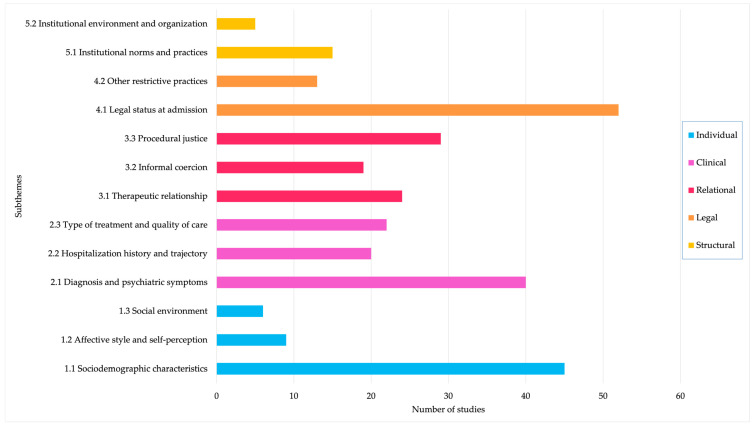
- Five factor categories were identified: individual, clinical, relational, legal, and structural. Relational and legal factors were most consistently associated with perceived coercion; individual and clinical factors showed inconsistent findings.
- Involuntary hospitalization was associated with higher perceived coercion in numerous studies, but many voluntary patients also reported feeling coerced; one study indicated more voluntary patients (89%) than involuntary patients (21%) perceived coercion.
- A stronger therapeutic alliance was consistently associated with lower perceived coercion, and procedural justice was inversely related to perceived coercion across numerous quantitative studies.
- Structural factors were underexamined but shaped experiences: locked wards were significantly associated with higher perceived coercion compared with open-door policy wards, and rigid rules/routines were consistently reported as restrictive.
Methods
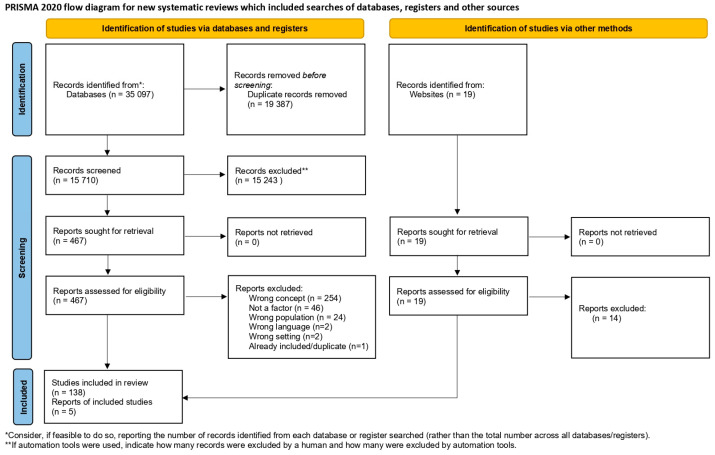
- Scoping review following Joanna Briggs Institute methodology and PRISMA-ScR, with a 10th consultation step involving a person with lived experience and a researcher specialized in psychiatry/perceived coercion.
- Systematic search of five databases (CINAHL, MEDLINE, PUBMED, EMBASE, PsychINFO) plus grey literature for publications from 1990 to 2025 in English and French; first search December 2022, updated January 2025.
- 143 sources included and thematically analyzed; data were coded inductively and grouped into individual, clinical, relational, legal, and structural categories. Quality assessment was not conducted.
Limitations
- Stated: the review did not assess methodological quality, so the authors cannot draw definitive conclusions about strength or consistency of findings; it was limited to English and French publications; the search strategy did not explicitly target coercive interactions involving non-healthcare actors such as police; and the wide 1990–2025 timespan includes different cultural and temporal contexts.
- Stated: most included studies were quantitative and relied heavily on standardized tools such as the MacArthur Admission Experience Survey or Coercion Ladder, which may offer limited understanding of psychiatric coercion.
- Evident from the text: the review identifies near-total absence of studies on sexual and gender diversity, very few studies on poverty or homelessness, and race/ethnicity approached predominantly quantitatively without intersectional analysis.
Model-written summary. Check it against the paper before relying on it.
Integrity signals
Registry
Cites
Statistics
Figures
Verification
Claims the paper makes
68 Valid · 4 Not valid · 77 Not checked · 53 Own results and interpretations
Some cited sources support this claim and some don’t — read each source’s verdict below.
In the paper
“However, some studies found no significant association between perceived coercion and legal status at admission [54,89,156]”
§ Factors Associated with Perceived Coercion in Adults Receiving Psychiatric Care: A Scoping Review > 3. Results > 3.2. Themes
What the sources say
- Not checked — no full text of the sourcecites [54] Ivar Iversen K. Høyer G. Sexton H. Grønli O.K. Perceived coercion among patients admitted to acute wards in Norway Nord. J. Psychiatry 2002 56 433 439 10.1080/08039480260389352 12495538 source
- Partly supportedcites [89] Katsakou C. Marougka S. Garabette J. Rost F. Yeeles K. Priebe S. Why do some voluntary patients feel coerced into hospitalisation? A mixed-methods study Psychiatry Res. 2011 187 275 282 10.1016/j.psychres.2011.01.001 21272940 sourceExperimental — accuracy not yet measured
The Introduction (p. 1) says legal status is only a crude proxy for experienced coercion, and the Results (p. 3) report that 34% of legally voluntary patients felt coerced at admission. But the study included only voluntary patients, so it did not test whether perceived coercion was significantly associated with legal status at admission. (LLM, conf=0.82)
- Disputedcites [156] Morandi S. Silva B. Pauli G. Martinez D. Bachelard M. Bonsack C. Golay P. How do decision making and fairness mediate the relationship between involuntary hospitalisation and perceived coercion among psychiatric inpatients? J. Psychiatr. Res. 2024 173 98 103 10.1016/j.jpsychires.2024.03.017 38518573 sourceExperimental — accuracy not yet measured
The Results (page unavailable) report a statistically significant association between involuntary hospitalisation and perceived coercion at admission (total effect B = 3.85, p < 0.001). The Discussion says the relationship was only partially mediated, not absent. The paper therefore does not support citing this study as one that found no significant association. (LLM, conf=0.88)
Checked by a reasoning model — may be wrong.
plain- Asserted: passes — The authors put it forward as true.
- Checkable: passes — It can be checked against evidence.
- Load-bearing: unclear — It is unclear whether the paper’s conclusions depend on it.
- Based: passes — The paper gives a reason why it holds.
The sources with a verdict support this claim; the rest weren’t checked yet, have no full text we could read, or their verdicts aren’t rated yet.
In the paper
“However, several studies found no significant association between race and perceived coercion [15,65,78,89,103,130,154].”
§ Factors Associated with Perceived Coercion in Adults Receiving Psychiatric Care: A Scoping Review > 3. Results > 3.2. Themes
What the sources say
- Not checked — no full text of the sourcecites [15] Sheehan K.A. Burns T. Sheehan K.A. Burns T. Perceived coercion and the therapeutic relationship: A neglected association? Psychiatr. Serv. 2011 62 471 476 10.1176/ps.62.5.pss6205_0471 21532071 source
- Not checked — no full text of the sourcecites [65] McKenna B.G. Simpson A.I. Coverdale J.H. Outpatient commitment and coercion in New Zealand: A matched comparison study Int. J. Law Psychiatry 2006 29 145 158 10.1016/j.ijlp.2004.07.004 16412508 source
- Supportedcites [78] Bennewith O. Amos T. Lewis G. Katsakou C. Wykes T. Morriss R. Priebe S. Ethnicity and coercion among involuntarily detained psychiatric in-patients Br. J. Psychiatry 2010 196 75 76 10.1192/bjp.bp.109.068890 20044667 source
The Discussion states that the study found no association between ethnicity and patients’ perceived coercion at admission or during the first four weeks. Table 1 reports nonsignificant adjusted associations for perceived coercion at admission (P = 0.67) and at four weeks (P = 0.30). This paper supports the claim as one of the cited studies. (LLM, conf=0.94)
plain- Asserted: passes — The authors put it forward as true.
- Checkable: passes — It can be checked against evidence.
- Load-bearing: unclear — It is unclear whether the paper’s conclusions depend on it.
- Based: passes — The paper gives a reason why it holds.
The cited sources support only part of this claim — read each source’s verdict below.
In the paper
“Being employed was associated with lower perceived coercion in three studies [116,117,137].”
§ Factors Associated with Perceived Coercion in Adults Receiving Psychiatric Care: A Scoping Review > 3. Results > 3.2. Themes
What the sources say
- Not checked — no full text of the sourcecites [116] Gowda G.S. Kumar C.N. Manjunatha N. Math S.B. Clinical correlates and predictors of perceived coercion among psychiatric inpatients: A prospective pilot study Asian J. Psychiatry 2016 24 134 139 10.1016/j.ajp.2016.04.004 27520892 source
- Not checked — no full text of the sourcecites [117] Gowda G.S. Kondapuram N. Kumar C.N. Math S.B. Involuntary admission and treatment experiences of persons with schizophrenia: Implication for the Mental Health Care Bill 2016 Asian J. Psychiatr 2017 29 3 7 10.1016/j.ajp.2017.04.006 29061422 source
- Partly supportedcites [137] O’Callaghan A.K. Plunkett R. Kelly B.D. The association between perceived coercion on admission and formal coercive practices in an inpatient psychiatric setting Int. J. Law Psychiatry 2021 75 101680 10.1016/j.ijlp.2021.101680 33609996 sourceExperimental — accuracy not yet measured
In Results §3.3 (page unavailable), employment had a negative association with the overall Admission Experience Survey score, but the paper describes it as borderline significant (p = 0.047). Employment was not significantly associated with the survey’s perceived-coercion subscale (Table 2). This supports a qualified association with the overall admission-experience measure, not the claim that employment was associated with lower perceived coercion in this study. (LLM, conf=0.88)
plainstates an association- Asserted: passes — The authors put it forward as true.
- Checkable: passes — It can be checked against evidence.
- Load-bearing: unclear — It is unclear whether the paper’s conclusions depend on it.
- Based: passes — The paper gives a reason why it holds.
The sources with a verdict support this claim; the rest weren’t checked yet, have no full text we could read, or their verdicts aren’t rated yet.
In the paper
“Moreover, no association was found between migration background and perceived coercion [139,160].”
§ Factors Associated with Perceived Coercion in Adults Receiving Psychiatric Care: A Scoping Review > 3. Results > 3.2. Themes
What the sources say
- Supportedcites [139] Hirsch S. Thilo N. Steinert T. Flammer E. Patients’ perception of coercion with respect to antipsychotic treatment of psychotic disorders and its predictors Soc. Psychiatry Psychiatr. Epidemiol. 2021 56 1381 1388 10.1007/s00127-021-02083-z 33904940 PMC8316198 source
The Results explicitly state that migration background showed no statistically significant association with perceived coercion (aAES). This supports the claim as a report of the study’s finding, not as proof that no association exists in all populations. (LLM, conf=0.94)
- Not checked — no full text of the sourcecites [160] Aluh D.O. Diaz-Milanes D. Azeredo-Lopes S. Barbosa S. Santos-Dias M. Silva M. Grigaitė U. Pedrosa B. Velosa A. Cardoso G. Coercion in Psychiatry: Exploring the Subjective Experience of Coercion Among Patients in Five Portuguese Psychiatric Departments J. Behav. Health Serv. Res. 2025 52 505 524 10.1007/s11414-024-09890-7 38987414 source
plain- Asserted: passes — The authors put it forward as true.
- Checkable: passes — It can be checked against evidence.
- Load-bearing: unclear — It is unclear whether the paper’s conclusions depend on it.
- Based: passes — The paper gives a reason why it holds.
- Supported
The sources with a verdict support this claim; the rest weren’t checked yet, have no full text we could read, or their verdicts aren’t rated yet.
In the paper
“Numerous studies have shown that involuntary hospitalization is associated with higher perceived coercion [10,13,14,15,35,37,38,42,44,45,48,59,64,72,94,96,120,129,131,137,139,151,155,160].”
§ Factors Associated with Perceived Coercion in Adults Receiving Psychiatric Care: A Scoping Review > 3. Results > 3.2. Themes
What the sources say
- Supportedcites [10] O’Donoghue B. Roche E. Lyne J. Madigan K. Feeney L. Service users’ perspective of their admission: A report of study findings Ir. J. Psychol. Med. 2017 34 251 260 10.1017/ipm.2016.13 30115179 source
The ‘Perceptions of admission and coercion’ section (page not supplied) reports that involuntarily admitted service users had higher perceived coercion than voluntarily admitted service users. This supports the association for which this paper is cited; the sentence’s multiple citations collectively address the ‘numerous studies’ framing. (LLM, conf=0.92)
- Supportedcites [13] Sampogna G. Luciano M. Del Vecchio V. Pocai B. Palummo C. Fico G. Giallonardo V. De Rosa C. Fiorillo A. Perceived Coercion Among Patients Admitted in Psychiatric Wards: Italian Results of the EUNOMIA Study Front. Psychiatry 2019 10 316 10.3389/fpsyt.2019.00316 31164841 PMC6536685 source
The Introduction explicitly says that several studies found higher perceived coercion among involuntarily admitted patients than among voluntarily admitted patients. The Discussion also reports the same association in this paper’s own study, while noting that perceived coercion is only partly related to formal admission status. (LLM, conf=0.94)
- Not checked — no full text of the sourcecites [14] Theodoridou A. Schlatter F. Ajdacic V. Rössler W. Jäger M. Therapeutic relationship in the context of perceived coercion in a psychiatric population Psychiatry Res. 2012 200 939 944 10.1016/j.psychres.2012.04.012 22575342 source
- Not checked — no full text of the sourcecites [15] Sheehan K.A. Burns T. Sheehan K.A. Burns T. Perceived coercion and the therapeutic relationship: A neglected association? Psychiatr. Serv. 2011 62 471 476 10.1176/ps.62.5.pss6205_0471 21532071 source
- Not checked — no full text of the sourcecites [35] Nicholson R.A. Ekenstam C. Norwood S. Coercion and the outcome of psychiatric hospitalization Int. J. Law Psychiatry 1996 19 201 217 10.1016/0160-2527(96)00005-2 8725657 source
- Not checked — no full text of the sourcecites [37] Hoge S.K. Lidz C.W. Eisenberg M. Gardner W. Monahan J. Mulvey E. Roth L. Bennett N. Perceptions of coercion in the admission of voluntary and involuntary psychiatric patients Int. J. Law Psychiatry 1997 20 167 181 10.1016/S0160-2527(97)00001-0 9178060 source
- Not checked — no full text of the sourcecites [38] Cascardi M. Poythress N.G. Correlates of perceived coercion during psychiatric hospital admission Int. J. Law Psychiatry 1997 20 445 458 10.1016/S0160-2527(97)00014-9 9436054 source
- Not checked — no full text of the sourcecites [42] Hoge S.K. Lidz C.W. Eisenberg M. Monahan J. Bennett N. Gardner W. Mulvey E.P. Roth L. Family, clinician, and patient perceptions of coercion in mental hospital admission. A comparative study Int. J. Law Psychiatry 1998 21 131 146 10.1016/S0160-2527(98)00002-8 9612714 source
- Not checked — no full text of the sourcecites [44] Poulsen H.D. Perceived coercion among committed, detained, and voluntary patients Int. J. Law Psychiatry 1999 22 167 175 10.1016/S0160-2527(98)00042-9 10224555 source
- Not checked — no full text of the sourcecites [45] McKenna B.G. Simpson A.I. Laidlaw T.M. Patient perception of coercion on admission to acute psychiatric services. The New Zealand experience Int. J. Law Psychiatry 1999 22 143 153 10.1016/S0160-2527(98)00039-9 10224553 source
boostedstates an association- Asserted: passes — The authors put it forward as true.
- Checkable: passes — It can be checked against evidence.
- Load-bearing: passes — The paper’s conclusions depend on it.
- Based: passes — The paper gives a reason why it holds.
- Supported
133 more claims · 43 with their cited sources checked
Create a free account to see all 202 claims and to verify the 19 references still open.
- It may state two separate claims as one. 45
- Probably not a substantial claim. 28
Self-check
Percentages, sums and reported differences re-computed from the paper’s own numbers.
Each contradiction between two passages listed here was confirmed by an independent check.
Rated minor: it would not touch a result — a value no result rests on, a p-value that stays on the same side of the significance level, or a conflict that is clerical, resolved elsewhere in the paper, or outside its own findings.
In the paper
§ Factors Associated with Perceived Coercion in Adults Receiving Psychiatric Care: A Scoping Review > 3. Results > 3.1. Characteristics of Included Literature
“McKenna et al. (2006) [65] | The aim of this study is to determine the level of coercion perceived by those under outpatient commitment in New Zealand.”
§ Factors Associated with Perceived Coercion in Adults Receiving Psychiatric Care: A Scoping Review > 3. Results > 3.1. Characteristics of Included Literature
“McKenna et al. (2006) [65] | This thorough literature search on “coercion” and “civil commitment” aimed to outline best practice management strategies for nurses during the clinical application of civil commitment of mentally ill persons.”
Citations
Cites
PRISMA Extension for Scoping Reviews (PRISMA-ScR): Checklist and Explanation
Tricco, A. C., Lillie, E., Zarin, W., O'Brien, K. K., Colquhoun, H., Levac, D., Moher, D., Peters, M. D. J., Horsley, T., Weeks, L., et al. (2018) · Annals of Internal Medicine · doi:10.7326/m18-0850 · Cited by 43,565
Scoping studies: towards a methodological framework
Arksey, H., & O'Malley, L. (2005) · International Journal of Social Research Methodology · doi:10.1080/1364557032000119616 · Cited by 36,742
Scoping studies: advancing the methodology
Levac, D., Colquhoun, H., & O'Brien, K. K. (2010) · Implementation Science · doi:10.1186/1748-5908-5-69 · Cited by 15,268
Pescosolido, B. A., Gardner, C. B., & Lubell, K. M. (1998) · Social Science & Medicine · doi:10.1016/s0277-9536(97)00160-3 · Cited by 494
Racism in healthcare: a scoping review
Hamed, S., Bradby, H., Ahlberg, B. M., & Thapar-Björkert, S. (2022) · BMC Public Health · doi:10.1186/s12889-022-13122-y · Cited by 444
Bias in Mental Health Assessment and Intervention: Theory and Evidence
Snowden, L. R. (2003) · American Journal of Public Health · doi:10.2105/ajph.93.2.239 · Cited by 369
Racial and Ethnic Disparities in Mental Health and Mental Health Care During The COVID-19 Pandemic
Thomeer, M. B., Moody, M. D., & Yahirun, J. (2023) · Journal of Racial and Ethnic Health Disparities · doi:10.1007/s40615-022-01284-9 · Cited by 348
Effects of Seclusion and Restraint in Adult Psychiatry: A Systematic Review
Chieze, M., Hurst, S., Kaiser, S., & Sentissi, O. (2019) · Frontiers in Psychiatry · doi:10.3389/fpsyt.2019.00491 · Cited by 346
Two scales for measuring patients’ perceptions for coercion during mental hospital admission
Gardner, W., Hoge, S. K., Bennett, N., Roth, L. H., Lidz, C. W., Monahan, J., & Mulvey, E. P. (1993) · Behavioral Sciences & the Law · doi:10.1002/bsl.2370110308 · Cited by 342
Aromataris, E., & Munn, Z. (2019) · JBI Reviewer's Manual · doi:10.46658/jbirm-17-01 · Cited by 341
Compulsory community and involuntary outpatient treatment for people with severe mental disorders
Kisely, S. R., & Campbell, L. A. (2014) · Cochrane Database of Systematic Reviews · doi:10.1002/14651858.cd004408.pub4 · Cited by 321
Treatment pressures, leverage, coercion, and compulsion in mental health care
Szmukler, G., & Appelbaum, P. S. (2008) · Journal of Mental Health · doi:10.1080/09638230802052203 · Cited by 304
Perceived Coercion in Mental Hospital Admission: Pressures and Process
Lidz, C. W. (1995) · Archives of General Psychiatry · doi:10.1001/archpsyc.1995.03950240052010 · Cited by 273
Hartley, S., Raphael, J., Lovell, K., & Berry, K. (2020) · International Journal of Nursing Studies · doi:10.1016/j.ijnurstu.2019.103490 · Cited by 245
Stigma and coercion in the context of outpatient treatment for people with mental illnesses
Link, B., Castille, D. M., & Stuber, J. (2008) · Social Science & Medicine · doi:10.1016/j.socscimed.2008.03.015 · Cited by 233
The severity of psychiatric disorders
Zimmerman, M., Morgan, T. A., & Stanton, K. (2018) · World Psychiatry · doi:10.1002/wps.20569 · Cited by 227
The alliance in mental health care: conceptualization, evidence and clinical applications
Wampold, B. E., & Flückiger, C. (2023) · World Psychiatry · doi:10.1002/wps.21035 · Cited by 213
Akther, S. F., Molyneaux, E., Stuart, R., Johnson, S., Simpson, A., & Oram, S. (2019) · BJPsych Open · doi:10.1192/bjo.2019.19 · Cited by 193
Ethical challenges when using coercion in mental healthcare: A systematic literature review
Hem, M. H., Gjerberg, E., Husum, T. L., & Pedersen, R. (2018) · Nursing Ethics · doi:10.1177/0969733016629770 · Cited by 171
Olofsson, B., & Jacobsson, L. (2001) · Journal of Psychiatric and Mental Health Nursing · doi:10.1046/j.1365-2850.2001.00404.x · Cited by 165
Therapeutic relationships in psychiatry: The basis of therapy or therapy in itself?
Priebe, S., & Mccabe, R. (2008) · International Review of Psychiatry · doi:10.1080/09540260802565257 · Cited by 164
Gooding, P., McSherry, B., & Roper, C. (2020) · Acta Psychiatrica Scandinavica · doi:10.1111/acps.13152 · Cited by 157
Inclusion, motivation, and good faith: The morality of coercion in mental hospital admission
Bennett, N. S., Lidz, C. W., Monahan, J., Mulvey, E. P., Hoge, S. K., Roth, L. H., & Gardner, W. (1993) · Behavioral Sciences & the Law · doi:10.1002/bsl.2370110307 · Cited by 152
Perceived Coercion and the Therapeutic Relationship: A Neglected Association?
Sheehan, K. A., & Burns, T. (2011) · Psychiatric Services · doi:10.1176/ps.62.5.pss6205_0471 · Cited by 148
Compulsion and “coercion” in mental health care
Szmukler, G. (2015) · World Psychiatry · doi:10.1002/wps.20264 · Cited by 147
Therapeutic relationship in the context of perceived coercion in a psychiatric population
Theodoridou, A., Schlatter, F., Ajdacic, V., Rössler, W., & Jäger, M. (2012) · Psychiatry Research · doi:10.1016/j.psychres.2012.04.012 · Cited by 147
A Phenomenological Account of Users’ Experiences of Assertive Community Treatment
Watts, J., & Priebe, S. (2002) · Bioethics · doi:10.1111/1467-8519.00301 · Cited by 147
Homelessness, housing instability and mental health: making the connections
Padgett, D. K. (2020) · BJPsych Bulletin · doi:10.1192/bjb.2020.49 · Cited by 143
Perceptions of coercion in the admission of voluntary and involuntary psychiatric patients
Hoge, S. K., Lidz, C. W., Eisenberg, M., Gardner, W., Monahan, J., Mulvey, E., Roth, L., & Bennett, N. (1997) · International Journal of Law and Psychiatry · doi:10.1016/s0160-2527(97)00001-0 · Cited by 142
Bindman, J., Reid, Y., Szmukler, G., Tiller, J., Thornicroft, G., & Leese, M. (2005) · Social Psychiatry and Psychiatric Epidemiology · doi:10.1007/s00127-005-0861-x · Cited by 137
Patients’ Revisions of Their Beliefs About the Need for Hospitalization
Gardner, W., Lidz, C. W., Hoge, S. K., Monahan, J., Eisenberg, M. M., Bennett, N. S., Mulvey, E. P., & Roth, L. H. (1999) · American Journal of Psychiatry · doi:10.1176/ajp.156.9.1385 · Cited by 128
Katsakou, C., & Priebe, S. (2007) · Epidemiologia e Psichiatria Sociale · doi:10.1017/s1121189x00004802 · Cited by 123
Compulsory community and involuntary outpatient treatment for people with severe mental disorders.
Kisely, S. R., Campbell, L. A., & O'Reilly, R. (2017) · Cochrane Database of Systematic Reviews · doi:10.1002/14651858.cd004408.pub5 · Cited by 123
Coercive Measures in Psychiatry: A Review of Ethical Arguments
Chieze, M., Clavien, C., Kaiser, S., & Hurst, S. (2021) · Frontiers in Psychiatry · doi:10.3389/fpsyt.2021.790886 · Cited by 122
Patient perceptions of coercion in mental hospital admission
Hiday, V. A., Swartz, M. S., Swanson, J., & Wagner, H. R. (1997) · International Journal of Law and Psychiatry · doi:10.1016/s0160-2527(97)00004-6 · Cited by 120
Patients’ experience of involuntary psychiatric care: Good opportunities and great losses
JOHANSSON, I. M., & LUNDMAN, B. (2002) · Journal of Psychiatric and Mental Health Nursing · doi:10.1046/j.1365-2850.2002.00547.x · Cited by 114
Coercion in psychiatric care: Systematic review of correlates and themes
Newton-Howes, G., & Mullen, R. (2011) · Psychiatric Services · doi:10.1176/ps.62.5.pss6205_0465 · Cited by 114
Kjellin (2002) · doi:10.1016/s0160-2527(01)00108-x · Cited by 110
Swanson, J. W., Swartz, M. S., Elbogen, E. B., Wagner, H. R., & Burns, B. J. (2003) · Behavioral Sciences & the Law · doi:10.1002/bsl.548 · Cited by 107
Factual sources of psychiatric patients’ perceptions of coercion in the hospital admission process
Lidz, C. W., Mulvey, E. P., Hoge, S. K., Kirsch, B. L., Monahan, J., Eisenberg, M., Gardner, W., & Roth, L. H. (1998) · American Journal of Psychiatry · doi:10.1176/ajp.155.9.1254 · Cited by 106
Information, consent and perceived coercion: patients' perspectives on electroconvulsive therapy
Rose, D. S., Wykes, T. H., Bindman, J. P., & Fleischmann, P. S. (2005) · British Journal of Psychiatry · doi:10.1192/bjp.186.1.54 · Cited by 102
Clinical Relevance of Informal Coercion in Psychiatric Treatment—A Systematic Review
Hotzy, F., & Jaeger, M. (2016) · Frontiers in Psychiatry · doi:10.3389/fpsyt.2016.00197 · Cited by 102
Perceived coercion among patients admitted to acute wards in Norway
Iversen, K. I., Høyer, G., Sexton, H., & Grønli, O. K. (2002) · Nordic Journal of Psychiatry · doi:10.1080/08039480260389352 · Cited by 101
Pelto-Piri, V., Engström, K., & Engström, I. (2013) · BMC Medical Ethics · doi:10.1186/1472-6939-14-49 · Cited by 94
Perceived coercion in voluntary hospital admission
O'Donoghue, B., Roche, E., Shannon, S., Lyne, J., Madigan, K., & Feeney, L. (2014) · Psychiatry Research · doi:10.1016/j.psychres.2013.10.016 · Cited by 89
Calcedo-Barba, A., Fructuoso, A., Martinez-Raga, J., Paz, S., Sánchez de Carmona, M., & Vicens, E. (2020) · BMC Psychiatry · doi:10.1186/s12888-020-02756-0 · Cited by 89
Norvoll, R., & Pedersen, R. (2016) · Social Science & Medicine · doi:10.1016/j.socscimed.2016.03.033 · Cited by 87
Experiences of restrictiveness in forensic psychiatric care: Systematic review and concept analysis
Tomlin, J., Βartlett, P., & Vӧllm, B. (2018) · International Journal of Law and Psychiatry · doi:10.1016/j.ijlp.2017.12.006 · Cited by 87
Effectiveness and outcomes of assisted outpatient treatment in New York State
Phelan, J. C., Sinkewicz, M., Castille, D. M., Huz, S., & Link, B. G. (2010) · Psychiatric Services · doi:10.1176/ps.2010.61.2.137 · Cited by 84
Why do some voluntary patients feel coerced into hospitalisation? A mixed-methods study
Katsakou, C., Marougka, S., Garabette, J., Rost, F., Yeeles, K., & Priebe, S. (2011) · Psychiatry Research · doi:10.1016/j.psychres.2011.01.001 · Cited by 84
Coercion in a locked psychiatric ward: Perspectives of patients and staff
Larsen, I. B., & Terkelsen, T. B. (2014) · Nursing Ethics · doi:10.1177/0969733013503601 · Cited by 84
Coercion and ‘voluntary’ admission: An examination of psychiatric patient views
Rogers, A. (1993) · Behavioral Sciences & the Law · doi:10.1002/bsl.2370110304 · Cited by 83
Jaeger, M., & Rossler, W. (2010) · Psychiatry Research · doi:10.1016/j.psychres.2009.09.011 · Cited by 77
Coercion and the outcome of psychiatric hospitalization
Nicholson, R. A., Ekenstam, C., & Norwood, S. (1996) · International Journal of Law and Psychiatry · doi:10.1016/0160-2527(96)00005-2 · Cited by 77
Patient characteristics and symptoms associated with perceived coercion during hospital treatment
Fiorillo, A., Giacco, D., De Rosa, C., Kallert, T., Katsakou, C., Onchev, G., Raboch, J., Mastrogianni, A., Del Vecchio, V., Luciano, M., et al. (2012) · Acta Psychiatrica Scandinavica · doi:10.1111/j.1600-0447.2011.01809.x · Cited by 76
Aguilera-Serrano, C., Guzman-Parra, J., Garcia-Sanchez, J. A., Moreno-Küstner, B., & Mayoral-Cleries, F. (2018) · The Canadian Journal of Psychiatry · doi:10.1177/0706743717738491 · Cited by 73
Ethnicity and coercion among involuntarily detained psychiatric in-patients
Bennewith, O., Amos, T., Lewis, G., Katsakou, C., Wykes, T., Morriss, R., & Priebe, S. (2010) · British Journal of Psychiatry · doi:10.1192/bjp.bp.109.068890 · Cited by 71
Lebenbaum, M., Chiu, M., Vigod, S., & Kurdyak, P. (2018) · BJPsych Open · doi:10.1192/bjo.2017.4 · Cited by 70
Jordan, J. T., & McNiel, D. E. (2020) · Suicide and Life-Threatening Behavior · doi:10.1111/sltb.12560 · Cited by 66
Jaeger, S., Pfiffner, C., Weiser, P., Längle, G., Croissant, D., Schepp, W., Kilian, R., Becker, T., Eschweiler, G., & Steinert, T. (2013) · Social Psychiatry and Psychiatric Epidemiology · doi:10.1007/s00127-013-0687-x · Cited by 63
Hem, M. H., Molewijk, B., & Pedersen, R. (2014) · BMC Medical Ethics · doi:10.1186/1472-6939-15-82 · Cited by 59
Guzmán‐Parra, J., Aguilera‐Serrano, C., García‐Sanchez, J. A., García‐Spínola, E., Torres‐Campos, D., Villagrán, J. M., Moreno‐Küstner, B., & Mayoral‐Cleries, F. (2019) · International Journal of Mental Health Nursing · doi:10.1111/inm.12546 · Cited by 59
Perceived coercion and need for hospitalization related to psychiatric admission
Bonsack, C., & Borgeat, F. (2005) · International Journal of Law and Psychiatry · doi:10.1016/j.ijlp.2005.03.008 · Cited by 58
Larkin, A., & Hutton, P. (2017) · British Journal of Psychiatry · doi:10.1192/bjp.bp.116.193458 · Cited by 58
Coercion in psychiatric care: what have we learned from research?
Lidz, C. W. (1998) · PubMed · Cited by 57
Patients’ perception of coercion in acute psychiatric wards. An intervention study
Sørgaard, K. W. (2004) · Nordic Journal of Psychiatry · doi:10.1080/08039480410005819 · Cited by 56
Elbogen, E. B., Swanson, J. W., & Swartz, M. S. (2003) · Journal of Nervous & Mental Disease · doi:10.1097/01.nmd.0000092195.22555.12 · Cited by 56
Family, Clinician, and Patient Perceptions of Coercion in Mental Hospital Admission
Hoge, S. K., Lidz, C. W., Eisenberg, M., Monahan, J., Bennett, N., Gardner, W., Mulvey, E. P., & Roth, L. (1998) · International Journal of Law and Psychiatry · doi:10.1016/s0160-2527(98)00002-8 · Cited by 54
An analysis of procedural justice during psychiatric hospital admission
McKenna, B. G., Simpson, A. I. F., Coverdale, J. H., & Laidlaw, T. M. (2001) · International Journal of Law and Psychiatry · doi:10.1016/s0160-2527(00)00069-8 · Cited by 53
Pridham, K. M. F., Berntson, A., Simpson, A. I. F., Law, S. F., Stergiopoulos, V., & Nakhost, A. (2016) · Psychiatric Services · doi:10.1176/appi.ps.201400538 · Cited by 52
Galon, P. A., & WINEMAN, N. M. (2010) · Archives of Psychiatric Nursing · doi:10.1016/j.apnu.2009.12.005 · Cited by 51
Patient Perception of Coercion on Admission to Acute Psychiatric Services
McKenna, B. G., Simpson, A. I. F., & Laidlaw, T. M. (1999) · International Journal of Law and Psychiatry · doi:10.1016/s0160-2527(98)00039-9 · Cited by 50
Gowda, G. S., Lepping, P., Noorthoorn, E. O., Ali, S. F., Kumar, C. N., Raveesh, B. N., & Math, S. B. (2018) · Asian Journal of Psychiatry · doi:10.1016/j.ajp.2018.05.024 · Cited by 50
Psychiatric patients' perception of physical restraint
Fugger, G., Gleiss, A., Baldinger, P., Strnad, A., Kasper, S., & Frey, R. (2016) · Acta Psychiatrica Scandinavica · doi:10.1111/acps.12501 · Cited by 48
Are depot antipsychotics more coercive than tablets?: The patient’s perspective
Patel, M., de Zoysa, N., Bernadt, M., Bindman, J., & David, A. (2010) · Journal of Psychopharmacology · doi:10.1177/0269881109103133 · Cited by 47
Munetz, M. R., Ritter, C., Teller, J. L. S., & Bonfine, N. (2014) · Psychiatric Services · doi:10.1176/appi.ps.002642012 · Cited by 47
Riley, H., Høyer, G., & Lorem, G. F. (2014) · Health & Social Care in the Community · doi:10.1111/hsc.12107 · Cited by 46
Howard, L., Flach, C., Leese, M., Byford, S., Killaspy, H., Cole, L., Lawlor, C., Betts, J., Sharac, J., Cutting, P., et al. (2010) · British Journal of Psychiatry · doi:10.1192/bjp.bp.110.081083 · Cited by 46
Rungruangsiripan, M., Sitthimongkol, Y., Maneesriwongul, W., Talley, S., & Vorapongsathorn, T. (2010) · Archives of Psychiatric Nursing · doi:10.1016/j.apnu.2010.09.002 · Cited by 45
Lived experience of involuntary transport under mental health legislation
Bradbury, J., Hutchinson, M., Hurley, J., & Stasa, H. (2017) · International Journal of Mental Health Nursing · doi:10.1111/inm.12284 · Cited by 45
Differences in perceived coercion at admission to psychiatric hospitals in the Nordic countries
Kjellin, L., Høyer, G., Engberg, M., Kaltiala-Heino, R., & Sigurjónsdóttir, M. (2006) · Social Psychiatry and Psychiatric Epidemiology · doi:10.1007/s00127-005-0024-0 · Cited by 44
Canvin, K., Bartlett, A., & Pinfold, V. (2002) · Health & Social Care in the Community · doi:10.1046/j.1365-2524.2002.00375.x · Cited by 44
Lu, J. A., Soltani, S., Austin, S. B., Rehkopf, D. H., Lunn, M. R., & Langston, M. E. (2025) · JAMA Network Open · doi:10.1001/jamanetworkopen.2024.56264 · Cited by 44
Outpatient commitment and coercion in New Zealand: A matched comparison study
McKenna, B. G., Simpson, A. I. F., & Coverdale, J. H. (2006) · International Journal of Law and Psychiatry · doi:10.1016/j.ijlp.2004.07.004 · Cited by 43
Coercion in Community Mental Health Care
(2016) · Oxford Medicine Online · doi:10.1093/med/9780198788065.001.0001 · Cited by 43
Racial and Ethnic Inequities in Inpatient Psychiatric Civil Commitment
Shea, T., Dotson, S., Tyree, G., Ogbu-Nwobodo, L., Beck, S., & Shtasel, D. (2022) · Psychiatric Services · doi:10.1176/appi.ps.202100342 · Cited by 43
Sørgaard, K. W. (2007) · Scandinavian Journal of Caring Sciences · doi:10.1111/j.1471-6712.2007.00458.x · Cited by 42
Use of Leverage Over Patients’ Money to Promote Adherence to Psychiatric Treatment
Appelbaum, P. S., & Redlich, A. (2006) · Journal of Nervous & Mental Disease · doi:10.1097/01.nmd.0000207368.14133.0c · Cited by 42
Sampogna, G., Luciano, M., Del Vecchio, V., Pocai, B., Palummo, C., Fico, G., Giallonardo, V., De Rosa, C., & Fiorillo, A. (2019) · Frontiers in Psychiatry · doi:10.3389/fpsyt.2019.00316 · Cited by 42
Silva, B., Bachelard, M., Amoussou, J. R., Martinez, D., Bonalumi, C., Bonsack, C., Golay, P., & Morandi, S. (2023) · Heliyon · doi:10.1016/j.heliyon.2023.e13420 · Cited by 42
Self-citationPotential for epistemic injustice in evidence-based healthcare policy and guidance
Michaels, J. A. (2021) · Journal of Medical Ethics · doi:10.1136/medethics-2020-106171 · Cited by 41
Knight, S., Jarvis, G. E., Ryder, A. G., Lashley, M., & Rousseau, C. (2022) · Psychiatric Services · doi:10.1176/appi.ps.202000715 · Cited by 41
Perceived coercion among committed, detained, and voluntary patients
Poulsen, H. D. (1999) · International Journal of Law and Psychiatry · doi:10.1016/s0160-2527(98)00042-9 · Cited by 40
Davidson, G., & Campbell, J. (2007) · British Journal of Social Work · doi:10.1093/bjsw/bcm017 · Cited by 39
Correlates of perceived coercion during psychiatric hospital admission
Cascardi, M., & Poythress, N. G. (1997) · International Journal of Law and Psychiatry · doi:10.1016/s0160-2527(97)00014-9 · Cited by 39
Newton-Howes, G., & Stanley, J. (2012) · The Psychiatrist · doi:10.1192/pb.bp.111.037358 · Cited by 38
Involuntary admission in Norwegian adult psychiatric hospitals: a systematic review
Wynn, R. (2018) · International Journal of Mental Health Systems · doi:10.1186/s13033-018-0189-z · Cited by 38
Stanhope, V., Marcus, S., & Solomon, P. (2009) · Psychiatric Services · doi:10.1176/ps.2009.60.2.183 · Cited by 36
Use of Outpatient Commitment or Related Civil Court Treatment Orders in Five U.S. Communities
Swartz, M. S., Swanson, J. W., Kim, M., & Petrila, J. (2006) · Psychiatric Services · doi:10.1176/appi.ps.57.3.343 · Cited by 36
Sources of coercive behaviours in psychiatric admissions
Lidz, C. W., Mulvey, E. P., Hoge, S. K., Kirsch, B. L., Monahan, J., Bennett, N. S., Eisenberg, M., Gardner, W., & Roth, L. H. (2000) · Acta Psychiatrica Scandinavica · doi:10.1034/j.1600-0447.2000.101001073.x · Cited by 36
Hotzy, F., Mötteli, S., Theodoridou, A., Schneeberger, A. R., Seifritz, E., Hoff, P., & Jäger, M. (2018) · Swiss Medical Weekly · doi:10.4414/smw.2018.14616 · Cited by 35
A Public Health Perspective of Women’s Mental Health
(2010) · doi:10.1007/978-1-4419-1526-9 · Cited by 34
Golay, P., Morandi, S., Silva, B., Devas, C., & Bonsack, C. (2019) · International Journal of Law and Psychiatry · doi:10.1016/j.ijlp.2019.101512 · Cited by 34
Self-citationPatients’ perceptions of coercion on admission to forensic psychiatric hospital: A comparison study
McKenna, B. G., Simpson, A. I. F., & Coverdale, J. H. (2003) · International Journal of Law and Psychiatry · doi:10.1016/s0160-2527(03)00046-3 · Cited by 32
Gowda, G. S., Noorthoorn, E. O., Kumar, C. N., Nanjegowda, R. B., & Math, S. B. (2016) · Asian Journal of Psychiatry · doi:10.1016/j.ajp.2016.04.004 · Cited by 32
The meaning of care on a locked acute psychiatric ward: Patients’ experiences
Johansson, I. M., Skärsäter, I., & Danielson, E. (2009) · Nordic Journal of Psychiatry · doi:10.3109/08039480903118208 · Cited by 28
Allison, R., & Flemming, K. (2019) · Journal of Advanced Nursing · doi:10.1111/jan.14035 · Cited by 28
Perception of coercion in psychiatric and nonpsychiatric (medical and surgical) inpatients
Taborda, J., Baptista, J. P., Gomes, D. A. R., Nogueira, L., & Chaves, M. L. F. (2004) · International Journal of Law and Psychiatry · doi:10.1016/j.ijlp.2004.01.008 · Cited by 25
Daffern, M., Tonkin, M., Howells, K., Krishnan, G., Ijomah, G., & Milton, J. (2010) · Journal of Forensic Psychiatry & Psychology · doi:10.1080/14789940903505951 · Cited by 25
Consumer experience with payeeship provided by a community mental health center
Rosen, M. I., Desai, R., Bailey, M., Davidson, L., & Rosenheck, R. (2001) · Psychiatric Rehabilitation Journal · doi:10.1037/h0095025 · Cited by 25
Opsal, A., Kristensen, Ø., Vederhus, J. K., & Clausen, T. (2016) · BMC Health Services Research · doi:10.1186/s12913-016-1906-4 · Cited by 25
Gowda, G. S., Lepping, P., Ray, S., Noorthoorn, E. O., Nanjegowda, R. B., Kumar, C. N., & Math, S. B. (2019) · Indian Journal of Psychiatry · doi:10.4103/psychiatry.indianjpsychiatry_336_18 · Cited by 25
Lessard‐Deschênes, C., Pariseau‐Legault, P., & Goulet, M. (2024) · Aporia · doi:10.18192/aporia.v16i1.6947 · Cited by 25
Self-citationLessard‐Deschênes, C., & Goulet, M. (2022) · Journal of Psychiatric and Mental Health Nursing · doi:10.1111/jpm.12800 · Cited by 24
Self-citationTully, S. M., Bucci, S., & Berry, K. (2023) · Journal of Psychiatric and Mental Health Nursing · doi:10.1111/jpm.12855 · Cited by 24
Jina-Pettersen, N. (2022) · Journal of Patient Experience · doi:10.1177/23743735221079138 · Cited by 24
Clark, K. D., Jewell, J., Sherman, A. D. F., Balthazar, M. S., Murray, S. B., & Bosse, J. D. (2025) · International Journal of Mental Health Nursing · doi:10.1111/inm.13455 · Cited by 24
Coercion in psychiatric care: Can paternalism justify coercion?
Seo, M. K., Kim, S. H., & Rhee, M. (2013) · International Journal of Social Psychiatry · doi:10.1177/0020764011431543 · Cited by 23
Thøgersen, M. H., Morthorst, B., & Nordentoft, M. (2010) · Psychiatric Quarterly · doi:10.1007/s11126-009-9115-5 · Cited by 22
Horvath, J., Steinert, T., & Jaeger, S. (2018) · International Journal of Law and Psychiatry · doi:10.1016/j.ijlp.2018.02.004 · Cited by 22
Silva, B., Bachelard, M., Bonsack, C., Golay, P., & Morandi, S. (2023) · Psychiatric Quarterly · doi:10.1007/s11126-023-10039-6 · Cited by 22
Indregard, A.-M. R., Nussle, H. M., Hagen, M., Vandvik, P. O., Tesli, M., Gather, J., & Kunøe, N. (2024) · The Lancet Psychiatry · doi:10.1016/s2215-0366(24)00039-7 · Cited by 22
Resisting Variables – Service User/Survivor Perspectives on Researching Coercion
Russo, J., & Wallcraft, J. (2011) · Coercive Treatment in Psychiatry · doi:10.1002/9780470978573.ch13 · Cited by 21
Prebble, K., Thom, K., & Hudson, E. (2015) · Psychiatry, Psychology and Law · doi:10.1080/13218719.2014.959156 · Cited by 21
Self-citationVan Dorn, R., Swartz, M., Elbogen, E., & Swanson, J. (2005) · International Journal of Forensic Mental Health · doi:10.1080/14999013.2005.10471218 · Cited by 21
Leverage, the Treatment Relationship, and Treatment Participation
McNiel, D. E., Gormley, B., & Binder, R. L. (2013) · Psychiatric Services · doi:10.1176/appi.ps.201200368 · Cited by 21
Sex and Gender in Psychiatry: A View from History
Hirshbein, L. (2010) · Journal of Medical Humanities · doi:10.1007/s10912-010-9105-5 · Cited by 21
Latimer, E., Farmer, O., Crocker, A. G., & Jenkins, T. (2010) · Canadian Journal of Community Mental Health · doi:10.7870/cjcmh-2010-0004 · Cited by 21
Anestis, A., Daffern, M., Thomas, S. D. M., Podubinski, T., Hollander, Y., Lee, S., Foley, F., de Castella, A., & Kulkarni, J. (2013) · Psychiatry Psychology and Law · doi:10.1080/13218719.2012.712833 · Cited by 20
Conceptions of decision-making capacity in psychiatry: interviews with Swedish psychiatrists
Sjöstrand, M., Karlsson, P., Sandman, L., Helgesson, G., Eriksson, S., & Juth, N. (2015) · BMC Medical Ethics · doi:10.1186/s12910-015-0026-8 · Cited by 20
The recovery of factors associated with decision-making capacity in individuals with psychosis
Fernandez, C., Kennedy, H. G., & Kennedy, M. (2017) · BJPsych Open · doi:10.1192/bjpo.bp.116.004226 · Cited by 19
Coercion in Outpatients under Community Treatment Orders: A Matched Comparison Study
Nakhost, A., Sirotich, F., Pridham, K. M. F., Stergiopoulos, V., & Simpson, A. I. F. (2018) · The Canadian Journal of Psychiatry · doi:10.1177/0706743718766053 · Cited by 19
Therapeutic Relationships and Safety of Care in Iranian Psychiatric Inpatient Units
Vahidi, M., Ebrahimi, H., Areshtanab, H. N., Jafarabadi, M. A., Lees, D., Foong, A. L. S., & Cleary, M. L. (2018) · Issues in Mental Health Nursing · doi:10.1080/01612840.2018.1485795 · Cited by 18
Scholes, A., Price, O., & Berry, K. (2021) · International Journal of Nursing Studies · doi:10.1016/j.ijnurstu.2021.103920 · Cited by 18
Schoppmann, S., Balensiefen, J., Lau, S., Graf, M., & Hachtel, H. (2021) · Frontiers in Psychiatry · doi:10.3389/fpsyt.2021.695096 · Cited by 18
Galon, P., & Wineman, N. M. (2011) · Archives of Psychiatric Nursing · doi:10.1016/j.apnu.2010.10.004 · Cited by 17
Perceived coercion in persons with mental disorder in India: A cross-sectional study
Raveesh, B., Pathare, S., Lepping, P., Noorthoorn, E., Gowda, G., & Bunders-Aelen, J. G. F. (2016) · Indian Journal of Psychiatry · doi:10.4103/0019-5545.196846 · Cited by 16
Consumer perceptions of assertive community treatment interventions
Tschopp, M. K., Berven, N. L., & Chan, F. (2011) · Community Mental Health Journal · doi:10.1007/s10597-010-9335-z · Cited by 15
Newton‐Howes, G., Lacey, C. J., & Banks, D. (2013) · Social Psychiatry and Psychiatric Epidemiology · doi:10.1007/s00127-013-0734-7 · Cited by 15
Longer term outcomes of voluntarily admitted service users with high levels of perceived coercion
O’Donoghue, B., Roche, E., Shannon, S., Creed, L., Lyne, J., Madigan, K., & Feeney, L. (2015) · Psychiatry Research · doi:10.1016/j.psychres.2015.07.013 · Cited by 15
The development, validation, and feasibility of the Experienced Coercion Scale
Nyttingnes, O., Rugkåsa, J., Holmén, A., & Ruud, T. (2017) · Psychological Assessment · doi:10.1037/pas0000404 · Cited by 15
Four shades of paternalism in doctor–patient communication and their ethical implications
Fleisje, A. (2024) · Bioethics · doi:10.1111/bioe.13307 · Cited by 15
The locked psychiatric ward: Hotel or detention camp for people with dual diagnosis
Terkelsen, T. B., & Larsen, I. B. (2013) · Journal of Mental Health · doi:10.3109/09638237.2013.799266 · Cited by 14
Smyth, S., McFarland, J., McGuiness, D., Summerville, S., Bainbridge, E., Hallahan, B., Higgins, A., Casey, D., Murphy, K., & McDonald, C. (2022) · International Journal of Social Psychiatry · doi:10.1177/00207640211061983 · Cited by 14
Plunkett, R., O’Callaghan, A. K., & Kelly, B. D. (2022) · International Journal of Psychiatry in Clinical Practice · doi:10.1080/13651501.2021.2022162 · Cited by 13
Martinez, D. C. T., Brodard, A., Silva, B., Diringer, O., Bonsack, C., Morandi, S., & Golay, P. (2022) · Psychiatric Quarterly · doi:10.1007/s11126-022-10005-8 · Cited by 13
Self-citationExperiences of coercion amongst involuntary mental health care users in KwaZulu-Natal, South Africa
Shozi, Z., Saloojee, S., & Mashaphu, S. (2023) · Frontiers in Psychiatry · doi:10.3389/fpsyt.2023.1113821 · Cited by 13
Service users’ perspective of their admission: A report of study findings
O’Donoghue, B., Roche, E., Lyne, J., Madigan, K., & Feeney, L. (2017) · Irish Journal of Psychological Medicine · doi:10.1017/ipm.2016.13 · Cited by 12
Gowda, G. S., Kondapuram, N., Kumar, C. N., & Math, S. B. (2017) · Asian Journal of Psychiatry · doi:10.1016/j.ajp.2017.04.006 · Cited by 12
García‐Cabeza, I., Valenti, E., Calcedo, A., & Universidad Europea de Madrid, S. (2017) · Salud Mental · doi:10.17711/sm.0185-3325.2017.009 · Cited by 12
O'Callaghan, A. K., Plunkett, R., & Kelly, B. D. (2021) · International Journal of Law and Psychiatry · doi:10.1016/j.ijlp.2021.101680 · Cited by 12
Zervakis, J., Stechuchak, K., Olsen, M., Swanson, J., Oddone, E., Weinberger, M., Bryce, E., Butterfield, M., Swartz, M., & Strauss, J. (2007) · International Journal of Forensic Mental Health · doi:10.1080/14999013.2007.10471255 · Cited by 11
Poreddi, V., Ramu, R., Selvi, S., Gandhi, S., Krishnasamy, L., Suresh, B., & Ramachandra (2017) · Journal of Neurosciences in Rural Practice · doi:10.4103/0976-3147.193527 · Cited by 11
Bladon, H. (2019) · Issues in Mental Health Nursing · doi:10.1080/01612840.2019.1570405 · Cited by 11
A Review of the Impact of Homelessness on Mental Health
Anombem, O. M., Arisoyin, A., Okereke, O. P., Okobi, O. E., Mamman, A., Salawu, M. A., & Oaikhena, I. O. (2023) · Journal of Advances in Medicine and Medical Research · doi:10.9734/jammr/2023/v35i175099 · Cited by 11
Epistemic oppression and the concept of coercion in psychiatry
Faissner, M., Braun, E., & Hempeler, C. (2025) · Synthese · doi:10.1007/s11229-024-04853-z · Cited by 11
Gerle, E., Fischer, A., & Lundh, L.-G. (2019) · Journal of Patient Experience · doi:10.1177/2374373518800811 · Cited by 10
Mandarelli, G., Parmigiani, G., Trobia, F., Tessari, G., Roma, P., Biondi, M., & Ferracuti, S. (2019) · International Journal of Law and Psychiatry · doi:10.1016/j.ijlp.2018.12.006 · Cited by 9
Fiore, G., Bertani, D. E., Marchi, M., Cardoso, G., & Galeazzi, G. M. (2021) · Jornal Brasileiro de Psiquiatria · doi:10.1590/0047-2085000000311 · Cited by 9
Hirsch, S., Thilo, N., Steinert, T., & Flammer, E. (2021) · Social Psychiatry and Psychiatric Epidemiology · doi:10.1007/s00127-021-02083-z · Cited by 9
Wullschleger, A., Vandamme, A., Mielau, J., Heinz, A., Bermpohl, F., Mahler, L., & Montag, C. (2023) · BMC Psychiatry · doi:10.1186/s12888-023-05192-y · Cited by 9
Coercion – Point, Perception, Process
Castille, D. M., Muenzenmaier, K. H., & Link, B. G. (2011) · Wiley eBooks · doi:10.1002/9780470978573.ch15 · Cited by 9
Coercion and trust in psychiatry: the ultimate contradiction
Donskoy, A. (2015) · International Journal of Human Rights in Healthcare · doi:10.1108/ijhrh-09-2014-0019 · Cited by 8
Bendall, C., Williams, C., & Huddy, V. (2022) · Journal of Psychiatric Intensive Care · doi:10.20299/jpi.2022.005 · Cited by 8
Experiences of Black Adults Evaluated in a Locked Psychiatric Emergency Unit: A Qualitative Study
Smith, C. M., Daley, L.-A., Lea, C., Daniel, K., Tweedy, D. S., Thielman, N. M., Staplefoote-Boynton, B. L., Aimone, E., & Gagliardi, J. P. (2023) · Psychiatric Services · doi:10.1176/appi.ps.20220533 · Cited by 8
Coercion: point, perception, process
Castille, D., & Link, B. (2007) · BMC Psychiatry · doi:10.1186/1471-244x-7-s1-s86 · Cited by 7
Galon, P. A., Wineman, N. M., & Grande, T. (2012) · Archives of Psychiatric Nursing · doi:10.1016/j.apnu.2011.07.001 · Cited by 7
Experiences of coercion during investigation and treatment
Larsson-Kronberg, M., Öjehagen, A., & Berglund, M. (2005) · International Journal of Law and Psychiatry · doi:10.1016/j.ijlp.2004.05.003 · Cited by 7
Perceived Coercion of Persons with Mental Illness Living in a Community
Lee, M. H., & Seo, M. K. (2021) · International Journal of Environmental Research and Public Health · doi:10.3390/ijerph18052290 · Cited by 7
O'Brien, M., Hirschtritt, M. E., Tahir, P., & Kalapatapu, R. K. (2023) · JACEP Open · doi:10.1002/emp2.13018 · Cited by 7
Hotzy, F., Spiess, M., Ruflin, R., Schneeberger, A., Traber, R., Morandi, S., Jaeger, M., & Theodoridou, A. (2023) · International Journal of Law and Psychiatry · doi:10.1016/j.ijlp.2023.101934 · Cited by 7
Pariseau-Legault, P., Pelosse, D., Bernheim, E., Goulet, M.-H., Ouellet, G., Labrecque-Lebeau, L., Jacob, J.-D., & Holmes, D. (2025) · Clinical Nursing Research · doi:10.1177/10547738251321067 · Cited by 6
Self-citationCoercion, competence, and consent in offenders with personality disorder
Zlodre, J., Yiend, J., Burns, T., & Fazel, S. (2016) · Psychology, Crime & Law · doi:10.1080/1068316x.2015.1109086 · Cited by 5
What is the role of gender in perceived coercion during psychiatric admission?
O’Callaghan, A. K., Plunkett, R., & Kelly, B. D. (2024) · Irish Journal of Psychological Medicine · doi:10.1017/ipm.2023.6 · Cited by 5
Fossum, S. Ø., Moen, Ø. L., Gonzalez, M. T., Schröder, A., & Skundberg-Kletthagen, H. (2024) · Issues in Mental Health Nursing · doi:10.1080/01612840.2024.2361336 · Cited by 5
Lessard-Deschênes, C., Goulet, M.-H., & Pariseau-Legault, P. (2022) · BMJ Open · doi:10.1136/bmjopen-2022-065393 · Cited by 4
Self-citationPathways to experienced coercion during psychiatric admission: a network analysis
Silva, B., Morandi, S., Bachelard, M., Bonsack, C., & Golay, P. (2024) · BMC Psychiatry · doi:10.1186/s12888-024-05968-w · Cited by 4
Self-citationHudson, E., & Beames, L. (2025) · Journal of Psychiatric and Mental Health Nursing · doi:10.1111/jpm.13167 · Cited by 4
Stress coercitif en unité de soins intensifs psychiatrique : quel lien avec l’insight ?
Lamothe, H., Lebain, P., Morello, R., & Brazo, P. (2019) · L Encéphale · doi:10.1016/j.encep.2019.05.010 · Cited by 3
Communication in Psychiatric Coercive Treatment and Patients’ Decisional Capacity to Consent
Mandarelli, G., & Parmigiani, G. (2021) · Springer eBooks · doi:10.1007/978-3-030-65106-0_7 · Cited by 3
Aluh, D. O., Diaz-Milanes, D., Azeredo-Lopes, S., Barbosa, S., Santos-Dias, M., Silva, M., Grigaitė, U., Pedrosa, B., Velosa, A., Cardoso, G., et al. (2025) · The Journal of Behavioral Health Services & Research · doi:10.1007/s11414-024-09890-7 · Cited by 3
Anjum, R. L., Price, C., & Rocca, E. (2025) · Social Epistemology · doi:10.1080/02691728.2024.2400079 · Cited by 3
Perceived coercion and its determinants at psychiatric admission – are there sex specific patterns?
Renberg, E. S., Johansson, B.-M., & Kjellin, L. (2007) · BMC Psychiatry · doi:10.1186/1471-244x-7-s1-p19 · Cited by 2
Zuberi, S. I., Sajid, A., Yousafzai, A. W., Bhutto, N., & Khan, M. M. (2011) · International Psychiatry · doi:10.1192/s1749367600006184 · Cited by 2
Psychiatric Illness and Medical Decision-Making Capacity: A Retrospective Study in Medical Settings
Sangroula, D., Mainali, P., Hagi, K., & Peteru, S. (2020) · Psychiatry International · doi:10.3390/psychiatryint1020012 · Cited by 2
Morandi, S., Silva, B., Pauli, G., Martinez, D., Bachelard, M., Bonsack, C., & Golay, P. (2024) · Journal of Psychiatric Research · doi:10.1016/j.jpsychires.2024.03.017 · Cited by 2
Self-citationPăun, R.-M., Pavel, N. A., Matei, V.-P., & Tudose, C. (2026) · Psychiatry, Psychology and Law · doi:10.1080/13218719.2024.2372767 · Cited by 2
Aragonés‐Calleja, M., & Sánchez‐Martínez, V. (2025) · Journal of Psychiatric and Mental Health Nursing · doi:10.1111/jpm.13128 · Cited by 2
Fu, C. K. J., Chow, P. L. P., & Lam, C. W. L. (2010) · European Psychiatry · doi:10.1016/s0924-9338(10)71165-2 · Cited by 1
My Experience With Psychiatric Services
(2015) · Schizophrenia Bulletin · doi:10.1093/schbul/sbv145 · Cited by 1
The effect of therapeutic alliance on perceived levels of formal and informal coercion
Lareau, C. R., & Heilbrun, K. (1999) · doi:10.17918/00008121 · Cited by 1
Nakhost, A., Sirotich, F., Simpson, A. I. F., & Law, S. (2025) · Community Mental Health Journal · doi:10.1007/s10597-024-01444-7 · Cited by 1
Del Vecchio, V., Luciano, M., Giacco, D., Del Gaudio, L., Sampogna, G., Prisco, V., De Rosa, C., & Fiorillo, A. (2012) · European Psychiatry · doi:10.1016/s0924-9338(12)74763-6
Analyse phénoménologique des expériences de soutien à l’exercice des droits en soins psychiatriques
Pelosse, D., & Pariseau-Legault, P. (2022) · Science of Nursing and Health Practices · doi:10.7202/1093087ar
Self-citation
Research works printed but not linked: 9
- Miles M.B. Huberman A.M. Saldaña J. Qualitative Data Analysis: A Methods Sourcebook 4th ed. SAGE Thousand Oaks, CA, USA 2020
- Kim S. Rhee M. Seo M.K. Coercion related variables and effects of coercion on therapeutic relationship Int. J. Neuropsychopharmacol. 2010 1 224 10.1017/S1461145710000635 · DOI
- Galon P.A. Wineman N.M. A comparative study of the perceptions of procedural justice and coercion among patients subject to outpatient commitment and assertive community treatment Arch. Psychiatr. Nurs. 2011 25 292 301 10.1016/j.apnu.2010.12.005 · doi:10.1016/j.apnu.2010.12.005
- Morcos M. Perceived Coercion, Adherence to Treatment and Personality Traits; an Observational Cross Sectional Study Master’s Thesis School of Medicine, University of Manchester Manchester, UK 2012
- Abt M. « Sortir à Tout Prix » Perspectives Des Patients Hospitalisés sous Contrainte en Psychiatrie: Une Étude par Théorisation Ancrée Doctoral Dissertation Faculté de Biologie et de Médecine, Université de Lausanne Lausanne, Switzerland 2016
- Clément M. Verdon C. Robichaud F. Artaud L. Baki A.A. Perspectives des personnes soignées et des infirmières sur leur relation dans le contexte d’une hospitalisation involontaire lors d’une psychose débutante: Réflexions sur la culture des soins L’Infirm. Clin. 2020 17 1 17
- Jessell L. Examining the Relationship Between Recovery Orientation and the Role of Psychiatric Medication in Service Planning: A Mixed Methods Study Doctoral Dissertation New York University Manhattan, NY, USA 2020
- Carimbocas K. A Closer Look at Perception of Coercion During Admission, Inpatient Experience, and Recovery Outcomes Doctoral Dissertation Palo Alto University Palo Alto, CA, USA 2023
- Morrow M. 1. Morrow, M. 1 “Women and Madness” Revisited: The Promise of Intersectional and Mad Studies Frameworks Critical Inquiries for Social Justice in Mental Health Marina M. Lorraine M. University of Toronto Press Toronto, ON, Canada 2017 31 59
Cited by
Sap, K., & Stupak, R. (2026) · Frontiers in Psychiatry · doi:10.3389/fpsyt.2026.1600777 · Cited by 4
Chen, X., Cheng, C.-Y., Koay, M., Soh, C. B., & Hartanto, A. (2026) · Computers in Human Behavior Reports · doi:10.1016/j.chbr.2026.101030 · Cited by 4
Agudelo‐Hernández, F., Plata‐Casas, L. I., & Reyes, A. C. D. (2026) · Journal of Human Rights and Social Work · doi:10.1007/s41134-026-00463-6 · Cited by 1
Hudson, É., Lessard‐Deschênes, C., Michaud, A.-A. D., & Goulet, M. (2026) · International Journal of Mental Health Nursing · doi:10.1111/inm.70273 · Cited by 1
Self-citationKajiwara, T., Hayashi, Y., Kasahara, K., & 理恵, 千. (2026) · Issues in Mental Health Nursing · doi:10.1080/01612840.2026.2637670
“Previous research on acute psychiatric care has primarily focused on reducing restrictive or coercive measures and mitigating their negative impacts (Aragonés-Calleja & Sánchez-Martínez, 2024; Gooding et al., 2020; Lessard-Deschênes et al., 2025).”
Metadata
- Authors
- Lessard-Deschênes, C., Pariseau-Legault, P., Billé, V., Sergerie-Richard, S., Hudson, E., Silva, B., Drouin, J.-S., Désilets, M., & Goulet, M.-H.
- Affiliations
- Faculté des Sciences Infirmières, Université de Montréal, 2375, Chemin de la Côte-Ste-Catherine, Montreal, QC H3T 1A8, Canada
- Département des Sciences Infirmières, Université du Québec en Outaouais, Gatineau, QC J8X 3X7, Canada
- Institut universitaire en santé mentale de Montréal (CA)
- Centre Hospitalier Universitaire Vaudois (CH)
- ORCID
- Venue
- Healthcare
- Publisher
- MDPI AG
- Published
- 2025-07-30
- Volume
- 13
- Issue
- 15
- Pages
- 1868
- ISSN
- 2227-9032 (ISSN-L)
- PMC
- PMC12345834
- OpenAlex
- W4412749194
- Semantic Scholar
- 24ff82b541d542994d6f424816beb1fdfb0d1a8c
- Cited by
- 10
- References
- 199
- Citations by year
- 2026: 10
- FWCI
- 2.20
- Type
- journal article
- Language
- en
- Open access
- gold
- doi.org
- Licence
- Locations
- Healthcare (publishedVersion, cc-by)
- PubMed Central (publishedVersion, cc-by)
- PubMed (publishedVersion)
- IRIS (submittedVersion)
- Funders
- Fonds de recherche du Québec en santé (FRQS)
- l’Unité de soutien SSA du Québec
- Canadian Institutes of Health Research (CIHR)
- Topics
- Social Sciences › Psychology › Clinical Psychology › Healthcare Decision-Making and Restraints
- Social Sciences › Psychology › Clinical Psychology › Psychiatric care and mental health services
- Health Sciences › Medicine › Psychiatry and Mental health › Electroconvulsive Therapy Studies
- Keywords
- perceived coercion, psychiatric nursing, psychological distress, relational factors, legal factors, structural factors, personal factors, clinical factors, lived experience, mental health policy, intersectionality
About these checks
Registry, retraction, Cites and statistics results are computed, not judged, with one exception: a printed reference that no index lists is read once by a model before it counts as a citation error. Claims are extracted by a model and kept only when their quote appears verbatim in the text; each cited source is then checked, with a model’s help, for whether it says what the claim relies on. Those verdicts can be wrong — read the claim’s quote and the cited source before relying on one.
The claim verdicts this report counts are experimental: their accuracy is not yet measured.
A language model drew the claims from the paper on 2026-10-10, under version 3 of the claim definition (model deepseek-v4.1-flash, prompt extract-v3).
A second model labelled each claim on 2026-10-10 (model jev-1.13-20260917, definition revision gold-guideline-v0.2).
Cited sources are checked with a language model’s help (gpt-6-sol).
Statistics and arithmetic are recomputed, not judged.
Confidence bands are shown only for fields calibrated on our annotated test set. None is calibrated yet, so no band is shown.
What counts as a claim ›How we measure confidence ›How we check this ›
Are you an author, or do you see a problem with this page? Request a review
Data sources
Bibliographic data: Semantic Scholar, OpenAlex, Crossref.
Contains information from the Semantic Scholar Academic Graph Datasets, made available under the ODC Attribution License (ODC-BY 1.0).
Semantic Scholar’s data is described in: Kinney, R., et al. (2023). The Semantic Scholar Open Data Platform. arXiv:2301.10140.
