

The DOI matches its Crossref record; 526 of the 527 references it cites were found in a registry or an index; 29 of the 524 sources its claims cite were checked for support.
Autophagy and ALS: mechanistic insights and therapeutic implications
Open accessAbstract
: ALS: amyotrophic lateral sclerosis; Atg: autophagy-related; CHMP2B: charged multivesicular body protein 2B; DPR: dipeptide repeat; FTD: frontotemporal dementia; iPSC: induced pluripotent stem cell; LIR: LC3-interacting region; MAP1LC3/LC3: microtubule associated protein 1 light chain 3; MTOR: mechanistic target of rapamycin kinase; PINK1: PTEN induced kinase 1; RNP: ribonuclear protein; sALS: sporadic ALS; SPHK1: sphingosine kinase 1; TARDBP/TDP-43: TAR DNA binding protein; TBK1: TANK-binding kinase 1; TFEB: transcription factor EB; ULK: unc-51 like autophagy activating kinase; UPR: unfolded protein response; UPS: ubiquitin-proteasome system; VCP: valosin containing protein.
Overview
AI snapshot
Written from the paper’s full text.
TL;DR
This review synthesizes mechanistic links between autophagy dysfunction and ALS, focusing on ALS-associated mutations in autophagy-related genes and cell type-specific regulation of autophagy. It argues that effective autophagy-based therapies will require targeting the pathway in specific cell types rather than indiscriminate induction.
Key findings
- ALS-related mutations affect multiple autophagy stages and factors, including SQSTM1, C9orf72, TBK1, UBQLN2, FUS, VCP, OPTN, and CHMP2B; these mutations impair selective autophagy, mitophagy, autophagosome maturation, or autophagic flux.
- Reported mutation frequencies include C9orf72 expansion in 23–47% of familial ALS/FTD and 4–21% of sporadic disease; TBK1 mutations in ~1% of familial or sporadic ALS; OPTN mutations in ~3% of familial and ~1% of sporadic ALS; VCP mutations in ~1–2% of familial ALS; and SQSTM1 mutations in ~1–3.5% of ALS-FTD cases.
- Autophagy regulation differs by cell type: neurons are insensitive or only mildly responsive to starvation and MTOR inhibition, whereas astrocytes, oligodendrocytes, Schwann cells, and skeletal muscle respond to these stimuli; neuronal autophagy can be induced by MTOR/AKT-independent compounds such as 10-NCP.
- Therapeutic implications are mixed: rapamycin can worsen disease in SOD1G93A ALS mice, lithium showed no clinical benefit in five ALS trials, and a phase II rapamycin trial in ALS began in 2018 with results not yet published.
Methods
- Narrative review of the autophagy pathway, ALS-associated autophagy-related mutations, disease models, and cell type-specific autophagy regulation.
- No primary experimental design, sample, or statistical analysis is reported; the paper synthesizes published cell, animal, iPSC, and human data.
- Main analysis is conceptual integration of mechanistic findings to identify therapeutic targets and remaining questions.
Limitations
- The authors state that mechanistic details of autophagy’s neuroprotective role, neuronal resistance to autophagy induction, neuron-specific effects of autophagy-impairing mutations, and non-cell autonomous contributions to ALS pathogenesis remain incompletely defined.
- The authors note that cell type-specific autophagy regulation is insufficiently explored, that cell and animal models may not faithfully reproduce human autophagy regulation, and that LC3-II accumulation cannot distinguish true autophagy induction from late-stage inhibition.
- Evident from the text: this is a review without a systematic search strategy or primary data, and it relies on model systems that may not fully translate to human disease.
Model-written summary. Check it against the paper before relying on it.
Integrity signals
Registry
Cites
Statistics
Figures
Verification
Claims the paper makes
264 Not checked yet · 25 Own interpretation · 7 No basis given · 5 Partly supported · 3 Supported · 3 Supported so far · 3 Mixed support · accuracy not yet measured
Some cited sources support this claim and some don’t — read each source’s verdict below.
In the paper
“UBQLN2 can also act as an autophagy receptor by directly interacting with LC3 in autophagosomes [219,220].”
§ Autophagy and ALS: mechanistic insights and therapeutic implications > Key autophagy factors and disease-causing mutations in ALS > Other ALS-related mutations and their relation to autophagy
What the sources say
- Partly supportedcites [219] sourceExperimental — accuracy not yet measured
In “UBQLNs interact with autophagosomes” (page not available), the paper reports UBQLN2 colocalization with LC3 on autophagosomes and similar LC3-association findings for UBQLN2 mutants. It describes ubiquilins as a link between autophagy and its substrates, but does not establish that UBQLN2 is an autophagy receptor or that it binds LC3 directly; the paper suggests ubiquitinated proteins might be involved in the association. (LLM, conf=0.86)
- Disputedcites [220] sourceExperimental — accuracy not yet measured
The section “Evidence that ubiquilin binds LC3 in a complex” reports LC3 colocalization and coimmunoprecipitation with ubiquilin, including experiments involving ubiquilin-1. But the Discussion says a direct-binding assay detected no strong binding and suggests the interaction may be indirect. The paper therefore does not establish the claimed direct LC3 interaction by UBQLN2 or identify UBQLN2 as an autophagy receptor. (LLM, conf=0.89)
Checked by a reasoning model — may be wrong.
plaindirect- Asserted: passes — The authors put it forward as true.
- Checkable: passes — It can be checked against evidence.
- Load-bearing: unclear — It is unclear whether the paper’s conclusions depend on it.
- Based: passes — The paper gives a reason why it holds.
- Partly supported
The sources with a verdict support this claim; the rest weren’t checked yet, have no full text we could read, or their verdicts aren’t rated yet.
In the paper
“Supporting the link between ALS and FTD, TBK1 mutations have also been identified in FTD patients, and in fact occur more frequently in patients with combined ALS-FTD than in those with ALS alone [207–209].”
§ Autophagy and ALS: mechanistic insights and therapeutic implications > Key autophagy factors and disease-causing mutations in ALS > TBK1 in disease
What the sources say
- Supportedcites [207] source
The Discussion reports TBK1 loss-of-function mutations in 4.5% of patients with FTD-ALS versus 3.4% of patients with ALS in the Belgian cohort. This supports the claimed direction of the comparison, though the figures are specific to that cohort and mutation type. (LLM, conf=0.90)
- Not checked yetcites [208] Le Ber I, 2015, Neurobiol Aging source
- Could not verifycites [209] sourceExperimental — accuracy not yet measured
The Results identify TBK1 variants in FTLD-TDP cases, and the Discussion reports TBK1 mutation frequencies from ALS studies. The passages found when searching for ALS-FTD versus ALS-only frequencies do not compare those groups, so our copy does not verify the claimed higher frequency in combined ALS-FTD. (LLM, conf=0.74)
plaincorrelational- Asserted: passes — The authors put it forward as true.
- Checkable: passes — It can be checked against evidence.
- Load-bearing: unclear — It is unclear whether the paper’s conclusions depend on it.
- Based: passes — The paper gives a reason why it holds.
- Supported
Every source the paper cites for this claim was checked and supports it.
In the paper
“but also increases the risk of death in iPSC-derived astrocytes [299].”
§ Autophagy and ALS: mechanistic insights and therapeutic implications > Autophagy in the context of ALS
What the sources say
- Supportedcites [299] source
The Survival Analysis on iPSC-Derived Astrocytes section reports that M337V astrocytes had a 2.5-fold greater risk of death than control astrocytes under basal conditions. The Discussion likewise describes significantly greater risk of death in M337V iPSC-derived astrocytes. (LLM, conf=0.94)
plaindirect- Asserted: passes — The authors put it forward as true.
- Checkable: passes — It can be checked against evidence.
- Load-bearing: unclear — It is unclear whether the paper’s conclusions depend on it.
- Based: passes — The paper gives a reason why it holds.
- Supported
Every source the paper cites for this claim was checked and supports it.
In the paper
“suggesting that astrocytes can exacerbate neuronal toxicity by compromising neuronal proteostasis in a non-cell autonomous fashion.”
§ Autophagy and ALS: mechanistic insights and therapeutic implications > Cell type-specific regulation of autophagy > Glia
What the sources say
- Supportedcites [415] source
The Results section reports that reactive astrocytes reduced human motor-neuron survival and induced intracellular protein inclusions. It also reports that astrocyte-conditioned medium induced protein aggregation, while TGF-β1 impaired motor-neuron autophagy. Together, these findings support the suggested non-cell-autonomous effect on neuronal proteostasis in the studied culture models; page numbers were not available in our copy. (LLM, conf=0.93)
hedgeddirect- Asserted: passes — The authors put it forward as true.
- Checkable: passes — It can be checked against evidence.
- Load-bearing: passes — The paper’s conclusions depend on it.
- Based: passes — The paper gives a reason why it holds.
- Supported
The cited sources support only part of this claim — read each source’s verdict below.
In the paper
“ALS patients carrying C9orf72 mutations display microglial activation that correlates with disease progression [438].”
§ Autophagy and ALS: mechanistic insights and therapeutic implications > Cell type-specific regulation of autophagy > Glia
What the sources say
- Partly supportedcites [438] sourceExperimental — accuracy not yet measured
The Results section, “Microglial Pathology in ALS with/without C9ORF72 Repeat Expansion” (page unavailable), reports more extensive microglial pathology in C9ORF72 expansion cases. The Discussion says microglial pathology correlates with disease progression in ALS patients overall, but does not establish that correlation specifically within the C9ORF72 subgroup. (LLM, conf=0.88)
plaincorrelational- Asserted: passes — The authors put it forward as true.
- Checkable: passes — It can be checked against evidence.
- Load-bearing: unclear — It is unclear whether the paper’s conclusions depend on it.
- Based: passes — The paper gives a reason why it holds.
- Partly supported
The cited sources support only part of this claim — read each source’s verdict below.
In the paper
“in Charcot-Marie-Tooth (CMT) type 1A caused by duplication of PMP22 (peripheral myelin protein 22), Schwann cell autophagy is aberrantly elevated”
§ Autophagy and ALS: mechanistic insights and therapeutic implications > Cell type-specific regulation of autophagy > Glia
What the sources say
- Partly supportedcites [467] Hantke J, 2014, Brain sourceExperimental — accuracy not yet measured
The Introduction (p. 2) supports that CMT1A is generally caused by a duplication containing PMP22. The discussion (p. 14) mentions Schwann cell autophagy in injured nerves and says c-Jun promotes it, but does not report that autophagy is aberrantly elevated in CMT1A Schwann cells. (LLM, conf=0.88)
- Not checked yetcites [468] Hutton EJ, 2011, J Peripher Nerv Syst source
- Partly supportedcites [469] sourceExperimental — accuracy not yet measured
The Results section, “Autophagy-Lysosomal Response in Neuropathic Samples” (page unavailable), says that murine neuropathic Schwann cells show activation and recruitment of autophagy-lysosomal structures near PMP22 aggregates. The paper’s measured increases in autophagy-lysosomal proteins, however, are in human CMT1A fibroblasts, not Schwann cells; it does not establish broadly elevated Schwann-cell autophagy in people with CMT1A. (LLM, conf=0.84)
plaincorrelational- Asserted: passes — The authors put it forward as true.
- Checkable: passes — It can be checked against evidence.
- Load-bearing: unclear — It is unclear whether the paper’s conclusions depend on it.
- Based: passes — The paper gives a reason why it holds.
- Partly supported
None of the sources cited for this claim have been checked yet.
In the paper
“Additionally, mutations detected in the SQSTM1 promoter region are associated with reduced SQSTM1 protein levels in familial ALS-FTD [132,133].”
§ Autophagy and ALS: mechanistic insights and therapeutic implications > Key autophagy factors and disease-causing mutations in ALS > SQSTM1/p62 in disease
plaincorrelational- Asserted: passes — The authors put it forward as true.
- Checkable: passes — It can be checked against evidence.
- Load-bearing: unclear — It is unclear whether the paper’s conclusions depend on it.
- Based: passes — The paper gives a reason why it holds.
None of the sources cited for this claim have been checked yet.
In the paper
“In the most commonly inherited form of ALS and FTD due to mutations in the C9orf72 gene (described below), SQSTM1 accumulates together with ubiquitin in neurons and glia [119–121] as well as muscle fibers [122].”
§ Autophagy and ALS: mechanistic insights and therapeutic implications > Key autophagy factors and disease-causing mutations in ALS > SQSTM1/p62 in disease
What the sources say
plaincorrelational- Asserted: passes — The authors put it forward as true.
- Checkable: passes — It can be checked against evidence.
- Load-bearing: unclear — It is unclear whether the paper’s conclusions depend on it.
- Based: passes — The paper gives a reason why it holds.
In the paper
“In fact, individuals with disease-associated C9orf72 mutations display a significantly greater burden of SQSTM1-positive glial inclusions than those with sporadic ALS [82].”
§ Autophagy and ALS: mechanistic insights and therapeutic implications > Key autophagy factors and disease-causing mutations in ALS > SQSTM1/p62 in disease
What the sources say
- Not checked yetcites [82] Lorente Pons A, 2020, J Pathol source
plaincorrelational- Asserted: passes — The authors put it forward as true.
- Checkable: passes — It can be checked against evidence.
- Load-bearing: unclear — It is unclear whether the paper’s conclusions depend on it.
- Based: passes — The paper gives a reason why it holds.
None of the sources cited for this claim have been checked yet.
In the paper
“In 2011, the seminal discovery of disease-associated expansion mutations within the C9orf72 gene uncovered the most common genetic cause of inherited ALS and FTD, accounting for 23–47% of familial cases and 4–21% of sporadic disease.”
§ Autophagy and ALS: mechanistic insights and therapeutic implications > Key autophagy factors and disease-causing mutations in ALS > C9orf72
plaindirect- Asserted: passes — The authors put it forward as true.
- Checkable: passes — It can be checked against evidence.
- Load-bearing: unclear — It is unclear whether the paper’s conclusions depend on it.
- Based: passes — The paper gives a reason why it holds.
- Probably not a substantial claim. 31
- It may state two separate claims as one. 127
Some cited sources support this claim and some don’t — read each source’s verdict below.
In the paper
“autophagy helps eliminate synapses during development [377,378]”
§ Autophagy and ALS: mechanistic insights and therapeutic implications > Cell type-specific regulation of autophagy > Neurons
What the sources say
- Disputedcites [377] sourceExperimental — accuracy not yet measured
The Introduction (page not provided) says autophagy positively regulates development of the Drosophila neuromuscular junction. In Results and discussion, increasing autophagy increased synaptic bouton number more than twofold—the opposite of helping eliminate synapses in the developmental system studied. (LLM, conf=0.88)
Checked by a reasoning model — may be wrong.
- Supportedcites [378] source
The Discussion section, “Autophagy and spine pruning,” says autophagy regulates spine elimination during developmental pruning and is responsible for much postnatal net spine elimination. This supports the citing sentence’s broad claim. (LLM, conf=0.94)
plaindirect- Asserted: passes — The authors put it forward as true.
- Checkable: passes — It can be checked against evidence.
- Load-bearing: fails — The paper’s conclusions may not depend on it.
- Based: passes — The paper gives a reason why it holds.
Probably not a substantial claim. The paper’s conclusions may not depend on it.
- Disputed
Some cited sources support this claim and some don’t — read each source’s verdict below.
In the paper
“rapamycin and related MTOR inhibitors, as well as AKT inhibitors, are ineffective inducers of neuronal autophagy [338,384].”
§ Autophagy and ALS: mechanistic insights and therapeutic implications > Cell type-specific regulation of autophagy > Neurons
What the sources say
- Disputedcites [338] sourceExperimental — accuracy not yet measured
The Results section, “Rapamycin treatment enhances autophagic activity in the MNs of ALS and WT mice” (page unavailable), reports increased autophagy-related markers in rapamycin-treated ALS mice. The Discussion also states that rapamycin activates the autophagic pathway in wild-type mice. Thus, the paper contradicts the claim that rapamycin is an ineffective inducer of neuronal autophagy; it does not assess AKT inhibitors. (LLM, conf=0.90)
Checked by a reasoning model — may be wrong.
- Partly supportedcites [384] sourceExperimental — accuracy not yet measured
The Discussion reports that rapamycin and everolimus induced autophagy very weakly, if at all, in neurons. It also says several structurally unrelated Akt inhibitors failed to induce neuronal autophagy, but 10-NCP—also an Akt inhibitor—did induce it through an apparently Akt-independent mechanism. The claim is therefore too broad about Akt inhibitors. (LLM, conf=0.86)
plain- Asserted: passes — The authors put it forward as true.
- Checkable: passes — It can be checked against evidence.
- Load-bearing: passes — The paper’s conclusions depend on it.
- Based: passes — The paper gives a reason why it holds.
It may state two separate claims as one.
- Disputed
The cited sources support only part of this claim — read each source’s verdict below.
In the paper
“Furthermore, mounting evidence shows that autophagy is regulated by distinct mechanisms in different cell types [11–26], and these cell type-specific mechanisms underlie the differential vulnerability of separate tissues to autophagy mutations, resulting in heterogenous manifestations of disease.”
§ Autophagy and ALS: mechanistic insights and therapeutic implications > Introduction
What the sources say
- Supportedcites [11] source
Split into 2 atoms — 2 confirmed, 0 partially supported, 0 disputed, 0 misattributed, 0 unverifiable. Expand the claim to see per-atom verdicts.
- Partly supportedcites [12] sourceExperimental — accuracy not yet measured
Split into 2 atoms — 0 confirmed, 2 partially supported, 0 disputed, 0 misattributed, 0 unverifiable. Expand the claim to see per-atom verdicts.
- Partly supportedcites [13] sourceExperimental — accuracy not yet measured
Split into 2 atoms — 0 confirmed, 2 partially supported, 0 disputed, 0 misattributed, 0 unverifiable. Expand the claim to see per-atom verdicts.
- Could not verifycites [14] sourceExperimental — accuracy not yet measured
Split into 2 atoms — 0 confirmed, 0 partially supported, 0 disputed, 0 misattributed, 2 unverifiable. Expand the claim to see per-atom verdicts.
- Not checked yetcites [15] source
- Not checked yetcites [16] source
- Not checked yetcites [17] source
- Not checked yetcites [18] source
- Partly supportedcites [19] Spaulding HR, 2020, Physiol Rep sourceExperimental — accuracy not yet measured
Split into 2 atoms — 0 confirmed, 1 partially supported, 0 disputed, 0 misattributed, 1 unverifiable. Expand the claim to see per-atom verdicts.
- Partly supportedcites [20] sourceExperimental — accuracy not yet measured
Split into 2 atoms — 0 confirmed, 2 partially supported, 0 disputed, 0 misattributed, 0 unverifiable. Expand the claim to see per-atom verdicts.
boosteddirect- Asserted: passes — The authors put it forward as true.
- Checkable: passes — It can be checked against evidence.
- Load-bearing: passes — The paper’s conclusions depend on it.
- Based: passes — The paper gives a reason why it holds.
It may state two separate claims as one.
- Supported
The cited sources support only part of this claim — read each source’s verdict below.
In the paper
“Molecular and histopathologic analyses of patient tissues demonstrate mislocalized or accumulated autophagy machinery, pathogenic mutations underlying familial neurodegenerative diseases disable known autophagy-related factors, and genetically ablating autophagy effectors produce neurodegeneration in cell and animal model systems [74–81], supporting a role for autophagy dysfunction in the devel”
§ Autophagy and ALS: mechanistic insights and therapeutic implications > Key autophagy factors and disease-causing mutations in ALS
What the sources say
- Partly supportedcites [74] sourceExperimental — accuracy not yet measured
Split into 2 atoms — 1 confirmed, 1 partially supported, 0 disputed, 0 misattributed, 0 unverifiable. Expand the claim to see per-atom verdicts.
- Partly supportedcites [75] sourceExperimental — accuracy not yet measured
Split into 2 atoms — 0 confirmed, 2 partially supported, 0 disputed, 0 misattributed, 0 unverifiable. Expand the claim to see per-atom verdicts.
- Partly supportedcites [76] sourceExperimental — accuracy not yet measured
Split into 2 atoms — 1 confirmed, 1 partially supported, 0 disputed, 0 misattributed, 0 unverifiable. Expand the claim to see per-atom verdicts.
- Not checked yetcites [77] source
- Not checked yetcites [78] source
- Supportedcites [79] source
Split into 2 atoms — 2 confirmed, 0 partially supported, 0 disputed, 0 misattributed, 0 unverifiable. Expand the claim to see per-atom verdicts.
- Not checked yetcites [80] source
- Not checked yetcites [81] source
boosteddirect- Asserted: passes — The authors put it forward as true.
- Checkable: passes — It can be checked against evidence.
- Load-bearing: passes — The paper’s conclusions depend on it.
- Based: passes — The paper gives a reason why it holds.
It may state two separate claims as one.
- Partly supported
The sources with a verdict support this claim; the rest weren’t checked yet, have no full text we could read, or their verdicts aren’t rated yet.
In the paper
“Axonal autophagy is dependent on specialized enzymatic apparatuses, including the PINK1-PRKN complex for localized mitophagy [24], KIF1A/UNC-104 for autophagosome formation at the synapse [22,25], and the HTT-HAP1 complex and MAPK8IP1/JIP1 for retrograde transport of autophagosomes [23,26].”
§ Autophagy and ALS: mechanistic insights and therapeutic implications > Cell type-specific regulation of autophagy > Neurons
What the sources say
- Not checked yetcites [24] source
- Supportedcites [22] source
Split into 2 atoms — 2 confirmed, 0 partially supported, 0 disputed, 0 misattributed, 0 unverifiable. Expand the claim to see per-atom verdicts.
- Supportedcites [25] source
The citation to this paper is attached to the KIF1A/UNC-104 clause, not the separate claims about mitophagy or retrograde transport. In the Results section, the paper reports that synaptic-region autophagosome formation depends on UNC-104/KIF1A, which mediates ATG-9 transport to presynaptic sites in C. elegans neurons. Page numbers were not provided in our copy. (LLM, conf=0.93)
plaindirect- Asserted: passes — The authors put it forward as true.
- Checkable: passes — It can be checked against evidence.
- Load-bearing: unclear — It is unclear whether the paper’s conclusions depend on it.
- Based: passes — The paper gives a reason why it holds.
It may state two separate claims as one.
The cited sources support only part of this claim — read each source’s verdict below.
In the paper
“but rapamycin fails to enhance recovery [449] despite effective stimulation of autophagy in these cells [449–451].”
§ Autophagy and ALS: mechanistic insights and therapeutic implications > Cell type-specific regulation of autophagy > Glia
What the sources say
- Partly supportedcites [449] sourceExperimental — accuracy not yet measured
The pharmacological-modulation section reports that rapamycin increased autophagy markers at the spinal-cord injury site, and the Discussion reports no improvement in locomotor recovery. The paper also reports increased LC3BII in cultured oligodendrocyte precursor cells, but the post-injury measurements were from bulk tissue; they do not establish that rapamycin stimulated autophagy specifically in oligodendrocytes in the injured mice. Our copy provides no page numbers for these passages. (LLM, conf=0.85)
- Not checked yetcites [450] source
- Supportedcites [451] Riedel M, 2010, PLoS One source
The Results section reports that rapamycin increased LC3-II in cultured rat brain oligodendrocytes, supporting the autophagy-stimulation clause cited to [449–451]. The separate claim about recovery after spinal cord contusion is attached to [449] alone, not to this source. (LLM, conf=0.90)
plain- Asserted: passes — The authors put it forward as true.
- Checkable: passes — It can be checked against evidence.
- Load-bearing: unclear — It is unclear whether the paper’s conclusions depend on it.
- Based: passes — The paper gives a reason why it holds.
It may state two separate claims as one.
- Partly supported
The sources with a verdict support this claim; the rest weren’t checked yet, have no full text we could read, or their verdicts aren’t rated yet.
In the paper
“Similar effects have been seen in humans and mice after strenuous exercise, interpreted as a response to exercise-related muscle breakdown [482,483].”
§ Autophagy and ALS: mechanistic insights and therapeutic implications > Cell type-specific regulation of autophagy > Skeletal muscle
What the sources say
- Not checked yetcites [482] source
- Supportedcites [483] source
The Discussion (page unavailable) reports that markers of protein breakdown rose after resistance exercise in younger and older adults and interprets them as indicative of increased muscle protein breakdown. This supports the human finding for which this paper is cited; the sentence also has a separate citation for the mouse finding. (LLM, conf=0.84)
plaindirect- Asserted: passes — The authors put it forward as true.
- Checkable: passes — It can be checked against evidence.
- Load-bearing: fails — The paper’s conclusions may not depend on it.
- Based: passes — The paper gives a reason why it holds.
Probably not a substantial claim. The paper’s conclusions may not depend on it.
Every source the paper cites for this claim was checked and supports it.
In the paper
“Conversely, genetic ablation of RUNX1 disinhibits autophagy and worsens atrophy [472].”
§ Autophagy and ALS: mechanistic insights and therapeutic implications > Cell type-specific regulation of autophagy > Skeletal muscle
What the sources say
- Supportedcites [472] source
The paper’s section on Runx1 induction reports that muscle-selective Runx1 inactivation led to autophagy and severe wasting in denervated myofibers. The claim is a fair paraphrase of that finding; the experimental setting was denervated skeletal muscle. (LLM, conf=0.90)
plaindirect- Asserted: passes — The authors put it forward as true.
- Checkable: passes — It can be checked against evidence.
- Load-bearing: unclear — It is unclear whether the paper’s conclusions depend on it.
- Based: passes — The paper gives a reason why it holds.
It may state two separate claims as one.
- Supported
In the paper
“Macroautophagy, often referred to simply as autophagy, is an evolutionarily conserved eukaryotic pathway for bulk and selective degradation of proteins and organelles [31].”
§ Autophagy and ALS: mechanistic insights and therapeutic implications > Overview of autophagy
What the sources say
- Not checked yetcites [31] source
plain- Asserted: passes — The authors put it forward as true.
- Checkable: passes — It can be checked against evidence.
- Load-bearing: fails — The paper’s conclusions may not depend on it.
- Based: passes — The paper gives a reason why it holds.
Probably not a substantial claim. The paper’s conclusions may not depend on it.
None of the sources cited for this claim have been checked yet.
In the paper
“ALS-FTD-associated SQSTM1 mutations frequently affect the UBA and LIR domains involved in autophagy and include both missense and nonsense mutations [123–125].”
§ Autophagy and ALS: mechanistic insights and therapeutic implications > Key autophagy factors and disease-causing mutations in ALS > SQSTM1/p62 in disease
What the sources say
plaincorrelational- Asserted: passes — The authors put it forward as true.
- Checkable: passes — It can be checked against evidence.
- Load-bearing: unclear — It is unclear whether the paper’s conclusions depend on it.
- Based: passes — The paper gives a reason why it holds.
It may state two separate claims as one.
None of the sources cited for this claim have been checked yet.
In the paper
“On the other hand, overexpression of SQSTM1 variants carrying disease-associated mutations in the UBA domain exhibit a PDB-like skeletal disorder [138,139] as well as impaired spatial learning and long-term memory [140].”
§ Autophagy and ALS: mechanistic insights and therapeutic implications > Key autophagy factors and disease-causing mutations in ALS > SQSTM1/p62 in disease
What the sources say
plaindirect- Asserted: passes — The authors put it forward as true.
- Checkable: passes — It can be checked against evidence.
- Load-bearing: unclear — It is unclear whether the paper’s conclusions depend on it.
- Based: passes — The paper gives a reason why it holds.
It may state two separate claims as one.
None of the sources cited for this claim have been checked yet.
In the paper
“The initiation step begins with the dissociation of MTOR (mechanistic target of rapamycin kinase) from the PAS, cued by nutrient starvation or treatment with rapamycin or its various derivatives [36,37].”
§ Autophagy and ALS: mechanistic insights and therapeutic implications > Overview of autophagy
plaindirect- Asserted: passes — The authors put it forward as true.
- Checkable: passes — It can be checked against evidence.
- Load-bearing: fails — The paper’s conclusions may not depend on it.
- Based: passes — The paper gives a reason why it holds.
Probably not a substantial claim. The paper’s conclusions may not depend on it.
None of the sources cited for this claim have been checked yet.
In the paper
“Fusion of the autophagosome and lysosome is mediated by the homotypic fusion and protein sorting (HOPS) complex, whose subunits include VPS11, VPS16, VPS18, VPS33A, VPS39, and VPS41 [45,46].”
§ Autophagy and ALS: mechanistic insights and therapeutic implications > Overview of autophagy
plaindirect- Asserted: passes — The authors put it forward as true.
- Checkable: passes — It can be checked against evidence.
- Load-bearing: fails — The paper’s conclusions may not depend on it.
- Based: passes — The paper gives a reason why it holds.
Probably not a substantial claim. The paper’s conclusions may not depend on it.
None of the sources cited for this claim have been checked yet.
In the paper
“Additionally, TBK1 amplifies the signaling cascade for mitophagy by phosphorylating OPTN and SQSTM1 (which enhances binding to ubiquitin and LC3) and promoting TBK1 autophosphorylation in a positive-feedback manner [58,59].”
§ Autophagy and ALS: mechanistic insights and therapeutic implications > Overview of autophagy
plaindirect- Asserted: passes — The authors put it forward as true.
- Checkable: passes — It can be checked against evidence.
- Load-bearing: unclear — It is unclear whether the paper’s conclusions depend on it.
- Based: passes — The paper gives a reason why it holds.
It may state two separate claims as one.
None of the sources cited for this claim have been checked yet.
In the paper
“Unaffected individuals carry 2–30 repeated stretches of GGGGCC within the first intron of the gene, but patients with C9orf72-associated ALS-FTD harbor several hundred to thousands of repeats [141,142].”
§ Autophagy and ALS: mechanistic insights and therapeutic implications > Key autophagy factors and disease-causing mutations in ALS > C9orf72
plaincorrelational- Asserted: passes — The authors put it forward as true.
- Checkable: passes — It can be checked against evidence.
- Load-bearing: unclear — It is unclear whether the paper’s conclusions depend on it.
- Based: passes — The paper gives a reason why it holds.
It may state two separate claims as one.
In the paper
“Before membrane insertion, the unbound and immature LC3 precursor protein (LC3-I) undergoes proteolytic processing by ATG4, and conjugation to phosphatidylethanolamine through ATG7 and ATG3. The resulting mature, lipidated isoform (LC3-II) is incorporated into the phagophore membrane [41].”
§ Autophagy and ALS: mechanistic insights and therapeutic implications > Overview of autophagy
What the sources say
- Not checked yetcites [41] source
plaindirect- Asserted: passes — The authors put it forward as true.
- Checkable: passes — It can be checked against evidence.
- Load-bearing: fails — The paper’s conclusions may not depend on it.
- Based: passes — The paper gives a reason why it holds.
Probably not a substantial claim. The paper’s conclusions may not depend on it. It may state two separate claims as one.
In the paper
“Knockdown of the SQSTM1 ortholog in zebrafish leads to an ALS-like phenotype consisting of locomotor and motor neuron axonal abnormalities. Overexpression of wild-type human SQSTM1 or application of the autophagy activator rapamycin rescues these phenotypes [137].”
§ Autophagy and ALS: mechanistic insights and therapeutic implications > Key autophagy factors and disease-causing mutations in ALS > SQSTM1/p62 in disease
What the sources say
- Not checked yetcites [137] source
plaindirect- Asserted: passes — The authors put it forward as true.
- Checkable: passes — It can be checked against evidence.
- Load-bearing: passes — The paper’s conclusions depend on it.
- Based: passes — The paper gives a reason why it holds.
It may state two separate claims as one.
None of the sources cited for this claim have been checked yet.
In the paper
“SQSTM1 mutations are not only a rare cause of ALS-FTD, accounting for ~1-3.5% of cases with or without family history [123–125], but also Paget’s disease of bone (PDB), a chronic and progressive skeletal disorder characterized by disorganized bone turnover [126,127], and inclusion body myositis (IBM) [128].”
§ Autophagy and ALS: mechanistic insights and therapeutic implications > Key autophagy factors and disease-causing mutations in ALS > SQSTM1/p62 in disease
What the sources say
plaindirect- Asserted: passes — The authors put it forward as true.
- Checkable: passes — It can be checked against evidence.
- Load-bearing: unclear — It is unclear whether the paper’s conclusions depend on it.
- Based: passes — The paper gives a reason why it holds.
It may state two separate claims as one.
None of the sources cited for this claim have been checked yet.
In the paper
“SQSTM1 mutations affecting the UBA domain impair ubiquitin recognition [130], whereas mutations within the LIR domain impact LC3 recognition and substrate delivery to the autophagosomes [84,131].”
§ Autophagy and ALS: mechanistic insights and therapeutic implications > Key autophagy factors and disease-causing mutations in ALS > SQSTM1/p62 in disease
What the sources say
plaindirect- Asserted: passes — The authors put it forward as true.
- Checkable: passes — It can be checked against evidence.
- Load-bearing: unclear — It is unclear whether the paper’s conclusions depend on it.
- Based: passes — The paper gives a reason why it holds.
It may state two separate claims as one.
None of the sources cited for this claim have been checked yet.
In the paper
“Global regulation of the myriad effectors and phases of autophagy is overseen by TFEB (transcription factor EB), a basic helix-loop-helix leucine zipper that directs expression of autophagy and lysosomal genes comprising the coordinated lysosomal expression and regulation (CLEAR) network by binding to a conserved promoter motif [47,48].”
§ Autophagy and ALS: mechanistic insights and therapeutic implications > Overview of autophagy
plaindirect- Asserted: passes — The authors put it forward as true.
- Checkable: passes — It can be checked against evidence.
- Load-bearing: fails — The paper’s conclusions may not depend on it.
- Based: passes — The paper gives a reason why it holds.
Probably not a substantial claim. The paper’s conclusions may not depend on it.
None of the sources cited for this claim have been checked yet.
In the paper
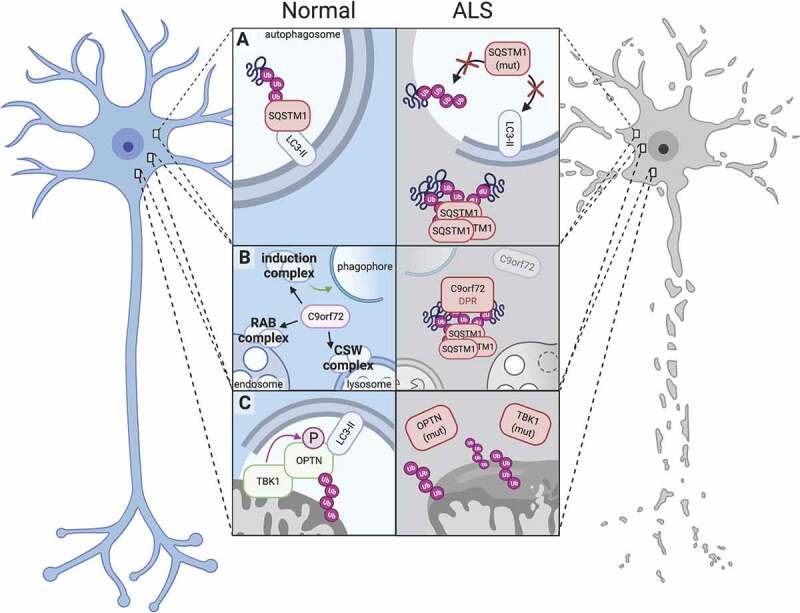
“Furthermore, SQSTM1-positive inclusions are found in the majority of patients with ALS and FTD, and often overlap with inclusions that stain for ubiquitin and TARDBP/TDP-43 (TAR DNA binding protein), an essential RNA-binding protein integrally connected with ALS-FTD [82,116–118] (Figure 1).”
§ Autophagy and ALS: mechanistic insights and therapeutic implications > Key autophagy factors and disease-causing mutations in ALS > SQSTM1/p62 in disease
What the sources say
plaincorrelational- Asserted: passes — The authors put it forward as true.
- Checkable: passes — It can be checked against evidence.
- Load-bearing: unclear — It is unclear whether the paper’s conclusions depend on it.
- Based: passes — The paper gives a reason why it holds.
It may state two separate claims as one.
None of the sources cited for this claim have been checked yet.
In the paper
“sqstm1-knockout mice display reduced numbers of osteoclasts as well as cognitive impairment and anxiety, associated with hyperphosphorylated MAPT/tau and neurofibrillary tangles [134–136].”
§ Autophagy and ALS: mechanistic insights and therapeutic implications > Key autophagy factors and disease-causing mutations in ALS > SQSTM1/p62 in disease
What the sources say
plaincorrelational- Asserted: passes — The authors put it forward as true.
- Checkable: passes — It can be checked against evidence.
- Load-bearing: unclear — It is unclear whether the paper’s conclusions depend on it.
- Based: passes — The paper gives a reason why it holds.
It may state two separate claims as one.
None of the sources cited for this claim have been checked yet.
In the paper
“Next, nucleation of the nascent phagophore is orchestrated by a class III phosphatidylinositol 3-kinase (PtdIns3K) complex containing BECN1, PIK3C3/VPS34, PIK3R4/p150, NRBF2 and either ATG14 or UVRAG [38,39].”
§ Autophagy and ALS: mechanistic insights and therapeutic implications > Overview of autophagy
plaindirect- Asserted: passes — The authors put it forward as true.
- Checkable: passes — It can be checked against evidence.
- Load-bearing: fails — The paper’s conclusions may not depend on it.
- Based: passes — The paper gives a reason why it holds.
Probably not a substantial claim. The paper’s conclusions may not depend on it.
In the paper
“Interestingly, degradation of neuronal mitochondria can occur in a non-cell autonomous fashion, as demonstrated by the astrocytic engulfment and degradation of mitochondria excreted from retinal ganglion cells [60].”
§ Autophagy and ALS: mechanistic insights and therapeutic implications > Overview of autophagy
What the sources say
- Not checked yetcites [60] source
boosteddirect- Asserted: passes — The authors put it forward as true.
- Checkable: passes — It can be checked against evidence.
- Load-bearing: fails — The paper’s conclusions may not depend on it.
- Based: passes — The paper gives a reason why it holds.
Probably not a substantial claim. The paper’s conclusions may not depend on it.
None of the sources cited for this claim have been checked yet.
In the paper
“Expansion then occurs through maturation of the extending phagophore membrane guided by the ATG12–ATG5-ATG16L1 complex, catalyzing insertion of MAP1LC3/LC3 (microtubule associated protein 1 light chain 3) into the phagophore membrane [40,41].”
§ Autophagy and ALS: mechanistic insights and therapeutic implications > Overview of autophagy
plaindirect- Asserted: passes — The authors put it forward as true.
- Checkable: passes — It can be checked against evidence.
- Load-bearing: fails — The paper’s conclusions may not depend on it.
- Based: passes — The paper gives a reason why it holds.
Probably not a substantial claim. The paper’s conclusions may not depend on it.
None of the sources cited for this claim have been checked yet.
In the paper
“In contrast, deletion of the mouse C9orf72 ortholog leads to splenomegaly, lymphadenopathy, dysregulation of macrophages and microglia, and excess production of inflammatory cytokines [184–187].”
§ Autophagy and ALS: mechanistic insights and therapeutic implications > Key autophagy factors and disease-causing mutations in ALS > C9orf72 in disease
What the sources say
plaindirect- Asserted: passes — The authors put it forward as true.
- Checkable: passes — It can be checked against evidence.
- Load-bearing: unclear — It is unclear whether the paper’s conclusions depend on it.
- Based: passes — The paper gives a reason why it holds.
It may state two separate claims as one.
In the paper
“In addition, conditioned medium from astrocytes differentiated from patient-derived iPSC lines (two of which harbor C9orf72 expansion mutations) applied to HEK293T cells reduces LC3-II while increasing SQSTM1 levels [181], suggesting non-cell autonomous inhibition of autophagy by astrocytes in ALS.”
§ Autophagy and ALS: mechanistic insights and therapeutic implications > Key autophagy factors and disease-causing mutations in ALS > C9orf72 in disease
What the sources say
- Not checked yetcites [181] Madill M, 2017, Mol Brain source
hedgeddirect- Asserted: passes — The authors put it forward as true.
- Checkable: passes — It can be checked against evidence.
- Load-bearing: passes — The paper’s conclusions depend on it.
- Based: passes — The paper gives a reason why it holds.
It may state two separate claims as one.
In the paper
“TBK1/NAK/T2K (TANK binding kinase 1) is a cytoplasmically-localized homodimeric multidomain protein with an ubiquitin-like domain, a N-terminal serine/threonine kinase domain, and two coiled-coil domains [192].”
§ Autophagy and ALS: mechanistic insights and therapeutic implications > Key autophagy factors and disease-causing mutations in ALS > TBK1
What the sources say
- Not checked yetcites [192] source
plain- Asserted: passes — The authors put it forward as true.
- Checkable: passes — It can be checked against evidence.
- Load-bearing: fails — The paper’s conclusions may not depend on it.
- Based: passes — The paper gives a reason why it holds.
Probably not a substantial claim. The paper’s conclusions may not depend on it. It may state two separate claims as one.
None of the sources cited for this claim have been checked yet.
In the paper
“Paradoxically, however, c9orf72 knockout in mouse (which models the loss of function attributed to the hexanucleotide repeat expansion) enhances autophagy by de-repressing MTOR and, in turn, increasing TFEB nuclear translocation [179,180].”
§ Autophagy and ALS: mechanistic insights and therapeutic implications > Key autophagy factors and disease-causing mutations in ALS > C9orf72 in disease
plaindirect- Asserted: passes — The authors put it forward as true.
- Checkable: passes — It can be checked against evidence.
- Load-bearing: unclear — It is unclear whether the paper’s conclusions depend on it.
- Based: passes — The paper gives a reason why it holds.
It may state two separate claims as one.
- The authors state this as an assumption: c9orf72 knockout in mouse models the loss of function attributed to the C9orf72 hexanucleotide repeat expansion.
None of the sources cited for this claim have been checked yet.
In the paper
“While c9orf72 knockout animals exhibit a shortened lifespan [184,185,187], no specific neuronal defects have been identified in these mice.”
§ Autophagy and ALS: mechanistic insights and therapeutic implications > Key autophagy factors and disease-causing mutations in ALS > C9orf72 in disease
What the sources say
plain- Asserted: passes — The authors put it forward as true.
- Checkable: passes — It can be checked against evidence.
- Load-bearing: unclear — It is unclear whether the paper’s conclusions depend on it.
- Based: passes — The paper gives a reason why it holds.
It may state two separate claims as one.
None of the sources cited for this claim have been checked yet.
In the paper
“The C9orf72 protein belongs to the DENN (differentially expressed in normal and neoplastic cells) family [143,144] and binds the GTPases RAB7 and RAB11, which are involved in endosome maturation and recycling [145].”
§ Autophagy and ALS: mechanistic insights and therapeutic implications > Key autophagy factors and disease-causing mutations in ALS > C9orf72
What the sources say
plaincorrelational- Asserted: passes — The authors put it forward as true.
- Checkable: passes — It can be checked against evidence.
- Load-bearing: passes — The paper’s conclusions depend on it.
- Based: passes — The paper gives a reason why it holds.
It may state two separate claims as one.
In the paper
“TBK1 is expressed in all tissues, but at much higher levels in neurons of the hippocampus, cortex and lateral ventricle. Moderate levels of the protein have been detected in the glial cells of the cortex and cerebellum [193].”
§ Autophagy and ALS: mechanistic insights and therapeutic implications > Key autophagy factors and disease-causing mutations in ALS > TBK1
What the sources say
- Not checked yetcites [193] source
plain- Asserted: passes — The authors put it forward as true.
- Checkable: passes — It can be checked against evidence.
- Load-bearing: fails — The paper’s conclusions may not depend on it.
- Based: passes — The paper gives a reason why it holds.
Probably not a substantial claim. The paper’s conclusions may not depend on it. It may state two separate claims as one.
None of the sources cited for this claim have been checked yet.
In the paper
“Deletion of the zebrafish and C. elegans homologs of C9orf72 results in impaired locomotion and motor axon degeneration [182,183], implying that the C9orf72 protein is essential for motor neuron function and survival in these systems.”
§ Autophagy and ALS: mechanistic insights and therapeutic implications > Key autophagy factors and disease-causing mutations in ALS > C9orf72 in disease
What the sources say
plaindirect- Asserted: passes — The authors put it forward as true.
- Checkable: passes — It can be checked against evidence.
- Load-bearing: unclear — It is unclear whether the paper’s conclusions depend on it.
- Based: passes — The paper gives a reason why it holds.
It may state two separate claims as one.
None of the sources cited for this claim have been checked yet.
In the paper
“Together, these findings suggest that C9orf72 assists in the formation of nascent autophagosomes, consistent with the finding of impaired autophagy in murine cortical neurons [148] and human iPSC-derived neurons [154] upon C9orf72 knockdown.”
§ Autophagy and ALS: mechanistic insights and therapeutic implications > Key autophagy factors and disease-causing mutations in ALS > C9orf72
hedgeddirect- Asserted: passes — The authors put it forward as true.
- Checkable: passes — It can be checked against evidence.
- Load-bearing: passes — The paper’s conclusions depend on it.
- Based: passes — The paper gives a reason why it holds.
It may state two separate claims as one.
None of the sources cited for this claim have been checked yet.
In the paper
“For instance, C9orf72 expansion mutations are associated not only with ALS/FTLD, but also with symptoms reminiscent of Parkinson disease, Alzheimer disease, Huntington disease, and corticobasal syndrome, reinforcing the imperfect connection between clinical and molecular phenotypes and emphasizing the need for molecular diagnostics [155–164].”
§ Autophagy and ALS: mechanistic insights and therapeutic implications > Key autophagy factors and disease-causing mutations in ALS > C9orf72 in disease
What the sources say
- Not checked yetcites [155] Anor CJ, 2015, Neurobiol Aging
- Not checked yetcites [156] source
- Not checked yetcites [157] Cacace R, 2013, Neurobiol Aging source
- Not checked yetcites [158] Harms M, 2013, JAMA Neurol source
- Not checked yetcites [159] Kostić VS, 2014, J Neurol source
- Not checked yetcites [160] Lesage S, 2013, Brain source
- Not checked yetcites [161] source
- Not checked yetcites [162] source
- Not checked yetcites [163] O’Dowd S, 2012, Mov Disord source
- Not checked yetcites [164] Hensman Moss DJ, 2014, Neurology source
plaincorrelational- Asserted: passes — The authors put it forward as true.
- Checkable: passes — It can be checked against evidence.
- Load-bearing: unclear — It is unclear whether the paper’s conclusions depend on it.
- Based: passes — The paper gives a reason why it holds.
It may state two separate claims as one.
None of the sources cited for this claim have been checked yet.
In the paper
“C9orf72 also forms a complex with SMCR8, a guanine nucleotide exchange factor, and WDR41, a WD40 protein essential for targeting the C9orf72-SMCR8-WDR41 complex to lysosomes [146–150]. Here, this complex interacts with RB1CC1-ULK1-ATG13-ATG101, which together are involved in autophagosome formation [149].”
§ Autophagy and ALS: mechanistic insights and therapeutic implications > Key autophagy factors and disease-causing mutations in ALS > C9orf72
What the sources say
plaindirect- Asserted: passes — The authors put it forward as true.
- Checkable: passes — It can be checked against evidence.
- Load-bearing: passes — The paper’s conclusions depend on it.
- Based: passes — The paper gives a reason why it holds.
It may state two separate claims as one.
None of the sources cited for this claim have been checked yet.
In the paper
“C9orf72 mutations are associated with reduced basal autophagy and enhanced sensitivity to autophagy inhibitors in human iPSC-derived neurons [153,178].”
§ Autophagy and ALS: mechanistic insights and therapeutic implications > Key autophagy factors and disease-causing mutations in ALS > C9orf72 in disease
plaincorrelational- Asserted: passes — The authors put it forward as true.
- Checkable: passes — It can be checked against evidence.
- Load-bearing: passes — The paper’s conclusions depend on it.
- Based: passes — The paper gives a reason why it holds.
It may state two separate claims as one.
None of the sources cited for this claim have been checked yet.
In the paper
“On the other hand, DPR inclusions rarely co-label with TARDBP pathological inclusions and are mainly found in areas of the CNS that are not pathologically affected [171,174–177], arguing against a direct role for DPRs in neurodegeneration.”
§ Autophagy and ALS: mechanistic insights and therapeutic implications > Key autophagy factors and disease-causing mutations in ALS > C9orf72 in disease
What the sources say
plain- Asserted: passes — The authors put it forward as true.
- Checkable: passes — It can be checked against evidence.
- Load-bearing: passes — The paper’s conclusions depend on it.
- Based: passes — The paper gives a reason why it holds.
It may state two separate claims as one.
None of the sources cited for this claim have been checked yet.
In the paper
“Further, neurons derived from iPSCs carrying the C9orf72 repeat expansion recapitulate key features of cellular pathology associated with ALS, including hyperexcitability [154,188,189] and decreased viability upon exposure to excitotoxic agents such as glutamate [154,190,191].”
§ Autophagy and ALS: mechanistic insights and therapeutic implications > Key autophagy factors and disease-causing mutations in ALS > C9orf72 in disease
What the sources say
plaincorrelational- Asserted: passes — The authors put it forward as true.
- Checkable: passes — It can be checked against evidence.
- Load-bearing: unclear — It is unclear whether the paper’s conclusions depend on it.
- Based: passes — The paper gives a reason why it holds.
It may state two separate claims as one.
None of the sources cited for this claim have been checked yet.
In the paper
“VCP/p97/Cdc48 (valosin containing protein) is involved in a wide range of essential cellular processes, including DNA replication and repair, cell cycle regulation, and protein clearance [238,239].”
§ Autophagy and ALS: mechanistic insights and therapeutic implications > Key autophagy factors and disease-causing mutations in ALS > Other ALS-related mutations and their relation to autophagy
plaincorrelational- Asserted: passes — The authors put it forward as true.
- Checkable: passes — It can be checked against evidence.
- Load-bearing: fails — The paper’s conclusions may not depend on it.
- Based: passes — The paper gives a reason why it holds.
Probably not a substantial claim. The paper’s conclusions may not depend on it. It may state two separate claims as one.
None of the sources cited for this claim have been checked yet.
In the paper
“In vitro, silencing of TBK1 or ALS-related TBK1 variants reduces the recruitment of OPTN and LC3B to damaged mitochondria [212,213], thereby impairing mitophagy and resulting in the accumulation of defective mitochondria (Figure 1).”
§ Autophagy and ALS: mechanistic insights and therapeutic implications > Key autophagy factors and disease-causing mutations in ALS > TBK1 in disease
plaindirect- Asserted: passes — The authors put it forward as true.
- Checkable: passes — It can be checked against evidence.
- Load-bearing: passes — The paper’s conclusions depend on it.
- Based: passes — The paper gives a reason why it holds.
It may state two separate claims as one.
In the paper
“TBK1 also phosphorylates SMCR8, which forms a complex with C9orf72 and WDR41, thereby enhancing autophagy initiation [148].”
§ Autophagy and ALS: mechanistic insights and therapeutic implications > Key autophagy factors and disease-causing mutations in ALS > TBK1
What the sources say
- Not checked yetcites [148] source
plaindirect- Asserted: passes — The authors put it forward as true.
- Checkable: passes — It can be checked against evidence.
- Load-bearing: unclear — It is unclear whether the paper’s conclusions depend on it.
- Based: passes — The paper gives a reason why it holds.
It may state two separate claims as one.
In the paper
“In neurons, TBK1 knockdown enhances the accumulation of SQSTM1, which can be rescued by phosphomimetic SMCR8 mutations [148], suggesting that SMCR8 phosphorylation is crucial for TBK1’s effects on autophagy.”
§ Autophagy and ALS: mechanistic insights and therapeutic implications > Key autophagy factors and disease-causing mutations in ALS > TBK1
What the sources say
- Not checked yetcites [148] source
hedgeddirect- Asserted: passes — The authors put it forward as true.
- Checkable: passes — It can be checked against evidence.
- Load-bearing: passes — The paper’s conclusions depend on it.
- Based: passes — The paper gives a reason why it holds.
It may state two separate claims as one.
In the paper
“this effect is exacerbated by genetic loss of ATG5, enhancing stress granule accumulation and, ultimately, leading to cell death [235].”
§ Autophagy and ALS: mechanistic insights and therapeutic implications > Key autophagy factors and disease-causing mutations in ALS > Other ALS-related mutations and their relation to autophagy
What the sources say
- Not checked yetcites [235] source
plaindirect- Asserted: passes — The authors put it forward as true.
- Checkable: passes — It can be checked against evidence.
- Load-bearing: passes — The paper’s conclusions depend on it.
- Based: passes — The paper gives a reason why it holds.
It may state two separate claims as one.
A conclusion the paper draws from its own results — it cites no other source for it, so there is none to check. The quote shows it is in the paper.
In the paper
“Unexpectedly, however, TBK1 loss of function also prolongs the disease course by reducing neuroinflammation, suggesting that the dual functions of TBK1 in autophagy and inflammation independently and inversely impact ALS pathogenesis.”
§ Autophagy and ALS: mechanistic insights and therapeutic implications > Key autophagy factors and disease-causing mutations in ALS > TBK1 in disease
hedgeddirect- Asserted: passes — The authors put it forward as true.
- Checkable: passes — It can be checked against evidence.
- Load-bearing: passes — The paper’s conclusions depend on it.
- Based: passes — The paper gives a reason why it holds.
It may state two separate claims as one.
In the paper
“Conversely, rapamycin-mediated activation of autophagy ameliorates these features, suggesting that FUS-positive inclusions are autophagy substrates [235].”
§ Autophagy and ALS: mechanistic insights and therapeutic implications > Key autophagy factors and disease-causing mutations in ALS > Other ALS-related mutations and their relation to autophagy
What the sources say
- Not checked yetcites [235] source
hedgeddirect- Asserted: passes — The authors put it forward as true.
- Checkable: passes — It can be checked against evidence.
- Load-bearing: passes — The paper’s conclusions depend on it.
- Based: passes — The paper gives a reason why it holds.
It may state two separate claims as one.
None of the sources cited for this claim have been checked yet.
In the paper
“Neuropathological analysis of CNS tissue from ALS patients with TBK1 mutations shows SQSTM1- and TARDBP-positive inclusions in motor neurons and glia [206,210,211], along with reduced TBK1 mRNA and protein, suggesting haploinsufficiency mechanisms [205,206].”
§ Autophagy and ALS: mechanistic insights and therapeutic implications > Key autophagy factors and disease-causing mutations in ALS > TBK1 in disease
What the sources say
hedgedconditional- Asserted: passes — The authors put it forward as true.
- Checkable: passes — It can be checked against evidence.
- Load-bearing: passes — The paper’s conclusions depend on it.
- Based: passes — The paper gives a reason why it holds.
It may state two separate claims as one.
None of the sources cited for this claim have been checked yet.
In the paper
“The majority of disease-associated FUS mutations affect the C-terminal nuclear localization signal, resulting in cytosolic mislocalization and aggregation of mutant FUS [232–234].”
§ Autophagy and ALS: mechanistic insights and therapeutic implications > Key autophagy factors and disease-causing mutations in ALS > Other ALS-related mutations and their relation to autophagy
What the sources say
plaindirect- Asserted: passes — The authors put it forward as true.
- Checkable: passes — It can be checked against evidence.
- Load-bearing: unclear — It is unclear whether the paper’s conclusions depend on it.
- Based: passes — The paper gives a reason why it holds.
It may state two separate claims as one.
None of the sources cited for this claim have been checked yet.
In the paper
“Tbk1 haploinsufficiency impairs motor neuron autophagy and accelerates clinical phenotypes as well as the accumulation of mutant SOD1 in transgenic ALS mouse models [214,215].”
§ Autophagy and ALS: mechanistic insights and therapeutic implications > Key autophagy factors and disease-causing mutations in ALS > TBK1 in disease
plaindirect- Asserted: passes — The authors put it forward as true.
- Checkable: passes — It can be checked against evidence.
- Load-bearing: passes — The paper’s conclusions depend on it.
- Based: passes — The paper gives a reason why it holds.
It may state two separate claims as one.
None of the sources cited for this claim have been checked yet.
In the paper
“UBQLN2 modulates MTORC1 activity, lysosomal acidification, and, in turn, autophagosome maturation [229–231].”
§ Autophagy and ALS: mechanistic insights and therapeutic implications > Key autophagy factors and disease-causing mutations in ALS > Other ALS-related mutations and their relation to autophagy
What the sources say
plaindirect- Asserted: passes — The authors put it forward as true.
- Checkable: passes — It can be checked against evidence.
- Load-bearing: unclear — It is unclear whether the paper’s conclusions depend on it.
- Based: passes — The paper gives a reason why it holds.
It may state two separate claims as one.
None of the sources cited for this claim have been checked yet.
In the paper
“while also triggering intracellular inclusions [226,227] and motor defects in vitro and in vivo [226].”
§ Autophagy and ALS: mechanistic insights and therapeutic implications > Key autophagy factors and disease-causing mutations in ALS > Other ALS-related mutations and their relation to autophagy
plaindirect- Asserted: passes — The authors put it forward as true.
- Checkable: passes — It can be checked against evidence.
- Load-bearing: unclear — It is unclear whether the paper’s conclusions depend on it.
- Based: passes — The paper gives a reason why it holds.
It may state two separate claims as one.
In the paper
“UBQLN2 (ubiquilin 2) is an adaptor protein that binds polyubiquitinated substrates via a C-terminal ubiquitin-associated (UBA) domain, and directs them to the UPS for degradation through an N-terminal ubiquitin-like (UBL) domain [218].”
§ Autophagy and ALS: mechanistic insights and therapeutic implications > Key autophagy factors and disease-causing mutations in ALS > Other ALS-related mutations and their relation to autophagy
What the sources say
- Not checked yetcites [218] Walters KJ, 2004, Biochim Biophys Acta source
plaindirect- Asserted: passes — The authors put it forward as true.
- Checkable: passes — It can be checked against evidence.
- Load-bearing: unclear — It is unclear whether the paper’s conclusions depend on it.
- Based: passes — The paper gives a reason why it holds.
It may state two separate claims as one.
In the paper
“In rats, overexpression of ALS mutant UBQLN2 leads to motor neuron loss and accumulation of autophagy substrates such as SQSTM1 and LC3-II [228].”
§ Autophagy and ALS: mechanistic insights and therapeutic implications > Key autophagy factors and disease-causing mutations in ALS > Other ALS-related mutations and their relation to autophagy
What the sources say
- Not checked yetcites [228] source
plaindirect- Asserted: passes — The authors put it forward as true.
- Checkable: passes — It can be checked against evidence.
- Load-bearing: unclear — It is unclear whether the paper’s conclusions depend on it.
- Based: passes — The paper gives a reason why it holds.
It may state two separate claims as one.
In the paper
“OPTN has emerged as a key player in the regulation of various cellular mechanisms, including vesicular trafficking, maintenance of the Golgi, NFKB/NF-κB signaling and immune response [253].”
§ Autophagy and ALS: mechanistic insights and therapeutic implications > Key autophagy factors and disease-causing mutations in ALS > Other ALS-related mutations and their relation to autophagy
What the sources say
- Not checked yetcites [253] source
plaindirect- Asserted: passes — The authors put it forward as true.
- Checkable: passes — It can be checked against evidence.
- Load-bearing: unclear — It is unclear whether the paper’s conclusions depend on it.
- Based: passes — The paper gives a reason why it holds.
It may state two separate claims as one.
None of the sources cited for this claim have been checked yet.
In the paper
“Transgenic mice expressing mutant CHMP2B develop progressive neurological defects, axonal pathology, early mortality and neuronal loss reminiscent of FTD [270,271].”
§ Autophagy and ALS: mechanistic insights and therapeutic implications > Key autophagy factors and disease-causing mutations in ALS > Other ALS-related mutations and their relation to autophagy
What the sources say
- Not checked yetcites [270] Clayton EL, 2017, Hum Mol Genet
- Not checked yetcites [271] source
plaindirect- Asserted: passes — The authors put it forward as true.
- Checkable: passes — It can be checked against evidence.
- Load-bearing: unclear — It is unclear whether the paper’s conclusions depend on it.
- Based: passes — The paper gives a reason why it holds.
It may state two separate claims as one.
In the paper
“overexpression of CHMP2B mutants leads to the formation of large cytoplasmic vacuoles and increased LC3-II protein levels [266]”
§ Autophagy and ALS: mechanistic insights and therapeutic implications > Key autophagy factors and disease-causing mutations in ALS > Other ALS-related mutations and their relation to autophagy
What the sources say
- Not checked yetcites [266] Cox LE, 2010, PLoS One source
plaindirect- Asserted: passes — The authors put it forward as true.
- Checkable: passes — It can be checked against evidence.
- Load-bearing: passes — The paper’s conclusions depend on it.
- Based: passes — The paper gives a reason why it holds.
It may state two separate claims as one.
None of the sources cited for this claim have been checked yet.
In the paper
“These mice also develop lysosomal storage pathology characterized by large neuronal aggregates derived from the endosomal system [272], and early microglial proliferation leading to a pro-inflammatory phenotype at later stages [270].”
§ Autophagy and ALS: mechanistic insights and therapeutic implications > Key autophagy factors and disease-causing mutations in ALS > Other ALS-related mutations and their relation to autophagy
What the sources say
- Not checked yetcites [272] source
- Not checked yetcites [270] Clayton EL, 2017, Hum Mol Genet
plaindirect- Asserted: passes — The authors put it forward as true.
- Checkable: passes — It can be checked against evidence.
- Load-bearing: unclear — It is unclear whether the paper’s conclusions depend on it.
- Based: passes — The paper gives a reason why it holds.
It may state two separate claims as one.
None of the sources cited for this claim have been checked yet.
In the paper
“In IBMPFD murine muscle lysates, VCP mutations disrupt autophagosome maturation and fusion with lysosomes, but not the formation of early autophagosome precursors [246,249].”
§ Autophagy and ALS: mechanistic insights and therapeutic implications > Key autophagy factors and disease-causing mutations in ALS > Other ALS-related mutations and their relation to autophagy
plaindirect- Asserted: passes — The authors put it forward as true.
- Checkable: passes — It can be checked against evidence.
- Load-bearing: unclear — It is unclear whether the paper’s conclusions depend on it.
- Based: passes — The paper gives a reason why it holds.
It may state two separate claims as one.
In the paper
“Motor neurons from CHMP2B mutant ALS patients show increased calcium concentrations, reduced ATP availability, downregulation of the MAPK/p38 signaling pathway and impaired autophagy initiation [266].”
§ Autophagy and ALS: mechanistic insights and therapeutic implications > Key autophagy factors and disease-causing mutations in ALS > Other ALS-related mutations and their relation to autophagy
What the sources say
- Not checked yetcites [266] Cox LE, 2010, PLoS One source
plaincorrelational- Asserted: passes — The authors put it forward as true.
- Checkable: passes — It can be checked against evidence.
- Load-bearing: passes — The paper’s conclusions depend on it.
- Based: passes — The paper gives a reason why it holds.
It may state two separate claims as one.
In the paper
“Genetic analyses have uncovered >20 OPTN mutations in ALS patient cohorts, accounting for ~3% of familial disease and ~1% of sporadic disease [258].”
§ Autophagy and ALS: mechanistic insights and therapeutic implications > Key autophagy factors and disease-causing mutations in ALS > Other ALS-related mutations and their relation to autophagy
What the sources say
- Not checked yetcites [258] source
plaincorrelational- Asserted: passes — The authors put it forward as true.
- Checkable: passes — It can be checked against evidence.
- Load-bearing: fails — The paper’s conclusions may not depend on it.
- Based: passes — The paper gives a reason why it holds.
Probably not a substantial claim. The paper’s conclusions may not depend on it. It may state two separate claims as one.
In the paper
“ESCRT-III is one of the four multiprotein complexes required for multivesicular body formation, and is responsible for the membrane deformation that enables autophagosome initiation and endolysosomal trafficking [263].”
§ Autophagy and ALS: mechanistic insights and therapeutic implications > Key autophagy factors and disease-causing mutations in ALS > Other ALS-related mutations and their relation to autophagy
What the sources say
- Not checked yetcites [263] source
plaindirect- Asserted: passes — The authors put it forward as true.
- Checkable: passes — It can be checked against evidence.
- Load-bearing: unclear — It is unclear whether the paper’s conclusions depend on it.
- Based: passes — The paper gives a reason why it holds.
It may state two separate claims as one.
In the paper
“Motor neurons and astrocytes derived from iPSCs carrying pathogenic VCP mutations demonstrate cytoplasmic TARDBP accumulation, endoplasmic reticulum (ER) stress, mitochondrial dysfunction, and oxidative stress, ultimately leading to cell death [252].”
§ Autophagy and ALS: mechanistic insights and therapeutic implications > Key autophagy factors and disease-causing mutations in ALS > Other ALS-related mutations and their relation to autophagy
What the sources say
- Not checked yetcites [252] Hall CE, 2017, Cell Rep source
boosteddirect- Asserted: passes — The authors put it forward as true.
- Checkable: passes — It can be checked against evidence.
- Load-bearing: unclear — It is unclear whether the paper’s conclusions depend on it.
- Based: passes — The paper gives a reason why it holds.
It may state two separate claims as one.
In the paper
“SQSTM1-positive inclusions are also ubiquitin-positive, consistent with a disruption in the UPS [118].”
§ Autophagy and ALS: mechanistic insights and therapeutic implications > Autophagy in the context of ALS
What the sources say
- Not checked yetcites [118] source
plaincorrelational- Asserted: passes — The authors put it forward as true.
- Checkable: passes — It can be checked against evidence.
- Load-bearing: unclear — It is unclear whether the paper’s conclusions depend on it.
- Based: passes — The paper gives a reason why it holds.
It may state two separate claims as one.
In the paper
“Although TARDBP is typically absent from neuronal inclusions found in CHMP2B-associated disease, SQSTM1-positive oligodendroglial inclusions are found in the motor cortex of ALS patients with CHMP2B mutations [267].”
§ Autophagy and ALS: mechanistic insights and therapeutic implications > Key autophagy factors and disease-causing mutations in ALS > Other ALS-related mutations and their relation to autophagy
What the sources say
- Not checked yetcites [267] source
plaincorrelational- Asserted: passes — The authors put it forward as true.
- Checkable: passes — It can be checked against evidence.
- Load-bearing: unclear — It is unclear whether the paper’s conclusions depend on it.
- Based: passes — The paper gives a reason why it holds.
It may state two separate claims as one.
In the paper
“Upon mitochondrial damage, OPTN translocates to the surface of mitochondria, an interaction that is stabilized via TBK1-mediated phosphorylation, facilitating the engulfment of mitochondria into phagophores [256].”
§ Autophagy and ALS: mechanistic insights and therapeutic implications > Key autophagy factors and disease-causing mutations in ALS > Other ALS-related mutations and their relation to autophagy
What the sources say
- Not checked yetcites [256] source
plaindirect- Asserted: passes — The authors put it forward as true.
- Checkable: passes — It can be checked against evidence.
- Load-bearing: unclear — It is unclear whether the paper’s conclusions depend on it.
- Based: passes — The paper gives a reason why it holds.
It may state two separate claims as one.
None of the sources cited for this claim have been checked yet.
In the paper
“OPTN is an autophagy receptor that binds ubiquitinated cargo (via its UBAN domain) and LC3 (via its LIR domain) [194,254,255], although it can also act independently of target ubiquitination [254].”
§ Autophagy and ALS: mechanistic insights and therapeutic implications > Key autophagy factors and disease-causing mutations in ALS > Other ALS-related mutations and their relation to autophagy
What the sources say
plaindirect- Asserted: passes — The authors put it forward as true.
- Checkable: passes — It can be checked against evidence.
- Load-bearing: unclear — It is unclear whether the paper’s conclusions depend on it.
- Based: passes — The paper gives a reason why it holds.
It may state two separate claims as one.
In the paper
“the majority of pathogenic OPTN mutations are located in its UBAN domain and may impair ubiquitin binding [259]”
§ Autophagy and ALS: mechanistic insights and therapeutic implications > Key autophagy factors and disease-causing mutations in ALS > Other ALS-related mutations and their relation to autophagy
What the sources say
- Not checked yetcites [259] source
hedgedconditional- Asserted: passes — The authors put it forward as true.
- Checkable: passes — It can be checked against evidence.
- Load-bearing: unclear — It is unclear whether the paper’s conclusions depend on it.
- Based: passes — The paper gives a reason why it holds.
It may state two separate claims as one.
None of the sources cited for this claim have been checked yet.
In the paper
“CHMP2B downregulation or expression of disease-associated CHMP2B mutants in Drosophila and mammalian cell lines results in aberrant endosomal structures, impaired autophagosome maturation, and cytosolic TARDBP aggregates [264,265,268,269].”
§ Autophagy and ALS: mechanistic insights and therapeutic implications > Key autophagy factors and disease-causing mutations in ALS > Other ALS-related mutations and their relation to autophagy
What the sources say
plaindirect- Asserted: passes — The authors put it forward as true.
- Checkable: passes — It can be checked against evidence.
- Load-bearing: passes — The paper’s conclusions depend on it.
- Based: passes — The paper gives a reason why it holds.
It may state two separate claims as one.
None of the sources cited for this claim have been checked yet.
In the paper
“but are also responsible for ~1-2% of familial ALS cases [241–243].”
§ Autophagy and ALS: mechanistic insights and therapeutic implications > Key autophagy factors and disease-causing mutations in ALS > Other ALS-related mutations and their relation to autophagy
What the sources say
plaindirect- Asserted: passes — The authors put it forward as true.
- Checkable: passes — It can be checked against evidence.
- Load-bearing: fails — The paper’s conclusions may not depend on it.
- Based: passes — The paper gives a reason why it holds.
Probably not a substantial claim. The paper’s conclusions may not depend on it.
A conclusion the paper draws from its own results — it cites no other source for it, so there is none to check. The quote shows it is in the paper.
In the paper
“Together, these observations suggest a conserved pattern of autophagy dysfunction in association with VCP mutations, implying a crucial role for VCP in autophagy and the maintenance of protein homeostasis.”
§ Autophagy and ALS: mechanistic insights and therapeutic implications > Key autophagy factors and disease-causing mutations in ALS > Other ALS-related mutations and their relation to autophagy
hedgedcorrelational- Asserted: passes — The authors put it forward as true.
- Checkable: passes — It can be checked against evidence.
- Load-bearing: passes — The paper’s conclusions depend on it.
- Based: passes — The paper gives a reason why it holds.
It may state two separate claims as one.
None of the sources cited for this claim have been checked yet.
In the paper
“Mutations in TARDBP, which encodes the transactive response DNA binding protein 43 kDa (TDP-43), are the third most common cause of familial autosomal dominant ALS and account for rare cases of sporadic ALS [290–293].”
§ Autophagy and ALS: mechanistic insights and therapeutic implications > Autophagy in the context of ALS
What the sources say
plaindirect- Asserted: passes — The authors put it forward as true.
- Checkable: passes — It can be checked against evidence.
- Load-bearing: fails — The paper’s conclusions may not depend on it.
- Based: passes — The paper gives a reason why it holds.
Probably not a substantial claim. The paper’s conclusions may not depend on it. It may state two separate claims as one.
A conclusion the paper draws from its own results — it cites no other source for it, so there is none to check. The quote shows it is in the paper.
In the paper
“suggest that correcting autophagy dysregulation or promoting the autophagic degradation of TARDBP may be of therapeutic benefit in ALS.”
§ Autophagy and ALS: mechanistic insights and therapeutic implications > Autophagy in the context of ALS
hedgedconditional- Asserted: passes — The authors put it forward as true.
- Checkable: passes — It can be checked against evidence.
- Load-bearing: passes — The paper’s conclusions depend on it.
- Based: passes — The paper gives a reason why it holds.
It may state two separate claims as one.
In the paper
“antagonizing the unfolded protein response (UPR) through deletion of XBP1 [335] triggers autophagy and the clearance of SOD1 inclusions, in the process delaying disease onset and improving survival.”
§ Autophagy and ALS: mechanistic insights and therapeutic implications > Autophagy in the context of ALS
What the sources say
- Not checked yetcites [335] source
plaindirect- Asserted: passes — The authors put it forward as true.
- Checkable: passes — It can be checked against evidence.
- Load-bearing: passes — The paper’s conclusions depend on it.
- Based: passes — The paper gives a reason why it holds.
It may state two separate claims as one.
In the paper
“overexpression of TFEB enhances LC3 expression and prevents cytotoxicity in SOD1G93A-expressing NSC-34 cells [362].”
§ Autophagy and ALS: mechanistic insights and therapeutic implications > Autophagy in the context of ALS
What the sources say
- Not checked yetcites [362] Chen Y, 2015, Am J Transl Res
plaindirect- Asserted: passes — The authors put it forward as true.
- Checkable: passes — It can be checked against evidence.
- Load-bearing: passes — The paper’s conclusions depend on it.
- Based: passes — The paper gives a reason why it holds.
It may state two separate claims as one.
In the paper
“inducing autophagy using novel compounds belonging to the benzoxazine class of molecules, including 10-NCP, enhance TARDBPM337V degradation and extend survival in rodent and human neurons [357].”
§ Autophagy and ALS: mechanistic insights and therapeutic implications > Autophagy in the context of ALS
What the sources say
- Not checked yetcites [357] source
plaindirect- Asserted: passes — The authors put it forward as true.
- Checkable: passes — It can be checked against evidence.
- Load-bearing: passes — The paper’s conclusions depend on it.
- Based: passes — The paper gives a reason why it holds.
It may state two separate claims as one.
In the paper
“the phosphodiesterase inhibitor ibudilast induces autophagy by promoting TFEB activity, which enhances clearance of TARDBP aggregates and reduces cytotoxicity [360].”
§ Autophagy and ALS: mechanistic insights and therapeutic implications > Autophagy in the context of ALS
What the sources say
- Not checked yetcites [360] source
plaindirect- Asserted: passes — The authors put it forward as true.
- Checkable: passes — It can be checked against evidence.
- Load-bearing: unclear — It is unclear whether the paper’s conclusions depend on it.
- Based: passes — The paper gives a reason why it holds.
It may state two separate claims as one.
In the paper
“Mutations in the SOD1 gene, which encode the free radical/reactive oxygen species scavenger superoxide dismutase 1 [294,295], represent the second most common cause of familial ALS in Europeans and the most common cause in those of Asian descent [296].”
§ Autophagy and ALS: mechanistic insights and therapeutic implications > Autophagy in the context of ALS
What the sources say
- Not checked yetcites [296] source
plain- Asserted: passes — The authors put it forward as true.
- Checkable: passes — It can be checked against evidence.
- Load-bearing: fails — The paper’s conclusions may not depend on it.
- Based: passes — The paper gives a reason why it holds.
Probably not a substantial claim. The paper’s conclusions may not depend on it. It may state two separate claims as one.
In the paper
“embryonic stem cell-derived motor neurons expressing TARDBPN390D show increased levels of the autophagy suppressor, BCL2, and reduced autophagic activity [300].”
§ Autophagy and ALS: mechanistic insights and therapeutic implications > Autophagy in the context of ALS
What the sources say
- Not checked yetcites [300] Huang SL, 2020, Acta Neuropathol Commun source
plaindirect- Asserted: passes — The authors put it forward as true.
- Checkable: passes — It can be checked against evidence.
- Load-bearing: passes — The paper’s conclusions depend on it.
- Based: passes — The paper gives a reason why it holds.
It may state two separate claims as one.
In the paper
“suggesting that these chaperones are key suppressors of autophagy and may accentuate TARDBP-related toxicity in ALS [354].”
§ Autophagy and ALS: mechanistic insights and therapeutic implications > Autophagy in the context of ALS
What the sources say
- Not checked yetcites [354] source
hedgedconditional- Asserted: passes — The authors put it forward as true.
- Checkable: passes — It can be checked against evidence.
- Load-bearing: passes — The paper’s conclusions depend on it.
- Based: passes — The paper gives a reason why it holds.
It may state two separate claims as one.
In the paper
“TARDBP downregulation promotes TFEB nuclear localization and TFEB target gene expression, but it also reduces DCTN1 (dynactin subunit 1) expression, thereby blocking autolysosome formation and impairing autophagic flux [350].”
§ Autophagy and ALS: mechanistic insights and therapeutic implications > Autophagy in the context of ALS
What the sources say
- Not checked yetcites [350] source
plaindirect- Asserted: passes — The authors put it forward as true.
- Checkable: passes — It can be checked against evidence.
- Load-bearing: passes — The paper’s conclusions depend on it.
- Based: passes — The paper gives a reason why it holds.
It may state two separate claims as one.
In the paper
“conditional deletion of Atg7 in mouse motor neurons accentuates early ALS pathology but mitigates glial inflammation and early death [336].”
§ Autophagy and ALS: mechanistic insights and therapeutic implications > Autophagy in the context of ALS
What the sources say
- Not checked yetcites [336] source
plaindirect- Asserted: passes — The authors put it forward as true.
- Checkable: passes — It can be checked against evidence.
- Load-bearing: passes — The paper’s conclusions depend on it.
- Based: passes — The paper gives a reason why it holds.
It may state two separate claims as one.
None of the sources cited for this claim have been checked yet.
In the paper
“Newly-formed autophagosomes in neuronal processes undergo retrograde transport to the soma and proximal segments of neurites to fuse with somatodendritic lysosomes for cargo degradation, with maturation and acidification of the autophagosomal lumen developing en passant [370,372,374].”
§ Autophagy and ALS: mechanistic insights and therapeutic implications > Cell type-specific regulation of autophagy > Neurons
What the sources say
plaindirect- Asserted: passes — The authors put it forward as true.
- Checkable: passes — It can be checked against evidence.
- Load-bearing: unclear — It is unclear whether the paper’s conclusions depend on it.
- Based: passes — The paper gives a reason why it holds.
It may state two separate claims as one.
In the paper
“Baseline autophagy in neurons constitutively operates at a highly processive level, such that maturing autophagosomes are rapidly incorporated into autolysosomes, which represent the majority of the autophagic vesicle population after autophagy induction or flux inhibition [379].”
§ Autophagy and ALS: mechanistic insights and therapeutic implications > Cell type-specific regulation of autophagy > Neurons
What the sources say
- Not checked yetcites [379] source
plaindirect- Asserted: passes — The authors put it forward as true.
- Checkable: passes — It can be checked against evidence.
- Load-bearing: unclear — It is unclear whether the paper’s conclusions depend on it.
- Based: passes — The paper gives a reason why it holds.
It may state two separate claims as one.
None of the sources cited for this claim have been checked yet.
In the paper
“Basal autophagy in neurons is essential for maintaining long-term neuronal health, since disruption of baseline autophagic activity in vivo causes neurodegeneration and the accumulation of inclusions containing polyubiquitinated proteins [380,381].”
§ Autophagy and ALS: mechanistic insights and therapeutic implications > Cell type-specific regulation of autophagy > Neurons
plaindirect- Asserted: passes — The authors put it forward as true.
- Checkable: passes — It can be checked against evidence.
- Load-bearing: passes — The paper’s conclusions depend on it.
- Based: passes — The paper gives a reason why it holds.
It may state two separate claims as one.
In the paper
“OPTN mutations produce microglial activation and glaucoma [288]”
§ Autophagy and ALS: mechanistic insights and therapeutic implications > Cell type-specific regulation of autophagy
What the sources say
- Not checked yetcites [288] source
plaindirect- Asserted: passes — The authors put it forward as true.
- Checkable: passes — It can be checked against evidence.
- Load-bearing: unclear — It is unclear whether the paper’s conclusions depend on it.
- Based: passes — The paper gives a reason why it holds.
It may state two separate claims as one.
A conclusion the paper draws from its own results — it cites no other source for it, so there is none to check. The quote shows it is in the paper.
In the paper
“The interplay between autophagy and TARDBP or SOD1 mutations is complex and influences ALS pathogenesis within and between different cell types of the nervous system.”
§ Autophagy and ALS: mechanistic insights and therapeutic implications > Autophagy in the context of ALS
plaincorrelational- Asserted: passes — The authors put it forward as true.
- Checkable: passes — It can be checked against evidence.
- Load-bearing: passes — The paper’s conclusions depend on it.
- Based: fails — The paper may give no reason why it holds.
Probably not a substantial claim. The paper may give no reason why it holds. It may state two separate claims as one.
None of the sources cited for this claim have been checked yet.
In the paper
“Alternative methods have proven more successful in neurons, however, including selective MTORC1 inhibition via everolimus [385–387], or modulation of MTOR- and AKT-independent pathways with 10-NCP, an N10-substituted derivative of the heterocyclic dye compound and antipsychotic analog phenoxazine [384].”
§ Autophagy and ALS: mechanistic insights and therapeutic implications > Cell type-specific regulation of autophagy > Neurons
What the sources say
plaindirect- Asserted: passes — The authors put it forward as true.
- Checkable: passes — It can be checked against evidence.
- Load-bearing: passes — The paper’s conclusions depend on it.
- Based: passes — The paper gives a reason why it holds.
It may state two separate claims as one.
In the paper
“With increasing age, basal autophagy and the capacity for efficient autophagosome maturation progressively deteriorate in neurons, leading to accumulation of malformed and immature autophagic vesicles, implying reduced proteostatic reserve over time [382].”
§ Autophagy and ALS: mechanistic insights and therapeutic implications > Cell type-specific regulation of autophagy > Neurons
What the sources say
- Not checked yetcites [382] source
plaindirect- Asserted: passes — The authors put it forward as true.
- Checkable: passes — It can be checked against evidence.
- Load-bearing: unclear — It is unclear whether the paper’s conclusions depend on it.
- Based: passes — The paper gives a reason why it holds.
It may state two separate claims as one.
In the paper
“C9orf72 deficiency leads to lymphocytic inflammation, lymphadenopathy, and splenomegaly [149]”
§ Autophagy and ALS: mechanistic insights and therapeutic implications > Cell type-specific regulation of autophagy
What the sources say
- Not checked yetcites [149] source
plaindirect- Asserted: passes — The authors put it forward as true.
- Checkable: passes — It can be checked against evidence.
- Load-bearing: unclear — It is unclear whether the paper’s conclusions depend on it.
- Based: passes — The paper gives a reason why it holds.
It may state two separate claims as one.
In the paper
“in the setting of the SOD1G93A mutation, loss of TBK1 or pathogenic TBK1 mutations accentuate several pathologic features of ALS (disease onset, muscle denervation) while ameliorating others (inflammation, early death) [214].”
§ Autophagy and ALS: mechanistic insights and therapeutic implications > Autophagy in the context of ALS
What the sources say
- Not checked yetcites [214] source
plaindirect- Asserted: passes — The authors put it forward as true.
- Checkable: passes — It can be checked against evidence.
- Load-bearing: passes — The paper’s conclusions depend on it.
- Based: passes — The paper gives a reason why it holds.
It may state two separate claims as one.
In the paper
“Mitochondrial compromise and ATP synthase inhibition with oligomycin A stimulate autophagy to a greater extent in astrocytes than in neurons, although both cell types activate autophagy to similar extents in the face of ischemia [400].”
§ Autophagy and ALS: mechanistic insights and therapeutic implications > Cell type-specific regulation of autophagy > Glia
What the sources say
- Not checked yetcites [400] source
plaindirect- Asserted: passes — The authors put it forward as true.
- Checkable: passes — It can be checked against evidence.
- Load-bearing: unclear — It is unclear whether the paper’s conclusions depend on it.
- Based: passes — The paper gives a reason why it holds.
It may state two separate claims as one.
None of the sources cited for this claim have been checked yet.
In the paper
“Activation of microglia through genetic, infectious, inflammatory, or physical stimuli, leads to stereotypical changes in their morphology, accompanied by proliferation, migration, and the release of proinflammatory cytokines and chemokines [417–419].”
§ Autophagy and ALS: mechanistic insights and therapeutic implications > Cell type-specific regulation of autophagy > Glia
What the sources say
plaindirect- Asserted: passes — The authors put it forward as true.
- Checkable: passes — It can be checked against evidence.
- Load-bearing: fails — The paper’s conclusions may not depend on it.
- Based: passes — The paper gives a reason why it holds.
Probably not a substantial claim. The paper’s conclusions may not depend on it. It may state two separate claims as one.
None of the sources cited for this claim have been checked yet.
In the paper
“Microglia are macrophage-like cells that comprise 10–15% of the CNS, and mediate diverse functions ranging from innate immunity and phagocytosis to synaptic pruning and the regulation of synaptic activity [416,417].”
§ Autophagy and ALS: mechanistic insights and therapeutic implications > Cell type-specific regulation of autophagy > Glia
plain- Asserted: passes — The authors put it forward as true.
- Checkable: passes — It can be checked against evidence.
- Load-bearing: fails — The paper’s conclusions may not depend on it.
- Based: passes — The paper gives a reason why it holds.
Probably not a substantial claim. The paper’s conclusions may not depend on it. It may state two separate claims as one.
In the paper
“Autophagy and phagocytosis share key morphological and mechanistic features [428].”
§ Autophagy and ALS: mechanistic insights and therapeutic implications > Cell type-specific regulation of autophagy > Glia
What the sources say
- Not checked yetcites [428] source
plaincorrelational- Asserted: passes — The authors put it forward as true.
- Checkable: passes — It can be checked against evidence.
- Load-bearing: fails — The paper’s conclusions may not depend on it.
- Based: passes — The paper gives a reason why it holds.
Probably not a substantial claim. The paper’s conclusions may not depend on it.
In the paper
“These differences in autophagy may be due to enhanced phosphorylation of astrocytic SPHK1/SK1 (sphingosine kinase 1) with starvation, whereas benzoxazines activate neuronal (but not astrocytic) SPHK1 to induce autophagy [11].”
§ Autophagy and ALS: mechanistic insights and therapeutic implications > Cell type-specific regulation of autophagy > Glia
What the sources say
- Not checked yetcites [11] source
hedgedconditional- Asserted: passes — The authors put it forward as true.
- Checkable: passes — It can be checked against evidence.
- Load-bearing: unclear — It is unclear whether the paper’s conclusions depend on it.
- Based: passes — The paper gives a reason why it holds.
It may state two separate claims as one.
In the paper
“In reactive gliosis, a process unique to astrocytes, intact mitochondrial health is essential and is maintained through autophagy, such that astrocyte-specific deletion of Atg7 perturbs the balance of mitochondrial dynamics to favor fission over fusion and thereby reduces oxidative capacity [401].”
§ Autophagy and ALS: mechanistic insights and therapeutic implications > Cell type-specific regulation of autophagy > Glia
What the sources say
- Not checked yetcites [401] source
plaindirect- Asserted: passes — The authors put it forward as true.
- Checkable: passes — It can be checked against evidence.
- Load-bearing: unclear — It is unclear whether the paper’s conclusions depend on it.
- Based: passes — The paper gives a reason why it holds.
It may state two separate claims as one.
In the paper
“For instance, both pathways rely on vesicular structures to deliver contents to lysosomes for degradation.”
§ Autophagy and ALS: mechanistic insights and therapeutic implications > Cell type-specific regulation of autophagy > Glia
What the sources say
- Not checked yetcites [428] source
plain- Asserted: passes — The authors put it forward as true.
- Checkable: passes — It can be checked against evidence.
- Load-bearing: fails — The paper’s conclusions may not depend on it.
- Based: passes — The paper gives a reason why it holds.
Probably not a substantial claim. The paper’s conclusions may not depend on it.
In the paper
“not only is autophagy responsible for degrading HTT in astrocytes, but it also promotes glutamate transporter expression in these cells [413]”
§ Autophagy and ALS: mechanistic insights and therapeutic implications > Cell type-specific regulation of autophagy > Glia
What the sources say
- Not checked yetcites [413] source
plaindirect- Asserted: passes — The authors put it forward as true.
- Checkable: passes — It can be checked against evidence.
- Load-bearing: unclear — It is unclear whether the paper’s conclusions depend on it.
- Based: passes — The paper gives a reason why it holds.
It may state two separate claims as one.
None of the sources cited for this claim have been checked yet.
In the paper
“implying that astrocytes are both necessary and sufficient for neurodegeneration in this ALS model.”
§ Autophagy and ALS: mechanistic insights and therapeutic implications > Cell type-specific regulation of autophagy > Glia
What the sources say
plaindirect- Asserted: passes — The authors put it forward as true.
- Checkable: passes — It can be checked against evidence.
- Load-bearing: passes — The paper’s conclusions depend on it.
- Based: passes — The paper gives a reason why it holds.
It may state two separate claims as one.
In the paper
“these compounds are sufficient to reduce TARDBPM337V-associated toxicity in iPSC-derived astrocytes [357], presumably through autophagy upregulation.”
§ Autophagy and ALS: mechanistic insights and therapeutic implications > Cell type-specific regulation of autophagy > Glia
What the sources say
- Not checked yetcites [357] source
hedgeddirect- Asserted: passes — The authors put it forward as true.
- Checkable: passes — It can be checked against evidence.
- Load-bearing: unclear — It is unclear whether the paper’s conclusions depend on it.
- Based: passes — The paper gives a reason why it holds.
It may state two separate claims as one.
In the paper
“In transgenic mice overexpressing mutant SOD1 associated with ALS, astrocytes display more SOD1-positive inclusions than do neurons, and at an earlier stage [414].”
§ Autophagy and ALS: mechanistic insights and therapeutic implications > Cell type-specific regulation of autophagy > Glia
What the sources say
- Not checked yetcites [414] source
plaincorrelational- Asserted: passes — The authors put it forward as true.
- Checkable: passes — It can be checked against evidence.
- Load-bearing: passes — The paper’s conclusions depend on it.
- Based: passes — The paper gives a reason why it holds.
It may state two separate claims as one.
In the paper
“Conditional oligodendrocyte-specific deletion of Atg5 in mice leads to incomplete differentiation, reduced myelination, abnormal myelin compaction, oligodendrocytic death, and shortened life span [444].”
§ Autophagy and ALS: mechanistic insights and therapeutic implications > Cell type-specific regulation of autophagy > Glia
What the sources say
- Not checked yetcites [444] Bankston AN, 2019, Glia source
plaindirect- Asserted: passes — The authors put it forward as true.
- Checkable: passes — It can be checked against evidence.
- Load-bearing: unclear — It is unclear whether the paper’s conclusions depend on it.
- Based: passes — The paper gives a reason why it holds.
It may state two separate claims as one.
None of the sources cited for this claim have been checked yet.
In the paper
“C9orf72-deficient mice display lysosomal accumulation and a hyperactive immune response characterized by enhanced production of IL1B and IL6 [184,185,187,439],”
§ Autophagy and ALS: mechanistic insights and therapeutic implications > Cell type-specific regulation of autophagy > Glia
What the sources say
plaindirect- Asserted: passes — The authors put it forward as true.
- Checkable: passes — It can be checked against evidence.
- Load-bearing: passes — The paper’s conclusions depend on it.
- Based: passes — The paper gives a reason why it holds.
It may state two separate claims as one.
In the paper
“During oligodendroglial precursor (OPC) differentiation, autophagy becomes most active in distal OPC processes, and autophagosomes are trafficked proximally to the soma in a manner similar to neurons [444].”
§ Autophagy and ALS: mechanistic insights and therapeutic implications > Cell type-specific regulation of autophagy > Glia
What the sources say
- Not checked yetcites [444] Bankston AN, 2019, Glia source
plaindirect- Asserted: passes — The authors put it forward as true.
- Checkable: passes — It can be checked against evidence.
- Load-bearing: unclear — It is unclear whether the paper’s conclusions depend on it.
- Based: passes — The paper gives a reason why it holds.
It may state two separate claims as one.
In the paper
“Consistent with these findings, autophagy activation enhances oligodendrocyte survival and promotes myelination in a rat model of demyelinating disease [448].”
§ Autophagy and ALS: mechanistic insights and therapeutic implications > Cell type-specific regulation of autophagy > Glia
What the sources say
- Not checked yetcites [448] source
plaindirect- Asserted: passes — The authors put it forward as true.
- Checkable: passes — It can be checked against evidence.
- Load-bearing: unclear — It is unclear whether the paper’s conclusions depend on it.
- Based: passes — The paper gives a reason why it holds.
It may state two separate claims as one.
A conclusion the paper draws from its own results — it cites no other source for it, so there is none to check. The quote shows it is in the paper.
In the paper
“Collectively, these findings reinforce the convergence between inflammation and autophagy in microglia, and their importance for ALS pathogenesis.”
§ Autophagy and ALS: mechanistic insights and therapeutic implications > Cell type-specific regulation of autophagy > Glia
boostedcorrelational- Asserted: passes — The authors put it forward as true.
- Checkable: passes — It can be checked against evidence.
- Load-bearing: passes — The paper’s conclusions depend on it.
- Based: passes — The paper gives a reason why it holds.
It may state two separate claims as one.
In the paper
“and conditional Atg7 deletion in mouse Schwann cells leads to cytoplasmic swelling, ribosomal accumulation, dysmorphic ER, and dysmyelination [459].”
§ Autophagy and ALS: mechanistic insights and therapeutic implications > Cell type-specific regulation of autophagy > Glia
What the sources say
- Not checked yetcites [459] source
plaindirect- Asserted: passes — The authors put it forward as true.
- Checkable: passes — It can be checked against evidence.
- Load-bearing: unclear — It is unclear whether the paper’s conclusions depend on it.
- Based: passes — The paper gives a reason why it holds.
It may state two separate claims as one.
In the paper
“Paradoxically, suppression of autophagy with NTF3 (neurotrophin 3) disinhibits oligodendrocyte proliferation and promotes motor recovery in a separate model of spinal cord contusion [452].”
§ Autophagy and ALS: mechanistic insights and therapeutic implications > Cell type-specific regulation of autophagy > Glia
What the sources say
- Not checked yetcites [452] source
plaindirect- Asserted: passes — The authors put it forward as true.
- Checkable: passes — It can be checked against evidence.
- Load-bearing: unclear — It is unclear whether the paper’s conclusions depend on it.
- Based: passes — The paper gives a reason why it holds.
It may state two separate claims as one.
None of the sources cited for this claim have been checked yet.
In the paper
“In addition, oligodendrocyte autophagy, OPC differentiation, and myelination during development are all regulated by MTOR [445–447].”
§ Autophagy and ALS: mechanistic insights and therapeutic implications > Cell type-specific regulation of autophagy > Glia
What the sources say
plaindirect- Asserted: passes — The authors put it forward as true.
- Checkable: passes — It can be checked against evidence.
- Load-bearing: unclear — It is unclear whether the paper’s conclusions depend on it.
- Based: passes — The paper gives a reason why it holds.
It may state two separate claims as one.
In the paper
“Additional non-cell autonomous effects are observed with Schwann cell-specific PTEN deletion or EGFR overexpression, which attenuate peripheral nerve autophagy and lead to disorganization of the nascent neuromuscular junction [461].”
§ Autophagy and ALS: mechanistic insights and therapeutic implications > Cell type-specific regulation of autophagy > Glia
What the sources say
- Not checked yetcites [461] Zhang SJ, 2019, Biochem Biophys Res Commun source
plaindirect- Asserted: passes — The authors put it forward as true.
- Checkable: passes — It can be checked against evidence.
- Load-bearing: unclear — It is unclear whether the paper’s conclusions depend on it.
- Based: passes — The paper gives a reason why it holds.
It may state two separate claims as one.
None of the sources cited for this claim have been checked yet.
In the paper
“For instance, centronuclear myopathy is caused by mutations in the genes encoding MTM1 (myotubularin1) or MTMR14/Jumpy (myotubularin related protein 14) [17,20].”
§ Autophagy and ALS: mechanistic insights and therapeutic implications > Cell type-specific regulation of autophagy > Skeletal muscle
plaindirect- Asserted: passes — The authors put it forward as true.
- Checkable: passes — It can be checked against evidence.
- Load-bearing: fails — The paper’s conclusions may not depend on it.
- Based: passes — The paper gives a reason why it holds.
Probably not a substantial claim. The paper’s conclusions may not depend on it.
In the paper
“The positive effect of exercise on autophagy was first noted in 1984, with the observation of autophagosome accumulation after exercise in rat skeletal muscle [482].”
§ Autophagy and ALS: mechanistic insights and therapeutic implications > Cell type-specific regulation of autophagy > Skeletal muscle
What the sources say
- Not checked yetcites [482] source
plaindirect- Asserted: passes — The authors put it forward as true.
- Checkable: passes — It can be checked against evidence.
- Load-bearing: fails — The paper’s conclusions may not depend on it.
- Based: passes — The paper gives a reason why it holds.
Probably not a substantial claim. The paper’s conclusions may not depend on it.
In the paper
“neurogenic atrophy can be partially mitigated by adrenergic stimulation, which activates autophagy through Atg7 and counteracts denervation-induced inhibition of autophagic flux [474].”
§ Autophagy and ALS: mechanistic insights and therapeutic implications > Cell type-specific regulation of autophagy > Skeletal muscle
What the sources say
- Not checked yetcites [474] source
plaindirect- Asserted: passes — The authors put it forward as true.
- Checkable: passes — It can be checked against evidence.
- Load-bearing: unclear — It is unclear whether the paper’s conclusions depend on it.
- Based: passes — The paper gives a reason why it holds.
It may state two separate claims as one.
In the paper
“Starvation-related atrophy is also associated with upregulated autophagy, which in turn is controlled by the transcription factor FOXO3 and is independent of MTOR activity [473].”
§ Autophagy and ALS: mechanistic insights and therapeutic implications > Cell type-specific regulation of autophagy > Skeletal muscle
What the sources say
- Not checked yetcites [473] source
plaincorrelational- Asserted: passes — The authors put it forward as true.
- Checkable: passes — It can be checked against evidence.
- Load-bearing: unclear — It is unclear whether the paper’s conclusions depend on it.
- Based: passes — The paper gives a reason why it holds.
It may state two separate claims as one.
None of the sources cited for this claim have been checked yet.
In the paper
“Conversely, stimulating Schwann cell autophagy with rapamycin promotes myelination and improves peripheral nerve regeneration [465,466].”
§ Autophagy and ALS: mechanistic insights and therapeutic implications > Cell type-specific regulation of autophagy > Glia
plaindirect- Asserted: passes — The authors put it forward as true.
- Checkable: passes — It can be checked against evidence.
- Load-bearing: unclear — It is unclear whether the paper’s conclusions depend on it.
- Based: passes — The paper gives a reason why it holds.
It may state two separate claims as one.
A conclusion the paper draws from its own results — it cites no other source for it, so there is none to check. The quote shows it is in the paper.
In the paper
“The discrepancies suggested by these paradoxical findings may indicate that autophagy is required for muscle maintenance and homeostasis, but there is a limit or threshold beyond which autophagy stimulation may exacerbate fiber atrophy.”
§ Autophagy and ALS: mechanistic insights and therapeutic implications > Cell type-specific regulation of autophagy > Skeletal muscle
hedgedconditional- Asserted: passes — The authors put it forward as true.
- Checkable: passes — It can be checked against evidence.
- Load-bearing: passes — The paper’s conclusions depend on it.
- Based: passes — The paper gives a reason why it holds.
It may state two separate claims as one.
In the paper
“Furthermore, conditional deletion of Pik3c3 in murine Schwann cells not only results in hypomyelination, but also in non-cell autonomous disruption of neuronal autophagic flux and dysregulated neuronal trafficking of ERBB2 or ERBB3 receptor tyrosine kinases [460].”
§ Autophagy and ALS: mechanistic insights and therapeutic implications > Cell type-specific regulation of autophagy > Glia
What the sources say
- Not checked yetcites [460] source
plaindirect- Asserted: passes — The authors put it forward as true.
- Checkable: passes — It can be checked against evidence.
- Load-bearing: unclear — It is unclear whether the paper’s conclusions depend on it.
- Based: passes — The paper gives a reason why it holds.
It may state two separate claims as one.
In the paper
“In ALS, skeletal muscle-specific expression of SOD1G93A is associated with atrophy and elevated autophagy [479],”
§ Autophagy and ALS: mechanistic insights and therapeutic implications > Cell type-specific regulation of autophagy > Skeletal muscle
What the sources say
- Not checked yetcites [479] source
plaincorrelational- Asserted: passes — The authors put it forward as true.
- Checkable: passes — It can be checked against evidence.
- Load-bearing: unclear — It is unclear whether the paper’s conclusions depend on it.
- Based: passes — The paper gives a reason why it holds.
It may state two separate claims as one.
A conclusion the paper draws from its own results — it cites no other source for it, so there is none to check. The quote shows it is in the paper.
In the paper
“These discrepant results may be due to effects of the genetic background unique to each disease, resulting in excessive autophagy stimulation in centronuclear myopathy, but insufficient autophagy in DMD.”
§ Autophagy and ALS: mechanistic insights and therapeutic implications > Cell type-specific regulation of autophagy > Skeletal muscle
hedgedconditional- Asserted: passes — The authors put it forward as true.
- Checkable: passes — It can be checked against evidence.
- Load-bearing: fails — The paper’s conclusions may not depend on it.
- Based: passes — The paper gives a reason why it holds.
Probably not a substantial claim. The paper’s conclusions may not depend on it. It may state two separate claims as one.
None of the sources cited for this claim have been checked yet.
In the paper
“These loss-of-function mutations prevent these enzymes from metabolizing phosphoinositides required for autophagy, thereby disinhibiting autophagy flux and muscle atrophy [17,20].”
§ Autophagy and ALS: mechanistic insights and therapeutic implications > Cell type-specific regulation of autophagy > Skeletal muscle
plaindirect- Asserted: passes — The authors put it forward as true.
- Checkable: passes — It can be checked against evidence.
- Load-bearing: unclear — It is unclear whether the paper’s conclusions depend on it.
- Based: passes — The paper gives a reason why it holds.
It may state two separate claims as one.
In the paper
“and conditional Atg7 deletion in mouse skeletal muscle leads to atrophy, weakness, and accumulation of unhealthy mitochondria and sarcoplasmic reticulum [477].”
§ Autophagy and ALS: mechanistic insights and therapeutic implications > Cell type-specific regulation of autophagy > Skeletal muscle
What the sources say
- Not checked yetcites [477] source
plaindirect- Asserted: passes — The authors put it forward as true.
- Checkable: passes — It can be checked against evidence.
- Load-bearing: unclear — It is unclear whether the paper’s conclusions depend on it.
- Based: passes — The paper gives a reason why it holds.
It may state two separate claims as one.
In the paper
“skeletal muscle denervation causes neurogenic atrophy and may activate autophagy;”
§ Autophagy and ALS: mechanistic insights and therapeutic implications > Cell type-specific regulation of autophagy > Skeletal muscle
What the sources say
- Not checked yetcites [472] source
hedgedconditional- Asserted: passes — The authors put it forward as true.
- Checkable: passes — It can be checked against evidence.
- Load-bearing: unclear — It is unclear whether the paper’s conclusions depend on it.
- Based: passes — The paper gives a reason why it holds.
It may state two separate claims as one.
In the paper
“Aged rats also show elevated basal mitophagy, higher levels of mitophagy proteins, higher TFEB expression and lysosomal markers than young mice;”
§ Autophagy and ALS: mechanistic insights and therapeutic implications > Cell type-specific regulation of autophagy > Skeletal muscle
What the sources say
- Not checked yetcites [497] source
plaincorrelational- Asserted: passes — The authors put it forward as true.
- Checkable: passes — It can be checked against evidence.
- Load-bearing: unclear — It is unclear whether the paper’s conclusions depend on it.
- Based: passes — The paper gives a reason why it holds.
It may state two separate claims as one.
In the paper
“On the other hand, sarcopenia involves autophagy of muscle structural components, and attenuation of autophagy with PPARGC1A overexpression mitigates sarcopenia [495].”
§ Autophagy and ALS: mechanistic insights and therapeutic implications > Cell type-specific regulation of autophagy > Skeletal muscle
What the sources say
- Not checked yetcites [495] source
plaindirect- Asserted: passes — The authors put it forward as true.
- Checkable: passes — It can be checked against evidence.
- Load-bearing: unclear — It is unclear whether the paper’s conclusions depend on it.
- Based: passes — The paper gives a reason why it holds.
It may state two separate claims as one.
A conclusion the paper draws from its own results — it cites no other source for it, so there is none to check. The quote shows it is in the paper.
In the paper
“These negative trials, together with lithium’s narrow therapeutic index, severely limit the therapeutic utility of lithium for ALS (Figure 3).”
§ Autophagy and ALS: mechanistic insights and therapeutic implications > Concluding remarks: remaining questions & therapeutic implications
plaindirect- Asserted: passes — The authors put it forward as true.
- Checkable: passes — It can be checked against evidence.
- Load-bearing: passes — The paper’s conclusions depend on it.
- Based: passes — The paper gives a reason why it holds.
It may state two separate claims as one.
A conclusion the paper draws from its own results — it cites no other source for it, so there is none to check. The quote shows it is in the paper.
In the paper
“but the use of rapamycin in ALS is complicated not only by its potential for insufficient induction of neuronal autophagy per se, but also its capacity for modulating multiple MTOR-dependent downstream pathways (Figure 3).”
§ Autophagy and ALS: mechanistic insights and therapeutic implications > Concluding remarks: remaining questions & therapeutic implications
plaindirect- Asserted: passes — The authors put it forward as true.
- Checkable: passes — It can be checked against evidence.
- Load-bearing: passes — The paper’s conclusions depend on it.
- Based: passes — The paper gives a reason why it holds.
It may state two separate claims as one.
In the paper
“Mouse muscle also shows age-related decline in autophagy machinery (LC3, BECN1, and LAMP2), and these deficiencies are partially mitigated by 8 weeks of treadmill exercise [491].”
§ Autophagy and ALS: mechanistic insights and therapeutic implications > Cell type-specific regulation of autophagy > Skeletal muscle
What the sources say
- Not checked yetcites [491] source
plaindirect- Asserted: passes — The authors put it forward as true.
- Checkable: passes — It can be checked against evidence.
- Load-bearing: unclear — It is unclear whether the paper’s conclusions depend on it.
- Based: passes — The paper gives a reason why it holds.
It may state two separate claims as one.
None of the sources cited for this claim have been checked yet.
In the paper
“Despite early enthusiasm over lithium in patients and mouse models [505,506], five subsequent trials showed no clinical benefit in survival or neuromuscular outcomes for ALS patients [507–511].”
§ Autophagy and ALS: mechanistic insights and therapeutic implications > Concluding remarks: remaining questions & therapeutic implications
What the sources say
plain- Asserted: passes — The authors put it forward as true.
- Checkable: passes — It can be checked against evidence.
- Load-bearing: passes — The paper’s conclusions depend on it.
- Based: passes — The paper gives a reason why it holds.
It may state two separate claims as one.
A conclusion the paper draws from its own results — it cites no other source for it, so there is none to check. The quote shows it is in the paper.
In the paper
“Additionally, treatment with autophagy modulating drugs runs the risk of incurring intolerable side effects and toxicities, especially when given on a long-term basis that may be required to prevent or delay late-onset neurodegenerative diseases.”
§ Autophagy and ALS: mechanistic insights and therapeutic implications > Concluding remarks: remaining questions & therapeutic implications
hedgedconditional- Asserted: passes — The authors put it forward as true.
- Checkable: passes — It can be checked against evidence.
- Load-bearing: passes — The paper’s conclusions depend on it.
- Based: fails — The paper may give no reason why it holds.
Probably not a substantial claim. The paper may give no reason why it holds.
In the paper
“On the one hand, skeletal muscle autophagy declines with aging in Drosophila and can be rescued by FOXO overexpression or constitutive activation of EIF4EBP1 [490].”
§ Autophagy and ALS: mechanistic insights and therapeutic implications > Cell type-specific regulation of autophagy > Skeletal muscle
What the sources say
- Not checked yetcites [490] source
plaindirect- Asserted: passes — The authors put it forward as true.
- Checkable: passes — It can be checked against evidence.
- Load-bearing: unclear — It is unclear whether the paper’s conclusions depend on it.
- Based: passes — The paper gives a reason why it holds.
It may state two separate claims as one.
In the paper
“Neither event is affected by rapamycin, suggesting that MTOR is dispensable for this pathway [512].”
§ Autophagy and ALS: mechanistic insights and therapeutic implications > Concluding remarks: remaining questions & therapeutic implications
What the sources say
- Not checked yetcites [512] source
hedged- Asserted: passes — The authors put it forward as true.
- Checkable: passes — It can be checked against evidence.
- Load-bearing: passes — The paper’s conclusions depend on it.
- Based: passes — The paper gives a reason why it holds.
It may state two separate claims as one.
A conclusion the paper draws from its own results — it cites no other source for it, so there is none to check. The quote shows it is in the paper.
In the paper
“Fourth, the effectiveness of these compounds must be tested rigorously in model systems that do not depend upon the overexpression of disease-associated proteins, since this approach may inappropriately emphasize strategies that reduce the non-physiological accumulation of exogenous proteins.”
§ Autophagy and ALS: mechanistic insights and therapeutic implications > Concluding remarks: remaining questions & therapeutic implications
hedgedconditional- Asserted: passes — The authors put it forward as true.
- Checkable: fails — It may be too vague to check against evidence.
- Load-bearing: passes — The paper’s conclusions depend on it.
- Based: passes — The paper gives a reason why it holds.
Probably not a substantial claim. It may be too vague to check against evidence.
None of the sources cited for this claim have been checked yet.
In the paper
“the drawbacks of chronic rapamcyin therapy – including cytopenias, nephrotoxicity, metabolic syndrome, dermatitis, and pneumonitis [502,503] – are well known.”
§ Autophagy and ALS: mechanistic insights and therapeutic implications > Concluding remarks: remaining questions & therapeutic implications
boosteddirect- Asserted: passes — The authors put it forward as true.
- Checkable: passes — It can be checked against evidence.
- Load-bearing: unclear — It is unclear whether the paper’s conclusions depend on it.
- Based: passes — The paper gives a reason why it holds.
It may state two separate claims as one.
In the paper
“amino acid starvation induces autophagy, whereas amino acid provision results in RPS6KB/p70S6K phosphorylation and autophagy suppression [512].”
§ Autophagy and ALS: mechanistic insights and therapeutic implications > Concluding remarks: remaining questions & therapeutic implications
What the sources say
- Not checked yetcites [512] source
plaindirect- Asserted: passes — The authors put it forward as true.
- Checkable: passes — It can be checked against evidence.
- Load-bearing: passes — The paper’s conclusions depend on it.
- Based: passes — The paper gives a reason why it holds.
It may state two separate claims as one.
None of the sources cited for this claim have been checked yet.
In the paper
“Rapamycin has been extensively utilized for transplant rejection prophylaxis and graft-versus-host disease, as well as seizure control and reduction of tumors in tuberous sclerosis complex patients [499–501].”
§ Autophagy and ALS: mechanistic insights and therapeutic implications > Concluding remarks: remaining questions & therapeutic implications
What the sources say
plaindirect- Asserted: passes — The authors put it forward as true.
- Checkable: passes — It can be checked against evidence.
- Load-bearing: fails — The paper’s conclusions may not depend on it.
- Based: passes — The paper gives a reason why it holds.
Probably not a substantial claim. The paper’s conclusions may not depend on it. It may state two separate claims as one.
The paper states this without a source or data behind it here, so there is nothing to check it against. The quote shows it is in the paper.
In the paper
“Similarly, lithium has numerous multi-target effects, including depletion of IP3 through IMPase, activating nitric oxide synthase, inhibiting GSK3B, stimulating NMDA receptors and enhancing glutamatergic tone, among many others (middle).”
§ Autophagy and ALS: mechanistic insights and therapeutic implications > Concluding remarks: remaining questions & therapeutic implications
plaindirect- Asserted: passes — The authors put it forward as true.
- Checkable: passes — It can be checked against evidence.
- Load-bearing: passes — The paper’s conclusions depend on it.
- Based: fails — The paper may give no reason why it holds.
Probably not a substantial claim. The paper may give no reason why it holds. It may state two separate claims as one.
A conclusion the paper draws from its own results — it cites no other source for it, so there is none to check. The quote shows it is in the paper.
In the paper
“This results in a narrow therapeutic index for lithium, potentially explaining its apparent lack of neuroprotective effects in human trials for neurodegenerative disease to date.”
§ Autophagy and ALS: mechanistic insights and therapeutic implications > Concluding remarks: remaining questions & therapeutic implications
hedgedconditional- Asserted: passes — The authors put it forward as true.
- Checkable: passes — It can be checked against evidence.
- Load-bearing: passes — The paper’s conclusions depend on it.
- Based: passes — The paper gives a reason why it holds.
It may state two separate claims as one.
In the paper
“Autophagy induction is not only seen with endurance exercise, but also acute bouts of exercise, and this short-term increase in autophagy appears to require PPARGC1A [488].”
§ Autophagy and ALS: mechanistic insights and therapeutic implications > Cell type-specific regulation of autophagy > Skeletal muscle
What the sources say
- Not checked yetcites [488] source
hedgedconditional- Asserted: passes — The authors put it forward as true.
- Checkable: passes — It can be checked against evidence.
- Load-bearing: fails — The paper’s conclusions may not depend on it.
- Based: passes — The paper gives a reason why it holds.
Probably not a substantial claim. The paper’s conclusions may not depend on it. It may state two separate claims as one.
In the paper
“These changes are accompanied by reduced adaptive reserve in response to denervation, with impaired autophagy induction and lower levels of mitophagy compared to young rats [496].”
§ Autophagy and ALS: mechanistic insights and therapeutic implications > Cell type-specific regulation of autophagy > Skeletal muscle
What the sources say
- Not checked yetcites [496] source
plaincorrelational- Asserted: passes — The authors put it forward as true.
- Checkable: passes — It can be checked against evidence.
- Load-bearing: unclear — It is unclear whether the paper’s conclusions depend on it.
- Based: passes — The paper gives a reason why it holds.
It may state two separate claims as one.
In the paper
“In aged rats, muscle tissues display elevated basal levels of proteolysis, higher expression of autophagy proteins and the accumulation of unfolded protein response elements.”
§ Autophagy and ALS: mechanistic insights and therapeutic implications > Cell type-specific regulation of autophagy > Skeletal muscle
What the sources say
- Not checked yetcites [496] source
plaincorrelational- Asserted: passes — The authors put it forward as true.
- Checkable: passes — It can be checked against evidence.
- Load-bearing: unclear — It is unclear whether the paper’s conclusions depend on it.
- Based: passes — The paper gives a reason why it holds.
It may state two separate claims as one.
None of the sources cited for this claim have been checked yet.
In the paper
“The array of MTOR-independent methods for stimulating autophagy also includes direct stimulation of AKT and BECN1, activating MAPK8/JNK1 to dissociate BCL2 from (and thereby disinhibit) BECN1, applying the synthetic peptide Tat-Beclin 1, SIRT1-associated starvation, and disrupting nonsense-mediated RNA decay [513–517] (Figure 3).”
§ Autophagy and ALS: mechanistic insights and therapeutic implications > Concluding remarks: remaining questions & therapeutic implications
What the sources say
plaindirect- Asserted: passes — The authors put it forward as true.
- Checkable: passes — It can be checked against evidence.
- Load-bearing: unclear — It is unclear whether the paper’s conclusions depend on it.
- Based: passes — The paper gives a reason why it holds.
It may state two separate claims as one.
A conclusion the paper draws from its own results — it cites no other source for it, so there is none to check. The quote shows it is in the paper.
In the paper
“For instance, cell and animal models may not faithfully reproduce autophagy regulation in healthy subjects or humans with disease.”
§ Autophagy and ALS: mechanistic insights and therapeutic implications > Concluding remarks: remaining questions & therapeutic implications
hedged- Asserted: passes — The authors put it forward as true.
- Checkable: passes — It can be checked against evidence.
- Load-bearing: passes — The paper’s conclusions depend on it.
- Based: fails — The paper may give no reason why it holds.
Probably not a substantial claim. The paper may give no reason why it holds.
In the paper
“Aging is associated with a decline in muscle mass (termed sarcopenia) and mitochondrial function, both of which are associated with dysregulated autophagy [489].”
§ Autophagy and ALS: mechanistic insights and therapeutic implications > Cell type-specific regulation of autophagy > Skeletal muscle
What the sources say
- Not checked yetcites [489] source
plaincorrelational- Asserted: passes — The authors put it forward as true.
- Checkable: passes — It can be checked against evidence.
- Load-bearing: unclear — It is unclear whether the paper’s conclusions depend on it.
- Based: passes — The paper gives a reason why it holds.
It may state two separate claims as one.
In the paper
“Supporting this, skeletal muscle from aged rats exhibits lower LC3 expression, suggesting reduced levels of basal autophagy and an overall decreased capacity for autophagy [494].”
§ Autophagy and ALS: mechanistic insights and therapeutic implications > Cell type-specific regulation of autophagy > Skeletal muscle
What the sources say
- Not checked yetcites [494] source
hedgeddirect- Asserted: passes — The authors put it forward as true.
- Checkable: passes — It can be checked against evidence.
- Load-bearing: unclear — It is unclear whether the paper’s conclusions depend on it.
- Based: passes — The paper gives a reason why it holds.
It may state two separate claims as one.
The paper relies on this without support.
Findings from animal and cell models of ALS (e.g., mouse, zebrafish, iPSC) are relevant to human ALS pathogenesis.
“These results are consistent with those in animal models, suggesting that the endogenously encoded C9orf72 repeat expansion mutation leads to toxicity by both gain and loss of function mechanisms.”
The authors state this as an assumption.
c9orf72 knockout in mouse models the loss of function attributed to the C9orf72 hexanucleotide repeat expansion.
“Paradoxically, however, c9orf72 knockout in mouse (which models the loss of function attributed to the hexanucleotide repeat expansion) enhances autophagy by de-repressing MTOR and, in turn, increasing TFEB nuclear translocation [179,180].”
The paper relies on this without support.
Autophagy-based therapies can be effective for ALS and related neurodegenerative diseases.
“This review thereby provides a framework not only to guide further investigations of neuronal autophagy but also to refine therapeutic strategies for ALS and related neurodegenerative diseases.”
Claims other papers make about this one
Each is checked against this paper’s own text: does it say what the citing paper says it does?
In the citing paper
“This self-consumptive pathway maintains cellular and organismal integrity in to the context of various developmental events or stressors by breaking down cellular components and organelles for reuse or redistribution.”
From Modulation of the gut–brain axis via the gut microbiota: a new era in treatment of amyotrophic lateral sclerosis (2023) · cites this paper as [85]
In the citing paper
“Chua et al. (85) have shown that autophagy and proteostasis are not only observed in experimental models of fALS, where specific genetic mutations can impair autophagic effectors or generate proteotoxic stress, but may also play a key role in the pathogenesis of sALS.”
From Modulation of the gut–brain axis via the gut microbiota: a new era in treatment of amyotrophic lateral sclerosis (2023) · cites this paper as [85]
Self-check
Percentages, sums and reported differences re-computed from the paper’s own numbers.
Each contradiction between two passages listed here was confirmed by an independent check.
Rated minor: it would not touch a result — a value no result rests on, a p-value that stays on the same side of the significance level, or a conflict that is clerical, resolved elsewhere in the paper, or outside its own findings.
In the paper
§ Autophagy and ALS: mechanistic insights and therapeutic implications > Cell type-specific regulation of autophagy
“In muscle, specific transcription factors can exert activating (FOXO3) or suppressive (PPARGC1A, RUNX1) effects on autophagy”
§ Autophagy and ALS: mechanistic insights and therapeutic implications > Cell type-specific regulation of autophagy > Skeletal muscle
“PPARGC1A/PGC1A (PPARG coactivator 1A) overexpression drives non-MTOR-dependent autophagy by increasing TFEB nuclear localization in dystrophin-deficient muscle fibers [19]”
Citations
Cites
2 retracted
Items 401–526 of 526
Braidy, N., Gai, W.-P., Xu, Y. H., Sachdev, P., Guillemin, G. J., Jiang, X.-M., Ballard, J. W. O., Horan, M. P., Fang, Z. M., Chong, B. H., et al. (2013) · Translational Neurodegeneration · doi:10.1186/2047-9158-2-20 · Cited by 91
Lattante, S., de Calbiac, H., Le Ber, I., Brice, A., Ciura, S., & Kabashi, E. (2015) · Human Molecular Genetics · doi:10.1093/hmg/ddu580 · Cited by 90
Self-citationGlia in neurodegeneration: Drivers of disease or along for the ride?
Gleichman, A. J., & Carmichael, S. T. (2020) · Neurobiology of Disease · doi:10.1016/j.nbd.2020.104957 · Cited by 90 · cited 1×
“tion may accentuate neuron loss by promoting and propagating regional and local neuroinflammation [420,421].”
BackgroundLe Ber, I., De Septenville, A., Millecamps, S., Camuzat, A., Caroppo, P., Couratier, P., Blanc, F., Lacomblez, L., Sellal, F., Fleury, M.-C., et al. (2015) · Neurobiology of Aging · doi:10.1016/j.neurobiolaging.2015.08.009 · Cited by 89
17-AAG Induces Cytoplasmic α-Synuclein Aggregate Clearance by Induction of Autophagy
Riedel, M., Goldbaum, O., Schwarz, L., Schmitt, S., & Richter-Landsberg, C. (2010) · PLoS ONE · doi:10.1371/journal.pone.0008753 · Cited by 87
Ablation of Dicer from Murine Schwann Cells Increases Their Proliferation while Blocking Myelination
Bremer, J., O'Connor, T., Tiberi, C., Rehrauer, H., Weis, J., & Aguzzi, A. (2010) · PLoS ONE · doi:10.1371/journal.pone.0012450 · Cited by 87 · cited 2×
“Schwann cells Activates [465] Activates [467,468] FIG4 [13] MIR195 [14,15]”
BackgroundJänen, S. B., Chaachouay, H., & Richter‐Landsberg, C. (2010) · Glia · doi:10.1002/glia.21047 · Cited by 87 · cited 8×
“Not only do astrocytes and neurons harbor extensive morphologic and physiologic differences, but the regulatory pathways coordinating autophagy and the physiologic consequences of autophagy activation in each cell type may also differ considerably, depending on the pharmacologic or pathologic context: ● Adaptive prote…”
BackgroundInfluentialNeuroinflammation in motor neuron disease.
Komine, O., & Yamanaka, K. (2015) · Europe PMC (PubMed Central) · doi:10.18999/nagjms.77.4.537 · Cited by 87
TBK1Gene Duplication and Normal-Tension Glaucoma
Ritch, R. H., Darbro, B. W., Menon, G., Khanna, C. L., Solivan-Timpe, F., Roos, B. R., Sarfarzi, M., Kawase, K., Yamamoto, T., Robin, A. L., et al. (2014) · JAMA Ophthalmology · doi:10.1001/jamaophthalmol.2014.104 · Cited by 86
Halling, J. F., Ringholm, S., Olesen, J., Prats, C., & Pilegaard, H. (2017) · Experimental Gerontology · doi:10.1016/j.exger.2017.05.020 · Cited by 86
Wu, J. J., Cai, A., Greenslade, J. E., Higgins, N. R., Fan, C., Le, N. T. T., Tatman, M., Whiteley, A. M., Prado, M. A., Dieriks, B. V., et al. (2020) · Proceedings of the National Academy of Sciences · doi:10.1073/pnas.1917371117 · Cited by 86
Bibee, K. P., Cheng, Y., Ching, J. K., Marsh, J. N., Li, A. J., Keeling, R. M., Connolly, A. M., Golumbek, P. T., Myerson, J. W., Hu, G., et al. (2014) · The FASEB Journal · doi:10.1096/fj.13-237388 · Cited by 83 · cited 1×
“an AMP analog which stimulates AMPK) improves muscle strength and contractility [480,481].”
BackgroundHeterozygous Tbk1 loss has opposing effects in early and late stages of ALS in mice
Brenner, D., Sieverding, K., Bruno, C., Lüningschrör, P., Buck, E., Mungwa, S., Fischer, L., Brockmann, S. J., Ulmer, J., Bliederhäuser, C., et al. (2019) · Journal of Experimental Medicine · doi:10.1084/jem.20180729 · Cited by 83 · cited 3×
“accumulation of mutant SOD1 in transgenic ALS mouse models [214,215].”
BackgroundLi, M., Zhou, Y., Chen, C., Yang, T., Zhou, S., Chen, S., Wu, Y., & Cui, Y. (2019) · Orphanet Journal of Rare Diseases · doi:10.1186/s13023-019-1012-x · Cited by 83
FUS and TDP43 genetic variability in FTD and CBS
Huey, E. D., Ferrari, R., Moreno, J. H., Jensen, C., Morris, C. M., Potocnik, F., Kalaria, R. N., Tierney, M., Wassermann, E. M., Hardy, J., et al. (2012) · Neurobiology of Aging · doi:10.1016/j.neurobiolaging.2011.08.004 · Cited by 82
V-ATPase engagement in autophagic processes
Mijaljica, D., Prescott, M., & Devenish, R. J. (2011) · Autophagy · doi:10.4161/auto.7.6.15812 · Cited by 82
Copy Number Variations of TBK1 in Australian Patients With Primary Open-Angle Glaucoma
Awadalla, M. S., Fingert, J. H., Roos, B. R., Chen, S. D. M., Holmes, R., Graham, S. L., Chehade, M., Galanopolous, A., Ridge, B., Souzeau, E., et al. (2014) · American Journal of Ophthalmology · doi:10.1016/j.ajo.2014.09.044 · Cited by 82 · cited 1×
“TBK1 mutations were initially described in conditions with prominent neuroinflammatory responses, including two forms of glaucoma [192,202,203] and herpes simplex encephalitis [204].”
BackgroundExpression of WIPI2B counteracts age-related decline in autophagosome biogenesis in neurons
Stavoe, A. K., Gopal, P. P., Gubas, A., Tooze, S. A., & Holzbaur, E. L. (2019) · eLife · doi:10.7554/elife.44219 · Cited by 82
Differential regulation of autophagy during metabolic stress in astrocytes and neurons
Kulkarni, A., Dong, A., Kulkarni, V. V., Chen, J., Laxton, O., Anand, A., & Maday, S. (2019) · Autophagy · doi:10.1080/15548627.2019.1703354 · Cited by 81
Insights into the Role of the Unusual Disulfide Bond in Copper-Zinc Superoxide Dismutase
Sea, K. W., Sohn, S. H., Durazo, A., Sheng, Y., Shaw, B. F., Cao, X., Taylor, A. B., Whitson, L. J., Holloway, S. P., Hart, P. J., et al. (2014) · Journal of Biological Chemistry · doi:10.1074/jbc.m114.588798 · Cited by 80 · cited 1×
“superoxide dismutase 1 [294,295], represent the second most common cause of familial ALS in Europeans and the most”
BackgroundAutophagosome assembly and cargo capture in the distal axon
Maday, S., & Holzbaur, E. L. F. (2012) · Autophagy · doi:10.4161/auto.20055 · Cited by 80 · cited 1×
“neurites to fuse with somatodendritic lysosomes for cargo degradation, with maturation and acidification of the autophagosomal lumen developing en passant [370,372,374].”
BackgroundHuang, H.-C., Chen, L., Zhang, H.-X., Li, S.-F., Liu, P., Zhao, T.-Y., & Li, C.-X. (2016) · Journal of Molecular Neuroscience · doi:10.1007/s12031-015-0672-9 · Cited by 80 · cited 2×
“Conversely, stimulating Schwann cell autophagy with rapamycin promotes myelination and improves peripheral nerve regeneration [465,466].”
BackgroundNichenko, A. S., Southern, W. M., Atuan, M., Luan, J., Peissig, K. B., Foltz, S. J., Beedle, A. M., Warren, G. L., & Call, J. A. (2016) · American Journal of Physiology-Cell Physiology · doi:10.1152/ajpcell.00066.2016 · Cited by 80 · cited 2×
“Skeletal muscle Activates [475] Activates [482] RUNX1 [474]”
BackgroundA robust TDP-43 knock-in mouse model of ALS
Huang, S., Wu, L.-S., Lee, M., Chang, C.-W., Cheng, W.-C., Fang, Y.-S., Chen, Y., Cheng, P., & Shen, C.-K. J. (2020) · Acta Neuropathologica Communications · doi:10.1186/s40478-020-0881-5 · Cited by 80 · cited 2×
“the A315T [301,308,319], Q331K [310], M337V [301,310,311,311,320–322], G348C [308] mutations, knock-in mutant TARDBP [300], or tardbp knockouts [323–328] (these models are reviewed in further detail elsewhere [329–334]).”
BackgroundJung, J., Nayak, A., Schaeffer, V., Starzetz, T., Kirsch, A. K., Müller, S. P., Đikić, I., Mittelbronn, M. G. A., & Behrends, C. (2017) · eLife · doi:10.7554/elife.23063 · Cited by 79 · cited 1×
“TBK1-dependent effects on autophagy and autophagy receptor proteins are spatially and functionally regulated by interactions with the ULK1 initiation complex [148,150,153,197].”
BackgroundTatom, J. B., Wang, D. B., Dayton, R. D., Skalli, O., Hutton, M. L., Dickson, D. W., & Klein, R. L. (2009) · Molecular Therapy · doi:10.1038/mt.2009.3 · Cited by 78
Verstraete, E., Veldink, J. H., Huisman, M. H. B., Draak, T., Uijtendaal, E. V., van der Kooi, A. J., Schelhaas, H. J., de Visser, M., van der Tweel, I., & van den Berg, L. H. (2012) · Journal of Neurology, Neurosurgery & Psychiatry · doi:10.1136/jnnp-2011-302021 · Cited by 78
Sphingosine and Sphingosine Kinase 1 Involvement in Endocytic Membrane Trafficking
Lima, S., Milstien, S., & Spiegel, S. (2017) · Journal of Biological Chemistry · doi:10.1074/jbc.m116.762377 · Cited by 78 · cited 1×
“Glia Astrocytes Activates [404] Activates [404] SPHK1 (starvation induction) [11]”
BackgroundDavidson, Y., Robinson, A. C., Liu, X., Wu, D., Troakes, C., Rollinson, S., Masuda‐Suzukake, M., Suzuki, G., Nonaka, T., Shi, J., et al. (2016) · Neuropathology and Applied Neurobiology · doi:10.1111/nan.12292 · Cited by 77
Cdc37/Hsp90 Protein Complex Disruption Triggers an Autophagic Clearance Cascade for TDP-43 Protein
Jinwal, U. K., Abisambra, J. F., Zhang, J., Dharia, S. P., O’Leary, J. C., Patel, T., Braswell, K., Jani, T., Gestwicki, J. E., & Dickey, C. A. (2012) · Journal of Biological Chemistry · doi:10.1074/jbc.m112.367268 · Cited by 77
The role of TDP-43 in the pathogenesis of ALS and FTLD
Baralle, M., Buratti, E., & Baralle, F. E. (2013) · Biochemical Society Transactions · doi:10.1042/bst20130186 · Cited by 76
c-Jun activation in Schwann cells protects against loss of sensory axons in inherited neuropathy
Hantke, J., Carty, L., Wagstaff, L. J., Turmaine, M., Wilton, D. K., Quintes, S., Koltzenburg, M., Baas, F., Mirsky, R., & Jessen, K. R. (2014) · Brain · doi:10.1093/brain/awu257 · Cited by 76 · cited 1×
“Schwann cells Activates [465] Activates [467,468] FIG4 [13] MIR195 [14,15]”
BackgroundPathogenic Ubqln2 gains toxic properties to induce neuron death
Wu, Q., Liu, M., Huang, C., Liu, X., Huang, B., Li, N., Zhou, H., & Xia, X. (2014) · Acta Neuropathologica · doi:10.1007/s00401-014-1367-y · Cited by 75
Osaka, M., Ito, D., & Suzuki, N. (2016) · Biochemical and Biophysical Research Communications · doi:10.1016/j.bbrc.2016.02.107 · Cited by 75 · cited 2×
“of ALS-linked UBQLN2 mutants interrupts the interaction between UBQLN2 and ATG9-ATG16L1 [225], while also”
BackgroundC9orf72 G4C2 repeat expansions in Alzheimer's disease and mild cognitive impairment
Cacace, R., Van Cauwenberghe, C., Bettens, K., Gijselinck, I., van der Zee, J., Engelborghs, S., Vandenbulcke, M., Van Dongen, J., Bäumer, V., Dillen, L., et al. (2013) · Neurobiology of Aging · doi:10.1016/j.neurobiolaging.2012.12.019 · Cited by 74
Exploring the genetics and non-cell autonomous mechanisms underlying ALS/FTLD
Chen, H., Kankel, M. W., Su, S. C., Han, S., & Ofengeim, D. (2018) · Cell Death and Differentiation · doi:10.1038/s41418-018-0060-4 · Cited by 74
Yin, H., Nalbandian, A., Hsu, C.-I., Li, S., Llewellyn, K. J., Mozaffar, T., Kimonis, V. E., & Weiss, J. H. (2012) · Cell Death and Disease · doi:10.1038/cddis.2012.115 · Cited by 72 · cited 1×
“gosomes and abnormal mitochondria [250,251].”
Seilhean, D., Cazeneuve, C., Thuriès, V., Russaouen, O., Millecamps, S., Salachas, F., Meininger, V., LeGuern, E., & Duyckaerts, C. (2009) · Acta Neuropathologica · doi:10.1007/s00401-009-0545-9 · Cited by 71
Miller, R. G., Moore, D. H., Forshew, D. A., Katz, J. S., Barohn, R. J., Valan, M., Bromberg, M. B., Goslin, K. L., Graves, M. C., McCluskey, L. F., et al. (2011) · Neurology · doi:10.1212/wnl.0b013e31822dc7a5 · Cited by 70
Blocking Autophagy in Oligodendrocytes Limits Functional Recovery after Spinal Cord Injury
Saraswat Ohri, S., Bankston, A. N., Mullins, S. A., Liu, Y., Andres, K. R., Beare, J. E., Howard, R. M., Burke, D. A., Riegler, A. S., Smith, A. E., et al. (2018) · The Journal of Neuroscience · doi:10.1523/jneurosci.0679-17.2018 · Cited by 70 · cited 1×
“[449], but rapamycin fails to enhance recovery [449]”
BackgroundSmith, C. M., Mayer, J. A., & Duncan, I. D. (2013) · The Journal of Neuroscience · doi:10.1523/jneurosci.0233-13.2013 · Cited by 69 · cited 1×
“enhances oligodendrocyte survival and promotes myelination in a rat model of demyelinating disease [448].”
BackgroundSulforaphane induces autophagy through ERK activation in neuronal cells
Jo, C., Kim, S., Cho, S., Choi, K. J., Yun, S., Koh, Y. H., Johnson, G. V. W., & Park, S. I. (2014) · FEBS Letters · doi:10.1016/j.febslet.2014.06.036 · Cited by 69
Saera-Vila, A., Kish, P. E., Louie, K. W., Grzegorski, S. J., Klionsky, D. J., & Kahana, A. (2016) · Autophagy · doi:10.1080/15548627.2016.1207015 · Cited by 69 · cited 1×
“Similarly, ulk1 knockout impairs muscle regeneration in zebrafish [476], and conditional Atg7 deletion in mouse skeletal muscle leads to atrophy, weakness, and accumulation of unhealthy mitochondria and sarcoplasmic reticulum [477].”
BackgroundHiji, M., Takahashi, T., Fukuba, H., Yamashita, H., Kohriyama, T., & Matsumoto, M. (2008) · Acta Neuropathologica · doi:10.1007/s00401-008-0402-2 · Cited by 68
Nalbandian, A., Llewellyn, K. J., Kitazawa, M., Yin, H. Z., Badadani, M., Khanlou, N., Edwards, R., Nguyen, C., Mukherjee, J., Mozaffar, T., et al. (2012) · PLoS ONE · doi:10.1371/journal.pone.0046308 · Cited by 68
Neuronal sensitivity to TDP-43 overexpression is dependent on timing of induction
Cannon, A. D., Yang, B., Knight, J. A., Farnham, I. M., Zhang, Y., Wuertzer, C. A., D’Alton, S., Lin, W.-L., Castanedes‐Casey, M., Rousseau, L., et al. (2012) · Acta Neuropathologica · doi:10.1007/s00401-012-0979-3 · Cited by 68
Implications of Microglia in Amyotrophic Lateral Sclerosis and Frontotemporal Dementia
Haukedal, H., & Freude, K. (2019) · Journal of Molecular Biology · doi:10.1016/j.jmb.2019.02.004 · Cited by 68 · cited 1×
“tion may accentuate neuron loss by promoting and propagating regional and local neuroinflammation [420,421].”
BackgroundGenetics of amyotrophic lateral sclerosis
Corcia, P., Couratier, P., Blasco, H., Andres, C. R., Beltran, S., Meininger, V., & Vourc’h, P. (2017) · Revue Neurologique · doi:10.1016/j.neurol.2017.03.030 · Cited by 68 · cited 1×
“neural tissues manifest the detrimental effects of compromised autophagy [11], but to varying extents [365,366]: SQSTM1 mutations affect muscle, bone, and liver [125,367,368]; C9orf72 deficiency leads to lymphocytic inflammation, lymphadenopathy, and splenomegaly [149]; CHMP2B mutations induce oligodendroglial patholo…”
BackgroundDeng, H.-X. (2011) · Archives of Neurology · doi:10.1001/archneurol.2011.178 · Cited by 67
Glial Cells and Integrity of the Nervous System
von Bernhardi, R., Eugenín-von Bernhardi, J., Flores, B., & Eugenín León, J. (2016) · Advances in Experimental Medicine and Biology · doi:10.1007/978-3-319-40764-7_1 · Cited by 67
Ubiquilin-2 drives NF-κB activity and cytosolic TDP-43 aggregation in neuronal cells
Picher-Martel, V., Dutta, K., Phaneuf, D., Sobue, G., & Julien, J.-P. (2015) · Molecular Brain · doi:10.1186/s13041-015-0162-6 · Cited by 65 · cited 1×
“triggering intracellular inclusions [226,227] and motor defects in vitro and in vivo [226].”
BackgroundTDP-43 Potentiates Alpha-synuclein Toxicity to Dopaminergic Neurons in Transgenic Mice
Tian, T., Huang, C., Tong, J., Yang, M., Zhou, H., & Xia, X. (2011) · International Journal of Biological Sciences · doi:10.7150/ijbs.7.234 · Cited by 65
Roles of VCP in human neurodegenerative disorders
Kakizuka, A. (2008) · Biochemical Society Transactions · doi:10.1042/bst0360105 · Cited by 64 · cited 1×
“replication and repair, cell cycle regulation, and protein clearance [238,239].”
BackgroundSkein-like inclusions in the anterior horn cells in motor neuron disease
Mizusawa, H., Nakamura, H., Wakayama, I., Yen, S.-H. C., & Hirano, A. (1991) · Journal of the Neurological Sciences · doi:10.1016/0022-510x(91)90112-k · Cited by 63
Inhibition of Nonsense-Mediated RNA Decay Activates Autophagy
Wengrod, J., Martin, L., Wang, D., Frischmeyer-Guerrerio, P., Dietz, H. C., & Gardner, L. B. (2013) · Molecular and Cellular Biology · doi:10.1128/mcb.00174-13 · Cited by 63
c-Jun expression in human neuropathies: a pilot study
Hutton, E. J., Carty, L., Laurá, M., Houlden, H., Lunn, M. P. T., Brandner, S., Mirsky, R., Jessen, K., & Reilly, M. M. (2011) · Journal of the Peripheral Nervous System · doi:10.1111/j.1529-8027.2011.00360.x · Cited by 63 · cited 1×
“Schwann cells Activates [465] Activates [467,468] FIG4 [13] MIR195 [14,15]”
BackgroundChen, Y., Wang, H., Ying, Z., & Gao, Q. (2020) · Biochemical and Biophysical Research Communications · doi:10.1016/j.bbrc.2020.03.051 · Cited by 63 · cited 1×
“phosphodiesterase inhibitor ibudilast induces autophagy by promoting TFEB activity, which enhances clearance of TARDBP aggregates and reduces cytotoxicity [360].”
BackgroundJang, S. Y., Shin, Y. K., Park, S. Y., Park, J. Y., Rha, S.-H., Kim, J. K., Lee, H. J., & Park, H. T. (2015) · PLOS ONE · doi:10.1371/journal.pone.0116624 · Cited by 61 · cited 2×
“somes in a process termed “myelinophagy” [459,462,463], and this function is impaired by”
BackgroundSofroniadou, S., & Goldsmith, D. (2011) · Drug Safety · doi:10.2165/11585040-000000000-00000 · Cited by 60
Wang, D. B., Dayton, R. D., Henning, P. P., Cain, C. D., Zhao, L. R., Schrott, L. M., Orchard, E. A., Knight, D. S., & Klein, R. L. (2010) · Molecular Therapy · doi:10.1038/mt.2010.191 · Cited by 60
Electron microscopy of classically stained astrocytes
Vaughn, J. E., & Pease, D. C. (1967) · The Journal of Comparative Neurology · doi:10.1002/cne.901310206 · Cited by 59
The altered autophagy mediated by TFEB in animal and cell models of amyotrophic lateral sclerosis.
Chen, Y., Liu, H., Guan, Y., Wang, Q., Zhou, F., Jie, L., Ju, J., Pu, L., Du, H., & Wang, X. (2015) · PubMed · Cited by 59
Ceballos-Diaz, C., Rosario, A. M., Park, H.-J., Chakrabarty, P., Sacino, A., Cruz, P. E., Siemienski, Z., Lara, N., Moran, C., Ravelo, N., et al. (2015) · Molecular Neurodegeneration · doi:10.1186/s13024-015-0026-7 · Cited by 58 · cited 1×
“triggering intracellular inclusions [226,227] and motor defects in vitro and in vivo [226].”
BackgroundLorente Pons, A., Higginbottom, A., Cooper‐Knock, J., Alrafiah, A., Alofi, E., Kirby, J., Shaw, P. J., Wood, J. D., & Highley, J. R. (2020) · The Journal of Pathology · doi:10.1002/path.5455 · Cited by 57
Ubiquitin family proteins and their relationship to the proteasome: a structural perspective.
Walters, K., Goh, A. M., Wang, Q.-H., Wagner, G., & Howley, P. (2004) · Biochimica et Biophysica Acta · doi:10.1016/j.bbamcr.2004.10.005 · Cited by 55 · cited 1×
“(UBA) domain, and directs them to the UPS for degradation through an N-terminal ubiquitin-like (UBL) domain [218].”
BackgroundNovel p.Ile151Val mutation in VCP in a patient of African American descent with sporadic ALS
DeJesus-Hernandez, M., Desaro, P., Johnston, A., Ross, O. A., Wszolek, Z. K., Ertekin-Taner, N., Graff-Radford, N. R., Rademakers, R., & Boylan, K. (2011) · Neurology · doi:10.1212/wnl.0b013e31822e563c · Cited by 55
Etchegaray, J. I., Elguero, E. J., Tran, J. A., Sinatra, V., Feany, M. B., & McCall, K. (2016) · The Journal of Neuroscience · doi:10.1523/jneurosci.1912-15.2016 · Cited by 55
Valera, E., Spencer, B., Mott, J., Trejo, M., Adame, A., Mante, M., Rockenstein, E., Troncoso, J. C., Beach, T. G., Masliah, E., et al. (2017) · Frontiers in Molecular Neuroscience · doi:10.3389/fnmol.2017.00329 · Cited by 55 · cited 3×
“Oligodendrocytes Activates [450] Activates [530] MIR101 [12]”
BackgroundPamenter, M. E., Perkins, G. A., McGinness, A. K., Gu, X. Q., Ellisman, M. H., & Haddad, G. G. (2012) · PLoS ONE · doi:10.1371/journal.pone.0051469 · Cited by 52 · cited 1×
“phagy to similar extents in the face of ischemia [400].”
BackgroundDisease Animal Models of TDP-43 Proteinopathy and Their Pre-Clinical Applications
Liu, Y.-C., Chiang, P., & Tsai, K. (2013) · International Journal of Molecular Sciences · doi:10.3390/ijms141020079 · Cited by 52
C9ORF72 expansion in amyotrophic lateral sclerosis/frontotemporal dementia also causes parkinsonism
O'Dowd, S., Curtin, D., Waite, A. J., Roberts, K., Pender, N., Reid, V., O'Connell, M., Williams, N. M., Morris, H. R., Traynor, B. J., et al. (2012) · Movement Disorders · doi:10.1002/mds.25022 · Cited by 52
High-content screening of primary neurons: ready for prime time
Daub, A. C., Sharma, P., & Finkbeiner, S. M. (2009) · Current Opinion in Neurobiology · doi:10.1016/j.conb.2009.10.002 · Cited by 51
Rare variants in SQSTM1 and VCP genes and risk of sporadic inclusion body myositis
Gang, Q., Bettencourt, C., Machado, P. M., Brady, S., Holton, J. L., Pittman, A. M., Hughes, D., Healy, E., Parton, M., Hilton-Jones, D., et al. (2016) · Neurobiology of Aging · doi:10.1016/j.neurobiolaging.2016.07.024 · Cited by 51 · cited 5×
“Moreover, muscle from IBMPFD patients carrying VCP mutations [246] and transgenic mice expressing VCP mutants [244,248,249] display accumulations of SQSTM1- and LC3-positive autophagosomes and abnormal mitochondria [250,251].”
BackgroundInfluentialMAPK8IP1/JIP1 regulates the trafficking of autophagosomes in neurons
Fu, M., & Holzbaur, E. L. F. (2014) · Autophagy · doi:10.4161/auto.34451 · Cited by 50
Pukaß, K., Goldbaum, O., & Richter‐Landsberg, C. (2015) · Journal of Neurochemistry · doi:10.1111/jnc.13256 · Cited by 49 · cited 2×
“Oligodendrocytes Activates [450] Activates [530] MIR101 [12]”
BackgroundLoss of Fig4 in both Schwann cells and motor neurons contributes to CMT4J neuropathy
Vaccari, I., Carbone, A., Previtali, S. C., Mironova, Y. A., Alberizzi, V., Noseda, R., Rivellini, C., Bianchi, F., Del Carro, U., D'Antonio, M., et al. (2015) · Human Molecular Genetics · doi:10.1093/hmg/ddu451 · Cited by 49 · cited 3×
“Autosomal dominant FIG4 mutations are associated with rare forms of familial ALS [470], suggesting that inefficient myelinophagy may result in the loss of motor neurons and muscle atrophy.”
BackgroundSphingosine Kinase 1 Cooperates with Autophagy to Maintain Endocytic Membrane Trafficking
Young, M. M., Takahashi, Y., Fox, T. E., Yun, J. K., KESTER, M. A., & Wang, H. (2016) · Cell Reports · doi:10.1016/j.celrep.2016.10.019 · Cited by 49
Origin and Evolution of Self-Consumption: Autophagy
Hughes, T., & Rusten, T. E. (2008) · Advances in experimental medicine and biology · doi:10.1007/978-0-387-74021-8_9 · Cited by 48 · cited 1×
“Moreover, autophagy is an essential pathway, as illustrated by embryonic lethality in animals missing key components of the autophagic machinery [3–9], and the high degree of evolutionary conservation across eukaryotes [10].”
BackgroundSmall Molecule Screening in Human Induced Pluripotent Stem Cell-derived Terminal Cell Types
Engle, S. J., & Vincent, F. (2013) · Journal of Biological Chemistry · doi:10.1074/jbc.r113.529156 · Cited by 48
Caccamo, A., Majumder, S., & Oddo, S. (2011) · American Journal Of Pathology · doi:10.1016/j.ajpath.2011.09.022 · Cited by 48 · cited 1×
“301–316], truncated [317,318], or mutant TARDBP harboring”
Jang, S. Y., Yoon, B.-A., Shin, Y. K., Yun, S. H., Jo, Y. R., Choi, Y. Y., Ahn, M., Shin, T., Park, J. I., Kim, J. K., et al. (2017) · Glia · doi:10.1002/glia.23200 · Cited by 46 · cited 1×
“Schwann cell-specific Atg7 deletion [459,464].”
Laferrière, F., & Polymenidou, M. (2015) · Swiss Medical Weekly · doi:10.4414/smw.2015.14054 · Cited by 43
UBQLN2 mutations are rare in French and French–Canadian amyotrophic lateral sclerosis
Daoud, H., Suhail, H., Szuto, A., Camu, W., Salachas, F., Meininger, V., Bouchard, J.-P., Dupré, N., Dion, P. A., & Rouleau, G. A. (2012) · Neurobiology of Aging · doi:10.1016/j.neurobiolaging.2012.03.015 · Cited by 42
Dayton, R. D., Gitcho, M. A., Orchard, E. A., Wilson, J. D., Wang, D. B., Cain, C. D., Johnson, J. A., Zhang, Y., Petrucelli, L., Mathis, J. M., et al. (2013) · Molecular Therapy · doi:10.1038/mt.2013.88 · Cited by 42 · cited 1×
“301–316], truncated [317,318], or mutant TARDBP harboring”
Natale, G., Lenzi, P., Lazzeri, G., Falleni, A., Biagioni, F., Ryskalin, L., & Fornai, F. (2015) · Frontiers in Cellular Neuroscience · doi:10.3389/fncel.2015.00434 · Cited by 42 · cited 1×
“Inducing autophagy with lithium [361] rescues SOD1-related pathology and cell death, and overexpression of TFEB enhances LC3 expression and prevents cytotoxicity in SOD1-expressing NSC34 cells [362].”
BackgroundHerman, A. M., Khandelwal, P. J., Rebeck, G. W., & Moussa, C. (2012) · Experimental Neurology · doi:10.1016/j.expneurol.2012.02.011 · Cited by 41
Spatiotemporal dynamics of autophagy receptors in selective mitophagy
Moore, A. S., & Holzbaur, E. L. F. (2016) · Autophagy · doi:10.1080/15548627.2016.1212788 · Cited by 41
Lee, S., Bazick, H., Chittoor-Vinod, V., Al Salihi, M. O., Xia, G., & Notterpek, L. (2018) · The American Journal of Pathology · doi:10.1016/j.ajpath.2017.10.021 · Cited by 41
Mutations in UBQLN2 are rare in French amyotrophic lateral sclerosis
Millecamps, S., Corcia, P., Cazeneuve, C., Boillée, S., Seilhean, D., Danel-Brunaud, V., Vandenberghe, N., Pradat, P.-F., Le Forestier, N., Lacomblez, L., et al. (2012) · Neurobiology of Aging · doi:10.1016/j.neurobiolaging.2011.11.010 · Cited by 40
Systemic deregulation of autophagy upon loss of ALS- and FTD-linked C9orf72
Ji, Y. J., Ugolino, J., Brady, N. R., Hamacher-Brady, A., & Wang, J. (2017) · Autophagy · doi:10.1080/15548627.2017.1299312 · Cited by 39
WDR41 supports lysosomal response to changes in amino acid availability
Amick, J., Tharkeshwar, A. K., Amaya, & Ferguson, S. M. (2018) · Molecular Biology of the Cell · doi:10.1091/mbc.e17-12-0703 · Cited by 39
Moruno-Manchon, J. F., Uzor, N.-E., Finkbeiner, S. M., & Tsvetkov, A. S. (2016) · Autophagy · doi:10.1080/15548627.2016.1183082 · Cited by 38
Optineurin mutations in patients with sporadic amyotrophic lateral sclerosis in China
Li, C., Ji, Y., Tang, L., Zhang, N., He, J., Ye, S., Liu, X., & Fan, D. (2015) · Amyotrophic Lateral Sclerosis and Frontotemporal Degeneration · doi:10.3109/21678421.2015.1089909 · Cited by 37
C9orf72 expansion as a possible genetic cause of Huntington disease phenocopy syndrome
Kostić, V. S., Dobričić, V., Stanković, I., Ralić, V., & Stefanova, E. (2014) · Journal of Neurology · doi:10.1007/s00415-014-7430-8 · Cited by 37
Sphingosine kinase 1-associated autophagy differs between neurons and astrocytes
Moruno-Manchon, J. F., Uzor, N.-E., Ambati, C. R., Shetty, V., Putluri, N., Jagannath, C., McCullough, L. D., & Tsvetkov, A. S. (2018) · Cell Death & Disease · doi:10.1038/s41419-018-0599-5 · Cited by 36 · cited 4×
“azines activate neuronal (but not astrocytic) SPHK1 to induce autophagy [11].”
BackgroundInfluentialCaccamo, A., Shaw, D. M., Guarino, F., Messina, A., Walker, A. W., & Oddo, S. (2015) · Human Molecular Genetics · doi:10.1093/hmg/ddv193 · Cited by 35
Muscle-specificity of age-related changes in markers of autophagy and sphingolipid metabolism
Russ, D. W., Boyd, I. M., McCoy, K. M., & McCorkle, K. W. (2015) · Biogerontology · doi:10.1007/s10522-015-9598-4 · Cited by 34
TARDBP/TDP-43 regulates autophagy in both MTORC1-dependent and MTORC1-independent manners
Ying, Z., Xia, Q., Hao, Z., Xu, D., Wang, M., Wang, H., & Wang, G. (2016) · Autophagy · doi:10.1080/15548627.2016.1151596 · Cited by 33
Lutz, M., & Mielke, S. (2016) · British Journal of Clinical Pharmacology · doi:10.1111/bcp.13022 · Cited by 32
Clayton, E. L., Mancuso, R., Nielsen, T. T., Mizielinska, S., Holmes, H., Powell, N., Norona, F., Overgaard Larsen, J., Milioto, C., Wilson, K. M., et al. (2017) · Human Molecular Genetics · doi:10.1093/hmg/ddx003 · Cited by 32 · cited 19×
“Supporting the link between ALS and FTD, TBK1 mutations have also been identified in FTD patients, and in fact occur more frequently in patients with combined ALS-FTD than in those with ALS alone [207–209].”
BackgroundInfluentialCong, Y., Wang, C., Wang, J., Li, H., & Li, Q. (2020) · Journal of Surgical Research · doi:10.1016/j.jss.2019.10.033 · Cited by 32 · cited 1×
“Paradoxically, suppression of autophagy with NTF3 (neurotrophin 3) disinhibits oligodendrocyte proliferation and promotes motor recovery in a separate model of spinal cord contusion [452].”
BackgroundExercise Training Reverses Skeletal Muscle Atrophy in an Experimental Model of VCP Disease
Nalbandian, A., Nguyen, C., Katheria, V., Llewellyn, K. J., Badadani, M., Caiozzo, V., & Kimonis, V. E. (2013) · PLoS ONE · doi:10.1371/journal.pone.0076187 · Cited by 30 · cited 1×
“gosomes and abnormal mitochondria [250,251].”
Sako, W., Ito, H., Yoshida, M., Koizumi, H., Kamada, M., Fujita, K., Hashizume, Y., Izumi, Y., & Kaji, R. (2012) · Clinical Neuropathology · doi:10.5414/np300493 · Cited by 30 · cited 1×
“In addition, ALS-associated OPTN mutations enhance microglial NFKB1 expression [260], which may accentuate neuronal loss secondary to neuroinflammation [261].”
BackgroundMorphologic heterogeneity of human adult astrocytes in culture: Correlation with HLA‐DR expression
Yong, V. W., Yong, F. P., Olivier, A., Robitaille, Y., & Antel, J. P. (1990) · Journal of Neuroscience Research · doi:10.1002/jnr.490270428 · Cited by 30
Roles of mitophagy in cellular physiology and development
Dengjel, J., & Abeliovich, H. (2016) · Cell and Tissue Research · doi:10.1007/s00441-016-2472-0 · Cited by 28 · cited 1×
“resultant phospho-ubiquitin moieties not only bind the receptor proteins OPTN (optineurin), CALCOCO2/NDP52, and SQSTM1, but also activate TBK1 (TANK-binding kinase 1) [57].”
BackgroundEvolution and assembly of ESCRTs
Ghazi-Tabatabai, S., Obita, T., Pobbati, A. V., Perisic, O., Samson, R. Y., Bell, S. D., & Williams, R. L. (2009) · Biochemical Society Transactions · doi:10.1042/bst0370151 · Cited by 27 · cited 2×
“CHMP2B (charged multivesicular body protein 2B) is a subunit of the endosomal sorting complex required for transport-III (ESCRT-III) [262].”
BackgroundLogan, A. M., Mammel, A. E., Robinson, D. C., Chin, A. L., Condon, A. F., & Robinson, F. L. (2017) · Glia · doi:10.1002/glia.23173 · Cited by 27
Glial cell heterogeneity in the mammalian spinal cord.
Miller, R. H., Zhang, H., & Fok‐Seang, J. (1994) · PubMed · Cited by 26
Rapamycin prevents the mutant huntingtin-suppressed GLT-1 expression in cultured astrocytes
Chen, L.-L., Wu, J.-C., Wang, L.-H., Wang, J., Qin, Z.-H., Difiglia, M., & Lin, F. (2012) · Acta Pharmacologica Sinica · doi:10.1038/aps.2011.162 · Cited by 26 · cited 1×
“is autophagy responsible for degrading HTT in astrocytes, but it also promotes glutamate transporter expression in these cells [413], thereby providing greater capacity for astrocytes to buffer and mitigate glutamate-”
BackgroundSpaulding, H. R., Ludwig, A. K., Hollinger, K., Hudson, M. B., & Selsby, J. T. (2020) · Physiological Reports · doi:10.14814/phy2.14383 · Cited by 23
Seibenhener, M. L., Zhao, T., Du, Y., Calderilla-Barbosa, L., Yan, J., Jiang, J., Wooten, M. W., & Wooten, M. C. (2013) · Behavioural Brain Research · doi:10.1016/j.bbr.2013.04.006 · Cited by 22 · cited 1×
“On the other hand, overexpression of SQSTM1 variants carrying disease-associated mutations in the UBA domain exhibit a PDB-like skeletal disorder [138,139] as well as impaired spatial learning and long-term memory [140].”
BackgroundUltrastructural Mitochondrial Abnormalities in Patients With Sporadic Amyotrophic Lateral Sclerosis
Napoli, L. (2011) · Archives of Neurology · doi:10.1001/archneur.68.12.1612 · Cited by 21
Screening for rare variants in the coding region of ALS-associated genes at 9p21.2 and 19p13.3
Koppers, M., Groen, E. J. N., van Vught, P. W. J., van Rheenen, W., Witteveen, E., van Es, M. A., Pasterkamp, R. J., van den Berg, L. H., & Veldink, J. H. (2013) · Neurobiology of Aging · doi:10.1016/j.neurobiolaging.2012.09.018 · Cited by 20
C9ORF72‐ALS: P62‐ and ubiquitin‐aggregation pathology in skeletal muscle
Türk, M., Haaker, G., Winter, L., Just, W., Nickel, F. T., Linker, R. A., Chevessier, F., & Schröder, R. (2014) · Muscle & Nerve · doi:10.1002/mus.24283 · Cited by 18
Mutation analysis of C9orf72 in patients with corticobasal syndrome
Anor, C. J., Xi, Z., Zhang, M., Moreno, D., Sato, C., Rogaeva, E. A., & Tartaglia, M. C. (2015) · Neurobiology of Aging · doi:10.1016/j.neurobiolaging.2015.06.008 · Cited by 17
Kim, J.-Y., Beg, A. A., & Haura, E. B. (2013) · Expert Opinion on Therapeutic Targets · doi:10.1517/14728222.2013.833188 · Cited by 17
Dayton, R. D., Wang, D. B., Cain, C. D., Schrott, L. M., Ramirez, J. J., King, M. A., & Klein, R. L. (2011) · Experimental Neurology · doi:10.1016/j.expneurol.2011.12.002 · Cited by 16
Luigetti, M., Quaranta, D., Conte, A., Piccininni, C., Lattante, S., Romano, A., Silvestri, G., Zollino, M., & Sabatelli, M. (2013) · Amyotrophic Lateral Sclerosis and Frontotemporal Degeneration · doi:10.3109/17482968.2012.692383 · Cited by 15
Arenas, A., Kuang, L., Zhang, J. Y., Kingren, M. S., & Zhu, H. (2020) · Journal of Neurochemistry · doi:10.1111/jnc.15281 · Cited by 15 · cited 1×
“which are diminished after CRISPR-mediated knockout of Fus but restored with re-introduction of wild-type FUS in N2A cells [237].”
BackgroundLost & found: C9ORF72 and the autophagy pathway in ALS/FTD
Almeida, S., & Gao, F. (2016) · The EMBO Journal · doi:10.15252/embj.201694578 · Cited by 13
Zhang, S.-J., Li, X.-X., Yu, Y., Chiu, A. P., Lo, L. H., To, J. C., Rowlands, D. K., & Keng, V. W. (2019) · Biochemical and Biophysical Research Communications · doi:10.1016/j.bbrc.2019.05.014 · Cited by 13
Membrane manipulations by the ESCRT machinery
Odorizzi, G. (2015) · F1000Research · doi:10.12688/f1000research.6319.1 · Cited by 11
Yang, L., Cheng, Y., Jia, X., Liu, X., Li, X., Zhang, K., Shen, D., Liu, M., Guan, Y., Liu, Q., et al. (2021) · Neurobiology of Aging · doi:10.1016/j.neurobiolaging.2020.08.002 · Cited by 11
β 2 ‐adrenoceptor activation improves skeletal muscle autophagy in neurogenic myopathy
Campos, J. C., Baehr, L. M., Ferreira, N. D., Bozi, L. H. M., Andres, A. M., Ribeiro, M. A. C., Gottlieb, R. A., Bodine, S. C., & Ferreira, J. C. B. (2020) · The FASEB Journal · doi:10.1096/fj.201902305r · Cited by 10 · cited 4×
“Skeletal muscle Activates [475] Activates [482] RUNX1 [474]”
BackgroundInfluentialFernandez, A. M., & LeRoith, D. (2005) · Springer eBooks · doi:10.1007/0-387-26274-1_5 · Cited by 8
Treatment of hepatocellular carcinoma with adenoviral vector-mediated Flt3 ligand gene therapy
Wang, H., Dai, J., Hou, S., Qian, W., Li, B., Ma, J., Fan, X., Zhao, J., Yang, S., Sang, H., et al. (2005) · Cancer Gene Therapy · doi:10.1038/sj.cgt.7700843 · Cited by 7
Research works printed but not linked: 10
- Laferriere F, 2015, Swiss Med Wkly, 145, w14054
- Le Ber I, 2013, JAMA Neurol, 70, 1403
- Anor CJ, 2015, Neurobiol Aging, 36
- Komine O, 2015, Nagoya J Med Sci, 77, 537
- Arenas A, 2020, J Neurochem
- Clayton EL, 2017, Hum Mol Genet, 26, 873
- Chen Y, 2015, Am J Transl Res, 7, 1574
- Miller RH, 1994, Perspect Dev Neurobiol, 2, 225
- Kulkarni A, 2019, Autophagy.
- Nguyen LS, 2019, Drug Saf, 42, 813
Cited by
Sorted by citations
Autophagy, aging, and age-related neurodegeneration
Palmer, J. E., Wilson, N., Son, S. M., Obrocki, P., Wróbel, L., Rob, M., Takla, M., Korolchuk, V. I., & Rubinsztein, D. C. (2024) · Neuron · doi:10.1016/j.neuron.2024.09.015 · Cited by 277
The role of lysosomes in metabolic and autoimmune diseases
Gros, F., & Muller, S. (2023) · Nature Reviews Nephrology · doi:10.1038/s41581-023-00692-2 · Cited by 205
DJ-1 is an essential downstream mediator in PINK1/parkin-dependent mitophagy
Imberechts, D., Kinnart, I., Wauters, F., Terbeek, J., Manders, L., Wierda, K. D. B., Eggermont, K., Madeiro, R. F., Sue, C. M., Verfaillie, C. M., et al. (2022) · Brain · doi:10.1093/brain/awac313 · Cited by 168
“Mutations in the genes for optineurin and its interactor TBK1 cause amyotrophic lateral sclerosis (ALS) and frontotemporal dementia.(54) Interestingly, although most patients with PARK7 mutations have typical early-onset PD, some develop ALS and dementia in addition to parkinsonism.”
BackgroundMeng, K., Jia, H., Hou, X., Zhu, Z., Lu, Y., Feng, Y., Feng, J., Xia, Y., Tan, R., Cui, F., et al. (2025) · Biomedicines · doi:10.3390/biomedicines13020327 · Cited by 82
“Mitochondrial biogenesis refers to a series of molecular processes of mitochondrial replication, including transcription of nuclear DNA and mitochondrial DNA, protein synthesis, and assembly of respiratory chains, which play an important role in maintaining mitochondrial homeostasis [9].”
µMap proximity labeling in living cells reveals stress granule disassembly mechanisms
Pan, C., Knutson, S. D., Huth, S. W., & MacMillan, D. W. C. (2024) · Nature Chemical Biology · doi:10.1038/s41589-024-01721-2 · Cited by 80
“Autophagy pathways are responsible for recycling larger cellular components and protein aggregates, and their functional integrity is frequently undermined in diseased cells, plausibly leading to the accumulation of these inclusions 14,66 .”
Background
Metadata
- Authors
- Chua, J. P., De Calbiac, H., Kabashi, E., & Barmada, S. J.
- Affiliations
- University of Michigan (US)
- Recherche translationnelle sur les maladies neurologiques, Institut Imagine, UMR-1163 INSERM et Université Paris Descartes, Hôpital Universitaire Necker-Enfants Malades, Paris, France
- Hôpital Necker-Enfants Malades (FR)
- Corresponding author
- Barmada, Sami J.
- Venue
- Autophagy
- Publisher
- Informa UK Limited
- Published
- 2021-05-31
- Volume
- 18
- Issue
- 2
- Pages
- 254-282
- ISSN
- 1554-8627 (ISSN-L)
- 1554-8635
- PMC
- PMC8942428
- OpenAlex
- W3164735937
- Cited by
- 189
- References
- 527
- Citations by year
- 2026: 34 · 2025: 51 · 2024: 46 · 2023: 34 · 2022: 19 · 2021: 5
- FWCI
- 3.39
- Type
- journal article
- Language
- en
- Open access
- hybrid
- doi.org
- Licence
- Locations
- Autophagy (publishedVersion, cc-by-nc-nd)
- PubMed Central (publishedVersion, cc-by-nc-nd)
- PubMed (publishedVersion)
- Funders
- National Institute of Neurological Disorders and Stroke (2R25NS089450-06)
- Topics
- Health Sciences › Medicine › Clinical Neurology › Amyotrophic Lateral Sclerosis Research
- Life Sciences › Biochemistry, Genetics and Molecular Biology › Cell Biology › Autophagy in Disease and Therapy
- Life Sciences › Neuroscience › Cellular and Molecular Neuroscience › Alzheimer's disease research and treatments
- Keywords
- amyotrophic lateral sclerosis, CHMP2B, dipeptide repeat proteins, PINK1, mTOR, TBK1, TFEB, LC3, VCP, ubiquitin-proteasome system, unfolded protein response, frontotemporal dementia, autophagy-related proteins, therapeutic target
- MeSH terms
- Proteostasis, Amyotrophic Lateral Sclerosis, Autophagy, Humans, Unfolded Protein Response, Frontotemporal Dementia
About these checks
Registry, retraction, Cites and statistics results are computed, not judged, with one exception: a printed reference that no index lists is read once by a model before it counts as a citation error. Claims are extracted by a model and kept only when their quote appears verbatim in the text; each cited source is then checked, with a model’s help, for whether it says what the claim relies on. Those verdicts can be wrong — read the claim’s quote and the cited source before relying on one.
A language model drew the claims from the paper on 2026-10-06, under version 3 of the claim definition (model deepseek-v4.1-flash, prompt extract-v3).
A second model labelled each claim on 2026-10-06 (model jev-1.13-20260917, definition revision gold-guideline-v0.2).
Cited sources are checked with a language model’s help (gpt-6-sol).
Statistics and arithmetic are recomputed, not judged.
Confidence bands are shown only for fields calibrated on our annotated test set. None is calibrated yet, so no band is shown.
What counts as a claim ›How we measure confidence ›How we check this ›
Are you an author, or do you see a problem with this page? Request a review
