

The DOI matches its Crossref record; 222 of the 222 references it cites were found in a registry or an index; none of the 329 sources its claims cite is checked for support yet.
Phytoecdysteroids: Distribution, Structural Diversity, Biosynthesis, Activity, and Crosstalk with Phytohormones
Open accessAbstract
Phytoecdysteroids (PEs) are naturally occurring polyhydroxylated compounds with a structure similar to that of insect molting hormone and the plant hormone brassinosteroids. PEs have a four-ringed skeleton composed of 27, 28, 29, or 30 carbon atoms (derived from plant sterols). The carbon skeleton of ecdysteroid is known as cyclopentanoperhydrophenanthrene and has a β-sidechain on C-17. Plants produce PEs via the mevalonate pathway with the help of the precursor acetyl-CoA. PEs are found in algae, fungi, ferns, gymnosperms, and angiosperms; more than 500 different PEs are found in over 100 terrestrial plants. 20-hydroxyecdysone is the most common PE. PEs exhibit versatile biological roles in plants, invertebrates, and mammals. These compounds contribute to mitigating biotic and abiotic stresses. In plants, PEs play a potent role in enhancing tolerance against insects and nematodes via their allelochemical activity, which increases plant biological and metabolic responses. PEs promote enzymatic and non-enzymatic antioxidant defense systems, which decrease reactive oxygen species in the form of superoxide radicals and hydroxyl radicals and reduce malondialdehyde content. PEs also induce protein biosynthesis and modulate carbohydrate and lipid synthesis. In humans, PEs display biological, pharmacological, and medicinal properties, such as anti-diabetic, antioxidant, anti-microbial, hepatoprotective, hypoglycemic, anti-cancer, anti-inflammatory, antidepressant, and tissue differentiation activity.
Overview
AI snapshot
Written from the paper’s full text.
TL;DR
Phytoecdysteroids (PEs) are plant-derived polyhydroxylated steroids with diverse structural forms, broad occurrence across algae, fungi, ferns, gymnosperms, and angiosperms, and roles in plant stress defense and mammalian pharmacology. This review compiles their distribution, chemistry, biosynthesis, bioactivity, and crosstalk with phytohormones, while highlighting major gaps in plant-focused and mechanistic research.
Key findings
- More than 500 different PEs occur in over 100 terrestrial plants, with 20-hydroxyecdysone (20-HE) described as the most common PE; the review reports 207 new PEs identified from 17 plant families.
- PE levels vary by organ, season, and geography: *Silene* can contain ca. 1–2% ECs of dry weight, 20-HE reaches 1.5% in *Serratula coronata* leaves and *Leuzea carthamoides* roots, and medicinal *Achyranthes* and *Cyathula* can contain 4–5% ECs.
- PEs mitigate biotic and abiotic stress by promoting antioxidant systems, reducing ROS and malondialdehyde, and defending against insects and nematodes; in spinach roots, mechanical damage increased 20-HE about 3-fold within 2 days, and MeJA increased PE production about 4- to 7-fold in roots after *Bradysia impatiens* attack.
- PEs show pharmacological activities in mammals, including anti-diabetic, antioxidant, anti-microbial, hepatoprotective, hypoglycemic, anti-cancer, anti-inflammatory, antidepressant, and tissue-differentiation effects, and they crosstalk with auxins, cytokinins, gibberellins, brassinosteroids, jasmonic acid, and ethylene.
Methods
- Narrative review of published literature on PE distribution, structural diversity, isolation/identification, biosynthesis, regulation, pharmacological bioactivity, plant biological activity, allelopathy, stress responses, and phytohormone crosstalk.
- No primary experimental design, sample collection, or new data are reported; the paper synthesizes prior studies and references, including a table of 207 new PEs from 17 plant families and figures on structures, pathways, and interactions.
- Main analysis is qualitative compilation and discussion rather than systematic review, meta-analysis, or quantitative synthesis.
Limitations
- The paper states that complete records on PE biosynthesis, distribution, regulation, and roles in mammals and plants are scarce; knowledge of PE biosynthesis is still limited, the sites of PE biosynthesis have not been found, and no PE receptors have been reported to date.
- The authors state that limited research exists on PE allelopathy, no study has addressed PE roles in drought, heat, cold, or other heavy-metal stresses, and no studies have reported PE relationships with abscisic acid, salicylic acid, or melatonin; auxin–PE and cytokinin–PE crosstalk also remain underexplored.
- Evident from the text: as a narrative review, it does not define a systematic search strategy, inclusion criteria, risk-of-bias assessment, or quantitative synthesis, so conclusions depend on the selected literature and are not systematically weighted.
Model-written summary. Check it against the paper before relying on it.
Integrity signals
Registry
Cites
Statistics
Figures
Verification
Claims the paper makes
211 Not checked yet · 24 No basis given · 13 Own interpretation
The paper states this without a source or data behind it here, so there is nothing to check it against. The quote shows it is in the paper.
In the paper
“A total of 207 new PEs have been identified from 17 plant families: Amaranthaceae, Asteraceae, Blechnaceae, Caryophyllaceae, Commelinaceae, Dioscoreaceae, Gleicheniaceae, Lamiaceae, Liliaceae, Limnanthaceae, Lygodiaceae, Malvaceae, Menispermaceae, Polypodiaceae, Polyporaceae, Rhodomelaceace, and Taxaceae (Table 1).”
§ Phytoecdysteroids: Distribution, Structural Diversity, Biosynthesis, Activity, and Crosstalk with Phytohormones > 2. Distribution of Phytoecdysteroids
plainn = 17- Asserted: passes — The authors put it forward as true.
- Checkable: passes — It can be checked against evidence.
- Load-bearing: unclear — It is unclear whether the paper’s conclusions depend on it.
- Based: passes — The paper gives a reason why it holds.
None of the sources cited for this claim have been checked yet.
In the paper
“Additionally, PEs are found in algae, fungi, ferns, gymnosperms, and angiosperms.”
§ Phytoecdysteroids: Distribution, Structural Diversity, Biosynthesis, Activity, and Crosstalk with Phytohormones > 1. Introduction
What the sources say
- Not checked yetcites [4] Smagghe, G. (2009). Phytoecdysteroids: Diversity, biosynthesis and distribution. Ecdysone: Structures and Functions, Springer. source
- Not checked yetcites [7] Yusupova, U.Y., Ramazonov, N.S., Syrov, V.N., and Sagdullaev, S.S. (2022). Phytoecdysteroids. Phytoecdysteroids: Properties, Biological Activity and Applications, Springer. source
- Not checked yetcites [18] Strnad, 2016, Plant ecdysteroids: Plant sterols with intriguing distributions, biological effects and relations to plant hormones, Planta source
- Not checked yetcites [23] Adler, 1995, Biosynthesis and distribution of insect-molting hormones in plants—A review, Lipids source
- Not checked yetcites [24] Adler, 1999, Occurrence, biosynthesis, and putative role of ecdysteroids in plants, Crit. Rev. Biochem. Mol. source
plain- Asserted: passes — The authors put it forward as true.
- Checkable: passes — It can be checked against evidence.
- Load-bearing: unclear — It is unclear whether the paper’s conclusions depend on it.
- Based: passes — The paper gives a reason why it holds.
None of the sources cited for this claim have been checked yet.
In the paper
“More than 500 different PEs are found in over 100 terrestrial plants.”
§ Phytoecdysteroids: Distribution, Structural Diversity, Biosynthesis, Activity, and Crosstalk with Phytohormones > Abstract
What the sources say
- Not checked yetcites [4] Smagghe, G. (2009). Phytoecdysteroids: Diversity, biosynthesis and distribution. Ecdysone: Structures and Functions, Springer. source
- Not checked yetcites [7] Yusupova, U.Y., Ramazonov, N.S., Syrov, V.N., and Sagdullaev, S.S. (2022). Phytoecdysteroids. Phytoecdysteroids: Properties, Biological Activity and Applications, Springer. source
- Not checked yetcites [18] Strnad, 2016, Plant ecdysteroids: Plant sterols with intriguing distributions, biological effects and relations to plant hormones, Planta source
- Not checked yetcites [23] Adler, 1995, Biosynthesis and distribution of insect-molting hormones in plants—A review, Lipids source
- Not checked yetcites [24] Adler, 1999, Occurrence, biosynthesis, and putative role of ecdysteroids in plants, Crit. Rev. Biochem. Mol. source
plain- Asserted: passes — The authors put it forward as true.
- Checkable: passes — It can be checked against evidence.
- Load-bearing: unclear — It is unclear whether the paper’s conclusions depend on it.
- Based: passes — The paper gives a reason why it holds.
In the paper
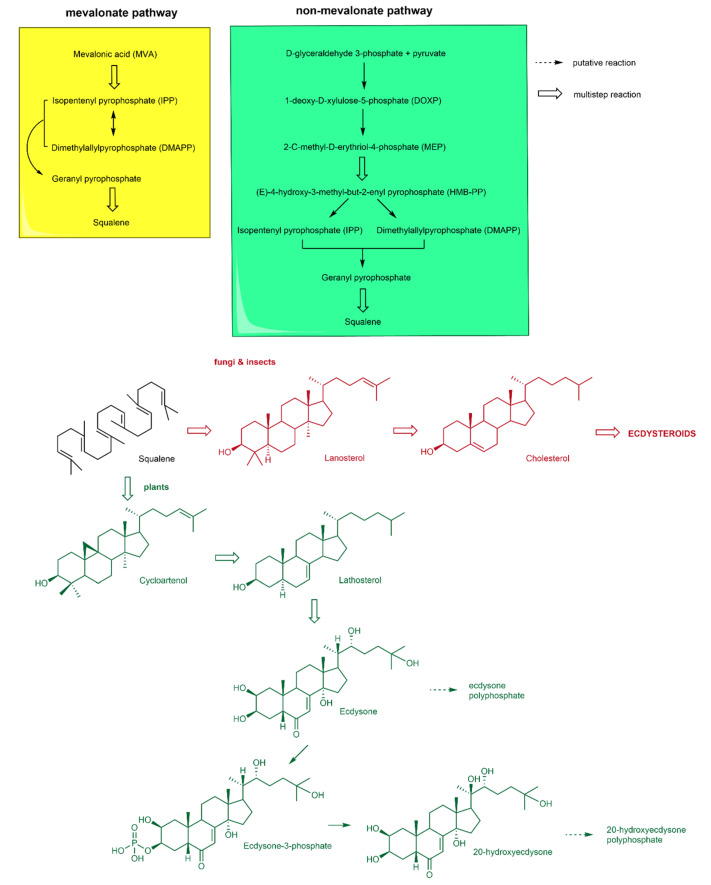
“Thus, the plant produces PEs mainly from MVA via cholesterol in the mevalonate pathway of the plant cell, using acetyl-CoA as a precursor.”
§ Phytoecdysteroids: Distribution, Structural Diversity, Biosynthesis, Activity, and Crosstalk with Phytohormones > 5. Biosynthesis of Phytoecdysteroids
What the sources say
- Not checked yetcites [13] Bakrim, 2008, Ecdysteroids in spinach (Spinacia oleracea L.): Biosynthesis, transport and regulation of levels, Plant Physiol. Biochem. source
plaindirect- Asserted: passes — The authors put it forward as true.
- Checkable: passes — It can be checked against evidence.
- Load-bearing: unclear — It is unclear whether the paper’s conclusions depend on it.
- Based: passes — The paper gives a reason why it holds.
In the paper
“Accordingly, this may suggest that the highest concentrations of PEs are present in tissues and organs that play an important role in plant growth, development, and survival, or in reproductive organs [8].”
§ Phytoecdysteroids: Distribution, Structural Diversity, Biosynthesis, Activity, and Crosstalk with Phytohormones > 2. Distribution of Phytoecdysteroids
What the sources say
- Not checked yetcites [8] Das, 2021, The phytochemical, biological, and medicinal attributes of phytoecdysteroids: An updated review, Acta Pharm. Sin. B source
hedgedcorrelational- Asserted: passes — The authors put it forward as true.
- Checkable: passes — It can be checked against evidence.
- Load-bearing: unclear — It is unclear whether the paper’s conclusions depend on it.
- Based: passes — The paper gives a reason why it holds.
In the paper
“In annual plants, PEs are primarily found in organs such as young tissue, leaves, flowers, anthers, and seeds, whereas they are less frequently present in roots and stems.”
§ Phytoecdysteroids: Distribution, Structural Diversity, Biosynthesis, Activity, and Crosstalk with Phytohormones > 2. Distribution of Phytoecdysteroids
What the sources say
- Not checked yetcites [8] Das, 2021, The phytochemical, biological, and medicinal attributes of phytoecdysteroids: An updated review, Acta Pharm. Sin. B source
plaincorrelational- Asserted: passes — The authors put it forward as true.
- Checkable: passes — It can be checked against evidence.
- Load-bearing: unclear — It is unclear whether the paper’s conclusions depend on it.
- Based: passes — The paper gives a reason why it holds.
None of the sources cited for this claim have been checked yet.
In the paper
“Furthermore, these allelochemicals can alter gene expression profiles in plants via DNA binding [18,19].”
§ Phytoecdysteroids: Distribution, Structural Diversity, Biosynthesis, Activity, and Crosstalk with Phytohormones > 1. Introduction
What the sources say
- Not checked yetcites [18] Strnad, 2016, Plant ecdysteroids: Plant sterols with intriguing distributions, biological effects and relations to plant hormones, Planta source
- Not checked yetcites [19] Tarkowská, D., Krampolová, E., and Strnad, M. (2020). Plant triterpenoid crosstalk: The interaction of brassinosteroids and phytoecdysteroids in Lepidium sativum. Plants, 9. source
plaindirect- Asserted: passes — The authors put it forward as true.
- Checkable: passes — It can be checked against evidence.
- Load-bearing: unclear — It is unclear whether the paper’s conclusions depend on it.
- Based: passes — The paper gives a reason why it holds.
In the paper
“In Chenopodium album, PE concentrations are the highest in anthers, young leaves, and seeds [20].”
§ Phytoecdysteroids: Distribution, Structural Diversity, Biosynthesis, Activity, and Crosstalk with Phytohormones > 2. Distribution of Phytoecdysteroids
What the sources say
- Not checked yetcites [20] Menken, 1992, Phytoecdysteroids and insect-plant relationships in the Chenopodiaceae, Proceedings of the 8th International Symposium on Insect-Plant Relationships. Series Entomologica
plaincorrelational- Asserted: passes — The authors put it forward as true.
- Checkable: passes — It can be checked against evidence.
- Load-bearing: unclear — It is unclear whether the paper’s conclusions depend on it.
- Based: passes — The paper gives a reason why it holds.
None of the sources cited for this claim have been checked yet.
In the paper
“In plants, PEs effectively induce biological activities and provide defense against insects, nematodes, and several environmental stresses.”
§ Phytoecdysteroids: Distribution, Structural Diversity, Biosynthesis, Activity, and Crosstalk with Phytohormones > 1. Introduction
What the sources say
- Not checked yetcites [18] Strnad, 2016, Plant ecdysteroids: Plant sterols with intriguing distributions, biological effects and relations to plant hormones, Planta source
- Not checked yetcites [19] Tarkowská, D., Krampolová, E., and Strnad, M. (2020). Plant triterpenoid crosstalk: The interaction of brassinosteroids and phytoecdysteroids in Lepidium sativum. Plants, 9. source
boosteddirect- Asserted: passes — The authors put it forward as true.
- Checkable: passes — It can be checked against evidence.
- Load-bearing: unclear — It is unclear whether the paper’s conclusions depend on it.
- Based: passes — The paper gives a reason why it holds.
In the paper
“In annual plants, PEs are translocated from seeds to developing organs such as the shoots and other growing regions.”
§ Phytoecdysteroids: Distribution, Structural Diversity, Biosynthesis, Activity, and Crosstalk with Phytohormones > 2. Distribution of Phytoecdysteroids
What the sources say
- Not checked yetcites [18] Strnad, 2016, Plant ecdysteroids: Plant sterols with intriguing distributions, biological effects and relations to plant hormones, Planta source
plaindirect- Asserted: passes — The authors put it forward as true.
- Checkable: passes — It can be checked against evidence.
- Load-bearing: unclear — It is unclear whether the paper’s conclusions depend on it.
- Based: passes — The paper gives a reason why it holds.
- Probably not a substantial claim. 21
- It may state two separate claims as one. 132
None of the sources cited for this claim have been checked yet.
In the paper
“However, 20-hydroxyecdysone (20-HE) is the most common and widely used [4,5,6,7].”
§ Phytoecdysteroids: Distribution, Structural Diversity, Biosynthesis, Activity, and Crosstalk with Phytohormones > 1. Introduction
What the sources say
- Not checked yetcites [4] Smagghe, G. (2009). Phytoecdysteroids: Diversity, biosynthesis and distribution. Ecdysone: Structures and Functions, Springer. source
- Not checked yetcites [5] Burdette, W.J. (1974). Ecdysones of plant origin. Invertebrate Endocrinology and Hormonal Heterophylly, Springer. source
- Not checked yetcites [6] Lafont, 2002, Initial steps of Shigella infection depend on the cholesterol/sphingolipid raft-mediated CD44-IpaB interaction, EMBO J. source
- Not checked yetcites [7] Yusupova, U.Y., Ramazonov, N.S., Syrov, V.N., and Sagdullaev, S.S. (2022). Phytoecdysteroids. Phytoecdysteroids: Properties, Biological Activity and Applications, Springer. source
plain- Asserted: passes — The authors put it forward as true.
- Checkable: passes — It can be checked against evidence.
- Load-bearing: fails — The paper’s conclusions may not depend on it.
- Based: passes — The paper gives a reason why it holds.
Probably not a substantial claim. The paper’s conclusions may not depend on it. It may state two separate claims as one.
In the paper
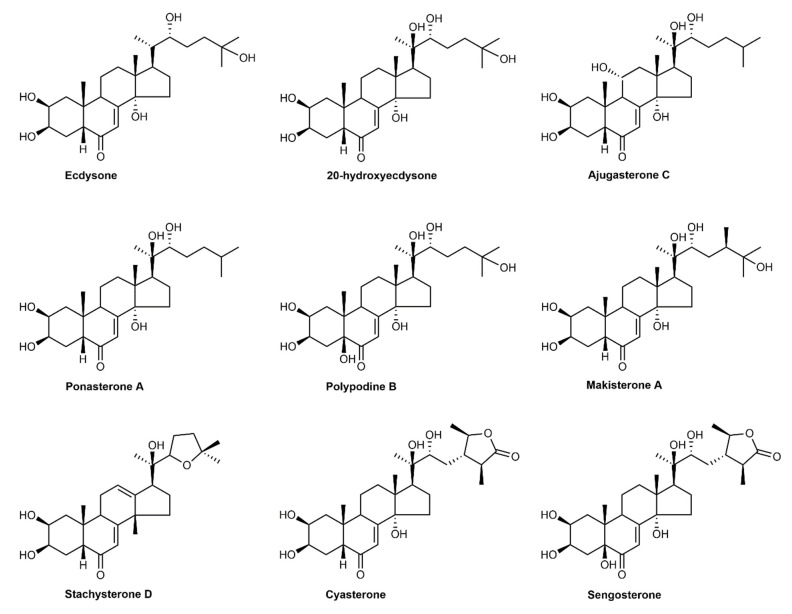
“These structures are C27, C28, C29, or C30 chemical polyhydroxy steroids that bear 14α-hydroxy-7-en-6-one chromophore and the A/B-cis ring.”
§ Phytoecdysteroids: Distribution, Structural Diversity, Biosynthesis, Activity, and Crosstalk with Phytohormones > 3. Structure of Phytoecdysteroids
What the sources say
- Not checked yetcites [8] Das, 2021, The phytochemical, biological, and medicinal attributes of phytoecdysteroids: An updated review, Acta Pharm. Sin. B source
plain- Asserted: passes — The authors put it forward as true.
- Checkable: passes — It can be checked against evidence.
- Load-bearing: unclear — It is unclear whether the paper’s conclusions depend on it.
- Based: passes — The paper gives a reason why it holds.
It may state two separate claims as one.
None of the sources cited for this claim have been checked yet.
In the paper
“They also possess allelochemical activity that provides tolerance against several insect attacks, such as taste receptors, which facilitate hormonal disruptions and toxicity in insects and nematodes.”
§ Phytoecdysteroids: Distribution, Structural Diversity, Biosynthesis, Activity, and Crosstalk with Phytohormones > 1. Introduction
What the sources say
- Not checked yetcites [18] Strnad, 2016, Plant ecdysteroids: Plant sterols with intriguing distributions, biological effects and relations to plant hormones, Planta source
- Not checked yetcites [19] Tarkowská, D., Krampolová, E., and Strnad, M. (2020). Plant triterpenoid crosstalk: The interaction of brassinosteroids and phytoecdysteroids in Lepidium sativum. Plants, 9. source
plaindirect- Asserted: passes — The authors put it forward as true.
- Checkable: passes — It can be checked against evidence.
- Load-bearing: unclear — It is unclear whether the paper’s conclusions depend on it.
- Based: passes — The paper gives a reason why it holds.
It may state two separate claims as one.
In the paper
“The distribution of PEs in plants varies from organ to organ and may change according to season or geographical area.”
§ Phytoecdysteroids: Distribution, Structural Diversity, Biosynthesis, Activity, and Crosstalk with Phytohormones > 2. Distribution of Phytoecdysteroids
What the sources say
- Not checked yetcites [8] Das, 2021, The phytochemical, biological, and medicinal attributes of phytoecdysteroids: An updated review, Acta Pharm. Sin. B source
hedgedconditional- Asserted: passes — The authors put it forward as true.
- Checkable: passes — It can be checked against evidence.
- Load-bearing: unclear — It is unclear whether the paper’s conclusions depend on it.
- Based: passes — The paper gives a reason why it holds.
It may state two separate claims as one.
None of the sources cited for this claim have been checked yet.
In the paper
“PEs also induce protein biosynthesis and modulate carbohydrate and lipid synthesis.”
§ Phytoecdysteroids: Distribution, Structural Diversity, Biosynthesis, Activity, and Crosstalk with Phytohormones > Abstract
What the sources say
- Not checked yetcites [8] Das, 2021, The phytochemical, biological, and medicinal attributes of phytoecdysteroids: An updated review, Acta Pharm. Sin. B source
- Not checked yetcites [15] 2015, Ecdysteroids in plants and their pharmacological effects in vertebrates and humans, Studies in Natural Products Chemistry source
- Not checked yetcites [17] Lapenna, 2013, Assessing herbal products with health claims, Crit. Rev. Food Sci. Nutr. source
plaindirect- Asserted: passes — The authors put it forward as true.
- Checkable: passes — It can be checked against evidence.
- Load-bearing: unclear — It is unclear whether the paper’s conclusions depend on it.
- Based: passes — The paper gives a reason why it holds.
It may state two separate claims as one.
None of the sources cited for this claim have been checked yet.
In the paper
“PEs promote enzymatic and non-enzymatic antioxidant defense systems, which decrease reactive oxygen species in the form of superoxide radicals and hydroxyl radicals and reduce malondialdehyde content.”
§ Phytoecdysteroids: Distribution, Structural Diversity, Biosynthesis, Activity, and Crosstalk with Phytohormones > Abstract
What the sources say
- Not checked yetcites [8] Das, 2021, The phytochemical, biological, and medicinal attributes of phytoecdysteroids: An updated review, Acta Pharm. Sin. B source
- Not checked yetcites [15] 2015, Ecdysteroids in plants and their pharmacological effects in vertebrates and humans, Studies in Natural Products Chemistry source
- Not checked yetcites [17] Lapenna, 2013, Assessing herbal products with health claims, Crit. Rev. Food Sci. Nutr. source
plaindirect- Asserted: passes — The authors put it forward as true.
- Checkable: passes — It can be checked against evidence.
- Load-bearing: passes — The paper’s conclusions depend on it.
- Based: passes — The paper gives a reason why it holds.
It may state two separate claims as one.
None of the sources cited for this claim have been checked yet.
In the paper
“ECs are found in more than 50% of fern families, such as Pteridaceae, Polypodiaceae, and Blechneaceae, but are only found in several conifer and angiosperm families [28,29].”
§ Phytoecdysteroids: Distribution, Structural Diversity, Biosynthesis, Activity, and Crosstalk with Phytohormones > 2. Distribution of Phytoecdysteroids
What the sources say
- Not checked yetcites [28] Savchenko, R.G., Veskina, N.A., Odinokov, V.N., Benkovskaya, G.V., and Parfenova, L.V. (2022). Ecdysteroids: Isolation, chemical transformations, and biological activity. Phytochem. Rev., 1–42. source
- Not checked yetcites [29] Wu, 2010, Phytoecdysteroids from the rhizomes of Brainea insignis, Phytochemistry source
plain- Asserted: passes — The authors put it forward as true.
- Checkable: passes — It can be checked against evidence.
- Load-bearing: unclear — It is unclear whether the paper’s conclusions depend on it.
- Based: passes — The paper gives a reason why it holds.
It may state two separate claims as one.
In the paper
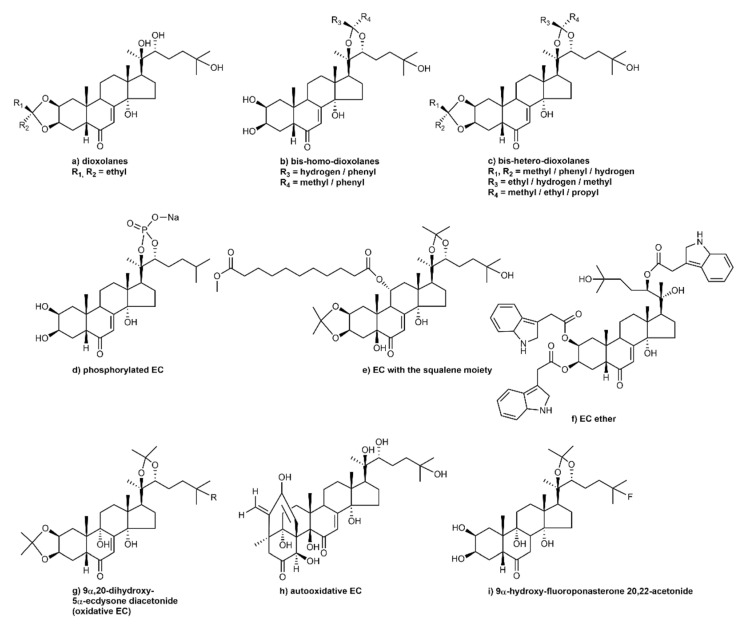
“PEs are generally found in a free-state or in conjugated or bound forms with organic acids in ester form (such as benzoate, acetate, crotonate, coumarate, and cinnamate), with sugars in the form of glucosides (such as galactose, glucose, and xylose), with sulfates, or in a methyl ether form or isopropylidene.”
§ Phytoecdysteroids: Distribution, Structural Diversity, Biosynthesis, Activity, and Crosstalk with Phytohormones > 2. Distribution of Phytoecdysteroids
What the sources say
- Not checked yetcites [7] Yusupova, U.Y., Ramazonov, N.S., Syrov, V.N., and Sagdullaev, S.S. (2022). Phytoecdysteroids. Phytoecdysteroids: Properties, Biological Activity and Applications, Springer. source
plain- Asserted: passes — The authors put it forward as true.
- Checkable: passes — It can be checked against evidence.
- Load-bearing: unclear — It is unclear whether the paper’s conclusions depend on it.
- Based: passes — The paper gives a reason why it holds.
It may state two separate claims as one.
In the paper
“Additionally, there are some variations of the hydroxyl and conjugating group (such as position, number, and orientation) in the steroid ring structure; sometimes, an oxo group occurs in C-2, C-6, C-12, C-17, C-20, or C-22.”
§ Phytoecdysteroids: Distribution, Structural Diversity, Biosynthesis, Activity, and Crosstalk with Phytohormones > 2. Distribution of Phytoecdysteroids
What the sources say
- Not checked yetcites [7] Yusupova, U.Y., Ramazonov, N.S., Syrov, V.N., and Sagdullaev, S.S. (2022). Phytoecdysteroids. Phytoecdysteroids: Properties, Biological Activity and Applications, Springer. source
plain- Asserted: passes — The authors put it forward as true.
- Checkable: passes — It can be checked against evidence.
- Load-bearing: unclear — It is unclear whether the paper’s conclusions depend on it.
- Based: passes — The paper gives a reason why it holds.
It may state two separate claims as one.
None of the sources cited for this claim have been checked yet.
In the paper
“Cyanotis vaga and Cyanotis arachnoidea belong to monocot species, and several species of ferns that belong to Polypodium are rich sources of ECs [7,8,30,31,32,33,34,35].”
§ Phytoecdysteroids: Distribution, Structural Diversity, Biosynthesis, Activity, and Crosstalk with Phytohormones > 2. Distribution of Phytoecdysteroids
What the sources say
- Not checked yetcites [7] Yusupova, U.Y., Ramazonov, N.S., Syrov, V.N., and Sagdullaev, S.S. (2022). Phytoecdysteroids. Phytoecdysteroids: Properties, Biological Activity and Applications, Springer. source
- Not checked yetcites [8] Das, 2021, The phytochemical, biological, and medicinal attributes of phytoecdysteroids: An updated review, Acta Pharm. Sin. B source
- Not checked yetcites [30] Thiem, 2017, Ecdysteroids: Production in plant in vitro cultures, Phytochem. Rev. source
- Not checked yetcites [31] Crouzet, 2009, Ecdysteroids from Cyanotis longifolia Benth. (Commelinaceae), Arch. Insect Biochem. Physiol. source
- Not checked yetcites [32] Dinan, 2009, The Karlson Lecture. Phytoecdysteroids: What use are they?, Arch. Insect Biochem. Physiol. source
- Not checked yetcites [33] Dinan, 2006, Effects and applications of arthropod steroid hormones (ecdysteroids) in mammals, J. Endocrinol. source
- Not checked yetcites [34] Gomes, 2010, Concentration of β-ecdysone (20E) in susceptible and resistant accessions of Pfaffia glomerata infected with Meloidogyne incognita and histological characterisation of resistance, Nematology source
- Not checked yetcites [35] Tan, 2011, Isolation and analysis of a new phytoecdysteroid from Cyanotis arachnoidea C. B. Clarke, Chin. J. Chromatogr.
plain- Asserted: passes — The authors put it forward as true.
- Checkable: passes — It can be checked against evidence.
- Load-bearing: fails — The paper’s conclusions may not depend on it.
- Based: passes — The paper gives a reason why it holds.
Probably not a substantial claim. The paper’s conclusions may not depend on it. It may state two separate claims as one.
The paper states this without a source or data behind it here, so there is nothing to check it against. The quote shows it is in the paper.
In the paper
“ECs are polar steroids, and their solubility is identical to that of sugar molecules; thus, they are lipophilic and soluble in aqueous mediums.”
§ Phytoecdysteroids: Distribution, Structural Diversity, Biosynthesis, Activity, and Crosstalk with Phytohormones > 3. Structure of Phytoecdysteroids
plaindirect- Asserted: passes — The authors put it forward as true.
- Checkable: passes — It can be checked against evidence.
- Load-bearing: fails — The paper’s conclusions may not depend on it.
- Based: fails — The paper may give no reason why it holds.
Probably not a substantial claim. The paper’s conclusions may not depend on it. The paper may give no reason why it holds. It may state two separate claims as one.
The paper states this without a source or data behind it here, so there is nothing to check it against. The quote shows it is in the paper.
In the paper
“The sterol structure modulates and synthesizes ECs; subsequently, the trans-A/B ring in sterols undergoes conversion into the junction of the cis-A/B ring in ECs.”
§ Phytoecdysteroids: Distribution, Structural Diversity, Biosynthesis, Activity, and Crosstalk with Phytohormones > 3. Structure of Phytoecdysteroids
plaindirect- Asserted: passes — The authors put it forward as true.
- Checkable: passes — It can be checked against evidence.
- Load-bearing: unclear — It is unclear whether the paper’s conclusions depend on it.
- Based: passes — The paper gives a reason why it holds.
It may state two separate claims as one.
None of the sources cited for this claim have been checked yet.
In the paper
“Additionally, invertebrates cannot synthesize ECs; rather, they consume phytosterols and convert them into ECs.”
§ Phytoecdysteroids: Distribution, Structural Diversity, Biosynthesis, Activity, and Crosstalk with Phytohormones > 3. Structure of Phytoecdysteroids
What the sources say
- Not checked yetcites [21] Grebenok, 1993, Ecdysteroid biosynthesis during the ontogeny of spinach leaves, Phytochemistry source
- Not checked yetcites [22] Grebenok, 1994, Biosynthesis of ecdysone and ecdysone phosphates in spinach, Phytochemistry source
- Not checked yetcites [115] Gilbert, 2002, Control and biochemical nature of the ecdysteroidogenic pathway, Annu. Rev. Entomol. source
- Not checked yetcites [116] Guo, 1995, Developmental regulation of sterol biosynthesis in Zea mays, Lipids source
plaindirect- Asserted: passes — The authors put it forward as true.
- Checkable: passes — It can be checked against evidence.
- Load-bearing: unclear — It is unclear whether the paper’s conclusions depend on it.
- Based: passes — The paper gives a reason why it holds.
It may state two separate claims as one.
The paper states this without a source or data behind it here, so there is nothing to check it against. The quote shows it is in the paper.
In the paper
“The important features of ECs are the presence of the cis-(5β-H) junction of rings A and B, the 7-en-6-one chromophore, and the trans-(14α-OH) junction of rings C and D.”
§ Phytoecdysteroids: Distribution, Structural Diversity, Biosynthesis, Activity, and Crosstalk with Phytohormones > 3. Structure of Phytoecdysteroids
plain- Asserted: passes — The authors put it forward as true.
- Checkable: passes — It can be checked against evidence.
- Load-bearing: fails — The paper’s conclusions may not depend on it.
- Based: passes — The paper gives a reason why it holds.
Probably not a substantial claim. The paper’s conclusions may not depend on it. It may state two separate claims as one.
None of the sources cited for this claim have been checked yet.
In the paper
“Steroid ring structure shows variation, which is not significant; substantial variations are found in the number, positioning, and orientation of hydroxyl groups and conjugating groups.”
§ Phytoecdysteroids: Distribution, Structural Diversity, Biosynthesis, Activity, and Crosstalk with Phytohormones > 3. Structure of Phytoecdysteroids
What the sources say
- Not checked yetcites [4] Smagghe, G. (2009). Phytoecdysteroids: Diversity, biosynthesis and distribution. Ecdysone: Structures and Functions, Springer. source
- Not checked yetcites [8] Das, 2021, The phytochemical, biological, and medicinal attributes of phytoecdysteroids: An updated review, Acta Pharm. Sin. B source
- Not checked yetcites [15] 2015, Ecdysteroids in plants and their pharmacological effects in vertebrates and humans, Studies in Natural Products Chemistry source
- Not checked yetcites [32] Dinan, 2009, The Karlson Lecture. Phytoecdysteroids: What use are they?, Arch. Insect Biochem. Physiol. source
plain- Asserted: passes — The authors put it forward as true.
- Checkable: passes — It can be checked against evidence.
- Load-bearing: unclear — It is unclear whether the paper’s conclusions depend on it.
- Based: passes — The paper gives a reason why it holds.
It may state two separate claims as one.
The paper states this without a source or data behind it here, so there is nothing to check it against. The quote shows it is in the paper.
In the paper
“However, mammalian steroidal hormones are relatively non-polar and have variable structures. For example, they do not contain polyhydroxylated side-chain features.”
§ Phytoecdysteroids: Distribution, Structural Diversity, Biosynthesis, Activity, and Crosstalk with Phytohormones > 3. Structure of Phytoecdysteroids
plain- Asserted: passes — The authors put it forward as true.
- Checkable: passes — It can be checked against evidence.
- Load-bearing: fails — The paper’s conclusions may not depend on it.
- Based: fails — The paper may give no reason why it holds.
Probably not a substantial claim. The paper’s conclusions may not depend on it. The paper may give no reason why it holds. It may state two separate claims as one.
The paper states this without a source or data behind it here, so there is nothing to check it against. The quote shows it is in the paper.
In the paper
“Arthropods and insects cannot cyclize squalene, so they cannot produce sterols; thus, they acquire them from dietary sources.”
§ Phytoecdysteroids: Distribution, Structural Diversity, Biosynthesis, Activity, and Crosstalk with Phytohormones > 5. Biosynthesis of Phytoecdysteroids
plaindirect- Asserted: passes — The authors put it forward as true.
- Checkable: passes — It can be checked against evidence.
- Load-bearing: unclear — It is unclear whether the paper’s conclusions depend on it.
- Based: unclear — It is unclear why the paper says it holds.
It may state two separate claims as one.
The paper states this without a source or data behind it here, so there is nothing to check it against. The quote shows it is in the paper.
In the paper
“Furthermore, isopentenyl diphosphate (IPP) and dimethylallyl diphosphate (DMAPP) are the building blocks of isoprenoid, not only synthesized from MVA but also from the 2C-methyl-erythritol-4-phosphate (MEP) pathway inside plastids.”
§ Phytoecdysteroids: Distribution, Structural Diversity, Biosynthesis, Activity, and Crosstalk with Phytohormones > 5. Biosynthesis of Phytoecdysteroids
plaindirect- Asserted: passes — The authors put it forward as true.
- Checkable: passes — It can be checked against evidence.
- Load-bearing: fails — The paper’s conclusions may not depend on it.
- Based: passes — The paper gives a reason why it holds.
Probably not a substantial claim. The paper’s conclusions may not depend on it. It may state two separate claims as one.
The paper states this without a source or data behind it here, so there is nothing to check it against. The quote shows it is in the paper.
In the paper
“Mevalonic acid (MVA) is the precursor of plant sterol (e.g., triterpenoid) biosynthesis inside the cytosol.”
§ Phytoecdysteroids: Distribution, Structural Diversity, Biosynthesis, Activity, and Crosstalk with Phytohormones > 5. Biosynthesis of Phytoecdysteroids
plaindirect- Asserted: passes — The authors put it forward as true.
- Checkable: passes — It can be checked against evidence.
- Load-bearing: fails — The paper’s conclusions may not depend on it.
- Based: passes — The paper gives a reason why it holds.
Probably not a substantial claim. The paper’s conclusions may not depend on it.
The paper states this without a source or data behind it here, so there is nothing to check it against. The quote shows it is in the paper.
In the paper
“In the MVA pathway, six activated isoprene units form squalene in condensation reactions, and this then goes through epoxidation and cyclization to produce lanosterol.”
§ Phytoecdysteroids: Distribution, Structural Diversity, Biosynthesis, Activity, and Crosstalk with Phytohormones > 5. Biosynthesis of Phytoecdysteroids
plaindirect- Asserted: passes — The authors put it forward as true.
- Checkable: passes — It can be checked against evidence.
- Load-bearing: fails — The paper’s conclusions may not depend on it.
- Based: passes — The paper gives a reason why it holds.
Probably not a substantial claim. The paper’s conclusions may not depend on it. It may state two separate claims as one.
The paper states this without a source or data behind it here, so there is nothing to check it against. The quote shows it is in the paper.
In the paper
“Additionally, in higher plants, IPP and DMAPP from pyruvate and glyceraldehyde-3-phosphate via the non-MVA pathway, and MVA (minor) and MEP (major) pathways are also required for the synthesis of the plant hormone gibberellic acid (GA3).”
§ Phytoecdysteroids: Distribution, Structural Diversity, Biosynthesis, Activity, and Crosstalk with Phytohormones > 5. Biosynthesis of Phytoecdysteroids
plaindirect- Asserted: passes — The authors put it forward as true.
- Checkable: passes — It can be checked against evidence.
- Load-bearing: fails — The paper’s conclusions may not depend on it.
- Based: passes — The paper gives a reason why it holds.
Probably not a substantial claim. The paper’s conclusions may not depend on it.
None of the sources cited for this claim have been checked yet.
In the paper
“In spinach, lathosterol (C27-sterol) is the precursor of PEs, whereas in Drosophila melanogaster, C27-sterol, i.e., cholesterol, synthesizes ECs [4,18,19,23,24,142].”
§ Phytoecdysteroids: Distribution, Structural Diversity, Biosynthesis, Activity, and Crosstalk with Phytohormones > 5. Biosynthesis of Phytoecdysteroids
What the sources say
- Not checked yetcites [4] Smagghe, G. (2009). Phytoecdysteroids: Diversity, biosynthesis and distribution. Ecdysone: Structures and Functions, Springer. source
- Not checked yetcites [18] Strnad, 2016, Plant ecdysteroids: Plant sterols with intriguing distributions, biological effects and relations to plant hormones, Planta source
- Not checked yetcites [19] Tarkowská, D., Krampolová, E., and Strnad, M. (2020). Plant triterpenoid crosstalk: The interaction of brassinosteroids and phytoecdysteroids in Lepidium sativum. Plants, 9. source
- Not checked yetcites [23] Adler, 1995, Biosynthesis and distribution of insect-molting hormones in plants—A review, Lipids source
- Not checked yetcites [24] Adler, 1999, Occurrence, biosynthesis, and putative role of ecdysteroids in plants, Crit. Rev. Biochem. Mol. source
- Not checked yetcites [142] Niwa, 2014, Enzymes for ecdysteroid biosynthesis: Their biological functions in insects and beyond, Biosci. Biotech. Bioch. source
plaindirect- Asserted: passes — The authors put it forward as true.
- Checkable: passes — It can be checked against evidence.
- Load-bearing: unclear — It is unclear whether the paper’s conclusions depend on it.
- Based: passes — The paper gives a reason why it holds.
It may state two separate claims as one.
The paper states this without a source or data behind it here, so there is nothing to check it against. The quote shows it is in the paper.
In the paper
“The polar nature of PEs makes them difficult to isolate from other major polar plant materials such as chlorophyll, steroids, amino acids, terpenoids, phenols, and pigment constituents.”
§ Phytoecdysteroids: Distribution, Structural Diversity, Biosynthesis, Activity, and Crosstalk with Phytohormones > 4. Isolation and Identification of Phytoecdysteroids
plaindirect- Asserted: passes — The authors put it forward as true.
- Checkable: passes — It can be checked against evidence.
- Load-bearing: fails — The paper’s conclusions may not depend on it.
- Based: passes — The paper gives a reason why it holds.
Probably not a substantial claim. The paper’s conclusions may not depend on it.
None of the sources cited for this claim have been checked yet.
In the paper
“In corn, MVA is not the pathway for synthesizing phytosterols; other pathways participate in synthesizing IPP [18,116,143,144].”
§ Phytoecdysteroids: Distribution, Structural Diversity, Biosynthesis, Activity, and Crosstalk with Phytohormones > 5. Biosynthesis of Phytoecdysteroids
What the sources say
- Not checked yetcites [18] Strnad, 2016, Plant ecdysteroids: Plant sterols with intriguing distributions, biological effects and relations to plant hormones, Planta source
- Not checked yetcites [116] Guo, 1995, Developmental regulation of sterol biosynthesis in Zea mays, Lipids source
- Not checked yetcites [143] Kasahara, 2002, Contribution of the mevalonate and methylerythritol phosphate pathways to the biosynthesis of gibberellins in Arabidopsis, J. Biol. Chem. source
- Not checked yetcites [144] Piironen, 2000, Plant sterols: Biosynthesis, biological function and their importance to human nutrition, J. Sci. Food Agric. source
plain- Asserted: passes — The authors put it forward as true.
- Checkable: passes — It can be checked against evidence.
- Load-bearing: fails — The paper’s conclusions may not depend on it.
- Based: passes — The paper gives a reason why it holds.
Probably not a substantial claim. The paper’s conclusions may not depend on it. It may state two separate claims as one.
None of the sources cited for this claim have been checked yet.
In the paper
“Several structural modifications are present in different plant families, probably due to different uses of metabolites [4,8,15,32].”
§ Phytoecdysteroids: Distribution, Structural Diversity, Biosynthesis, Activity, and Crosstalk with Phytohormones > 3. Structure of Phytoecdysteroids
What the sources say
- Not checked yetcites [4] Smagghe, G. (2009). Phytoecdysteroids: Diversity, biosynthesis and distribution. Ecdysone: Structures and Functions, Springer. source
- Not checked yetcites [8] Das, 2021, The phytochemical, biological, and medicinal attributes of phytoecdysteroids: An updated review, Acta Pharm. Sin. B source
- Not checked yetcites [15] 2015, Ecdysteroids in plants and their pharmacological effects in vertebrates and humans, Studies in Natural Products Chemistry source
- Not checked yetcites [32] Dinan, 2009, The Karlson Lecture. Phytoecdysteroids: What use are they?, Arch. Insect Biochem. Physiol. source
hedgedconditional- Asserted: passes — The authors put it forward as true.
- Checkable: passes — It can be checked against evidence.
- Load-bearing: fails — The paper’s conclusions may not depend on it.
- Based: passes — The paper gives a reason why it holds.
Probably not a substantial claim. The paper’s conclusions may not depend on it.
None of the sources cited for this claim have been checked yet.
In the paper
“Moreover, the biosynthesis of ECs stops in the source. This results in the formation of EC phosphates; this is called the feedback mechanism [4,13].”
§ Phytoecdysteroids: Distribution, Structural Diversity, Biosynthesis, Activity, and Crosstalk with Phytohormones > 5. Biosynthesis of Phytoecdysteroids > Regulation of Phytzoecdysteroid Biosynthesis
What the sources say
- Not checked yetcites [4] Smagghe, G. (2009). Phytoecdysteroids: Diversity, biosynthesis and distribution. Ecdysone: Structures and Functions, Springer. source
- Not checked yetcites [13] Bakrim, 2008, Ecdysteroids in spinach (Spinacia oleracea L.): Biosynthesis, transport and regulation of levels, Plant Physiol. Biochem. source
plaindirect- Asserted: passes — The authors put it forward as true.
- Checkable: passes — It can be checked against evidence.
- Load-bearing: unclear — It is unclear whether the paper’s conclusions depend on it.
- Based: passes — The paper gives a reason why it holds.
It may state two separate claims as one.
In the paper
“In Ajaga reptans hairy roots, 3β-hydroxy-5β-cholestan-6-one is converted into 2β,3β-dihydroxy-5β-cholestan-6-one and subsequently converted into 20-HE; therefore, this concludes that 7-ene is added afterward during biosynthesis [146].”
§ Phytoecdysteroids: Distribution, Structural Diversity, Biosynthesis, Activity, and Crosstalk with Phytohormones > 5. Biosynthesis of Phytoecdysteroids
What the sources say
- Not checked yetcites [146] Hyodo, 2000, Biosynthesis of 20-hydroxyecdysone in Ajuga hairy roots: The possibility of 7-ene introduction at a late stage, Phytochemistry source
boosteddirectSingle case- Asserted: passes — The authors put it forward as true.
- Checkable: passes — It can be checked against evidence.
- Load-bearing: unclear — It is unclear whether the paper’s conclusions depend on it.
- Based: passes — The paper gives a reason why it holds.
It may state two separate claims as one.
The paper states this without a source or data behind it here, so there is nothing to check it against. The quote shows it is in the paper.
In the paper
“Furthermore, plants also contain C-24 alkylated sterols and unalkylated cholesterol.”
§ Phytoecdysteroids: Distribution, Structural Diversity, Biosynthesis, Activity, and Crosstalk with Phytohormones > 5. Biosynthesis of Phytoecdysteroids
plain- Asserted: passes — The authors put it forward as true.
- Checkable: passes — It can be checked against evidence.
- Load-bearing: unclear — It is unclear whether the paper’s conclusions depend on it.
- Based: passes — The paper gives a reason why it holds.
It may state two separate claims as one.
In the paper
“ECs are stable compounds that have slow turnover; thus, ECs accumulate in different organs of the plant and translocate and are distributed from one organ to another [4].”
§ Phytoecdysteroids: Distribution, Structural Diversity, Biosynthesis, Activity, and Crosstalk with Phytohormones > 5. Biosynthesis of Phytoecdysteroids > Regulation of Phytzoecdysteroid Biosynthesis
What the sources say
- Not checked yetcites [4] Smagghe, G. (2009). Phytoecdysteroids: Diversity, biosynthesis and distribution. Ecdysone: Structures and Functions, Springer. source
plaindirect- Asserted: passes — The authors put it forward as true.
- Checkable: passes — It can be checked against evidence.
- Load-bearing: unclear — It is unclear whether the paper’s conclusions depend on it.
- Based: passes — The paper gives a reason why it holds.
It may state two separate claims as one.
In the paper
“For instance, in spinach (Spinacia oleracea), ECs are produced in older leaves (source) and then transported to younger leaves (sink); the removal of the sink or younger leaves leads to the accumulation of ECs in older leaves.”
§ Phytoecdysteroids: Distribution, Structural Diversity, Biosynthesis, Activity, and Crosstalk with Phytohormones > 5. Biosynthesis of Phytoecdysteroids > Regulation of Phytzoecdysteroid Biosynthesis
What the sources say
- Not checked yetcites [4] Smagghe, G. (2009). Phytoecdysteroids: Diversity, biosynthesis and distribution. Ecdysone: Structures and Functions, Springer. source
plaindirect- Asserted: passes — The authors put it forward as true.
- Checkable: passes — It can be checked against evidence.
- Load-bearing: unclear — It is unclear whether the paper’s conclusions depend on it.
- Based: passes — The paper gives a reason why it holds.
It may state two separate claims as one.
None of the sources cited for this claim have been checked yet.
In the paper
“PEs have several beneficial effects on mammals: they play roles in anabolic, adaptogenic, antidiabetic, anti-inflammatory, antioxidant, antitumor, antimicrobial, and anti-arthritic activity. They also act as hepatoprotectors and immunomodulators [3,8,12,15,155].”
§ Phytoecdysteroids: Distribution, Structural Diversity, Biosynthesis, Activity, and Crosstalk with Phytohormones > 6. Pharmacological and Bioactivity of Phytoecdysteroids
What the sources say
- Not checked yetcites [3] Dinan, 2001, Phytoecdysteroids: Biological aspects, Phytochemistry source
- Not checked yetcites [8] Das, 2021, The phytochemical, biological, and medicinal attributes of phytoecdysteroids: An updated review, Acta Pharm. Sin. B source
- Not checked yetcites [12] Smagghe, G. (2009). Innovative and future applications for ecdysteroids. Ecdysone: Structures and Functions, Springer. source
- Not checked yetcites [15] 2015, Ecdysteroids in plants and their pharmacological effects in vertebrates and humans, Studies in Natural Products Chemistry source
- Not checked yetcites [155] Lafont, 2003, Practical uses for ecdysteroids in mammals including humans: And update, J. Insect Sci. source
plaindirect- Asserted: passes — The authors put it forward as true.
- Checkable: passes — It can be checked against evidence.
- Load-bearing: unclear — It is unclear whether the paper’s conclusions depend on it.
- Based: passes — The paper gives a reason why it holds.
It may state two separate claims as one.
In the paper
“After long-term labeling, labeled EC and 20-hydroxy EC conjugates were isolated, revealing free EC dispersal after glycosidase treatment.”
§ Phytoecdysteroids: Distribution, Structural Diversity, Biosynthesis, Activity, and Crosstalk with Phytohormones > 5. Biosynthesis of Phytoecdysteroids > Regulation of Phytzoecdysteroid Biosynthesis
What the sources say
- Not checked yetcites [152] Devarenne, 1995, Biosynthesis of ecdysteroids in Zea mays, Phytochemistry source
plaindirectSingle case- Asserted: passes — The authors put it forward as true.
- Checkable: passes — It can be checked against evidence.
- Load-bearing: passes — The paper’s conclusions depend on it.
- Based: passes — The paper gives a reason why it holds.
It may state two separate claims as one.
In the paper
“α-Ecdysone acts as an immunomodulator and anti-inflammasome [159].”
§ Phytoecdysteroids: Distribution, Structural Diversity, Biosynthesis, Activity, and Crosstalk with Phytohormones > 6. Pharmacological and Bioactivity of Phytoecdysteroids
What the sources say
- Not checked yetcites [159] Bhardwaj, 2019, α-Ecdysone suppresses inflammatory responses via the Nrf2 pathway in lipopolysaccharide-stimulated RAW 264.7 cells, Int. Immunopharmacol. source
plaindirect- Asserted: passes — The authors put it forward as true.
- Checkable: passes — It can be checked against evidence.
- Load-bearing: unclear — It is unclear whether the paper’s conclusions depend on it.
- Based: passes — The paper gives a reason why it holds.
It may state two separate claims as one.
In the paper
“PEs have anabolic modulatory activities that are used to treat diabetes, as they have blood-glucose-lowering properties by stimulating β-cells of the pancreas [156].”
§ Phytoecdysteroids: Distribution, Structural Diversity, Biosynthesis, Activity, and Crosstalk with Phytohormones > 6. Pharmacological and Bioactivity of Phytoecdysteroids
What the sources say
- Not checked yetcites [156] Islam, 2007, Green tea, anti-diabetic or diabetogenic: A dose response study, Biofactors source
plaindirect- Asserted: passes — The authors put it forward as true.
- Checkable: passes — It can be checked against evidence.
- Load-bearing: unclear — It is unclear whether the paper’s conclusions depend on it.
- Based: passes — The paper gives a reason why it holds.
It may state two separate claims as one.
In the paper
“PEs increase antioxidant enzyme activity, which reduces glucose oxidation and oxidative stress, which helps to reduce diabetes.”
§ Phytoecdysteroids: Distribution, Structural Diversity, Biosynthesis, Activity, and Crosstalk with Phytohormones > 6. Pharmacological and Bioactivity of Phytoecdysteroids
What the sources say
- Not checked yetcites [155] Lafont, 2003, Practical uses for ecdysteroids in mammals including humans: And update, J. Insect Sci. source
plaindirect- Asserted: passes — The authors put it forward as true.
- Checkable: passes — It can be checked against evidence.
- Load-bearing: passes — The paper’s conclusions depend on it.
- Based: passes — The paper gives a reason why it holds.
It may state two separate claims as one.
In the paper
“In rats, PEs cause a reduction in blood sugar levels; they also decrease urea, nitrogen, cholesterol, lipid peroxidation, and triglycerides in the blood. This further promotes antioxidant enzyme activity, such as catalase, glutathione peroxidase, and superoxide dismutase [157].”
§ Phytoecdysteroids: Distribution, Structural Diversity, Biosynthesis, Activity, and Crosstalk with Phytohormones > 6. Pharmacological and Bioactivity of Phytoecdysteroids
What the sources say
- Not checked yetcites [157] Wang, 2017, Phytoecdysteroids from Ajuga iva act as potential antidiabetic agent against alloxan-induced diabetic male albino rats, Biomed. Pharmacother. source
plaindirect- Asserted: passes — The authors put it forward as true.
- Checkable: passes — It can be checked against evidence.
- Load-bearing: unclear — It is unclear whether the paper’s conclusions depend on it.
- Based: passes — The paper gives a reason why it holds.
It may state two separate claims as one.
In the paper
“PE derivatives inhibit inflammatory and oxidative enzyme activity, such as thromboxane A2, malondialdehyde (MDA), endothelin, and cyclooxygenase-2, which increases the activity of antioxidant enzymes [158].”
§ Phytoecdysteroids: Distribution, Structural Diversity, Biosynthesis, Activity, and Crosstalk with Phytohormones > 6. Pharmacological and Bioactivity of Phytoecdysteroids
What the sources say
- Not checked yetcites [158] Cao, 2017, Therapeutic effects of Cyathula officinalis Kuan and its active fraction on acute blood stasis rat model and identification constituents by HPLC-QTOF/MS/MS, Pharmacogn. Mag. source
plaindirect- Asserted: passes — The authors put it forward as true.
- Checkable: passes — It can be checked against evidence.
- Load-bearing: unclear — It is unclear whether the paper’s conclusions depend on it.
- Based: passes — The paper gives a reason why it holds.
It may state two separate claims as one.
In the paper
“PEs inhibit and delay collagenase-associated skin damage and oxidative stress [37].”
§ Phytoecdysteroids: Distribution, Structural Diversity, Biosynthesis, Activity, and Crosstalk with Phytohormones > 6. Pharmacological and Bioactivity of Phytoecdysteroids
What the sources say
- Not checked yetcites [37] Nsimba, 2008, Ecdysteroids act as inhibitors of calf skin collagenase and oxidative stress, J. Biochem. Mol. Toxicol. source
plaindirect- Asserted: passes — The authors put it forward as true.
- Checkable: passes — It can be checked against evidence.
- Load-bearing: unclear — It is unclear whether the paper’s conclusions depend on it.
- Based: passes — The paper gives a reason why it holds.
It may state two separate claims as one.
In the paper
“PEs exhibit a potent immunostimulatory effect by increasing the activity of lysosomes and membrane fluidity. Thus, PEs have anti-inflammatory effects in mammals [155].”
§ Phytoecdysteroids: Distribution, Structural Diversity, Biosynthesis, Activity, and Crosstalk with Phytohormones > 6. Pharmacological and Bioactivity of Phytoecdysteroids
What the sources say
- Not checked yetcites [155] Lafont, 2003, Practical uses for ecdysteroids in mammals including humans: And update, J. Insect Sci. source
boosteddirect- Asserted: passes — The authors put it forward as true.
- Checkable: passes — It can be checked against evidence.
- Load-bearing: unclear — It is unclear whether the paper’s conclusions depend on it.
- Based: passes — The paper gives a reason why it holds.
It may state two separate claims as one.
In the paper
“The PE niuxixinsterone D shows inhibitory effects against lipopolysaccharide-associated nitric oxide synthesis in macrophages. Therefore, it shows anti-neuroinflammatory activity by preventing the production of nitric oxide [141].”
§ Phytoecdysteroids: Distribution, Structural Diversity, Biosynthesis, Activity, and Crosstalk with Phytohormones > 6. Pharmacological and Bioactivity of Phytoecdysteroids
What the sources say
- Not checked yetcites [141] Yang, 2016, A new phytoecdysteroid from the roots of Achyranthes bidentata Bl, Nat. Prod. Res. source
plaindirect- Asserted: passes — The authors put it forward as true.
- Checkable: passes — It can be checked against evidence.
- Load-bearing: unclear — It is unclear whether the paper’s conclusions depend on it.
- Based: passes — The paper gives a reason why it holds.
It may state two separate claims as one.
In the paper
“A PE isolated from Ajuga, named ajugacetalsterone E, displays cytotoxic activity, generation of superoxide anion, and elastase synthesis in N-formyl-methionyl-leucyl-phenylalanine/cytochalasin B-induced human neutrophils [83].”
§ Phytoecdysteroids: Distribution, Structural Diversity, Biosynthesis, Activity, and Crosstalk with Phytohormones > 6. Pharmacological and Bioactivity of Phytoecdysteroids
What the sources say
- Not checked yetcites [83] Chen, 2018, Neo-clerodane diterpenes and phytoecdysteroids from Ajuga decumbens Thunb. and evaluation of their effects on cytotoxic, superoxide anion generation and elastase release in vitro, Fitoterapia source
plaindirect- Asserted: passes — The authors put it forward as true.
- Checkable: passes — It can be checked against evidence.
- Load-bearing: unclear — It is unclear whether the paper’s conclusions depend on it.
- Based: passes — The paper gives a reason why it holds.
It may state two separate claims as one.
The paper states this without a source or data behind it here, so there is nothing to check it against. The quote shows it is in the paper.
In the paper
“PEs also participate in signal transduction; they act as the downstream effector that modulates protein turnover and skeletal muscle activity.”
§ Phytoecdysteroids: Distribution, Structural Diversity, Biosynthesis, Activity, and Crosstalk with Phytohormones > 6. Pharmacological and Bioactivity of Phytoecdysteroids
plaindirect- Asserted: passes — The authors put it forward as true.
- Checkable: passes — It can be checked against evidence.
- Load-bearing: unclear — It is unclear whether the paper’s conclusions depend on it.
- Based: passes — The paper gives a reason why it holds.
It may state two separate claims as one.
In the paper
“PEs also increase the growth and formation of muscle tissue, development of wings, and size of gonads [166].”
§ Phytoecdysteroids: Distribution, Structural Diversity, Biosynthesis, Activity, and Crosstalk with Phytohormones > 6. Pharmacological and Bioactivity of Phytoecdysteroids
What the sources say
- Not checked yetcites [166] Vellichirammal, 2017, Ecdysone signaling underlies the pea aphid transgenerational wing polyphenism, Proc. Natl. Acad. Sci. USA source
plaindirect- Asserted: passes — The authors put it forward as true.
- Checkable: passes — It can be checked against evidence.
- Load-bearing: unclear — It is unclear whether the paper’s conclusions depend on it.
- Based: passes — The paper gives a reason why it holds.
It may state two separate claims as one.
In the paper
“Therefore, PEs act as chemotherapeutic agents with efficient therapeutic effects that modulate cell proliferation and enhance apoptosis, which enhances disease management [28].”
§ Phytoecdysteroids: Distribution, Structural Diversity, Biosynthesis, Activity, and Crosstalk with Phytohormones > 6. Pharmacological and Bioactivity of Phytoecdysteroids
What the sources say
- Not checked yetcites [28] Savchenko, R.G., Veskina, N.A., Odinokov, V.N., Benkovskaya, G.V., and Parfenova, L.V. (2022). Ecdysteroids: Isolation, chemical transformations, and biological activity. Phytochem. Rev., 1–42. source
plaindirect- Asserted: passes — The authors put it forward as true.
- Checkable: passes — It can be checked against evidence.
- Load-bearing: passes — The paper’s conclusions depend on it.
- Based: passes — The paper gives a reason why it holds.
It may state two separate claims as one.
None of the sources cited for this claim have been checked yet.
In the paper
“PEs display anabolic and adaptogenic effects in mammals, including humans, that activate protein kinase B.”
§ Phytoecdysteroids: Distribution, Structural Diversity, Biosynthesis, Activity, and Crosstalk with Phytohormones > 6. Pharmacological and Bioactivity of Phytoecdysteroids
plaindirect- Asserted: passes — The authors put it forward as true.
- Checkable: passes — It can be checked against evidence.
- Load-bearing: unclear — It is unclear whether the paper’s conclusions depend on it.
- Based: passes — The paper gives a reason why it holds.
It may state two separate claims as one.
In the paper
“20-HE improves antimetastatic and antitumor activity.”
§ Phytoecdysteroids: Distribution, Structural Diversity, Biosynthesis, Activity, and Crosstalk with Phytohormones > 6. Pharmacological and Bioactivity of Phytoecdysteroids
What the sources say
- Not checked yetcites [161] Konovalova, 2002, Ecdysterone modulates antitumor activity of cytostatics and biosynthesis of macromolecules in tumor-bearing mice, Biol. Bull. Russ. Acad. Sci. source
plaindirect- Asserted: passes — The authors put it forward as true.
- Checkable: passes — It can be checked against evidence.
- Load-bearing: passes — The paper’s conclusions depend on it.
- Based: passes — The paper gives a reason why it holds.
It may state two separate claims as one.
None of the sources cited for this claim have been checked yet.
In the paper
“PEs inhibit cell proliferation and rhodomine efflux associated with the ABCB1 transporter [121,160].”
§ Phytoecdysteroids: Distribution, Structural Diversity, Biosynthesis, Activity, and Crosstalk with Phytohormones > 6. Pharmacological and Bioactivity of Phytoecdysteroids
What the sources say
- Not checked yetcites [121] Martins, 2015, Ecdysteroids sensitize MDR and non-MDR cancer cell lines to doxorubicin, paclitaxel, and vincristine but tend to protect them from cisplatin, BioMed Res. Int. source
- Not checked yetcites [160] Martins, 2012, Significant activity of ecdysteroids on the resistance to doxorubicin in mammalian cancer cells expressing the human ABCB1 transporter, J. Med. Chem. source
plaindirect- Asserted: passes — The authors put it forward as true.
- Checkable: passes — It can be checked against evidence.
- Load-bearing: passes — The paper’s conclusions depend on it.
- Based: passes — The paper gives a reason why it holds.
It may state two separate claims as one.
In the paper
“ECs stimulate protein biosynthesis in insects, enhancing growth, gonad development and formation, egg maturation, and protein secretion.”
§ Phytoecdysteroids: Distribution, Structural Diversity, Biosynthesis, Activity, and Crosstalk with Phytohormones > 6. Pharmacological and Bioactivity of Phytoecdysteroids
What the sources say
- Not checked yetcites [165] Cai, 2016, 20-hydroxyecdysone activates Forkhead box O to promote proteolysis during Helicoverpa armigera molting, Development
plaindirect- Asserted: passes — The authors put it forward as true.
- Checkable: passes — It can be checked against evidence.
- Load-bearing: unclear — It is unclear whether the paper’s conclusions depend on it.
- Based: passes — The paper gives a reason why it holds.
It may state two separate claims as one.
In the paper
“PEs modulate plant physiological processes and protect against insects and soil nematodes [18].”
§ Phytoecdysteroids: Distribution, Structural Diversity, Biosynthesis, Activity, and Crosstalk with Phytohormones > 7. Biological Activity of Ecdysteroids in Plants
What the sources say
- Not checked yetcites [18] Strnad, 2016, Plant ecdysteroids: Plant sterols with intriguing distributions, biological effects and relations to plant hormones, Planta source
plaindirect- Asserted: passes — The authors put it forward as true.
- Checkable: passes — It can be checked against evidence.
- Load-bearing: unclear — It is unclear whether the paper’s conclusions depend on it.
- Based: passes — The paper gives a reason why it holds.
It may state two separate claims as one.
In the paper
“20-HE promotes liver function after chemical detoxification; it also possesses hepatoprotective properties and induces bile secretion [28].”
§ Phytoecdysteroids: Distribution, Structural Diversity, Biosynthesis, Activity, and Crosstalk with Phytohormones > 6. Pharmacological and Bioactivity of Phytoecdysteroids
What the sources say
- Not checked yetcites [28] Savchenko, R.G., Veskina, N.A., Odinokov, V.N., Benkovskaya, G.V., and Parfenova, L.V. (2022). Ecdysteroids: Isolation, chemical transformations, and biological activity. Phytochem. Rev., 1–42. source
plaindirect- Asserted: passes — The authors put it forward as true.
- Checkable: passes — It can be checked against evidence.
- Load-bearing: unclear — It is unclear whether the paper’s conclusions depend on it.
- Based: passes — The paper gives a reason why it holds.
It may state two separate claims as one.
A conclusion the paper draws from its own results — it cites no other source for it, so there is none to check. The quote shows it is in the paper.
In the paper
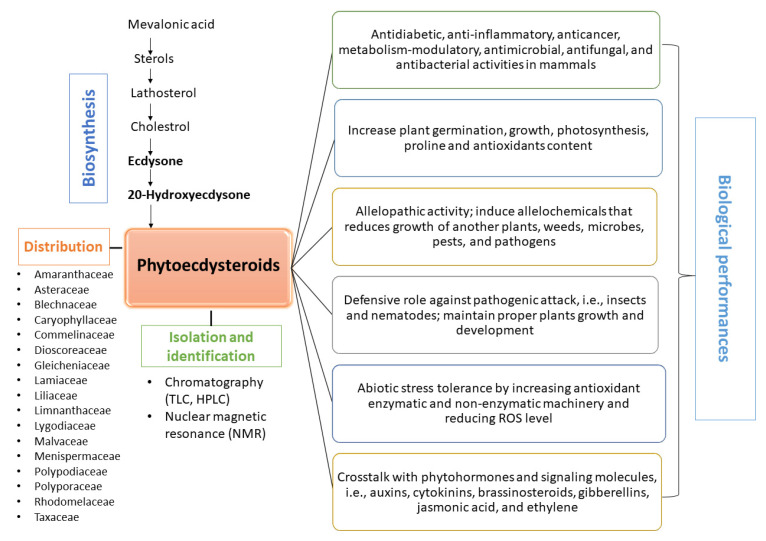
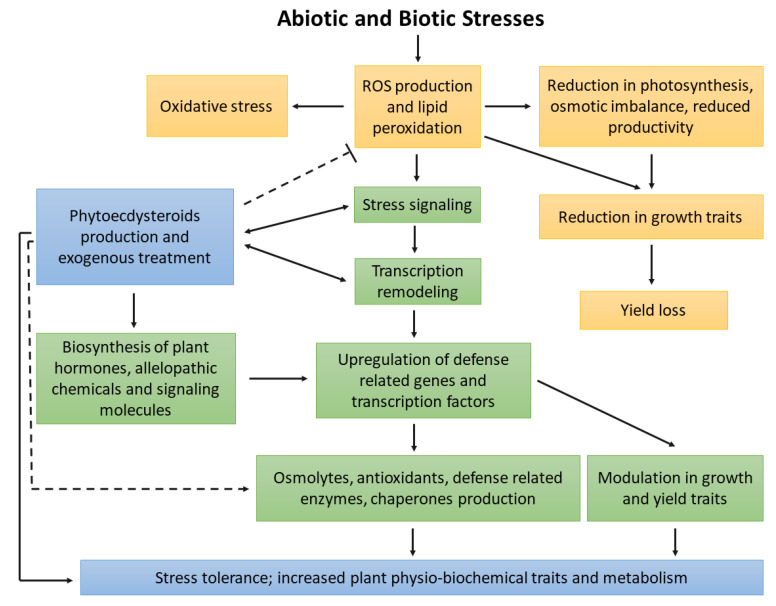
“PEs do not possess hormonal activity in plants; rather, they elicit various biological and metabolic responses (Figure 4).”
§ Phytoecdysteroids: Distribution, Structural Diversity, Biosynthesis, Activity, and Crosstalk with Phytohormones > 7. Biological Activity of Ecdysteroids in Plants
plain- Asserted: passes — The authors put it forward as true.
- Checkable: passes — It can be checked against evidence.
- Load-bearing: passes — The paper’s conclusions depend on it.
- Based: passes — The paper gives a reason why it holds.
It may state two separate claims as one.
- Rests on an assumption: PEs are present in only 2% of plants.
- Rests on an assumption: No PE receptors have been reported to date.
In the paper
“PEs enhance athletic physical performance, and they are present in dietary products and act as a “natural anabolic agent”.”
§ Phytoecdysteroids: Distribution, Structural Diversity, Biosynthesis, Activity, and Crosstalk with Phytohormones > 6. Pharmacological and Bioactivity of Phytoecdysteroids
What the sources say
- Not checked yetcites [168] Isenmann, 2019, Ecdysteroids as non-conventional anabolic agent: Performance enhancement by ecdysterone supplementation in humans, Arch. Toxicol. source
plaindirect- Asserted: passes — The authors put it forward as true.
- Checkable: passes — It can be checked against evidence.
- Load-bearing: unclear — It is unclear whether the paper’s conclusions depend on it.
- Based: passes — The paper gives a reason why it holds.
It may state two separate claims as one.
In the paper
“On the other hand, 20-HE (10−4 M) increased germination rate and tomato seedling growth.”
§ Phytoecdysteroids: Distribution, Structural Diversity, Biosynthesis, Activity, and Crosstalk with Phytohormones > 7. Biological Activity of Ecdysteroids in Plants
What the sources say
- Not checked yetcites [171] Bakrim, 2007, Effects of plant hormones and 20-hydroxyecdysone on tomato (Lycopersicum esculentum) seed germination and seedlings growth, Afr. J. Biotechnol. source
plaindirect- Asserted: passes — The authors put it forward as true.
- Checkable: passes — It can be checked against evidence.
- Load-bearing: unclear — It is unclear whether the paper’s conclusions depend on it.
- Based: passes — The paper gives a reason why it holds.
It may state two separate claims as one.
In the paper
“Lamhamdi, et al. [173] reported that, in Triticum aestivum, pretreatment of 20-HE (3 or 5 µM) efficiently enhanced germination traits, growth parameters, metabolic responses, and antioxidant systems during stress.”
§ Phytoecdysteroids: Distribution, Structural Diversity, Biosynthesis, Activity, and Crosstalk with Phytohormones > 7. Biological Activity of Ecdysteroids in Plants
What the sources say
- Not checked yetcites [173] Lamhamdi, 2016, 20-Hydroxyecdysone protects wheat seedlings (Triticum aestivum L.) against lead stress, Plant Physiol. Biochem. source
boosteddirect- Asserted: passes — The authors put it forward as true.
- Checkable: passes — It can be checked against evidence.
- Load-bearing: unclear — It is unclear whether the paper’s conclusions depend on it.
- Based: passes — The paper gives a reason why it holds.
It may state two separate claims as one.
The paper states this without a source or data behind it here, so there is nothing to check it against. The quote shows it is in the paper.
In the paper
“The EC-binding proteins are nuclear receptor superfamily members, which have a significant domain structure in arthropods.”
§ Phytoecdysteroids: Distribution, Structural Diversity, Biosynthesis, Activity, and Crosstalk with Phytohormones > 7. Biological Activity of Ecdysteroids in Plants
plain- Asserted: passes — The authors put it forward as true.
- Checkable: passes — It can be checked against evidence.
- Load-bearing: fails — The paper’s conclusions may not depend on it.
- Based: fails — The paper may give no reason why it holds.
Probably not a substantial claim. The paper’s conclusions may not depend on it. The paper may give no reason why it holds. It may state two separate claims as one.
A conclusion the paper draws from its own results — it cites no other source for it, so there is none to check. The quote shows it is in the paper.
In the paper
“Thus, PEs are secondary plant metabolites and not plant hormones.”
§ Phytoecdysteroids: Distribution, Structural Diversity, Biosynthesis, Activity, and Crosstalk with Phytohormones > 7. Biological Activity of Ecdysteroids in Plants
plain- Asserted: passes — The authors put it forward as true.
- Checkable: passes — It can be checked against evidence.
- Load-bearing: passes — The paper’s conclusions depend on it.
- Based: passes — The paper gives a reason why it holds.
It may state two separate claims as one.
- Rests on an assumption: PEs are present in only 2% of plants.
- Rests on an assumption: No PE receptors have been reported to date.
In the paper
“In cyanobacterium Nostoc, ecdysterone (10−9, 10−7, or 10−5 M) modulates physio–biochemical responses in photosynthesizing living entities and enhances growth [174].”
§ Phytoecdysteroids: Distribution, Structural Diversity, Biosynthesis, Activity, and Crosstalk with Phytohormones > 7. Biological Activity of Ecdysteroids in Plants
What the sources say
- Not checked yetcites [174] Smith, 1992, The effect of ecdysterone on the cyanobacterium Nostoc 6720, Z. Naturforsch. C source
plaindirect- Asserted: passes — The authors put it forward as true.
- Checkable: passes — It can be checked against evidence.
- Load-bearing: unclear — It is unclear whether the paper’s conclusions depend on it.
- Based: passes — The paper gives a reason why it holds.
It may state two separate claims as one.
In the paper
“The anabolic effect of ECs enhances physical performance and is mediated by estrogen receptor binding.”
§ Phytoecdysteroids: Distribution, Structural Diversity, Biosynthesis, Activity, and Crosstalk with Phytohormones > 6. Pharmacological and Bioactivity of Phytoecdysteroids
What the sources say
- Not checked yetcites [168] Isenmann, 2019, Ecdysteroids as non-conventional anabolic agent: Performance enhancement by ecdysterone supplementation in humans, Arch. Toxicol. source
plaindirect- Asserted: passes — The authors put it forward as true.
- Checkable: passes — It can be checked against evidence.
- Load-bearing: unclear — It is unclear whether the paper’s conclusions depend on it.
- Based: passes — The paper gives a reason why it holds.
It may state two separate claims as one.
In the paper
“PE levels vary during the developmental stages of plants, and a spike in PE concentration is observed during flowering.”
§ Phytoecdysteroids: Distribution, Structural Diversity, Biosynthesis, Activity, and Crosstalk with Phytohormones > 7. Biological Activity of Ecdysteroids in Plants
What the sources say
- Not checked yetcites [145] Dinan, 2002, Phytoecdysteroid levels and distribution during development in Limnanthes alba Hartw. ex Benth. (Limnanthaceae), Z. Naturforsch. C source
plaincorrelational- Asserted: passes — The authors put it forward as true.
- Checkable: passes — It can be checked against evidence.
- Load-bearing: unclear — It is unclear whether the paper’s conclusions depend on it.
- Based: passes — The paper gives a reason why it holds.
It may state two separate claims as one.
In the paper
“The PE level is constant during the growth phase in vegetative tissues; however, it increases drastically during the reproductive stage to increase plant development and protection from predators.”
§ Phytoecdysteroids: Distribution, Structural Diversity, Biosynthesis, Activity, and Crosstalk with Phytohormones > 7. Biological Activity of Ecdysteroids in Plants
What the sources say
- Not checked yetcites [145] Dinan, 2002, Phytoecdysteroid levels and distribution during development in Limnanthes alba Hartw. ex Benth. (Limnanthaceae), Z. Naturforsch. C source
plaindirect- Asserted: passes — The authors put it forward as true.
- Checkable: passes — It can be checked against evidence.
- Load-bearing: unclear — It is unclear whether the paper’s conclusions depend on it.
- Based: passes — The paper gives a reason why it holds.
It may state two separate claims as one.
None of the sources cited for this claim have been checked yet.
In the paper
“Similarly, PEs (10−10–10−8 M) promote cell division in unicellular green algae and modulate physio–biochemical and metabolic responses [175,177].”
§ Phytoecdysteroids: Distribution, Structural Diversity, Biosynthesis, Activity, and Crosstalk with Phytohormones > 7. Biological Activity of Ecdysteroids in Plants
What the sources say
plaindirect- Asserted: passes — The authors put it forward as true.
- Checkable: passes — It can be checked against evidence.
- Load-bearing: unclear — It is unclear whether the paper’s conclusions depend on it.
- Based: passes — The paper gives a reason why it holds.
It may state two separate claims as one.
In the paper
“Golovatskaya [179] also found tissue sensitivity towards auxin, displaying a mutual relationship between auxin and PEs.”
§ Phytoecdysteroids: Distribution, Structural Diversity, Biosynthesis, Activity, and Crosstalk with Phytohormones > 7. Biological Activity of Ecdysteroids in Plants
What the sources say
- Not checked yetcites [179] Golovatskaya, 2004, Effect of ecdysterone on morphological and physiological processes in plants, Russ. J. Plant Physiol. source
plaincorrelational- Asserted: passes — The authors put it forward as true.
- Checkable: passes — It can be checked against evidence.
- Load-bearing: unclear — It is unclear whether the paper’s conclusions depend on it.
- Based: passes — The paper gives a reason why it holds.
It may state two separate claims as one.
In the paper
“Exogenous application of 2 mM 20-HE on Tetragonia tetragonioides increases net photosynthetic rate (PN), despite there being no elevation in photosynthetic pigments or electron transport rate.”
§ Phytoecdysteroids: Distribution, Structural Diversity, Biosynthesis, Activity, and Crosstalk with Phytohormones > 7. Biological Activity of Ecdysteroids in Plants
What the sources say
- Not checked yetcites [181] Kamlar, 2013, Exogenously applied 20-hydroxyecdysone increases the net photosynthetic rate but does not affect the photosynthetic electron transport or the content of photosynthetic pigments in Tetragonia tetragonioides L., Acta Physiol. Plant. source
plaindirectSingle case- Asserted: passes — The authors put it forward as true.
- Checkable: passes — It can be checked against evidence.
- Load-bearing: unclear — It is unclear whether the paper’s conclusions depend on it.
- Based: passes — The paper gives a reason why it holds.
It may state two separate claims as one.
In the paper
“Their variation at growth stages is essential for conventional breeding and molecular biotechnology to further promote PE levels in plants, facilitating plant growth and productivity and improving plant immunity against stress [180].”
§ Phytoecdysteroids: Distribution, Structural Diversity, Biosynthesis, Activity, and Crosstalk with Phytohormones > 7. Biological Activity of Ecdysteroids in Plants
What the sources say
- Not checked yetcites [180] Cheng, 2010, Variation in phytoecdysteroid accumulation in seeds and shoots of Spinacia oleracea L. accessions, HortScience source
plaindirect- Asserted: passes — The authors put it forward as true.
- Checkable: passes — It can be checked against evidence.
- Load-bearing: unclear — It is unclear whether the paper’s conclusions depend on it.
- Based: passes — The paper gives a reason why it holds.
It may state two separate claims as one.
None of the sources cited for this claim have been checked yet.
In the paper
“PEs exhibit structural and functional similarities with BRs [19,178].”
§ Phytoecdysteroids: Distribution, Structural Diversity, Biosynthesis, Activity, and Crosstalk with Phytohormones > 7. Biological Activity of Ecdysteroids in Plants
What the sources say
- Not checked yetcites [19] Tarkowská, D., Krampolová, E., and Strnad, M. (2020). Plant triterpenoid crosstalk: The interaction of brassinosteroids and phytoecdysteroids in Lepidium sativum. Plants, 9. source
- Not checked yetcites [178] Kutschera, 2012, Brassinosteroid action in flowering plants: A Darwinian perspective, J. Exp. Bot. source
plaincorrelational- Asserted: passes — The authors put it forward as true.
- Checkable: passes — It can be checked against evidence.
- Load-bearing: unclear — It is unclear whether the paper’s conclusions depend on it.
- Based: passes — The paper gives a reason why it holds.
It may state two separate claims as one.
In the paper
“Exogenous application of 20-HE on Triticum vulgare facilitates coleoptile elongation and modulated growth traits [179].”
§ Phytoecdysteroids: Distribution, Structural Diversity, Biosynthesis, Activity, and Crosstalk with Phytohormones > 7. Biological Activity of Ecdysteroids in Plants
What the sources say
- Not checked yetcites [179] Golovatskaya, 2004, Effect of ecdysterone on morphological and physiological processes in plants, Russ. J. Plant Physiol. source
plaindirect- Asserted: passes — The authors put it forward as true.
- Checkable: passes — It can be checked against evidence.
- Load-bearing: unclear — It is unclear whether the paper’s conclusions depend on it.
- Based: passes — The paper gives a reason why it holds.
It may state two separate claims as one.
In the paper
“In spinach, auxin, GA, and zeatin significantly affect the accumulation of PEs and further induce plant growth and developmental parameters [151].”
§ Phytoecdysteroids: Distribution, Structural Diversity, Biosynthesis, Activity, and Crosstalk with Phytohormones > 7. Biological Activity of Ecdysteroids in Plants
What the sources say
- Not checked yetcites [151] Schmelz, 1999, Insect-induced synthesis of phytoecdysteroids in spinach, Spinacia oleracea, J. Chem. Ecol. source
plaindirect- Asserted: passes — The authors put it forward as true.
- Checkable: passes — It can be checked against evidence.
- Load-bearing: unclear — It is unclear whether the paper’s conclusions depend on it.
- Based: passes — The paper gives a reason why it holds.
It may state two separate claims as one.
In the paper
“Additionally, the seeds of Limnanthes alba contain a different form of Pes, which are used extensively in pharmaceutical and medical applications [145].”
§ Phytoecdysteroids: Distribution, Structural Diversity, Biosynthesis, Activity, and Crosstalk with Phytohormones > 7. Biological Activity of Ecdysteroids in Plants
What the sources say
- Not checked yetcites [145] Dinan, 2002, Phytoecdysteroid levels and distribution during development in Limnanthes alba Hartw. ex Benth. (Limnanthaceae), Z. Naturforsch. C source
plain- Asserted: passes — The authors put it forward as true.
- Checkable: passes — It can be checked against evidence.
- Load-bearing: fails — The paper’s conclusions may not depend on it.
- Based: passes — The paper gives a reason why it holds.
Probably not a substantial claim. The paper’s conclusions may not depend on it. It may state two separate claims as one.
In the paper
“The level of PEs was increased after JA treatment, and the infestation of nematodes (cyst nematodes and root-knot nematodes) was reduced [18].”
§ Phytoecdysteroids: Distribution, Structural Diversity, Biosynthesis, Activity, and Crosstalk with Phytohormones > 9. Role of Phytoecdysteroids in Stress > 9.1. Biotic Stress
What the sources say
- Not checked yetcites [18] Strnad, 2016, Plant ecdysteroids: Plant sterols with intriguing distributions, biological effects and relations to plant hormones, Planta source
plaindirect- Asserted: passes — The authors put it forward as true.
- Checkable: passes — It can be checked against evidence.
- Load-bearing: unclear — It is unclear whether the paper’s conclusions depend on it.
- Based: passes — The paper gives a reason why it holds.
It may state two separate claims as one.
In the paper
“For example, the exogenous application of ecdysone in tomatoes reduced root-knot nematode Meloidogyne incognita infection and enhanced tomato tolerance [191].”
§ Phytoecdysteroids: Distribution, Structural Diversity, Biosynthesis, Activity, and Crosstalk with Phytohormones > 9. Role of Phytoecdysteroids in Stress > 9.1. Biotic Stress
What the sources say
- Not checked yetcites [191] Udalova, 2004, Correlation between the structure of plant steroids and their effects on phytoparasitic nematodes, Appl. Biochem. Microbiol. source
plaindirect- Asserted: passes — The authors put it forward as true.
- Checkable: passes — It can be checked against evidence.
- Load-bearing: unclear — It is unclear whether the paper’s conclusions depend on it.
- Based: passes — The paper gives a reason why it holds.
It may state two separate claims as one.
In the paper
“PEs alone or in combination with other potent signaling molecules deter plant consumption (antifeedants), disrupt invertebrates’ endocrine system, or cause death in phytophagous insects.”
§ Phytoecdysteroids: Distribution, Structural Diversity, Biosynthesis, Activity, and Crosstalk with Phytohormones > 9. Role of Phytoecdysteroids in Stress > 9.1. Biotic Stress
What the sources say
- Not checked yetcites [190] Soriano, 2004, Phytoecdysteroids: A novel defense against plant-parasitic nematodes, J. Chem. Ecol. source
plaindirect- Asserted: passes — The authors put it forward as true.
- Checkable: passes — It can be checked against evidence.
- Load-bearing: passes — The paper’s conclusions depend on it.
- Based: passes — The paper gives a reason why it holds.
It may state two separate claims as one.
In the paper
“Chenopodium quinoa contains biologically active PEs that have allelopathic potential and suppress germination, growth, and development of weeds and crops [187].”
§ Phytoecdysteroids: Distribution, Structural Diversity, Biosynthesis, Activity, and Crosstalk with Phytohormones > 8. Role of Phytoecdysteroids in Allelopathy
What the sources say
- Not checked yetcites [187] Balah, 2017, Allelopathic potential of quinoa (Chenopodium quinoa Willd.) genotypes on the germination and initial development of some weeds and crops, Egypt J. Desert Res. source
plaindirect- Asserted: passes — The authors put it forward as true.
- Checkable: passes — It can be checked against evidence.
- Load-bearing: unclear — It is unclear whether the paper’s conclusions depend on it.
- Based: passes — The paper gives a reason why it holds.
It may state two separate claims as one.
In the paper
“In Pfaffia glomerata, the photoperiod enhances the biosynthesis of PEs and further modulates morpho–physiological processes in plants.”
§ Phytoecdysteroids: Distribution, Structural Diversity, Biosynthesis, Activity, and Crosstalk with Phytohormones > 7. Biological Activity of Ecdysteroids in Plants
What the sources say
- Not checked yetcites [182] Fortini, 2020, Photoperiod modulates growth and pigments and 20-hydroxyecdysone accumulation in Brazilian ginseng Pfaffia glomerata (Spreng.) Pedersen grown in vitro, Plant Cell Tissue Organ Cult. source
plaindirect- Asserted: passes — The authors put it forward as true.
- Checkable: passes — It can be checked against evidence.
- Load-bearing: unclear — It is unclear whether the paper’s conclusions depend on it.
- Based: passes — The paper gives a reason why it holds.
It may state two separate claims as one.
In the paper
“Extract from roots of Chenopodium album containing PEs, such as 20 HE, ecdysone, and polypodine B, has a phytotoxic allelopathic effect on Lettuce sativa seeds. It inhibits germination and root and shoot length of lettuce [170].”
§ Phytoecdysteroids: Distribution, Structural Diversity, Biosynthesis, Activity, and Crosstalk with Phytohormones > 8. Role of Phytoecdysteroids in Allelopathy
What the sources say
- Not checked yetcites [170] DellaGreca, 2005, Structure elucidation and phytotoxicity of ecdysteroids from Chenopodium album, Chem. Biodivers. source
plaindirect- Asserted: passes — The authors put it forward as true.
- Checkable: passes — It can be checked against evidence.
- Load-bearing: unclear — It is unclear whether the paper’s conclusions depend on it.
- Based: passes — The paper gives a reason why it holds.
It may state two separate claims as one.
In the paper
“PEs enhance abnormal molting in several arthropods, having a lethal effect. Further, they reduce mechanical damage, wounding, and insect herbivory.”
§ Phytoecdysteroids: Distribution, Structural Diversity, Biosynthesis, Activity, and Crosstalk with Phytohormones > 9. Role of Phytoecdysteroids in Stress > 9.1. Biotic Stress
What the sources say
- Not checked yetcites [190] Soriano, 2004, Phytoecdysteroids: A novel defense against plant-parasitic nematodes, J. Chem. Ecol. source
plaindirect- Asserted: passes — The authors put it forward as true.
- Checkable: passes — It can be checked against evidence.
- Load-bearing: passes — The paper’s conclusions depend on it.
- Based: passes — The paper gives a reason why it holds.
It may state two separate claims as one.
In the paper
“Additionally, quinoa seeds contain many PEs, even more than spinach, with anti-diabetic properties. They decrease blood glucose in obesity [188].”
§ Phytoecdysteroids: Distribution, Structural Diversity, Biosynthesis, Activity, and Crosstalk with Phytohormones > 8. Role of Phytoecdysteroids in Allelopathy
What the sources say
- Not checked yetcites [188] Graf, 2014, Quinoa seeds leach phytoecdysteroids and other compounds with anti-diabetic properties, Food Chem. source
plaindirect- Asserted: passes — The authors put it forward as true.
- Checkable: passes — It can be checked against evidence.
- Load-bearing: fails — The paper’s conclusions may not depend on it.
- Based: passes — The paper gives a reason why it holds.
Probably not a substantial claim. The paper’s conclusions may not depend on it. It may state two separate claims as one.
In the paper
“Diverse in vitro tissue cultures of this plant, such as micropropagation, shoot cultures, liquid-agitated whole plant cultures with fast-growing roots, and callus culture, produce high amounts of uniform PEs and are regarded as the biotechnological source of biomass rich in pharmaceutically biologically active PEs [185].”
§ Phytoecdysteroids: Distribution, Structural Diversity, Biosynthesis, Activity, and Crosstalk with Phytohormones > 7. Biological Activity of Ecdysteroids in Plants
What the sources say
- Not checked yetcites [185] Kikowska, 2019, Various in vitro systems of Ragged Robin (Lychnis flos-cuculi L.): A new potential source of phytoecdysteroids?, Plant Cell Tissue Organ Cult. source
plaindirect- Asserted: passes — The authors put it forward as true.
- Checkable: passes — It can be checked against evidence.
- Load-bearing: unclear — It is unclear whether the paper’s conclusions depend on it.
- Based: passes — The paper gives a reason why it holds.
It may state two separate claims as one.
In the paper
“PEs elevate the Calvin cycle (light-independent reactions) and CO2 fixation [181].”
§ Phytoecdysteroids: Distribution, Structural Diversity, Biosynthesis, Activity, and Crosstalk with Phytohormones > 7. Biological Activity of Ecdysteroids in Plants
What the sources say
- Not checked yetcites [181] Kamlar, 2013, Exogenously applied 20-hydroxyecdysone increases the net photosynthetic rate but does not affect the photosynthetic electron transport or the content of photosynthetic pigments in Tetragonia tetragonioides L., Acta Physiol. Plant. source
plaindirect- Asserted: passes — The authors put it forward as true.
- Checkable: passes — It can be checked against evidence.
- Load-bearing: unclear — It is unclear whether the paper’s conclusions depend on it.
- Based: passes — The paper gives a reason why it holds.
It may state two separate claims as one.
In the paper
“Apart from this, the high biological activity of PEs increases the quality and quantity of silk in sericulture industries [184].”
§ Phytoecdysteroids: Distribution, Structural Diversity, Biosynthesis, Activity, and Crosstalk with Phytohormones > 7. Biological Activity of Ecdysteroids in Plants
What the sources say
- Not checked yetcites [184] Kapare, 2017, Impact of gamma irradiation induced variation in cell growth and phytoecdysteroid production in Sesuvium portulacastrum, J. Plant Growth Regul. source
plaindirect- Asserted: passes — The authors put it forward as true.
- Checkable: passes — It can be checked against evidence.
- Load-bearing: fails — The paper’s conclusions may not depend on it.
- Based: passes — The paper gives a reason why it holds.
Probably not a substantial claim. The paper’s conclusions may not depend on it.
In the paper
“PEs are biologically active allelopathic compounds present in several plants that inhibit the development of neighboring plants, weeds, microbes, and pathogens.”
§ Phytoecdysteroids: Distribution, Structural Diversity, Biosynthesis, Activity, and Crosstalk with Phytohormones > 8. Role of Phytoecdysteroids in Allelopathy
What the sources say
- Not checked yetcites [189] Ruiz, 2013, Quinoa biodiversity and sustainability for food security under climate change. A review, Agron. Sustain. Dev. source
plaindirect- Asserted: passes — The authors put it forward as true.
- Checkable: passes — It can be checked against evidence.
- Load-bearing: unclear — It is unclear whether the paper’s conclusions depend on it.
- Based: passes — The paper gives a reason why it holds.
It may state two separate claims as one.
A conclusion the paper draws from its own results — it cites no other source for it, so there is none to check. The quote shows it is in the paper.
In the paper
“PEs are insect molting hormones that accumulate in several plant species and are regarded as potent allelochemicals that enhance plant tolerance against phytophagous insects and nematodes.”
§ Phytoecdysteroids: Distribution, Structural Diversity, Biosynthesis, Activity, and Crosstalk with Phytohormones > 9. Role of Phytoecdysteroids in Stress > 9.1. Biotic Stress
plaindirect- Asserted: passes — The authors put it forward as true.
- Checkable: passes — It can be checked against evidence.
- Load-bearing: passes — The paper’s conclusions depend on it.
- Based: passes — The paper gives a reason why it holds.
It may state two separate claims as one.
In the paper
“Additionally, growth, biomass, photosynthesis, and primary and secondary metabolite levels are also enhanced [182].”
§ Phytoecdysteroids: Distribution, Structural Diversity, Biosynthesis, Activity, and Crosstalk with Phytohormones > 7. Biological Activity of Ecdysteroids in Plants
What the sources say
- Not checked yetcites [182] Fortini, 2020, Photoperiod modulates growth and pigments and 20-hydroxyecdysone accumulation in Brazilian ginseng Pfaffia glomerata (Spreng.) Pedersen grown in vitro, Plant Cell Tissue Organ Cult. source
plaindirect- Asserted: passes — The authors put it forward as true.
- Checkable: passes — It can be checked against evidence.
- Load-bearing: unclear — It is unclear whether the paper’s conclusions depend on it.
- Based: passes — The paper gives a reason why it holds.
It may state two separate claims as one.
In the paper
“In Triticum aestivum, lead (Pb) stress is alleviated by applying 20-HE; it reduces Pb absorption and alters membrane permeability to Pb.”
§ Phytoecdysteroids: Distribution, Structural Diversity, Biosynthesis, Activity, and Crosstalk with Phytohormones > 9. Role of Phytoecdysteroids in Stress > 9.2. Abiotic Stress
What the sources say
- Not checked yetcites [173] Lamhamdi, 2016, 20-Hydroxyecdysone protects wheat seedlings (Triticum aestivum L.) against lead stress, Plant Physiol. Biochem. source
plaindirect- Asserted: passes — The authors put it forward as true.
- Checkable: passes — It can be checked against evidence.
- Load-bearing: unclear — It is unclear whether the paper’s conclusions depend on it.
- Based: passes — The paper gives a reason why it holds.
It may state two separate claims as one.
In the paper
“Meloidogyne spp. impair plant root development; in Pfaffia glomerata, 20-HE displays susceptibility and resistance to Meloidogyne infection and histological alteration in roots [34].”
§ Phytoecdysteroids: Distribution, Structural Diversity, Biosynthesis, Activity, and Crosstalk with Phytohormones > 9. Role of Phytoecdysteroids in Stress > 9.1. Biotic Stress
What the sources say
- Not checked yetcites [34] Gomes, 2010, Concentration of β-ecdysone (20E) in susceptible and resistant accessions of Pfaffia glomerata infected with Meloidogyne incognita and histological characterisation of resistance, Nematology source
plaincorrelational- Asserted: passes — The authors put it forward as true.
- Checkable: passes — It can be checked against evidence.
- Load-bearing: unclear — It is unclear whether the paper’s conclusions depend on it.
- Based: passes — The paper gives a reason why it holds.
It may state two separate claims as one.
In the paper
“Further, at the intracellular level, 20-HE increases sequestration and chelation of Pb and enhances the accumulation of proline, proteins, metallothioneins, and glutathione.”
§ Phytoecdysteroids: Distribution, Structural Diversity, Biosynthesis, Activity, and Crosstalk with Phytohormones > 9. Role of Phytoecdysteroids in Stress > 9.2. Abiotic Stress
What the sources say
- Not checked yetcites [173] Lamhamdi, 2016, 20-Hydroxyecdysone protects wheat seedlings (Triticum aestivum L.) against lead stress, Plant Physiol. Biochem. source
plaindirect- Asserted: passes — The authors put it forward as true.
- Checkable: passes — It can be checked against evidence.
- Load-bearing: unclear — It is unclear whether the paper’s conclusions depend on it.
- Based: passes — The paper gives a reason why it holds.
It may state two separate claims as one.
In the paper
“In spinach, 20-HE plays a potent role in enhancing stress tolerance. It stimulates the activity of antioxidant enzymes, proteins, and proline, mitigating environmental stress and enhancing plant metabolic responses to respond better to any abiotic stress [149].”
§ Phytoecdysteroids: Distribution, Structural Diversity, Biosynthesis, Activity, and Crosstalk with Phytohormones > 9. Role of Phytoecdysteroids in Stress > 9.2. Abiotic Stress
What the sources say
- Not checked yetcites [149] Lamhamdi, 2013, Protective role of a methanolic extract of spinach (Spinacia oleracea L.) against Pb toxicity in wheat (Triticum aestivum L.) seedlings: Beneficial effects for a plant of a nutraceutical used with animals, Environ. Sci. Pollut. Res. source
boosteddirectSingle case- Asserted: passes — The authors put it forward as true.
- Checkable: passes — It can be checked against evidence.
- Load-bearing: unclear — It is unclear whether the paper’s conclusions depend on it.
- Based: passes — The paper gives a reason why it holds.
It may state two separate claims as one.
In the paper
“It has been found that wounding caused by pathogens increases accumulations of PEs in the roots, with signaling via an octadecanoic acid pathway or endogenous JA, resulting in enhanced resistance against subterranean herbivorous insects (Spodoptera exigua) and fungi [150].”
§ Phytoecdysteroids: Distribution, Structural Diversity, Biosynthesis, Activity, and Crosstalk with Phytohormones > 9. Role of Phytoecdysteroids in Stress > 9.1. Biotic Stress
What the sources say
- Not checked yetcites [150] Schmelz, 1998, Damage-induced accumulation of phytoecdysteroids in spinach: A rapid root response involving the octadecanoic acid pathway, J. Chem. Ecol. source
plaindirect- Asserted: passes — The authors put it forward as true.
- Checkable: passes — It can be checked against evidence.
- Load-bearing: unclear — It is unclear whether the paper’s conclusions depend on it.
- Based: passes — The paper gives a reason why it holds.
It may state two separate claims as one.
In the paper
“Similarly, in Limnanthes alba, the PE concentration was highest during the reproductive stage, enhancing plant growth and development and protecting against insect predators [145].”
§ Phytoecdysteroids: Distribution, Structural Diversity, Biosynthesis, Activity, and Crosstalk with Phytohormones > 9. Role of Phytoecdysteroids in Stress > 9.1. Biotic Stress
What the sources say
- Not checked yetcites [145] Dinan, 2002, Phytoecdysteroid levels and distribution during development in Limnanthes alba Hartw. ex Benth. (Limnanthaceae), Z. Naturforsch. C source
plaindirect- Asserted: passes — The authors put it forward as true.
- Checkable: passes — It can be checked against evidence.
- Load-bearing: unclear — It is unclear whether the paper’s conclusions depend on it.
- Based: passes — The paper gives a reason why it holds.
It may state two separate claims as one.
In the paper
“PEs inhibit the feeding of the spring wheat aphid (Schizaphis graminum), which causes chlorosis, necrosis, and senescence in wheat.”
§ Phytoecdysteroids: Distribution, Structural Diversity, Biosynthesis, Activity, and Crosstalk with Phytohormones > 9. Role of Phytoecdysteroids in Stress > 9.1. Biotic Stress
What the sources say
- Not checked yetcites [192] Hedin, 1983, Isolation of phytoecdysones as insect ecdysis inhibitors and feeding deterrents, Plant Resistance to Insects source
plaindirect- Asserted: passes — The authors put it forward as true.
- Checkable: passes — It can be checked against evidence.
- Load-bearing: unclear — It is unclear whether the paper’s conclusions depend on it.
- Based: passes — The paper gives a reason why it holds.
It may state two separate claims as one.
In the paper
“Based on liquid chromatography–time of flight–mass spectrometry analysis, PEs can be found in large quantities in leaves and roots of genus Ajuga; thus, its extract can be used to control phytophagous insect growth in pest-management programs [196].”
§ Phytoecdysteroids: Distribution, Structural Diversity, Biosynthesis, Activity, and Crosstalk with Phytohormones > 9. Role of Phytoecdysteroids in Stress > 9.1. Biotic Stress
What the sources say
- Not checked yetcites [196] Sadeh, 2019, Phytoecdysteroid and clerodane content in three wild Ajuga species in Israel, ACS Omega source
plaindirect- Asserted: passes — The authors put it forward as true.
- Checkable: passes — It can be checked against evidence.
- Load-bearing: unclear — It is unclear whether the paper’s conclusions depend on it.
- Based: passes — The paper gives a reason why it holds.
It may state two separate claims as one.
In the paper
“PEs increase abnormal molting and immobility and decrease invasion and development, leading to nematode death; thus, PEs protect plants against plant-parasitic nematodes and enhance stress tolerance [190].”
§ Phytoecdysteroids: Distribution, Structural Diversity, Biosynthesis, Activity, and Crosstalk with Phytohormones > 9. Role of Phytoecdysteroids in Stress > 9.1. Biotic Stress
What the sources say
- Not checked yetcites [190] Soriano, 2004, Phytoecdysteroids: A novel defense against plant-parasitic nematodes, J. Chem. Ecol. source
plaindirect- Asserted: passes — The authors put it forward as true.
- Checkable: passes — It can be checked against evidence.
- Load-bearing: passes — The paper’s conclusions depend on it.
- Based: passes — The paper gives a reason why it holds.
It may state two separate claims as one.
In the paper
“Therefore, PEs act as an inducible defense and contribute to protection against insect herbivory [193].”
§ Phytoecdysteroids: Distribution, Structural Diversity, Biosynthesis, Activity, and Crosstalk with Phytohormones > 9. Role of Phytoecdysteroids in Stress > 9.1. Biotic Stress
What the sources say
- Not checked yetcites [193] Schmelz, 2002, Interactions between Spinacia oleracea and Bradysia impatiens: A role for phytoecdysteroids, Arch. Insect Biochem. Physiol. source
plaindirectSingle case- Asserted: passes — The authors put it forward as true.
- Checkable: passes — It can be checked against evidence.
- Load-bearing: passes — The paper’s conclusions depend on it.
- Based: passes — The paper gives a reason why it holds.
It may state two separate claims as one.
In the paper
“In spinach, several PEs that protect the plant from insects and induce plant fitness and yield are found in different concentrations at different phases of the plants’ life cycle [180].”
§ Phytoecdysteroids: Distribution, Structural Diversity, Biosynthesis, Activity, and Crosstalk with Phytohormones > 9. Role of Phytoecdysteroids in Stress > 9.1. Biotic Stress
What the sources say
- Not checked yetcites [180] Cheng, 2010, Variation in phytoecdysteroid accumulation in seeds and shoots of Spinacia oleracea L. accessions, HortScience source
plaindirect- Asserted: passes — The authors put it forward as true.
- Checkable: passes — It can be checked against evidence.
- Load-bearing: unclear — It is unclear whether the paper’s conclusions depend on it.
- Based: passes — The paper gives a reason why it holds.
It may state two separate claims as one.
In the paper
“PE treatment negatively affects invertebrate growth, development, and reproduction, but PEs do not exhibit toxicity in mammals [3].”
§ Phytoecdysteroids: Distribution, Structural Diversity, Biosynthesis, Activity, and Crosstalk with Phytohormones > 9. Role of Phytoecdysteroids in Stress > 9.1. Biotic Stress
What the sources say
- Not checked yetcites [3] Dinan, 2001, Phytoecdysteroids: Biological aspects, Phytochemistry source
plaindirect- Asserted: passes — The authors put it forward as true.
- Checkable: passes — It can be checked against evidence.
- Load-bearing: unclear — It is unclear whether the paper’s conclusions depend on it.
- Based: passes — The paper gives a reason why it holds.
It may state two separate claims as one.
In the paper
“Salinity is a major abiotic stress that impairs plant growth and development and hampers sustainable agriculture practices [197].”
§ Phytoecdysteroids: Distribution, Structural Diversity, Biosynthesis, Activity, and Crosstalk with Phytohormones > 9. Role of Phytoecdysteroids in Stress > 9.2. Abiotic Stress
What the sources say
- Not checked yetcites [197] Arif, 2020, Salicylic acid in relation to other phytohormones in plant: A study towards physiology and signal transduction under challenging environment, Environ. Exp. Bot. source
plaindirect- Asserted: passes — The authors put it forward as true.
- Checkable: passes — It can be checked against evidence.
- Load-bearing: fails — The paper’s conclusions may not depend on it.
- Based: passes — The paper gives a reason why it holds.
Probably not a substantial claim. The paper’s conclusions may not depend on it. It may state two separate claims as one.
In the paper
“However, low doses of γ-irradiation on Sesuvium portulacastrum have proven feasible and eco-friendly. They further enhance the productivity of 20-HE in vitro in multiple shoot cultures and further induce sustenance.”
§ Phytoecdysteroids: Distribution, Structural Diversity, Biosynthesis, Activity, and Crosstalk with Phytohormones > 9. Role of Phytoecdysteroids in Stress > 9.2. Abiotic Stress
What the sources say
- Not checked yetcites [184] Kapare, 2017, Impact of gamma irradiation induced variation in cell growth and phytoecdysteroid production in Sesuvium portulacastrum, J. Plant Growth Regul. source
boosteddirect- Asserted: passes — The authors put it forward as true.
- Checkable: passes — It can be checked against evidence.
- Load-bearing: unclear — It is unclear whether the paper’s conclusions depend on it.
- Based: passes — The paper gives a reason why it holds.
It may state two separate claims as one.
In the paper
“However, the application of 20-HE restores damage done by Pb stress by increasing growth and chlorophyll and protein content and by decreasing cellular Pb levels [176].”
§ Phytoecdysteroids: Distribution, Structural Diversity, Biosynthesis, Activity, and Crosstalk with Phytohormones > 9. Role of Phytoecdysteroids in Stress > 9.2. Abiotic Stress
What the sources say
- Not checked yetcites [176] Bajguz, 2004, Protective role of 20-hydroxyecdysone against lead stress in Chlorella vulgaris cultures, Phytochemistry source
plaindirectSingle case- Asserted: passes — The authors put it forward as true.
- Checkable: passes — It can be checked against evidence.
- Load-bearing: unclear — It is unclear whether the paper’s conclusions depend on it.
- Based: passes — The paper gives a reason why it holds.
It may state two separate claims as one.
In the paper
“In Gossypium hirsutum (cotton), application of 20-HE elevates salinity stress and induces germination rate and seedling growth [172].”
§ Phytoecdysteroids: Distribution, Structural Diversity, Biosynthesis, Activity, and Crosstalk with Phytohormones > 9. Role of Phytoecdysteroids in Stress > 9.2. Abiotic Stress
What the sources say
- Not checked yetcites [172] Khaitov, 2013, Plant-derived 20-hydroxyecdysone alleviates salt stress in cotton (Gossypium hirsutum L.) seedlings, Asian Australas. J. Plant Sci. Biotechnol.
plaindirect- Asserted: passes — The authors put it forward as true.
- Checkable: passes — It can be checked against evidence.
- Load-bearing: unclear — It is unclear whether the paper’s conclusions depend on it.
- Based: passes — The paper gives a reason why it holds.
It may state two separate claims as one.
In the paper
“Thus, it can be concluded that PEs possess antioxidant and radical-scavenging properties, which help enhance plant tolerance against stress [173].”
§ Phytoecdysteroids: Distribution, Structural Diversity, Biosynthesis, Activity, and Crosstalk with Phytohormones > 9. Role of Phytoecdysteroids in Stress > 9.2. Abiotic Stress
What the sources say
- Not checked yetcites [173] Lamhamdi, 2016, 20-Hydroxyecdysone protects wheat seedlings (Triticum aestivum L.) against lead stress, Plant Physiol. Biochem. source
boosteddirect- Asserted: passes — The authors put it forward as true.
- Checkable: passes — It can be checked against evidence.
- Load-bearing: passes — The paper’s conclusions depend on it.
- Based: passes — The paper gives a reason why it holds.
It may state two separate claims as one.
In the paper
“In spinach, various elicitors, such as methyl salicylate and mechanical damage, facilitate the production of PEs, which remarkably induce metabolic and anabolic activity in plants [199].”
§ Phytoecdysteroids: Distribution, Structural Diversity, Biosynthesis, Activity, and Crosstalk with Phytohormones > 9. Role of Phytoecdysteroids in Stress > 9.2. Abiotic Stress
What the sources say
- Not checked yetcites [199] Gorelick, J., Iraqi, R.H., and Bernstein, N. (2020). Ecdysteroid content and therapeutic activity in elicited spinach accessions. Plants, 9. source
boosteddirect- Asserted: passes — The authors put it forward as true.
- Checkable: passes — It can be checked against evidence.
- Load-bearing: unclear — It is unclear whether the paper’s conclusions depend on it.
- Based: passes — The paper gives a reason why it holds.
It may state two separate claims as one.
In the paper
“Additionally, salinity upregulates several PE biosynthesis genes and other genes such as Spook and Phantom, enhancing PE production [198].”
§ Phytoecdysteroids: Distribution, Structural Diversity, Biosynthesis, Activity, and Crosstalk with Phytohormones > 9. Role of Phytoecdysteroids in Stress > 9.2. Abiotic Stress
What the sources say
- Not checked yetcites [198] Felipe, 2019, Salinity-induced modifications on growth, physiology and 20-hydroxyecdysone levels in Brazilian-ginseng [Pfaffia glomerata (Spreng.) Pedersen], Plant Physiol. Biochem. source
plaindirect- Asserted: passes — The authors put it forward as true.
- Checkable: passes — It can be checked against evidence.
- Load-bearing: unclear — It is unclear whether the paper’s conclusions depend on it.
- Based: passes — The paper gives a reason why it holds.
It may state two separate claims as one.
In the paper
“Moreover, the addition of 2,4-D (0.05–0.5 mg/L) reduces hairy root growth, while a higher concentration induces necrosis [203].”
§ Phytoecdysteroids: Distribution, Structural Diversity, Biosynthesis, Activity, and Crosstalk with Phytohormones > 10. Phytoecdysteroid Crosstalk with Plant Hormones > 10.1. Auxins
What the sources say
- Not checked yetcites [203] Bajaj, Y.P.S. (1996). Serratula tinctoria L. (Dyer’s Savory): In vitro culture and the production of ecdysteroids and other secondary metabolites. Medicinal and Aromatic Plants IX, Springer.
plaindirect- Asserted: passes — The authors put it forward as true.
- Checkable: passes — It can be checked against evidence.
- Load-bearing: unclear — It is unclear whether the paper’s conclusions depend on it.
- Based: passes — The paper gives a reason why it holds.
It may state two separate claims as one.
In the paper
“In Chlorella vulgaris cells, Pb stress reduces cell growth and development and induces cellular fragmentation and lysis.”
§ Phytoecdysteroids: Distribution, Structural Diversity, Biosynthesis, Activity, and Crosstalk with Phytohormones > 9. Role of Phytoecdysteroids in Stress > 9.2. Abiotic Stress
What the sources say
- Not checked yetcites [176] Bajguz, 2004, Protective role of 20-hydroxyecdysone against lead stress in Chlorella vulgaris cultures, Phytochemistry source
plaindirect- Asserted: passes — The authors put it forward as true.
- Checkable: passes — It can be checked against evidence.
- Load-bearing: unclear — It is unclear whether the paper’s conclusions depend on it.
- Based: passes — The paper gives a reason why it holds.
It may state two separate claims as one.
In the paper
“Additionally, 20-HE increases the content of antioxidant enzymes such as superoxide dismutase (SOD), ascorbate peroxidase, and glutathione reductase, which reduce reactive oxygen species (ROS) in the form of superoxide radicals and hydroxyl radicals and decreases malondialdehyde (MDA) content.”
§ Phytoecdysteroids: Distribution, Structural Diversity, Biosynthesis, Activity, and Crosstalk with Phytohormones > 9. Role of Phytoecdysteroids in Stress > 9.2. Abiotic Stress
What the sources say
- Not checked yetcites [173] Lamhamdi, 2016, 20-Hydroxyecdysone protects wheat seedlings (Triticum aestivum L.) against lead stress, Plant Physiol. Biochem. source
plaindirect- Asserted: passes — The authors put it forward as true.
- Checkable: passes — It can be checked against evidence.
- Load-bearing: passes — The paper’s conclusions depend on it.
- Based: passes — The paper gives a reason why it holds.
It may state two separate claims as one.
In the paper
“Isopentenyladenosine (iPR) is also present in animals and has anti-cancer properties in mammals, while it enhances plant cellular and metabolic processes in plants [18].”
§ Phytoecdysteroids: Distribution, Structural Diversity, Biosynthesis, Activity, and Crosstalk with Phytohormones > 10. Phytoecdysteroid Crosstalk with Plant Hormones > 10.2. Cytokinins
What the sources say
- Not checked yetcites [18] Strnad, 2016, Plant ecdysteroids: Plant sterols with intriguing distributions, biological effects and relations to plant hormones, Planta source
plaindirect- Asserted: passes — The authors put it forward as true.
- Checkable: passes — It can be checked against evidence.
- Load-bearing: fails — The paper’s conclusions may not depend on it.
- Based: passes — The paper gives a reason why it holds.
Probably not a substantial claim. The paper’s conclusions may not depend on it. It may state two separate claims as one.
In the paper
“In Drosophila, 6-benzylaminopurine, which is an aromatic CK, enhances growth and development; thus, it can be concluded that CKs play a powerful role in inducing growth and developmental process in insects [210].”
§ Phytoecdysteroids: Distribution, Structural Diversity, Biosynthesis, Activity, and Crosstalk with Phytohormones > 10. Phytoecdysteroid Crosstalk with Plant Hormones > 10.2. Cytokinins
What the sources say
- Not checked yetcites [210] Guern, J., and Péaud-Lenoël, C. (1981). 6-Benzylaminopurine as a growth factor for Drosophila melanogaster cells grown in vitro. Metabolism and Molecular Activities of Cytokinins. Proceedings in Life Sciences, Springer. source
boosteddirectSingle case- Asserted: passes — The authors put it forward as true.
- Checkable: passes — It can be checked against evidence.
- Load-bearing: unclear — It is unclear whether the paper’s conclusions depend on it.
- Based: passes — The paper gives a reason why it holds.
It may state two separate claims as one.
None of the sources cited for this claim have been checked yet.
In the paper
“Brassinosteroids (BRs) show structural resemblance with PEs; they show bioactivity in insects as weak and unstable EC antagonists.”
§ Phytoecdysteroids: Distribution, Structural Diversity, Biosynthesis, Activity, and Crosstalk with Phytohormones > 10. Phytoecdysteroid Crosstalk with Plant Hormones > 10.3. Brassinosteroids
What the sources say
- Not checked yetcites [15] 2015, Ecdysteroids in plants and their pharmacological effects in vertebrates and humans, Studies in Natural Products Chemistry source
- Not checked yetcites [19] Tarkowská, D., Krampolová, E., and Strnad, M. (2020). Plant triterpenoid crosstalk: The interaction of brassinosteroids and phytoecdysteroids in Lepidium sativum. Plants, 9. source
- Not checked yetcites [212] Hayat, S., Yusuf, M., Bhardwaj, R., and Bajguz, A. (2019). The brassinosteroids family–structural diversity of natural compounds and their precursors. Brassinosteroids: Plant Growth and Development, Springer. source
- Not checked yetcites [213] Bajguz, 2003, The chemical characteristic and distribution of brassinosteroids in plants, Phytochemistry source
plaindirect- Asserted: passes — The authors put it forward as true.
- Checkable: passes — It can be checked against evidence.
- Load-bearing: unclear — It is unclear whether the paper’s conclusions depend on it.
- Based: passes — The paper gives a reason why it holds.
It may state two separate claims as one.
In the paper
“Furthermore, iPR conjugated with ECs is found in insects; this compound has been identified as 22-N6-(isopentenyl) adenosine monophosphoric ester of ecdysone using NMR and mass spectroscopy [18].”
§ Phytoecdysteroids: Distribution, Structural Diversity, Biosynthesis, Activity, and Crosstalk with Phytohormones > 10. Phytoecdysteroid Crosstalk with Plant Hormones > 10.2. Cytokinins
What the sources say
- Not checked yetcites [18] Strnad, 2016, Plant ecdysteroids: Plant sterols with intriguing distributions, biological effects and relations to plant hormones, Planta source
plaincorrelational- Asserted: passes — The authors put it forward as true.
- Checkable: passes — It can be checked against evidence.
- Load-bearing: unclear — It is unclear whether the paper’s conclusions depend on it.
- Based: passes — The paper gives a reason why it holds.
It may state two separate claims as one.
In the paper
“In Ajuga reptans, phosphate reduction leads to an increase in 20-HE content, while adding indole-3-acetic acid enhances Ajuga hairy root growth rate due to induction of the root apical meristem [204].”
§ Phytoecdysteroids: Distribution, Structural Diversity, Biosynthesis, Activity, and Crosstalk with Phytohormones > 10. Phytoecdysteroid Crosstalk with Plant Hormones > 10.1. Auxins
What the sources say
- Not checked yetcites [204] Uozumi, 1995, 20-Hydroxyecdysone production in Ajuga hairy root controlling intracellular phosphate content based on kinetic model, J. Ferment. Bioeng. source
plaindirect- Asserted: passes — The authors put it forward as true.
- Checkable: passes — It can be checked against evidence.
- Load-bearing: unclear — It is unclear whether the paper’s conclusions depend on it.
- Based: passes — The paper gives a reason why it holds.
It may state two separate claims as one.
None of the sources cited for this claim have been checked yet.
In the paper
“It has been reported that insects can synthesize 22-phosphate conjugates of 2-deoxy-20-HE, 20-HE acetate, and 20-HE; meanwhile, in female locusts and related species, all these conjugates are hydrolyzed during embryonic development, synthesizing biologically active hormones [208,209].”
§ Phytoecdysteroids: Distribution, Structural Diversity, Biosynthesis, Activity, and Crosstalk with Phytohormones > 10. Phytoecdysteroid Crosstalk with Plant Hormones > 10.2. Cytokinins
What the sources say
- Not checked yetcites [208] Tsoupras, 1982, The major conjugates of ecdysteroids in young eggs and in embryos of Locusta migratoria, Tetrahedron Lett. source
- Not checked yetcites [209] Tsoupras, 1982, Isolation and identification of three ecdysteroid conjugates with a C-20 hydroxy group in eggs of Locusta migratoria, Steroids source
plaindirect- Asserted: passes — The authors put it forward as true.
- Checkable: passes — It can be checked against evidence.
- Load-bearing: unclear — It is unclear whether the paper’s conclusions depend on it.
- Based: passes — The paper gives a reason why it holds.
It may state two separate claims as one.
In the paper
“20-HE shows the same results as auxin (i.e., naphthalene-3-acetic acid) in tomatoes, with both modulating germination and reducing protein content [171].”
§ Phytoecdysteroids: Distribution, Structural Diversity, Biosynthesis, Activity, and Crosstalk with Phytohormones > 10. Phytoecdysteroid Crosstalk with Plant Hormones > 10.1. Auxins
What the sources say
- Not checked yetcites [171] Bakrim, 2007, Effects of plant hormones and 20-hydroxyecdysone on tomato (Lycopersicum esculentum) seed germination and seedlings growth, Afr. J. Biotechnol. source
plaindirect- Asserted: passes — The authors put it forward as true.
- Checkable: passes — It can be checked against evidence.
- Load-bearing: unclear — It is unclear whether the paper’s conclusions depend on it.
- Based: passes — The paper gives a reason why it holds.
It may state two separate claims as one.
None of the sources cited for this claim have been checked yet.
In the paper
“BRs and PEs both comprise triterpenoid families, i.e., polyhydroxylated steroids C27 and C29 with an oxygenated B-ring.”
§ Phytoecdysteroids: Distribution, Structural Diversity, Biosynthesis, Activity, and Crosstalk with Phytohormones > 10. Phytoecdysteroid Crosstalk with Plant Hormones > 10.3. Brassinosteroids
What the sources say
- Not checked yetcites [15] 2015, Ecdysteroids in plants and their pharmacological effects in vertebrates and humans, Studies in Natural Products Chemistry source
- Not checked yetcites [19] Tarkowská, D., Krampolová, E., and Strnad, M. (2020). Plant triterpenoid crosstalk: The interaction of brassinosteroids and phytoecdysteroids in Lepidium sativum. Plants, 9. source
- Not checked yetcites [212] Hayat, S., Yusuf, M., Bhardwaj, R., and Bajguz, A. (2019). The brassinosteroids family–structural diversity of natural compounds and their precursors. Brassinosteroids: Plant Growth and Development, Springer. source
- Not checked yetcites [213] Bajguz, 2003, The chemical characteristic and distribution of brassinosteroids in plants, Phytochemistry source
plain- Asserted: passes — The authors put it forward as true.
- Checkable: passes — It can be checked against evidence.
- Load-bearing: passes — The paper’s conclusions depend on it.
- Based: passes — The paper gives a reason why it holds.
It may state two separate claims as one.
In the paper
“In wheat coleoptiles, an assay of PEs with auxin-like activity showed that ECs do not have any biophysiological activity, but a higher concentration of ECs had an inhibitory effect on plant physio–biochemical traits [205].”
§ Phytoecdysteroids: Distribution, Structural Diversity, Biosynthesis, Activity, and Crosstalk with Phytohormones > 10. Phytoecdysteroid Crosstalk with Plant Hormones > 10.1. Auxins
What the sources say
- Not checked yetcites [205] Machackova, 1995, Comparison between the effects of 20-hydroxyecdysone and phytohormones on growth and development in plants, Eur. J. Entomol.
plaindirect- Asserted: passes — The authors put it forward as true.
- Checkable: passes — It can be checked against evidence.
- Load-bearing: unclear — It is unclear whether the paper’s conclusions depend on it.
- Based: passes — The paper gives a reason why it holds.
It may state two separate claims as one.
None of the sources cited for this claim have been checked yet.
In the paper
“Moreover, hydroxyl groups located at C-2, C-3, and C-22 are found in both BRs and PEs, but they differ in orientation and location of the hydroxyl group.”
§ Phytoecdysteroids: Distribution, Structural Diversity, Biosynthesis, Activity, and Crosstalk with Phytohormones > 10. Phytoecdysteroid Crosstalk with Plant Hormones > 10.3. Brassinosteroids
What the sources say
- Not checked yetcites [15] 2015, Ecdysteroids in plants and their pharmacological effects in vertebrates and humans, Studies in Natural Products Chemistry source
- Not checked yetcites [19] Tarkowská, D., Krampolová, E., and Strnad, M. (2020). Plant triterpenoid crosstalk: The interaction of brassinosteroids and phytoecdysteroids in Lepidium sativum. Plants, 9. source
- Not checked yetcites [212] Hayat, S., Yusuf, M., Bhardwaj, R., and Bajguz, A. (2019). The brassinosteroids family–structural diversity of natural compounds and their precursors. Brassinosteroids: Plant Growth and Development, Springer. source
- Not checked yetcites [213] Bajguz, 2003, The chemical characteristic and distribution of brassinosteroids in plants, Phytochemistry source
plaincorrelational- Asserted: passes — The authors put it forward as true.
- Checkable: passes — It can be checked against evidence.
- Load-bearing: passes — The paper’s conclusions depend on it.
- Based: passes — The paper gives a reason why it holds.
It may state two separate claims as one.
None of the sources cited for this claim have been checked yet.
In the paper
“In ECs, A- and B-ring junctions have cis-configuration, whereas in BRs they bear A/B trans orientation.”
§ Phytoecdysteroids: Distribution, Structural Diversity, Biosynthesis, Activity, and Crosstalk with Phytohormones > 10. Phytoecdysteroid Crosstalk with Plant Hormones > 10.3. Brassinosteroids
What the sources say
- Not checked yetcites [15] 2015, Ecdysteroids in plants and their pharmacological effects in vertebrates and humans, Studies in Natural Products Chemistry source
- Not checked yetcites [19] Tarkowská, D., Krampolová, E., and Strnad, M. (2020). Plant triterpenoid crosstalk: The interaction of brassinosteroids and phytoecdysteroids in Lepidium sativum. Plants, 9. source
- Not checked yetcites [212] Hayat, S., Yusuf, M., Bhardwaj, R., and Bajguz, A. (2019). The brassinosteroids family–structural diversity of natural compounds and their precursors. Brassinosteroids: Plant Growth and Development, Springer. source
- Not checked yetcites [213] Bajguz, 2003, The chemical characteristic and distribution of brassinosteroids in plants, Phytochemistry source
plain- Asserted: passes — The authors put it forward as true.
- Checkable: passes — It can be checked against evidence.
- Load-bearing: passes — The paper’s conclusions depend on it.
- Based: passes — The paper gives a reason why it holds.
It may state two separate claims as one.
In the paper
“Most of the substances show activity in the BR bioassay; it has been found that biological activity decreases as the structure deviates from that of castasterone, which is used as a standard for BRs.”
§ Phytoecdysteroids: Distribution, Structural Diversity, Biosynthesis, Activity, and Crosstalk with Phytohormones > 10. Phytoecdysteroid Crosstalk with Plant Hormones > 10.3. Brassinosteroids
What the sources say
- Not checked yetcites [214] Voigt, 2001, The ecdysteroid agonist/antagonist and brassinosteroid-like activities of synthetic brassinosteroid/ecdysteroid hybrid molecules, Cell. Mol. Life Sci. source
plaindirect- Asserted: passes — The authors put it forward as true.
- Checkable: passes — It can be checked against evidence.
- Load-bearing: unclear — It is unclear whether the paper’s conclusions depend on it.
- Based: passes — The paper gives a reason why it holds.
It may state two separate claims as one.
None of the sources cited for this claim have been checked yet.
In the paper
“Furthermore, the B-ring of BRs and their analogs contains a carbonyl group at C-6, which is further expanded to form lactone, while ECs have a 14α-hydroxy-7-en-6-one group.”
§ Phytoecdysteroids: Distribution, Structural Diversity, Biosynthesis, Activity, and Crosstalk with Phytohormones > 10. Phytoecdysteroid Crosstalk with Plant Hormones > 10.3. Brassinosteroids
What the sources say
- Not checked yetcites [15] 2015, Ecdysteroids in plants and their pharmacological effects in vertebrates and humans, Studies in Natural Products Chemistry source
- Not checked yetcites [19] Tarkowská, D., Krampolová, E., and Strnad, M. (2020). Plant triterpenoid crosstalk: The interaction of brassinosteroids and phytoecdysteroids in Lepidium sativum. Plants, 9. source
- Not checked yetcites [212] Hayat, S., Yusuf, M., Bhardwaj, R., and Bajguz, A. (2019). The brassinosteroids family–structural diversity of natural compounds and their precursors. Brassinosteroids: Plant Growth and Development, Springer. source
- Not checked yetcites [213] Bajguz, 2003, The chemical characteristic and distribution of brassinosteroids in plants, Phytochemistry source
plain- Asserted: passes — The authors put it forward as true.
- Checkable: passes — It can be checked against evidence.
- Load-bearing: passes — The paper’s conclusions depend on it.
- Based: passes — The paper gives a reason why it holds.
It may state two separate claims as one.
None of the sources cited for this claim have been checked yet.
In the paper
“Due to this, PEs and BRs coexist in plants and do not interfere with signaling pathways [15,19,212,213].”
§ Phytoecdysteroids: Distribution, Structural Diversity, Biosynthesis, Activity, and Crosstalk with Phytohormones > 10. Phytoecdysteroid Crosstalk with Plant Hormones > 10.3. Brassinosteroids
What the sources say
- Not checked yetcites [15] 2015, Ecdysteroids in plants and their pharmacological effects in vertebrates and humans, Studies in Natural Products Chemistry source
- Not checked yetcites [19] Tarkowská, D., Krampolová, E., and Strnad, M. (2020). Plant triterpenoid crosstalk: The interaction of brassinosteroids and phytoecdysteroids in Lepidium sativum. Plants, 9. source
- Not checked yetcites [212] Hayat, S., Yusuf, M., Bhardwaj, R., and Bajguz, A. (2019). The brassinosteroids family–structural diversity of natural compounds and their precursors. Brassinosteroids: Plant Growth and Development, Springer. source
- Not checked yetcites [213] Bajguz, 2003, The chemical characteristic and distribution of brassinosteroids in plants, Phytochemistry source
plain- Asserted: passes — The authors put it forward as true.
- Checkable: passes — It can be checked against evidence.
- Load-bearing: passes — The paper’s conclusions depend on it.
- Based: passes — The paper gives a reason why it holds.
It may state two separate claims as one.
In the paper
“BRs do not interrupt EC signaling inside insects due to receptor specificity, and this may have adverse effects because BRs are present in the plants and plant tissues consumed by insects [205].”
§ Phytoecdysteroids: Distribution, Structural Diversity, Biosynthesis, Activity, and Crosstalk with Phytohormones > 10. Phytoecdysteroid Crosstalk with Plant Hormones > 10.3. Brassinosteroids
What the sources say
- Not checked yetcites [205] Machackova, 1995, Comparison between the effects of 20-hydroxyecdysone and phytohormones on growth and development in plants, Eur. J. Entomol.
hedgedconditional- Asserted: passes — The authors put it forward as true.
- Checkable: passes — It can be checked against evidence.
- Load-bearing: unclear — It is unclear whether the paper’s conclusions depend on it.
- Based: passes — The paper gives a reason why it holds.
It may state two separate claims as one.
None of the sources cited for this claim have been checked yet.
In the paper
“Because of such structural variations, BR receptors cannot recognize ECs, and EC receptors cannot recognize BRs; this is the primary reason behind the specificity between plant BR and insect EC receptors.”
§ Phytoecdysteroids: Distribution, Structural Diversity, Biosynthesis, Activity, and Crosstalk with Phytohormones > 10. Phytoecdysteroid Crosstalk with Plant Hormones > 10.3. Brassinosteroids
What the sources say
- Not checked yetcites [15] 2015, Ecdysteroids in plants and their pharmacological effects in vertebrates and humans, Studies in Natural Products Chemistry source
- Not checked yetcites [19] Tarkowská, D., Krampolová, E., and Strnad, M. (2020). Plant triterpenoid crosstalk: The interaction of brassinosteroids and phytoecdysteroids in Lepidium sativum. Plants, 9. source
- Not checked yetcites [212] Hayat, S., Yusuf, M., Bhardwaj, R., and Bajguz, A. (2019). The brassinosteroids family–structural diversity of natural compounds and their precursors. Brassinosteroids: Plant Growth and Development, Springer. source
- Not checked yetcites [213] Bajguz, 2003, The chemical characteristic and distribution of brassinosteroids in plants, Phytochemistry source
plaindirect- Asserted: passes — The authors put it forward as true.
- Checkable: passes — It can be checked against evidence.
- Load-bearing: passes — The paper’s conclusions depend on it.
- Based: passes — The paper gives a reason why it holds.
It may state two separate claims as one.
None of the sources cited for this claim have been checked yet.
In the paper
“The application of BRs mitigates stress by increasing photosynthetic membrane stability, reorganization of major photosynthetic pigment complexes, and slightly unstacking the thylakoid membrane [215,216]; PEs show similar functions [19,183].”
§ Phytoecdysteroids: Distribution, Structural Diversity, Biosynthesis, Activity, and Crosstalk with Phytohormones > 10. Phytoecdysteroid Crosstalk with Plant Hormones > 10.3. Brassinosteroids
What the sources say
- Not checked yetcites [215] Ahanger, 2018, Brassinosteroids regulate growth in plants under stressful environments and crosstalk with other potential phytohormones, J. Plant Growth Regul. source
- Not checked yetcites [216] Siddiqui, 2018, Regulation of photosynthesis by brassinosteroids in plants, Acta Physiol. Plant. source
- Not checked yetcites [19] Tarkowská, D., Krampolová, E., and Strnad, M. (2020). Plant triterpenoid crosstalk: The interaction of brassinosteroids and phytoecdysteroids in Lepidium sativum. Plants, 9. source
- Not checked yetcites [183] Yusupova, U.Y., Ramazonov, N.S., Syrov, V.N., and Sagdullaev, S.S. (2022). Biological activities of phytoecdisteroids. Phytoecdysteroids: Properties, Biological Activity and Applications, Springer. source
plaindirect- Asserted: passes — The authors put it forward as true.
- Checkable: passes — It can be checked against evidence.
- Load-bearing: unclear — It is unclear whether the paper’s conclusions depend on it.
- Based: passes — The paper gives a reason why it holds.
It may state two separate claims as one.
In the paper
“Methyl ester of JA (methyl jasmonate, MeJA) enhances JA signaling after a pathogenic attack. However, it also increases the synthesis of defense proteins.”
§ Phytoecdysteroids: Distribution, Structural Diversity, Biosynthesis, Activity, and Crosstalk with Phytohormones > 10. Phytoecdysteroid Crosstalk with Plant Hormones > 10.4. Jasmonic Acid
What the sources say
- Not checked yetcites [218] Wasternack, 2013, Jasmonates: Biosynthesis, perception, signal transduction and action in plant stress response, growth and development. An update to the 2007 review in Annals of Botany, Ann. Bot. source
plaindirect- Asserted: passes — The authors put it forward as true.
- Checkable: passes — It can be checked against evidence.
- Load-bearing: unclear — It is unclear whether the paper’s conclusions depend on it.
- Based: passes — The paper gives a reason why it holds.
It may state two separate claims as one.
In the paper
“However, the application of BRs reduces polypodine B and stachysterone content and enhances ajugasterone C content.”
§ Phytoecdysteroids: Distribution, Structural Diversity, Biosynthesis, Activity, and Crosstalk with Phytohormones > 10. Phytoecdysteroid Crosstalk with Plant Hormones > 10.3. Brassinosteroids
What the sources say
- Not checked yetcites [217] Kamlar, 2015, The effect of exogenous 24-epibrassinolide on the ecdysteroid content in the leaves of Spinacia oleracea L., Steroids source
plaindirect- Asserted: passes — The authors put it forward as true.
- Checkable: passes — It can be checked against evidence.
- Load-bearing: unclear — It is unclear whether the paper’s conclusions depend on it.
- Based: passes — The paper gives a reason why it holds.
It may state two separate claims as one.
In the paper
“It has been demonstrated that PE concentration is higher in older leaves of the control set than in plants treated with 10−6 M BL, whereas 10−8 M BL induced PE content.”
§ Phytoecdysteroids: Distribution, Structural Diversity, Biosynthesis, Activity, and Crosstalk with Phytohormones > 10. Phytoecdysteroid Crosstalk with Plant Hormones > 10.3. Brassinosteroids
What the sources say
- Not checked yetcites [217] Kamlar, 2015, The effect of exogenous 24-epibrassinolide on the ecdysteroid content in the leaves of Spinacia oleracea L., Steroids source
boosteddirect- Asserted: passes — The authors put it forward as true.
- Checkable: passes — It can be checked against evidence.
- Load-bearing: unclear — It is unclear whether the paper’s conclusions depend on it.
- Based: passes — The paper gives a reason why it holds.
It may state two separate claims as one.
In the paper
“In younger leaves of the control set, a higher concentration of polypodine B is found, whereas in older leaves, lower contents of ajugasterone C and stachysterone are found.”
§ Phytoecdysteroids: Distribution, Structural Diversity, Biosynthesis, Activity, and Crosstalk with Phytohormones > 10. Phytoecdysteroid Crosstalk with Plant Hormones > 10.3. Brassinosteroids
What the sources say
- Not checked yetcites [217] Kamlar, 2015, The effect of exogenous 24-epibrassinolide on the ecdysteroid content in the leaves of Spinacia oleracea L., Steroids source
plaincorrelational- Asserted: passes — The authors put it forward as true.
- Checkable: passes — It can be checked against evidence.
- Load-bearing: unclear — It is unclear whether the paper’s conclusions depend on it.
- Based: passes — The paper gives a reason why it holds.
It may state two separate claims as one.
In the paper
“Subsequently, MeJA is converted into JA-isoleucine; it is known that these compounds participate in plant stress tolerance.”
§ Phytoecdysteroids: Distribution, Structural Diversity, Biosynthesis, Activity, and Crosstalk with Phytohormones > 10. Phytoecdysteroid Crosstalk with Plant Hormones > 10.4. Jasmonic Acid
What the sources say
- Not checked yetcites [218] Wasternack, 2013, Jasmonates: Biosynthesis, perception, signal transduction and action in plant stress response, growth and development. An update to the 2007 review in Annals of Botany, Ann. Bot. source
boosteddirect- Asserted: passes — The authors put it forward as true.
- Checkable: passes — It can be checked against evidence.
- Load-bearing: unclear — It is unclear whether the paper’s conclusions depend on it.
- Based: passes — The paper gives a reason why it holds.
It may state two separate claims as one.
A conclusion the paper draws from its own results — it cites no other source for it, so there is none to check. The quote shows it is in the paper.
In the paper
“Promising biological and pharmacological activities of various PEs are known, and they may be utilized in the development of nutraceutical and pharmaceutical products after further confirmatory research on their efficacy and safety.”
§ Phytoecdysteroids: Distribution, Structural Diversity, Biosynthesis, Activity, and Crosstalk with Phytohormones > 11. Conclusions and Future Prospects
hedgedconditional- Asserted: passes — The authors put it forward as true.
- Checkable: fails — It may be too vague to check against evidence.
- Load-bearing: passes — The paper’s conclusions depend on it.
- Based: passes — The paper gives a reason why it holds.
Probably not a substantial claim. It may be too vague to check against evidence. It may state two separate claims as one.
None of the sources cited for this claim have been checked yet.
In the paper
“Thus, it was concluded that endogenous JA in the roots mediates signals during wounding and induces PE accumulation [150,193].”
§ Phytoecdysteroids: Distribution, Structural Diversity, Biosynthesis, Activity, and Crosstalk with Phytohormones > 10. Phytoecdysteroid Crosstalk with Plant Hormones > 10.4. Jasmonic Acid
What the sources say
- Not checked yetcites [150] Schmelz, 1998, Damage-induced accumulation of phytoecdysteroids in spinach: A rapid root response involving the octadecanoic acid pathway, J. Chem. Ecol. source
- Not checked yetcites [193] Schmelz, 2002, Interactions between Spinacia oleracea and Bradysia impatiens: A role for phytoecdysteroids, Arch. Insect Biochem. Physiol. source
boosteddirect- Asserted: passes — The authors put it forward as true.
- Checkable: passes — It can be checked against evidence.
- Load-bearing: passes — The paper’s conclusions depend on it.
- Based: passes — The paper gives a reason why it holds.
It may state two separate claims as one.
A conclusion the paper draws from its own results — it cites no other source for it, so there is none to check. The quote shows it is in the paper.
In the paper
“PEs crosstalk with plant hormones such as auxins, CKs, GAs, BRs, JA, and ET, which play major roles in developmental growth processes and induce plant stress tolerance.”
§ Phytoecdysteroids: Distribution, Structural Diversity, Biosynthesis, Activity, and Crosstalk with Phytohormones > 11. Conclusions and Future Prospects
plaindirect- Asserted: passes — The authors put it forward as true.
- Checkable: passes — It can be checked against evidence.
- Load-bearing: passes — The paper’s conclusions depend on it.
- Based: passes — The paper gives a reason why it holds.
It may state two separate claims as one.
A conclusion the paper draws from its own results — it cites no other source for it, so there is none to check. The quote shows it is in the paper.
In the paper
“PEs are potently induced against pathogenic attack; they cause immobility, abnormal molting, decreased invasiveness, reduced development, and death in plant pathogens.”
§ Phytoecdysteroids: Distribution, Structural Diversity, Biosynthesis, Activity, and Crosstalk with Phytohormones > 11. Conclusions and Future Prospects
boosteddirect- Asserted: passes — The authors put it forward as true.
- Checkable: passes — It can be checked against evidence.
- Load-bearing: passes — The paper’s conclusions depend on it.
- Based: unclear — It is unclear why the paper says it holds.
It may state two separate claims as one.
A conclusion the paper draws from its own results — it cites no other source for it, so there is none to check. The quote shows it is in the paper.
In the paper
“PEs improve germination, growth, photosynthesis, antioxidant activity, and osmolyte content to enhance plant tolerance against biotic and abiotic stress.”
§ Phytoecdysteroids: Distribution, Structural Diversity, Biosynthesis, Activity, and Crosstalk with Phytohormones > 11. Conclusions and Future Prospects
plaindirect- Asserted: passes — The authors put it forward as true.
- Checkable: passes — It can be checked against evidence.
- Load-bearing: passes — The paper’s conclusions depend on it.
- Based: passes — The paper gives a reason why it holds.
It may state two separate claims as one.
A conclusion the paper draws from its own results — it cites no other source for it, so there is none to check. The quote shows it is in the paper.
In the paper
“PEs have allelopathic properties that induce biological weed and microbe management and are essential for sustainable agriculture.”
§ Phytoecdysteroids: Distribution, Structural Diversity, Biosynthesis, Activity, and Crosstalk with Phytohormones > 11. Conclusions and Future Prospects
plaindirect- Asserted: passes — The authors put it forward as true.
- Checkable: passes — It can be checked against evidence.
- Load-bearing: passes — The paper’s conclusions depend on it.
- Based: fails — The paper may give no reason why it holds.
Probably not a substantial claim. The paper may give no reason why it holds. It may state two separate claims as one.
In the paper
“Thus, it can be concluded that PEs show no activity in maize, but in rice, synergistic activity of PEs with GAs is noted.”
§ Phytoecdysteroids: Distribution, Structural Diversity, Biosynthesis, Activity, and Crosstalk with Phytohormones > 10. Phytoecdysteroid Crosstalk with Plant Hormones > 10.5. Other Phytohormones
What the sources say
- Not checked yetcites [205] Machackova, 1995, Comparison between the effects of 20-hydroxyecdysone and phytohormones on growth and development in plants, Eur. J. Entomol.
boosteddirect- Asserted: passes — The authors put it forward as true.
- Checkable: passes — It can be checked against evidence.
- Load-bearing: passes — The paper’s conclusions depend on it.
- Based: passes — The paper gives a reason why it holds.
It may state two separate claims as one.
A conclusion the paper draws from its own results — it cites no other source for it, so there is none to check. The quote shows it is in the paper.
In the paper
“PEs can be used as a cheap and sustainable compound that have beneficial effects on both plants and animals.”
§ Phytoecdysteroids: Distribution, Structural Diversity, Biosynthesis, Activity, and Crosstalk with Phytohormones > 11. Conclusions and Future Prospects
plaindirect- Asserted: passes — The authors put it forward as true.
- Checkable: passes — It can be checked against evidence.
- Load-bearing: passes — The paper’s conclusions depend on it.
- Based: fails — The paper may give no reason why it holds.
Probably not a substantial claim. The paper may give no reason why it holds. It may state two separate claims as one.
A conclusion the paper draws from its own results — it cites no other source for it, so there is none to check. The quote shows it is in the paper.
In the paper
“Additionally, PEs promote antioxidant machinery, reducing ROS and MDA accumulation caused by biotic and several environmental stresses, such as salinity and heavy metals, improving plant growth and biochemistry.”
§ Phytoecdysteroids: Distribution, Structural Diversity, Biosynthesis, Activity, and Crosstalk with Phytohormones > 11. Conclusions and Future Prospects
plaindirect- Asserted: passes — The authors put it forward as true.
- Checkable: passes — It can be checked against evidence.
- Load-bearing: passes — The paper’s conclusions depend on it.
- Based: unclear — It is unclear why the paper says it holds.
It may state two separate claims as one.
In the paper
“In a dwarf Zea mays GA bioassay, treatment with 20-HE and ecdysone, the two insect-molting hormones, do not affect plants; whereas in a dwarf Oryza sativa bioassay, a slight GA-like activity is reported [205].”
§ Phytoecdysteroids: Distribution, Structural Diversity, Biosynthesis, Activity, and Crosstalk with Phytohormones > 10. Phytoecdysteroid Crosstalk with Plant Hormones > 10.5. Other Phytohormones
What the sources say
- Not checked yetcites [205] Machackova, 1995, Comparison between the effects of 20-hydroxyecdysone and phytohormones on growth and development in plants, Eur. J. Entomol.
plain- Asserted: passes — The authors put it forward as true.
- Checkable: passes — It can be checked against evidence.
- Load-bearing: passes — The paper’s conclusions depend on it.
- Based: passes — The paper gives a reason why it holds.
It may state two separate claims as one.
In the paper
“PEs cause immobility, abnormal molting, decreased invasiveness, reduced development, and death in plant-parasitic nematodes [190].”
§ Phytoecdysteroids: Distribution, Structural Diversity, Biosynthesis, Activity, and Crosstalk with Phytohormones > 10. Phytoecdysteroid Crosstalk with Plant Hormones > 10.4. Jasmonic Acid
What the sources say
- Not checked yetcites [190] Soriano, 2004, Phytoecdysteroids: A novel defense against plant-parasitic nematodes, J. Chem. Ecol. source
plaindirect- Asserted: passes — The authors put it forward as true.
- Checkable: passes — It can be checked against evidence.
- Load-bearing: unclear — It is unclear whether the paper’s conclusions depend on it.
- Based: passes — The paper gives a reason why it holds.
It may state two separate claims as one.
The paper relies on this without support.
Complete records on PE biosynthesis, distribution, regulation, and role in mammals and plants are scarce.
“However, complete records on their biosynthesis, distribution, regulation, and role in mammals and plants are scarce, demanding a summary and compilation of present knowledge of PEs.”
The paper relies on this without support.
PEs are present in only 2% of plants.
“PEs are present in only 2% of plants, and no PE receptors have been reported to date.”
The paper relies on this without support.
No PE receptors have been reported to date.
“PEs are present in only 2% of plants, and no PE receptors have been reported to date.”
The paper relies on this without support.
PEs are crucial for inducing plant physio–biochemical traits and accelerating plant productivity.
“PEs are crucial for inducing plant physio–biochemical traits and accelerating plant productivity.”
The paper relies on this without support.
Invertebrates cannot synthesize ECs, so they consume phytosterols and convert them into ECs; plants produce ECs via MVA and cholesterol.
“Invertebrates cannot synthesize ECs, so they consume phytosterols and convert them into ECs; however, plants produce ECs via MVA and cholesterol.”
The paper relies on this without support.
Several studies report the biological properties of PEs in animals, such as anti-diabetic, anti-microbial, hepatoprotective, hypoglycemic, anti-cancer, anti-inflammatory, immunomodulatory, and tissue differentiating activity.
“Several studies report the biological properties of PEs in animals, such as anti-diabetic, anti-microbial, hepatoprotective, hypoglycemic, anti-cancer, anti-inflammatory, immunomodulatory, and tissue differentiating activity.”
The paper relies on this without support.
Studies addressing the roles of PEs in plants are still scarce.
“However, studies addressing the roles of PEs in plants are still scarce.”
The paper relies on this without support.
There is limited research on the role of PEs in allelopathy.
“Thus, there is limited research on the role of PEs in allelopathy, which should be addressed in future research.”
The paper relies on this without support.
No published study has addressed any synergistic or antagonistic relationship between auxin and PEs; the impact of exogenous application of ECs on the endogenous level of auxins has not been described.
“No published study has addressed any synergistic or antagonistic relationship between auxin and PEs; the impact of exogenous application of ECs on the endogenous level of auxins has not been described and needs to be explored.”
The paper relies on this without support.
There is little research on the crosstalk between GAs and PEs.
“There is little research on the crosstalk between GAs and PEs.”
The paper relies on this without support.
No study has addressed the role of PEs in response to other environmental stresses, such as drought, heat, cold, and other heavy metals.
“To our knowledge, no study has addressed the role of PEs in response to other environmental stresses, such as drought, heat, cold, and other heavy metals; this needs to be further explored.”
The paper relies on this without support.
No studies have reported on PE’s relationship with other plant hormones, such as abscisic acid, salicylic acid, and melatonin.
“To our knowledge, to date, no studies have reported on PE’s relationship with other plant hormones, such as abscisic acid, salicylic acid, and melatonin, which needs to be further explored.”
Claims other papers make about this one
Each is checked against this paper’s own text: does it say what the citing paper says it does?
The source backs part of the claim, not all of it — or backs it for a different population, condition or comparison.
In the citing paper
“Phytoecdysteroids seem to be pure anabolic, and many plants that contain them are traditionally used in phytomedicine [1,7,8].”
From Molecular Targets of 20-Hydroxyecdysone in Mammals, Mechanism of Action: Is It a Calorie Restriction Mimetic and Anti-Aging Compound? (2025) · cites this paper as [8]
Experimental — accuracy not yet measured
Self-check
Percentages, sums and reported differences re-computed from the paper’s own numbers.
Each contradiction between two passages listed here was confirmed by an independent check.
Rated minor: it would not touch a result — a value no result rests on, a p-value that stays on the same side of the significance level, or a conflict that is clerical, resolved elsewhere in the paper, or outside its own findings.
In the paper
§ Phytoecdysteroids: Distribution, Structural Diversity, Biosynthesis, Activity, and Crosstalk with Phytohormones > Abstract
“PEs are found in algae, fungi, ferns, gymnosperms, and angiosperms”
§ Phytoecdysteroids: Distribution, Structural Diversity, Biosynthesis, Activity, and Crosstalk with Phytohormones > 1. Introduction
“Depending on the natural source, ECs are subdivided into three groups: phytoecdysteroids (PEs), zooecdysteroids, and mycoecdysteroids.”
Citations
Cites
Wasternack, C., & Hause, B. (2013) · Annals of Botany · doi:10.1093/aob/mct067 · Cited by 2,629 · cited 1×
“These responses validate the effective role of PEs in boosting plant immunity during a pathogenic attack [218].”
BackgroundControl and biochemical nature of the ecdysteroidogenic pathway
Gilbert, L. I., Rybczynski, R., & Warren, J. T. (2002) · Annual Review of Entomology · doi:10.1146/annurev.ento.47.091201.145302 · Cited by 532 · cited 1×
“On the other hand, plants produce ECs via mevalonic acid (MVA) and cholesterol [21,22,115,116].”
BackgroundThe chemical characteristic and distribution of brassinosteroids in plants
Bajguz, A., & Tretyn, A. (2003) · Phytochemistry · doi:10.1016/s0031-9422(02)00656-8 · Cited by 432 · cited 1×
“Due to this, PEs and BRs coexist in plants and do not interfere with signaling pathways [15,19,212,213].”
BackgroundSelf-citationPhytoecdysteroids: Biological aspects
Dinan, L. (2001) · Phytochemistry · doi:10.1016/s0031-9422(01)00078-4 · Cited by 392 · cited 3×
“ECs are steroidal hormones initially found in animals that control insect molting or ecdysis and other important metamorphotic processes in arthropods [3].”
BackgroundQuinoa biodiversity and sustainability for food security under climate change. A review
Ruiz, K. B., Biondi, S., Oses, R., Acuña-Rodríguez, I. S., Antognoni, F., Martinez-Mosqueira, E. A., Coulibaly, A., Canahua-Murillo, A., Pinto, M., Zurita-Silva, A., et al. (2014) · Agronomy for Sustainable Development · doi:10.1007/s13593-013-0195-0 · Cited by 370 · cited 1×
“They can be used in non-chemical weed management [189].”
BackgroundÜber die Isolierung eines Metamorphose-Hormons der Insekten in kristallisierter Form
Butenandt, A., & Karlson, P. (1954) · Zeitschrift für Naturforschung B · doi:10.1515/znb-1954-0601 · Cited by 367 · cited 1×
“Butenandt and Karlson [1] isolated the first EC—ecdysone—from silkworm pupae.”
BackgroundKasahara, H., Hanada, A., Kuzuyama, T., Takagi, M., Kamiya, Y., & Yamaguchi, S. (2002) · Journal of Biological Chemistry · doi:10.1074/jbc.m208659200 · Cited by 285 · cited 5×
“HE 20-hydroxyecdysone BR brassinosteroid CK cytokinin DMAPP dimethylallyl diphosphate EC ecdysteroid ET ethylene GA gibberellin HPLC high-performance column chromatography IPP isopentenyl diphosphate iPR isopentenyladenosine JA jasmonic acid MDA malondialdehyde MeJA methyl jasmonate MeOH methanol MEP 2C-methyl-erythri…”
BackgroundInfluentialArif, Y., Sami, F., Siddiqui, H., Bajguz, A., & Hayat, S. (2020) · Environmental and Experimental Botany · doi:10.1016/j.envexpbot.2020.104040 · Cited by 257 · cited 1×
“Salinity is a major abiotic stress that impairs plant growth and development and hampers sustainable agriculture practices [197].”
BackgroundSelf-citationEnzymes for ecdysteroid biosynthesis: Their biological functions in insects and beyond
Niwa, R., & Niwa, Y. S. (2014) · Bioscience, Biotechnology, and Biochemistry · doi:10.1080/09168451.2014.942250 · Cited by 249
Lafont, F., Van Nhieu, G. T., Hanada, K., Sansonetti, P., & van der Goot, F. G. (2002) · The EMBO Journal · doi:10.1093/emboj/cdf457 · Cited by 242
Recent developments on ultrasound assisted catalyst-free organic synthesis
Banerjee, B. (2016) · Ultrasonics Sonochemistry · doi:10.1016/j.ultsonch.2016.09.023 · Cited by 229 · cited 1×
“These treatments may influence the conversion process, reaction chemoselectivity, product purity, and yield; further, they may reduce reaction time, inhibit byproduct formation, and reduce catalyst presence [136].”
BackgroundHuber, R., & Hoppe, W. (1965) · Chemische Berichte · doi:10.1002/cber.19650980744 · Cited by 219 · cited 1×
“Later, its structure was reported via X-ray crystallography [2].”
BackgroundEffects and applications of arthropod steroid hormones (ecdysteroids) in mammals
Dinan, L., & Lafont, R. (2006) · Journal of Endocrinology · doi:10.1677/joe.1.06900 · Cited by 200
Practical uses for ecdysteroids in mammals including humans: and update
Lafont, R., & Dinan, L. (2003) · Journal of Insect Science · doi:10.1093/jis/3.1.7 · Cited by 196
Practical uses for ecdysteroids in mammals including humans: And update
Lafont, R., & Dinan, L. (2003) · Journal of Insect Science · doi:10.1673/031.003.0701 · Cited by 196 · cited 3×
“Thus, PEs have anti-inflammatory effects in mammals [155].”
BackgroundEcdysone: Structures and Functions
(2009) · doi:10.1007/978-1-4020-9112-4 · Cited by 160
Ecdysone signaling underlies the pea aphid transgenerational wing polyphenism
Vellichirammal, N. N., Gupta, P., Hall, T. A., & Brisson, J. A. (2017) · Proceedings of the National Academy of Sciences · doi:10.1073/pnas.1617640114 · Cited by 154 · cited 1×
“PEs also increase the growth and formation of muscle tissue, development of wings, and size of gonads [166].”
BackgroundQuinoa Secondary Metabolites and Their Biological Activities or Functions
Lin, M., Han, P., Li, Y., Wang, W., Lai, D., & Zhou, L. (2019) · Molecules · doi:10.3390/molecules24132512 · Cited by 152 · cited 1×
“In warm-blooded species, PEs can regulate fat accumulation and fat-level reduction [167].”
BackgroundRegulation of photosynthesis by brassinosteroids in plants
Siddiqui, H., Hayat, S., & Bajguz, A. (2018) · Acta Physiologiae Plantarum · doi:10.1007/s11738-018-2639-2 · Cited by 147 · cited 1×
“The application of BRs mitigates stress by increasing photosynthetic membrane stability, reorganization of major photosynthetic pigment complexes, and slightly unstacking the thylakoid membrane [215,216]; PEs show similar functions [19,183].”
BackgroundSelf-citationAhanger, M. A., Ashraf, M., Bajguz, A., & Ahmad, P. (2018) · Journal of Plant Growth Regulation · doi:10.1007/s00344-018-9855-2 · Cited by 142 · cited 1×
“The application of BRs mitigates stress by increasing photosynthetic membrane stability, reorganization of major photosynthetic pigment complexes, and slightly unstacking the thylakoid membrane [215,216]; PEs show similar functions [19,183].”
BackgroundSelf-citationDevelopmental regulation of sterol biosynthesis in Zea mays
Guo, D., Venkatramesh, M., & Nes, W. D. (1995) · Lipids · doi:10.1007/bf02537823 · Cited by 130 · cited 6×
“HE 20-hydroxyecdysone BR brassinosteroid CK cytokinin DMAPP dimethylallyl diphosphate EC ecdysteroid ET ethylene GA gibberellin HPLC high-performance column chromatography IPP isopentenyl diphosphate iPR isopentenyladenosine JA jasmonic acid MDA malondialdehyde MeJA methyl jasmonate MeOH methanol MEP 2C-methyl-erythri…”
BackgroundInfluentialQuinoa seeds leach phytoecdysteroids and other compounds with anti-diabetic properties
Graf, B. L., Poulev, A., Kuhn, P., Grace, M. H., Lila, M. A., & Raskin, I. (2014) · Food Chemistry · doi:10.1016/j.foodchem.2014.04.088 · Cited by 129
Isenmann, E., Ambrosio, G., Joseph, J. F., Mazzarino, M., de la Torre, X., Zimmer, P., Kazlauskas, R., Goebel, C., Botrè, F., Diel, P., et al. (2019) · Archives of Toxicology · doi:10.1007/s00204-019-02490-x · Cited by 127 · cited 1×
“Thus, this suggests that PEs have several pharmacological uses and bioactivity effects, so they occupy an important position in cosmetics, sports, and military medicine [168].”
BackgroundPhytoecdysteroids: A novel defense against plant-parasitic nematodes
Soriano, I. R., Riley, I. T., Potter, M. J., & Bowers, W. S. (2004) · Journal of Chemical Ecology · doi:10.1023/b:joec.0000045584.56515.11 · Cited by 126 · cited 3×
“PEs increase abnormal molting and immobility and decrease invasion and development, leading to nematode death; thus, PEs protect plants against plant-parasitic nematodes and enhance stress tolerance [190].”
BackgroundResultInfluentialSaponins in Food, Feedstuffs and Medicinal Plants
(2000) · doi:10.1007/978-94-015-9339-7 · Cited by 124
Nakanishi, K., Koreeda, M., Sasaki, S., Chang, M. L., & Hsu, H. Y. (1966) · Chemical Communications (London) · doi:10.1039/c19660000915 · Cited by 121 · cited 1×
“The occurrence of three ECs, named ponasterones A, B, and C, in the leaves of Podocarpus nakaii was reported for the first time in plants [25,26].”
BackgroundThe Phytochemical, Biological, and Medicinal Attributes of Phytoecdysteroids: An Updated Review
Das, N., Mishra, S. K., Bishayee, A., Ali, E. S., & Bishayee, A. (2021) · Acta Pharmaceutica Sinica B · doi:10.1016/j.apsb.2020.10.012 · Cited by 115 · cited 10×
“Several structural modifications are present in different plant families, probably due to different uses of metabolites [4,8,15,32].”
BackgroundInfluentialIsolation and Phytotoxicity of Apocarotenoids from Chenopodium a lbum
DellaGreca, M., Marino, C. D., Zarrelli, A., & D’Abrosca, B. (2004) · Journal of Natural Products · doi:10.1021/np049857q · Cited by 111 · cited 1×
“Chenopodium album 5β-hydroxy-24(28)-dehydromakisterone A [38] 3β,14α-dihydroxy-5β-pregn-7-ene-2,6,20-trione [39] 24,25-dehydroinokosterone 25,27-dehydroinokosterone”
The Karlson Lecture. Phytoecdysteroids: what use are they?
Dinan, L. (2009) · Archives of Insect Biochemistry and Physiology · doi:10.1002/arch.20334 · Cited by 106
Invertebrate Endocrinology and Hormonal Heterophylly
(1974) · doi:10.1007/978-3-642-65769-6 · Cited by 99
Ecdysteroids from Chenopodium quinoa Willd., an Ancient Andean Crop of High Nutritional Value
Kumpun, S., Maria, A., Crouzet, S., Evrard-Todeschi, N., Girault, J.-P., & Lafont, R. (2011) · Food Chemistry · doi:10.1016/j.foodchem.2010.10.039 · Cited by 99 · cited 1×
“Chenopodium album 5β-hydroxy-24(28)-dehydromakisterone A [38] 3β,14α-dihydroxy-5β-pregn-7-ene-2,6,20-trione [39] 24,25-dehydroinokosterone 25,27-dehydroinokosterone”
Additional minor ecdysteroid components of Leuzea carthamoides
Buděšínský, M., Vokáč, K., Harmatha, J., & Cvačka, J. (2008) · Steroids · doi:10.1016/j.steroids.2007.12.021 · Cited by 89 · cited 1×
“Asteraceae Leuzea carthamoides rapisterone D 20-acetate [48] inokosterone 20,22-acetonide [49] carthamoleusterone [50] integristerone A 20,22-acetonide 15-hydroxyponasterone A 14-epi-ponasterone A 22-O-β-D-glucopyranoside 22-deoxy-28-hydroxymakisterone C 26-hydroxymakisterone C 1β-hydroxymakisterone C (24Z)-29-hydroxy…”
BackgroundDini, I., Tenore, G. C., & Dini, A. (2004) · Food Chemistry · doi:10.1016/j.foodchem.2004.07.008 · Cited by 88 · cited 1×
“Amaranthaceae Chenopodium quinoa kancollosterone [36] 20,26-dihydroxy 28-methyl ecdysone [37] 20,26-dihydroxy 24(28)-dehydroecdysone 20-hydroxyecdysone 22-glycolate”
Interactions between Spinacia oleracea and Bradysia impatiens : A role for phytoecdysteroids
Schmelz, E. A., Grebenok, R. J., Ohnmeiss, T. E., & Bowers, W. S. (2002) · Archives of Insect Biochemistry and Physiology · doi:10.1002/arch.10062 · Cited by 83 · cited 3×
“Thus, PEs are potently inducible against attacks by insects and herbivores [193].”
BackgroundBrassinosteroids: Plant Growth and Development
(2019) · doi:10.1007/978-981-13-6058-9 · Cited by 83
The major conjugates of ecdysteroids in young eggs and in embryos of Locusta migratoria
Tsoupras, G., Hetru, C., Luu, B., Lagueux, M., Constantin, E., & Hoffmann, J. A. (1982) · Tetrahedron Letters · doi:10.1016/s0040-4039(00)87256-1 · Cited by 81 · cited 1×
“It has been reported that insects can synthesize 22-phosphate conjugates of 2-deoxy-20-HE, 20-HE acetate, and 20-HE; meanwhile, in female locusts and related species, all these conjugates are hydrolyzed during embryonic development, synthesizing biologically active hormones [208,209].”
BackgroundBiosynthesis and distribution of insect-molting hormones in plants—A review
Adler, J. H., & Grebenok, R. J. (1995) · Lipids · doi:10.1007/bf02537830 · Cited by 79 · cited 1×
“PEs are found in more than 100 terrestrial fern, gymnosperm, and angiosperm plant families [4,7,18,23,24].”
BackgroundBrassinosteroid action in flowering plants: A Darwinian perspective
Kutschera, U., & Wang, Z.-Y. (2012) · Journal of Experimental Botany · doi:10.1093/jxb/ers065 · Cited by 77 · cited 1×
“PEs exhibit structural and functional similarities with BRs [19,178].”
BackgroundEcdysteroids: Production in plant in vitro cultures
Thiem, B., Kikowska, M., Maliński, M. P., Kruszka, D., Napierała, M., & Florek, E. (2017) · Phytochemistry Reviews · doi:10.1007/s11101-016-9483-z · Cited by 77
Phytoecdysteroids: Diversity, biosynthesis and distribution
Dinan, L., Harmatha, J., Volodin, V., & Lafont, R. (2009) · Ecdysone: Structures and Functions · doi:10.1007/978-1-4020-9112-4_1 · Cited by 77 · cited 6×
“Several structural modifications are present in different plant families, probably due to different uses of metabolites [4,8,15,32].”
BackgroundInfluentialEcdysteroids and other constituents from Sida spinosa L.
Darwish, F., & Reinecke, M. G. (2003) · Phytochemistry · doi:10.1016/s0031-9422(03)00021-9 · Cited by 76 · cited 1×
“Sida spinosa 20-hydroxy-24-hydroxymethyl ecdysone [97]”
Ecdysterone from stem of Diploclisia glaucescens
Bandara, B. M. R., Jayasinghe, L., Karunaratne, V., Wannigama, G. P., Bokel, M., Kraus, W., & Sotheeswaran, S. (1989) · Phytochemistry · doi:10.1016/0031-9422(89)80185-2 · Cited by 73 · cited 1×
“Diploclisia glaucescens 3-deoxy-1β,20-dihydroxyecdysone [101] 2-deoxy-5β,20-dihydroxyecdysone [102] diploclidine”
Insect-Induced Synthesis of Phytoecdysteroids in Spinach, Spinacia oleracea
Schmelz, E. A., Grebenok, R. J., Galbraith, D. W., & Bowers, W. S. (1999) · Journal of Chemical Ecology · doi:10.1023/a:1020969413567 · Cited by 72 · cited 3×
“Thus, it can be concluded that wounding increases root 20-HE accumulation as the result of induced de novo 20-HE synthesis in the root [151].”
BackgroundInfluentialMinor Ecdysteroid Components of Leuzea carthamoides
Vokáč, K., Buděšı́nský, M., & Harmatha, J. (2002) · Collection of Czechoslovak Chemical Communications · doi:10.1135/cccc20020124 · Cited by 71 · cited 1×
“Asteraceae Leuzea carthamoides rapisterone D 20-acetate [48] inokosterone 20,22-acetonide [49] carthamoleusterone [50] integristerone A 20,22-acetonide 15-hydroxyponasterone A 14-epi-ponasterone A 22-O-β-D-glucopyranoside 22-deoxy-28-hydroxymakisterone C 26-hydroxymakisterone C 1β-hydroxymakisterone C (24Z)-29-hydroxy…”
BackgroundSharma, S. P., Kaur, P., & Rattan, S. I. S. (1995) · Biochemical and Biophysical Research Communications · doi:10.1006/bbrc.1995.2729 · Cited by 70 · cited 1×
“Therefore, the anti-aging bioactivity of CKs reduces age-associated deaths in adults by reducing development during larval and pupal stages [211].”
BackgroundNew anti-inflammatory ergostane-type ecdysteroids from the sclerotium of Polyporus umbellatus
Sun, Y., & Yasukawa, K. (2008) · Bioorganic & Medicinal Chemistry Letters · doi:10.1016/j.bmcl.2008.04.008 · Cited by 69 · cited 1×
“Polyporaceae Polyporus umbellatus (20S,20R,24R)-16,22-epoxy-3β,14α,23β,25tetrahydroxyergost-7-en-6-one [110]”
An insect-moulting hormone from a plant
Galbraith, M. N., & Horn, D. H. S. (1966) · Chemical Communications (London) · doi:10.1039/c19660000905 · Cited by 66 · cited 1×
“Simultaneously, 20-HE was isolated from Podocarpus elatus wood [27].”
BackgroundJones, C. G., & Firn, R. D. (1978) · Journal of Chemical Ecology · doi:10.1007/bf00988049 · Cited by 66 · cited 1×
“aquilinum), PEs play a potent defensive role in enhancing immunity against phytophagous insect attacks [194].”
BackgroundEcdysteroids in Spinach (Spinacia oleracea L.): Biosynthesis, Transport and Regulation of Levels
Bakrim, A., Maria, A., Sayah, F., Lafont, R., & Takvorian, N. (2008) · Plant Physiology and Biochemistry · doi:10.1016/j.plaphy.2008.06.002 · Cited by 63 · cited 3×
“In mammals, PEs exhibit versatile growth and metabolic activity; they also display modulatory effects on anabolic and growth traits [13].”
BackgroundMeng, Y.-H., Whiting, P., Zibareva, L. N., Bertho, G., Girault, J., Lafont, R., & Dinan, L. N. (2001) · Journal of Chromatography A · doi:10.1016/s0021-9673(01)00893-7 · Cited by 62
Martins, A., Tóth, N., Ványolós, A., Béni, Z., Zupkó, I., Molnár, J., Báthori, M., & Hunyadi, A. (2012) · Journal of Medicinal Chemistry · doi:10.1021/jm300424n · Cited by 59 · cited 1×
“PEs inhibit cell proliferation and rhodomine efflux associated with the ABCB1 transporter [121,160].”
BackgroundTarkowská, D., & Strnad, M. (2016) · Planta · doi:10.1007/s00425-016-2561-z · Cited by 56 · cited 14×
“HE 20-hydroxyecdysone BR brassinosteroid CK cytokinin DMAPP dimethylallyl diphosphate EC ecdysteroid ET ethylene GA gibberellin HPLC high-performance column chromatography IPP isopentenyl diphosphate iPR isopentenyladenosine JA jasmonic acid MDA malondialdehyde MeJA methyl jasmonate MeOH methanol MEP 2C-methyl-erythri…”
BackgroundInfluentialCai, M., Zhao, W., Jing, Y.-P., Song, Q., Zhang, X., Wang, J., & Zhao, X. (2016) · Development · doi:10.1242/dev.128694 · Cited by 54 · cited 1×
“ECs and their analogs enhance protein biosynthesis by interacting with insulin signal transduction in insects [165].”
BackgroundOccurrence, biosynthesis, and putative role of ecdysteroids in plants
Adler, J. H., & Grebenok, R. J. (1999) · Critical Reviews in Biochemistry and Molecular Biology · doi:10.1080/10409239991209282 · Cited by 51 · cited 1×
“PEs are found in more than 100 terrestrial fern, gymnosperm, and angiosperm plant families [4,7,18,23,24].”
BackgroundEcdysteroids Act as Inhibitors of Calf Skin Collagenase and Oxidative Stress
Nsimba, R. Y., Kikuzaki, H., & Konishi, Y. (2008) · Journal of Biochemical and Molecular Toxicology · doi:10.1002/jbt.20234 · Cited by 51 · cited 2×
“Amaranthaceae Chenopodium quinoa kancollosterone [36] 20,26-dihydroxy 28-methyl ecdysone [37] 20,26-dihydroxy 24(28)-dehydroecdysone 20-hydroxyecdysone 22-glycolate”
BackgroundNakamura, S., Chen, G., Nakashima, S., Matsuda, H., Pei, Y., & Yoshikawa, M. (2010) · Chemical and Pharmaceutical Bulletin · doi:10.1248/cpb.58.690 · Cited by 50 · cited 1×
“Pfaffia glomerata pfaffiaglycosides C [47] pfaffiaglycosides D pfaffiaglycosides E”
BackgroundDistribution and levels of phytoecdysteroids in plants of the genusSilene during development
Zibareva, L. N. (2000) · Archives of Insect Biochemistry and Physiology · doi:10.1002/(sici)1520-6327(200001)43:1 · Cited by 49
Ecdysteroids in Plants and their Pharmacological Effects in Vertebrates and Humans
(2015) · Studies in Natural Products Chemistry · doi:10.1016/b978-0-444-63473-3.00005-8 · Cited by 48 · cited 7×
“Several structural modifications are present in different plant families, probably due to different uses of metabolites [4,8,15,32].”
BackgroundInfluentialEcdysteroid biosynthesis during the ontogeny of spinach leaves
Grebenok, R. J., & Adler, J. H. (1993) · Phytochemistry · doi:10.1016/0031-9422(93)85514-r · Cited by 48 · cited 7×
“HE takes place via ecdysone 20-monooxygenase; the ∆7 sterol has a reduced chain of C-24; this was also shown in Polypodium vulgare.”
BackgroundInfluentialSchmelz, E. A., Grebenok, R. J., Galbraith, D. W., & Bowers, W. S. (1998) · Journal of Chemical Ecology · doi:10.1023/a:1022588610232 · Cited by 47 · cited 2×
“Thus, it was concluded that endogenous JA in the roots mediates signals during wounding and induces PE accumulation [150,193].”
BackgroundEcdysteroids from the medicinal fern Microsorum scolopendria (Burm. f.)
Snogan, E., Vahirua‐Lechat, I., Ho, R., Bertho, G., Girault, J., Ortiga, S., Maria, A., & Lafont, R. (2007) · Phytochemical Analysis · doi:10.1002/pca.1000 · Cited by 46 · cited 1×
“Microsorum scolopendria 20-deoxymakisterone A [105] 25-epi-amarasterone A 25-deoxyecdysone 22-β-D-glucoside”
BackgroundIsolation of phytoecdysones as insect ecdysis inhibitors and feeding deterrents
KUBO, I., & KLOCKE, J. A. (1983) · ACS symposium series · doi:10.1021/bk-1983-0208.ch019 · Cited by 46
Arnault, C., & Sl�ma, K. (1986) · Journal of Chemical Ecology · doi:10.1007/bf01041947 · Cited by 45 · cited 1×
“Another possible inhibition mechanism was demonstrated in Allium porrum (Liliaceae), also known as EC-negative plants [153].”
BackgroundPhytoecdysteroids from Ajuga macrosperma var. breviflora Roots
Castro, A., Coll, J., Tandrón, Y. A., Pant, A. K., & Mathela, C. S. (2008) · Journal of Natural Products · doi:10.1021/np800131f · Cited by 45 · cited 1×
“Ajuga macrosperma breviflorasterone [82] ajugacetalsterone C ajugacetalsterone D”
BackgroundGreen tea, anti-diabetic or diabetogenic: a dose response study
Islam, M. S., & Choi, H. (2007) · BioFactors · doi:10.1002/biof.5520290105 · Cited by 44
Isolation of ecdysteroids fromVitex strickeri using RLCC and recycling HPLC
Minli, Z., Stout, M. J., & Kubo, I. (1992) · Phytochemistry · doi:10.1016/0031-9422(91)83046-n · Cited by 43 · cited 1×
“Moreover, normal-phase HPLC, rotation locular countercurrent chromatography, and droplet countercurrent chromatography are also used for PE isolation [138,139].”
MethodCanonica, L., Danieli, B., Lesma, G., Palmisano, G., & Mugnoli, A. (1987) · Helvetica Chimica Acta · doi:10.1002/hlca.19870700320 · Cited by 43 · cited 1×
“Irradiation with UV rays on 20-HE (aqueous solution) synthesized abeo-EC [133].”
BackgroundEcdysteroids of Vitex scabra Stem Bark
Suksamrarn, A., Kumpun, S., & Yingyongnarongkul, B.-E. (2002) · Journal of Natural Products · doi:10.1021/np020199o · Cited by 41 · cited 1×
“Vitex scabra 24-epi-pinnatasterone [91] scabrasterone”
Cytochrome P3A4 Inhibitors and Other Constituents of Fibraurea tinctoria
Su, C.-R., Ueng, Y.-F., Dung, N. X., Vijaya Bhaskar Reddy, M., & Wu, T.-S. (2007) · Journal of Natural Products · doi:10.1021/np0704248 · Cited by 39 · cited 1×
“Fibraurea tinctoria fibraurecdyside A [103]”
Ecdysteroids: Isolation, Chemical Transformations, and Biological Activity
Savchenko, R. G., Veskina, N. A., Odinokov, V. N., Benkovskaya, G. V., & Parfenova, L. V. (2022) · Phytochemistry Reviews · doi:10.1007/s11101-021-09792-y · Cited by 39 · cited 7×
“A high concentration of ECs (4–5%) is found in medicinal plants such as Achyranthes and Cyathula, which are used in Chinese medicine [28].”
BackgroundMethodInfluentialBen Nejma, A., Nguir, A., Ben Jannet, H., Hamza, M. A., Daïch, A., Othman, M., & Lawson, A. M. (2015) · Bioorganic & Medicinal Chemistry Letters · doi:10.1016/j.bmcl.2015.03.028 · Cited by 38 · cited 1×
“Atriplex portulacoides septanoecdysone [45]”
The phytoecdysteroid profiles of 7 species of Silene (Caryophyllaceae)
Zibareva, L. N., Yeriomina, V. I., Munkhjargal, N., Girault, J., Dinan, L. N., & Lafont, R. (2009) · Archives of Insect Biochemistry and Physiology · doi:10.1002/arch.20331 · Cited by 37 · cited 2×
“Silene gigantean 2-deoxy-20-hydroxyecdysone 25-glucoside [11]”
Tsoupras, G., Luu, B., & Hoffmann, J. A. (1983) · Science · doi:10.1126/science.220.4596.507 · Cited by 37 · cited 1×
“In Locusta migratoria (migratory locust), 22-N6-(isopentenyl) adenosine monophosphoric ester of ecdysone was found in high concentration in newly laid eggs [207].”
BackgroundVágvölgyi, M., Martins, A., Kulmány, Á., Zupkó, I., Gáti, T., Simon, A., Tóth, G., & Hunyadi, A. (2018) · European Journal of Medicinal Chemistry · doi:10.1016/j.ejmech.2017.12.032 · Cited by 37
Phytoecdysteroids of Diploclisia glaucescens Seed
Miller, R., Clardy, J., Kozlowski, J., Mikolajczak, K., Plattner, R., Powell, R., Smith, C., Weisleder, D., & Qi-Tai, Z. (1985) · Planta Medica · doi:10.1055/s-2007-969388 · Cited by 37
New phytoecdysteroids from cultured plants of Ajuga nipponensis Makino
Coll, J., Tandrón, Y. A., & Zeng, X. (2007) · Steroids · doi:10.1016/j.steroids.2006.11.017 · Cited by 36 · cited 1×
“Ajuga nipponensis 22-dehydrocyasterone-2-glucoside [84] ajugacetalsterone A ajugacetalsterone B”
BackgroundTwo new polyporusterones isolated from the sclerotia of Polyporus umbellatus
Zhou, W.-W., Lin, W.-H., & Guo, S.-X. (2007) · Chemical and Pharmaceutical Bulletin · doi:10.1248/cpb.55.1148 · Cited by 36 · cited 1×
“(23R,24R,25R)-23,26-epoxy-3β,14α,20α,22αtetrahydroxyergost-7-en-6-one [111]”
Voigt, B., Whiting, P., & Dinan, L. (2001) · Cellular and Molecular Life Sciences · doi:10.1007/pl00000927 · Cited by 34 · cited 1×
“Among them, only a single compound shows a PE-synergistic relationship, albeit at higher doses and with weaker activity (2000-fold) than 20-HE [214].”
BackgroundEcdysteroids and a sucrose phenylpropanoid ester from Froelichia floridana
Wang, P., Li, S., Ownby, S., Zhang, Z., Yuan, W., Zhang, W., & Scott Beasley, R. (2009) · Phytochemistry · doi:10.1016/j.phytochem.2009.01.017 · Cited by 34 · cited 1×
“Froelichia floridana 2,22-dideoxy-20-hydroxyecdysone 25-O-β-D-glucopyranoside [43] 2,22-dideoxyecdysone 25-O-β-D-glucopyranosyl-(1→2)-β-D-glucopyranoside 2,22-deoxyecdysone 25-O-β-D-glucopyranoside 5α-2,22-dideoxyecdysone 25-O-β-D-glucopyranosyl-(1→2)-β-D-glucopyranoside 2,22-dideoxy-5β-hydroxyecdysone 25-O-β-D-glucop…”
Ecdysteroids from Silene viridiflora
Simon, A., Tóth, N., Tóth, G., Kele, Z., Groska, J., & Báthori, M. (2009) · Helvetica Chimica Acta · doi:10.1002/hlca.200800362 · Cited by 33 · cited 2×
“Silene viridiflora 5α-2-deoxy-20-hydroxyecdysone 20,22-acetonide [65] makisterone C”
Phytoecdysteroids from the Stem Bark of Vitex doniana and Their Anti-Inflammatory Effects
Ochieng, C. O., Ishola, I. O., Opiyo, S. A., Manguro, L. O. A., Owuor, P. O., & Wong, K. (2012) · Planta Medica · doi:10.1055/s-0032-1327880 · Cited by 33 · cited 1×
“Vitex doniana 21-hydroxyshidasterone [90] 11β-hydroxy-20-deoxyshidasterone 2,3-acetonide-24-hydroxyecdysone”
Phytoecdysteroids of Silene viridiflora
Mamadalieva, N. Z., Zibareva, L. N., Saatov, Z., & Lafont, R. (2003) · Chemistry of Natural Compounds · doi:10.1023/a:1024822116031 · Cited by 32 · cited 1×
“Silene viridiflora 2-deoxy-5,20,26-trihydroxy ecdysone [72] 5,20,26-trihydroxyecdysone 20,22-acetonide [73] 2-deoxy-5,20,26-trihydroxyecdysone 20,22-acetonide [65] 20,26-dihydroxyecdysone 20,22-acetonide [74] 20-hydroxyecdysone 20,22-monoacetonide-25-acetate 2,22-diacetate-20,26-dihydroxyecdysone 3,22-diacetate-20,26-…”
Wang, J.-J., Jin, H., Zheng, S.-L., Xia, P., Cai, Y., & Ni, X.-J. (2017) · Biomedicine & Pharmacotherapy · doi:10.1016/j.biopha.2017.10.029 · Cited by 32 · cited 1×
“This further promotes antioxidant enzyme activity, such as catalase, glutathione peroxidase, and superoxide dismutase [157].”
BackgroundInsect hormones V. The structures of ponasterones B and C
Nakanishi, K., Koreeda, M., Chang, M. L., & Hsu, H. Y. (1968) · Tetrahedron Letters · doi:10.1016/s0040-4039(01)98900-2 · Cited by 31 · cited 1×
“The occurrence of three ECs, named ponasterones A, B, and C, in the leaves of Podocarpus nakaii was reported for the first time in plants [25,26].”
BackgroundBiosynthesis of ecdysone and ecdysone phosphates in spinach
Grebenok, R. J., Venkatachari, S., & Adler, J. H. (1994) · Phytochemistry · doi:10.1016/s0031-9422(00)89731-9 · Cited by 31 · cited 2×
“In spinach, cotyledons and the first true leaves contain more PEs than the later leaves [21,22].”
BackgroundHunyadi, A., Csábi, J., Martins, A., Molnár, J., Balázs, A., & Tóth, G. (2017) · Molecules · doi:10.3390/molecules22020199 · Cited by 31
Correlation between the structure of plant steroids and their effects on phytoparasitic nematodes
Udalova, Z. V., Zinov'eva, S. V., Vasil'eva, I. S., & Paseshnichenko, V. A. (2004) · Applied Biochemistry and Microbiology · doi:10.1023/b:abim.0000010362.79928.77 · Cited by 30 · cited 1×
“For example, the exogenous application of ecdysone in tomatoes reduced root-knot nematode Meloidogyne incognita infection and enhanced tomato tolerance [191].”
BackgroundMartins, A., Csábi, J., Balázs, A., Kitka, D., Amaral, L., Molnár, J., Simon, A., Tóth, G., & Hunyadi, A. (2013) · Molecules · doi:10.3390/molecules181215255 · Cited by 30 · cited 1×
“Moreover, in the synthesis of heterodioxolanes, it was observed that the 2,3-dioxolane ring is not synthesized if bulky molecules with benzene-substituted rings are used as reagents [118].”
BackgroundThe minor ecdysteroids from Ajuga turkestanica
Guibout, L., Mamadalieva, N., Balducci, C., Girault, J., & Lafont, R. (2015) · Phytochemical Analysis · doi:10.1002/pca.2563 · Cited by 30 · cited 1×
“Ajuga turkestanica 25-hydroxy-atrotosterone A [85] 11-hydroxy-cyasterone [86] 11-hydroxy-sidisterone [87] turkesterone 22-acetate 22-oxo-turkesterone 11-hydroxy-∆24-capitasterone turkesterone 20,22-acetonide”
Ahmed, B., Mostapha, L., Fouad, S., & Fatiha, C. (2007) · AFRICAN JOURNAL OF BIOTECHNOLOGY · doi:10.5897/ajb2007.000-2446 · Cited by 30 · cited 3×
“In Lycopersicum esculentum, 20-HE and GA3 mutually induce germination rate, shoot–root length, and proline content [171].”
BackgroundInfluentialEcdysteroid Glycosides from Sida rhombifolia L.
Jadhav, A. N., Pawar, R. S., Avula, B., & Khan, I. A. (2007) · Chemistry & Biodiversity · doi:10.1002/cbdv.200790180 · Cited by 29 · cited 1×
“Malvaceae Sida rhombifolia 25-acetoxy-20-hydroxyecdysone-3-O-β-D-glucopyranoside [96] pterosterone-3-O-β-D-glucopyranoside ecdysone-3-O-β-D-glucopyranoside”
Corio-Costet, M. F., Chapuis, L., Mouillet, J. F., & Delbecque, J. P. (1993) · Insect Biochemistry and Molecular Biology · doi:10.1016/0965-1748(93)90098-d · Cited by 28 · cited 1×
“In cell suspension culture from Serratula tinctoria, free and esterified PEs have been found, including 20-HE, polypodine B, and 20-HE-3-acetate [202].”
BackgroundTsoupras, G., Luu, B., & Hoffmann, J. A. (1982) · Steroids · doi:10.1016/0039-128x(82)90075-7 · Cited by 28 · cited 1×
“It has been reported that insects can synthesize 22-phosphate conjugates of 2-deoxy-20-HE, 20-HE acetate, and 20-HE; meanwhile, in female locusts and related species, all these conjugates are hydrolyzed during embryonic development, synthesizing biologically active hormones [208,209].”
BackgroundC-29 Ecdysteroids from Ajuga reptans var. reptans
Ványolós, A., Simon, A., Tóth, G., Polgár, L., Kele, Z., Ilku, A., Mátyus, P., & Báthori, M. (2009) · Journal of Natural Products · doi:10.1021/np800708g · Cited by 28 · cited 1×
“Ajuga reptans reptanslactone A [88] reptanslactone B sendreisterone”
BackgroundSelectivity in the high-performance liquid chromatography of ecdysteroids
Lafont, R., Kaouadji, N., Morgan, E. D., & Wilson, I. D. (1994) · Journal of Chromatography A · doi:10.1016/0021-9673(94)85206-5 · Cited by 28 · cited 1×
“Moreover, normal-phase HPLC, rotation locular countercurrent chromatography, and droplet countercurrent chromatography are also used for PE isolation [138,139].”
MethodBiosynthesis of ecdysteroids in Zea mays
Devarenne, T. P., Sen-Michael, B., & Adler, J. H. (1995) · Phytochemistry · doi:10.1016/0031-9422(95)00435-a · Cited by 28 · cited 1×
“Thus, it has been concluded that every plant synthesizes ECs [152].”
BackgroundHo, R., Girault, J.-P., Cousteau, P.-Y., Bianchini, J.-P., Raharivelomanana, P., & Lafont, R. (2008) · Journal of Chromatographic Science · doi:10.1093/chromsci/46.2.102 · Cited by 28 · cited 1×
“2-deoxyecdysone 3-ferulate [107] 2-deoxyecdysone 25-α-L-rhamnopyranoside [108]”
Phytoecdysteroids from the Roots of Achyranthes bidentata Blume
Zhang, M., Zhou, Z., Wang, J., Cao, Y., Chen, X., Zhang, W., Lin, L., & Tan, J. (2012) · Molecules · doi:10.3390/molecules17033324 · Cited by 28 · cited 1×
“Achyranthes bidentata niuxixinsterone A [40] niuxixinsterone B [41] niuxixinsterone C niuxixinsterone D (25S)-20,22-O-(R-ethylidene)inokosterone 20,22-O-(R-3-methoxycarbonyl)propylidene-20hydroxyecdysone achyranthesterone A (20R,22R)-2β,3β,20,22,26-pentahydroxy-cholestan-7,12-dien6-one”
Martins, A., Sipos, P., Dér, K., Csábi, J., Miklos, W., Berger, W., Zalatnai, A., Amaral, L., Molnár, J., Szabó-Révész, P., et al. (2015) · BioMed Research International · doi:10.1155/2015/895360 · Cited by 27 · cited 3×
“The structure–activity relationship showed a large number of semisynthetic EC analogs with the presence of a 2,3-acetonide group, which has chemosensitizing properties against both multi-drug resistant and drug-susceptible cancer cell lines [121].”
BackgroundEcdysteroids from Polypodium vulgare L.
Simon, A., Ványolós, A., Béni, Z., Dékány, M., Tóth, G., & Báthori, M. (2011) · Steroids · doi:10.1016/j.steroids.2011.07.007 · Cited by 27 · cited 1×
“Polypodiaceae Polypodium vulgare 5-hydroxyecdysone [104] 20-deoxyshidasterone polypodine B 2β-D-glucoside”
BackgroundKapare, V., Satdive, R., Fulzele, D. P., & Malpathak, N. (2017) · Journal of Plant Growth Regulation · doi:10.1007/s00344-017-9697-3 · Cited by 27 · cited 2×
“A high-productivity putative mutant that produces a high level of 20-HE has been used to propagate PEs on a large scale for commercial use [184].”
BackgroundEffect of ecdysterone on morphological and physiological processes in plants
Golovatskaya, I. F. (2004) · Russian Journal of Plant Physiology · doi:10.1023/b:rupp.0000028689.97402.d5 · Cited by 26 · cited 4×
“Exogenous application of 20-HE on Triticum vulgare facilitates coleoptile el gation and modulated growth traits [179].”
BackgroundInfluentialIkekawa, N., Ikeda, T., Mizuno, T., Ohnishi, E., & Sakurai, S. (1980) · Journal of the Chemical Society Chemical Communications · doi:10.1039/c39800000448 · Cited by 26 · cited 1×
“, 14α-hydroxy-7-en-6-one, can be identified using UV absorption in MeOH at the wavelength (λmax) 240–245 nm [8,140].”
BackgroundStructure Elucidation and Phytotoxicity of Ecdysteroids fromChenopodium album
DellaGreca, M., D'Abrosca, B., Fiorentino, A., Previtera, L., & Zarrelli, A. (2005) · Chemistry & Biodiversity · doi:10.1002/cbdv.200590025 · Cited by 26 · cited 2×
“It inhibits germination and root and shoot length of lettuce [170].”
BackgroundMacháčková, I., Vágner, M., & Sláma, K. (2013) · European Journal of Entomology · Cited by 25
Steroidal saponins and ecdysterone from Asparagus filicinus and their cytotoxic activities
Wu, J.-J., Cheng, K.-W., Zuo, X.-F., Wang, M.-F., Li, P., Zhang, L.-Y., Wang, H., & Ye, W.-C. (2010) · Steroids · doi:10.1016/j.steroids.2010.05.002 · Cited by 25 · cited 1×
“Liliaceae Asparagus filicinus stachysterone A 20,22-acetonide [93]”
Ecdysteroids from Cyanotis longifolia Benth. (Commelinaceae)
Crouzet, S., Maria, A., Dinan, L., Lafont, R., & Girault, J. (2009) · Archives of Insect Biochemistry and Physiology · doi:10.1002/arch.20329 · Cited by 25 · cited 1×
“Cyanotis longifolia 5β-hydroxypoststerone [31] 14,15-dehydro-poststerone 2-acetate poststerone 2-acetate 24-epi-atrotosterone A ajugasterone C 3-acetate”
BackgroundDziwornu, G. A., Caira, M. R., Mare, J.-A. D. L., Edkins, A. L., Bolton, J. J., Beukes, D. R., & Sunassee, S. N. (2017) · Molecules · doi:10.3390/molecules22040513 · Cited by 25
Tanimoto, S., & Harada, H. (1982) · Plant and Cell Physiology · doi:10.1093/oxfordjournals.pcp.a076484 · Cited by 25 · cited 1×
“In plants, the callus of dedifferentiated cells can increase and grow to a large extent in a disorganized manner, similar to human cancerous cells; thus, iPR showed pronounced effects in plants in the re-differentiation of cells to form adventitious buds [206].”
BackgroundThe first two ecdysteroids containing a furan ring from Serratula wolffii
Liktor‐Busa, E., Simon, A., Tóth, G., & Báthori, M. (2008) · Tetrahedron Letters · doi:10.1016/j.tetlet.2008.01.074 · Cited by 24 · cited 1×
“Serratula wolffii 11α-hydroxypoststerone [57] herkesterone [58] 25-hydroxydacryhainansterone [59] 14-epi-20-hydroxyecdysone 2β,3β,20R,22R,25-pentahydroxy-5β-cholest-6,8(14)-dien 24-methylene-shidasterone 14α,15α-epoxy-14,15-dihydrostachysterone B 20,22-didehydro taxisterone 1-hydroxy-20,22-didehydrotaxisterone serfuro…”
Uozumi, N., Makino, S., & Kobayashi, T. (1995) · Journal of Fermentation and Bioengineering · doi:10.1016/0922-338x(95)94205-6 · Cited by 24 · cited 1×
“In Ajuga reptans, phosphate reduction leads to an increase in 20-HE content, while adding indole-3-acetic acid enhances Ajuga hairy root growth rate due to induction of the root apical meristem [204].”
BackgroundPhytoecdysteroids from the rhizomes of Brainea insignis
Wu, P., Xie, H., Tao, W., Miao, S., & Wei, X. (2010) · Phytochemistry · doi:10.1016/j.phytochem.2010.03.002 · Cited by 24 · cited 2×
“Blechnaceae Brainea insignis brainesteroside A [29] brainesteroside B brainesteroside C brainesteroside D brainesteroside E”
BackgroundChemical study on Cyathula officinalis Kuan
Zhou, R., Li, B., & Zhang, G. (2004) · Journal of Asian Natural Products Research · doi:10.1080/10286020410001721159 · Cited by 24 · cited 1×
“Cyathula officinalis 24-hydroxycyasterone [44] isopropylidene cyasterone 2,3-isopropylidene isocyasterone”
BackgroundPhytoecdysteroids of Silene guntensis and their in vitro cytotoxic and antioxidant activity
Mamadalieva, N. Z., El-Readi, M. Z., Janibekov, A. A., Tahrani, A., & Wink, M. (2011) · Zeitschrift für Naturforschung C · doi:10.1515/znc-2011-5-604 · Cited by 24 · cited 1×
“Silene guntensis 2,3-diacetate-22-benzoate-20-hydroxyecdysone [69]”
Cerebrosides from the Roots of Serratula chinensis
Ling, T.-J., Xia, T., Wan, X., Li, D., & Wei, X. (2006) · Molecules · doi:10.3390/11090677 · Cited by 24 · cited 1×
“Serratula chinensis 20-hydroxyecdysone-2-O-β-D-galactopyranoside [51] 3-O-acetyl-20-hydroxyecdysone-2-O-β-D-glucopyranoside [52] 24-O-acetyl-epi-abutasterone 3-O-acetyl-20-hydroxyecdysone-2-O-β-D-galactopyranoside 20-hydroxyecdysone-20,22-butylidene acetal”
Yin, L., Cao, Y., Gu, C., Zhao, F., Tang, Y., Cui, X., Shi, L., & Xu, L. (2017) · Pharmacognosy Magazine · doi:10.4103/pm.pm_560_16 · Cited by 24 · cited 1×
“PE derivatives inhibit inflammatory and oxidative enzyme activity, such as thromboxane A2, malondialdehyde (MDA), endothelin, and cyclooxygenase-2, which increases the activity of antioxidant enzymes [158].”
BackgroundNew Flavonoids and Turkesterone-2-O-Cinnamate from Leaves of Rhaponticum uniflorum
Olennikov, D. N., & Kashchenko, N. I. (2019) · Chemistry of Natural Compounds · doi:10.1007/s10600-019-02662-2 · Cited by 24 · cited 1×
“Rhaponticum uniflorum rhapontisterone [53] turkesterone 2-O-cinnamate [54] makisterone C-20,22-acetonide [55] ajugasterone C-2,3,20,22-diacetonide 5-deoxykaladasterone-20,22-monoacetonide uniflorsterone”
BackgroundChemo-Ecological Role of Spirostanol Saponins in the Interaction between Plants and Insects
Harmatha, J. (2000) · Springer eBooks · doi:10.1007/978-94-015-9339-7_14 · Cited by 24 · cited 1×
“Furthermore, saponins can bind to water-insoluble sterol complexes, therefore abolishing them from existing as EC precursors [154].”
BackgroundAssessing herbal products with health claims
Lapenna, S., Gemen, R., Wollgast, J., Worth, A., Maragkoudakis, P., & Caldeira, S. (2015) · Critical Reviews in Food Science and Nutrition · doi:10.1080/10408398.2012.726661 · Cited by 23
Bathori, M., Pongracz, Z., Toth, G., Simon, A., Kandra, L., Kele, Z., & Ohmacht, R. (2002) · Journal of Chromatographic Science · doi:10.1093/chromsci/40.7.409 · Cited by 23 · cited 1×
“Silene italic 9α,20-dihydroxyecdysone [67] 9β,20-dihydroxyecdysone 2-deoxy-20-hydroxyecdysone-22-O-β-D-glucopyranoside”
An antimicrobial ecdysone from Asparagus dumosus
Ahmad, V. U., Khaliq-uz-Zaman, S. M., Ali, M. S., Perveen, S., & Ahmed, W. (1996) · Fitoterapia · Cited by 23
Felipe, S. H. S., Batista, D. S., Vital, C. E., Chagas, K., Silva, P. O., Silva, T. D., Fortini, E. A., Correia, L. N. D. F., Ávila, R. T., Maldaner, J., et al. (2019) · Plant Physiology and Biochemistry · doi:10.1016/j.plaphy.2019.05.002 · Cited by 23
Protective role of 20-hydroxyecdysone against lead stress in Chlorella vulgaris cultures
Bajguz, A., & Godlewska-Zylkiewicz, B. (2004) · Phytochemistry · doi:10.1016/j.phytochem.2004.01.015 · Cited by 22 · cited 1×
“However, the application of 20-HE restores damage done by Pb stress by increasing growth and chlorophyll and protein content and by decreasing cellular Pb levels [176].”
BackgroundSelf-citationEcdysteroids from two Brazilian Vitex species
dos Santos, T. C., Monachè, F. D., & Leitão, S. G. (2001) · Fitoterapia · doi:10.1016/s0367-326x(00)00304-x · Cited by 22 · cited 1×
“Vitex cymosa 26-hydroxypinnatasterone [92]”
A New Phytoecdysteroid from Ajuga taiwanensis
Chan, Y., Wu, T.-S., Kuoh, C. S., & Damu, A. G. (2005) · Chemical and Pharmaceutical Bulletin · doi:10.1248/cpb.53.836 · Cited by 22 · cited 1×
“Lamiaceae Ajuga taiwanensis ajugalide-E [81]”
Beta-Ecdysone Protects Mouse Osteoblasts from Glucocorticoid-Induced Apoptosis In Vitro
Dai, W.-W., Wang, L.-B., Jin, G.-Q., Wu, H.-J., Zhang, J., Wang, C.-L., Wei, Y.-J., Lee, J.-H., Lay, Y.-A., & Yao, W. (2017) · Planta Medica · doi:10.1055/s-0043-107808 · Cited by 22 · cited 1×
“ECs reduce the adverse effects of stress by inducing the release of glucocorticoids in mice [163].”
BackgroundSide-chain cleaved phytoecdysteroid metabolites as activators of protein kinase B
Issaadi, H. M., Csábi, J., Hsieh, T., Gáti, T., Tóth, G., & Hunyadi, A. (2018) · Bioorganic Chemistry · doi:10.1016/j.bioorg.2018.10.049 · Cited by 22 · cited 5×
“It has been reported that PIFA acts as a more aggressive reagent due to the release of trifluoroacetic acid, which decreases the reaction chemoselectivity [28].”
BackgroundMethodInfluentialPhytoecdysteroids and other constituents from the roots of Klaseopsis chinensis
Ling, T.-J., Zhang, Z., Xia, T., Ling, W.-W., & Wan, X. (2008) · Biochemical Systematics and Ecology · doi:10.1016/j.bse.2008.11.017 · Cited by 21 · cited 1×
“Klaseopsis chinensis 25,26-didehydroponasterone A [62] stachysterone C”
Isolation, antioxidant and antimicrobial activities of ecdysteroids from Serratula cichoracea
Aliouche, L., Larguet, H., Amrani, A., Leon, F., Brouard, I., Benayache, S., Zama, D., Meraihi, Z., & Benayache, F. (2018) · Current Bioactive Compounds · doi:10.2174/1573407214666171211154922 · Cited by 21 · cited 2×
“Serratula cichoracea 22-epi-ajugasterone C [60]”
BackgroundNew Minor Ecdysteroids from Silene viridiflora
Mamadalieva, N. Z., Zibareva, L. N., Evrard‐Todeschi, N., Girault, J., Maria, A., Ramazanov, N. S., Saatov, Z., & Lafont, R. (2004) · Collection of Czechoslovak Chemical Communications · doi:10.1135/cccc20041675 · Cited by 21 · cited 1×
“Silene viridiflora 2-deoxy-5,20,26-trihydroxy ecdysone [72] 5,20,26-trihydroxyecdysone 20,22-acetonide [73] 2-deoxy-5,20,26-trihydroxyecdysone 20,22-acetonide [65] 20,26-dihydroxyecdysone 20,22-acetonide [74] 20-hydroxyecdysone 20,22-monoacetonide-25-acetate 2,22-diacetate-20,26-dihydroxyecdysone 3,22-diacetate-20,26-…”
Ecdysteroid derivatives that reverse P-glycoprotein-mediated drug resistance
Bortolozzi, R., Luraghi, A., Mattiuzzo, E., Sacchetti, A., Silvani, A., & Viola, G. (2020) · Journal of Natural Products · doi:10.1021/acs.jnatprod.0c00334 · Cited by 21 · cited 1×
“A large library of new EC ethers and esters has been synthesized by O-alkylation or condensation of natural ECs with various aldehydes and ketones for testing of their ability to inhibit the ABCB1 transmembrane protein in vitro (Figure 2f) [123].”
MethodKonovalova (2002) · Biology Bulletin · doi:10.1023/a:1021755622981 · Cited by 20 · cited 1×
“Moreover, high doses of PEs and cisplatin affect metastatic activity [161].”
BackgroundBiosynthesis of ecdysteroids in in vitro prothalli cultures of Polypodium vulgare
Reixach, N., Irurre-Santilari, J., Casas, J., Melé, E., Messeguer, J., & Camps, F. (1996) · Phytochemistry · doi:10.1016/0031-9422(96)00336-6 · Cited by 20
Phytoecdysteroids and glycoceramides from Eriophyton wallchii
Yi, J., Luo, Y., Li, B., & Zhang, G. (2004) · Steroids · doi:10.1016/j.steroids.2004.08.002 · Cited by 20 · cited 1×
“Eriophyton wallchii 28-epi-cyasterone [89]”
The effects of 20-hydroxyecdysone and 17β-estradiol on the skin of ovariectomized rats
Ehrhardt, C., Wessels, J. T., Wuttke, W., & Seidlová-Wuttke, D. (2011) · Menopause · doi:10.1097/gme.0b013e3181f322e3 · Cited by 20 · cited 1×
“In quinoa-seed extract, PEs have adaptogenic activity on postmenopausal syndrome [164].”
BackgroundEcdysteroids from the ethanol extract of Diplopterygium rufopilosum
Hu, J., Shi, X., Mao, X., Li, H., Chen, J., & Shi, J. (2014) · Phytochemistry Letters · doi:10.1016/j.phytol.2014.02.003 · Cited by 20 · cited 1×
“Gleicheniaceae Diplopterygium rufopilosum (22R,24R,25S,26S)-2β,3β,14α,20R-tetrahydroxy-26αmethoxy-6-oxo-stigmast-7-ene-22,26-lactone [80]”
Hyodo, R., & Fujimoto, Y. (2000) · Phytochemistry · doi:10.1016/s0031-9422(00)00018-2 · Cited by 19 · cited 1×
“In Ajaga reptans hairy roots, 3β-hydroxy-5β-cholestan-6-one is converted into 2β,3β-dihydroxy-5β-cholestan-6-one and subsequently converted into 20-HE; therefore, this concludes that 7-ene is added afterward during biosynthesis [146].”
BackgroundPhytoecdysteroids of plants of the genusSilene
Saatov, Z., Gorovits, M. B., & Abubakirov, N. K. (1993) · Chemistry of Natural Compounds · doi:10.1007/bf00630195 · Cited by 19
Issaadi, H. M., Tsai, Y.-C., Chang, F.-R., & Hunyadi, A. (2017) · Journal of Chromatography B · doi:10.1016/j.jchromb.2017.03.043 · Cited by 19 · cited 1×
“Calonysterone has a stronger effect on Akt (a serine/threoninespecific protein kinase) phosphorylation in mammalian skeletal muscle cells [162].”
BackgroundEcdysteroid Content and Therapeutic Activity in Elicited Spinach Accessions
Gorelick, J., Iraqi, R. H., & Bernstein, N. (2020) · Plants · doi:10.3390/plants9060727 · Cited by 19 · cited 1×
“In spinach, various elicitors, such as methyl salicylate and mechanical damage, facilitate the production of PEs, which remarkably induce metabolic and anabolic activity in plants [199].”
BackgroundEffect of ecdysone application on the growth and biochemical changes in Chlorella vulgaris cells
Bajguz, A., & Koronka, A. (2001) · Plant Physiology and Biochemistry · doi:10.1016/s0981-9428(01)01287-6 · Cited by 18 · cited 2×
“Similarly, PEs (10−10–10−8 M) promote cell division in unicellular green algae and modulate physio–biochemical and metabolic responses [175,177].”
BackgroundSelf-citationPreston-Mafham, J., & Dinan, L. (2002) · Zeitschrift für Naturforschung C · doi:10.1515/znc-2002-1-224 · Cited by 18 · cited 2×
“Similarly, in Limnanthes alba, the PE concentration was highest during the reproductive stage, enhancing plant growth and development and protecting against insect predators [145].”
BackgroundVariation in phytoecdysteroid accumulation in seeds and shoots of Spinacia oleracea L. accessions
Cheng, D. M., Yousef, G. G., & Lila, M. A. (2010) · HortScience · doi:10.21273/hortsci.45.11.1634 · Cited by 18 · cited 3×
“In spinach, several PEs that protect the plant from insects and induce plant fitness and yield are found in different concentrations at different phases of the plants’ life cycle [180].”
BackgroundInfluential20-Hydroxyecdysone protects wheat seedlings (Triticum aestivum L.) against lead stress
Lamhamdi, M., Lafont, R., Rharrabe, K., Sayah, F., Aarab, A., & Bakrim, A. (2016) · Plant Physiology and Biochemistry · doi:10.1016/j.plaphy.2015.11.006 · Cited by 18 · cited 3×
“PEs exhibit antistress activity in animals, algae, and plants [173].”
BackgroundInfluentialBhardwaj, M., Mamadalieva, N. Z., Chauhan, A. K., & Kang, S. C. (2019) · International Immunopharmacology · doi:10.1016/j.intimp.2019.05.038 · Cited by 18 · cited 1×
“PEs such as 3α,14α,22R,25-tetrahydroxy-5β(H)-cholest-7-en-6-one possess anti-inflammatory and analgesic activities [75]; α-Ecdysone acts as an immunomodulator and anti-inflammasome [159].”
BackgroundMaliński, M. P., Kikowska, M., Kruszka, D., Napierała, M., Florek, E., Sliwinska, E., & Thiem, B. (2019) · Plant Cell Tissue and Organ Culture (PCTOC) · doi:10.1007/s11240-019-01660-0 · Cited by 18
Effects of ecdysteroids on Chlorella vulgaris
Bajguz, A., & Dinan, L. (2004) · Physiologia Plantarum · doi:10.1111/j.1399-3054.2004.00329.x · Cited by 17 · cited 2×
“Similarly, PEs (10−10–10−8 M) promote cell division in unicellular green algae and modulate physio–biochemical and metabolic responses [175,177].”
BackgroundEcdysteroids from the flowers of Aerva javanica
Saleem, M., Musaddiq, S., Riaz, N., Zubair, M., Ashraf, M., Nasar, R., & Jabbar, A. (2013) · Steroids · doi:10.1016/j.steroids.2013.07.012 · Cited by 17 · cited 2×
“In Aerva javanica, the structures of new PEs have been established based on 1D and 2D 1H NMR and 13C NMR spectroscopy and HREIMS [42].”
BackgroundMethodEcdysteroids from Serratula wolffii Roots
Liktor-Busa, E., Simon, A., Tóth, G., Fekete, G., Kele, Z., & Báthori, M. (2007) · Journal of Natural Products · doi:10.1021/np070037y · Cited by 17 · cited 1×
“Serratula wolffii 11α-hydroxypoststerone [57] herkesterone [58] 25-hydroxydacryhainansterone [59] 14-epi-20-hydroxyecdysone 2β,3β,20R,22R,25-pentahydroxy-5β-cholest-6,8(14)-dien 24-methylene-shidasterone 14α,15α-epoxy-14,15-dihydrostachysterone B 20,22-didehydro taxisterone 1-hydroxy-20,22-didehydrotaxisterone serfuro…”
A new ecdysteroid and other constituents from two Dioscorea species
Sautour, M., Canon, F., Miyamoto, T., Dongmo, A., & Lacaille-Dubois, M.-A. (2008) · Biochemical Systematics and Ecology · doi:10.1016/j.bse.2008.03.002 · Cited by 17 · cited 1×
“Dioscoreaceae Dioscorea dumetorum (20R)-5β-11α,20-trihydroxyecdysone [79]”
A new phytoecdysteroid from the roots of Achyranthes bidentata Bl.
Yang, L., Jiang, H., Yan, M.-L., Xing, X.-D., Zhang, Y.-Y., Wei, N., Yang, B.-Y., Wang, Q.-H., & Kuang, H.-X. (2017) · Natural Product Research · doi:10.1080/14786419.2016.1272114 · Cited by 17 · cited 2×
“Achyranthes bidentata (Amaranthaceae) contains four furanoECs that have been isolated from the ethanolic extract [141].”
BackgroundInnovative and Future Applications for Ecdysteroids
Lafont, R., & Dinan, L. N. (2009) · Springer eBooks · doi:10.1007/978-1-4020-9112-4_23 · Cited by 17 · cited 2×
“They also act as hepatoprotectors and immunomodulators [3,8,12,15,155].”
BackgroundA new ecdysteroside from Lygodium japonicum (Thunb.) Sw.
Zhu, L., Zhang, G., Chen, L., Wang, S., Li, P., & Li, L. (2009) · Journal of Natural Medicines · doi:10.1007/s11418-008-0310-8 · Cited by 16 · cited 1×
“Lygodiaceae Lygodium japonicum lygodiumsteroside A [95]”
Meng, Y.-H., Whiting, P., Šik, V., Rees, H. H., & Dinan, L. N. (2001) · Zeitschrift für Naturforschung C · doi:10.1515/znc-2001-11-1214 · Cited by 16 · cited 1×
“Limnanthaceae Limnanthes alba limnantheoside C [94]”
Antioxidant Activity of Ecdysteroids from Serratula strangulata
Dai, J., Cai, Y., Shi, Y., Zhang, Y., Liu, Z., Yang, L., & Li, Y. (2002) · Chinese Journal of Chemistry · doi:10.1002/cjoc.20020200516 · Cited by 15 · cited 1×
“Serratula strangulate (24R)-24-(2-hydroxyethyl)-20-hydroxyecdysone [61]”
Lamhamdi, M., Bakrim, A., Bouayad, N., Aarab, A., & Lafont, R. (2013) · Environmental Science and Pollution Research · doi:10.1007/s11356-013-1755-1 · Cited by 15 · cited 1×
“It stimulates the activity of antioxidant enzymes, proteins, and proline, mitigating environmental stress and enhancing plant metabolic responses to respond better to any abiotic stress [149].”
BackgroundPhytoecdysteroid overproduction in Polypodium vulgare prothalli
Reixach, N., Irurre-Santillari, J., Camps, F., Melé, E., Messeguer, J., & Casas, J. (1997) · Phytochemistry · doi:10.1016/s0031-9422(97)80008-8 · Cited by 15
Corio‐Costet, M., Chapuis, L., & Delbecque, J. (1996) · Biotechnology in agriculture and forestry · doi:10.1007/978-3-662-08618-6_23 · Cited by 15
Balázs, A., Hunyadi, A., Csábi, J., Jedlinszki, N., Martins, A., Simon, A., & Tóth, G. (2013) · Magnetic Resonance in Chemistry · doi:10.1002/mrc.4015 · Cited by 14 · cited 2×
“When EC is dissolved in methanol (MeOH) prior to the addition of a carbonyl component, new polar EC compounds are formed: 2,3-dioxolane, 20,22-dioxolanes, 2,3:20,22-bis-homodioxolanes, and 2,3:20,22-bis-heterodioxolanes [117].”
BackgroundMethodHo, R., Girault, J., Raharivelomanana, P., & Lafont, R. (2012) · Molecules · doi:10.3390/molecules171011598 · Cited by 14
Rapid, laser-induced conversion of 20-hydroxyecdysone – A follow-up study on the products obtained
Lai, W.-C., Dankó, B., Csábi, J., Kele, Z., Chang, F., Pascu, M., Gáti, T., Simon, A., Amaral, L., Tóth, G., et al. (2014) · Steroids · doi:10.1016/j.steroids.2014.07.016 · Cited by 14 · cited 1×
“Laser irradiation of 20-HE and its diacetonide at 226 nm caused the synthesis of complex mixtures (Figure 2n) and photochemical transformation; apart from synthesizing poststerone, stachysterone B, 14α,15α-epoxy-14,15-dihydrostachysterone B, 14-epi-20-HE, and 14α-hydroperoxy-20-HE, this reaction also gave new products…”
BackgroundAdditional Minor Phytoecdysteroids of Serratula wolffii
Simon, A., Liktor‐Busa, E., Tóth, G., Kele, Z., Groska, J., & Báthori, M. (2008) · Helvetica Chimica Acta · doi:10.1002/hlca.200890179 · Cited by 14 · cited 1×
“Serratula wolffii 11α-hydroxypoststerone [57] herkesterone [58] 25-hydroxydacryhainansterone [59] 14-epi-20-hydroxyecdysone 2β,3β,20R,22R,25-pentahydroxy-5β-cholest-6,8(14)-dien 24-methylene-shidasterone 14α,15α-epoxy-14,15-dihydrostachysterone B 20,22-didehydro taxisterone 1-hydroxy-20,22-didehydrotaxisterone serfuro…”
Chemical constituents of Silene montbretiana
Kılınç, H., Masullo, M., Bottone, A., Karayıldırım, T., Alankuş, Ö., & Piacente, S. (2019) · Natural Product Research · doi:10.1080/14786419.2018.1451998 · Cited by 14 · cited 1×
“Silene montbretiana 3-O-β-D-glucopyranosyl-3β,25-dihydroxy-5β-cholest-7-en6-one-25-O-β-D-glucopyranoside [68]”
Chen, H., Tang, B.-Q., Chen, L., Liang, J.-Y., & Sun, J.-B. (2018) · Fitoterapia · doi:10.1016/j.fitote.2018.06.004 · Cited by 14 · cited 3×
“Ajuga decumbens decumbesterone A [83] ajugacetalsterone E”
BackgroundInfluentialFortini, E. A., Batista, D. S., de Castro, K. M., Silva, T. D., Felipe, S. H. S., Correia, L. N. F., Chagas, K., Farias, L. M., Leite, J. P. V., & Otoni, W. C. (2020) · Plant Cell Tissue and Organ Culture (PCTOC) · doi:10.1007/s11240-020-01886-3 · Cited by 14 · cited 1×
“Additionally, growth, biomass, photosynthesis, and primary and secondary metabolite levels are also enhanced [182].”
BackgroundHikino, H., & Takemoto, T. (1974) · Springer eBooks · doi:10.1007/978-3-642-65769-6_16 · Cited by 14
The Brassinosteroids Family – Structural Diversity of Natural Compounds and Their Precursors
Zullo, M. A. T., & Bajguz, A. (2019) · Springer eBooks · doi:10.1007/978-981-13-6058-9_1 · Cited by 14 · cited 1×
“Due to this, PEs and BRs coexist in plants and do not interfere with signaling pathways [15,19,212,213].”
BackgroundSelf-citationEcdysterone and Turkesterone in Ajuga turkestanica Determined by HPLC
Abdukadirov, I. T., Yakubova, M. R., Nuriddinov, K. R., Маматханов, А. У., & Турахожаев, М. Т. (2005) · Chemistry of Natural Compounds · doi:10.1007/s10600-005-0184-x · Cited by 13 · cited 1×
“Ajuga turkestanica 25-hydroxy-atrotosterone A [85] 11-hydroxy-cyasterone [86] 11-hydroxy-sidisterone [87] turkesterone 22-acetate 22-oxo-turkesterone 11-hydroxy-∆24-capitasterone turkesterone 20,22-acetonide”
Lesterone, a new phytoecdysteroid from the seeds ofLeuzea carthamoides
Borovikova, E. B., & Baltaev, U. A. (1999) · Chemistry of Natural Compounds · doi:10.1007/bf02234930 · Cited by 13 · cited 1×
“Asteraceae Leuzea carthamoides rapisterone D 20-acetate [48] inokosterone 20,22-acetonide [49] carthamoleusterone [50] integristerone A 20,22-acetonide 15-hydroxyponasterone A 14-epi-ponasterone A 22-O-β-D-glucopyranoside 22-deoxy-28-hydroxymakisterone C 26-hydroxymakisterone C 1β-hydroxymakisterone C (24Z)-29-hydroxy…”
BackgroundA new phytosterone from the roots of Achyranthes bidentata
Li, X., Zhao, W., Meng, D., & Qiao, A. (2007) · Fitoterapia · doi:10.1016/j.fitote.2007.04.002 · Cited by 13 · cited 1×
“Achyranthes bidentata niuxixinsterone A [40] niuxixinsterone B [41] niuxixinsterone C niuxixinsterone D (25S)-20,22-O-(R-ethylidene)inokosterone 20,22-O-(R-3-methoxycarbonyl)propylidene-20hydroxyecdysone achyranthesterone A (20R,22R)-2β,3β,20,22,26-pentahydroxy-cholestan-7,12-dien6-one”
Mamadalieva, N. Z., Saatov, Z., Качала, В. В., & Shashkov, A. S. (2002) · Chemistry of Natural Compounds · doi:10.1023/a:1019600300879 · Cited by 12 · cited 1×
“Silene wallichiana 2-dehydroxyecdysterone-3-O-benzoate [64] 2-deoxyecdysterone-25-acetate”
A New Phytoecdysone from the Roots ofRhaponticum uniflorum
Li, X.-Q., Wang, J., Wang, S.-X., & Li, X. (2000) · Journal of Asian Natural Products Research · doi:10.1080/10286020008039915 · Cited by 12 · cited 2×
“Rhaponticum uniflorum rhapontisterone [53] turkesterone 2-O-cinnamate [54] makisterone C-20,22-acetonide [55] ajugasterone C-2,3,20,22-diacetonide 5-deoxykaladasterone-20,22-monoacetonide uniflorsterone”
BackgroundPhytoecdysteroids of plants of the genusSilene XX. Integristerone A 25-acetate fromSilene brahuica
Sadikov, Z. T., & Saatov, Z. (1999) · Chemistry of Natural Compounds · doi:10.1007/bf02282513 · Cited by 12
Two Minor Phytoecdysteroids of the Plant Silene Viridiflora
Mamadalieva, N. Z., Janibekov, A. A., Girault, J., & Lafont, R. (2010) · Natural Product Communications · doi:10.1177/1934578x1000501013 · Cited by 12 · cited 1×
“Silene viridiflora 2-deoxy-5,20,26-trihydroxy ecdysone [72] 5,20,26-trihydroxyecdysone 20,22-acetonide [73] 2-deoxy-5,20,26-trihydroxyecdysone 20,22-acetonide [65] 20,26-dihydroxyecdysone 20,22-acetonide [74] 20-hydroxyecdysone 20,22-monoacetonide-25-acetate 2,22-diacetate-20,26-dihydroxyecdysone 3,22-diacetate-20,26-…”
Phytoecdisteroids from Serratula coronata when growing ducklings
Khaziev, D., Galina, C., Gadiev, R., Valitov, F., Gumarova, G., & Galyautdinov, I. (2020) · Research in Veterinary Science · doi:10.1016/j.rvsc.2019.11.012 · Cited by 12 · cited 1×
“PEs isolated from Serratula coronate increase ducklings’ vitality, growth, and productivity; and athletes and sportspersons use PEs in low doses for enhanced stimulatory effect on growth and physiological processes [14].”
BackgroundAkinwumi, I. A., Sonibare, M. A., Yeye, E. O., & Khan, M. (2020) · Steroids · doi:10.1016/j.steroids.2020.108636 · Cited by 12 · cited 1×
“In the United States, dietary supplements containing PEs isolated from Sphenocentrum jollyanum display antacid and urease inhibitory activities, which have significant effects when treating ulcerative colitis [16].”
BackgroundGomes, A. C. M. M., Nicole, M., Mattos, J. K., Pereira, S. I. V., Pereira, P., Silva, D. B., Vieira, R., De Capdeville, G., Moita, A. W., & Carneiro, R. M. D. G. (2010) · Nematology · doi:10.1163/138855409x12597616267771 · Cited by 11 · cited 1×
“impair plant root development; in Pfaffia glomerata, 20-HE displays susceptibility and resistance to Meloidogyne infection and histological alteration in roots [34].”
BackgroundKoudela, K., Tenora, J., Bajer, J., Maťhová, A., & Sláma, K. (2013) · European Journal of Entomology · Cited by 11
Hunyadi, A., Dankó, B., Boni, M., Militaru, A., Alexandru, T., Nastasa, V., Andrei, I. R., Pascu, M., & Amaral, L. (2012) · PubMed · Cited by 10
Holá, D., Kočová, M., Rothová, O., Tůmová, L., Kamlar, M., & Macek, T. (2013) · Acta Physiologiae Plantarum · doi:10.1007/s11738-013-1379-6 · Cited by 10 · cited 1×
“PEs elevate the Calvin cycle (light-independent reactions) and CO2 fixation [181].”
BackgroundEl-Sadek, A., Balah, M., Romani, A., Francesca Ieri, F., Vignolini, P., Salem, E., Moselhy, N., & Virtuosi, I. (2017) · Egyptian Journal of Desert Research · doi:10.21608/ejdr.2017.5843 · Cited by 10 · cited 1×
“Chenopodium quinoa contains biologically active PEs that have allelopathic potential and suppress germination, growth, and development of weeds and crops [187].”
BackgroundPhytoecdysteroid and Clerodane Content in Three Wild Ajuga Species in Israel
Taha-Salaime, L., Davidovich-Rikanati, R., Sadeh, A., Abu-Nassar, J., Marzouk-Kheredin, S., Yahyaa, Y., Ibdah, M., Ghanim, M., Lewinsohn, E., Inbar, M., et al. (2019) · ACS Omega · doi:10.1021/acsomega.8b03029 · Cited by 10 · cited 1×
“Based on liquid chromatography–time of flight–mass spectrometry analysis, PEs can be found in large quantities in leaves and roots of genus Ajuga; thus, its extract can be used to control phytophagous insect growth in pest-management programs [196].”
Background1H and 13C NMR assignments of new ecdysteroids from Callisia fragrans
Hằng, Đ. T. T., Hằng, N. T. M., Anh, H. L. T., Nhiệm, N. X., Hue, C. T., Binh, P. T., Đạt, N. T., Nam, N. H., Yến, P. H., Minh, C. V., et al. (2015) · Magnetic Resonance in Chemistry · doi:10.1002/mrc.4214 · Cited by 9 · cited 2×
“Callisia fragrans callecdysterol A [78] callecdysterol B callecdysterol C”
BackgroundMethodThree phytoecdysteroids from Sagina japonica and potential biotransforming pathways of japonicone
Jia, A., Li, Y., Zhou, J., & Gao, J. (2010) · Chemistry of Natural Compounds · doi:10.1007/s10600-010-9729-8 · Cited by 9
20-hydroxyecdysone oximes and their rearrangement into lactams
Shafikov, R. V., Urazaeva, Y. R., Афонькина, С. Р., Савченко, Р. Г., Khalilov, L. M., & Одиноков, В. Н. (2009) · Russian Journal of Organic Chemistry · doi:10.1134/s1070428009100066 · Cited by 9 · cited 1×
“The synthesis of oximes from 20-HE and their later rearrangement into lactams has been studied [127].”
BackgroundKamlar, M., Rothova, O., Salajkova, S., Tarkowska, D., Drasar, P., Kocova, M., Harmatha, J., Hola, D., Kohout, L., & Macek, T. (2015) · Steroids · doi:10.1016/j.steroids.2014.12.024 · Cited by 9 · cited 1×
“Thus, it can be concluded that BR application leads to modulation of PE profiles inside plant tissues within hours [217].”
BackgroundTwo azafluoranthene alkaloids and a phytoecdysone from the stems of Cyclea barbata
Wang, X.-J., Zhang, Q., Peng, Y.-R., Li, L., Qu, J., Liu, Y.-B., Xu, S., Ma, S.-G., Li, Y., Zou, Z.-M., et al. (2019) · Journal of Asian Natural Products Research · doi:10.1080/10286020.2018.1564137 · Cited by 9
Two new phytoecdysteroids from Sphenocentrum jollyanum Pierre root
Ajayi, T. O., Srivedavyasasri, R., Nyong, E. E., Odeniyi, M. A., Moody, J. O., & Ross, S. A. (2019) · Steroids · doi:10.1016/j.steroids.2019.108456 · Cited by 9 · cited 1×
“Menispermaceae Sphenocentrum jollyanum sphenocentroside A [99] sphenocentroside B”
BackgroundA New Ecdysteroidal Glycoside from Lepidogrammitis drymoglossoides (Bak.) Ching
Yao, J.-N., Li, Z., Lou, H., Huang, L., Guang-yi, L., Cao, P., & Pan, W. (2014) · Journal of Carbohydrate Chemistry · doi:10.1080/07328303.2014.907909 · Cited by 8
Boo, K.-H., Lee, D., Nguyen, Q. V., Jin, S. B., Kang, S., Viet, C. D., Park, S., Lee, D., & Riu, K.-Z. (2013) · Journal of the Korean Society for Applied Biological Chemistry · doi:10.1007/s13765-013-3023-y · Cited by 8 · cited 1×
“In Achyranthes japonica, PE accumulation has been reported in reproductive organs such as seeds and roots, indicating that PEs have a protective role against phytophagous insects, especially in reproductive organs or newly developing organs [195].”
BackgroundNew ecdysteroid and ecdysteroid glycosides from the roots of Serratula chinensis
Zhang, Z.-Y., Yang, W.-Q., Fan, C., Zhao, H.-N., Huang, X.-J., Wang, Y., & Ye, W. (2016) · Journal of Asian Natural Products Research · doi:10.1080/10286020.2016.1209492 · Cited by 8 · cited 2×
“Many ECs have been isolated from seeds of Serratula chinensis via butanol extract [51].”
Background20-hydroxyecdysone protects wheat seedlings from salt stress
Li, J.-T., Han, X.-P., Tang, L., Wang, C., Zhang, W.-Y., & Ma, J.-H. (2018) · Archives of Biological Sciences · doi:10.2298/abs170722056l · Cited by 8 · cited 1×
“PEs alleviate salt stress in wheat seedlings by increasing the activity of antioxidants such as catalase, peroxidase, and SOD and the contents of ascorbic acid and glutathione, which reduce ROS and MDA content and promote wheat tolerance to salinity [200].”
BackgroundTarkowská, D., Krampolová, E., & Strnad, M. (2020) · Plants · doi:10.3390/plants9101325 · Cited by 8 · cited 5×
“PEs exhibit structural and functional similarities with BRs [19,178].”
BackgroundInfluentialСавченко, Р. Г., Mescheryakova, E. S., Bikmukhametov, K. S., Tulyabaev, A. R., Parfenova, L. V., & Khalilov, L. M. (2020) · Journal of Molecular Structure · doi:10.1016/j.molstruc.2020.129509 · Cited by 8 · cited 1×
“In 6,20-dioxo-∆2,3-pregnane and 6,20,14-trioxo-13(14→ 8)-abeo-isomer structures, the reduction of hydride is stereospecific, giving 6α,20R-diols [137].”
BackgroundPhytoecdysteroids in the Genus Microsorum (Polypodiaceae) of French Polynesia
Ho, R., Teai, T., Loquet, D., Bianchini, J., Girault, J., Lafont, R., & Raharivelomanana, P. (2007) · Natural Product Communications · doi:10.1177/1934578x0700200803 · Cited by 8 · cited 1×
“Microsorum membranifolium E-2-deoxy-20-hydroxyecdysone 3-caffeate [106]”
The effect of ecdysterone on the cyanobacterium Nostoc 6720
Maršálek, B., Šimek, M., & Smith, R. J. (1992) · Zeitschrift für Naturforschung C · doi:10.1515/znc-1992-9-1015 · Cited by 7 · cited 2×
“In cyanobacterium Nostoc, ecdysterone (10−9, 10−7, or 10−5 M) modulates physio–biochemical responses in photosynthesizing living entities and enhances growth [174].”
BackgroundСавченко, Р. Г., Kostyleva, S. A., Качала, В. В., Khalilov, L. M., & Одиноков, В. Н. (2014) · Steroids · doi:10.1016/j.steroids.2014.06.019 · Cited by 7 · cited 1×
“, 9α,20dihydroxy-5α-ecdysone diacetonide and 9α-hydroxy-5α-ponasterone A diacetonide [124].”
BackgroundPhytoecdysterones from Cucubalus baccifer (Caryophyllaceae)
Yx, C., Zhou, J., Tan, N., & Ding, Z. (2001) · Journal of Integrative Plant Biology · Cited by 7
Одиноков, В. Н., Galyautdinov, I. V., Фатыхов, А. А., & Khalilov, L. M. (2000) · Russian Chemical Bulletin · doi:10.1007/bf02494939 · Cited by 7
Research works printed but not linked: 3
- Bathori, 1999, Complex phytoecdysteroid cocktail of Silene otites (Caryophyllaceae), Arch. Insect Biochem. Physiol., 41, 1, 10.1002/(sici)1520-6327(1999)41:1<1::aid-arch2>3.0.co;2-r · DOI
- Cheng, 2007, In vitro production of phytoecdysteroids from Ajuga turkestanica, FASEB J., 21, A1079
- Khaitov, 2013, Plant-derived 20-hydroxyecdysone alleviates salt stress in cotton (Gossypium hirsutum L.) seedlings, Asian Australas. J. Plant Sci. Biotechnol., 7, 39
Cited by
Sorted by citations
Ecdysterone and Turkesterone—Compounds with Prominent Potential in Sport and Healthy Nutrition
Todorova, V., Ivanova, S., Chakarov, D., Kraev, K., & Ivanov, K. (2024) · Nutrients · doi:10.3390/nu16091382 · Cited by 31
“Ecdysteroids are classified into three main groups based on their natural origin, including phytoecdysteroids (PEs), zooecdysteroids, and mycoecdysteroids [1].”
BackgroundZhang, W., Wang, D., Cao, D., Chen, J., & Wei, X. (2024) · Frontiers in Plant Science · doi:10.3389/fpls.2024.1387102 · Cited by 27
“In addition to improving the tolerance of plants to abiotic and biotic stresses, PEs have shown antidiabetic, anticancer, anti-in fl ammatory, antibacterial, and antifungal activities in mammals (Arif et al., 2022).”
BackgroundSustainable Production of Ajuga Bioactive Metabolites Using Cell Culture Technologies: A Review
Popova, E., Титова, М. В., Тыныкулов, М., Zakirova, R. P., Куличенко, И. Е., Prudnikova, O. N., & Nosov, A. M. (2023) · Nutrients · doi:10.3390/nu15051246 · Cited by 23
“PEs biosynthesis in plants, its regulation, and the mechanisms of PEs distribution between organs have been reviewed [15,16,21,70], although the current knowledge of these processes in still incomplete.”
BackgroundInfluentialPromising applications on the use of medicinal and aromatic plants in agriculture
Hernández-Bolaños, E., Sánchez-Retuerta, V., Matías‐Hernández, L., & Cuyas, L. (2025) · Discover Agriculture · doi:10.1007/s44279-025-00187-7 · Cited by 17
Quinoa: An Underutilized Pseudocereal with Promising Health and Industrial Benefits
Ahmad, J., Khan, I., Manzoor, A., Abdullah, Khan, F., Al-Habsi, N. A., & Rahman, M. S. (2025) · Journal of Agricultural and Food Chemistry · doi:10.1021/acs.jafc.5c02291 · Cited by 17
Metadata
- Authors
- Arif, Y., Singh, P., Bajguz, A., & Hayat, S.
- Affiliations
- Aligarh Muslim University (IN)
- University of Białystok (PL)
- Corresponding author
- Bajguz, Andrzej
- Venue
- International Journal of Molecular Sciences
- Publisher
- MDPI AG
- Published
- 2022-08-04
- Volume
- 23
- Issue
- 15
- Pages
- 8664
- ISSN
- 1422-0067 (ISSN-L)
- PMC
- PMC9369314
- OpenAlex
- W4289856870
- Cited by
- 50
- References
- 217
- Citations by year
- 2026: 14 · 2025: 19 · 2024: 8 · 2023: 8 · 2022: 1
- FWCI
- 0.94
- Type
- journal article
- Language
- en
- Open access
- gold
- doi.org
- Licence
- Locations
- International Journal of Molecular Sciences (publishedVersion, cc-by)
- PubMed Central (publishedVersion, cc-by)
- PubMed (publishedVersion)
- DOAJ (DOAJ: Directory of Open Access Journals) (submittedVersion, cc-by-sa)
- Topics
- Physical Sciences › Chemistry › Organic Chemistry › Phytochemical Studies and Bioactivities
- Life Sciences › Biochemistry, Genetics and Molecular Biology › Molecular Biology › Plant biochemistry and biosynthesis
- Physical Sciences › Chemistry › Organic Chemistry › Steroid Chemistry and Biochemistry
- Keywords
- phytoecdysteroids, ecdysteroid biosynthesis, mevalonate pathway, brassinosteroids, 20-hydroxyecdysone, phytosterols, phytohormone crosstalk, insecticidal activity, nematode resistance, allelochemicals, antioxidant defense, reactive oxygen species, stress tolerance, medicinal properties, antidiabetic activity, anti-inflammatory activity
- MeSH terms
- Animals, Antioxidants, Carbon, Humans, Insect Hormones, Insecta, Mammals, Plant Growth Regulators, Plants, Stress, Physiological
About these checks
Registry, retraction, Cites and statistics results are computed, not judged, with one exception: a printed reference that no index lists is read once by a model before it counts as a citation error. Claims are extracted by a model and kept only when their quote appears verbatim in the text; each cited source is then checked, with a model’s help, for whether it says what the claim relies on. Those verdicts can be wrong — read the claim’s quote and the cited source before relying on one.
A language model drew the claims from the paper on 2026-10-10, under version 3 of the claim definition (model deepseek-v4.1-flash, prompt extract-v3).
A second model labelled each claim on 2026-10-10 (model jev-1.13-20260917, definition revision gold-guideline-v0.2).
Statistics and arithmetic are recomputed, not judged.
Confidence bands are shown only for fields calibrated on our annotated test set. None is calibrated yet, so no band is shown.
What counts as a claim ›How we measure confidence ›How we check this ›
Are you an author, or do you see a problem with this page? Request a review
