

The DOI matches its Crossref record; 133 of the 133 references it cites were found in a registry or an index; 4 of the 120 sources its claims cite were checked for support.
The Therapeutic Potential and Clinical Significance of Exosomes as Carriers of Drug Delivery System
Open accessAbstract
Drug delivery system (DDS) realizes the drug delivery process through the drug carrier. As an important part of DDS, the selection of the drug carrier material is extremely critical, which requires the carrier material to possess excellent biocompatibility and targeting and not affect the pharmacological action of the drug. As one of the endogenous extracellular vesicles, exosomes are 30–100 nm in diameter, which are considered a new generation of a natural nanoscale delivery system. Exosomes secreted by different types of cells carry signaling molecules (such as proteins and nucleic acid) playing an important role in cell behaviors. Owing to their ability to specialize in intercellular communication, exosomes provide a distinctive method to deliver therapeutic drugs to target cells. In this concept, exosomes as the natural liposomes carry endogenous biomolecules, have excellent biocompatibility, and could be loaded with cargo both in vivo and in vitro. In addition, modifications by genetic and/or chemical engineering to part of the exosome surface or complement the desired natural effect may enhance the targeting with drug loading capability. Notably, exosomes weakly react with serum proteins prolonging cargo half-life. Overall, exosomes as natural carriers integrate the superiority of synthetic nanocarriers and cellular communication while precluding their limitations, which provides novel and reliable methods for drug delivery and treatment. Our review focuses on the therapeutic potentials and clinical values of exosomes as a carrier of drug delivery system in multiple diseases, including cancer, nervous, immune, and skeletal system diseases.
Overview
AI snapshot
Written from the paper’s full text.
TL;DR
Exosomes are 30–100 nm endogenous extracellular vesicles that can serve as natural drug delivery carriers because of their biocompatibility, cargo-loading capacity, and engineerable targeting. This narrative review summarizes preclinical and clinical evidence for exosome-based delivery across cancer, neurological, autoimmune, skeletal, cardiovascular, urinary, cutaneous, and metabolic diseases, while emphasizing that clinical translation remains limited by manufacturing, standardization, and in vivo validation gaps.
Key findings
- Exosomes are 30–100 nm biphospholipid vesicles rich in lipids, proteins, DNA, noncoding RNA, mRNA, and other active molecules; they can be loaded in vivo or in vitro and surface-modified by genetic and/or chemical engineering to improve targeting.
- The review reports therapeutic applications in multiple disease areas, including cancer (e.g., Survivin-T34A with gemcitabine in pancreatic cancer, PTEN mRNA in glioma, miR-379 in breast cancer, PTX, cisplatin, doxorubicin, CRISPR/Cas9), neurological disease (e.g., siRNA delivery across the BBB, dopamine-loaded exosomes in Parkinson’s disease), autoimmune disease, skeletal disease, cardiovascular disease, urinary system disease, cutaneous disease, and metabolic disease.
- In autoimmune disease, exosome-encapsulated methotrexate from MSCs showed better retention and a 10-fold inhibition of inflammation compared with methotrexate alone.
- The first cancer diagnostic product based on exosome miRNA body fluid biopsy, ExoDx Lung (ALK), was launched in 2016 and could detect EML4-ALK mutations in non-small cell lung cancer patients in real time.
Methods
- Narrative review focusing on the therapeutic potential and clinical significance of exosomes as carriers in drug delivery systems, with emphasis on homologous exosomes.
- Evidence is drawn from cited preclinical and clinical studies and organized by disease category, including cancer, nervous, immune, skeletal, cardiovascular, urinary, cutaneous, and metabolic diseases.
- Main synthesis is thematic, covering exosome formation, loading and modification strategies, advantages over synthetic carriers, and disease-specific applications; no systematic search strategy, inclusion criteria, or meta-analysis is described.
Limitations
- The paper states that most research on exosome carriers remains in the in vitro stage; manufacture, purification, storage, stability duration, loading efficiency, and dosage still require optimization, and off-target effects are not fully prevented by surface modification.
- The paper states that standardized testing for exosome-delivered drugs is lacking, few studies investigate the ultimate fate of exosomes, and isolation techniques such as NTA, DLS, and RPS cannot optimally separate exosomes from non-exosome contaminants; scalability, reproducibility, and regulatory translation also remain challenges.
- Evident from the text: as a narrative review, it presents no primary experimental data, no systematic quality assessment, and relies on heterogeneous cited models and techniques, so the strength of individual therapeutic claims is not independently evaluated.
Model-written summary. Check it against the paper before relying on it.
Integrity signals
Registry
Cites
Statistics
Figures
Verification
Claims the paper makes
109 Not checked yet · 27 No basis given · 23 Own interpretation · 2 Supported · 2 Partly supported · accuracy not yet measured
Every source the paper cites for this claim was checked and supports it.
In the paper
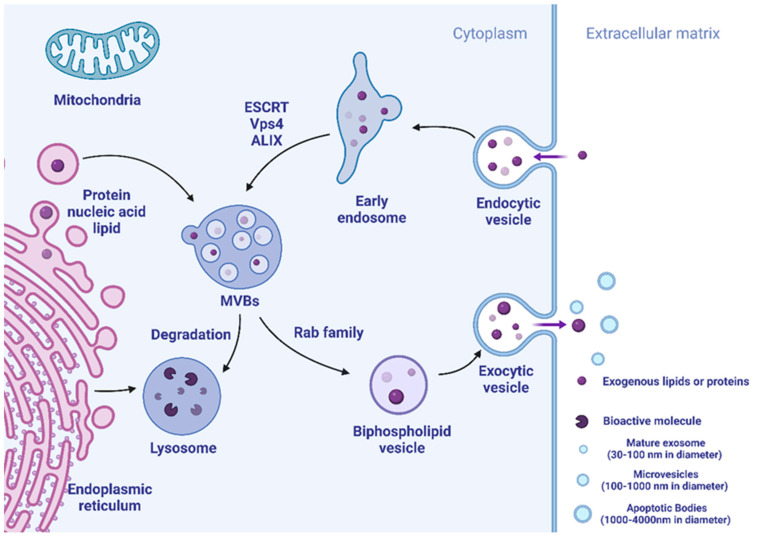
“The endosomal sorting complex required for transport (ESCRT) is accepted as molecular media by which exosomes have specific cargo sorting functions [12].”
§ The Therapeutic Potential and Clinical Significance of Exosomes as Carriers of Drug Delivery System > 2. Formation and Understanding of Exosomes > 2.1. Mechanism in the Secretion of Exosomes
What the sources say
- Supportedcites [12] Li, 2022, Exosomes: Potential Biomarkers and Functions in Head and Neck Squamous Cell Carcinoma, Front. Mol. Biosci. source
In “Knowledge in Composition and Secretion of Exosomes” (page not provided), the paper identifies ESCRT as the main mechanism for sorting specific cargo into intraluminal vesicles that become exosomes. This supports the citing sentence’s paraphrase. (LLM, conf=0.93)
plaindirect- Asserted: passes — The authors put it forward as true.
- Checkable: passes — It can be checked against evidence.
- Load-bearing: unclear — It is unclear whether the paper’s conclusions depend on it.
- Based: passes — The paper gives a reason why it holds.
- Supported
The cited sources support only part of this claim — read each source’s verdict below.
In the paper
“The study by Zou et al. demonstrated that the constructs containing the platelet-derived growth factor receptor (PDGFR) transmembrane domain fused to single-chain variable fragments of human immunodeficiency virus (HIV)-1 Env-specific antibodies have been used to target exosomes to HIV-1-infected cells [24].”
§ The Therapeutic Potential and Clinical Significance of Exosomes as Carriers of Drug Delivery System > 2. Formation and Understanding of Exosomes > 2.2. Using Exosome Carriers in Drug Delivery System for Therapeutics
What the sources say
- Partly supportedcites [24] Zou, 2019, Extracellular vesicles expressing a single-chain variable fragment of an HIV-1 specific antibody selectively target Env+ tissues, Theranostics sourceExperimental — accuracy not yet measured
The Results section (‘Characterization of 10E8scFv-expressing exosomes’; page unavailable) describes fusing an HIV-1 Env-specific 10E8 scFv to pDisplay to make surface-displaying exosomes. The Discussion reports that these exosomes targeted Env-positive cells and tissues, including HIV-1-infected cells. Our copy does not identify the pDisplay transmembrane domain as PDGFR-derived, so that structural detail is not verified by this source. (LLM, conf=0.84)
boosteddirect- Asserted: passes — The authors put it forward as true.
- Checkable: passes — It can be checked against evidence.
- Load-bearing: unclear — It is unclear whether the paper’s conclusions depend on it.
- Based: passes — The paper gives a reason why it holds.
- Partly supported
Every source the paper cites for this claim was checked and supports it.
In the paper
“Mel@NVs proved to be a potentially promising therapy for myocardial infarction [96].”
§ The Therapeutic Potential and Clinical Significance of Exosomes as Carriers of Drug Delivery System > 6. Other Systemic Diseases > 6.2. Cardiovascular Diseases
What the sources say
- Supportedcites [96] Zhang, 2022, Melatonin Engineered Adipose-Derived Biomimetic Nanovesicles Regulate Mitochondrial Functions and Promote Myocardial Repair in Myocardial Infarction, Front. Cardiovasc. Med. source
The Discussion concludes that Mel@NVs played a therapeutic role in cardiac repair and could provide a potential strategy for treating myocardial infarction. The Results section reports improved cardiac function and reduced pathological remodeling in mice with myocardial infarction, supporting the claim as a statement of therapeutic promise rather than established clinical efficacy. (LLM, conf=0.94)
hedgedconditional- Asserted: passes — The authors put it forward as true.
- Checkable: passes — It can be checked against evidence.
- Load-bearing: passes — The paper’s conclusions depend on it.
- Based: passes — The paper gives a reason why it holds.
- Supported
In the paper
“As one of the endogenous extracellular vesicles, exosomes are 30–100 nm in diameter, which are considered a new generation of a natural nanoscale delivery system.”
- Also stated in: § 1. Introduction · boosted
“Now, it is generally accepted that exosomes are 30–100 nm in diameter, rich in lipids (cholesterol, sphingomyelin, and ceramide), and fulfilled with active molecules including DNA, noncoding RNA, mRNA or protein (Table 1) [4].”
§ The Therapeutic Potential and Clinical Significance of Exosomes as Carriers of Drug Delivery System > Abstract
What the sources say
- Not checked yetcites [4] Kowal, 2014, Biogenesis and secretion of exosomes, Curr. Opin. Cell Biol. source
boosted- Asserted: passes — The authors put it forward as true.
- Checkable: passes — It can be checked against evidence.
- Load-bearing: passes — The paper’s conclusions depend on it.
- Based: passes — The paper gives a reason why it holds.
- Also stated in: § 1. Introduction · boosted
The paper states this without a source or data behind it here, so there is nothing to check it against. The quote shows it is in the paper.
In the paper
“The remaining MVBs may merge with the membrane followed by secretion to the extracellular matrix to form new extracellular vesicles including exosomes.”
§ The Therapeutic Potential and Clinical Significance of Exosomes as Carriers of Drug Delivery System > 2. Formation and Understanding of Exosomes > 2.1. Mechanism in the Secretion of Exosomes
hedgedconditional- Asserted: passes — The authors put it forward as true.
- Checkable: passes — It can be checked against evidence.
- Load-bearing: unclear — It is unclear whether the paper’s conclusions depend on it.
- Based: passes — The paper gives a reason why it holds.
None of the sources cited for this claim have been checked yet.
In the paper
“With the progress of science and technology, artificial materials such as synthetic liposomes and polylactic acid have been exploited as carriers in the last few years.”
§ The Therapeutic Potential and Clinical Significance of Exosomes as Carriers of Drug Delivery System > 2. Formation and Understanding of Exosomes > 2.2. Using Exosome Carriers in Drug Delivery System for Therapeutics
What the sources say
- Not checked yetcites [18] Higa, 2017, Ultra-small solid archaeolipid nanoparticles for active targeting to macrophages of the inflamed mucosa, Nanomedicine source
- Not checked yetcites [19] Lozano, 2018, Lectin-conjugated pH-responsive mesoporous silica nanoparticles for targeted bone cancer treatment, Acta Biomater. source
plain- Asserted: passes — The authors put it forward as true.
- Checkable: passes — It can be checked against evidence.
- Load-bearing: unclear — It is unclear whether the paper’s conclusions depend on it.
- Based: passes — The paper gives a reason why it holds.
The paper states this without a source or data behind it here, so there is nothing to check it against. The quote shows it is in the paper.
In the paper
“During the exploiting their delivery function, exosomes from human donor cells are found to be capable of transferring chemical drugs or endogenous substances (proteins, mRNAs, miRNAs, lipids, etc.) to receiver cells for therapy.”
§ The Therapeutic Potential and Clinical Significance of Exosomes as Carriers of Drug Delivery System > 1. Introduction
plaindirect- Asserted: passes — The authors put it forward as true.
- Checkable: passes — It can be checked against evidence.
- Load-bearing: passes — The paper’s conclusions depend on it.
- Based: passes — The paper gives a reason why it holds.
- Rests on an assumption: Exosomes from human donor cells are capable of transferring chemical drugs or endogenous substances to receiver cells for therapy.
In the paper
“Thus far, the cargo biological component is fulfilled in exosomes through incubation, sonication, freeze-thaw cycling, extrusion, and electroporation once extracted from the donor cells [22].”
§ The Therapeutic Potential and Clinical Significance of Exosomes as Carriers of Drug Delivery System > 2. Formation and Understanding of Exosomes > 2.2. Using Exosome Carriers in Drug Delivery System for Therapeutics
What the sources say
- Not checked yetcites [22] Mehryab, 2020, Exosomes as a next-generation drug delivery system: An update on drug loading approaches, characterization, and clinical application challenges, Acta Biomater. source
plaindirect- Asserted: passes — The authors put it forward as true.
- Checkable: passes — It can be checked against evidence.
- Load-bearing: unclear — It is unclear whether the paper’s conclusions depend on it.
- Based: passes — The paper gives a reason why it holds.
In the paper
“As a natural liposome in the human body, exosomes are considered to have the capability of high-efficiency loading and co-transmission of therapeutic drugs [21].”
§ The Therapeutic Potential and Clinical Significance of Exosomes as Carriers of Drug Delivery System > 2. Formation and Understanding of Exosomes > 2.2. Using Exosome Carriers in Drug Delivery System for Therapeutics
What the sources say
- Not checked yetcites [21] Yang, 2018, The Advances and Challenges in Utilizing Exosomes for Delivering Cancer Therapeutics, Front. Pharmacol. source
plain- Asserted: passes — The authors put it forward as true.
- Checkable: passes — It can be checked against evidence.
- Load-bearing: passes — The paper’s conclusions depend on it.
- Based: passes — The paper gives a reason why it holds.
A conclusion the paper draws from its own results — it cites no other source for it, so there is none to check. The quote shows it is in the paper.
In the paper
“Another promising feature is that simple surface modifications by bioengineering allow exosome delivery cargo more targeted.”
§ The Therapeutic Potential and Clinical Significance of Exosomes as Carriers of Drug Delivery System > 2. Formation and Understanding of Exosomes > 2.2. Using Exosome Carriers in Drug Delivery System for Therapeutics
plaindirect- Asserted: passes — The authors put it forward as true.
- Checkable: passes — It can be checked against evidence.
- Load-bearing: passes — The paper’s conclusions depend on it.
- Based: passes — The paper gives a reason why it holds.
A conclusion the paper draws from its own results — it cites no other source for it, so there is none to check. The quote shows it is in the paper.
In the paper
“At present, exosomes have the above conditions perfectly.”
§ The Therapeutic Potential and Clinical Significance of Exosomes as Carriers of Drug Delivery System > 2. Formation and Understanding of Exosomes > 2.2. Using Exosome Carriers in Drug Delivery System for Therapeutics
boosted- Asserted: passes — The authors put it forward as true.
- Checkable: passes — It can be checked against evidence.
- Load-bearing: passes — The paper’s conclusions depend on it.
- Based: passes — The paper gives a reason why it holds.
A conclusion the paper draws from its own results — it cites no other source for it, so there is none to check. The quote shows it is in the paper.
In the paper
“It is clear that the above two major modification strategies make exosomes extremely advantageous when delivering drugs as carriers.”
§ The Therapeutic Potential and Clinical Significance of Exosomes as Carriers of Drug Delivery System > 2. Formation and Understanding of Exosomes > 2.2. Using Exosome Carriers in Drug Delivery System for Therapeutics
boosteddirect- Asserted: passes — The authors put it forward as true.
- Checkable: passes — It can be checked against evidence.
- Load-bearing: passes — The paper’s conclusions depend on it.
- Based: passes — The paper gives a reason why it holds.
In the paper
“Following systemic administration of CP05-loaded exosomes, researchers found that targeting CP05-loaded exosomes increased the delivery of splice-correcting oligomers to muscle, thereby restoring muscular dystrophy [27].”
§ The Therapeutic Potential and Clinical Significance of Exosomes as Carriers of Drug Delivery System > 2. Formation and Understanding of Exosomes > 2.2. Using Exosome Carriers in Drug Delivery System for Therapeutics
What the sources say
- Not checked yetcites [27] Gao, 2018, Anchor peptide captures, targets, and loads exosomes of diverse origins for diagnostics and therapy, Sci. Transl. Med. source
plaindirect- Asserted: passes — The authors put it forward as true.
- Checkable: passes — It can be checked against evidence.
- Load-bearing: passes — The paper’s conclusions depend on it.
- Based: passes — The paper gives a reason why it holds.
In the paper
“Studies have shown that cancer-cell-derived exosomes tend to merge with their parental cells preferentially.”
§ The Therapeutic Potential and Clinical Significance of Exosomes as Carriers of Drug Delivery System > 2. Formation and Understanding of Exosomes > 2.3. Advantages of Exosome Carriers for Drug Delivery
What the sources say
- Not checked yetcites [32] Qiao, 2020, Tumor cell-derived exosomes home to their cells of origin and can be used as Trojan horses to deliver cancer drugs, Theranostics source
plaincorrelational- Asserted: passes — The authors put it forward as true.
- Checkable: passes — It can be checked against evidence.
- Load-bearing: passes — The paper’s conclusions depend on it.
- Based: passes — The paper gives a reason why it holds.
The paper states this without a source or data behind it here, so there is nothing to check it against. The quote shows it is in the paper.
In the paper
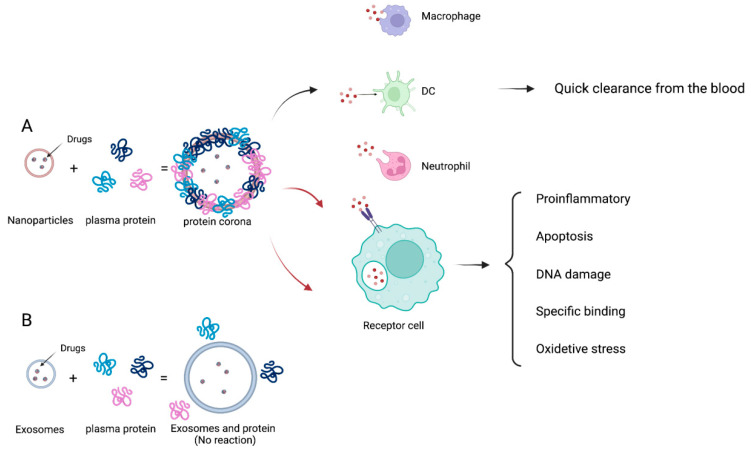
“Exosomes show faint nonspecific interactions with serum proteins.”
§ The Therapeutic Potential and Clinical Significance of Exosomes as Carriers of Drug Delivery System > 2. Formation and Understanding of Exosomes > 2.3. Advantages of Exosome Carriers for Drug Delivery
plain- Asserted: passes — The authors put it forward as true.
- Checkable: passes — It can be checked against evidence.
- Load-bearing: passes — The paper’s conclusions depend on it.
- Based: passes — The paper gives a reason why it holds.
In the paper
“First, exosomes can modulate targeting capabilities through loading specific binding principles of receptors and ligands, for example, dendritic cells (DC)-derived exosomes could transfer major histocompatibility complexes to antigen-presenting cell for regulating immunity [31].”
§ The Therapeutic Potential and Clinical Significance of Exosomes as Carriers of Drug Delivery System > 2. Formation and Understanding of Exosomes > 2.3. Advantages of Exosome Carriers for Drug Delivery
What the sources say
- Not checked yetcites [31] Liu, 2016, Donor dendritic cell–derived exosomes promote allograft-targeting immune response, J. Clin. Investig. source
hedgeddirect- Asserted: passes — The authors put it forward as true.
- Checkable: passes — It can be checked against evidence.
- Load-bearing: unclear — It is unclear whether the paper’s conclusions depend on it.
- Based: passes — The paper gives a reason why it holds.
The paper states this without a source or data behind it here, so there is nothing to check it against. The quote shows it is in the paper.
In the paper
“Furthermore, integrins on exosomes determine the organotropism effect of exosomes into specific tissues.”
§ The Therapeutic Potential and Clinical Significance of Exosomes as Carriers of Drug Delivery System > 2. Formation and Understanding of Exosomes > 2.3. Advantages of Exosome Carriers for Drug Delivery
plaindirect- Asserted: passes — The authors put it forward as true.
- Checkable: passes — It can be checked against evidence.
- Load-bearing: unclear — It is unclear whether the paper’s conclusions depend on it.
- Based: passes — The paper gives a reason why it holds.
None of the sources cited for this claim have been checked yet.
In the paper
“The protein crowns can affect the properties of synthetic NP such as cell targeting, cell interactions, toxicity, etc.”
§ The Therapeutic Potential and Clinical Significance of Exosomes as Carriers of Drug Delivery System > 2. Formation and Understanding of Exosomes > 2.3. Advantages of Exosome Carriers for Drug Delivery
What the sources say
- Not checked yetcites [36] Xiao, 2021, The protein corona hampers the transcytosis of transferrin-modified nanoparticles through blood-brain barrier and attenuates their targeting ability to brain tumor, Biomaterials source
- Not checked yetcites [37] Sutaria, 2017, Achieving the Promise of Therapeutic Extracellular Vesicles: The Devil is in Details of Therapeutic Loading, Pharm. Res. source
plaindirect- Asserted: passes — The authors put it forward as true.
- Checkable: passes — It can be checked against evidence.
- Load-bearing: passes — The paper’s conclusions depend on it.
- Based: passes — The paper gives a reason why it holds.
The paper states this without a source or data behind it here, so there is nothing to check it against. The quote shows it is in the paper.
In the paper
“Second, the targeted homing potential and cellular uptake capacity of exosomes are enhanced with the presence of vesicle surface proteins.”
§ The Therapeutic Potential and Clinical Significance of Exosomes as Carriers of Drug Delivery System > 2. Formation and Understanding of Exosomes > 2.3. Advantages of Exosome Carriers for Drug Delivery
plaindirect- Asserted: passes — The authors put it forward as true.
- Checkable: passes — It can be checked against evidence.
- Load-bearing: passes — The paper’s conclusions depend on it.
- Based: passes — The paper gives a reason why it holds.
None of the sources cited for this claim have been checked yet.
In the paper
“It was reported that serum proteins bind on the surface of synthetic nanoparticle (NP) carriers immediately after entering the bloodstream, forming so-called protein coronas [34,35].”
§ The Therapeutic Potential and Clinical Significance of Exosomes as Carriers of Drug Delivery System > 2. Formation and Understanding of Exosomes > 2.3. Advantages of Exosome Carriers for Drug Delivery
What the sources say
plaindirect- Asserted: passes — The authors put it forward as true.
- Checkable: passes — It can be checked against evidence.
- Load-bearing: passes — The paper’s conclusions depend on it.
- Based: passes — The paper gives a reason why it holds.
The paper states this without a source or data behind it here, so there is nothing to check it against. The quote shows it is in the paper.
In the paper
“Notably, the binding of serum proteins with exosomes is weak, mainly based on exosome’s endogenous nature.”
§ The Therapeutic Potential and Clinical Significance of Exosomes as Carriers of Drug Delivery System > 2. Formation and Understanding of Exosomes > 2.3. Advantages of Exosome Carriers for Drug Delivery
plaindirect- Asserted: passes — The authors put it forward as true.
- Checkable: passes — It can be checked against evidence.
- Load-bearing: passes — The paper’s conclusions depend on it.
- Based: passes — The paper gives a reason why it holds.
The paper states this without a source or data behind it here, so there is nothing to check it against. The quote shows it is in the paper.
In the paper
“Furthermore, those nature-made vesicles are better tolerated in vivo.”
§ The Therapeutic Potential and Clinical Significance of Exosomes as Carriers of Drug Delivery System > 2. Formation and Understanding of Exosomes > 2.3. Advantages of Exosome Carriers for Drug Delivery
plain- Asserted: passes — The authors put it forward as true.
- Checkable: passes — It can be checked against evidence.
- Load-bearing: passes — The paper’s conclusions depend on it.
- Based: passes — The paper gives a reason why it holds.
In the paper
“Exosomes may provide a more rational way for therapeutic protein delivery to exert antitumor effects as we highlighted above [42].”
§ The Therapeutic Potential and Clinical Significance of Exosomes as Carriers of Drug Delivery System > 3. Tumors > 3.1. Delivering Endogenous Biomolecules
What the sources say
- Not checked yetcites [42] Yim, 2016, Exosome engineering for efficient intracellular delivery of soluble proteins using optically reversible protein-protein interaction module, Nat. Commun. source
hedgedconditional- Asserted: passes — The authors put it forward as true.
- Checkable: passes — It can be checked against evidence.
- Load-bearing: passes — The paper’s conclusions depend on it.
- Based: passes — The paper gives a reason why it holds.
The paper states this without a source or data behind it here, so there is nothing to check it against. The quote shows it is in the paper.
In the paper
“Tumor-derived exosomes (TDEs) were also found to have strong associations with TME and cancer initiation.”
§ The Therapeutic Potential and Clinical Significance of Exosomes as Carriers of Drug Delivery System > 3. Tumors
boostedcorrelational- Asserted: passes — The authors put it forward as true.
- Checkable: passes — It can be checked against evidence.
- Load-bearing: passes — The paper’s conclusions depend on it.
- Based: passes — The paper gives a reason why it holds.
None of the sources cited for this claim have been checked yet.
In the paper
“In addition to proteins, nucleic acids (mRNA, miRNA, siRNA, piRNA, etc.) have also been reported as a potential method for cancer treatment [47,48].”
§ The Therapeutic Potential and Clinical Significance of Exosomes as Carriers of Drug Delivery System > 3. Tumors > 3.1. Delivering Endogenous Biomolecules
What the sources say
- Not checked yetcites [47] Belew, 2018, Differential Content of Proteins, mRNAs, and miRNAs Suggests that MDSC and Their Exosomes May Mediate Distinct Immune Suppressive Functions, J. Proteome Res. source
- Not checked yetcites [48] Dvorská, D., Braný, D., Ňachajová, M., Halašová, E., and Danková, Z. (2021). Breast Cancer and the Other Non-Coding RNAs. Int. J. Mol. Sci., 22. source
plainconditional- Asserted: passes — The authors put it forward as true.
- Checkable: passes — It can be checked against evidence.
- Load-bearing: unclear — It is unclear whether the paper’s conclusions depend on it.
- Based: passes — The paper gives a reason why it holds.
In the paper
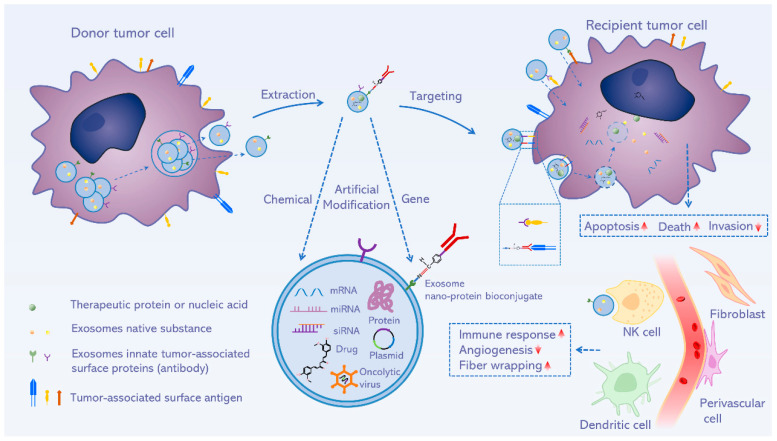
“Meanwhile, native M1 exosomes efficiently reprogram macrophages from pro-tumor M2 to anti-tumor M1 [44].”
§ The Therapeutic Potential and Clinical Significance of Exosomes as Carriers of Drug Delivery System > 3. Tumors > 3.1. Delivering Endogenous Biomolecules
What the sources say
- Not checked yetcites [44] Nie, 2019, Responsive Exosome Nano-bioconjugates for Synergistic Cancer Therapy, Angew. Chem. Int. Ed. source
plaindirect- Asserted: passes — The authors put it forward as true.
- Checkable: passes — It can be checked against evidence.
- Load-bearing: unclear — It is unclear whether the paper’s conclusions depend on it.
- Based: passes — The paper gives a reason why it holds.
In the paper
“Their result showed that the nano-bioconjugates could specifically bind with cancer by recognition of CD47.”
§ The Therapeutic Potential and Clinical Significance of Exosomes as Carriers of Drug Delivery System > 3. Tumors > 3.1. Delivering Endogenous Biomolecules
What the sources say
- Not checked yetcites [44] Nie, 2019, Responsive Exosome Nano-bioconjugates for Synergistic Cancer Therapy, Angew. Chem. Int. Ed. source
plaindirect- Asserted: passes — The authors put it forward as true.
- Checkable: passes — It can be checked against evidence.
- Load-bearing: unclear — It is unclear whether the paper’s conclusions depend on it.
- Based: passes — The paper gives a reason why it holds.
In the paper
“In Yang et al. research, mouse embryonic fibroblast-derived exosomes were able to deliver PTEN (phosphatase and homologous tensin) mRNA to inhibit mouse glioma growth [49].”
§ The Therapeutic Potential and Clinical Significance of Exosomes as Carriers of Drug Delivery System > 3. Tumors > 3.1. Delivering Endogenous Biomolecules
What the sources say
- Not checked yetcites [49] Yang, 2020, Large-scale generation of functional mRNA-encapsulating exosomes via cellular nanoporation, Nat. Biomed. Eng. source
plaindirect- Asserted: passes — The authors put it forward as true.
- Checkable: passes — It can be checked against evidence.
- Load-bearing: unclear — It is unclear whether the paper’s conclusions depend on it.
- Based: passes — The paper gives a reason why it holds.
In the paper
“For example, the researchers used mouse macrophage exosomes to hybridize with synthetic liposomes to obtain engineered exosomes, water-soluble doxorubicin loaded in the engineered exosomes under acidic conditions had a significantly enhanced toxicity to cancer cells.”
§ The Therapeutic Potential and Clinical Significance of Exosomes as Carriers of Drug Delivery System > 3. Tumors > 3.3. Delivering Engineered Drugs
What the sources say
- Not checked yetcites [60] Rayamajhi, 2019, Macrophage-derived exosome-mimetic hybrid vesicles for tumor targeted drug delivery, Acta Biomater. source
plaindirect- Asserted: passes — The authors put it forward as true.
- Checkable: passes — It can be checked against evidence.
- Load-bearing: passes — The paper’s conclusions depend on it.
- Based: passes — The paper gives a reason why it holds.
A conclusion the paper draws from its own results — it cites no other source for it, so there is none to check. The quote shows it is in the paper.
In the paper
“In general, exosome-loaded drugs display better efficacy than chemicals used alone.”
§ The Therapeutic Potential and Clinical Significance of Exosomes as Carriers of Drug Delivery System > 3. Tumors > 3.2. Delivering Chemical Drugs
plaindirect- Asserted: passes — The authors put it forward as true.
- Checkable: passes — It can be checked against evidence.
- Load-bearing: passes — The paper’s conclusions depend on it.
- Based: passes — The paper gives a reason why it holds.
In the paper
“In addition, exosomes from MSCs had a higher amount of miR-1455p were displaying a strong effect on the inhibition of pancreatic cancer cells in vitro and in vivo [52].”
§ The Therapeutic Potential and Clinical Significance of Exosomes as Carriers of Drug Delivery System > 3. Tumors > 3.1. Delivering Endogenous Biomolecules
What the sources say
- Not checked yetcites [52] Ding, 2019, Exosomes derived from human umbilical cord mesenchymal stromal cells deliver exogenous miR-145-5p to inhibit pancreatic ductal adenocarcinoma progression, Cancer Lett. source
boosteddirect- Asserted: passes — The authors put it forward as true.
- Checkable: passes — It can be checked against evidence.
- Load-bearing: unclear — It is unclear whether the paper’s conclusions depend on it.
- Based: passes — The paper gives a reason why it holds.
In the paper
“Shtam et al. showed the therapeutic potential of exosome-mediated siRNA delivery to HeLa cells (cervical cancer cell line) by targeting RAD51.”
§ The Therapeutic Potential and Clinical Significance of Exosomes as Carriers of Drug Delivery System > 3. Tumors > 3.1. Delivering Endogenous Biomolecules
What the sources say
- Not checked yetcites [53] Shtam, 2013, Exosomes are natural carriers of exogenous siRNA to human cells in vitro, Cell Commun. Signal. source
plainconditional- Asserted: passes — The authors put it forward as true.
- Checkable: passes — It can be checked against evidence.
- Load-bearing: passes — The paper’s conclusions depend on it.
- Based: passes — The paper gives a reason why it holds.
In the paper
“The CRISPR/Cas9-loaded exosomes significantly down-regulated PARP-1 expression, thus causing ovarian cancer cell death [54].”
§ The Therapeutic Potential and Clinical Significance of Exosomes as Carriers of Drug Delivery System > 3. Tumors > 3.1. Delivering Endogenous Biomolecules
What the sources say
- Not checked yetcites [54] Kim, 2017, Cancer-derived exosomes as a delivery platform of CRISPR/Cas9 confer cancer cell tropism-dependent targeting, J. Control. Release source
plaindirect- Asserted: passes — The authors put it forward as true.
- Checkable: passes — It can be checked against evidence.
- Load-bearing: passes — The paper’s conclusions depend on it.
- Based: passes — The paper gives a reason why it holds.
In the paper
“After being pre-loaded with Doxorubicin, the exosome sheath enhanced tumor accumulation and vascular extravasation.”
§ The Therapeutic Potential and Clinical Significance of Exosomes as Carriers of Drug Delivery System > 3. Tumors > 3.3. Delivering Engineered Drugs
What the sources say
- Not checked yetcites [61] Yong, 2019, Tumor exosome-based nanoparticles are efficient drug carriers for chemotherapy, Nat. Commun. source
plaindirect- Asserted: passes — The authors put it forward as true.
- Checkable: passes — It can be checked against evidence.
- Load-bearing: passes — The paper’s conclusions depend on it.
- Based: passes — The paper gives a reason why it holds.
In the paper
“It strongly suggests that the engineered exosomes will be a promising platform for tumor-targeted drug delivery [60].”
§ The Therapeutic Potential and Clinical Significance of Exosomes as Carriers of Drug Delivery System > 3. Tumors > 3.3. Delivering Engineered Drugs
What the sources say
- Not checked yetcites [60] Rayamajhi, 2019, Macrophage-derived exosome-mimetic hybrid vesicles for tumor targeted drug delivery, Acta Biomater. source
boosted- Asserted: passes — The authors put it forward as true.
- Checkable: passes — It can be checked against evidence.
- Load-bearing: passes — The paper’s conclusions depend on it.
- Based: passes — The paper gives a reason why it holds.
In the paper
“Similarly, Garofalo et al. showed lung tumor cell-derived exosomes can effectively carry the oncolytic virus and chemotherapeutic drugs (PTX), thus enhancing the antitumor effects in nude mice [57].”
§ The Therapeutic Potential and Clinical Significance of Exosomes as Carriers of Drug Delivery System > 3. Tumors > 3.2. Delivering Chemical Drugs
What the sources say
- Not checked yetcites [57] Garofalo, 2018, Antitumor effect of oncolytic virus and paclitaxel encapsulated in extracellular vesicles for lung cancer treatment, J. Control. Release source
plaindirect- Asserted: passes — The authors put it forward as true.
- Checkable: passes — It can be checked against evidence.
- Load-bearing: unclear — It is unclear whether the paper’s conclusions depend on it.
- Based: passes — The paper gives a reason why it holds.
In the paper
“The efficacy of these monomeric components can be enhanced by the administration of exosome carriers [55].”
§ The Therapeutic Potential and Clinical Significance of Exosomes as Carriers of Drug Delivery System > 3. Tumors > 3.2. Delivering Chemical Drugs
What the sources say
- Not checked yetcites [55] Farooqi, 2018, Exosome biogenesis, bioactivities and functions as new delivery systems of natural compounds, Biotechnol. Adv. source
plaindirect- Asserted: passes — The authors put it forward as true.
- Checkable: passes — It can be checked against evidence.
- Load-bearing: passes — The paper’s conclusions depend on it.
- Based: passes — The paper gives a reason why it holds.
In the paper
“The results illustrated strong evidence for MSC-derived exosomes could successfully stimulate neurogenesis and angiogenesis in that model [69].”
§ The Therapeutic Potential and Clinical Significance of Exosomes as Carriers of Drug Delivery System > 4. Neurological Diseases
What the sources say
- Not checked yetcites [69] Moon, 2019, Application of Mesenchymal Stem Cell-Derived Extracellular Vesicles for Stroke: Biodistribution and MicroRNA Study, Transl. Stroke Res. source
boosteddirect- Asserted: passes — The authors put it forward as true.
- Checkable: passes — It can be checked against evidence.
- Load-bearing: passes — The paper’s conclusions depend on it.
- Based: passes — The paper gives a reason why it holds.
In the paper
“Therefore, it opens up a promising possibility to deliver therapeutic substances to treat central neurological diseases, such as neurodegenerative diseases, strokes, etc. [63].”
§ The Therapeutic Potential and Clinical Significance of Exosomes as Carriers of Drug Delivery System > 4. Neurological Diseases
What the sources say
- Not checked yetcites [63] Ghosh, 2022, Exosome: The “Off-the-Shelf” Cellular Nanocomponent as a Potential Pathogenic Agent, a Disease Biomarker, and Neurotherapeutics, Front. Pharmacol. source
hedgedconditional- Asserted: passes — The authors put it forward as true.
- Checkable: passes — It can be checked against evidence.
- Load-bearing: passes — The paper’s conclusions depend on it.
- Based: passes — The paper gives a reason why it holds.
The paper states this without a source or data behind it here, so there is nothing to check it against. The quote shows it is in the paper.
In the paper
“The RGD parts are accounting for membrane fusion to enhance cellular endocytosis and the sequential nano catalysts underwent a more effective treatment in the HCC tumor zone during a short time.”
§ The Therapeutic Potential and Clinical Significance of Exosomes as Carriers of Drug Delivery System > 3. Tumors > 3.3. Delivering Engineered Drugs
plaindirect- Asserted: passes — The authors put it forward as true.
- Checkable: passes — It can be checked against evidence.
- Load-bearing: passes — The paper’s conclusions depend on it.
- Based: passes — The paper gives a reason why it holds.
In the paper
“In a mouse Parkinson’s disease (PD) model, exosomes with pre-loaded dopamine exhibited better performance than free dopamine after intravenous injection [74].”
§ The Therapeutic Potential and Clinical Significance of Exosomes as Carriers of Drug Delivery System > 4. Neurological Diseases
What the sources say
- Not checked yetcites [74] Qu, 2018, Dopamine-loaded blood exosomes targeted to brain for better treatment of Parkinson’s disease, J. Control. Release source
plaindirect- Asserted: passes — The authors put it forward as true.
- Checkable: passes — It can be checked against evidence.
- Load-bearing: passes — The paper’s conclusions depend on it.
- Based: passes — The paper gives a reason why it holds.
In the paper
“Wang et al. studied engineered exosomes that silenced Bcl-2 and Bax with a promising result that suggested the exosomes had a therapeutic effect on apoptosis after TBI [72].”
§ The Therapeutic Potential and Clinical Significance of Exosomes as Carriers of Drug Delivery System > 4. Neurological Diseases
What the sources say
- Not checked yetcites [72] Wei, 2019, A Nanodrug Consisting of Doxorubicin And Exosome Derived From Mesenchymal Stem Cells For Osteosarcoma Treatment In Vitro, Int. J. Nanomed. source
hedgeddirect- Asserted: passes — The authors put it forward as true.
- Checkable: passes — It can be checked against evidence.
- Load-bearing: unclear — It is unclear whether the paper’s conclusions depend on it.
- Based: passes — The paper gives a reason why it holds.
In the paper
“Others reported that exosome carriers conjugated to the surface of c (RGDyK) peptide or curcumin can target the lesion area of ischemic encephalopathy.”
§ The Therapeutic Potential and Clinical Significance of Exosomes as Carriers of Drug Delivery System > 4. Neurological Diseases
What the sources say
- Not checked yetcites [71] Tian, 2018, Surface functionalized exosomes as targeted drug delivery vehicles for cerebral ischemia therapy, Biomaterials source
plaindirect- Asserted: passes — The authors put it forward as true.
- Checkable: passes — It can be checked against evidence.
- Load-bearing: unclear — It is unclear whether the paper’s conclusions depend on it.
- Based: passes — The paper gives a reason why it holds.
In the paper
“For example, traumatic brain injury (TBI) can cause severe neuronal damage, and studies have shown that exosomes from human-induced pluripotent stem cells (hiPSCs) and MSCs may heal neuronal damage [68].”
§ The Therapeutic Potential and Clinical Significance of Exosomes as Carriers of Drug Delivery System > 4. Neurological Diseases
What the sources say
- Not checked yetcites [68] Ghosh, 2020, Cell-Derived Exosome Therapy: A Novel Approach to Treat Post-traumatic Brain Injury Mediated Neural Injury, ACS Chem. Neurosci. source
hedgedconditional- Asserted: passes — The authors put it forward as true.
- Checkable: passes — It can be checked against evidence.
- Load-bearing: unclear — It is unclear whether the paper’s conclusions depend on it.
- Based: passes — The paper gives a reason why it holds.
A conclusion the paper draws from its own results — it cites no other source for it, so there is none to check. The quote shows it is in the paper.
In the paper
“Additionally, exosome carriers could hold the drug stability and half-life.”
§ The Therapeutic Potential and Clinical Significance of Exosomes as Carriers of Drug Delivery System > 3. Tumors > 3.3. Delivering Engineered Drugs
hedgedconditional- Asserted: passes — The authors put it forward as true.
- Checkable: passes — It can be checked against evidence.
- Load-bearing: passes — The paper’s conclusions depend on it.
- Based: unclear — It is unclear why the paper says it holds.
In the paper
“In a mouse model, the modified exosomes provided a safe and effective delivery vehicle for ischemic stroke therapy [71].”
§ The Therapeutic Potential and Clinical Significance of Exosomes as Carriers of Drug Delivery System > 4. Neurological Diseases
What the sources say
- Not checked yetcites [71] Tian, 2018, Surface functionalized exosomes as targeted drug delivery vehicles for cerebral ischemia therapy, Biomaterials source
plaindirect- Asserted: passes — The authors put it forward as true.
- Checkable: passes — It can be checked against evidence.
- Load-bearing: passes — The paper’s conclusions depend on it.
- Based: passes — The paper gives a reason why it holds.
None of the sources cited for this claim have been checked yet.
In the paper
“Furthermore, exosome carriers can deliver therapeutic substances across the blood–brain barrier (BBB).”
§ The Therapeutic Potential and Clinical Significance of Exosomes as Carriers of Drug Delivery System > 4. Neurological Diseases
plaindirect- Asserted: passes — The authors put it forward as true.
- Checkable: passes — It can be checked against evidence.
- Load-bearing: passes — The paper’s conclusions depend on it.
- Based: passes — The paper gives a reason why it holds.
A conclusion the paper draws from its own results — it cites no other source for it, so there is none to check. The quote shows it is in the paper.
In the paper
“exosomes carriers can efficiently load biologics or other inflammation inhibitors and deliver them to the target protected from enzyme-caused degradation, which provides tantalizing prospects in supporting the fight against autoimmune diseases.”
§ The Therapeutic Potential and Clinical Significance of Exosomes as Carriers of Drug Delivery System > 5. Autoimmune Diseases
plaindirect- Asserted: passes — The authors put it forward as true.
- Checkable: passes — It can be checked against evidence.
- Load-bearing: passes — The paper’s conclusions depend on it.
- Based: passes — The paper gives a reason why it holds.
In the paper
“It was reported that miR-146a/miR-155-transduced MSC-derived exosome strongly increased Treg cell subpopulation and anti-inflammatory cytokines in collagen-induced arthritis (CIA) mice.”
§ The Therapeutic Potential and Clinical Significance of Exosomes as Carriers of Drug Delivery System > 5. Autoimmune Diseases
What the sources say
- Not checked yetcites [77] Tavasolian, 2020, miRNA-146a Improves Immunomodulatory Effects of MSC-derived Exosomes in Rheumatoid Arthritis, Curr. Gene Ther. source
boosteddirect- Asserted: passes — The authors put it forward as true.
- Checkable: passes — It can be checked against evidence.
- Load-bearing: passes — The paper’s conclusions depend on it.
- Based: passes — The paper gives a reason why it holds.
In the paper
“Ultimately, this modulation may facilitate the restoration of T-cell responses in rheumatoid arthritis (RA); therefore, the use of MSC-derived exosomes to load miRNAs that can alter immune responses could serve as therapeutic targets for inflammatory diseases [77].”
§ The Therapeutic Potential and Clinical Significance of Exosomes as Carriers of Drug Delivery System > 5. Autoimmune Diseases
What the sources say
- Not checked yetcites [77] Tavasolian, 2020, miRNA-146a Improves Immunomodulatory Effects of MSC-derived Exosomes in Rheumatoid Arthritis, Curr. Gene Ther. source
hedgedconditional- Asserted: passes — The authors put it forward as true.
- Checkable: passes — It can be checked against evidence.
- Load-bearing: passes — The paper’s conclusions depend on it.
- Based: passes — The paper gives a reason why it holds.
In the paper
“Previous studies have proved that natural or surface-modified exosomes can be used as a treatment for autoimmune diseases [76].”
§ The Therapeutic Potential and Clinical Significance of Exosomes as Carriers of Drug Delivery System > 5. Autoimmune Diseases
What the sources say
- Not checked yetcites [76] Zhou, 2020, The function and clinical application of extracellular vesicles in innate immune regulation, Cell. Mol. Immunol. source
boosteddirect- Asserted: passes — The authors put it forward as true.
- Checkable: passes — It can be checked against evidence.
- Load-bearing: passes — The paper’s conclusions depend on it.
- Based: passes — The paper gives a reason why it holds.
In the paper
“Studies have shown that glucocorticoid-loaded exosomes show therapeutic efficacy in proteolipoprotein-induced experimental autoimmune encephalomyelitis.”
§ The Therapeutic Potential and Clinical Significance of Exosomes as Carriers of Drug Delivery System > 5. Autoimmune Diseases
What the sources say
- Not checked yetcites [79] Avnir, Y., Turjeman, K., Tulchinsky, D., Sigal, A., Kizelsztein, P., Tzemach, D., Gabizon, A., and Barenholz, Y. (2011). Fabrication Principles and Their Contribution to the Superior In Vivo Therapeutic Efficacy of Nano-Liposomes Remote Loaded with Glucocorticoids. PLoS ONE, 6. source
plaindirect- Asserted: passes — The authors put it forward as true.
- Checkable: passes — It can be checked against evidence.
- Load-bearing: passes — The paper’s conclusions depend on it.
- Based: passes — The paper gives a reason why it holds.
In the paper
“In addition, ExoCAT showed effective neuroprotection in vivo models of PD [75].”
§ The Therapeutic Potential and Clinical Significance of Exosomes as Carriers of Drug Delivery System > 4. Neurological Diseases
What the sources say
- Not checked yetcites [75] Haney, 2015, Exosomes as drug delivery vehicles for Parkinson’s disease therapy, J. Control. Release source
plaindirect- Asserted: passes — The authors put it forward as true.
- Checkable: passes — It can be checked against evidence.
- Load-bearing: passes — The paper’s conclusions depend on it.
- Based: passes — The paper gives a reason why it holds.
In the paper
“The prognostic marker malondialdehyde and C-reactive protein levels were lower than the free glutathione group [81].”
§ The Therapeutic Potential and Clinical Significance of Exosomes as Carriers of Drug Delivery System > 5. Autoimmune Diseases
What the sources say
- Not checked yetcites [81] Kadry, 2019, Liposomal glutathione as a promising candidate for immunological rheumatoid arthritis therapy, Heliyon source
plain- Asserted: passes — The authors put it forward as true.
- Checkable: passes — It can be checked against evidence.
- Load-bearing: unclear — It is unclear whether the paper’s conclusions depend on it.
- Based: passes — The paper gives a reason why it holds.
In the paper
“Animals treated with glucocorticoid-loaded exosomes recovered from acute illness more rapidly than clinically used multiple sclerosis (MS) drugs, such as betafalon and copasone [79].”
§ The Therapeutic Potential and Clinical Significance of Exosomes as Carriers of Drug Delivery System > 5. Autoimmune Diseases
What the sources say
- Not checked yetcites [79] Avnir, Y., Turjeman, K., Tulchinsky, D., Sigal, A., Kizelsztein, P., Tzemach, D., Gabizon, A., and Barenholz, Y. (2011). Fabrication Principles and Their Contribution to the Superior In Vivo Therapeutic Efficacy of Nano-Liposomes Remote Loaded with Glucocorticoids. PLoS ONE, 6. source
plaindirect- Asserted: passes — The authors put it forward as true.
- Checkable: passes — It can be checked against evidence.
- Load-bearing: passes — The paper’s conclusions depend on it.
- Based: passes — The paper gives a reason why it holds.
In the paper
“Riazifar et al. showed that exosome-stimulated MSCs produced by γ-interferon have been shown to have significant effects in the treatment of autoimmune encephalomyelitis (EAE) [78].”
§ The Therapeutic Potential and Clinical Significance of Exosomes as Carriers of Drug Delivery System > 5. Autoimmune Diseases
What the sources say
- Not checked yetcites [78] Riazifar, 2019, Stem Cell-Derived Exosomes as Nanotherapeutics for Autoimmune and Neurodegenerative Disorders, ACS Nano source
boosteddirect- Asserted: passes — The authors put it forward as true.
- Checkable: passes — It can be checked against evidence.
- Load-bearing: unclear — It is unclear whether the paper’s conclusions depend on it.
- Based: passes — The paper gives a reason why it holds.
In the paper
“Intravenous administration of STExos could not improve osteoporotic phenotypes in mouse models.”
§ The Therapeutic Potential and Clinical Significance of Exosomes as Carriers of Drug Delivery System > 6. Other Systemic Diseases > 6.1. Skeletal Diseases
What the sources say
- Not checked yetcites [87] Luo, 2019, Aptamer-functionalized exosomes from bone marrow stromal cells target bone to promote bone regeneration, Nanoscale source
hedged- Asserted: passes — The authors put it forward as true.
- Checkable: passes — It can be checked against evidence.
- Load-bearing: passes — The paper’s conclusions depend on it.
- Based: passes — The paper gives a reason why it holds.
In the paper
“However, the prolonged use of high doses of drugs that can cause secondary adverse effects, including affecting normal osteocytes [84].”
§ The Therapeutic Potential and Clinical Significance of Exosomes as Carriers of Drug Delivery System > 6. Other Systemic Diseases > 6.1. Skeletal Diseases
What the sources say
- Not checked yetcites [84] Kennel, 2009, Adverse effects of bisphosphonates: Implications for osteoporosis management, Mayo. Clin. Proc. source
plaindirect- Asserted: passes — The authors put it forward as true.
- Checkable: passes — It can be checked against evidence.
- Load-bearing: passes — The paper’s conclusions depend on it.
- Based: passes — The paper gives a reason why it holds.
A conclusion the paper draws from its own results — it cites no other source for it, so there is none to check. The quote shows it is in the paper.
In the paper
“Furthermore, exosomes can be modified with biological or synthetic ligands on the unique surface to enhance the targeting specific possibility to deliver cargo in different autoimmune diseases.”
§ The Therapeutic Potential and Clinical Significance of Exosomes as Carriers of Drug Delivery System > 5. Autoimmune Diseases
plaindirect- Asserted: passes — The authors put it forward as true.
- Checkable: passes — It can be checked against evidence.
- Load-bearing: passes — The paper’s conclusions depend on it.
- Based: passes — The paper gives a reason why it holds.
In the paper
“The engineered exosomes can also deliver a variety of functional molecules to treat inflammatory diseases [83].”
§ The Therapeutic Potential and Clinical Significance of Exosomes as Carriers of Drug Delivery System > 5. Autoimmune Diseases
What the sources say
- Not checked yetcites [83] Casella, 2018, Extracellular Vesicles Containing IL-4 Modulate Neuroinflammation in a Mouse Model of Multiple Sclerosis, Mol. Ther. source
plaindirect- Asserted: passes — The authors put it forward as true.
- Checkable: passes — It can be checked against evidence.
- Load-bearing: passes — The paper’s conclusions depend on it.
- Based: passes — The paper gives a reason why it holds.
A conclusion the paper draws from its own results — it cites no other source for it, so there is none to check. The quote shows it is in the paper.
In the paper
“Exosomes show promising prospects for the treatment of autoimmune diseases.”
§ The Therapeutic Potential and Clinical Significance of Exosomes as Carriers of Drug Delivery System > 5. Autoimmune Diseases
hedgedconditional- Asserted: passes — The authors put it forward as true.
- Checkable: passes — It can be checked against evidence.
- Load-bearing: passes — The paper’s conclusions depend on it.
- Based: passes — The paper gives a reason why it holds.
The paper states this without a source or data behind it here, so there is nothing to check it against. The quote shows it is in the paper.
In the paper
“Clearly, bone drug delivery applications are not yet perfect in targeting and eliminating side effects.”
§ The Therapeutic Potential and Clinical Significance of Exosomes as Carriers of Drug Delivery System > 6. Other Systemic Diseases > 6.1. Skeletal Diseases
boosted- Asserted: passes — The authors put it forward as true.
- Checkable: passes — It can be checked against evidence.
- Load-bearing: passes — The paper’s conclusions depend on it.
- Based: passes — The paper gives a reason why it holds.
In the paper
“Luo et al. showed that bone marrow stromal cell (ST)-derived exosomes (STExos) could significantly enhance the osteoblast differentiation of bone mesenchymal stem cells (BMSCs) in vitro by simple surface chemical modifications.”
§ The Therapeutic Potential and Clinical Significance of Exosomes as Carriers of Drug Delivery System > 6. Other Systemic Diseases > 6.1. Skeletal Diseases
What the sources say
- Not checked yetcites [87] Luo, 2019, Aptamer-functionalized exosomes from bone marrow stromal cells target bone to promote bone regeneration, Nanoscale source
hedgeddirect- Asserted: passes — The authors put it forward as true.
- Checkable: passes — It can be checked against evidence.
- Load-bearing: passes — The paper’s conclusions depend on it.
- Based: passes — The paper gives a reason why it holds.
In the paper
“Traditional drug therapy for diseases of the skeletal system is mainly based on inhibiting osteoclast formation (estrogen, etc.) or inhibiting osteoclast activity (bisphosphonates, etc.).”
§ The Therapeutic Potential and Clinical Significance of Exosomes as Carriers of Drug Delivery System > 6. Other Systemic Diseases > 6.1. Skeletal Diseases
What the sources say
- Not checked yetcites [84] Kennel, 2009, Adverse effects of bisphosphonates: Implications for osteoporosis management, Mayo. Clin. Proc. source
plaindirect- Asserted: passes — The authors put it forward as true.
- Checkable: passes — It can be checked against evidence.
- Load-bearing: unclear — It is unclear whether the paper’s conclusions depend on it.
- Based: passes — The paper gives a reason why it holds.
In the paper
“Zha et al. extracted ATDC5 (chondrogenic progenitor cell line)-derived exosomes to load the vascular endothelial growth factor (VEGF) gene, which can effectively restore segmental bone defects by increasing osteogenesis and angiogenesis [86].”
§ The Therapeutic Potential and Clinical Significance of Exosomes as Carriers of Drug Delivery System > 6. Other Systemic Diseases > 6.1. Skeletal Diseases
What the sources say
- Not checked yetcites [86] Zha, 2021, Progenitor cell-derived exosomes endowed with VEGF plasmids enhance osteogenic induction and vascular remodeling in large segmental bone defects, Theranostics source
plaindirect- Asserted: passes — The authors put it forward as true.
- Checkable: passes — It can be checked against evidence.
- Load-bearing: passes — The paper’s conclusions depend on it.
- Based: passes — The paper gives a reason why it holds.
In the paper
“Due to the advent of exosome carriers, great progress in the management of drug delivery to the bone has been made [85].”
§ The Therapeutic Potential and Clinical Significance of Exosomes as Carriers of Drug Delivery System > 6. Other Systemic Diseases > 6.1. Skeletal Diseases
What the sources say
- Not checked yetcites [85] Yang, 2019, Drug Delivery Based on Nanotechnology for Target Bone Disease, Curr. Drug Deliv. source
plaindirect- Asserted: passes — The authors put it forward as true.
- Checkable: passes — It can be checked against evidence.
- Load-bearing: passes — The paper’s conclusions depend on it.
- Based: passes — The paper gives a reason why it holds.
In the paper
“In addition, Zhang et al. found MSC-exosome/β-TCP composite scaffolds had better healing functions on rat calvarial defects [88].”
§ The Therapeutic Potential and Clinical Significance of Exosomes as Carriers of Drug Delivery System > 6. Other Systemic Diseases > 6.1. Skeletal Diseases
What the sources say
- Not checked yetcites [88] Zhang, 2016, Exosomes/tricalcium phosphate combination scaffolds can enhance bone regeneration by activating the PI3K/Akt signaling pathway, Stem. Cell Res. Ther. source
plaindirect- Asserted: passes — The authors put it forward as true.
- Checkable: passes — It can be checked against evidence.
- Load-bearing: passes — The paper’s conclusions depend on it.
- Based: passes — The paper gives a reason why it holds.
In the paper
“In a rat model, KGN loaded by engineered exosomes also showed better therapeutic effects than KGN alone [89].”
§ The Therapeutic Potential and Clinical Significance of Exosomes as Carriers of Drug Delivery System > 6. Other Systemic Diseases > 6.1. Skeletal Diseases
What the sources say
- Not checked yetcites [89] Xu, 2021, Exosome-mediated delivery of kartogenin for chondrogenesis of synovial fluid-derived mesenchymal stem cells and cartilage regeneration, Biomaterials source
plaindirect- Asserted: passes — The authors put it forward as true.
- Checkable: passes — It can be checked against evidence.
- Load-bearing: passes — The paper’s conclusions depend on it.
- Based: passes — The paper gives a reason why it holds.
In the paper
“Meanwhile, the encapsulated hexyl 5-aminolevulinate hydrochloride can diminish inflammation effectively by intrinsic biosynthesis and metabolism of heme [95].”
§ The Therapeutic Potential and Clinical Significance of Exosomes as Carriers of Drug Delivery System > 6. Other Systemic Diseases > 6.2. Cardiovascular Diseases
What the sources say
- Not checked yetcites [95] Wu, 2020, Molecularly Engineered Macrophage-Derived Exosomes with Inflammation Tropism and Intrinsic Heme Biosynthesis for Atherosclerosis Treatment, Angew. Chem. Int. Ed. source
plaindirect- Asserted: passes — The authors put it forward as true.
- Checkable: passes — It can be checked against evidence.
- Load-bearing: unclear — It is unclear whether the paper’s conclusions depend on it.
- Based: passes — The paper gives a reason why it holds.
The paper states this without a source or data behind it here, so there is nothing to check it against. The quote shows it is in the paper.
In the paper
“All cell subtypes in the cardiovascular system, including endothelial cells (ECs), cardiomyocytes, and fibroblasts, release exosomes to participate in intercellular communication and regulate cardiac function.”
§ The Therapeutic Potential and Clinical Significance of Exosomes as Carriers of Drug Delivery System > 6. Other Systemic Diseases > 6.2. Cardiovascular Diseases
plaindirect- Asserted: passes — The authors put it forward as true.
- Checkable: passes — It can be checked against evidence.
- Load-bearing: unclear — It is unclear whether the paper’s conclusions depend on it.
- Based: passes — The paper gives a reason why it holds.
In the paper
“Wu et al. reported that molecularly engineered M2 macrophage-derived exosomes may contribute to treating atherosclerosis by suppressing inflammation via chemokine receptors and inflammation inhibitory cytokines secreted by M2 macrophages.”
§ The Therapeutic Potential and Clinical Significance of Exosomes as Carriers of Drug Delivery System > 6. Other Systemic Diseases > 6.2. Cardiovascular Diseases
What the sources say
- Not checked yetcites [95] Wu, 2020, Molecularly Engineered Macrophage-Derived Exosomes with Inflammation Tropism and Intrinsic Heme Biosynthesis for Atherosclerosis Treatment, Angew. Chem. Int. Ed. source
hedgedconditional- Asserted: passes — The authors put it forward as true.
- Checkable: passes — It can be checked against evidence.
- Load-bearing: unclear — It is unclear whether the paper’s conclusions depend on it.
- Based: passes — The paper gives a reason why it holds.
A conclusion the paper draws from its own results — it cites no other source for it, so there is none to check. The quote shows it is in the paper.
In the paper
“Cardiovascular exosomes also have a significant clinical role and therapeutic value.”
§ The Therapeutic Potential and Clinical Significance of Exosomes as Carriers of Drug Delivery System > 6. Other Systemic Diseases > 6.2. Cardiovascular Diseases
plaincorrelational- Asserted: passes — The authors put it forward as true.
- Checkable: passes — It can be checked against evidence.
- Load-bearing: passes — The paper’s conclusions depend on it.
- Based: passes — The paper gives a reason why it holds.
None of the sources cited for this claim have been checked yet.
In the paper
“In addition, exosomes with angiogenesis-related miRNAs were able to ameliorate cardiac function.”
§ The Therapeutic Potential and Clinical Significance of Exosomes as Carriers of Drug Delivery System > 6. Other Systemic Diseases > 6.2. Cardiovascular Diseases
plaindirect- Asserted: passes — The authors put it forward as true.
- Checkable: passes — It can be checked against evidence.
- Load-bearing: passes — The paper’s conclusions depend on it.
- Based: passes — The paper gives a reason why it holds.
In the paper
“Liu et al. investigated the role of exosomes loaded with miR-19a, miR-210, and other miRNAs against oxidative stress (OS) in coronary heart disease, and the results suggest that the ability of exosomes to target loading endogenous antioxidants may make them a more effective treatment for OS than stem cell therapy [91].”
§ The Therapeutic Potential and Clinical Significance of Exosomes as Carriers of Drug Delivery System > 6. Other Systemic Diseases > 6.2. Cardiovascular Diseases
What the sources say
- Not checked yetcites [91] Liu, Y., Wang, M., Liang, Y., Wang, C., Naruse, K., and Takahashi, K. (2021). Treatment of Oxidative Stress with Exosomes in Myocardial Ischemia. Int. J. Mol. Sci., 22. source
hedgedconditional- Asserted: passes — The authors put it forward as true.
- Checkable: passes — It can be checked against evidence.
- Load-bearing: passes — The paper’s conclusions depend on it.
- Based: passes — The paper gives a reason why it holds.
In the paper
“Therefore, the superior biocompatibility of exosomes allows them potentially useful as drug carriers in cardiovascular diseases [90].”
§ The Therapeutic Potential and Clinical Significance of Exosomes as Carriers of Drug Delivery System > 6. Other Systemic Diseases > 6.2. Cardiovascular Diseases
What the sources say
- Not checked yetcites [90] Liu, 2021, Circulating exosomes in cardiovascular disease: Novel carriers of biological information, Biomed. Pharmacother. source
hedgedconditional- Asserted: passes — The authors put it forward as true.
- Checkable: passes — It can be checked against evidence.
- Load-bearing: passes — The paper’s conclusions depend on it.
- Based: passes — The paper gives a reason why it holds.
In the paper
“Similarly, Chen et al. showed that bone marrow-secreted MSC exosomes carrying miRNA-125b could prevent myocardial ischemia-reperfusion injury by targeting SIRT7 [93].”
§ The Therapeutic Potential and Clinical Significance of Exosomes as Carriers of Drug Delivery System > 6. Other Systemic Diseases > 6.2. Cardiovascular Diseases
What the sources say
- Not checked yetcites [93] Chen, 2020, Bone marrow mesenchymal stem cell-secreted exosomes carrying microRNA-125b protect against myocardial ischemia reperfusion injury via targeting SIRT7, Mol. Cell. Biochem. source
hedgeddirect- Asserted: passes — The authors put it forward as true.
- Checkable: passes — It can be checked against evidence.
- Load-bearing: unclear — It is unclear whether the paper’s conclusions depend on it.
- Based: passes — The paper gives a reason why it holds.
In the paper
“Notably, exosomes are used as carriers to load therapeutic substances such as proteins and RNAs with extremely high stability, which provides an attractive method as novel therapeutic carriers for kidney disease treatment.”
§ The Therapeutic Potential and Clinical Significance of Exosomes as Carriers of Drug Delivery System > 6. Other Systemic Diseases > 6.3. Urinary System Diseases
What the sources say
- Not checked yetcites [98] Bruno, 2016, Extracellular vesicles in renal tissue damage and regeneration, Eur. J. Pharmacol. source
plaindirect- Asserted: passes — The authors put it forward as true.
- Checkable: passes — It can be checked against evidence.
- Load-bearing: passes — The paper’s conclusions depend on it.
- Based: passes — The paper gives a reason why it holds.
In the paper
“Previous studies have revealed that exosomes could be used as a new therapeutic option for skin repair and regeneration treatment [101].”
§ The Therapeutic Potential and Clinical Significance of Exosomes as Carriers of Drug Delivery System > 6. Other Systemic Diseases > 6.4. Cutaneous Disease
What the sources say
- Not checked yetcites [101] Wang, 2019, Exosomes in chronic inflammatory skin diseases and skin tumors, Exp. Dermatol. source
hedgedconditional- Asserted: passes — The authors put it forward as true.
- Checkable: passes — It can be checked against evidence.
- Load-bearing: passes — The paper’s conclusions depend on it.
- Based: passes — The paper gives a reason why it holds.
In the paper
“For example, recent evidence suggests that the transport of ncRNA (including miRNA and lncRNA) target cells through the role of exosomes in the pathophysiology of psoriatic arthritis [104].”
§ The Therapeutic Potential and Clinical Significance of Exosomes as Carriers of Drug Delivery System > 6. Other Systemic Diseases > 6.4. Cutaneous Disease
What the sources say
- Not checked yetcites [104] Yue, T., Ji, M., Qu, H., Guo, M., Bai, F., Zhang, Z., Wang, W., Gong, X., and Zhang, Z. (2019). Comprehensive analyses of long non-coding RNA expression profiles by RNA sequencing and exploration of their potency as biomarkers in psoriatic arthritis patients. BMC Immunol., 20. source
hedgeddirect- Asserted: passes — The authors put it forward as true.
- Checkable: passes — It can be checked against evidence.
- Load-bearing: unclear — It is unclear whether the paper’s conclusions depend on it.
- Based: passes — The paper gives a reason why it holds.
In the paper
“Furthermore, Shiekh et al. have shown that an antioxidant wound dressing, consisting of antioxidant polyurethane combined with ADSCs extracted exosomes, could shorten the diabetic wound healing time [105].”
§ The Therapeutic Potential and Clinical Significance of Exosomes as Carriers of Drug Delivery System > 6. Other Systemic Diseases > 6.4. Cutaneous Disease
What the sources say
- Not checked yetcites [105] Shiekh, 2020, Exosome laden oxygen releasing antioxidant and antibacterial cryogel wound dressing OxOBand alleviate diabetic and infectious wound healing, Biomaterials source
hedgeddirect- Asserted: passes — The authors put it forward as true.
- Checkable: passes — It can be checked against evidence.
- Load-bearing: unclear — It is unclear whether the paper’s conclusions depend on it.
- Based: passes — The paper gives a reason why it holds.
In the paper
“Compared with the control group, the results confirmed it could improve renal injury significantly by regulating different biological components [99].”
§ The Therapeutic Potential and Clinical Significance of Exosomes as Carriers of Drug Delivery System > 6. Other Systemic Diseases > 6.3. Urinary System Diseases
What the sources say
- Not checked yetcites [99] Kim, 2021, Exosome-based delivery of super-repressor IκBα ameliorates kidney ischemia-reperfusion injury, Kidney Int. source
hedgeddirect- Asserted: passes — The authors put it forward as true.
- Checkable: passes — It can be checked against evidence.
- Load-bearing: passes — The paper’s conclusions depend on it.
- Based: passes — The paper gives a reason why it holds.
The paper states this without a source or data behind it here, so there is nothing to check it against. The quote shows it is in the paper.
In the paper
“For example, nuclear factor (NF)-ĸB signaling significantly participated in acute kidney injury induced by ischemia-reperfusion.”
§ The Therapeutic Potential and Clinical Significance of Exosomes as Carriers of Drug Delivery System > 6. Other Systemic Diseases > 6.3. Urinary System Diseases
plaindirect- Asserted: passes — The authors put it forward as true.
- Checkable: passes — It can be checked against evidence.
- Load-bearing: passes — The paper’s conclusions depend on it.
- Based: passes — The paper gives a reason why it holds.
In the paper
“It has been reported that exosomes can participate in renal tissue injury and regeneration by mediating inter-nephron communication [98].”
§ The Therapeutic Potential and Clinical Significance of Exosomes as Carriers of Drug Delivery System > 6. Other Systemic Diseases > 6.3. Urinary System Diseases
What the sources say
- Not checked yetcites [98] Bruno, 2016, Extracellular vesicles in renal tissue damage and regeneration, Eur. J. Pharmacol. source
plaindirect- Asserted: passes — The authors put it forward as true.
- Checkable: passes — It can be checked against evidence.
- Load-bearing: unclear — It is unclear whether the paper’s conclusions depend on it.
- Based: passes — The paper gives a reason why it holds.
In the paper
“As a DDS carrier, exosome performs ideally when delivering therapeutic substances in cardiovascular diseases [97].”
§ The Therapeutic Potential and Clinical Significance of Exosomes as Carriers of Drug Delivery System > 6. Other Systemic Diseases > 6.2. Cardiovascular Diseases
What the sources say
- Not checked yetcites [97] Lu, 2018, Exosome-based small RNA delivery: Progress and prospects, Asian J. Pharm. Sci. source
boosteddirect- Asserted: passes — The authors put it forward as true.
- Checkable: passes — It can be checked against evidence.
- Load-bearing: passes — The paper’s conclusions depend on it.
- Based: passes — The paper gives a reason why it holds.
In the paper
“Currently, there is still a great limitation in accurately detecting these characteristics and purity [129].”
§ The Therapeutic Potential and Clinical Significance of Exosomes as Carriers of Drug Delivery System > 7. The Conclusion and Future Breakthrough Directions of Exosome Carriers
What the sources say
- Not checked yetcites [129] Xie, S., Zhang, Q., and Jiang, L. (2022). Current Knowledge on Exosome Biogenesis, Cargo-Sorting Mechanism and Therapeutic Implications. Membranes, 12. source
plain- Asserted: passes — The authors put it forward as true.
- Checkable: passes — It can be checked against evidence.
- Load-bearing: passes — The paper’s conclusions depend on it.
- Based: passes — The paper gives a reason why it holds.
In the paper
“In 2016, the world’s first cancer diagnostic product based on exosome miRNAs body fluid biopsy, ExoDx Lung (ALK), was launched, which could detect EML4-ALK mutations in patients with non-small cell lung cancer in real time [113].”
§ The Therapeutic Potential and Clinical Significance of Exosomes as Carriers of Drug Delivery System > 7. The Conclusion and Future Breakthrough Directions of Exosome Carriers
What the sources say
- Not checked yetcites [113] Zhang, 2020, Exosome: A Review of Its Classification, Isolation Techniques, Storage, Diagnostic and Targeted Therapy Applications, Int. J. Nanomed. source
hedgeddirect- Asserted: passes — The authors put it forward as true.
- Checkable: passes — It can be checked against evidence.
- Load-bearing: unclear — It is unclear whether the paper’s conclusions depend on it.
- Based: passes — The paper gives a reason why it holds.
In the paper
“Commonly used isolation techniques, such as nanoparticle tracking analysis (NTA), dynamic light scattering (DLS), resistive pulse sensing (RPS), etc., cannot optimally separate exosomes and non-exosomes pollutants”
§ The Therapeutic Potential and Clinical Significance of Exosomes as Carriers of Drug Delivery System > 7. The Conclusion and Future Breakthrough Directions of Exosome Carriers
What the sources say
- Not checked yetcites [130] Tian, 2019, Quality and efficiency assessment of six extracellular vesicle isolation methods by nano-flow cytometry, J. Extracell. Vesicles source
plain- Asserted: passes — The authors put it forward as true.
- Checkable: passes — It can be checked against evidence.
- Load-bearing: passes — The paper’s conclusions depend on it.
- Based: passes — The paper gives a reason why it holds.
In the paper
“Although MSCs can generate a great amount of exosomes”
§ The Therapeutic Potential and Clinical Significance of Exosomes as Carriers of Drug Delivery System > 7. The Conclusion and Future Breakthrough Directions of Exosome Carriers
What the sources say
- Not checked yetcites [131] Bulut, 2020, Mesenchymal stem cell derived extracellular vesicles: Promising immunomodulators against autoimmune, autoinflammatory disorders and SARS-CoV-2 infection, Turk. J. Biol. source
plaindirect- Asserted: passes — The authors put it forward as true.
- Checkable: passes — It can be checked against evidence.
- Load-bearing: unclear — It is unclear whether the paper’s conclusions depend on it.
- Based: passes — The paper gives a reason why it holds.
In the paper
“which has been identified as a new biomarker for lung cancer progression [114].”
§ The Therapeutic Potential and Clinical Significance of Exosomes as Carriers of Drug Delivery System > 7. The Conclusion and Future Breakthrough Directions of Exosome Carriers
What the sources say
- Not checked yetcites [114] Zhang, 2019, Hypoxic BMSC-derived exosomal miRNAs promote metastasis of lung cancer cells via STAT3-induced EMT, Mol. Cancer source
plaincorrelational- Asserted: passes — The authors put it forward as true.
- Checkable: passes — It can be checked against evidence.
- Load-bearing: unclear — It is unclear whether the paper’s conclusions depend on it.
- Based: passes — The paper gives a reason why it holds.
A conclusion the paper draws from its own results — it cites no other source for it, so there is none to check. The quote shows it is in the paper.
In the paper
“In addition, as carriers, exosomes provide an emerging delivery method for therapeutic miRNAs that neither penetrate the skin nor easily cross cell membranes.”
§ The Therapeutic Potential and Clinical Significance of Exosomes as Carriers of Drug Delivery System > 6. Other Systemic Diseases > 6.4. Cutaneous Disease
plaindirect- Asserted: passes — The authors put it forward as true.
- Checkable: passes — It can be checked against evidence.
- Load-bearing: passes — The paper’s conclusions depend on it.
- Based: passes — The paper gives a reason why it holds.
- Rests on an assumption: Therapeutic miRNAs neither penetrate the skin nor easily cross cell membranes.
A conclusion the paper draws from its own results — it cites no other source for it, so there is none to check. The quote shows it is in the paper.
In the paper
“At the same time, engineered exosomes also have broad potential in the treatment of obesity.”
§ The Therapeutic Potential and Clinical Significance of Exosomes as Carriers of Drug Delivery System > 6. Other Systemic Diseases > 6.5. Metabolic Disease
plainconditional- Asserted: passes — The authors put it forward as true.
- Checkable: passes — It can be checked against evidence.
- Load-bearing: passes — The paper’s conclusions depend on it.
- Based: passes — The paper gives a reason why it holds.
The paper states this without a source or data behind it here, so there is nothing to check it against. The quote shows it is in the paper.
In the paper
“easy penetration of cell membranes and biological barriers, including the BBB, due to their nanometer size and specific surface molecules”
§ The Therapeutic Potential and Clinical Significance of Exosomes as Carriers of Drug Delivery System > 7. The Conclusion and Future Breakthrough Directions of Exosome Carriers
plaindirect- Asserted: passes — The authors put it forward as true.
- Checkable: passes — It can be checked against evidence.
- Load-bearing: passes — The paper’s conclusions depend on it.
- Based: unclear — It is unclear why the paper says it holds.
In the paper
“Thus far, the clinical application of exosomes is mainly used for body fluid biopsy and clinical diagnosis of diseases such as cancer, nervous system diseases. and immune diseases [112].”
§ The Therapeutic Potential and Clinical Significance of Exosomes as Carriers of Drug Delivery System > 7. The Conclusion and Future Breakthrough Directions of Exosome Carriers
What the sources say
- Not checked yetcites [112] Zhou, 2020, Application of exosomes as liquid biopsy in clinical diagnosis, Signal Transduct. Target. Ther. source
plain- Asserted: passes — The authors put it forward as true.
- Checkable: passes — It can be checked against evidence.
- Load-bearing: unclear — It is unclear whether the paper’s conclusions depend on it.
- Based: passes — The paper gives a reason why it holds.
In the paper
“it requires a long time to obtain an effective therapeutic amount [131].”
§ The Therapeutic Potential and Clinical Significance of Exosomes as Carriers of Drug Delivery System > 7. The Conclusion and Future Breakthrough Directions of Exosome Carriers
What the sources say
- Not checked yetcites [131] Bulut, 2020, Mesenchymal stem cell derived extracellular vesicles: Promising immunomodulators against autoimmune, autoinflammatory disorders and SARS-CoV-2 infection, Turk. J. Biol. source
plaindirect- Asserted: passes — The authors put it forward as true.
- Checkable: passes — It can be checked against evidence.
- Load-bearing: passes — The paper’s conclusions depend on it.
- Based: passes — The paper gives a reason why it holds.
In the paper
“This biological system induced local white adipose tissue browning through transporting Bmp7 mRNA to reduce obesity for C57BL/6 mice.”
§ The Therapeutic Potential and Clinical Significance of Exosomes as Carriers of Drug Delivery System > 6. Other Systemic Diseases > 6.5. Metabolic Disease
What the sources say
- Not checked yetcites [111] Guo, 2021, Ultrasound triggered topical delivery of Bmp7 mRNA for white fat browning induction via engineered smart exosomes, J. Nanobiotechnol. source
plaindirect- Asserted: passes — The authors put it forward as true.
- Checkable: passes — It can be checked against evidence.
- Load-bearing: passes — The paper’s conclusions depend on it.
- Based: passes — The paper gives a reason why it holds.
A conclusion the paper draws from its own results — it cites no other source for it, so there is none to check. The quote shows it is in the paper.
In the paper
“playing a therapeutic role in curing diseases”
§ The Therapeutic Potential and Clinical Significance of Exosomes as Carriers of Drug Delivery System > 7. The Conclusion and Future Breakthrough Directions of Exosome Carriers
plaindirect- Asserted: passes — The authors put it forward as true.
- Checkable: passes — It can be checked against evidence.
- Load-bearing: passes — The paper’s conclusions depend on it.
- Based: passes — The paper gives a reason why it holds.
A conclusion the paper draws from its own results — it cites no other source for it, so there is none to check. The quote shows it is in the paper.
In the paper
“exosomes could deliver therapeutic drugs to target cells in a targeted manner”
§ The Therapeutic Potential and Clinical Significance of Exosomes as Carriers of Drug Delivery System > 7. The Conclusion and Future Breakthrough Directions of Exosome Carriers
hedgeddirect- Asserted: passes — The authors put it forward as true.
- Checkable: passes — It can be checked against evidence.
- Load-bearing: passes — The paper’s conclusions depend on it.
- Based: unclear — It is unclear why the paper says it holds.
- It may state two separate claims as one. 57
- Probably not a substantial claim. 14
The cited sources support only part of this claim — read each source’s verdict below.
In the paper
“Following in-depth investigations revealed that exosomes could be released by tumor cells, immune cells, mesenchymal stem cells, and endothelial progenitor cells and are widely detectable in blood, cerebrospinal fluid, saliva, ascites, and even urine [3].”
§ The Therapeutic Potential and Clinical Significance of Exosomes as Carriers of Drug Delivery System > 1. Introduction
What the sources say
- Partly supportedcites [3] Alikhani, 2011, Human saliva, plasma and breast milk exosomes contain RNA: Uptake by macrophages, J. Transl. Med. sourceExperimental — accuracy not yet measured
The Background (page unavailable) says that tumour cells and several immune-cell types release exosomes, and that exosomes occur in plasma, saliva, urine, and malignant effusions. It does not identify mesenchymal stem cells or endothelial progenitor cells as producers, or cerebrospinal fluid as a location; it also does not specifically name ascites, though malignant effusions may include it. (LLM, conf=0.88)
hedged- Asserted: passes — The authors put it forward as true.
- Checkable: passes — It can be checked against evidence.
- Load-bearing: unclear — It is unclear whether the paper’s conclusions depend on it.
- Based: passes — The paper gives a reason why it holds.
It may state two separate claims as one.
- Partly supported
The paper states this without a source or data behind it here, so there is nothing to check it against. The quote shows it is in the paper.
In the paper
“Moreover, exosomes widely participate in biological activities such as cell communication, migration, angiogenesis, immunomodulation, and proliferation.”
§ The Therapeutic Potential and Clinical Significance of Exosomes as Carriers of Drug Delivery System > 1. Introduction
plaincorrelational- Asserted: passes — The authors put it forward as true.
- Checkable: passes — It can be checked against evidence.
- Load-bearing: fails — The paper’s conclusions may not depend on it.
- Based: passes — The paper gives a reason why it holds.
Probably not a substantial claim. The paper’s conclusions may not depend on it.
The paper states this without a source or data behind it here, so there is nothing to check it against. The quote shows it is in the paper.
In the paper
“Parts of MVBs could be fused to lysosomes, and their contents are degraded or recycled.”
§ The Therapeutic Potential and Clinical Significance of Exosomes as Carriers of Drug Delivery System > 2. Formation and Understanding of Exosomes > 2.1. Mechanism in the Secretion of Exosomes
hedgeddirect- Asserted: passes — The authors put it forward as true.
- Checkable: passes — It can be checked against evidence.
- Load-bearing: fails — The paper’s conclusions may not depend on it.
- Based: passes — The paper gives a reason why it holds.
Probably not a substantial claim. The paper’s conclusions may not depend on it. It may state two separate claims as one.
In the paper
“In addition, exosomes are regulated by cytokines growth factors, proteins, distinct cell types, and other physicochemical conditions at multiple stages in the production process and widely exist in cells and body fluids in vivo, making them well-tolerated and -regulated [17].”
§ The Therapeutic Potential and Clinical Significance of Exosomes as Carriers of Drug Delivery System > 2. Formation and Understanding of Exosomes > 2.1. Mechanism in the Secretion of Exosomes
What the sources say
- Not checked yetcites [17] Meldolesi, 2018, Exosomes and Ectosomes in Intercellular Communication, Curr. Biol. source
plaindirect- Asserted: passes — The authors put it forward as true.
- Checkable: passes — It can be checked against evidence.
- Load-bearing: unclear — It is unclear whether the paper’s conclusions depend on it.
- Based: passes — The paper gives a reason why it holds.
It may state two separate claims as one.
The paper states this without a source or data behind it here, so there is nothing to check it against. The quote shows it is in the paper.
In the paper
“Those unique tissue- or cell-specific proteins and genetic materials help to identify their cellular origin and the status of parental cells.”
§ The Therapeutic Potential and Clinical Significance of Exosomes as Carriers of Drug Delivery System > 1. Introduction
plaindirect- Asserted: passes — The authors put it forward as true.
- Checkable: passes — It can be checked against evidence.
- Load-bearing: fails — The paper’s conclusions may not depend on it.
- Based: passes — The paper gives a reason why it holds.
Probably not a substantial claim. The paper’s conclusions may not depend on it.
In the paper
“Even plant-derived exosomes have been characterized and shown to have structures similar to mammalian exosomes to mediate plant–animal intercellular communication [5].”
§ The Therapeutic Potential and Clinical Significance of Exosomes as Carriers of Drug Delivery System > 1. Introduction
What the sources say
- Not checked yetcites [5] Zhang, 2016, Plant derived edible nanoparticles as a new therapeutic approach against diseases, Tissue Barriers source
plaindirect- Asserted: passes — The authors put it forward as true.
- Checkable: passes — It can be checked against evidence.
- Load-bearing: unclear — It is unclear whether the paper’s conclusions depend on it.
- Based: passes — The paper gives a reason why it holds.
It may state two separate claims as one.
In the paper
“Now, it is generally accepted that exosomes are 30–100 nm in diameter, rich in lipids (cholesterol, sphingomyelin, and ceramide), and fulfilled with active molecules including DNA, noncoding RNA, mRNA or protein (Table 1) [4].”
§ The Therapeutic Potential and Clinical Significance of Exosomes as Carriers of Drug Delivery System > 1. Introduction
What the sources say
- Not checked yetcites [4] Kowal, 2014, Biogenesis and secretion of exosomes, Curr. Opin. Cell Biol. source
boosted- Asserted: passes — The authors put it forward as true.
- Checkable: passes — It can be checked against evidence.
- Load-bearing: passes — The paper’s conclusions depend on it.
- Based: passes — The paper gives a reason why it holds.
It may state two separate claims as one.
None of the sources cited for this claim have been checked yet.
In the paper
“Studies have shown that ESCRT-0, ESCRT-I, and ESCRT-II may be regulating cargo sorting, and ESCRT-III is involved in membrane endocytosis and exocytosis.”
§ The Therapeutic Potential and Clinical Significance of Exosomes as Carriers of Drug Delivery System > 2. Formation and Understanding of Exosomes > 2.1. Mechanism in the Secretion of Exosomes
What the sources say
hedgedconditional- Asserted: passes — The authors put it forward as true.
- Checkable: passes — It can be checked against evidence.
- Load-bearing: unclear — It is unclear whether the paper’s conclusions depend on it.
- Based: passes — The paper gives a reason why it holds.
It may state two separate claims as one.
The paper states this without a source or data behind it here, so there is nothing to check it against. The quote shows it is in the paper.
In the paper
“Exosomes are mainly formed by endocytosis of cell membranes, followed by converting to multivesicular bodies (MVBs) with dynamic subcellular architecture.”
§ The Therapeutic Potential and Clinical Significance of Exosomes as Carriers of Drug Delivery System > 2. Formation and Understanding of Exosomes > 2.1. Mechanism in the Secretion of Exosomes
plaindirect- Asserted: passes — The authors put it forward as true.
- Checkable: passes — It can be checked against evidence.
- Load-bearing: unclear — It is unclear whether the paper’s conclusions depend on it.
- Based: passes — The paper gives a reason why it holds.
It may state two separate claims as one.
A conclusion the paper draws from its own results — it cites no other source for it, so there is none to check. The quote shows it is in the paper.
In the paper
“As an emerging drug delivery carrier, exosomes loaded with chemical or genetic drugs play a promising therapeutic role in diseases.”
§ The Therapeutic Potential and Clinical Significance of Exosomes as Carriers of Drug Delivery System > 1. Introduction
plainconditional- Asserted: passes — The authors put it forward as true.
- Checkable: passes — It can be checked against evidence.
- Load-bearing: passes — The paper’s conclusions depend on it.
- Based: fails — The paper may give no reason why it holds.
Probably not a substantial claim. The paper may give no reason why it holds.
In the paper
“Exosomes are biphospholipid bodies formed from membranes and emitted by cells [1].”
§ The Therapeutic Potential and Clinical Significance of Exosomes as Carriers of Drug Delivery System > 1. Introduction
What the sources say
- Not checked yetcites [1] Boyiadzis, 2015, Information transfer by exosomes: A new frontier in hematologic malignancies, Blood Rev. source
plain- Asserted: passes — The authors put it forward as true.
- Checkable: passes — It can be checked against evidence.
- Load-bearing: passes — The paper’s conclusions depend on it.
- Based: passes — The paper gives a reason why it holds.
Probably not a substantial claim. It may state two separate claims as one.
None of the sources cited for this claim have been checked yet.
In the paper
“In addition, Vps4 and ALIX also participate in cargo sorting and exosome formation [15,16].”
§ The Therapeutic Potential and Clinical Significance of Exosomes as Carriers of Drug Delivery System > 2. Formation and Understanding of Exosomes > 2.1. Mechanism in the Secretion of Exosomes
What the sources say
- Not checked yetcites [15] Jackson, 2017, Effects of Inhibiting VPS4 Support a General Role for ESCRTs in Extracellular Vesicle Biogenesis, Biophys. J. source
- Not checked yetcites [16] Larios, J., Mercier, V., Roux, A., and Gruenberg, J. (2020). ALIX- and ESCRT-III–dependent sorting of tetraspanins to exosomes. J. Cell Biol., 219. source
plaindirect- Asserted: passes — The authors put it forward as true.
- Checkable: passes — It can be checked against evidence.
- Load-bearing: fails — The paper’s conclusions may not depend on it.
- Based: passes — The paper gives a reason why it holds.
Probably not a substantial claim. The paper’s conclusions may not depend on it.
The paper states this without a source or data behind it here, so there is nothing to check it against. The quote shows it is in the paper.
In the paper
“The biogenesis mechanism of exosomes is controlled by related proteins, including annexin and tetraspanins (CD63).”
§ The Therapeutic Potential and Clinical Significance of Exosomes as Carriers of Drug Delivery System > 2. Formation and Understanding of Exosomes > 2.1. Mechanism in the Secretion of Exosomes
plaindirect- Asserted: passes — The authors put it forward as true.
- Checkable: passes — It can be checked against evidence.
- Load-bearing: fails — The paper’s conclusions may not depend on it.
- Based: passes — The paper gives a reason why it holds.
Probably not a substantial claim. The paper’s conclusions may not depend on it.
A conclusion the paper draws from its own results — it cites no other source for it, so there is none to check. The quote shows it is in the paper.
In the paper
“Therefore, exosomes as naturally derived biological carriers have been refined into the concept of drug delivery.”
§ The Therapeutic Potential and Clinical Significance of Exosomes as Carriers of Drug Delivery System > 1. Introduction
plain- Asserted: passes — The authors put it forward as true.
- Checkable: fails — It may be too vague to check against evidence.
- Load-bearing: passes — The paper’s conclusions depend on it.
- Based: passes — The paper gives a reason why it holds.
Probably not a substantial claim. It may be too vague to check against evidence.
In the paper
“Exosomes could be detected in almost any body fluids (blood, cerebrospinal fluid, saliva, etc.), indicating their transport cargo could go through membrane and be protected from degradations [30].”
§ The Therapeutic Potential and Clinical Significance of Exosomes as Carriers of Drug Delivery System > 2. Formation and Understanding of Exosomes > 2.3. Advantages of Exosome Carriers for Drug Delivery
What the sources say
- Not checked yetcites [30] Lai, 2013, Exosomes for drug delivery—A novel application for the mesenchymal stem cell, Biotechnol. Adv. source
hedgeddirect- Asserted: passes — The authors put it forward as true.
- Checkable: passes — It can be checked against evidence.
- Load-bearing: passes — The paper’s conclusions depend on it.
- Based: passes — The paper gives a reason why it holds.
It may state two separate claims as one.
In the paper
“After intramyocardial injection, they found that CMP-targeted CDC-derived exosomes could help in increasing cardiomyocyte uptake, decreasing apoptosis, and promoting cardiac retention.”
§ The Therapeutic Potential and Clinical Significance of Exosomes as Carriers of Drug Delivery System > 2. Formation and Understanding of Exosomes > 2.2. Using Exosome Carriers in Drug Delivery System for Therapeutics
What the sources say
- Not checked yetcites [25] Mentkowski, 2019, Exosomes Engineered to Express a Cardiomyocyte Binding Peptide Demonstrate Improved Cardiac Retention in Vivo, Sci. Rep. source
hedgeddirect- Asserted: passes — The authors put it forward as true.
- Checkable: passes — It can be checked against evidence.
- Load-bearing: passes — The paper’s conclusions depend on it.
- Based: passes — The paper gives a reason why it holds.
It may state two separate claims as one.
The paper states this without a source or data behind it here, so there is nothing to check it against. The quote shows it is in the paper.
In the paper
“However, these materials have the following disadvantages: low transduction efficiency, lack of target specificity, rapid degradation, and toxicity.”
§ The Therapeutic Potential and Clinical Significance of Exosomes as Carriers of Drug Delivery System > 2. Formation and Understanding of Exosomes > 2.2. Using Exosome Carriers in Drug Delivery System for Therapeutics
plain- Asserted: passes — The authors put it forward as true.
- Checkable: passes — It can be checked against evidence.
- Load-bearing: passes — The paper’s conclusions depend on it.
- Based: passes — The paper gives a reason why it holds.
It may state two separate claims as one.
In the paper
“A plentiful number of proteins and genetic molecules as a component in exosomes indicate that the great majority of biological substances can be loaded without unexpected interactions with the carrier.”
§ The Therapeutic Potential and Clinical Significance of Exosomes as Carriers of Drug Delivery System > 2. Formation and Understanding of Exosomes > 2.3. Advantages of Exosome Carriers for Drug Delivery
What the sources say
- Not checked yetcites [28] Wei, 2021, Regulation of exosome production and cargo sorting, Int. J. Biol. Sci. source
hedgeddirect- Asserted: passes — The authors put it forward as true.
- Checkable: passes — It can be checked against evidence.
- Load-bearing: passes — The paper’s conclusions depend on it.
- Based: passes — The paper gives a reason why it holds.
It may state two separate claims as one.
None of the sources cited for this claim have been checked yet.
In the paper
“They have superior compatibility that is critical to their function as carriers [28], which also shows a tremendous inherent capacity for receiver cells [29].”
§ The Therapeutic Potential and Clinical Significance of Exosomes as Carriers of Drug Delivery System > 2. Formation and Understanding of Exosomes > 2.3. Advantages of Exosome Carriers for Drug Delivery
What the sources say
plaindirect- Asserted: passes — The authors put it forward as true.
- Checkable: passes — It can be checked against evidence.
- Load-bearing: passes — The paper’s conclusions depend on it.
- Based: passes — The paper gives a reason why it holds.
It may state two separate claims as one.
In the paper
“Their result showed that AA-modified vesicles had a better loading capacity and therapeutic efficiency in vivo [26].”
§ The Therapeutic Potential and Clinical Significance of Exosomes as Carriers of Drug Delivery System > 2. Formation and Understanding of Exosomes > 2.2. Using Exosome Carriers in Drug Delivery System for Therapeutics
What the sources say
- Not checked yetcites [26] Kim, 2018, Engineering macrophage-derived exosomes for targeted paclitaxel delivery to pulmonary metastases: In vitro and in vivo evaluations, Nanomedicine source
plaindirect- Asserted: passes — The authors put it forward as true.
- Checkable: passes — It can be checked against evidence.
- Load-bearing: passes — The paper’s conclusions depend on it.
- Based: passes — The paper gives a reason why it holds.
It may state two separate claims as one.
None of the sources cited for this claim have been checked yet.
In the paper
“Furthermore, the protein corona causes an immune response and is quickly cleared from the blood (Figure 2) [36,37].”
§ The Therapeutic Potential and Clinical Significance of Exosomes as Carriers of Drug Delivery System > 2. Formation and Understanding of Exosomes > 2.3. Advantages of Exosome Carriers for Drug Delivery
What the sources say
- Not checked yetcites [36] Xiao, 2021, The protein corona hampers the transcytosis of transferrin-modified nanoparticles through blood-brain barrier and attenuates their targeting ability to brain tumor, Biomaterials source
- Not checked yetcites [37] Sutaria, 2017, Achieving the Promise of Therapeutic Extracellular Vesicles: The Devil is in Details of Therapeutic Loading, Pharm. Res. source
plaindirect- Asserted: passes — The authors put it forward as true.
- Checkable: passes — It can be checked against evidence.
- Load-bearing: passes — The paper’s conclusions depend on it.
- Based: passes — The paper gives a reason why it holds.
It may state two separate claims as one.
In the paper
“For instance, exosomes can cross the blood–brain barrier (BBB) and transport specific drugs to the neural cell [39], significantly retaining side effects including toxicity.”
§ The Therapeutic Potential and Clinical Significance of Exosomes as Carriers of Drug Delivery System > 2. Formation and Understanding of Exosomes > 2.3. Advantages of Exosome Carriers for Drug Delivery
What the sources say
- Not checked yetcites [39] Zhang, 2015, Effect of exosomes derived from multipluripotent mesenchymal stromal cells on functional recovery and neurovascular plasticity in rats after traumatic brain injury, J. Neurosurg. source
plaindirect- Asserted: passes — The authors put it forward as true.
- Checkable: passes — It can be checked against evidence.
- Load-bearing: passes — The paper’s conclusions depend on it.
- Based: passes — The paper gives a reason why it holds.
It may state two separate claims as one.
In the paper
“Unlike synthetic liposomes, exosomes can be loaded with cargo in vivo by transfection and in vitro by electroporation and lipofection [33].”
§ The Therapeutic Potential and Clinical Significance of Exosomes as Carriers of Drug Delivery System > 2. Formation and Understanding of Exosomes > 2.3. Advantages of Exosome Carriers for Drug Delivery
What the sources say
- Not checked yetcites [33] Xi, 2021, Drug loading techniques for exosome-based drug delivery systems, J. Pharm. Sci.
plaindirect- Asserted: passes — The authors put it forward as true.
- Checkable: passes — It can be checked against evidence.
- Load-bearing: unclear — It is unclear whether the paper’s conclusions depend on it.
- Based: passes — The paper gives a reason why it holds.
It may state two separate claims as one.
A conclusion the paper draws from its own results — it cites no other source for it, so there is none to check. The quote shows it is in the paper.
In the paper
“With the above advantages, exosomes are capable to refrain from phagocytosis and cross biological barriers with therapeutic substances (proteins, mRNAs, lipids, chemical drugs) to sites that are difficult to arrive at by artificial carriers.”
§ The Therapeutic Potential and Clinical Significance of Exosomes as Carriers of Drug Delivery System > 2. Formation and Understanding of Exosomes > 2.3. Advantages of Exosome Carriers for Drug Delivery
plaindirect- Asserted: passes — The authors put it forward as true.
- Checkable: passes — It can be checked against evidence.
- Load-bearing: passes — The paper’s conclusions depend on it.
- Based: passes — The paper gives a reason why it holds.
It may state two separate claims as one.
In the paper
“Therefore, exosomes have good biocompatibility as carriers, which can prolong the circulation half-time with therapeutic cargo [38].”
§ The Therapeutic Potential and Clinical Significance of Exosomes as Carriers of Drug Delivery System > 2. Formation and Understanding of Exosomes > 2.3. Advantages of Exosome Carriers for Drug Delivery
What the sources say
- Not checked yetcites [38] Fernandes, 2020, Exosome-like Nanoparticles: A New Type of Nanocarrier, Curr. Med. Chem. source
plaindirect- Asserted: passes — The authors put it forward as true.
- Checkable: passes — It can be checked against evidence.
- Load-bearing: passes — The paper’s conclusions depend on it.
- Based: passes — The paper gives a reason why it holds.
It may state two separate claims as one.
None of the sources cited for this claim have been checked yet.
In the paper
“Notably, DC-derived exosomes gain MHC-I that combines with tumor-derived peptides, and the complex could activate NK or T cells to suppress tumors [45,46].”
§ The Therapeutic Potential and Clinical Significance of Exosomes as Carriers of Drug Delivery System > 3. Tumors > 3.1. Delivering Endogenous Biomolecules
What the sources say
- Not checked yetcites [45] Hartman, 2011, Increasing vaccine potency through exosome antigen targeting, Vaccine source
- Not checked yetcites [46] Romagnoli, 2015, Dendritic Cell-Derived Exosomes may be a Tool for Cancer Immunotherapy by Converting Tumor Cells into Immunogenic Targets., Front. Immunol. source
hedgedconditional- Asserted: passes — The authors put it forward as true.
- Checkable: passes — It can be checked against evidence.
- Load-bearing: passes — The paper’s conclusions depend on it.
- Based: passes — The paper gives a reason why it holds.
It may state two separate claims as one.
The paper states this without a source or data behind it here, so there is nothing to check it against. The quote shows it is in the paper.
In the paper
“With the promising and highly efficient carry potentials in DDS, exosomes are showing good biocompatibility, non-immunogenicity, and biodegradability and intensively investigated in the therapeutic role for different diseases.”
§ The Therapeutic Potential and Clinical Significance of Exosomes as Carriers of Drug Delivery System > 2. Formation and Understanding of Exosomes > 2.3. Advantages of Exosome Carriers for Drug Delivery
plain- Asserted: passes — The authors put it forward as true.
- Checkable: passes — It can be checked against evidence.
- Load-bearing: passes — The paper’s conclusions depend on it.
- Based: passes — The paper gives a reason why it holds.
It may state two separate claims as one.
A conclusion the paper draws from its own results — it cites no other source for it, so there is none to check. The quote shows it is in the paper.
In the paper
“Furthermore, strong immunogenic proteins embedded in exosomes may provoke immune activation to inhibit cancer proliferation with the potential for developing cancer vaccines.”
§ The Therapeutic Potential and Clinical Significance of Exosomes as Carriers of Drug Delivery System > 3. Tumors > 3.1. Delivering Endogenous Biomolecules
hedgedconditional- Asserted: passes — The authors put it forward as true.
- Checkable: passes — It can be checked against evidence.
- Load-bearing: unclear — It is unclear whether the paper’s conclusions depend on it.
- Based: unclear — It is unclear why the paper says it holds.
It may state two separate claims as one.
In the paper
“Exosomes rich in genetic material, proteins, and lipids may carry effective communication information for donor cells and target cells, which may build up the tumor microenvironment (TME) [40].”
§ The Therapeutic Potential and Clinical Significance of Exosomes as Carriers of Drug Delivery System > 3. Tumors
What the sources say
- Not checked yetcites [40] Li, 2019, Exosomes in the tumor microenvironment as mediators of cancer therapy resistance, Mol. Cancer source
hedgedconditional- Asserted: passes — The authors put it forward as true.
- Checkable: passes — It can be checked against evidence.
- Load-bearing: passes — The paper’s conclusions depend on it.
- Based: passes — The paper gives a reason why it holds.
It may state two separate claims as one.
In the paper
“Furthermore, exosome transport solves the problem of easy degradation of miRNAs in vivo, implying a new tumor therapy [50].”
§ The Therapeutic Potential and Clinical Significance of Exosomes as Carriers of Drug Delivery System > 3. Tumors > 3.1. Delivering Endogenous Biomolecules
What the sources say
- Not checked yetcites [50] Ell, 2013, Tumor-Induced Osteoclast miRNA Changes as Regulators and Biomarkers of Osteolytic Bone Metastasis, Cancer Cell source
plaindirect- Asserted: passes — The authors put it forward as true.
- Checkable: passes — It can be checked against evidence.
- Load-bearing: passes — The paper’s conclusions depend on it.
- Based: passes — The paper gives a reason why it holds.
It may state two separate claims as one.
In the paper
“Therefore, TDEs could be devised as natural drug carriers with higher cancer cell targeting and therapeutic efficacy, low toxicity, and permeability [41].”
§ The Therapeutic Potential and Clinical Significance of Exosomes as Carriers of Drug Delivery System > 3. Tumors
What the sources say
- Not checked yetcites [41] Tarasov, 2021, Extracellular vesicles in cancer nanomedicine. Semin, Cancer Biol. source
hedgedconditional- Asserted: passes — The authors put it forward as true.
- Checkable: passes — It can be checked against evidence.
- Load-bearing: passes — The paper’s conclusions depend on it.
- Based: passes — The paper gives a reason why it holds.
It may state two separate claims as one.
In the paper
“In pancreatic cancer, it was shown that exosomes loaded with the survival protein-T34A protein induced apoptosis and enhanced the gemcitabine-killing effect [43].”
§ The Therapeutic Potential and Clinical Significance of Exosomes as Carriers of Drug Delivery System > 3. Tumors > 3.1. Delivering Endogenous Biomolecules
What the sources say
- Not checked yetcites [43] Aspe, 2014, Enhancement of Gemcitabine sensitivity in pancreatic adenocarcinoma by novel exosome-mediated delivery of the Survivin-T34A mutant, J. Extracell. Vesicles source
plaindirect- Asserted: passes — The authors put it forward as true.
- Checkable: passes — It can be checked against evidence.
- Load-bearing: unclear — It is unclear whether the paper’s conclusions depend on it.
- Based: passes — The paper gives a reason why it holds.
It may state two separate claims as one.
In the paper
“Tang et al. showed another example that exosomes pre-loaded with cisplatin could significantly decrease liver or kidney toxicities and suppress tumors in ovarian cancer mice xenograft model [58].”
§ The Therapeutic Potential and Clinical Significance of Exosomes as Carriers of Drug Delivery System > 3. Tumors > 3.2. Delivering Chemical Drugs
What the sources say
- Not checked yetcites [58] Tang, 2012, Delivery of chemotherapeutic drugs in tumour cell-derived microparticles, Nat. Commun. source
plaindirect- Asserted: passes — The authors put it forward as true.
- Checkable: passes — It can be checked against evidence.
- Load-bearing: passes — The paper’s conclusions depend on it.
- Based: passes — The paper gives a reason why it holds.
It may state two separate claims as one.
In the paper
“For example, Saari et al. showed that tumor cell-derived exosomes could be considered a useful vehicle for paclitaxel from the parental cell, carrying the drug into recipient cells through the endocytosis pathway and increasing their cytotoxicity [56].”
§ The Therapeutic Potential and Clinical Significance of Exosomes as Carriers of Drug Delivery System > 3. Tumors > 3.2. Delivering Chemical Drugs
What the sources say
- Not checked yetcites [56] Saari, 2015, Microvesicle- and exosome-mediated drug delivery enhances the cytotoxicity of Paclitaxel in autologous prostate cancer cells, J. Control. Release source
hedgeddirect- Asserted: passes — The authors put it forward as true.
- Checkable: passes — It can be checked against evidence.
- Load-bearing: passes — The paper’s conclusions depend on it.
- Based: passes — The paper gives a reason why it holds.
It may state two separate claims as one.
The paper states this without a source or data behind it here, so there is nothing to check it against. The quote shows it is in the paper.
In the paper
“Antitumor drugs such as vincristine, curcumin, PTX, camptothecin, etc., most of which are monomer active ingredients extracted from Chinese medicine, generally have disadvantages including poor stability, low solubility, high hydrophobicity, and short half-life, etc. Therefore, their low bioavailability limited the clinical application.”
§ The Therapeutic Potential and Clinical Significance of Exosomes as Carriers of Drug Delivery System > 3. Tumors > 3.2. Delivering Chemical Drugs
plaindirect- Asserted: passes — The authors put it forward as true.
- Checkable: passes — It can be checked against evidence.
- Load-bearing: passes — The paper’s conclusions depend on it.
- Based: passes — The paper gives a reason why it holds.
It may state two separate claims as one.
In the paper
“In addition, this system exhibits remarkable cell absorption and cytotoxicity in tumor cells [61].”
§ The Therapeutic Potential and Clinical Significance of Exosomes as Carriers of Drug Delivery System > 3. Tumors > 3.3. Delivering Engineered Drugs
What the sources say
- Not checked yetcites [61] Yong, 2019, Tumor exosome-based nanoparticles are efficient drug carriers for chemotherapy, Nat. Commun. source
boosteddirect- Asserted: passes — The authors put it forward as true.
- Checkable: passes — It can be checked against evidence.
- Load-bearing: passes — The paper’s conclusions depend on it.
- Based: passes — The paper gives a reason why it holds.
It may state two separate claims as one.
In the paper
“Brien et al. reported that mesenchymal stem cells (MSC)-derived exosomes containing miR-379 were shown to have a therapeutic effect on breast cancer, with significantly reduced tumor growth rates in T47D breast cell line expressing miR-379 [51].”
§ The Therapeutic Potential and Clinical Significance of Exosomes as Carriers of Drug Delivery System > 3. Tumors > 3.1. Delivering Endogenous Biomolecules
What the sources say
- Not checked yetcites [51] Khan, 2018, Employing mesenchymal stem cells to support tumor-targeted delivery of extracellular vesicle (EV)-encapsulated microRNA-379, Oncogene source
plaindirect- Asserted: passes — The authors put it forward as true.
- Checkable: passes — It can be checked against evidence.
- Load-bearing: unclear — It is unclear whether the paper’s conclusions depend on it.
- Based: passes — The paper gives a reason why it holds.
It may state two separate claims as one.
A conclusion the paper draws from its own results — it cites no other source for it, so there is none to check. The quote shows it is in the paper.
In the paper
“Therefore, exosome carriers possess superior biocompatibility, causing drugs more easily uptake by the cells and avoiding drug resistance (Figure 3).”
§ The Therapeutic Potential and Clinical Significance of Exosomes as Carriers of Drug Delivery System > 3. Tumors > 3.3. Delivering Engineered Drugs
plaindirect- Asserted: passes — The authors put it forward as true.
- Checkable: passes — It can be checked against evidence.
- Load-bearing: passes — The paper’s conclusions depend on it.
- Based: unclear — It is unclear why the paper says it holds.
It may state two separate claims as one.
In the paper
“The researchers loaded Nefmut into exosomes and fused a single-chain fragment variable antibody at its C-terminus to form engineered exosomes, which proposed a novel targeted strategy for endogenous engineering in the treatment of neurodegenerative diseases based on exosomes released by the cellular composition of the CNS [73].”
§ The Therapeutic Potential and Clinical Significance of Exosomes as Carriers of Drug Delivery System > 4. Neurological Diseases
What the sources say
- Not checked yetcites [73] Ferrantelli, F., Chiozzini, C., Leone, P., Manfredi, F., and Federico, M. (2020). Engineered Extracellular Vesicles/Exosomes as a New Tool against Neurodegenerative Diseases. Pharmaceutics, 12. source
plaindirect- Asserted: passes — The authors put it forward as true.
- Checkable: passes — It can be checked against evidence.
- Load-bearing: passes — The paper’s conclusions depend on it.
- Based: passes — The paper gives a reason why it holds.
It may state two separate claims as one.
In the paper
“Notably, exosomes specifically delivered loaded cargo to neurons in the brain, downregulating the siRNA target gene and impacted on Alzheimer’s disease (AD) [70].”
§ The Therapeutic Potential and Clinical Significance of Exosomes as Carriers of Drug Delivery System > 4. Neurological Diseases
What the sources say
- Not checked yetcites [70] Seow, 2011, Delivery of siRNA to the mouse brain by systemic injection of targeted exosomes, Nat. Biotechnol. source
plaindirect- Asserted: passes — The authors put it forward as true.
- Checkable: passes — It can be checked against evidence.
- Load-bearing: passes — The paper’s conclusions depend on it.
- Based: passes — The paper gives a reason why it holds.
It may state two separate claims as one.
The paper states this without a source or data behind it here, so there is nothing to check it against. The quote shows it is in the paper.
In the paper
“In the central nervous system (CNS), exosomes have a role in mediating intercellular communication, maintaining homeostasis, and neuroprotective (Table 2).”
§ The Therapeutic Potential and Clinical Significance of Exosomes as Carriers of Drug Delivery System > 4. Neurological Diseases
plaindirect- Asserted: passes — The authors put it forward as true.
- Checkable: passes — It can be checked against evidence.
- Load-bearing: passes — The paper’s conclusions depend on it.
- Based: passes — The paper gives a reason why it holds.
It may state two separate claims as one.
A conclusion the paper draws from its own results — it cites no other source for it, so there is none to check. The quote shows it is in the paper.
In the paper
“In summary, TDEs contain tumor-associated antigens that can preferably identify tumors and targeted transmit therapeutic substances.”
§ The Therapeutic Potential and Clinical Significance of Exosomes as Carriers of Drug Delivery System > 3. Tumors > 3.3. Delivering Engineered Drugs
plaindirect- Asserted: passes — The authors put it forward as true.
- Checkable: passes — It can be checked against evidence.
- Load-bearing: passes — The paper’s conclusions depend on it.
- Based: fails — The paper may give no reason why it holds.
Probably not a substantial claim. The paper may give no reason why it holds. It may state two separate claims as one.
- Rests on an assumption: Tumor-derived exosomes contain tumor-associated antigens that can preferably identify tumors.
In the paper
“Their findings demonstrated that the engineered exosome strongly improved the treatment of glioma while reducing side effects [62].”
§ The Therapeutic Potential and Clinical Significance of Exosomes as Carriers of Drug Delivery System > 3. Tumors > 3.3. Delivering Engineered Drugs
What the sources say
- Not checked yetcites [62] Jia, 2018, NRP-1 targeted and cargo-loaded exosomes facilitate simultaneous imaging and therapy of glioma in vitro and in vivo, Biomaterials source
boosteddirect- Asserted: passes — The authors put it forward as true.
- Checkable: passes — It can be checked against evidence.
- Load-bearing: passes — The paper’s conclusions depend on it.
- Based: passes — The paper gives a reason why it holds.
It may state two separate claims as one.
In the paper
“To suppress the side effects of methotrexate, researchers encapsulated the chemical drug in exosomes from MSCs, and it showed better retention and a 10-fold inhibition of inflammation compared to methotrexate alone [80].”
§ The Therapeutic Potential and Clinical Significance of Exosomes as Carriers of Drug Delivery System > 5. Autoimmune Diseases
What the sources say
- Not checked yetcites [80] Neupane, 2020, Biocompatible Nanovesicular Drug Delivery Systems with Targeting Potential for Autoimmune Diseases, Curr. Pharm. Des. source
plaindirect- Asserted: passes — The authors put it forward as true.
- Checkable: passes — It can be checked against evidence.
- Load-bearing: passes — The paper’s conclusions depend on it.
- Based: passes — The paper gives a reason why it holds.
It may state two separate claims as one.
In the paper
“Similarly, Kadry et al. found the glutathione-loaded exosomes were more able to shorten the glutathione synthesis process, increase glutathione serum levels, and meanwhile reduce rheumatoid factors.”
§ The Therapeutic Potential and Clinical Significance of Exosomes as Carriers of Drug Delivery System > 5. Autoimmune Diseases
What the sources say
- Not checked yetcites [81] Kadry, 2019, Liposomal glutathione as a promising candidate for immunological rheumatoid arthritis therapy, Heliyon source
plaindirect- Asserted: passes — The authors put it forward as true.
- Checkable: passes — It can be checked against evidence.
- Load-bearing: unclear — It is unclear whether the paper’s conclusions depend on it.
- Based: passes — The paper gives a reason why it holds.
It may state two separate claims as one.
In the paper
“After applying the above exosomes, the experimental autoimmune encephalomyelitis score decreased sharply, significantly reducing tissue damage.”
§ The Therapeutic Potential and Clinical Significance of Exosomes as Carriers of Drug Delivery System > 5. Autoimmune Diseases
What the sources say
- Not checked yetcites [83] Casella, 2018, Extracellular Vesicles Containing IL-4 Modulate Neuroinflammation in a Mouse Model of Multiple Sclerosis, Mol. Ther. source
plaindirect- Asserted: passes — The authors put it forward as true.
- Checkable: passes — It can be checked against evidence.
- Load-bearing: passes — The paper’s conclusions depend on it.
- Based: passes — The paper gives a reason why it holds.
It may state two separate claims as one.
In the paper
“In vivo biodistribution experiments showed that these engineered exosomes better protected bone and cartilage in CIA mice and reduced joint inflammation without obvious liver toxicity.”
§ The Therapeutic Potential and Clinical Significance of Exosomes as Carriers of Drug Delivery System > 5. Autoimmune Diseases
What the sources say
- Not checked yetcites [82] Yan, 2020, Exosome-based biomimetic nanoparticles targeted to inflamed joints for enhanced treatment of rheumatoid arthritis, J. Nanobiotechnol. source
plaindirect- Asserted: passes — The authors put it forward as true.
- Checkable: passes — It can be checked against evidence.
- Load-bearing: passes — The paper’s conclusions depend on it.
- Based: passes — The paper gives a reason why it holds.
It may state two separate claims as one.
In the paper
“The researchers found significantly higher efficiency after conjugating the STExo surface with BMSC-specific aptamers, confirming the novel modification could help in osteoporosis and fractures [87].”
§ The Therapeutic Potential and Clinical Significance of Exosomes as Carriers of Drug Delivery System > 6. Other Systemic Diseases > 6.1. Skeletal Diseases
What the sources say
- Not checked yetcites [87] Luo, 2019, Aptamer-functionalized exosomes from bone marrow stromal cells target bone to promote bone regeneration, Nanoscale source
hedgeddirect- Asserted: passes — The authors put it forward as true.
- Checkable: passes — It can be checked against evidence.
- Load-bearing: passes — The paper’s conclusions depend on it.
- Based: passes — The paper gives a reason why it holds.
It may state two separate claims as one.
In the paper
“For example, injecting miR-19a-3p-loaded exosomes into mouse myocardium revealed that exosomes resulted in improved angiogenesis, decreased myocardial fibrosis, and increased left ventricular ejection fraction [92].”
§ The Therapeutic Potential and Clinical Significance of Exosomes as Carriers of Drug Delivery System > 6. Other Systemic Diseases > 6.2. Cardiovascular Diseases
What the sources say
- Not checked yetcites [92] Graber, 2010, miR-19a-3p containing exosomes improve function of ischaemic myocardium upon shock wave therapy, Cardiovasc. Res.
plaindirect- Asserted: passes — The authors put it forward as true.
- Checkable: passes — It can be checked against evidence.
- Load-bearing: passes — The paper’s conclusions depend on it.
- Based: passes — The paper gives a reason why it holds.
It may state two separate claims as one.
In the paper
“Another study showed that targeting Kartogenin (KGN) to synovial fluid-derived mesenchymal stem cells (SF-MSCs) by engineered exosomes resulted in uniform dispersion of KGN in the cytoplasmic matrix, increased concentration in the target, and significantly promoted chondrogenesis of SF-MSCs.”
§ The Therapeutic Potential and Clinical Significance of Exosomes as Carriers of Drug Delivery System > 6. Other Systemic Diseases > 6.1. Skeletal Diseases
What the sources say
- Not checked yetcites [89] Xu, 2021, Exosome-mediated delivery of kartogenin for chondrogenesis of synovial fluid-derived mesenchymal stem cells and cartilage regeneration, Biomaterials source
plaindirect- Asserted: passes — The authors put it forward as true.
- Checkable: passes — It can be checked against evidence.
- Load-bearing: passes — The paper’s conclusions depend on it.
- Based: passes — The paper gives a reason why it holds.
It may state two separate claims as one.
A conclusion the paper draws from its own results — it cites no other source for it, so there is none to check. The quote shows it is in the paper.
In the paper
“Moreover, the treatment of the engineered bone scaffolds with exosomes as carriers not only provides direct bracing for bone defects but also provides a suitable status for bone regeneration.”
§ The Therapeutic Potential and Clinical Significance of Exosomes as Carriers of Drug Delivery System > 6. Other Systemic Diseases > 6.1. Skeletal Diseases
plaindirect- Asserted: passes — The authors put it forward as true.
- Checkable: passes — It can be checked against evidence.
- Load-bearing: passes — The paper’s conclusions depend on it.
- Based: passes — The paper gives a reason why it holds.
It may state two separate claims as one.
In the paper
“Similarly, Zhang et al. found that exosomes from adipose tissue-derived stem cells can accelerate collagen synthesis and redeposition through regulating PI3K/Akt pathway. This function helps in full-thickness skin wounds, ultimately reducing healing time and scarring in mouse models [103].”
§ The Therapeutic Potential and Clinical Significance of Exosomes as Carriers of Drug Delivery System > 6. Other Systemic Diseases > 6.4. Cutaneous Disease
What the sources say
- Not checked yetcites [103] Zhang, 2018, Cell-free therapy based on adipose tissue stem cell-derived exosomes promotes wound healing via the PI3K/Akt signaling pathway, Exp. Cell Res. source
plaindirect- Asserted: passes — The authors put it forward as true.
- Checkable: passes — It can be checked against evidence.
- Load-bearing: unclear — It is unclear whether the paper’s conclusions depend on it.
- Based: passes — The paper gives a reason why it holds.
It may state two separate claims as one.
In the paper
“For example, exosomes derived from human umbilical vein endothelial cells (HUVECs) can promote collagen maturation and angiogenesis and regulate the keratinocytes and fibroblast growth, thereby accelerating skin wound healing [102].”
§ The Therapeutic Potential and Clinical Significance of Exosomes as Carriers of Drug Delivery System > 6. Other Systemic Diseases > 6.4. Cutaneous Disease
What the sources say
- Not checked yetcites [102] Zhao, 2020, GelMA combined with sustained release of HUVECs derived exosomes for promoting cutaneous wound healing and facilitating skin regeneration, Histochem. J. source
plaindirect- Asserted: passes — The authors put it forward as true.
- Checkable: passes — It can be checked against evidence.
- Load-bearing: passes — The paper’s conclusions depend on it.
- Based: passes — The paper gives a reason why it holds.
It may state two separate claims as one.
In the paper
“Compared with M1-Exo and GEM, M1-Exo-GEM had significantly up-regulated the expression of inflammatory cytokines and stronger cytotoxic effect on cancer cells [100].”
§ The Therapeutic Potential and Clinical Significance of Exosomes as Carriers of Drug Delivery System > 6. Other Systemic Diseases > 6.3. Urinary System Diseases
What the sources say
- Not checked yetcites [100] Tang, 2022, M1 macrophage-derived exosomes synergistically enhance the anti- bladder cancer effect of gemcitabine, Aging source
plaindirect- Asserted: passes — The authors put it forward as true.
- Checkable: passes — It can be checked against evidence.
- Load-bearing: passes — The paper’s conclusions depend on it.
- Based: passes — The paper gives a reason why it holds.
It may state two separate claims as one.
In the paper
“Further reports showed the Mel@NVs could promote the formation of microvessels and alleviate cardiac fibrosis, thereby further restoring mitochondrial dysfunction for myocardial repair.”
§ The Therapeutic Potential and Clinical Significance of Exosomes as Carriers of Drug Delivery System > 6. Other Systemic Diseases > 6.2. Cardiovascular Diseases
What the sources say
- Not checked yetcites [96] Zhang, 2022, Melatonin Engineered Adipose-Derived Biomimetic Nanovesicles Regulate Mitochondrial Functions and Promote Myocardial Repair in Myocardial Infarction, Front. Cardiovasc. Med. source
hedgeddirect- Asserted: passes — The authors put it forward as true.
- Checkable: passes — It can be checked against evidence.
- Load-bearing: passes — The paper’s conclusions depend on it.
- Based: passes — The paper gives a reason why it holds.
It may state two separate claims as one.
The paper states this without a source or data behind it here, so there is nothing to check it against. The quote shows it is in the paper.
In the paper
“enable exosomes to deliver substances such as chemical drugs, nucleic acids, and proteins, etc.”
§ The Therapeutic Potential and Clinical Significance of Exosomes as Carriers of Drug Delivery System > 7. The Conclusion and Future Breakthrough Directions of Exosome Carriers
plaindirect- Asserted: passes — The authors put it forward as true.
- Checkable: passes — It can be checked against evidence.
- Load-bearing: passes — The paper’s conclusions depend on it.
- Based: passes — The paper gives a reason why it holds.
It may state two separate claims as one.
The paper states this without a source or data behind it here, so there is nothing to check it against. The quote shows it is in the paper.
In the paper
“a higher safety profile that escapes from immune detection systems”
§ The Therapeutic Potential and Clinical Significance of Exosomes as Carriers of Drug Delivery System > 7. The Conclusion and Future Breakthrough Directions of Exosome Carriers
plaindirect- Asserted: passes — The authors put it forward as true.
- Checkable: passes — It can be checked against evidence.
- Load-bearing: passes — The paper’s conclusions depend on it.
- Based: fails — The paper may give no reason why it holds.
Probably not a substantial claim. The paper may give no reason why it holds. It may state two separate claims as one.
In the paper
“Similarly, Zhang et al. showed that exosome microRNAs (such as miR-193a-3p, miR-210-3p, and miR-5100) from hypoxic BMSCs were selectively taken up by lung cancer cells and could activate STAT3 signaling to induce epithelial–mesenchymal transition (EMT) to promote the invasion of lung cancer cells, which has been identified as a new biomarker for lung cancer progression [114].”
§ The Therapeutic Potential and Clinical Significance of Exosomes as Carriers of Drug Delivery System > 7. The Conclusion and Future Breakthrough Directions of Exosome Carriers
What the sources say
- Not checked yetcites [114] Zhang, 2019, Hypoxic BMSC-derived exosomal miRNAs promote metastasis of lung cancer cells via STAT3-induced EMT, Mol. Cancer source
plaindirect- Asserted: passes — The authors put it forward as true.
- Checkable: passes — It can be checked against evidence.
- Load-bearing: unclear — It is unclear whether the paper’s conclusions depend on it.
- Based: passes — The paper gives a reason why it holds.
It may state two separate claims as one.
In the paper
“Xia et al. found that exosome-based miR-125b may accelerate myofibroblast differentiation and transfer to young fibroblast by targeting SIRT7. The results show a promising method for counteracting skin aging [107].”
§ The Therapeutic Potential and Clinical Significance of Exosomes as Carriers of Drug Delivery System > 6. Other Systemic Diseases > 6.4. Cutaneous Disease
What the sources say
- Not checked yetcites [107] Xia, 2022, Young fibroblast-derived exosomal microRNA-125b transfers beneficial effects on aged cutaneous wound healing, J. Nanobiotechnol. source
hedgedconditional- Asserted: passes — The authors put it forward as true.
- Checkable: passes — It can be checked against evidence.
- Load-bearing: passes — The paper’s conclusions depend on it.
- Based: passes — The paper gives a reason why it holds.
It may state two separate claims as one.
The paper states this without a source or data behind it here, so there is nothing to check it against. The quote shows it is in the paper.
In the paper
“a better-tolerated and longer-circulating half-life, which prolongs the cargo from degradation”
§ The Therapeutic Potential and Clinical Significance of Exosomes as Carriers of Drug Delivery System > 7. The Conclusion and Future Breakthrough Directions of Exosome Carriers
plaindirect- Asserted: passes — The authors put it forward as true.
- Checkable: passes — It can be checked against evidence.
- Load-bearing: passes — The paper’s conclusions depend on it.
- Based: fails — The paper may give no reason why it holds.
Probably not a substantial claim. The paper may give no reason why it holds. It may state two separate claims as one.
The paper states this without a source or data behind it here, so there is nothing to check it against. The quote shows it is in the paper.
In the paper
“a more easy targeting ability, by which the exosomes’ surface could be artificially modified to increase biological effects as carriers and targeted transport”
§ The Therapeutic Potential and Clinical Significance of Exosomes as Carriers of Drug Delivery System > 7. The Conclusion and Future Breakthrough Directions of Exosome Carriers
hedgeddirect- Asserted: passes — The authors put it forward as true.
- Checkable: passes — It can be checked against evidence.
- Load-bearing: passes — The paper’s conclusions depend on it.
- Based: passes — The paper gives a reason why it holds.
It may state two separate claims as one.
In the paper
“Similarly, Wang et al. loaded epidermal stem cell (ESC)-derived exosomes with VH298 (VH-EV), and VH-EV was shown to promote the function of HUVECs in vitro through HIF-1α signaling. This special exosome displayed great therapeutic effects on skin regeneration [106].”
§ The Therapeutic Potential and Clinical Significance of Exosomes as Carriers of Drug Delivery System > 6. Other Systemic Diseases > 6.4. Cutaneous Disease
What the sources say
- Not checked yetcites [106] Wang, 2022, VH298-loaded extracellular vesicles released from gelatin methacryloyl hydrogel facilitate diabetic wound healing by HIF-1α-mediated enhancement of angiogenesis, Acta Biomater. source
plaindirect- Asserted: passes — The authors put it forward as true.
- Checkable: passes — It can be checked against evidence.
- Load-bearing: unclear — It is unclear whether the paper’s conclusions depend on it.
- Based: passes — The paper gives a reason why it holds.
It may state two separate claims as one.
The paper states this without a source or data behind it here, so there is nothing to check it against. The quote shows it is in the paper.
In the paper
“Exosomes secreted by cells in different tissues carry different biological components”
§ The Therapeutic Potential and Clinical Significance of Exosomes as Carriers of Drug Delivery System > 7. The Conclusion and Future Breakthrough Directions of Exosome Carriers
plaincorrelational- Asserted: passes — The authors put it forward as true.
- Checkable: passes — It can be checked against evidence.
- Load-bearing: passes — The paper’s conclusions depend on it.
- Based: fails — The paper may give no reason why it holds.
Probably not a substantial claim. The paper may give no reason why it holds.
A conclusion the paper draws from its own results — it cites no other source for it, so there is none to check. The quote shows it is in the paper.
In the paper
“exosomes are involved in the occurrence and progression of various systemic diseases”
§ The Therapeutic Potential and Clinical Significance of Exosomes as Carriers of Drug Delivery System > 7. The Conclusion and Future Breakthrough Directions of Exosome Carriers
plaincorrelational- Asserted: passes — The authors put it forward as true.
- Checkable: passes — It can be checked against evidence.
- Load-bearing: fails — The paper’s conclusions may not depend on it.
- Based: fails — The paper may give no reason why it holds.
Probably not a substantial claim. The paper’s conclusions may not depend on it. The paper may give no reason why it holds.
A conclusion the paper draws from its own results — it cites no other source for it, so there is none to check. The quote shows it is in the paper.
In the paper
“which determine their intrinsic properties of high biocompatibility and low immunogenicity”
§ The Therapeutic Potential and Clinical Significance of Exosomes as Carriers of Drug Delivery System > 7. The Conclusion and Future Breakthrough Directions of Exosome Carriers
plain- Asserted: passes — The authors put it forward as true.
- Checkable: passes — It can be checked against evidence.
- Load-bearing: passes — The paper’s conclusions depend on it.
- Based: unclear — It is unclear why the paper says it holds.
It may state two separate claims as one.
A conclusion the paper draws from its own results — it cites no other source for it, so there is none to check. The quote shows it is in the paper.
In the paper
“methods to regulate cargo packaging and vesicle release in vivo are still limited”
§ The Therapeutic Potential and Clinical Significance of Exosomes as Carriers of Drug Delivery System > 7. The Conclusion and Future Breakthrough Directions of Exosome Carriers
plain- Asserted: passes — The authors put it forward as true.
- Checkable: passes — It can be checked against evidence.
- Load-bearing: passes — The paper’s conclusions depend on it.
- Based: fails — The paper may give no reason why it holds.
Probably not a substantial claim. The paper may give no reason why it holds.
The paper relies on this without support.
Current studies on heterologous exosomes lack clinical application because of possible immune responses and lack of targeting.
“Due to the possible immune responses and lack of targeting, current studies on heterologous exosomes lack their clinical application, we mainly reviewed the role of homologous exosomes as drug delivery carriers.”
The paper relies on this without support.
Exosomes from human donor cells are capable of transferring chemical drugs or endogenous substances to receiver cells for therapy.
“During the exploiting their delivery function, exosomes from human donor cells are found to be capable of transferring chemical drugs or endogenous substances (proteins, mRNAs, miRNAs, lipids, etc.) to receiver cells for therapy.”
The paper relies on this without support.
Therapeutic miRNAs neither penetrate the skin nor easily cross cell membranes.
“In addition, as carriers, exosomes provide an emerging delivery method for therapeutic miRNAs that neither penetrate the skin nor easily cross cell membranes.”
The paper relies on this without support.
Tumor-derived exosomes contain tumor-associated antigens that can preferably identify tumors.
“In summary, TDEs contain tumor-associated antigens that can preferably identify tumors and targeted transmit therapeutic substances.”
The paper relies on this without support.
Most research on exosome carriers is still in the in vitro stage.
“most of the research on exosome carriers is still in the vitro stage”
The paper relies on this without support.
Existing results enhanced the interaction of exosomes with their targets by modifying exosome surface proteins, but did not counteract the natural homing ability of exosomes, nor prevent off-target effects.
“existing results enhanced the interaction of exosomes with their targets by modifying exosome surface proteins, but they did not counteract the natural homing ability of exosomes, nor did they prevent off-target effects”
The paper relies on this without support.
There is currently a lack of standardized testing for drugs delivered by exosomes.
“There is currently a lack of standardized testing for drugs delivered by exosomes”
The paper relies on this without support.
There are few studies investigating the ultimate fate of exosomes.
“few studies investigating the ultimate fate of exosomes”
The paper relies on this without support.
Most previous studies on exosome therapy only involve in vitro models.
“most of them only involve in vitro models”
The paper relies on this without support.
It is unclear whether previous in vitro results reflect in vivo processes.
“it is unclear whether these results reflect in vivo processes”
The paper relies on this without support.
Most previous studies simply analyzed a certain number of miRNAs or proteins.
“most of these studies simply analyzed a certain number of miRNAs or proteins”
The paper relies on this without support.
There is a lack of understanding of exosomes with abundant biological information from distinct cell types.
“There is a lack of understanding of the exosomes with abundant biological information from distinct cell types”
The paper relies on this without support.
The physical characteristics of exosomes (size, shape, surface charge, density) are necessary to determine their role and function.
“The physical characteristics of the exosome (including size, shape, surface charge, and density) are necessary to determine its role and function”
The paper relies on this without support.
Challenges remain in reliably tracking exosomes in vivo.
“challenges remain in reliably tracking exosomes in vivo”
The paper relies on this without support.
The scalability or reproducibility of exosome production is a challenge.
“the scalability or reproducibility of exosome production is also one of the challenges”
The paper relies on this without support.
Translations of exosomes into clinics are confined within existing regulatory frameworks.
“the translations of exosomes into clinics are confined within existing regulatory frameworks”
Claims other papers make about this one
Each is checked against this paper’s own text: does it say what the citing paper says it does?
In the citing paper
“Preclinical studies have demonstrated the benefits of exosome-based mRNA therapies, which are moving toward clinical trials [88].”
From Exosome for mRNA delivery: Strategies and therapeutic applications (2024) · cites this paper as [88]
Self-check
Percentages, sums and reported differences re-computed from the paper’s own numbers.
Each contradiction between two passages listed here was confirmed by an independent check.
Rated minor: it would not touch a result — a value no result rests on, a p-value that stays on the same side of the significance level, or a conflict that is clerical, resolved elsewhere in the paper, or outside its own findings.
In the paper
§ The Therapeutic Potential and Clinical Significance of Exosomes as Carriers of Drug Delivery System > 4. Neurological Diseases
“Wang et al. studied engineered exosomes that silenced Bcl-2 and Bax with a promising result that suggested the exosomes had a therapeutic effect on apoptosis after TBI [72].”
§ The Therapeutic Potential and Clinical Significance of Exosomes as Carriers of Drug Delivery System > References
“72. Wei H. Chen J. Wang S. Fu F. Zhu X. Wu C. Liu Z. Zhong G. Lin J. A Nanodrug Consisting of Doxorubicin And Exosome Derived From Mesenchymal Stem Cells For Osteosarcoma Treatment In Vitro”
Rated minor: it would not touch a result — a value no result rests on, a p-value that stays on the same side of the significance level, or a conflict that is clerical, resolved elsewhere in the paper, or outside its own findings.
In the paper
§ The Therapeutic Potential and Clinical Significance of Exosomes as Carriers of Drug Delivery System > 5. Autoimmune Diseases
“Studies have shown that glucocorticoid-loaded exosomes show therapeutic efficacy in proteolipoprotein-induced experimental autoimmune encephalomyelitis. Animals treated with glucocorticoid-loaded exosomes recovered from acute illness more rapidly than clinically used multiple sclerosis (MS) drugs, such as betafalon and copasone [79].”
§ The Therapeutic Potential and Clinical Significance of Exosomes as Carriers of Drug Delivery System > References
“79. Avnir Y. Turjeman K. Tulchinsky D. Sigal A. Kizelsztein P. Tzemach D. Gabizon A. Barenholz Y. Fabrication Principles and Their Contribution to the Superior In Vivo Therapeutic Efficacy of Nano-Liposomes Remote Loaded with Glucocorticoids”
Rated minor: it would not touch a result — a value no result rests on, a p-value that stays on the same side of the significance level, or a conflict that is clerical, resolved elsewhere in the paper, or outside its own findings.
In the paper
§ The Therapeutic Potential and Clinical Significance of Exosomes as Carriers of Drug Delivery System > 5. Autoimmune Diseases
“Similarly, Kadry et al. found the glutathione-loaded exosomes were more able to shorten the glutathione synthesis process, increase glutathione serum levels, and meanwhile reduce rheumatoid factors. The prognostic marker malondialdehyde and C-reactive protein levels were lower than the free glutathione group [81].”
§ The Therapeutic Potential and Clinical Significance of Exosomes as Carriers of Drug Delivery System > References
“81. Kadry M.O. Liposomal glutathione as a promising candidate for immunological rheumatoid arthritis therapy”
Citations
Cites
Théry, C., Witwer, K. W., Aikawa, E., Alcaraz, M. J., Anderson, J. D., Andriantsitohaina, R., Antoniou, A., Arab, T., Archer, F., Atkin‐Smith, G. K., et al. (2018) · Journal of Extracellular Vesicles · doi:10.1080/20013078.2018.1535750 · Cited by 11,099
Biological properties of extracellular vesicles and their physiological functions
Yáñez‐Mó, M., Siljander, P. R. ‐., Andreu, Z., Bedina Zavec, A., Borràs, F. E., Buzas, E. I., Buzas, K., Casal, E., Cappello, F., Carvalho, J., et al. (2015) · Journal of Extracellular Vesicles · doi:10.3402/jev.v4.27066 · Cited by 5,926
Delivery of siRNA to the mouse brain by systemic injection of targeted exosomes
Alvarez-Erviti, L., Seow, Y., Yin, H., Betts, C., Lakhal, S., & Wood, M. J. A. (2011) · Nature Biotechnology · doi:10.1038/nbt.1807 · Cited by 4,930
Drug Delivery Systems: Entering the Mainstream
Allen, T. M., & Cullis, P. R. (2004) · Science · doi:10.1126/science.1095833 · Cited by 4,552
Kowal, J., Arras, G., Colombo, M., Jouve, M., Morath, J. P., Primdal-Bengtson, B., Dingli, F., Loew, D., Tkach, M., & Théry, C. (2016) · Proceedings of the National Academy of Sciences · doi:10.1073/pnas.1521230113 · Cited by 3,426
Reassessment of exosome composition
Jeppesen, D. K., Fenix, A. M., Franklin, J. L., Higginbotham, J. N., Zhang, Q., Zimmerman, L. J., Liebler, D. C., Ping, J., Liu, Q., Evans, R., et al. (2019) · Cell · doi:10.1016/j.cell.2019.02.029 · Cited by 2,975
Pan, B., & Johnstone, R. M. (1983) · Cell · doi:10.1016/0092-8674(83)90040-5 · Cited by 2,042
Exosomes as drug delivery vehicles for Parkinson’s disease therapy
Haney, M. J., Klyachko, N. L., Zhao, Y., Gupta, R., Plotnikova, E. G., He, Z., Patel, T., Piroyan, A., Sokolsky, M., Kabanov, A. V., et al. (2015) · Journal of Controlled Release · doi:10.1016/j.jconrel.2015.03.033 · Cited by 2,009
Biogenesis and secretion of exosomes
Kowal, J., Tkach, M., & Théry, C. (2014) · Current Opinion in Cell Biology · doi:10.1016/j.ceb.2014.05.004 · Cited by 1,781
Abels, E. R., & Breakefield, X. O. (2016) · Cellular and Molecular Neurobiology · doi:10.1007/s10571-016-0366-z · Cited by 1,755
Cited by
Sorted by citations
Engineered Exosome for Drug Delivery: Recent Development and Clinical Applications
Tian, J., Han, Z., Song, D., Peng, Y., Xiong, M., Chen, Z., Duan, S., & Zhang, L. (2023) · International Journal of Nanomedicine · doi:10.2147/ijn.s444582 · Cited by 246
Exosome for mRNA delivery: Strategies and therapeutic applications
Iqbal, Z., Rehman, K., Mahmood, A., Shabbir, M., Liang, Y., Duan, L., & Zeng, H. (2024) · Journal of Nanobiotechnology · doi:10.1186/s12951-024-02634-x · Cited by 144
Exosomes in skin photoaging: biological functions and therapeutic opportunity
Najafabadi, A. H., Soheilifar, M. H., & Masoudi-Khoram, N. (2024) · Cell Communication and Signaling · doi:10.1186/s12964-023-01451-3 · Cited by 133
Bahadorani, M., Nasiri, M., Dellinger, K., Aravamudhan, S., & Zadegan, R. (2024) · International Journal of Nanomedicine · doi:10.2147/ijn.s464249 · Cited by 121
Research Advances of Engineered Exosomes as Drug Delivery Carrier
Huang, L., Wu, E., Liao, J., Wei, Z., Wang, J., & Chen, Z. (2023) · ACS Omega · doi:10.1021/acsomega.3c04479 · Cited by 113
Metadata
- Authors
- Li, T., Li, X., Han, G., Liang, M., Yang, Z., Zhang, C., Huang, S., Tai, S., & Yu, S.
- Affiliations
- Harbin Medical University (CN)
- Second Affiliated Hospital of Harbin Medical University (CN)
- Corresponding author
- Tai, Sheng
- Yu, Shan
- Venue
- Pharmaceutics
- Publisher
- MDPI AG
- Published
- 2022-12-21
- Volume
- 15
- Issue
- 1
- Pages
- 21
- ISSN
- 1999-4923 (ISSN-L)
- PMC
- PMC9865231
- OpenAlex
- W4313469795
- Semantic Scholar
- 287afb9769707e5e6570f2e2c823a26dcb28688a
- Cited by
- 110
- References
- 131
- Citations by year
- 2026: 28 · 2025: 36 · 2024: 36 · 2023: 10
- FWCI
- 2.13
- Type
- journal article
- Language
- en
- Open access
- gold
- doi.org
- Licence
- Locations
- Pharmaceutics (publishedVersion, cc-by)
- PubMed Central (publishedVersion, cc-by)
- PubMed (publishedVersion)
- DOAJ (DOAJ: Directory of Open Access Journals) (submittedVersion)
- Funders
- Natural Science Foundation of China (81972724)
- Topics
- Life Sciences › Biochemistry, Genetics and Molecular Biology › Molecular Biology › Extracellular vesicles in disease
- Physical Sciences › Materials Science › Biomaterials › Nanoparticle-Based Drug Delivery
- Life Sciences › Biochemistry, Genetics and Molecular Biology › Molecular Biology › RNA Interference and Gene Delivery
- Keywords
- exosomes, drug delivery systems, extracellular vesicles, targeted drug delivery, exosome surface modification, cargo loading, intercellular communication, cancer therapy, neurological disorders, immune disorders, bone disease
About these checks
Registry, retraction, Cites and statistics results are computed, not judged, with one exception: a printed reference that no index lists is read once by a model before it counts as a citation error. Claims are extracted by a model and kept only when their quote appears verbatim in the text; each cited source is then checked, with a model’s help, for whether it says what the claim relies on. Those verdicts can be wrong — read the claim’s quote and the cited source before relying on one.
A language model drew the claims from the paper on 2026-10-10, under version 3 of the claim definition (model deepseek-v4.1-flash, prompt extract-v3).
A second model labelled each claim on 2026-10-10 (model jev-1.13-20260917, definition revision gold-guideline-v0.2).
Cited sources are checked with a language model’s help (gpt-6-sol).
Statistics and arithmetic are recomputed, not judged.
Confidence bands are shown only for fields calibrated on our annotated test set. None is calibrated yet, so no band is shown.
What counts as a claim ›How we measure confidence ›How we check this ›
Are you an author, or do you see a problem with this page? Request a review
