

The DOI matches its Crossref record; 210 of the 210 references it cites were found in a registry or an index; none of the 187 sources its claims cite is checked for support yet.
Regulation of Intestinal Barrier Function by Microbial Metabolites
Open accessAbstract
The human gastrointestinal tract (GI) harbors a diverse population of microbial life that continually shapes host pathophysiological responses. Despite readily available abundant metagenomic data, the functional dynamics of gut microbiota remain to be explored in various health and disease conditions. Microbiota generate a variety of metabolites from dietary products that influence host health and pathophysiological functions. Since gut microbial metabolites are produced in close proximity to gut epithelium, presumably they have significant impact on gut barrier function and immune responses. The goal of this review is to discuss recent advances on gut microbial metabolites in the regulation of intestinal barrier function. While the mechanisms of action of these metabolites are only beginning to emerge, they mainly point to a small group of shared pathways that control gut barrier functions. Amidst expanding technology and broadening knowledge, exploitation of beneficial microbiota and their metabolites to restore pathophysiological balance will likely prove to be an extremely useful remedial tool.
Overview
AI snapshot
Written from the paper’s full text.
TL;DR
This review summarizes how gut microbial metabolites regulate intestinal barrier function through shared pathways and discusses potential therapeutic strategies. It highlights metabolites such as SCFAs, indole derivatives, bile acids, conjugated fatty acids, polyamines, and polyphenolic derivatives, while noting that mechanisms and clinical translation remain early.
Key findings
- The gut barrier comprises mucus, epithelial, and mucosal immune layers; junctional complexes (tight junctions, adherens junctions, desmosomes, gap junctions) regulate paracellular permeability via the pore pathway (excludes molecules ≤8 Å), the leak pathway (exclusion limit ∼100 Å), and an unrestricted pathway from IEC death.
- Microbial metabolites influence barrier function: butyrate at 1–10 mM improved epithelial barrier function and increased MUC2 in E12 human colon cells, whereas 50–100 mM showed no beneficial effect; indole levels in fecal samples of germ-free mice were 27-fold lower than conventionally raised mice, and indole supplementation restored junctional protein expression; UroA enhanced TJ proteins via an AhR-Nrf2–dependent pathway and mitigated DSS- or TNBS-induced colitis; DCA increased gut permeability >1.5-fold, while UDCA blocked DCA-induced permeability.
- Bacterial structural components signal through TLRs and NLRs: TLR2 activation increases TEER and TJ sealing; LPS/TLR4 disrupts junctional complexes and increases permeability; TLR5/flagellin and NOD1/NOD2 also modulate barrier integrity, with Nod1−/− and Nod2−/− mice showing increased paracellular permeability and DSS colitis susceptibility.
- Treatment strategies include FMT, probiotics, UroA/UAS03, divertin, hormone treatment, and dietary supplements, but the review states that no microbial metabolites or their analogues are in clinical use.
Methods
- Narrative review; no primary experimental data. It synthesizes recent advances on gut microbial metabolites and intestinal barrier function, with tables of intestinal cell types, junctional components, and microbial metabolites, plus figures of pathways and treatment strategies.
- Cites preclinical and human studies, including cell lines (Caco-2, T84, E12), mouse models (germ-free, DSS/TNBS colitis, AhR−/−, Nrf2−/−, etc.), piglet models, and human trials/observations.
- Main analysis is qualitative synthesis of the literature; no systematic search strategy or meta-analysis is described.
Limitations
- The paper states that mechanisms of action of these metabolites are only beginning to emerge and that detailed mechanisms are yet to be elucidated.
- The paper states that no microbial metabolites or their analogues are in clinical use, that UroA production and function in vivo have yet to be directly determined using gnotobiotic animals, and that extensive longitudinal studies are needed.
- Evident from the text: as a narrative review, it does not provide systematic search criteria, risk-of-bias assessment, or quantitative synthesis; conclusions rely on cited studies with varying models, doses, and species.
Model-written summary. Check it against the paper before relying on it.
Integrity signals
Registry
Cites
Statistics
Figures
Verification
Claims the paper makes
150 Not checked yet · 15 No basis given · 12 Own interpretation
In the paper
“Intestinal epithelial cells (IECs) allow for selective penetration of nutrients, water, and electrolytes while simultaneously excluding microbial pathogen-associated molecular pattern, toxins, and foreign antigens.30”
§ Regulation of Intestinal Barrier Function by Microbial Metabolites > Gut Barrier and Intestinal Epithelial Cell Junctions
What the sources say
- Not checked yetcites [30] Kunzelmann, 2002, Electrolyte transport in the mammalian colon: mechanisms and implications for disease, Physiol Rev source
plain- Asserted: passes — The authors put it forward as true.
- Checkable: passes — It can be checked against evidence.
- Load-bearing: unclear — It is unclear whether the paper’s conclusions depend on it.
- Based: passes — The paper gives a reason why it holds.
None of the sources cited for this claim have been checked yet.
In the paper
“Studies have revealed that fecal microbiota transplantation (FMT) from healthy hosts are positively correlated with disease reversal, especially those stemming from gut barrier dysfunction like IBD, IBS, celiac disease, and Clostridium difficile infections.19,20”
§ Regulation of Intestinal Barrier Function by Microbial Metabolites > Abstract
What the sources say
- Not checked yetcites [19] Moayyedi, 2015, Fecal microbiota transplantation induces remission in patients with active ulcerative colitis in a randomized controlled trial, Gastroenterology source
- Not checked yetcites [20] Kim, 2019, Fecal microbiota transplantation in recurrent Clostridium difficile infection: a retrospective single-center chart review, JGH Open source
plaincorrelational- Asserted: passes — The authors put it forward as true.
- Checkable: passes — It can be checked against evidence.
- Load-bearing: unclear — It is unclear whether the paper’s conclusions depend on it.
- Based: passes — The paper gives a reason why it holds.
None of the sources cited for this claim have been checked yet.
In the paper
“Gut barrier dysfunction is also strongly correlated with other autoimmune, inflammatory, and metabolic diseases such as diabetes, obesity, atherosclerosis, heart failure, hypertension, and food allergies, as well as with cancer.10,11”
§ Regulation of Intestinal Barrier Function by Microbial Metabolites > Abstract
What the sources say
- Not checked yetcites [10] Gopalakrishnan, 2018, The influence of the gut microbiome on cancer, immunity, and cancer immunotherapy, Cancer Cell source
- Not checked yetcites [11] Martini, 2017, Mend your fences: the epithelial barrier and its relationship with mucosal immunity in inflammatory bowel disease, Cell Mol Gastroenterol Hepatol source
boostedcorrelational- Asserted: passes — The authors put it forward as true.
- Checkable: passes — It can be checked against evidence.
- Load-bearing: unclear — It is unclear whether the paper’s conclusions depend on it.
- Based: passes — The paper gives a reason why it holds.
The paper states this without a source or data behind it here, so there is nothing to check it against. The quote shows it is in the paper.
In the paper
“Microbiota significantly influence the functions of the intestinal barrier that separates internal organs from harmful entities including microorganisms, luminal antigens, and luminal proinflammatory factors.”
§ Regulation of Intestinal Barrier Function by Microbial Metabolites > Abstract
plaindirect- Asserted: passes — The authors put it forward as true.
- Checkable: passes — It can be checked against evidence.
- Load-bearing: passes — The paper’s conclusions depend on it.
- Based: unclear — It is unclear why the paper says it holds.
A conclusion the paper draws from its own results — it cites no other source for it, so there is none to check. The quote shows it is in the paper.
In the paper
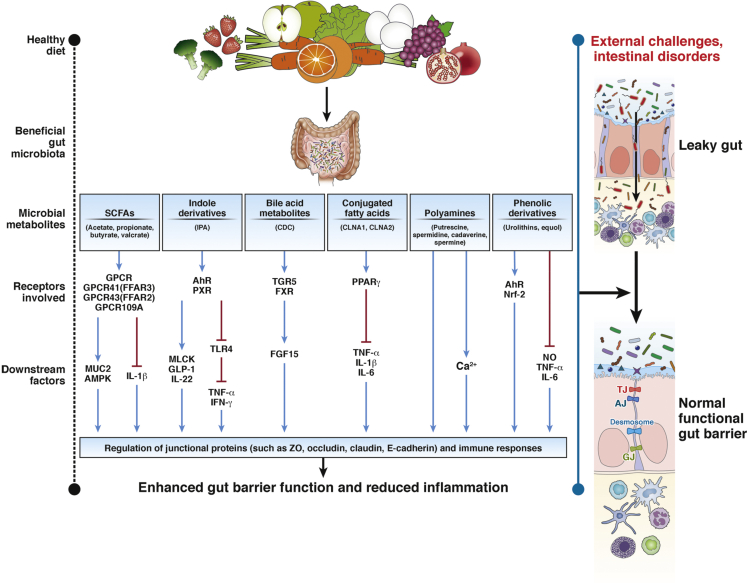
“The gut microbiota and their metabolites significantly regulate these pathways leading to either enhancement or reduction of gut barrier function.”
§ Regulation of Intestinal Barrier Function by Microbial Metabolites > Gut Barrier Dysfunction > TJ-Mediated Paracellular Permeability
plaindirect- Asserted: passes — The authors put it forward as true.
- Checkable: passes — It can be checked against evidence.
- Load-bearing: passes — The paper’s conclusions depend on it.
- Based: unclear — It is unclear why the paper says it holds.
In the paper
“One of the major functions of the gut microbiota is metabolism of dietary components leading to the generation of active metabolites that directly regulate human physiology including gut barrier function.21”
§ Regulation of Intestinal Barrier Function by Microbial Metabolites > Abstract
What the sources say
- Not checked yetcites [21] Maurice, 2013, Xenobiotics shape the physiology and gene expression of the active human gut microbiome, Cell source
plaindirect- Asserted: passes — The authors put it forward as true.
- Checkable: passes — It can be checked against evidence.
- Load-bearing: passes — The paper’s conclusions depend on it.
- Based: passes — The paper gives a reason why it holds.
None of the sources cited for this claim have been checked yet.
In the paper
“Increasing culture-independent omic-based technologies such as biomarker sequencing, metagenomics, metatranscriptomics, metaproteomics, and metabolomics have facilitated the discovery of novel functional dynamics of microbiota2, 3, 4, 5 and their relationship with host pathophysiology.6, 7, 8, 9”
§ Regulation of Intestinal Barrier Function by Microbial Metabolites > Abstract
What the sources say
- Not checked yetcites [2] Oh, 2014, Biogeography and individuality shape function in the human skin metagenome, Nature source
- Not checked yetcites [3] Lynch, 2016, The human intestinal microbiome in health and disease, N Engl J Med source
- Not checked yetcites [4] 2012, Structure, function and diversity of the healthy human microbiome, Nature source
- Not checked yetcites [5] Eckburg, 2005, Diversity of the human intestinal microbial flora, Science source
- Not checked yetcites [6] Kamada, 2013, Control of pathogens and pathobionts by the gut microbiota, Nat Immunol source
- Not checked yetcites [7] Ha, 2014, Mechanistic links between gut microbial community dynamics, microbial functions and metabolic health, World J Gastroenterol source
- Not checked yetcites [8] Wu, 2015, Linking microbiota to human diseases: a systems biology perspective, Trends Endocrinol Metab source
- Not checked yetcites [9] Claesson, 2012, Gut microbiota composition correlates with diet and health in the elderly, Nature source
plaindirect- Asserted: passes — The authors put it forward as true.
- Checkable: passes — It can be checked against evidence.
- Load-bearing: unclear — It is unclear whether the paper’s conclusions depend on it.
- Based: passes — The paper gives a reason why it holds.
None of the sources cited for this claim have been checked yet.
In the paper
“It was reported that solutes and water cross TJs through 2 distinct pathways based on their size and charge selectivity: the pore pathway48, 49, 50 and the leak pathway.48,51”
§ Regulation of Intestinal Barrier Function by Microbial Metabolites > Gut Barrier Dysfunction > TJ-Mediated Paracellular Permeability
What the sources say
- Not checked yetcites [48] Zuo, 2020, Tight junctions as targets and effectors of mucosal immune homeostasis, Cell Mol Gastroenterol Hepatol source
- Not checked yetcites [49] Turner, 2009, Intestinal mucosal barrier function in health and disease, Nat Rev Immunol source
- Not checked yetcites [50] Anderson, 2009, Physiology and function of the tight junction, Cold Spring Harb Perspect Biol source
- Not checked yetcites [51] Buschmann, 2013, Occludin OCEL-domain interactions are required for maintenance and regulation of the tight junction barrier to macromolecular flux, Mol Biol Cell source
plain- Asserted: passes — The authors put it forward as true.
- Checkable: passes — It can be checked against evidence.
- Load-bearing: unclear — It is unclear whether the paper’s conclusions depend on it.
- Based: passes — The paper gives a reason why it holds.
In the paper
“Upregulated IL-13 and Cldn-2 induce epithelial apoptosis, resulting in epithelial barrier disruption.58”
§ Regulation of Intestinal Barrier Function by Microbial Metabolites > Gut Barrier Dysfunction > Unrestricted Paracellular Pathway: IEC Death
What the sources say
- Not checked yetcites [58] Heller, 2008, Epithelial apoptosis is a prominent feature of the epithelial barrier disturbance in intestinal inflammation: effect of pro-inflammatory interleukin-13 on epithelial cell function, Mucosal Immunol source
plaindirect- Asserted: passes — The authors put it forward as true.
- Checkable: passes — It can be checked against evidence.
- Load-bearing: unclear — It is unclear whether the paper’s conclusions depend on it.
- Based: passes — The paper gives a reason why it holds.
A conclusion the paper draws from its own results — it cites no other source for it, so there is none to check. The quote shows it is in the paper.
In the paper
“While the mechanisms of action of these metabolites are only beginning to emerge, they mainly point to a small group of shared pathways that control gut barrier functions.”
§ Regulation of Intestinal Barrier Function by Microbial Metabolites > Abstract
plaindirect- Asserted: passes — The authors put it forward as true.
- Checkable: passes — It can be checked against evidence.
- Load-bearing: passes — The paper’s conclusions depend on it.
- Based: unclear — It is unclear why the paper says it holds.
- Probably not a substantial claim. 18
- It may state two separate claims as one. 73
- The quote only partly states this claim. 1
None of the sources cited for this claim have been checked yet.
In the paper
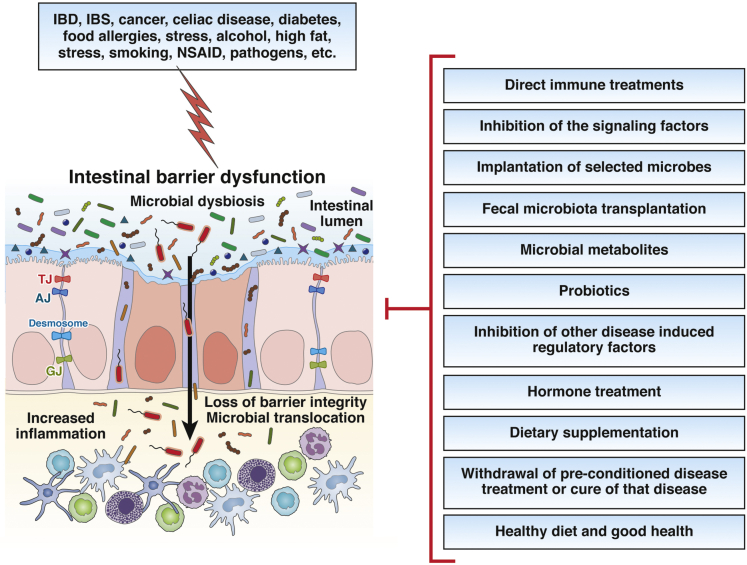
“Enterocytes connect with each other in a continuous epithelial cell layer via adhesive junctional proteins that make up tight junction (TJ) proteins, adherens junction (AJ) proteins, gap junction proteins, and desmosomes (Table 2).31,32”
§ Regulation of Intestinal Barrier Function by Microbial Metabolites > Gut Barrier and Intestinal Epithelial Cell Junctions
What the sources say
plain- Asserted: passes — The authors put it forward as true.
- Checkable: passes — It can be checked against evidence.
- Load-bearing: fails — The paper’s conclusions may not depend on it.
- Based: passes — The paper gives a reason why it holds.
Probably not a substantial claim. The paper’s conclusions may not depend on it.
The paper states this without a source or data behind it here, so there is nothing to check it against. The quote shows it is in the paper.
In the paper
“Increased gut barrier permeability occurs through dysregulation of epithelial apoptosis/enterocyte death, mucus degradation, and increased paracellular permeability due to disruption of TJs.”
§ Regulation of Intestinal Barrier Function by Microbial Metabolites > Gut Barrier Dysfunction
plaindirect- Asserted: passes — The authors put it forward as true.
- Checkable: passes — It can be checked against evidence.
- Load-bearing: passes — The paper’s conclusions depend on it.
- Based: fails — The paper may give no reason why it holds.
Probably not a substantial claim. The paper may give no reason why it holds. It may state two separate claims as one.
In the paper
“TNF-α induced loss of the epithelial integrity due to apoptosis accounted for about 56% of the damage and the rest was by disruption of TJs in nonapoptotic areas.57”
§ Regulation of Intestinal Barrier Function by Microbial Metabolites > Gut Barrier Dysfunction > Unrestricted Paracellular Pathway: IEC Death
What the sources say
- Not checked yetcites [57] Gitter, 2000, Leaks in the epithelial barrier caused by spontaneous and TNF-alpha-induced single-cell apoptosis, FASEB J source
plaindirect- Asserted: passes — The authors put it forward as true.
- Checkable: passes — It can be checked against evidence.
- Load-bearing: unclear — It is unclear whether the paper’s conclusions depend on it.
- Based: passes — The paper gives a reason why it holds.
It may state two separate claims as one.
In the paper
“Humans and microbes have coevolved over millions of years, thereby contributing to the interdependency of host and microbiota physiological activities.1”
§ Regulation of Intestinal Barrier Function by Microbial Metabolites > Abstract
What the sources say
- Not checked yetcites [1] Li, 2008, Symbiotic gut microbes modulate human metabolic phenotypes, Proc Natl Acad Sci U S A source
plaindirect- Asserted: passes — The authors put it forward as true.
- Checkable: passes — It can be checked against evidence.
- Load-bearing: fails — The paper’s conclusions may not depend on it.
- Based: passes — The paper gives a reason why it holds.
Probably not a substantial claim. The paper’s conclusions may not depend on it.
In the paper
“For example, Gitter et al57 showed that tumor necrosis factor alpha (TNF-α) disrupts the gut barrier not only by degradation in TJs, but also through the induction of epithelial apoptosis.”
§ Regulation of Intestinal Barrier Function by Microbial Metabolites > Gut Barrier Dysfunction > Unrestricted Paracellular Pathway: IEC Death
What the sources say
- Not checked yetcites [57] Gitter, 2000, Leaks in the epithelial barrier caused by spontaneous and TNF-alpha-induced single-cell apoptosis, FASEB J source
plaindirect- Asserted: passes — The authors put it forward as true.
- Checkable: passes — It can be checked against evidence.
- Load-bearing: unclear — It is unclear whether the paper’s conclusions depend on it.
- Based: passes — The paper gives a reason why it holds.
It may state two separate claims as one.
In the paper
“TJ proteins consist of over 50 proteins that are crucial for maintaining cell-to-cell adhesion and gut barrier health.36”
§ Regulation of Intestinal Barrier Function by Microbial Metabolites > Gut Barrier and Intestinal Epithelial Cell Junctions
What the sources say
- Not checked yetcites [36] Chiba, 2008, Transmembrane proteins of tight junctions, Biochim Biophys Acta source
plain- Asserted: passes — The authors put it forward as true.
- Checkable: passes — It can be checked against evidence.
- Load-bearing: fails — The paper’s conclusions may not depend on it.
- Based: passes — The paper gives a reason why it holds.
Probably not a substantial claim. The paper’s conclusions may not depend on it. It may state two separate claims as one.
None of the sources cited for this claim have been checked yet.
In the paper
“The leak pathway is believed to be regulated by myosin light-chain kinase (MLCK), where constitutively active MLCK is sufficient to increase the leak pathway–dependent permeability both in vitro and in vivo.52,53”
§ Regulation of Intestinal Barrier Function by Microbial Metabolites > Gut Barrier Dysfunction > TJ-Mediated Paracellular Permeability
What the sources say
- Not checked yetcites [52] Shen, 2006, Myosin light chain phosphorylation regulates barrier function by remodeling tight junction structure, J Cell Sci source
- Not checked yetcites [53] Su, 2009, Targeted epithelial tight junction dysfunction causes immune activation and contributes to development of experimental colitis, Gastroenterology source
hedgeddirect- Asserted: passes — The authors put it forward as true.
- Checkable: passes — It can be checked against evidence.
- Load-bearing: unclear — It is unclear whether the paper’s conclusions depend on it.
- Based: passes — The paper gives a reason why it holds.
It may state two separate claims as one.
The paper states this without a source or data behind it here, so there is nothing to check it against. The quote shows it is in the paper.
In the paper
“The gut barrier is composed of 3 main interlinked/interdependent layers that provides a physical barrier against bacterial intrusion from the gut lumen.”
§ Regulation of Intestinal Barrier Function by Microbial Metabolites > Gut Barrier and Intestinal Epithelial Cell Junctions
plaindirect- Asserted: passes — The authors put it forward as true.
- Checkable: passes — It can be checked against evidence.
- Load-bearing: fails — The paper’s conclusions may not depend on it.
- Based: fails — The paper may give no reason why it holds.
Probably not a substantial claim. The paper’s conclusions may not depend on it. The paper may give no reason why it holds.
A conclusion the paper draws from its own results — it cites no other source for it, so there is none to check. The quote shows it is in the paper.
In the paper
“The functional or physical disruption of TJ, AJ, and gap junction proteins and desmosomes leads to increased gut permeability causing dysregulated translocation/transportation of inflammatory mediators, which potentially manifests as chronic gut inflammation.”
§ Regulation of Intestinal Barrier Function by Microbial Metabolites > Gut Barrier and Intestinal Epithelial Cell Junctions
hedgeddirect- Asserted: passes — The authors put it forward as true.
- Checkable: passes — It can be checked against evidence.
- Load-bearing: passes — The paper’s conclusions depend on it.
- Based: fails — The paper may give no reason why it holds.
Probably not a substantial claim. The paper may give no reason why it holds. It may state two separate claims as one.
In the paper
“The flux that occurs due to cell death (global barrier loss) is classified as “unrestricted pathway,” in which there is no size limit of molecules or antigens that can cross the membrane.48”
§ Regulation of Intestinal Barrier Function by Microbial Metabolites > Gut Barrier Dysfunction > Unrestricted Paracellular Pathway: IEC Death
What the sources say
- Not checked yetcites [48] Zuo, 2020, Tight junctions as targets and effectors of mucosal immune homeostasis, Cell Mol Gastroenterol Hepatol source
plaindirect- Asserted: passes — The authors put it forward as true.
- Checkable: passes — It can be checked against evidence.
- Load-bearing: fails — The paper’s conclusions may not depend on it.
- Based: passes — The paper gives a reason why it holds.
Probably not a substantial claim. The paper’s conclusions may not depend on it.
In the paper
“It was demonstrated by the Stockinger group that deletion of AhR in IECs led to a defective barrier and uncontrolled proliferation of intestinal stem cells, leading to increased tumors in an azoxymethane-DSS–induced colon tumorigenesis model.100”
§ Regulation of Intestinal Barrier Function by Microbial Metabolites > Role of Microbial Metabolites in Gut Barrier Function > Indole Derivatives
What the sources say
- Not checked yetcites [100] Metidji, 2019, The environmental sensor AHR protects from inflammatory damage by maintaining intestinal stem cell homeostasis and barrier integrity, Immunity source
boosteddirect- Asserted: passes — The authors put it forward as true.
- Checkable: passes — It can be checked against evidence.
- Load-bearing: passes — The paper’s conclusions depend on it.
- Based: passes — The paper gives a reason why it holds.
It may state two separate claims as one.
In the paper
“Supplementation of dietary AhR ligands (like I3C) guarded the intestinal stem cell niche and maintained intestinal barrier function and decreased tumor burden in the azoxymethane-DSS–induced colon tumorigenesis model.100”
§ Regulation of Intestinal Barrier Function by Microbial Metabolites > Role of Microbial Metabolites in Gut Barrier Function > Indole Derivatives
What the sources say
- Not checked yetcites [100] Metidji, 2019, The environmental sensor AHR protects from inflammatory damage by maintaining intestinal stem cell homeostasis and barrier integrity, Immunity source
plaindirect- Asserted: passes — The authors put it forward as true.
- Checkable: passes — It can be checked against evidence.
- Load-bearing: passes — The paper’s conclusions depend on it.
- Based: passes — The paper gives a reason why it holds.
It may state two separate claims as one.
In the paper
“FMT has resulted in enhanced metabolic functions of gut microbiota associated with indole alkaloid biosynthesis such as indole-3-acetic acid that in turn enhances gut barrier homeostasis.91”
§ Regulation of Intestinal Barrier Function by Microbial Metabolites > Role of Microbial Metabolites in Gut Barrier Function > Indole Derivatives
What the sources say
- Not checked yetcites [91] Geng, 2018, Faecal microbiota transplantation reduces susceptibility to epithelial injury and modulates tryptophan metabolism of the microbial community in a piglet model, J Crohns Colitis
plaindirect- Asserted: passes — The authors put it forward as true.
- Checkable: passes — It can be checked against evidence.
- Load-bearing: unclear — It is unclear whether the paper’s conclusions depend on it.
- Based: passes — The paper gives a reason why it holds.
It may state two separate claims as one.
None of the sources cited for this claim have been checked yet.
In the paper
“Further, they have been shown to significantly influence the maintenance of gut barrier integrity itself and intestinal homeostasis.73,74”
§ Regulation of Intestinal Barrier Function by Microbial Metabolites > Role of Microbial Metabolites in Gut Barrier Function
What the sources say
- Not checked yetcites [73] Alam, 2018, Role of gut microbiota in intestinal wound healing and barrier function, Tissue Barriers source
- Not checked yetcites [74] Prochazkova, 2019, Microbiota, microbial metabolites, and barrier function in a patient with anorexia nervosa after fecal microbiota transplantation, Microorganisms source
boosteddirect- Asserted: passes — The authors put it forward as true.
- Checkable: passes — It can be checked against evidence.
- Load-bearing: passes — The paper’s conclusions depend on it.
- Based: passes — The paper gives a reason why it holds.
It may state two separate claims as one.
None of the sources cited for this claim have been checked yet.
In the paper
“The host-microbiota relationship has been defined as the synergistic effect of microbial metabolites on host immunity, health and disease, energy metabolism, and cellular communication.59, 60, 61, 62, 63,64”
§ Regulation of Intestinal Barrier Function by Microbial Metabolites > Role of Microbial Metabolites in Gut Barrier Function
What the sources say
- Not checked yetcites [59] Jandhyala, 2015, Role of the normal gut microbiota, World J Gastroenterol source
- Not checked yetcites [60] Thursby, 2017, Introduction to the human gut microbiota, Biochem J source
- Not checked yetcites [61] Li, 2018, Effects of metabolites derived from gut microbiota and hosts on pathogens, Front Cell Infect Microbiol source
- Not checked yetcites [62] Araki, 1995, Enhancement of resistance to bacterial infection in mice by vitamin B2, J Vet Med Sci source
- Not checked yetcites [63] Donia, 2015, Human microbiota. Small molecules from the human microbiota, Science source
- Not checked yetcites [64] Artis, 2008, Epithelial-cell recognition of commensal bacteria and maintenance of immune homeostasis in the gut, Nat Rev Immunol source
plaindirect- Asserted: passes — The authors put it forward as true.
- Checkable: fails — It may be too vague to check against evidence.
- Load-bearing: fails — The paper’s conclusions may not depend on it.
- Based: passes — The paper gives a reason why it holds.
Probably not a substantial claim. It may be too vague to check against evidence. The paper’s conclusions may not depend on it.
In the paper
“Activation of AhR by tryptophan metabolites promotes immune cell maturation and decreased pathogen colonization.89”
§ Regulation of Intestinal Barrier Function by Microbial Metabolites > Role of Microbial Metabolites in Gut Barrier Function > Indole Derivatives
What the sources say
- Not checked yetcites [89] Zelante, 2013, Tryptophan catabolites from microbiota engage aryl hydrocarbon receptor and balance mucosal reactivity via interleukin-22, Immunity source
plaindirect- Asserted: passes — The authors put it forward as true.
- Checkable: passes — It can be checked against evidence.
- Load-bearing: passes — The paper’s conclusions depend on it.
- Based: passes — The paper gives a reason why it holds.
It may state two separate claims as one.
In the paper
“Levels of TJ proteins in AhR–/– mice are also significantly reduced compared with wild type mice leading to increased gut leakiness.22”
§ Regulation of Intestinal Barrier Function by Microbial Metabolites > Role of Microbial Metabolites in Gut Barrier Function > Indole Derivatives
What the sources say
- Not checked yetcites [22] Singh, 2019, Enhancement of the gut barrier integrity by a microbial metabolite through the Nrf2 pathway, Nat Commun source
plaindirect- Asserted: passes — The authors put it forward as true.
- Checkable: passes — It can be checked against evidence.
- Load-bearing: passes — The paper’s conclusions depend on it.
- Based: passes — The paper gives a reason why it holds.
It may state two separate claims as one.
In the paper
“Moreover, butyrate treatment resulted in downregulation of IL-1β levels, suggesting it may be beneficial for protection against inflammation-promoted barrier disruption.87”
§ Regulation of Intestinal Barrier Function by Microbial Metabolites > Role of Microbial Metabolites in Gut Barrier Function > Short-Chain Fatty Acids
What the sources say
- Not checked yetcites [87] Diao, 2019, Gastric infusion of short-chain fatty acids can improve intestinal barrier function in weaned piglets, Genes Nutr source
hedgedconditional- Asserted: passes — The authors put it forward as true.
- Checkable: passes — It can be checked against evidence.
- Load-bearing: passes — The paper’s conclusions depend on it.
- Based: passes — The paper gives a reason why it holds.
It may state two separate claims as one.
In the paper
“Similarly, butyrate improved barrier function at lower doses, but reduced barrier function at higher doses in Caco-2 cells.80”
§ Regulation of Intestinal Barrier Function by Microbial Metabolites > Role of Microbial Metabolites in Gut Barrier Function > Short-Chain Fatty Acids
What the sources say
- Not checked yetcites [80] Peng, 2007, Effects of butyrate on intestinal barrier function in a Caco-2 cell monolayer model of intestinal barrier, Pediatr Res source
plaindirect- Asserted: passes — The authors put it forward as true.
- Checkable: passes — It can be checked against evidence.
- Load-bearing: unclear — It is unclear whether the paper’s conclusions depend on it.
- Based: passes — The paper gives a reason why it holds.
It may state two separate claims as one.
In the paper
“However, at higher concentrations (50–100 mM), it showed no beneficial effects on MUC2 expression patterns,79 likely due to the induction of apoptosis at higher doses.”
§ Regulation of Intestinal Barrier Function by Microbial Metabolites > Role of Microbial Metabolites in Gut Barrier Function > Short-Chain Fatty Acids
What the sources say
- Not checked yetcites [79] Nielsen, 2018, Effect of butyrate and fermentation products on epithelial integrity in a mucus-secreting human colon cell line, Journal of Functional Foods source
hedged- Asserted: passes — The authors put it forward as true.
- Checkable: passes — It can be checked against evidence.
- Load-bearing: unclear — It is unclear whether the paper’s conclusions depend on it.
- Based: passes — The paper gives a reason why it holds.
It may state two separate claims as one.
None of the sources cited for this claim have been checked yet.
In the paper
“Microbial metabolites produced in the gut directly interact with IECs and immune cells and impact host health.61,62”
§ Regulation of Intestinal Barrier Function by Microbial Metabolites > Role of Microbial Metabolites in Gut Barrier Function
What the sources say
plaindirect- Asserted: passes — The authors put it forward as true.
- Checkable: passes — It can be checked against evidence.
- Load-bearing: passes — The paper’s conclusions depend on it.
- Based: passes — The paper gives a reason why it holds.
It may state two separate claims as one.
None of the sources cited for this claim have been checked yet.
In the paper
“AhR activation by FICZ was therapeutic in the dextran sodium sulfate (DSS)–induced mouse colitis model in which FICZ treatment upregulated TJ protein expression in inflamed mouse colons.92,93”
§ Regulation of Intestinal Barrier Function by Microbial Metabolites > Role of Microbial Metabolites in Gut Barrier Function > Indole Derivatives
What the sources say
- Not checked yetcites [92] Yu, 2018, Aryl hydrocarbon receptor activation modulates intestinal epithelial barrier function by maintaining tight junction integrity, Int J Biol Sci source
- Not checked yetcites [93] Teng, 2018, Plant-derived exosomal MicroRNAs shape the gut microbiota, Cell Host Microbe source
plaindirect- Asserted: passes — The authors put it forward as true.
- Checkable: passes — It can be checked against evidence.
- Load-bearing: passes — The paper’s conclusions depend on it.
- Based: passes — The paper gives a reason why it holds.
It may state two separate claims as one.
The paper states this without a source or data behind it here, so there is nothing to check it against. The quote shows it is in the paper.
In the paper
“Thus far, it is estimated that ∼50,000 microbial metabolites are produced by microbes in the human gut.”
§ Regulation of Intestinal Barrier Function by Microbial Metabolites > Role of Microbial Metabolites in Gut Barrier Function
hedged- Asserted: passes — The authors put it forward as true.
- Checkable: passes — It can be checked against evidence.
- Load-bearing: fails — The paper’s conclusions may not depend on it.
- Based: passes — The paper gives a reason why it holds.
Probably not a substantial claim. The paper’s conclusions may not depend on it.
In the paper
“These primary bile acids, cholic acid and chenodeoxycholic acid (CDCA), are transported into the gut through the enterohepatic circulation system and are further metabolized by gut microbiota by dehydroxylation, dehydrogenation, and epimerization to generate secondary bile acids reviewed previously.102”
§ Regulation of Intestinal Barrier Function by Microbial Metabolites > Role of Microbial Metabolites in Gut Barrier Function > Bile Acid Metabolites
What the sources say
- Not checked yetcites [102] Dawson, 2015, Intestinal transport and metabolism of bile acids, J Lipid Res source
plaindirect- Asserted: passes — The authors put it forward as true.
- Checkable: passes — It can be checked against evidence.
- Load-bearing: unclear — It is unclear whether the paper’s conclusions depend on it.
- Based: passes — The paper gives a reason why it holds.
It may state two separate claims as one.
A conclusion the paper draws from its own results — it cites no other source for it, so there is none to check. The quote shows it is in the paper.
In the paper
“In summary, bile acids have been shown to be a double-edged sword and an appropriate balance (ratio) of different bile acids is required to mediate gut barrier protective activity.”
§ Regulation of Intestinal Barrier Function by Microbial Metabolites > Role of Microbial Metabolites in Gut Barrier Function > Bile Acid Metabolites
plaindirect- Asserted: passes — The authors put it forward as true.
- Checkable: passes — It can be checked against evidence.
- Load-bearing: passes — The paper’s conclusions depend on it.
- Based: passes — The paper gives a reason why it holds.
It may state two separate claims as one.
None of the sources cited for this claim have been checked yet.
In the paper
“Polyamines exhibit numerous beneficial effects including increased longevity, recovery of injured mucosa, as well as favorable effects on cognitive function.122, 123, 124”
§ Regulation of Intestinal Barrier Function by Microbial Metabolites > Role of Microbial Metabolites in Gut Barrier Function > Polyamines
What the sources say
- Not checked yetcites [122] Tofalo, 2019, Polyamines and gut microbiota, Front Nutr source
- Not checked yetcites [123] Timmons, 2012, Polyamines and gut mucosal homeostasis, J Gastrointest Dig Syst
- Not checked yetcites [124] Matsumoto, 2011, Longevity in mice is promoted by probiotic-induced suppression of colonic senescence dependent on upregulation of gut bacterial polyamine production, PLoS One source
plaindirect- Asserted: passes — The authors put it forward as true.
- Checkable: passes — It can be checked against evidence.
- Load-bearing: fails — The paper’s conclusions may not depend on it.
- Based: passes — The paper gives a reason why it holds.
Probably not a substantial claim. The paper’s conclusions may not depend on it. It may state two separate claims as one.
In the paper
“Treatment with the trans-10 CLA isomer caused a redistribution of ZO-1 and OCLN and increased paracellular permeability in Caco-2 colon epithelial cells.119”
§ Regulation of Intestinal Barrier Function by Microbial Metabolites > Role of Microbial Metabolites in Gut Barrier Function > Conjugated Fatty Acids
What the sources say
- Not checked yetcites [119] Roche, 2001, Fatty acids and epithelial permeability: effect of conjugated linoleic acid in Caco-2 cells, Gut source
plaindirect- Asserted: passes — The authors put it forward as true.
- Checkable: passes — It can be checked against evidence.
- Load-bearing: unclear — It is unclear whether the paper’s conclusions depend on it.
- Based: passes — The paper gives a reason why it holds.
It may state two separate claims as one.
None of the sources cited for this claim have been checked yet.
In the paper
“Additionally, treatment with CLNA1 and CLNA2 significantly reduced inflammatory mediators (TNF-α, IL-1β, and IL-6) while upregulating the expression of the colonic anti-inflammatory cytokine IL-10 and nuclear receptor peroxisome-activated receptor-γ.”
§ Regulation of Intestinal Barrier Function by Microbial Metabolites > Role of Microbial Metabolites in Gut Barrier Function > Conjugated Fatty Acids
plaindirect- Asserted: passes — The authors put it forward as true.
- Checkable: passes — It can be checked against evidence.
- Load-bearing: passes — The paper’s conclusions depend on it.
- Based: passes — The paper gives a reason why it holds.
It may state two separate claims as one.
In the paper
“It was showed that mice exposed to broad-spectrum antibiotics such as ampicillin, clindamycin and streptomycin resulted in reduced gut bacterial diversity and richness and impacted gut barrier integrity.112”
§ Regulation of Intestinal Barrier Function by Microbial Metabolites > Role of Microbial Metabolites in Gut Barrier Function > Bile Acid Metabolites
What the sources say
- Not checked yetcites [112] Liu, 2020, Naturally occurring TPE-CA maintains gut microbiota and bile acids homeostasis via FXR signaling modulation of the liver-gut axis, Front Pharmacol source
plaindirect- Asserted: passes — The authors put it forward as true.
- Checkable: passes — It can be checked against evidence.
- Load-bearing: passes — The paper’s conclusions depend on it.
- Based: passes — The paper gives a reason why it holds.
It may state two separate claims as one.
None of the sources cited for this claim have been checked yet.
In the paper
“Ren et al reported that the probiotic L. plantarum ZS2058 produced isomers of conjugated fatty acids, α-linolenic acid (conjugated linolenic acid (CLNA) 1 and CLNA2) mitigated DSS-induced colitis by enhancing gut barrier function through upregulation of ZO-1, OCLN, CLDN-3, and E-cadherin 1 in colonic tissues.”
§ Regulation of Intestinal Barrier Function by Microbial Metabolites > Role of Microbial Metabolites in Gut Barrier Function > Conjugated Fatty Acids
plaindirect- Asserted: passes — The authors put it forward as true.
- Checkable: passes — It can be checked against evidence.
- Load-bearing: passes — The paper’s conclusions depend on it.
- Based: passes — The paper gives a reason why it holds.
It may state two separate claims as one.
In the paper
“TPE-CA treatment induced the expression of TJ proteins such as ZO-1 and OCLN-associated proteins in these mice and improved the barrier integrity.112”
§ Regulation of Intestinal Barrier Function by Microbial Metabolites > Role of Microbial Metabolites in Gut Barrier Function > Bile Acid Metabolites
What the sources say
- Not checked yetcites [112] Liu, 2020, Naturally occurring TPE-CA maintains gut microbiota and bile acids homeostasis via FXR signaling modulation of the liver-gut axis, Front Pharmacol source
plaindirect- Asserted: passes — The authors put it forward as true.
- Checkable: passes — It can be checked against evidence.
- Load-bearing: passes — The paper’s conclusions depend on it.
- Based: passes — The paper gives a reason why it holds.
It may state two separate claims as one.
None of the sources cited for this claim have been checked yet.
In the paper
“The colons of GP-BAR1–/– mice exhibit altered subcellular distribution of ZO-1, leading to increased gut permeability.”
§ Regulation of Intestinal Barrier Function by Microbial Metabolites > Role of Microbial Metabolites in Gut Barrier Function > Bile Acid Metabolites
plaindirect- Asserted: passes — The authors put it forward as true.
- Checkable: passes — It can be checked against evidence.
- Load-bearing: passes — The paper’s conclusions depend on it.
- Based: passes — The paper gives a reason why it holds.
It may state two separate claims as one.
None of the sources cited for this claim have been checked yet.
In the paper
“In contrast, UDCA did not alter gut permeability but blocked the DCA-induced permeability in murine jejunal and colonic preparations.”
§ Regulation of Intestinal Barrier Function by Microbial Metabolites > Role of Microbial Metabolites in Gut Barrier Function > Bile Acid Metabolites
plaindirect- Asserted: passes — The authors put it forward as true.
- Checkable: passes — It can be checked against evidence.
- Load-bearing: passes — The paper’s conclusions depend on it.
- Based: passes — The paper gives a reason why it holds.
It may state two separate claims as one.
None of the sources cited for this claim have been checked yet.
In the paper
“Further, treatment with dietary flavanones and their glycosyl derivatives such as total phenolic extracts of Citrus aurantium L (TPE-CA) restored bacterial diversity and improved gut barrier integrity and homeostasis of bile acids.”
§ Regulation of Intestinal Barrier Function by Microbial Metabolites > Role of Microbial Metabolites in Gut Barrier Function > Bile Acid Metabolites
plaindirect- Asserted: passes — The authors put it forward as true.
- Checkable: passes — It can be checked against evidence.
- Load-bearing: passes — The paper’s conclusions depend on it.
- Based: passes — The paper gives a reason why it holds.
It may state two separate claims as one.
The paper states this without a source or data behind it here, so there is nothing to check it against. The quote shows it is in the paper.
In the paper
“Treatment with CDCA decreased the expression of Ocln and TEER values leading to increased permeability as well as an increase in the inflammatory cytokine IL-8.”
§ Regulation of Intestinal Barrier Function by Microbial Metabolites > Role of Microbial Metabolites in Gut Barrier Function > Bile Acid Metabolites
plaindirect- Asserted: passes — The authors put it forward as true.
- Checkable: passes — It can be checked against evidence.
- Load-bearing: passes — The paper’s conclusions depend on it.
- Based: passes — The paper gives a reason why it holds.
It may state two separate claims as one.
In the paper
“The effects of these bile acids were mediated by the Src family kinases and was abolished by EGF treatment.110”
§ Regulation of Intestinal Barrier Function by Microbial Metabolites > Role of Microbial Metabolites in Gut Barrier Function > Bile Acid Metabolites
What the sources say
- Not checked yetcites [110] Raimondi, 2008, Bile acids modulate tight junction structure and barrier function of Caco-2 monolayers via EGFR activation, Am J Physiol Gastrointest Liver Physiol source
plaindirect- Asserted: passes — The authors put it forward as true.
- Checkable: passes — It can be checked against evidence.
- Load-bearing: passes — The paper’s conclusions depend on it.
- Based: passes — The paper gives a reason why it holds.
It may state two separate claims as one.
In the paper
“Using a Caco-2 cell model, Raimondi et al110 showed that DCA and CDCA, but not UDCA, treatment decreased TEER and increased permeability.”
§ Regulation of Intestinal Barrier Function by Microbial Metabolites > Role of Microbial Metabolites in Gut Barrier Function > Bile Acid Metabolites
What the sources say
- Not checked yetcites [110] Raimondi, 2008, Bile acids modulate tight junction structure and barrier function of Caco-2 monolayers via EGFR activation, Am J Physiol Gastrointest Liver Physiol source
plaindirect- Asserted: passes — The authors put it forward as true.
- Checkable: passes — It can be checked against evidence.
- Load-bearing: passes — The paper’s conclusions depend on it.
- Based: passes — The paper gives a reason why it holds.
It may state two separate claims as one.
None of the sources cited for this claim have been checked yet.
In the paper
“Fexaramine, an intestine-restricted FXR agonist, restored intestinal FXR activity and gut barrier integrity in an ALD model.”
§ Regulation of Intestinal Barrier Function by Microbial Metabolites > Role of Microbial Metabolites in Gut Barrier Function > Bile Acid Metabolites
plaindirect- Asserted: passes — The authors put it forward as true.
- Checkable: passes — It can be checked against evidence.
- Load-bearing: passes — The paper’s conclusions depend on it.
- Based: passes — The paper gives a reason why it holds.
It may state two separate claims as one.
In the paper
“These treatments also rebalanced the intestinal microbial composition in the colons of DSS-treated mice, including increasing the α-diversity.121”
§ Regulation of Intestinal Barrier Function by Microbial Metabolites > Role of Microbial Metabolites in Gut Barrier Function > Conjugated Fatty Acids
What the sources say
- Not checked yetcites [121] Ren, 2020, c9, t11, c15-CLNA and t9, t11, c15-CLNA from Lactobacillus plantarum ZS2058 ameliorate dextran sodium sulfate-induced colitis in mice, J Agric Food Chem source
plaindirect- Asserted: passes — The authors put it forward as true.
- Checkable: passes — It can be checked against evidence.
- Load-bearing: unclear — It is unclear whether the paper’s conclusions depend on it.
- Based: passes — The paper gives a reason why it holds.
It may state two separate claims as one. The quote only partly states this claim.
In the paper
“Importantly, CLA treatment reduced the prevalence of Bacteroides and increased Bifidobacterium and Odoribacter in this model.”
§ Regulation of Intestinal Barrier Function by Microbial Metabolites > Role of Microbial Metabolites in Gut Barrier Function > Conjugated Fatty Acids
What the sources say
- Not checked yetcites [120] Chen, 2019, Orally administered CLA ameliorates DSS-induced colitis in mice via intestinal barrier improvement, oxidative stress reduction, and inflammatory cytokine and gut microbiota modulation, J Agric Food Chem source
plaindirect- Asserted: passes — The authors put it forward as true.
- Checkable: passes — It can be checked against evidence.
- Load-bearing: passes — The paper’s conclusions depend on it.
- Based: passes — The paper gives a reason why it holds.
It may state two separate claims as one.
In the paper
“Some bile acid metabolites can both improve as well as exert negative effects on gut barrier TJ function.104”
§ Regulation of Intestinal Barrier Function by Microbial Metabolites > Role of Microbial Metabolites in Gut Barrier Function > Bile Acid Metabolites
What the sources say
- Not checked yetcites [104] Sarathy, 2017, The Yin and Yang of bile acid action on tight junctions in a model colonic epithelium, Physiol Rep source
plainconditional- Asserted: passes — The authors put it forward as true.
- Checkable: passes — It can be checked against evidence.
- Load-bearing: passes — The paper’s conclusions depend on it.
- Based: passes — The paper gives a reason why it holds.
It may state two separate claims as one.
The paper states this without a source or data behind it here, so there is nothing to check it against. The quote shows it is in the paper.
In the paper
“Although LCA by itself neither altered barrier function nor increased IL-8 production, LCA attenuated CDCA-induced barrier permeability and IL-8 production.”
§ Regulation of Intestinal Barrier Function by Microbial Metabolites > Role of Microbial Metabolites in Gut Barrier Function > Bile Acid Metabolites
plaindirect- Asserted: passes — The authors put it forward as true.
- Checkable: passes — It can be checked against evidence.
- Load-bearing: passes — The paper’s conclusions depend on it.
- Based: passes — The paper gives a reason why it holds.
It may state two separate claims as one.
None of the sources cited for this claim have been checked yet.
In the paper
“Among urolithins, urolithin A (UroA) displays potent anti-inflammatory, antioxidative, and antiaging properties.130,133, 134, 135”
§ Regulation of Intestinal Barrier Function by Microbial Metabolites > Role of Microbial Metabolites in Gut Barrier Function > Polyphenolic Derivatives
What the sources say
- Not checked yetcites [130] Espin, 2013, Biological significance of urolithins, the gut microbial ellagic Acid-derived metabolites: the evidence so far, Evid Based Complement Alternat Med source
- Not checked yetcites [133] Tomas-Barberan, 2017, Urolithins, the rescue of 'old' metabolites to understand a 'new' concept: metabotypes as a nexus between phenolic metabolism, microbiota dysbiosis and host health status, Mol Nutr Food Res source
- Not checked yetcites [134] Ryu, 2016, Urolithin A induces mitophagy and prolongs lifespan in C. elegans and increases muscle function in rodents, Nat Med source
plain- Asserted: passes — The authors put it forward as true.
- Checkable: passes — It can be checked against evidence.
- Load-bearing: unclear — It is unclear whether the paper’s conclusions depend on it.
- Based: passes — The paper gives a reason why it holds.
It may state two separate claims as one.
In the paper
“A human phase I clinical trial showed that a polyphenol-rich diet modulates gut microbiota and reduces intestinal permeability, including decreased transport of pathogenic microbes into the bloodstream.150”
§ Regulation of Intestinal Barrier Function by Microbial Metabolites > Role of Microbial Metabolites in Gut Barrier Function > Polyphenolic Derivatives
What the sources say
- Not checked yetcites [150] Guglielmetti, 2020, Effect of a polyphenol-rich dietary pattern on intestinal permeability and gut and blood microbiomics in older subjects: study protocol of the MaPLE randomised controlled trial, BMC Geriatr source
plaindirect- Asserted: passes — The authors put it forward as true.
- Checkable: passes — It can be checked against evidence.
- Load-bearing: unclear — It is unclear whether the paper’s conclusions depend on it.
- Based: passes — The paper gives a reason why it holds.
It may state two separate claims as one.
A conclusion the paper draws from its own results — it cites no other source for it, so there is none to check. The quote shows it is in the paper.
In the paper
“In summary, numerous microbial metabolites discussed previously shown to exhibit direct impact on gut epithelium and play an important role in regulating gut barrier function thereby mucosal immunity and vice versa.”
§ Regulation of Intestinal Barrier Function by Microbial Metabolites > Role of Microbial Metabolites in Gut Barrier Function > Polyphenolic Derivatives
plaindirect- Asserted: passes — The authors put it forward as true.
- Checkable: passes — It can be checked against evidence.
- Load-bearing: passes — The paper’s conclusions depend on it.
- Based: passes — The paper gives a reason why it holds.
It may state two separate claims as one.
In the paper
“Johnson et al151 reported that dietary polyphenols such as isoflavones and lignans and corresponding microbial metabolites protected the gut epithelium by reducing permeability and inhibited LPS-induced inflammation.”
§ Regulation of Intestinal Barrier Function by Microbial Metabolites > Role of Microbial Metabolites in Gut Barrier Function > Polyphenolic Derivatives
What the sources say
- Not checked yetcites [151] Johnson, 2019, Polyphenol microbial metabolites exhibit gut and blood(-)brain barrier permeability and protect murine microglia against LPS-induced inflammation, Metabolites source
plaindirect- Asserted: passes — The authors put it forward as true.
- Checkable: passes — It can be checked against evidence.
- Load-bearing: unclear — It is unclear whether the paper’s conclusions depend on it.
- Based: passes — The paper gives a reason why it holds.
It may state two separate claims as one.
None of the sources cited for this claim have been checked yet.
In the paper
“Two factors are critical for the generation of UroA in humans (1) presence of UroA producing bacteria and (2) consumption of EA/ET-containing foods (eg, pomegranate, berries, walnuts).”
§ Regulation of Intestinal Barrier Function by Microbial Metabolites > Role of Microbial Metabolites in Gut Barrier Function > Polyphenolic Derivatives
plaindirect- Asserted: passes — The authors put it forward as true.
- Checkable: passes — It can be checked against evidence.
- Load-bearing: unclear — It is unclear whether the paper’s conclusions depend on it.
- Based: passes — The paper gives a reason why it holds.
It may state two separate claims as one.
In the paper
“Bacterial polyamines include spermidine, homospermidine, norspermidine, putrescine, cadaverine, and 1,3-diaminopropane with putrescine and spermidine.125”
§ Regulation of Intestinal Barrier Function by Microbial Metabolites > Role of Microbial Metabolites in Gut Barrier Function > Polyamines
What the sources say
- Not checked yetcites [125] Michael, 2016, Biosynthesis of polyamines and polyamine-containing molecules, Biochem J source
plain- Asserted: passes — The authors put it forward as true.
- Checkable: passes — It can be checked against evidence.
- Load-bearing: fails — The paper’s conclusions may not depend on it.
- Based: passes — The paper gives a reason why it holds.
Probably not a substantial claim. The paper’s conclusions may not depend on it.
In the paper
“It was shown that depletion of cellular polyamines by α-difluoromethylornithine reduced intracellular free Ca2+ concentrations in normal IECs (IEC-6 cell line),127 which leads to decreased expression of E-cadherin and increased paracellular permeability.”
§ Regulation of Intestinal Barrier Function by Microbial Metabolites > Role of Microbial Metabolites in Gut Barrier Function > Polyamines
What the sources say
- Not checked yetcites [127] Guo, 2003, Regulation of adherens junctions and epithelial paracellular permeability: a novel function for polyamines, Am J Physiol Cell Physiol source
plaindirect- Asserted: passes — The authors put it forward as true.
- Checkable: passes — It can be checked against evidence.
- Load-bearing: passes — The paper’s conclusions depend on it.
- Based: passes — The paper gives a reason why it holds.
It may state two separate claims as one.
In the paper
“However, exogenous supplementation of the spermidine reversed the effects of α-difluoromethylornithine on intracellular Ca2+ and E-cadherin expression and restored paracellular permeability to near normal levels.128”
§ Regulation of Intestinal Barrier Function by Microbial Metabolites > Role of Microbial Metabolites in Gut Barrier Function > Polyamines
What the sources say
- Not checked yetcites [128] Guo, 2005, Polyamines are necessary for synthesis and stability of occludin protein in intestinal epithelial cells, Am J Physiol Gastrointest Liver Physiol source
plaindirect- Asserted: passes — The authors put it forward as true.
- Checkable: passes — It can be checked against evidence.
- Load-bearing: passes — The paper’s conclusions depend on it.
- Based: passes — The paper gives a reason why it holds.
It may state two separate claims as one.
In the paper
“Importantly, treatment with UroA mitigated DSS- or TNBS-induced colitis in mice through enhancing gut barrier function and blocking the production of inflammatory cytokines.22”
§ Regulation of Intestinal Barrier Function by Microbial Metabolites > Role of Microbial Metabolites in Gut Barrier Function > Polyphenolic Derivatives
What the sources say
- Not checked yetcites [22] Singh, 2019, Enhancement of the gut barrier integrity by a microbial metabolite through the Nrf2 pathway, Nat Commun source
plaindirect- Asserted: passes — The authors put it forward as true.
- Checkable: passes — It can be checked against evidence.
- Load-bearing: passes — The paper’s conclusions depend on it.
- Based: passes — The paper gives a reason why it holds.
It may state two separate claims as one.
In the paper
“NOD1 and NOD2 knockout mice exhibit increased paracellular permeability and are reported to be more susceptible to DSS colitis mediated intestinal injury.177”
§ Regulation of Intestinal Barrier Function by Microbial Metabolites > Role of Bacterial Structural Components in Gut Barrier Function
What the sources say
- Not checked yetcites [177] Natividad, 2012, Commensal and probiotic bacteria influence intestinal barrier function and susceptibility to colitis in Nod1–/–; Nod2–/– mice, Inflamm Bowel Dis source
hedgeddirect- Asserted: passes — The authors put it forward as true.
- Checkable: passes — It can be checked against evidence.
- Load-bearing: unclear — It is unclear whether the paper’s conclusions depend on it.
- Based: passes — The paper gives a reason why it holds.
It may state two separate claims as one.
In the paper
“These receptors, which play crucial roles in host-microbiota interactions, are expressed at various levels in different cell types such as IECs, innate lymphoid cells, macrophages, T cells, and dendritic cells.184”
§ Regulation of Intestinal Barrier Function by Microbial Metabolites > Role of Bacterial Structural Components in Gut Barrier Function
What the sources say
- Not checked yetcites [184] Furusawa, 2013, Commensal microbe-derived butyrate induces the differentiation of colonic regulatory T cells, Nature source
plaindirect- Asserted: passes — The authors put it forward as true.
- Checkable: passes — It can be checked against evidence.
- Load-bearing: unclear — It is unclear whether the paper’s conclusions depend on it.
- Based: passes — The paper gives a reason why it holds.
It may state two separate claims as one.
In the paper
“Although blocking TLR4 with antibodies limited acute inflammation in the DSS model, subsequent tissue repair was hampered, suggesting an important role for TLR4 in the resolution of inflammation and restoration of tissue integrity.162”
§ Regulation of Intestinal Barrier Function by Microbial Metabolites > Role of Bacterial Structural Components in Gut Barrier Function
What the sources say
- Not checked yetcites [162] Ungaro, 2009, A novel Toll-like receptor 4 antagonist antibody ameliorates inflammation but impairs mucosal healing in murine colitis, Am J Physiol Gastrointest Liver Physiol source
hedgeddirect- Asserted: passes — The authors put it forward as true.
- Checkable: passes — It can be checked against evidence.
- Load-bearing: passes — The paper’s conclusions depend on it.
- Based: passes — The paper gives a reason why it holds.
It may state two separate claims as one.
In the paper
“Flagellin, a structural component of bacterial flagellum, is exerted activities through TLR5 and has been shown to play an essential and nonredundant role in protecting the gut from enteric microbes.164”
§ Regulation of Intestinal Barrier Function by Microbial Metabolites > Role of Bacterial Structural Components in Gut Barrier Function
What the sources say
- Not checked yetcites [164] Steiner, 2007, How flagellin and toll-like receptor 5 contribute to enteric infection, Infect Immun source
boosteddirect- Asserted: passes — The authors put it forward as true.
- Checkable: passes — It can be checked against evidence.
- Load-bearing: unclear — It is unclear whether the paper’s conclusions depend on it.
- Based: passes — The paper gives a reason why it holds.
It may state two separate claims as one.
In the paper
“Couturier-Millard et al178 reported that NOD2 deficiency leads to microbial dysbiosis leading to increased risk of colitis.”
§ Regulation of Intestinal Barrier Function by Microbial Metabolites > Role of Bacterial Structural Components in Gut Barrier Function
What the sources say
- Not checked yetcites [178] Couturier-Maillard, 2013, NOD2-mediated dysbiosis predisposes mice to transmissible colitis and colorectal cancer, J Clin Invest
plaindirect- Asserted: passes — The authors put it forward as true.
- Checkable: passes — It can be checked against evidence.
- Load-bearing: unclear — It is unclear whether the paper’s conclusions depend on it.
- Based: passes — The paper gives a reason why it holds.
It may state two separate claims as one.
In the paper
“TLR9–/– mice are more susceptible to DSS-induced colitis compared with wild types mice, suggesting that activation of TLR9 is important for protection against intestinal damage through induction of vascular EGF and intestinal progenitor cell differentiation as well as being critical for wound repair mechanisms.171”
§ Regulation of Intestinal Barrier Function by Microbial Metabolites > Role of Bacterial Structural Components in Gut Barrier Function
What the sources say
- Not checked yetcites [171] Rose, 2012, TLR9 is important for protection against intestinal damage and for intestinal repair, Sci Rep source
hedgeddirect- Asserted: passes — The authors put it forward as true.
- Checkable: passes — It can be checked against evidence.
- Load-bearing: passes — The paper’s conclusions depend on it.
- Based: passes — The paper gives a reason why it holds.
It may state two separate claims as one.
None of the sources cited for this claim have been checked yet.
In the paper
“Numerous studies including ours showed that LPS disrupts junctional protein complexes and increases inflammatory cytokines leading to increased gut permeability.”
§ Regulation of Intestinal Barrier Function by Microbial Metabolites > Role of Bacterial Structural Components in Gut Barrier Function
plaindirect- Asserted: passes — The authors put it forward as true.
- Checkable: passes — It can be checked against evidence.
- Load-bearing: passes — The paper’s conclusions depend on it.
- Based: passes — The paper gives a reason why it holds.
It may state two separate claims as one.
None of the sources cited for this claim have been checked yet.
In the paper
“Furthermore, muramyl dipeptide or peptidoglycan mediated activation of NOD2 is reported to negatively regulate TLR signaling and provide protection of wildtype mice against colitis.175,176”
§ Regulation of Intestinal Barrier Function by Microbial Metabolites > Role of Bacterial Structural Components in Gut Barrier Function
What the sources say
- Not checked yetcites [175] Watanabe, 2008, Muramyl dipeptide activation of nucleotide-binding oligomerization domain 2 protects mice from experimental colitis, J Clin Invest
- Not checked yetcites [176] Macho Fernandez, 2011, Anti-inflammatory capacity of selected lactobacilli in experimental colitis is driven by NOD2-mediated recognition of a specific peptidoglycan-derived muropeptide, Gut source
hedgeddirect- Asserted: passes — The authors put it forward as true.
- Checkable: passes — It can be checked against evidence.
- Load-bearing: unclear — It is unclear whether the paper’s conclusions depend on it.
- Based: passes — The paper gives a reason why it holds.
It may state two separate claims as one.
In the paper
“IECs express TLR2 that recognizes bacterial lipopeptides, lipoteichoic acid and yeast zymosan, and forms heterodimers with TLR1 or TLR 6.157”
§ Regulation of Intestinal Barrier Function by Microbial Metabolites > Role of Bacterial Structural Components in Gut Barrier Function
What the sources say
- Not checked yetcites [157] Creagh, 2006, TLRs, NLRs and RLRs: a trinity of pathogen sensors that co-operate in innate immunity, Trends Immunol source
plaindirect- Asserted: passes — The authors put it forward as true.
- Checkable: passes — It can be checked against evidence.
- Load-bearing: passes — The paper’s conclusions depend on it.
- Based: passes — The paper gives a reason why it holds.
It may state two separate claims as one.
None of the sources cited for this claim have been checked yet.
In the paper
“It was demonstrated in numerous reports from Dr Gewirtz’s group that expression and activation of TLR5 on IECs regulates the composition and localization of microbiota and prevents disease associated intestinal inflammation.165, 166, 167, 168”
§ Regulation of Intestinal Barrier Function by Microbial Metabolites > Role of Bacterial Structural Components in Gut Barrier Function
What the sources say
- Not checked yetcites [165] Chassaing, 2014, Intestinal epithelial cell toll-like receptor 5 regulates the intestinal microbiota to prevent low-grade inflammation and metabolic syndrome in mice, Gastroenterology source
- Not checked yetcites [166] Vijay-Kumar, 2007, Deletion of TLR5 results in spontaneous colitis in mice, J Clin Invest
- Not checked yetcites [167] Leifer, 2014, Linking genetic variation in human Toll-like receptor 5 genes to the gut microbiome's potential to cause inflammation, Immunol Lett source
boosteddirect- Asserted: passes — The authors put it forward as true.
- Checkable: passes — It can be checked against evidence.
- Load-bearing: unclear — It is unclear whether the paper’s conclusions depend on it.
- Based: passes — The paper gives a reason why it holds.
It may state two separate claims as one.
A conclusion the paper draws from its own results — it cites no other source for it, so there is none to check. The quote shows it is in the paper.
In the paper
“Functional immune responses often modulate gut barrier integrity; hence, the fine tuning of gut microbiota to evoke necessary immune responses to alter intestinal barrier function is critical.”
§ Regulation of Intestinal Barrier Function by Microbial Metabolites > Role of Bacterial Structural Components in Gut Barrier Function
plaindirect- Asserted: passes — The authors put it forward as true.
- Checkable: passes — It can be checked against evidence.
- Load-bearing: passes — The paper’s conclusions depend on it.
- Based: passes — The paper gives a reason why it holds.
It may state two separate claims as one.
In the paper
“It was reported that Nod1–/– mice have increased levels of intestinal permeability and inflammation in the murine DSS-induced colitis model compared with wild type mice,174 suggesting an important role in intestinal barrier function.”
§ Regulation of Intestinal Barrier Function by Microbial Metabolites > Role of Bacterial Structural Components in Gut Barrier Function
What the sources say
- Not checked yetcites [174] Chen, 2008, The innate immune receptor Nod1 protects the intestine from inflammation-induced tumorigenesis, Cancer Res source
hedgeddirect- Asserted: passes — The authors put it forward as true.
- Checkable: passes — It can be checked against evidence.
- Load-bearing: unclear — It is unclear whether the paper’s conclusions depend on it.
- Based: passes — The paper gives a reason why it holds.
It may state two separate claims as one.
The paper states this without a source or data behind it here, so there is nothing to check it against. The quote shows it is in the paper.
In the paper
“Ligand-induced TLR2 activation leads to the specific activation of protein kinase C α (PKC-α) and PKC-δ and is responsible for increased TEER as well as increased apical tightening and sealing of the TJs.”
§ Regulation of Intestinal Barrier Function by Microbial Metabolites > Role of Bacterial Structural Components in Gut Barrier Function
plaindirect- Asserted: passes — The authors put it forward as true.
- Checkable: passes — It can be checked against evidence.
- Load-bearing: passes — The paper’s conclusions depend on it.
- Based: passes — The paper gives a reason why it holds.
It may state two separate claims as one.
The paper states this without a source or data behind it here, so there is nothing to check it against. The quote shows it is in the paper.
In the paper
“PKC phosphorylation by TLR2 activation leads to stabilization of ZO-1, which is a target of PKC.”
§ Regulation of Intestinal Barrier Function by Microbial Metabolites > Role of Bacterial Structural Components in Gut Barrier Function
plaindirect- Asserted: passes — The authors put it forward as true.
- Checkable: passes — It can be checked against evidence.
- Load-bearing: unclear — It is unclear whether the paper’s conclusions depend on it.
- Based: passes — The paper gives a reason why it holds.
It may state two separate claims as one.
In the paper
“The absence of NOD protein–mediated microbial sensing leads to a loss of gut barrier homeostasis and leads to increased susceptibility to gut inflammatory diseases.176”
§ Regulation of Intestinal Barrier Function by Microbial Metabolites > Role of Bacterial Structural Components in Gut Barrier Function
What the sources say
- Not checked yetcites [176] Macho Fernandez, 2011, Anti-inflammatory capacity of selected lactobacilli in experimental colitis is driven by NOD2-mediated recognition of a specific peptidoglycan-derived muropeptide, Gut source
plaindirect- Asserted: passes — The authors put it forward as true.
- Checkable: passes — It can be checked against evidence.
- Load-bearing: unclear — It is unclear whether the paper’s conclusions depend on it.
- Based: passes — The paper gives a reason why it holds.
It may state two separate claims as one.
None of the sources cited for this claim have been checked yet.
In the paper
“NLRs proteins are also responsible for maintaining gut barrier integrity by sensing the presence of commensal microbiota and the regulation of intestinal inflammation.172,173”
§ Regulation of Intestinal Barrier Function by Microbial Metabolites > Role of Bacterial Structural Components in Gut Barrier Function
What the sources say
plaindirect- Asserted: passes — The authors put it forward as true.
- Checkable: passes — It can be checked against evidence.
- Load-bearing: unclear — It is unclear whether the paper’s conclusions depend on it.
- Based: passes — The paper gives a reason why it holds.
It may state two separate claims as one.
In the paper
“Activation of TLR5 by flagellin in ileal tissues of SAMP1/YitFc (SAMP) mice (a spontaneous model of Crohn's disease–like ileitis) led to decreased epithelial barrier resistance and altered expression of the TJ proteins CLDN-3, OCLN, and ZO-1.169”
§ Regulation of Intestinal Barrier Function by Microbial Metabolites > Role of Bacterial Structural Components in Gut Barrier Function
What the sources say
- Not checked yetcites [169] Lopetuso, 2017, Epithelial-specific Toll-like receptor (TLR)5 activation mediates barrier dysfunction in experimental ileitis, Inflamm Bowel Dis source
plaindirect- Asserted: passes — The authors put it forward as true.
- Checkable: passes — It can be checked against evidence.
- Load-bearing: unclear — It is unclear whether the paper’s conclusions depend on it.
- Based: passes — The paper gives a reason why it holds.
It may state two separate claims as one.
None of the sources cited for this claim have been checked yet.
In the paper
“Another therapeutic approach includes blocking Th1 responses or using neutralizing antibodies such as infliximab (anti-TNF) antibody.189,190”
§ Regulation of Intestinal Barrier Function by Microbial Metabolites > Treatment Strategies Against Gut Barrier Dysfunction
What the sources say
- Not checked yetcites [189] Powrie, 1994, Inhibition of Th1 responses prevents inflammatory bowel disease in scid mice reconstituted with CD45RBhi CD4+ T cells, Immunity source
- Not checked yetcites [190] Noth, 2012, Anti-TNF-alpha antibodies improve intestinal barrier function in Crohn's disease, J Crohns Colitis source
plain- Asserted: passes — The authors put it forward as true.
- Checkable: passes — It can be checked against evidence.
- Load-bearing: fails — The paper’s conclusions may not depend on it.
- Based: passes — The paper gives a reason why it holds.
Probably not a substantial claim. The paper’s conclusions may not depend on it. It may state two separate claims as one.
In the paper
“For example, sex hormones such as estrogen and progesterone induced expression of TJ proteins and inhibited gut permeability in inflammatory organoid models from IBD patients and 2D cell line models.200”
§ Regulation of Intestinal Barrier Function by Microbial Metabolites > Treatment Strategies Against Gut Barrier Dysfunction
What the sources say
- Not checked yetcites [200] van der Giessen, 2019, A direct effect of sex hormones on epithelial barrier function in inflammatory bowel disease models, Cells source
plaindirect- Asserted: passes — The authors put it forward as true.
- Checkable: passes — It can be checked against evidence.
- Load-bearing: unclear — It is unclear whether the paper’s conclusions depend on it.
- Based: passes — The paper gives a reason why it holds.
It may state two separate claims as one.
In the paper
“Implantation of 17 pre-selected clostridial bacterial strains that are capable of enhancing Treg cell abundance and inducing anti-inflammatory mediators, IL-10 and inducible T-cell co-stimulator, into GF mice attenuated TNBS-induced colitis and enhanced gut barrier function.192”
§ Regulation of Intestinal Barrier Function by Microbial Metabolites > Treatment Strategies Against Gut Barrier Dysfunction
What the sources say
- Not checked yetcites [192] Atarashi, 2013, Treg induction by a rationally selected mixture of Clostridia strains from the human microbiota, Nature source
plaindirect- Asserted: passes — The authors put it forward as true.
- Checkable: passes — It can be checked against evidence.
- Load-bearing: passes — The paper’s conclusions depend on it.
- Based: passes — The paper gives a reason why it holds.
It may state two separate claims as one.
In the paper
“Zhou et al201 reported that progesterone upregulated OCLN expression in the gut and inhibited NF-κB activation to maintain gut barrier homeostasis.”
§ Regulation of Intestinal Barrier Function by Microbial Metabolites > Treatment Strategies Against Gut Barrier Dysfunction
What the sources say
- Not checked yetcites [201] Zhou, 2019, Progesterone decreases gut permeability through upregulating occludin expression in primary human gut tissues and Caco-2 cells, Sci Rep source
plaindirect- Asserted: passes — The authors put it forward as true.
- Checkable: passes — It can be checked against evidence.
- Load-bearing: unclear — It is unclear whether the paper’s conclusions depend on it.
- Based: passes — The paper gives a reason why it holds.
It may state two separate claims as one.
In the paper
“Additionally, UroA and UAS03 also blocked unwarranted inflammation and mitigated colitis in pre-clinical models.22”
§ Regulation of Intestinal Barrier Function by Microbial Metabolites > Treatment Strategies Against Gut Barrier Dysfunction
What the sources say
- Not checked yetcites [22] Singh, 2019, Enhancement of the gut barrier integrity by a microbial metabolite through the Nrf2 pathway, Nat Commun source
plaindirect- Asserted: passes — The authors put it forward as true.
- Checkable: passes — It can be checked against evidence.
- Load-bearing: passes — The paper’s conclusions depend on it.
- Based: passes — The paper gives a reason why it holds.
It may state two separate claims as one.
In the paper
“Last, but definitely not the least, dietary habits and a healthy lifestyle are of the foremost importance in maintaining healthy intestinal barrier functions.207”
§ Regulation of Intestinal Barrier Function by Microbial Metabolites > Treatment Strategies Against Gut Barrier Dysfunction
What the sources say
- Not checked yetcites [207] Camilleri, 2019, Leaky gut: mechanisms, measurement and clinical implications in humans, Gut source
boosteddirect- Asserted: passes — The authors put it forward as true.
- Checkable: fails — It may be too vague to check against evidence.
- Load-bearing: fails — The paper’s conclusions may not depend on it.
- Based: passes — The paper gives a reason why it holds.
Probably not a substantial claim. It may be too vague to check against evidence. The paper’s conclusions may not depend on it.
In the paper
“Further, they demonstrated that treatment with divertin corrected increased intestinal permeability in IL-10–/– mice (spontaneous colitis model) without significant systemic, mucosal, or epithelial toxicity.191”
§ Regulation of Intestinal Barrier Function by Microbial Metabolites > Treatment Strategies Against Gut Barrier Dysfunction
What the sources say
- Not checked yetcites [191] Graham, 2019, Intracellular MLCK1 diversion reverses barrier loss to restore mucosal homeostasis, Nat Med source
boosteddirect- Asserted: passes — The authors put it forward as true.
- Checkable: passes — It can be checked against evidence.
- Load-bearing: passes — The paper’s conclusions depend on it.
- Based: passes — The paper gives a reason why it holds.
It may state two separate claims as one.
In the paper
“Conventional treatment strategies include the use of immunosuppressants such as azathioprine and mesalamine that are used in the clinic to treat ulcerative colitis and Crohn's disease.188”
§ Regulation of Intestinal Barrier Function by Microbial Metabolites > Treatment Strategies Against Gut Barrier Dysfunction
What the sources say
- Not checked yetcites [188] Khare, 2019, Mesalamine and azathioprine modulate junctional complexes and restore epithelial barrier function in intestinal inflammation, Sci Rep source
plain- Asserted: passes — The authors put it forward as true.
- Checkable: passes — It can be checked against evidence.
- Load-bearing: fails — The paper’s conclusions may not depend on it.
- Based: passes — The paper gives a reason why it holds.
Probably not a substantial claim. The paper’s conclusions may not depend on it.
None of the sources cited for this claim have been checked yet.
In the paper
“FMT was reported to decrease antibiotic, chemotherapy, and injury-induced gut permeability and increased the prevalence of specific microbiota strains exhibiting anti-inflammatory properties.195,196”
§ Regulation of Intestinal Barrier Function by Microbial Metabolites > Treatment Strategies Against Gut Barrier Dysfunction
What the sources say
- Not checked yetcites [195] Le Bastard, 2018, Fecal microbiota transplantation reverses antibiotic and chemotherapy-induced gut dysbiosis in mice, Sci Rep source
- Not checked yetcites [196] Schmidt, 2020, Fecal transplant prevents gut dysbiosis and anxiety-like behaviour after spinal cord injury in rats, PLoS One source
plaindirect- Asserted: passes — The authors put it forward as true.
- Checkable: passes — It can be checked against evidence.
- Load-bearing: passes — The paper’s conclusions depend on it.
- Based: passes — The paper gives a reason why it holds.
It may state two separate claims as one.
The paper states this without a source or data behind it here, so there is nothing to check it against. The quote shows it is in the paper.
In the paper
“Though beneficial activities of microbial metabolites in regulating gut barrier function have been shown in animal models, thus far, no microbial metabolites or their analogues are in clinical use.”
§ Regulation of Intestinal Barrier Function by Microbial Metabolites > Treatment Strategies Against Gut Barrier Dysfunction
plain- Asserted: passes — The authors put it forward as true.
- Checkable: passes — It can be checked against evidence.
- Load-bearing: passes — The paper’s conclusions depend on it.
- Based: passes — The paper gives a reason why it holds.
It may state two separate claims as one.
In the paper
“Furthermore, probiotic strains such as L. plantarum also elevate the levels of host defense peptides such as pBD2, PG1-5 and pBD2 and improve gut barrier function.83”
§ Regulation of Intestinal Barrier Function by Microbial Metabolites > Treatment Strategies Against Gut Barrier Dysfunction
What the sources say
- Not checked yetcites [83] Feng, 2018, Short-chain fatty acids manifest stimulative and protective effects on intestinal barrier function through the inhibition of NLRP3 inflammasome and autophagy, Cell Physiol Biochem source
plaindirect- Asserted: passes — The authors put it forward as true.
- Checkable: passes — It can be checked against evidence.
- Load-bearing: unclear — It is unclear whether the paper’s conclusions depend on it.
- Based: passes — The paper gives a reason why it holds.
It may state two separate claims as one.
In the paper
“Oxyberberine, another microbial metabolite derived from berberine ameliorated gut barrier dysfunction via inhibition of the TLR4, MyD88, and NF-κB signaling pathways197 and downregulated inflammatory cytokines such as TNFα, IL-6, and IL-1β.”
§ Regulation of Intestinal Barrier Function by Microbial Metabolites > Treatment Strategies Against Gut Barrier Dysfunction
What the sources say
- Not checked yetcites [197] Li, 2020, Oxyberberine, a novel gut microbiota-mediated metabolite of berberine, possesses superior anti-colitis effect: Impact on intestinal epithelial barrier, gut microbiota profile and TLR4-MyD88-NF-kappaB pathway, Pharmacol Res source
plaindirect- Asserted: passes — The authors put it forward as true.
- Checkable: passes — It can be checked against evidence.
- Load-bearing: unclear — It is unclear whether the paper’s conclusions depend on it.
- Based: passes — The paper gives a reason why it holds.
It may state two separate claims as one.
In the paper
“Dietary cellulose supplements also can ameliorate LPS-mediated intestinal barrier damage and protect against gut epithelial apoptosis.205”
§ Regulation of Intestinal Barrier Function by Microbial Metabolites > Treatment Strategies Against Gut Barrier Dysfunction
What the sources say
- Not checked yetcites [205] Di Caro, 2019, Effect of dietary cellulose supplementation on gut barrier function and apoptosis in a murine model of endotoxemia, PLoS One source
plaindirect- Asserted: passes — The authors put it forward as true.
- Checkable: passes — It can be checked against evidence.
- Load-bearing: unclear — It is unclear whether the paper’s conclusions depend on it.
- Based: passes — The paper gives a reason why it holds.
It may state two separate claims as one.
In the paper
“Dietary component such as curcumin supplementation reduced high fat diet induced hepatic steatosis by modulating the gut-liver axis and by enhancing ZO-1 and OCLN expression in the intestines.203”
§ Regulation of Intestinal Barrier Function by Microbial Metabolites > Treatment Strategies Against Gut Barrier Dysfunction
What the sources say
- Not checked yetcites [203] Yang, 2019, Ellagic acid and its microbial metabolite urolithin a alleviate diet-induced insulin resistance in mice (OR24-03-19), Curr Dev Nutr source
plaindirect- Asserted: passes — The authors put it forward as true.
- Checkable: passes — It can be checked against evidence.
- Load-bearing: unclear — It is unclear whether the paper’s conclusions depend on it.
- Based: passes — The paper gives a reason why it holds.
It may state two separate claims as one.
A conclusion the paper draws from its own results — it cites no other source for it, so there is none to check. The quote shows it is in the paper.
In the paper
“Moreover, increasing recognition of the association between gut microbes, gut barrier dysfunction, and intestinal diseases highlights the importance of understanding microbial metabolite production and function.”
§ Regulation of Intestinal Barrier Function by Microbial Metabolites > Conclusions
plaincorrelational- Asserted: passes — The authors put it forward as true.
- Checkable: fails — It may be too vague to check against evidence.
- Load-bearing: passes — The paper’s conclusions depend on it.
- Based: passes — The paper gives a reason why it holds.
Probably not a substantial claim. It may be too vague to check against evidence.
A conclusion the paper draws from its own results — it cites no other source for it, so there is none to check. The quote shows it is in the paper.
In the paper
“The influence of gut microbiota on intestinal barrier permeability and subsequent host cellular homeostasis is indisputable.”
§ Regulation of Intestinal Barrier Function by Microbial Metabolites > Conclusions
boosteddirect- Asserted: passes — The authors put it forward as true.
- Checkable: fails — It may be too vague to check against evidence.
- Load-bearing: passes — The paper’s conclusions depend on it.
- Based: fails — The paper may give no reason why it holds.
Probably not a substantial claim. It may be too vague to check against evidence. The paper may give no reason why it holds.
A conclusion the paper draws from its own results — it cites no other source for it, so there is none to check. The quote shows it is in the paper.
In the paper
“Emerging knowledge of host-microbiota interactions allows for the development of new therapeutic strategies to restore a healthy gut ecosystem and prevent a variety of intestinal diseases.”
§ Regulation of Intestinal Barrier Function by Microbial Metabolites > Treatment Strategies Against Gut Barrier Dysfunction
plaindirect- Asserted: passes — The authors put it forward as true.
- Checkable: fails — It may be too vague to check against evidence.
- Load-bearing: fails — The paper’s conclusions may not depend on it.
- Based: passes — The paper gives a reason why it holds.
Probably not a substantial claim. It may be too vague to check against evidence. The paper’s conclusions may not depend on it.
A conclusion the paper draws from its own results — it cites no other source for it, so there is none to check. The quote shows it is in the paper.
In the paper
“Furthermore, a deeper understanding of intestinal microbiota dynamics with respect to gut barrier function provides translational opportunities for therapeutic discovery, including drug design, microbe transplantation, and a clearer perspective of host pathophysiology.”
§ Regulation of Intestinal Barrier Function by Microbial Metabolites > Conclusions
plaindirect- Asserted: passes — The authors put it forward as true.
- Checkable: fails — It may be too vague to check against evidence.
- Load-bearing: passes — The paper’s conclusions depend on it.
- Based: passes — The paper gives a reason why it holds.
Probably not a substantial claim. It may be too vague to check against evidence.
The authors state this as an assumption.
Gut microbial metabolites, produced in close proximity to gut epithelium, have significant impact on gut barrier function and immune responses.
“Since gut microbial metabolites are produced in close proximity to gut epithelium, presumably they have significant impact on gut barrier function and immune responses.”
The paper relies on this without support.
Intestinal microbial homeostasis is required for maintenance of good health and disease prevention.
“Intestinal microbial homeostasis is required for maintenance of good health and disease prevention.”
The paper relies on this without support.
Reversal of gut dysbiosis is the key factor for any treatment utilizing gut microbiota.
“Reversal of gut dysbiosis is the key factor for any treatment utilizing gut microbiota.”
The paper relies on this without support.
A healthy life without stress, obesity, and diabetes and accompanied by an alcohol-free diet can reverse gut barrier dysfunction over time.
“A healthy life without stress, obesity, and diabetes and accompanied by an alcohol-free diet can reverse gut barrier dysfunction over time.”
Claims other papers make about this one
Each is checked against this paper’s own text: does it say what the citing paper says it does?
In the citing paper
“Butyrate and valerate promote intestinal barrier function, which prevents the translocation of pathogens from the intestine into the bloodstream [45–48].”
From Role of the gut microbiota in nutrient competition and protection against intestinal pathogen colonization (2023) · cites this paper as [46]
Self-check
Percentages, sums and reported differences re-computed from the paper’s own numbers.
Each contradiction between two passages listed here was confirmed by an independent check.
Rated minor: it would not touch a result — a value no result rests on, a p-value that stays on the same side of the significance level, or a conflict that is clerical, resolved elsewhere in the paper, or outside its own findings.
In the paper
§ Regulation of Intestinal Barrier Function by Microbial Metabolites > Gut Barrier and Intestinal Epithelial Cell Junctions
“whereas enterocytes, goblet cells, and enteroendocrine and tuft cells are present in both the small intestine and colon”
§ Regulation of Intestinal Barrier Function by Microbial Metabolites > Gut Barrier and Intestinal Epithelial Cell Junctions
“| Goblet cells (small intestine) |”
Citations
Cites
1 retracted
Wang, T., Yao, W., Li, J., Shao, Y., He, Q., Xia, J., & Huang, F. (2020) · Journal of Animal Science and Biotechnology · doi:10.1186/s40104-020-0426-6 · Cited by 51
RetractedStructure, function and diversity of the healthy human microbiome
The Human Microbiome Project Consortium (2012) · Nature · doi:10.1038/nature11234 · Cited by 11,726
Diversity of the Human Intestinal Microbial Flora
Eckburg, P. B., Bik, E. M., Bernstein, C. N., Purdom, E., Dethlefsen, L., Sargent, M., Gill, S. R., Nelson, K. E., & Relman, D. A. (2005) · Science · doi:10.1126/science.1110591 · Cited by 7,913
Commensal microbe-derived butyrate induces the differentiation of colonic regulatory T cells
Furusawa, Y., Obata, Y., Fukuda, S., Endo, T. A., Nakato, G., Takahashi, D., Nakanishi, Y., Uetake, C., Kato, K., Kato, T., et al. (2013) · Nature · doi:10.1038/nature12721 · Cited by 5,549
Metabolites produced by commensal bacteria promote peripheral regulatory T-cell generation
Arpaia, N., Campbell, C., Fan, X., Dikiy, S., van der Veeken, J., deRoos, P., Liu, H., Cross, J. R., Pfeffer, K., Coffer, P. J., et al. (2013) · Nature · doi:10.1038/nature12726 · Cited by 4,838
Frank, D. N., St. Amand, A. L., Feldman, R. A., Boedeker, E. C., Harpaz, N., & Pace, N. R. (2007) · Proceedings of the National Academy of Sciences · doi:10.1073/pnas.0706625104 · Cited by 4,611
Intestinal mucosal barrier function in health and disease
Turner, J. R. (2009) · Nature reviews. Immunology · doi:10.1038/nri2653 · Cited by 3,952
The Human Intestinal Microbiome in Health and Disease
Lynch, S. V., & Pedersen, O. (2016) · New England Journal of Medicine · doi:10.1056/nejmra1600266 · Cited by 3,637
Introduction to the human gut microbiota
Thursby, E., & Juge, N. (2017) · Biochemical Journal · doi:10.1042/bcj20160510 · Cited by 3,600
Intestinal epithelial cells: regulators of barrier function and immune homeostasis
Peterson, L. W., & Artis, D. (2014) · Nature reviews. Immunology · doi:10.1038/nri3608 · Cited by 3,367
Gut microbiota composition correlates with diet and health in the elderly
Claesson, M. J., Jeffery, I. B., Conde, S., Power, S. E., O’Connor, E. M., Cusack, S., Harris, H. M. B., Coakley, M., Lakshminarayanan, B., O’Sullivan, O., et al. (2012) · Nature · doi:10.1038/nature11319 · Cited by 3,314
Bioactive Microbial Metabolites: A Personal View
Bérdy, J. (2005) · The Journal of Antibiotics · doi:10.1038/ja.2005.1 · Cited by 3,170
Role of the normal gut microbiota
Jandhyala, S. M. (2015) · World Journal of Gastroenterology · doi:10.3748/wjg.v21.i29.8787 · Cited by 3,001
An Immunomodulatory Molecule of Symbiotic Bacteria Directs Maturation of the Host Immune System
Mazmanian, S. K., Liu, C. H., Tzianabos, A. O., & Kasper, D. L. (2005) · Cell · doi:10.1016/j.cell.2005.05.007 · Cited by 2,910
Treg induction by a rationally selected mixture of Clostridia strains from the human microbiota
Atarashi, K., Tanoue, T., Oshima, K., Suda, W., Nagano, Y., Nishikawa, H., Fukuda, S., Saito, T., Narushima, S., Hase, K., et al. (2013) · Nature · doi:10.1038/nature12331 · Cited by 2,872
Colonic Health: Fermentation and Short Chain Fatty Acids
Wong, J. M. W., de Souza, R., Kendall, C. W. C., Emam, A., & Jenkins, D. J. A. (2006) · Journal of Clinical Gastroenterology · doi:10.1097/00004836-200603000-00015 · Cited by 2,739
Zelante, T., Iannitti, R. G., Cunha, C., De Luca, A., Giovannini, G., Pieraccini, G., Zecchi, R., D’Angelo, C., Massi-Benedetti, C., Fallarino, F., et al. (2013) · Immunity · doi:10.1016/j.immuni.2013.08.003 · Cited by 2,614
Occludin: a novel integral membrane protein localizing at tight junctions.
Furuse, M., Hirase, T., Itoh, M., Nagafuchi, A., Yonemura, S., Tsukita, S., & Tsukita, S. (1993) · The Journal of cell biology · doi:10.1083/jcb.123.6.1777 · Cited by 2,580
Peng, L., Li, Z.-R., Green, R. S., Holzmanr, I. R., & Lin, J. (2009) · The Journal of Nutrition · doi:10.3945/jn.109.104638 · Cited by 2,130
Furuse, M., Fujita, K., Hiiragi, T., Fujimoto, K., & Tsukita, S. (1998) · The Journal of Cell Biology · doi:10.1083/jcb.141.7.1539 · Cited by 2,100
Regulation of short-chain fatty acid production
Macfarlane, S., & Macfarlane, G. T. (2003) · Proceedings of the Nutrition Society · doi:10.1079/pns2002207 · Cited by 1,939
Intestinal barrier function: molecular regulation and disease pathogenesis
Groschwitz, K. R., & Hogan, S. P. (2009) · Journal of Allergy and Clinical Immunology · doi:10.1016/j.jaci.2009.05.038 · Cited by 1,775
Control of pathogens and pathobionts by the gut microbiota
Kamada, N., Chen, G. Y., Inohara, N., & Núñez, G. (2013) · Nature Immunology · doi:10.1038/ni.2608 · Cited by 1,625
Treatment of Murine Colitis by Lactococcus lactis Secreting Interleukin-10
Steidler, L., Hans, W., Schotte, L., Neirynck, S., Obermeier, F., Falk, W., Fiers, W., & Remaut, E. (2000) · Science · doi:10.1126/science.289.5483.1352 · Cited by 1,513
Moayyedi, P., Surette, M. G., Kim, P. T., Libertucci, J., Wolfe, M., Onischi, C., Armstrong, D., Marshall, J. K., Kassam, Z., Reinisch, W., et al. (2015) · Gastroenterology · doi:10.1053/j.gastro.2015.04.001 · Cited by 1,499
The Influence of the Gut Microbiome on Cancer, Immunity, and Cancer Immunotherapy
Gopalakrishnan, V., Helmink, B. A., Spencer, C. N., Reuben, A., & Wargo, J. A. (2018) · Cancer Cell · doi:10.1016/j.ccell.2018.03.015 · Cited by 1,392
The intestinal epithelial barrier: a therapeutic target?
Odenwald, M. A., & Turner, J. R. (2017) · Nature Reviews Gastroenterology & Hepatology · doi:10.1038/nrgastro.2016.169 · Cited by 1,288
The Human Gut Microbiome – A Potential Controller of Wellness and Disease
Kho, Z. Y., & Lal, S. K. (2018) · Frontiers in Microbiology · doi:10.3389/fmicb.2018.01835 · Cited by 1,180
Dietary lipids, gut microbiota and lipid metabolism
Schoeler, M., & Caesar, R. (2019) · Reviews in Endocrine and Metabolic Disorders · doi:10.1007/s11154-019-09512-0 · Cited by 1,163
Biogeography and individuality shape function in the human skin metagenome
Program, N. C. S., Oh, J., Byrd, A. L., Deming, C., Conlan, S., Kong, H. H., & Segre, J. A. (2014) · Nature · doi:10.1038/nature13786 · Cited by 1,148
Powrie, F., Leach, M. W., Mauze, S., Menon, S., Barcomb Caddle, L., & Coffman, R. L. (1994) · Immunity · doi:10.1016/1074-7613(94)90045-0 · Cited by 1,146
Symbiotic gut microbes modulate human metabolic phenotypes
Li, M., Wang, B., Zhang, M., Rantalainen, M., Wang, S., Zhou, H., Zhang, Y., Shen, J., Pang, X., Zhang, M., et al. (2008) · Proceedings of the National Academy of Sciences · doi:10.1073/pnas.0712038105 · Cited by 1,144
Epithelial-cell recognition of commensal bacteria and maintenance of immune homeostasis in the gut
Artis, D. (2008) · Nature reviews. Immunology · doi:10.1038/nri2316 · Cited by 1,136
CLAUDINS AND EPITHELIAL PARACELLULAR TRANSPORT
Itallie, C. M. V., & Anderson, J. M. (2005) · Annual Review of Physiology · doi:10.1146/annurev.physiol.68.040104.131404 · Cited by 1,123
Ryu, D., Mouchiroud, L., Andreux, P. A., Katsyuba, E., Moullan, N., Nicolet-dit-Félix, A. A., Williams, E. G., Jha, P., Lo Sasso, G., Huzard, D., et al. (2016) · Nature Medicine · doi:10.1038/nm.4132 · Cited by 1,105
Leaky gut: mechanisms, measurement and clinical implications in humans
Camilleri, M. (2019) · Gut · doi:10.1136/gutjnl-2019-318427 · Cited by 1,081
Physiology and function of the tight junction
Anderson, J. M., & Van Itallie, C. M. (2009) · Cold Spring Harbor Perspectives in Biology · doi:10.1101/cshperspect.a002584 · Cited by 1,059
Plant-derived exosomal MicroRNAs shape the gut microbiota
Teng, Y., Ren, Y., Sayed, M., Hu, X., Lei, C., Kumar, A., Hutchins, E., Mu, J., Deng, Z., Luo, C., et al. (2018) · Cell Host & Microbe · doi:10.1016/j.chom.2018.10.001 · Cited by 1,027
Self-citationLeclercq, S., Matamoros, S., Cani, P. D., Neyrinck, A. M., Jamar, F., Stärkel, P., Windey, K., Tremaroli, V., Bäckhed, F., Verbeke, K., et al. (2014) · Proceedings of the National Academy of Sciences · doi:10.1073/pnas.1415174111 · Cited by 972
Bile acid signaling in metabolic disease and drug therapy
Li, T., & Chiang, J. Y. L. (2014) · Pharmacological Reviews · doi:10.1124/pr.113.008201 · Cited by 935
The intestinal epithelium: central coordinator of mucosal immunity
Allaire, J. M., Crowley, S. M., Law, H. T., Chang, S.-Y., Ko, H.-J., & Vallance, B. A. (2018) · Trends in Immunology · doi:10.1016/j.it.2018.04.002 · Cited by 933
Intestinal permeability: an overview
Bjarnason, I., Macpherson, A., & Hollander, D. (1995) · Gastroenterology · doi:10.1016/0016-5085(95)90708-4 · Cited by 927
Exogenous Stimuli Maintain Intraepithelial Lymphocytes via Aryl Hydrocarbon Receptor Activation
Li, Y., Innocentin, S., Withers, D. R., Roberts, N. A., Gallagher, A., Grigorieva, E. F., Wilhelm, C., & Veldhoen, M. (2011) · Cell · doi:10.1016/j.cell.2011.09.025 · Cited by 837
Wang, H.-B., Wang, P.-Y., Wang, X., Wan, Y.-L., & Liu, Y.-C. (2012) · Digestive Diseases and Sciences · doi:10.1007/s10620-012-2259-4 · Cited by 827
Xenobiotics shape the physiology and gene expression of the active human gut microbiome
Maurice, C. F., Haiser, H. J., & Turnbaugh, P. J. (2013) · Cell · doi:10.1016/j.cell.2012.10.052 · Cited by 811
Natural aryl hydrocarbon receptor ligands control organogenesis of intestinal lymphoid follicles
Kiss, E. A., Vonarbourg, C., Kopfmann, S., Hobeika, E., Finke, D., Esser, C., & Diefenbach, A. (2011) · Science · doi:10.1126/science.1214914 · Cited by 801
Tricellulin constitutes a novel barrier at tricellular contacts of epithelial cells
Ikenouchi, J., Furuse, M., Furuse, K., Sasaki, H., Tsukita, S., & Tsukita, S. (2005) · The Journal of Cell Biology · doi:10.1083/jcb.200510043 · Cited by 787
A Phase I Trial With Transgenic Bacteria Expressing Interleukin-10 in Crohn’s Disease
Braat, H., Rottiers, P., Hommes, D. W., Huyghebaert, N., Remaut, E., Remon, J., van Deventer, S. J. H., Neirynck, S., Peppelenbosch, M. P., & Steidler, L. (2006) · Clinical Gastroenterology and Hepatology · doi:10.1016/j.cgh.2006.03.028 · Cited by 786
Lee, J. S., Cella, M., McDonald, K. G., Garlanda, C., Kennedy, G. D., Nukaya, M., Mantovani, A., Kopan, R., Bradfield, C. A., Newberry, R. D., et al. (2012) · Nature Immunology · doi:10.1038/ni.2187 · Cited by 777
TLRs, NLRs and RLRs: a trinity of pathogen sensors that co-operate in innate immunity
Creagh, E. M., & O’Neill, L. A. J. (2006) · Trends in Immunology · doi:10.1016/j.it.2006.06.003 · Cited by 762
Small molecules from the human microbiota
Donia, M. S., & Fischbach, M. A. (2015) · Science · doi:10.1126/science.1254766 · Cited by 760
Tight junctions/adherens junctions: basic structure and function
Niessen, C. M. (2007) · Journal of Investigative Dermatology · doi:10.1038/sj.jid.5700865 · Cited by 756
Roles of intestinal epithelial cells in the maintenance of gut homeostasis
Okumura, R., & Takeda, K. (2017) · Experimental & Molecular Medicine · doi:10.1038/emm.2017.20 · Cited by 732
Cell Biology of Tight Junction Barrier Regulation and Mucosal DiseasePreprint
Buckley, A., & Turner, J. R. (2017) · Cold Spring Harbor Perspectives in Biology · doi:10.1101/cshperspect.a029314 · Cited by 724
Enhancement of the gut barrier integrity by a microbial metabolite through the Nrf2 pathway
Singh, R., Chandrashekharappa, S., Bodduluri, S. R., Baby, B. V., Hegde, B., Kotla, N. G., Hiwale, A. A., Saiyed, T., Patel, P., Vijay-Kumar, M., et al. (2019) · Nature Communications · doi:10.1038/s41467-018-07859-7 · Cited by 713
Self-citationToll-like receptor 2 controls mucosal inflammation by regulating epithelial barrier function
Cario, E., Gerken, G., & Podolsky, D. K. (2007) · Gastroenterology · doi:10.1053/j.gastro.2007.02.056 · Cited by 697
Martini, E., Krug, S. M., Siegmund, B., Neurath, M. F., & Becker, C. (2017) · Cellular and Molecular Gastroenterology and Hepatology · doi:10.1016/j.jcmgh.2017.03.007 · Cited by 668
Electrolyte transport in the mammalian colon: mechanisms and implications for disease
Kunzelmann, K., & Mall, M. (2002) · Physiological Reviews · doi:10.1152/physrev.00026.2001 · Cited by 655
Natividad, J. M., Agus, A., Planchais, J., Lamas, B., Jarry, A. C., Martin, R., Michel, M.-L., Chong-Nguyen, C., Roussel, R., Straube, M., et al. (2018) · Cell Metabolism · doi:10.1016/j.cmet.2018.07.001 · Cited by 642
Intestinal transport and metabolism of bile acids
Dawson, P. A., & Karpen, S. J. (2015) · Journal of Lipid Research · doi:10.1194/jlr.r054114 · Cited by 598
Berkes, J., Viswanathan, V. K., Savkovic, S. D., & Hecht, G. (2003) · Gut · doi:10.1136/gut.52.3.439 · Cited by 594
Secreted bioactive factors from Bifidobacterium infantis enhance epithelial cell barrier function
Ewaschuk, J. B., Diaz, H., Meddings, L., Diederichs, B., Dmytrash, A., Backer, J., Looijer-van Langen, M., & Madsen, K. L. (2008) · American Journal of Physiology-Gastrointestinal and Liver Physiology · doi:10.1152/ajpgi.90227.2008 · Cited by 590
Espín, J. C., Larrosa, M., García-Conesa, M. T., & Tomás-Barberán, F. (2013) · Evidence-based Complementary and Alternative Medicine · doi:10.1155/2013/270418 · Cited by 576
Epithelial crosstalk at the microbiota–mucosal interface
Wells, J. M., Rossi, O., Meijerink, M., & van Baarlen, P. (2010) · Proceedings of the National Academy of Sciences · doi:10.1073/pnas.1000092107 · Cited by 574
NOD2-mediated dysbiosis predisposes mice to transmissible colitis and colorectal cancer
Couturier-Maillard, A., Sécher, T., Rehman, A., Normand, S., Arcangelis, A. D., Häsler, R., Huot, L., Grandjean, T., Bressenot, A., Delanoye, A., et al. (2013) · Journal of Clinical Investigation · doi:10.1172/jci62236 · Cited by 571
Zhang, L., & Davies, S. S. (2016) · Genome Medicine · doi:10.1186/s13073-016-0296-x · Cited by 521
Larrosa, M., González‐Sarrías, A., Yáñez-Gascón, M. J., Selma, M. V., Azorín‐Ortuño, M., Toti, S., Tomás-Barberán, F. A., Dolara, P., & Espı́n, J. C. (2009) · The Journal of Nutritional Biochemistry · doi:10.1016/j.jnutbio.2009.04.012 · Cited by 519
Peng, L., He, Z., Chen, W., Holzman, I. R., & Lin, J. (2007) · Pediatric Research · doi:10.1203/01.pdr.0000250014.92242.f3 · Cited by 518
Anderson, R. C., Cookson, A. L., McNabb, W. C., Park, Z., McCann, M. J., Kelly, W. J., & Roy, N. C. (2010) · BMC Microbiology · doi:10.1186/1471-2180-10-316 · Cited by 510
Wu, W. H., Sun, M., Chen, F., Cao, A., Liu, H., Zhao, Y., Huang, X., Xiao, Y., Yao, S., Zhao, Q., et al. (2016) · Mucosal Immunology · doi:10.1038/mi.2016.114 · Cited by 510
Commensal bacteria make GPCR ligands that mimic human signalling molecules
Cohen, L. J., Esterhazy, D., Kim, S.-H., Lemetre, C., Aguilar, R. R., Gordon, E. A., Pickard, A. J., Cross, J. R., Emiliano, A. B., Han, S. M., et al. (2017) · Nature · doi:10.1038/nature23874 · Cited by 500
Seeram, N. P., Henning, S. M., Zhang, Y., Suchard, M. A., Li, Z., & Heber, D. (2006) · Journal of Nutrition · doi:10.1093/jn/136.10.2481 · Cited by 477
Feng, Y., Wang, Y., Wang, P., Huang, Y., & Wang, F. (2018) · Cellular Physiology and Biochemistry · doi:10.1159/000492853 · Cited by 471
Myosin light chain phosphorylation regulates barrier function by remodeling tight junction structure
Shen, L., Black, E. D., Witkowski, E. D., Lencer, W. I., Guerriero, V., Schneeberger, E. E., & Turner, J. R. (2006) · Journal of Cell Science · doi:10.1242/jcs.02915 · Cited by 467
Tomás‐Barberán, F. A., González‐Sarrías, A., García‐Villalba, R., Núñez‐Sánchez, M. A., Selma, M. V., García‐Conesa, M. T., & Espín, J. C. (2017) · Molecular Nutrition & Food Research · doi:10.1002/mnfr.201500901 · Cited by 465
Transmembrane proteins of tight junctions
Chiba, H., Osanai, M., Murata, M., Kojima, T., & Sawada, N. (2008) · Biochimica et Biophysica Acta (BBA) - Biomembranes · doi:10.1016/j.bbamem.2007.08.017 · Cited by 464
Su, L., Shen, L., Clayburgh, D. R., Nalle, S. C., Sullivan, E. A., Meddings, J. B., Abraham, C., & Turner, J. R. (2009) · Gastroenterology · doi:10.1053/j.gastro.2008.10.081 · Cited by 455
Cerdá, B., Tomás-Barberán, F. A., & Espı́n, J. C. (2004) · Journal of Agricultural and Food Chemistry · doi:10.1021/jf049144d · Cited by 448
Intestinal epithelial claudins: expression and regulation in homeostasis and inflammation
García‐Hernández, V., Quirós, M., & Nusrat, A. (2017) · Annals of the New York Academy of Sciences · doi:10.1111/nyas.13360 · Cited by 443
Cerd�, B., Esp�n, J. C., Parra, S., Mart�nez, P., & Tom�s-Barber�n, F. A. (2004) · European Journal of Nutrition · doi:10.1007/s00394-004-0461-7 · Cited by 435
Cell death in the gut epithelium and implications for chronic inflammation
Patankar, J. V., & Becker, C. (2020) · Nature Reviews Gastroenterology & Hepatology · doi:10.1038/s41575-020-0326-4 · Cited by 429
Deletion of TLR5 results in spontaneous colitis in mice
Vijay–Kumar, M., Sanders, C. J., Taylor, R. T., Kumar, A., Aitken, J. D., Sitaraman, S. V., Neish, A. S., Uematsu, S., Akira, S., Williams, I. R., et al. (2007) · Journal of Clinical Investigation · doi:10.1172/jci33084 · Cited by 420
Tomás-Barberán, F. A., García-Villalba, R., González-Sarrías, A., Selma, M. V., & Espín, J. C. (2014) · Journal of Agricultural and Food Chemistry · doi:10.1021/jf5024615 · Cited by 419
Commensal bacteria-dependent indole production enhances epithelial barrier function in the colon
Shimada, Y., Kinoshita, M., Harada, K., Mizutani, M., Masahata, K., Kayama, H., & Takeda, K. (2013) · PLoS ONE · doi:10.1371/journal.pone.0080604 · Cited by 404
Metidji, A., Omenetti, S., Crotta, S., Li, Y., Nye, E., Ross, E., Li, V., Maradana, M. R., Schiering, C., & Stockinger, B. (2018) · Immunity · doi:10.1016/j.immuni.2018.07.010 · Cited by 402
Cipriani, S., Mencarelli, A., Chini, M. G., Distrutti, E., Renga, B., Bifulco, G., Baldelli, F., Donini, A., & Fiorucci, S. (2011) · PLoS ONE · doi:10.1371/journal.pone.0025637 · Cited by 382
Fernandez, E. M., Valenti, V., Rockel, C., Hermann, C., Pot, B., Boneca, I. G., & Grangette, C. (2011) · Gut · doi:10.1136/gut.2010.232918 · Cited by 376
Espín, J. C., González-Barrio, R., Cerdá, B., López-Bote, C., Rey, A. I., & Tomás-Barberán, F. A. (2007) · Journal of Agricultural and Food Chemistry · doi:10.1021/jf0723864 · Cited by 352
Mucins in the gastrointestinal tract in health and disease
Anthony, P. P. (2001) · Frontiers in bioscience · doi:10.2741/corfield · Cited by 343
Watanabe, T., Asano, N., Murray, P. J., Ozato, K., Tailor, P. B., Fuss, I. J., Kitani, A., & Strober, W. (2008) · Journal of Clinical Investigation · doi:10.1172/jci33145 · Cited by 341
Perturbation of Anion Balance during Inhibition of Growth of Escherichia coli by Weak Acids
Roe, A. J., McLaggan, D., Davidson, I., O’Byrne, C., & Booth, I. R. (1998) · Journal of Bacteriology · doi:10.1128/jb.180.4.767-772.1998 · Cited by 331
Short‐Chain Fatty Acid Transporters: Role in Colonic Homeostasis
Sivaprakasam, S., Bhutia, Y. D., Yang, S., & Ganapathy, V. (2017) · Comprehensive physiology · doi:10.1002/cphy.c170014 · Cited by 331
Chassaing, B., Ley, R. E., & Gewirtz, A. T. (2014) · Gastroenterology · doi:10.1053/j.gastro.2014.08.033 · Cited by 326
The Intestinal Epithelium: Central Coordinator of Mucosal Immunity
Allaire, J. M., Crowley, S. M., Law, H. T., Chang, S., Ko, H., & Vallance, B. A. (2019) · Trends in Immunology · doi:10.1016/j.it.2018.12.008 · Cited by 317
Knockdown of occludin expression leads to diverse phenotypic alterations in epithelial cells
Yu, A. S. L., McCarthy, K. M., Francis, S. A., McCormack, J. M., Lai, J., Rogers, R. A., Lynch, R. D., & Schneeberger, E. E. (2005) · American Journal of Physiology-Cell Physiology · doi:10.1152/ajpcell.00581.2004 · Cited by 307
Tofalo, R., Cocchi, S., & Suzzi, G. (2019) · Frontiers in Nutrition · doi:10.3389/fnut.2019.00016 · Cited by 306
Selma, M. V., Beltrán, D., García-Villalba, R., Espín, J. C., & Tomás-Barberán, F. A. (2014) · Food Funct. · doi:10.1039/c4fo00092g · Cited by 304
Cerdá, B., Periago, P., Espín, J. C., & Tomás-Barberán, F. A. (2005) · Journal of Agricultural and Food Chemistry · doi:10.1021/jf050384i · Cited by 301
Matsumoto, M., Kurihara, S., Kibe, R., Ashida, H., & Benno, Y. (2011) · PLoS ONE · doi:10.1371/journal.pone.0023652 · Cited by 290
Hartmann, P., Hochrath, K., Horvath, A., Chen, P., Seebauer, C. T., Llorente, C., Wang, L., Alnouti, Y., Fouts, D. E., Stärkel, P., et al. (2018) · Hepatology · doi:10.1002/hep.29676 · Cited by 290
Raimondi, F., Santoro, P., Barone, M. V., Pappacoda, S., Barretta, M. L., Nanayakkara, M., Apicella, C., Capasso, L., & Paludetto, R. (2008) · American Journal of Physiology-Gastrointestinal and Liver Physiology · doi:10.1152/ajpgi.00043.2007 · Cited by 286
Ellagic acid: Pharmacological activities and molecular mechanisms involved in liver protection
García‐Niño, W. R., & Zazueta, C. (2015) · Pharmacological Research · doi:10.1016/j.phrs.2015.04.008 · Cited by 279
Yu, M., Wang, Q., Ma, Y., Li, L., Yu, K., Zhang, Z., Chen, G., Li, X., Xiao, W., Xu, P., et al. (2018) · International Journal of Biological Sciences · doi:10.7150/ijbs.22259 · Cited by 274
Regulation of the intestinal epithelial barrier by the apical junctional complex
Laukoetter, M. G., Bruewer, M., & Nusrat, A. (2006) · Current Opinion in Gastroenterology · doi:10.1097/01.mog.0000203864.48255.4f · Cited by 264
Duan, F. F., Liu, J. H., & March, J. C. (2015) · Diabetes · doi:10.2337/db14-0635 · Cited by 263
Germ-free and antibiotic-treated mice are highly susceptible to epithelial injury in DSS colitis
Hernández-Chirlaque, C., Aranda, C. J., Ocón, B., Capitán-Cañadas, F., Ortega-González, M., Carrero, J. J., Suárez, M. D., Zarzuelo, A., Sánchez de Medina, F., & Martínez-Augustin, O. (2016) · Journal of Crohn's and Colitis · doi:10.1093/ecco-jcc/jjw096 · Cited by 262
Li, C., Ai, G., Wang, Y., Lu, Q., Luo, C., Tan, L., Lin, G., Liu, Y., Li, Y., Zeng, H., et al. (2020) · Pharmacological Research · doi:10.1016/j.phrs.2019.104603 · Cited by 262
The innate immune receptor Nod1 protects the intestine from inflammation-induced tumorigenesis
Chen, G. Y., Shaw, M. H., Redondo, G., & Núñez, G. (2008) · Cancer Research · doi:10.1158/0008-5472.can-08-2061 · Cited by 261
Shao, T., Zhao, C., Li, F., Gu, Z., Liu, L., Zhang, L., Wang, Y., He, L., Liu, Y., Liu, Q., et al. (2018) · Journal of Hepatology · doi:10.1016/j.jhep.2018.05.021 · Cited by 258
Self-citationLeaks in the epithelial barrier caused by spontaneous and TNF‐α‐induced single‐cell apoptosis
Gitter, A. H., Bendfeldt, K., Schulzke, J.-D., & Fromm, M. (2000) · The FASEB Journal · doi:10.1096/fj.99-0898com · Cited by 250
Núñez‐Sánchez, M. Á., Garcı́a-Villalba, R., Monedero‐Saiz, T., Espin, N. V. G.-T., Gómez‐Sánchez, M. B., Sánchez‐Álvarez, C., García‐Albert, A. M., Rodríguez‐Gil, F. J., Ruiz‐Marín, M., Pastor-Quirante, F. A., et al. (2014) · Molecular Nutrition & Food Research · doi:10.1002/mnfr.201300931 · Cited by 235
Multitargeted therapy of cancer by ellagitannins
Heber, D. (2008) · Cancer Letters · doi:10.1016/j.canlet.2008.03.043 · Cited by 227
Stenman, L. K., Holma, R., Eggert, A., & Korpela, R. (2013) · American Journal of Physiology-Gastrointestinal and Liver Physiology · doi:10.1152/ajpgi.00267.2012 · Cited by 222
Fort, M. M., Mozaffarian, A., Stöver, A. G., Correia, J. D. S., Johnson, D. A., Crane, R. T., Ulevitch, R. J., Persing, D. H., Bielefeldt-Ohmann, H., Probst, P., et al. (2005) · The Journal of Immunology · doi:10.4049/jimmunol.174.10.6416 · Cited by 216
González‐Sarrías, A., Giménez‐Bastida, J. A., García‐Conesa, M. T., Gómez‐Sánchez, M. B., García‐Talavera, N. V., Gil‐Izquierdo, A., Sánchez‐Álvarez, C., Fontana‐Compiano, L. O., Morga‐Egea, J. P., Pastor‐Quirante, F. A., et al. (2010) · Molecular Nutrition & Food Research · doi:10.1002/mnfr.200900152 · Cited by 212
Kang, I., Buckner, T., Shay, N. F., Gu, L., & Chung, S. (2016) · Advances in Nutrition · doi:10.3945/an.116.012575 · Cited by 208
Time course production of urolithins from ellagic acid by human gut microbiota
García-Villalba, R., Beltrán, D., Espín, J. C., Selma, M. V., & Tomás-Barberán, F. A. (2013) · Journal of Agricultural and Food Chemistry · doi:10.1021/jf402498b · Cited by 207
Hendrikx, T., & Schnabl, B. (2019) · Journal of Internal Medicine · doi:10.1111/joim.12892 · Cited by 204
Russo, E., Giudici, F., Fiorindi, C., Ficari, F., Scaringi, S., & Amedei, A. (2019) · Frontiers in Immunology · doi:10.3389/fimmu.2019.02754 · Cited by 204
High-fat-induced intestinal permeability dysfunction associated with altered fecal bile acids
Stenman, L. K. (2012) · World Journal of Gastroenterology · doi:10.3748/wjg.v18.i9.923 · Cited by 201
Buschmann, M. M., Shen, L., Rajapakse, H., Raleigh, D. R., Wang, Y., Wang, Y., Lingaraju, A., Zha, J., Abbott, E., McAuley, E. M., et al. (2013) · Molecular Biology of the Cell · doi:10.1091/mbc.e12-09-0688 · Cited by 192
Tight junctions as targets and effectors of mucosal immune homeostasis
Zuo, L., Kuo, W.-T., & Turner, J. R. (2020) · Cellular and Molecular Gastroenterology and Hepatology · doi:10.1016/j.jcmgh.2020.04.001 · Cited by 191
Chen, Y., Yang, B., Ross, R. P., Jin, Y., Stanton, C., Zhao, J., Zhang, H., & Chen, W. (2019) · Journal of Agricultural and Food Chemistry · doi:10.1021/acs.jafc.9b05744 · Cited by 185
Alcohol or gut microbiota: who is the guilty?
Meroni, M., Longo, M., & Dongiovanni, P. (2019) · International Journal of Molecular Sciences · doi:10.3390/ijms20184568 · Cited by 183
Transcellular vesicular transport in epithelial and endothelial cells: Challenges and opportunities
Fung, K., Fairn, G. D., & Lee, W. L. (2017) · Traffic · doi:10.1111/tra.12533 · Cited by 181
Biosynthesis of polyamines and polyamine-containing molecules
Michael, A. J. (2016) · Biochemical Journal · doi:10.1042/bcj20160185 · Cited by 180
Intracellular MLCK1 diversion reverses barrier loss to restore mucosal homeostasis
Graham, W. V., He, W., Marchiando, A. M., Zha, J., Singh, G., Li, H.-S., Biswas, A., Ong, M. L. D. M., Jiang, Z.-H., Choi, W., et al. (2019) · Nature Medicine · doi:10.1038/s41591-019-0393-7 · Cited by 176
Maccioni, L., Gao, B., Leclercq, S., Pirlot, B., Horsmans, Y., De Timary, P., Leclercq, I., Fouts, D., Schnabl, B., & Stärkel, P. (2020) · Gut Microbes · doi:10.1080/19490976.2020.1782157 · Cited by 174
Role of gut microbiota in intestinal wound healing and barrier function
Alam, A., & Neish, A. (2018) · Tissue Barriers · doi:10.1080/21688370.2018.1539595 · Cited by 166
Seeram, N. P., Zhang, Y., McKeever, R., Henning, S. M., Lee, R., Suchard, M. A., Li, Z., Chen, S., Thames, G., Zerlin, A., et al. (2008) · Journal of Medicinal Food · doi:10.1089/jmf.2007.650 · Cited by 164
Ungaro, R., Fukata, M., Hsu, D., Hernandez, Y., Breglio, K., Chen, A., Xu, R., Sotolongo, J., Espana, C., Zaias, J., et al. (2009) · American Journal of Physiology-Gastrointestinal and Liver Physiology · doi:10.1152/ajpgi.90496.2008 · Cited by 159
Effects of metabolites derived from gut microbiota and hosts on pathogens
Li, Z., Quan, G., Jiang, X., Yang, Y., Ding, X., Zhang, D., Wang, X., Hardwidge, P. R., Ren, W., & Zhu, G. (2018) · Frontiers in Cellular and Infection Microbiology · doi:10.3389/fcimb.2018.00314 · Cited by 157
Tight junction dynamics: the role of junctional adhesion molecules (JAMs)
Garrido-Urbani, S., Bradfield, P. F., & Imhof, B. A. (2014) · Cell and Tissue Research · doi:10.1007/s00441-014-1820-1 · Cited by 154
Guo, X., Rao, J. N., Liu, L., Zou, T.-T., Turner, D. J., Bass, B. L., & Wang, J.-Y. (2003) · American Journal of Physiology-Cell Physiology · doi:10.1152/ajpcell.00015.2003 · Cited by 153
Linking microbiota to human diseases: a systems biology perspective
Wu, H., Tremaroli, V., & Bäckhed, F. (2015) · Trends in Endocrinology & Metabolism · doi:10.1016/j.tem.2015.09.011 · Cited by 150
The Interaction of the Gut Microbiota with the Mucus Barrier in Health and Disease in Human
Corfield, A. P. (2018) · Microorganisms · doi:10.3390/microorganisms6030078 · Cited by 140
Natividad, J. M. M., Petit, V., Huang, X., de Palma, G., Jury, J., Sanz, Y., Philpott, D., Garcia Rodenas, C. L., McCoy, K. D., & Verdu, E. F. (2012) · Inflammatory Bowel Diseases · doi:10.1002/ibd.22848 · Cited by 139
Diao, H., Jiao, A. R., Yu, B., Mao, X. B., & Chen, D. W. (2019) · Genes & Nutrition · doi:10.1186/s12263-019-0626-x · Cited by 139
Bile acid receptors and gastrointestinal functions
Ticho, A. L., Malhotra, P., Dudeja, P. K., Gill, R. K., & Alrefai, W. A. (2019) · Liver Research · doi:10.1016/j.livres.2019.01.001 · Cited by 138
Mechanistic links between gut microbial community dynamics, microbial functions and metabolic health
Ha, C. W. (2014) · World Journal of Gastroenterology · doi:10.3748/wjg.v20.i44.16498 · Cited by 137
Pavlidis, P., Powell, N., Vincent, R. P., Ehrlich, S. D., Bjarnason, I., & Hayee, B. (2015) · Alimentary Pharmacology & Therapeutics · doi:10.1111/apt.13333 · Cited by 135
Heller, F., Fromm, A., Gitter, A. H., Mankertz, J., & Schulzke, J.-D. (2008) · Mucosal Immunology · doi:10.1038/mi.2008.46 · Cited by 135
Fecal microbiota transplantation reverses antibiotic and chemotherapy-induced gut dysbiosis in mice
Le Bastard, Q., Ward, T., Sidiropoulos, D., Hillmann, B. M., Chun, C. L., Sadowsky, M. J., Knights, D., & Montassier, E. (2018) · Scientific Reports · doi:10.1038/s41598-018-24342-x · Cited by 134
Watanabe, T., Asano, N., Murray, P. J., Ozato, K., Kitani, A., Fuss, I. J., & Strober, W. (2008) · Gastroenterology · doi:10.1016/s0016-5085(08)60085-2 · Cited by 127
Biomarkers of gut barrier failure in the ICU.
Piton, G., & Capellier, G. (2016) · Current Opinion in Critical Care · doi:10.1097/mcc.0000000000000283 · Cited by 126
Mining the human gut microbiota for effector strains that shape the immune system
Ahern, P. P., Faith, J. J., & Gordon, J. I. (2014) · Immunity · doi:10.1016/j.immuni.2014.05.012 · Cited by 123
Heilman, J. M., Andreux, P. A., Tran, N. L., Rinsch, C., & Blanco-Bose, W. E. (2017) · Food and Chemical Toxicology · doi:10.1016/j.fct.2017.07.050 · Cited by 122
Saha, P., Yeoh, B. S., Singh, R., Chandrasekar, B., Vemula, P. K., Haribabu, B., Vijay‐Kumar, M., & Jala, V. R. (2016) · PLoS ONE · doi:10.1371/journal.pone.0156811 · Cited by 121
Self-citationEy, B., Eyking, A., Gerken, G., Podolsky, D. K., & Cario, E. (2009) · Journal of Biological Chemistry · doi:10.1074/jbc.m901619200 · Cited by 119
Fecal transplant prevents gut dysbiosis and anxiety-like behaviour after spinal cord injury in rats
Schmidt, E. K. A., Torres-Espin, A., Raposo, P. J. F., Madsen, K. L., Kigerl, K. A., Popovich, P. G., Fenrich, K. K., & Fouad, K. (2020) · PLoS ONE · doi:10.1371/journal.pone.0226128 · Cited by 119
Gaya, P., Peirotén, Á., Medina, M., Álvarez, I., & Landete, J. M. (2018) · Journal of Functional Foods · doi:10.1016/j.jff.2018.03.040 · Cited by 116
Nielsen, D. S. G., Jensen, B. B., Theil, P. K., Nielsen, T. S., Knudsen, K. E. B., & Purup, S. (2018) · Journal of Functional Foods · doi:10.1016/j.jff.2017.10.023 · Cited by 115
Odenwald, M. A., Choi, W., Kuo, W., Singh, G., Sailer, A., Wang, Y., Shen, L., Fanning, A. S., & Turner, J. R. (2018) · Journal of Biological Chemistry · doi:10.1074/jbc.ra118.003908 · Cited by 113
Bi, J., Zhang, J., Ren, Y., Du, Z., Li, T., Wang, T., Zhang, L., Wang, M., Wu, Z., Lv, Y., et al. (2020) · Journal of Cellular and Molecular Medicine · doi:10.1111/jcmm.14811 · Cited by 113
Wang, W., Xia, T., & Yu, X. (2015) · Inflammation Research · doi:10.1007/s00011-015-0822-0 · Cited by 110
Geng, S., Cheng, S., Li, Y., Wen, Z., Ma, X., Jiang, X., Wang, Y., & Han, X. (2018) · Journal of Crohn s and Colitis · doi:10.1093/ecco-jcc/jjy103 · Cited by 107
Johnson, S. L., Kirk, R. D., DaSilva, N. A., Ma, H., Seeram, N. P., & Bertin, M. J. (2019) · Metabolites · doi:10.3390/metabo9040078 · Cited by 101
Microbiota, a key player in alcoholic liver disease
Cassard, A.-M., & Ciocan, D. (2018) · Clinical and Molecular Hepatology · doi:10.3350/cmh.2017.0067 · Cited by 100
Polyamines and Gut Mucosal Homeostasis.
Timmons, J. A., Chang, E. T., Wang, J., & Rao, J. N. (2012) · PubMed · Cited by 97
How flagellin and toll-like receptor 5 contribute to enteric infection
Steiner, T. S. (2007) · Infection and Immunity · doi:10.1128/iai.01506-06 · Cited by 97
Elamin, E. E., Masclee, A., Troost, F. J., Pieters, H., Keszthelyi, D., Aleksa, K., Dekker, J. P., & Jonkers, D. M. A. E. (2014) · PLoS ONE · doi:10.1371/journal.pone.0107421 · Cited by 96
Konieczna, P., Ferstl, R., Ziegler, M., Frei, R., Nehrbass, D., Lauener, R. P., Akdis, C. A., & O'Mahony, L. (2013) · PLoS ONE · doi:10.1371/journal.pone.0062617 · Cited by 95
Liu, L., Guo, X., Rao, J. N., Zou, T., Xiao, L., Yu, T., Timmons, J. A., Turner, D. J., & Wang, J.-Y. (2009) · American Journal of Physiology-Cell Physiology · doi:10.1152/ajpcell.00620.2008 · Cited by 94
Guo, X., Rao, J. N., Liu, L., Zou, T., Keledjian, K. M., Boneva, D., Marasa, B. S., & Wang, J.-Y. (2005) · American Journal of Physiology-Gastrointestinal and Liver Physiology · doi:10.1152/ajpgi.00407.2004 · Cited by 93
Prochazkova, P., Roubalova, R., Dvorak, J., Tlaskalova-Hogenova, H., Cermakova, M., Tomasova, P., Sediva, B., Kuzma, M., Bulant, J., Bilej, M., et al. (2019) · Microorganisms · doi:10.3390/microorganisms7090338 · Cited by 93
A direct effect of sex hormones on epithelial barrier function in inflammatory bowel disease models
van der Giessen, J., van der Woude, C. J., Peppelenbosch, M. P., & Fuhler, G. M. (2019) · Cells · doi:10.3390/cells8030261 · Cited by 88
Secretion of insulinotropic proteins by commensal bacteria: rewiring the gut to treat diabetes
Duan, F., Curtis, K. L., & March, J. C. (2008) · Applied and Environmental Microbiology · doi:10.1128/aem.01019-08 · Cited by 86
Utzeri, E., & Usai, P. (2017) · World Journal of Gastroenterology · doi:10.3748/wjg.v23.i22.3954 · Cited by 86
Schulzke, J., & Fromm, M. E. (2009) · Annals of the New York Academy of Sciences · doi:10.1111/j.1749-6632.2009.04925.x · Cited by 85
Shigetomi, K., & Ikenouchi, J. (2017) · The Journal of Biochemistry · doi:10.1093/jb/mvx077 · Cited by 85
TLR9 is important for protection against intestinal damage and for intestinal repair
II, W. A. R., Sakamoto, K., & Leifer, C. A. (2012) · Scientific Reports · doi:10.1038/srep00574 · Cited by 84
Contributions of intestinal epithelial barriers to health and disease
Choi, W., Yeruva, S., & Turner, J. R. (2017) · Experimental Cell Research · doi:10.1016/j.yexcr.2017.03.036 · Cited by 84
Luo, H., Guo, P., & Zhou, Q. (2012) · PLoS ONE · doi:10.1371/journal.pone.0046291 · Cited by 82
Duan, C., Kuang, L., Xiang, X., Zhang, J., Zhu, Y., Wu, Y., Yan, Q., Liu, L., & Li, T. (2020) · Aging · doi:10.18632/aging.102690 · Cited by 82
Carvalho, F. A., Aitken, J. D., Gewirtz, A. T., & Vijay-Kumar, M. (2011) · Mucosal Immunology · doi:10.1038/mi.2010.57 · Cited by 80
NOD-like receptors in intestinal homeostasis and epithelial tissue repair
Parlato, M., & Yeretssian, G. (2014) · International Journal of Molecular Sciences · doi:10.3390/ijms15069594 · Cited by 79
Zhou, Z., Bian, C., Luo, Z., Guille, C., Ogunrinde, E., Wu, J., Zhao, M., Fitting, S., Kamen, D. L., Oates, J. C., et al. (2019) · Scientific Reports · doi:10.1038/s41598-019-44448-0 · Cited by 78
Polyamines and Gut Mucosal Homeostasis
Timmons, J. (2013) · Journal of Gastrointestinal & Digestive System · doi:10.4172/2161-069x.s7-001 · Cited by 78
Manipulation of epithelial integrity and mucosal immunity by host and microbiota‐derived metabolites
Kayama, H., & Takeda, K. (2020) · European Journal of Immunology · doi:10.1002/eji.201948478 · Cited by 77
Expression and functional importance of innate immune receptors by intestinal epithelial cells
Marques, R., & Boneca, I. G. (2011) · Cellular and Molecular Life Sciences · doi:10.1007/s00018-011-0829-9 · Cited by 76
Toll like receptor-5: protecting the gut from enteric microbes
Vijay–Kumar, M., Aitken, J. D., & Gewirtz, A. T. (2007) · Seminars in Immunopathology · doi:10.1007/s00281-007-0100-5 · Cited by 75
The Yin and Yang of bile acid action on tight junctions in a model colonic epithelium
Sarathy, J., Detloff, S. J., Ao, M., Khan, N., French, S., Sirajuddin, H., Nair, T., & Rao, M. C. (2017) · Physiological Reports · doi:10.14814/phy2.13294 · Cited by 72
Trends in the search for bioactive microbial metabolites
Ōmura, S. (1992) · Journal of Industrial Microbiology & Biotechnology · doi:10.1007/bf01569759 · Cited by 71
Investigating Gut Permeability in Animal Models of Disease
González-González, M., Díaz-Zepeda, C., Eyzaguirre‐Velásquez, J., González‐Arancibia, C., Bravo, J. A., & Julio‐Pieper, M. (2019) · Frontiers in Physiology · doi:10.3389/fphys.2018.01962 · Cited by 71
Khare, V., Krnjic, A., Frick, A., Gmainer, C., Asboth, M., Jimenez, K., Lang, M., Baumgartner, M., Evstatiev, R., & Gasche, C. (2019) · Scientific Reports · doi:10.1038/s41598-019-39401-0 · Cited by 70
Recent advances in bioactive microbial secondary metabolites.
UMEZAWA, H. (1977) · PubMed · Cited by 68
Anti-TNF-α antibodies improve intestinal barrier function in Crohn's disease
Noth, R., Stüber, E., Häsler, R., Nikolaus, S., Kühbacher, T., Hampe, J., Bewig, B., Schreiber, S., & Arlt, A. (2012) · Journal of Crohn s and Colitis · doi:10.1016/j.crohns.2011.10.004 · Cited by 68
Liu, L., Liu, Z., Li, H., Cao, Z., Li, W., Song, Z., Li, X., Lu, A., Lu, C., & Liu, Y. (2020) · Frontiers in Pharmacology · doi:10.3389/fphar.2020.00012 · Cited by 68
Fatty acids and epithelial permeability: effect of conjugated linoleic acid in Caco-2 cells
Roche, H. M., Terres, A. M., Black, I. B., Gibney, M. J., & Kelleher, D. (2001) · Gut · doi:10.1136/gut.48.6.797 · Cited by 67
Crosstalk between the immune receptors and gut microbiota
Mu, C., Yang, Y., & Zhu, W. (2015) · Current Protein & Peptide Science · doi:10.2174/1389203716666150630134356 · Cited by 66
Han, B., Sheng, B., Zhang, Z., Pu, A., Yin, J., Wang, Q., Yang, K., Sun, L., Yu, M., Qiu, Y., et al. (2016) · Shock · doi:10.1097/shk.0000000000000594 · Cited by 62
Wang, Y., Yang, J., Wang, W., Sanidad, K. Z., Cinelli, M. A., Wan, D., Hwang, S. H., Kim, D., Lee, K. S. S., Xiao, H., et al. (2020) · Proceedings of the National Academy of Sciences · doi:10.1073/pnas.1916189117 · Cited by 59
Yang, J., Guo, Y., Henning, S. M., Chan, B. C., Long, J., Zhong, J., Acín‐Pérez, R., Petcherski, A., Shirihai, O. S., Heber, D., et al. (2020) · Molecular Nutrition & Food Research · doi:10.1002/mnfr.202000091 · Cited by 54
Metidji, A., Omenetti, S., Crotta, S., Li, Y., Nye, E., Ross, E., Li, V., Maradana, M. R., Schiering, C., & Stockinger, B. (2019) · Immunity · doi:10.1016/j.immuni.2019.05.024 · Cited by 54
Guglielmetti, S., Bernardi, S., Del Bo’, C., Cherubini, A., Porrini, M., Gargari, G., Hidalgo-Liberona, N., Gonzalez-Dominguez, R., Peron, G., Zamora-Ros, R., et al. (2020) · BMC Geriatrics · doi:10.1186/s12877-020-1472-9 · Cited by 51
Toll-like receptor-4 mediates intestinal barrier breakdown after thermal injury
Peterson, C. Y., Costantini, T. W., Loomis, W. H., Putnam, J. G., Wolf, P., Bansal, V., Eliceiri, B. P., Baird, A., & Coimbra, R. (2010) · Surgical Infections · doi:10.1089/sur.2009.053 · Cited by 47
Enhancement of resistance to bacterial infection in mice by vitamin B2
ARAKI, S., SUZUKI, M., FUJIMOTO, M., & KIMURA, M. (1995) · Journal of Veterinary Medical Science · doi:10.1292/jvms.57.599 · Cited by 45
Effector functions of NLRs in the intestine: innate sensing, cell death, and disease
Yeretssian, G. (2012) · Immunologic Research · doi:10.1007/s12026-012-8317-3 · Cited by 37
Ren, Q., Yang, B., Zhang, H., Ross, R. P., Stanton, C., Chen, H., & Chen, W. (2020) · Journal of Agricultural and Food Chemistry · doi:10.1021/acs.jafc.0c00573 · Cited by 37
Polewski, M. A., Esquivel-Alvarado, D., Wedde, N. S., Kruger, C. G., & Reed, J. D. (2020) · Journal of Agricultural and Food Chemistry · doi:10.1021/acs.jafc.9b01689 · Cited by 36
Cited by
Sorted by citations
Microbiota–gut–brain axis and its therapeutic applications in neurodegenerative diseases
Loh, J. S., Mak, W. Q., Tan, L. K. S., Ng, C. X., Chan, H. H., Yeow, S. H., Foo, J. B., Ong, Y. S., How, C. W., & Khaw, K. Y. (2024) · Signal Transduction and Targeted Therapy · doi:10.1038/s41392-024-01743-1 · Cited by 1,193
Benedé-Ubieto, R., Cubero, F. J., & Nevzorova, Y. A. (2024) · Gut Microbes · doi:10.1080/19490976.2024.2331460 · Cited by 242
The function of gut microbiota in immune-related neurological disorders: a review
Sittipo, P., Choi, J., Lee, S., & Lee, Y. K. (2022) · Journal of Neuroinflammation · doi:10.1186/s12974-022-02510-1 · Cited by 221
Horrocks, V., King, O. G., Yip, A. Y. G., Marques, I. M., & McDonald, J. A. K. (2023) · Microbiology · doi:10.1099/mic.0.001377 · Cited by 104
Yip, A. Y. G., King, O. G., Omelchenko, O., Kurkimat, S., Horrocks, V., Mostyn, P., Danckert, N., Ghani, R., Satta, G., Jauneikaite, E., et al. (2023) · doi:10.1101/2023.03.25.533086 · Cited by 91
Metadata
- Authors
- Ghosh, S., Whitley, C. S., Haribabu, B., & Jala, V. R.
- Affiliations
- University of Louisville (US)
- Corresponding author
- Jala, Venkatakrishna Rao
- Venue
- Cellular and Molecular Gastroenterology and Hepatology
- Publisher
- Elsevier BV
- Published
- 2021
- Volume
- 11
- Issue
- 5
- Pages
- 1463-1482
- ISSN
- 2352-345X (ISSN-L)
- PMC
- PMC8025057
- OpenAlex
- W3129925389
- Semantic Scholar
- 90f802cea558abb11387de76fdcedb31c6e57f46
- Cited by
- 835
- References
- 210
- Citations by year
- 2026: 168 · 2025: 229 · 2024: 192 · 2023: 130 · 2022: 89 · 2021: 27
- FWCI
- 11.47
- Type
- journal article
- Language
- en
- Open access
- gold
- doi.org
- Licence
- Locations
- Cellular and Molecular Gastroenterology and Hepatology (publishedVersion, cc-by-nc-nd)
- PubMed Central (publishedVersion, cc-by-nc-nd)
- PubMed (publishedVersion)
- DOAJ (DOAJ: Directory of Open Access Journals) (submittedVersion, cc-by-sa)
- Funders
- National Institutes of Health
- Topics
- Life Sciences › Biochemistry, Genetics and Molecular Biology › Molecular Biology › Gut microbiota and health
- Health Sciences › Medicine › Gastroenterology › Gastrointestinal motility and disorders
- Life Sciences › Agricultural and Biological Sciences › Animal Science and Zoology › Animal Nutrition and Physiology
- Keywords
- intestinal barrier function, gut microbiota, microbial metabolites, intestinal epithelium, host-microbe interactions, immune regulation, dietary metabolites, dysbiosis, probiotics
- MeSH terms
- Gastrointestinal Microbiome, Animals, Cell Membrane Permeability, Humans, Intestinal Mucosa, Metabolome
About these checks
Registry, retraction, Cites and statistics results are computed, not judged, with one exception: a printed reference that no index lists is read once by a model before it counts as a citation error. Claims are extracted by a model and kept only when their quote appears verbatim in the text; each cited source is then checked, with a model’s help, for whether it says what the claim relies on. Those verdicts can be wrong — read the claim’s quote and the cited source before relying on one.
A language model drew the claims from the paper on 2026-10-09, under version 3 of the claim definition (model deepseek-v4.1-flash, prompt extract-v3).
A second model labelled each claim on 2026-10-09 (model jev-1.13-20260917, definition revision gold-guideline-v0.2).
Statistics and arithmetic are recomputed, not judged.
Confidence bands are shown only for fields calibrated on our annotated test set. None is calibrated yet, so no band is shown.
What counts as a claim ›How we measure confidence ›How we check this ›
Are you an author, or do you see a problem with this page? Request a review
