

The DOI matches its Crossref record; 237 of the 238 references it cites were found in a registry or an index; 3 of the 358 sources its claims cite were checked for support.
Bioactive Compounds for Skin Health: A Review
Open accessAbstract
Human skin is continually changing. The condition of the skin largely depends on the individual’s overall state of health. A balanced diet plays an important role in the proper functioning of the human body, including the skin. The present study draws attention to bioactive substances, i.e., vitamins, minerals, fatty acids, polyphenols, and carotenoids, with a particular focus on their effects on the condition of the skin. The aim of the study was to review the literature on the effects of bioactive substances on skin parameters such as elasticity, firmness, wrinkles, senile dryness, hydration and color, and to define their role in the process of skin ageing.
Overview
AI snapshot
Written from the paper’s full text.
TL;DR
This narrative review summarizes evidence on dietary and topical bioactive compounds—vitamins A, C, E; minerals selenium, zinc, copper, silicon; omega-3/6 fatty acids; polyphenols; and carotenoids—for skin health and ageing. It concludes that these substances may protect against oxidative and UV damage and improve hydration, elasticity, wrinkles, pigmentation, and barrier function, though evidence is mixed and drawn from heterogeneous in vitro, animal, and human studies.
Key findings
- The review covers vitamins A, C, E; selenium, zinc, copper, silicon; omega-3/6 fatty acids; polyphenols; and carotenoids, and reports effects on elasticity, firmness, wrinkles, senile dryness, hydration, color, and skin ageing. It concludes that oral antioxidants can supplement chemical and physical UV filters and that healthy dietary habits may improve skin appearance, delay ageing, and reduce skin cancer risk.
- Vitamin C concentration in skin is higher than in other human tissues: 6–64 mg/100 g wet weight in the epidermis and 3–13 mg/100 g in the dermis; higher vitamin C intake was associated with a reduced likelihood of wrinkled appearance and senile dryness. Topically applied retinoids reduce skin discoloration and pigmentation by about 60%; a retinol formulation improved tensile properties and contours after 12 weeks; in mice, retinol esters accounted for 90% of epidermal vitamin A and retinol 10%.
- Selenium at 30 nM protected young keratinocytes (from 20–30-year-old donors) against UVA, while 240 nM was required for old keratinocytes (from 60–70-year-old donors); high serum selenium was associated with an approximately 60% decrease in basal cell carcinoma and squamous cell carcinoma incidence, but other studies found no significant effect. A 0.1% copper–zinc malonate cream applied topically for 6 weeks significantly reduced wrinkles, and a 10% zinc sulphate solution applied topically twice daily for 2 months significantly reduced MASI scores.
- In a 40-woman green tea polyphenol trial, 10% green tea cream plus 300 mg twice-daily oral supplementation produced significant histological improvement in elastic tissue but no significant clinical changes; in mice, green tea polyphenols inhibited UVB-induced MMP-2 (67%), MMP-3 (63%), MMP-7 (62%), and MMP-9 (60%). Astaxanthin 2 mg/day plus collagen hydrolysate 3 g/day improved barrier integrity, reduced TEWL, and increased procollagen type I mRNA; lutein 10 mg plus zeaxanthin 2 mg daily for 12 weeks improved skin appearance and lightened skin tone.
Methods
- Design: narrative literature review aimed at presenting the effects of bioactive substances on skin parameters such as wrinkled appearance, elasticity, firmness, senile dryness, hydration, and color, and their role in skin ageing.
- Data: literature on selected vitamins, minerals, fatty acids, polyphenols, and carotenoids; the paper does not report a systematic search strategy, databases, inclusion/exclusion criteria, or date range.
- Analysis: narrative synthesis of cited in vitro, animal, and human studies; no meta-analysis or formal quality assessment is described.
Limitations
- Stated limitations: Not stated in the paper.
- Evident from the text: the review is narrative and lacks a systematic search, inclusion criteria, and quality appraisal, so selection and synthesis may be non-exhaustive or biased.
- Evident from the text: evidence is heterogeneous and sometimes contradictory—e.g., vitamin E results range from improvement to no effect, selenium and skin cancer findings are controversial, the green tea clinical trial showed no significant clinical changes, and β-carotene did not significantly reduce new skin cancers; many cited studies are small or use specific populations, limiting generalizability.
Model-written summary. Check it against the paper before relying on it.
Integrity signals
Registry
Cites
Statistics
Figures
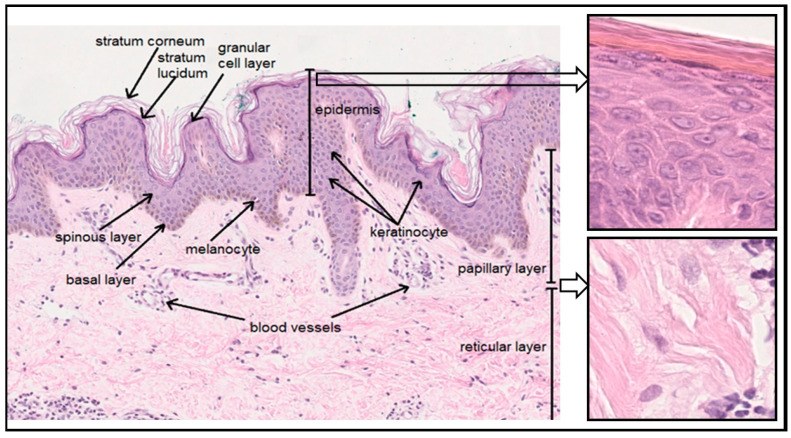
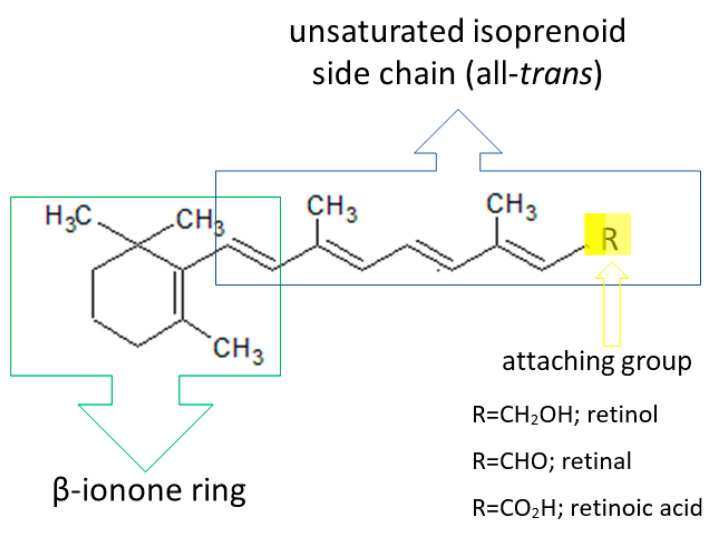
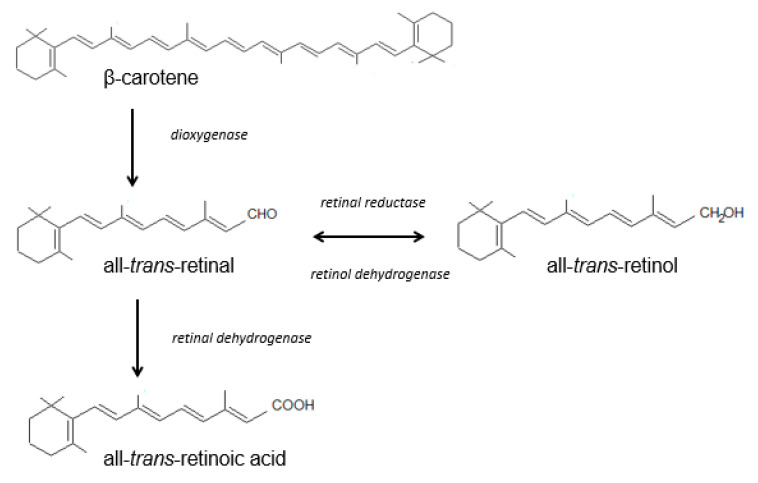
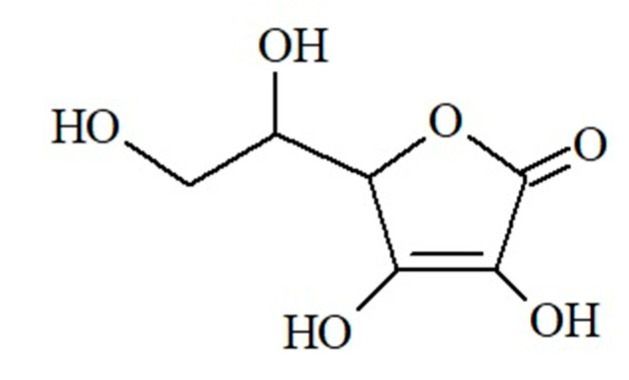
Verification
Claims the paper makes
202 Not checked yet · 11 Own interpretation · 1 Partly supported · accuracy not yet measured
The cited sources support only part of this claim — read each source’s verdict below.
In the paper
“Zinc is used to treat numerous dermatological conditions, such as infections (e.g., warts), inflammatory dermatoses (acne vulgaris, rosacea, atopic dermatitis and alopecia areata) and pigmentary disorders (melasma) [97,98,99,107,110].”
§ Bioactive Compounds for Skin Health: A Review > 2. Selected Substances of Importance for Skin Function > 2.2. Minerals
What the sources say
- Partly supportedcites [97] Devi, 2014, Zinc in human health, IOSR-JDMS sourceExperimental — accuracy not yet measured
The “Zinc in Skin diseases” section reports zinc treatments for viral warts, acne vulgaris and alopecia areata, supporting several examples in the citing sentence. It does not address treatment of rosacea, atopic dermatitis or pigmentary disorders such as melasma. (LLM, conf=0.88)
- Supportedcites [98] Gupta, M., Mahajan, V.K., Mehta, K.S., and Chauhan, P.S. Zinc therapy in dermatology: A review. Dermatol. Res. Pract., 2014. source
Section 5, “Zinc Therapy in Dermatology,” explicitly lists infections, inflammatory dermatoses, and pigmentary disorders among conditions for which zinc has been used, including warts, acne, rosacea, and melasma. Sections 7.4 and 8.1 also describe its use for atopic dermatitis and alopecia areata. The review notes that evidence for zinc as a melasma treatment is mixed, but the citing sentence claims use, not proven efficacy. (LLM, conf=0.94)
- Partly supportedcites [99] Ogawa, Y., Kinoshita, M., Shimada, S., and Kawamura, T. (2018). Zinc and skin disorders. Nutrients, 10. sourceExperimental — accuracy not yet measured
Section 5.2.2 (Alopecia Areata; page unavailable) describes zinc supplementation as a promising adjunct to standard therapy for severe alopecia areata. Section 5.4 (page unavailable) links zinc deficiency to atopic dermatitis and melasma but does not say zinc is used to treat them. The passages do not establish treatment use for the cited infections, acne, or rosacea. (LLM, conf=0.86)
- Not checked yetcites [107] Nitzan, 2006, Zinc in skin pathology and care, J. Dermatolog. Treat. source
- Not checked yetcites [110] Kim, 2014, Hair zinc levels and the efficacy of oral zinc supplementation in patients with atopic dermatitis, Acta Derm. Venereol. source
plaindirect- Asserted: passes — The authors put it forward as true.
- Checkable: passes — It can be checked against evidence.
- Load-bearing: unclear — It is unclear whether the paper’s conclusions depend on it.
- Based: passes — The paper gives a reason why it holds.
- Partly supported
In the paper
“The anti-ageing effects of retinoids are mediated by three major types of skin cells: epidermal keratinocytes, dermal endothelial cells and fibroblasts [38].”
§ Bioactive Compounds for Skin Health: A Review > 2. Selected Substances of Importance for Skin Function > 2.1. Vitamins
What the sources say
- Not checked yetcites [38] Shao, 2017, Molecular basis of retinol anti-ageing properties in naturally aged human skin in vivo, Int. J. Cosmet. Sci. source
plaindirect- Asserted: passes — The authors put it forward as true.
- Checkable: passes — It can be checked against evidence.
- Load-bearing: unclear — It is unclear whether the paper’s conclusions depend on it.
- Based: passes — The paper gives a reason why it holds.
None of the sources cited for this claim have been checked yet.
In the paper
“After penetrating the epidermis, retinoids play a role in the release of transcription and growth factors.”
§ Bioactive Compounds for Skin Health: A Review > 2. Selected Substances of Importance for Skin Function > 2.1. Vitamins
What the sources say
- Not checked yetcites [28] Sorg, 2005, Proposed mechanisms of action for retinoid derivatives in the treatment of skin aging, J. Cosmetic. Dermato. source
- Not checked yetcites [34] Oliveira, L.M., Teixeira, F.M.E., and Sato, M. (2018). N Impact of retinoic acid on immune cells and inflammatory diseases. Mediat. Inflamm. source
- Not checked yetcites [35] Ferreira, 2020, Advances and challenges in retinoid delivery systems in regenerative and therapeutic medicine, Nat. Commun. source
plaindirect- Asserted: passes — The authors put it forward as true.
- Checkable: passes — It can be checked against evidence.
- Load-bearing: unclear — It is unclear whether the paper’s conclusions depend on it.
- Based: passes — The paper gives a reason why it holds.
None of the sources cited for this claim have been checked yet.
In the paper
“Due to their ability to protect the skin from harmful UV-induced effects through their antimutagenic, antioxidant and free-radical-scavenging properties, some dietary botanicals could be useful supplements for mature skin care [23,24].”
§ Bioactive Compounds for Skin Health: A Review > 1. Introduction
What the sources say
- Not checked yetcites [23] Reuter, 2010, Botanicals in dermatology: An evidence-Based review, Am. J. Clin. Dermatol.
- Not checked yetcites [24] Tungmunnithum, D., Thongboonyou, A., Pholboon, A., and Yangsabai, A. (2018). Flavonoids and other phenolic compounds from medicinal plants for pharmaceutical and medical aspects: An overview. Medicines, 5. source
hedgedconditional- Asserted: passes — The authors put it forward as true.
- Checkable: passes — It can be checked against evidence.
- Load-bearing: passes — The paper’s conclusions depend on it.
- Based: passes — The paper gives a reason why it holds.
In the paper
“The activation of fibroblast production is stimulated through the TGF-β/CTGF pathway, the major regulator of ECM homeostasis [38].”
§ Bioactive Compounds for Skin Health: A Review > 2. Selected Substances of Importance for Skin Function > 2.1. Vitamins
What the sources say
- Not checked yetcites [38] Shao, 2017, Molecular basis of retinol anti-ageing properties in naturally aged human skin in vivo, Int. J. Cosmet. Sci. source
plaindirect- Asserted: passes — The authors put it forward as true.
- Checkable: passes — It can be checked against evidence.
- Load-bearing: unclear — It is unclear whether the paper’s conclusions depend on it.
- Based: passes — The paper gives a reason why it holds.
None of the sources cited for this claim have been checked yet.
In the paper
“They are responsible for the renewal of the epidermis through their active role in the exfoliation of dead cells in the stratum corneum and the proliferation of live cells in the epidermal layers [28,34,35].”
§ Bioactive Compounds for Skin Health: A Review > 2. Selected Substances of Importance for Skin Function > 2.1. Vitamins
What the sources say
- Not checked yetcites [28] Sorg, 2005, Proposed mechanisms of action for retinoid derivatives in the treatment of skin aging, J. Cosmetic. Dermato. source
- Not checked yetcites [34] Oliveira, L.M., Teixeira, F.M.E., and Sato, M. (2018). N Impact of retinoic acid on immune cells and inflammatory diseases. Mediat. Inflamm. source
- Not checked yetcites [35] Ferreira, 2020, Advances and challenges in retinoid delivery systems in regenerative and therapeutic medicine, Nat. Commun. source
plaindirect- Asserted: passes — The authors put it forward as true.
- Checkable: passes — It can be checked against evidence.
- Load-bearing: unclear — It is unclear whether the paper’s conclusions depend on it.
- Based: passes — The paper gives a reason why it holds.
None of the sources cited for this claim have been checked yet.
In the paper
“Vitamin A and all of its derivatives, applied systemically or topically, have a significant influence on skin health.”
§ Bioactive Compounds for Skin Health: A Review > 2. Selected Substances of Importance for Skin Function > 2.1. Vitamins
What the sources say
- Not checked yetcites [28] Sorg, 2005, Proposed mechanisms of action for retinoid derivatives in the treatment of skin aging, J. Cosmetic. Dermato. source
- Not checked yetcites [34] Oliveira, L.M., Teixeira, F.M.E., and Sato, M. (2018). N Impact of retinoic acid on immune cells and inflammatory diseases. Mediat. Inflamm. source
- Not checked yetcites [37] Chaudhuri, 2014, Bakuchiol: A retinol-like functional compound revealed by gene expression profiling and clinically proven to have anti-aging effects, Int. J. Cosmet. Sci. source
boosteddirect- Asserted: passes — The authors put it forward as true.
- Checkable: passes — It can be checked against evidence.
- Load-bearing: unclear — It is unclear whether the paper’s conclusions depend on it.
- Based: passes — The paper gives a reason why it holds.
In the paper
“After penetrating the dermis, retinoids increase the synthesis of elastin and collagen by stimulating the fibroblasts [42].”
§ Bioactive Compounds for Skin Health: A Review > 2. Selected Substances of Importance for Skin Function > 2.1. Vitamins
What the sources say
- Not checked yetcites [42] Varani, 2000, Vitamin A antagonizes decreased cell growth and elevated collagen degrading matrix metaloproteinases and stimulates collagen accumulation in naturally aged human skin, J. Investig. Dermatol. source
plaindirect- Asserted: passes — The authors put it forward as true.
- Checkable: passes — It can be checked against evidence.
- Load-bearing: passes — The paper’s conclusions depend on it.
- Based: passes — The paper gives a reason why it holds.
In the paper
“Research increasingly suggests that a well-balanced diet significantly affects the skin ageing process.”
- Also stated in: § 3. Conclusions · hedged
“An increasing body of research suggests that a well-balanced diet significantly affects the skin ageing process.”
§ Bioactive Compounds for Skin Health: A Review > 1. Introduction
What the sources say
- Not checked yetcites [18] Cao, C., Xiao, Z., Wu, Y., and Ge, C. (2020). Diet and skin aging—from the perspective of food nutrition. Nutrients, 12. source
hedgeddirect- Asserted: passes — The authors put it forward as true.
- Checkable: passes — It can be checked against evidence.
- Load-bearing: passes — The paper’s conclusions depend on it.
- Based: passes — The paper gives a reason why it holds.
- Also stated in: § 3. Conclusions · hedged
None of the sources cited for this claim have been checked yet.
In the paper
“Topically applied retinoids penetrate the keratinized epidermis and, to a lesser extent, the dermis and subcutaneous tissue [27,30,35].”
§ Bioactive Compounds for Skin Health: A Review > 2. Selected Substances of Importance for Skin Function > 2.1. Vitamins
What the sources say
- Not checked yetcites [27] Khali, 2017, Retinoids: A journey from the molecular structures and mechanisms of action to clinical uses in dermatology and adverse effects, J. Dermatolog. Treat. source
- Not checked yetcites [30] Polcz, 2019, The Role of Vitamin A in Wound Healing, Nutr. Clin. Pract. source
- Not checked yetcites [35] Ferreira, 2020, Advances and challenges in retinoid delivery systems in regenerative and therapeutic medicine, Nat. Commun. source
plaindirect- Asserted: passes — The authors put it forward as true.
- Checkable: passes — It can be checked against evidence.
- Load-bearing: passes — The paper’s conclusions depend on it.
- Based: passes — The paper gives a reason why it holds.
None of the sources cited for this claim have been checked yet.
In the paper
“Retinoids also reduce transepidermal water loss (TEWL) by strengthening the epidermal barrier [28,34,35].”
§ Bioactive Compounds for Skin Health: A Review > 2. Selected Substances of Importance for Skin Function > 2.1. Vitamins
What the sources say
- Not checked yetcites [28] Sorg, 2005, Proposed mechanisms of action for retinoid derivatives in the treatment of skin aging, J. Cosmetic. Dermato. source
- Not checked yetcites [34] Oliveira, L.M., Teixeira, F.M.E., and Sato, M. (2018). N Impact of retinoic acid on immune cells and inflammatory diseases. Mediat. Inflamm. source
- Not checked yetcites [35] Ferreira, 2020, Advances and challenges in retinoid delivery systems in regenerative and therapeutic medicine, Nat. Commun. source
plaindirect- Asserted: passes — The authors put it forward as true.
- Checkable: passes — It can be checked against evidence.
- Load-bearing: unclear — It is unclear whether the paper’s conclusions depend on it.
- Based: passes — The paper gives a reason why it holds.
None of the sources cited for this claim have been checked yet.
In the paper
“Vitamin C exhibits anti-wrinkle activity.”
§ Bioactive Compounds for Skin Health: A Review > 2. Selected Substances of Importance for Skin Function > 2.1. Vitamins
What the sources say
- Not checked yetcites [46] 2009, An overview of ascorbic acid biochemistry, J. Fac. Pharm. Ankara.
- Not checked yetcites [49] Pullar, 2017, The roles of vitamin C in skin health, Nutrients source
plaindirect- Asserted: passes — The authors put it forward as true.
- Checkable: passes — It can be checked against evidence.
- Load-bearing: unclear — It is unclear whether the paper’s conclusions depend on it.
- Based: passes — The paper gives a reason why it holds.
In the paper
“Research by Cosgrove et al. indicates that a higher vitamin C intake is associated with a reduced likelihood of a wrinkled appearance and senile dryness [59].”
§ Bioactive Compounds for Skin Health: A Review > 2. Selected Substances of Importance for Skin Function > 2.1. Vitamins
What the sources say
- Not checked yetcites [59] Cosgrove, 2007, Dietary nutrient intakes and skin-aging appearance among middle-aged American women, Am. J. Clin. Nutr. source
hedgedcorrelational- Asserted: passes — The authors put it forward as true.
- Checkable: passes — It can be checked against evidence.
- Load-bearing: unclear — It is unclear whether the paper’s conclusions depend on it.
- Based: passes — The paper gives a reason why it holds.
In the paper
“Retinoids have been shown to improve the clinical features of aged appearance by a reduction in fine wrinkling, increased smoothness and decreased hyperpigmentation [45].”
§ Bioactive Compounds for Skin Health: A Review > 2. Selected Substances of Importance for Skin Function > 2.1. Vitamins
What the sources say
- Not checked yetcites [45] Fisher, 1999, Molecular mechanisms of photoaging in human skin in vivo and their prevention by all-trans retinoic acid, Photochem. Photobiol.
boosteddirect- Asserted: passes — The authors put it forward as true.
- Checkable: passes — It can be checked against evidence.
- Load-bearing: unclear — It is unclear whether the paper’s conclusions depend on it.
- Based: passes — The paper gives a reason why it holds.
In the paper
“Topically applied retinoids reduce the discoloration of the skin and its pigmentation by about 60%.”
§ Bioactive Compounds for Skin Health: A Review > 2. Selected Substances of Importance for Skin Function > 2.1. Vitamins
What the sources say
- Not checked yetcites [32] Zasada, 2019, Retinoids: Active molecules influencing skin structure formation in cosmetic and dermatological treatments, Postepy Dermatol. Alergol. source
plaindirect- Asserted: passes — The authors put it forward as true.
- Checkable: passes — It can be checked against evidence.
- Load-bearing: unclear — It is unclear whether the paper’s conclusions depend on it.
- Based: passes — The paper gives a reason why it holds.
In the paper
“The antioxidant properties of vitamin C protect the skin, especially the epidermis, against oxidants generated by ultraviolet radiation and other environmental factors.”
§ Bioactive Compounds for Skin Health: A Review > 2. Selected Substances of Importance for Skin Function > 2.1. Vitamins
What the sources say
- Not checked yetcites [60] Jones, 1995, Impact of nutrients on cellular lipid peroxidation and antioxidant defense system, Fundam. Appl. Toxicol. source
plaindirect- Asserted: passes — The authors put it forward as true.
- Checkable: passes — It can be checked against evidence.
- Load-bearing: passes — The paper’s conclusions depend on it.
- Based: passes — The paper gives a reason why it holds.
In the paper
“Eberlein-König and Ring have also shown that vitamin C used in combination with vitamin E and, to a lesser extent, with other photoprotective compounds dramatically increases their photoprotective effects as compared to monotherapies [65].”
§ Bioactive Compounds for Skin Health: A Review > 2. Selected Substances of Importance for Skin Function > 2.1. Vitamins
What the sources say
- Not checked yetcites [65] Ring, 2005, Relevance of vitamins C and E in cutaneous photoprotection, J. Cosmet. Dermatol. source
boosteddirect- Asserted: passes — The authors put it forward as true.
- Checkable: passes — It can be checked against evidence.
- Load-bearing: unclear — It is unclear whether the paper’s conclusions depend on it.
- Based: passes — The paper gives a reason why it holds.
In the paper
“Pierard-Franchimont et al. showed that a retinol formulation improved the physical properties of ageing facial skin, including tensile properties and contours, after 12 weeks of treatment [43].”
§ Bioactive Compounds for Skin Health: A Review > 2. Selected Substances of Importance for Skin Function > 2.1. Vitamins
What the sources say
- Not checked yetcites [43] Castelli, 1998, Tensile properties and contours of aging facial skin. A controlled double-blind comparative study of the effects of retinol, melibose-lactose and their association, Skin Res. Technol. source
plaindirect- Asserted: passes — The authors put it forward as true.
- Checkable: passes — It can be checked against evidence.
- Load-bearing: unclear — It is unclear whether the paper’s conclusions depend on it.
- Based: passes — The paper gives a reason why it holds.
None of the sources cited for this claim have been checked yet.
In the paper
“It is responsible for the biosynthesis of collagen through its role in the hydroxylation of proline and lysine residues to hydroxyproline and hydroxylysine.”
§ Bioactive Compounds for Skin Health: A Review > 2. Selected Substances of Importance for Skin Function > 2.1. Vitamins
What the sources say
- Not checked yetcites [46] 2009, An overview of ascorbic acid biochemistry, J. Fac. Pharm. Ankara.
- Not checked yetcites [49] Pullar, 2017, The roles of vitamin C in skin health, Nutrients source
plaindirect- Asserted: passes — The authors put it forward as true.
- Checkable: passes — It can be checked against evidence.
- Load-bearing: unclear — It is unclear whether the paper’s conclusions depend on it.
- Based: passes — The paper gives a reason why it holds.
In the paper
“The photoprotective efficacy of vitamin C is enhanced by combining it with vitamin E [63].”
§ Bioactive Compounds for Skin Health: A Review > 2. Selected Substances of Importance for Skin Function > 2.1. Vitamins
What the sources say
- Not checked yetcites [63] Darr, 1996, Effectiveness of antioxidants (vitamin C and E) with and without sunscreens as topical photoprotectants, Acta Derm. Venereol. source
plaindirect- Asserted: passes — The authors put it forward as true.
- Checkable: passes — It can be checked against evidence.
- Load-bearing: unclear — It is unclear whether the paper’s conclusions depend on it.
- Based: passes — The paper gives a reason why it holds.
None of the sources cited for this claim have been checked yet.
In the paper
“It donates electrons to enzymes involved in hydroxylation, resulting in the conversion of procollagen to collagen [46,49].”
§ Bioactive Compounds for Skin Health: A Review > 2. Selected Substances of Importance for Skin Function > 2.1. Vitamins
What the sources say
- Not checked yetcites [46] 2009, An overview of ascorbic acid biochemistry, J. Fac. Pharm. Ankara.
- Not checked yetcites [49] Pullar, 2017, The roles of vitamin C in skin health, Nutrients source
plaindirect- Asserted: passes — The authors put it forward as true.
- Checkable: passes — It can be checked against evidence.
- Load-bearing: unclear — It is unclear whether the paper’s conclusions depend on it.
- Based: passes — The paper gives a reason why it holds.
In the paper
“The results of that study also suggest that supplementation with a combination of the two antioxidants protects against DNA damage [64].”
§ Bioactive Compounds for Skin Health: A Review > 2. Selected Substances of Importance for Skin Function > 2.1. Vitamins
What the sources say
- Not checked yetcites [64] Placzek, 2005, Ultraviolet B-induced DNA damage in human epidermis is modified by the antioxidants ascorbic acid and D-alpha-tocopherol, J. Investig. Dermatol. source
hedgeddirect- Asserted: passes — The authors put it forward as true.
- Checkable: passes — It can be checked against evidence.
- Load-bearing: unclear — It is unclear whether the paper’s conclusions depend on it.
- Based: passes — The paper gives a reason why it holds.
In the paper
“Retinol and retinyl esters exhibit a strong capacity to absorb ultraviolet radiation in the range of 300–350 nm [39].”
§ Bioactive Compounds for Skin Health: A Review > 2. Selected Substances of Importance for Skin Function > 2.1. Vitamins
What the sources say
- Not checked yetcites [39] Brunnberg, 1987, Age-related variations in acyl-CoA: Retinol acyltransferase activity and vitamin A concentration in the liver and epidermis of hairless mice, Biochim. Biophys. Acta. source
boosteddirect- Asserted: passes — The authors put it forward as true.
- Checkable: passes — It can be checked against evidence.
- Load-bearing: unclear — It is unclear whether the paper’s conclusions depend on it.
- Based: passes — The paper gives a reason why it holds.
In the paper
“Offord et al. assessed the photoprotective potential of vitamin C and other antioxidants, confirming that vitamin C plays a significant role in protecting the skin against UVA radiation [62].”
§ Bioactive Compounds for Skin Health: A Review > 2. Selected Substances of Importance for Skin Function > 2.1. Vitamins
What the sources say
- Not checked yetcites [62] Offord, 2002, Photoprotective potential of lycopene, beta-carotene, vitamin E, vitamin C and carnosic acid in UVA-irradiated human skin fibroblasts, Free Radic. Biol. Med. source
boosteddirect- Asserted: passes — The authors put it forward as true.
- Checkable: passes — It can be checked against evidence.
- Load-bearing: unclear — It is unclear whether the paper’s conclusions depend on it.
- Based: passes — The paper gives a reason why it holds.
In the paper
“A decrease in the number of melanocytes is related to the inhibition of melanogenesis [32].”
§ Bioactive Compounds for Skin Health: A Review > 2. Selected Substances of Importance for Skin Function > 2.1. Vitamins
What the sources say
- Not checked yetcites [32] Zasada, 2019, Retinoids: Active molecules influencing skin structure formation in cosmetic and dermatological treatments, Postepy Dermatol. Alergol. source
plaincorrelational- Asserted: passes — The authors put it forward as true.
- Checkable: passes — It can be checked against evidence.
- Load-bearing: unclear — It is unclear whether the paper’s conclusions depend on it.
- Based: passes — The paper gives a reason why it holds.
In the paper
“Placzek et al., in a study with human volunteers, showed that the oral administration of ascorbic acid and D-alpha-tocopherol for three months significantly reduced the sunburn reaction to UVB irradiation.”
§ Bioactive Compounds for Skin Health: A Review > 2. Selected Substances of Importance for Skin Function > 2.1. Vitamins
What the sources say
- Not checked yetcites [64] Placzek, 2005, Ultraviolet B-induced DNA damage in human epidermis is modified by the antioxidants ascorbic acid and D-alpha-tocopherol, J. Investig. Dermatol. source
plaindirect- Asserted: passes — The authors put it forward as true.
- Checkable: passes — It can be checked against evidence.
- Load-bearing: unclear — It is unclear whether the paper’s conclusions depend on it.
- Based: passes — The paper gives a reason why it holds.
In the paper
“Alpha-tocopherol supplementation has been shown to improve facial hyperpigmentation.”
§ Bioactive Compounds for Skin Health: A Review > 2. Selected Substances of Importance for Skin Function > 2.1. Vitamins
What the sources say
- Not checked yetcites [81] Ichihashi, 1999, The inhibitory effect of DL-alpha-tocopheryl ferulate in lecithin on melanogenesis, Anticancer Res.
plaindirect- Asserted: passes — The authors put it forward as true.
- Checkable: passes — It can be checked against evidence.
- Load-bearing: passes — The paper’s conclusions depend on it.
- Based: passes — The paper gives a reason why it holds.
None of the sources cited for this claim have been checked yet.
In the paper
“A deficiency of microelements has an adverse effect on human development and health, including the functioning and appearance of the skin [26,87].”
§ Bioactive Compounds for Skin Health: A Review > 2. Selected Substances of Importance for Skin Function > 2.2. Minerals
What the sources say
- Not checked yetcites [26] Godswill, 2020, Health benefits of micronutrients (vitamins and minerals) and their associated deficiency diseases: A systematic review, Int. J. Food. Sci.
- Not checked yetcites [87] Park, 2015, Role of micronutrients in skin health and function, Biomol. Ther. source
plaindirect- Asserted: passes — The authors put it forward as true.
- Checkable: passes — It can be checked against evidence.
- Load-bearing: unclear — It is unclear whether the paper’s conclusions depend on it.
- Based: passes — The paper gives a reason why it holds.
In the paper
“This was confirmed in a study by Jobeili et al., which showed that selenium delays skin ageing by protecting keratinocyte stem cells [91].”
§ Bioactive Compounds for Skin Health: A Review > 2. Selected Substances of Importance for Skin Function > 2.2. Minerals
What the sources say
- Not checked yetcites [91] Jobeili, 2017, Selenium preserves keratinocyte stemness and delays senescence by maintaining epidermal adhesion, Aging source
boosteddirect- Asserted: passes — The authors put it forward as true.
- Checkable: passes — It can be checked against evidence.
- Load-bearing: unclear — It is unclear whether the paper’s conclusions depend on it.
- Based: passes — The paper gives a reason why it holds.
A conclusion the paper draws from its own results — it cites no other source for it, so there is none to check. The quote shows it is in the paper.
In the paper
“These studies indicate that Se supplementation could be a new strategy for combating skin ageing and photoaging.”
§ Bioactive Compounds for Skin Health: A Review > 2. Selected Substances of Importance for Skin Function > 2.2. Minerals
hedgedconditional- Asserted: passes — The authors put it forward as true.
- Checkable: passes — It can be checked against evidence.
- Load-bearing: passes — The paper’s conclusions depend on it.
- Based: passes — The paper gives a reason why it holds.
In the paper
“By stimulating the activity of selenium-dependent antioxidant enzymes, such as glutathione peroxidase and thioredoxin reductase, selenium protects the skin against the oxidative stress induced by UV radiation [87].”
§ Bioactive Compounds for Skin Health: A Review > 2. Selected Substances of Importance for Skin Function > 2.2. Minerals
What the sources say
- Not checked yetcites [87] Park, 2015, Role of micronutrients in skin health and function, Biomol. Ther. source
plaindirect- Asserted: passes — The authors put it forward as true.
- Checkable: passes — It can be checked against evidence.
- Load-bearing: unclear — It is unclear whether the paper’s conclusions depend on it.
- Based: passes — The paper gives a reason why it holds.
In the paper
“The most probable physiologic function of epidermal vitamin E is contributing to the antioxidant defences of the skin and protecting the epidermis and dermis against oxidative stress induced by environmental factors.”
§ Bioactive Compounds for Skin Health: A Review > 2. Selected Substances of Importance for Skin Function > 2.1. Vitamins
What the sources say
- Not checked yetcites [40] Bagatin, 2009, Cosmeceuticals vitamins, Clin. Dermatol. source
hedgeddirect- Asserted: passes — The authors put it forward as true.
- Checkable: passes — It can be checked against evidence.
- Load-bearing: passes — The paper’s conclusions depend on it.
- Based: passes — The paper gives a reason why it holds.
In the paper
“Zhu et al. draw attention to the role of selenium in protecting skin cells against the ageing induced by UVB radiation [90].”
§ Bioactive Compounds for Skin Health: A Review > 2. Selected Substances of Importance for Skin Function > 2.2. Minerals
What the sources say
- Not checked yetcites [90] Zhu, 2015, Selenium deficiency sensitizes the skin for UVB-induced oxidative damage and inflammation which involved the activation of p38 MAPK signaling, Food Chem. Toxicol. source
plaindirect- Asserted: passes — The authors put it forward as true.
- Checkable: passes — It can be checked against evidence.
- Load-bearing: unclear — It is unclear whether the paper’s conclusions depend on it.
- Based: passes — The paper gives a reason why it holds.
In the paper
“Vitamin E is the major lipid-soluble antioxidant in humans [40].”
§ Bioactive Compounds for Skin Health: A Review > 2. Selected Substances of Importance for Skin Function > 2.1. Vitamins
What the sources say
- Not checked yetcites [40] Bagatin, 2009, Cosmeceuticals vitamins, Clin. Dermatol. source
plain- Asserted: passes — The authors put it forward as true.
- Checkable: passes — It can be checked against evidence.
- Load-bearing: unclear — It is unclear whether the paper’s conclusions depend on it.
- Based: passes — The paper gives a reason why it holds.
In the paper
“An adequate level of this element is required for the activity of antioxidant enzymes, including cooper zinc superoxide dismutase (Cu/Zn-SOD), which is responsible for neutralizing the superoxide radical [97].”
§ Bioactive Compounds for Skin Health: A Review > 2. Selected Substances of Importance for Skin Function > 2.2. Minerals
What the sources say
- Not checked yetcites [97] Devi, 2014, Zinc in human health, IOSR-JDMS source
plaindirect- Asserted: passes — The authors put it forward as true.
- Checkable: passes — It can be checked against evidence.
- Load-bearing: unclear — It is unclear whether the paper’s conclusions depend on it.
- Based: passes — The paper gives a reason why it holds.
In the paper
“As an antioxidant, zinc protects the cells of the body against the harmful effects of free radicals.”
§ Bioactive Compounds for Skin Health: A Review > 2. Selected Substances of Importance for Skin Function > 2.2. Minerals
What the sources say
- Not checked yetcites [97] Devi, 2014, Zinc in human health, IOSR-JDMS source
plaindirect- Asserted: passes — The authors put it forward as true.
- Checkable: passes — It can be checked against evidence.
- Load-bearing: unclear — It is unclear whether the paper’s conclusions depend on it.
- Based: passes — The paper gives a reason why it holds.
In the paper
“Thus, vitamin E may be a candidate whitening agent for the treatment of hyperpigmentation, including age-related conditions or those arising from sun exposure.”
§ Bioactive Compounds for Skin Health: A Review > 2. Selected Substances of Importance for Skin Function > 2.1. Vitamins
What the sources say
- Not checked yetcites [81] Ichihashi, 1999, The inhibitory effect of DL-alpha-tocopheryl ferulate in lecithin on melanogenesis, Anticancer Res.
hedgedconditional- Asserted: passes — The authors put it forward as true.
- Checkable: passes — It can be checked against evidence.
- Load-bearing: passes — The paper’s conclusions depend on it.
- Based: passes — The paper gives a reason why it holds.
In the paper
“eczema (a 0.05% Clobetasol + 2.5% zinc sulphate cream applied topically was effective in hand eczemas) [115]”
§ Bioactive Compounds for Skin Health: A Review > 2. Selected Substances of Importance for Skin Function > 2.2. Minerals
What the sources say
- Not checked yetcites [115] Faghihi, 2008, The efficacy of 0.05% Clobetasol + 2.5% zinc sulphate cream versus 0.05% Clobetasol alone cream in the treatment of the chronich and eczema: A double-blind study, J. Eur. Acad. Dermatol. Venereol. source
plaindirect- Asserted: passes — The authors put it forward as true.
- Checkable: passes — It can be checked against evidence.
- Load-bearing: unclear — It is unclear whether the paper’s conclusions depend on it.
- Based: passes — The paper gives a reason why it holds.
In the paper
“alopecia areata (5 mg/kg/day, in three divided doses, of oral zinc sulphate induced significant hair growth after 6 months) [117]”
§ Bioactive Compounds for Skin Health: A Review > 2. Selected Substances of Importance for Skin Function > 2.2. Minerals
What the sources say
- Not checked yetcites [117] Sharquie, 2012, Oral zinc sulphate in treatment of alopecia areata (Double Blind; Cross-Over Study), J. Clin. Exp. Dermatol. Res.
plaindirect- Asserted: passes — The authors put it forward as true.
- Checkable: passes — It can be checked against evidence.
- Load-bearing: unclear — It is unclear whether the paper’s conclusions depend on it.
- Based: passes — The paper gives a reason why it holds.
In the paper
“melasma (a 10% zinc sulphate solution applied topically twice daily for 2 months significantly reduced MASI scores) [112]”
§ Bioactive Compounds for Skin Health: A Review > 2. Selected Substances of Importance for Skin Function > 2.2. Minerals
What the sources say
- Not checked yetcites [112] Sharquie, 2008, Topical 10% zinc sulfate solution for treatment of melisma, Dermatol. Surg.
plaindirect- Asserted: passes — The authors put it forward as true.
- Checkable: passes — It can be checked against evidence.
- Load-bearing: unclear — It is unclear whether the paper’s conclusions depend on it.
- Based: passes — The paper gives a reason why it holds.
In the paper
“Zinc administered orally or topically has been shown to have therapeutic applications in skin ageing (a 0.1% copper–zinc malonate cream applied topically for 6 weeks significantly reduced wrinkles) [111]”
§ Bioactive Compounds for Skin Health: A Review > 2. Selected Substances of Importance for Skin Function > 2.2. Minerals
What the sources say
- Not checked yetcites [111] Mahoney, 2009, Extracellular matrix in cutaneous ageing: The effects of 0.1% copper-zincmalonate-containing cream on elastin biosynthesis, Exp. Dermatol. source
boosteddirect- Asserted: passes — The authors put it forward as true.
- Checkable: passes — It can be checked against evidence.
- Load-bearing: unclear — It is unclear whether the paper’s conclusions depend on it.
- Based: passes — The paper gives a reason why it holds.
In the paper
“rosacea (100 mg of oral zinc sulphate three times per day was effective after 3 months of therapy) [116]”
§ Bioactive Compounds for Skin Health: A Review > 2. Selected Substances of Importance for Skin Function > 2.2. Minerals
What the sources say
- Not checked yetcites [116] Sharquie, 2006, Oral zinc sulfate in the treatment of rosacea: A double-blind, placebo-controlled study, Int. J. Dermatol. source
plaindirect- Asserted: passes — The authors put it forward as true.
- Checkable: passes — It can be checked against evidence.
- Load-bearing: unclear — It is unclear whether the paper’s conclusions depend on it.
- Based: passes — The paper gives a reason why it holds.
None of the sources cited for this claim have been checked yet.
In the paper
“Copper also exhibits a wide range of antimicrobial activity, including that against Gram-positive (e.g., Staphylococcus aureus, Enterococcus faecalis, Clostridium difficile and Listeria monocytogenes) and Gram-negative (e.g., Escherichia coli, Pseudomonas aeruginosa and Klebsiella pneumoniae) bacteria, fungi (Candida albicans and Aspergillus brasiliensis) and viruses (adenovirus, norovirus and Pol”
§ Bioactive Compounds for Skin Health: A Review > 2. Selected Substances of Importance for Skin Function > 2.2. Minerals
What the sources say
- Not checked yetcites [123] Borkow, 2005, Copper as a biocidal tool, Curr. Med. Chem. source
- Not checked yetcites [124] Santo, 2012, Antimicrobial metallic copper surface kill Staphylococcus haemolyticus via membrane demage, Microbiol. Open source
- Not checked yetcites [125] Grass, 2011, Metallic copper as an antimicrobial surface, Appl. Environ. Microbiol. source
plaindirect- Asserted: passes — The authors put it forward as true.
- Checkable: passes — It can be checked against evidence.
- Load-bearing: unclear — It is unclear whether the paper’s conclusions depend on it.
- Based: passes — The paper gives a reason why it holds.
In the paper
“A study by Mazurowka and Mojski showed that the peptides glycyl-histydyl-lysine (GHK) and γ-glutamyl-cysteinyl-glycine (GSH) influence the permeation of copper ions through the horny layer of the epidermis [131].”
§ Bioactive Compounds for Skin Health: A Review > 2. Selected Substances of Importance for Skin Function > 2.2. Minerals
What the sources say
- Not checked yetcites [131] Mazurowska, 2008, Biological activities of selected peptides: Skin penetration ability of copper complexes with peptides, J. Cosmet. Sci.
plaindirect- Asserted: passes — The authors put it forward as true.
- Checkable: passes — It can be checked against evidence.
- Load-bearing: unclear — It is unclear whether the paper’s conclusions depend on it.
- Based: passes — The paper gives a reason why it holds.
In the paper
“The ZIP2 protein, a zinc transporter, is essential for the differentiation of keratinocytes [103].”
§ Bioactive Compounds for Skin Health: A Review > 2. Selected Substances of Importance for Skin Function > 2.2. Minerals
What the sources say
- Not checked yetcites [103] Inoue, 2014, ZIP2 protein, a zinc transporter, is associated with keratinocyte differentiation, J. Biol. Chem. source
plaindirect- Asserted: passes — The authors put it forward as true.
- Checkable: passes — It can be checked against evidence.
- Load-bearing: unclear — It is unclear whether the paper’s conclusions depend on it.
- Based: passes — The paper gives a reason why it holds.
None of the sources cited for this claim have been checked yet.
In the paper
“The oral and/or topical administration of Zn has long been used for its effect on skin regeneration and healing [99,109].”
§ Bioactive Compounds for Skin Health: A Review > 2. Selected Substances of Importance for Skin Function > 2.2. Minerals
What the sources say
- Not checked yetcites [99] Ogawa, Y., Kinoshita, M., Shimada, S., and Kawamura, T. (2018). Zinc and skin disorders. Nutrients, 10. source
- Not checked yetcites [109] Lin, P.H., Sermersheim, M., Li, H., Lee, P.H.U., Steinberg, S.M., and Ma, J. (2018). Zinc in wound healing modulation. Nutrients, 10. source
plaindirect- Asserted: passes — The authors put it forward as true.
- Checkable: passes — It can be checked against evidence.
- Load-bearing: unclear — It is unclear whether the paper’s conclusions depend on it.
- Based: passes — The paper gives a reason why it holds.
None of the sources cited for this claim have been checked yet.
In the paper
“The element influences the structure and proper functioning of the skin and mucous membranes [98,100].”
§ Bioactive Compounds for Skin Health: A Review > 2. Selected Substances of Importance for Skin Function > 2.2. Minerals
What the sources say
plaindirect- Asserted: passes — The authors put it forward as true.
- Checkable: passes — It can be checked against evidence.
- Load-bearing: unclear — It is unclear whether the paper’s conclusions depend on it.
- Based: passes — The paper gives a reason why it holds.
None of the sources cited for this claim have been checked yet.
In the paper
“EFAs also play an important role in skin structure and function.”
§ Bioactive Compounds for Skin Health: A Review > 2. Selected Substances of Importance for Skin Function > 2.3. Fatty Acids
What the sources say
- Not checked yetcites [153] Correa, 2014, Molecular interactions of plant oil components with stratum corneum lipids correlate with clinical measures of skin barrier function, Exp. Dermatol. source
- Not checked yetcites [154] Feingold, 2014, Role of lipids in the formation and maintenance of the cutaneous permeability barier, Biochim. Biophys. Acta. source
- Not checked yetcites [156] Michalak, 2018, Oils from fruit seeds and their dietetic and cosmetic significance, Herba Pol. source
plaincorrelational- Asserted: passes — The authors put it forward as true.
- Checkable: passes — It can be checked against evidence.
- Load-bearing: unclear — It is unclear whether the paper’s conclusions depend on it.
- Based: passes — The paper gives a reason why it holds.
In the paper
“Research by Cosgrove et al. showed that a higher LA intake is associated with a lower likelihood of senile dryness and skin atrophy [59].”
§ Bioactive Compounds for Skin Health: A Review > 2. Selected Substances of Importance for Skin Function > 2.3. Fatty Acids
What the sources say
- Not checked yetcites [59] Cosgrove, 2007, Dietary nutrient intakes and skin-aging appearance among middle-aged American women, Am. J. Clin. Nutr. source
plaincorrelational- Asserted: passes — The authors put it forward as true.
- Checkable: passes — It can be checked against evidence.
- Load-bearing: unclear — It is unclear whether the paper’s conclusions depend on it.
- Based: passes — The paper gives a reason why it holds.
In the paper
“Supplementation with silicon in a highly bioavailable form can be used for skin rejuvenation [141].”
§ Bioactive Compounds for Skin Health: A Review > 2. Selected Substances of Importance for Skin Function > 2.2. Minerals
What the sources say
- Not checked yetcites [141] Kalil, 2017, Evaluation of cutaneous rejuvenation associated with the use of ortho-silicic acid stabilized by hydrolyzed marine collagen, J. Cosmet. Dermatol. source
plaindirect- Asserted: passes — The authors put it forward as true.
- Checkable: passes — It can be checked against evidence.
- Load-bearing: passes — The paper’s conclusions depend on it.
- Based: passes — The paper gives a reason why it holds.
In the paper
“Barel et al. demonstrated that the oral intake of choline-stabilized orthosilicic acid for 20 weeks had a significant positive effect on the surface and mechanical properties of skin.”
§ Bioactive Compounds for Skin Health: A Review > 2. Selected Substances of Importance for Skin Function > 2.2. Minerals
What the sources say
- Not checked yetcites [138] Barel, 2005, Effect of oral intake of choline-stabilized orthosilicic acid on skin, nails and hair in women with photodamaged skin, Arch. Dermatol. Res. source
boosteddirect- Asserted: passes — The authors put it forward as true.
- Checkable: passes — It can be checked against evidence.
- Load-bearing: unclear — It is unclear whether the paper’s conclusions depend on it.
- Based: passes — The paper gives a reason why it holds.
In the paper
“Orthosilicic acid (OSA) stimulates fibroblasts to secrete collagen type I [140].”
§ Bioactive Compounds for Skin Health: A Review > 2. Selected Substances of Importance for Skin Function > 2.2. Minerals
What the sources say
- Not checked yetcites [140] Reffitt, 2003, Orthosilicic acid stimulates collagen type 1 synthesis and osteoblastic differentiation in human osteoblast-like cells in vitro, Bone source
plaindirect- Asserted: passes — The authors put it forward as true.
- Checkable: passes — It can be checked against evidence.
- Load-bearing: unclear — It is unclear whether the paper’s conclusions depend on it.
- Based: passes — The paper gives a reason why it holds.
None of the sources cited for this claim have been checked yet.
In the paper
“Many skin problems, including excessive exfoliation of the epidermis, are also caused by a deficiency of GLA, which is formed from LA via an enzymatic reaction involving delta-6 desaturase [153,154,158,159].”
§ Bioactive Compounds for Skin Health: A Review > 2. Selected Substances of Importance for Skin Function > 2.3. Fatty Acids
What the sources say
- Not checked yetcites [153] Correa, 2014, Molecular interactions of plant oil components with stratum corneum lipids correlate with clinical measures of skin barrier function, Exp. Dermatol. source
- Not checked yetcites [154] Feingold, 2014, Role of lipids in the formation and maintenance of the cutaneous permeability barier, Biochim. Biophys. Acta. source
- Not checked yetcites [158] Cakir, 2004, Essential oil and fatty acid composition of the fruits of Hippophae rhamnoides L. (Sea Buckthorn) and Myrtus communis L. from Turkey, Biochem. Syst. Ecol. source
- Not checked yetcites [159] Janssens, 2014, The important role of stratum corneum lipids for the cutaneous barrier function, Biochim. Biophys. Acta. source
plaindirect- Asserted: passes — The authors put it forward as true.
- Checkable: passes — It can be checked against evidence.
- Load-bearing: unclear — It is unclear whether the paper’s conclusions depend on it.
- Based: passes — The paper gives a reason why it holds.
In the paper
“Kalil et al. described the positive effect of orthosilicic acid stabilized with hydrolyzed marine collagen at 600 mg/day on skin texture, firmness and hydration [141].”
§ Bioactive Compounds for Skin Health: A Review > 2. Selected Substances of Importance for Skin Function > 2.2. Minerals
What the sources say
- Not checked yetcites [141] Kalil, 2017, Evaluation of cutaneous rejuvenation associated with the use of ortho-silicic acid stabilized by hydrolyzed marine collagen, J. Cosmet. Dermatol. source
plaindirect- Asserted: passes — The authors put it forward as true.
- Checkable: passes — It can be checked against evidence.
- Load-bearing: unclear — It is unclear whether the paper’s conclusions depend on it.
- Based: passes — The paper gives a reason why it holds.
None of the sources cited for this claim have been checked yet.
In the paper
“A deficiency of LA, a component of ceramide 1, which plays an important role in the cohesiveness of the intracellular cement, results in the dysfunction of the skin barrier and symptoms of dry skin.”
§ Bioactive Compounds for Skin Health: A Review > 2. Selected Substances of Importance for Skin Function > 2.3. Fatty Acids
What the sources say
- Not checked yetcites [153] Correa, 2014, Molecular interactions of plant oil components with stratum corneum lipids correlate with clinical measures of skin barrier function, Exp. Dermatol. source
- Not checked yetcites [154] Feingold, 2014, Role of lipids in the formation and maintenance of the cutaneous permeability barier, Biochim. Biophys. Acta. source
- Not checked yetcites [158] Cakir, 2004, Essential oil and fatty acid composition of the fruits of Hippophae rhamnoides L. (Sea Buckthorn) and Myrtus communis L. from Turkey, Biochem. Syst. Ecol. source
- Not checked yetcites [159] Janssens, 2014, The important role of stratum corneum lipids for the cutaneous barrier function, Biochim. Biophys. Acta. source
plaindirect- Asserted: passes — The authors put it forward as true.
- Checkable: passes — It can be checked against evidence.
- Load-bearing: unclear — It is unclear whether the paper’s conclusions depend on it.
- Based: passes — The paper gives a reason why it holds.
In the paper
“Raw polyphenolic materials exert synergistic effects with other antioxidants in preventing skin ageing.”
§ Bioactive Compounds for Skin Health: A Review > 2. Selected Substances of Importance for Skin Function > 2.4. Polyphenols
What the sources say
- Not checked yetcites [203] Cho, 2007, Anti-wrinkling effects of the mixture of vitamin C, vitamin E, pycnogenol and evening primrose oil, and molecular mechanisms on hairless mouse skin caused by chronic ultraviolet B irradiation, Photodermatol. Photoimmunol. Photomed source
plaindirect- Asserted: passes — The authors put it forward as true.
- Checkable: passes — It can be checked against evidence.
- Load-bearing: unclear — It is unclear whether the paper’s conclusions depend on it.
- Based: passes — The paper gives a reason why it holds.
In the paper
“Rhodes et al., in a study with a group of 15 people given fish oil containing 1.8 g of EPA and 1.2 g of DHA, observed a marked reduction in UVB-erythemal sensitivity after six months of supplementation [186].”
§ Bioactive Compounds for Skin Health: A Review > 2. Selected Substances of Importance for Skin Function > 2.3. Fatty Acids
What the sources say
- Not checked yetcites [186] Rhodes, 1994, Dietary fish-oil supplementation in humans reduces UVB-erythemal sensitivity but increases epidermal lipid peroxidation, J. Investig. Derm. source
plaindirectn = 15- Asserted: passes — The authors put it forward as true.
- Checkable: passes — It can be checked against evidence.
- Load-bearing: passes — The paper’s conclusions depend on it.
- Based: passes — The paper gives a reason why it holds.
In the paper
“Omega-3 acids obtained from fish oil—eicosapentaenoic acid (EPA) and docosahexaenoic acid (DHA)—also play an important role in skin function.”
§ Bioactive Compounds for Skin Health: A Review > 2. Selected Substances of Importance for Skin Function > 2.3. Fatty Acids
What the sources say
- Not checked yetcites [185] Ziboh, 1996, The significance of polyunsaturated fatty acids in cutaneous biology, Lipids source
plaindirect- Asserted: passes — The authors put it forward as true.
- Checkable: passes — It can be checked against evidence.
- Load-bearing: passes — The paper’s conclusions depend on it.
- Based: passes — The paper gives a reason why it holds.
In the paper
“It also enhanced the expression of type I procollagen and TGF-β2).”
§ Bioactive Compounds for Skin Health: A Review > 2. Selected Substances of Importance for Skin Function > 2.4. Polyphenols
What the sources say
- Not checked yetcites [203] Cho, 2007, Anti-wrinkling effects of the mixture of vitamin C, vitamin E, pycnogenol and evening primrose oil, and molecular mechanisms on hairless mouse skin caused by chronic ultraviolet B irradiation, Photodermatol. Photoimmunol. Photomed source
plaindirect- Asserted: passes — The authors put it forward as true.
- Checkable: passes — It can be checked against evidence.
- Load-bearing: passes — The paper’s conclusions depend on it.
- Based: passes — The paper gives a reason why it holds.
None of the sources cited for this claim have been checked yet.
In the paper
“Polyphenols inhibit the activity of enzymes present in the skin—collagenase and elastase, which catalyze the hydrolysis of collagen and elastin fibers, and hyaluronidase, which degrades hyaluronic acid.”
§ Bioactive Compounds for Skin Health: A Review > 2. Selected Substances of Importance for Skin Function > 2.4. Polyphenols
What the sources say
- Not checked yetcites [188] Michalak, 2017, Sources of vegetable dyes and their use in cosmetology, Pol. J. Cosmetol.
- Not checked yetcites [197] Nichols, 2010, Skin photoprotection by natural polyphenols: Anti-inflammatory, antioxidant and DNA repair mechanisms, Arch. Dermatol. Res. source
- Not checked yetcites [198] Zillich, 2015, Polyphenols as active ingredients for cosmetic products, Int. J. Cosmet. Sci. source
- Not checked yetcites [200] Chen, 2012, The role of antioxidants in photoprotection: A critical review, J. Am. Acad. Dermatol. source
plaindirect- Asserted: passes — The authors put it forward as true.
- Checkable: passes — It can be checked against evidence.
- Load-bearing: passes — The paper’s conclusions depend on it.
- Based: passes — The paper gives a reason why it holds.
In the paper
“The presence of antioxidants has been shown to be linked to a lower frequency of ROS-induced photoaging [201].”
§ Bioactive Compounds for Skin Health: A Review > 2. Selected Substances of Importance for Skin Function > 2.4. Polyphenols
What the sources say
- Not checked yetcites [201] Afag, 2006, Botanical antioxidants in the prevention of photocarcinogenesis and photoaging, Exp. Derm. source
plaincorrelational- Asserted: passes — The authors put it forward as true.
- Checkable: passes — It can be checked against evidence.
- Load-bearing: unclear — It is unclear whether the paper’s conclusions depend on it.
- Based: passes — The paper gives a reason why it holds.
None of the sources cited for this claim have been checked yet.
In the paper
“Vegetable oils play an important role in the care of dry, sensitive, oily, acne-prone and mature skin [152,157] (Table 2).”
§ Bioactive Compounds for Skin Health: A Review > 2. Selected Substances of Importance for Skin Function > 2.3. Fatty Acids
What the sources say
- Not checked yetcites [152] Michalak, 2018, Plant oils in cosmetology and dermatology, Pol. J. Cosmetol.
- Not checked yetcites [157] Burris, 2013, Acne: The role of medical nutrition therapy, J. Acad. Nutr. Diet. source
plaindirect- Asserted: passes — The authors put it forward as true.
- Checkable: passes — It can be checked against evidence.
- Load-bearing: unclear — It is unclear whether the paper’s conclusions depend on it.
- Based: passes — The paper gives a reason why it holds.
None of the sources cited for this claim have been checked yet.
In the paper
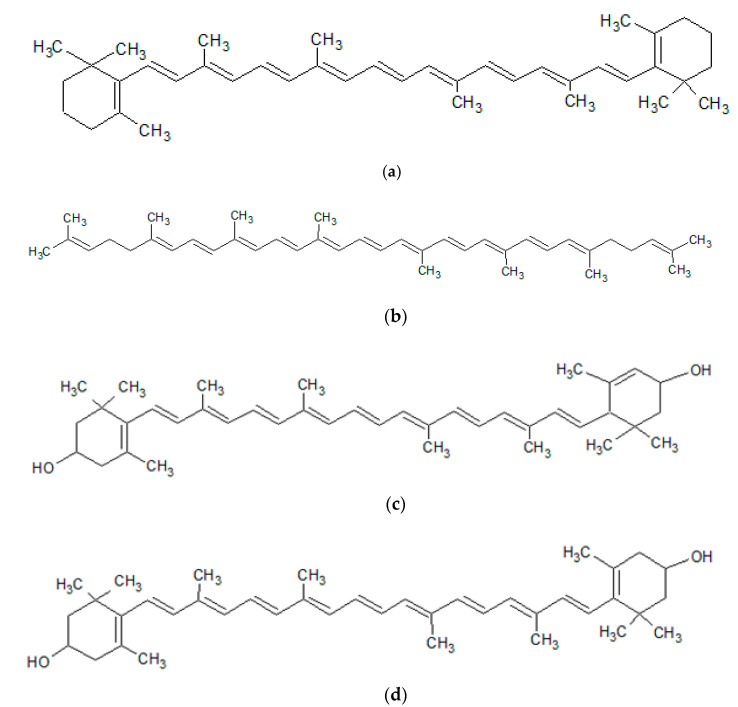
“Carotenoids prevent ageing, stimulate fibroblasts to produce collagen and elastin, inhibit the activity of MMPs, and exhibit anti-inflammatory and UV-filtering effects [222,226,231].”
§ Bioactive Compounds for Skin Health: A Review > 2. Selected Substances of Importance for Skin Function > 2.5. Carotenoids
What the sources say
- Not checked yetcites [222] Davinelli, S., Nielsen, M.E., and Scapagnini, G. (2018). Astaxanthin in skin health, repair, and disease: A comprehensive review. Nutrients, 10. source
- Not checked yetcites [226] Bayerl, 2008, Beta-carotene in dermatology-does it help?, Acta. Dermatovenerol. Alp. Pannonica. Adriat.
- Not checked yetcites [231] Tominaga, 2012, Cosmetic benefits of astaxanthin on human subjects, Acta. Biochim. Pol. source
plaindirect- Asserted: passes — The authors put it forward as true.
- Checkable: passes — It can be checked against evidence.
- Load-bearing: passes — The paper’s conclusions depend on it.
- Based: passes — The paper gives a reason why it holds.
In the paper
“The inhibition of protein oxidation was observed, as was the inhibition of the UVB-induced expression of matrix-degrading MMPs, such as MMP-2 (67%), MMP-3 (63%), MMP-7 (62%) and MMP-9 (60%) [213].”
§ Bioactive Compounds for Skin Health: A Review > 2. Selected Substances of Importance for Skin Function > 2.4. Polyphenols
What the sources say
- Not checked yetcites [213] Vayalil, 2004, Green tea polyphenols prevent ultraviolet light-induced oxidative damage and matrix metalloproteinases expression in mouse skin, J. Investig. Dermatol. source
plaindirect- Asserted: passes — The authors put it forward as true.
- Checkable: passes — It can be checked against evidence.
- Load-bearing: unclear — It is unclear whether the paper’s conclusions depend on it.
- Based: passes — The paper gives a reason why it holds.
None of the sources cited for this claim have been checked yet.
In the paper
“They have been shown to improve the elasticity, hydration and texture of skin; reduce TEWL; lighten the skin; reduce discoloration; and delay the signs of photoaging [222,231,232,233].”
§ Bioactive Compounds for Skin Health: A Review > 2. Selected Substances of Importance for Skin Function > 2.5. Carotenoids
What the sources say
- Not checked yetcites [222] Davinelli, S., Nielsen, M.E., and Scapagnini, G. (2018). Astaxanthin in skin health, repair, and disease: A comprehensive review. Nutrients, 10. source
- Not checked yetcites [231] Tominaga, 2012, Cosmetic benefits of astaxanthin on human subjects, Acta. Biochim. Pol. source
- Not checked yetcites [232] Yamashita, 2002, Cosmetic benefit of dietary supplements including astaxanthin and tocotrienol on human skin, Food Style
- Not checked yetcites [233] Yoon, 2014, Supplementing with dietary astaxanthin combined with collagen hydrolysate improves facial elasticity and decreases matrix metalloproteinase-1and-12 expression: A comparative study with placebo, J. Med. Food source
plaindirect- Asserted: passes — The authors put it forward as true.
- Checkable: passes — It can be checked against evidence.
- Load-bearing: passes — The paper’s conclusions depend on it.
- Based: passes — The paper gives a reason why it holds.
None of the sources cited for this claim have been checked yet.
In the paper
“The external application of preparations containing carotenoids in combination with oral supplementation has been shown to increase the concentrations of these compounds in the skin [25,230].”
§ Bioactive Compounds for Skin Health: A Review > 2. Selected Substances of Importance for Skin Function > 2.5. Carotenoids
What the sources say
- Not checked yetcites [25] Anunciato, 2012, Carotenoids and polyphenols in nutricosmetics, nutraceuticals, and cosmeceuticals, J. Cosmet. Dermatol. source
- Not checked yetcites [230] Darvin, 2011, Dermal carotenoid level and kinetics after topical and systemic administration of antioxidants: Enrichment strategies in a controlled in vivo study, J. Dermatol. Sci. source
plaindirect- Asserted: passes — The authors put it forward as true.
- Checkable: passes — It can be checked against evidence.
- Load-bearing: unclear — It is unclear whether the paper’s conclusions depend on it.
- Based: passes — The paper gives a reason why it holds.
None of the sources cited for this claim have been checked yet.
In the paper
“The total content of carotenoids in the skin is influenced by numerous factors, such as the intake of fruits and vegetables, their bioavailability from various foods, supplementation, exposure to UV radiation, air pollution, alcohol consumption, smoking and stress [220,229].”
§ Bioactive Compounds for Skin Health: A Review > 2. Selected Substances of Importance for Skin Function > 2.5. Carotenoids
What the sources say
plaindirect- Asserted: passes — The authors put it forward as true.
- Checkable: passes — It can be checked against evidence.
- Load-bearing: unclear — It is unclear whether the paper’s conclusions depend on it.
- Based: passes — The paper gives a reason why it holds.
In the paper
“In vivo studies indicate an increase (from 2 to 15%) in plasma antioxidant activity following the consumption of tea or tea polyphenols [215].”
§ Bioactive Compounds for Skin Health: A Review > 2. Selected Substances of Importance for Skin Function > 2.4. Polyphenols
What the sources say
- Not checked yetcites [215] Higdon, 2003, Tea catechins and polyphenols: Health effects, metabolism, and antioxidant functions, Crit. Rev. Food Sci. Nutr. source
hedgeddirect- Asserted: passes — The authors put it forward as true.
- Checkable: passes — It can be checked against evidence.
- Load-bearing: unclear — It is unclear whether the paper’s conclusions depend on it.
- Based: passes — The paper gives a reason why it holds.
In the paper
“A study in C57BL/6 mice showed that green tea extract reduced collagen cross-linking and UVB-induced oxidative changes in the structures of proteins [216].”
§ Bioactive Compounds for Skin Health: A Review > 2. Selected Substances of Importance for Skin Function > 2.4. Polyphenols
What the sources say
- Not checked yetcites [216] Rutter, 2003, Green tea extract suppresses the age-related increase in collagen crosslinking and fluorescent products in C57BL/6Mice, Int. J. Vitam. Nutr. Res. source
plaindirect- Asserted: passes — The authors put it forward as true.
- Checkable: passes — It can be checked against evidence.
- Load-bearing: unclear — It is unclear whether the paper’s conclusions depend on it.
- Based: passes — The paper gives a reason why it holds.
None of the sources cited for this claim have been checked yet.
In the paper
“Carotenoids prevent ageing, stimulate fibroblasts to produce collagen and elastin, inhibit the activity of MMPs, and exhibit anti-inflammatory and UV-filtering effects [222,226,231].”
§ Bioactive Compounds for Skin Health: A Review > 2. Selected Substances of Importance for Skin Function > 2.5. Carotenoids
What the sources say
- Not checked yetcites [222] Davinelli, S., Nielsen, M.E., and Scapagnini, G. (2018). Astaxanthin in skin health, repair, and disease: A comprehensive review. Nutrients, 10. source
- Not checked yetcites [226] Bayerl, 2008, Beta-carotene in dermatology-does it help?, Acta. Dermatovenerol. Alp. Pannonica. Adriat.
- Not checked yetcites [231] Tominaga, 2012, Cosmetic benefits of astaxanthin on human subjects, Acta. Biochim. Pol. source
plaindirect- Asserted: passes — The authors put it forward as true.
- Checkable: passes — It can be checked against evidence.
- Load-bearing: passes — The paper’s conclusions depend on it.
- Based: passes — The paper gives a reason why it holds.
None of the sources cited for this claim have been checked yet.
In the paper
“They have been shown to improve the elasticity, hydration and texture of skin; reduce TEWL; lighten the skin; reduce discoloration; and delay the signs of photoaging [222,231,232,233].”
§ Bioactive Compounds for Skin Health: A Review > 2. Selected Substances of Importance for Skin Function > 2.5. Carotenoids
What the sources say
- Not checked yetcites [222] Davinelli, S., Nielsen, M.E., and Scapagnini, G. (2018). Astaxanthin in skin health, repair, and disease: A comprehensive review. Nutrients, 10. source
- Not checked yetcites [231] Tominaga, 2012, Cosmetic benefits of astaxanthin on human subjects, Acta. Biochim. Pol. source
- Not checked yetcites [232] Yamashita, 2002, Cosmetic benefit of dietary supplements including astaxanthin and tocotrienol on human skin, Food Style
- Not checked yetcites [233] Yoon, 2014, Supplementing with dietary astaxanthin combined with collagen hydrolysate improves facial elasticity and decreases matrix metalloproteinase-1and-12 expression: A comparative study with placebo, J. Med. Food source
plaindirect- Asserted: passes — The authors put it forward as true.
- Checkable: passes — It can be checked against evidence.
- Load-bearing: passes — The paper’s conclusions depend on it.
- Based: passes — The paper gives a reason why it holds.
None of the sources cited for this claim have been checked yet.
In the paper
“Carotenoids prevent ageing, stimulate fibroblasts to produce collagen and elastin, inhibit the activity of MMPs, and exhibit anti-inflammatory and UV-filtering effects [222,226,231].”
§ Bioactive Compounds for Skin Health: A Review > 2. Selected Substances of Importance for Skin Function > 2.5. Carotenoids
What the sources say
- Not checked yetcites [222] Davinelli, S., Nielsen, M.E., and Scapagnini, G. (2018). Astaxanthin in skin health, repair, and disease: A comprehensive review. Nutrients, 10. source
- Not checked yetcites [226] Bayerl, 2008, Beta-carotene in dermatology-does it help?, Acta. Dermatovenerol. Alp. Pannonica. Adriat.
- Not checked yetcites [231] Tominaga, 2012, Cosmetic benefits of astaxanthin on human subjects, Acta. Biochim. Pol. source
plaindirect- Asserted: passes — The authors put it forward as true.
- Checkable: passes — It can be checked against evidence.
- Load-bearing: passes — The paper’s conclusions depend on it.
- Based: passes — The paper gives a reason why it holds.
In the paper
“Research also indicates that GTPs can alleviate the symptoms of premature skin ageing induced by UVB radiation [213].”
§ Bioactive Compounds for Skin Health: A Review > 2. Selected Substances of Importance for Skin Function > 2.4. Polyphenols
What the sources say
- Not checked yetcites [213] Vayalil, 2004, Green tea polyphenols prevent ultraviolet light-induced oxidative damage and matrix metalloproteinases expression in mouse skin, J. Investig. Dermatol. source
hedgeddirectn = 40- Asserted: passes — The authors put it forward as true.
- Checkable: passes — It can be checked against evidence.
- Load-bearing: passes — The paper’s conclusions depend on it.
- Based: passes — The paper gives a reason why it holds.
In the paper
“Green tea polyphenols (GTPs) are an example of a component of plant-based dietary supplements used to prevent the adverse biological effects of UV radiation, including immunosuppression and photocarcinogenesis [212].”
§ Bioactive Compounds for Skin Health: A Review > 2. Selected Substances of Importance for Skin Function > 2.4. Polyphenols
What the sources say
- Not checked yetcites [212] Katiyar, 2001, Green tea polyphenol (-)-epigallocatechin-3-gallate treatment of human skin inhibits ultraviolet radiation-induced oxidative stress, Carcinogenesis source
plaindirect- Asserted: passes — The authors put it forward as true.
- Checkable: passes — It can be checked against evidence.
- Load-bearing: unclear — It is unclear whether the paper’s conclusions depend on it.
- Based: passes — The paper gives a reason why it holds.
None of the sources cited for this claim have been checked yet.
In the paper
“Carotenoids prevent ageing, stimulate fibroblasts to produce collagen and elastin, inhibit the activity of MMPs, and exhibit anti-inflammatory and UV-filtering effects [222,226,231].”
§ Bioactive Compounds for Skin Health: A Review > 2. Selected Substances of Importance for Skin Function > 2.5. Carotenoids
What the sources say
- Not checked yetcites [222] Davinelli, S., Nielsen, M.E., and Scapagnini, G. (2018). Astaxanthin in skin health, repair, and disease: A comprehensive review. Nutrients, 10. source
- Not checked yetcites [226] Bayerl, 2008, Beta-carotene in dermatology-does it help?, Acta. Dermatovenerol. Alp. Pannonica. Adriat.
- Not checked yetcites [231] Tominaga, 2012, Cosmetic benefits of astaxanthin on human subjects, Acta. Biochim. Pol. source
plaindirect- Asserted: passes — The authors put it forward as true.
- Checkable: passes — It can be checked against evidence.
- Load-bearing: passes — The paper’s conclusions depend on it.
- Based: passes — The paper gives a reason why it holds.
None of the sources cited for this claim have been checked yet.
In the paper
“Carotenoids prevent ageing, stimulate fibroblasts to produce collagen and elastin, inhibit the activity of MMPs, and exhibit anti-inflammatory and UV-filtering effects [222,226,231].”
§ Bioactive Compounds for Skin Health: A Review > 2. Selected Substances of Importance for Skin Function > 2.5. Carotenoids
What the sources say
- Not checked yetcites [222] Davinelli, S., Nielsen, M.E., and Scapagnini, G. (2018). Astaxanthin in skin health, repair, and disease: A comprehensive review. Nutrients, 10. source
- Not checked yetcites [226] Bayerl, 2008, Beta-carotene in dermatology-does it help?, Acta. Dermatovenerol. Alp. Pannonica. Adriat.
- Not checked yetcites [231] Tominaga, 2012, Cosmetic benefits of astaxanthin on human subjects, Acta. Biochim. Pol. source
plaindirect- Asserted: passes — The authors put it forward as true.
- Checkable: passes — It can be checked against evidence.
- Load-bearing: passes — The paper’s conclusions depend on it.
- Based: passes — The paper gives a reason why it holds.
In the paper
“The authors stress that this compound can be used as a retinol-like anti-ageing functional compound [37].”
§ Bioactive Compounds for Skin Health: A Review > 2. Selected Substances of Importance for Skin Function > 2.4. Polyphenols
What the sources say
- Not checked yetcites [37] Chaudhuri, 2014, Bakuchiol: A retinol-like functional compound revealed by gene expression profiling and clinically proven to have anti-aging effects, Int. J. Cosmet. Sci. source
plaindirect- Asserted: passes — The authors put it forward as true.
- Checkable: passes — It can be checked against evidence.
- Load-bearing: passes — The paper’s conclusions depend on it.
- Based: passes — The paper gives a reason why it holds.
In the paper
“A study by Vayalil et al. demonstrated the inhibition of oxidative stress induced by UVB radiation in the skin of SKH-1 hairless mice that received GTPs in their drinking water (0.2%, w/v) and were then exposed to multiple doses of UVB light (90 mJ/cm2) for two months.”
§ Bioactive Compounds for Skin Health: A Review > 2. Selected Substances of Importance for Skin Function > 2.4. Polyphenols
What the sources say
- Not checked yetcites [213] Vayalil, 2004, Green tea polyphenols prevent ultraviolet light-induced oxidative damage and matrix metalloproteinases expression in mouse skin, J. Investig. Dermatol. source
boosteddirect- Asserted: passes — The authors put it forward as true.
- Checkable: passes — It can be checked against evidence.
- Load-bearing: unclear — It is unclear whether the paper’s conclusions depend on it.
- Based: passes — The paper gives a reason why it holds.
None of the sources cited for this claim have been checked yet.
In the paper
“Furthermore, carotenoids support healing processes and protect the skin against the oxidative stress resulting from excessive ROS activity, thereby reducing the risk of skin cancer [220,226,232,236,237].”
§ Bioactive Compounds for Skin Health: A Review > 2. Selected Substances of Importance for Skin Function > 2.5. Carotenoids
What the sources say
- Not checked yetcites [220] Balić, A., and Mokos, M. (2019). Do we utilize our knowledge of the skin protective effects of carotenoids enough?. Antioxidants, 8. source
- Not checked yetcites [226] Bayerl, 2008, Beta-carotene in dermatology-does it help?, Acta. Dermatovenerol. Alp. Pannonica. Adriat.
- Not checked yetcites [232] Yamashita, 2002, Cosmetic benefit of dietary supplements including astaxanthin and tocotrienol on human skin, Food Style
- Not checked yetcites [236] Meephansan, 2017, Effect of astaxanthin on cutaneous wound healing, Clin. Cosmet. Investig. Dermatol. source
- Not checked yetcites [237] Palombo, 2007, Beneficial long-term effects of combined oral/topical antioxidant treatment with the carotenoids lutein and zeaxanthin on human skin: A double-blind, placebo-controlled study, Skin Pharmacol. Physiol. source
plaindirect- Asserted: passes — The authors put it forward as true.
- Checkable: passes — It can be checked against evidence.
- Load-bearing: passes — The paper’s conclusions depend on it.
- Based: passes — The paper gives a reason why it holds.
In the paper
“A study by Juturu et al. showed that supplementation with 10 mg of lutein and 2 mg of zeaxanthin isomers daily for 12 weeks improves the appearance of skin and lightens skin tone [233].”
§ Bioactive Compounds for Skin Health: A Review > 2. Selected Substances of Importance for Skin Function > 2.5. Carotenoids
What the sources say
- Not checked yetcites [233] Yoon, 2014, Supplementing with dietary astaxanthin combined with collagen hydrolysate improves facial elasticity and decreases matrix metalloproteinase-1and-12 expression: A comparative study with placebo, J. Med. Food source
plaindirect- Asserted: passes — The authors put it forward as true.
- Checkable: passes — It can be checked against evidence.
- Load-bearing: unclear — It is unclear whether the paper’s conclusions depend on it.
- Based: passes — The paper gives a reason why it holds.
In the paper
“The results indicate that a zeaxanthin-based dietary supplement and topical serum improve hydration and reduce wrinkles in facial skin [235].”
§ Bioactive Compounds for Skin Health: A Review > 2. Selected Substances of Importance for Skin Function > 2.5. Carotenoids
What the sources say
- Not checked yetcites [235] Schwartz, 2016, Zeaxanthin-based dietary supplement and topical serum improve hydration and reduce wrinkle count in female subjects, J. Cosmet. Dermatol. source
hedgeddirect- Asserted: passes — The authors put it forward as true.
- Checkable: passes — It can be checked against evidence.
- Load-bearing: passes — The paper’s conclusions depend on it.
- Based: passes — The paper gives a reason why it holds.
None of the sources cited for this claim have been checked yet.
In the paper
“They have been shown to improve the elasticity, hydration and texture of skin; reduce TEWL; lighten the skin; reduce discoloration; and delay the signs of photoaging [222,231,232,233].”
§ Bioactive Compounds for Skin Health: A Review > 2. Selected Substances of Importance for Skin Function > 2.5. Carotenoids
What the sources say
- Not checked yetcites [222] Davinelli, S., Nielsen, M.E., and Scapagnini, G. (2018). Astaxanthin in skin health, repair, and disease: A comprehensive review. Nutrients, 10. source
- Not checked yetcites [231] Tominaga, 2012, Cosmetic benefits of astaxanthin on human subjects, Acta. Biochim. Pol. source
- Not checked yetcites [232] Yamashita, 2002, Cosmetic benefit of dietary supplements including astaxanthin and tocotrienol on human skin, Food Style
- Not checked yetcites [233] Yoon, 2014, Supplementing with dietary astaxanthin combined with collagen hydrolysate improves facial elasticity and decreases matrix metalloproteinase-1and-12 expression: A comparative study with placebo, J. Med. Food source
boosteddirect- Asserted: passes — The authors put it forward as true.
- Checkable: passes — It can be checked against evidence.
- Load-bearing: passes — The paper’s conclusions depend on it.
- Based: passes — The paper gives a reason why it holds.
None of the sources cited for this claim have been checked yet.
In the paper
“They have been shown to improve the elasticity, hydration and texture of skin; reduce TEWL; lighten the skin; reduce discoloration; and delay the signs of photoaging [222,231,232,233].”
§ Bioactive Compounds for Skin Health: A Review > 2. Selected Substances of Importance for Skin Function > 2.5. Carotenoids
What the sources say
- Not checked yetcites [222] Davinelli, S., Nielsen, M.E., and Scapagnini, G. (2018). Astaxanthin in skin health, repair, and disease: A comprehensive review. Nutrients, 10. source
- Not checked yetcites [231] Tominaga, 2012, Cosmetic benefits of astaxanthin on human subjects, Acta. Biochim. Pol. source
- Not checked yetcites [232] Yamashita, 2002, Cosmetic benefit of dietary supplements including astaxanthin and tocotrienol on human skin, Food Style
- Not checked yetcites [233] Yoon, 2014, Supplementing with dietary astaxanthin combined with collagen hydrolysate improves facial elasticity and decreases matrix metalloproteinase-1and-12 expression: A comparative study with placebo, J. Med. Food source
plaindirect- Asserted: passes — The authors put it forward as true.
- Checkable: passes — It can be checked against evidence.
- Load-bearing: passes — The paper’s conclusions depend on it.
- Based: passes — The paper gives a reason why it holds.
None of the sources cited for this claim have been checked yet.
In the paper
“Furthermore, carotenoids support healing processes and protect the skin against the oxidative stress resulting from excessive ROS activity, thereby reducing the risk of skin cancer [220,226,232,236,237].”
§ Bioactive Compounds for Skin Health: A Review > 2. Selected Substances of Importance for Skin Function > 2.5. Carotenoids
What the sources say
- Not checked yetcites [220] Balić, A., and Mokos, M. (2019). Do we utilize our knowledge of the skin protective effects of carotenoids enough?. Antioxidants, 8. source
- Not checked yetcites [226] Bayerl, 2008, Beta-carotene in dermatology-does it help?, Acta. Dermatovenerol. Alp. Pannonica. Adriat.
- Not checked yetcites [232] Yamashita, 2002, Cosmetic benefit of dietary supplements including astaxanthin and tocotrienol on human skin, Food Style
- Not checked yetcites [236] Meephansan, 2017, Effect of astaxanthin on cutaneous wound healing, Clin. Cosmet. Investig. Dermatol. source
- Not checked yetcites [237] Palombo, 2007, Beneficial long-term effects of combined oral/topical antioxidant treatment with the carotenoids lutein and zeaxanthin on human skin: A double-blind, placebo-controlled study, Skin Pharmacol. Physiol. source
plaindirect- Asserted: passes — The authors put it forward as true.
- Checkable: passes — It can be checked against evidence.
- Load-bearing: passes — The paper’s conclusions depend on it.
- Based: passes — The paper gives a reason why it holds.
In the paper
“The results indicate that astaxanthin combined with collagen hydrolysate, due to the beneficial effects of the compounds on skin elasticity and hydration, can be used as an anti-ageing agent for photoaged skin [234].”
§ Bioactive Compounds for Skin Health: A Review > 2. Selected Substances of Importance for Skin Function > 2.5. Carotenoids
What the sources say
- Not checked yetcites [234] Juturu, 2016, Overall skin tone and skin-lightening-improving effects with oral supplementation of lutein and zeaxanthin isomers: A double-blind, placebo-controlled clinical trial, Clin. Cosmet. Investig. Dermatol. source
hedgeddirect- Asserted: passes — The authors put it forward as true.
- Checkable: passes — It can be checked against evidence.
- Load-bearing: passes — The paper’s conclusions depend on it.
- Based: passes — The paper gives a reason why it holds.
In the paper
“A study by Juturu et al. showed that supplementation with 10 mg of lutein and 2 mg of zeaxanthin isomers daily for 12 weeks improves the appearance of skin and lightens skin tone [233].”
§ Bioactive Compounds for Skin Health: A Review > 2. Selected Substances of Importance for Skin Function > 2.5. Carotenoids
What the sources say
- Not checked yetcites [233] Yoon, 2014, Supplementing with dietary astaxanthin combined with collagen hydrolysate improves facial elasticity and decreases matrix metalloproteinase-1and-12 expression: A comparative study with placebo, J. Med. Food source
plaindirect- Asserted: passes — The authors put it forward as true.
- Checkable: passes — It can be checked against evidence.
- Load-bearing: unclear — It is unclear whether the paper’s conclusions depend on it.
- Based: passes — The paper gives a reason why it holds.
In the paper
“Yoon et al. investigated the effect of astaxanthin (2 mg/day) and collagen hydrolysate (3 g/day) supplementation on moderately photoaged skin in humans.”
- Also stated in: § 2.5. Carotenoids · plain
“The bioactives significantly improved barrier integrity, reduced TEWL, and increased the expression of procollagen type I mRNA.”
§ Bioactive Compounds for Skin Health: A Review > 2. Selected Substances of Importance for Skin Function > 2.5. Carotenoids
What the sources say
- Not checked yetcites [234] Juturu, 2016, Overall skin tone and skin-lightening-improving effects with oral supplementation of lutein and zeaxanthin isomers: A double-blind, placebo-controlled clinical trial, Clin. Cosmet. Investig. Dermatol. source
plaindirect- Asserted: passes — The authors put it forward as true.
- Checkable: passes — It can be checked against evidence.
- Load-bearing: passes — The paper’s conclusions depend on it.
- Based: passes — The paper gives a reason why it holds.
- Also stated in: § 2.5. Carotenoids · plain
None of the sources cited for this claim have been checked yet.
In the paper
“They have been shown to improve the elasticity, hydration and texture of skin; reduce TEWL; lighten the skin; reduce discoloration; and delay the signs of photoaging [222,231,232,233].”
§ Bioactive Compounds for Skin Health: A Review > 2. Selected Substances of Importance for Skin Function > 2.5. Carotenoids
What the sources say
- Not checked yetcites [222] Davinelli, S., Nielsen, M.E., and Scapagnini, G. (2018). Astaxanthin in skin health, repair, and disease: A comprehensive review. Nutrients, 10. source
- Not checked yetcites [231] Tominaga, 2012, Cosmetic benefits of astaxanthin on human subjects, Acta. Biochim. Pol. source
- Not checked yetcites [232] Yamashita, 2002, Cosmetic benefit of dietary supplements including astaxanthin and tocotrienol on human skin, Food Style
- Not checked yetcites [233] Yoon, 2014, Supplementing with dietary astaxanthin combined with collagen hydrolysate improves facial elasticity and decreases matrix metalloproteinase-1and-12 expression: A comparative study with placebo, J. Med. Food source
plaindirect- Asserted: passes — The authors put it forward as true.
- Checkable: passes — It can be checked against evidence.
- Load-bearing: passes — The paper’s conclusions depend on it.
- Based: passes — The paper gives a reason why it holds.
None of the sources cited for this claim have been checked yet.
In the paper
“They have been shown to improve the elasticity, hydration and texture of skin; reduce TEWL; lighten the skin; reduce discoloration; and delay the signs of photoaging [222,231,232,233].”
§ Bioactive Compounds for Skin Health: A Review > 2. Selected Substances of Importance for Skin Function > 2.5. Carotenoids
What the sources say
- Not checked yetcites [222] Davinelli, S., Nielsen, M.E., and Scapagnini, G. (2018). Astaxanthin in skin health, repair, and disease: A comprehensive review. Nutrients, 10. source
- Not checked yetcites [231] Tominaga, 2012, Cosmetic benefits of astaxanthin on human subjects, Acta. Biochim. Pol. source
- Not checked yetcites [232] Yamashita, 2002, Cosmetic benefit of dietary supplements including astaxanthin and tocotrienol on human skin, Food Style
- Not checked yetcites [233] Yoon, 2014, Supplementing with dietary astaxanthin combined with collagen hydrolysate improves facial elasticity and decreases matrix metalloproteinase-1and-12 expression: A comparative study with placebo, J. Med. Food source
plaindirect- Asserted: passes — The authors put it forward as true.
- Checkable: passes — It can be checked against evidence.
- Load-bearing: passes — The paper’s conclusions depend on it.
- Based: passes — The paper gives a reason why it holds.
In the paper
“The results indicate that a zeaxanthin-based dietary supplement and topical serum improve hydration and reduce wrinkles in facial skin [235].”
§ Bioactive Compounds for Skin Health: A Review > 2. Selected Substances of Importance for Skin Function > 2.5. Carotenoids
What the sources say
- Not checked yetcites [235] Schwartz, 2016, Zeaxanthin-based dietary supplement and topical serum improve hydration and reduce wrinkle count in female subjects, J. Cosmet. Dermatol. source
hedgeddirect- Asserted: passes — The authors put it forward as true.
- Checkable: passes — It can be checked against evidence.
- Load-bearing: passes — The paper’s conclusions depend on it.
- Based: passes — The paper gives a reason why it holds.
None of the sources cited for this claim have been checked yet.
In the paper
“Furthermore, carotenoids support healing processes and protect the skin against the oxidative stress resulting from excessive ROS activity, thereby reducing the risk of skin cancer [220,226,232,236,237].”
§ Bioactive Compounds for Skin Health: A Review > 2. Selected Substances of Importance for Skin Function > 2.5. Carotenoids
What the sources say
- Not checked yetcites [220] Balić, A., and Mokos, M. (2019). Do we utilize our knowledge of the skin protective effects of carotenoids enough?. Antioxidants, 8. source
- Not checked yetcites [226] Bayerl, 2008, Beta-carotene in dermatology-does it help?, Acta. Dermatovenerol. Alp. Pannonica. Adriat.
- Not checked yetcites [232] Yamashita, 2002, Cosmetic benefit of dietary supplements including astaxanthin and tocotrienol on human skin, Food Style
- Not checked yetcites [236] Meephansan, 2017, Effect of astaxanthin on cutaneous wound healing, Clin. Cosmet. Investig. Dermatol. source
- Not checked yetcites [237] Palombo, 2007, Beneficial long-term effects of combined oral/topical antioxidant treatment with the carotenoids lutein and zeaxanthin on human skin: A double-blind, placebo-controlled study, Skin Pharmacol. Physiol. source
plaindirect- Asserted: passes — The authors put it forward as true.
- Checkable: passes — It can be checked against evidence.
- Load-bearing: unclear — It is unclear whether the paper’s conclusions depend on it.
- Based: passes — The paper gives a reason why it holds.
None of the sources cited for this claim have been checked yet.
In the paper
“They have been shown to improve the elasticity, hydration and texture of skin; reduce TEWL; lighten the skin; reduce discoloration; and delay the signs of photoaging [222,231,232,233].”
§ Bioactive Compounds for Skin Health: A Review > 2. Selected Substances of Importance for Skin Function > 2.5. Carotenoids
What the sources say
- Not checked yetcites [222] Davinelli, S., Nielsen, M.E., and Scapagnini, G. (2018). Astaxanthin in skin health, repair, and disease: A comprehensive review. Nutrients, 10. source
- Not checked yetcites [231] Tominaga, 2012, Cosmetic benefits of astaxanthin on human subjects, Acta. Biochim. Pol. source
- Not checked yetcites [232] Yamashita, 2002, Cosmetic benefit of dietary supplements including astaxanthin and tocotrienol on human skin, Food Style
- Not checked yetcites [233] Yoon, 2014, Supplementing with dietary astaxanthin combined with collagen hydrolysate improves facial elasticity and decreases matrix metalloproteinase-1and-12 expression: A comparative study with placebo, J. Med. Food source
plaindirect- Asserted: passes — The authors put it forward as true.
- Checkable: passes — It can be checked against evidence.
- Load-bearing: unclear — It is unclear whether the paper’s conclusions depend on it.
- Based: passes — The paper gives a reason why it holds.
In the paper
“After 6 weeks of the application of the antioxidants, an increase in protection against UV-induced skin damage was observed, accompanied by a reduction in lipoperoxide levels and sunburn cells (SBCs), as well as an increase in skin pigmentation [238].”
§ Bioactive Compounds for Skin Health: A Review > 2. Selected Substances of Importance for Skin Function > 2.5. Carotenoids
What the sources say
- Not checked yetcites [238] Michel, 2003, Immediate effects of UV radiation on the skin: Modification by an antioxidant complex containing carotenoids, Photodermatol. Photoimmunol. Photomed. source
plaindirectn = 25- Asserted: passes — The authors put it forward as true.
- Checkable: passes — It can be checked against evidence.
- Load-bearing: unclear — It is unclear whether the paper’s conclusions depend on it.
- Based: passes — The paper gives a reason why it holds.
In the paper
“The protective effects were more pronounced in the groups that received the tomato extract or a drink containing solubilized tomato extract [240].”
§ Bioactive Compounds for Skin Health: A Review > 2. Selected Substances of Importance for Skin Function > 2.5. Carotenoids
What the sources say
- Not checked yetcites [240] Aust, 2005, Supplementation with tomato-based products increases lycopene, phytofluene, and phytoene levels in human serum and protects against UV-light-induced erythema, Int. J. Vitam. Nutr. Res. source
plaindirect- Asserted: passes — The authors put it forward as true.
- Checkable: passes — It can be checked against evidence.
- Load-bearing: unclear — It is unclear whether the paper’s conclusions depend on it.
- Based: passes — The paper gives a reason why it holds.
In the paper
“An increase in carotenoid levels in the serum and skin was observed after 12 weeks of supplementation in both groups, as was a comparable reduction in UV-induced erythema [239].”
§ Bioactive Compounds for Skin Health: A Review > 2. Selected Substances of Importance for Skin Function > 2.5. Carotenoids
What the sources say
- Not checked yetcites [239] Heinrich, 2003, Supplementation with beta-carotene or a similar amount of mixed carotenoids protects humans from UV-induced erythema, J. Nutr. source
plain- Asserted: passes — The authors put it forward as true.
- Checkable: passes — It can be checked against evidence.
- Load-bearing: passes — The paper’s conclusions depend on it.
- Based: passes — The paper gives a reason why it holds.
In the paper
“In other research, treatment with β-carotene did not significantly reduce the occurrence of new skin cancers in persons with previous non-melanoma skin cancer [242].”
§ Bioactive Compounds for Skin Health: A Review > 2. Selected Substances of Importance for Skin Function > 2.5. Carotenoids
What the sources say
- Not checked yetcites [242] Greenberg, 1990, A clinical trial of β-carotene to prevent basal-cell and squamous-cell cancers of the skin, N. Engl. J. Med. source
plain- Asserted: passes — The authors put it forward as true.
- Checkable: passes — It can be checked against evidence.
- Load-bearing: unclear — It is unclear whether the paper’s conclusions depend on it.
- Based: passes — The paper gives a reason why it holds.
In the paper
“After 6 weeks of the application of the antioxidants, an increase in protection against UV-induced skin damage was observed, accompanied by a reduction in lipoperoxide levels and sunburn cells (SBCs), as well as an increase in skin pigmentation [238].”
§ Bioactive Compounds for Skin Health: A Review > 2. Selected Substances of Importance for Skin Function > 2.5. Carotenoids
What the sources say
- Not checked yetcites [238] Michel, 2003, Immediate effects of UV radiation on the skin: Modification by an antioxidant complex containing carotenoids, Photodermatol. Photoimmunol. Photomed. source
plaindirectn = 25- Asserted: passes — The authors put it forward as true.
- Checkable: passes — It can be checked against evidence.
- Load-bearing: unclear — It is unclear whether the paper’s conclusions depend on it.
- Based: passes — The paper gives a reason why it holds.
In the paper
“Some studies indicate that a high dietary intake of lutein and zeaxanthin is associated with a reduced incidence of squamous cell carcinomas (SCC) in subjects with a history of skin cancer at baseline [241].”
§ Bioactive Compounds for Skin Health: A Review > 2. Selected Substances of Importance for Skin Function > 2.5. Carotenoids
What the sources say
- Not checked yetcites [241] Heinen, 2007, Intake of antioxidant nutrients and the risk of skin cancer, Eur. J. Cancer. source
hedgedcorrelational- Asserted: passes — The authors put it forward as true.
- Checkable: passes — It can be checked against evidence.
- Load-bearing: unclear — It is unclear whether the paper’s conclusions depend on it.
- Based: passes — The paper gives a reason why it holds.
A conclusion the paper draws from its own results — it cites no other source for it, so there is none to check. The quote shows it is in the paper.
In the paper
“In conclusion, the promotion of healthy dietary habits can benefit the appearance of the skin, delay ageing processes and reduce the risk of skin cancer.”
§ Bioactive Compounds for Skin Health: A Review > 3. Conclusions
plaindirect- Asserted: passes — The authors put it forward as true.
- Checkable: passes — It can be checked against evidence.
- Load-bearing: passes — The paper’s conclusions depend on it.
- Based: passes — The paper gives a reason why it holds.
A conclusion the paper draws from its own results — it cites no other source for it, so there is none to check. The quote shows it is in the paper.
In the paper
“Antioxidants and other phytonutrients that scavenge ROS and alleviate oxidative skin damage also play an important role in the prophylaxis and care of ageing skin, as do substances that protect the skin against the negative effects of ultraviolet radiation (including vitamins A, C and E; selenium; zinc; copper; silicon; polyphenols; and carotenoids).”
§ Bioactive Compounds for Skin Health: A Review > 3. Conclusions
plaindirect- Asserted: passes — The authors put it forward as true.
- Checkable: passes — It can be checked against evidence.
- Load-bearing: passes — The paper’s conclusions depend on it.
- Based: passes — The paper gives a reason why it holds.
In the paper
“This compound was found to suppress the UVA induction of MMP-1, MMP-3 and MMP-10, the three main metalloproteinases involved in photoaging.”
§ Bioactive Compounds for Skin Health: A Review > 2. Selected Substances of Importance for Skin Function > 2.5. Carotenoids
What the sources say
- Not checked yetcites [228] Wertz, 2004, β-carotene inhibits UVA-induced matrix metalloprotease 1 and 10 expression in keratinocytes by a singlet oxygen-dependent mechanism, Free. Radic. Biolol. Med. source
plaindirect- Asserted: passes — The authors put it forward as true.
- Checkable: passes — It can be checked against evidence.
- Load-bearing: unclear — It is unclear whether the paper’s conclusions depend on it.
- Based: passes — The paper gives a reason why it holds.
In the paper
“After 12 weeks of supplementation, significant increases in serum lycopene levels and total skin carotenoids were observed in all the groups, as was less severe erythema following exposure to UV radiation.”
§ Bioactive Compounds for Skin Health: A Review > 2. Selected Substances of Importance for Skin Function > 2.5. Carotenoids
What the sources say
- Not checked yetcites [240] Aust, 2005, Supplementation with tomato-based products increases lycopene, phytofluene, and phytoene levels in human serum and protects against UV-light-induced erythema, Int. J. Vitam. Nutr. Res. source
plaindirect- Asserted: passes — The authors put it forward as true.
- Checkable: passes — It can be checked against evidence.
- Load-bearing: passes — The paper’s conclusions depend on it.
- Based: passes — The paper gives a reason why it holds.
A conclusion the paper draws from its own results — it cites no other source for it, so there is none to check. The quote shows it is in the paper.
In the paper
“Antioxidants and other phytonutrients that scavenge ROS and alleviate oxidative skin damage also play an important role in the prophylaxis and care of ageing skin, as do substances that protect the skin against the negative effects of ultraviolet radiation (including vitamins A, C and E; selenium; zinc; copper; silicon; polyphenols; and carotenoids).”
§ Bioactive Compounds for Skin Health: A Review > 3. Conclusions
plaindirect- Asserted: passes — The authors put it forward as true.
- Checkable: passes — It can be checked against evidence.
- Load-bearing: passes — The paper’s conclusions depend on it.
- Based: passes — The paper gives a reason why it holds.
In the paper
“After 12 weeks of supplementation, significant increases in serum lycopene levels and total skin carotenoids were observed in all the groups, as was less severe erythema following exposure to UV radiation.”
§ Bioactive Compounds for Skin Health: A Review > 2. Selected Substances of Importance for Skin Function > 2.5. Carotenoids
What the sources say
- Not checked yetcites [240] Aust, 2005, Supplementation with tomato-based products increases lycopene, phytofluene, and phytoene levels in human serum and protects against UV-light-induced erythema, Int. J. Vitam. Nutr. Res. source
plaindirect- Asserted: passes — The authors put it forward as true.
- Checkable: passes — It can be checked against evidence.
- Load-bearing: passes — The paper’s conclusions depend on it.
- Based: passes — The paper gives a reason why it holds.
In the paper
“Other research has shown a significant reduction in UV-induced erythema and improvement in the hydration and elasticity of skin following the oral application of lutein [237].”
§ Bioactive Compounds for Skin Health: A Review > 2. Selected Substances of Importance for Skin Function > 2.5. Carotenoids
What the sources say
- Not checked yetcites [237] Palombo, 2007, Beneficial long-term effects of combined oral/topical antioxidant treatment with the carotenoids lutein and zeaxanthin on human skin: A double-blind, placebo-controlled study, Skin Pharmacol. Physiol. source
plaindirect- Asserted: passes — The authors put it forward as true.
- Checkable: passes — It can be checked against evidence.
- Load-bearing: unclear — It is unclear whether the paper’s conclusions depend on it.
- Based: passes — The paper gives a reason why it holds.
A conclusion the paper draws from its own results — it cites no other source for it, so there is none to check. The quote shows it is in the paper.
In the paper
“The oral administration of antioxidants can be an effective supplement to chemical and physical UV-filtering agents and can reduce the DNA damage leading to skin ageing and the development of skin cancer.”
§ Bioactive Compounds for Skin Health: A Review > 3. Conclusions
plaindirect- Asserted: passes — The authors put it forward as true.
- Checkable: passes — It can be checked against evidence.
- Load-bearing: passes — The paper’s conclusions depend on it.
- Based: passes — The paper gives a reason why it holds.
None of the sources cited for this claim have been checked yet.
In the paper
“Research confirms the photoprotective effects of carotenoids in the diet and in the form of dietary supplements.”
§ Bioactive Compounds for Skin Health: A Review > 2. Selected Substances of Importance for Skin Function > 2.5. Carotenoids
What the sources say
- Not checked yetcites [228] Wertz, 2004, β-carotene inhibits UVA-induced matrix metalloprotease 1 and 10 expression in keratinocytes by a singlet oxygen-dependent mechanism, Free. Radic. Biolol. Med. source
- Not checked yetcites [238] Michel, 2003, Immediate effects of UV radiation on the skin: Modification by an antioxidant complex containing carotenoids, Photodermatol. Photoimmunol. Photomed. source
- Not checked yetcites [240] Aust, 2005, Supplementation with tomato-based products increases lycopene, phytofluene, and phytoene levels in human serum and protects against UV-light-induced erythema, Int. J. Vitam. Nutr. Res. source
boosteddirectn = 25- Asserted: passes — The authors put it forward as true.
- Checkable: passes — It can be checked against evidence.
- Load-bearing: passes — The paper’s conclusions depend on it.
- Based: passes — The paper gives a reason why it holds.
A conclusion the paper draws from its own results — it cites no other source for it, so there is none to check. The quote shows it is in the paper.
In the paper
“In conclusion, the promotion of healthy dietary habits can benefit the appearance of the skin, delay ageing processes and reduce the risk of skin cancer.”
§ Bioactive Compounds for Skin Health: A Review > 3. Conclusions
plaindirect- Asserted: passes — The authors put it forward as true.
- Checkable: passes — It can be checked against evidence.
- Load-bearing: passes — The paper’s conclusions depend on it.
- Based: passes — The paper gives a reason why it holds.
In the paper
“Moreover, β-carotene was shown to block the 1O2-mediated induction of MMP-1 and MMP-10 in a dose-dependent manner [228].”
§ Bioactive Compounds for Skin Health: A Review > 2. Selected Substances of Importance for Skin Function > 2.5. Carotenoids
What the sources say
- Not checked yetcites [228] Wertz, 2004, β-carotene inhibits UVA-induced matrix metalloprotease 1 and 10 expression in keratinocytes by a singlet oxygen-dependent mechanism, Free. Radic. Biolol. Med. source
plaindirect- Asserted: passes — The authors put it forward as true.
- Checkable: passes — It can be checked against evidence.
- Load-bearing: unclear — It is unclear whether the paper’s conclusions depend on it.
- Based: passes — The paper gives a reason why it holds.
In the paper
“An increase in carotenoid levels in the serum and skin was observed after 12 weeks of supplementation in both groups, as was a comparable reduction in UV-induced erythema [239].”
§ Bioactive Compounds for Skin Health: A Review > 2. Selected Substances of Importance for Skin Function > 2.5. Carotenoids
What the sources say
- Not checked yetcites [239] Heinrich, 2003, Supplementation with beta-carotene or a similar amount of mixed carotenoids protects humans from UV-induced erythema, J. Nutr. source
plaindirect- Asserted: passes — The authors put it forward as true.
- Checkable: passes — It can be checked against evidence.
- Load-bearing: passes — The paper’s conclusions depend on it.
- Based: passes — The paper gives a reason why it holds.
In the paper
“After 12 weeks of supplementation, significant increases in serum lycopene levels and total skin carotenoids were observed in all the groups, as was less severe erythema following exposure to UV radiation.”
§ Bioactive Compounds for Skin Health: A Review > 2. Selected Substances of Importance for Skin Function > 2.5. Carotenoids
What the sources say
- Not checked yetcites [240] Aust, 2005, Supplementation with tomato-based products increases lycopene, phytofluene, and phytoene levels in human serum and protects against UV-light-induced erythema, Int. J. Vitam. Nutr. Res. source
plaindirect- Asserted: passes — The authors put it forward as true.
- Checkable: passes — It can be checked against evidence.
- Load-bearing: passes — The paper’s conclusions depend on it.
- Based: passes — The paper gives a reason why it holds.
A conclusion the paper draws from its own results — it cites no other source for it, so there is none to check. The quote shows it is in the paper.
In the paper
“In conclusion, the promotion of healthy dietary habits can benefit the appearance of the skin, delay ageing processes and reduce the risk of skin cancer.”
§ Bioactive Compounds for Skin Health: A Review > 3. Conclusions
plaindirect- Asserted: passes — The authors put it forward as true.
- Checkable: passes — It can be checked against evidence.
- Load-bearing: passes — The paper’s conclusions depend on it.
- Based: passes — The paper gives a reason why it holds.
In the paper
“After 6 weeks of the application of the antioxidants, an increase in protection against UV-induced skin damage was observed, accompanied by a reduction in lipoperoxide levels and sunburn cells (SBCs), as well as an increase in skin pigmentation [238].”
§ Bioactive Compounds for Skin Health: A Review > 2. Selected Substances of Importance for Skin Function > 2.5. Carotenoids
What the sources say
- Not checked yetcites [238] Michel, 2003, Immediate effects of UV radiation on the skin: Modification by an antioxidant complex containing carotenoids, Photodermatol. Photoimmunol. Photomed. source
plaindirectn = 25- Asserted: passes — The authors put it forward as true.
- Checkable: passes — It can be checked against evidence.
- Load-bearing: unclear — It is unclear whether the paper’s conclusions depend on it.
- Based: passes — The paper gives a reason why it holds.
In the paper
“Other research has shown a significant reduction in UV-induced erythema and improvement in the hydration and elasticity of skin following the oral application of lutein [237].”
§ Bioactive Compounds for Skin Health: A Review > 2. Selected Substances of Importance for Skin Function > 2.5. Carotenoids
What the sources say
- Not checked yetcites [237] Palombo, 2007, Beneficial long-term effects of combined oral/topical antioxidant treatment with the carotenoids lutein and zeaxanthin on human skin: A double-blind, placebo-controlled study, Skin Pharmacol. Physiol. source
plaindirect- Asserted: passes — The authors put it forward as true.
- Checkable: passes — It can be checked against evidence.
- Load-bearing: unclear — It is unclear whether the paper’s conclusions depend on it.
- Based: passes — The paper gives a reason why it holds.
A conclusion the paper draws from its own results — it cites no other source for it, so there is none to check. The quote shows it is in the paper.
In the paper
“The oral administration of antioxidants can be an effective supplement to chemical and physical UV-filtering agents and can reduce the DNA damage leading to skin ageing and the development of skin cancer.”
§ Bioactive Compounds for Skin Health: A Review > 3. Conclusions
plaindirect- Asserted: passes — The authors put it forward as true.
- Checkable: passes — It can be checked against evidence.
- Load-bearing: passes — The paper’s conclusions depend on it.
- Based: passes — The paper gives a reason why it holds.
In the paper
“Other research has shown a significant reduction in UV-induced erythema and improvement in the hydration and elasticity of skin following the oral application of lutein [237].”
§ Bioactive Compounds for Skin Health: A Review > 2. Selected Substances of Importance for Skin Function > 2.5. Carotenoids
What the sources say
- Not checked yetcites [237] Palombo, 2007, Beneficial long-term effects of combined oral/topical antioxidant treatment with the carotenoids lutein and zeaxanthin on human skin: A double-blind, placebo-controlled study, Skin Pharmacol. Physiol. source
plaindirect- Asserted: passes — The authors put it forward as true.
- Checkable: passes — It can be checked against evidence.
- Load-bearing: unclear — It is unclear whether the paper’s conclusions depend on it.
- Based: passes — The paper gives a reason why it holds.
In the paper
“After 6 weeks of the application of the antioxidants, an increase in protection against UV-induced skin damage was observed, accompanied by a reduction in lipoperoxide levels and sunburn cells (SBCs), as well as an increase in skin pigmentation [238].”
§ Bioactive Compounds for Skin Health: A Review > 2. Selected Substances of Importance for Skin Function > 2.5. Carotenoids
What the sources say
- Not checked yetcites [238] Michel, 2003, Immediate effects of UV radiation on the skin: Modification by an antioxidant complex containing carotenoids, Photodermatol. Photoimmunol. Photomed. source
plaindirectn = 25- Asserted: passes — The authors put it forward as true.
- Checkable: passes — It can be checked against evidence.
- Load-bearing: unclear — It is unclear whether the paper’s conclusions depend on it.
- Based: passes — The paper gives a reason why it holds.
A conclusion the paper draws from its own results — it cites no other source for it, so there is none to check. The quote shows it is in the paper.
In the paper
“The oral administration of antioxidants can be an effective supplement to chemical and physical UV-filtering agents and can reduce the DNA damage leading to skin ageing and the development of skin cancer.”
§ Bioactive Compounds for Skin Health: A Review > 3. Conclusions
plaindirect- Asserted: passes — The authors put it forward as true.
- Checkable: passes — It can be checked against evidence.
- Load-bearing: passes — The paper’s conclusions depend on it.
- Based: passes — The paper gives a reason why it holds.
- Probably not a substantial claim. 19
- It may state two separate claims as one. 82
- The quote only partly states this claim. 2
None of the sources cited for this claim have been checked yet.
In the paper
“A balanced diet plays an important role in the proper functioning of the human body, including the skin.”
§ Bioactive Compounds for Skin Health: A Review > Abstract
What the sources say
- Not checked yetcites [14] Kaimal, 2010, Diet in dermatology: Revisited, IndianJ. Dermatol. Venereol. Leprol. source
- Not checked yetcites [15] Boelsma, 2003, Human skin condition and its associations with nutrient concentrations in serum and diet, Am. J. Clin. Nutr. source
- Not checked yetcites [16] Divya, 2015, Role of diet in dermatological conditions, J. Nutr. Food Sci.
- Not checked yetcites [17] Navratil, 2014, The impact of diet on common skin disorders, J. Nutr. Ther. source
plaindirect- Asserted: passes — The authors put it forward as true.
- Checkable: passes — It can be checked against evidence.
- Load-bearing: fails — The paper’s conclusions may not depend on it.
- Based: passes — The paper gives a reason why it holds.
Probably not a substantial claim. The paper’s conclusions may not depend on it.
None of the sources cited for this claim have been checked yet.
In the paper
“One of the most common dermatological and cosmetic concerns is skin ageing: a natural, complex process influenced by two mechanisms—intrinsic (genetic, chronological) ageing resulting from the passage of time, and extrinsic ageing (photoaging), caused by environmental factors (including UV radiation, environmental pollution and cigarette smoke) [5,6,7,8].”
§ Bioactive Compounds for Skin Health: A Review > 1. Introduction
What the sources say
- Not checked yetcites [5] Bauer, 2014, Reactive molecule species and antioxidative mechanisms in normal skin and skin aging, Skin Pharmacol. Physiol. source
- Not checked yetcites [6] Dahmane, 2012, Intrinsic skin aging: The role of oxidative stress, Acta Dermatovener.
- Not checked yetcites [7] Nishigori, 2003, Photoaging and oxidative stress, Exp. Dermatol. source
- Not checked yetcites [8] Binic, I., Lazarevic, V., Ljubenovic, M., Mojsa, J., and Sokolovic, D. (2013). Skin ageing: Natural weapons and strategies. Evid. Based Complement. Alternat. Med. source
plaindirect- Asserted: passes — The authors put it forward as true.
- Checkable: passes — It can be checked against evidence.
- Load-bearing: fails — The paper’s conclusions may not depend on it.
- Based: passes — The paper gives a reason why it holds.
Probably not a substantial claim. The paper’s conclusions may not depend on it. It may state two separate claims as one.
In the paper
“The two processes overlap and are closely linked to increased reactive oxygen species (ROS) and oxidative stress in the skin [9].”
§ Bioactive Compounds for Skin Health: A Review > 1. Introduction
What the sources say
- Not checked yetcites [9] Poljšak, B., and Dahmane, R.G. (2012). Free radicals and extrinsic skin aging. Dermatol. Res. Pract., 1–10. source
plaincorrelational- Asserted: passes — The authors put it forward as true.
- Checkable: passes — It can be checked against evidence.
- Load-bearing: passes — The paper’s conclusions depend on it.
- Based: passes — The paper gives a reason why it holds.
It may state two separate claims as one.
In the paper
“Moreover, vitamin A promotes the compaction of the stratum corneum and deposition of GAGs in the stratum corneum and intercellular spaces in the epidermis [40].”
§ Bioactive Compounds for Skin Health: A Review > 2. Selected Substances of Importance for Skin Function > 2.1. Vitamins
What the sources say
- Not checked yetcites [40] Bagatin, 2009, Cosmeceuticals vitamins, Clin. Dermatol. source
plaindirect- Asserted: passes — The authors put it forward as true.
- Checkable: passes — It can be checked against evidence.
- Load-bearing: unclear — It is unclear whether the paper’s conclusions depend on it.
- Based: passes — The paper gives a reason why it holds.
It may state two separate claims as one.
In the paper
“A study conducted by Kang et al. showed that the application of all-trans-retinol on normal human skin induced epidermal thickening and increased the mRNA expression of cellular retinoic acid binding protein and cellular retinol binding protein [41].”
§ Bioactive Compounds for Skin Health: A Review > 2. Selected Substances of Importance for Skin Function > 2.1. Vitamins
What the sources say
- Not checked yetcites [41] Kang, 1995, Application of retinol to human skin in vivo induces epidermal hyperplasia and cellular retinoid binding proteins characteristic of retinoic acid but without measurable retinoic acid levels or irritation, J. Investig. Dermatol. source
plaindirect- Asserted: passes — The authors put it forward as true.
- Checkable: passes — It can be checked against evidence.
- Load-bearing: unclear — It is unclear whether the paper’s conclusions depend on it.
- Based: passes — The paper gives a reason why it holds.
It may state two separate claims as one.
None of the sources cited for this claim have been checked yet.
In the paper
“Retinoids and all biologically active forms of vitamin A also promote the remodeling of reticulin fibers and synthesis of a new capillary network in the dermis.”
§ Bioactive Compounds for Skin Health: A Review > 2. Selected Substances of Importance for Skin Function > 2.1. Vitamins
What the sources say
- Not checked yetcites [35] Ferreira, 2020, Advances and challenges in retinoid delivery systems in regenerative and therapeutic medicine, Nat. Commun. source
- Not checked yetcites [42] Varani, 2000, Vitamin A antagonizes decreased cell growth and elevated collagen degrading matrix metaloproteinases and stimulates collagen accumulation in naturally aged human skin, J. Investig. Dermatol. source
plaindirect- Asserted: passes — The authors put it forward as true.
- Checkable: passes — It can be checked against evidence.
- Load-bearing: unclear — It is unclear whether the paper’s conclusions depend on it.
- Based: passes — The paper gives a reason why it holds.
It may state two separate claims as one.
None of the sources cited for this claim have been checked yet.
In the paper
“Retinoids are a group of chemical compounds that inhibit cell division during excessive proliferation and activate it when the process is too slow.”
§ Bioactive Compounds for Skin Health: A Review > 2. Selected Substances of Importance for Skin Function > 2.1. Vitamins
What the sources say
- Not checked yetcites [28] Sorg, 2005, Proposed mechanisms of action for retinoid derivatives in the treatment of skin aging, J. Cosmetic. Dermato. source
- Not checked yetcites [34] Oliveira, L.M., Teixeira, F.M.E., and Sato, M. (2018). N Impact of retinoic acid on immune cells and inflammatory diseases. Mediat. Inflamm. source
- Not checked yetcites [37] Chaudhuri, 2014, Bakuchiol: A retinol-like functional compound revealed by gene expression profiling and clinically proven to have anti-aging effects, Int. J. Cosmet. Sci. source
plaindirect- Asserted: passes — The authors put it forward as true.
- Checkable: passes — It can be checked against evidence.
- Load-bearing: unclear — It is unclear whether the paper’s conclusions depend on it.
- Based: passes — The paper gives a reason why it holds.
It may state two separate claims as one.
None of the sources cited for this claim have been checked yet.
In the paper
“Retinoids protect collagen against the destruction induced by MMPs, as well as enhancing the synthesis of tissue inhibitors of metalloproteinases (TIMPs) [32,42].”
§ Bioactive Compounds for Skin Health: A Review > 2. Selected Substances of Importance for Skin Function > 2.1. Vitamins
What the sources say
- Not checked yetcites [32] Zasada, 2019, Retinoids: Active molecules influencing skin structure formation in cosmetic and dermatological treatments, Postepy Dermatol. Alergol. source
- Not checked yetcites [42] Varani, 2000, Vitamin A antagonizes decreased cell growth and elevated collagen degrading matrix metaloproteinases and stimulates collagen accumulation in naturally aged human skin, J. Investig. Dermatol. source
plaindirect- Asserted: passes — The authors put it forward as true.
- Checkable: passes — It can be checked against evidence.
- Load-bearing: unclear — It is unclear whether the paper’s conclusions depend on it.
- Based: passes — The paper gives a reason why it holds.
It may state two separate claims as one.
In the paper
“A study in mice by Törmä et al. showed that retinol esters accounted for 90% of the vitamin A in the epidermis, with retinol making up the remaining 10% [39].”
§ Bioactive Compounds for Skin Health: A Review > 2. Selected Substances of Importance for Skin Function > 2.1. Vitamins
What the sources say
- Not checked yetcites [39] Brunnberg, 1987, Age-related variations in acyl-CoA: Retinol acyltransferase activity and vitamin A concentration in the liver and epidermis of hairless mice, Biochim. Biophys. Acta. source
plain- Asserted: passes — The authors put it forward as true.
- Checkable: passes — It can be checked against evidence.
- Load-bearing: fails — The paper’s conclusions may not depend on it.
- Based: passes — The paper gives a reason why it holds.
Probably not a substantial claim. The paper’s conclusions may not depend on it.
None of the sources cited for this claim have been checked yet.
In the paper
“Retinoids also affect the thickness and color of the skin, regulate the function of the sebaceous glands, and limit sebum production, as well as being responsible for hair and nail growth, and also influencing the distribution of melanin in the skin [27,30,35].”
§ Bioactive Compounds for Skin Health: A Review > 2. Selected Substances of Importance for Skin Function > 2.1. Vitamins
What the sources say
- Not checked yetcites [27] Khali, 2017, Retinoids: A journey from the molecular structures and mechanisms of action to clinical uses in dermatology and adverse effects, J. Dermatolog. Treat. source
- Not checked yetcites [30] Polcz, 2019, The Role of Vitamin A in Wound Healing, Nutr. Clin. Pract. source
- Not checked yetcites [35] Ferreira, 2020, Advances and challenges in retinoid delivery systems in regenerative and therapeutic medicine, Nat. Commun. source
plaindirect- Asserted: passes — The authors put it forward as true.
- Checkable: passes — It can be checked against evidence.
- Load-bearing: unclear — It is unclear whether the paper’s conclusions depend on it.
- Based: passes — The paper gives a reason why it holds.
It may state two separate claims as one.
None of the sources cited for this claim have been checked yet.
In the paper
“Topical retinol improves the dermal extracellular matrix (ECM) microenvironment (type I collagen, fibronectin, and elastin) and activates ECM-producing cells in aged skin [32,38].”
§ Bioactive Compounds for Skin Health: A Review > 2. Selected Substances of Importance for Skin Function > 2.1. Vitamins
What the sources say
- Not checked yetcites [32] Zasada, 2019, Retinoids: Active molecules influencing skin structure formation in cosmetic and dermatological treatments, Postepy Dermatol. Alergol. source
- Not checked yetcites [38] Shao, 2017, Molecular basis of retinol anti-ageing properties in naturally aged human skin in vivo, Int. J. Cosmet. Sci. source
plaindirect- Asserted: passes — The authors put it forward as true.
- Checkable: passes — It can be checked against evidence.
- Load-bearing: passes — The paper’s conclusions depend on it.
- Based: passes — The paper gives a reason why it holds.
It may state two separate claims as one.
None of the sources cited for this claim have been checked yet.
In the paper
“This process influences the condition of the connective tissue of the dermis, improving its firmness, hydration and elasticity [35,42].”
§ Bioactive Compounds for Skin Health: A Review > 2. Selected Substances of Importance for Skin Function > 2.1. Vitamins
What the sources say
- Not checked yetcites [35] Ferreira, 2020, Advances and challenges in retinoid delivery systems in regenerative and therapeutic medicine, Nat. Commun. source
- Not checked yetcites [42] Varani, 2000, Vitamin A antagonizes decreased cell growth and elevated collagen degrading matrix metaloproteinases and stimulates collagen accumulation in naturally aged human skin, J. Investig. Dermatol. source
plaindirect- Asserted: passes — The authors put it forward as true.
- Checkable: passes — It can be checked against evidence.
- Load-bearing: unclear — It is unclear whether the paper’s conclusions depend on it.
- Based: passes — The paper gives a reason why it holds.
It may state two separate claims as one.
In the paper
“Although the direct antioxidant protection provided by vitamin C is limited to aqueous compartments, vitamin C significantly curtails lipid oxidation by regenerating fat-soluble vitamin E; it regenerates α-tocopherol from α-tocopherol radicals found in cell membranes and lipoproteins [60].”
§ Bioactive Compounds for Skin Health: A Review > 2. Selected Substances of Importance for Skin Function > 2.1. Vitamins
What the sources say
- Not checked yetcites [60] Jones, 1995, Impact of nutrients on cellular lipid peroxidation and antioxidant defense system, Fundam. Appl. Toxicol. source
plaindirect- Asserted: passes — The authors put it forward as true.
- Checkable: passes — It can be checked against evidence.
- Load-bearing: passes — The paper’s conclusions depend on it.
- Based: passes — The paper gives a reason why it holds.
It may state two separate claims as one.
None of the sources cited for this claim have been checked yet.
In the paper
“The vitamin has been shown to enhance keratinocyte differentiation, reduce differentiation-dependent oxidative stress and maintain the integrity of the skin barrier, which in turn helps to prevent water loss from the skin [55,57].”
§ Bioactive Compounds for Skin Health: A Review > 2. Selected Substances of Importance for Skin Function > 2.1. Vitamins
What the sources say
- Not checked yetcites [55] Ponec, 1997, The formation of competent barrier lipids in reconstructed human epidermis requires the presence of vitamin C, J. Investig. Dermatol. source
- Not checked yetcites [57] Savini, 2002, Characterization of keratinocyte differentiation induced by ascorbic acid: Protein kinase C involvement and vitamin C homeostasis, J. Investig. Derm. source
plaindirect- Asserted: passes — The authors put it forward as true.
- Checkable: passes — It can be checked against evidence.
- Load-bearing: unclear — It is unclear whether the paper’s conclusions depend on it.
- Based: passes — The paper gives a reason why it holds.
It may state two separate claims as one.
In the paper
“Savini et al., in an in vitro study on normal human epidermal keratinocytes, showed that ascorbate improves the barrier functions of the epidermis and promotes the formation of the cornified cell envelope, a specialized structure that protects the body against harmful chemical and physical factors [57].”
§ Bioactive Compounds for Skin Health: A Review > 2. Selected Substances of Importance for Skin Function > 2.1. Vitamins
What the sources say
- Not checked yetcites [57] Savini, 2002, Characterization of keratinocyte differentiation induced by ascorbic acid: Protein kinase C involvement and vitamin C homeostasis, J. Investig. Derm. source
plaindirect- Asserted: passes — The authors put it forward as true.
- Checkable: passes — It can be checked against evidence.
- Load-bearing: unclear — It is unclear whether the paper’s conclusions depend on it.
- Based: passes — The paper gives a reason why it holds.
It may state two separate claims as one.
In the paper
“Retinoids influence the function of melanocytes and the distribution of melanin in the skin, as well as blocking the transport of melanin to epidermal cells.”
§ Bioactive Compounds for Skin Health: A Review > 2. Selected Substances of Importance for Skin Function > 2.1. Vitamins
What the sources say
- Not checked yetcites [32] Zasada, 2019, Retinoids: Active molecules influencing skin structure formation in cosmetic and dermatological treatments, Postepy Dermatol. Alergol. source
plaindirect- Asserted: passes — The authors put it forward as true.
- Checkable: passes — It can be checked against evidence.
- Load-bearing: unclear — It is unclear whether the paper’s conclusions depend on it.
- Based: passes — The paper gives a reason why it holds.
It may state two separate claims as one.
None of the sources cited for this claim have been checked yet.
In the paper
“Vitamin C promotes the formation of the epidermal barrier and collagen in the dermis, protects against skin oxidation, helps to counteract skin ageing, and plays a role in the signaling pathways of cell growth and differentiation, which are linked to the occurrence of various skin diseases [55,56].”
§ Bioactive Compounds for Skin Health: A Review > 2. Selected Substances of Importance for Skin Function > 2.1. Vitamins
What the sources say
plaindirect- Asserted: passes — The authors put it forward as true.
- Checkable: passes — It can be checked against evidence.
- Load-bearing: passes — The paper’s conclusions depend on it.
- Based: passes — The paper gives a reason why it holds.
It may state two separate claims as one.
In the paper
“The results clearly indicate that retinyl esters present in the epidermis have strong antiphotocarcinogenic properties and protect DNA against damage by UV radiation [44].”
§ Bioactive Compounds for Skin Health: A Review > 2. Selected Substances of Importance for Skin Function > 2.1. Vitamins
What the sources say
- Not checked yetcites [44] Antille, 2003, Vitamin A exerts a photoprotective action in skin by absorbing ultraviolet B radiation, J. Investig. Dermatol. source
boosteddirect- Asserted: passes — The authors put it forward as true.
- Checkable: passes — It can be checked against evidence.
- Load-bearing: unclear — It is unclear whether the paper’s conclusions depend on it.
- Based: passes — The paper gives a reason why it holds.
It may state two separate claims as one.
In the paper
“It functions as a cofactor of proline and lysine hydroxylases, which are responsible for the tertiary structure of collagen; promotes the expression of collagen genes; and activates the production of collagen mRNA by fibroblasts [50].”
§ Bioactive Compounds for Skin Health: A Review > 2. Selected Substances of Importance for Skin Function > 2.1. Vitamins
What the sources say
- Not checked yetcites [50] Rhie, 2001, Aging-and photoaging-dependent changes of enzymic and nonenzymic antioxidants in the epidermis and dermis of human skin in vivo, J. Investig. Dermatol. source
plaindirect- Asserted: passes — The authors put it forward as true.
- Checkable: passes — It can be checked against evidence.
- Load-bearing: passes — The paper’s conclusions depend on it.
- Based: passes — The paper gives a reason why it holds.
It may state two separate claims as one.
In the paper
“Varani et al. observed that topical vitamin A (retinol) reduced MMP expression and increased fibroblast growth and collagen synthesis in naturally aged, as it did in photoaged, skin [42].”
§ Bioactive Compounds for Skin Health: A Review > 2. Selected Substances of Importance for Skin Function > 2.1. Vitamins
What the sources say
- Not checked yetcites [42] Varani, 2000, Vitamin A antagonizes decreased cell growth and elevated collagen degrading matrix metaloproteinases and stimulates collagen accumulation in naturally aged human skin, J. Investig. Dermatol. source
plaindirect- Asserted: passes — The authors put it forward as true.
- Checkable: passes — It can be checked against evidence.
- Load-bearing: unclear — It is unclear whether the paper’s conclusions depend on it.
- Based: passes — The paper gives a reason why it holds.
It may state two separate claims as one.
None of the sources cited for this claim have been checked yet.
In the paper
“There is scientific evidence that ascorbic acid plays an active role in the proliferation and migration of skin fibroblasts and stimulates the production of collagen and elastin in cultures of fibroblasts [46,49].”
§ Bioactive Compounds for Skin Health: A Review > 2. Selected Substances of Importance for Skin Function > 2.1. Vitamins
What the sources say
- Not checked yetcites [46] 2009, An overview of ascorbic acid biochemistry, J. Fac. Pharm. Ankara.
- Not checked yetcites [49] Pullar, 2017, The roles of vitamin C in skin health, Nutrients source
boosteddirect- Asserted: passes — The authors put it forward as true.
- Checkable: passes — It can be checked against evidence.
- Load-bearing: unclear — It is unclear whether the paper’s conclusions depend on it.
- Based: passes — The paper gives a reason why it holds.
It may state two separate claims as one.
In the paper
“Pasonen-Seppanen et al. showed that vitamin C enhanced the differentiation of rat epidermal keratinocytes cell line in an organotypic culture model, resulting in a stronger stratum corneum, which indicates that it has a skin-protective function [58].”
§ Bioactive Compounds for Skin Health: A Review > 2. Selected Substances of Importance for Skin Function > 2.1. Vitamins
What the sources say
- Not checked yetcites [58] Suhonen, 2001, Vitamin C enhances differentiation of a continuous keratinocyte cell line (REK) into epidermis with normal stratum corneum ultrastructure and functional permeability barrier, Histochem. Cell Biol. source
hedgeddirect- Asserted: passes — The authors put it forward as true.
- Checkable: passes — It can be checked against evidence.
- Load-bearing: unclear — It is unclear whether the paper’s conclusions depend on it.
- Based: passes — The paper gives a reason why it holds.
It may state two separate claims as one.
None of the sources cited for this claim have been checked yet.
In the paper
“A review of the literature indicates that vitamin C inhibits melanogenesis with low cytotoxicity, although some studies suggest that the role of vitamin C in inhibiting melanogenesis is very minor [67,68,69].”
§ Bioactive Compounds for Skin Health: A Review > 2. Selected Substances of Importance for Skin Function > 2.1. Vitamins
What the sources say
- Not checked yetcites [67] Panich, 2011, Inhibition of UVA-mediated Melanogenesis by Ascorbic Acid through Modulation of Antioxidant Defense and Nitric Oxide System, Arch. Pharm. Res. source
- Not checked yetcites [68] Choi, 2010, Effects of vitamin C vs. multivitamin on melanogenesis: Comparative study in vitro and in vivo, Int. J. Dermatol. source
- Not checked yetcites [69] Shimada, 2009, Effects of ascorbic acid on gingival melanin pigmentation in vitro and in vivo, J. Periodontol. source
hedgeddirect- Asserted: passes — The authors put it forward as true.
- Checkable: passes — It can be checked against evidence.
- Load-bearing: unclear — It is unclear whether the paper’s conclusions depend on it.
- Based: passes — The paper gives a reason why it holds.
It may state two separate claims as one.
In the paper
“Supplementation with vitamin C enhances the production of GAGs, promotes the expression of genes coding for antioxidant enzymes and enzymes involved in DNA repair, and inhibits the production of pro-inflammatory cytokines and apoptosis induced by UV radiation or other harmful environmental factors [49].”
§ Bioactive Compounds for Skin Health: A Review > 2. Selected Substances of Importance for Skin Function > 2.1. Vitamins
What the sources say
- Not checked yetcites [49] Pullar, 2017, The roles of vitamin C in skin health, Nutrients source
plaindirect- Asserted: passes — The authors put it forward as true.
- Checkable: passes — It can be checked against evidence.
- Load-bearing: unclear — It is unclear whether the paper’s conclusions depend on it.
- Based: passes — The paper gives a reason why it holds.
It may state two separate claims as one.
None of the sources cited for this claim have been checked yet.
In the paper
“However, some researchers have demonstrated that supplementation with Se does not significantly affect the incidence of BCC or is ineffective in preventing it [95,96].”
§ Bioactive Compounds for Skin Health: A Review > 2. Selected Substances of Importance for Skin Function > 2.2. Minerals
What the sources say
boosted- Asserted: passes — The authors put it forward as true.
- Checkable: passes — It can be checked against evidence.
- Load-bearing: fails — The paper’s conclusions may not depend on it.
- Based: passes — The paper gives a reason why it holds.
Probably not a substantial claim. The paper’s conclusions may not depend on it. It may state two separate claims as one.
In the paper
“Alpha-tocopherol has been shown to decrease the amount of 8-hydroxydeoxyguanosine produced indirectly by reactive oxygen species, so it may reduce ROS-induced DNA damage and thereby help to retard the development of skin cancer [81].”
§ Bioactive Compounds for Skin Health: A Review > 2. Selected Substances of Importance for Skin Function > 2.1. Vitamins
What the sources say
- Not checked yetcites [81] Ichihashi, 1999, The inhibitory effect of DL-alpha-tocopheryl ferulate in lecithin on melanogenesis, Anticancer Res.
hedgedconditional- Asserted: passes — The authors put it forward as true.
- Checkable: passes — It can be checked against evidence.
- Load-bearing: passes — The paper’s conclusions depend on it.
- Based: passes — The paper gives a reason why it holds.
It may state two separate claims as one.
In the paper
“Research by Pols et al. indicates that a high serum concentration of selenium is associated with an approximately 60% decrease in the incidence of basal cell carcinoma (BCC) and squamous cell carcinoma (SCC) of the skin [94].”
§ Bioactive Compounds for Skin Health: A Review > 2. Selected Substances of Importance for Skin Function > 2.2. Minerals
What the sources say
- Not checked yetcites [94] Heinen, 2009, Serum antioxidants and skin cancer risk: An 8-year community-based follow-up study, Cancer Epidemiol. Biomark. Prev. source
hedgedcorrelational- Asserted: passes — The authors put it forward as true.
- Checkable: passes — It can be checked against evidence.
- Load-bearing: fails — The paper’s conclusions may not depend on it.
- Based: passes — The paper gives a reason why it holds.
Probably not a substantial claim. The paper’s conclusions may not depend on it.
In the paper
“Kim et al. showed that a selenium-rich tuna heart extract enhanced collagen synthesis and promoted the proliferation of skin fibroblasts, thus having anti-ageing and anti-wrinkle effects [93].”
§ Bioactive Compounds for Skin Health: A Review > 2. Selected Substances of Importance for Skin Function > 2.2. Minerals
What the sources say
- Not checked yetcites [93] Kim, 2016, Anti-wrinkle effects of a tuna heart H2O fraction on Hs27 human fibroblasts, Int. J. Mol. Med. source
plaindirect- Asserted: passes — The authors put it forward as true.
- Checkable: passes — It can be checked against evidence.
- Load-bearing: passes — The paper’s conclusions depend on it.
- Based: passes — The paper gives a reason why it holds.
It may state two separate claims as one.
In the paper
“Selenium (Se) is one of the most important trace elements without which the body cannot function properly.”
§ Bioactive Compounds for Skin Health: A Review > 2. Selected Substances of Importance for Skin Function > 2.2. Minerals
What the sources say
- Not checked yetcites [88] Bao, 2011, Selenium in human health and disease, Antioxid. Redox Signal. source
plain- Asserted: passes — The authors put it forward as true.
- Checkable: passes — It can be checked against evidence.
- Load-bearing: fails — The paper’s conclusions may not depend on it.
- Based: passes — The paper gives a reason why it holds.
Probably not a substantial claim. The paper’s conclusions may not depend on it.
In the paper
“It occurs in two forms: inorganic (selenates and selenites) and organic (selenomethionine and selenocysteine) [88].”
§ Bioactive Compounds for Skin Health: A Review > 2. Selected Substances of Importance for Skin Function > 2.2. Minerals
What the sources say
- Not checked yetcites [88] Bao, 2011, Selenium in human health and disease, Antioxid. Redox Signal. source
plain- Asserted: passes — The authors put it forward as true.
- Checkable: passes — It can be checked against evidence.
- Load-bearing: fails — The paper’s conclusions may not depend on it.
- Based: passes — The paper gives a reason why it holds.
Probably not a substantial claim. The paper’s conclusions may not depend on it.
In the paper
“Ichihashi et al., in an in vitro study using cultured human melanoma cells and normal human melanocytes, showed that alpha-tocopherol inhibits tyrosine hydroxylase activity and suppresses melanogenesis [81].”
§ Bioactive Compounds for Skin Health: A Review > 2. Selected Substances of Importance for Skin Function > 2.1. Vitamins
What the sources say
- Not checked yetcites [81] Ichihashi, 1999, The inhibitory effect of DL-alpha-tocopheryl ferulate in lecithin on melanogenesis, Anticancer Res.
plaindirect- Asserted: passes — The authors put it forward as true.
- Checkable: passes — It can be checked against evidence.
- Load-bearing: passes — The paper’s conclusions depend on it.
- Based: passes — The paper gives a reason why it holds.
It may state two separate claims as one.
None of the sources cited for this claim have been checked yet.
In the paper
“Some research also indicates that vitamin E displays strong photoprotective, firming, hydrating and anti-ageing properties, as well as improving the elasticity, structure and softness of the epidermis and dermis [40,82].”
§ Bioactive Compounds for Skin Health: A Review > 2. Selected Substances of Importance for Skin Function > 2.1. Vitamins
What the sources say
hedgeddirect- Asserted: passes — The authors put it forward as true.
- Checkable: passes — It can be checked against evidence.
- Load-bearing: unclear — It is unclear whether the paper’s conclusions depend on it.
- Based: passes — The paper gives a reason why it holds.
It may state two separate claims as one.
None of the sources cited for this claim have been checked yet.
In the paper
“Furthermore, a combination of vitamin C and other vitamins, including vitamin E, is more effective at reducing melanin than vitamin C alone and can be used for treating skin discoloration, e.g., age spots or melasma [50,68].”
§ Bioactive Compounds for Skin Health: A Review > 2. Selected Substances of Importance for Skin Function > 2.1. Vitamins
What the sources say
- Not checked yetcites [50] Rhie, 2001, Aging-and photoaging-dependent changes of enzymic and nonenzymic antioxidants in the epidermis and dermis of human skin in vivo, J. Investig. Dermatol. source
- Not checked yetcites [68] Choi, 2010, Effects of vitamin C vs. multivitamin on melanogenesis: Comparative study in vitro and in vivo, Int. J. Dermatol. source
plaindirect- Asserted: passes — The authors put it forward as true.
- Checkable: passes — It can be checked against evidence.
- Load-bearing: unclear — It is unclear whether the paper’s conclusions depend on it.
- Based: passes — The paper gives a reason why it holds.
It may state two separate claims as one.
In the paper
“Owing to the antioxidant properties of vitamin E and its ability to scavenge free radicals and become part of lipid structures, it protects against lipid peroxidation and slows skin ageing [80].”
§ Bioactive Compounds for Skin Health: A Review > 2. Selected Substances of Importance for Skin Function > 2.1. Vitamins
What the sources say
- Not checked yetcites [80] Lee, G.Y., and Han, S.N. (2018). The role of Vitamin E in Immunity. Nutrients, 10. source
plaindirect- Asserted: passes — The authors put it forward as true.
- Checkable: passes — It can be checked against evidence.
- Load-bearing: unclear — It is unclear whether the paper’s conclusions depend on it.
- Based: passes — The paper gives a reason why it holds.
It may state two separate claims as one.
None of the sources cited for this claim have been checked yet.
In the paper
“The skin is the third most Zn-abundant tissue in the body, with greater amounts in the epidermis than in the dermis [99,102].”
§ Bioactive Compounds for Skin Health: A Review > 2. Selected Substances of Importance for Skin Function > 2.2. Minerals
What the sources say
plain- Asserted: passes — The authors put it forward as true.
- Checkable: passes — It can be checked against evidence.
- Load-bearing: fails — The paper’s conclusions may not depend on it.
- Based: passes — The paper gives a reason why it holds.
Probably not a substantial claim. The paper’s conclusions may not depend on it. It may state two separate claims as one.
None of the sources cited for this claim have been checked yet.
In the paper
“Selenium supplementation is an important strategy for inhibiting wrinkles, because it can reverse ultraviolet light damage and play an anti-ageing role in the skin [89,92].”
§ Bioactive Compounds for Skin Health: A Review > 2. Selected Substances of Importance for Skin Function > 2.2. Minerals
What the sources say
- Not checked yetcites [89] Cai, 2019, Selenium, aging and aging-related diseases, Aging Clin. Exp. Res. source
- Not checked yetcites [92] Favrot, C., Beal, D., Blouin, E., Leccia, M.E., and Roussel, A.M. (2018). Age-dependent protective effect of selenium against UVA irradiation in primary human keratinocytes and the associated DNA repair signature. Oxid. Med. Cell. Longev. source
plaindirect- Asserted: passes — The authors put it forward as true.
- Checkable: passes — It can be checked against evidence.
- Load-bearing: passes — The paper’s conclusions depend on it.
- Based: passes — The paper gives a reason why it holds.
It may state two separate claims as one.
In the paper
“Zinc (Zn) is an essential microelement with an important role in many physiological processes [97].”
§ Bioactive Compounds for Skin Health: A Review > 2. Selected Substances of Importance for Skin Function > 2.2. Minerals
What the sources say
- Not checked yetcites [97] Devi, 2014, Zinc in human health, IOSR-JDMS source
plain- Asserted: passes — The authors put it forward as true.
- Checkable: passes — It can be checked against evidence.
- Load-bearing: fails — The paper’s conclusions may not depend on it.
- Based: passes — The paper gives a reason why it holds.
Probably not a substantial claim. The paper’s conclusions may not depend on it. It may state two separate claims as one.
None of the sources cited for this claim have been checked yet.
In the paper
“Selenium exhibits strong antioxidant properties and protects against DNA damage [88,89].”
§ Bioactive Compounds for Skin Health: A Review > 2. Selected Substances of Importance for Skin Function > 2.2. Minerals
What the sources say
boosteddirect- Asserted: passes — The authors put it forward as true.
- Checkable: passes — It can be checked against evidence.
- Load-bearing: unclear — It is unclear whether the paper’s conclusions depend on it.
- Based: passes — The paper gives a reason why it holds.
It may state two separate claims as one.
In the paper
“Favrot et al. showed that low doses of Se (30 nM) provide potent protection against UVA-induced cytotoxicity in young keratinocytes (from 20–30-year-old donors), while higher concentrations (240 nM) were required for protective efficacy in old keratinocytes (from donors 60–70 years old) [92].”
§ Bioactive Compounds for Skin Health: A Review > 2. Selected Substances of Importance for Skin Function > 2.2. Minerals
What the sources say
- Not checked yetcites [92] Favrot, C., Beal, D., Blouin, E., Leccia, M.E., and Roussel, A.M. (2018). Age-dependent protective effect of selenium against UVA irradiation in primary human keratinocytes and the associated DNA repair signature. Oxid. Med. Cell. Longev. source
plaindirect- Asserted: passes — The authors put it forward as true.
- Checkable: passes — It can be checked against evidence.
- Load-bearing: unclear — It is unclear whether the paper’s conclusions depend on it.
- Based: passes — The paper gives a reason why it holds.
It may state two separate claims as one.
None of the sources cited for this claim have been checked yet.
In the paper
“It is thought that vitamin E, incorporated into the intercellular cement and lipid structures, protects the skin against solar UVB radiation and, thus, against redness and swelling.”
§ Bioactive Compounds for Skin Health: A Review > 2. Selected Substances of Importance for Skin Function > 2.1. Vitamins
What the sources say
- Not checked yetcites [40] Bagatin, 2009, Cosmeceuticals vitamins, Clin. Dermatol. source
- Not checked yetcites [83] Dahiaya, 2006, Cosmeceuticals: A review of their use for aging and photoaged skin, Cosmet. Dermatol.
hedgeddirect- Asserted: passes — The authors put it forward as true.
- Checkable: passes — It can be checked against evidence.
- Load-bearing: fails — The paper’s conclusions may not depend on it.
- Based: passes — The paper gives a reason why it holds.
Probably not a substantial claim. The paper’s conclusions may not depend on it. It may state two separate claims as one.
In the paper
“The available literature concerning the efficacy of the systemic and topical use of vitamin E is extensive, but the results are often contradictory and range from an improvement in skin appearance to no effect at all [40].”
§ Bioactive Compounds for Skin Health: A Review > 2. Selected Substances of Importance for Skin Function > 2.1. Vitamins
What the sources say
- Not checked yetcites [40] Bagatin, 2009, Cosmeceuticals vitamins, Clin. Dermatol. source
plain- Asserted: passes — The authors put it forward as true.
- Checkable: passes — It can be checked against evidence.
- Load-bearing: unclear — It is unclear whether the paper’s conclusions depend on it.
- Based: passes — The paper gives a reason why it holds.
It may state two separate claims as one.
None of the sources cited for this claim have been checked yet.
In the paper
“Selenium should be supplied to the human body with foods of plant and animal origin [26,88] (Table 1).”
§ Bioactive Compounds for Skin Health: A Review > 2. Selected Substances of Importance for Skin Function > 2.2. Minerals
What the sources say
- Not checked yetcites [26] Godswill, 2020, Health benefits of micronutrients (vitamins and minerals) and their associated deficiency diseases: A systematic review, Int. J. Food. Sci.
- Not checked yetcites [88] Bao, 2011, Selenium in human health and disease, Antioxid. Redox Signal. source
plain- Asserted: passes — The authors put it forward as true.
- Checkable: passes — It can be checked against evidence.
- Load-bearing: fails — The paper’s conclusions may not depend on it.
- Based: passes — The paper gives a reason why it holds.
Probably not a substantial claim. The paper’s conclusions may not depend on it.
In the paper
“The mineral is also important for skin function, having a protective effect and the ability to scavenge free radicals [89].”
§ Bioactive Compounds for Skin Health: A Review > 2. Selected Substances of Importance for Skin Function > 2.2. Minerals
What the sources say
- Not checked yetcites [89] Cai, 2019, Selenium, aging and aging-related diseases, Aging Clin. Exp. Res. source
plaindirect- Asserted: passes — The authors put it forward as true.
- Checkable: passes — It can be checked against evidence.
- Load-bearing: unclear — It is unclear whether the paper’s conclusions depend on it.
- Based: passes — The paper gives a reason why it holds.
It may state two separate claims as one.
None of the sources cited for this claim have been checked yet.
In the paper
“Zinc also affects the immune function of the skin, modulating macrophage and neutrophil functions, phagocytic activity and various inflammatory cytokines [98,99].”
§ Bioactive Compounds for Skin Health: A Review > 2. Selected Substances of Importance for Skin Function > 2.2. Minerals
What the sources say
plaindirect- Asserted: passes — The authors put it forward as true.
- Checkable: passes — It can be checked against evidence.
- Load-bearing: unclear — It is unclear whether the paper’s conclusions depend on it.
- Based: passes — The paper gives a reason why it holds.
It may state two separate claims as one.
In the paper
“It stabilizes skin cell membranes and participates in basal cell mitosis and differentiation [106], while also playing crucial roles in the survival of keratinocytes.”
§ Bioactive Compounds for Skin Health: A Review > 2. Selected Substances of Importance for Skin Function > 2.2. Minerals
What the sources say
- Not checked yetcites [106] Vollmer, D.L., West, V.A., and Lephart, E.D. (2018). Enhancing skin health: By oral administration of natural compounds and minerals with implications to the dermal microbiome. Int. J. Mol. Sci., 19. source
plaindirect- Asserted: passes — The authors put it forward as true.
- Checkable: passes — It can be checked against evidence.
- Load-bearing: unclear — It is unclear whether the paper’s conclusions depend on it.
- Based: passes — The paper gives a reason why it holds.
It may state two separate claims as one.
In the paper
“Copper ions reduce the risk of the fungal and bacterial infection of minor wounds and cuts, as well as enhancing wound healing [118].”
§ Bioactive Compounds for Skin Health: A Review > 2. Selected Substances of Importance for Skin Function > 2.2. Minerals
What the sources say
- Not checked yetcites [118] Borkow, 2014, Using Copper to Improve the Well-Being of the Skin, Curr. Chem. Biol. source
plaindirect- Asserted: passes — The authors put it forward as true.
- Checkable: passes — It can be checked against evidence.
- Load-bearing: unclear — It is unclear whether the paper’s conclusions depend on it.
- Based: passes — The paper gives a reason why it holds.
It may state two separate claims as one.
None of the sources cited for this claim have been checked yet.
In the paper
“Copper ions are commonly included in cosmetics. Cu is used as an active component of face creams, including those for the care of mature, tired, dull or oily skin [118,130].”
§ Bioactive Compounds for Skin Health: A Review > 2. Selected Substances of Importance for Skin Function > 2.2. Minerals
What the sources say
plain- Asserted: passes — The authors put it forward as true.
- Checkable: passes — It can be checked against evidence.
- Load-bearing: unclear — It is unclear whether the paper’s conclusions depend on it.
- Based: passes — The paper gives a reason why it holds.
It may state two separate claims as one.
None of the sources cited for this claim have been checked yet.
In the paper
“It is a cofactor of superoxide dismutase (SOD), an enzyme involved in protecting the skin against the harmful effects of free radicals, and also prevents oxidative damage to cell membranes and lipid peroxidation [118,126].”
§ Bioactive Compounds for Skin Health: A Review > 2. Selected Substances of Importance for Skin Function > 2.2. Minerals
What the sources say
- Not checked yetcites [118] Borkow, 2014, Using Copper to Improve the Well-Being of the Skin, Curr. Chem. Biol. source
- Not checked yetcites [126] Philips, 2010, Stimulation of cell proliferation and expression of matrix metalloproteinase-1 and interluekin-8 genes in dermal fibroblasts by copper, Connect. Tissue Res. source
plaindirect- Asserted: passes — The authors put it forward as true.
- Checkable: passes — It can be checked against evidence.
- Load-bearing: unclear — It is unclear whether the paper’s conclusions depend on it.
- Based: passes — The paper gives a reason why it holds.
It may state two separate claims as one.
In the paper
“actinic keratoses (a 25% zinc sulphate solution applied topically twice daily for 12 weeks was safe and effective, especially in patients with multiple actinic keratosis lesions) [113]”
§ Bioactive Compounds for Skin Health: A Review > 2. Selected Substances of Importance for Skin Function > 2.2. Minerals
What the sources say
- Not checked yetcites [113] Sharquie, 2012, Topical zinc sulphate (25%) solution: A new therapy for actinic keratosis, J. Cutan. Aesthet. Surg. source
plaindirect- Asserted: passes — The authors put it forward as true.
- Checkable: passes — It can be checked against evidence.
- Load-bearing: unclear — It is unclear whether the paper’s conclusions depend on it.
- Based: passes — The paper gives a reason why it holds.
It may state two separate claims as one.
None of the sources cited for this claim have been checked yet.
In the paper
“Cu stimulates the proliferation of dermal fibroblasts and is involved in the synthesis and stabilization of extracellular matrix skin proteins and angiogenesis.”
§ Bioactive Compounds for Skin Health: A Review > 2. Selected Substances of Importance for Skin Function > 2.2. Minerals
What the sources say
- Not checked yetcites [118] Borkow, 2014, Using Copper to Improve the Well-Being of the Skin, Curr. Chem. Biol. source
- Not checked yetcites [126] Philips, 2010, Stimulation of cell proliferation and expression of matrix metalloproteinase-1 and interluekin-8 genes in dermal fibroblasts by copper, Connect. Tissue Res. source
plaindirect- Asserted: passes — The authors put it forward as true.
- Checkable: passes — It can be checked against evidence.
- Load-bearing: unclear — It is unclear whether the paper’s conclusions depend on it.
- Based: passes — The paper gives a reason why it holds.
It may state two separate claims as one.
None of the sources cited for this claim have been checked yet.
In the paper
“Zinc preparations in the form of pastes or ointments cleanse the skin of excess sebum, restore its natural pH, and have astringent, anti-inflammatory and anti-acne effects.”
§ Bioactive Compounds for Skin Health: A Review > 2. Selected Substances of Importance for Skin Function > 2.2. Minerals
What the sources say
- Not checked yetcites [97] Devi, 2014, Zinc in human health, IOSR-JDMS source
- Not checked yetcites [98] Gupta, M., Mahajan, V.K., Mehta, K.S., and Chauhan, P.S. Zinc therapy in dermatology: A review. Dermatol. Res. Pract., 2014. source
- Not checked yetcites [99] Ogawa, Y., Kinoshita, M., Shimada, S., and Kawamura, T. (2018). Zinc and skin disorders. Nutrients, 10. source
- Not checked yetcites [107] Nitzan, 2006, Zinc in skin pathology and care, J. Dermatolog. Treat. source
- Not checked yetcites [110] Kim, 2014, Hair zinc levels and the efficacy of oral zinc supplementation in patients with atopic dermatitis, Acta Derm. Venereol. source
plaindirect- Asserted: passes — The authors put it forward as true.
- Checkable: passes — It can be checked against evidence.
- Load-bearing: unclear — It is unclear whether the paper’s conclusions depend on it.
- Based: passes — The paper gives a reason why it holds.
It may state two separate claims as one.
In the paper
“Copper deficiency reduces the activity of the enzyme Cu/Zn-SOD and ceruloplasmin, as well as copper-independent enzymes, including catalase and glutathione peroxidase.”
§ Bioactive Compounds for Skin Health: A Review > 2. Selected Substances of Importance for Skin Function > 2.2. Minerals
What the sources say
- Not checked yetcites [127] Milewska, 2016, Trace elements as an activator of antioxidant enzymes, Postepy. Hig. Med. Dosw. source
plaindirect- Asserted: passes — The authors put it forward as true.
- Checkable: passes — It can be checked against evidence.
- Load-bearing: unclear — It is unclear whether the paper’s conclusions depend on it.
- Based: passes — The paper gives a reason why it holds.
It may state two separate claims as one.
In the paper
“xeroderma pigmentosum (a 20% topical application of a zinc sulphate solution for 4 months to 2 years improved all types of skin lesions, softened the skin, lightened the skin color, and cleared the skin of solar keratosis and small malignancies) [114]”
§ Bioactive Compounds for Skin Health: A Review > 2. Selected Substances of Importance for Skin Function > 2.2. Minerals
What the sources say
- Not checked yetcites [114] Sharquie, 2008, Topical therapy of xeroderma pigmentosa with 20% zinc sulfate solution, IASJ
plaindirect- Asserted: passes — The authors put it forward as true.
- Checkable: passes — It can be checked against evidence.
- Load-bearing: unclear — It is unclear whether the paper’s conclusions depend on it.
- Based: passes — The paper gives a reason why it holds.
It may state two separate claims as one.
None of the sources cited for this claim have been checked yet.
In the paper
“It plays an important role in preventing the damage induced by UV radiation, influences collagen metabolism, exhibits antiandrogen properties by modulating the activity of type 1 and 2 5α-reductase, and also promotes lipogenesis and glucose transport through insulin-like effects on 3T3-L1 fibroblasts and adipocytes [98,107,108].”
§ Bioactive Compounds for Skin Health: A Review > 2. Selected Substances of Importance for Skin Function > 2.2. Minerals
What the sources say
- Not checked yetcites [98] Gupta, M., Mahajan, V.K., Mehta, K.S., and Chauhan, P.S. Zinc therapy in dermatology: A review. Dermatol. Res. Pract., 2014. source
- Not checked yetcites [107] Nitzan, 2006, Zinc in skin pathology and care, J. Dermatolog. Treat. source
- Not checked yetcites [108] Tang, 2001, Zinc has an insulin-like effect on glucose transport mediated by phosphoinositol-3-kinaseand Akt in 3T3-L1 fibroblasts and adipocytes, J. Nutr. source
plaindirect- Asserted: passes — The authors put it forward as true.
- Checkable: passes — It can be checked against evidence.
- Load-bearing: unclear — It is unclear whether the paper’s conclusions depend on it.
- Based: passes — The paper gives a reason why it holds.
It may state two separate claims as one.
None of the sources cited for this claim have been checked yet.
In the paper
“Zinc oxide, due to its ability to reflect and disperse UV rays, is used as a physical filter in sunscreens [97,98,99,107,110].”
§ Bioactive Compounds for Skin Health: A Review > 2. Selected Substances of Importance for Skin Function > 2.2. Minerals
What the sources say
- Not checked yetcites [97] Devi, 2014, Zinc in human health, IOSR-JDMS source
- Not checked yetcites [98] Gupta, M., Mahajan, V.K., Mehta, K.S., and Chauhan, P.S. Zinc therapy in dermatology: A review. Dermatol. Res. Pract., 2014. source
- Not checked yetcites [99] Ogawa, Y., Kinoshita, M., Shimada, S., and Kawamura, T. (2018). Zinc and skin disorders. Nutrients, 10. source
- Not checked yetcites [107] Nitzan, 2006, Zinc in skin pathology and care, J. Dermatolog. Treat. source
- Not checked yetcites [110] Kim, 2014, Hair zinc levels and the efficacy of oral zinc supplementation in patients with atopic dermatitis, Acta Derm. Venereol. source
plaindirect- Asserted: passes — The authors put it forward as true.
- Checkable: passes — It can be checked against evidence.
- Load-bearing: fails — The paper’s conclusions may not depend on it.
- Based: passes — The paper gives a reason why it holds.
Probably not a substantial claim. The paper’s conclusions may not depend on it.
In the paper
“Furthermore, Cu is a cofactor of tyrosinase, the main enzyme involved in synthesis of the skin pigment melanin [128].”
§ Bioactive Compounds for Skin Health: A Review > 2. Selected Substances of Importance for Skin Function > 2.2. Minerals
What the sources say
- Not checked yetcites [128] Olivares, 2009, New insights into the active site structure and catalytic mechanism of tyrosinase and its related proteins, Pigment Cell Melanoma Res. source
plaindirect- Asserted: passes — The authors put it forward as true.
- Checkable: passes — It can be checked against evidence.
- Load-bearing: fails — The paper’s conclusions may not depend on it.
- Based: passes — The paper gives a reason why it holds.
Probably not a substantial claim. The paper’s conclusions may not depend on it.
None of the sources cited for this claim have been checked yet.
In the paper
“EFAs have therapeutic properties (e.g., anti-inflammatory and anti-allergic) and exert protective effects.”
§ Bioactive Compounds for Skin Health: A Review > 2. Selected Substances of Importance for Skin Function > 2.3. Fatty Acids
What the sources say
plaindirect- Asserted: passes — The authors put it forward as true.
- Checkable: passes — It can be checked against evidence.
- Load-bearing: passes — The paper’s conclusions depend on it.
- Based: passes — The paper gives a reason why it holds.
It may state two separate claims as one.
None of the sources cited for this claim have been checked yet.
In the paper
“In comparison with other metal compounds, copper has a low allergenic potential, and the risk of adverse side effects due to skin contact with the metal is small [132,133].”
§ Bioactive Compounds for Skin Health: A Review > 2. Selected Substances of Importance for Skin Function > 2.2. Minerals
What the sources say
plain- Asserted: passes — The authors put it forward as true.
- Checkable: passes — It can be checked against evidence.
- Load-bearing: unclear — It is unclear whether the paper’s conclusions depend on it.
- Based: passes — The paper gives a reason why it holds.
It may state two separate claims as one.
None of the sources cited for this claim have been checked yet.
In the paper
“Silicone elastomeric particles can absorb various liquids, including emollients and sebum, and can thus be used as an agent to carry active ingredients to the skin or to control sebum deposition in the skin [136,142].”
§ Bioactive Compounds for Skin Health: A Review > 2. Selected Substances of Importance for Skin Function > 2.2. Minerals
What the sources say
- Not checked yetcites [136] Harlim, 2018, Silicon level in skin tissues of normal female individuals, J. Pakistan Assoc. Dermatologists.
- Not checked yetcites [142] Nair, 2013, Basic considerations in the dermatokinetics of topical formulations, Bras. J. Pharmaceut. Sci.
plaindirect- Asserted: passes — The authors put it forward as true.
- Checkable: passes — It can be checked against evidence.
- Load-bearing: unclear — It is unclear whether the paper’s conclusions depend on it.
- Based: passes — The paper gives a reason why it holds.
It may state two separate claims as one.
None of the sources cited for this claim have been checked yet.
In the paper
“The symptoms of fatty acid deficiency include dryness of the epidermis, peeling, flabby skin, skin inflammation, an increased susceptibility to irritation and slower healing.”
§ Bioactive Compounds for Skin Health: A Review > 2. Selected Substances of Importance for Skin Function > 2.3. Fatty Acids
What the sources say
- Not checked yetcites [153] Correa, 2014, Molecular interactions of plant oil components with stratum corneum lipids correlate with clinical measures of skin barrier function, Exp. Dermatol. source
- Not checked yetcites [154] Feingold, 2014, Role of lipids in the formation and maintenance of the cutaneous permeability barier, Biochim. Biophys. Acta. source
- Not checked yetcites [158] Cakir, 2004, Essential oil and fatty acid composition of the fruits of Hippophae rhamnoides L. (Sea Buckthorn) and Myrtus communis L. from Turkey, Biochem. Syst. Ecol. source
- Not checked yetcites [159] Janssens, 2014, The important role of stratum corneum lipids for the cutaneous barrier function, Biochim. Biophys. Acta. source
plaindirect- Asserted: passes — The authors put it forward as true.
- Checkable: passes — It can be checked against evidence.
- Load-bearing: unclear — It is unclear whether the paper’s conclusions depend on it.
- Based: passes — The paper gives a reason why it holds.
It may state two separate claims as one.
None of the sources cited for this claim have been checked yet.
In the paper
“A deficiency of essential fatty acids can also reduce the fluidity of sebum, which leads to the obstruction of the sebaceous glands and the appearance of blackheads and inflammation [152,157].”
§ Bioactive Compounds for Skin Health: A Review > 2. Selected Substances of Importance for Skin Function > 2.3. Fatty Acids
What the sources say
- Not checked yetcites [152] Michalak, 2018, Plant oils in cosmetology and dermatology, Pol. J. Cosmetol.
- Not checked yetcites [157] Burris, 2013, Acne: The role of medical nutrition therapy, J. Acad. Nutr. Diet. source
plaindirect- Asserted: passes — The authors put it forward as true.
- Checkable: passes — It can be checked against evidence.
- Load-bearing: unclear — It is unclear whether the paper’s conclusions depend on it.
- Based: passes — The paper gives a reason why it holds.
It may state two separate claims as one.
In the paper
“Treatment with silicon may also improve keratin structure in the hair and nails and reduce brittleness [138].”
§ Bioactive Compounds for Skin Health: A Review > 2. Selected Substances of Importance for Skin Function > 2.2. Minerals
What the sources say
- Not checked yetcites [138] Barel, 2005, Effect of oral intake of choline-stabilized orthosilicic acid on skin, nails and hair in women with photodamaged skin, Arch. Dermatol. Res. source
hedgedconditional- Asserted: passes — The authors put it forward as true.
- Checkable: passes — It can be checked against evidence.
- Load-bearing: unclear — It is unclear whether the paper’s conclusions depend on it.
- Based: passes — The paper gives a reason why it holds.
It may state two separate claims as one.
None of the sources cited for this claim have been checked yet.
In the paper
“GLA applied topically as a cream penetrates to the stratum corneum, while taken orally, it reaches the dermis, enhancing its cohesiveness and preventing excessive TEWL [156,157].”
§ Bioactive Compounds for Skin Health: A Review > 2. Selected Substances of Importance for Skin Function > 2.3. Fatty Acids
What the sources say
plaindirect- Asserted: passes — The authors put it forward as true.
- Checkable: passes — It can be checked against evidence.
- Load-bearing: unclear — It is unclear whether the paper’s conclusions depend on it.
- Based: passes — The paper gives a reason why it holds.
It may state two separate claims as one.
In the paper
“Ferreira et al. investigated the oral intake of two forms of Si—maltodextrin-stabilized orthosilicic acid (M-OSA) and monomethylsilanetriol (MMST)—and their effects on the nails, skin and hair. They were found to improve skin parameters, increase eyelash length, reduce facial wrinkles and UV spots, and act as aluminum detoxification agents [135].”
§ Bioactive Compounds for Skin Health: A Review > 2. Selected Substances of Importance for Skin Function > 2.2. Minerals
What the sources say
- Not checked yetcites [135] Ferreira, A.O., Freire, É.S., Polonini, H.C., da Silva, P.J.L.C., Brandão, M.A.F., and Raposo, N.R.B. (2018). Anti-aging effects of monomethylsilanetriol and maltodextrin-stabilized orthosilicic acid on nails, skin and hair. Cosmetics, 5. source
plaindirect- Asserted: passes — The authors put it forward as true.
- Checkable: passes — It can be checked against evidence.
- Load-bearing: unclear — It is unclear whether the paper’s conclusions depend on it.
- Based: passes — The paper gives a reason why it holds.
It may state two separate claims as one.
In the paper
“The copper tripeptide complex (GHK-Cu and GSH-Cu) plays an important role in the protection and regeneration of skin tissue, increases the synthesis of collagen and elastin, and improves the condition of ageing skin.”
§ Bioactive Compounds for Skin Health: A Review > 2. Selected Substances of Importance for Skin Function > 2.2. Minerals
What the sources say
- Not checked yetcites [130] Pickart, L., and Margolina, A. (2018). Skin regenerative and anti-cancer actions of copper peptides. Cosmetics, 5. source
plaindirect- Asserted: passes — The authors put it forward as true.
- Checkable: passes — It can be checked against evidence.
- Load-bearing: unclear — It is unclear whether the paper’s conclusions depend on it.
- Based: passes — The paper gives a reason why it holds.
It may state two separate claims as one.
None of the sources cited for this claim have been checked yet.
In the paper
“Owing to unsaturated fatty acids, which, alongside ceramides and cholesterol, are components of the intracellular cement, the skin can act as an effective barrier limiting TEWL, thus ensuring adequate hydration and protecting against external factors [153,154,156].”
§ Bioactive Compounds for Skin Health: A Review > 2. Selected Substances of Importance for Skin Function > 2.3. Fatty Acids
What the sources say
- Not checked yetcites [153] Correa, 2014, Molecular interactions of plant oil components with stratum corneum lipids correlate with clinical measures of skin barrier function, Exp. Dermatol. source
- Not checked yetcites [154] Feingold, 2014, Role of lipids in the formation and maintenance of the cutaneous permeability barier, Biochim. Biophys. Acta. source
- Not checked yetcites [156] Michalak, 2018, Oils from fruit seeds and their dietetic and cosmetic significance, Herba Pol. source
plaindirect- Asserted: passes — The authors put it forward as true.
- Checkable: passes — It can be checked against evidence.
- Load-bearing: unclear — It is unclear whether the paper’s conclusions depend on it.
- Based: passes — The paper gives a reason why it holds.
It may state two separate claims as one.
In the paper
“Si also promotes the synthesis of elastin and GAGs, helps to preserve blood vessel elasticity, and increases the resistance and thickness of nail and hair fibers [135].”
§ Bioactive Compounds for Skin Health: A Review > 2. Selected Substances of Importance for Skin Function > 2.2. Minerals
What the sources say
- Not checked yetcites [135] Ferreira, A.O., Freire, É.S., Polonini, H.C., da Silva, P.J.L.C., Brandão, M.A.F., and Raposo, N.R.B. (2018). Anti-aging effects of monomethylsilanetriol and maltodextrin-stabilized orthosilicic acid on nails, skin and hair. Cosmetics, 5. source
plaindirect- Asserted: passes — The authors put it forward as true.
- Checkable: passes — It can be checked against evidence.
- Load-bearing: unclear — It is unclear whether the paper’s conclusions depend on it.
- Based: passes — The paper gives a reason why it holds.
It may state two separate claims as one.
In the paper
“In a group of 50 women with photodamaged facial skin taking 10 mg of Si/day orally for 20 weeks, significant improvements were observed in the surface characteristics and mechanical properties of the skin, as was a positive effect on the brittleness of the hair and nails [138].”
§ Bioactive Compounds for Skin Health: A Review > 2. Selected Substances of Importance for Skin Function > 2.2. Minerals
What the sources say
- Not checked yetcites [138] Barel, 2005, Effect of oral intake of choline-stabilized orthosilicic acid on skin, nails and hair in women with photodamaged skin, Arch. Dermatol. Res. source
plaindirectn = 50- Asserted: passes — The authors put it forward as true.
- Checkable: passes — It can be checked against evidence.
- Load-bearing: unclear — It is unclear whether the paper’s conclusions depend on it.
- Based: passes — The paper gives a reason why it holds.
It may state two separate claims as one.
None of the sources cited for this claim have been checked yet.
In the paper
“Silicones are included in cosmetic formulations such as hair conditioners and shampoos to give hair a silky appearance and shine, as well as in facial creams to protect and improve the skin’s strength and elasticity [134,136].”
§ Bioactive Compounds for Skin Health: A Review > 2. Selected Substances of Importance for Skin Function > 2.2. Minerals
What the sources say
- Not checked yetcites [134] Addor, 2016, Use of silicon for skin and hair care: An approach of chemical forms available and efficacy, An. Bras. Dermatol. source
- Not checked yetcites [136] Harlim, 2018, Silicon level in skin tissues of normal female individuals, J. Pakistan Assoc. Dermatologists.
plaindirect- Asserted: passes — The authors put it forward as true.
- Checkable: passes — It can be checked against evidence.
- Load-bearing: fails — The paper’s conclusions may not depend on it.
- Based: passes — The paper gives a reason why it holds.
Probably not a substantial claim. The paper’s conclusions may not depend on it. It may state two separate claims as one.
In the paper
“Organic silicon plays an important role in skin structure, promotes neocollagenesis, strengthens connective tissue, and reduces the risk of alopecia [139].”
§ Bioactive Compounds for Skin Health: A Review > 2. Selected Substances of Importance for Skin Function > 2.2. Minerals
What the sources say
- Not checked yetcites [139] Mancinella, 1991, Silicon, a trace element essential for living organisms. Recent knowledge on its preventive role in atherosclerotic process, aging and neoplasms, Clin. Ter.
plaindirect- Asserted: passes — The authors put it forward as true.
- Checkable: passes — It can be checked against evidence.
- Load-bearing: unclear — It is unclear whether the paper’s conclusions depend on it.
- Based: passes — The paper gives a reason why it holds.
It may state two separate claims as one.
In the paper
“Furthermore, the supplementation of diets with vegetable or fish oils may generate local cutaneous anti-inflammatory metabolites, which could serve as adjuncts in the management of skin inflammatory disorders [185].”
§ Bioactive Compounds for Skin Health: A Review > 2. Selected Substances of Importance for Skin Function > 2.3. Fatty Acids
What the sources say
- Not checked yetcites [185] Ziboh, 1996, The significance of polyunsaturated fatty acids in cutaneous biology, Lipids source
hedgedconditional- Asserted: passes — The authors put it forward as true.
- Checkable: passes — It can be checked against evidence.
- Load-bearing: passes — The paper’s conclusions depend on it.
- Based: passes — The paper gives a reason why it holds.
It may state two separate claims as one.
In the paper
“The study showed that a 10-week administration of the antioxidants to hairless mice irradiated three times a week with UVB radiation significantly prevented the UVB-induced expression of MMPs and mitogen-activated protein (MAP) kinase, as well as the activation of the transcription factor AP-1.”
§ Bioactive Compounds for Skin Health: A Review > 2. Selected Substances of Importance for Skin Function > 2.4. Polyphenols
What the sources say
- Not checked yetcites [203] Cho, 2007, Anti-wrinkling effects of the mixture of vitamin C, vitamin E, pycnogenol and evening primrose oil, and molecular mechanisms on hairless mouse skin caused by chronic ultraviolet B irradiation, Photodermatol. Photoimmunol. Photomed source
plaindirect- Asserted: passes — The authors put it forward as true.
- Checkable: passes — It can be checked against evidence.
- Load-bearing: passes — The paper’s conclusions depend on it.
- Based: passes — The paper gives a reason why it holds.
It may state two separate claims as one.
None of the sources cited for this claim have been checked yet.
In the paper
“They exhibit anti-inflammatory, antibacterial, antifungal, antiviral, antiallergic, anticancer and anticoagulant properties [190,191,192,193,197].”
§ Bioactive Compounds for Skin Health: A Review > 2. Selected Substances of Importance for Skin Function > 2.4. Polyphenols
What the sources say
- Not checked yetcites [190] Han, 2007, Dietary polyphenols and their biological significance, Int. J. Mol. Sci. source
- Not checked yetcites [191] Tsao, 2010, Chemistry and biochemistry of dietary polyphenols, Nutrients source
- Not checked yetcites [192] Shahidi, 2015, Phenolics and polyphenolics in foods, beverages and spices: Antioxidant activity and health effects –A review, J. Funct. Foods source
- Not checked yetcites [193] Jain, 2010, Flavonoids as nutraceuticals. A review, Herba Pol.
- Not checked yetcites [197] Nichols, 2010, Skin photoprotection by natural polyphenols: Anti-inflammatory, antioxidant and DNA repair mechanisms, Arch. Dermatol. Res. source
plaindirect- Asserted: passes — The authors put it forward as true.
- Checkable: passes — It can be checked against evidence.
- Load-bearing: unclear — It is unclear whether the paper’s conclusions depend on it.
- Based: passes — The paper gives a reason why it holds.
It may state two separate claims as one.
None of the sources cited for this claim have been checked yet.
In the paper
“There are studies indicating that fish oils have a protective role and can reduce the severity of erythema.”
§ Bioactive Compounds for Skin Health: A Review > 2. Selected Substances of Importance for Skin Function > 2.3. Fatty Acids
What the sources say
- Not checked yetcites [186] Rhodes, 1994, Dietary fish-oil supplementation in humans reduces UVB-erythemal sensitivity but increases epidermal lipid peroxidation, J. Investig. Derm. source
- Not checked yetcites [187] Rhodes, 2003, Effect of eicosapentaenoic acid, an omega-3 polyunsaturated fatty acid, on UVR-related cancer risk in humans. An assessment of early genotoxic markers, Carcinogenesis source
hedgeddirectn = 15- Asserted: passes — The authors put it forward as true.
- Checkable: passes — It can be checked against evidence.
- Load-bearing: passes — The paper’s conclusions depend on it.
- Based: passes — The paper gives a reason why it holds.
It may state two separate claims as one.
None of the sources cited for this claim have been checked yet.
In the paper
“Research has confirmed the photochemoprotective, antioxidant, anti-inflammatory and antiproliferative properties of pomegranate extract.”
§ Bioactive Compounds for Skin Health: A Review > 2. Selected Substances of Importance for Skin Function > 2.4. Polyphenols
What the sources say
- Not checked yetcites [208] Afaq, 2005, Anthocyanin- and hydrolyzable tannin-rich pomegranate fruit extract modulates MAPK and NF-kappa B pathways and inhibits skin tumorigenesis in CD-1 mice, Int. J. Cancer source
- Not checked yetcites [209] Khan, 2012, Pomegranate fruit extract inhibits UVB-induced inflammation and proliferation by modulating NF-κB and MAPK signaling pathways in mouse skin, Photochem. Photobiol. source
- Not checked yetcites [210] Kasai, 2006, Effects of oral administration of ellagic acid-rich pomegranate extract on ultraviolet-induced pigmentation in the human skin, J. Nutr. Sci. Vitaminol. source
boosteddirect- Asserted: passes — The authors put it forward as true.
- Checkable: passes — It can be checked against evidence.
- Load-bearing: unclear — It is unclear whether the paper’s conclusions depend on it.
- Based: passes — The paper gives a reason why it holds.
It may state two separate claims as one.
None of the sources cited for this claim have been checked yet.
In the paper
“Furthermore, they soothe irritation and reduce the redness of skin, accelerating the natural regeneration of the epidermis, stabilizing the capillaries, improving microcirculation and elasticity in the skin, and protecting against harmful external factors, including UV radiation [188,197,198,200].”
§ Bioactive Compounds for Skin Health: A Review > 2. Selected Substances of Importance for Skin Function > 2.4. Polyphenols
What the sources say
- Not checked yetcites [188] Michalak, 2017, Sources of vegetable dyes and their use in cosmetology, Pol. J. Cosmetol.
- Not checked yetcites [197] Nichols, 2010, Skin photoprotection by natural polyphenols: Anti-inflammatory, antioxidant and DNA repair mechanisms, Arch. Dermatol. Res. source
- Not checked yetcites [198] Zillich, 2015, Polyphenols as active ingredients for cosmetic products, Int. J. Cosmet. Sci. source
- Not checked yetcites [200] Chen, 2012, The role of antioxidants in photoprotection: A critical review, J. Am. Acad. Dermatol. source
plaindirect- Asserted: passes — The authors put it forward as true.
- Checkable: passes — It can be checked against evidence.
- Load-bearing: passes — The paper’s conclusions depend on it.
- Based: passes — The paper gives a reason why it holds.
It may state two separate claims as one.
In the paper
“In a randomized double-blind trial in 42 healthy patients taking 4 g/day of EPA or monounsaturated oleic acid for three months, an increase in the UV-induced erythematous threshold was observed, as was a decrease in the expression of the protein p53, a marker of DNA damage induced by UV radiation.”
§ Bioactive Compounds for Skin Health: A Review > 2. Selected Substances of Importance for Skin Function > 2.3. Fatty Acids
What the sources say
- Not checked yetcites [187] Rhodes, 2003, Effect of eicosapentaenoic acid, an omega-3 polyunsaturated fatty acid, on UVR-related cancer risk in humans. An assessment of early genotoxic markers, Carcinogenesis source
plaindirectn = 42- Asserted: passes — The authors put it forward as true.
- Checkable: passes — It can be checked against evidence.
- Load-bearing: passes — The paper’s conclusions depend on it.
- Based: passes — The paper gives a reason why it holds.
It may state two separate claims as one.
In the paper
“Pomegranate fruit extract has been shown to reduce UVB-induced oxidative stress and the oxidation of skin proteins [209]”
§ Bioactive Compounds for Skin Health: A Review > 2. Selected Substances of Importance for Skin Function > 2.4. Polyphenols
What the sources say
- Not checked yetcites [209] Khan, 2012, Pomegranate fruit extract inhibits UVB-induced inflammation and proliferation by modulating NF-κB and MAPK signaling pathways in mouse skin, Photochem. Photobiol. source
plaindirect- Asserted: passes — The authors put it forward as true.
- Checkable: passes — It can be checked against evidence.
- Load-bearing: unclear — It is unclear whether the paper’s conclusions depend on it.
- Based: passes — The paper gives a reason why it holds.
It may state two separate claims as one.
None of the sources cited for this claim have been checked yet.
In the paper
“Oils rich in EFAs improve skin hydration, have a regenerative effect on the damaged epidermal lipid barrier, and regulate skin metabolism.”
§ Bioactive Compounds for Skin Health: A Review > 2. Selected Substances of Importance for Skin Function > 2.3. Fatty Acids
What the sources say
- Not checked yetcites [152] Michalak, 2018, Plant oils in cosmetology and dermatology, Pol. J. Cosmetol.
- Not checked yetcites [157] Burris, 2013, Acne: The role of medical nutrition therapy, J. Acad. Nutr. Diet. source
plaindirect- Asserted: passes — The authors put it forward as true.
- Checkable: passes — It can be checked against evidence.
- Load-bearing: passes — The paper’s conclusions depend on it.
- Based: passes — The paper gives a reason why it holds.
It may state two separate claims as one.
In the paper
“The results indicate that EPAs have a UV-filtering effect and suggest that longer-term supplementation may reduce the risk of skin cancer in humans [187].”
§ Bioactive Compounds for Skin Health: A Review > 2. Selected Substances of Importance for Skin Function > 2.3. Fatty Acids
What the sources say
- Not checked yetcites [187] Rhodes, 2003, Effect of eicosapentaenoic acid, an omega-3 polyunsaturated fatty acid, on UVR-related cancer risk in humans. An assessment of early genotoxic markers, Carcinogenesis source
hedgedconditionaln = 42- Asserted: passes — The authors put it forward as true.
- Checkable: passes — It can be checked against evidence.
- Load-bearing: passes — The paper’s conclusions depend on it.
- Based: passes — The paper gives a reason why it holds.
It may state two separate claims as one.
None of the sources cited for this claim have been checked yet.
In the paper
“Polyphenols can also chelate transition metal cations (e.g., Cu2+ and Fe2+), thus preventing Haber–Weiss and Fenton reactions (which lead to the generation of the extremely reactive hydroxyl radical •OH) and also inhibiting the activity of many enzymes involved in free radical generation (e.g., xanthine oxidase, protein kinase and lipoxygenase).”
§ Bioactive Compounds for Skin Health: A Review > 2. Selected Substances of Importance for Skin Function > 2.4. Polyphenols
What the sources say
- Not checked yetcites [194] Miller, 1996, Structure-antioxidant activity relationships of flavonoids and phenolic acids, Free Radic. Biol. Med. source
- Not checked yetcites [195] Bravo, 1998, Polyphenols: Chemistry, dietary sources, metabolism, and nutritional significance, Nutr. Rev. source
- Not checked yetcites [202] Gupta, 2010, Recent updates on free radicals scavenging flavonoids: An overview, Asian. J. Plant Sci. source
plaindirect- Asserted: passes — The authors put it forward as true.
- Checkable: passes — It can be checked against evidence.
- Load-bearing: unclear — It is unclear whether the paper’s conclusions depend on it.
- Based: passes — The paper gives a reason why it holds.
It may state two separate claims as one.
None of the sources cited for this claim have been checked yet.
In the paper
“Plant polyphenols are considered important substances for skin function, with hydrating, smoothing, softening, soothing and astringent effects [25,190,193,197,198,199].”
§ Bioactive Compounds for Skin Health: A Review > 2. Selected Substances of Importance for Skin Function > 2.4. Polyphenols
What the sources say
- Not checked yetcites [25] Anunciato, 2012, Carotenoids and polyphenols in nutricosmetics, nutraceuticals, and cosmeceuticals, J. Cosmet. Dermatol. source
- Not checked yetcites [190] Han, 2007, Dietary polyphenols and their biological significance, Int. J. Mol. Sci. source
- Not checked yetcites [193] Jain, 2010, Flavonoids as nutraceuticals. A review, Herba Pol.
- Not checked yetcites [197] Nichols, 2010, Skin photoprotection by natural polyphenols: Anti-inflammatory, antioxidant and DNA repair mechanisms, Arch. Dermatol. Res. source
- Not checked yetcites [198] Zillich, 2015, Polyphenols as active ingredients for cosmetic products, Int. J. Cosmet. Sci. source
- Not checked yetcites [199] Chuarienthong, 2010, Clinical efficacy comparison of anti-wrinkle cosmetics containing herbal flavonoids, Int. J. Cosmet. Sci. source
plaindirect- Asserted: passes — The authors put it forward as true.
- Checkable: passes — It can be checked against evidence.
- Load-bearing: unclear — It is unclear whether the paper’s conclusions depend on it.
- Based: passes — The paper gives a reason why it holds.
It may state two separate claims as one.
In the paper
“The results indicate that the oral administration of the antioxidant mixture can inhibit wrinkle formation by preventing the expression of MMPs and increasing collagen synthesis [203].”
§ Bioactive Compounds for Skin Health: A Review > 2. Selected Substances of Importance for Skin Function > 2.4. Polyphenols
What the sources say
- Not checked yetcites [203] Cho, 2007, Anti-wrinkling effects of the mixture of vitamin C, vitamin E, pycnogenol and evening primrose oil, and molecular mechanisms on hairless mouse skin caused by chronic ultraviolet B irradiation, Photodermatol. Photoimmunol. Photomed source
hedgeddirect- Asserted: passes — The authors put it forward as true.
- Checkable: passes — It can be checked against evidence.
- Load-bearing: passes — The paper’s conclusions depend on it.
- Based: passes — The paper gives a reason why it holds.
It may state two separate claims as one.
In the paper
“Polyphenols used topically and orally may be effective in treating certain dermatological conditions, including anogenital warts, alopecia, acne vulgaris, fungal infections, hyperpigmentation and photoaged skin [217].”
§ Bioactive Compounds for Skin Health: A Review > 2. Selected Substances of Importance for Skin Function > 2.4. Polyphenols
What the sources say
- Not checked yetcites [217] Tuong, 2015, Polyphenols as novel treatment options for dermatological diseases: A systematic review of clinical trials, J. Dermatolog. Treat. source
hedgedconditional- Asserted: passes — The authors put it forward as true.
- Checkable: passes — It can be checked against evidence.
- Load-bearing: passes — The paper’s conclusions depend on it.
- Based: passes — The paper gives a reason why it holds.
It may state two separate claims as one.
None of the sources cited for this claim have been checked yet.
In the paper
“The content of carotenoids in human skin varies, with the highest levels observed in parts of the body with high concentrations of sweat and sebaceous glands (e.g., the forehead and hands).”
§ Bioactive Compounds for Skin Health: A Review > 2. Selected Substances of Importance for Skin Function > 2.5. Carotenoids
What the sources say
plaincorrelational- Asserted: passes — The authors put it forward as true.
- Checkable: passes — It can be checked against evidence.
- Load-bearing: fails — The paper’s conclusions may not depend on it.
- Based: passes — The paper gives a reason why it holds.
Probably not a substantial claim. The paper’s conclusions may not depend on it.
In the paper
“Histological examination showed significant improvements in elastic tissue content, but no significant changes were demonstrated clinically.”
§ Bioactive Compounds for Skin Health: A Review > 2. Selected Substances of Importance for Skin Function > 2.4. Polyphenols
What the sources say
- Not checked yetcites [214] Chiu, 2005, Double-blinded, placebo-controlled trial of green tea extracts in the clinical and histologic appearance of photoaging skin, Dermatol. Surg. source
plaindirectn = 40- Asserted: passes — The authors put it forward as true.
- Checkable: passes — It can be checked against evidence.
- Load-bearing: passes — The paper’s conclusions depend on it.
- Based: passes — The paper gives a reason why it holds.
It may state two separate claims as one.
In the paper
“Chaudhuri and Bojanowski showed that bakuchiol can prevent wrinkles; improve pigmentation, elasticity and firmness; and reduce overall photodamage.”
§ Bioactive Compounds for Skin Health: A Review > 2. Selected Substances of Importance for Skin Function > 2.4. Polyphenols
What the sources say
- Not checked yetcites [37] Chaudhuri, 2014, Bakuchiol: A retinol-like functional compound revealed by gene expression profiling and clinically proven to have anti-aging effects, Int. J. Cosmet. Sci. source
plaindirect- Asserted: passes — The authors put it forward as true.
- Checkable: passes — It can be checked against evidence.
- Load-bearing: fails — The paper’s conclusions may not depend on it.
- Based: passes — The paper gives a reason why it holds.
Probably not a substantial claim. The paper’s conclusions may not depend on it. It may state two separate claims as one.
In the paper
“and also to improve the color of the skin and restore the glow of skin exposed to UV radiation [210].”
§ Bioactive Compounds for Skin Health: A Review > 2. Selected Substances of Importance for Skin Function > 2.4. Polyphenols
What the sources say
- Not checked yetcites [210] Kasai, 2006, Effects of oral administration of ellagic acid-rich pomegranate extract on ultraviolet-induced pigmentation in the human skin, J. Nutr. Sci. Vitaminol. source
plaindirect- Asserted: passes — The authors put it forward as true.
- Checkable: passes — It can be checked against evidence.
- Load-bearing: unclear — It is unclear whether the paper’s conclusions depend on it.
- Based: passes — The paper gives a reason why it holds.
It may state two separate claims as one.
None of the sources cited for this claim have been checked yet.
In the paper
“They are also present in the horny layer of the epidermis, as confirmed by Raman spectroscopy.”
§ Bioactive Compounds for Skin Health: A Review > 2. Selected Substances of Importance for Skin Function > 2.5. Carotenoids
What the sources say
boosted- Asserted: passes — The authors put it forward as true.
- Checkable: passes — It can be checked against evidence.
- Load-bearing: fails — The paper’s conclusions may not depend on it.
- Based: passes — The paper gives a reason why it holds.
Probably not a substantial claim. The paper’s conclusions may not depend on it.
None of the sources cited for this claim have been checked yet.
In the paper
“In the human body, carotenoids mainly accumulate in lipid tissue cells and the liver.”
§ Bioactive Compounds for Skin Health: A Review > 2. Selected Substances of Importance for Skin Function > 2.5. Carotenoids
What the sources say
plain- Asserted: passes — The authors put it forward as true.
- Checkable: passes — It can be checked against evidence.
- Load-bearing: fails — The paper’s conclusions may not depend on it.
- Based: passes — The paper gives a reason why it holds.
Probably not a substantial claim. The paper’s conclusions may not depend on it.
In the paper
“The authors concluded that a clinically perceptible improvement might require a longer period of GTP administration.”
§ Bioactive Compounds for Skin Health: A Review > 2. Selected Substances of Importance for Skin Function > 2.4. Polyphenols
What the sources say
- Not checked yetcites [214] Chiu, 2005, Double-blinded, placebo-controlled trial of green tea extracts in the clinical and histologic appearance of photoaging skin, Dermatol. Surg. source
hedgedconditionaln = 40- Asserted: passes — The authors put it forward as true.
- Checkable: passes — It can be checked against evidence.
- Load-bearing: passes — The paper’s conclusions depend on it.
- Based: passes — The paper gives a reason why it holds.
Probably not a substantial claim.
In the paper
“GTPs also exhibit anti-inflammatory and antioxidant properties and the ability to scavenge free radicals [214].”
§ Bioactive Compounds for Skin Health: A Review > 2. Selected Substances of Importance for Skin Function > 2.4. Polyphenols
What the sources say
- Not checked yetcites [214] Chiu, 2005, Double-blinded, placebo-controlled trial of green tea extracts in the clinical and histologic appearance of photoaging skin, Dermatol. Surg. source
plaindirect- Asserted: passes — The authors put it forward as true.
- Checkable: passes — It can be checked against evidence.
- Load-bearing: unclear — It is unclear whether the paper’s conclusions depend on it.
- Based: passes — The paper gives a reason why it holds.
It may state two separate claims as one.
In the paper
“Yoon et al. investigated the effect of astaxanthin (2 mg/day) and collagen hydrolysate (3 g/day) supplementation on moderately photoaged skin in humans.”
- Also stated in: § 2.5. Carotenoids · plain
“The bioactives significantly improved barrier integrity, reduced TEWL, and increased the expression of procollagen type I mRNA.”
§ Bioactive Compounds for Skin Health: A Review > 2. Selected Substances of Importance for Skin Function > 2.5. Carotenoids
What the sources say
- Not checked yetcites [234] Juturu, 2016, Overall skin tone and skin-lightening-improving effects with oral supplementation of lutein and zeaxanthin isomers: A double-blind, placebo-controlled clinical trial, Clin. Cosmet. Investig. Dermatol. source
plaindirect- Asserted: passes — The authors put it forward as true.
- Checkable: passes — It can be checked against evidence.
- Load-bearing: passes — The paper’s conclusions depend on it.
- Based: passes — The paper gives a reason why it holds.
The quote only partly states this claim.
- Also stated in: § 2.5. Carotenoids · plain
A conclusion the paper draws from its own results — it cites no other source for it, so there is none to check. The quote shows it is in the paper.
In the paper
“These studies indicate that a photoprotective effect and reduction in the severity of UV-induced erythema can be ascribed to the entire family of carotenoids.”
§ Bioactive Compounds for Skin Health: A Review > 2. Selected Substances of Importance for Skin Function > 2.5. Carotenoids
hedgeddirect- Asserted: passes — The authors put it forward as true.
- Checkable: passes — It can be checked against evidence.
- Load-bearing: passes — The paper’s conclusions depend on it.
- Based: passes — The paper gives a reason why it holds.
It may state two separate claims as one.
A conclusion the paper draws from its own results — it cites no other source for it, so there is none to check. The quote shows it is in the paper.
In the paper
“It is worth noting the substances that protect and restore the epidermal barrier, which reduces TEWL, ensuring an appropriate level of skin hydration and protecting against external factors and the damage induced by inflammation (e.g., omega-3 and omega-6 fatty acids).”
§ Bioactive Compounds for Skin Health: A Review > 3. Conclusions
plaindirect- Asserted: passes — The authors put it forward as true.
- Checkable: passes — It can be checked against evidence.
- Load-bearing: passes — The paper’s conclusions depend on it.
- Based: unclear — It is unclear why the paper says it holds.
It may state two separate claims as one.
Claims other papers make about this one
Each is checked against this paper’s own text: does it say what the citing paper says it does?
The cited source says what the claim attributes to it.
In the citing paper
“Unlike topical applications, oral nutritional interventions provide systemic support and may affect both superficial and deeper skin layers [10].”
The cited source says what the claim attributes to it.
In the citing paper
“Growing evidence indicates that nutrition plays a critical role in skin homeostasis and aging [10,11].”
In the citing paper
“They are cofactors in enzymatic reactions during collagen crosslinking and necessary elements for epidermal proliferation and keratinocyte differentiation [154,155].”
From Boosting the Photoaged Skin: The Potential Role of Dietary Components (2021) · cites this paper as [154]
In the citing paper
“In addition, minerals such as copper, zinc, and selenium also play important roles in skin health [19,153,154].”
From Boosting the Photoaged Skin: The Potential Role of Dietary Components (2021) · cites this paper as [154]
Self-check
Percentages, sums and reported differences re-computed from the paper’s own numbers.
Each contradiction between two passages listed here was confirmed by an independent check.
Rated minor: it would not touch a result — a value no result rests on, a p-value that stays on the same side of the significance level, or a conflict that is clerical, resolved elsewhere in the paper, or outside its own findings.
In the paper
§ Bioactive Compounds for Skin Health: A Review > 2. Selected Substances of Importance for Skin Function > 2.5. Carotenoids
“A study by Juturu et al. showed that supplementation with 10 mg of lutein and 2 mg of zeaxanthin isomers daily for 12 weeks improves the appearance of skin and lightens skin tone [233].”
§ Bioactive Compounds for Skin Health: A Review > References
“233. Yoon H.-S. Cho H.H. Cho S. Lee S.-R. Shin M.-H. Chung J.H. Supplementing with dietary astaxanthin combined with collagen hydrolysate improves facial elasticity and decreases matrix metalloproteinase-1and-12 expression: A comparative study with placebo”
Rated minor: it would not touch a result — a value no result rests on, a p-value that stays on the same side of the significance level, or a conflict that is clerical, resolved elsewhere in the paper, or outside its own findings.
In the paper
§ Bioactive Compounds for Skin Health: A Review > 2. Selected Substances of Importance for Skin Function > 2.5. Carotenoids
“Yoon et al. investigated the effect of astaxanthin (2 mg/day) and collagen hydrolysate (3 g/day) supplementation on moderately photoaged skin in humans. The bioactives significantly improved barrier integrity, reduced TEWL, and increased the expression of procollagen type I mRNA. The results indicate that astaxanthin combined with collagen hydrolysate, due to the beneficial effects of the compounds on skin elasticity and hydration, can be used as an anti-ageing agent for photoaged skin [234].”
§ Bioactive Compounds for Skin Health: A Review > References
“234. Juturu V. Bowman J.P. Deshpande J. Overall skin tone and skin-lightening-improving effects with oral supplementation of lutein and zeaxanthin isomers: A double-blind, placebo-controlled clinical trial”
Rated minor: it would not touch a result — a value no result rests on, a p-value that stays on the same side of the significance level, or a conflict that is clerical, resolved elsewhere in the paper, or outside its own findings.
In the paper
§ Bioactive Compounds for Skin Health: A Review > 2. Selected Substances of Importance for Skin Function > 2.3. Fatty Acids
“Unsaturated fatty acids are not synthesized in the human body, so they must be supplied through the diet.”
§ Bioactive Compounds for Skin Health: A Review > 2. Selected Substances of Importance for Skin Function > 2.3. Fatty Acids
“GLA, which is formed from LA via an enzymatic reaction involving delta-6 desaturase”
Citations
Cites
Structure-antioxidant activity relationships of flavonoids and phenolic acids
Rice-Evans, C. A., Miller, N. J., & Paganga, G. (1996) · Free Radical Biology and Medicine · doi:10.1016/0891-5849(95)02227-9 · Cited by 9,085
Polyphenols: Chemistry, dietary sources, metabolism, and nutritional significance
Bravo, L. (2009) · Nutrition Reviews · doi:10.1111/j.1753-4887.1998.tb01670.x · Cited by 4,030
Shahidi, F., & Ambigaipalan, P. (2015) · Journal of Functional Foods · doi:10.1016/j.jff.2015.06.018 · Cited by 3,081
Chemistry and biochemistry of dietary polyphenols
Tsao, R. (2010) · Nutrients · doi:10.3390/nu2121231 · Cited by 2,415
Tungmunnithum, D., Thongboonyou, A., Pholboon, A., & Yangsabai, A. (2018) · Medicines · doi:10.3390/medicines5030093 · Cited by 1,969 · cited 1×
“Due to their ability to protect the skin from harmful UV-induced effects through their antimutagenic, antioxidant and free-radical-scavenging properties, some dietary botanicals could be useful supplements for mature skin care [23,24].”
BackgroundTea catechins and polyphenols: Health effects, metabolism, and antioxidant functions
Higdon, J. V., & Frei, B. (2003) · Critical Reviews in Food Science and Nutrition · doi:10.1080/10408690390826464 · Cited by 1,854
Mechanisms of photoaging and chronological skin aging
Fisher, G. J., Kang, S., Varani, J., Bata-Csorgo, Z., Wan, Y., Datta, S., & Voorhees, J. J. (2002) · Archives of Dermatology · doi:10.1001/archderm.138.11.1462 · Cited by 1,849
Metallic copper as an antimicrobial surface
Grass, G., Rensing, C., & Solioz, M. (2011) · Applied and Environmental Microbiology · doi:10.1128/aem.02766-10 · Cited by 1,640
An Updated Review of Tyrosinase Inhibitors
Chang, T. (2009) · International Journal of Molecular Sciences · doi:10.3390/ijms10062440 · Cited by 1,555
Vitamin E, antioxidant and nothing more
Traber, M. G., & Atkinson, J. (2007) · Free Radical Biology and Medicine · doi:10.1016/j.freeradbiomed.2007.03.024 · Cited by 1,547 · cited 1×
“Vitamin E (tocopherol) wheat germ oil, sunflower oil, safflower oil, soybean oil, maize oil, cottonseed oil, palm oil, cereal products, nuts -takes part in biosynthesis of collagen, elastin and GAGs -protects lipid structures of the stratum corneum -prevents the development of UV-induced erythema -has strong antioxida…”
Background
Research works printed but not linked: 8
- Fisher, 1999, Molecular mechanisms of photoaging in human skin in vivo and their prevention by all-trans retinoic acid, Photochem. Photobiol., 69, 154
- Janda, 2015, Vitamin C – structure, properties, occurrence and functions, Pom. J. Life Sci., 61, 419
- Zervoudis, 2010, Complementary treatment with oralpidotimod plus vitamin C after laser vaporization for female genital warts: Aprospective study, J. Med. Life, 3, 286
- Dahiaya, 2006, Cosmeceuticals: A review of their use for aging and photoaged skin, Cosmet. Dermatol., 19, 479
- Michalak, 2018, Plant oils in cosmetology and dermatology, Pol. J. Cosmetol., 21, 2
- Michalak, 2017, Sources of vegetable dyes and their use in cosmetology, Pol. J. Cosmetol., 20, 196
- Eldahshan, 2013, Carotenoids, J. Pharmacogn. Phytochem., 2, 225
- Yamashita, 2002, Cosmetic benefit of dietary supplements including astaxanthin and tocotrienol on human skin, Food Style, 216, 112
Cited by
Sorted by citations
Hoang, H. T., Moon, J.-Y., & Lee, Y.-C. (2021) · Cosmetics · doi:10.3390/cosmetics8040106 · Cited by 329
Deep-Learning Enabled Active Biomimetic Multifunctional Hydrogel Electronic Skin
Tao, K., Yu, J., Zhang, J., Bao, A., Hu, H., Ye, T., Ding, Q., Wang, Y., Lin, H., Wu, J., et al. (2023) · ACS Nano · doi:10.1021/acsnano.3c05253 · Cited by 263
Plant Extracts as Skin Care and Therapeutic Agents
Michalak, M. (2023) · International Journal of Molecular Sciences · doi:10.3390/ijms242015444 · Cited by 223
“An important group of anti-aging agents comprises bioactive substances, which take part in the synthesis and metabolism of skin components (e.g., proteins and essential unsaturated fatty acids) and also exhibit collagenase, elastase and hyaluronidase inhibitory activity [1,144].”
BackgroundInfluentialSelf-citationAlberts, A., Moldoveanu, E.-T., Niculescu, A.-G., & Grumezescu, A. M. (2025) · Molecules · doi:10.3390/molecules30030748 · Cited by 161
“The skin is involved in protecting the body from external factors (e.g., chemicals, pathogens), moisturizing, temperature regulation, and vitamin D synthesis [157,158].”
Mititelu, M., Lupuliasa, D., Neacșu, S. M., Olteanu, G., Busnatu, Ș., Mihai, A., Popovici, V., Măru, N., Boroghină, S. C., Mihai, S., et al. (2024) · Foods · doi:10.3390/foods14010046 · Cited by 168
Metadata
- Authors
- Michalak, M., Pierzak, M., Kręcisz, B., & Suliga, E.
- Affiliations
- Jan Kochanowski University (PL)
- Corresponding author
- Michalak, Monika
- Venue
- Nutrients
- Publisher
- MDPI AG
- Published
- 2021-01-12
- Volume
- 13
- Issue
- 1
- Pages
- 203
- ISSN
- 2072-6643 (ISSN-L)
- PMC
- PMC7827176
- OpenAlex
- W3118502052
- Semantic Scholar
- 188c774000fdae94a0c23e9503dd50a233b3c1c6
- Cited by
- 345
- References
- 238
- Citations by year
- 2026: 42 · 2025: 75 · 2024: 106 · 2023: 71 · 2022: 31 · 2021: 20
- FWCI
- 10.08
- Type
- journal article
- Language
- en
- Open access
- gold
- doi.org
- Licence
- Locations
- Nutrients (publishedVersion, cc-by)
- Europe PMC (PubMed Central) (publishedVersion, other-oa)
- PubMed Central (publishedVersion, cc-by)
- PubMed (publishedVersion)
- DOAJ (DOAJ: Directory of Open Access Journals) (submittedVersion, cc-by-sa)
- Funders
- Regional Initiative of Excellence in 2019–2022 (024/RID/2018/19)
- Topics
- Health Sciences › Medicine › Dermatology › Skin Protection and Aging
- Health Sciences › Medicine › Biochemistry (medical) › Phytochemicals and Antioxidant Activities
- Life Sciences › Biochemistry, Genetics and Molecular Biology › Cell Biology › melanin and skin pigmentation
- Keywords
- bioactive compounds, skin health, vitamins, minerals, fatty acids, polyphenols, carotenoids, skin aging, skin elasticity, skin firmness, wrinkles, skin hydration, skin color
- MeSH terms
- Antioxidants, Carotenoids, Humans, Minerals, Skin, Vitamins, Skin Aging
About these checks
Registry, retraction, Cites and statistics results are computed, not judged, with one exception: a printed reference that no index lists is read once by a model before it counts as a citation error. Claims are extracted by a model and kept only when their quote appears verbatim in the text; each cited source is then checked, with a model’s help, for whether it says what the claim relies on. Those verdicts can be wrong — read the claim’s quote and the cited source before relying on one.
A language model drew the claims from the paper on 2026-10-10, under version 3 of the claim definition (model deepseek-v4.1-flash, prompt extract-v3).
A second model labelled each claim on 2026-10-10 (model jev-1.13-20260917, definition revision gold-guideline-v0.2).
Cited sources are checked with a language model’s help (gpt-6-sol).
Statistics and arithmetic are recomputed, not judged.
Confidence bands are shown only for fields calibrated on our annotated test set. None is calibrated yet, so no band is shown.
What counts as a claim ›How we measure confidence ›How we check this ›
Are you an author, or do you see a problem with this page? Request a review
