

Reward circuitry dysfunction in psychiatric and neurodevelopmental disorders and genetic syndromes: animal models and clinical findings
Open accessThe DOI matches its Crossref record; 778 of the 780 references it cites were found in a registry or an index; 71 of the 669 sources its claims cite were checked for support.
Abstract
This review summarizes evidence of dysregulated reward circuitry function in a range of neurodevelopmental and psychiatric disorders and genetic syndromes. First, the contribution of identifying a core mechanistic process across disparate disorders to disease classification is discussed, followed by a review of the neurobiology of reward circuitry. We next consider preclinical animal models and clinical evidence of reward-pathway dysfunction in a range of disorders, including psychiatric disorders (i.e., substance-use disorders, affective disorders, eating disorders, and obsessive compulsive disorders), neurodevelopmental disorders (i.e., schizophrenia, attention-deficit/hyperactivity disorder, autism spectrum disorders, Tourette's syndrome, conduct disorder/oppositional defiant disorder), and genetic syndromes (i.e., Fragile X syndrome, Prader-Willi syndrome, Williams syndrome, Angelman syndrome, and Rett syndrome). We also provide brief overviews of effective psychopharmacologic agents that have an effect on the dopamine system in these disorders. This review concludes with methodological considerations for future research designed to more clearly probe reward-circuitry dysfunction, with the ultimate goal of improved intervention strategies.
Overview
CoChat Summary
TL;DR
This narrative review argues that altered striatal dopamine reward-circuitry function is a shared neurobiological feature across substance-use, affective, eating, obsessive-compulsive, neurodevelopmental, and genetic syndromes, drawing on animal models and clinical functional/molecular imaging. It concludes that dopaminergic treatments may target this common dysfunction, but cross-sectional, standardized-reward studies and a DA-only focus limit etiologic and developmental inferences.
Key findings
- In substance-use disorders, drug cues are associated with relative mesolimbic hyperactivation, while non-drug rewards often show reduced motivation; molecular imaging reports decreased D2 receptor binding in cocaine, heroin, alcohol, and methamphetamine abuse.
- In major depressive disorder, behavioral and neuroimaging evidence indicates blunted reward response and hypoactivation in dorsal/ventral striatum and other reward regions; anhedonia may represent a trait marker in remitted MDD.
- In ADHD, fMRI studies show decreased ventral striatum activation during monetary-reward anticipation, and DAT knockout and spontaneously hypertensive rat models implicate altered mesolimbic/mesostriatal DA transmission.
- In ASD and genetic syndromes, findings are mixed or limited: ASD shows diminished ventral striatal response to social and monetary reward outcomes in some studies but unimpaired ERP reward markers in another; PWS shows hyperactivation to food cues; FXS, AS, RS, and WS lack direct reward fMRI or have only indirect/preclinical evidence.
Methods
- Narrative review, not a systematic review or meta-analysis; it summarizes preclinical animal models and clinical studies, with emphasis on functional neuroimaging and molecular imaging of striatal DA transmission.
- Disorders covered include psychiatric disorders (substance-use, affective, eating, OCD), neurodevelopmental disorders (schizophrenia, ADHD, ASD, TS, CD/ODD), and genetic syndromes (FXS, PWS, WS, AS, RS), plus brief overviews of dopaminergic treatments.
- No new primary data are reported.
Limitations
- The authors state that most clinical research is cross-sectional and adult-focused, limiting developmental and etiologic inferences; standardized rewards may not capture individual-specific or disorder-specific stimuli; and linking mesolimbic DA one-to-one with reward is overly simplistic because non-DA systems and other brain regions also contribute.
- Evident from the text: the review is narrative without a systematic search or quantitative synthesis, and the evidence base is uneven—some conditions have very few or no direct reward neuroimaging studies (e.g., bipolar disorder had only three published functional neuroimaging studies of reward, TS had no published functional neuroimaging studies of response to rewards, AS had no functional brain-imaging data on rewards, and FXS had no functional brain-imaging studies of rewarding stimuli).
Model-written summary. Check it against the paper before relying on it.
Integrity signals
Registry
Cites
Statistics
Figures
Verification
Claims the paper makes
49 Valid · 3 Not valid · 329 Not checked · 60 Own results and interpretations
The cited sources support only part of this claim — read each source’s verdict below.
In the paper
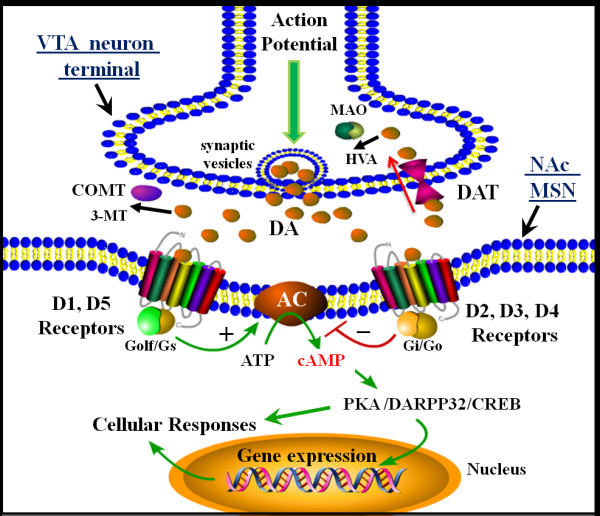
“in numerous experimental systems, increased CREB activity in the NAc is negatively related to behavioral responses to cocaine, opiates, and alcohol [86,88-90].”
§ Reward circuitry dysfunction in psychiatric and neurodevelopmental disorders and genetic syndromes: animal models and clinical findings > Review > Brain reward circuitry
What the sources say
- Not checked yetcites [86] Nestler EJ Is there a common molecular pathway for addiction? Nat Neurosci 2005 8 11 1445 1449 16251986 source
- Not checked yetcites [88] McClung CA Nestler EJ Regulation of gene expression and cocaine reward by CREB and DeltaFosB Nat Neurosci 2003 6 11 1208 1215 14566342 source
- Partly supportedcites [89] Barrot M Olivier JD Perrotti LI DiLeone RJ Berton O Eisch AJ Impey S Storm DR Neve RL Yin JC Zachariou V Nestler EJ CREB activity in the nucleus accumbens shell controls gating of behavioral responses to emotional stimuli Proc Natl Acad Sci 2002 99 17 11435 11440 12165570 PMC123274 sourceExperimental — accuracy not yet measured
Our copy supports two of the three drugs: the Results (Response to Rewarding Stimuli) report that CREB overexpression in the NAc shell reduced morphine place preference (with mCREB the opposite), and the Introduction/Discussion state that CREB overexpression or PKA stimulation in the NAc reduces the rewarding effects of cocaine, citing the group's earlier work (refs 13, 14) rather than new cocaine data. The alcohol/ethanol component is absent: searched 'ethanol', 'alcohol', 'drinking', 'self-administration' and only sucrose fluid intake and place-conditioning procedures appear, so no part of this paper tests behavioral responses to alcohol. The claim's framing 'in numerous experimental systems' also overstates this single viral-vector/reporter-mouse study, which itself notes it is one system with temporal and anatomical specificity (Discussion). (LLM, conf=0.82)
- Not checked yetcites [90] Walters CL Godfrey M Li X Blendy JA Alterations in morphine-induced reward, locomotor activity, and thermoregulation in CREB-deficient mice Brain Res 2005 1032 1–2 193 199 15680959 source
plainstates an association- Asserted: passes — The authors put it forward as true.
- Checkable: passes — It can be checked against evidence.
- Load-bearing: unclear — It is unclear whether the paper’s conclusions depend on it.
- Based: passes — The paper gives a reason why it holds.
Every source the paper cites for this claim was checked and supports it.
In the paper
“All of these processes are believed to contribute to the intense motivation to attain drugs of abuse [120].”
§ Reward circuitry dysfunction in psychiatric and neurodevelopmental disorders and genetic syndromes: animal models and clinical findings > Review > Psychiatric disorders
What the sources say
- Supportedcites [120] Volkow ND Fowler JS Wang GJ Baler R Telang F Imaging dopamine's role in drug abuse and addiction Neuropharmacology 2009 56 Suppl 1 3 8 18617195 PMC2696819 source
The Introduction says dopamine-related reinforcement processes make drugs salient stimuli that motivate the procurement of more drug. Section 2 also describes adaptations in motivation, reward, inhibitory-control, and memory circuits as contributing to compulsive drug taking. (LLM, conf=0.90)
hedgedstates a possible cause- Asserted: passes — The authors put it forward as true.
- Checkable: passes — It can be checked against evidence.
- Load-bearing: unclear — It is unclear whether the paper’s conclusions depend on it.
- Based: passes — The paper gives a reason why it holds.
- Supported
Every source the paper cites for this claim was checked and supports it.
In the paper
“Notably, Andrews and colleagues [155] found this effect in family members of those with substance abuse, suggesting that this pattern may be evident even in the absence of the direct effects of repeated drug use on the brain.”
§ Reward circuitry dysfunction in psychiatric and neurodevelopmental disorders and genetic syndromes: animal models and clinical findings > Review > Psychiatric disorders
What the sources say
- Supportedcites [155] Andrews MM Meda SA Thomas AD Potenza MN Krystal JH Worhunsky P Stevens MC O'Malley S Book GA Reynolds B Pearlson GD Individuals family history positive for alcoholism show functional magnetic resonance imaging differences in reward sensitivity that are related to impulsivity factors Biol Psychiatr 2011 69 8 675 683 PMC3677031 21126735 source
The Abstract Methods describe participants with a family history of alcoholism who had no past or current alcohol or substance abuse history. The Abstract Results report blunted nucleus accumbens activation during reward anticipation in those participants, and the Overview of Findings says altered reward sensitivity may reflect vulnerability rather than only the consequences of alcohol abuse. This supports the citing sentence’s hedged inference, though the measured effect was brain activation rather than motivation directly. (LLM, conf=0.91)
hedgedstates a possible cause- Asserted: passes — The authors put it forward as true.
- Checkable: passes — It can be checked against evidence.
- Load-bearing: passes — The paper’s conclusions depend on it.
- Based: passes — The paper gives a reason why it holds.
- Supported
The cited sources support only part of this claim — read each source’s verdict below.
In the paper
“Gilman and Hommer [153] reported subjective hypoarousal to normative positive images in alcohol-dependent participants.”
§ Reward circuitry dysfunction in psychiatric and neurodevelopmental disorders and genetic syndromes: animal models and clinical findings > Review > Psychiatric disorders
What the sources say
- Partly supportedcites [153] Gilman JM Hommer DW Modulation of brain response to emotional images by alcohol cues in alcohol-dependent patients Addiction Biol 2008 13 3–4 423 434 18507736 sourceExperimental — accuracy not yet measured
Our copy supports reduced neural response to normative (IAPS) positive images in alcohol-dependent participants: the Results sections 'Positive image with neutral beverage cue' and 'Positive image with alcoholic beverage cue' report that alcoholics showed less activation than controls (eight clusters, and the right hippocampus respectively), with no areas of greater activation, and the Methods ('Visual stimulation and task') confirm the stimuli were 55 high-arousal positive IAPS pictures. However, the paper attributes this to BOLD signal, not subjective experience — its 'Self-report affect ratings' section reports no significant group differences in positive affect before or after the scan, and no per-image arousal ratings were collected. The 'subjective' qualifier in the citing sentence is therefore not supported by this source. (LLM, conf=0.72)
plain- Asserted: passes — The authors put it forward as true.
- Checkable: passes — It can be checked against evidence.
- Load-bearing: unclear — It is unclear whether the paper’s conclusions depend on it.
- Based: passes — The paper gives a reason why it holds.
- Partly supported
The sources with a verdict support this claim; the rest weren’t checked yet, have no full text we could read, or their verdicts aren’t rated yet.
In the paper
“Behavioral studies have reliably found that individuals with MDD show a blunted response to a range of rewarding stimuli [203-205].”
§ Reward circuitry dysfunction in psychiatric and neurodevelopmental disorders and genetic syndromes: animal models and clinical findings > Review > Psychiatric disorders
What the sources say
- Not checked yetcites [203] Henriques JB Davidson RJ Decreased responsiveness to reward in depression Cognit Emot 2000 14 5 711 724 source
- Supportedcites [204] McFarland BR Klein DN Emotional reactivity in depression: diminished responsiveness to anticipated reward but not to anticipated punishment or to nonreward or avoidance Depress Anxiety 2009 26 2 117 122 18972567 source
The Introduction describes studies finding diminished responses to pleasant stimuli and rewards in depressed participants. The Discussion reports diminished responsiveness to anticipated reward in the paper's own study and places it alongside those earlier findings, supporting the broader claim. (LLM, conf=0.88)
- Not checked yetcites [205] Pizzagalli DA Iosifescu D Hallett LA Ratner KG Fava M Reduced hedonic capacity in major depressive disorder: evidence from a probabilistic reward task J Psychiatr Res 2008 43 1 76 87 18433774 PMC2637997 source
boosted- Asserted: passes — The authors put it forward as true.
- Checkable: passes — It can be checked against evidence.
- Load-bearing: passes — The paper’s conclusions depend on it.
- Based: passes — The paper gives a reason why it holds.
223 more claims · 21 with their cited sources checked
Create a free account to see all 441 claims and to verify the 598 references still open.
- It may state two separate claims as one. 191
- Probably not a substantial claim. 43
Claims other papers make about this one
Each is checked against this paper’s own text: does it say what the citing paper says it does?
The source backs part of the claim, not all of it — or backs it for a different population, condition or comparison.
In the citing paper
“A brain imaging study has demonstrated strong links between substance use disorder and dysfunction in reward circuitry, and in particular dopamine function within cortico-striatal circuitry.14”
From Ventral striatum dysfunction in children and adolescents with reactive attachment disorder: functional MRI study (2015) · cites this paper as [14]
Experimental — accuracy not yet measuredIn the citing paper
“For example, substance use disorder has been strongly linked to dysfunction in reward networks, particularly in dopamine function within cortico-striatal circuitry.14”
From Ventral striatum dysfunction in children and adolescents with reactive attachment disorder: functional MRI study (2015) · cites this paper as [14]
In the citing paper
“Conversely, functional alterations associated with reward processing were not observed in other brain regions linked with the reward-related dopaminergic system, such as the prefrontal cortex, the cingulate cortex and the limbic system, which have been implicated as important for reward processing.14,16”
From Ventral striatum dysfunction in children and adolescents with reactive attachment disorder: functional MRI study (2015) · cites this paper as [14]
Self-check
Percentages, sums and reported differences re-computed from the paper’s own numbers.
Each contradiction between two passages listed here was confirmed by an independent check.
Rated minor: it would not touch a result — a value no result rests on, a p-value that stays on the same side of the significance level, or a conflict that is clerical, resolved elsewhere in the paper, or outside its own findings.
In the paper
§ Reward circuitry dysfunction in psychiatric and neurodevelopmental disorders and genetic syndromes: animal models and clinical findings > Review > Psychiatric disorders
“Joos and colleagues [321] found reduced activation of the ACC in individuals with concurrent BN during the presentation of visual food cues”
§ Reward circuitry dysfunction in psychiatric and neurodevelopmental disorders and genetic syndromes: animal models and clinical findings > References
“321. Joos AAB Saum B van Elst LT Perlov E Glauche V Hartmann A Freyer T Tüscher O Zeeck A Amygdala hyperreactivity in restrictive anorexia nervosa”
Rated minor: it would not touch a result — a value no result rests on, a p-value that stays on the same side of the significance level, or a conflict that is clerical, resolved elsewhere in the paper, or outside its own findings.
In the paper
§ Reward circuitry dysfunction in psychiatric and neurodevelopmental disorders and genetic syndromes: animal models and clinical findings > Review > Psychiatric disorders
“Molecular-imaging studies of striatal DAT availability in bipolar disorder generally suggest increased functional DA throughput (but Suhara et al. reported an exception [282]).”
§ Reward circuitry dysfunction in psychiatric and neurodevelopmental disorders and genetic syndromes: animal models and clinical findings > References
“282. Suhara T Nakayama K Inoue O Fukuda H Shimizu M Mori A Tateno Y D1 dopamine receptor binding in mood disorders measured by positron emission tomography”
Rated minor: it would not touch a result — a value no result rests on, a p-value that stays on the same side of the significance level, or a conflict that is clerical, resolved elsewhere in the paper, or outside its own findings.
In the paper
§ Reward circuitry dysfunction in psychiatric and neurodevelopmental disorders and genetic syndromes: animal models and clinical findings > Review > Psychiatric disorders
“Joos and colleagues [340] also reported hyper-reactive reward-outcome responses in anorexia during the processing of food-reward images.”
§ Reward circuitry dysfunction in psychiatric and neurodevelopmental disorders and genetic syndromes: animal models and clinical findings > References
“340. Joos AAB Saum B Zeeck A Perlov E Glauche V Hartmann A Freyer T Sandholz A Unterbrink T van Elst LT Tüscher O Frontocingular dysfunction in Bulimia Nervosa when confronted with disease-specific stimuli”
Rated minor: it would not touch a result — a value no result rests on, a p-value that stays on the same side of the significance level, or a conflict that is clerical, resolved elsewhere in the paper, or outside its own findings.
In the paper
§ Reward circuitry dysfunction in psychiatric and neurodevelopmental disorders and genetic syndromes: animal models and clinical findings > Review > Psychiatric disorders
“Dextroamphetamine causes release of DA (as well as norepinephrine and serotonin) and is an effective treatment for amphetamine abuse [181].”
§ Reward circuitry dysfunction in psychiatric and neurodevelopmental disorders and genetic syndromes: animal models and clinical findings > References
“181. Grabowski J Rhoades H Schmitz J Stotts A Daruzska LA Creson D Moeller FG Dextroamphetamine for cocaine-dependence treatment: a double-blind randomized clinical trial”
Rated minor: it would not touch a result — a value no result rests on, a p-value that stays on the same side of the significance level, or a conflict that is clerical, resolved elsewhere in the paper, or outside its own findings.
In the paper
§ Reward circuitry dysfunction in psychiatric and neurodevelopmental disorders and genetic syndromes: animal models and clinical findings > Review > Genetic syndromes
“Another study found that individuals with WS show reduced amygdala activity in response to sad faces and comparable activity in the orbitofrontal cortex for happy and sad faces”
§ Reward circuitry dysfunction in psychiatric and neurodevelopmental disorders and genetic syndromes: animal models and clinical findings > Review > Genetic syndromes
“However, both of these studies did not report responses to the happy-face conditions.”
Citations
Cites
Items 601–778 of 778
Stoy, M., Schlagenhauf, F., Schlochtermeier, L., Wrase, J., Knutson, B., Lehmkuhl, U., Huss, M., Heinz, A., & Ströhle, A. (2011) · Psychopharmacology · doi:10.1007/s00213-011-2166-y · Cited by 91 · cited 1×
“Children with ADHD have reduced NAc activity when anticipating monetary rewards [18,486,487], which is seen particularly in drug-naive children [490], in carriers of the DAT nine-repeat allele [491], and in response to seeking gains rather than avoiding losses [492].”
BackgroundPalminteri, S., Lebreton, M., Worbe, Y., Hartmann, A., Lehéricy, S., Vidailhet, M., Grabli, D., & Pessiglione, M. (2011) · Brain · doi:10.1093/brain/awr147 · Cited by 90 · cited 1×
“Supporting this framework, reward learning is enhanced in people with TS who are not on medication, and impaired in people with TS taking DA receptor antagonists [621].”
BackgroundAltered social reward and attention in anorexia nervosa
Watson, K. K. (2010) · Frontiers in Psychology · doi:10.3389/fpsyg.2010.00036 · Cited by 90 · cited 1×
“Watson and colleagues [334] outlined a framework de-”
BackgroundFeedback and reward processing in high-functioning autism
Larson, M. J., South, M., Krauskopf, E., Clawson, A., & Crowley, M. J. (2011) · Psychiatry Research · doi:10.1016/j.psychres.2010.11.006 · Cited by 90 · cited 1×
“In the ASD group, they found unimpaired behavioral task performance but a decreased response to reward conditions that required an active response for both social and monetary rewards A recent EEG study found evidence of relatively decreased left-sided frontal EEG activity in response to faces, a pattern suggestive of…”
Autism spectrum and obsessive–compulsive disorders: OC behaviors, phenotypes and genetics
Jacob, S., Landeros‐Weisenberger, A., & Leckman, J. F. (2009) · Autism Research · doi:10.1002/aur.108 · Cited by 89
Carmona, S., Hoekzema, E., Ramos‐Quiroga, J. A., Richarte, V., Canals, C., Bosch, R., Rovira, M., Carlos Soliva, J., Bulbena, A., Tobeña, A., et al. (2012) · Human Brain Mapping · doi:10.1002/hbm.21368 · Cited by 89
The genetics of ADHD: A literature review of 2005
Khan, S. A., & Faraone, S. V. (2006) · Current Psychiatry Reports · doi:10.1007/s11920-006-0042-y · Cited by 89
GAINETDINOV, R. R., & CARON, M. G. (2001) · Journal of the American Academy of Child & Adolescent Psychiatry · doi:10.1097/00004583-200103000-00020 · Cited by 87
Schizophrenic patients show facial reactions to emotional facial expressions
Kring, A. M., Kerr, S. L., & Earnst, K. S. (1999) · Psychophysiology · doi:10.1111/1469-8986.3620186 · Cited by 86
Park, J., Wheeler, R. A., Fontillas, K., Keithley, R. B., Carelli, R. M., & Wightman, R. M. (2012) · Biological Psychiatry · doi:10.1016/j.biopsych.2011.10.017 · Cited by 85
Gene, brain, and behavior relationships in fragile X syndrome: Evidence from neuroimaging studies
Lightbody, A. A., & Reiss, A. L. (2009) · Developmental Disabilities Research Reviews · doi:10.1002/ddrr.77 · Cited by 85 · cited 1×
“The FMR1 full mutation affects cognition, adaptive behavior, social abilities, and motor skills [708].”
BackgroundDeficits in sustaining reward responses in subsyndromal and syndromal major depression
Liu, W.-H., Chan, R. C. K., Wang, L.-Z., Huang, J., Cheung, E. F. C., Gong, Q.-Y., & Gollan, J. K. (2011) · Progress in Neuro-Psychopharmacology and Biological Psychiatry · doi:10.1016/j.pnpbp.2011.02.018 · Cited by 85 · cited 1×
“Reward learning has also been found to be impaired in MDD [206], and this impairment is correlated with the severity of anhedonic symptoms [207].”
BackgroundHandbook of Research Methods in Clinical Psychology
(2005) · Blackwell Publishing Ltd eBooks · doi:10.1111/b.9781405132794.2005.00025.x · Cited by 85
Zachariou, V., Benoit-Marand, M., Allen, P. B., Ingrassia, P., Fienberg, A. A., Gonon, F., Greengard, P., & Picciotto, M. R. (2002) · Biological Psychiatry · doi:10.1016/s0006-3223(01)01318-x · Cited by 84 · cited 1×
“Support for this concept is provided in genetic models in mice lacking the DARPP-32 gene, which results in decreased responses to cocaine in conditioned place preference behaviors [85].”
BackgroundAmsterdam, J. D., & Newberg, A. B. (2007) · Neuropsychobiology · doi:10.1159/000106476 · Cited by 84 · cited 1×
“Amsterdam and Newberg [283] reported higher striatal DAT binding in the right posterior putamen and left caudate in a small number of patients with bipolar disorder; Chang and colleagues [284] reported that unmedicated euthymic subjects with bipolar disorder had significantly relatively higher whole striatal DAT bindi…”
BackgroundImpaired anticipatory event-related potentials in schizophrenia
Wynn, J. K., Horan, W. P., Kring, A. M., Simons, R. F., & Green, M. F. (2010) · International Journal of Psychophysiology · doi:10.1016/j.ijpsycho.2010.05.009 · Cited by 83 · cited 1×
“Although some studies have found that individuals with schizophrenia are impaired during reward motivation and outcome [403-407], others have not found a selective impairment in reward motivation [386,408].”
BackgroundADHD related behaviors are associated with brain activation in the reward system
Stark, R., Bauer, E., Merz, C. J., Zimmermann, M., Reuter, M., Plichta, M. M., Kirsch, P., Lesch, K. P., Fallgatter, A. J., Vaitl, D., et al. (2011) · Neuropsychologia · doi:10.1016/j.neuropsychologia.2010.12.012 · Cited by 82
Marcus, R. N., Owen, R., Manos, G., Mankoski, R., Kamen, L., McQuade, R. D., Carson, W. H., Corey-Lisle, P. K., & Aman, M. G. (2011) · Journal of Child and Adolescent Psychopharmacology · doi:10.1089/cap.2009.0121 · Cited by 82 · cited 1×
“course of treatment [604,605].”
The relevance of reward pathways for schizophrenia
Ziauddeen, H., & Murray, G. K. (2010) · Current Opinion in Psychiatry · doi:10.1097/yco.0b013e328336661b · Cited by 82
Reed-Schindler, H., & Horner, R. H. (2004) · American Journal on Mental Retardation · doi:10.1352/0895-8017(2005)110<36:gropbo>2.0.co;2 · Cited by 82
Hill, R. C., McIvor, R. J., Wojnar-Horton, R. E., Hackett, L. P., & Ilett, K. F. (2000) · Journal of Clinical Psychopharmacology · doi:10.1097/00004714-200004000-00036 · Cited by 81
Cognitive Effects of Risperidone in Children with Autism and Irritable Behavior
Aman, M. G., Hollway, J. A., McDougle, C. J., Scahill, L., Tierney, E., McCracken, J. T., Arnold, L. E., Vitiello, B., Ritz, L., Gavaletz, A., et al. (2008) · Journal of Child and Adolescent Psychopharmacology · doi:10.1089/cap.2007.0133 · Cited by 80 · cited 1×
“tions in challenging behaviors, such as irritability and hyperactivity [596-600], and significant improvement in”
BackgroundWhite, N. M. (1986) · Neuroscience & Biobehavioral Reviews · doi:10.1016/0149-7634(86)90030-8 · Cited by 79 · cited 1×
“These results suggest that DA release in the striatum is required to integrate relevant signals for sustained feeding [301,314,315].”
BackgroundPapp, M., Muscat, R., & Willner, P. (1993) · Psychopharmacology · doi:10.1007/bf02246965 · Cited by 79 · cited 1×
“preference behavioral paradigm [189,192-194].”
Zeeland, A. A. S., Dapretto, M., Ghahremani, D. G., Poldrack, R. A., & Bookheimer, S. Y. (2011) · Autism · doi:10.1002/aur.122.reward · Cited by 79
Hahn, T., Heinzel, S., Dresler, T., Plichta, M. M., Renner, T. J., Markulin, F., Jakob, P. M., Lesch, K., & Fallgatter, A. J. (2011) · Human Brain Mapping · doi:10.1002/hbm.21127 · Cited by 78
Li, Y.-C., Kellendonk, C., Simpson, E. H., Kandel, E. R., & Gao, W.-J. (2011) · Proceedings of the National Academy of Sciences · doi:10.1073/pnas.1109718108 · Cited by 78 · cited 1×
“In a follow-up study, Li and colleagues [379] reported that this D2 receptor overexpression in the striatum causes an increase in the firing activity of layer V cortical pyramidal neurons, and also a decrease in both the frequency and amplitude of spontaneous inhibitory post-synaptic currents, indicating reduced inhib…”
BackgroundA DRD4/BDNF gene–gene interaction associated with maximum BMI in women with bulimia nervosa
Kaplan, A. S., Levitan, R. D., Yilmaz, Z., Davis, C., Tharmalingam, S., & Kennedy, J. L. (2008) · International Journal of Eating Disorders · doi:10.1002/eat.20474 · Cited by 77 · cited 1×
“These studies compliment candidate genetic behavior investigations in BN that have reported altered allelic frequencies for the DAT gene [328] and DA receptor genes [329,330] in individuals with bulimia.”
Beyond DSM : Seeking a Brain-Based Classification of Mental Illness
Miller, G. (2010) · Science · doi:10.1126/science.327.5972.1437 · Cited by 77 · cited 1×
“shtml), which aims to foster research that uses neuroscience tools to investigate constructs that cut across traditional nosological classification boundaries [7,8].”
BackgroundYamashita, M., Fukushima, S., Shen, H.-W., Hall, F. S., Uhl, G. R., Numachi, Y., Kobayashi, H., & Sora, I. (2006) · Neuropsychopharmacology · doi:10.1038/sj.npp.1301009 · Cited by 77 · cited 1×
“tors [378].”
McGINTY, J. F. (1999) · Annals of the New York Academy of Sciences · doi:10.1111/j.1749-6632.1999.tb09257.x · Cited by 77
Brain monoamine receptors in a chronic unpredictable stress model in rats
Ossowska, G., Nowak, G., Kata, R., Klenk-Majewska, B., Danilczuk, Z., & Żebrowska-Łupina, I. (2001) · Journal of Neural Transmission · doi:10.1007/s007020170077 · Cited by 76 · cited 1×
“Altered DA function may also be related to changes in D1 receptors, which have been shown to alter functional output in the rat limbic system after chronic unpredictable stress [199].”
BackgroundDopamine transporter binding in Gilles de la Tourette syndrome: a [123I]FP‐CIT/SPECT study
Serra‐Mestres, J., Ring, H. A., Costa, D. C., Gacinovic, S., Walker, Z., Lees, A. J., Robertson, M. M., & Trimble, M. R. (2004) · Acta Psychiatrica Scandinavica · doi:10.1111/j.0001-690x.2004.00214.x · Cited by 76 · cited 2×
“Singlephoton emission computed tomography investigations in TS have found higher DAT binding in the right caudate [635], the striatum [636-639], the putamen after amphetamine challenge [640], and the basal ganglia [641].”
BackgroundNeuropsychopharmacology: The Fifth Generation of Progress
Leung, C. (2003) · Hong Kong journal of psychiatry · Cited by 75
Nisoli, E., Brunani, A., Borgomainerio, E., Tonello, C., Dioni, L., Briscini, L., Redaelli, G., Molinari, E., Cavagnini, F., & Carruba, M. O. (2007) · Eating and Weight Disorders - Studies on Anorexia, Bulimia and Obesity · doi:10.1007/bf03327583 · Cited by 75 · cited 1×
“These studies compliment candidate genetic behavior investigations in BN that have reported altered allelic frequencies for the DAT gene [328] and DA receptor genes [329,330] in individuals with bulimia.”
Brain function and gaze fixation during facial‐emotion processing in fragile X and autism
Dalton, K. M., Holsen, L., Abbeduto, L., & Davidson, R. J. (2008) · Autism Research · doi:10.1002/aur.32 · Cited by 75 · cited 1×
“[723] compared responses in groups with FXS and with autism during the processing of emotional faces, and found that”
Kollins, S. H., Lane, S. D., & Shapiro, S. K. (1997) · The Psychological Record · doi:10.1007/bf03395211 · Cited by 74
Neural substrates of olfactory processing in schizophrenia patients and their healthy relatives
Schneider, F., Habel, U., Reske, M., Toni, I., Falkai, P., & Shah, N. J. (2007) · Psychiatry Research: Neuroimaging · doi:10.1016/j.pscychresns.2006.12.004 · Cited by 74
Ventral tegmental area involvement in pair bonding in male prairie voles
CURTIS, J., & WANG, Z. (2005) · Physiology & Behavior · doi:10.1016/j.physbeh.2005.08.022 · Cited by 74 · cited 1×
“Several studies have indicated that mesolimbic DA pathways regulate vole pair-bonding and social behaviors [537].”
BackgroundFunctions of mesolimbic dopamine: changing concepts and shifting paradigms
Salamone, J. D. (2007) · Psychopharmacology · doi:10.1007/s00213-006-0623-9 · Cited by 73 · cited 1×
“Indeed, there are multiple constructs mediated by the mesolimbic system, and at least four such systems have been described in depth in numerous seminal reviews [39-43]: 1) reward motivation, also termed anticipation (typically subsuming what is colloquially described as ‘wanting,’) refers to processes that facilitate…”
BackgroundNew perspectives on adolescent motivated behavior: Attention and conditioning
Ernst, M., Daniele, T., & Frantz, K. (2011) · Developmental Cognitive Neuroscience · doi:10.1016/j.dcn.2011.07.013 · Cited by 73 · cited 1×
“tention in both nonclinical [15,16] and clinical [17-19] contexts, and the functioning of so-called ‘positive valence systems’ has been proposed as one of the five domains rele-”
Food-related Neural Circuitry in Prader-Willi Syndrome: Response to High- Versus Low-calorie Foods
Dimitropoulos, A., & Schultz, R. T. (2008) · Journal of Autism and Developmental Disorders · doi:10.1007/s10803-008-0546-x · Cited by 73 · cited 1×
“Schultz [680] reported increased activation in the hypothalamus and orbitofrontal cortex in PWS during high-”
BackgroundStepp, S. D. (2012) · Journal of Abnormal Child Psychology · doi:10.1007/s10802-011-9594-3 · Cited by 72
Gilles de la Tourette Syndrome Is Not Linked to D2-Dopamine Receptor
Gelernter, J. (1990) · Archives of General Psychiatry · doi:10.1001/archpsyc.1990.01810230089014 · Cited by 72
Loss of dopaminergic neurons and resulting behavioural deficits in mouse model of Angelman syndrome
Mulherkar, S. A., & Jana, N. R. (2010) · Neurobiology of Disease · doi:10.1016/j.nbd.2010.08.002 · Cited by 71 · cited 1×
“In addition, in a mouse model of AS, genetic loss of the Ube3a gene resulted in a loss of DA neurons in the substantia nigra [697], which may contribute to mechanisms that cause ataxia and motor deficits apparent in the mouse model of the disease.”
Backgroundvan der Schaaf, M. E., Warmerdam, E., Crone, E. A., & Cools, R. (2011) · Developmental Cognitive Neuroscience · doi:10.1016/j.dcn.2011.06.007 · Cited by 70 · cited 1×
“processing, but a number of related functions, including punishment [24], decision-making [25,26], cognition [27], reward”
BackgroundA prospective open-label study of aripiprazole in fragile X syndrome
Erickson, C. A., Stigler, K. A., Wink, L. K., Mullett, J. E., Kohn, A., Posey, D. J., & McDougle, C. J. (2011) · Psychopharmacology · doi:10.1007/s00213-011-2194-7 · Cited by 69 · cited 1×
“Preliminary studies of aripiprazole in FXS have also found evidence for an improvement in clinical symptoms and irritability [732,733].”
BackgroundAffective modulation of the startle reflex in schizophrenic patients
Schlenker, R., Cohen, R., & Hopmann, G. (1995) · European Archives of Psychiatry and Clinical Neuroscience · doi:10.1007/bf02191873 · Cited by 68
Karagiannidis, I., Rizzo, R., Tárnok, Z., Wolańczyk, T., Hebebrand, J., Nöthen, M. M., Lehmkuhl, G., Farkas, L., Nagy, P., Barta, C., et al. (2011) · Molecular Psychiatry · doi:10.1038/mp.2011.151 · Cited by 68
Jung, W. H., Kang, D.-H., Han, J. Y., Jang, J. H., Gu, B.-M., Choi, J.-S., Jung, M. H., Choi, C.-H., & Kwon, J. S. (2011) · Acta Psychiatrica Scandinavica · doi:10.1111/j.1600-0447.2010.01659.x · Cited by 68 · cited 1×
“[515] found increased frontostriatal activation during monetary-reward”
Frank, G. K., Wagner, A., Achenbach, S., McConaha, C., Skovira, K., Aizenstein, H., Carter, C. S., & Kaye, W. H. (2006) · International Journal of Eating Disorders · doi:10.1002/eat.20210 · Cited by 68 · cited 1×
“Frank and colleagues [324] reported decreased ACC reward outcome responses to the blinded administration of glucose in participants who had recovered from bulimia.”
BackgroundVasopressin and pair-bond formation: genes to brain to behavior.
Nair, H. P., & Young, L. J. (2006) · Physiology · doi:10.1152/physiol.00049.2005 · Cited by 68
Curtis, C. E., Lebow, B., Lake, D. S., Katsanis, J., & Iacono, W. G. (1999) · Psychophysiology · doi:10.1017/s0048577299980757 · Cited by 66 · cited 1×
“positive and negative stimuli, assessed via facial electromyography [397,398], skin conductance [399,400], and affective modulation of the startle eyeblink response [401,402].”
MethodAnticipated, on-line and remembered positive experience in schizophrenia
Trémeau, F., Antonius, D., Cacioppo, J. T., Ziwich, R., Butler, P. D., Malaspina, D., & Javitt, D. C. (2009) · Schizophrenia Research · doi:10.1016/j.schres.2009.10.019 · Cited by 65
Aripiprazole in Autism Spectrum Disorders and Fragile X Syndrome
Erickson, C. A., Stigler, K. A., Posey, D. J., & McDougle, C. J. (2010) · Neurotherapeutics · doi:10.1016/j.nurt.2010.04.001 · Cited by 65 · cited 1×
“Preliminary studies of aripiprazole in FXS have also found evidence for an improvement in clinical symptoms and irritability [732,733].”
BackgroundAberrant Brain Activation During Gaze Processing in Boys With Fragile X Syndrome
Watson, C., Hoeft, F., Garrett, A. S., Hall, S. S., & Reiss, A. L. (2008) · Archives of General Psychiatry · doi:10.1001/archpsyc.65.11.1315 · Cited by 65 · cited 1×
“[721] showed this same stimulus set to boys with FXS, and replicated the finding of greater insula activation (although on the left side) to direct gaze.”
ResultDavis, C., Levitan, R. D., Kaplan, A. S., Carter, J., Reid, C., Curtis, C., Patte, K., & Kennedy, J. L. (2007) · Neuropsychopharmacology · doi:10.1038/sj.npp.1301348 · Cited by 65 · cited 1×
“These studies compliment candidate genetic behavior investigations in BN that have reported altered allelic frequencies for the DAT gene [328] and DA receptor genes [329,330] in individuals with bulimia.”
Preclinical Behavioral Models for Predicting Antipsychotic Activity
Castagné, V., Moser, P. C., & Porsolt, R. D. (2009) · Advances in Pharmacology · doi:10.1016/s1054-3589(08)57010-4 · Cited by 64 · cited 1×
“In addition, normalizing PPI deficits in rodent models has enabled drug discovery for potential antipsychotic medications [371], some of which have proven successful in treating schizophrenia [368,372].”
BackgroundBeveridge, T. J. R., Smith, H. R., Nader, M. A., & Porrino, L. J. (2009) · Neuropsychopharmacology · doi:10.1038/npp.2008.135 · Cited by 64
Dopamine Receptor D2 Gene Polymorphisms Are Associated in Taiwanese Children With Tourette Syndrome
Lee, C.-C., Chou, I.-C., Tsai, C.-H., Wang, T.-R., Li, T.-C., & Tsai, F.-J. (2005) · Pediatric Neurology · doi:10.1016/j.pediatrneurol.2005.05.005 · Cited by 63 · cited 1×
“Variants in the DA receptor gene DRD2 have also been associated with genetic risk for TS [626-628], but this finding is not consistent [629-633].”
ResultLahey, B. B., Rathouz, P. J., Lee, S. S., Chronis-Tuscano, A., Pelham, W. E., Waldman, I. D., & Cook, E. H. (2011) · Journal of Abnormal Psychology · doi:10.1037/a0021133 · Cited by 63
Chang, T. T., Yeh, T. L., Chiu, N. T., Chen, P. S., Huang, H. Y., Yang, Y. K., Lee, I. H., & Lu, R. B. (2010) · Bipolar Disorders · doi:10.1111/j.1399-5618.2009.00771.x · Cited by 63
Bull, E., Reavill, C., Hagan, J. J., Overend, P., & Jones, D. N. C. (2000) · Behavioural Brain Research · doi:10.1016/s0166-4328(99)00156-4 · Cited by 63 · cited 1×
“Impulsivity is seen in SHR as an inability to inhibit a response during the extinction phase of an operant task, and an inability to delay a response in order to obtain a larger reward [452,454].”
BackgroundLoss of Mecp2 in Substantia Nigra Dopamine Neurons Compromises the Nigrostriatal Pathway
Gantz, S. C., Ford, C. P., Neve, K. A., & Williams, J. T. (2011) · The Journal of Neuroscience · doi:10.1523/jneurosci.0684-11.2011 · Cited by 62
Olino, T. M., McMakin, D. L., Dahl, R. E., Ryan, N. D., Silk, J. S., Birmaher, B., Axelson, D. A., & Forbes, E. E. (2011) · Psychiatry Research: Neuroimaging · doi:10.1016/j.pscychresns.2011.04.009 · Cited by 62
Cacciapaglia, F., Wightman, R. M., & Carelli, R. M. (2011) · The Journal of Neuroscience · doi:10.1523/jneurosci.1340-11.2011 · Cited by 62
A pilot study of positive mood induction in euthymic bipolar subjects compared with healthy controls
FARMER, A., LAM, D., SAHAKIAN, B., ROISER, J., BURKE, A., O'NEILL, N., KEATING, S., SMITH, G. P., & McGUFFIN, P. (2006) · Psychological Medicine · doi:10.1017/s0033291706007835 · Cited by 61 · cited 1×
“Behavioral studies of response to rewards in bipolar disorder indicate deficits in behavioral adaptation to changing reward contingencies [267] and prolonged elevation of mood in response to monetary reward in euthymic patients with bipolar disorder [268].”
BackgroundMcElhiney, M. C., Rabkin, J. G., Rabkin, R., & Nunes, E. V. (2009) · The American Journal of Drug and Alcohol Abuse · doi:10.1080/00952990802342907 · Cited by 61 · cited 1×
“for the treatment of cocaine dependence [178] and possibly methamphetamine dependence [179].”
BackgroundSPESSOT, A. L., PLESSEN, K. J., & PETERSON, B. S. (2004) · Annals of the New York Academy of Sciences · doi:10.1196/annals.1308.010 · Cited by 61 · cited 1×
“Thus, a model has been proposed in which frequent prefrontal activation during tic suppression may produce compensatory prefrontal cortex hypertrophy that aids in tic suppression [624,625], although it is not presently clear how such basal ganglia and prefrontal characteristics effects reward processing in TS.”
BackgroundYarkoni, T., Gray, J. R., Chrastil, E. R., Barch, D. M., Green, L., & Braver, T. S. (2005) · Cognitive Brain Research · doi:10.1016/j.cogbrainres.2005.01.013 · Cited by 59 · cited 1×
“Overall, however, studies of reward learning in individuals with schizophrenia are consistent with the framework that patients with schizophrenia have intact hedonic responses but impaired motivation and reward representation, leading to a failure to motivate their behavior for rewards [415].”
ResultOpen Study of the Catechol-O-Methyltransferase Inhibitor Tolcapone in Major Depressive Disorder
Fava, M., Rosenbaum, J. F., Kolsky, A. R., Alpert, J. E., Nierenberg, A. A., Spillmann, M., Moore, C., Renshaw, P., Bottiglieri, T., Moroz, G., et al. (1999) · Journal of Clinical Psychopharmacology · doi:10.1097/00004714-199908000-00008 · Cited by 59
Arnold, L. E., Farmer, C., Kraemer, H. C., Davies, M., Witwer, A., Chuang, S., DiSilvestro, R., McDougle, C. J., McCracken, J., Vitiello, B., et al. (2010) · Journal of Child and Adolescent Psychopharmacology · doi:10.1089/cap.2009.0022 · Cited by 58 · cited 1×
“tions in challenging behaviors, such as irritability and hyperactivity [596-600], and significant improvement in”
BackgroundAbnormal myelination in Angelman syndrome
Harting, I., Seitz, A., Rating, D., Sartor, K., Zschocke, J., Janssen, B., Ebinger, F., & Wolf, N. I. (2009) · European Journal of Paediatric Neurology · doi:10.1016/j.ejpn.2008.04.005 · Cited by 58
Nielen, M. M., den Boer, J. A., & Smid, H. G. O. M. (2009) · Psychological Medicine · doi:10.1017/s0033291709005297 · Cited by 58 · cited 1×
“Clinical studies Behaviorally, patients with OCD show evidence of impaired reward learning [511] and impaired performance on gambling tasks that predict pharmacologic treatment response [512,513].”
BackgroundPowell, S. B., Young, J. W., Ong, J. C., Caron, M. G., & Geyer, M. A. (2008) · Behavioural Pharmacology · doi:10.1097/fbp.0b013e32830dc110 · Cited by 57 · cited 1×
“with either D1 or D2 receptor antagonists [376], the atypical antipsychotics clozapine and quetiapine [377], various”
BackgroundA low dose of aripiprazole attenuates the subject-rated effects of d-amphetamine
Stoops, W. W., Lile, J. A., Glaser, P. E. A., & Rush, C. R. (2006) · Drug and Alcohol Dependence · doi:10.1016/j.drugalcdep.2006.02.004 · Cited by 57 · cited 1×
“Finally, risperidone, a D2-receptor antagonist, has shown promise for the treatment of methamphetamine abuse [182], and aripiprizole, a partial D2 agonist is a promising treatment for amphetamine abuse [183].”
BackgroundTreatments for fragile X syndrome: A closer look at the data
Hall, S. S. (2009) · Developmental Disabilities Research Reviews · doi:10.1002/ddrr.78 · Cited by 56 · cited 16×
“These authors speculated that social anxiety in FXS has a cascading effect on multiple aspects of cognition.”
BackgroundInfluentialDrechsler, R., Rizzo, P., & Steinhausen, H.-C. (2010) · Child Neuropsychology · doi:10.1080/09297040903190774 · Cited by 56 · cited 1×
“Although individuals with ADHD may report enhanced reward outcome responsivity [478], behaviorally, individuals with ADHD display a range of motivational deficits, including impaired behavioral modification in response to rewards [468], enhanced motivation for larger but riskier rewards [479], and decreased motivation…”
BackgroundHaas, B. W., Hoeft, F., Searcy, Y. M., Mills, D., Bellugi, U., & Reiss, A. (2010) · Neuropsychologia · doi:10.1016/j.neuropsychologia.2009.12.030 · Cited by 56
DARPP-32: A molecular switch at the nexus of reward pathway plasticity
Gould, T. D., & Manji, H. K. (2005) · Proceedings of the National Academy of Sciences · doi:10.1073/pnas.0408700102 · Cited by 56 · cited 1×
“DARPP-32 may thereby influence the long-term neuronal adaptations associated with natural rewards or with rewards from drugs of abuse [83,84].”
BackgroundJohansen, E. B., Killeen, P. R., & Sagvolden, T. (2007) · Behavioral and Brain Functions · doi:10.1186/1744-9081-3-60 · Cited by 56
Holsen, L. M., Dalton, K. M., Johnstone, T., & Davidson, R. J. (2008) · NeuroImage · doi:10.1016/j.neuroimage.2008.08.009 · Cited by 56 · cited 1×
“[722] reported decreased cingulate and left insula activation in individuals with FXS in response to images of familiar fearful faces and inverse relations between social anxiety and activation in a number of regions, including a cluster in the left inferior frontal gyrus near the insula.”
BackgroundHIRONAKA, N., IKEDA, K., SORA, I., UHL, G. R., & NIKI, H. (2004) · Annals of the New York Academy of Sciences · doi:10.1196/annals.1316.018 · Cited by 55 · cited 1×
“tasks [445], and also have impaired learning and mem-”
BackgroundPanayotis, N., Pratte, M., Borges-Correia, A., Ghata, A., Villard, L., & Roux, J.-C. (2011) · Neurobiology of Disease · doi:10.1016/j.nbd.2010.10.006 · Cited by 54 · cited 1×
“was seen in the caudate putamen [701,702], suggesting that MAO and/or COMT levels might be impaired.”
BackgroundOlanzapine-induced weight gain in anorexia nervosa: Involvement of leptin and ghrelin secretion?
Brambilla, F., Monteleone, P., & Maj, M. (2007) · Psychoneuroendocrinology · doi:10.1016/j.psyneuen.2007.02.005 · Cited by 54 · cited 1×
“A small number of double-blind trials have evaluated the effects of antipsychotics, with essentially non-significant effects [345-347].”
BackgroundImaging Neurotransmitter Release by Drugs of Abuse
Martínez, D., & Narendran, R. (2009) · Current topics in behavioral neurosciences · doi:10.1007/7854_2009_34 · Cited by 53
The developmental psychopathology of motivation in adolescence
Fairchild, G. (2011) · Developmental Cognitive Neuroscience · doi:10.1016/j.dcn.2011.07.009 · Cited by 53 · cited 3×
“Clinical studies Results of functional brain-imaging studies of response to rewards in CD/ODD are not wholly consistent [17].”
BackgroundDopaminergic D2 receptor SPECT imaging in Rett syndrome: increase of specific binding in striatum.
Chiron, C., Bulteau, C., Loc’h, C., Raynaud, C., Garreau, B., Syrota, A., & Maziere, B. (1993) · PubMed · Cited by 53
Nöthen, M. M., Hebebrand, J., Knapp, M., Hebebrand, K., Camps, A., von Gontard, A., Wettke‐Schäfer, R., Lisch, S., Cichon, S., Poustka, F., et al. (1994) · American Journal of Medical Genetics · doi:10.1002/ajmg.1320540311 · Cited by 52 · cited 1×
“Variants in the DA receptor gene DRD2 have also been associated with genetic risk for TS [626-628], but this finding is not consistent [629-633].”
ResultWang, H., Kim, S. S., & Zhuo, M. (2010) · Journal of Biological Chemistry · doi:10.1074/jbc.m110.116293 · Cited by 52
Stamenkovic, M., Schindler, S. D., Asenbaum, S., Neumeister, A., Willeit, M., Willinger, U., de Zwaan, M., Riederer, F., Aschauer, H. N., & Kasper, S. (2001) · European Neuropsychopharmacology · doi:10.1016/s0924-977x(00)00134-6 · Cited by 52 · cited 1×
“ferences in striatal DAT binding in TS [639,642-644].”
BackgroundStriatal hyposensitivity to delayed rewards among cigarette smokers
Luo, S., Ainslie, G., Giragosian, L., & Monterosso, J. R. (2011) · Drug and Alcohol Dependence · doi:10.1016/j.drugalcdep.2010.11.012 · Cited by 52
Jogia, J., Dima, D., Kumari, V., & Frangou, S. (2012) · The World Journal of Biological Psychiatry · doi:10.3109/15622975.2011.585662 · Cited by 51
Facial expression in schizophrenia
Earnst, K. S., Kring, A. M., Kadar, M. A., Salem, J. E., Shepard, D. A., & Loosen, P. T. (1996) · Biological Psychiatry · doi:10.1016/0006-3223(96)00171-0 · Cited by 51
Fasano, A., & Bentivoglio, A. R. (2009) · Expert Opinion on Pharmacotherapy · doi:10.1517/14656560903386292 · Cited by 51
Hinton, E. C., Holland, A. J., Gellatly, M. S. N., Soni, S., & Owen, A. M. (2006) · Journal of Intellectual Disability Research · doi:10.1111/j.1365-2788.2006.00812.x · Cited by 50 · cited 1×
“[681] failed to replicate this finding).”
Cyproheptadine in the treatment of autistic disorder: a double-blind placebo-controlled trial
Akhondzadeh, S., Erfani, S., Mohammadi, M. R., Tehrani‐Doost, M., Amini, H., Gudarzi, S. S., & Yasamy, M. T. (2004) · Journal of Clinical Pharmacy and Therapeutics · doi:10.1111/j.1365-2710.2004.00546.x · Cited by 49
Sequence analysis of Drd2, Drd4, and Dat1 in SHR and WKY rat strains
Mill, J., Sagvolden, T., & Asherson, P. (2005) · Behavioral and Brain Functions · doi:10.1186/1744-9081-1-24 · Cited by 49
Heart rate and reinforcement sensitivity in ADHD
Luman, M., Oosterlaan, J., Hyde, C., Van Meel, C. S., & Sergeant, J. A. (2007) · Journal of Child Psychology and Psychiatry · doi:10.1111/j.1469-7610.2007.01769.x · Cited by 48 · cited 1×
“learning [463].”
Academic Skills of Boys With Fragile X Syndrome: Profiles and Predictors
Roberts, J. E., Schaaf, J. M., Skinner, M., Wheeler, A., Hooper, S., Hatton, D. D., & Bailey, D. B. (2005) · American Journal on Mental Retardation · doi:10.1352/0895-8017(2005)110<107:asobwf>2.0.co;2 · Cited by 48
Animal Models of Attention-Deficit/Hyperactivity Disorder
Arime, Y., Kubo, Y., & Sora, I. (2011) · Biological and Pharmaceutical Bulletin · doi:10.1248/bpb.34.1373 · Cited by 47
New perspectives on cocaine addiction: recent findings from animal research
Bozarth, M. A. (1989) · Canadian Journal of Physiology and Pharmacology · doi:10.1139/y89-185 · Cited by 47
Papp, M., Willner, P., & Muscat, R. (1993) · Psychopharmacology · doi:10.1007/bf02246966 · Cited by 47 · cited 1×
“preference behavioral paradigm [189,192-194].”
Safety issues with drug therapies for autism spectrum disorders.
McCracken, J. T. (2005) · PubMed · Cited by 47
Grimm, O., Vollstädt‐Klein, S., Krebs, L., Zink, M., & Smolka, M. N. (2011) · Schizophrenia Research · doi:10.1016/j.schres.2011.11.027 · Cited by 46
Social cognition skills among females with fragile X
Mazzocco, M. M. M., Pennington, B. F., & Hagerman, R. J. (1994) · Journal of Autism and Developmental Disorders · doi:10.1007/bf02172129 · Cited by 46 · cited 1×
“Rather, given that individuals with FXS display social impairments that may be similar to those seen in ASD [717,718], it is not surprising that functional brainimaging studies of FXS have focused almost exclusively on responses to social stimuli.”
BackgroundCarter, C. S. (2005) · Schizophrenia Bulletin · doi:10.1093/schbul/sbi046 · Cited by 46
Use of the atypical antipsychotics Olanzapine and Risperidone in adults with intellectual disability
Williams, H., Clarke, R., Bouras, N., Martin, J., & Holt, G. (2000) · Journal of Intellectual Disability Research · doi:10.1046/j.1365-2788.2000.00284.x · Cited by 45 · cited 1×
“tions in challenging behaviors, such as irritability and hyperactivity [596-600], and significant improvement in”
BackgroundGeneral functioning predicts reward and punishment learning in schizophrenia
Somlai, Z., Moustafa, A. A., Kéri, S., Myers, C. E., & Gluck, M. A. (2011) · Schizophrenia Research · doi:10.1016/j.schres.2010.07.028 · Cited by 45 · cited 1×
“However, reward learning may be typical in schizophrenia over longer learning trials [410], and in individuals with less severe symptoms [414].”
BackgroundFunctional Magnetic Resonance Imaging Studies in Bipolar Disorder
Yurgelun-Todd, D. A., & Ross, A. J. (2006) · CNS Spectrums · doi:10.1017/s1092852900020782 · Cited by 44
Ferdousy, F., Bodeen, W., Summers, K., Doherty, O., Wright, O., Elsisi, N., Hilliard, G., O'Donnell, J. M., & Reiter, L. T. (2011) · Neurobiology of Disease · doi:10.1016/j.nbd.2010.12.001 · Cited by 43
Mogenson, G. J., Wu, M., & Jones, D. L. (1980) · Brain Research · doi:10.1016/0006-8993(80)91308-6 · Cited by 43
Jamerson, B. D., PharmD, Krishnan, K. R. R., MB, ChB, Roberts, J., MS, Krishen, A., MSc, MS, et al. (2025) · Psychopharmacology Bulletin · doi:10.64719/pb.4185 · Cited by 42
Perturbed reward processing in pediatric bipolar disorder: an antisaccade study
Mueller, S. C., Ng, P., Temple, V., Hardin, M. G., Pine, D. S., Leibenluft, E., & Ernst, M. (2010) · Journal of Psychopharmacology · doi:10.1177/0269881109353462 · Cited by 42 · cited 1×
“Reward motivation is also atypical in individuals with bipolar disorder, as shown by a selfreport measure of reward responsivity [269] and in eyetracking studies of monetary gains and losses [270].”
BackgroundEndorphins, Eating Disorders, and Other Addictive Behaviors
Huebner, H. F. (1993) · Medical Entomology and Zoology · Cited by 41
Opposing Regulation of Pair Bond Formation by cAMP Signaling within the Nucleus Accumbens Shell
Aragona, B. J., & Wang, Z. (2007) · The Journal of Neuroscience · doi:10.1523/jneurosci.3216-07.2007 · Cited by 41
Yeh, C.-B., Lee, C.-S., Ma, K.-H., Lee, M.-S., Chang, C.-J., & Huang, W.-S. (2007) · Psychiatry Research: Neuroimaging · doi:10.1016/j.pscychresns.2007.01.003 · Cited by 41 · cited 1×
“Singlephoton emission computed tomography investigations in TS have found higher DAT binding in the right caudate [635], the striatum [636-639], the putamen after amphetamine challenge [640], and the basal ganglia [641].”
BackgroundGelernter, J. (1994) · Archives of Neurology · doi:10.1001/archneur.1994.00540160099012 · Cited by 41 · cited 1×
“Variants in the DA receptor gene DRD2 have also been associated with genetic risk for TS [626-628], but this finding is not consistent [629-633].”
ResultIncreased presynaptic dopamine function in Asperger syndrome
Nieminen-von Wendt, T. S., Metsähonkala, L., Kulomäki, T. A., Aalto, S., Autti, T. H., Vanhala, R., Eskola, O., Bergman, J., Hietala, J. A., & von Wendt, L. O. (2004) · NeuroReport · doi:10.1097/00001756-200404090-00003 · Cited by 40 · cited 1×
“Ernst and colleagues [587] found reduced ventromedial prefrontal cortex DA metabolism in children with ASDs, whereas Nieminen-von Wendt and colleagues [588] found no such evidence.”
BackgroundThe autism diagnosis in translation: shared affect in children and mouse models of ASD
Bishop, S. L., & Lahvis, G. P. (2011) · Autism Research · doi:10.1002/aur.216 · Cited by 40
Ward, R. D., Simpson, E. H., Kandel, E. R., & Balsam, P. D. (2011) · Behavioural Processes · doi:10.1016/j.beproc.2011.02.004 · Cited by 40
Loas, G., Monestès, J., Ameller, A., Bubrovszky, M., Yon, V., Wallier, J., Berthoz, S., Corcos, M., Thomas, P., & Gard, D. E. (2009) · Annales Médico-psychologiques revue psychiatrique · doi:10.1016/j.amp.2009.09.002 · Cited by 39
Pediatric depression: is there evidence to improve evidence‐based treatments?
Brent, D. A., & Maalouf, F. T. (2009) · Journal of Child Psychology and Psychiatry · doi:10.1111/j.1469-7610.2008.02037.x · Cited by 39
OSTOW, M. (2002) · American Journal of Psychiatry · doi:10.1176/appi.ajp.159.2.320-a · Cited by 39 · cited 1×
“Other examples of DA agents effective in the treatment of MDD include the selective D2/D3 receptor agonists pramipexole [292] and piribedil [293] the catechol-O-methyltransferase inhibitor tolcapone, [294], and the preferential presynaptic DA antagonist amisulpride, [295].”
BackgroundWalters, C. L., Godfrey, M., Li, X., & Blendy, J. A. (2005) · Brain Research · doi:10.1016/j.brainres.2004.11.013 · Cited by 39
Donnelly, M., Haby, M. M., Donnelly, M., Haby, M. M., Carter, R., Andrews, G., & Vos, T. (2004) · Australian & New Zealand Journal of Psychiatry · doi:10.1080/j.1440-1614.2004.01422.x · Cited by 38
A preliminary study of orbitofrontal activation and hypersociability in Williams Syndrome
Mimura, M., Hoeft, F., Kato, M., Kobayashi, N., Sheau, K., Piggot, J., Mills, D., Galaburda, A., Korenberg, J. R., Bellugi, U., et al. (2010) · Journal of Neurodevelopmental Disorders · doi:10.1007/s11689-009-9041-8 · Cited by 38 · cited 1×
“[690].”
Research methods in adult psychopathology.
Alloy, L. B., Abramson, L. Y., Raniere, D., & Dyller, I. M. (1999) · Cited by 38
Miller, R. J. (1993) · International review of neurobiology · doi:10.1016/s0074-7742(08)60571-1 · Cited by 37
Fulks, J. L., O’Bryhim, B. E., Wenzel, S. K., Fowler, S. C., Vorontsova, E., Pinkston, J. W., Ortiz, A. N., & Johnson, M. A. (2010) · ACS Chemical Neuroscience · doi:10.1021/cn100032f · Cited by 37 · cited 1×
“by this mutation, Fulks and colleagues [713] used fastscanning cyclic voltammetry to measure electrically”
MethodMakkonen, I., Kokki, H., Kuikka, J., Turpeinen, U., & Riikonen, R. (2011) · Neuropediatrics · doi:10.1055/s-0031-1291242 · Cited by 37
An Open-Label Pilot Study of Risperidone in the Treatment of Methamphetamine Dependence
Meredith, C. W., Jaffe, C., Yanasak, E., Cherrier, M., & Saxon, A. J. (2007) · Journal of Psychoactive Drugs · doi:10.1080/02791072.2007.10399875 · Cited by 37 · cited 1×
“Finally, risperidone, a D2-receptor antagonist, has shown promise for the treatment of methamphetamine abuse [182], and aripiprizole, a partial D2 agonist is a promising treatment for amphetamine abuse [183].”
BackgroundBiogenic amines and their metabolites are differentially affected in the Mecp2-deficient mouse brain
Panayotis, N., Ghata, A., Villard, L., & Roux, J.-C. (2011) · BMC Neuroscience · doi:10.1186/1471-2202-12-47 · Cited by 37 · cited 2×
“of MeCP2 also compromises the nigrostriatal DA pathway in mice, where the number of DA-synthesizing neurons is significantly decreased in the substantia nigra of RS model mice [701].”
BackgroundAllen, J. A., Yadav, P. N., Setola, V, Farrell, M., & Roth, B. L. (2011) · Translational Psychiatry · doi:10.1038/tp.2011.35 · Cited by 37
Self-citationHerzberg, I., Valencia-Duarte, A. V., Kay, V. A., White, D. J., Müller, H., Rivas, I. C., Mesa, S. C., Cuartas, M., García, J., Bedoya, G., et al. (2010) · Psychiatric Genetics · doi:10.1097/ypg.0b013e32833a215a · Cited by 36 · cited 1×
“Variants in the DA receptor gene DRD2 have also been associated with genetic risk for TS [626-628], but this finding is not consistent [629-633].”
ResultYang, X. W., & Lu, X.-H. (2011) · Current Opinion in Neurology · doi:10.1097/wco.0b013e32834451fb · Cited by 36 · cited 1×
“regions including the brain stem and the striatum [506],”
BackgroundMcGinty, V. B., Hayden, B. Y., Heilbronner, S. R., Dumont, E. C., Graves, S. M., Mirrione, M. M., du Hoffmann, J., Sartor, G. C., España, R. A., Millan, E. Z., et al. (2011) · Behavioural Brain Research · doi:10.1016/j.bbr.2011.07.036 · Cited by 36 · cited 1×
“habenula, and the extended amygdala [736,737].”
Dopaminergic deficit and the role of amisulpride in the treatment of mood disorders.
Montgomery, S. (2002) · PubMed · Cited by 35
Frontocingular Dysfunction in Bulimia Nervosa when Confronted with Disease‐specific Stimuli
Joos, A. A. B., Saum, B., Zeeck, A., Perlov, E., Glauche, V., Hartmann, A., Freyer, T., Sandholz, A., Unterbrink, T., van Elst, L. T., et al. (2011) · European Eating Disorders Review · doi:10.1002/erv.1150 · Cited by 35
Limbic responses to reward cues correlate with antisocial trait density in heavy drinkers
Oberlin, B. G., Dzemidzic, M., Bragulat, V., Lehigh, C. A., Talavage, T., O'Connor, S. J., & Kareken, D. A. (2012) · NeuroImage · doi:10.1016/j.neuroimage.2011.12.043 · Cited by 35 · cited 1×
“Oberlin and colleagues [147] reported that the magnitude of striatal activation to alcohol cues (the odors of the preferred alcohol drink) in heavy drinkers was modulated by antisocial trait density.”
BackgroundStriatal volumes in pediatric bipolar patients with and without comorbid ADHD
Liu, I. Y., Howe, M., Garrett, A., Karchemskiy, A., Kelley, R., Alegria, D., Reiss, A., & Chang, K. (2011) · Psychiatry Research: Neuroimaging · doi:10.1016/j.pscychresns.2011.06.008 · Cited by 35
Bulimia nervosa and evidence for striatal dopamine dysregulation: A conceptual review
Broft, A. I., Berner, L. A., Martinez, D., & Walsh, B. T. (2011) · Physiology & Behavior · doi:10.1016/j.physbeh.2011.04.028 · Cited by 34 · cited 1×
“Indeed, early hallmark preclinical studies by Hoebel and colleagues [318] highlighted commonalities between BN and addiction disorders in terms of neurobiology, psychopharmacology, neurochemistry, and behavior [319].”
BackgroundEvaluation of Tourette’s syndrome by 99mTc-TRODAT-1 SPECT/CT imaging
Liu, H., Dong, F., Meng, Z., Zhang, B., Tan, J., & Wang, Y. (2010) · Annals of Nuclear Medicine · doi:10.1007/s12149-010-0389-3 · Cited by 34 · cited 1×
“However, when amphetamine or a selective D1 receptor agonist was administered systemically to male voles, this interfered with mating-induced pair bonding, and this disruption seems dependent on D1 receptor activation [542-544].”
BackgroundDopamine transporter imaging study in parkinsonism occurring in fragile X premutation carriers
Ceravolo, R., Antonini, A., Volterrani, D., Rossi, C., Goldwurm, S., Di Maria, E., Kiferle, L., Bonuccelli, U., & Murri, L. (2005) · Neurology · doi:10.1212/01.wnl.0000188821.51055.52 · Cited by 33 · cited 1×
“found initial evidence of decreased striatal binding [724].”
BackgroundRett Syndrome: Investigation of Nine Patients, including PET Scan
Dunn, H. G., Stoessl, A. J., Ho, H. H., MacLeod, P. M., Poskitt, K. J., Doudet, D. J., Schulzer, M., Blackstock, D., Dobko, T., Koop, B., et al. (2002) · Canadian Journal of Neurological Sciences / Journal Canadien des Sciences Neurologiques · doi:10.1017/s0317167100002213 · Cited by 32
Tobacco addiction and pharmacological interventions
Garrett, B. E., Rose, C. A., & Henningfield, J. E. (2001) · Expert Opinion on Pharmacotherapy · doi:10.1517/14656566.2.10.1545 · Cited by 32 · cited 1×
“Bupropion is a DA and norepinephrine reuptake inhibitor that is an effective treatment to promote smoking cessation [180].”
BackgroundPaliperidone for Irritability in Autistic Disorder
Stigler, K. A., Erickson, C. A., Mullett, J. E., Posey, D. J., & McDougle, C. J. (2010) · Journal of Child and Adolescent Psychopharmacology · doi:10.1089/cap.2009.0019 · Cited by 32
The treatment of severe child aggression (TOSCA) study: Design challenges
Farmer, C., Arnold, L. E., Bukstein, O. G., Findling, R. L., Gadow, K. D., Li, X., Butter, E. M., & Aman, M. G. (2011) · Child and Adolescent Psychiatry and Mental Health · doi:10.1186/1753-2000-5-36 · Cited by 32
Differential Regulation of MeCP2 Phosphorylation in the CNS by Dopamine and Serotonin
Hutchinson, A. N., Deng, J. V., Aryal, D. K., Wetsel, W. C., & West, A. E. (2012) · Neuropsychopharmacology · doi:10.1038/npp.2011.190 · Cited by 31 · cited 1×
“erties of drugs of abuse such as amphetamines [700].”
Background[99mTc]TRODAT-1/[123I]IBZM SPECT studies of the dopaminergic system in Tourette syndrome
Hwang, W.-J., Yao, W.-J., Fu, Y.-K., & Yang, A.-S. (2008) · Psychiatry Research: Neuroimaging · doi:10.1016/j.pscychresns.2007.04.006 · Cited by 29 · cited 1×
“ferences in striatal DAT binding in TS [639,642-644].”
BackgroundEvaluating dopamine transporter activity with 99mTc-TRODAT-1 SPECT in drug-naive Tourette's adults
Yeh, C.-B., Lee, C.-H., Chou, Y.-H., Chang, C.-J., Ma, K.-H., & Huang, W.-S. (2006) · Nuclear Medicine Communications · doi:10.1097/01.mnm.0000239485.53780.16 · Cited by 29 · cited 1×
“ferences in striatal DAT binding in TS [639,642-644].”
BackgroundRisk taking by adolescents with maladaptive behavior histories.
Lane, S. D., & Cherek, D. R. (2001) · Experimental and Clinical Psychopharmacology · doi:10.1037//1064-1297.9.1.74 · Cited by 29
Pharmacotherapy of Eating Disorders
Jackson, C. W., Cates, M., & Lorenz, R. (2010) · Nutrition in Clinical Practice · doi:10.1177/0884533610362239 · Cited by 28 · cited 1×
“Dopaminergic treatments Psychopharmacologic treatments for AN have yielded only moderate success, and the majority of treatments are antidepressants that act primarily on non-DA systems [333].”
BackgroundKozikowski, A. P., Cho, S. J., Jensen, N. H., Allen, J. A., Svennebring, A. M., & Roth, B. L. (2010) · ChemMedChem · doi:10.1002/cmdc.201000186 · Cited by 28 · cited 1×
“In addition, normalizing PPI deficits in rodent models has enabled drug discovery for potential antipsychotic medications [371], some of which have proven successful in treating schizophrenia [368,372].”
BackgroundSelf-citationEvolutionary biology: a basic science for psychiatry.
Nesse, R. M. (2002) · Europe PMC (PubMed Central) · Cited by 28
(2009) · doi:10.1093/oso/9780195331028.001.0001 · Cited by 28
Advancing drug discovery for schizophrenia
Marder, S. R., Roth, B., Sullivan, P. F., Scolnick, E. M., Nestler, E. J., Geyer, M. A., Welnberger, D. R., Karayiorgou, M., Guidotti, A., Gingrich, J., et al. (2011) · Annals of the New York Academy of Sciences · doi:10.1111/j.1749-6632.2011.06216.x · Cited by 25 · cited 1×
“mitter systems and multiple risk genes [362-364].”
Self-citationBrocki, K., Fan, J., & Fossella, J. (2008) · Annals of the New York Academy of Sciences · doi:10.1196/annals.1417.025 · Cited by 24
Blink rate in boys with fragile X syndrome: preliminary evidence for altered dopamine function
Roberts, J. E., Symons, F. J., Johnson, A. ‐., Hatton, D. D., & Boccia, M. L. (2005) · Journal of Intellectual Disability Research · doi:10.1111/j.1365-2788.2005.00713.x · Cited by 24 · cited 1×
“with tremor disorders [725], higher blink rates [726], and emerging preclinical models [714].”
BackgroundStrengths and limitations of genetic models of ADHD
Gainetdinov, R. R. (2010) · ADHD Attention Deficit and Hyperactivity Disorders · doi:10.1007/s12402-010-0021-3 · Cited by 24 · cited 3×
“etic animal model in which certain endophenotypes of ADHD can be recapitulated [443].”
BackgroundResults of a Nation-Wide Survey Evaluating Psychotropic Medication Use in Fragile X Syndrome
Valdovinos, M. G., Parsa, R. A., & Alexander, M. L. (2009) · Journal of Developmental and Physical Disabilities · doi:10.1007/s10882-008-9123-7 · Cited by 23 · cited 1×
“Dopaminergic treatments Children and adults with FXS are regularly prescribed stimulants, antidepressants, anticonvulsants, and antipsychotics [727-729].”
BackgroundLightbody, A. A., Hall, S. S., & Reiss, A. L. (2006) · American Journal of Medical Genetics Part B: Neuropsychiatric Genetics · doi:10.1002/ajmg.b.30307 · Cited by 21 · cited 1×
“Specific areas of cognitive weaknesses include communication, mathematics, visual-spatial processing, executive function, and memory [709-711].”
BackgroundFieldstone, A., Zipf, W. B., Sarter, M. F., & Berntson, G. G. (1998) · Obesity Research · doi:10.1002/j.1550-8528.1998.tb00311.x · Cited by 20 · cited 1×
“If given access, individuals with PWS will consume three to six times as much food as individuals without the syndrome, and show delayed meal termination, and earlier return of hunger after a previous meal [673,674].”
BackgroundExcessive appetitive arousal in Prader–Willi syndrome
Hinton, E. C., Isles, A. R., Williams, N. M., & Parkinson, J. A. (2010) · Appetite · doi:10.1016/j.appet.2009.12.002 · Cited by 19 · cited 1×
“Children with PWS show enhanced behavioral responses to food cues, which do not diminish after receiving a favorite food [675], suggesting that the incentive salience of food is heightened in this population, and that this heightened motivation is not diminished with satiation [676].”
BackgroundNeonatal exposure to the D1 agonist SKF38393 inhibits pair bonding in the adult prairie vole
Hostetler, C. M., Harkey, S. L., Krzywosinski, T. B., Aragona, B. J., & Bales, K. L. (2011) · Behavioural Pharmacology · doi:10.1097/fbp.0b013e32834affd2 · Cited by 19 · cited 1×
“However, when amphetamine or a selective D1 receptor agonist was administered systemically to male voles, this interfered with mating-induced pair bonding, and this disruption seems dependent on D1 receptor activation [542-544].”
BackgroundDidden, R., Korzilius, H., Sturmey, P., Lancioni, G. E., & Curfs, L. M. G. (2008) · Journal of Intellectual & Developmental Disability · doi:10.1080/13668250701872126 · Cited by 18 · cited 1×
“However, individuals with AS also commonly exhibit a characteristic happy demeanor with prominent smiling, non-specific laughing, a general exuberance [693], and an attraction to water and certain types of paper and plastics [694], suggesting that the reward-system function may be a candidate system for study in this…”
BackgroundFood Addiction and Cues in Prader-Willi Syndrome
von Deneen, K. M., Gold, M. S., & Liu, Y. (2009) · Journal of Addiction Medicine · doi:10.1097/adm.0b013e31819a6e5f · Cited by 17 · cited 1×
“Children with PWS show enhanced behavioral responses to food cues, which do not diminish after receiving a favorite food [675], suggesting that the incentive salience of food is heightened in this population, and that this heightened motivation is not diminished with satiation [676].”
BackgroundAngelman syndrome: advancing the research frontier of neurodevelopmental disorders
Philpot, B. D., Thompson, C. E., Franco, L., & Williams, C. A. (2011) · Journal of Neurodevelopmental Disorders · doi:10.1007/s11689-010-9066-z · Cited by 17
Weinshenker, D., & Warren, S. T. (2008) · Nature · doi:10.1038/455607a · Cited by 15 · cited 2×
“2, which regulates DA receptor signaling cascades [714].”
BackgroundCurtis, J. T., & Wang, Z. (2007) · Neuroscience · doi:10.1016/j.neuroscience.2007.07.011 · Cited by 15
Pena Garijo, J., Barros Loscertales, A., Ventura Campos, N., Ruipérez Rodríguez, M. Á., Edo Villamón, S., & Ávila Rivera, C. (2011) · Revista de Neurología · doi:10.33588/rn.5302.2010767 · Cited by 12
Díaz‐Anzaldúa, A., Rivière, J., Dubé, M., Joober, R., Saint‐Onge, J., Dion, Y., Lespérance, P., Richer, F., Chouinard, S., Rouleau, G. A., et al. (2005) · American Journal of Medical Genetics Part A · doi:10.1002/ajmg.a.30928 · Cited by 11 · cited 1×
“Variants in the DA receptor gene DRD2 have also been associated with genetic risk for TS [626-628], but this finding is not consistent [629-633].”
ResultModeling excess striatal D2 receptors in mice
Kellendonk, C. (2009) · Progress in Brain Research · doi:10.1016/s0079-6123(09)17907-4 · Cited by 10
Prader—Willi syndrome and the hypothalamus
Swaab, D. (1997) · Acta Paediatrica · doi:10.1111/j.1651-2227.1997.tb18369.x · Cited by 10 · cited 1×
“Appetite disturbance in PWS has been attributed to the hypothalamic dysfunction that characterizes the disorder, which also causes growth-hormone deficiency, hypogonadism, and temperature dysregulation [677].”
Background[Study of dopamine transporter imaging on the brain of children with autism].
Sun, X.-M., Jing, Y., & Zheng, C. (2008) · PubMed · Cited by 6
(2003) · Autism Spectrum Disorders · doi:10.3109/9780203911723-11 · Cited by 4
Moroz, G., Magni, G., & Fava, M. (2000) · Journal of Clinical Psychopharmacology · doi:10.1097/00004714-200004000-00035 · Cited by 3 · cited 1×
“Other examples of DA agents effective in the treatment of MDD include the selective D2/D3 receptor agonists pramipexole [292] and piribedil [293] the catechol-O-methyltransferase inhibitor tolcapone, [294], and the preferential presynaptic DA antagonist amisulpride, [295].”
BackgroundComparison of pramipexole, fluoxetine, and placebo in patients with major depression
(2000) · doi:10.1002/(sici)1520-6394(2000)11:2<58::aid-da2>3.0.co;2-h
Research works printed but not linked: 5
- Bühler M Vollstadt-Klein S Kobiella A Budde H Reed LJ Braus DF Buchel C Smolka MN Nicotine dependence is characterized by disordered reward processing in a network driving motivation Biol Psychiatr 2010 67 8 745 752 20044075 · DOI · Paper page
- Keedwell PA Andrew C Williams SCR Brammer MJ Zelaya F Phillips ML The neural correlates of depression Biol Psychiatr 2003 53 171S
- Dichter GS Tomarken AJ Shelton RC Freid C Addington S Effects of Bupropion SR on dimensions of mood 2001 Poster presented at the annual meeting of The American Psychiatric Association, New Orleans, Louisiana
- Alexander W Prozac wins new indication for bulimia nervosa Drug Topics 1997 141 6 34
- Rado S Psychoanalysis of Behavior: The Collected Papers of Sandor Rado (Vol. 2) 1962 Grune & Stratton, New York
Cited by
Insel, T. R., & Cuthbert, B. N. (2015) · Science · doi:10.1126/science.aab2358 · Cited by 840
Linked dimensions of psychopathology and connectivity in functional brain networks
Xia, C. H., Ma, Z., Ciric, R., Gu, S., Betzel, R. F., Kaczkurkin, A. N., Calkins, M. E., Cook, P. A., García de la Garza, A., Vandekar, S. N., et al. (2018) · Nature Communications · doi:10.1038/s41467-018-05317-y · Cited by 437
Mechanisms of dopamine transporter regulation in normal and disease states
Vaughan, R. A., & Foster, J. D. (2013) · Trends in Pharmacological Sciences · doi:10.1016/j.tips.2013.07.005 · Cited by 419
“Angelman syndrome is a neurological disorder characterized by tremor and Parkinson’s Disease (PD)-like symptoms, suggesting a link to DA [93].”
Evaluation of the Social Motivation Hypothesis of Autism: A Systematic Review and Meta-analysis
Clements, C. C., Zoltowski, A. R., Yankowitz, L. D., Yerys, B. E., Schultz, R. T., & Herrington, J. D. (2018) · JAMA Psychiatry · doi:10.1001/jamapsychiatry.2018.1100 · Cited by 316
Nankova, B. B., Agarwal, R., MacFabe, D. F., & La Gamma, E. F. (2014) · PLoS ONE · doi:10.1371/journal.pone.0103740 · Cited by 294
“Many of the affected genomic pathways are involved in catecholamine synthesis, which have been implicated in ASD [65,66].”
Background
Metadata
- Authors
- Dichter, G. S., Damiano, C. A., & Allen, J. A.
- Affiliations
- University of North Carolina at Chapel Hill (US)
- Pfizer (United States) (US)
- Corresponding author
- Dichter, Gabriel S
- Venue
- Journal of Neurodevelopmental Disorders
- Published
- 2012-07-06
- Volume
- 4
- Issue
- 1
- Pages
- 19-19
- ISSN
- 1866-1947 (ISSN-L)
- 1866-1955
- PMC
- PMC3464940
- OpenAlex
- W2108366837
- Semantic Scholar
- 5048199e92af51a5b691f84e844c7ce520e4a487
- Cited by
- 299
- References
- 780
- Citations by year
- 2026: 10 · 2025: 14 · 2024: 12 · 2023: 23 · 2022: 21 · 2021: 20 · 2020: 32 · 2019: 18 · 2018: 30 · 2017: 24 · 2016: 18 · 2015: 30 · 2014: 25 · 2013: 17 · 2012: 4
- FWCI
- 10.02
- Type
- journal article
- Language
- en
- Open access
- gold
- doi.org
- Licence
- cc-by
- creativecommons.org/licenses/by/2.0 (tdm)
- Locations
- Journal of Neurodevelopmental Disorders (publishedVersion, cc-by)
- Europe PMC (PubMed Central) (publishedVersion, cc-by)
- PubMed Central (publishedVersion, cc-by)
- PubMed (publishedVersion)
- Carolina Digital Repository (University of North Carolina at Chapel Hill) (submittedVersion)
- Carolina Digital Repository (University of North Carolina at Chapel Hill) (submittedVersion, cc-by)
- DOAJ (DOAJ: Directory of Open Access Journals) (submittedVersion)
- DukeSpace (Duke University) (submittedVersion, cc-by-nc-nd)
- UNC Libraries
- Funders
- Autism Speaks
- Topics
- Life Sciences › Neuroscience › Cellular and Molecular Neuroscience › Neurotransmitter Receptor Influence on Behavior
- Life Sciences › Neuroscience › Cognitive Neuroscience › Neural and Behavioral Psychology Studies
- Health Sciences › Medicine › Psychiatry and Mental health › Schizophrenia research and treatment
- Keywords
- reward systems, dopaminergic system, mental illness, neurodevelopmental disorders, genetic syndromes, substance use disorders, mood disorders, eating disorders, obsessive-compulsive disorder, schizophrenia, attention deficit hyperactivity disorder, autism spectrum disorder, Tourette syndrome, conduct disorder, fragile X syndrome, Prader-Willi syndrome, Williams syndrome, Angelman syndrome, Rett syndrome, animal models, psychopharmacology
About these checks
Registry, retraction, Cites and statistics results are computed, not judged, with one exception: a printed reference that no index lists is read once by a model before it counts as a citation error. Claims are extracted by a model and kept only when their quote appears verbatim in the text; each cited source is then checked, with a model’s help, for whether it says what the claim relies on. Those verdicts can be wrong — read the claim’s quote and the cited source before relying on one.
The claim verdicts this report counts are experimental: their accuracy is not yet measured.
A language model drew the claims from the paper on 2026-10-05, under version 3 of the claim definition (model deepseek-v4.1-flash, prompt extract-v3).
A second model labelled each claim on 2026-10-05 (model jev-1.13-20260917, definition revision gold-guideline-v0.2).
Cited sources are checked with a language model’s help (qwen3.8-omni-flash and gpt-6-sol).
Statistics and arithmetic are recomputed, not judged.
Confidence bands are shown only for fields calibrated on our annotated test set. None is calibrated yet, so no band is shown.
What counts as a claim ›How we measure confidence ›How we check this ›
Are you an author, or do you see a problem with this page? Request a review
Data sources
Bibliographic data: Semantic Scholar, OpenAlex, Crossref.
Contains information from the Semantic Scholar Academic Graph Datasets, made available under the ODC Attribution License (ODC-BY 1.0).
Semantic Scholar’s data is described in: Kinney, R., et al. (2023). The Semantic Scholar Open Data Platform. arXiv:2301.10140.
