

The DOI matches its Crossref record; 355 of the 356 references it cites were found in a registry or an index; 3 of the 273 sources its claims cite were checked for support.
Smart nanoparticles for cancer therapy
Open accessAbstract
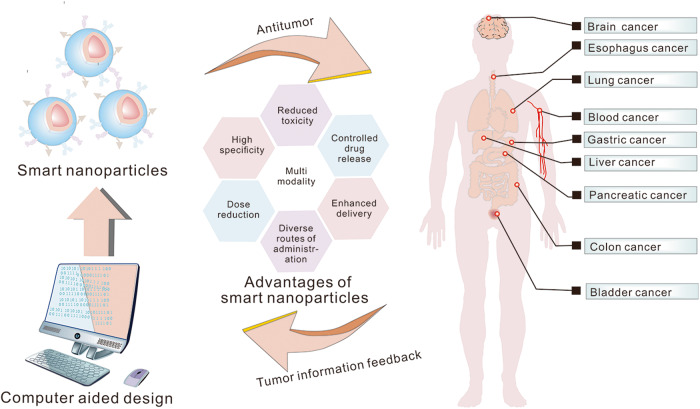
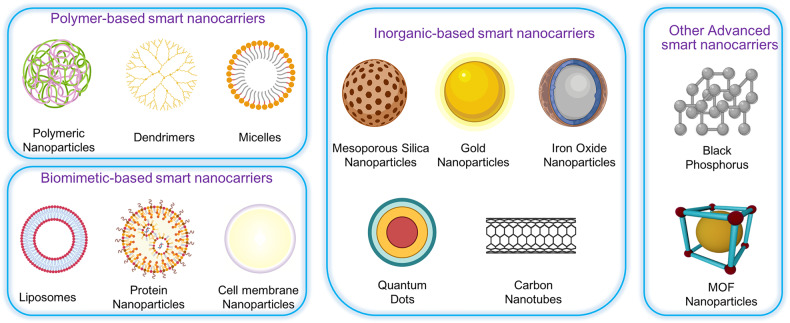
Smart nanoparticles, which can respond to biological cues or be guided by them, are emerging as a promising drug delivery platform for precise cancer treatment. The field of oncology, nanotechnology, and biomedicine has witnessed rapid progress, leading to innovative developments in smart nanoparticles for safer and more effective cancer therapy. In this review, we will highlight recent advancements in smart nanoparticles, including polymeric nanoparticles, dendrimers, micelles, liposomes, protein nanoparticles, cell membrane nanoparticles, mesoporous silica nanoparticles, gold nanoparticles, iron oxide nanoparticles, quantum dots, carbon nanotubes, black phosphorus, MOF nanoparticles, and others. We will focus on their classification, structures, synthesis, and intelligent features. These smart nanoparticles possess the ability to respond to various external and internal stimuli, such as enzymes, pH, temperature, optics, and magnetism, making them intelligent systems. Additionally, this review will explore the latest studies on tumor targeting by functionalizing the surfaces of smart nanoparticles with tumor-specific ligands like antibodies, peptides, transferrin, and folic acid. We will also summarize different types of drug delivery options, including small molecules, peptides, proteins, nucleic acids, and even living cells, for their potential use in cancer therapy. While the potential of smart nanoparticles is promising, we will also acknowledge the challenges and clinical prospects associated with their use. Finally, we will propose a blueprint that involves the use of artificial intelligence-powered nanoparticles in cancer treatment applications. By harnessing the potential of smart nanoparticles, this review aims to usher in a new era of precise and personalized cancer therapy, providing patients with individualized treatment options.
Overview
AI snapshot
Written from the paper’s full text.
TL;DR
This review surveys the landscape of "smart" nanoparticles for cancer therapy — polymeric, biomimetic, and inorganic carriers that respond to endogenous or exogenous stimuli and can be surface-functionalized for tumor targeting. It catalogs carrier types, stimuli, targeting ligands, payload classes, AI-enabled design, and the clinical pipeline, while flagging toxicity, regulatory, and translation hurdles.
Key findings
- Smart nanoparticles are classified into polymer-based (polymeric NPs, dendrimers, micelles), biomimetic (liposomes, protein NPs, cell membrane NPs), inorganic (mesoporous silica, gold, iron oxide, quantum dots, carbon nanotubes), and advanced types (black phosphorus, MOFs, topologically heterogeneous NPs), each with distinct structures, synthesis routes, and intelligent features.
- They respond to endogenous stimuli (pH, enzymes, redox) and exogenous stimuli (temperature, light, ultrasound, electric field, magnetic field); tumor extracellular pH is ~6.5–7, endosomes ~5–6.5, lysosomes ~4.5–5, and intracellular GSH is 2–10 mM (thousands-fold higher than extracellular).
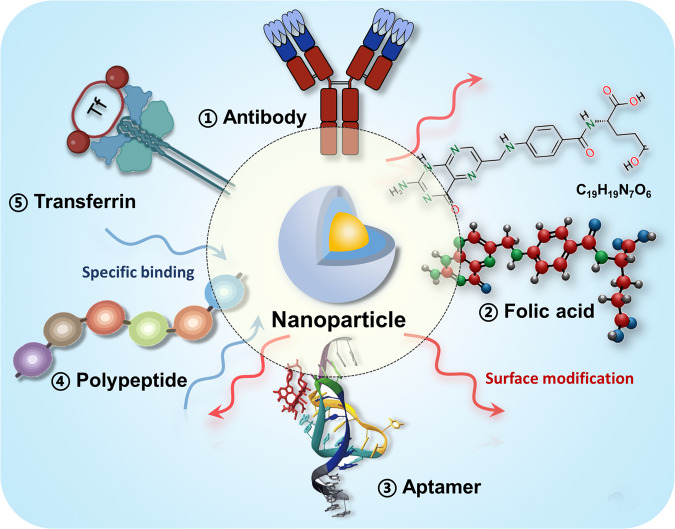
- Active targeting is achieved by functionalizing surfaces with antibodies (e.g., cetuximab/EGFR, trastuzumab/HER2, anti-PSMA, anti-GPC3), peptides (RGD, T7, Angiopep-2, TAT, R8), aptamers (A10/A9 PSMA, MUC1, AS1411, Sgc8), folic acid, and transferrin.
- Payloads now extend beyond small molecules to peptides/proteins, nucleic acids, living cells, and combination regimens; Doxil (FDA 1995) was the first approved nanomedicine, and CPX-351 (Vyxeos) uses a 5:1 cytarabine:daunorubicin molar ratio for AML.
Methods
- Narrative review; no primary data collection or meta-analysis.
- Synthesizes literature on nanocarrier classification, synthesis methods, stimuli-responsive mechanisms, targeting ligand strategies, payload types, AI-powered nanoparticle design, and clinical translation.
- Includes two summary tables: clinically approved nanoparticle formulations (Table 2) and ongoing clinical trials (Table 3), plus a peptide-modification table (Table 1).
Limitations
- The paper states that most nanoparticles accumulate in vital organs (lungs, spleen, kidneys, liver, heart) rather than being cleared, causing toxicology concerns; human toxicity studies remain scarce relative to animal studies.
- It notes regulatory approval is the main commercialization obstacle — only a few smart nanoparticle anticancer drugs have received FDA approval in the 27 years since Doxil (1995), and the absence of specific rules complicates clearance.
- The paper states AI-powered nanoparticles are "still in its infancy," with unresolved safety, biocompatibility, regulatory, and clinical-validation issues; the text also makes evident that the review is descriptive rather than systematic, and that human EPR effects are less effective than in rodents.
Model-written summary. Check it against the paper before relying on it.
Integrity signals
Registry
Cites
Statistics
Figures
Verification
Claims the paper makes
215 Not checked yet · 35 Own interpretation · 16 No basis given · 2 Supported · 1 Partly supported · accuracy not yet measured
The cited sources support only part of this claim — read each source’s verdict below.
In the paper
“For the delivery of chemotherapeutic drugs to treat cancer, many redox-responsive nanoparticles have been investigated recently,166 including polymers, micelles, MSNs, siRNA, proteins, and liposomes for the controlled delivery system in cancer therapy.167,168”
§ Smart nanoparticles for cancer therapy > Stimuli > Endogenous stimuli
What the sources say
- Not checked yetcites [166] Huo, M., Yuan, J., Tao, L. & Wei, Y. Redox-responsive polymers for drug delivery: from molecular design to applications. Polym. Chem. 5, 1519–1528 (2014). source
- Partly supportedcites [167] Li, L. et al. Functional biomimetic nanoparticles for drug delivery and theranostic applications in cancer treatment. Sci. Technol. Adv. Mater. 19, 771–790 (2018). sourceExperimental — accuracy not yet measured
The Redox-responsive nanomaterials section describes polymers, micelles, mesoporous silica nanoparticles, and liposomes as redox-sensitive drug carriers for cancer therapy. It describes siRNA or shRNA as cargo and transferrin as a targeting molecule, but does not establish siRNA or proteins as nanoparticle types in the claimed list. (LLM, conf=0.88)
- Not checked yetcites [168] Liu, M., Du, H., Zhang, W. & Zhai, G. Internal stimuli-responsive nanocarriers for drug delivery: design strategies and applications. Mater. Sci. Eng. C. 71, 1267–1280 (2017). source
plain- Asserted: passes — The authors put it forward as true.
- Checkable: passes — It can be checked against evidence.
- Load-bearing: unclear — It is unclear whether the paper’s conclusions depend on it.
- Based: passes — The paper gives a reason why it holds.
The paper states this without a source or data behind it here, so there is nothing to check it against. The quote shows it is in the paper.
In the paper
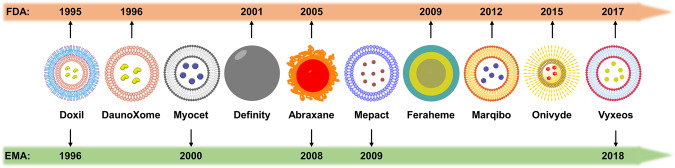
“Several clinically approved nanoparticle formulations either by the FDA in the United States or the European Medicines Agency (EMA) in the European Union are used to treat a variety of cancers at different stages (Table 2).”
§ Smart nanoparticles for cancer therapy > Clinical setting
plain- Asserted: passes — The authors put it forward as true.
- Checkable: passes — It can be checked against evidence.
- Load-bearing: unclear — It is unclear whether the paper’s conclusions depend on it.
- Based: passes — The paper gives a reason why it holds.
None of the sources cited for this claim have been checked yet.
In the paper
“For example, micelles are suitable for the delivery of water-insoluble and amphiphilic drugs, and liposomes can increase the cellular uptake of a variety of drugs.14,15”
§ Smart nanoparticles for cancer therapy > Introduction
What the sources say
- Not checked yetcites [14] Joy, R., George, J. & John, F. Brief outlook on polymeric nanoparticles, micelles, niosomes, hydrogels and liposomes: preparative methods and action. ChemistrySelect 7, e202104045 (2022). source
- Not checked yetcites [15] Cabral, H., Miyata, K., Osada, K. & Kataoka, K. Block copolymer micelles in nanomedicine applications. Chem. Rev. 118, 6844–6892 (2018). source
plaindirect- Asserted: passes — The authors put it forward as true.
- Checkable: passes — It can be checked against evidence.
- Load-bearing: unclear — It is unclear whether the paper’s conclusions depend on it.
- Based: passes — The paper gives a reason why it holds.
None of the sources cited for this claim have been checked yet.
In the paper
“However, it can be achieved by linking the drug to a poly-amidoamine dendrimer to overcome the blood-brain barrier.31,32”
§ Smart nanoparticles for cancer therapy > Type of smart nanocarriers > Polymer-based smart nanocarriers
What the sources say
- Not checked yetcites [31] Srinageshwar, B. et al. PAMAM dendrimers cross the blood–brain barrier when administered through the carotid artery in C57BL/6J mice. Int. J. Mol. Sci. 18, 628 (2017). source
- Not checked yetcites [32] Vacas-Cordoba, E. et al. Antiviral mechanism of polyanionic carbosilane dendrimers against HIV-1. Int. J. Nanomed. 11, 1281 (2016).
plaindirect- Asserted: passes — The authors put it forward as true.
- Checkable: passes — It can be checked against evidence.
- Load-bearing: unclear — It is unclear whether the paper’s conclusions depend on it.
- Based: passes — The paper gives a reason why it holds.
None of the sources cited for this claim have been checked yet.
In the paper
“For instance, synthetic tunability enables the creation of smart nanoparticles that can simultaneously serve several therapeutic or imaging goals by co-encapsulating various therapeutic compounds with various release curves.22,23”
§ Smart nanoparticles for cancer therapy > Type of smart nanocarriers > Polymer-based smart nanocarriers
What the sources say
- Not checked yetcites [22] Hajba, L. & Guttman, A. The use of magnetic nanoparticles in cancer theranostics: toward handheld diagnostic devices. Biotechnol. Adv. 34, 354–361 (2016). source
- Not checked yetcites [23] He, C., Lu, J. & Lin, W. Hybrid nanoparticles for combination therapy of cancer. J. Control. Rel. 219, 224–236 (2015). source
plaindirect- Asserted: passes — The authors put it forward as true.
- Checkable: passes — It can be checked against evidence.
- Load-bearing: unclear — It is unclear whether the paper’s conclusions depend on it.
- Based: passes — The paper gives a reason why it holds.
In the paper
“Nearly 40% of newly developed APIs are rejected by the pharmaceutical industries without further development, mainly due to the low water solubility.29”
§ Smart nanoparticles for cancer therapy > Type of smart nanocarriers > Polymer-based smart nanocarriers
What the sources say
- Not checked yetcites [29] Tomalia, D. A., Nixon, L. S. & Hedstrand, D. M. The role of branch cell symmetry and other critical nanoscale design parameters in the determination of dendrimer encapsulation properties. Biomolecules 10, 642 (2020). source
plaindirect- Asserted: passes — The authors put it forward as true.
- Checkable: passes — It can be checked against evidence.
- Load-bearing: unclear — It is unclear whether the paper’s conclusions depend on it.
- Based: passes — The paper gives a reason why it holds.
In the paper
“PEGylation can produce stealth behavior, helping to counteract such effects.73”
§ Smart nanoparticles for cancer therapy > Type of smart nanocarriers > Inorganic smart nanocarriers
What the sources say
- Not checked yetcites [73] He, Q. et al. The effect of PEGylation of mesoporous silica nanoparticles on nonspecific binding of serum proteins and cellular responses. Biomaterials 31, 1085–1092 (2010). source
plaindirect- Asserted: passes — The authors put it forward as true.
- Checkable: passes — It can be checked against evidence.
- Load-bearing: unclear — It is unclear whether the paper’s conclusions depend on it.
- Based: passes — The paper gives a reason why it holds.
None of the sources cited for this claim have been checked yet.
In the paper
“Mesoporous silica nanoparticles can have their surface altered for active targeting by adding peptides, folate, mannose, and transferrin.75–77”
§ Smart nanoparticles for cancer therapy > Type of smart nanocarriers > Inorganic smart nanocarriers
What the sources say
- Not checked yetcites [75] Yanes, R. E. & Tamanoi, F. Development of mesoporous silica nanomaterials as a vehicle for anticancer drug delivery. Ther. Deliv. 3, 389–404 (2012). source
- Not checked yetcites [76] Cai, Y., Deng, T., Pan, Y. & Zink, J. I. Use of ferritin capped mesoporous silica nanoparticles for redox and pH triggered drug release in vitro and in vivo. Adv. Funct. Mater. 30, 2002043 (2020). source
- Not checked yetcites [77] Yang, S. et al. Tumor-targeted biodegradable multifunctional nanoparticles for cancer theranostics. Chem. Eng. J. 378, 122171 (2019). source
plaindirect- Asserted: passes — The authors put it forward as true.
- Checkable: passes — It can be checked against evidence.
- Load-bearing: unclear — It is unclear whether the paper’s conclusions depend on it.
- Based: passes — The paper gives a reason why it holds.
None of the sources cited for this claim have been checked yet.
In the paper
“Protein nanoparticle surfaces have functional groups that make it simple to bind targeted ligands and other surface alterations as smart nanoparticles.56,59,60”
§ Smart nanoparticles for cancer therapy > Type of smart nanocarriers > Biomimetic smart nanocarriers
What the sources say
- Not checked yetcites [56] Sun, L. et al. Additive nanomanufacturing of lab-on-a-chip fluorescent peptide nanoparticle arrays for Alzheimer’s disease diagnosis. Bio-Des. Manuf. 1, 182–194 (2018). source
- Not checked yetcites [59] Sun, L., Lei, Y., Wang, Y. & Liu, D. Blood-based Alzheimer’s disease diagnosis using fluorescent peptide nanoparticle arrays. Chin. Chem. Lett. 33, 1946–1950 (2022). source
- Not checked yetcites [60] Fan, Z., Sun, L., Huang, Y., Wang, Y. & Zhang, M. Bioinspired fluorescent dipeptide nanoparticles for targeted cancer cell imaging and real-time monitoring of drug release. Nat. Nanotechnol. 11, 388–394 (2016). source
plaindirect- Asserted: passes — The authors put it forward as true.
- Checkable: passes — It can be checked against evidence.
- Load-bearing: unclear — It is unclear whether the paper’s conclusions depend on it.
- Based: passes — The paper gives a reason why it holds.
In the paper
“Additionally, protein can interact with the glycoprotein receptor and facilitate the transcytosis of molecules that are bound to albumin.63”
§ Smart nanoparticles for cancer therapy > Type of smart nanocarriers > Biomimetic smart nanocarriers
What the sources say
- Not checked yetcites [63] Hawkins, M. J., Soon-Shiong, P. & Desai, N. Protein nanoparticles as drug carriers in clinical medicine. Adv. Drug Deliv. Rev. 60, 876–885 (2008). source
plaindirect- Asserted: passes — The authors put it forward as true.
- Checkable: passes — It can be checked against evidence.
- Load-bearing: unclear — It is unclear whether the paper’s conclusions depend on it.
- Based: passes — The paper gives a reason why it holds.
- It may state two separate claims as one. 130
- Probably not a substantial claim. 45
Every source the paper cites for this claim was checked and supports it.
In the paper
“The pH difference between normal tissue/blood and the extracellular environment of the tumor is intrinsic, which has been widely used in drug sustained-release systems.40”
§ Smart nanoparticles for cancer therapy > Type of smart nanocarriers > Polymer-based smart nanocarriers
What the sources say
- Supportedcites [40] Yang, Z. et al. Thermo-and pH-dual responsive polymeric micelles with upper critical solution temperature behavior for photoacoustic imaging-guided synergistic chemo-photothermal therapy against subcutaneous and metastatic breast tumors. Theranostics 8, 4097–4115 (2018). source
The Introduction states that pH differences between normal tissue or blood and the tumor extracellular environment are intrinsic and have been widely used in drug-delivery systems for controlled release. This supports the citing sentence’s general point about pH-responsive release systems. (LLM, conf=0.92)
boostedcorrelational- Asserted: passes — The authors put it forward as true.
- Checkable: passes — It can be checked against evidence.
- Load-bearing: passes — The paper’s conclusions depend on it.
- Based: passes — The paper gives a reason why it holds.
It may state two separate claims as one.
- Supported
Every source the paper cites for this claim was checked and supports it.
In the paper
“EGFR is a cell surface receptor expressed in many different types of cells, especially overexpressed in cancer cells.195”
§ Smart nanoparticles for cancer therapy > Target > Antibody modification
What the sources say
- Supportedcites [195] McDaid, W. J. et al. Repurposing of Cetuximab in antibody-directed chemotherapy-loaded nanoparticles in EGFR therapy-resistant pancreatic tumours. Nanoscale 11, 20261–20273 (2019). source
The Background describes EGFR as a cell-surface receptor normally expressed in many cell types and links its overexpression to several cancer types. This supports the citing sentence’s paraphrase. (LLM, conf=0.92)
plaincorrelational- Asserted: passes — The authors put it forward as true.
- Checkable: passes — It can be checked against evidence.
- Load-bearing: passes — The paper’s conclusions depend on it.
- Based: passes — The paper gives a reason why it holds.
It may state two separate claims as one.
- Supported
The paper states this without a source or data behind it here, so there is nothing to check it against. The quote shows it is in the paper.
In the paper
“Although there are many products in the works, there are very few smart nanoparticles-based anti-cancer medications that have received FDA approval 27 years after the first one, Doxil, was initially disclosed in 1995.”
§ Smart nanoparticles for cancer therapy > Conclusion and future perspective
plain- Asserted: passes — The authors put it forward as true.
- Checkable: passes — It can be checked against evidence.
- Load-bearing: passes — The paper’s conclusions depend on it.
- Based: fails — The paper may give no reason why it holds.
Probably not a substantial claim. The paper may give no reason why it holds.
The paper states this without a source or data behind it here, so there is nothing to check it against. The quote shows it is in the paper.
In the paper
“Some of these systems are liposomes, many of which have similar design characteristics to approved liposome systems (e.g., nontargeted, PEGylated, non-PEGylated, or encapsulate of a single drug).”
§ Smart nanoparticles for cancer therapy > Clinical setting
plain- Asserted: passes — The authors put it forward as true.
- Checkable: passes — It can be checked against evidence.
- Load-bearing: fails — The paper’s conclusions may not depend on it.
- Based: passes — The paper gives a reason why it holds.
Probably not a substantial claim. The paper’s conclusions may not depend on it.
The paper states this without a source or data behind it here, so there is nothing to check it against. The quote shows it is in the paper.
In the paper
“Smart nanoparticles based on specific materials and components of nanocarriers can respond to external and internal stimuli, such as enzyme, pH, temperature, as well as optical and magnetic regulation, etc.”
§ Smart nanoparticles for cancer therapy > Introduction
plaindirect- Asserted: passes — The authors put it forward as true.
- Checkable: passes — It can be checked against evidence.
- Load-bearing: fails — The paper’s conclusions may not depend on it.
- Based: fails — The paper may give no reason why it holds.
Probably not a substantial claim. The paper’s conclusions may not depend on it. The paper may give no reason why it holds.
The paper states this without a source or data behind it here, so there is nothing to check it against. The quote shows it is in the paper.
In the paper
“For example, poly (D, L-lactic-co-glycolic acid) can be used to intercept most types of therapeutic drugs of various molecular weights and can be made into particles of various shapes and sizes.”
§ Smart nanoparticles for cancer therapy > Type of smart nanocarriers > Polymer-based smart nanocarriers
plain- Asserted: passes — The authors put it forward as true.
- Checkable: passes — It can be checked against evidence.
- Load-bearing: fails — The paper’s conclusions may not depend on it.
- Based: fails — The paper may give no reason why it holds.
Probably not a substantial claim. The paper’s conclusions may not depend on it. The paper may give no reason why it holds. It may state two separate claims as one.
In the paper
“Protein-polymer conjugates polyethylene glycol (PEG) have improved their half-life, increased the physical stability, and rendered them immune-free.24”
§ Smart nanoparticles for cancer therapy > Type of smart nanocarriers > Polymer-based smart nanocarriers
What the sources say
- Not checked yetcites [24] Pelegri-O’Day, E. M., Lin, E.-W. & Maynard, H. D. Therapeutic protein–polymer conjugates: advancing beyond PEGylation. J. Am. Chem. Soc. 136, 14323–14332 (2014). source
plaindirect- Asserted: passes — The authors put it forward as true.
- Checkable: passes — It can be checked against evidence.
- Load-bearing: unclear — It is unclear whether the paper’s conclusions depend on it.
- Based: passes — The paper gives a reason why it holds.
It may state two separate claims as one.
In the paper
“Furthermore, their capability to co-delivering therapeutics and diagnostic reagents, which have greatly promoted the development of theranostics and smart nanoparticles for cancer therapy.13”
§ Smart nanoparticles for cancer therapy > Introduction
What the sources say
- Not checked yetcites [13] Peer, D. et al. Nanocarriers as an emerging platform for cancer therapy. Nat. Nanotechnol. 2, 751–760 (2007). source
plaindirect- Asserted: passes — The authors put it forward as true.
- Checkable: passes — It can be checked against evidence.
- Load-bearing: unclear — It is unclear whether the paper’s conclusions depend on it.
- Based: passes — The paper gives a reason why it holds.
It may state two separate claims as one.
A conclusion the paper draws from its own results — it cites no other source for it, so there is none to check. The quote shows it is in the paper.
In the paper
“Smart nanoparticles, which can respond to biological cues or be guided by them, are emerging as a promising drug delivery platform for precise cancer treatment.”
§ Smart nanoparticles for cancer therapy > Abstract
plain- Asserted: passes — The authors put it forward as true.
- Checkable: passes — It can be checked against evidence.
- Load-bearing: passes — The paper’s conclusions depend on it.
- Based: fails — The paper may give no reason why it holds.
Probably not a substantial claim. The paper may give no reason why it holds.
In the paper
“Polylysine dendrimers have the potential to be biodegradable carriers and deliver cytotoxic drugs to solid tumors.33”
§ Smart nanoparticles for cancer therapy > Type of smart nanocarriers > Polymer-based smart nanocarriers
What the sources say
- Not checked yetcites [33] Kaminskas, L. M. et al. Characterisation and tumour targeting of PEGylated polylysine dendrimers bearing doxorubicin via a pH labile linker. J. Control. Rel. 152, 241–248 (2011). source
hedgedconditional- Asserted: passes — The authors put it forward as true.
- Checkable: passes — It can be checked against evidence.
- Load-bearing: unclear — It is unclear whether the paper’s conclusions depend on it.
- Based: passes — The paper gives a reason why it holds.
It may state two separate claims as one.
In the paper
“The increase in polylactic acid content leads to less water absorption, thus reduces the rate of degradation.20”
§ Smart nanoparticles for cancer therapy > Type of smart nanocarriers > Polymer-based smart nanocarriers
What the sources say
- Not checked yetcites [20] Wang, X., Cheng, R., Cheng, L. & Zhong, Z. Lipoyl ester terminated star PLGA as a simple and smart material for controlled drug delivery application. Biomacromolecules 19, 1368–1373 (2018). source
plaindirect- Asserted: passes — The authors put it forward as true.
- Checkable: passes — It can be checked against evidence.
- Load-bearing: unclear — It is unclear whether the paper’s conclusions depend on it.
- Based: passes — The paper gives a reason why it holds.
It may state two separate claims as one.
The paper states this without a source or data behind it here, so there is nothing to check it against. The quote shows it is in the paper.
In the paper
“Different nanocarriers have different structures and properties, and suitable nanocarriers can be selected according to the nature of the drug delivered and the needs of the treatment.”
§ Smart nanoparticles for cancer therapy > Introduction
plaincorrelational- Asserted: passes — The authors put it forward as true.
- Checkable: passes — It can be checked against evidence.
- Load-bearing: fails — The paper’s conclusions may not depend on it.
- Based: passes — The paper gives a reason why it holds.
Probably not a substantial claim. The paper’s conclusions may not depend on it. It may state two separate claims as one.
None of the sources cited for this claim have been checked yet.
In the paper
“Unlike conventional nanoparticles, they can be triggered by specific stimuli and target-specific sites with precise drug delivery.7,8”
§ Smart nanoparticles for cancer therapy > Introduction
What the sources say
- Not checked yetcites [7] Gupta, P. K. Drug targeting in cancer chemotherapy: a clinical perspective. J. Pharm. Sci. 79, 949–962 (1990). source
- Not checked yetcites [8] Tenchov, R., Bird, R., Curtze, A. E. & Zhou, Q. Lipid nanoparticles─from liposomes to mrna vaccine delivery, a landscape of research diversity and advancement. ACS Nano 15, 16982–17015 (2021). source
plaindirect- Asserted: passes — The authors put it forward as true.
- Checkable: passes — It can be checked against evidence.
- Load-bearing: passes — The paper’s conclusions depend on it.
- Based: passes — The paper gives a reason why it holds.
It may state two separate claims as one.
The paper states this without a source or data behind it here, so there is nothing to check it against. The quote shows it is in the paper.
In the paper
“The drug release capacity of poly (D, L-lactic-co-glycolic acid) can be adjusted by changing molecular weight, lactide to ethyl ester ratio, and drug concentration.”
§ Smart nanoparticles for cancer therapy > Type of smart nanocarriers > Polymer-based smart nanocarriers
plaindirect- Asserted: passes — The authors put it forward as true.
- Checkable: passes — It can be checked against evidence.
- Load-bearing: fails — The paper’s conclusions may not depend on it.
- Based: fails — The paper may give no reason why it holds.
Probably not a substantial claim. The paper’s conclusions may not depend on it. The paper may give no reason why it holds.
None of the sources cited for this claim have been checked yet.
In the paper
“After modification or stimulation by corresponding factors, these smart nanoparticles efficiently aggregate at the target location and release their payloads, establishing a smart treatment mode.8–12”
§ Smart nanoparticles for cancer therapy > Introduction
What the sources say
- Not checked yetcites [8] Tenchov, R., Bird, R., Curtze, A. E. & Zhou, Q. Lipid nanoparticles─from liposomes to mrna vaccine delivery, a landscape of research diversity and advancement. ACS Nano 15, 16982–17015 (2021). source
- Not checked yetcites [9] Mitchell, M. J. et al. Engineering precision nanoparticles for drug delivery. Nat. Rev. Drug Discov. 20, 101–124 (2021). source
- Not checked yetcites [10] Liu, J., Liu, Z., Pang, Y. & Zhou, H. The interaction between nanoparticles and immune system: application in the treatment of inflammatory diseases. J. Nanobiotechnol. 20, 127 (2022). source
- Not checked yetcites [11] Herdiana, Y., Wathoni, N., Shamsuddin, S. & Muchtaridi, M. Drug release study of the chitosan-based nanoparticles. Heliyon 8, e08674 (2022). source
- Not checked yetcites [12] Senapati, S., Mahanta, A. K., Kumar, S. & Maiti, P. Controlled drug delivery vehicles for cancer treatment and their performance. Signal Transduct. Target. Ther. 3, 7 (2018). source
plaindirect- Asserted: passes — The authors put it forward as true.
- Checkable: passes — It can be checked against evidence.
- Load-bearing: passes — The paper’s conclusions depend on it.
- Based: passes — The paper gives a reason why it holds.
It may state two separate claims as one.
In the paper
“So far, we have already witnessed the first small molecule-based polymeric nanoparticles for drug targeting and controlled release from the bench to the bedside, which laid the foundation for a variety of ongoing phase II clinical trials to proceed from the initial proof of concept in vitro to the in vivo study, and to human testing.19”
§ Smart nanoparticles for cancer therapy > Type of smart nanocarriers > Polymer-based smart nanocarriers
What the sources say
- Not checked yetcites [19] Dahmana, N. et al. Ocular biodistribution of spironolactone after a single intravitreal injection of a biodegradable sustained-release polymer in rats. Mol. Pharm. 17, 59–69 (2020). source
plaindirect- Asserted: passes — The authors put it forward as true.
- Checkable: passes — It can be checked against evidence.
- Load-bearing: unclear — It is unclear whether the paper’s conclusions depend on it.
- Based: passes — The paper gives a reason why it holds.
It may state two separate claims as one.
The paper states this without a source or data behind it here, so there is nothing to check it against. The quote shows it is in the paper.
In the paper
“Currently, the most used techniques for polymeric nanoparticles preparation are emulsion polymerization, solvent evaporation, salting-out, dialysis and supercritical fluid technologies.”
§ Smart nanoparticles for cancer therapy > Type of smart nanocarriers > Polymer-based smart nanocarriers
plain- Asserted: passes — The authors put it forward as true.
- Checkable: passes — It can be checked against evidence.
- Load-bearing: fails — The paper’s conclusions may not depend on it.
- Based: fails — The paper may give no reason why it holds.
Probably not a substantial claim. The paper’s conclusions may not depend on it. The paper may give no reason why it holds.
In the paper
“Polymer micelles typically range in size from tens to hundreds of nanometers.35”
§ Smart nanoparticles for cancer therapy > Type of smart nanocarriers > Polymer-based smart nanocarriers
What the sources say
- Not checked yetcites [35] Owen, S. C., Chan, D. P. Y. & Shoichet, M. S. Polymeric micelle stability. Nano Today 7, 53–65 (2012). source
plain- Asserted: passes — The authors put it forward as true.
- Checkable: passes — It can be checked against evidence.
- Load-bearing: fails — The paper’s conclusions may not depend on it.
- Based: passes — The paper gives a reason why it holds.
Probably not a substantial claim. The paper’s conclusions may not depend on it.
The paper states this without a source or data behind it here, so there is nothing to check it against. The quote shows it is in the paper.
In the paper
“Another embodiment of smart nanoparticles is their tumor targeting characteristics by functionalizing their surface with tumor-specific ligands (such as antibodies, peptides, aptamer, and transferrin, etc.).”
§ Smart nanoparticles for cancer therapy > Introduction
plainconditional- Asserted: passes — The authors put it forward as true.
- Checkable: passes — It can be checked against evidence.
- Load-bearing: fails — The paper’s conclusions may not depend on it.
- Based: fails — The paper may give no reason why it holds.
Probably not a substantial claim. The paper’s conclusions may not depend on it. The paper may give no reason why it holds.
In the paper
“Because of their special properties, such as nanoscale uniform size, high branching, water-solubility, internal cavities, polyvalency, and biocompatibility, dendrimers are ideal active excipients and can improve the solubility of insoluble drugs, reduce drug toxicity and increase drug potency.28”
§ Smart nanoparticles for cancer therapy > Type of smart nanocarriers > Polymer-based smart nanocarriers
What the sources say
- Not checked yetcites [28] Santos, A., Veiga, F. & Figueiras, A. Dendrimers as pharmaceutical excipients: synthesis, properties, toxicity and biomedical applications. Materials 13, 65 (2019). source
plaindirect- Asserted: passes — The authors put it forward as true.
- Checkable: passes — It can be checked against evidence.
- Load-bearing: unclear — It is unclear whether the paper’s conclusions depend on it.
- Based: passes — The paper gives a reason why it holds.
It may state two separate claims as one.
The paper states this without a source or data behind it here, so there is nothing to check it against. The quote shows it is in the paper.
In the paper
“Polymeric nanoparticles have several advantages over non-mixed drugs, in terms of cycle time, stability, structural decomposition, encapsulation rate, premature release, and nonspecific release kinetics.”
§ Smart nanoparticles for cancer therapy > Type of smart nanocarriers > Polymer-based smart nanocarriers
plaindirect- Asserted: passes — The authors put it forward as true.
- Checkable: passes — It can be checked against evidence.
- Load-bearing: fails — The paper’s conclusions may not depend on it.
- Based: fails — The paper may give no reason why it holds.
Probably not a substantial claim. The paper’s conclusions may not depend on it. The paper may give no reason why it holds.
In the paper
“Drug resistance, toxicity, and the mechanics of drug release in capsules can all be overcome using dendrimers, which make them ideal systems as smart nanoparticles for cancer therapy.34”
§ Smart nanoparticles for cancer therapy > Type of smart nanocarriers > Polymer-based smart nanocarriers
What the sources say
- Not checked yetcites [34] Ambekar, R. S., Choudhary, M. & Kandasubramanian, B. Recent advances in dendrimer-based nanoplatform for cancer treatment: a review. Eur. Polym. J. 126, 109546 (2020). source
plaindirect- Asserted: passes — The authors put it forward as true.
- Checkable: passes — It can be checked against evidence.
- Load-bearing: passes — The paper’s conclusions depend on it.
- Based: passes — The paper gives a reason why it holds.
It may state two separate claims as one.
The paper states this without a source or data behind it here, so there is nothing to check it against. The quote shows it is in the paper.
In the paper
“A drug delivery system can be triggered by controlling local induction of endogenous physical parameters such as electrical, thermal, ultrasound, or magnetic energy.”
§ Smart nanoparticles for cancer therapy > Type of smart nanocarriers > Polymer-based smart nanocarriers
plaindirect- Asserted: passes — The authors put it forward as true.
- Checkable: passes — It can be checked against evidence.
- Load-bearing: fails — The paper’s conclusions may not depend on it.
- Based: fails — The paper may give no reason why it holds.
Probably not a substantial claim. The paper’s conclusions may not depend on it. The paper may give no reason why it holds.
None of the sources cited for this claim have been checked yet.
In the paper
“They consist of an inner layer and an outer layer. Functional groups that are used for drug conjugation and targeting make up the outer layer. The drug encapsulation efficiency, drug toxicity, and controlled release mechanisms are all improved in the inner layer.26”
§ Smart nanoparticles for cancer therapy > Type of smart nanocarriers > Polymer-based smart nanocarriers
What the sources say
- Not checked yetcites [25] Singh, A. P., Biswas, A., Shukla, A. & Maiti, P. Targeted therapy in chronic diseases using nanomaterial-based drug delivery vehicles. Signal Transduct. Target. Ther. 4, 33 (2019). source
- Not checked yetcites [26] Mhlwatika, Z. & Aderibigbe, B. A. Application of dendrimers for the treatment of infectious diseases. Molecules 23, 2205 (2018). source
plaindirect- Asserted: passes — The authors put it forward as true.
- Checkable: passes — It can be checked against evidence.
- Load-bearing: unclear — It is unclear whether the paper’s conclusions depend on it.
- Based: passes — The paper gives a reason why it holds.
It may state two separate claims as one.
A conclusion the paper draws from its own results — it cites no other source for it, so there is none to check. The quote shows it is in the paper.
In the paper
“Additionally, the proposal of computer-aided design smart nanoparticles, integrating the cutting-edge application of artificial intelligence, further elevates the potential and sophistication of these ingenious nanoscale technologies.”
§ Smart nanoparticles for cancer therapy > Introduction
plaindirect- Asserted: passes — The authors put it forward as true.
- Checkable: fails — It may be too vague to check against evidence.
- Load-bearing: fails — The paper’s conclusions may not depend on it.
- Based: fails — The paper may give no reason why it holds.
Probably not a substantial claim. It may be too vague to check against evidence. The paper’s conclusions may not depend on it. The paper may give no reason why it holds.
None of the sources cited for this claim have been checked yet.
In the paper
“For example, micelles are suitable for the delivery of water-insoluble and amphiphilic drugs, and liposomes can increase the cellular uptake of a variety of drugs.14,15”
§ Smart nanoparticles for cancer therapy > Introduction
What the sources say
- Not checked yetcites [14] Joy, R., George, J. & John, F. Brief outlook on polymeric nanoparticles, micelles, niosomes, hydrogels and liposomes: preparative methods and action. ChemistrySelect 7, e202104045 (2022). source
- Not checked yetcites [15] Cabral, H., Miyata, K., Osada, K. & Kataoka, K. Block copolymer micelles in nanomedicine applications. Chem. Rev. 118, 6844–6892 (2018). source
plaindirect- Asserted: passes — The authors put it forward as true.
- Checkable: passes — It can be checked against evidence.
- Load-bearing: fails — The paper’s conclusions may not depend on it.
- Based: passes — The paper gives a reason why it holds.
Probably not a substantial claim. The paper’s conclusions may not depend on it.
The paper states this without a source or data behind it here, so there is nothing to check it against. The quote shows it is in the paper.
In the paper
“Other advances involve the capability of combining materials with different chemical compositions such as organic-organic and organic-inorganic materials to achieve synergistic properties.”
§ Smart nanoparticles for cancer therapy > Type of smart nanocarriers > Polymer-based smart nanocarriers
plaindirect- Asserted: passes — The authors put it forward as true.
- Checkable: passes — It can be checked against evidence.
- Load-bearing: fails — The paper’s conclusions may not depend on it.
- Based: fails — The paper may give no reason why it holds.
Probably not a substantial claim. The paper’s conclusions may not depend on it. The paper may give no reason why it holds.
In the paper
“Upon injection, gold nanoparticles bind specifically to cancer cells and scatter shine, allowing the doctors to easily identify tumors and healthy cells.85”
§ Smart nanoparticles for cancer therapy > Type of smart nanocarriers > Inorganic smart nanocarriers
What the sources say
- Not checked yetcites [85] Menon, J. U. et al. Nanomaterials for photo-based diagnostic and therapeutic applications. Theranostics 3, 152–166 (2013). source
plaindirect- Asserted: passes — The authors put it forward as true.
- Checkable: passes — It can be checked against evidence.
- Load-bearing: unclear — It is unclear whether the paper’s conclusions depend on it.
- Based: passes — The paper gives a reason why it holds.
It may state two separate claims as one.
None of the sources cited for this claim have been checked yet.
In the paper
“Protein-based nanoparticles provide a number of benefits, including simple synthesis, a high binding capacity for different medications, non-toxicity, non-immunogenicity, biocompatibility, biodegradability, and plasma half-life.56–58”
§ Smart nanoparticles for cancer therapy > Type of smart nanocarriers > Biomimetic smart nanocarriers
What the sources say
- Not checked yetcites [56] Sun, L. et al. Additive nanomanufacturing of lab-on-a-chip fluorescent peptide nanoparticle arrays for Alzheimer’s disease diagnosis. Bio-Des. Manuf. 1, 182–194 (2018). source
- Not checked yetcites [57] Sun, L. et al. Fluorescent peptide nanoparticles to detect amyloid-beta aggregation in cerebrospinal fluid and serum for Alzheimer’s disease diagnosis and progression monitoring. Chem. Eng. J. 405, 126733 (2021). source
- Not checked yetcites [58] Liu, D., Fu, D., Zhang, L. & Sun, L. Detection of amyloid-beta by Fmoc-KLVFF self-assembled fluorescent nanoparticles for Alzheimer’s disease diagnosis. Chin. Chem. Lett. 32, 1066–1070 (2021). source
plaindirect- Asserted: passes — The authors put it forward as true.
- Checkable: passes — It can be checked against evidence.
- Load-bearing: unclear — It is unclear whether the paper’s conclusions depend on it.
- Based: passes — The paper gives a reason why it holds.
It may state two separate claims as one.
None of the sources cited for this claim have been checked yet.
In the paper
“Polymer micelles can simply physically encapsulate (solubilize) hydrophobic drugs in their hydrophobic core effectively, resulting in the following advantages: (i) elimination of drug side effects; (ii) Increase the water solubility of hydrophobic and insoluble drugs; (iii) Control of drug release rate; (iv) Protect drug molecules from degradation by specific media (pH, temperature).”
§ Smart nanoparticles for cancer therapy > Type of smart nanocarriers > Polymer-based smart nanocarriers
What the sources say
- Not checked yetcites [36] O’Brien, F. J. Biomaterials & scaffolds for tissue engineering. Mater. Today 14, 88–95 (2011). source
- Not checked yetcites [37] Hussein, Y. H. A. & Youssry, M. Polymeric micelles of biodegradable diblock copolymers: enhanced encapsulation of hydrophobic drugs. Materials 11, 688 (2018). source
plaindirect- Asserted: passes — The authors put it forward as true.
- Checkable: passes — It can be checked against evidence.
- Load-bearing: unclear — It is unclear whether the paper’s conclusions depend on it.
- Based: passes — The paper gives a reason why it holds.
It may state two separate claims as one.
In the paper
“Radiolabeled liposomes can be used to both identify the tumor and treat it while also determining the bio-distribution of liposomes in the body.52”
§ Smart nanoparticles for cancer therapy > Type of smart nanocarriers > Biomimetic smart nanocarriers
What the sources say
- Not checked yetcites [52] Petersen, A. L., Hansen, A. E., Gabizon, A. & Andresen, T. L. Liposome imaging agents in personalized medicine. Adv. Drug Deliv. Rev. 64, 1417–1435 (2012). source
plaindirect- Asserted: passes — The authors put it forward as true.
- Checkable: passes — It can be checked against evidence.
- Load-bearing: unclear — It is unclear whether the paper’s conclusions depend on it.
- Based: passes — The paper gives a reason why it holds.
It may state two separate claims as one.
In the paper
“Biosynthesis (plant and microbial mediated) of gold nanoparticles has a very broad prospect, and many medicinal plants and microorganisms have the potential to produce nanoparticles in bulk.82”
§ Smart nanoparticles for cancer therapy > Type of smart nanocarriers > Inorganic smart nanocarriers
What the sources say
- Not checked yetcites [82] Singh, P. et al. Biogenic silver and gold nanoparticles synthesized using red ginseng root extract, and their applications. Artif. Cells Nanomed. Biotechnol. 44, 811–816 (2016).
plain- Asserted: passes — The authors put it forward as true.
- Checkable: passes — It can be checked against evidence.
- Load-bearing: fails — The paper’s conclusions may not depend on it.
- Based: passes — The paper gives a reason why it holds.
Probably not a substantial claim. The paper’s conclusions may not depend on it. It may state two separate claims as one.
In the paper
“Gold nanoparticles labeled with tumor-homing peptide containing isoDGR can be targeted delivery of therapeutic agents to tumors and improve its therapeutic index.90”
§ Smart nanoparticles for cancer therapy > Type of smart nanocarriers > Inorganic smart nanocarriers
What the sources say
- Not checked yetcites [90] Gasparri, A. M. et al. Boosting interleukin-12 antitumor activity and synergism with immunotherapy by targeted delivery with isoDGR-tagged nanogold. Small 15, 1903462 (2019). source
plaindirect- Asserted: passes — The authors put it forward as true.
- Checkable: passes — It can be checked against evidence.
- Load-bearing: unclear — It is unclear whether the paper’s conclusions depend on it.
- Based: passes — The paper gives a reason why it holds.
It may state two separate claims as one.
In the paper
“For example, the transferrin receptor-targeted pH-sensitive micellar system can be utilized as smart nanoparticles to overcome multi-drug resistance and reduce side effects of the system, so as to achieve targeted delivery of tumors.41”
§ Smart nanoparticles for cancer therapy > Type of smart nanocarriers > Polymer-based smart nanocarriers
What the sources say
- Not checked yetcites [41] Gao, W., Ye, G., Duan, X., Yang, X. & Yang, V. C. Transferrin receptor-targeted pH-sensitive micellar system for diminution of drug resistance and targetable delivery in multidrug-resistant breast cancer. Int. J. Nanomed. 12, 1047 (2017). source
plaindirect- Asserted: passes — The authors put it forward as true.
- Checkable: passes — It can be checked against evidence.
- Load-bearing: unclear — It is unclear whether the paper’s conclusions depend on it.
- Based: passes — The paper gives a reason why it holds.
It may state two separate claims as one.
In the paper
“PEG ylation helps liposomes escape the reticuloendothelial system and have a longer blood circulation time.49”
§ Smart nanoparticles for cancer therapy > Type of smart nanocarriers > Biomimetic smart nanocarriers
What the sources say
- Not checked yetcites [49] Allen, T. M. & Cullis, P. R. Liposomal drug delivery systems: from concept to clinical applications. Adv. Drug Deliv. Rev. 65, 36–48 (2013). source
plaindirect- Asserted: passes — The authors put it forward as true.
- Checkable: passes — It can be checked against evidence.
- Load-bearing: unclear — It is unclear whether the paper’s conclusions depend on it.
- Based: passes — The paper gives a reason why it holds.
It may state two separate claims as one.
In the paper
“Chang et al. proposed a multifunctional nano platform based on Ti3C2-MXene Au nanocomposite, which realized the triune of PTT/Enzyme kinetics therapy/antitumor immune therapy, and accompanied by photoacoustic (PA) and thermal dual-mode imaging in vivo.87”
§ Smart nanoparticles for cancer therapy > Type of smart nanocarriers > Inorganic smart nanocarriers
What the sources say
- Not checked yetcites [87] Chang, X. et al. Multifunctional Au modified Ti3C2-MXene for photothermal/enzyme dynamic/immune synergistic therapy. Nano Lett. 22, 8321–8330 (2022). source
plaindirect- Asserted: passes — The authors put it forward as true.
- Checkable: passes — It can be checked against evidence.
- Load-bearing: unclear — It is unclear whether the paper’s conclusions depend on it.
- Based: passes — The paper gives a reason why it holds.
It may state two separate claims as one.
In the paper
“They are appealing for targeted drug delivery, photothermal therapy (PTT), photodynamic therapy (PDT), photoimaging, biosensors, and photothermal therapy.84”
§ Smart nanoparticles for cancer therapy > Type of smart nanocarriers > Inorganic smart nanocarriers
What the sources say
- Not checked yetcites [84] Singh, P. et al. Extracellular synthesis of silver and gold nanoparticles by Sporosarcina koreensis DC4 and their biological applications. Enzym. Microb. Technol. 86, 75–83 (2016). source
plain- Asserted: passes — The authors put it forward as true.
- Checkable: passes — It can be checked against evidence.
- Load-bearing: unclear — It is unclear whether the paper’s conclusions depend on it.
- Based: passes — The paper gives a reason why it holds.
It may state two separate claims as one.
In the paper
“Gold nanoparticles have a large surface area and can be utilized to load or bind to any genetic or biological part, thereby widely used for sensing/imaging/therapy of various targets such as proteins, cells and nucleic acids.88”
§ Smart nanoparticles for cancer therapy > Type of smart nanocarriers > Inorganic smart nanocarriers
What the sources say
- Not checked yetcites [88] Kumar, D., Saini, N., Jain, N., Sareen, R. & Pandit, V. Gold nanoparticles: an era in bionanotechnology. Expert Opin. Drug Deliv. 10, 397–409 (2013). source
plaindirect- Asserted: passes — The authors put it forward as true.
- Checkable: passes — It can be checked against evidence.
- Load-bearing: unclear — It is unclear whether the paper’s conclusions depend on it.
- Based: passes — The paper gives a reason why it holds.
It may state two separate claims as one.
In the paper
“The combination of folate-modified pH-sensitive system micelle loaded the anti-tumor drug doxorubicin can effectively reduce the systemic toxicity of doxorubicin, reduce the damage to heart and lung tissues, and improve its anti-tumor efficacy.42”
§ Smart nanoparticles for cancer therapy > Type of smart nanocarriers > Polymer-based smart nanocarriers
What the sources say
- Not checked yetcites [42] Li, X. et al. A folate modified pH sensitive targeted polymeric micelle alleviated systemic toxicity of doxorubicin (DOX) in multi-drug resistant tumor bearing mice. Eur. J. Pharm. Sci. 76, 95–101 (2015). source
plaindirect- Asserted: passes — The authors put it forward as true.
- Checkable: passes — It can be checked against evidence.
- Load-bearing: passes — The paper’s conclusions depend on it.
- Based: passes — The paper gives a reason why it holds.
It may state two separate claims as one.
In the paper
“Conventional nanoparticles continue to face a number of difficulties, including quick blood circulation clearance, simple immune system recognition, and low target site accumulation.64”
§ Smart nanoparticles for cancer therapy > Type of smart nanocarriers > Biomimetic smart nanocarriers
What the sources say
- Not checked yetcites [64] Zhen, X., Cheng, P. & Pu, K. Recent advances in cell membrane–camouflaged nanoparticles for cancer phototherapy. Small 15, 1804105 (2019). source
plain- Asserted: passes — The authors put it forward as true.
- Checkable: passes — It can be checked against evidence.
- Load-bearing: passes — The paper’s conclusions depend on it.
- Based: passes — The paper gives a reason why it holds.
It may state two separate claims as one.
In the paper
“The first commercially available drug licensed by the Food and Drug Administration (FDA) that has demonstrated notable efficacy in the treatment of metastatic breast cancer is called Abraxane, which has a diameter of about 130 nm.12”
§ Smart nanoparticles for cancer therapy > Type of smart nanocarriers > Biomimetic smart nanocarriers
What the sources say
- Not checked yetcites [12] Senapati, S., Mahanta, A. K., Kumar, S. & Maiti, P. Controlled drug delivery vehicles for cancer treatment and their performance. Signal Transduct. Target. Ther. 3, 7 (2018). source
boosted- Asserted: passes — The authors put it forward as true.
- Checkable: passes — It can be checked against evidence.
- Load-bearing: fails — The paper’s conclusions may not depend on it.
- Based: passes — The paper gives a reason why it holds.
Probably not a substantial claim. The paper’s conclusions may not depend on it. It may state two separate claims as one.
In the paper
“Iron oxide nanoparticles are magnetized to their saturation when a magnetic field is applied, but there is no residual magnetism after the magnetic field is removed.92”
§ Smart nanoparticles for cancer therapy > Type of smart nanocarriers > Inorganic smart nanocarriers
What the sources say
- Not checked yetcites [92] Palanisamy, S. & Wang, Y.-M. Superparamagnetic iron oxide nanoparticulate system: synthesis, targeting, drug delivery and therapy in cancer. Dalton Trans. 48, 9490–9515 (2019). source
plaindirect- Asserted: passes — The authors put it forward as true.
- Checkable: passes — It can be checked against evidence.
- Load-bearing: unclear — It is unclear whether the paper’s conclusions depend on it.
- Based: passes — The paper gives a reason why it holds.
It may state two separate claims as one.
In the paper
“By avoiding the introduction of cargo, this endogenous biomarker-triggered “turn-on” technique to produce therapeutic molecules in situ could greatly simplify the construction of nanomedicine and hold significant promise for the targeted treatment of colon cancer.126”
§ Smart nanoparticles for cancer therapy > Type of smart nanocarriers > Other advanced smart nanoparticles
What the sources say
- Not checked yetcites [126] Li, Y., Zhou, J., Wang, L. & Xie, Z. Endogenous hydrogen sulfide-triggered MOF-based nanoenzyme for synergic cancer therapy. ACS Appl. Mater. Interfaces 12, 30213–30220 (2020). source
hedgedconditional- Asserted: passes — The authors put it forward as true.
- Checkable: passes — It can be checked against evidence.
- Load-bearing: passes — The paper’s conclusions depend on it.
- Based: passes — The paper gives a reason why it holds.
It may state two separate claims as one.
In the paper
“Cancer cell invasion and metastasis have long been facilitated by matrix metalloproteinases (MMPs), whose expression and activation have risen in nearly all human malignancies.144”
§ Smart nanoparticles for cancer therapy > Stimuli > Endogenous stimuli
What the sources say
- Not checked yetcites [144] Egeblad, M. & Werb, Z. New functions for the matrix metalloproteinases in cancer progression. Nat. Rev. Cancer 2, 161–174 (2002). source
plaindirect- Asserted: passes — The authors put it forward as true.
- Checkable: passes — It can be checked against evidence.
- Load-bearing: passes — The paper’s conclusions depend on it.
- Based: passes — The paper gives a reason why it holds.
It may state two separate claims as one.
The paper states this without a source or data behind it here, so there is nothing to check it against. The quote shows it is in the paper.
In the paper
“As a result of their innate fluorescence, QDs are particularly well-known for cancer imaging.”
§ Smart nanoparticles for cancer therapy > Type of smart nanocarriers > Inorganic smart nanocarriers
boosteddirect- Asserted: passes — The authors put it forward as true.
- Checkable: passes — It can be checked against evidence.
- Load-bearing: fails — The paper’s conclusions may not depend on it.
- Based: passes — The paper gives a reason why it holds.
Probably not a substantial claim. The paper’s conclusions may not depend on it.
In the paper
“The resulting PEGylated BP nanoparticles have a homogeneous size, high biocompatibility, photostability, and the capacity to generate heat from NIR light, making them appropriate as a novel nanotheranostic agent for photothermal therapy and PA imaging of cancer.121”
§ Smart nanoparticles for cancer therapy > Type of smart nanocarriers > Other advanced smart nanoparticles
What the sources say
- Not checked yetcites [121] Sun, C. et al. One-pot solventless preparation of PEGylated black phosphorus nanoparticles for photoacoustic imaging and photothermal therapy of cancer. Biomaterials 91, 81–89 (2016). source
plaindirect- Asserted: passes — The authors put it forward as true.
- Checkable: passes — It can be checked against evidence.
- Load-bearing: passes — The paper’s conclusions depend on it.
- Based: passes — The paper gives a reason why it holds.
It may state two separate claims as one.
In the paper
“Chemical bonds of pH-responsive linkers disassemble at acidic pH and release the drug in the tumor microenvironment.”
§ Smart nanoparticles for cancer therapy > Stimuli > Endogenous stimuli
What the sources say
- Not checked yetcites [139] Liu, J. et al. pH-sensitive nano-systems for drug delivery in cancer therapy. Biotechnol. Adv. 32, 693–710 (2014). source
plaindirect- Asserted: passes — The authors put it forward as true.
- Checkable: passes — It can be checked against evidence.
- Load-bearing: passes — The paper’s conclusions depend on it.
- Based: passes — The paper gives a reason why it holds.
It may state two separate claims as one.
In the paper
“To boost solubility, circumvent the reticuloendothelial system, and reduce toxicity, PEGylation is a crucial step.111”
§ Smart nanoparticles for cancer therapy > Type of smart nanocarriers > Inorganic smart nanocarriers
What the sources say
- Not checked yetcites [111] Lay, C. L., Liu, J. & Liu, Y. Functionalized carbon nanotubes for anticancer drug delivery. Expert Rev. Med. Devices 8, 561–566 (2011). source
plaindirect- Asserted: passes — The authors put it forward as true.
- Checkable: passes — It can be checked against evidence.
- Load-bearing: unclear — It is unclear whether the paper’s conclusions depend on it.
- Based: passes — The paper gives a reason why it holds.
It may state two separate claims as one.
In the paper
“As hybrid crystalline porous biomaterials, many attempts have been made to utilize MOFs as smart nanoparticles in drug delivery systems due to their adjustable pore shape and size, ultrahigh surface area, and versatile functionalities.123”
§ Smart nanoparticles for cancer therapy > Type of smart nanocarriers > Other advanced smart nanoparticles
What the sources say
- Not checked yetcites [123] Zhang, H. et al. MOF-derived nanohybrids for electrocatalysis and energy storage: current status and perspectives. Chem. commun. 54, 5268–5288 (2018). source
plaindirect- Asserted: passes — The authors put it forward as true.
- Checkable: passes — It can be checked against evidence.
- Load-bearing: fails — The paper’s conclusions may not depend on it.
- Based: passes — The paper gives a reason why it holds.
Probably not a substantial claim. The paper’s conclusions may not depend on it.
In the paper
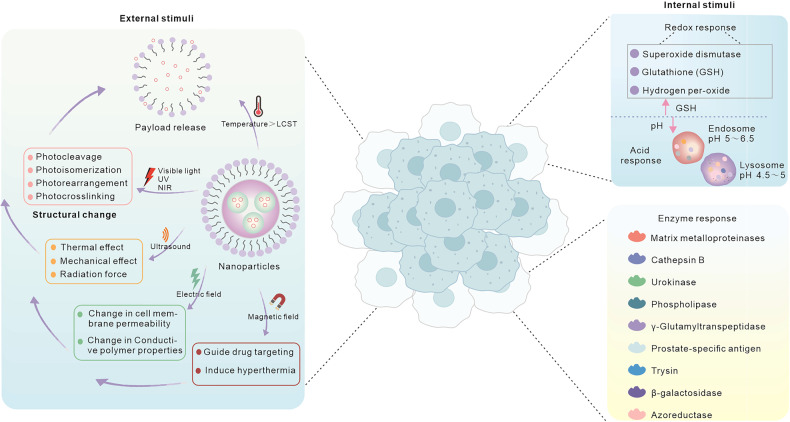
“Smart nanoparticles can modify their form, structure, solubility, surface charge, self-association, or dissociation behaviors in response to internal and external stimuli (Fig. 3), which can increase endosomal escape, promote cellular uptake, or cause payload release.133”
§ Smart nanoparticles for cancer therapy > Stimuli
What the sources say
- Not checked yetcites [133] Li, M., Zhao, G., Su, W.-K. & Shuai, Q. Enzyme-responsive nanoparticles for anti-tumor drug delivery. Front. Chem. 8, 647 (2020). source
plaindirect- Asserted: passes — The authors put it forward as true.
- Checkable: passes — It can be checked against evidence.
- Load-bearing: passes — The paper’s conclusions depend on it.
- Based: passes — The paper gives a reason why it holds.
It may state two separate claims as one.
In the paper
“With CISe as the core, ZnS as the shell, manganese doping, and folic acid functionalization, a multifunctional QD has recently been produced. It possesses high near-infrared (NIR)-II fluorescence efficiency of up to 31.2% and high contrast on magnetic resonance imaging (MRI).105”
§ Smart nanoparticles for cancer therapy > Type of smart nanocarriers > Inorganic smart nanocarriers
What the sources say
- Not checked yetcites [105] Li, Y. et al. Bright, magnetic NIR-II quantum dot probe for sensitive dual-modality imaging and intensive combination therapy of cancer. ACS Nano 16, 8076–8094 (2022). source
plain- Asserted: passes — The authors put it forward as true.
- Checkable: passes — It can be checked against evidence.
- Load-bearing: unclear — It is unclear whether the paper’s conclusions depend on it.
- Based: passes — The paper gives a reason why it holds.
It may state two separate claims as one.
In the paper
“These advanced nanoparticles with topologically heterogeneous structures have promise for overcoming biological barriers, improving therapeutic efficacy, and minimizing side effects in cancer therapy.132”
§ Smart nanoparticles for cancer therapy > Type of smart nanocarriers > Other advanced smart nanoparticles
What the sources say
- Not checked yetcites [132] Dai, X., Zhang, X., Gao, L., Xu, Z. & Yan, L.-T. Topology mediates transport of nanoparticles in macromolecular networks. Nat. Commun. 13, 4094 (2022). source
hedgedconditional- Asserted: passes — The authors put it forward as true.
- Checkable: passes — It can be checked against evidence.
- Load-bearing: passes — The paper’s conclusions depend on it.
- Based: passes — The paper gives a reason why it holds.
It may state two separate claims as one.
In the paper
“It can be utilized for thermal ablation of cancer areas in addition to gene delivery.115”
§ Smart nanoparticles for cancer therapy > Type of smart nanocarriers > Inorganic smart nanocarriers
What the sources say
- Not checked yetcites [115] Bao, X. et al. In vivo theranostics with near-infrared-emitting carbon dots—highly efficient photothermal therapy based on passive targeting after intravenous administration. Light Sci. Appl. 7, 91 (2018). source
plaindirect- Asserted: passes — The authors put it forward as true.
- Checkable: passes — It can be checked against evidence.
- Load-bearing: unclear — It is unclear whether the paper’s conclusions depend on it.
- Based: passes — The paper gives a reason why it holds.
It may state two separate claims as one.
None of the sources cited for this claim have been checked yet.
In the paper
“There are two ways to make nanoparticles respond to internal or external stimuli: first, to use nanomaterials with responsive effects, such as gold nanoparticles sensitive to light and heat; second, to modify the nanoparticles by polymerizing or linking functional groups with responsive effects.134,135”
§ Smart nanoparticles for cancer therapy > Stimuli
What the sources say
- Not checked yetcites [134] Wang, L. et al. Disentangling light- and temperature-induced thermal effects in colloidal Au nanoparticles. J. Phys. Chem. C. 126, 3591–3599 (2022). source
- Not checked yetcites [135] Kawamura, A., Katoh, T., Uragami, T. & Miyata, T. Design of molecule-responsive organic–inorganic hybrid nanoparticles bearing cyclodextrin as ligands. Polym. J. 47, 206–211 (2015). source
plaindirect- Asserted: passes — The authors put it forward as true.
- Checkable: passes — It can be checked against evidence.
- Load-bearing: unclear — It is unclear whether the paper’s conclusions depend on it.
- Based: passes — The paper gives a reason why it holds.
It may state two separate claims as one.
In the paper
“SWCNTs are more effective at delivering drugs than MWCNTs because their walls are more clearly defined and MWCNTs tend to have more structural flaws.109”
§ Smart nanoparticles for cancer therapy > Type of smart nanocarriers > Inorganic smart nanocarriers
What the sources say
- Not checked yetcites [109] Eatemadi, A. et al. Carbon nanotubes: properties, synthesis, purification, and medical applications. Nanoscale Res. Lett. 9, 393 (2014). source
plaindirect- Asserted: passes — The authors put it forward as true.
- Checkable: passes — It can be checked against evidence.
- Load-bearing: unclear — It is unclear whether the paper’s conclusions depend on it.
- Based: passes — The paper gives a reason why it holds.
It may state two separate claims as one.
In the paper
“It is widely known that BP has outstanding photothermal properties when exposed to NIR radiation, which opens up a wide range of applications for it as smart nanoparticles for cancer photoacoustic (PA) imaging and PTT.120”
§ Smart nanoparticles for cancer therapy > Type of smart nanocarriers > Other advanced smart nanoparticles
What the sources say
- Not checked yetcites [120] Deng, L. et al. Functionalization of small black phosphorus nanoparticles for targeted imaging and photothermal therapy of cancer. Sci. Bull. 63, 917–924 (2018). source
boosteddirect- Asserted: passes — The authors put it forward as true.
- Checkable: passes — It can be checked against evidence.
- Load-bearing: unclear — It is unclear whether the paper’s conclusions depend on it.
- Based: passes — The paper gives a reason why it holds.
It may state two separate claims as one.
None of the sources cited for this claim have been checked yet.
In the paper
“Secretory phospholipase A2 (sPLA2) is the most studied, aberrant expression of human group IIA (hGIIA), III (hGIII) and X (hGX) sPLA2s has been associated with the pathology of colorectal, breast, gastric, oesophageal, ovarian and prostate cancers, which provide the potential for phospholipase to be designed as a stimulator in releasing drugs responsively.155,156”
§ Smart nanoparticles for cancer therapy > Stimuli > Endogenous stimuli
What the sources say
- Not checked yetcites [155] Brglez, V., Lambeau, G. & Petan, T. Secreted phospholipases A2 in cancer: diverse mechanisms of action. Biochimie 107, 114–123 (2014). source
- Not checked yetcites [156] Brglez, V., Pucer, A., Pungerčar, J., Lambeau, G. & Petan, T. Secreted phospholipases A2 are differentially expressed and epigenetically silenced in human breast cancer cells. Biochem. Biophys. Res. Commun. 445, 230–235 (2014). source
plaincorrelational- Asserted: passes — The authors put it forward as true.
- Checkable: passes — It can be checked against evidence.
- Load-bearing: passes — The paper’s conclusions depend on it.
- Based: passes — The paper gives a reason why it holds.
It may state two separate claims as one.
In the paper
“The role of cathepsin B in cells is to drive caspase-dependent apoptosis and promote tumor invasion, metastasis and angiogenesis.147”
§ Smart nanoparticles for cancer therapy > Stimuli > Endogenous stimuli
What the sources say
- Not checked yetcites [147] Mijanović, O. et al. Cathepsin B: a sellsword of cancer progression. Cancer Lett. 449, 207–214 (2019). source
plaindirect- Asserted: passes — The authors put it forward as true.
- Checkable: passes — It can be checked against evidence.
- Load-bearing: unclear — It is unclear whether the paper’s conclusions depend on it.
- Based: passes — The paper gives a reason why it holds.
It may state two separate claims as one.
In the paper
“Additionally, the capacity to release medicines pulsatility on demand in response to ultrasound stimulation and to increase the permeability of physiological barriers such the stratum corneum, vascular endothelium, and the blood-brain barrier (BBB).180”
§ Smart nanoparticles for cancer therapy > Stimuli > Exogenous stimuli
What the sources say
- Not checked yetcites [180] Chandan, R., Mehta, S. & Banerjee, R. Ultrasound-responsive carriers for therapeutic applications. ACS Biomater. Sci. Eng. 6, 4731–4747 (2020). source
plaindirect- Asserted: passes — The authors put it forward as true.
- Checkable: passes — It can be checked against evidence.
- Load-bearing: passes — The paper’s conclusions depend on it.
- Based: passes — The paper gives a reason why it holds.
It may state two separate claims as one.
In the paper
“The thermal effect, mechanical effect and the radiation force generated by ultrasound enhance the transient tissue permeability and are the reasons for stimulating the release of carrier drugs.179”
§ Smart nanoparticles for cancer therapy > Stimuli > Exogenous stimuli
What the sources say
- Not checked yetcites [179] Greish, K. Enhanced permeability and retention (EPR) effect for anticancer nanomedicine drug targeting. Cancer Nanotechnol. 624, 25–37 (2010). source
plaindirect- Asserted: passes — The authors put it forward as true.
- Checkable: passes — It can be checked against evidence.
- Load-bearing: passes — The paper’s conclusions depend on it.
- Based: passes — The paper gives a reason why it holds.
It may state two separate claims as one.
In the paper
“The lower CST (critical solution temperature) (LCST) and the upper CST (UCST) are the two primary properties of thermosensitive materials employed in thermally responsive smart nanosystems.170”
§ Smart nanoparticles for cancer therapy > Stimuli > Exogenous stimuli
What the sources say
- Not checked yetcites [170] Kim, Y.-J. & Matsunaga, Y. T. Thermo-responsive polymers and their application as smart biomaterials. J. Mater. Chem. B 5, 4307–4321 (2017). source
plain- Asserted: passes — The authors put it forward as true.
- Checkable: passes — It can be checked against evidence.
- Load-bearing: fails — The paper’s conclusions may not depend on it.
- Based: passes — The paper gives a reason why it holds.
Probably not a substantial claim. The paper’s conclusions may not depend on it.
In the paper
“High-intensity exogenous electric fields have the ability to directly affect the permeability of cellular membranes, which can be employed as a stimulant for drug administration.178”
§ Smart nanoparticles for cancer therapy > Stimuli > Exogenous stimuli
What the sources say
- Not checked yetcites [178] Pham, S. H., Choi, Y. & Choi, J. Stimuli-responsive nanomaterials for application in antitumor therapy and drug delivery. Pharmaceutics 12, 630 (2020). source
plaindirect- Asserted: passes — The authors put it forward as true.
- Checkable: passes — It can be checked against evidence.
- Load-bearing: passes — The paper’s conclusions depend on it.
- Based: passes — The paper gives a reason why it holds.
It may state two separate claims as one.
None of the sources cited for this claim have been checked yet.
In the paper
“The binding of uPA and its receptor (uPAR) will help activate the serine protease plasminogen to become plasmin. Afterwards, start a series of proteolytic cascade reactions to break down the extracellular matrix’s components and encourage tumor invasion and metastasis.142,151”
§ Smart nanoparticles for cancer therapy > Stimuli > Endogenous stimuli
What the sources say
- Not checked yetcites [142] Zhang, Z.-T., Huang-Fu, M.-Y., Xu, W.-H. & Han, M. Stimulus-responsive nanoscale delivery systems triggered by the enzymes in the tumor microenvironment. Eur. J. Pharm. Biopharm. 137, 122–130 (2019). source
- Not checked yetcites [151] Mahmood, N., Mihalcioiu, C. & Rabbani, S. A. Multifaceted role of the urokinase-type plasminogen activator (uPA) and its receptor (uPAR): diagnostic, prognostic, and therapeutic applications. Front. Oncol. 8, 24 (2018). source
hedgeddirect- Asserted: passes — The authors put it forward as true.
- Checkable: passes — It can be checked against evidence.
- Load-bearing: passes — The paper’s conclusions depend on it.
- Based: passes — The paper gives a reason why it holds.
It may state two separate claims as one.
None of the sources cited for this claim have been checked yet.
In the paper
“According to earlier research, cathepsins are most active in an acidic environment and are released in an active state when the pH of the environment around the cell is below a certain level.148,149”
§ Smart nanoparticles for cancer therapy > Stimuli > Endogenous stimuli
What the sources say
- Not checked yetcites [148] Maciewicz, R. A., Wotton, S. F., Etherington, D. J. & Duance, V. C. Susceptibility of the cartilage collagens types II, IX and XI to degradation by the cysteine proteinases, cathepsins B and L. FEBS Lett. 269, 189–193 (1990). source
- Not checked yetcites [149] Sevenich, L. et al. Transgenic expression of human cathepsin B promotes progression and metastasis of polyoma-middle-T-induced breast cancer in mice. Oncogene 30, 54–64 (2011). source
plaindirect- Asserted: passes — The authors put it forward as true.
- Checkable: passes — It can be checked against evidence.
- Load-bearing: passes — The paper’s conclusions depend on it.
- Based: passes — The paper gives a reason why it holds.
It may state two separate claims as one.
None of the sources cited for this claim have been checked yet.
In the paper
“According to the different light response mechanism, there are four kinds of light sensitive groups: 1) photocleavage group, such as o-nitrobenzyl and coumarin-based groups, etc. 2) photoisomerization group, such as azobenzenes and spiropyran. 3) photo-induced rearrangement group, such as 2-diazo-1,2-naphthoquinone. 4) photocrosslinking group, such as coumarin, cinnamoyl, anthracene, etc.175,176”
§ Smart nanoparticles for cancer therapy > Stimuli > Exogenous stimuli
What the sources say
plain- Asserted: passes — The authors put it forward as true.
- Checkable: passes — It can be checked against evidence.
- Load-bearing: fails — The paper’s conclusions may not depend on it.
- Based: passes — The paper gives a reason why it holds.
Probably not a substantial claim. The paper’s conclusions may not depend on it.
In the paper
“And PNIPAAM copolymerization with other monomers, such as N, N-dimethyl acrylamide (DMAAm), will adjust the LCST,173 thereby adjusting the hydrophobic interaction and optimizing the temperature -sensitive carrier.”
§ Smart nanoparticles for cancer therapy > Stimuli > Exogenous stimuli
What the sources say
- Not checked yetcites [173] Tian, H., Tang, Z., Zhuang, X., Chen, X. & Jing, X. Biodegradable synthetic polymers: Preparation, functionalization and biomedical application. Progr. Poly. Sci. 37, 237–280 (2012). source
plaindirect- Asserted: passes — The authors put it forward as true.
- Checkable: passes — It can be checked against evidence.
- Load-bearing: unclear — It is unclear whether the paper’s conclusions depend on it.
- Based: passes — The paper gives a reason why it holds.
It may state two separate claims as one.
In the paper
“Poly N-isopropyl acrylamide (PNIPAM) is the most widely used temperature-responsive polymer with the advantage of low LCST (32 °C) in an aqueous solution and becomes hydrophobic above LCST.172”
§ Smart nanoparticles for cancer therapy > Stimuli > Exogenous stimuli
What the sources say
- Not checked yetcites [172] Kim, Y. J. & Matsunaga, Y. T. Thermo-responsive polymers and their application as smart biomaterials. J. Mater. Chem. B 5, 4307–4321 (2017). source
plaindirect- Asserted: passes — The authors put it forward as true.
- Checkable: passes — It can be checked against evidence.
- Load-bearing: unclear — It is unclear whether the paper’s conclusions depend on it.
- Based: passes — The paper gives a reason why it holds.
It may state two separate claims as one.
In the paper
“For example, electric field treatment of glioblastoma has been approved by the US FDA, indicating that it is feasible to introduce electric fields to cancer treatment.181”
§ Smart nanoparticles for cancer therapy > Stimuli > Exogenous stimuli
What the sources say
- Not checked yetcites [181] Aguilar, A. A. et al. Permeabilizing cell membranes with electric fields. Cancers 13, 2283 (2021). source
hedgeddirect- Asserted: passes — The authors put it forward as true.
- Checkable: passes — It can be checked against evidence.
- Load-bearing: passes — The paper’s conclusions depend on it.
- Based: passes — The paper gives a reason why it holds.
It may state two separate claims as one.
None of the sources cited for this claim have been checked yet.
In the paper
“Common conductive polymers include polypyrrole (PPy), polyaniline along its derivatives poly(3,4-ethylenedioxythiophene) (PEDOT), which are widely used because of their biocompatibility and ability to convert electrical energy into mechanical energy.182,183”
§ Smart nanoparticles for cancer therapy > Stimuli > Exogenous stimuli
What the sources say
- Not checked yetcites [182] George, P. M. et al. Electrically controlled drug delivery from biotin‐doped conductive polypyrrole. Adv. Mater. 18, 577–581 (2006). source
- Not checked yetcites [183] Liu, S. et al. Conjugated polymer for voltage‐controlled release of molecules. Adv. Mater. 29, 1701733 (2017). source
plaindirect- Asserted: passes — The authors put it forward as true.
- Checkable: passes — It can be checked against evidence.
- Load-bearing: unclear — It is unclear whether the paper’s conclusions depend on it.
- Based: passes — The paper gives a reason why it holds.
It may state two separate claims as one.
In the paper
“They modified the lipid carrier with anti-VEGFR-2 antibody, which can effectively deliver docetaxel (DTX) to the tumor vasculature and tumor, and inhibit tumor growth.200”
§ Smart nanoparticles for cancer therapy > Target > Antibody modification
What the sources say
- Not checked yetcites [200] Liu, D., Liu, F., Liu, Z., Wang, L. & Zhang, N. Tumor specific delivery and therapy by double-targeted nanostructured lipid carriers with anti-VEGFR-2 antibody. Mol. Pharm. 8, 2291–2301 (2011). source
plaindirect- Asserted: passes — The authors put it forward as true.
- Checkable: passes — It can be checked against evidence.
- Load-bearing: passes — The paper’s conclusions depend on it.
- Based: passes — The paper gives a reason why it holds.
It may state two separate claims as one.
In the paper
“EpCAM is a highly expressed marker in cancer, especially in circulating tumor cells (CTC), and is closely related to poor prognosis.212”
§ Smart nanoparticles for cancer therapy > Target > Antibody modification
What the sources say
- Not checked yetcites [212] Tang, X. et al. Anti-GPC3 antibody-modified sorafenib-loaded nanoparticles significantly inhibited HepG2 hepatocellular carcinoma. Drug Deliv. 25, 1484–1494 (2018). source
plaincorrelational- Asserted: passes — The authors put it forward as true.
- Checkable: passes — It can be checked against evidence.
- Load-bearing: passes — The paper’s conclusions depend on it.
- Based: passes — The paper gives a reason why it holds.
It may state two separate claims as one.
In the paper
“The target location can be easily reached by magnetic nanoparticles (MNPs), which are tiny and have a large specific surface area.185”
§ Smart nanoparticles for cancer therapy > Stimuli > Exogenous stimuli
What the sources say
- Not checked yetcites [185] Yang, H. Y., Li, Y. & Lee, D. S. Multifunctional and stimuli-responsive magnetic nanoparticle-based delivery systems for biomedical applications. Adv. Ther. 1, 1800011 (2018). source
plaindirect- Asserted: passes — The authors put it forward as true.
- Checkable: passes — It can be checked against evidence.
- Load-bearing: passes — The paper’s conclusions depend on it.
- Based: passes — The paper gives a reason why it holds.
It may state two separate claims as one.
In the paper
“Cetuximab is a chimeric monoclonal antibody that selectively binds to EGFR, which can effectively block the activation of EGFR and its downstream signaling pathways, thereby inhibiting EGFR-related development and cancer progression.196”
§ Smart nanoparticles for cancer therapy > Target > Antibody modification
What the sources say
- Not checked yetcites [196] Chen, R. et al. Cetuximab functionalization strategy for combining active targeting and antimigration capacities of a hybrid composite nanoplatform applied to deliver 5-fluorouracil: toward colorectal cancer treatment. Biomater. Sci. 9, 2279–2294 (2021). source
plaindirect- Asserted: passes — The authors put it forward as true.
- Checkable: passes — It can be checked against evidence.
- Load-bearing: passes — The paper’s conclusions depend on it.
- Based: passes — The paper gives a reason why it holds.
It may state two separate claims as one.
In the paper
“The uptake of anti-EPHA3 modified NPs in cells was significantly enhanced, and showed a higher distribution in the brain, indicating that anti-EPHA3 has a brain-targeting effect.210”
§ Smart nanoparticles for cancer therapy > Target > Antibody modification
What the sources say
- Not checked yetcites [210] Chu, L. et al. Nose-to-brain delivery of temozolomide-loaded PLGA nanoparticles functionalized with anti-EPHA3 for glioblastoma targeting. Drug Deliv. 25, 1634–1641 (2018). source
hedgeddirect- Asserted: passes — The authors put it forward as true.
- Checkable: passes — It can be checked against evidence.
- Load-bearing: passes — The paper’s conclusions depend on it.
- Based: passes — The paper gives a reason why it holds.
It may state two separate claims as one.
None of the sources cited for this claim have been checked yet.
In the paper
“As a result, the magnetic response intelligent nano system has two treatment procedures. The first technique uses magnetic fields to assist drug targeting, whereas the second uses magnetic fields to cause hyperthermia.186–188”
§ Smart nanoparticles for cancer therapy > Stimuli > Exogenous stimuli
What the sources say
- Not checked yetcites [186] Kobayashi, T. Cancer hyperthermia using magnetic nanoparticles. Biotechnol. J. 6, 1342–1347 (2011). source
- Not checked yetcites [187] Li, S. et al. Targeted inhibition of tumor inflammation and tumor-platelet crosstalk by nanoparticle-mediated drug delivery mitigates cancer metastasis. ACS Nano 16, 50–67 (2022). source
- Not checked yetcites [188] Yu, Y. et al. A tumor-specific MicroRNA recognition system facilitates the accurate targeting to tumor cells by magnetic nanoparticles. Mol. Ther. Nucleic Acids 5, e318 (2016). source
plaindirect- Asserted: passes — The authors put it forward as true.
- Checkable: passes — It can be checked against evidence.
- Load-bearing: unclear — It is unclear whether the paper’s conclusions depend on it.
- Based: passes — The paper gives a reason why it holds.
It may state two separate claims as one.
In the paper
“EPHA3 is a membrane-associated receptor that is overexpressed in the stroma and vasculature of gliomas, but not in normal tissues.209”
§ Smart nanoparticles for cancer therapy > Target > Antibody modification
What the sources say
- Not checked yetcites [209] Vail, M. E. et al. Targeting EphA3 inhibits cancer growth by disrupting the tumor stromal microenvironment. Cancer Res. 74, 4470–4481 (2014). source
plaincorrelational- Asserted: passes — The authors put it forward as true.
- Checkable: passes — It can be checked against evidence.
- Load-bearing: passes — The paper’s conclusions depend on it.
- Based: passes — The paper gives a reason why it holds.
It may state two separate claims as one.
In the paper
“For example, Hortelao et al. used anti-FGFR3 coupled with PEG-modified mesoporous silica nanoparticles to show higher internalization efficiency for bladder cancer multicellular spheroids and induce stronger cytotoxicity.206”
§ Smart nanoparticles for cancer therapy > Target > Antibody modification
What the sources say
- Not checked yetcites [206] Hortelão, A. C., Carrascosa, R., Murillo-Cremaes, N., Patiño, T. & Sánchez, S. Targeting 3D bladder cancer spheroids with urease-powered nanomotors. ACS Nano 13, 429–439 (2019). source
plaindirect- Asserted: passes — The authors put it forward as true.
- Checkable: passes — It can be checked against evidence.
- Load-bearing: passes — The paper’s conclusions depend on it.
- Based: passes — The paper gives a reason why it holds.
It may state two separate claims as one.
None of the sources cited for this claim have been checked yet.
In the paper
“More studies have also proven that the CTX-modified nano-drug carrier system has better targeting and exerts a stronger tumor suppressor effect.196–198”
§ Smart nanoparticles for cancer therapy > Target > Antibody modification
What the sources say
- Not checked yetcites [196] Chen, R. et al. Cetuximab functionalization strategy for combining active targeting and antimigration capacities of a hybrid composite nanoplatform applied to deliver 5-fluorouracil: toward colorectal cancer treatment. Biomater. Sci. 9, 2279–2294 (2021). source
- Not checked yetcites [197] Hirata, Y. et al. A simple, fast, and orientation-controllable technology for preparing antibody-modified liposomes. Int. J. Pharm. 607, 120966 (2021). source
- Not checked yetcites [198] Grinberg, O., Gedanken, A., Mukhopadhyay, D. & Patra, C. R. Antibody modified Bovine Serum Albumin microspheres for targeted delivery of anticancer agent Gemcitabine. Polym. Adv. Technol. 24, 294–299 (2013). source
boosteddirect- Asserted: passes — The authors put it forward as true.
- Checkable: passes — It can be checked against evidence.
- Load-bearing: unclear — It is unclear whether the paper’s conclusions depend on it.
- Based: passes — The paper gives a reason why it holds.
It may state two separate claims as one.
In the paper
“The GPC3 molecule on the surface of HepG2 cells can mediate the endocytosis of NPs, so that the cells can more effectively enrich mAb-modified NPs and exert a higher tumor suppressor effect.212”
§ Smart nanoparticles for cancer therapy > Target > Antibody modification
What the sources say
- Not checked yetcites [212] Tang, X. et al. Anti-GPC3 antibody-modified sorafenib-loaded nanoparticles significantly inhibited HepG2 hepatocellular carcinoma. Drug Deliv. 25, 1484–1494 (2018). source
plaindirect- Asserted: passes — The authors put it forward as true.
- Checkable: passes — It can be checked against evidence.
- Load-bearing: passes — The paper’s conclusions depend on it.
- Based: passes — The paper gives a reason why it holds.
It may state two separate claims as one.
In the paper
“In recent years, AMF’s role as a promising therapeutic modality that raises the localized temperature and consequently releases the loaded drug in a spatiotemporal manner has attracted significant scientific attention.192”
§ Smart nanoparticles for cancer therapy > Stimuli > Exogenous stimuli
What the sources say
- Not checked yetcites [192] Mertz, D., Sandre, O. & Begin-Colin, S. Drug releasing nanoplatforms activated by alternating magnetic fields. Biochim. Biophys. Acta Gen. Subj. 1861, 1617–1641 (2017). source
plaindirect- Asserted: passes — The authors put it forward as true.
- Checkable: passes — It can be checked against evidence.
- Load-bearing: unclear — It is unclear whether the paper’s conclusions depend on it.
- Based: passes — The paper gives a reason why it holds.
It may state two separate claims as one.
In the paper
“Nanoparticles modified by VEGF antibody can promote the adhesion of VPNP to tumor cells and mediate internalization, showing more cell uptake and higher cytotoxicity.199”
§ Smart nanoparticles for cancer therapy > Target > Antibody modification
What the sources say
- Not checked yetcites [199] Zheng, M. et al. Poly(α-l-lysine)-based nanomaterials for versatile biomedical applications: Current advances and perspectives. Bioact. Mater. 6, 1878–1909 (2021).
plaindirect- Asserted: passes — The authors put it forward as true.
- Checkable: passes — It can be checked against evidence.
- Load-bearing: passes — The paper’s conclusions depend on it.
- Based: passes — The paper gives a reason why it holds.
It may state two separate claims as one.
In the paper
“In addition, the magnetic nanosystem can be used as a nano-scale imaging probe, which contributes to early diagnosis.189”
§ Smart nanoparticles for cancer therapy > Stimuli > Exogenous stimuli
What the sources say
- Not checked yetcites [189] Semkina, A. S. et al. Magnetic resonance imaging of tumors with the use of iron oxide magnetic nanoparticles as a contrast agent. Bull. Exp. Biol. Med. 162, 808–811 (2017). source
plaindirect- Asserted: passes — The authors put it forward as true.
- Checkable: passes — It can be checked against evidence.
- Load-bearing: unclear — It is unclear whether the paper’s conclusions depend on it.
- Based: passes — The paper gives a reason why it holds.
It may state two separate claims as one.
In the paper
“Gao et al. used RGD polypeptide to modify bisulfite-zincII-dipicolylamine (Bis(DPA-Zn)-RGD). Due to the new blood vessel targeting properties of RGD, Bis(DPA-Zn)-RGD can be selectively delivered to tumor sites.”
§ Smart nanoparticles for cancer therapy > Target > Peptide modification
What the sources say
- Not checked yetcites [218] Gao, H. et al. In situ formation of nanotheranostics to overcome the blood–brain barrier and enhance treatment of orthotopic glioma. ACS Appl. Mater. Interfaces 12, 26880–26892 (2020). source
plaindirect- Asserted: passes — The authors put it forward as true.
- Checkable: passes — It can be checked against evidence.
- Load-bearing: passes — The paper’s conclusions depend on it.
- Based: passes — The paper gives a reason why it holds.
It may state two separate claims as one.
- Rests on an assumption: RGD peptides have high affinity with αvβ3 integrin receptors, making RGD a unique molecular ligand targeting tumor.
None of the sources cited for this claim have been checked yet.
In the paper
“AS1411 aptamer is a 26-molecule DNA oligonucleotide accidentally discovered by Bates et al.253 It can specifically bind to nucleolin, which is highly expressed on the nucleus and on the surface of tumor cell membranes.254”
§ Smart nanoparticles for cancer therapy > Target > Aptamer modification
What the sources say
- Not checked yetcites [253] Bates, P. J., Laber, D. A., Miller, D. M., Thomas, S. D. & Trent, J. O. Discovery and development of the G-rich oligonucleotide AS1411 as a novel treatment for cancer. Exp. Mol. Pathol. 86, 151–164 (2009). source
- Not checked yetcites [254] Yazdian-Robati, R. et al. Therapeutic applications of AS1411 aptamer, an update review. Int. J. Biol. Macromol. 155, 1420–1431 (2020). source
plaindirect- Asserted: passes — The authors put it forward as true.
- Checkable: passes — It can be checked against evidence.
- Load-bearing: passes — The paper’s conclusions depend on it.
- Based: passes — The paper gives a reason why it holds.
It may state two separate claims as one.
In the paper
“The modification of the tripeptide showed a 5-fold NP uptake and effective nuclear localization.236”
§ Smart nanoparticles for cancer therapy > Target > Peptide modification
What the sources say
- Not checked yetcites [236] Yang, C., Uertz, J., Yohan, D. & Chithrani, B. D. Peptide modified gold nanoparticles for improved cellular uptake, nuclear transport, and intracellular retention. Nanoscale 6, 12026–12033 (2014). source
plaindirect- Asserted: passes — The authors put it forward as true.
- Checkable: passes — It can be checked against evidence.
- Load-bearing: passes — The paper’s conclusions depend on it.
- Based: passes — The paper gives a reason why it holds.
It may state two separate claims as one.
In the paper
“In order to obtain a shorter RNA aptamer, William M. Rockey et al. truncated the A9 aptamer to obtain the A9g aptamer, which improved the stability of the aptamer and reduced the difficulty of synthesis, while retaining the high-affinity binding ability to PSMA.246”
§ Smart nanoparticles for cancer therapy > Target > Aptamer modification
What the sources say
- Not checked yetcites [246] Rockey, W. M. Rational truncation of an RNA aptamer to prostate-specific membrane antigen using computational structural modeling. Nucleic Acid Ther. 21, 299–314 (2011). source
plaindirect- Asserted: passes — The authors put it forward as true.
- Checkable: passes — It can be checked against evidence.
- Load-bearing: unclear — It is unclear whether the paper’s conclusions depend on it.
- Based: passes — The paper gives a reason why it holds.
It may state two separate claims as one.
In the paper
“Singh et al. synthesized an octaarginine (RRRRRRRR)-oxaliplatin conjugate through a specific heterobifunctional linker, which can quickly and successfully deliver oxaliplatin to colon cancer cells, showing quite high resistance tumor activity.233”
§ Smart nanoparticles for cancer therapy > Target > Peptide modification
What the sources say
- Not checked yetcites [233] Singh, T. et al. Intracellular delivery of oxaliplatin conjugate via cell penetrating peptide for the treatment of colorectal carcinoma in vitro and in vivo. Int. J. Pharm. 606, 120904 (2021). source
plaindirect- Asserted: passes — The authors put it forward as true.
- Checkable: passes — It can be checked against evidence.
- Load-bearing: passes — The paper’s conclusions depend on it.
- Based: passes — The paper gives a reason why it holds.
It may state two separate claims as one.
- Rests on an assumption: R8 is a cationic peptide that promotes transportation across absorption barrier by forming electrostatic bond with negatively charged cell membrane.
In the paper
“Zhang et al. have synthesized A54-TPGS (Polyethylene glycol 1000 vitamin E succinate) through esterification, and combined with calcium phosphate nanoparticles to form a multifunctional drug-carrying system, which has higher tumors tissue homing characteristics and longer tumor tissue residence time.222”
§ Smart nanoparticles for cancer therapy > Target > Peptide modification
What the sources say
- Not checked yetcites [222] Zhang, N.-n et al. Gadolinium-loaded calcium phosphate nanoparticles for magnetic resonance imaging of orthotopic hepatocarcinoma and primary hepatocellular carcinoma. Biomater. Sci. 8, 1961–1972 (2020). source
plaindirect- Asserted: passes — The authors put it forward as true.
- Checkable: passes — It can be checked against evidence.
- Load-bearing: passes — The paper’s conclusions depend on it.
- Based: passes — The paper gives a reason why it holds.
It may state two separate claims as one.
- Rests on an assumption: A54 peptide binds to hepatic carcinoma and is the most effective peptide for BEL-7402 cells.
In the paper
“This functionalized nanocomposite can penetrate through the blood-brain barrier and enhance the accumulation and retention of SiRNA in tumors.”
§ Smart nanoparticles for cancer therapy > Target > Peptide modification
What the sources say
- Not checked yetcites [221] Liu, Y. et al. Charge conversional biomimetic nanocomplexes as a multifunctional platform for boosting orthotopic glioblastoma RNAi therapy. Nano Lett. 20, 1637–1646 (2020). source
plaindirect- Asserted: passes — The authors put it forward as true.
- Checkable: passes — It can be checked against evidence.
- Load-bearing: passes — The paper’s conclusions depend on it.
- Based: passes — The paper gives a reason why it holds.
It may state two separate claims as one.
- Rests on an assumption: Angiopep-2 has high affinity with LPRs overexpressed on BBB endothelial cells and GBM cells, and is considered an effective ligand for glioma.
A conclusion the paper draws from its own results — it cites no other source for it, so there is none to check. The quote shows it is in the paper.
In the paper
“It can be seen that aptamers are a less restrictive alternative to antibodies with high affinity to the target and have great potential in cancer treatment.”
§ Smart nanoparticles for cancer therapy > Target > Aptamer modification
plain- Asserted: passes — The authors put it forward as true.
- Checkable: passes — It can be checked against evidence.
- Load-bearing: passes — The paper’s conclusions depend on it.
- Based: passes — The paper gives a reason why it holds.
It may state two separate claims as one.
In the paper
“It exhibits special internalization ability for liver cancer cells in vitro, and has a high distribution ability in liver and liver cancer tissues in vivo. It can more effectively inhibit tumor growth and reduce toxicity.223”
§ Smart nanoparticles for cancer therapy > Target > Peptide modification
What the sources say
- Not checked yetcites [223] Du, Y.-Z. et al. Tumor cells-specific targeting delivery achieved by A54 peptide functionalized polymeric micelles. Biomaterials 33, 8858–8867 (2012). source
plaindirect- Asserted: passes — The authors put it forward as true.
- Checkable: passes — It can be checked against evidence.
- Load-bearing: passes — The paper’s conclusions depend on it.
- Based: passes — The paper gives a reason why it holds.
It may state two separate claims as one.
In the paper
“Gao et al. also confirmed that T7 peptide-modified polymers exhibited higher cell uptake efficiency and rapid endosomal/lysosome escape ability in breast cancer MCF-7. Targeted delivery mediated by transferrin receptor produces the greatest tumor suppressor effect in vivo.228”
§ Smart nanoparticles for cancer therapy > Target > Peptide modification
What the sources say
- Not checked yetcites [228] Gao, L.-Y. et al. Core-shell type lipid/rPAA-Chol polymer hybrid nanoparticles for in vivo siRNA delivery. Biomaterials 35, 2066–2078 (2014). source
boosteddirect- Asserted: passes — The authors put it forward as true.
- Checkable: passes — It can be checked against evidence.
- Load-bearing: passes — The paper’s conclusions depend on it.
- Based: passes — The paper gives a reason why it holds.
It may state two separate claims as one.
- Rests on an assumption: TfR is highly expressed on cancer cell surfaces and is the most common target receptor for drug delivery systems.
In the paper
“In vivo studies have found that C16Y-L not only accumulates in tumor tissues, but also in tumor blood vessels.”
§ Smart nanoparticles for cancer therapy > Target > Peptide modification
What the sources say
- Not checked yetcites [220] Negishi, Y. et al. Development of a screening system for targeting carriers using peptide-modified liposomes and tissue sections. Biol. Pharm. Bull. 41, 1107–1111 (2018). source
plaincorrelational- Asserted: passes — The authors put it forward as true.
- Checkable: passes — It can be checked against evidence.
- Load-bearing: passes — The paper’s conclusions depend on it.
- Based: passes — The paper gives a reason why it holds.
It may state two separate claims as one.
In the paper
“He et al. used AS1411 aptamers to modify the multiarmed amphiphilic cyclodextrins (CDEH) self-assembly delivery platform for protein delivery. This nanocarrier can preferentially accumulate in tumors and effectively inhibit tumor growth.255”
§ Smart nanoparticles for cancer therapy > Target > Aptamer modification
What the sources say
- Not checked yetcites [255] He, X. et al. Simple and efficient targeted intracellular protein delivery with self-assembled nanovehicles for effective cancer therapy. Adv. Funct. Mater. 29, 1906187 (2019). source
plaindirect- Asserted: passes — The authors put it forward as true.
- Checkable: passes — It can be checked against evidence.
- Load-bearing: passes — The paper’s conclusions depend on it.
- Based: passes — The paper gives a reason why it holds.
It may state two separate claims as one.
In the paper
“Compared with the cellular uptake of nontargeted nanoparticles, EGFR polypeptide-modified nanoparticles are rapidly internalized in ovarian cancer cells, leading to significant intracellular accumulation.224”
§ Smart nanoparticles for cancer therapy > Target > Peptide modification
What the sources say
- Not checked yetcites [224] Chernenko, T. et al. Label-free Raman microspectral analysis for comparison of cellular uptake and distribution between nontargeted and EGFR-targeted biodegradable polymeric nanoparticles. Drug Deliv. Transl. Res. 3, 575–586 (2013). source
plaindirect- Asserted: passes — The authors put it forward as true.
- Checkable: passes — It can be checked against evidence.
- Load-bearing: passes — The paper’s conclusions depend on it.
- Based: passes — The paper gives a reason why it holds.
It may state two separate claims as one.
- Rests on an assumption: EGFR is overexpressed in a variety of highly aggressive tumors and is a promising target for tumor therapy.
In the paper
“The modification of the TAT peptide gives the drug the ability to penetrate various biological barriers, thereby effectively and selectively delivering siRNA and DOX to the cytoplasm and nucleus, respectively.231”
§ Smart nanoparticles for cancer therapy > Target > Peptide modification
What the sources say
- Not checked yetcites [231] Kanazawa, T., Taki, H., Tanaka, K., Takashima, Y. & Okada, H. Cell-penetrating peptide-modified block copolymer micelles promote direct brain delivery via intranasal administration. Pharm. Res. 28, 2130–2139 (2011). source
plaindirect- Asserted: passes — The authors put it forward as true.
- Checkable: passes — It can be checked against evidence.
- Load-bearing: unclear — It is unclear whether the paper’s conclusions depend on it.
- Based: passes — The paper gives a reason why it holds.
It may state two separate claims as one.
- Rests on an assumption: TAT peptide is the most widely used CPP, derived from HIV Tat protein, and its 11 amino acids YGRKKRRQRRR is the smallest sequence for cell penetration.
- Rests on an assumption: TAT can penetrate cell membranes efficiently and carry macromolecular drugs 100 times larger than Tat across cell membranes.
In the paper
“For the first time, Wang et al. used IP as a glioma targeting ligand to modify MSN, as a new type of carrier to deliver doxorubicin, which can significantly increase drug uptake by U251 cells and accumulate in the nucleus, enhanced targeting.226”
§ Smart nanoparticles for cancer therapy > Target > Peptide modification
What the sources say
- Not checked yetcites [226] Wang, Y. et al. Tumor cell targeted delivery by specific peptide-modified mesoporous silica nanoparticles. J. Mater. Chem. 22, 14608–14616 (2012). source
plaindirect- Asserted: passes — The authors put it forward as true.
- Checkable: passes — It can be checked against evidence.
- Load-bearing: passes — The paper’s conclusions depend on it.
- Based: passes — The paper gives a reason why it holds.
It may state two separate claims as one.
- Rests on an assumption: IL-13 is highly expressed in malignant tumors but low in normal tissues, and has been developed as a tumor-specific targeting ligand.
None of the sources cited for this claim have been checked yet.
In the paper
“MUC1 is a mucin glycoprotein overexpressed on some adenocarcinoma cells and is considered an important tumor surface marker, especially breast cancer. It has been used as a potential target for the treatment of breast cancer.250,251”
§ Smart nanoparticles for cancer therapy > Target > Aptamer modification
What the sources say
- Not checked yetcites [250] Apostolopoulos, V., Stojanovska, L. & Gargosky, S. E. MUC1 (CD227): a multi-tasked molecule. Cell. Mol. Life Sci. 72, 4475–4500 (2015). source
- Not checked yetcites [251] Heublein, S. et al. Immunoreactivity of the fully humanized therapeutic antibody PankoMab-GEX™ is an independent prognostic marker for breast cancer patients. J. Exp. Clin. Cancer Res. 34, 50 (2015). source
plaincorrelational- Asserted: passes — The authors put it forward as true.
- Checkable: passes — It can be checked against evidence.
- Load-bearing: passes — The paper’s conclusions depend on it.
- Based: passes — The paper gives a reason why it holds.
It may state two separate claims as one.
In the paper
“Han et al. used complementary base pairing to modify the MUC1 aptamer into tetrahedral DNA nanocages (Td) for self-assembly to load doxorubicin. The complex reduces the uptake rate in normal cells and improves the uptake efficiency in breast cancer cells. This high specificity reduces systemic toxicity and has an effective tumor suppressor effect.252”
§ Smart nanoparticles for cancer therapy > Target > Aptamer modification
What the sources say
- Not checked yetcites [252] Han, X. et al. Multivalent aptamer-modified tetrahedral DNA nanocage demonstrates high selectivity and safety for anti-tumor therapy. Nanoscale 11, 339–347 (2019). source
plaindirect- Asserted: passes — The authors put it forward as true.
- Checkable: passes — It can be checked against evidence.
- Load-bearing: passes — The paper’s conclusions depend on it.
- Based: passes — The paper gives a reason why it holds.
It may state two separate claims as one.
In the paper
“Nucleic acid aptamers are single-stranded oligonucleotides (ssDNA or ssRNA), which can be folded into a unique tertiary structure to identify its target.237”
§ Smart nanoparticles for cancer therapy > Target > Aptamer modification
What the sources say
- Not checked yetcites [237] Mercier, M.-C., Dontenwill, M. & Choulier, L. Selection of nucleic acid aptamers targeting tumor cell-surface protein biomarkers. Cancers 9, 69 (2017). source
plain- Asserted: passes — The authors put it forward as true.
- Checkable: passes — It can be checked against evidence.
- Load-bearing: fails — The paper’s conclusions may not depend on it.
- Based: passes — The paper gives a reason why it holds.
Probably not a substantial claim. The paper’s conclusions may not depend on it.
In the paper
“Chen et al. prepared a hyaluronic acid (HA)-based pH-responsive mixture micelle, modified with Her2 peptide, which can reach the tumor site more effectively and has good tumor killing activity.225”
§ Smart nanoparticles for cancer therapy > Target > Peptide modification
What the sources say
- Not checked yetcites [225] Chen, Q. et al. Decoration of pH-sensitive copolymer micelles with tumor-specific peptide for enhanced cellular uptake of doxorubicin. Int. J. Nanomed. 11, 5415–5427 (2016). source
plaindirect- Asserted: passes — The authors put it forward as true.
- Checkable: passes — It can be checked against evidence.
- Load-bearing: passes — The paper’s conclusions depend on it.
- Based: passes — The paper gives a reason why it holds.
It may state two separate claims as one.
- Rests on an assumption: HER2 is a useful target for therapy of breast and ovarian cancer, and HER2 cyclic peptide is the only FDA-approved HER2 targeted medication for breast cancer.
None of the sources cited for this claim have been checked yet.
In the paper
“At present, high-affinity aptamers recognize more than 900 different targets, including cytokines, growth factors, proteases, immunoglobulins, cell surface receptors, and cell adhesion molecules.240,241”
§ Smart nanoparticles for cancer therapy > Target > Aptamer modification
What the sources say
- Not checked yetcites [240] Cruz-Toledo, J. et al. Aptamer base: a collaborative knowledge base to describe aptamers and SELEX experiments. Database 2012, bas006 (2012). source
- Not checked yetcites [241] Wang, J. & Li, G. Aptamers against cell surface receptors: selection, modification and application. Curr. Med. Chem. 18, 4107–4116 (2011). source
plain- Asserted: passes — The authors put it forward as true.
- Checkable: passes — It can be checked against evidence.
- Load-bearing: fails — The paper’s conclusions may not depend on it.
- Based: passes — The paper gives a reason why it holds.
Probably not a substantial claim. The paper’s conclusions may not depend on it.
In the paper
“Li et al. used Anti-EpCAM antibody to modify reduced graphene oxide (rGO) films, which showed extreme sensitivity to CTC, and could efficiently capture CTC from fresh whole blood, with high specificity and low background.213”
§ Smart nanoparticles for cancer therapy > Target > Antibody modification
What the sources say
- Not checked yetcites [213] Li, Y. et al. Antibody-modified reduced graphene oxide films with extreme sensitivity to circulating tumor cells. Adv. Mater. 27, 6848–6854 (2015). source
plaindirect- Asserted: passes — The authors put it forward as true.
- Checkable: passes — It can be checked against evidence.
- Load-bearing: unclear — It is unclear whether the paper’s conclusions depend on it.
- Based: passes — The paper gives a reason why it holds.
It may state two separate claims as one.
In the paper
“Cell-penetrating peptides (CPPs) are cationic short peptides with specific conserved sequences, which have the ability to transport payload into cells.230”
§ Smart nanoparticles for cancer therapy > Target > Peptide modification
What the sources say
- Not checked yetcites [230] Yan, L. et al. Cell-penetrating peptide-modified PLGA nanoparticles for enhanced nose-to-brain macromolecular delivery. Macromol. Res. 21, 435–441 (2013). source
plaindirect- Asserted: passes — The authors put it forward as true.
- Checkable: passes — It can be checked against evidence.
- Load-bearing: fails — The paper’s conclusions may not depend on it.
- Based: passes — The paper gives a reason why it holds.
Probably not a substantial claim. The paper’s conclusions may not depend on it. It may state two separate claims as one.
In the paper
“Its cellular uptake in colon 26 cells is higher than that of liposomes, and it can specifically attach to tumor slices.”
§ Smart nanoparticles for cancer therapy > Target > Peptide modification
What the sources say
- Not checked yetcites [220] Negishi, Y. et al. Development of a screening system for targeting carriers using peptide-modified liposomes and tissue sections. Biol. Pharm. Bull. 41, 1107–1111 (2018). source
plaindirect- Asserted: passes — The authors put it forward as true.
- Checkable: passes — It can be checked against evidence.
- Load-bearing: passes — The paper’s conclusions depend on it.
- Based: passes — The paper gives a reason why it holds.
It may state two separate claims as one.
In the paper
“Zhang et al. used T7 peptide modified liposomes as a carrier for transporting HER2 inhibitors, which can actively target breast cancer tumors and reduce the toxicity to normal tissues.227”
§ Smart nanoparticles for cancer therapy > Target > Peptide modification
What the sources say
- Not checked yetcites [227] Zhang, S. et al. A pH-sensitive T7 peptide-decorated liposome system for HER2 inhibitor extracellular delivery: an application for the efficient suppression of HER2+ breast cancer. J. Mater. Chem. B 9, 8768–8778 (2021). source
plaindirect- Asserted: passes — The authors put it forward as true.
- Checkable: passes — It can be checked against evidence.
- Load-bearing: passes — The paper’s conclusions depend on it.
- Based: passes — The paper gives a reason why it holds.
It may state two separate claims as one.
- Rests on an assumption: T7 peptide is a heptapeptide with high binding affinity to TfR.
In the paper
“Wang et al. prepared APRPG polypeptide modified poly(ethylene glycol) polylactic acid (PEG-PLA) nanoparticles to encapsulate angiogenesis inhibitors, using APRPG peptides to specifically target the over-expressed αvβ3 integrin during tumor angiogenesis, and more conducive to the effective load to inhibit tumor angiogenesis.229”
§ Smart nanoparticles for cancer therapy > Target > Peptide modification
What the sources say
- Not checked yetcites [229] Wang, Y. et al. Specific cell targeting with APRPG conjugated PEG–PLGA nanoparticles for treating ovarian cancer. Biomaterials 35, 983–992 (2014). source
plaindirect- Asserted: passes — The authors put it forward as true.
- Checkable: passes — It can be checked against evidence.
- Load-bearing: passes — The paper’s conclusions depend on it.
- Based: passes — The paper gives a reason why it holds.
It may state two separate claims as one.
- Rests on an assumption: Angiogenesis is closely related to tumor growth and metastasis, and targeted angiogenesis has shown significant anti-tumor efficiency.
In the paper
“The newly developed gold nanoclusters can penetrate the blood-brain barrier and use its high photothermal effect to inhibit the growth of brain tumors in mice.218”
§ Smart nanoparticles for cancer therapy > Target > Peptide modification
What the sources say
- Not checked yetcites [218] Gao, H. et al. In situ formation of nanotheranostics to overcome the blood–brain barrier and enhance treatment of orthotopic glioma. ACS Appl. Mater. Interfaces 12, 26880–26892 (2020). source
plaindirect- Asserted: passes — The authors put it forward as true.
- Checkable: passes — It can be checked against evidence.
- Load-bearing: passes — The paper’s conclusions depend on it.
- Based: passes — The paper gives a reason why it holds.
It may state two separate claims as one.
In the paper
“Peptide is a tumor-specific ligand, usually composed of less than 50 amino acids. It has small size, high affinity, good stability, easy modification and low immunogenicity.217”
§ Smart nanoparticles for cancer therapy > Target > Peptide modification
What the sources say
- Not checked yetcites [217] Zhao, N., Qin, Y., Liu, H. & Cheng, Z. Tumor-targeting peptides: ligands for molecular imaging and therapy. Anti Cancer Agents Med. Chem. 18, 74–86 (2018). source
plain- Asserted: passes — The authors put it forward as true.
- Checkable: passes — It can be checked against evidence.
- Load-bearing: unclear — It is unclear whether the paper’s conclusions depend on it.
- Based: passes — The paper gives a reason why it holds.
It may state two separate claims as one.
In the paper
“Although the research of small molecule drug delivery has established a solid foundation, the target of small molecule drugs accounts for only 2–5% of the human genome, so the development of other alternative therapies is necessary.293”
§ Smart nanoparticles for cancer therapy > Payload > Proteins and peptides
What the sources say
- Not checked yetcites [293] Rask-Andersen, M., Masuram, S. & Schiöth, H. B. The druggable genome: evaluation of drug targets in clinical trials suggests major shifts in molecular class and indication. Annu. Rev. Pharmacol. Toxicol. 54, 9–26 (2014). source
plaindirect- Asserted: passes — The authors put it forward as true.
- Checkable: passes — It can be checked against evidence.
- Load-bearing: passes — The paper’s conclusions depend on it.
- Based: passes — The paper gives a reason why it holds.
It may state two separate claims as one.
None of the sources cited for this claim have been checked yet.
In the paper
“More studies have also proved that transferrin-coupled or covalently linked nanoparticles endow the NPs function of targeting tumors, which can more effectively realize the active targeting of drugs and achieve the purpose of tumor diagnosis or treatment.272–275”
§ Smart nanoparticles for cancer therapy > Target > Other targeting ligand
What the sources say
- Not checked yetcites [272] Cheng, L.-C. et al. Targeting polymeric fluorescent nanodiamond-gold/silver multi-functional nanoparticles as a light-transforming hyperthermia reagent for cancer cells. Nanoscale 5, 3931–3940 (2013). source
- Not checked yetcites [273] Zhao, S., Zhu, X., Cao, C., Sun, J. & Liu, J. Transferrin modified ruthenium nanoparticles with good biocompatibility for photothermal tumor therapy. J. Colloid Interface Sci. 511, 325–334 (2018). source
- Not checked yetcites [274] Zhao, B. et al. A transferrin triggered pathway for highly targeted delivery of graphene-based nanodrugs to treat choroidal melanoma. Adv. Healthc. Mater. 7, 1800377 (2018). source
boosteddirect- Asserted: passes — The authors put it forward as true.
- Checkable: passes — It can be checked against evidence.
- Load-bearing: passes — The paper’s conclusions depend on it.
- Based: passes — The paper gives a reason why it holds.
It may state two separate claims as one.
In the paper
“Hou et al. anchored Tf on the surface of copper sulfide nanoparticles as a targeting molecule, loaded with artesunate. The system can specifically target tumor cells and be absorbed by breast cancer cells through tf-mediated endocytosis, while delivering As and iron ions to the tumor, thereby enhancing anti-tumor activity.271”
§ Smart nanoparticles for cancer therapy > Target > Other targeting ligand
What the sources say
- Not checked yetcites [271] Hou, L., Shan, X., Hao, L., Feng, Q. & Zhang, Z. Copper sulfide nanoparticle-based localized drug delivery system as an effective cancer synergistic treatment and theranostic platform. Acta Biomater. 54, 307–320 (2017). source
plaindirect- Asserted: passes — The authors put it forward as true.
- Checkable: passes — It can be checked against evidence.
- Load-bearing: passes — The paper’s conclusions depend on it.
- Based: passes — The paper gives a reason why it holds.
It may state two separate claims as one.
In the paper
“Previous research revealed that PEG coating is a useful technology for increasing the retention of particles in tumor sites and extending the circulating half-life of particles.291”
§ Smart nanoparticles for cancer therapy > Payload > Small molecules
What the sources say
- Not checked yetcites [291] Turecek, P. L., Bossard, M. J., Schoetens, F. & Ivens, I. A. PEGylation of biopharmaceuticals: a review of chemistry and nonclinical safety information of approved drugs. J. Pharm. Sci. 105, 460–475 (2016). source
plaindirect- Asserted: passes — The authors put it forward as true.
- Checkable: passes — It can be checked against evidence.
- Load-bearing: unclear — It is unclear whether the paper’s conclusions depend on it.
- Based: passes — The paper gives a reason why it holds.
It may state two separate claims as one.
In the paper
“Therefore, chemists have creatively modified nucleic acid bases, sugar rings, 3 ‘and 5’ ends. These modifications are resistant to nuclease degradation, reduce immunogenicity and improve the interaction with target cells.311”
§ Smart nanoparticles for cancer therapy > Payload > Nucleic acids
What the sources say
- Not checked yetcites [311] Kormann, M. S. D. et al. Expression of therapeutic proteins after delivery of chemically modified mRNA in mice. Nat. Biotechnol. 29, 154–157 (2011). source
plaindirect- Asserted: passes — The authors put it forward as true.
- Checkable: passes — It can be checked against evidence.
- Load-bearing: unclear — It is unclear whether the paper’s conclusions depend on it.
- Based: passes — The paper gives a reason why it holds.
It may state two separate claims as one.
A conclusion the paper draws from its own results — it cites no other source for it, so there is none to check. The quote shows it is in the paper.
In the paper
“These results prove that folic acid-modified nanoparticles are an excellent choice in the field of smart nano-delivery.”
§ Smart nanoparticles for cancer therapy > Target > Other targeting ligand
boosted- Asserted: passes — The authors put it forward as true.
- Checkable: fails — It may be too vague to check against evidence.
- Load-bearing: passes — The paper’s conclusions depend on it.
- Based: passes — The paper gives a reason why it holds.
Probably not a substantial claim. It may be too vague to check against evidence.
None of the sources cited for this claim have been checked yet.
In the paper
“Peptides (2–50 amino acids) and proteins (more than 50 amino acids) have better selectivity for human specific targets. The larger molecular size and diverse quaternary structure enhance their interaction with specific protein pockets, making peptides and protein drugs have better biological activity and lower toxicity than small molecules.294,295”
§ Smart nanoparticles for cancer therapy > Payload > Proteins and peptides
What the sources say
- Not checked yetcites [294] Lau, J. L. & Dunn, M. K. Therapeutic peptides: historical perspectives, current development trends, and future directions. Bioorg. Med. Chem. 26, 2700–2707 (2018). source
- Not checked yetcites [295] Fu, D., Liu, D., Zhang, L. & Sun, L. Self-assembled fluorescent tripeptide nanoparticles for bioimaging and drug delivery applications. Chin. Chem. Lett. 31, 3195–3199 (2020). source
plaindirect- Asserted: passes — The authors put it forward as true.
- Checkable: passes — It can be checked against evidence.
- Load-bearing: unclear — It is unclear whether the paper’s conclusions depend on it.
- Based: passes — The paper gives a reason why it holds.
It may state two separate claims as one.
In the paper
“The ultimate goal of the development of smart nanoparticles is that the payloads can better serve patients: enhance curative effect, reduce toxicity and prolong survival.276”
§ Smart nanoparticles for cancer therapy > Payload
What the sources say
- Not checked yetcites [276] Vargason, A. M., Anselmo, A. C. & Mitragotri, S. The evolution of commercial drug delivery technologies. Nat. Biomed. Eng. 5, 951–967 (2021). source
plaindirect- Asserted: passes — The authors put it forward as true.
- Checkable: passes — It can be checked against evidence.
- Load-bearing: passes — The paper’s conclusions depend on it.
- Based: passes — The paper gives a reason why it holds.
Probably not a substantial claim. It may state two separate claims as one.
In the paper
“Besides, in ligand-modified active targeted drug delivery systems, compared with antibodies, folic acid has the following characteristics: 1) higher tumor permeability; 2) higher self-stability, including in acidic, alkaline and solvent ; 3) Relatively low toxicity; 4) Highly economical.266”
§ Smart nanoparticles for cancer therapy > Target > Other targeting ligand
What the sources say
- Not checked yetcites [266] Gupta, A., Kaur, C. D., Saraf, S. & Saraf, S. Targeting of herbal bioactives through folate receptors: a novel concept to enhance intracellular drug delivery in cancer therapy. J. Recept. Signal Transduct. 37, 314–323 (2017). source
plaincorrelational- Asserted: passes — The authors put it forward as true.
- Checkable: passes — It can be checked against evidence.
- Load-bearing: passes — The paper’s conclusions depend on it.
- Based: passes — The paper gives a reason why it holds.
It may state two separate claims as one.
In the paper
“Liu et al. prepared transferrin (Tf) modified magnetic nanoparticles for the delivery of siRNA (siPLK1). The uptake of siPLK1 by U87 cells can significantly increase, improve the BBB penetration efficiency of siPLK1 in vivo, and can selectively accumulate in the brain tissue, thereby inhibiting the growth of glioblastoma tumors and prolonging the survival period.270”
§ Smart nanoparticles for cancer therapy > Target > Other targeting ligand
What the sources say
- Not checked yetcites [270] Liu, D.-z et al. The enhancement of siPLK1 penetration across BBB and its anti glioblastoma activity in vivo by magnet and transferrin co-modified nanoparticle. Nanomed. Nanotechnol. Biol. Med. 14, 991–1003 (2018). source
plaindirect- Asserted: passes — The authors put it forward as true.
- Checkable: passes — It can be checked against evidence.
- Load-bearing: passes — The paper’s conclusions depend on it.
- Based: passes — The paper gives a reason why it holds.
It may state two separate claims as one.
In the paper
“Li et al. used anti-EGFR aptamers combined with chitosan and anchored into liposomes to co-deliver erlotinib and PFOB, which can reverse hypoxia-induced drug resistance. This liposome complex can specifically bind to non-small cell lung cancer overexpressing EGFR, and effectively deliver the drug to the targeted location.258”
§ Smart nanoparticles for cancer therapy > Target > Aptamer modification
What the sources say
- Not checked yetcites [258] Li, F. et al. Co-delivery of oxygen and erlotinib by aptamer-modified liposomal complexes to reverse hypoxia-induced drug resistance in lung cancer. Biomaterials 145, 56–71 (2017). source
plaindirect- Asserted: passes — The authors put it forward as true.
- Checkable: passes — It can be checked against evidence.
- Load-bearing: passes — The paper’s conclusions depend on it.
- Based: passes — The paper gives a reason why it holds.
It may state two separate claims as one.
In the paper
“Jin et al. used Sgc8 aptamers to modify biocompatible DNA nanostructures to load the photosensitizer methylene blue.260 CEM cells show specificity and high uptake of aptamer modified drug delivery system, which can induce stronger antitumor activity in photodynamic therapy.”
§ Smart nanoparticles for cancer therapy > Target > Aptamer modification
What the sources say
- Not checked yetcites [260] Fang, Z. et al. Sgc8 aptamer targeted glutathione-responsive nanoassemblies containing Ara-C prodrug for the treatment of acute lymphoblastic leukemia. Nanoscale 11, 23000–23012 (2019). source
plaindirect- Asserted: passes — The authors put it forward as true.
- Checkable: passes — It can be checked against evidence.
- Load-bearing: passes — The paper’s conclusions depend on it.
- Based: passes — The paper gives a reason why it holds.
It may state two separate claims as one.
In the paper
“PTK7 is a transmembrane receptor that is upregulated in many common cancers including acute T-lymphocytic leukemia (T-ALL) and is a potential biomarker of T-ALL.259”
§ Smart nanoparticles for cancer therapy > Target > Aptamer modification
What the sources say
- Not checked yetcites [259] Prebet, T. et al. The cell polarity PTK7 receptor acts as a modulator of the chemotherapeutic response in acute myeloid leukemia and impairs clinical outcome. Blood 116, 2315–2323 (2010). source
hedgedcorrelational- Asserted: passes — The authors put it forward as true.
- Checkable: passes — It can be checked against evidence.
- Load-bearing: passes — The paper’s conclusions depend on it.
- Based: passes — The paper gives a reason why it holds.
It may state two separate claims as one.
In the paper
“Current drug delivery systems based on Tf modification can achieve selective cellular uptake, cross the blood-brain barrier, limit systemic toxicity, and reverse multidrug resistance.268”
§ Smart nanoparticles for cancer therapy > Target > Other targeting ligand
What the sources say
- Not checked yetcites [268] Tortorella, S. & Karagiannis, C. T. The significance of transferrin receptors in oncology: the development of functional nano-based drug delivery systems. Curr. Drug Deliv. 11, 427–443 (2014). source
plaindirect- Asserted: passes — The authors put it forward as true.
- Checkable: passes — It can be checked against evidence.
- Load-bearing: unclear — It is unclear whether the paper’s conclusions depend on it.
- Based: passes — The paper gives a reason why it holds.
It may state two separate claims as one.
- Rests on an assumption: TfR is overexpressed on a variety of metastatic and drug-resistant tumor cells including brain cells.
In the paper
“By using the ERP effect or receptor-mediated extravasation, the smart nanoparticles build up in the tumor, bind to tumor receptors, enter cancer cells by endocytosis, and release medications there.336”
§ Smart nanoparticles for cancer therapy > Payload > Combination therapy
What the sources say
- Not checked yetcites [336] Nastiuk, K. L. & Krolewski, J. J. Opportunities and challenges in combination gene cancer therapy. Adv. Drug Deliv. Rev. 98, 35–40 (2016). source
plaindirect- Asserted: passes — The authors put it forward as true.
- Checkable: passes — It can be checked against evidence.
- Load-bearing: passes — The paper’s conclusions depend on it.
- Based: passes — The paper gives a reason why it holds.
It may state two separate claims as one.
A conclusion the paper draws from its own results — it cites no other source for it, so there is none to check. The quote shows it is in the paper.
In the paper
“In general, smart nanoparticles can enhance the targeting and stability of pharmaceuticals.”
§ Smart nanoparticles for cancer therapy > Payload > Nucleic acids
plaindirect- Asserted: passes — The authors put it forward as true.
- Checkable: passes — It can be checked against evidence.
- Load-bearing: fails — The paper’s conclusions may not depend on it.
- Based: passes — The paper gives a reason why it holds.
Probably not a substantial claim. The paper’s conclusions may not depend on it. It may state two separate claims as one.
In the paper
“The released medications exert synergistic activity by moving into the nucleus, which is the location of drug action in this situation. This results in more DNA double strand breaks.337”
§ Smart nanoparticles for cancer therapy > Payload > Combination therapy
What the sources say
- Not checked yetcites [337] Jaaks, P. et al. Effective drug combinations in breast, colon and pancreatic cancer cells. Nature 603, 166–173 (2022). source
plaindirect- Asserted: passes — The authors put it forward as true.
- Checkable: passes — It can be checked against evidence.
- Load-bearing: passes — The paper’s conclusions depend on it.
- Based: passes — The paper gives a reason why it holds.
It may state two separate claims as one.
In the paper
“Engineering therapeutic cells for in vivo imaging, enhancing tumor infiltration and achieving functional sustainability in vivo, and producing tumor-killing T cells in vivo are all possible uses for multi-scale artificial antigen-presenting cells.”
§ Smart nanoparticles for cancer therapy > Payload > Living cells
What the sources say
- Not checked yetcites [331] Zheng, C. et al. Engineering nano-therapeutics to boost adoptive cell therapy for cancer treatment. Small Methods 5, 2001191 (2021). source
hedgeddirect- Asserted: passes — The authors put it forward as true.
- Checkable: passes — It can be checked against evidence.
- Load-bearing: unclear — It is unclear whether the paper’s conclusions depend on it.
- Based: passes — The paper gives a reason why it holds.
It may state two separate claims as one.
In the paper
“They are genetically modified cytotoxic T cells that target particular cancer-related antigens and were given clinical approval in 2017.323”
§ Smart nanoparticles for cancer therapy > Payload > Living cells
What the sources say
- Not checked yetcites [323] Prasad, V. Tisagenlecleucel — the first approved CAR-T-cell therapy: implications for payers and policy makers. Nat. Rev. Clin. Oncol. 15, 11–12 (2018). source
plain- Asserted: passes — The authors put it forward as true.
- Checkable: passes — It can be checked against evidence.
- Load-bearing: fails — The paper’s conclusions may not depend on it.
- Based: passes — The paper gives a reason why it holds.
Probably not a substantial claim. The paper’s conclusions may not depend on it. It may state two separate claims as one.
In the paper
“Lipid nanoparticles can efficiently load negatively charged nucleic acids, and its surface charge enhances cell uptake and endosomal escape.316”
§ Smart nanoparticles for cancer therapy > Payload > Nucleic acids
What the sources say
- Not checked yetcites [316] Zelphati, O. & Szoka, F. C. Mechanism of oligonucleotide release from cationic liposomes. Proc. Natl Acad. Sci. USA 93, 11493–11498 (1996). source
plaindirect- Asserted: passes — The authors put it forward as true.
- Checkable: passes — It can be checked against evidence.
- Load-bearing: passes — The paper’s conclusions depend on it.
- Based: passes — The paper gives a reason why it holds.
It may state two separate claims as one.
A conclusion the paper draws from its own results — it cites no other source for it, so there is none to check. The quote shows it is in the paper.
In the paper
“In recent years, AI-powered nanoparticles have emerged as a promising approach for cancer therapy, offering potential advances in precision medicine.”
§ Smart nanoparticles for cancer therapy > Artificial intelligence-powered nanoparticles
plain- Asserted: passes — The authors put it forward as true.
- Checkable: passes — It can be checked against evidence.
- Load-bearing: fails — The paper’s conclusions may not depend on it.
- Based: fails — The paper may give no reason why it holds.
Probably not a substantial claim. The paper’s conclusions may not depend on it. The paper may give no reason why it holds.
In the paper
“And based on the rational design of nano-ISML-assisted nanomedicines, genetically tailored protein nanoparticles were developed to improve transendothelial transport in low-permeability tumors and assists nanoparticles to enter solid tumors.343”
§ Smart nanoparticles for cancer therapy > Artificial intelligence-powered nanoparticles
What the sources say
- Not checked yetcites [343] Zhu, M. et al. Machine-learning-assisted single-vessel analysis of nanoparticle permeability in tumour vasculatures. Nat. Nanotechnol. 18, 657–666 (2023). source
plaindirect- Asserted: passes — The authors put it forward as true.
- Checkable: passes — It can be checked against evidence.
- Load-bearing: passes — The paper’s conclusions depend on it.
- Based: passes — The paper gives a reason why it holds.
It may state two separate claims as one.
None of the sources cited for this claim have been checked yet.
In the paper
“For instance, reprogrammed immune cells can use the immune system to treat cancer and administer vaccinations, while microorganisms can interact with the microbiome to control metabolic processes, chronic inflammatory processes, and mucosal immunity.320–322”
§ Smart nanoparticles for cancer therapy > Payload > Living cells
What the sources say
- Not checked yetcites [320] Vargason, A. M. & Anselmo, A. C. Clinical translation of microbe-based therapies: current clinical landscape and preclinical outlook. Bioeng. Transl. Med. 3, 124–137 (2018). source
- Not checked yetcites [321] Palucka, K. & Banchereau, J. Dendritic-cell-based therapeutic cancer vaccines. Immunity 39, 38–48 (2013). source
- Not checked yetcites [322] Frenette, P. S., Pinho, S., Lucas, D. & Scheiermann, C. Mesenchymal stem cell: keystone of the hematopoietic stem cell niche and a stepping-stone for regenerative medicine. Annu. Rev. Immunol. 31, 285–316 (2013). source
plaindirect- Asserted: passes — The authors put it forward as true.
- Checkable: passes — It can be checked against evidence.
- Load-bearing: fails — The paper’s conclusions may not depend on it.
- Based: passes — The paper gives a reason why it holds.
Probably not a substantial claim. The paper’s conclusions may not depend on it. It may state two separate claims as one.
In the paper
“Dahlman et al. designed and optimized a high-throughput DNA barcoding system for the detection of lipid nanoparticles carrying specific nucleic acid barcodes in normal or tumor tissues in vivo, which facilitates the discovery of nanoparticles targeting tumor tissues and cells.339”
§ Smart nanoparticles for cancer therapy > Artificial intelligence-powered nanoparticles
What the sources say
- Not checked yetcites [339] Dahlman, J. E. et al. Barcoded nanoparticles for high throughput in vivo discovery of targeted therapeutics. Proc. Natl Acad. Sci. USA 114, 2060–2065 (2017). source
plaindirect- Asserted: passes — The authors put it forward as true.
- Checkable: passes — It can be checked against evidence.
- Load-bearing: unclear — It is unclear whether the paper’s conclusions depend on it.
- Based: passes — The paper gives a reason why it holds.
It may state two separate claims as one.
In the paper
“Cells need a far higher dose of therapeutic medications than any other kind, so they might be swiftly trapped in lung capillaries and removed.328”
§ Smart nanoparticles for cancer therapy > Payload > Living cells
What the sources say
- Not checked yetcites [328] Volkman, R. & Offen, D. Concise review: mesenchymal stem cells in neurodegenerative diseases. Stem Cells 35, 1867–1880 (2017). source
hedgedconditional- Asserted: passes — The authors put it forward as true.
- Checkable: passes — It can be checked against evidence.
- Load-bearing: unclear — It is unclear whether the paper’s conclusions depend on it.
- Based: passes — The paper gives a reason why it holds.
It may state two separate claims as one.
In the paper
“Other FDA approved adoptive cell therapies are sipuleucel-T (Provenge, used to treat prostate cancer) and umbilical cord blood stem cells.325”
§ Smart nanoparticles for cancer therapy > Payload > Living cells
What the sources say
- Not checked yetcites [325] Cheever, M. A. & Higano, C. S. PROVENGE (Sipuleucel-T) in prostate cancer: the first FDA-approved therapeutic cancer vaccine. Clin. Cancer Res 17, 3520–3526 (2011). source
plain- Asserted: passes — The authors put it forward as true.
- Checkable: passes — It can be checked against evidence.
- Load-bearing: fails — The paper’s conclusions may not depend on it.
- Based: passes — The paper gives a reason why it holds.
Probably not a substantial claim. The paper’s conclusions may not depend on it. It may state two separate claims as one.
A conclusion the paper draws from its own results — it cites no other source for it, so there is none to check. The quote shows it is in the paper.
In the paper
“Combining these nanoparticles with AI techniques has the potential to revolutionize cancer drug delivery and design, early cancer screening and diagnosis, and predicting drug dosage and efficacy.”
§ Smart nanoparticles for cancer therapy > Artificial intelligence-powered nanoparticles
hedgedconditional- Asserted: passes — The authors put it forward as true.
- Checkable: fails — It may be too vague to check against evidence.
- Load-bearing: fails — The paper’s conclusions may not depend on it.
- Based: fails — The paper may give no reason why it holds.
Probably not a substantial claim. It may be too vague to check against evidence. The paper’s conclusions may not depend on it. The paper may give no reason why it holds. It may state two separate claims as one.
In the paper
“Large datasets can be analyzed and processed by AI algorithms, enabling nanoparticles to dynamically adapt and respond to the specific requirements of individual patients.340”
§ Smart nanoparticles for cancer therapy > Artificial intelligence-powered nanoparticles
What the sources say
- Not checked yetcites [340] Tahara, K. Pharmaceutical formulation and manufacturing using particle/powder technology for personalized medicines. Adv. Powder Technol. 31, 387–392 (2020). source
plaindirect- Asserted: passes — The authors put it forward as true.
- Checkable: passes — It can be checked against evidence.
- Load-bearing: passes — The paper’s conclusions depend on it.
- Based: passes — The paper gives a reason why it holds.
It may state two separate claims as one.
In the paper
“Low permeability of cells in solid tumors is a problem for adoptive cell therapy because of the size of living cells and the unfavorable tumor microenvironment. This limits their current clinical application in hematological malignancies.329”
§ Smart nanoparticles for cancer therapy > Payload > Living cells
What the sources say
- Not checked yetcites [329] Newick, K., O’Brien, S., Moon, E. & Albelda, S. M. CAR T cell therapy for solid tumors. Annu. Rev. Med. 68, 139–152 (2017). source
plaindirect- Asserted: passes — The authors put it forward as true.
- Checkable: passes — It can be checked against evidence.
- Load-bearing: unclear — It is unclear whether the paper’s conclusions depend on it.
- Based: passes — The paper gives a reason why it holds.
It may state two separate claims as one.
A conclusion the paper draws from its own results — it cites no other source for it, so there is none to check. The quote shows it is in the paper.
In the paper
“Secondly, by implementing AI algorithms, these nanoparticles can be designed to navigate intelligently through the complex tumor microenvironment, selectively target cancer cells, and deliver therapeutic payloads with increased precision.”
§ Smart nanoparticles for cancer therapy > Artificial intelligence-powered nanoparticles
plaindirect- Asserted: passes — The authors put it forward as true.
- Checkable: passes — It can be checked against evidence.
- Load-bearing: passes — The paper’s conclusions depend on it.
- Based: passes — The paper gives a reason why it holds.
It may state two separate claims as one.
In the paper
“Cells can also be designed to secrete drugs or catalyze key biological reactions, so they can be used as warehouses for drug factories.326”
§ Smart nanoparticles for cancer therapy > Payload > Living cells
What the sources say
- Not checked yetcites [326] Riglar, D. T. & Silver, P. A. Engineering bacteria for diagnostic and therapeutic applications. Nat. Rev. Microbiol. 16, 214–225 (2018). source
plaindirect- Asserted: passes — The authors put it forward as true.
- Checkable: passes — It can be checked against evidence.
- Load-bearing: unclear — It is unclear whether the paper’s conclusions depend on it.
- Based: passes — The paper gives a reason why it holds.
It may state two separate claims as one.
In the paper
“In reality, CAR T-cell treatment emphasizes the benefits and capabilities of cell therapy: the innate capacity to target the illness site, the potent activity of the action site, the capacity to engage the immune system directly, and the capacity to multiply in vivo.324”
§ Smart nanoparticles for cancer therapy > Payload > Living cells
What the sources say
- Not checked yetcites [324] Jackson, H. J., Rafiq, S. & Brentjens, R. J. Driving CAR T-cells forward. Nat. Rev. Clin. Oncol. 13, 370–383 (2016). source
plain- Asserted: passes — The authors put it forward as true.
- Checkable: passes — It can be checked against evidence.
- Load-bearing: unclear — It is unclear whether the paper’s conclusions depend on it.
- Based: passes — The paper gives a reason why it holds.
It may state two separate claims as one.
In the paper
“To complete endosomal escape and cytoplasmic distribution, nucleic acid carriers, for instance, can buffer endosomal pH or form lipid interactions with endosomal membranes.312”
§ Smart nanoparticles for cancer therapy > Payload > Nucleic acids
What the sources say
- Not checked yetcites [312] Endoh, T. & Ohtsuki, T. Cellular siRNA delivery using cell-penetrating peptides modified for endosomal escape. Adv. Drug Deliv. Rev. 61, 704–709 (2009). source
plaindirect- Asserted: passes — The authors put it forward as true.
- Checkable: passes — It can be checked against evidence.
- Load-bearing: unclear — It is unclear whether the paper’s conclusions depend on it.
- Based: passes — The paper gives a reason why it holds.
It may state two separate claims as one.
In the paper
“Onpattro, the first siRNA drug listed in 2019, uses lipid nanoparticles to deliver chemically modified siRNA, which can achieve cell targeting, uptake and endosomal escape.314”
§ Smart nanoparticles for cancer therapy > Payload > Nucleic acids
What the sources say
- Not checked yetcites [314] Akinc, A. et al. The Onpattro story and the clinical translation of nanomedicines containing nucleic acid-based drugs. Nat. Nanotechnol. 14, 1084–1087 (2019). source
plaindirect- Asserted: passes — The authors put it forward as true.
- Checkable: passes — It can be checked against evidence.
- Load-bearing: unclear — It is unclear whether the paper’s conclusions depend on it.
- Based: passes — The paper gives a reason why it holds.
It may state two separate claims as one.
None of the sources cited for this claim have been checked yet.
In the paper
“For instance, reprogrammed immune cells can use the immune system to treat cancer and administer vaccinations, while microorganisms can interact with the microbiome to control metabolic processes, chronic inflammatory processes, and mucosal immunity.320–322”
§ Smart nanoparticles for cancer therapy > Payload > Living cells
What the sources say
- Not checked yetcites [320] Vargason, A. M. & Anselmo, A. C. Clinical translation of microbe-based therapies: current clinical landscape and preclinical outlook. Bioeng. Transl. Med. 3, 124–137 (2018). source
- Not checked yetcites [321] Palucka, K. & Banchereau, J. Dendritic-cell-based therapeutic cancer vaccines. Immunity 39, 38–48 (2013). source
- Not checked yetcites [322] Frenette, P. S., Pinho, S., Lucas, D. & Scheiermann, C. Mesenchymal stem cell: keystone of the hematopoietic stem cell niche and a stepping-stone for regenerative medicine. Annu. Rev. Immunol. 31, 285–316 (2013). source
plaindirect- Asserted: passes — The authors put it forward as true.
- Checkable: passes — It can be checked against evidence.
- Load-bearing: unclear — It is unclear whether the paper’s conclusions depend on it.
- Based: passes — The paper gives a reason why it holds.
It may state two separate claims as one.
A conclusion the paper draws from its own results — it cites no other source for it, so there is none to check. The quote shows it is in the paper.
In the paper
“Several novel materials are now being developed and have shown significant promise, which is generating optimism for the new therapeutic choices, even though some of these smart nanoparticles haven’t been successful throughout the clinical translation.”
§ Smart nanoparticles for cancer therapy > Conclusion and future perspective
plain- Asserted: passes — The authors put it forward as true.
- Checkable: passes — It can be checked against evidence.
- Load-bearing: fails — The paper’s conclusions may not depend on it.
- Based: passes — The paper gives a reason why it holds.
Probably not a substantial claim. The paper’s conclusions may not depend on it.
A conclusion the paper draws from its own results — it cites no other source for it, so there is none to check. The quote shows it is in the paper.
In the paper
“As this review has demonstrated, smart nanoparticles have shown promise for developing safer and more effective cancer therapies, including targeted drug delivery, stimuli-responsive drug release, and co-delivery of combinational drugs.”
§ Smart nanoparticles for cancer therapy > Conclusion and future perspective
boostedcorrelational- Asserted: passes — The authors put it forward as true.
- Checkable: passes — It can be checked against evidence.
- Load-bearing: passes — The paper’s conclusions depend on it.
- Based: passes — The paper gives a reason why it holds.
It may state two separate claims as one.
A conclusion the paper draws from its own results — it cites no other source for it, so there is none to check. The quote shows it is in the paper.
In the paper
“Several novel materials are now being developed and have shown significant promise, which is generating optimism for the new therapeutic choices, even though some of these smart nanoparticles haven’t been successful throughout the clinical translation.”
§ Smart nanoparticles for cancer therapy > Conclusion and future perspective
plain- Asserted: passes — The authors put it forward as true.
- Checkable: fails — It may be too vague to check against evidence.
- Load-bearing: fails — The paper’s conclusions may not depend on it.
- Based: passes — The paper gives a reason why it holds.
Probably not a substantial claim. It may be too vague to check against evidence. The paper’s conclusions may not depend on it. It may state two separate claims as one.
In the paper
“Kim et al. constructed a nanosensor array technology to identify disease spectral fingerprints and combined it with machine learning algorithms to successfully distinguish between ovarian cancer patients and healthy individuals, which can be used to predict ovarian cancer with high sensitivity and specificity.344”
§ Smart nanoparticles for cancer therapy > Artificial intelligence-powered nanoparticles
What the sources say
- Not checked yetcites [344] Kim, M. et al. Detection of ovarian cancer via the spectral fingerprinting of quantum-defect-modified carbon nanotubes in serum by machine learning. Nat. Biomed. Eng. 6, 267–275 (2022). source
plaindirect- Asserted: passes — The authors put it forward as true.
- Checkable: passes — It can be checked against evidence.
- Load-bearing: passes — The paper’s conclusions depend on it.
- Based: passes — The paper gives a reason why it holds.
It may state two separate claims as one.
A conclusion the paper draws from its own results — it cites no other source for it, so there is none to check. The quote shows it is in the paper.
In the paper
“Due to their special qualities, clinicians are now able to provide new treatments or add them as supplements to already-effective therapies.”
§ Smart nanoparticles for cancer therapy > Conclusion and future perspective
plaindirect- Asserted: passes — The authors put it forward as true.
- Checkable: passes — It can be checked against evidence.
- Load-bearing: passes — The paper’s conclusions depend on it.
- Based: fails — The paper may give no reason why it holds.
Probably not a substantial claim. The paper may give no reason why it holds.
A conclusion the paper draws from its own results — it cites no other source for it, so there is none to check. The quote shows it is in the paper.
In the paper
“It is essential to note, however, that the application of AI-powered nanoparticles in cancer therapy is still in its infancy, and several obstacles must be overcome. Among these are assuring the safety and biocompatibility of the nanoparticles, addressing regulatory concerns, and validating the clinical efficacy through rigorous studies and trials.”
§ Smart nanoparticles for cancer therapy > Artificial intelligence-powered nanoparticles
plain- Asserted: passes — The authors put it forward as true.
- Checkable: passes — It can be checked against evidence.
- Load-bearing: fails — The paper’s conclusions may not depend on it.
- Based: passes — The paper gives a reason why it holds.
Probably not a substantial claim. The paper’s conclusions may not depend on it. It may state two separate claims as one.
A conclusion the paper draws from its own results — it cites no other source for it, so there is none to check. The quote shows it is in the paper.
In the paper
“These capabilities may support long-term perspectives and the creation of novel cancer treatment approaches.”
§ Smart nanoparticles for cancer therapy > Conclusion and future perspective
hedgedconditional- Asserted: passes — The authors put it forward as true.
- Checkable: fails — It may be too vague to check against evidence.
- Load-bearing: passes — The paper’s conclusions depend on it.
- Based: passes — The paper gives a reason why it holds.
Probably not a substantial claim. It may be too vague to check against evidence. It may state two separate claims as one.
A conclusion the paper draws from its own results — it cites no other source for it, so there is none to check. The quote shows it is in the paper.
In the paper
“Despite the massive potential of nanoparticles for future cancer diagnostic and treatment, they are still at the relatively preliminary stages of clinical applications.”
§ Smart nanoparticles for cancer therapy > Clinical setting
plain- Asserted: passes — The authors put it forward as true.
- Checkable: passes — It can be checked against evidence.
- Load-bearing: fails — The paper’s conclusions may not depend on it.
- Based: passes — The paper gives a reason why it holds.
Probably not a substantial claim. The paper’s conclusions may not depend on it.
A conclusion the paper draws from its own results — it cites no other source for it, so there is none to check. The quote shows it is in the paper.
In the paper
“Several different kinds of intelligent nanoparticles may be manufactured with the use of artificial intelligence.”
§ Smart nanoparticles for cancer therapy > Conclusion and future perspective
hedgedconditional- Asserted: passes — The authors put it forward as true.
- Checkable: passes — It can be checked against evidence.
- Load-bearing: fails — The paper’s conclusions may not depend on it.
- Based: fails — The paper may give no reason why it holds.
Probably not a substantial claim. The paper’s conclusions may not depend on it. The paper may give no reason why it holds.
A conclusion the paper draws from its own results — it cites no other source for it, so there is none to check. The quote shows it is in the paper.
In the paper
“Smart nanoparticles can carry and release anticancer medications at the specific areas to precisely treat cancers.”
§ Smart nanoparticles for cancer therapy > Conclusion and future perspective
plaindirect- Asserted: passes — The authors put it forward as true.
- Checkable: passes — It can be checked against evidence.
- Load-bearing: passes — The paper’s conclusions depend on it.
- Based: fails — The paper may give no reason why it holds.
Probably not a substantial claim. The paper may give no reason why it holds.
In the paper
“CPX-351 (Vyxeos) is a gel-phase bilamellar liposome nanoparticle with a mean diameter of 107 nm and a strong negative surface potential, which is based on the principle of ‘ratiometric’ dosing of the cytarabine/daunorubicin combination with a molar ratio of 5:1 provides the greatest synergistic effect with the lowest antagonism in vitro and in vivo.346”
§ Smart nanoparticles for cancer therapy > Clinical setting
What the sources say
- Not checked yetcites [346] Dicko, A., Kwak, S., Frazier, A. A., Mayer, L. D. & Liboiron, B. D. Biophysical characterization of a liposomal formulation of cytarabine and daunorubicin. Int. J. Pharm. 391, 248–259 (2010). source
plain- Asserted: passes — The authors put it forward as true.
- Checkable: passes — It can be checked against evidence.
- Load-bearing: unclear — It is unclear whether the paper’s conclusions depend on it.
- Based: passes — The paper gives a reason why it holds.
It may state two separate claims as one.
A conclusion the paper draws from its own results — it cites no other source for it, so there is none to check. The quote shows it is in the paper.
In the paper
“Thankfully, the advancement of artificial intelligence paves the way for the construction of intelligent nanoparticles by making certain circumstances more conducive.”
§ Smart nanoparticles for cancer therapy > Conclusion and future perspective
plaindirect- Asserted: passes — The authors put it forward as true.
- Checkable: fails — It may be too vague to check against evidence.
- Load-bearing: fails — The paper’s conclusions may not depend on it.
- Based: fails — The paper may give no reason why it holds.
Probably not a substantial claim. It may be too vague to check against evidence. The paper’s conclusions may not depend on it. The paper may give no reason why it holds.
A conclusion the paper draws from its own results — it cites no other source for it, so there is none to check. The quote shows it is in the paper.
In the paper
“In addition, the development of computer-aided nanoparticle design is being propelled forward by a number of cutting-edge ideas and methods now being explored. Examples of the second category include “big data,” artificial intelligence, machine learning, and deep learning, amongst”
§ Smart nanoparticles for cancer therapy > Conclusion and future perspective
plaindirect- Asserted: passes — The authors put it forward as true.
- Checkable: passes — It can be checked against evidence.
- Load-bearing: fails — The paper’s conclusions may not depend on it.
- Based: fails — The paper may give no reason why it holds.
Probably not a substantial claim. The paper’s conclusions may not depend on it. The paper may give no reason why it holds.
A conclusion the paper draws from its own results — it cites no other source for it, so there is none to check. The quote shows it is in the paper.
In the paper
“This closed-loop feedback system can maximize the therapeutic response and overcome drug resistance by optimizing drug delivery, adjusting dosages, and even switching therapeutic modalities as required.”
§ Smart nanoparticles for cancer therapy > Artificial intelligence-powered nanoparticles
plaindirect- Asserted: passes — The authors put it forward as true.
- Checkable: passes — It can be checked against evidence.
- Load-bearing: passes — The paper’s conclusions depend on it.
- Based: passes — The paper gives a reason why it holds.
Probably not a substantial claim.
A conclusion the paper draws from its own results — it cites no other source for it, so there is none to check. The quote shows it is in the paper.
In the paper
“Several novel materials are now being developed and have shown significant promise, which is generating optimism for the new therapeutic choices, even though some of these smart nanoparticles haven’t been successful throughout the clinical translation.”
§ Smart nanoparticles for cancer therapy > Conclusion and future perspective
plaindirect- Asserted: passes — The authors put it forward as true.
- Checkable: fails — It may be too vague to check against evidence.
- Load-bearing: passes — The paper’s conclusions depend on it.
- Based: passes — The paper gives a reason why it holds.
Probably not a substantial claim. It may be too vague to check against evidence.
In the paper
“Doxil, a PEG functionalized liposomal doxorubicin, was the first nanomedicine that has been approved for anticancer medications (FDA in 1995).292”
§ Smart nanoparticles for cancer therapy > Clinical setting
What the sources say
- Not checked yetcites [292] Barenholz, Y. Doxil® — the first FDA-approved nano-drug: Lessons learned. J. Control. Rel. 160, 117–134 (2012). source
plain- Asserted: passes — The authors put it forward as true.
- Checkable: passes — It can be checked against evidence.
- Load-bearing: fails — The paper’s conclusions may not depend on it.
- Based: passes — The paper gives a reason why it holds.
Probably not a substantial claim. The paper’s conclusions may not depend on it.
In the paper
“CPX-351 (Vyxeos) is a gel-phase bilamellar liposome nanoparticle with a mean diameter of 107 nm and a strong negative surface potential, which is based on the principle of ‘ratiometric’ dosing of the cytarabine/daunorubicin combination with a molar ratio of 5:1 provides the greatest synergistic effect with the lowest antagonism in vitro and in vivo.346”
§ Smart nanoparticles for cancer therapy > Clinical setting
What the sources say
- Not checked yetcites [346] Dicko, A., Kwak, S., Frazier, A. A., Mayer, L. D. & Liboiron, B. D. Biophysical characterization of a liposomal formulation of cytarabine and daunorubicin. Int. J. Pharm. 391, 248–259 (2010). source
plaindirect- Asserted: passes — The authors put it forward as true.
- Checkable: passes — It can be checked against evidence.
- Load-bearing: unclear — It is unclear whether the paper’s conclusions depend on it.
- Based: passes — The paper gives a reason why it holds.
It may state two separate claims as one.
The paper relies on this without support.
GSH is four times higher in tumors than in healthy tissues, and its intracellular concentration (2-10 mM) is thousands of times higher than in the extracellular compartment.
“In particular, GSH is four times higher in tumors than in healthy tissues, and its intracellular concentration (2-10 mM) is thousands of times higher than in the extracellular compartment.”
The paper relies on this without support.
RGD peptides have high affinity with αvβ3 integrin receptors, making RGD a unique molecular ligand targeting tumor.
“RGD peptides have high affinity with αvβ3 integrin receptors, which makes RGD a unique molecular ligand targeting tumor.”
The paper relies on this without support.
Angiopep-2 has high affinity with LPRs overexpressed on BBB endothelial cells and GBM cells, and is considered an effective ligand for glioma.
“Angiopep-2 has high affinity with low-density lipoprotein receptors (LPRs) overexpressed on the surface of blood-brain barrier endothelial cells and GBM cells, and is considered a target effective ligand for glioma.”
The paper relies on this without support.
A54 peptide binds to hepatic carcinoma and is the most effective peptide for BEL-7402 cells.
“In a phage display random peptide library, the A54 peptide is a peptide that binds to hepatic carcinoma. For the human hepatoma cancer cell line BEL-7402, it is the most effective peptide.”
The paper relies on this without support.
EGFR is overexpressed in a variety of highly aggressive tumors and is a promising target for tumor therapy.
“EGFR is overexpressed in a variety of highly aggressive tumors and is a promising target for tumor therapy.”
The paper relies on this without support.
HER2 is a useful target for therapy of breast and ovarian cancer, and HER2 cyclic peptide is the only FDA-approved HER2 targeted medication for breast cancer.
“HER2 is a useful target for the therapy of breast and ovarian cancer, as was already mentioned. The only HER2 targeted medication for the treatment of breast cancer that has received FDA approval is HER2 cyclic peptide.”
The paper relies on this without support.
IL-13 is highly expressed in malignant tumors but low in normal tissues, and has been developed as a tumor-specific targeting ligand.
“IL-13 is a cytokine that binds to two receptor chains. It is highly expressed in a variety of malignant tumors, but the expression level in normal tissues is very low or undetectable. IL-13 has been developed as a tumor-specific targeting ligand.”
The paper relies on this without support.
TfR is highly expressed on cancer cell surfaces and is the most common target receptor for drug delivery systems.
“Transferrin receptor (TfR) is highly expressed on the surface of cancer cells. Therefore, the transferrin receptor is also the most common target receptor for drug delivery systems.”
The paper relies on this without support.
T7 peptide is a heptapeptide with high binding affinity to TfR.
“T7 peptide is a heptapeptide with high binding affinity to TfR.”
The paper relies on this without support.
Angiogenesis is closely related to tumor growth and metastasis, and targeted angiogenesis has shown significant anti-tumor efficiency.
“Angiogenesis is closely related to tumor growth and metastasis, and targeted angiogenesis has shown significant anti-tumor efficiency in cancer treatment.”
The paper relies on this without support.
TAT peptide is the most widely used CPP, derived from HIV Tat protein, and its 11 amino acids YGRKKRRQRRR is the smallest sequence for cell penetration.
“TAT peptide is the most widely used CPP in drug delivery. The TAT peptide is derived from the protein transduction domain of the human immunodeficiency virus Tat protein. The 11 amino acids YGRKKRRQRRR of Tat is the smallest sequence that leads to cell penetration.”
The paper relies on this without support.
TAT can penetrate cell membranes efficiently and carry macromolecular drugs 100 times larger than Tat across cell membranes.
“TAT can not only penetrate cell membranes efficiently, but can also carry macromolecular drugs that are 100 times larger than Tat across cell membranes.”
The paper relies on this without support.
TD peptide temporarily opens the paracellular pathway and promotes drug to pass through the skin completely.
“TD has the advantage that it can temporarily open the paracellular pathway and promote the drug to pass through the skin completely.”
The paper relies on this without support.
R8 is a cationic peptide that promotes transportation across absorption barrier by forming electrostatic bond with negatively charged cell membrane.
“R8 is a cationic peptide containing basic amino acid residues. It is a promising cell penetrating peptide, which can promote transportation across the absorption barrier by forming an electrostatic bond with the negatively charged part of the cell membrane.”
The paper relies on this without support.
Double-peptide modification endows smart nanocarriers with more functions than single-peptide modification.
“Compared with single-peptide modification, double-peptide modification can endow smart nanocarriers with more functions, which has also aroused great interest.”
The paper relies on this without support.
TfR is overexpressed on a variety of metastatic and drug-resistant tumor cells including brain cells.
“Transferrin receptor (TfR) is overexpressed on a variety of metastatic and drug-resistant tumor cells (including brain cells).”
The paper relies on this without support.
Single drug therapy based on a single chemotherapy regimen is often not ideal in clinical efficacy.
“Single drug therapy based on single chemotherapy regimen is often not ideal in clinical efficacy, the complexity of cancer makes it necessary to develop a combination of two or more treatment schemes to achieve better anti-cancer effect.”
The paper relies on this without support.
The complexity of cancer makes it necessary to develop a combination of two or more treatment schemes to achieve better anti-cancer effect.
“Single drug therapy based on single chemotherapy regimen is often not ideal in clinical efficacy, the complexity of cancer makes it necessary to develop a combination of two or more treatment schemes to achieve better anti-cancer effect.”
The paper relies on this without support.
Gemcitabine monotherapy is the standard treatment choice for patients with advanced breast cancer, but it does not prolong the median survival time of patients with metastatic breast cancer.
“For instance, gemcitabine monotherapy is the standard treatment choice for patients with advanced breast cancer, it does not prolong the median survival time of patients with metastatic breast cancer.”
The paper relies on this without support.
Traditional free drug combinations cannot reach the tumor after intravenous injection and fail to maintain the correct drug ratio.
“Traditional free drug combinations cannot reach the tumor after intravenous injection and fail to maintain the correct drug ratio.”
The paper relies on this without support.
Rapid clearance is a ubiquitous challenge for nanoparticle-based drug delivery.
“Rapid clearance is a ubiquitous challenge for nanoparticle-based drug delivery.”
The paper relies on this without support.
Conventional nanoparticles can collect in the lungs, spleen, kidneys, liver, and heart, depending on their chemical composition, size, shape, specific surface area, surface charge, and presence or absence of a shell around them.
“Conventional nanoparticles can collect in the lungs, spleen, kidneys, liver, and heart, depending on their chemical composition, size, shape, specific surface area, surface charge, and presence or absence of a shell around them.”
The paper relies on this without support.
The bulk of nanoparticles collect in the body’s important organs rather than being eliminated from the body.
“The bulk of nanoparticles collect in the body’s important organs rather than being eliminated from the body.”
The paper relies on this without support.
Animals have been used in a large number of in vitro and in vivo toxicity studies, but there have only been a small number of human investigations.
“Animals have been used in a large number of in vitro and in vivo toxicity studies, but there have only been a small number of human investigations.”
Claims other papers make about this one
Each is checked against this paper’s own text: does it say what the citing paper says it does?
The source backs part of the claim, not all of it — or backs it for a different population, condition or comparison.
In the citing paper
“Nanocarriers, including liposomes, micelles, polymers, dendrimers, and various nanoparticles, such as those made of gold, iron oxide, silica, or carbon, are being carefully designed to enhance their circulation time, biodistribution, and tumor penetration [19].”
From Radiopharmaceuticals: navigating the frontier of precision medicine and therapeutic innovation (2024) · cites this paper as [19]
Experimental — accuracy not yet measured
Self-check
Percentages, sums and reported differences re-computed from the paper’s own numbers.
Each contradiction between two passages listed here was confirmed by an independent check.
Rated minor: it would not touch a result — a value no result rests on, a p-value that stays on the same side of the significance level, or a conflict that is clerical, resolved elsewhere in the paper, or outside its own findings.
In the paper
§ Smart nanoparticles for cancer therapy > Target > Peptide modification
“| Targeting peptide | DUP1 peptide | CFRPNRAQDYNT | Prostate-specific membrane antigen (PSMA) | Polymeric micelles | Prostate tumor | 351 |”
§ Smart nanoparticles for cancer therapy > Target > Aptamer modification
“A peptide aptamer (DUP-1) has been identified as an aptamer for PSMA(−).247”
Rated minor: it would not touch a result — a value no result rests on, a p-value that stays on the same side of the significance level, or a conflict that is clerical, resolved elsewhere in the paper, or outside its own findings.
In the paper
§ Smart nanoparticles for cancer therapy > Target
“There are a variety of specific receptors on the surface of tumor cells (such as antibodies, peptides, transferrin, folic acid, etc.).”
§ Smart nanoparticles for cancer therapy > Abstract
“tumor-specific ligands like antibodies, peptides, transferrin, and folic acid.”
Citations
Cites
2 retracted
Second-generation aptamer-conjugated PSMA-targeted delivery system for prostate cancer therapy
Gao, S., Wu, Ding, Gao, Wang, Fan, Wang, Zhang, Wang, Ye, et al. (2011) · International Journal of Nanomedicine · doi:10.2147/ijn.s23747 · Cited by 111
RetractedYang, R., Yang, X., Zhang, Z., Zhang, Y., Wang, S., Cai, Z., Jia, Y., Ma, Y., Zheng, C., Lu, Y., et al. (2006) · Gene Therapy · doi:10.1038/sj.gt.3302808 · Cited by 98
RetractedSung, H., Ferlay, J., Siegel, R. L., Laversanne, M., Soerjomataram, I., Jemal, A., & Bray, F. (2021) · CA: A Cancer Journal for Clinicians · doi:10.3322/caac.21660 · Cited by 108,699
Bray, F., Ferlay, J., Soerjomataram, I., Siegel, R. L., Torre, L. A., & Jemal, A. (2018) · CA: A Cancer Journal for Clinicians · doi:10.3322/caac.21492 · Cited by 84,109
Tuerk, C., & Gold, L. (1990) · Science · doi:10.1126/science.2200121 · Cited by 10,421
In vitro selection of RNA molecules that bind specific ligands
Ellington, A. D., & Szostak, J. W. (1990) · Nature · doi:10.1038/346818a0 · Cited by 9,845
Nanocarriers as an emerging platform for cancer therapy
Peer, D., Karp, J. M., Hong, S., Farokhzad, O. C., Margalit, R., & Langer, R. (2007) · Nature Nanotechnology · doi:10.1038/nnano.2007.387 · Cited by 8,710
Engineering precision nanoparticles for drug delivery
Mitchell, M. J., Billingsley, M. M., Haley, R. M., Wechsler, M. E., Peppas, N. A., & Langer, R. (2021) · Nature Reviews Drug Discovery · doi:10.1038/s41573-020-0090-8 · Cited by 7,933
Solid C60: a new form of carbon
Krätschmer, W., Lamb, L. D., Fostiropoulos, K., & Huffman, D. R. (1990) · Nature · doi:10.1038/347354a0 · Cited by 7,657
New functions for the matrix metalloproteinases in cancer progression
Egeblad, M., & Werb, Z. (2002) · Nature Reviews Cancer · doi:10.1038/nrc745 · Cited by 6,108
Research works printed but not linked: 1
- Kim, Y. J. & Matsunaga, Y. T. Thermo-responsive polymers and their application as smart biomaterials. J. Mater. Chem. B 5, 4307–4321 (2017). · DOI · Paper page
Cited by
Sorted by citations
Nanotechnology in healthcare, and its safety and environmental risks
Ma, X., Tian, Y., Yang, R., Wang, H., Allahou, L. W., Chang, J., Williams, G. R., Knowles, J. C., & Poma, A. (2024) · Journal of Nanobiotechnology · doi:10.1186/s12951-024-02901-x · Cited by 393
Nanoparticles in cancer theragnostic and drug delivery: A comprehensive review
Al-Thani, A. N., Jan, A. G., Abbas, M. A. E., Geetha, M., & Sadasivuni, K. K. (2024) · Life Sciences · doi:10.1016/j.lfs.2024.122899 · Cited by 350
Kirubakaran, D., Wahid, J. B. A., Karmegam, N., Jeevika, R., Sellapillai, L., Rajkumar, M., & SenthilKumar, K. J. (2026) · Biomedical Materials & Devices · doi:10.1007/s44174-025-00295-4 · Cited by 281
Biologics, theranostics, and personalized medicine in drug delivery systems
Puccetti, M., Pariano, M., Schoubben, A., Giovagnoli, S., & Ricci, M. (2024) · Pharmacological Research · doi:10.1016/j.phrs.2024.107086 · Cited by 230
El‐Saadony, M. T., Fang, G., Yan, S., Alkafaas, S. S., Nasharty, M. A. E., Khedr, S. A., Hussien, A. M., Ghosh, S. B., Dladla, M., Elkafas, S. S., et al. (2024) · International Journal of Nanomedicine · doi:10.2147/ijn.s487188 · Cited by 176
Metadata
- Authors
- Sun, L., Liu, H., Ye, Y., Lei, Y., Islam, R., Tan, S., Tong, R., Miao, Y.-B., & Cai, L.
- Affiliations
- University of Electronic Science and Technology of China (CN)
- Sorrento Therapeutics (United States) (US)
- Northwestern Polytechnical University (CN)
- Corresponding author
- Miao, Yang-Bao
- Cai, Lulu
- Venue
- Signal Transduction and Targeted Therapy
- Published
- 2023-11-03
- Volume
- 8
- Issue
- 1
- Pages
- 418-418
- ISSN
- 2059-3635 (ISSN-L)
- PMC
- PMC10622502
- OpenAlex
- W4388275106
- Semantic Scholar
- 739d6920317e90de75012b5f34c5da189ca73bee
- Cited by
- 1,073
- References
- 356
- Citations by year
- 2026: 333 · 2025: 496 · 2024: 240 · 2023: 3
- FWCI
- 18.78
- Type
- journal article
- Language
- en
- Open access
- gold
- doi.org
- Locations
- Signal Transduction and Targeted Therapy (publishedVersion, cc-by)
- PubMed Central (publishedVersion, cc-by)
- PubMed (publishedVersion)
- DOAJ (DOAJ: Directory of Open Access Journals) (submittedVersion, cc-by-sa)
- Funders
- National Natural Science Foundation of China (81972901, 31900984, U2230123, 82304789, 82304969)
- China Postdoctoral Science Foundation (2022M720670, 2022M710623)
- Department of Science and Technology of Sichuan Province (2023NSFSC0033, 2019YFS0514, 2022YFS0606, 2023YFS0131, 2023YFS0125)
- National Key Research and Development Program of China (2020YFC2005500)
- Topics
- Physical Sciences › Materials Science › Biomaterials › Nanoparticle-Based Drug Delivery
- Physical Sciences › Engineering › Biomedical Engineering › Nanoplatforms for cancer theranostics
- Physical Sciences › Materials Science › Polymers and Plastics › Dendrimers and Hyperbranched Polymers
- Keywords
- smart nanoparticles, cancer therapy, stimuli-responsive drug delivery, polymeric nanoparticles, dendrimers, micelles, liposomes, protein nanoparticles, mesoporous silica nanoparticles, gold nanoparticles, iron oxide nanoparticles, quantum dots, carbon nanotubes, black phosphorus, metal-organic framework nanoparticles, tumor targeting, antibody-functionalized nanoparticles, peptide-functionalized nanoparticles, folic acid, transferrin, artificial intelligence in drug delivery, precision oncology
- MeSH terms
- Artificial Intelligence, Gold, Humans, Neoplasms, Peptides, Nanotubes, Carbon, Metal Nanoparticles
About these checks
Registry, retraction, Cites and statistics results are computed, not judged, with one exception: a printed reference that no index lists is read once by a model before it counts as a citation error. Claims are extracted by a model and kept only when their quote appears verbatim in the text; each cited source is then checked, with a model’s help, for whether it says what the claim relies on. Those verdicts can be wrong — read the claim’s quote and the cited source before relying on one.
A language model drew the claims from the paper on 2026-10-10, under version 3 of the claim definition (model deepseek-v4.1-flash, prompt extract-v3).
A second model labelled each claim on 2026-10-10 (model jev-1.13-20260917, definition revision gold-guideline-v0.2).
Cited sources are checked with a language model’s help (gpt-6-sol).
Statistics and arithmetic are recomputed, not judged.
Confidence bands are shown only for fields calibrated on our annotated test set. None is calibrated yet, so no band is shown.
What counts as a claim ›How we measure confidence ›How we check this ›
Are you an author, or do you see a problem with this page? Request a review
