

The DOI matches its Crossref record; 530 of the 531 references it cites were found in a registry or an index; 23 of the 562 sources its claims cite were checked for support.
Signalling cognition: the gut microbiota and hypothalamic-pituitary-adrenal axis
Open accessAbstract
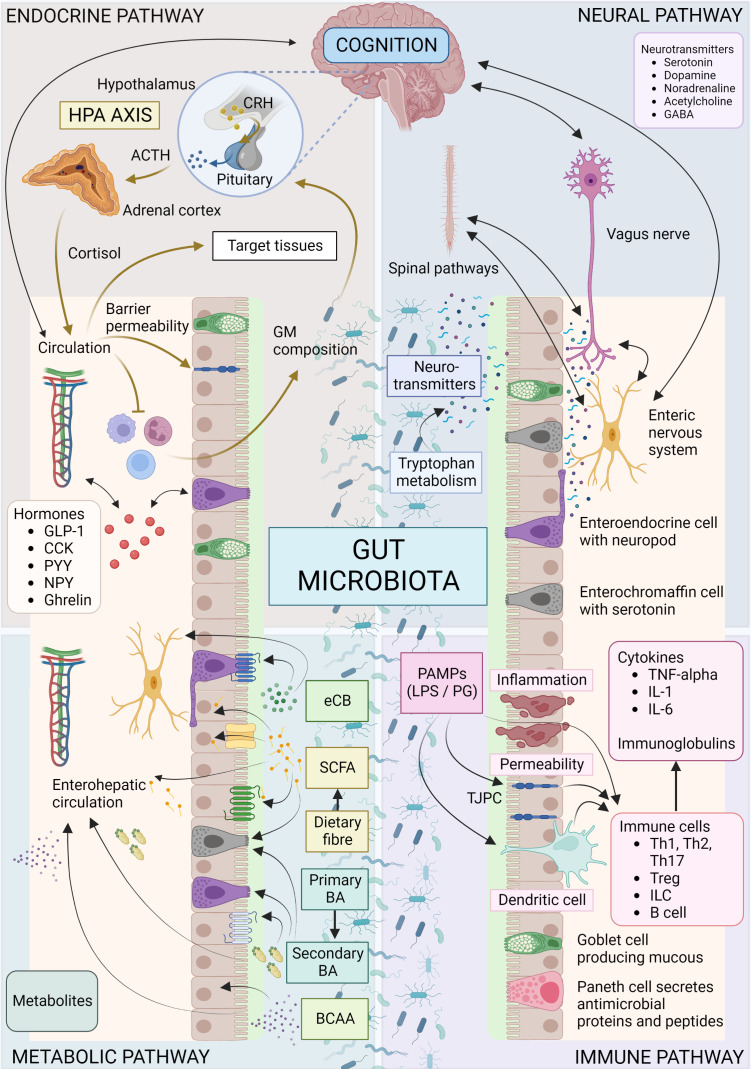
Cognitive function in humans depends on the complex and interplay between multiple body systems, including the hypothalamic-pituitary-adrenal (HPA) axis. The gut microbiota, which vastly outnumbers human cells and has a genetic potential that exceeds that of the human genome, plays a crucial role in this interplay. The microbiota-gut-brain (MGB) axis is a bidirectional signalling pathway that operates through neural, endocrine, immune, and metabolic pathways. One of the major neuroendocrine systems responding to stress is the HPA axis which produces glucocorticoids such as cortisol in humans and corticosterone in rodents. Appropriate concentrations of cortisol are essential for normal neurodevelopment and function, as well as cognitive processes such as learning and memory, and studies have shown that microbes modulate the HPA axis throughout life. Stress can significantly impact the MGB axis via the HPA axis and other pathways. Animal research has advanced our understanding of these mechanisms and pathways, leading to a paradigm shift in conceptual thinking about the influence of the microbiota on human health and disease. Preclinical and human trials are currently underway to determine how these animal models translate to humans. In this review article, we summarize the current knowledge of the relationship between the gut microbiota, HPA axis, and cognition, and provide an overview of the main findings and conclusions in this broad field.
Overview
AI snapshot
Written from the paper’s full text.
TL;DR
This narrative review summarizes bidirectional signaling between the gut microbiota, the hypothalamic-pituitary-adrenal (HPA) axis, and cognition via the microbiota-gut-brain axis. It concludes that microbial metabolites, neural pathways, immune signaling, and HPA-axis glucocorticoids are interlinked, but human causal evidence remains limited.
Key findings
- The gut microbiota and HPA axis are bidirectionally linked: germ-free mice show enhanced HPA-axis activity after acute stress, including increased ACTH and corticosterone responses, and altered cognition; microbial colonization can rescue some effects if given early in life.
- Human observational data link microbiota diversity to cognition: in 597 middle-aged adults, β-diversity was positively associated with all higher cognitive functions tested; in >4,000 healthy people aged 18–90, metagenomic profiles predicted chronological age within approximately six years.
- Antibiotic exposure is associated with cognitive risk: in a prospective cohort of 14,542 participants, chronic midlife antibiotic use was associated with later cognitive impairment, corresponding to an additional three years of aging compared with no antibiotic exposure.
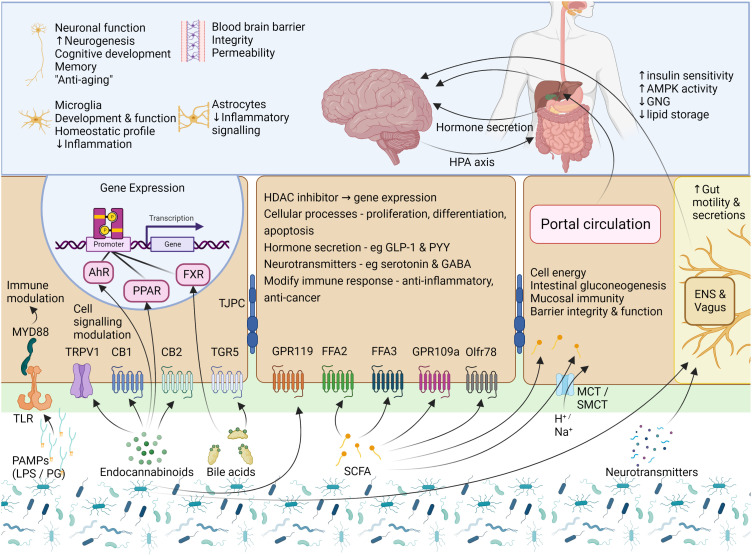
- Mechanistic pathways include SCFAs, bile acids, tryptophan/kynurenine metabolites, serotonin, GABA, catecholamines, endocannabinoids, immune modulation, the vagus nerve, and the enteric nervous system; SCFA supplementation attenuated the cortisol response to psychosocial stress in healthy men.
Methods
- Design: narrative review article summarizing current knowledge of the gut microbiota, HPA axis, and cognition.
- Data/sample: no primary data; synthesizes preclinical animal studies, germ-free models, human observational studies, randomized controlled trials, and mechanistic literature.
- Main analysis: thematic synthesis of proposed microbiota-gut-brain mechanisms and evidence relating microbiota, HPA-axis function, and cognitive outcomes.
Limitations
- The paper states that mechanisms by which the gut microbiota impacts the human brain are not fully understood, human evidence remains sparse, and whether microbiota changes are causal, consequential, or coincidental is unresolved.
- The paper states that animal models, especially germ-free models, may not directly transfer to human function and calls for rigorous causal human studies and adequately powered, standardized clinical trials.
- Evident from the text: as a narrative review, it does not describe a systematic search strategy, formal quality appraisal, or meta-analytic synthesis, and it cites many small, short-term, or heterogeneous studies.
Model-written summary. Check it against the paper before relying on it.
Integrity signals
Registry
Cites
Statistics
Figures
Verification
Claims the paper makes
303 Not checked yet · 26 Own interpretation · 8 Partly supported · 2 Supported · 2 No basis given · 1 Supported so far · 1 Mixed support · 1 Couldn’t confirm · accuracy not yet measured
The cited sources support only part of this claim — read each source’s verdict below.
In the paper
“There is also evidence for signaling between the GM and CNS, since microbes residing in the gut can activate stress circuits in the CNS through the vagus nerve and sensory neurons of the ENS (21, 49–54).”
§ Signalling cognition: the gut microbiota and hypothalamic-pituitary-adrenal axis > The microbiota-gut-brain axis > The role of the HPA axis in the MGB axis
What the sources say
- Not checked yetcites [21] Carabotti, 2015, The gut-brain axis: interactions between enteric microbiota, central and enteric nervous systems, Ann Gastroenterol
- Not checked yetcites [49] Lyte, 2006, Induction of anxiety-like behavior in mice during the initial stages of infection with the agent of murine colonic hyperplasia citrobacter rodentium, Physiol Behav source
- Partly supportedcites [50] Goehler, 2008, Campylobacter jejuni infection increases anxiety-like behavior in the holeboard: possible anatomical substrates for viscerosensory modulation of exploratory behavior, Brain Behav Immun sourceExperimental — accuracy not yet measured
The Introduction reports that gastrointestinal C. jejuni infection activates vagal sensory neurons and brain regions involved in visceral and stress-related processing; it describes the vagal pathway as a likely conduit. The Discussion and conclusion also link infection to activation of stress-related brain circuits. The paper does not establish the additional route through sensory neurons of the enteric nervous system (ENS). (LLM, conf=0.87)
- Not checked yetcites [51] Sudo, 2004, Postnatal microbial colonization programs the hypothalamic-pituitary-adrenal system for stress response in mice, J Physiol source
- Not checked yetcites [52] Forsythe, 2014
- Partly supportedcites [53] Geng, 2022, Enteric nervous system: the bridge between the gut microbiota and neurological disorders, Front Aging Neurosci sourceExperimental — accuracy not yet measured
The Introduction (page not supplied) says gut microbes influence the ENS and that sensory vagal fibers relay information from the ENS to the CNS. The Neurodegenerative Diseases in the CNS section also says gut microbes affect the ENS–vagus pathway. Neither passage establishes the more specific claim that microbes activate CNS stress circuits through those neurons. (LLM, conf=0.84)
- Partly supportedcites [54] Hyland, 2016, Microbe-host interactions: influence of the gut microbiota on the enteric nervous system, Dev Biol sourceExperimental — accuracy not yet measured
The Introduction describes vagal communication between the ENS and CNS, and Section 4 reports that gut microbes can alter enteric sensory-neuron activity, potentially connecting the microbiota–ENS–brain axis. Section 5.3 also describes a possible route for microbial signals to reach sensory enteric neurons. These passages do not establish that gut microbes activate stress circuits in the CNS through those pathways; the paper describes the proposed connection more cautiously. (LLM, conf=0.85)
plaindirect- Asserted: passes — The authors put it forward as true.
- Checkable: passes — It can be checked against evidence.
- Load-bearing: passes — The paper’s conclusions depend on it.
- Based: passes — The paper gives a reason why it holds.
The cited sources support only part of this claim — read each source’s verdict below.
In the paper
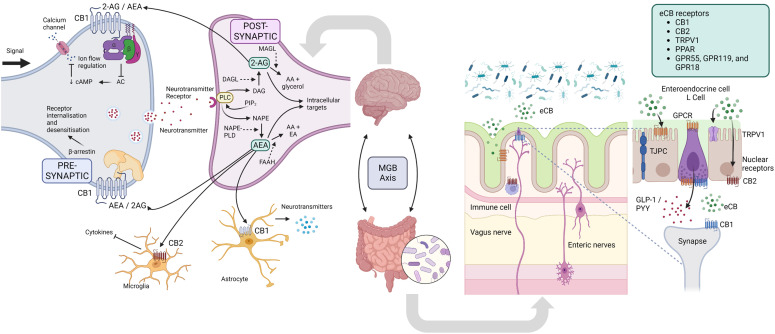
“The ECS and GM interact to regulate intestinal homeostasis resulting in relevant functional effects in the gut and CNS (238, 246, 248, 250).”
§ Signalling cognition: the gut microbiota and hypothalamic-pituitary-adrenal axis > Mechanisms and pathways of the MGB axis > The nervous system
What the sources say
- Not checked yetcites [238] Cani, 2016, Endocannabinoids–at the crossroads between the gut microbiota and host metabolism, Nat Rev Endocrinol source
- Supportedcites [246] Srivastava, 2022, The microbiome and gut endocannabinoid system in the regulation of stress responses and metabolism, Front Cell Neurosci source
The section “Potential Interventions Targeting the Endocannabinoid System in Stress-Related Disorders” describes a mutual interaction between gut endocannabinoid signaling and the microbiome that can affect stress responses through the gut–brain axis, including via intestinal barrier regulation. The “Gut Microbiota” section also says the microbiota control intestinal endocannabinoid tone, affecting gut motility and permeability. Page numbers are not available in our copy. (LLM, conf=0.90)
- Supportedcites [248] Cuddihey, 2022, Role of the endocannabinoid system in the regulation of intestinal homeostasis, Cell Mol Gastroenterol Hepatol source
The section ‘Reciprocal Regulation of the Endocannabinoid System and the Gut Microbiome’ describes interactions in both directions and links them to intestinal homeostasis. It also reports gut effects, including changes in intestinal endocannabinoid signaling, and brain-related effects, including anxiety-like behavior and altered hippocampal neurogenesis. The indexed passages provide no page numbers. (LLM, conf=0.92)
- Partly supportedcites [250] de Vos, 2022, Gut microbiome and health: mechanistic insights, Gut sourceExperimental — accuracy not yet measured
The Bioactive lipids section (page unavailable) describes bidirectional crosstalk between the endocannabinoid system and gut microbiota, including effects on gut barrier function. It also reports hypothalamic neuron changes in a mouse model involving intestinal endocannabinoids and altered microbiota. The paper does not establish the broader claim that their interaction regulates intestinal homeostasis and thereby produces functional effects in both the gut and CNS. (LLM, conf=0.82)
plaindirect- Asserted: passes — The authors put it forward as true.
- Checkable: passes — It can be checked against evidence.
- Load-bearing: passes — The paper’s conclusions depend on it.
- Based: passes — The paper gives a reason why it holds.
The cited sources support only part of this claim — read each source’s verdict below.
In the paper
“SCFA-induced activation of receptors on enteroendocrine cells can promote gut-brain signaling by inducing hormones such as glucagon-like peptide 1 (GLP1) and peptide YY (PYY), as well as neurotransmitters like GABA and serotonin (276).”
§ Signalling cognition: the gut microbiota and hypothalamic-pituitary-adrenal axis > Mechanisms and pathways of the MGB axis > Microbial metabolites
What the sources say
- Partly supportedcites [276] Tolhurst, 2012, Short-chain fatty acids stimulate glucagon-like peptide-1 secretion via the G-Protein–coupled receptor FFAR2, Diabetes sourceExperimental — accuracy not yet measured
The Discussion (page unavailable) says SCFAs can act on intestinal L cells to enhance release of GLP-1 and PYY, and the Results demonstrate SCFA-stimulated GLP-1 secretion. The cited paper does not report SCFA-induced GABA or serotonin release, so it does not support those parts of the sentence. (LLM, conf=0.88)
plaindirect- Asserted: passes — The authors put it forward as true.
- Checkable: passes — It can be checked against evidence.
- Load-bearing: passes — The paper’s conclusions depend on it.
- Based: passes — The paper gives a reason why it holds.
- Partly supported
The cited sources support only part of this claim — read each source’s verdict below.
In the paper
“Bile duct ligation alters the GM composition, and increases the permeability of the BBB (328, 329).”
§ Signalling cognition: the gut microbiota and hypothalamic-pituitary-adrenal axis > Mechanisms and pathways of the MGB axis > Microbial metabolites
What the sources say
- Could not verifycites [328] Quinn, 2014, Bile acids permeabilize the blood brain barrier after bile duct ligation in rats via Rac1-dependent mechanisms, Dig Liver Dis sourceExperimental — accuracy not yet measured
The Animal Treatment section describes bile duct ligation in rats, and the Abstract Results report increased blood–brain barrier permeability. Neither addresses gut microbiota composition; searches for gut microbiota, microbial flora, and dysbiosis found no supporting passage in our copy. (LLM, conf=0.76)
- Supportedcites [329] Cabrera-Rubio, 2019, Cholestasis induced by bile duct ligation promotes changes in the intestinal microbiome in mice, Sci Rep source
The Discussion states that bile duct ligation promotes changes in microbiome composition. The Results also report significant differences between control mice and mice examined 3 and 7 days after ligation. These passages support the attributed gut-microbiota claim; they do not address the separate BBB statement. (LLM, conf=0.94)
plaindirect- Asserted: passes — The authors put it forward as true.
- Checkable: passes — It can be checked against evidence.
- Load-bearing: passes — The paper’s conclusions depend on it.
- Based: passes — The paper gives a reason why it holds.
- Could not verify
The cited sources support only part of this claim — read each source’s verdict below.
In the paper
“Furthermore, glucocorticoids may modulate the brain indirectly through their effects on the immune system, metabolism, sleep, other hormones, and the GM (432, 433).”
§ Signalling cognition: the gut microbiota and hypothalamic-pituitary-adrenal axis > The relationship between the microbiota, HPA axis, and cognition > HPA axis-related interactions between the gut microbiota and cognition
What the sources say
- Partly supportedcites [432] Bauduin, 2021, Potential associations between immune signaling genes, deactivated microglia, and oligodendrocytes and cortical gray matter loss in patients with long-term remitted cushing’s disease, Psychoneuroendocrinology sourceExperimental — accuracy not yet measured
The Introduction links excess glucocorticoids in Cushing’s disease to effects on the brain, and the Discussion identifies immune-signaling genes and microglia as possible contributors to persistent brain changes. This supports the immune-related possibility, but the paper does not address indirect effects through metabolism, sleep, other hormones, or the gut microbiota. (LLM, conf=0.86)
- Partly supportedcites [433] Henry, 2021, Sleep, cognition and cortisol in addison’s disease: a mechanistic relationship, Front Endocrinol sourceExperimental — accuracy not yet measured
The section on variations in cortisol and cognition proposes sleep as an indirect pathway, and the Addison’s disease section says disrupted cortisol patterns may cause sleep disturbances that impair memory. Our copy does not support the additional attributed pathways through the immune system, metabolism, other hormones, or gut microbiota. (LLM, conf=0.86)
hedgedconditional- Asserted: passes — The authors put it forward as true.
- Checkable: passes — It can be checked against evidence.
- Load-bearing: passes — The paper’s conclusions depend on it.
- Based: passes — The paper gives a reason why it holds.
- Partly supported
Every source the paper cites for this claim was checked and supports it.
In the paper
“C. difficile infection is an important example demonstrating these adverse health consequences, beyond acute intestinal dysbiosis (454).”
§ Signalling cognition: the gut microbiota and hypothalamic-pituitary-adrenal axis > The relationship between the microbiota, HPA axis, and cognition > HPA axis-related interactions between the gut microbiota and cognition
What the sources say
- Supportedcites [454] Fernandez-Cotarelo, 2019, Functional and cognitive status in clostridium difficile infection in the hospitalized elderly: a retrospective study of two sites, J Gen Intern Med source
The Discussion states that CDI may have consequences beyond acute intestinal infection, citing its association with cognitive impairment, functional decline, and delayed mortality in older patients. This supports using CDI as an example of adverse consequences beyond the acute intestinal illness; the paper does not use the term “dysbiosis.” (LLM, conf=0.91)
boosteddirect- Asserted: passes — The authors put it forward as true.
- Checkable: passes — It can be checked against evidence.
- Load-bearing: unclear — It is unclear whether the paper’s conclusions depend on it.
- Based: passes — The paper gives a reason why it holds.
- Supported
None of the sources cited for this claim have been checked yet.
In the paper
“In the gut, the GM and its metabolites have been shown to modulate gastrointestinal functions via their effects on intestinal permeability (32–35), mucosal immune function (36–38), intestinal motility and sensitivity (39, 40), and the enteric nervous system (ENS) (21, 24, 25, 41).”
§ Signalling cognition: the gut microbiota and hypothalamic-pituitary-adrenal axis > The microbiota-gut-brain axis
What the sources say
- Not checked yetcites [32] Cani, 2012, Involvement of gut microbiota in the development of low-grade inflammation and type 2 diabetes associated with obesity, Gut Microbes source
- Not checked yetcites [33] Rutsch, 2020, The gut-brain axis: how microbiota and host inflammasome influence brain physiology and pathology, Front Immunol source
- Not checked yetcites [34] Frazier, 2011, Gut microbiota, intestinal permeability, obesity-induced inflammation, and liver injury, JPEN J Parenter Enteral Nutr source
- Not checked yetcites [35] Fasano, 2017, Gut permeability, obesity, and metabolic disorders: who is the chicken and who is the egg, Am J Clin Nutr source
- Not checked yetcites [36] Round, 2009, The gut microbiota shapes intestinal immune responses during health and disease, Nat Rev Immunol source
- Not checked yetcites [37] Allaire, 2018, The intestinal epithelium: central coordinator of mucosal immunity, Trends Immunol source
- Not checked yetcites [38] Wlodarska, 2015, An integrative view of microbiome-host interactions in inflammatory bowel diseases, Cell Host Microbe source
- Not checked yetcites [39] Cani, 2013, Gut microbiota, enteroendocrine functions and metabolism, Curr Opin Pharmacol source
- Not checked yetcites [40] Valdez-Morales, 2013, Sensitization of peripheral sensory nerves by mediators from colonic biopsies of diarrhea-predominant irritable bowel syndrome patients: a role for PAR2, Am J Gastroenterol source
boosteddirect- Asserted: passes — The authors put it forward as true.
- Checkable: passes — It can be checked against evidence.
- Load-bearing: unclear — It is unclear whether the paper’s conclusions depend on it.
- Based: passes — The paper gives a reason why it holds.
A conclusion the paper draws from its own results — it cites no other source for it, so there is none to check. The quote shows it is in the paper.
In the paper
“Emerging evidence suggests that the GM, the hypothalamic-pituitary-adrenal (HPA) axis, and cognitive processes are linked bidirectionally via multiple pathways, including the vagus nerve, neurotransmitter and metabolite production, immune system and blood-brain barrier regulation, and hormone metabolism.”
§ Signalling cognition: the gut microbiota and hypothalamic-pituitary-adrenal axis > Introduction
hedgedcorrelational- Asserted: passes — The authors put it forward as true.
- Checkable: passes — It can be checked against evidence.
- Load-bearing: passes — The paper’s conclusions depend on it.
- Based: unclear — It is unclear why the paper says it holds.
- Rests on an assumption: Animal model findings about the GM-HPA-cognition relationship are informative about human biology.
A conclusion the paper draws from its own results — it cites no other source for it, so there is none to check. The quote shows it is in the paper.
In the paper
“Stress can significantly impact the MGB axis via the HPA axis and other pathways.”
§ Signalling cognition: the gut microbiota and hypothalamic-pituitary-adrenal axis > Abstract
plaindirect- Asserted: passes — The authors put it forward as true.
- Checkable: passes — It can be checked against evidence.
- Load-bearing: passes — The paper’s conclusions depend on it.
- Based: unclear — It is unclear why the paper says it holds.
- Rests on an assumption: Animal model findings about the GM-HPA-cognition relationship are informative about human biology.
None of the sources cited for this claim have been checked yet.
In the paper
“As a key regulator, the GM can modulate host physiological processes through several proposed mechanisms (25, 26).”
§ Signalling cognition: the gut microbiota and hypothalamic-pituitary-adrenal axis > The microbiota-gut-brain axis
What the sources say
plaindirect- Asserted: passes — The authors put it forward as true.
- Checkable: passes — It can be checked against evidence.
- Load-bearing: passes — The paper’s conclusions depend on it.
- Based: passes — The paper gives a reason why it holds.
In the paper
“Confirming the role of the GM in cognitive function in midlife, Meyer et al. explored the relationship between gut microbial community composition and cognitive function in 597 middle-aged adults, and found a significant positive association between β-diversity and all higher cognitive functions tested (89).”
§ Signalling cognition: the gut microbiota and hypothalamic-pituitary-adrenal axis > The microbiota-gut-brain axis > Development and life course of the MGB axis
What the sources say
- Not checked yetcites [89] Meyer, 2022, Association of the gut microbiota with cognitive function in midlife, JAMA Netw Open source
plaincorrelationaln = 597- Asserted: passes — The authors put it forward as true.
- Checkable: passes — It can be checked against evidence.
- Load-bearing: passes — The paper’s conclusions depend on it.
- Based: passes — The paper gives a reason why it holds.
None of the sources cited for this claim have been checked yet.
In the paper
“The GM can stimulate the release of peptides and hormones from enteroendocrine cells, which can have direct or indirect central effects (22, 39).”
§ Signalling cognition: the gut microbiota and hypothalamic-pituitary-adrenal axis > The microbiota-gut-brain axis
What the sources say
plaindirect- Asserted: passes — The authors put it forward as true.
- Checkable: passes — It can be checked against evidence.
- Load-bearing: passes — The paper’s conclusions depend on it.
- Based: passes — The paper gives a reason why it holds.
A conclusion the paper draws from its own results — it cites no other source for it, so there is none to check. The quote shows it is in the paper.
In the paper
“The first year of life encompasses a critical “window period” of development in which the GM may be more susceptible to environmental influences and highly influential with regards to the overall health of the host.”
§ Signalling cognition: the gut microbiota and hypothalamic-pituitary-adrenal axis > The microbiota-gut-brain axis > Development and life course of the MGB axis
hedgedconditional- Asserted: passes — The authors put it forward as true.
- Checkable: passes — It can be checked against evidence.
- Load-bearing: unclear — It is unclear whether the paper’s conclusions depend on it.
- Based: passes — The paper gives a reason why it holds.
- Rests on an assumption: Animal model findings about the GM-HPA-cognition relationship are informative about human biology.
None of the sources cited for this claim have been checked yet.
In the paper
“Furthermore, recent studies have shown dramatic changes in the GM of patients with Alzheimer’s disease, Parkinson’s disease, multiple sclerosis, and schizophrenia (73–77).”
§ Signalling cognition: the gut microbiota and hypothalamic-pituitary-adrenal axis > The microbiota-gut-brain axis > The role of the HPA axis in the MGB axis
What the sources say
- Not checked yetcites [73] Haran, 2019, Alzheimer’s disease microbiome is associated with dysregulation of the anti-inflammatory p-glycoprotein pathway, MBio source
- Not checked yetcites [74] Romano, 2021, Meta-analysis of the parkinson’s disease gut microbiome suggests alterations linked to intestinal inflammation, NPJ Park Dis source
- Not checked yetcites [75] Sampson, 2016, Gut microbiota regulate motor deficits and neuroinflammation in a model of parkinson’s disease, Cell source
- Not checked yetcites [76] Correale, 2022, The role of the gut microbiota in multiple sclerosis, Nat Rev Neurol source
- Not checked yetcites [77] Zheng, 2019, The gut microbiome from patients with schizophrenia modulates the glutamate-glutamine-GABA cycle and schizophrenia-relevant behaviors in mice, Sci Adv source
boostedcorrelational- Asserted: passes — The authors put it forward as true.
- Checkable: passes — It can be checked against evidence.
- Load-bearing: unclear — It is unclear whether the paper’s conclusions depend on it.
- Based: passes — The paper gives a reason why it holds.
None of the sources cited for this claim have been checked yet.
In the paper
“Preclinical evidence suggests that GM-mediated mechanisms are likely involved in modulating brain processes, including brain biochemistry, response to stress, pain interpretation, feeding, emotional behaviors, and cognition (57–64).”
§ Signalling cognition: the gut microbiota and hypothalamic-pituitary-adrenal axis > The microbiota-gut-brain axis > The role of the HPA axis in the MGB axis
What the sources say
- Not checked yetcites [57] Stilling, 2014, Microbial genes, brain & behaviour - epigenetic regulation of the gut-brain axis, Genes Brain Behav source
- Not checked yetcites [58] Foster, 2017, Stress & the gut-brain axis: regulation by the microbiome, Neurobiol Stress source
- Not checked yetcites [59] Cryan, 2012, Mind-altering microorganisms: the impact of the gut microbiota on brain and behaviour, Nat Rev Neurosci source
- Not checked yetcites [60] Bercik, 2012, Microbes and the gut-brain axis, Neurogastroenterol Motil Off J Eur Gastrointest Motil Soc source
- Not checked yetcites [61] Alcock, 2014, Is eating behavior manipulated by the gastrointestinal microbiota? evolutionary pressures and potential mechanisms, Bioessays source
- Not checked yetcites [62] Lam, 2017, Are the gut bacteria telling us to eat or not to eat? reviewing the role of gut microbiota in the etiology, disease progression and treatment of eating disorders, Nutrients source
- Not checked yetcites [63] Foster, 2013, Gut-brain axis: how the microbiome influences anxiety and depression, Trends Neurosci source
- Not checked yetcites [64] Humann, 2016, Bacterial peptidoglycan traverses the placenta to induce fetal neuroproliferation and aberrant postnatal behavior, Cell Host Microbe source
hedgedconditional- Asserted: passes — The authors put it forward as true.
- Checkable: passes — It can be checked against evidence.
- Load-bearing: passes — The paper’s conclusions depend on it.
- Based: passes — The paper gives a reason why it holds.
None of the sources cited for this claim have been checked yet.
In the paper
“Initial clinical evidence of MGB interactions primarily stems from associations between dysbiosis and CNS disorders, such as autism, anxiety-depressive behaviors, and functional gastrointestinal disorders (63, 65–72).”
§ Signalling cognition: the gut microbiota and hypothalamic-pituitary-adrenal axis > The microbiota-gut-brain axis > The role of the HPA axis in the MGB axis
What the sources say
- Not checked yetcites [63] Foster, 2013, Gut-brain axis: how the microbiome influences anxiety and depression, Trends Neurosci source
- Not checked yetcites [65] Mayer, 2014, Altered brain-gut axis in autism: comorbidity or causative mechanisms, Bioessays source
- Not checked yetcites [66] Song, 2004, Real-time PCR quantitation of clostridia in feces of autistic children, Appl Environ Microbiol source
- Not checked yetcites [67] Hsiao, 2013, Microbiota modulate behavioral and physiological abnormalities associated with neurodevelopmental disorders, Cell source
- Not checked yetcites [68] Naseribafrouei, 2014, Correlation between the human fecal microbiota and depression, Neurogastroenterol Motil Off J Eur Gastrointest Motil Soc source
- Not checked yetcites [69] Du, 2020, Crosstalk between the microbiota-gut-brain axis and depression, Heliyon source
- Not checked yetcites [70] Mayer, 2011, The brain-gut axis in abdominal pain syndromes, Annu Rev Med source
- Not checked yetcites [71] Berrill, 2013, An observational study of cognitive function in patients with irritable bowel syndrome and inflammatory bowel disease, Neurogastroenterol Motil Off J Eur Gastrointest Motil Soc source
- Not checked yetcites [72] Simrén, 2013, Intestinal microbiota in functional bowel disorders: a Rome foundation report, Gut source
plaincorrelational- Asserted: passes — The authors put it forward as true.
- Checkable: passes — It can be checked against evidence.
- Load-bearing: unclear — It is unclear whether the paper’s conclusions depend on it.
- Based: passes — The paper gives a reason why it holds.
In the paper
“Caesarean section delivery alters the initial microbial composition (82).”
§ Signalling cognition: the gut microbiota and hypothalamic-pituitary-adrenal axis > The microbiota-gut-brain axis > Development and life course of the MGB axis
What the sources say
- Not checked yetcites [82] Zeng, 2022, The road not taken: host genetics in shaping intergenerational microbiomes, Trends Genet source
plaindirect- Asserted: passes — The authors put it forward as true.
- Checkable: passes — It can be checked against evidence.
- Load-bearing: unclear — It is unclear whether the paper’s conclusions depend on it.
- Based: passes — The paper gives a reason why it holds.
In the paper
“Conversely, the brain can affect intestinal function and the GM, for example, by HPA axis-mediated glucocorticoid modification of immunity in response to stress (29).”
§ Signalling cognition: the gut microbiota and hypothalamic-pituitary-adrenal axis > The microbiota-gut-brain axis
What the sources say
- Not checked yetcites [29] Tetel, 2018, Steroids, stress and the gut microbiome-brain axis, J Neuroendocrinol source
plaindirect- Asserted: passes — The authors put it forward as true.
- Checkable: passes — It can be checked against evidence.
- Load-bearing: unclear — It is unclear whether the paper’s conclusions depend on it.
- Based: passes — The paper gives a reason why it holds.
In the paper
“After birth, several factors influence GM composition in early life, including breastfeeding, nutrition, infection and antibiotic use, environmental stressors, and host genetics (83).”
§ Signalling cognition: the gut microbiota and hypothalamic-pituitary-adrenal axis > The microbiota-gut-brain axis > Development and life course of the MGB axis
What the sources say
- Not checked yetcites [83] Tamburini, 2016, The microbiome in early life: implications for health outcomes, Nat Med source
plaindirect- Asserted: passes — The authors put it forward as true.
- Checkable: passes — It can be checked against evidence.
- Load-bearing: unclear — It is unclear whether the paper’s conclusions depend on it.
- Based: passes — The paper gives a reason why it holds.
In the paper
“Fecal microbiota transplant (FMT) studies have added evidence for causality by inducing many of the symptoms of these diseases in germ-free animals (78).”
§ Signalling cognition: the gut microbiota and hypothalamic-pituitary-adrenal axis > The microbiota-gut-brain axis > The role of the HPA axis in the MGB axis
What the sources say
- Not checked yetcites [78] Fülling, 2019, Gut microbe to brain signaling: what happens in vagus, Neuron source
plaindirect- Asserted: passes — The authors put it forward as true.
- Checkable: passes — It can be checked against evidence.
- Load-bearing: passes — The paper’s conclusions depend on it.
- Based: passes — The paper gives a reason why it holds.
None of the sources cited for this claim have been checked yet.
In the paper
“There is growing evidence that age-related changes in the microbiota may contribute to cognitive decline and other neurodegenerative disorders (102, 103).”
§ Signalling cognition: the gut microbiota and hypothalamic-pituitary-adrenal axis > The microbiota-gut-brain axis > Development and life course of the MGB axis
What the sources say
- Not checked yetcites [102] Liu, 2020, Gut microbiota and dysbiosis in alzheimer’s disease: implications for pathogenesis and treatment, Mol Neurobiol source
- Not checked yetcites [103] Gorecki, 2019, Altered gut microbiome in parkinson’s disease and the influence of lipopolysaccharide in a human α-synuclein over-expressing mouse model, Front Neurosci source
hedgedconditional- Asserted: passes — The authors put it forward as true.
- Checkable: passes — It can be checked against evidence.
- Load-bearing: unclear — It is unclear whether the paper’s conclusions depend on it.
- Based: passes — The paper gives a reason why it holds.
- Rests on an assumption: Animal model findings about the GM-HPA-cognition relationship are informative about human biology.
None of the sources cited for this claim have been checked yet.
In the paper
“antibiotic administration to deplete the GM can change the levels of neurotransmitters in the gut and blood (195, 196).”
§ Signalling cognition: the gut microbiota and hypothalamic-pituitary-adrenal axis > Mechanisms and pathways of the MGB axis > The nervous system
What the sources say
- Not checked yetcites [195] Gao, 2018, Antibiotics-induced modulation of large intestinal microbiota altered aromatic amino acid profile and expression of neurotransmitters in the hypothalamus of piglets, J Neurochem source
- Not checked yetcites [196] Fujisaka, 2018, Diet, genetics, and the gut microbiome drive dynamic changes in plasma metabolites, Cell Rep source
plaindirect- Asserted: passes — The authors put it forward as true.
- Checkable: passes — It can be checked against evidence.
- Load-bearing: passes — The paper’s conclusions depend on it.
- Based: passes — The paper gives a reason why it holds.
In the paper
“In a study that used metagenomic profiles from over 4,000 healthy people aged 18–90, the authors were able to construct an algorithm that predicted individuals’ ages within approximately six years of their actual age (98).”
§ Signalling cognition: the gut microbiota and hypothalamic-pituitary-adrenal axis > The microbiota-gut-brain axis > Development and life course of the MGB axis
What the sources say
- Not checked yetcites [98] Galkin, 2020, Human gut microbiome aging clock based on taxonomic profiling and deep learning, iScience source
plaincorrelationaln = 4,000- Asserted: passes — The authors put it forward as true.
- Checkable: passes — It can be checked against evidence.
- Load-bearing: unclear — It is unclear whether the paper’s conclusions depend on it.
- Based: passes — The paper gives a reason why it holds.
In the paper
“Germ-free mice studies have shown significant alterations in multiple neurotransmitter systems and their receptors in several brain regions (124).”
§ Signalling cognition: the gut microbiota and hypothalamic-pituitary-adrenal axis > Mechanisms and pathways of the MGB axis > The nervous system
What the sources say
- Not checked yetcites [124] Heijtz, 2011, Normal gut microbiota modulates brain development and behavior, Proc Natl Acad Sci source
plaindirect- Asserted: passes — The authors put it forward as true.
- Checkable: passes — It can be checked against evidence.
- Load-bearing: passes — The paper’s conclusions depend on it.
- Based: passes — The paper gives a reason why it holds.
None of the sources cited for this claim have been checked yet.
In the paper
“The GM appears to influence microglial development and maturation (120, 121), and animal models have demonstrated downstream effects on various aspects of neurocognitive function (19, 45, 60, 114, 115).”
§ Signalling cognition: the gut microbiota and hypothalamic-pituitary-adrenal axis > The microbiota-gut-brain axis > The influence of the gut microbiota on neurodevelopment
What the sources say
hedgedconditional- Asserted: passes — The authors put it forward as true.
- Checkable: passes — It can be checked against evidence.
- Load-bearing: unclear — It is unclear whether the paper’s conclusions depend on it.
- Based: passes — The paper gives a reason why it holds.
In the paper
“Microbial composition can predict human chronological age relatively accurately (97).”
§ Signalling cognition: the gut microbiota and hypothalamic-pituitary-adrenal axis > The microbiota-gut-brain axis > Development and life course of the MGB axis
What the sources say
- Not checked yetcites [97] Chen, 2022, Human gut microbiome aging clocks based on taxonomic and functional signatures through multi-view learning, Gut Microbes source
plaincorrelational- Asserted: passes — The authors put it forward as true.
- Checkable: passes — It can be checked against evidence.
- Load-bearing: unclear — It is unclear whether the paper’s conclusions depend on it.
- Based: passes — The paper gives a reason why it holds.
In the paper
“In contrast, early-life disruptions of gut colonization have been linked to CNS alterations (122).”
§ Signalling cognition: the gut microbiota and hypothalamic-pituitary-adrenal axis > The microbiota-gut-brain axis > The influence of the gut microbiota on neurodevelopment
What the sources say
- Not checked yetcites [122] Borre, 2014, Microbiota and neurodevelopmental windows: implications for brain disorders, Trends Mol Med source
plaincorrelational- Asserted: passes — The authors put it forward as true.
- Checkable: passes — It can be checked against evidence.
- Load-bearing: unclear — It is unclear whether the paper’s conclusions depend on it.
- Based: passes — The paper gives a reason why it holds.
In the paper
“The aging process of the host parallels a continuous aging progression of the GM (90).”
§ Signalling cognition: the gut microbiota and hypothalamic-pituitary-adrenal axis > The microbiota-gut-brain axis > Development and life course of the MGB axis
What the sources say
- Not checked yetcites [90] Xu, 2019, Aging progression of human gut microbiota, BMC Microbiol source
plaincorrelational- Asserted: passes — The authors put it forward as true.
- Checkable: passes — It can be checked against evidence.
- Load-bearing: unclear — It is unclear whether the paper’s conclusions depend on it.
- Based: passes — The paper gives a reason why it holds.
None of the sources cited for this claim have been checked yet.
In the paper
“Stability begins to decline as we age, and studies suggest that there is greater inter-individual variation in older adults than younger adults (<65 years old) (91, 92)”
§ Signalling cognition: the gut microbiota and hypothalamic-pituitary-adrenal axis > The microbiota-gut-brain axis > Development and life course of the MGB axis
What the sources say
hedgedcorrelational- Asserted: passes — The authors put it forward as true.
- Checkable: passes — It can be checked against evidence.
- Load-bearing: unclear — It is unclear whether the paper’s conclusions depend on it.
- Based: passes — The paper gives a reason why it holds.
None of the sources cited for this claim have been checked yet.
In the paper
“Animal studies suggest that the GM plays a crucial role in regulating early brain development (19, 45, 60, 114–117).”
§ Signalling cognition: the gut microbiota and hypothalamic-pituitary-adrenal axis > The microbiota-gut-brain axis > The influence of the gut microbiota on neurodevelopment
What the sources say
- Not checked yetcites [19] Mayer, 2014, Gut microbes and the brain: paradigm shift in neuroscience, J Neurosci source
- Not checked yetcites [45] Sampson, 2015, Control of brain development, function, and behavior by the microbiome, Cell Host Microbe source
- Not checked yetcites [60] Bercik, 2012, Microbes and the gut-brain axis, Neurogastroenterol Motil Off J Eur Gastrointest Motil Soc source
- Not checked yetcites [114] Collins, 2014, Intestinal microbiota influence the early postnatal development of the enteric nervous system, Neurogastroenterol Motil source
- Not checked yetcites [115] Borre, 2014, The impact of microbiota on brain and behavior: mechanisms & therapeutic potential, Adv Exp Med Biol source
- Not checked yetcites [116] Sharon, 2016, The central nervous system and the gut microbiome, Cell source
- Not checked yetcites [117] Sarkar, 2020, The role of the microbiome in the neurobiology of social behaviour, Biol Rev source
hedgedconditional- Asserted: passes — The authors put it forward as true.
- Checkable: passes — It can be checked against evidence.
- Load-bearing: passes — The paper’s conclusions depend on it.
- Based: passes — The paper gives a reason why it holds.
In the paper
“HPA axis dysfunction is also associated with many major psychopathologies, including autism, anxiety disorders, depression, and schizophrenia, as well as other cognitive disorders (145).”
§ Signalling cognition: the gut microbiota and hypothalamic-pituitary-adrenal axis > Mechanisms and pathways of the MGB axis > The HPA axis, glucocorticoids, and the stress response
What the sources say
- Not checked yetcites [145] Misiak, 2020, The HPA axis dysregulation in severe mental illness: can we shift the blame to gut microbiota, Prog Neuropsychopharmacol Biol Psychiatry source
plaincorrelational- Asserted: passes — The authors put it forward as true.
- Checkable: passes — It can be checked against evidence.
- Load-bearing: unclear — It is unclear whether the paper’s conclusions depend on it.
- Based: passes — The paper gives a reason why it holds.
In the paper
“preliminary human studies demonstrate that microbiota-based interventions can alter neurotransmitter concentrations (28).”
§ Signalling cognition: the gut microbiota and hypothalamic-pituitary-adrenal axis > Mechanisms and pathways of the MGB axis > The nervous system
What the sources say
- Not checked yetcites [28] Strandwitz, 2018, Neurotransmitter modulation by the gut microbiota, Brain Res source
boosteddirect- Asserted: passes — The authors put it forward as true.
- Checkable: passes — It can be checked against evidence.
- Load-bearing: passes — The paper’s conclusions depend on it.
- Based: passes — The paper gives a reason why it holds.
In the paper
“Animal studies provide evidence that microbial modulation of these neurotransmitters may impact host physiology”
§ Signalling cognition: the gut microbiota and hypothalamic-pituitary-adrenal axis > Mechanisms and pathways of the MGB axis > The nervous system
What the sources say
- Not checked yetcites [28] Strandwitz, 2018, Neurotransmitter modulation by the gut microbiota, Brain Res source
hedgedconditional- Asserted: passes — The authors put it forward as true.
- Checkable: passes — It can be checked against evidence.
- Load-bearing: passes — The paper’s conclusions depend on it.
- Based: passes — The paper gives a reason why it holds.
None of the sources cited for this claim have been checked yet.
In the paper
“microbial abundance has been shown to alter the expression of neurotransmitter receptors in the brain (51, 189, 191).”
§ Signalling cognition: the gut microbiota and hypothalamic-pituitary-adrenal axis > Mechanisms and pathways of the MGB axis > The nervous system
What the sources say
- Not checked yetcites [51] Sudo, 2004, Postnatal microbial colonization programs the hypothalamic-pituitary-adrenal system for stress response in mice, J Physiol source
- Not checked yetcites [189] Neufeld, 2011, Reduced anxiety-like behavior and central neurochemical change in germ-free mice, Neurogastroenterol Motil Off J Eur Gastrointest Motil Soc source
- Not checked yetcites [191] Bravo, 2011, Ingestion of lactobacillus strain regulates emotional behavior and central GABA receptor expression in a mouse via the vagus nerve, Proc Natl Acad Sci source
plaindirect- Asserted: passes — The authors put it forward as true.
- Checkable: passes — It can be checked against evidence.
- Load-bearing: passes — The paper’s conclusions depend on it.
- Based: passes — The paper gives a reason why it holds.
In the paper
“the importance of the GM’s ability to metabolize tryptophan into aryl hydrocarbon receptor ligands and, therefore, modulate gut inflammation, was demonstrated in patients with celiac disease (202).”
§ Signalling cognition: the gut microbiota and hypothalamic-pituitary-adrenal axis > Mechanisms and pathways of the MGB axis > The nervous system
What the sources say
- Not checked yetcites [202] Lamas, 2020, Aryl hydrocarbon receptor ligand production by the gut microbiota is decreased in celiac disease leading to intestinal inflammation, Sci Transl Med source
boosteddirect- Asserted: passes — The authors put it forward as true.
- Checkable: passes — It can be checked against evidence.
- Load-bearing: unclear — It is unclear whether the paper’s conclusions depend on it.
- Based: passes — The paper gives a reason why it holds.
None of the sources cited for this claim have been checked yet.
In the paper
“Pre-gestational and early-life stress, with activation of the HPA axis, have been linked with an altered serotonergic system, leading to interruptions in brain development and cognition (218–220).”
§ Signalling cognition: the gut microbiota and hypothalamic-pituitary-adrenal axis > Mechanisms and pathways of the MGB axis > The nervous system
What the sources say
- Not checked yetcites [218] Ohta, 2014, Prolonged maternal separation disturbs the serotonergic system during early brain development, Int J Dev Neurosci Off J Int Soc Dev Neurosci source
- Not checked yetcites [219] Sood, 2018, Early emergence of altered 5-HT(2A) receptor-evoked behavior, neural activation and gene expression following maternal separation, Int J Dev Neurosci Off J Int Soc Dev Neurosci source
- Not checked yetcites [220] Huang, 2012, Pre-gestational stress reduces the ratio of 5-HIAA to 5-HT and the expression of 5-HT1A receptor and serotonin transporter in the brain of foetal rat, BMC Neurosci source
plaindirect- Asserted: passes — The authors put it forward as true.
- Checkable: passes — It can be checked against evidence.
- Load-bearing: unclear — It is unclear whether the paper’s conclusions depend on it.
- Based: passes — The paper gives a reason why it holds.
None of the sources cited for this claim have been checked yet.
In the paper
“Several bacterial taxa can also affect tryptophan levels by direct utilization for growth or via tryptophanase expression (28, 203, 204)”
§ Signalling cognition: the gut microbiota and hypothalamic-pituitary-adrenal axis > Mechanisms and pathways of the MGB axis > The nervous system
What the sources say
- Not checked yetcites [28] Strandwitz, 2018, Neurotransmitter modulation by the gut microbiota, Brain Res source
- Not checked yetcites [203] Lee, 2010, Indole as an intercellular signal in microbial communities, FEMS Microbiol Rev source
- Not checked yetcites [204] Li, 2013, Indole production by the tryptophanase TnaA in escherichia coli is determined by the amount of exogenous tryptophan, Microbiology source
plaindirect- Asserted: passes — The authors put it forward as true.
- Checkable: passes — It can be checked against evidence.
- Load-bearing: unclear — It is unclear whether the paper’s conclusions depend on it.
- Based: passes — The paper gives a reason why it holds.
In the paper
“the activity of CRH neurons is ultimately regulated by GABAergic inhibition, mediated by GABAA receptors (234).”
§ Signalling cognition: the gut microbiota and hypothalamic-pituitary-adrenal axis > Mechanisms and pathways of the MGB axis > The nervous system
What the sources say
- Not checked yetcites [234] Camille Melón, 2016, GABAergic regulation of the HPA and HPG axes and the impact of stress on reproductive function, J Steroid Biochem Mol Biol source
plaindirect- Asserted: passes — The authors put it forward as true.
- Checkable: passes — It can be checked against evidence.
- Load-bearing: unclear — It is unclear whether the paper’s conclusions depend on it.
- Based: passes — The paper gives a reason why it holds.
In the paper
“they have increased turnover rates of dopamine, noradrenaline, and serotonin in the brain (124).”
§ Signalling cognition: the gut microbiota and hypothalamic-pituitary-adrenal axis > Mechanisms and pathways of the MGB axis > The nervous system
What the sources say
- Not checked yetcites [124] Heijtz, 2011, Normal gut microbiota modulates brain development and behavior, Proc Natl Acad Sci source
plaincorrelational- Asserted: passes — The authors put it forward as true.
- Checkable: passes — It can be checked against evidence.
- Load-bearing: unclear — It is unclear whether the paper’s conclusions depend on it.
- Based: passes — The paper gives a reason why it holds.
In the paper
“these bacteria have been associated with the development of neuropsychiatric disorders, including autism spectrum disorders (205).”
§ Signalling cognition: the gut microbiota and hypothalamic-pituitary-adrenal axis > Mechanisms and pathways of the MGB axis > The nervous system
What the sources say
- Not checked yetcites [205] Roth, 2021, Tryptophan metabolism and gut-brain homeostasis, Int J Mol Sci source
plaincorrelational- Asserted: passes — The authors put it forward as true.
- Checkable: passes — It can be checked against evidence.
- Load-bearing: unclear — It is unclear whether the paper’s conclusions depend on it.
- Based: passes — The paper gives a reason why it holds.
In the paper
“Germ-free mice show decreased noradrenaline in the cecal lumen and tissue, which is restored with colonization (231).”
§ Signalling cognition: the gut microbiota and hypothalamic-pituitary-adrenal axis > Mechanisms and pathways of the MGB axis > The nervous system
What the sources say
- Not checked yetcites [231] Asano, 2012, Critical role of gut microbiota in the production of biologically active, free catecholamines in the gut lumen of mice, Am J Physiol Gastrointest Liver Physiol source
plaindirect- Asserted: passes — The authors put it forward as true.
- Checkable: passes — It can be checked against evidence.
- Load-bearing: unclear — It is unclear whether the paper’s conclusions depend on it.
- Based: passes — The paper gives a reason why it holds.
In the paper
“Serotonin regulates upstream CRH signaling systems via the activation of serotonin 2C receptors of the hypothalamic PVN (217).”
§ Signalling cognition: the gut microbiota and hypothalamic-pituitary-adrenal axis > Mechanisms and pathways of the MGB axis > The nervous system
What the sources say
- Not checked yetcites [217] Heisler, 2007, Serotonin activates the hypothalamic–Pituitary–Adrenal axis via serotonin 2C receptor stimulation, J Neurosci source
plaindirect- Asserted: passes — The authors put it forward as true.
- Checkable: passes — It can be checked against evidence.
- Load-bearing: unclear — It is unclear whether the paper’s conclusions depend on it.
- Based: passes — The paper gives a reason why it holds.
In the paper
“Its synthesis by microbes has been well described (197).”
§ Signalling cognition: the gut microbiota and hypothalamic-pituitary-adrenal axis > Mechanisms and pathways of the MGB axis > The nervous system
What the sources say
- Not checked yetcites [197] Agus, 2018, Gut microbiota regulation of tryptophan metabolism in health and disease, Cell Host Microbe source
boosteddirect- Asserted: passes — The authors put it forward as true.
- Checkable: passes — It can be checked against evidence.
- Load-bearing: unclear — It is unclear whether the paper’s conclusions depend on it.
- Based: passes — The paper gives a reason why it holds.
In the paper
“changes in GM composition have been associated with alterations in GABA receptor expression and GABA levels in the brain (191).”
§ Signalling cognition: the gut microbiota and hypothalamic-pituitary-adrenal axis > Mechanisms and pathways of the MGB axis > The nervous system
What the sources say
- Not checked yetcites [191] Bravo, 2011, Ingestion of lactobacillus strain regulates emotional behavior and central GABA receptor expression in a mouse via the vagus nerve, Proc Natl Acad Sci source
plaincorrelational- Asserted: passes — The authors put it forward as true.
- Checkable: passes — It can be checked against evidence.
- Load-bearing: passes — The paper’s conclusions depend on it.
- Based: passes — The paper gives a reason why it holds.
None of the sources cited for this claim have been checked yet.
In the paper
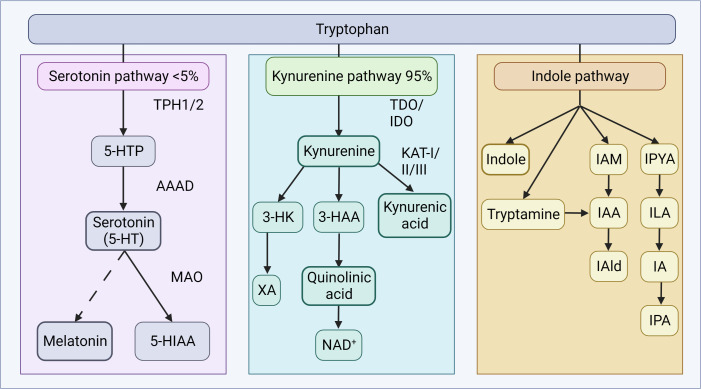
“In the gut, it may be further metabolized under direct or indirect control by the GM, giving rise to several compounds, such as serotonin, kynurenines, tryptamine, and indolic compounds, which participate in MGB communication (197, 198).”
§ Signalling cognition: the gut microbiota and hypothalamic-pituitary-adrenal axis > Mechanisms and pathways of the MGB axis > The nervous system
What the sources say
hedgedconditional- Asserted: passes — The authors put it forward as true.
- Checkable: passes — It can be checked against evidence.
- Load-bearing: passes — The paper’s conclusions depend on it.
- Based: passes — The paper gives a reason why it holds.
In the paper
“Both animal and human studies have shown that the ECS and GM play a role in cognitive decline (254).”
§ Signalling cognition: the gut microbiota and hypothalamic-pituitary-adrenal axis > Mechanisms and pathways of the MGB axis > The nervous system
What the sources say
- Not checked yetcites [254] Bisogno, 2021, The endocannabinoid system: a bridge between alzheimer’s disease and gut microbiota, Life source
plaincorrelational- Asserted: passes — The authors put it forward as true.
- Checkable: passes — It can be checked against evidence.
- Load-bearing: unclear — It is unclear whether the paper’s conclusions depend on it.
- Based: passes — The paper gives a reason why it holds.
In the paper
“Although microbes secrete eCBs, their role in host physiology remains unclear (255).”
§ Signalling cognition: the gut microbiota and hypothalamic-pituitary-adrenal axis > Mechanisms and pathways of the MGB axis > The nervous system
What the sources say
- Not checked yetcites [255] Cohen, 2017, Commensal bacteria make GPCR ligands that mimic human signalling molecules, Nature source
plaindirect- Asserted: passes — The authors put it forward as true.
- Checkable: passes — It can be checked against evidence.
- Load-bearing: unclear — It is unclear whether the paper’s conclusions depend on it.
- Based: passes — The paper gives a reason why it holds.
In the paper
“SCFAs appear to play a significant role in MGB communication (286).”
§ Signalling cognition: the gut microbiota and hypothalamic-pituitary-adrenal axis > Mechanisms and pathways of the MGB axis > Microbial metabolites
What the sources say
- Not checked yetcites [286] Silva, 2020, The role of short-chain fatty acids from gut microbiota in gut-brain communication, Front Endocrinol source
hedgedcorrelational- Asserted: passes — The authors put it forward as true.
- Checkable: passes — It can be checked against evidence.
- Load-bearing: passes — The paper’s conclusions depend on it.
- Based: passes — The paper gives a reason why it holds.
In the paper
“Changes in eCBs correlated with increased butyrate levels, and decreased TNF, IL-6 and IL-10.”
§ Signalling cognition: the gut microbiota and hypothalamic-pituitary-adrenal axis > Mechanisms and pathways of the MGB axis > The nervous system
What the sources say
- Not checked yetcites [252] Vijay, 2021, The anti-inflammatory effect of bacterial short chain fatty acids is partially mediated by endocannabinoids, Gut Microbes source
plaincorrelational- Asserted: passes — The authors put it forward as true.
- Checkable: passes — It can be checked against evidence.
- Load-bearing: passes — The paper’s conclusions depend on it.
- Based: passes — The paper gives a reason why it holds.
In the paper
“Injury, infections and autoimmune diseases can influence the permeability of the gut and BBB (262).”
§ Signalling cognition: the gut microbiota and hypothalamic-pituitary-adrenal axis > Mechanisms and pathways of the MGB axis > The immune system
What the sources say
- Not checked yetcites [262] Logsdon, 2018, Gut reactions: how the blood-brain barrier connects the microbiome and the brain, Exp Biol Med (Maywood) source
plaindirect- Asserted: passes — The authors put it forward as true.
- Checkable: passes — It can be checked against evidence.
- Load-bearing: passes — The paper’s conclusions depend on it.
- Based: passes — The paper gives a reason why it holds.
None of the sources cited for this claim have been checked yet.
In the paper
“Antibiotic-treated and germ-free mice have pro-inflammatory systemic and CNS immune system responses (120, 267).”
§ Signalling cognition: the gut microbiota and hypothalamic-pituitary-adrenal axis > Mechanisms and pathways of the MGB axis > The immune system
What the sources say
- Not checked yetcites [120] Erny, 2015, Host microbiota constantly control maturation and function of microglia in the CNS, Nat Neurosci source
- Not checked yetcites [267] Stanisavljević, 2019, Oral neonatal antibiotic treatment perturbs gut microbiota and aggravates central nervous system autoimmunity in dark agouti rats, Sci Rep source
plaincorrelational- Asserted: passes — The authors put it forward as true.
- Checkable: passes — It can be checked against evidence.
- Load-bearing: unclear — It is unclear whether the paper’s conclusions depend on it.
- Based: passes — The paper gives a reason why it holds.
None of the sources cited for this claim have been checked yet.
In the paper
“SCFAs can modify neuroinflammation by affecting the morphology and function of glial cells (120, 286, 289, 290).”
§ Signalling cognition: the gut microbiota and hypothalamic-pituitary-adrenal axis > Mechanisms and pathways of the MGB axis > Microbial metabolites
What the sources say
- Not checked yetcites [120] Erny, 2015, Host microbiota constantly control maturation and function of microglia in the CNS, Nat Neurosci source
- Not checked yetcites [286] Silva, 2020, The role of short-chain fatty acids from gut microbiota in gut-brain communication, Front Endocrinol source
- Not checked yetcites [289] Patnala, 2017, HDAC inhibitor sodium butyrate-mediated epigenetic regulation enhances neuroprotective function of microglia during ischemic stroke, Mol Neurobiol source
- Not checked yetcites [290] Wang, 2018, Sodium butyrate triggers a functional elongation of microglial process via akt-small RhoGTPase activation and HDACs inhibition, Neurobiol Dis source
plaindirect- Asserted: passes — The authors put it forward as true.
- Checkable: passes — It can be checked against evidence.
- Load-bearing: unclear — It is unclear whether the paper’s conclusions depend on it.
- Based: passes — The paper gives a reason why it holds.
In the paper
“One critical interaction involves the activation of pattern recognition receptors (PRRs), including TLRs, by microbial associated molecular patterns (MAMPs) (54).”
§ Signalling cognition: the gut microbiota and hypothalamic-pituitary-adrenal axis > Mechanisms and pathways of the MGB axis > The immune system
What the sources say
- Not checked yetcites [54] Hyland, 2016, Microbe-host interactions: influence of the gut microbiota on the enteric nervous system, Dev Biol source
boosteddirect- Asserted: passes — The authors put it forward as true.
- Checkable: passes — It can be checked against evidence.
- Load-bearing: unclear — It is unclear whether the paper’s conclusions depend on it.
- Based: passes — The paper gives a reason why it holds.
In the paper
“SCFAs can cross the BBB, which is supported by the presence of SCFAs in human cerebrospinal fluid (CSF) and in brain uptake studies (286).”
§ Signalling cognition: the gut microbiota and hypothalamic-pituitary-adrenal axis > Mechanisms and pathways of the MGB axis > Microbial metabolites
What the sources say
- Not checked yetcites [286] Silva, 2020, The role of short-chain fatty acids from gut microbiota in gut-brain communication, Front Endocrinol source
plaindirect- Asserted: passes — The authors put it forward as true.
- Checkable: passes — It can be checked against evidence.
- Load-bearing: passes — The paper’s conclusions depend on it.
- Based: passes — The paper gives a reason why it holds.
In the paper
“Cytokines and chemokines are another mechanism by which the immune system, GM, and CNS (including HPA axis) interact (259).”
§ Signalling cognition: the gut microbiota and hypothalamic-pituitary-adrenal axis > Mechanisms and pathways of the MGB axis > The immune system
What the sources say
- Not checked yetcites [259] Mou, 2022, Gut microbiota interact with the brain through systemic chronic inflammation: implications on neuroinflammation, neurodegeneration, and aging, Front Immunol source
plaindirect- Asserted: passes — The authors put it forward as true.
- Checkable: passes — It can be checked against evidence.
- Load-bearing: unclear — It is unclear whether the paper’s conclusions depend on it.
- Based: passes — The paper gives a reason why it holds.
None of the sources cited for this claim have been checked yet.
In the paper
“SCFAs may also improve neuronal homeostasis and function by influencing neurotrophic factors such as nerve growth factor, glial cell line-derived neurotrophic factor, and BDNF (119–122).”
§ Signalling cognition: the gut microbiota and hypothalamic-pituitary-adrenal axis > Mechanisms and pathways of the MGB axis > Microbial metabolites
What the sources say
- Not checked yetcites [119] Wilton, 2019, Neuron-glia signaling in synapse elimination, Annu Rev Neurosci source
- Not checked yetcites [120] Erny, 2015, Host microbiota constantly control maturation and function of microglia in the CNS, Nat Neurosci source
- Not checked yetcites [121] Abdel-Haq, 2019, Microbiome-microglia connections via the gut-brain axis, J Exp Med source
- Not checked yetcites [122] Borre, 2014, Microbiota and neurodevelopmental windows: implications for brain disorders, Trends Mol Med source
hedgedconditional- Asserted: passes — The authors put it forward as true.
- Checkable: passes — It can be checked against evidence.
- Load-bearing: unclear — It is unclear whether the paper’s conclusions depend on it.
- Based: passes — The paper gives a reason why it holds.
None of the sources cited for this claim have been checked yet.
In the paper
“chronic systemic inflammation, mainly in the form of infections, has long been associated with behavioral alterations and cognitive dysfunction (264–266).”
§ Signalling cognition: the gut microbiota and hypothalamic-pituitary-adrenal axis > Mechanisms and pathways of the MGB axis > The immune system
What the sources say
- Not checked yetcites [264] Perry, 2007, Systemic infections and inflammation affect chronic neurodegeneration, Nat Rev Immunol source
- Not checked yetcites [265] Perry, 2003, The impact of systemic infection on the progression of neurodegenerative disease, Nat Rev Neurosci source
- Not checked yetcites [266] Sankowski, 2015, Systemic inflammation and the brain: novel roles of genetic, molecular, and environmental cues as drivers of neurodegeneration, Front Cell Neurosci source
plaincorrelational- Asserted: passes — The authors put it forward as true.
- Checkable: passes — It can be checked against evidence.
- Load-bearing: unclear — It is unclear whether the paper’s conclusions depend on it.
- Based: passes — The paper gives a reason why it holds.
In the paper
“The GM can also alter BBB permeability by changing the expression of occludin and claudin 5 (263).”
§ Signalling cognition: the gut microbiota and hypothalamic-pituitary-adrenal axis > Mechanisms and pathways of the MGB axis > The immune system
What the sources say
- Not checked yetcites [263] Braniste, 2014, The gut microbiota influences blood-brain barrier permeability in mice, Sci Transl Med source
plaindirect- Asserted: passes — The authors put it forward as true.
- Checkable: passes — It can be checked against evidence.
- Load-bearing: passes — The paper’s conclusions depend on it.
- Based: passes — The paper gives a reason why it holds.
In the paper
“SCFAs can indirectly modulate the PNS through expression of FFA3 in the enteric neural plexus, portal nerve, and autonomic and sensory ganglia (131).”
§ Signalling cognition: the gut microbiota and hypothalamic-pituitary-adrenal axis > Mechanisms and pathways of the MGB axis > Microbial metabolites
What the sources say
- Not checked yetcites [131] Stilling, 2016, The neuropharmacology of butyrate: the bread and butter of the microbiota-gut-brain axis, Neurochem Int source
plaindirect- Asserted: passes — The authors put it forward as true.
- Checkable: passes — It can be checked against evidence.
- Load-bearing: unclear — It is unclear whether the paper’s conclusions depend on it.
- Based: passes — The paper gives a reason why it holds.
In the paper
“Activation of FFA3 receptors on vagus nerve cells can result in the activation of various neurons in the CNS, including dynamic regulation of hypothalamic neuronal circuitry (287).”
§ Signalling cognition: the gut microbiota and hypothalamic-pituitary-adrenal axis > Mechanisms and pathways of the MGB axis > Microbial metabolites
What the sources say
- Not checked yetcites [287] Li, 2018, Butyrate reduces appetite and activates brown adipose tissue via the gut-brain neural circuit, Gut source
plaindirect- Asserted: passes — The authors put it forward as true.
- Checkable: passes — It can be checked against evidence.
- Load-bearing: passes — The paper’s conclusions depend on it.
- Based: passes — The paper gives a reason why it holds.
In the paper
“Crosstalk between the GM and CNS is also essential for normal development and homeostatic functioning of the immune system, both innate and adaptive (256).”
§ Signalling cognition: the gut microbiota and hypothalamic-pituitary-adrenal axis > Mechanisms and pathways of the MGB axis > The immune system
What the sources say
- Not checked yetcites [256] Zheng, 2020, Interaction between microbiota and immunity in health and disease, Cell Res source
plaindirect- Asserted: passes — The authors put it forward as true.
- Checkable: passes — It can be checked against evidence.
- Load-bearing: unclear — It is unclear whether the paper’s conclusions depend on it.
- Based: passes — The paper gives a reason why it holds.
A conclusion the paper draws from its own results — it cites no other source for it, so there is none to check. The quote shows it is in the paper.
In the paper
“the anti-inflammatory effects of SCFAs may be partly mediated by the ECS.”
§ Signalling cognition: the gut microbiota and hypothalamic-pituitary-adrenal axis > Mechanisms and pathways of the MGB axis > The nervous system
hedgedconditional- Asserted: passes — The authors put it forward as true.
- Checkable: passes — It can be checked against evidence.
- Load-bearing: unclear — It is unclear whether the paper’s conclusions depend on it.
- Based: passes — The paper gives a reason why it holds.
In the paper
“Germ-free animals demonstrate significant changes in the expression of CB1 and CB2, and synthetic and degradative enzymes throughout the gut (251).”
§ Signalling cognition: the gut microbiota and hypothalamic-pituitary-adrenal axis > Mechanisms and pathways of the MGB axis > The nervous system
What the sources say
- Not checked yetcites [251] Manca, 2020, Germ-free mice exhibit profound gut microbiota-dependent alterations of intestinal endocannabinoidome signaling, J Lipid Res source
boostedcorrelational- Asserted: passes — The authors put it forward as true.
- Checkable: passes — It can be checked against evidence.
- Load-bearing: unclear — It is unclear whether the paper’s conclusions depend on it.
- Based: passes — The paper gives a reason why it holds.
In the paper
“SCFAs also influence the integrity of the BBB by upregulating the expression of tight junction proteins (263).”
§ Signalling cognition: the gut microbiota and hypothalamic-pituitary-adrenal axis > Mechanisms and pathways of the MGB axis > Microbial metabolites
What the sources say
- Not checked yetcites [263] Braniste, 2014, The gut microbiota influences blood-brain barrier permeability in mice, Sci Transl Med source
plaindirect- Asserted: passes — The authors put it forward as true.
- Checkable: passes — It can be checked against evidence.
- Load-bearing: unclear — It is unclear whether the paper’s conclusions depend on it.
- Based: passes — The paper gives a reason why it holds.
In the paper
“BA disorders are also associated with neural symptoms (300).”
§ Signalling cognition: the gut microbiota and hypothalamic-pituitary-adrenal axis > Mechanisms and pathways of the MGB axis > Microbial metabolites
What the sources say
- Not checked yetcites [300] Monteiro-Cardoso, 2021, Bile acids: a communication channel in the gut-brain axis, NeuroMolecular Med source
plaincorrelational- Asserted: passes — The authors put it forward as true.
- Checkable: passes — It can be checked against evidence.
- Load-bearing: unclear — It is unclear whether the paper’s conclusions depend on it.
- Based: passes — The paper gives a reason why it holds.
In the paper
“The BA-microbiota axis modulates the immunoregulatory environment along the gut (303).”
§ Signalling cognition: the gut microbiota and hypothalamic-pituitary-adrenal axis > Mechanisms and pathways of the MGB axis > Microbial metabolites
What the sources say
- Not checked yetcites [303] Mulak, 2021, Bile acids as key modulators of the brain-Gut-Microbiota axis in alzheimer’s disease, J Alzheimer’s Dis source
plaindirect- Asserted: passes — The authors put it forward as true.
- Checkable: passes — It can be checked against evidence.
- Load-bearing: unclear — It is unclear whether the paper’s conclusions depend on it.
- Based: passes — The paper gives a reason why it holds.
In the paper
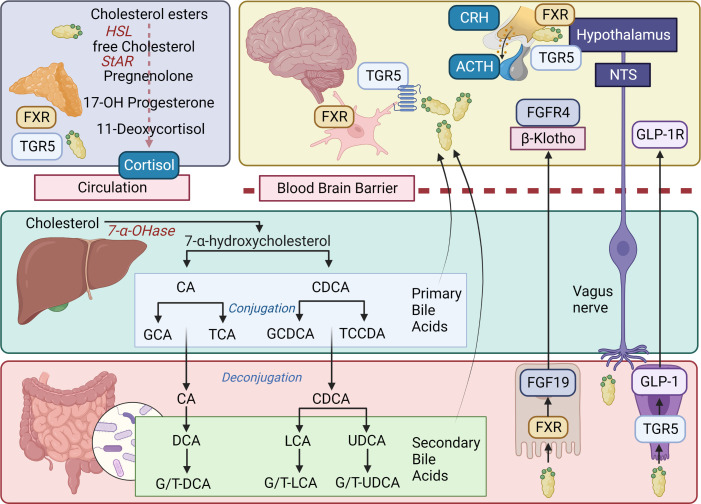
“BAs might act via TGR5 in a cAMP/protein kinase A (PKA)-dependent fashion phosphorylating and thus activating steroidogenic acute regulatory protein (StAR) and hormone sensitive lipase (HSL) (316).”
§ Signalling cognition: the gut microbiota and hypothalamic-pituitary-adrenal axis > Mechanisms and pathways of the MGB axis > Microbial metabolites
What the sources say
- Not checked yetcites [316] Stocco, 1996, Regulation of the acute production of steroids in steroidogenic cells, Endocr Rev source
hedgedconditional- Asserted: passes — The authors put it forward as true.
- Checkable: passes — It can be checked against evidence.
- Load-bearing: unclear — It is unclear whether the paper’s conclusions depend on it.
- Based: passes — The paper gives a reason why it holds.
None of the sources cited for this claim have been checked yet.
In the paper
“Specific BAs demonstrate neuroprotective effects in cellular and animal models, with human clinical trials underway (306–308).”
§ Signalling cognition: the gut microbiota and hypothalamic-pituitary-adrenal axis > Mechanisms and pathways of the MGB axis > Microbial metabolites
What the sources say
- Not checked yetcites [306] Yanovsky, 2012, Waking action of ursodeoxycholic acid (UDCA) involves histamine and GABAA receptor block, PloS One source
- Not checked yetcites [307] Huang, 2022, From dried bear bile to molecular investigation: a systematic review of the effect of bile acids on cell apoptosis, oxidative stress and inflammation in the brain, across pre-clinical models of neurological, neurodegenerative and neuropsychiatric disorde, Brain Behav Immun source
- Not checked yetcites [308] Yanguas-Casás, 2017, TUDCA: an agonist of the bile acid receptor GPBAR1/TGR5 with anti-inflammatory effects in microglial cells, J Cell Physiol source
boosteddirect- Asserted: passes — The authors put it forward as true.
- Checkable: passes — It can be checked against evidence.
- Load-bearing: unclear — It is unclear whether the paper’s conclusions depend on it.
- Based: passes — The paper gives a reason why it holds.
In the paper
“BAs modulate HPA axis activity by inhibiting CRH release through FXR activation, expressed in the hypothalamus (309).”
§ Signalling cognition: the gut microbiota and hypothalamic-pituitary-adrenal axis > Mechanisms and pathways of the MGB axis > Microbial metabolites
What the sources say
- Not checked yetcites [309] McMillin, 2016, Effects of bile acids on neurological function and disease, FASEB J source
plaindirect- Asserted: passes — The authors put it forward as true.
- Checkable: passes — It can be checked against evidence.
- Load-bearing: passes — The paper’s conclusions depend on it.
- Based: passes — The paper gives a reason why it holds.
In the paper
“Specific microbes directly contribute to BA transformation, impacting the BA pool’s composition and size (317).”
§ Signalling cognition: the gut microbiota and hypothalamic-pituitary-adrenal axis > Mechanisms and pathways of the MGB axis > Microbial metabolites
What the sources say
- Not checked yetcites [317] Schoeler, 2019, Dietary lipids, gut microbiota and lipid metabolism, Rev Endocr Metab Disord source
plaindirect- Asserted: passes — The authors put it forward as true.
- Checkable: passes — It can be checked against evidence.
- Load-bearing: passes — The paper’s conclusions depend on it.
- Based: passes — The paper gives a reason why it holds.
In the paper
“SCFA supplementation was shown to downregulate the HPA axis by significantly attenuating the cortisol response.”
§ Signalling cognition: the gut microbiota and hypothalamic-pituitary-adrenal axis > Mechanisms and pathways of the MGB axis > Microbial metabolites
What the sources say
- Not checked yetcites [292] Dalile, 2020, Colon-delivered short-chain fatty acids attenuate the cortisol response to psychosocial stress in healthy men: a randomized, placebo-controlled trial, Neuropsychopharmacology source
plaindirect- Asserted: passes — The authors put it forward as true.
- Checkable: passes — It can be checked against evidence.
- Load-bearing: passes — The paper’s conclusions depend on it.
- Based: passes — The paper gives a reason why it holds.
None of the sources cited for this claim have been checked yet.
In the paper
“Altered SCFA production has also been demonstrated in a variety of neuropathologies (42, 116, 127, 130, 132, 292–295).”
§ Signalling cognition: the gut microbiota and hypothalamic-pituitary-adrenal axis > Mechanisms and pathways of the MGB axis > Microbial metabolites
What the sources say
- Not checked yetcites [42] Dinan, 2017, Gut instincts: microbiota as a key regulator of brain development, ageing and neurodegeneration, J Physiol source
- Not checked yetcites [116] Sharon, 2016, The central nervous system and the gut microbiome, Cell source
- Not checked yetcites [127] Fung, 2017, Interactions between the microbiota, immune and nervous systems in health and disease, Nat Neurosci source
- Not checked yetcites [130] Tan, 2014, The role of short-chain fatty acids in health and disease, Adv Immunol source
- Not checked yetcites [132] Dalile, 2019, The role of short-chain fatty acids in microbiota–gut–brain communication, Nat Rev Gastroenterol Hepatol source
- Not checked yetcites [292] Dalile, 2020, Colon-delivered short-chain fatty acids attenuate the cortisol response to psychosocial stress in healthy men: a randomized, placebo-controlled trial, Neuropsychopharmacology source
- Not checked yetcites [293] Wang, 2012, Elevated fecal short chain fatty acid and ammonia concentrations in children with autism spectrum disorder, Dig Dis Sci source
- Not checked yetcites [294] Ho, 2018, Protective roles of intestinal microbiota derived short chain fatty acids in alzheimer’s disease-type beta-amyloid neuropathological mechanisms, Expert Rev Neurother source
- Not checked yetcites [295] Skonieczna-Żydecka, 2018, Faecal short chain fatty acids profile is changed in polish depressive women, Nutrients source
boostedcorrelational- Asserted: passes — The authors put it forward as true.
- Checkable: passes — It can be checked against evidence.
- Load-bearing: unclear — It is unclear whether the paper’s conclusions depend on it.
- Based: passes — The paper gives a reason why it holds.
In the paper
“recent studies have also revealed their function as hormones via receptors such as farnesoid X receptor (FXR) and Takeda G protein-coupled receptor 5 (TGR5), with significant regulatory and signaling activities (298).”
§ Signalling cognition: the gut microbiota and hypothalamic-pituitary-adrenal axis > Mechanisms and pathways of the MGB axis > Microbial metabolites
What the sources say
- Not checked yetcites [298] Perino, 2020, Molecular physiology of bile acid signaling in health, disease, and aging, Physiol Rev source
plaindirect- Asserted: passes — The authors put it forward as true.
- Checkable: passes — It can be checked against evidence.
- Load-bearing: unclear — It is unclear whether the paper’s conclusions depend on it.
- Based: passes — The paper gives a reason why it holds.
In the paper
“Germ-free mice excrete less fecal BAs, have a larger BA pool, and have different gene expression profiles involved in BA metabolism, than wild-type mice (323).”
§ Signalling cognition: the gut microbiota and hypothalamic-pituitary-adrenal axis > Mechanisms and pathways of the MGB axis > Microbial metabolites
What the sources say
- Not checked yetcites [323] Sayin, 2013, Gut microbiota regulates bile acid metabolism by reducing the levels of tauro-beta-muricholic acid, a naturally occurring FXR antagonist, Cell Metab source
plaincorrelational- Asserted: passes — The authors put it forward as true.
- Checkable: passes — It can be checked against evidence.
- Load-bearing: unclear — It is unclear whether the paper’s conclusions depend on it.
- Based: passes — The paper gives a reason why it holds.
In the paper
“By administering SCFAs to germ-free mice, Erny et al. were able to rescue deficits in microglial immaturity and morphology (120).”
§ Signalling cognition: the gut microbiota and hypothalamic-pituitary-adrenal axis > Mechanisms and pathways of the MGB axis > Microbial metabolites
What the sources say
- Not checked yetcites [120] Erny, 2015, Host microbiota constantly control maturation and function of microglia in the CNS, Nat Neurosci source
plaindirect- Asserted: passes — The authors put it forward as true.
- Checkable: passes — It can be checked against evidence.
- Load-bearing: passes — The paper’s conclusions depend on it.
- Based: passes — The paper gives a reason why it holds.
None of the sources cited for this claim have been checked yet.
In the paper
“The discovery of FXR and TGR5 receptors in the adrenal gland further connects BAs with glucocorticoid metabolism (311, 313–315).”
§ Signalling cognition: the gut microbiota and hypothalamic-pituitary-adrenal axis > Mechanisms and pathways of the MGB axis > Microbial metabolites
What the sources say
- Not checked yetcites [311] Theiler-Schwetz, 2019, Bile acids and glucocorticoid metabolism in health and disease, Biochim Biophys Acta - Mol Basis Dis source
- Not checked yetcites [313] Forman, 1995, Identification of a nuclear receptor that is activated by farnesol metabolites, Cell source
- Not checked yetcites [314] Kawamata, 2003, A G protein-coupled receptor responsive to bile acids*, J Biol Chem source
- Not checked yetcites [315] Baptissart, 2013, Farnesoid X receptor alpha: a molecular link between bile acids and steroid signaling, Cell Mol Life Sci source
plaincorrelational- Asserted: passes — The authors put it forward as true.
- Checkable: passes — It can be checked against evidence.
- Load-bearing: unclear — It is unclear whether the paper’s conclusions depend on it.
- Based: passes — The paper gives a reason why it holds.
In the paper
“Germ-free mice excrete less fecal BAs, have a larger BA pool, and have different gene expression profiles involved in BA metabolism, than wild-type mice (323).”
§ Signalling cognition: the gut microbiota and hypothalamic-pituitary-adrenal axis > Mechanisms and pathways of the MGB axis > Microbial metabolites
What the sources say
- Not checked yetcites [323] Sayin, 2013, Gut microbiota regulates bile acid metabolism by reducing the levels of tauro-beta-muricholic acid, a naturally occurring FXR antagonist, Cell Metab source
plaindirect- Asserted: passes — The authors put it forward as true.
- Checkable: passes — It can be checked against evidence.
- Load-bearing: unclear — It is unclear whether the paper’s conclusions depend on it.
- Based: passes — The paper gives a reason why it holds.
In the paper
“BAs may substantially affect cognitive function by their affinity to muscarinic receptors, as well as GABA and NMDA receptors (325).”
§ Signalling cognition: the gut microbiota and hypothalamic-pituitary-adrenal axis > Mechanisms and pathways of the MGB axis > Microbial metabolites
What the sources say
- Not checked yetcites [325] Schubring, 2012, The bile steroid chenodeoxycholate is a potent antagonist at NMDA and GABA(A) receptors, Neurosci Lett source
hedgedconditional- Asserted: passes — The authors put it forward as true.
- Checkable: passes — It can be checked against evidence.
- Load-bearing: unclear — It is unclear whether the paper’s conclusions depend on it.
- Based: passes — The paper gives a reason why it holds.
None of the sources cited for this claim have been checked yet.
In the paper
“Altered BA profiles have been observed in several neuropathologies associated with cognitive decline, such as Alzheimer’s disease (302, 324).”
§ Signalling cognition: the gut microbiota and hypothalamic-pituitary-adrenal axis > Mechanisms and pathways of the MGB axis > Microbial metabolites
What the sources say
- Not checked yetcites [302] Baloni, 2020, Metabolic network analysis reveals altered bile acid synthesis and metabolism in alzheimer’s disease, Cell Rep Med source
- Not checked yetcites [324] Bin, 2022, A review of bile acid metabolism and signaling in cognitive dysfunction-related diseases, Oxid Med Cell Longev source
plaincorrelational- Asserted: passes — The authors put it forward as true.
- Checkable: passes — It can be checked against evidence.
- Load-bearing: unclear — It is unclear whether the paper’s conclusions depend on it.
- Based: passes — The paper gives a reason why it holds.
In the paper
“circulating BA levels significantly influence the CNS’s BA profile (303).”
§ Signalling cognition: the gut microbiota and hypothalamic-pituitary-adrenal axis > Mechanisms and pathways of the MGB axis > Microbial metabolites
What the sources say
- Not checked yetcites [303] Mulak, 2021, Bile acids as key modulators of the brain-Gut-Microbiota axis in alzheimer’s disease, J Alzheimer’s Dis source
plaindirect- Asserted: passes — The authors put it forward as true.
- Checkable: passes — It can be checked against evidence.
- Load-bearing: passes — The paper’s conclusions depend on it.
- Based: passes — The paper gives a reason why it holds.
None of the sources cited for this claim have been checked yet.
In the paper
“BAs can interact with TGR5, expressed in the hypothalamic PVN, stimulating the HPA axis by increasing CRH (310, 311).”
§ Signalling cognition: the gut microbiota and hypothalamic-pituitary-adrenal axis > Mechanisms and pathways of the MGB axis > Microbial metabolites
What the sources say
- Not checked yetcites [310] Duboc, 2014, The bile acid TGR5 membrane receptor: from basic research to clinical application, Dig Liver Dis source
- Not checked yetcites [311] Theiler-Schwetz, 2019, Bile acids and glucocorticoid metabolism in health and disease, Biochim Biophys Acta - Mol Basis Dis source
plaindirect- Asserted: passes — The authors put it forward as true.
- Checkable: passes — It can be checked against evidence.
- Load-bearing: passes — The paper’s conclusions depend on it.
- Based: passes — The paper gives a reason why it holds.
In the paper
“Excessive BCAA concentrations are considered toxic and can cause tissue damage, particularly in the CNS (338).”
§ Signalling cognition: the gut microbiota and hypothalamic-pituitary-adrenal axis > Mechanisms and pathways of the MGB axis > Microbial metabolites
What the sources say
- Not checked yetcites [338] O’Reilly, 2021, Maple syrup urine disease: clinical outcomes, metabolic control, and genotypes in a screened population after four decades of newborn bloodspot screening in the republic of Ireland, J Inherit Metab Dis source
plaindirect- Asserted: passes — The authors put it forward as true.
- Checkable: passes — It can be checked against evidence.
- Load-bearing: unclear — It is unclear whether the paper’s conclusions depend on it.
- Based: passes — The paper gives a reason why it holds.
In the paper
“Germ-free mice excrete less fecal BAs, have a larger BA pool, and have different gene expression profiles involved in BA metabolism, than wild-type mice (323).”
§ Signalling cognition: the gut microbiota and hypothalamic-pituitary-adrenal axis > Mechanisms and pathways of the MGB axis > Microbial metabolites
What the sources say
- Not checked yetcites [323] Sayin, 2013, Gut microbiota regulates bile acid metabolism by reducing the levels of tauro-beta-muricholic acid, a naturally occurring FXR antagonist, Cell Metab source
plaincorrelational- Asserted: passes — The authors put it forward as true.
- Checkable: passes — It can be checked against evidence.
- Load-bearing: unclear — It is unclear whether the paper’s conclusions depend on it.
- Based: passes — The paper gives a reason why it holds.
In the paper
“The GM produces higher proportions of specific BCAAs (valerate, isobutyrate, and isovalerate) relative to other amino acids, which have been shown to influence epithelial and mucosal homeostasis (332).”
§ Signalling cognition: the gut microbiota and hypothalamic-pituitary-adrenal axis > Mechanisms and pathways of the MGB axis > Microbial metabolites
What the sources say
- Not checked yetcites [332] Blachier, 2007, Effects of amino acid-derived luminal metabolites on the colonic epithelium and physiopathological consequences, Amino Acids source
plaindirect- Asserted: passes — The authors put it forward as true.
- Checkable: passes — It can be checked against evidence.
- Load-bearing: unclear — It is unclear whether the paper’s conclusions depend on it.
- Based: passes — The paper gives a reason why it holds.
In the paper
“Furthermore, chronic antidepressant treatment post-exposure was able to rescue the neurological decline observed in the middle-aged rats (348).”
§ Signalling cognition: the gut microbiota and hypothalamic-pituitary-adrenal axis > The relationship between the microbiota, HPA axis, and cognition > Stress-related interactions between the HPA axis and gut microbiota
What the sources say
- Not checked yetcites [348] Suri, 2013, Early stress evokes age-dependent biphasic changes in hippocampal neurogenesis, BDNF expression, and cognition, Biol Psychiatry source
plaindirect- Asserted: passes — The authors put it forward as true.
- Checkable: passes — It can be checked against evidence.
- Load-bearing: unclear — It is unclear whether the paper’s conclusions depend on it.
- Based: passes — The paper gives a reason why it holds.
In the paper
“Mice deprived of leucine had increased HPA axis activation via CRH expression (337).”
§ Signalling cognition: the gut microbiota and hypothalamic-pituitary-adrenal axis > Mechanisms and pathways of the MGB axis > Microbial metabolites
What the sources say
- Not checked yetcites [337] Cheng, 2011, Leucine deprivation stimulates fat loss via increasing CRH expression in the hypothalamus and activating the sympathetic nervous system, Mol Endocrinol source
plaindirect- Asserted: passes — The authors put it forward as true.
- Checkable: passes — It can be checked against evidence.
- Load-bearing: unclear — It is unclear whether the paper’s conclusions depend on it.
- Based: passes — The paper gives a reason why it holds.
A conclusion the paper draws from its own results — it cites no other source for it, so there is none to check. The quote shows it is in the paper.
In the paper
“Interestingly, these consequences appear to be age-dependent.”
§ Signalling cognition: the gut microbiota and hypothalamic-pituitary-adrenal axis > The relationship between the microbiota, HPA axis, and cognition > Stress-related interactions between the HPA axis and gut microbiota
hedgedcorrelational- Asserted: passes — The authors put it forward as true.
- Checkable: passes — It can be checked against evidence.
- Load-bearing: unclear — It is unclear whether the paper’s conclusions depend on it.
- Based: passes — The paper gives a reason why it holds.
In the paper
“In a study of patients with depression and anxiety, BA profiles associated with altered GM composition were significantly different in those with more severe symptoms, and specific BA parameters were able to distinguish treatment failures from remitters (330).”
§ Signalling cognition: the gut microbiota and hypothalamic-pituitary-adrenal axis > Mechanisms and pathways of the MGB axis > Microbial metabolites
What the sources say
- Not checked yetcites [330] MahmoudianDehkordi, 2022, Gut microbiome-linked metabolites in the pathobiology of major depression with or without anxiety-a role for bile acids, Front Neurosci source
plaincorrelational- Asserted: passes — The authors put it forward as true.
- Checkable: passes — It can be checked against evidence.
- Load-bearing: unclear — It is unclear whether the paper’s conclusions depend on it.
- Based: passes — The paper gives a reason why it holds.
In the paper
“A landmark paper by Sudo et al. provided evidence for the essential role of the GM in programming the stress response by illustrating the differences in HPA axis hormones and receptors in germ-free mice when compared to specific pathogen free (SPF) mice (51).”
§ Signalling cognition: the gut microbiota and hypothalamic-pituitary-adrenal axis > The relationship between the microbiota, HPA axis, and cognition > Stress-related interactions between the HPA axis and gut microbiota
What the sources say
- Not checked yetcites [51] Sudo, 2004, Postnatal microbial colonization programs the hypothalamic-pituitary-adrenal system for stress response in mice, J Physiol source
boosteddirect- Asserted: passes — The authors put it forward as true.
- Checkable: passes — It can be checked against evidence.
- Load-bearing: passes — The paper’s conclusions depend on it.
- Based: passes — The paper gives a reason why it holds.
None of the sources cited for this claim have been checked yet.
In the paper
“Postnatal maturation of the GM in newborn mice was shown to be dependent on BAs and neonatal cholestasis is associated with dysbiosis in infants (326, 327).”
§ Signalling cognition: the gut microbiota and hypothalamic-pituitary-adrenal axis > Mechanisms and pathways of the MGB axis > Microbial metabolites
What the sources say
plaindirect- Asserted: passes — The authors put it forward as true.
- Checkable: passes — It can be checked against evidence.
- Load-bearing: unclear — It is unclear whether the paper’s conclusions depend on it.
- Based: passes — The paper gives a reason why it holds.
In the paper
“BCAAs regulate key signaling pathways, most notably the activation of mechanistic target of rapamycin (mTOR), which serves as the master regulator of cell growth and proliferation (331).”
§ Signalling cognition: the gut microbiota and hypothalamic-pituitary-adrenal axis > Mechanisms and pathways of the MGB axis > Microbial metabolites
What the sources say
- Not checked yetcites [331] Zhang, 2017, Novel metabolic and physiological functions of branched chain amino acids: a review, J Anim Sci Biotechnol source
plaindirect- Asserted: passes — The authors put it forward as true.
- Checkable: passes — It can be checked against evidence.
- Load-bearing: unclear — It is unclear whether the paper’s conclusions depend on it.
- Based: passes — The paper gives a reason why it holds.
None of the sources cited for this claim have been checked yet.
In the paper
“Additionally, BCAAs can be utilized by microbes, potentially regulating intestinal microbial species, diversity, and metabolism (333, 334).”
§ Signalling cognition: the gut microbiota and hypothalamic-pituitary-adrenal axis > Mechanisms and pathways of the MGB axis > Microbial metabolites
What the sources say
- Not checked yetcites [333] Dai, 2010, Utilization of amino acids by bacteria from the pig small intestine, Amino Acids source
- Not checked yetcites [334] Yang, 2016, Metabolic shifts and structural changes in the gut microbiota upon branched-chain amino acid supplementation in middle-aged mice, Amino Acids source
hedgedconditional- Asserted: passes — The authors put it forward as true.
- Checkable: passes — It can be checked against evidence.
- Load-bearing: unclear — It is unclear whether the paper’s conclusions depend on it.
- Based: passes — The paper gives a reason why it holds.
None of the sources cited for this claim have been checked yet.
In the paper
“Bile duct ligation alters the GM composition, and increases the permeability of the BBB (328, 329).”
§ Signalling cognition: the gut microbiota and hypothalamic-pituitary-adrenal axis > Mechanisms and pathways of the MGB axis > Microbial metabolites
What the sources say
- Not checked yetcites [328] Quinn, 2014, Bile acids permeabilize the blood brain barrier after bile duct ligation in rats via Rac1-dependent mechanisms, Dig Liver Dis source
- Not checked yetcites [329] Cabrera-Rubio, 2019, Cholestasis induced by bile duct ligation promotes changes in the intestinal microbiome in mice, Sci Rep source
plaindirect- Asserted: passes — The authors put it forward as true.
- Checkable: passes — It can be checked against evidence.
- Load-bearing: unclear — It is unclear whether the paper’s conclusions depend on it.
- Based: passes — The paper gives a reason why it holds.
In the paper
“In a subsequent study, it was shown that FMT from stressed dams into stress-naïve germ-free mice was sufficient to instill the phenotype observed in stress-exposed offspring (344).”
§ Signalling cognition: the gut microbiota and hypothalamic-pituitary-adrenal axis > The relationship between the microbiota, HPA axis, and cognition > Stress-related interactions between the HPA axis and gut microbiota
What the sources say
- Not checked yetcites [344] Jašarević, 2018, The maternal vaginal microbiome partially mediates the effects of prenatal stress on offspring gut and hypothalamus, Nat Neurosci source
plaindirect- Asserted: passes — The authors put it forward as true.
- Checkable: passes — It can be checked against evidence.
- Load-bearing: passes — The paper’s conclusions depend on it.
- Based: passes — The paper gives a reason why it holds.
In the paper
“Germ-free mice had increased acetylcholine, ACTH, and corticosterone responses following acute stress, indicative of enhanced HPA axis activity.”
§ Signalling cognition: the gut microbiota and hypothalamic-pituitary-adrenal axis > The relationship between the microbiota, HPA axis, and cognition > Stress-related interactions between the HPA axis and gut microbiota
What the sources say
- Not checked yetcites [51] Sudo, 2004, Postnatal microbial colonization programs the hypothalamic-pituitary-adrenal system for stress response in mice, J Physiol source
hedgedcorrelational- Asserted: passes — The authors put it forward as true.
- Checkable: passes — It can be checked against evidence.
- Load-bearing: passes — The paper’s conclusions depend on it.
- Based: passes — The paper gives a reason why it holds.
In the paper
“In a study of patients with depression and anxiety, BA profiles associated with altered GM composition were significantly different in those with more severe symptoms, and specific BA parameters were able to distinguish treatment failures from remitters (330).”
§ Signalling cognition: the gut microbiota and hypothalamic-pituitary-adrenal axis > Mechanisms and pathways of the MGB axis > Microbial metabolites
What the sources say
- Not checked yetcites [330] MahmoudianDehkordi, 2022, Gut microbiome-linked metabolites in the pathobiology of major depression with or without anxiety-a role for bile acids, Front Neurosci source
plaincorrelational- Asserted: passes — The authors put it forward as true.
- Checkable: passes — It can be checked against evidence.
- Load-bearing: passes — The paper’s conclusions depend on it.
- Based: passes — The paper gives a reason why it holds.
None of the sources cited for this claim have been checked yet.
In the paper
“Several studies have demonstrated that neonatal stress can lead to short- and long-term alterations in the diversity and composition of the GM (345–347).”
§ Signalling cognition: the gut microbiota and hypothalamic-pituitary-adrenal axis > The relationship between the microbiota, HPA axis, and cognition > Stress-related interactions between the HPA axis and gut microbiota
What the sources say
- Not checked yetcites [345] Gareau, 2006, Neonatal maternal separation causes colonic dysfunction in rat pups including impaired host resistance, Pediatr Res source
- Not checked yetcites [346] Gareau, 2007, Probiotic treatment of rat pups normalises corticosterone release and ameliorates colonic dysfunction induced by maternal separation, Gut source
- Not checked yetcites [347] O’Mahony, 2009, Early life stress alters behavior, immunity, and microbiota in rats: implications for irritable bowel syndrome and psychiatric illnesses, Biol Psychiatry source
boosteddirect- Asserted: passes — The authors put it forward as true.
- Checkable: passes — It can be checked against evidence.
- Load-bearing: passes — The paper’s conclusions depend on it.
- Based: passes — The paper gives a reason why it holds.
None of the sources cited for this claim have been checked yet.
In the paper
“Postnatal maturation of the GM in newborn mice was shown to be dependent on BAs and neonatal cholestasis is associated with dysbiosis in infants (326, 327).”
§ Signalling cognition: the gut microbiota and hypothalamic-pituitary-adrenal axis > Mechanisms and pathways of the MGB axis > Microbial metabolites
What the sources say
plaincorrelational- Asserted: passes — The authors put it forward as true.
- Checkable: passes — It can be checked against evidence.
- Load-bearing: unclear — It is unclear whether the paper’s conclusions depend on it.
- Based: passes — The paper gives a reason why it holds.
None of the sources cited for this claim have been checked yet.
In the paper
“Although exploratory studies remain in their infancy, evidence suggests that BCAA modulation may be useful in cognition disorders (339–341).”
§ Signalling cognition: the gut microbiota and hypothalamic-pituitary-adrenal axis > Mechanisms and pathways of the MGB axis > Microbial metabolites
What the sources say
- Not checked yetcites [339] Shida, 2021, Branched-chain amino acids govern the high learning ability phenotype in tokai high avoider (THA) rats, Sci Rep source
- Not checked yetcites [340] Elliott, 2022, Dietary supplementation with branched chain amino acids to improve sleep in veterans with traumatic brain injury: a randomized double-blind placebo-controlled pilot and feasibility trial, Front Syst Neurosci source
- Not checked yetcites [341] Siddik, 2022, Branched-chain amino acids are linked with alzheimer’s disease-related pathology and cognitive deficits, Cells source
hedgedconditional- Asserted: passes — The authors put it forward as true.
- Checkable: passes — It can be checked against evidence.
- Load-bearing: unclear — It is unclear whether the paper’s conclusions depend on it.
- Based: passes — The paper gives a reason why it holds.
In the paper
“Probiotic treatment with Lactobacillus sp. concurrent with early life maternal separation stress could normalize HPA activity (346).”
§ Signalling cognition: the gut microbiota and hypothalamic-pituitary-adrenal axis > The relationship between the microbiota, HPA axis, and cognition > Stress-related interactions between the HPA axis and gut microbiota
What the sources say
- Not checked yetcites [346] Gareau, 2007, Probiotic treatment of rat pups normalises corticosterone release and ameliorates colonic dysfunction induced by maternal separation, Gut source
hedgedconditional- Asserted: passes — The authors put it forward as true.
- Checkable: passes — It can be checked against evidence.
- Load-bearing: unclear — It is unclear whether the paper’s conclusions depend on it.
- Based: passes — The paper gives a reason why it holds.
In the paper
“The probiotic B. pseudocatenulatum (CECT 7765) reversed the glucocorticoid receptor and stress response abnormalities, along with the neuro-behavioral phenotype.”
§ Signalling cognition: the gut microbiota and hypothalamic-pituitary-adrenal axis > The relationship between the microbiota, HPA axis, and cognition > Stress-related interactions between the HPA axis and gut microbiota
What the sources say
- Not checked yetcites [366] Agusti, 2018, Bifidobacterium pseudocatenulatum CECT 7765 ameliorates neuroendocrine alterations associated with an exaggerated stress response and anhedonia in obese mice, Mol Neurobiol source
plaindirect- Asserted: passes — The authors put it forward as true.
- Checkable: passes — It can be checked against evidence.
- Load-bearing: passes — The paper’s conclusions depend on it.
- Based: passes — The paper gives a reason why it holds.
In the paper
“Although there remains a dearth of evidence from human studies, a recent pilot study of 34 healthy infants found that GM composition at one month (measured as alpha diversity) was positively associated with HPA axis reactivity following a painful stressor (369).”
§ Signalling cognition: the gut microbiota and hypothalamic-pituitary-adrenal axis > The relationship between the microbiota, HPA axis, and cognition > Stress-related interactions between the HPA axis and gut microbiota
What the sources say
- Not checked yetcites [369] Rosin, 2021, A preliminary study of gut microbiome variation and HPA axis reactivity in healthy infants, Psychoneuroendocrinology source
plaincorrelationaln = 34- Asserted: passes — The authors put it forward as true.
- Checkable: passes — It can be checked against evidence.
- Load-bearing: unclear — It is unclear whether the paper’s conclusions depend on it.
- Based: passes — The paper gives a reason why it holds.
In the paper
“However, the reduction in perceived stress was dose-dependent, with higher dietary adherence resulting in larger reductions in stress.”
§ Signalling cognition: the gut microbiota and hypothalamic-pituitary-adrenal axis > The relationship between the microbiota, HPA axis, and cognition > Stress-related interactions between the HPA axis and gut microbiota
What the sources say
- Not checked yetcites [374] Berding, 2022, Feed your microbes to deal with stress: a psychobiotic diet impacts microbial stability and perceived stress in a healthy adult population, Mol Psychiatry source
plaindirect- Asserted: passes — The authors put it forward as true.
- Checkable: passes — It can be checked against evidence.
- Load-bearing: unclear — It is unclear whether the paper’s conclusions depend on it.
- Based: passes — The paper gives a reason why it holds.
In the paper
“In an animal model of diet-induced obesity, anxious and depressive-like behaviors were associated with decreased hippocampal levels of glucocorticoid receptors and an exaggerated HPA axis-mediated stress response to acute physical and social stress (366).”
§ Signalling cognition: the gut microbiota and hypothalamic-pituitary-adrenal axis > The relationship between the microbiota, HPA axis, and cognition > Stress-related interactions between the HPA axis and gut microbiota
What the sources say
- Not checked yetcites [366] Agusti, 2018, Bifidobacterium pseudocatenulatum CECT 7765 ameliorates neuroendocrine alterations associated with an exaggerated stress response and anhedonia in obese mice, Mol Neurobiol source
plaincorrelational- Asserted: passes — The authors put it forward as true.
- Checkable: passes — It can be checked against evidence.
- Load-bearing: passes — The paper’s conclusions depend on it.
- Based: passes — The paper gives a reason why it holds.
None of the sources cited for this claim have been checked yet.
In the paper
“Exposure of neonatal animals to low-dose endotoxins resulted in the activation of TLRs (364, 365).”
§ Signalling cognition: the gut microbiota and hypothalamic-pituitary-adrenal axis > The relationship between the microbiota, HPA axis, and cognition > Stress-related interactions between the HPA axis and gut microbiota
What the sources say
- Not checked yetcites [364] Shanks, 1995, Neonatal endotoxin exposure alters the development of the hypothalamic-pituitary-adrenal axis: early illness and later responsivity to stress, J Neurosci Off J Soc Neurosci source
- Not checked yetcites [365] Shanks, 2000, Early-life exposure to endotoxin alters hypothalamic-pituitary-adrenal function and predisposition to inflammation, Proc Natl Acad Sci U.S.A. source
plaindirect- Asserted: passes — The authors put it forward as true.
- Checkable: passes — It can be checked against evidence.
- Load-bearing: unclear — It is unclear whether the paper’s conclusions depend on it.
- Based: passes — The paper gives a reason why it holds.
In the paper
“Recently, the GM was shown to influence the expression of genes encoding proteins that participate in the HPA axis and the peripheral metabolism of glucocorticoids (368).”
§ Signalling cognition: the gut microbiota and hypothalamic-pituitary-adrenal axis > The relationship between the microbiota, HPA axis, and cognition > Stress-related interactions between the HPA axis and gut microbiota
What the sources say
- Not checked yetcites [368] Vodička, 2018, Microbiota affects the expression of genes involved in HPA axis regulation and local metabolism of glucocorticoids in chronic psychosocial stress, Brain Behav Immun source
plaindirect- Asserted: passes — The authors put it forward as true.
- Checkable: passes — It can be checked against evidence.
- Load-bearing: passes — The paper’s conclusions depend on it.
- Based: passes — The paper gives a reason why it holds.
In the paper
“However, cortisol levels were not significantly altered.”
§ Signalling cognition: the gut microbiota and hypothalamic-pituitary-adrenal axis > The relationship between the microbiota, HPA axis, and cognition > Stress-related interactions between the HPA axis and gut microbiota
What the sources say
- Not checked yetcites [373] Zhang, 2020, Efficacy of probiotics on stress in healthy volunteers: a systematic review and meta-analysis based on randomized controlled trials, Brain Behav source
plain- Asserted: passes — The authors put it forward as true.
- Checkable: passes — It can be checked against evidence.
- Load-bearing: unclear — It is unclear whether the paper’s conclusions depend on it.
- Based: passes — The paper gives a reason why it holds.
In the paper
“In a small but detailed four-week study investigating the role of dietary fibre and fermented foods on the GM profile and function, including stress and overall health, subtle GM composition changes were associated with significant changes in several faecal lipids and urinary tryptophan metabolites (374).”
§ Signalling cognition: the gut microbiota and hypothalamic-pituitary-adrenal axis > The relationship between the microbiota, HPA axis, and cognition > Stress-related interactions between the HPA axis and gut microbiota
What the sources say
- Not checked yetcites [374] Berding, 2022, Feed your microbes to deal with stress: a psychobiotic diet impacts microbial stability and perceived stress in a healthy adult population, Mol Psychiatry source
plaincorrelational- Asserted: passes — The authors put it forward as true.
- Checkable: passes — It can be checked against evidence.
- Load-bearing: unclear — It is unclear whether the paper’s conclusions depend on it.
- Based: passes — The paper gives a reason why it holds.
None of the sources cited for this claim have been checked yet.
In the paper
“In addition, they showed long-term HPA axis alterations in activity, as evidenced by increased mean glucocorticoid concentrations resulting from an increase in glucocorticoid pulse frequency and amplitude.”
§ Signalling cognition: the gut microbiota and hypothalamic-pituitary-adrenal axis > The relationship between the microbiota, HPA axis, and cognition > Stress-related interactions between the HPA axis and gut microbiota
What the sources say
- Not checked yetcites [364] Shanks, 1995, Neonatal endotoxin exposure alters the development of the hypothalamic-pituitary-adrenal axis: early illness and later responsivity to stress, J Neurosci Off J Soc Neurosci source
- Not checked yetcites [365] Shanks, 2000, Early-life exposure to endotoxin alters hypothalamic-pituitary-adrenal function and predisposition to inflammation, Proc Natl Acad Sci U.S.A. source
plaindirect- Asserted: passes — The authors put it forward as true.
- Checkable: passes — It can be checked against evidence.
- Load-bearing: unclear — It is unclear whether the paper’s conclusions depend on it.
- Based: passes — The paper gives a reason why it holds.
In the paper
“In a larger cohort of 193 babies (aged 2.5 months), the cortisol stress response was weakly associated with alpha diversity (370).”
§ Signalling cognition: the gut microbiota and hypothalamic-pituitary-adrenal axis > The relationship between the microbiota, HPA axis, and cognition > Stress-related interactions between the HPA axis and gut microbiota
What the sources say
- Not checked yetcites [370] Keskitalo, 2021, Gut microbiota diversity but not composition is related to saliva cortisol stress response at the age of 2.5 months, Stress source
plaincorrelational- Asserted: passes — The authors put it forward as true.
- Checkable: passes — It can be checked against evidence.
- Load-bearing: unclear — It is unclear whether the paper’s conclusions depend on it.
- Based: passes — The paper gives a reason why it holds.
In the paper
“Mice exposed to prolonged restraint stress demonstrated changes in GM composition, such as bacterial overgrowth and reductions in diversity and richness (359).”
§ Signalling cognition: the gut microbiota and hypothalamic-pituitary-adrenal axis > The relationship between the microbiota, HPA axis, and cognition > Stress-related interactions between the HPA axis and gut microbiota
What the sources say
- Not checked yetcites [359] Bailey, 2010, Stressor exposure disrupts commensal microbial populations in the intestines and leads to increased colonization by citrobacter rodentium, Infect Immun source
boosteddirect- Asserted: passes — The authors put it forward as true.
- Checkable: passes — It can be checked against evidence.
- Load-bearing: passes — The paper’s conclusions depend on it.
- Based: passes — The paper gives a reason why it holds.
In the paper
“Indeed, germ-free animals show widespread neurodevelopmental changes, associated with alterations in monoaminergic neurotransmission in the CNS (189).”
§ Signalling cognition: the gut microbiota and hypothalamic-pituitary-adrenal axis > The relationship between the microbiota, HPA axis, and cognition > Stress-related interactions between the HPA axis and gut microbiota
What the sources say
- Not checked yetcites [189] Neufeld, 2011, Reduced anxiety-like behavior and central neurochemical change in germ-free mice, Neurogastroenterol Motil Off J Eur Gastrointest Motil Soc source
plaincorrelational- Asserted: passes — The authors put it forward as true.
- Checkable: passes — It can be checked against evidence.
- Load-bearing: unclear — It is unclear whether the paper’s conclusions depend on it.
- Based: passes — The paper gives a reason why it holds.
In the paper
“Chronic antibiotic treatment led to a decrease in CRH receptor mRNA levels in the brains of rats (361).”
§ Signalling cognition: the gut microbiota and hypothalamic-pituitary-adrenal axis > The relationship between the microbiota, HPA axis, and cognition > Stress-related interactions between the HPA axis and gut microbiota
What the sources say
- Not checked yetcites [361] Hoban, 2016, Behavioural and neurochemical consequences of chronic gut microbiota depletion during adulthood in the rat, Neuroscience source
plaindirect- Asserted: passes — The authors put it forward as true.
- Checkable: passes — It can be checked against evidence.
- Load-bearing: unclear — It is unclear whether the paper’s conclusions depend on it.
- Based: passes — The paper gives a reason why it holds.
In the paper
“In healthy adults, the experimental administration of LPS in a randomized control trial (RCT) caused a transient physiological stress response, with dose-related increases in cortisol, noradrenaline, body temperature, pulse rate, and cytokines (371).”
§ Signalling cognition: the gut microbiota and hypothalamic-pituitary-adrenal axis > The relationship between the microbiota, HPA axis, and cognition > Stress-related interactions between the HPA axis and gut microbiota
What the sources say
- Not checked yetcites [371] Grigoleit, 2011, Dose-dependent effects of endotoxin on neurobehavioral functions in humans, PloS One source
plaindirect- Asserted: passes — The authors put it forward as true.
- Checkable: passes — It can be checked against evidence.
- Load-bearing: passes — The paper’s conclusions depend on it.
- Based: passes — The paper gives a reason why it holds.
None of the sources cited for this claim have been checked yet.
In the paper
“These findings have subsequently been reproduced, with both male and female mice demonstrating enhanced stress reactivity to a novel environmental stressors (189, 350, 351).”
§ Signalling cognition: the gut microbiota and hypothalamic-pituitary-adrenal axis > The relationship between the microbiota, HPA axis, and cognition > Stress-related interactions between the HPA axis and gut microbiota
What the sources say
- Not checked yetcites [189] Neufeld, 2011, Reduced anxiety-like behavior and central neurochemical change in germ-free mice, Neurogastroenterol Motil Off J Eur Gastrointest Motil Soc source
- Not checked yetcites [350] Clarke, 2013, The microbiome-gut-brain axis during early life regulates the hippocampal serotonergic system in a sex-dependent manner, Mol Psychiatry source
- Not checked yetcites [351] Crumeyrolle-Arias, 2014, Absence of the gut microbiota enhances anxiety-like behavior and neuroendocrine response to acute stress in rats, Psychoneuroendocrinology source
plaindirect- Asserted: passes — The authors put it forward as true.
- Checkable: passes — It can be checked against evidence.
- Load-bearing: unclear — It is unclear whether the paper’s conclusions depend on it.
- Based: passes — The paper gives a reason why it holds.
In the paper
“Mounting evidence suggests that chronic interactions can lead to systemic, low-grade inflammation contributing to the development of autoimmune, metabolic, and cognitive disorders (358).”
§ Signalling cognition: the gut microbiota and hypothalamic-pituitary-adrenal axis > The relationship between the microbiota, HPA axis, and cognition > Stress-related interactions between the HPA axis and gut microbiota
What the sources say
- Not checked yetcites [358] Martel, 2022, Gut barrier disruption and chronic disease, Trends Endocrinol Metab source
hedgeddirect- Asserted: passes — The authors put it forward as true.
- Checkable: passes — It can be checked against evidence.
- Load-bearing: unclear — It is unclear whether the paper’s conclusions depend on it.
- Based: passes — The paper gives a reason why it holds.
In the paper
“This stress response was associated with increased anxiety and depressed mood.”
§ Signalling cognition: the gut microbiota and hypothalamic-pituitary-adrenal axis > The relationship between the microbiota, HPA axis, and cognition > Stress-related interactions between the HPA axis and gut microbiota
What the sources say
- Not checked yetcites [371] Grigoleit, 2011, Dose-dependent effects of endotoxin on neurobehavioral functions in humans, PloS One source
plaincorrelational- Asserted: passes — The authors put it forward as true.
- Checkable: passes — It can be checked against evidence.
- Load-bearing: passes — The paper’s conclusions depend on it.
- Based: passes — The paper gives a reason why it holds.
None of the sources cited for this claim have been checked yet.
In the paper
“An increasing body of preclinical and human evidence demonstrates that the MGB axis plays important roles in the development and maintenance of various components of cognition (191, 362, 375).”
§ Signalling cognition: the gut microbiota and hypothalamic-pituitary-adrenal axis > The relationship between the microbiota, HPA axis, and cognition > HPA axis-related interactions between the gut microbiota and cognition
What the sources say
- Not checked yetcites [191] Bravo, 2011, Ingestion of lactobacillus strain regulates emotional behavior and central GABA receptor expression in a mouse via the vagus nerve, Proc Natl Acad Sci source
- Not checked yetcites [362] Gareau, 2011, Bacterial infection causes stress-induced memory dysfunction in mice, Gut source
- Not checked yetcites [375] Desbonnet, 2010, Effects of the probiotic bifidobacterium infantis in the maternal separation model of depression, Neuroscience source
boostedcorrelational- Asserted: passes — The authors put it forward as true.
- Checkable: passes — It can be checked against evidence.
- Load-bearing: passes — The paper’s conclusions depend on it.
- Based: passes — The paper gives a reason why it holds.
In the paper
“A study by Mudd et al. reported a predictive relationship between levels of fecal Ruminococcus, serum cortisol, and brain N-acetylaspartate in young pigs (126).”
§ Signalling cognition: the gut microbiota and hypothalamic-pituitary-adrenal axis > The relationship between the microbiota, HPA axis, and cognition > Stress-related interactions between the HPA axis and gut microbiota
What the sources say
- Not checked yetcites [126] Mudd, 2017, Serum cortisol mediates the relationship between fecal ruminococcus and brain n-acetylaspartate in the young pig, Gut Microbes source
plaincorrelational- Asserted: passes — The authors put it forward as true.
- Checkable: passes — It can be checked against evidence.
- Load-bearing: unclear — It is unclear whether the paper’s conclusions depend on it.
- Based: passes — The paper gives a reason why it holds.
None of the sources cited for this claim have been checked yet.
In the paper
“Alterations in gut barrier integrity enable bacteria (and microbial-products) to translocate across the mucosa and epithelium, interfacing with immune and neuronal cells (356, 357).”
§ Signalling cognition: the gut microbiota and hypothalamic-pituitary-adrenal axis > The relationship between the microbiota, HPA axis, and cognition > Stress-related interactions between the HPA axis and gut microbiota
What the sources say
- Not checked yetcites [356] Gareau, 2008, Pathophysiological mechanisms of stress-induced intestinal damage, Curr Mol Med source
- Not checked yetcites [357] Teitelbaum, 2008, Chronic peripheral administration of corticotropin-releasing factor causes colonic barrier dysfunction similar to psychological stress, Am J Physiol Gastrointest Liver Physiol source
plaindirect- Asserted: passes — The authors put it forward as true.
- Checkable: passes — It can be checked against evidence.
- Load-bearing: passes — The paper’s conclusions depend on it.
- Based: passes — The paper gives a reason why it holds.
In the paper
“Probiotics rescued these changes in the GM and the associated host-microbe interactions.”
§ Signalling cognition: the gut microbiota and hypothalamic-pituitary-adrenal axis > The relationship between the microbiota, HPA axis, and cognition > Stress-related interactions between the HPA axis and gut microbiota
What the sources say
- Not checked yetcites [359] Bailey, 2010, Stressor exposure disrupts commensal microbial populations in the intestines and leads to increased colonization by citrobacter rodentium, Infect Immun source
plaindirect- Asserted: passes — The authors put it forward as true.
- Checkable: passes — It can be checked against evidence.
- Load-bearing: passes — The paper’s conclusions depend on it.
- Based: passes — The paper gives a reason why it holds.
None of the sources cited for this claim have been checked yet.
In the paper
“Further studies have demonstrated that reduced cognitive function is inversely associated with BDNF mRNA levels (124, 350).”
§ Signalling cognition: the gut microbiota and hypothalamic-pituitary-adrenal axis > The relationship between the microbiota, HPA axis, and cognition > HPA axis-related interactions between the gut microbiota and cognition
What the sources say
- Not checked yetcites [124] Heijtz, 2011, Normal gut microbiota modulates brain development and behavior, Proc Natl Acad Sci source
- Not checked yetcites [350] Clarke, 2013, The microbiome-gut-brain axis during early life regulates the hippocampal serotonergic system in a sex-dependent manner, Mol Psychiatry source
boostedcorrelational- Asserted: passes — The authors put it forward as true.
- Checkable: passes — It can be checked against evidence.
- Load-bearing: unclear — It is unclear whether the paper’s conclusions depend on it.
- Based: passes — The paper gives a reason why it holds.
In the paper
“Given the well-established relationship between glucocorticoids and memory formation, studies like this suggest a complex relationship between the GM, HPA axis and cognitive processes (386).”
§ Signalling cognition: the gut microbiota and hypothalamic-pituitary-adrenal axis > The relationship between the microbiota, HPA axis, and cognition > HPA axis-related interactions between the gut microbiota and cognition
What the sources say
- Not checked yetcites [386] Joëls, 2009, The neuro-symphony of stress, Nat Rev Neurosci source
hedgedcorrelational- Asserted: passes — The authors put it forward as true.
- Checkable: passes — It can be checked against evidence.
- Load-bearing: passes — The paper’s conclusions depend on it.
- Based: passes — The paper gives a reason why it holds.
None of the sources cited for this claim have been checked yet.
In the paper
“Several metabolomic studies show alterations in the dopamine and serotonin systems (124, 189, 350, 378–380).”
§ Signalling cognition: the gut microbiota and hypothalamic-pituitary-adrenal axis > The relationship between the microbiota, HPA axis, and cognition > HPA axis-related interactions between the gut microbiota and cognition
What the sources say
- Not checked yetcites [124] Heijtz, 2011, Normal gut microbiota modulates brain development and behavior, Proc Natl Acad Sci source
- Not checked yetcites [189] Neufeld, 2011, Reduced anxiety-like behavior and central neurochemical change in germ-free mice, Neurogastroenterol Motil Off J Eur Gastrointest Motil Soc source
- Not checked yetcites [350] Clarke, 2013, The microbiome-gut-brain axis during early life regulates the hippocampal serotonergic system in a sex-dependent manner, Mol Psychiatry source
- Not checked yetcites [378] Lukić, 2019, Role of tryptophan in microbiota-induced depressive-like behavior: evidence from tryptophan depletion study, Front Behav Neurosci source
- Not checked yetcites [379] Lyte, 2020, Gut-brain axis serotonergic responses to acute stress exposure are microbiome-dependent, Neurogastroenterol Motil Off J Eur Gastrointest Motil Soc source
- Not checked yetcites [380] Matsumoto, 2013, Cerebral low-molecular metabolites influenced by intestinal microbiota: a pilot study, Front Syst Neurosci source
plaincorrelational- Asserted: passes — The authors put it forward as true.
- Checkable: passes — It can be checked against evidence.
- Load-bearing: unclear — It is unclear whether the paper’s conclusions depend on it.
- Based: passes — The paper gives a reason why it holds.
In the paper
“In contrast, male offspring presented with deficits in social cognition only, without disturbances in the other behavior or cognitive parameters measured (146).”
§ Signalling cognition: the gut microbiota and hypothalamic-pituitary-adrenal axis > The relationship between the microbiota, HPA axis, and cognition > HPA axis-related interactions between the gut microbiota and cognition
What the sources say
- Not checked yetcites [146] Gur, 2019, Prenatal stress disrupts social behavior, cortical neurobiology and commensal microbes in adult male offspring, Behav Brain Res source
plain- Asserted: passes — The authors put it forward as true.
- Checkable: passes — It can be checked against evidence.
- Load-bearing: unclear — It is unclear whether the paper’s conclusions depend on it.
- Based: passes — The paper gives a reason why it holds.
In the paper
“Administration of C. rodentium, combined with acute stress, led to memory dysfunction in young adult germ-free mice (362).”
§ Signalling cognition: the gut microbiota and hypothalamic-pituitary-adrenal axis > The relationship between the microbiota, HPA axis, and cognition > HPA axis-related interactions between the gut microbiota and cognition
What the sources say
- Not checked yetcites [362] Gareau, 2011, Bacterial infection causes stress-induced memory dysfunction in mice, Gut source
plaindirect- Asserted: passes — The authors put it forward as true.
- Checkable: passes — It can be checked against evidence.
- Load-bearing: unclear — It is unclear whether the paper’s conclusions depend on it.
- Based: passes — The paper gives a reason why it holds.
In the paper
“Möhle et al. administered long-term antibiotics to adult mice, resulting in a decrease in hippocampal neurogenesis and memory retention (384).”
§ Signalling cognition: the gut microbiota and hypothalamic-pituitary-adrenal axis > The relationship between the microbiota, HPA axis, and cognition > HPA axis-related interactions between the gut microbiota and cognition
What the sources say
- Not checked yetcites [384] Möhle, 2016, Ly6Chi monocytes provide a link between antibiotic-induced changes in gut microbiota and adult hippocampal neurogenesis, Cell Rep source
plaindirect- Asserted: passes — The authors put it forward as true.
- Checkable: passes — It can be checked against evidence.
- Load-bearing: passes — The paper’s conclusions depend on it.
- Based: passes — The paper gives a reason why it holds.
None of the sources cited for this claim have been checked yet.
In the paper
“Administration has been shown to alter tryptophan metabolism and BDNF, NMDA receptor subunit 2B, serotonin transporter, neuropeptide Y, oxytocin, noradrenaline, and vasopressin expression (382, 383).”
§ Signalling cognition: the gut microbiota and hypothalamic-pituitary-adrenal axis > The relationship between the microbiota, HPA axis, and cognition > HPA axis-related interactions between the gut microbiota and cognition
What the sources say
- Not checked yetcites [382] Desbonnet, 2015, Gut microbiota depletion from early adolescence in mice: implications for brain and behaviour, Brain Behav Immun source
- Not checked yetcites [383] Fröhlich, 2016, Cognitive impairment by antibiotic-induced gut dysbiosis: analysis of gut microbiota-brain communication, Brain Behav Immun source
plaindirect- Asserted: passes — The authors put it forward as true.
- Checkable: passes — It can be checked against evidence.
- Load-bearing: passes — The paper’s conclusions depend on it.
- Based: passes — The paper gives a reason why it holds.
In the paper
“Neonatal LPS exposure leads to similar cognitive deficits (393).”
§ Signalling cognition: the gut microbiota and hypothalamic-pituitary-adrenal axis > The relationship between the microbiota, HPA axis, and cognition > HPA axis-related interactions between the gut microbiota and cognition
What the sources say
- Not checked yetcites [393] Wang, 2013, Neonatal lipopolysaccharide exposure induces long-lasting learning impairment, less anxiety-like response and hippocampal injury in adult rats, Neuroscience source
plaindirect- Asserted: passes — The authors put it forward as true.
- Checkable: passes — It can be checked against evidence.
- Load-bearing: unclear — It is unclear whether the paper’s conclusions depend on it.
- Based: passes — The paper gives a reason why it holds.
In the paper
“Gareau et al. demonstrated impaired short-term recognition and working memory in 5 to 6-week-old germ-free mice when compared to conventionally reared counterparts (362).”
§ Signalling cognition: the gut microbiota and hypothalamic-pituitary-adrenal axis > The relationship between the microbiota, HPA axis, and cognition > HPA axis-related interactions between the gut microbiota and cognition
What the sources say
- Not checked yetcites [362] Gareau, 2011, Bacterial infection causes stress-induced memory dysfunction in mice, Gut source
boosteddirect- Asserted: passes — The authors put it forward as true.
- Checkable: passes — It can be checked against evidence.
- Load-bearing: passes — The paper’s conclusions depend on it.
- Based: passes — The paper gives a reason why it holds.
In the paper
“The role of sexual dimorphism must be noted, as several studies have documented sex-specific differences in the serotonergic system of germ-free animals (350).”
§ Signalling cognition: the gut microbiota and hypothalamic-pituitary-adrenal axis > The relationship between the microbiota, HPA axis, and cognition > HPA axis-related interactions between the gut microbiota and cognition
What the sources say
- Not checked yetcites [350] Clarke, 2013, The microbiome-gut-brain axis during early life regulates the hippocampal serotonergic system in a sex-dependent manner, Mol Psychiatry source
plaincorrelational- Asserted: passes — The authors put it forward as true.
- Checkable: passes — It can be checked against evidence.
- Load-bearing: unclear — It is unclear whether the paper’s conclusions depend on it.
- Based: passes — The paper gives a reason why it holds.
None of the sources cited for this claim have been checked yet.
In the paper
“Microbial colonization has been shown to rescue these elements of cognition, but only if administered during early stages of life (124, 350).”
§ Signalling cognition: the gut microbiota and hypothalamic-pituitary-adrenal axis > The relationship between the microbiota, HPA axis, and cognition > HPA axis-related interactions between the gut microbiota and cognition
What the sources say
- Not checked yetcites [124] Heijtz, 2011, Normal gut microbiota modulates brain development and behavior, Proc Natl Acad Sci source
- Not checked yetcites [350] Clarke, 2013, The microbiome-gut-brain axis during early life regulates the hippocampal serotonergic system in a sex-dependent manner, Mol Psychiatry source
plaindirect- Asserted: passes — The authors put it forward as true.
- Checkable: passes — It can be checked against evidence.
- Load-bearing: unclear — It is unclear whether the paper’s conclusions depend on it.
- Based: passes — The paper gives a reason why it holds.
In the paper
“This deficit was prevented by daily administration of a Lactobacillus sp. probiotic combination before infection.”
§ Signalling cognition: the gut microbiota and hypothalamic-pituitary-adrenal axis > The relationship between the microbiota, HPA axis, and cognition > HPA axis-related interactions between the gut microbiota and cognition
What the sources say
- Not checked yetcites [362] Gareau, 2011, Bacterial infection causes stress-induced memory dysfunction in mice, Gut source
plaindirect- Asserted: passes — The authors put it forward as true.
- Checkable: passes — It can be checked against evidence.
- Load-bearing: passes — The paper’s conclusions depend on it.
- Based: passes — The paper gives a reason why it holds.
In the paper
“Confirming a role for the GM, these deficits were reversed by a combination of gut flora reconstitution with probiotics and voluntary exercise.”
§ Signalling cognition: the gut microbiota and hypothalamic-pituitary-adrenal axis > The relationship between the microbiota, HPA axis, and cognition > HPA axis-related interactions between the gut microbiota and cognition
What the sources say
- Not checked yetcites [384] Möhle, 2016, Ly6Chi monocytes provide a link between antibiotic-induced changes in gut microbiota and adult hippocampal neurogenesis, Cell Rep source
plaindirect- Asserted: passes — The authors put it forward as true.
- Checkable: passes — It can be checked against evidence.
- Load-bearing: passes — The paper’s conclusions depend on it.
- Based: passes — The paper gives a reason why it holds.
In the paper
“In a cohort of more than 7,000 neonates, Kiilerich et al. found that levels of inflammatory and stress markers were lower, and growth factor levels higher, in infants delivered via pre-labor C-section when compared to those delivered vaginally (403).”
§ Signalling cognition: the gut microbiota and hypothalamic-pituitary-adrenal axis > The relationship between the microbiota, HPA axis, and cognition > HPA axis-related interactions between the gut microbiota and cognition
What the sources say
- Not checked yetcites [403] Kiilerich, 2021, Delivery modality affect neonatal levels of inflammation, stress, and growth factors, Front Pediatr source
plaincorrelational- Asserted: passes — The authors put it forward as true.
- Checkable: passes — It can be checked against evidence.
- Load-bearing: passes — The paper’s conclusions depend on it.
- Based: passes — The paper gives a reason why it holds.
In the paper
“Mid-gestation injection of maternal mice with low-dose immunostimulatory polyinosinic:polycytidylic acid (poly I:C) to mimic viral infection significantly impaired non-spatial memory, learning, and motor activity in the offspring at 3 and 9 weeks of age (396).”
§ Signalling cognition: the gut microbiota and hypothalamic-pituitary-adrenal axis > The relationship between the microbiota, HPA axis, and cognition > HPA axis-related interactions between the gut microbiota and cognition
What the sources say
- Not checked yetcites [396] Ratnayake, 2012, Behaviour and hippocampus-specific changes in spiny mouse neonates after treatment of the mother with the viral-mimetic poly I:C at mid-pregnancy, Brain Behav Immun source
plaindirect- Asserted: passes — The authors put it forward as true.
- Checkable: passes — It can be checked against evidence.
- Load-bearing: passes — The paper’s conclusions depend on it.
- Based: passes — The paper gives a reason why it holds.
In the paper
“Bilbo et al. revealed that neonatal E. coli infection could impair memory in adult rats (394).”
§ Signalling cognition: the gut microbiota and hypothalamic-pituitary-adrenal axis > The relationship between the microbiota, HPA axis, and cognition > HPA axis-related interactions between the gut microbiota and cognition
What the sources say
- Not checked yetcites [394] Bilbo, 2005, Neonatal infection-induced memory impairment after lipopolysaccharide in adulthood is prevented via caspase-1 inhibition, J Neurosci source
hedgedconditional- Asserted: passes — The authors put it forward as true.
- Checkable: passes — It can be checked against evidence.
- Load-bearing: unclear — It is unclear whether the paper’s conclusions depend on it.
- Based: passes — The paper gives a reason why it holds.
In the paper
“In a RCT of 40 mother/infant pairs in which prophylactic antibiotics were administered before versus after clamping of the cord, the timing of the exposure was found to be critical for microbiota development (410).”
§ Signalling cognition: the gut microbiota and hypothalamic-pituitary-adrenal axis > The relationship between the microbiota, HPA axis, and cognition > HPA axis-related interactions between the gut microbiota and cognition
What the sources say
- Not checked yetcites [410] Bossung, 2022, Timing of antimicrobial prophylaxis for cesarean section is critical for gut microbiome development in term born infants, Gut Microbes source
plaindirect- Asserted: passes — The authors put it forward as true.
- Checkable: passes — It can be checked against evidence.
- Load-bearing: unclear — It is unclear whether the paper’s conclusions depend on it.
- Based: passes — The paper gives a reason why it holds.
In the paper
“The group with the greatest abundance of Bacteroides outperformed the other two groups using the Mullen Scales of Early Learning assessment.”
§ Signalling cognition: the gut microbiota and hypothalamic-pituitary-adrenal axis > The relationship between the microbiota, HPA axis, and cognition > HPA axis-related interactions between the gut microbiota and cognition
What the sources say
- Not checked yetcites [399] Carlson, 2018, Infant gut microbiome associated with cognitive development, Biol Psychiatry source
plaincorrelational- Asserted: passes — The authors put it forward as true.
- Checkable: passes — It can be checked against evidence.
- Load-bearing: passes — The paper’s conclusions depend on it.
- Based: passes — The paper gives a reason why it holds.
In the paper
“Indeed, behavioral difficulties associated with GM composition may persist to at least ten years of age (412).”
§ Signalling cognition: the gut microbiota and hypothalamic-pituitary-adrenal axis > The relationship between the microbiota, HPA axis, and cognition > HPA axis-related interactions between the gut microbiota and cognition
What the sources say
- Not checked yetcites [412] Ou, 2022, Development of the gut microbiota in healthy children in the first ten years of life: associations with internalizing and externalizing behavior, Gut Microbes source
hedgedconditional- Asserted: passes — The authors put it forward as true.
- Checkable: passes — It can be checked against evidence.
- Load-bearing: unclear — It is unclear whether the paper’s conclusions depend on it.
- Based: passes — The paper gives a reason why it holds.
In the paper
“The infant microbiota is highly sensitive to various perturbations like stress and antimicrobials (408).”
§ Signalling cognition: the gut microbiota and hypothalamic-pituitary-adrenal axis > The relationship between the microbiota, HPA axis, and cognition > HPA axis-related interactions between the gut microbiota and cognition
What the sources say
- Not checked yetcites [408] Bokulich, 2016, Antibiotics, birth mode, and diet shape microbiome maturation during early life, Sci Transl Med source
plaincorrelational- Asserted: passes — The authors put it forward as true.
- Checkable: passes — It can be checked against evidence.
- Load-bearing: passes — The paper’s conclusions depend on it.
- Based: passes — The paper gives a reason why it holds.
A conclusion the paper draws from its own results — it cites no other source for it, so there is none to check. The quote shows it is in the paper.
In the paper
“New research suggests that the HPA axis may also be important for linking delivery by C-section to poor health outcomes later in life.”
§ Signalling cognition: the gut microbiota and hypothalamic-pituitary-adrenal axis > The relationship between the microbiota, HPA axis, and cognition > HPA axis-related interactions between the gut microbiota and cognition
hedgedconditionaln = 136- Asserted: passes — The authors put it forward as true.
- Checkable: passes — It can be checked against evidence.
- Load-bearing: passes — The paper’s conclusions depend on it.
- Based: passes — The paper gives a reason why it holds.
None of the sources cited for this claim have been checked yet.
In the paper
“Antimicrobial administration in high doses or for long periods can induce severe or irreversible alterations at both the intestinal and brain level (408, 409).”
§ Signalling cognition: the gut microbiota and hypothalamic-pituitary-adrenal axis > The relationship between the microbiota, HPA axis, and cognition > HPA axis-related interactions between the gut microbiota and cognition
What the sources say
plaindirect- Asserted: passes — The authors put it forward as true.
- Checkable: passes — It can be checked against evidence.
- Load-bearing: unclear — It is unclear whether the paper’s conclusions depend on it.
- Based: passes — The paper gives a reason why it holds.
None of the sources cited for this claim have been checked yet.
In the paper
“Several studies have highlighted the deleterious effects of these drugs on cognition (423–428).”
§ Signalling cognition: the gut microbiota and hypothalamic-pituitary-adrenal axis > The relationship between the microbiota, HPA axis, and cognition > HPA axis-related interactions between the gut microbiota and cognition
What the sources say
- Not checked yetcites [423] Varney, 1984, Reversible steroid dementia in patients without steroid psychosis, Am J Psychiatry source
- Not checked yetcites [424] Stoudemire, 1996, Corticosteroid-induced delirium and dependency, Gen Hosp Psychiatry source
- Not checked yetcites [425] Newcomer, 1994, Glucocorticoid-induced impairment in declarative memory performance in adult humans, J Neurosci Off J Soc Neurosci source
- Not checked yetcites [426] Newcomer, 1999, Decreased memory performance in healthy humans induced by stress-level cortisol treatment, Arch Gen Psychiatry source
- Not checked yetcites [427] Bender, 1988, Mood and memory changes in asthmatic children receiving corticosteroids, J Am Acad Child Adolesc Psychiatry source
- Not checked yetcites [428] Savas, 2020, Systemic and local corticosteroid use is associated with reduced executive cognition, and mood and anxiety disorders, Neuroendocrinology source
plaindirect- Asserted: passes — The authors put it forward as true.
- Checkable: passes — It can be checked against evidence.
- Load-bearing: unclear — It is unclear whether the paper’s conclusions depend on it.
- Based: passes — The paper gives a reason why it holds.
None of the sources cited for this claim have been checked yet.
In the paper
“Certainly, the MGB axis has multiple sites for off-target activity, which may lead to positive or negative neurocognitive effects downstream, emphasizing the importance of antibiotic stewardship (404–407).”
§ Signalling cognition: the gut microbiota and hypothalamic-pituitary-adrenal axis > The relationship between the microbiota, HPA axis, and cognition > HPA axis-related interactions between the gut microbiota and cognition
What the sources say
- Not checked yetcites [404] Halverson, 2020, Gut microbes in neurocognitive and mental health disorders, Ann Med source
- Not checked yetcites [405] Dinan, 2022, Antibiotics and mental health: the good, the bad and the ugly, J Intern Med source
- Not checked yetcites [406] Liu, 2022, The effect of long-term or repeated use of antibiotics in children and adolescents on cognitive impairment in middle-aged and older person(s) adults: a cohort study, Front Aging Neurosci source
- Not checked yetcites [407] Mehta, 2022, Association of midlife antibiotic use with subsequent cognitive function in women, PloS One source
hedgedconditional- Asserted: passes — The authors put it forward as true.
- Checkable: passes — It can be checked against evidence.
- Load-bearing: passes — The paper’s conclusions depend on it.
- Based: passes — The paper gives a reason why it holds.
A conclusion the paper draws from its own results — it cites no other source for it, so there is none to check. The quote shows it is in the paper.
In the paper
“These data highlight the interrelatedness of the microbes, the HPA axis, and cognition.”
§ Signalling cognition: the gut microbiota and hypothalamic-pituitary-adrenal axis > The relationship between the microbiota, HPA axis, and cognition > HPA axis-related interactions between the gut microbiota and cognition
plaincorrelational- Asserted: passes — The authors put it forward as true.
- Checkable: passes — It can be checked against evidence.
- Load-bearing: passes — The paper’s conclusions depend on it.
- Based: passes — The paper gives a reason why it holds.
None of the sources cited for this claim have been checked yet.
In the paper
“Both endogenous and exogenous glucocorticoid excess on MR and GR expressed by neurons in the CNS have been shown directly alter the structure and functioning of the brain (429–431).”
§ Signalling cognition: the gut microbiota and hypothalamic-pituitary-adrenal axis > The relationship between the microbiota, HPA axis, and cognition > HPA axis-related interactions between the gut microbiota and cognition
What the sources say
- Not checked yetcites [429] Dekkers, 2022, Long-term effects of glucocorticoid excess on the brain, J Neuroendocrinol source
- Not checked yetcites [430] Prado, 2019, Corticosteroids and cognition: a meta-analysis, Neuropsychol Rev source
- Not checked yetcites [431] Lupien, 2005, Stress hormones and human memory function across the lifespan, Psychoneuroendocrinology source
plaindirect- Asserted: passes — The authors put it forward as true.
- Checkable: passes — It can be checked against evidence.
- Load-bearing: unclear — It is unclear whether the paper’s conclusions depend on it.
- Based: passes — The paper gives a reason why it holds.
In the paper
“In a study of over 800 children, antibiotic use in the first year of life was associated with subsequent diminished neurocognitive outcomes (411).”
§ Signalling cognition: the gut microbiota and hypothalamic-pituitary-adrenal axis > The relationship between the microbiota, HPA axis, and cognition > HPA axis-related interactions between the gut microbiota and cognition
What the sources say
- Not checked yetcites [411] Slykerman, 2017, Antibiotics in the first year of life and subsequent neurocognitive outcomes, Acta Paediatr source
plaincorrelationaln = 800- Asserted: passes — The authors put it forward as true.
- Checkable: passes — It can be checked against evidence.
- Load-bearing: passes — The paper’s conclusions depend on it.
- Based: passes — The paper gives a reason why it holds.
In the paper
“Early-life antibiotic exposure, therefore, appears to disrupt microbiota colonization and maturation, resulting in adverse child health outcomes (413).”
§ Signalling cognition: the gut microbiota and hypothalamic-pituitary-adrenal axis > The relationship between the microbiota, HPA axis, and cognition > HPA axis-related interactions between the gut microbiota and cognition
What the sources say
- Not checked yetcites [413] Thänert, 2022, The resistance within: antibiotic disruption of the gut microbiome and resistome dynamics in infancy, Cell Host Microbe source
hedgedconditionaln = 800- Asserted: passes — The authors put it forward as true.
- Checkable: passes — It can be checked against evidence.
- Load-bearing: passes — The paper’s conclusions depend on it.
- Based: passes — The paper gives a reason why it holds.
None of the sources cited for this claim have been checked yet.
In the paper
“Regarding the effects of glucocorticoids on the composition and functioning of the microbiota, some studies have indicated microbiota disruption, while others have shown beneficial effects, which likely depend on the degree of exposure (dose and period) and the type of glucocorticoid studied (434–437)”
§ Signalling cognition: the gut microbiota and hypothalamic-pituitary-adrenal axis > The relationship between the microbiota, HPA axis, and cognition > HPA axis-related interactions between the gut microbiota and cognition
What the sources say
- Not checked yetcites [434] Wu, 2018, Chronic glucocorticoid treatment induced circadian clock disorder leads to lipid metabolism and gut microbiota alterations in rats, Life Sci source
- Not checked yetcites [435] Schepper, 2020, Involvement of the gut microbiota and barrier function in glucocorticoid-induced osteoporosis, J Bone Miner Res source
- Not checked yetcites [436] Wang, 2021, Gut microbiota mediated the therapeutic efficacies and the side effects of prednisone in the treatment of MRL/lpr mice, Arthritis Res Ther source
- Not checked yetcites [437] Huang, 2015, Using corticosteroids to reshape the gut microbiome: implications for inflammatory bowel diseases, Inflammation Bowel Dis source
hedgedconditional- Asserted: passes — The authors put it forward as true.
- Checkable: passes — It can be checked against evidence.
- Load-bearing: unclear — It is unclear whether the paper’s conclusions depend on it.
- Based: passes — The paper gives a reason why it holds.
A conclusion the paper draws from its own results — it cites no other source for it, so there is none to check. The quote shows it is in the paper.
In the paper
“Infection and/or the immune response to mimetics of infectious agents potentially have long-lasting effects on the cognitive abilities of offspring.”
§ Signalling cognition: the gut microbiota and hypothalamic-pituitary-adrenal axis > The relationship between the microbiota, HPA axis, and cognition > HPA axis-related interactions between the gut microbiota and cognition
hedgedconditional- Asserted: passes — The authors put it forward as true.
- Checkable: passes — It can be checked against evidence.
- Load-bearing: passes — The paper’s conclusions depend on it.
- Based: passes — The paper gives a reason why it holds.
In the paper
“However, it has become clear that many other non-CNS factors, including the GM, also regulate and influence cognitive function (397).”
§ Signalling cognition: the gut microbiota and hypothalamic-pituitary-adrenal axis > The relationship between the microbiota, HPA axis, and cognition > HPA axis-related interactions between the gut microbiota and cognition
What the sources say
- Not checked yetcites [397] Zhu, 2020, The progress of gut microbiome research related to brain disorders, J Neuroinflamm source
boosteddirect- Asserted: passes — The authors put it forward as true.
- Checkable: passes — It can be checked against evidence.
- Load-bearing: passes — The paper’s conclusions depend on it.
- Based: passes — The paper gives a reason why it holds.
In the paper
“They were also less likely to have been delivered by Caesarean-section.”
§ Signalling cognition: the gut microbiota and hypothalamic-pituitary-adrenal axis > The relationship between the microbiota, HPA axis, and cognition > HPA axis-related interactions between the gut microbiota and cognition
What the sources say
- Not checked yetcites [399] Carlson, 2018, Infant gut microbiome associated with cognitive development, Biol Psychiatry source
plaincorrelational- Asserted: passes — The authors put it forward as true.
- Checkable: passes — It can be checked against evidence.
- Load-bearing: unclear — It is unclear whether the paper’s conclusions depend on it.
- Based: passes — The paper gives a reason why it holds.
A conclusion the paper draws from its own results — it cites no other source for it, so there is none to check. The quote shows it is in the paper.
In the paper
“Thus, there appears to be a cumulative effect whereby past infections may contribute to later cognitive impairments.”
§ Signalling cognition: the gut microbiota and hypothalamic-pituitary-adrenal axis > The relationship between the microbiota, HPA axis, and cognition > HPA axis-related interactions between the gut microbiota and cognition
hedgedconditional- Asserted: passes — The authors put it forward as true.
- Checkable: passes — It can be checked against evidence.
- Load-bearing: passes — The paper’s conclusions depend on it.
- Based: passes — The paper gives a reason why it holds.
None of the sources cited for this claim have been checked yet.
In the paper
“Furthermore, there is extensive evidence in humans showing that prenatal infectious exposure is associated with cognitive and other neurodevelopmental impairments (463, 464).”
§ Signalling cognition: the gut microbiota and hypothalamic-pituitary-adrenal axis > The relationship between the microbiota, HPA axis, and cognition > HPA axis-related interactions between the gut microbiota and cognition
What the sources say
- Not checked yetcites [463] Lee, 2020, Effects of prenatal bacterial infection on cognitive performance in early childhood, Paediatr Perinat Epidemiol source
- Not checked yetcites [464] O’Connor, 2022, Maternal prenatal infection and anxiety predict neurodevelopmental outcomes in middle childhood, J Psychopathol Clin Sci source
boostedcorrelational- Asserted: passes — The authors put it forward as true.
- Checkable: passes — It can be checked against evidence.
- Load-bearing: unclear — It is unclear whether the paper’s conclusions depend on it.
- Based: passes — The paper gives a reason why it holds.
In the paper
“Clinical studies have also suggested that probiotics may decrease anxiety and depression (480).”
§ Signalling cognition: the gut microbiota and hypothalamic-pituitary-adrenal axis > The relationship between the microbiota, HPA axis, and cognition > HPA axis-related interactions between the gut microbiota and cognition
What the sources say
- Not checked yetcites [480] Dinan, 2013, Melancholic microbes: a link between gut microbiota and depression, Neurogastroenterol Motil source
hedgedconditional- Asserted: passes — The authors put it forward as true.
- Checkable: passes — It can be checked against evidence.
- Load-bearing: unclear — It is unclear whether the paper’s conclusions depend on it.
- Based: passes — The paper gives a reason why it holds.
In the paper
“In a RCT, multispecies probiotic supplementation protected against the neurocognitive effects of acute stress in healthy women, as measured by neural changes in the frontal cortex using fMRI (471).”
§ Signalling cognition: the gut microbiota and hypothalamic-pituitary-adrenal axis > The relationship between the microbiota, HPA axis, and cognition > HPA axis-related interactions between the gut microbiota and cognition
What the sources say
- Not checked yetcites [471] Papalini, 2019, Stress matters: randomized controlled trial on the effect of probiotics on neurocognition, Neurobiol Stress source
plaindirect- Asserted: passes — The authors put it forward as true.
- Checkable: passes — It can be checked against evidence.
- Load-bearing: passes — The paper’s conclusions depend on it.
- Based: passes — The paper gives a reason why it holds.
In the paper
“Intriguingly, gastric acid suppression by histamine-2 receptor antagonists has more reliably demonstrated associations between chronic use, dysbiosis, and cognitive decline (448).”
§ Signalling cognition: the gut microbiota and hypothalamic-pituitary-adrenal axis > The relationship between the microbiota, HPA axis, and cognition > HPA axis-related interactions between the gut microbiota and cognition
What the sources say
- Not checked yetcites [448] Wu, 2022, Gastric acid suppressants and cognitive decline in people with or without cognitive impairment, Alzheimer’s Dement (New York N Y) source
boostedcorrelational- Asserted: passes — The authors put it forward as true.
- Checkable: passes — It can be checked against evidence.
- Load-bearing: unclear — It is unclear whether the paper’s conclusions depend on it.
- Based: passes — The paper gives a reason why it holds.
None of the sources cited for this claim have been checked yet.
In the paper
“It appears that the physiological effects of glucocorticoids act in a curvilinear, or ‘inverted U-shaped’, manner on several cognitive systems, where moderate levels are optimal, while very low or high concentrations have distinct adverse cognitive outcomes (444, 445).”
§ Signalling cognition: the gut microbiota and hypothalamic-pituitary-adrenal axis > The relationship between the microbiota, HPA axis, and cognition > HPA axis-related interactions between the gut microbiota and cognition
What the sources say
hedgeddirect- Asserted: passes — The authors put it forward as true.
- Checkable: passes — It can be checked against evidence.
- Load-bearing: unclear — It is unclear whether the paper’s conclusions depend on it.
- Based: passes — The paper gives a reason why it holds.
None of the sources cited for this claim have been checked yet.
In the paper
“Probiotics have been shown to improve cognitive symptoms and biochemical markers in participants with various dysbiosis-related disorders, including Alzheimer’s disease (476), fibromyalgia (477, 478), and irritable bowel syndrome (IBS) (479).”
§ Signalling cognition: the gut microbiota and hypothalamic-pituitary-adrenal axis > The relationship between the microbiota, HPA axis, and cognition > HPA axis-related interactions between the gut microbiota and cognition
What the sources say
- Not checked yetcites [476] Akbari, 2016, Effect of probiotic supplementation on cognitive function and metabolic status in alzheimer’s disease: a randomized, double-blind and controlled trial, Front Aging Neurosci source
- Not checked yetcites [477] Roman, 2018, A pilot randomized controlled trial to explore cognitive and emotional effects of probiotics in fibromyalgia, Sci Rep source
- Not checked yetcites [478] Malatji, 2019, The GC-MS metabolomics signature in patients with fibromyalgia syndrome directs to dysbiosis as an aspect contributing factor of FMS pathophysiology, Metabolomics source
- Not checked yetcites [479] Pinto-Sanchez, 2017, Probiotic bifidobacterium longum NCC3001 reduces depression scores and alters brain activity: a pilot study in patients with irritable bowel syndrome, Gastroenterology source
plaindirect- Asserted: passes — The authors put it forward as true.
- Checkable: passes — It can be checked against evidence.
- Load-bearing: unclear — It is unclear whether the paper’s conclusions depend on it.
- Based: passes — The paper gives a reason why it holds.
None of the sources cited for this claim have been checked yet.
In the paper
“Unsurprisingly, both bacterial and viral infections have been associated with cognitive impairment and functional decline in humans (451–453).”
§ Signalling cognition: the gut microbiota and hypothalamic-pituitary-adrenal axis > The relationship between the microbiota, HPA axis, and cognition > HPA axis-related interactions between the gut microbiota and cognition
What the sources say
- Not checked yetcites [451] Benros, 2015, The association between infections and general cognitive ability in young men – a nationwide study, PloS One source
- Not checked yetcites [452] Muzambi, 2019, Common bacterial infections and risk of incident cognitive decline or dementia: a systematic review protocol, BMJ Open source
- Not checked yetcites [453] Damiano, 2022, Cognitive decline following acute viral infections: literature review and projections for post-COVID-19, Eur Arch Psychiatry Clin Neurosci source
plaincorrelational- Asserted: passes — The authors put it forward as true.
- Checkable: passes — It can be checked against evidence.
- Load-bearing: unclear — It is unclear whether the paper’s conclusions depend on it.
- Based: passes — The paper gives a reason why it holds.
None of the sources cited for this claim have been checked yet.
In the paper
“In a large multi-ethnic cohort, an elevated infectious burden, defined as a composite serologic measure of exposure to five specific common pathogens (e.g. cytomegalovirus, Helicobacter pylori and herpes simplex virus), was associated with cognitive impairment as assessed by the mini-mental state examination (461, 462).”
§ Signalling cognition: the gut microbiota and hypothalamic-pituitary-adrenal axis > The relationship between the microbiota, HPA axis, and cognition > HPA axis-related interactions between the gut microbiota and cognition
What the sources say
plaincorrelational- Asserted: passes — The authors put it forward as true.
- Checkable: passes — It can be checked against evidence.
- Load-bearing: unclear — It is unclear whether the paper’s conclusions depend on it.
- Based: passes — The paper gives a reason why it holds.
In the paper
“Evidence is emerging regarding the potential involvement of C. difficile in brain pathologies such as neurodegenerative diseases (e.g. Parkinson’s disease, Alzheimer’s disease), multiple sclerosis, and autism spectrum disorder (455).”
§ Signalling cognition: the gut microbiota and hypothalamic-pituitary-adrenal axis > The relationship between the microbiota, HPA axis, and cognition > HPA axis-related interactions between the gut microbiota and cognition
What the sources say
- Not checked yetcites [455] Biazzo, 2022, Clostridioides difficile and neurological disorders: new perspectives, Front Neurosci source
hedgedcorrelational- Asserted: passes — The authors put it forward as true.
- Checkable: passes — It can be checked against evidence.
- Load-bearing: unclear — It is unclear whether the paper’s conclusions depend on it.
- Based: passes — The paper gives a reason why it holds.
In the paper
“In a group of healthy women consuming a fermented milk product containing several probiotics, brain activity was found to be enhanced in specific regions associated with cognition (470).”
§ Signalling cognition: the gut microbiota and hypothalamic-pituitary-adrenal axis > The relationship between the microbiota, HPA axis, and cognition > HPA axis-related interactions between the gut microbiota and cognition
What the sources say
- Not checked yetcites [470] Tillisch, 2013, Consumption of fermented milk product with probiotic modulates brain activity, Gastroenterology source
plaincorrelational- Asserted: passes — The authors put it forward as true.
- Checkable: passes — It can be checked against evidence.
- Load-bearing: passes — The paper’s conclusions depend on it.
- Based: passes — The paper gives a reason why it holds.
A conclusion the paper draws from its own results — it cites no other source for it, so there is none to check. The quote shows it is in the paper.
In the paper
“Although the HPA axis is centrally placed in linking the various components of the MGB axis with cognitive function, research has demonstrated GM effects on cognition that are independent of the HPA axis.”
§ Signalling cognition: the gut microbiota and hypothalamic-pituitary-adrenal axis > The relationship between the microbiota, HPA axis, and cognition > The relationship between the gut microbiota and cognition, independent of the HPA axis
boosteddirect- Asserted: passes — The authors put it forward as true.
- Checkable: passes — It can be checked against evidence.
- Load-bearing: passes — The paper’s conclusions depend on it.
- Based: passes — The paper gives a reason why it holds.
In the paper
“They found that the prefrontal cortex stress response correlated with the relative abundance of GM microbes, and that healthy participants with higher stress responses had an increased abundance of microbes found to be associated with depression.”
§ Signalling cognition: the gut microbiota and hypothalamic-pituitary-adrenal axis > The relationship between the microbiota, HPA axis, and cognition > HPA axis-related interactions between the gut microbiota and cognition
What the sources say
- Not checked yetcites [495] Yamaoka, 2022, Relationship between psychosocial stress-induced prefrontal cortex activity and gut microbiota in healthy participants-a functional near-infrared spectroscopy study, Neurobiol Stress source
plaincorrelational- Asserted: passes — The authors put it forward as true.
- Checkable: passes — It can be checked against evidence.
- Load-bearing: passes — The paper’s conclusions depend on it.
- Based: passes — The paper gives a reason why it holds.
In the paper
“For instance, L. rhamnosus was not found to be superior to placebo in modifying stress, HPA response, inflammation, or cognitive performance, and the authors highlighted the challenges associated with advancing promising preclinical studies in animals to the clinic (487).”
§ Signalling cognition: the gut microbiota and hypothalamic-pituitary-adrenal axis > The relationship between the microbiota, HPA axis, and cognition > HPA axis-related interactions between the gut microbiota and cognition
What the sources say
- Not checked yetcites [487] Kelly, 2017, Lost in translation? the potential psychobiotic lactobacillus rhamnosus (JB-1) fails to modulate stress or cognitive performance in healthy male subjects, Brain Behav Immun source
plain- Asserted: passes — The authors put it forward as true.
- Checkable: passes — It can be checked against evidence.
- Load-bearing: passes — The paper’s conclusions depend on it.
- Based: passes — The paper gives a reason why it holds.
In the paper
“FMT from wild-type mice into a mouse model of Huntington’s disease improved cognitive outcomes, particularly in females (504).”
§ Signalling cognition: the gut microbiota and hypothalamic-pituitary-adrenal axis > The relationship between the microbiota, HPA axis, and cognition > The relationship between the gut microbiota and cognition, independent of the HPA axis
What the sources say
- Not checked yetcites [504] Gubert, 2022, Faecal microbiota transplant ameliorates gut dysbiosis and cognitive deficits in huntington’s disease mice, Brain Commun source
plaindirect- Asserted: passes — The authors put it forward as true.
- Checkable: passes — It can be checked against evidence.
- Load-bearing: unclear — It is unclear whether the paper’s conclusions depend on it.
- Based: passes — The paper gives a reason why it holds.
None of the sources cited for this claim have been checked yet.
In the paper
“Cognitive alterations may be present in individuals with IBS, and evidence is emerging that specific changes relate to hippocampal-mediated visuospatial memory deficits, which are linked to indices of HPA axis function (20, 496–498).”
§ Signalling cognition: the gut microbiota and hypothalamic-pituitary-adrenal axis > The relationship between the microbiota, HPA axis, and cognition > HPA axis-related interactions between the gut microbiota and cognition
What the sources say
- Not checked yetcites [20] Mayer, 2011, Gut feelings: the emerging biology of gut–brain communication, Nat Rev Neurosci source
- Not checked yetcites [496] Kennedy, 2012, An assessment of cognitive function in irritable bowel syndrome (IBS): are deficits in visuo-spatial memory stress-related and mediated by tryptophan metabolism along the kynurenine pathway, Gastroenterology source
- Not checked yetcites [497] Kennedy, 2012, Gut memories: towards a cognitive neurobiology of irritable bowel syndrome, Neurosci Biobehav Rev source
- Not checked yetcites [498] Kennedy, 2014, Cognitive performance in irritable bowel syndrome: evidence of a stress-related impairment in visuospatial memory, Psychol Med source
hedgedcorrelational- Asserted: passes — The authors put it forward as true.
- Checkable: passes — It can be checked against evidence.
- Load-bearing: unclear — It is unclear whether the paper’s conclusions depend on it.
- Based: passes — The paper gives a reason why it holds.
In the paper
“For example, Gareau et al. demonstrated a lack of memory in germ-free mice in the T-maze test and novel object test in situations with or without stress (362).”
§ Signalling cognition: the gut microbiota and hypothalamic-pituitary-adrenal axis > The relationship between the microbiota, HPA axis, and cognition > The relationship between the gut microbiota and cognition, independent of the HPA axis
What the sources say
- Not checked yetcites [362] Gareau, 2011, Bacterial infection causes stress-induced memory dysfunction in mice, Gut source
boosted- Asserted: passes — The authors put it forward as true.
- Checkable: passes — It can be checked against evidence.
- Load-bearing: passes — The paper’s conclusions depend on it.
- Based: passes — The paper gives a reason why it holds.
In the paper
“A recent study demonstrated that gut dysbiosis was positively associated with C/EBPβ/AEP messaging in the brain of a 5xFAD mouse model of Alzheimer’s disease, concomitant with age-related progression of disease severity (501).”
§ Signalling cognition: the gut microbiota and hypothalamic-pituitary-adrenal axis > The relationship between the microbiota, HPA axis, and cognition > The relationship between the gut microbiota and cognition, independent of the HPA axis
What the sources say
- Not checked yetcites [501] Chen, 2022, Gut dysbiosis contributes to amyloid pathology, associated with C/EBPβ/AEP signaling activation in alzheimer’s disease mouse model, Sci Adv source
boostedcorrelational- Asserted: passes — The authors put it forward as true.
- Checkable: passes — It can be checked against evidence.
- Load-bearing: passes — The paper’s conclusions depend on it.
- Based: passes — The paper gives a reason why it holds.
- Rests on an assumption: In Alzheimer’s disease, C/EBPβ/AEP signaling mediates disease progression by cleaving both β-amyloid precursor protein and Tau.
A conclusion the paper draws from its own results — it cites no other source for it, so there is none to check. The quote shows it is in the paper.
In the paper
“Animal models of neurodegenerative diseases have demonstrated associations between the MGB axis and cognition that are likely independent of the HPA axis.”
§ Signalling cognition: the gut microbiota and hypothalamic-pituitary-adrenal axis > The relationship between the microbiota, HPA axis, and cognition > The relationship between the gut microbiota and cognition, independent of the HPA axis
hedgedcorrelational- Asserted: passes — The authors put it forward as true.
- Checkable: passes — It can be checked against evidence.
- Load-bearing: passes — The paper’s conclusions depend on it.
- Based: passes — The paper gives a reason why it holds.
- Rests on an assumption: In Alzheimer’s disease, C/EBPβ/AEP signaling mediates disease progression by cleaving both β-amyloid precursor protein and Tau.
In the paper
“Frohlich et al. administered antibiotics to adult mice and demonstrated that the resultant cognitive deficits were associated with brain region-specific changes in BDNF, NMDA receptor subunit 2B, serotonin transporter, and NPY (383).”
§ Signalling cognition: the gut microbiota and hypothalamic-pituitary-adrenal axis > The relationship between the microbiota, HPA axis, and cognition > The relationship between the gut microbiota and cognition, independent of the HPA axis
What the sources say
- Not checked yetcites [383] Fröhlich, 2016, Cognitive impairment by antibiotic-induced gut dysbiosis: analysis of gut microbiota-brain communication, Brain Behav Immun source
boostedcorrelational- Asserted: passes — The authors put it forward as true.
- Checkable: passes — It can be checked against evidence.
- Load-bearing: passes — The paper’s conclusions depend on it.
- Based: passes — The paper gives a reason why it holds.
In the paper
“Interestingly, simply transplanting the GM of aged rats into young rats induced structural and functional alterations in the brain, as well as behavioral changes indicative of cognitive decline (505).”
§ Signalling cognition: the gut microbiota and hypothalamic-pituitary-adrenal axis > The relationship between the microbiota, HPA axis, and cognition > The relationship between the gut microbiota and cognition, independent of the HPA axis
What the sources say
- Not checked yetcites [505] Li, 2020, Age-related shifts in gut microbiota contribute to cognitive decline in aged rats, Aging source
plaindirect- Asserted: passes — The authors put it forward as true.
- Checkable: passes — It can be checked against evidence.
- Load-bearing: unclear — It is unclear whether the paper’s conclusions depend on it.
- Based: passes — The paper gives a reason why it holds.
In the paper
“A study using 3T MRI technology found thalamic volume to be smaller in the IBD group, when compared to healthy controls (494).”
§ Signalling cognition: the gut microbiota and hypothalamic-pituitary-adrenal axis > The relationship between the microbiota, HPA axis, and cognition > HPA axis-related interactions between the gut microbiota and cognition
What the sources say
- Not checked yetcites [494] Skrobisz, 2022, Evaluation of subcortical structure volumes in patients with non-specific digestive diseases, Diagnostics source
plaincorrelational- Asserted: passes — The authors put it forward as true.
- Checkable: passes — It can be checked against evidence.
- Load-bearing: unclear — It is unclear whether the paper’s conclusions depend on it.
- Based: passes — The paper gives a reason why it holds.
None of the sources cited for this claim have been checked yet.
In the paper
“It is important to note that many probiotic trials show no significant effect, especially when performed in healthy populations.”
§ Signalling cognition: the gut microbiota and hypothalamic-pituitary-adrenal axis > The relationship between the microbiota, HPA axis, and cognition > HPA axis-related interactions between the gut microbiota and cognition
plain- Asserted: passes — The authors put it forward as true.
- Checkable: passes — It can be checked against evidence.
- Load-bearing: passes — The paper’s conclusions depend on it.
- Based: passes — The paper gives a reason why it holds.
In the paper
“They found that the prefrontal cortex stress response correlated with the relative abundance of GM microbes, and that healthy participants with higher stress responses had an increased abundance of microbes found to be associated with depression.”
§ Signalling cognition: the gut microbiota and hypothalamic-pituitary-adrenal axis > The relationship between the microbiota, HPA axis, and cognition > HPA axis-related interactions between the gut microbiota and cognition
What the sources say
- Not checked yetcites [495] Yamaoka, 2022, Relationship between psychosocial stress-induced prefrontal cortex activity and gut microbiota in healthy participants-a functional near-infrared spectroscopy study, Neurobiol Stress source
plaincorrelational- Asserted: passes — The authors put it forward as true.
- Checkable: passes — It can be checked against evidence.
- Load-bearing: passes — The paper’s conclusions depend on it.
- Based: passes — The paper gives a reason why it holds.
In the paper
“Microbes also create neurotoxic substances such as D-lactate, homocysteine, and ammonia, which can pass through the BBB and affect cognition (321).”
§ Signalling cognition: the gut microbiota and hypothalamic-pituitary-adrenal axis > The relationship between the microbiota, HPA axis, and cognition > The relationship between the gut microbiota and cognition, independent of the HPA axis
What the sources say
- Not checked yetcites [321] Jia, 2020, Expert insights: the potential role of the gut microbiome-bile acid-brain axis in the development and progression of alzheimer’s disease and hepatic encephalopathy, Med Res Rev source
plaindirect- Asserted: passes — The authors put it forward as true.
- Checkable: passes — It can be checked against evidence.
- Load-bearing: unclear — It is unclear whether the paper’s conclusions depend on it.
- Based: passes — The paper gives a reason why it holds.
None of the sources cited for this claim have been checked yet.
In the paper
“Cognitive alterations may be present in individuals with IBS, and evidence is emerging that specific changes relate to hippocampal-mediated visuospatial memory deficits, which are linked to indices of HPA axis function (20, 496–498).”
§ Signalling cognition: the gut microbiota and hypothalamic-pituitary-adrenal axis > The relationship between the microbiota, HPA axis, and cognition > HPA axis-related interactions between the gut microbiota and cognition
What the sources say
- Not checked yetcites [20] Mayer, 2011, Gut feelings: the emerging biology of gut–brain communication, Nat Rev Neurosci source
- Not checked yetcites [496] Kennedy, 2012, An assessment of cognitive function in irritable bowel syndrome (IBS): are deficits in visuo-spatial memory stress-related and mediated by tryptophan metabolism along the kynurenine pathway, Gastroenterology source
- Not checked yetcites [497] Kennedy, 2012, Gut memories: towards a cognitive neurobiology of irritable bowel syndrome, Neurosci Biobehav Rev source
- Not checked yetcites [498] Kennedy, 2014, Cognitive performance in irritable bowel syndrome: evidence of a stress-related impairment in visuospatial memory, Psychol Med source
hedgedcorrelational- Asserted: passes — The authors put it forward as true.
- Checkable: passes — It can be checked against evidence.
- Load-bearing: passes — The paper’s conclusions depend on it.
- Based: passes — The paper gives a reason why it holds.
In the paper
“In a study by Liu et al., administration of the SCFA butyrate improved cognitive impairments in a mouse model of vascular dementia (392).”
§ Signalling cognition: the gut microbiota and hypothalamic-pituitary-adrenal axis > The relationship between the microbiota, HPA axis, and cognition > The relationship between the gut microbiota and cognition, independent of the HPA axis
What the sources say
- Not checked yetcites [392] Liu, 2015, Neuroprotective effects of clostridium butyricum against vascular dementia in mice via metabolic butyrate, BioMed Res Int source
plaindirect- Asserted: passes — The authors put it forward as true.
- Checkable: passes — It can be checked against evidence.
- Load-bearing: unclear — It is unclear whether the paper’s conclusions depend on it.
- Based: passes — The paper gives a reason why it holds.
In the paper
“Oral administration of SCFAs to germ-free α-synuclein mice promoted neuroinflammation and motor dysfunction, and FMT with Parkinson’s disease-affected patients enhanced the Parkinsonism compared to FMT from healthy human donors.”
§ Signalling cognition: the gut microbiota and hypothalamic-pituitary-adrenal axis > The relationship between the microbiota, HPA axis, and cognition > The relationship between the gut microbiota and cognition, independent of the HPA axis
What the sources say
- Not checked yetcites [75] Sampson, 2016, Gut microbiota regulate motor deficits and neuroinflammation in a model of parkinson’s disease, Cell source
plaindirect- Asserted: passes — The authors put it forward as true.
- Checkable: passes — It can be checked against evidence.
- Load-bearing: passes — The paper’s conclusions depend on it.
- Based: passes — The paper gives a reason why it holds.
In the paper
“Oral administration of SCFAs to germ-free α-synuclein mice promoted neuroinflammation and motor dysfunction, and FMT with Parkinson’s disease-affected patients enhanced the Parkinsonism compared to FMT from healthy human donors.”
§ Signalling cognition: the gut microbiota and hypothalamic-pituitary-adrenal axis > The relationship between the microbiota, HPA axis, and cognition > The relationship between the gut microbiota and cognition, independent of the HPA axis
What the sources say
- Not checked yetcites [75] Sampson, 2016, Gut microbiota regulate motor deficits and neuroinflammation in a model of parkinson’s disease, Cell source
plaindirect- Asserted: passes — The authors put it forward as true.
- Checkable: passes — It can be checked against evidence.
- Load-bearing: passes — The paper’s conclusions depend on it.
- Based: passes — The paper gives a reason why it holds.
A conclusion the paper draws from its own results — it cites no other source for it, so there is none to check. The quote shows it is in the paper.
In the paper
“It is evident that the GM has a significant and profound influence on cognition.”
§ Signalling cognition: the gut microbiota and hypothalamic-pituitary-adrenal axis > The relationship between the microbiota, HPA axis, and cognition > The relationship between the gut microbiota and cognition, independent of the HPA axis
boosteddirect- Asserted: passes — The authors put it forward as true.
- Checkable: passes — It can be checked against evidence.
- Load-bearing: passes — The paper’s conclusions depend on it.
- Based: passes — The paper gives a reason why it holds.
None of the sources cited for this claim have been checked yet.
In the paper
“However, there is only preliminary evidence available demonstrating that under basal conditions the GM contributes to the regulation of intestinal glucocorticoid production (527, 528).”
§ Signalling cognition: the gut microbiota and hypothalamic-pituitary-adrenal axis > Future perspectives
What the sources say
- Not checked yetcites [527] Ergang, 2021, The gut microbiota affects corticosterone production in the murine small intestine, Int J Mol Sci source
- Not checked yetcites [528] Mukherji, 2013, Homeostasis in intestinal epithelium is orchestrated by the circadian clock and microbiota cues transduced by TLRs, Cell source
hedgedconditional- Asserted: passes — The authors put it forward as true.
- Checkable: passes — It can be checked against evidence.
- Load-bearing: unclear — It is unclear whether the paper’s conclusions depend on it.
- Based: passes — The paper gives a reason why it holds.
A conclusion the paper draws from its own results — it cites no other source for it, so there is none to check. The quote shows it is in the paper.
In the paper
“In this way, FMTs have provided more direct evidence for the role of dysbiotic microbiota in cognitive dysfunction, independent of the HPA axis.”
§ Signalling cognition: the gut microbiota and hypothalamic-pituitary-adrenal axis > The relationship between the microbiota, HPA axis, and cognition > The relationship between the gut microbiota and cognition, independent of the HPA axis
boosteddirect- Asserted: passes — The authors put it forward as true.
- Checkable: passes — It can be checked against evidence.
- Load-bearing: passes — The paper’s conclusions depend on it.
- Based: passes — The paper gives a reason why it holds.
None of the sources cited for this claim have been checked yet.
In the paper
“This is likely due to the availability of prebiotics, probiotics, SCFAs, and polyphenols.”
§ Signalling cognition: the gut microbiota and hypothalamic-pituitary-adrenal axis > The relationship between the microbiota, HPA axis, and cognition > The relationship between the gut microbiota and cognition, independent of the HPA axis
What the sources say
- Not checked yetcites [506] Tilg, 2015, Food, immunity, and the microbiome, Gastroenterology source
- Not checked yetcites [507] Luciano, 2017, Mediterranean-Type diet and brain structural change from 73 to 76 years in a Scottish cohort, Neurology source
- Not checked yetcites [508] Ghosh, 2020, Mediterranean Diet intervention alters the gut microbiome in older people reducing frailty and improving health status: the NU-AGE 1-year dietary intervention across five European countries, Gut source
- Not checked yetcites [509] Horn, 2022, Role of diet and its effects on the gut microbiome in the pathophysiology of mental disorders, Transl Psychiatry source
- Not checked yetcites [510] Romanenko, 2021, Nutrition, gut microbiota, and alzheimer’s disease, Front Psychiatry source
hedgedconditional- Asserted: passes — The authors put it forward as true.
- Checkable: passes — It can be checked against evidence.
- Load-bearing: unclear — It is unclear whether the paper’s conclusions depend on it.
- Based: passes — The paper gives a reason why it holds.
In the paper
“Indeed, abnormal GM composition may contribute to radiotherapy-induced cognitive decline seen in cancer treatment (520).”
§ Signalling cognition: the gut microbiota and hypothalamic-pituitary-adrenal axis > The relationship between the microbiota, HPA axis, and cognition > The relationship between the gut microbiota and cognition, independent of the HPA axis
What the sources say
- Not checked yetcites [520] Luo, 2020, Whole brain radiotherapy induces cognitive dysfunction in mice: key role of gut microbiota, Psychopharmacology source
hedgedconditional- Asserted: passes — The authors put it forward as true.
- Checkable: passes — It can be checked against evidence.
- Load-bearing: unclear — It is unclear whether the paper’s conclusions depend on it.
- Based: passes — The paper gives a reason why it holds.
In the paper
“Jaric et al. showed that even subtle environmental variation, such as the rearing facility of the mice, significantly influenced epigenetic patterns in neuronal genes at the level of chromatin organization, with effects on nucleosome assembly, neuronal differentiation, synaptic plasticity, and regulation of behavior (518).”
§ Signalling cognition: the gut microbiota and hypothalamic-pituitary-adrenal axis > The relationship between the microbiota, HPA axis, and cognition > The relationship between the gut microbiota and cognition, independent of the HPA axis
What the sources say
- Not checked yetcites [518] Jaric, 2022, The rearing environment persistently modulates mouse phenotypes from the molecular to the behavioural level, PloS Biol source
plaindirect- Asserted: passes — The authors put it forward as true.
- Checkable: passes — It can be checked against evidence.
- Load-bearing: unclear — It is unclear whether the paper’s conclusions depend on it.
- Based: passes — The paper gives a reason why it holds.
A conclusion the paper draws from its own results — it cites no other source for it, so there is none to check. The quote shows it is in the paper.
In the paper
“In conclusion, this review confirms that the interaction between microbes and the endocrine and neural systems, including the HPA axis, is essential for optimal cognitive function in humans.”
§ Signalling cognition: the gut microbiota and hypothalamic-pituitary-adrenal axis > Future perspectives
boosteddirect- Asserted: passes — The authors put it forward as true.
- Checkable: passes — It can be checked against evidence.
- Load-bearing: passes — The paper’s conclusions depend on it.
- Based: unclear — It is unclear why the paper says it holds.
In the paper
“In obesity, dysbiosis has been associated with cognitive alterations such as hippocampal dysfunction, impaired memory, and reductions in attention and executive function (513).”
§ Signalling cognition: the gut microbiota and hypothalamic-pituitary-adrenal axis > The relationship between the microbiota, HPA axis, and cognition > The relationship between the gut microbiota and cognition, independent of the HPA axis
What the sources say
- Not checked yetcites [513] Agustí, 2018, Interplay between the gut-brain axis, obesity and cognitive function, Front Neurosci source
plaincorrelational- Asserted: passes — The authors put it forward as true.
- Checkable: passes — It can be checked against evidence.
- Load-bearing: passes — The paper’s conclusions depend on it.
- Based: passes — The paper gives a reason why it holds.
- It may state two separate claims as one. 144
- Probably not a substantial claim. 11
- The quote only partly states this claim. 2
Some cited sources support this claim and some don’t — read each source’s verdict below.
In the paper
“These changes include increased hippocampal dopamine D1 receptor mRNA levels and decreased dopamine D1 receptor in the striatum and nucleus accumbens, as well as increased serotonin in the blood and hippocampus, with decreased serotonin receptor expression, respectively.”
§ Signalling cognition: the gut microbiota and hypothalamic-pituitary-adrenal axis > The relationship between the microbiota, HPA axis, and cognition > HPA axis-related interactions between the gut microbiota and cognition
What the sources say
- Disputedcites [124] Heijtz, 2011, Normal gut microbiota modulates brain development and behavior, Proc Natl Acad Sci sourceExperimental — accuracy not yet measured
Split into 2 atoms — 0 confirmed, 1 partially supported, 1 disputed, 0 misattributed, 0 unverifiable. Expand the claim to see per-atom verdicts.
Checked by a reasoning model — may be wrong.
- Not checked yetcites [189] Neufeld, 2011, Reduced anxiety-like behavior and central neurochemical change in germ-free mice, Neurogastroenterol Motil Off J Eur Gastrointest Motil Soc source
- Not checked yetcites [350] Clarke, 2013, The microbiome-gut-brain axis during early life regulates the hippocampal serotonergic system in a sex-dependent manner, Mol Psychiatry source
- Partly supportedcites [378] Lukić, 2019, Role of tryptophan in microbiota-induced depressive-like behavior: evidence from tryptophan depletion study, Front Behav Neurosci sourceExperimental — accuracy not yet measured
Split into 2 atoms — 0 confirmed, 1 partially supported, 0 disputed, 0 misattributed, 1 unverifiable. Expand the claim to see per-atom verdicts.
- Not checked yetcites [379] Lyte, 2020, Gut-brain axis serotonergic responses to acute stress exposure are microbiome-dependent, Neurogastroenterol Motil Off J Eur Gastrointest Motil Soc source
- Disputedcites [380] Matsumoto, 2013, Cerebral low-molecular metabolites influenced by intestinal microbiota: a pilot study, Front Syst Neurosci sourceExperimental — accuracy not yet measured
Split into 2 atoms — 0 confirmed, 0 partially supported, 1 disputed, 0 misattributed, 1 unverifiable. Expand the claim to see per-atom verdicts.
Checked by a reasoning model — may be wrong.
plaindirect- Asserted: passes — The authors put it forward as true.
- Checkable: passes — It can be checked against evidence.
- Load-bearing: unclear — It is unclear whether the paper’s conclusions depend on it.
- Based: passes — The paper gives a reason why it holds.
It may state two separate claims as one.
- Disputed
The cited sources that could be checked couldn’t confirm or dispute this claim.
In the paper
“Appropriate concentrations of cortisol are essential for normal neurodevelopment and function, as well as cognitive processes such as learning and memory, and studies have shown that microbes modulate the HPA axis throughout life.”
- Also stated in: § The HPA axis, glucocorticoids, and the stress response · plain
“Glucocorticoids also play a vital role in central nervous system (CNS) development and are required for normal maturation (139).”
§ Signalling cognition: the gut microbiota and hypothalamic-pituitary-adrenal axis > Abstract
What the sources say
- Could not verifycites [139] Strehl, 2019, Glucocorticoids–All-Rounders tackling the versatile players of the immune system, Front Immunol sourceExperimental — accuracy not yet measured
The Introduction describes cortisol production, HPA-axis regulation, and concentration-dependent immune effects, but does not address whether appropriate cortisol concentrations are essential for neurodevelopment, neurological function, learning, or memory. Searches for neurodevelopment, learning, memory, brain, and cognition found no passage supporting that claim. (LLM, conf=0.73)
plaindirect- Asserted: passes — The authors put it forward as true.
- Checkable: passes — It can be checked against evidence.
- Load-bearing: passes — The paper’s conclusions depend on it.
- Based: passes — The paper gives a reason why it holds.
It may state two separate claims as one.
- Also stated in: § The HPA axis, glucocorticoids, and the stress response · plain
The cited sources support only part of this claim — read each source’s verdict below.
In the paper
“Cholestasis, associated with suppression of the HPA axis, likely due to BA interactions with glucocorticoid receptors in the brain (299, 312).”
§ Signalling cognition: the gut microbiota and hypothalamic-pituitary-adrenal axis > Mechanisms and pathways of the MGB axis > Microbial metabolites
What the sources say
- Supportedcites [299] McMillin, 2015, Suppression of the HPA axis during cholestasis can be attributed to hypothalamic bile acid signaling, Mol Endocrinol source
The Discussion states that HPA-axis suppression occurs during cholestatic liver injury and that bile acids enter hypothalamic neurons, activate glucocorticoid receptors, and suppress CRH expression. The Abstract likewise links bile-acid entry into the brain and glucocorticoid-receptor activation to HPA-axis suppression. Passage-level page numbers are not provided in our copy. (LLM, conf=0.93)
- Could not verifycites [312] Perry, 2015, FGF1 and FGF19 reverse diabetes by suppression of the hypothalamic–pituitary–adrenal axis, Nat Commun sourceExperimental — accuracy not yet measured
The Results section (‘FGF19 suppresses HGP by reducing hepatic acetyl CoA’; page unavailable) reports HPA-axis suppression after FGF19 treatment in rats with type 1 diabetes, not in cholestasis. Searches for cholestasis, bile acids, and their interaction with brain glucocorticoid receptors found no passage addressing the attributed explanation. (LLM, conf=0.76)
hedgedcorrelational- Asserted: passes — The authors put it forward as true.
- Checkable: passes — It can be checked against evidence.
- Load-bearing: unclear — It is unclear whether the paper’s conclusions depend on it.
- Based: passes — The paper gives a reason why it holds.
It may state two separate claims as one.
- Supported
The sources with a verdict support this claim; the rest weren’t checked yet, have no full text we could read, or their verdicts aren’t rated yet.
In the paper
“Behavioral differences in germ-free mice include their anxiolytic-like manner when compared to SPF controls, although some studies report increased anxiety-like behavior in different species (124, 189, 351, 376).”
§ Signalling cognition: the gut microbiota and hypothalamic-pituitary-adrenal axis > The relationship between the microbiota, HPA axis, and cognition > HPA axis-related interactions between the gut microbiota and cognition
What the sources say
- Supportedcites [124] Heijtz, 2011, Normal gut microbiota modulates brain development and behavior, Proc Natl Acad Sci source
The Results report that germ-free mice showed reduced anxiety-like behavior compared with SPF controls, including more time in the light compartment and open maze arms. This paper supports the germ-free mouse comparison; the contrasting findings in other species are presented as findings from other studies in the multi-citation sentence. (LLM, conf=0.93)
- Not checked yetcites [189] Neufeld, 2011, Reduced anxiety-like behavior and central neurochemical change in germ-free mice, Neurogastroenterol Motil Off J Eur Gastrointest Motil Soc source
- Not checked yetcites [351] Crumeyrolle-Arias, 2014, Absence of the gut microbiota enhances anxiety-like behavior and neuroendocrine response to acute stress in rats, Psychoneuroendocrinology source
- Not checked yetcites [376] Bercik, 2011, The intestinal microbiota affect central levels of brain-derived neurotropic factor and behavior in mice, Gastroenterology source
plaincorrelational- Asserted: passes — The authors put it forward as true.
- Checkable: passes — It can be checked against evidence.
- Load-bearing: unclear — It is unclear whether the paper’s conclusions depend on it.
- Based: passes — The paper gives a reason why it holds.
It may state two separate claims as one.
- Supported
The cited sources support only part of this claim — read each source’s verdict below.
In the paper
“Evidence suggests that the cumulative effect of exposure to multiple infectious pathogens, both bacterial and viral, over several years is associated with changes in cognition, as well as multi-system biological dysfunction before clinical disease is apparent (459, 460).”
§ Signalling cognition: the gut microbiota and hypothalamic-pituitary-adrenal axis > The relationship between the microbiota, HPA axis, and cognition > HPA axis-related interactions between the gut microbiota and cognition
What the sources say
- Partly supportedcites [459] Tarter, 2014, Persistent viral pathogens and cognitive impairment across the life course in the third national health and nutrition examination survey, J Infect Dis sourceExperimental — accuracy not yet measured
The Discussion (page unavailable) reports associations between HSV-1 or CMV seropositivity and specific cognitive measures across age groups. It does not establish a cumulative effect of multiple bacterial and viral pathogens or report multi-system biological dysfunction before clinical disease. The Discussion also says the cross-sectional study cannot determine infection duration. (LLM, conf=0.88)
- Supportedcites [460] Noppert, 2018, Investigating pathogen burden in relation to a cumulative deficits index in a representative sample of US adults, Epidemiol Infect source
The Introduction reports that persistent viral and chronic bacterial infections have been linked to cognitive impairment and says these infections likely cause dysfunction across multiple body systems before clinical deficits become apparent. It also describes pathogen burden as the cumulative effect of multiple persistent infections; the paper's own outcome was a preclinical deficits index, not cognition. (LLM, conf=0.87)
hedgedcorrelational- Asserted: passes — The authors put it forward as true.
- Checkable: passes — It can be checked against evidence.
- Load-bearing: unclear — It is unclear whether the paper’s conclusions depend on it.
- Based: passes — The paper gives a reason why it holds.
It may state two separate claims as one.
- Partly supported
Every source the paper cites for this claim was checked and supports it.
In the paper
“In another study, B-GOS supplementation was compared to placebo in healthy participants and found to decrease waking salivary cortisol concentrations and increase the positive processing of information in a dot-probe task (485).”
§ Signalling cognition: the gut microbiota and hypothalamic-pituitary-adrenal axis > The relationship between the microbiota, HPA axis, and cognition > HPA axis-related interactions between the gut microbiota and cognition
What the sources say
- Supportedcites [485] Schmidt, 2015, Prebiotic intake reduces the waking cortisol response and alters emotional bias in healthy volunteers, Psychopharmacology source
The Discussion describes a study in healthy volunteers and reports decreased waking salivary cortisol reactivity after B-GOS compared with placebo. The Results (Cortisol; Emotional Test Battery) confirm a lower cortisol awakening response and increased vigilance to positive versus negative information in the unmasked dot-probe condition. (LLM, conf=0.94)
plaindirect- Asserted: passes — The authors put it forward as true.
- Checkable: passes — It can be checked against evidence.
- Load-bearing: passes — The paper’s conclusions depend on it.
- Based: passes — The paper gives a reason why it holds.
It may state two separate claims as one.
- Supported
The cited sources support only part of this claim — read each source’s verdict below.
In the paper
“A study of chronic adrenal insufficiency patients highlighted that 30% of the participants suffered frequent and incapacitating gut symptoms, consistent with the Rome IV criteria for IBS, and that they had a decreased quality of life (530).”
§ Signalling cognition: the gut microbiota and hypothalamic-pituitary-adrenal axis > Future perspectives
What the sources say
- Partly supportedcites [530] Quénéhervé, 2021, Digestive symptoms in daily life of chronic adrenal insufficiency patients are similar to irritable bowel syndrome symptoms, Sci Rep sourceExperimental — accuracy not yet measured
The Results (Digestive assessment and quality of life; page unavailable) report that 35 CAI patients (30%) had symptoms consistent with Rome IV IBS criteria. The Abstract reports poorer quality of life among CAI patients than controls, but the Discussion says the study could not establish an association between digestive symptoms and quality of life. It therefore does not show that the 30% with IBS-like symptoms specifically had decreased quality of life. (LLM, conf=0.87)
plaincorrelational- Asserted: passes — The authors put it forward as true.
- Checkable: passes — It can be checked against evidence.
- Load-bearing: unclear — It is unclear whether the paper’s conclusions depend on it.
- Based: passes — The paper gives a reason why it holds.
It may state two separate claims as one.
- Partly supported
None of the sources cited for this claim have been checked yet.
In the paper
“Studies in animals have demonstrated the effect that the GM has on neural development and neurochemistry in the host, influencing the stress system, behavior, and cognition (42–47).”
§ Signalling cognition: the gut microbiota and hypothalamic-pituitary-adrenal axis > The microbiota-gut-brain axis
What the sources say
- Not checked yetcites [42] Dinan, 2017, Gut instincts: microbiota as a key regulator of brain development, ageing and neurodegeneration, J Physiol source
- Not checked yetcites [43] Moloney, 2014, The microbiome: stress, health and disease, Mamm Genome source
- Not checked yetcites [44] Salami, 2021, Interplay of good bacteria and central nervous system: cognitive aspects and mechanistic considerations, Front Neurosci source
- Not checked yetcites [45] Sampson, 2015, Control of brain development, function, and behavior by the microbiome, Cell Host Microbe source
- Not checked yetcites [46] Vuong, 2017, The microbiome and host behavior, Annu Rev Neurosci source
- Not checked yetcites [47] Connell, 2022, Microbial-derived metabolites as a risk factor of age-related cognitive decline and dementia, Mol Neurodegener source
boosteddirect- Asserted: passes — The authors put it forward as true.
- Checkable: passes — It can be checked against evidence.
- Load-bearing: passes — The paper’s conclusions depend on it.
- Based: passes — The paper gives a reason why it holds.
It may state two separate claims as one.
A conclusion the paper draws from its own results — it cites no other source for it, so there is none to check. The quote shows it is in the paper.
In the paper
“Alterations in the GM, whether due to diet, antibiotics, or other factors, can impact the stress response, HPA axis activity, and overall cognitive health.”
§ Signalling cognition: the gut microbiota and hypothalamic-pituitary-adrenal axis > Introduction
plainconditional- Asserted: passes — The authors put it forward as true.
- Checkable: passes — It can be checked against evidence.
- Load-bearing: passes — The paper’s conclusions depend on it.
- Based: fails — The paper may give no reason why it holds.
Probably not a substantial claim. The paper may give no reason why it holds.
- Rests on an assumption: Animal model findings about the GM-HPA-cognition relationship are informative about human biology.
In the paper
“However, the acquisition of microbes occurs primarily at birth, with delivery through the birth canal exposing the infant to its mother’s microbiota, resulting in vertical transmission of an initial maternal signature (81).”
§ Signalling cognition: the gut microbiota and hypothalamic-pituitary-adrenal axis > The microbiota-gut-brain axis > Development and life course of the MGB axis
What the sources say
- Not checked yetcites [81] Frese, 2015, Birth of the infant gut microbiome: moms deliver twice, Cell Host Microbe source
plaindirect- Asserted: passes — The authors put it forward as true.
- Checkable: passes — It can be checked against evidence.
- Load-bearing: unclear — It is unclear whether the paper’s conclusions depend on it.
- Based: passes — The paper gives a reason why it holds.
It may state two separate claims as one.
In the paper
“Elevated cortisol levels have been associated with alterations in GM composition and increased gut permeability, which can lead to inflammation and contribute to brain dysfunction and various CNS disorders (56).”
§ Signalling cognition: the gut microbiota and hypothalamic-pituitary-adrenal axis > The microbiota-gut-brain axis > The role of the HPA axis in the MGB axis
What the sources say
- Not checked yetcites [56] Mangiola, 2016, Gut microbiota in autism and mood disorders, World J Gastroenterol source
plaindirect- Asserted: passes — The authors put it forward as true.
- Checkable: passes — It can be checked against evidence.
- Load-bearing: passes — The paper’s conclusions depend on it.
- Based: passes — The paper gives a reason why it holds.
It may state two separate claims as one.
In the paper
“Chronic or prolonged stress can lead to dysregulation of the HPA axis, which can have negative effects on various bodily systems, including the MGB axis (55).”
§ Signalling cognition: the gut microbiota and hypothalamic-pituitary-adrenal axis > The microbiota-gut-brain axis > The role of the HPA axis in the MGB axis
What the sources say
- Not checked yetcites [55] Kelly, 2016, Transferring the blues: depression-associated gut microbiota induces neurobehavioural changes in the rat, J Psychiatr Res source
plaindirect- Asserted: passes — The authors put it forward as true.
- Checkable: passes — It can be checked against evidence.
- Load-bearing: unclear — It is unclear whether the paper’s conclusions depend on it.
- Based: passes — The paper gives a reason why it holds.
It may state two separate claims as one.
None of the sources cited for this claim have been checked yet.
In the paper
“Cortisol receptors are expressed on various cells of the gut, including epithelial cells, immune cells, and enteroendocrine cells, indicating a direct effect of cortisol on gut function (21, 29, 48).”
§ Signalling cognition: the gut microbiota and hypothalamic-pituitary-adrenal axis > The microbiota-gut-brain axis > The role of the HPA axis in the MGB axis
What the sources say
- Not checked yetcites [21] Carabotti, 2015, The gut-brain axis: interactions between enteric microbiota, central and enteric nervous systems, Ann Gastroenterol
- Not checked yetcites [29] Tetel, 2018, Steroids, stress and the gut microbiome-brain axis, J Neuroendocrinol source
- Not checked yetcites [48] Mayer, 2000, The neurobiology of stress and gastrointestinal disease, Gut source
hedgeddirect- Asserted: passes — The authors put it forward as true.
- Checkable: passes — It can be checked against evidence.
- Load-bearing: passes — The paper’s conclusions depend on it.
- Based: passes — The paper gives a reason why it holds.
It may state two separate claims as one.
In the paper
“Cortisol can also affect the gut microbiota by altering gut transit time, intestinal permeability, and nutrient availability, which can in turn impact the composition and diversity of the GM (48).”
§ Signalling cognition: the gut microbiota and hypothalamic-pituitary-adrenal axis > The microbiota-gut-brain axis > The role of the HPA axis in the MGB axis
What the sources say
- Not checked yetcites [48] Mayer, 2000, The neurobiology of stress and gastrointestinal disease, Gut source
plaindirect- Asserted: passes — The authors put it forward as true.
- Checkable: passes — It can be checked against evidence.
- Load-bearing: passes — The paper’s conclusions depend on it.
- Based: passes — The paper gives a reason why it holds.
It may state two separate claims as one.
None of the sources cited for this claim have been checked yet.
In the paper
“A more stable and complex, adult-like microbiota starts to emerge as early as one to three years of age, although this development may continue as late as pre-adolescence (85, 86).”
§ Signalling cognition: the gut microbiota and hypothalamic-pituitary-adrenal axis > The microbiota-gut-brain axis > Development and life course of the MGB axis
What the sources say
hedged- Asserted: passes — The authors put it forward as true.
- Checkable: passes — It can be checked against evidence.
- Load-bearing: unclear — It is unclear whether the paper’s conclusions depend on it.
- Based: passes — The paper gives a reason why it holds.
It may state two separate claims as one.
In the paper
“The HPA axis plays a central role in mediating the stress response and regulating the interaction between the GM, gut, and brain (42).”
§ Signalling cognition: the gut microbiota and hypothalamic-pituitary-adrenal axis > The microbiota-gut-brain axis > The role of the HPA axis in the MGB axis
What the sources say
- Not checked yetcites [42] Dinan, 2017, Gut instincts: microbiota as a key regulator of brain development, ageing and neurodegeneration, J Physiol source
plaindirect- Asserted: passes — The authors put it forward as true.
- Checkable: passes — It can be checked against evidence.
- Load-bearing: passes — The paper’s conclusions depend on it.
- Based: passes — The paper gives a reason why it holds.
It may state two separate claims as one.
In the paper
“In adulthood, the core GM is relatively stable, and the main factors influencing its composition are diet, exercise, stress, disease, and medications (88).”
§ Signalling cognition: the gut microbiota and hypothalamic-pituitary-adrenal axis > The microbiota-gut-brain axis > Development and life course of the MGB axis
What the sources say
- Not checked yetcites [88] Martino, 2022, Microbiota succession throughout life from the cradle to the grave, Nat Rev Microbiol source
plaindirect- Asserted: passes — The authors put it forward as true.
- Checkable: passes — It can be checked against evidence.
- Load-bearing: fails — The paper’s conclusions may not depend on it.
- Based: passes — The paper gives a reason why it holds.
Probably not a substantial claim. The paper’s conclusions may not depend on it. It may state two separate claims as one.
In the paper
“Finally, germ-free animal studies demonstrate that the GM is necessary for normal stress responsivity, anxiety-like behaviors, sociability, and cognition (123).”
§ Signalling cognition: the gut microbiota and hypothalamic-pituitary-adrenal axis > The microbiota-gut-brain axis > The influence of the gut microbiota on neurodevelopment
What the sources say
- Not checked yetcites [123] Luczynski, 2016, Growing up in a bubble: using germ-free animals to assess the influence of the gut microbiota on brain and behavior, Int J Neuropsychopharmacol source
boosteddirect- Asserted: passes — The authors put it forward as true.
- Checkable: passes — It can be checked against evidence.
- Load-bearing: passes — The paper’s conclusions depend on it.
- Based: passes — The paper gives a reason why it holds.
It may state two separate claims as one.
None of the sources cited for this claim have been checked yet.
In the paper
“There is also evidence that the diversity levels of the GM differ with aging, with a reduction in the number of different bacterial species present and changes in the relative abundance of different bacterial phyla, with a decrease in beneficial bacteria such as Bifidobacteria and an increase in potentially harmful bacteria such as Proteobacteria (93–96).”
§ Signalling cognition: the gut microbiota and hypothalamic-pituitary-adrenal axis > The microbiota-gut-brain axis > Development and life course of the MGB axis
What the sources say
- Not checked yetcites [93] Claesson, 2011, Composition, variability, and temporal stability of the intestinal microbiota of the elderly, Proc Natl Acad Sci U.S.A. source
- Not checked yetcites [94] O’Toole, 2015, Gut microbiota and aging, Science source
- Not checked yetcites [95] Odamaki, 2016, Age-related changes in gut microbiota composition from newborn to centenarian: a cross-sectional study, BMC Microbiol source
- Not checked yetcites [96] Biagi, 2010, Through ageing, and beyond: gut microbiota and inflammatory status in seniors and centenarians, PloS One source
hedgedcorrelational- Asserted: passes — The authors put it forward as true.
- Checkable: passes — It can be checked against evidence.
- Load-bearing: unclear — It is unclear whether the paper’s conclusions depend on it.
- Based: passes — The paper gives a reason why it holds.
It may state two separate claims as one.
None of the sources cited for this claim have been checked yet.
In the paper
“Human studies comparing the composition of the GM of elderly participants suffering from cognitive impairment with healthy individuals indicate significant changes in GM composition. Specifically, there is an increase in pro-inflammatory taxa and a reduction in anti-inflammatory taxa (104–109).”
§ Signalling cognition: the gut microbiota and hypothalamic-pituitary-adrenal axis > The microbiota-gut-brain axis > Development and life course of the MGB axis
What the sources say
- Not checked yetcites [104] Cattaneo, 2017, Association of brain amyloidosis with pro-inflammatory gut bacterial taxa and peripheral inflammation markers in cognitively impaired elderly, Neurobiol Aging source
- Not checked yetcites [105] Vogt, 2017, Gut microbiome alterations in alzheimer’s disease, Sci Rep source
- Not checked yetcites [106] Manderino, 2017, Preliminary evidence for an association between the composition of the gut microbiome and cognitive function in neurologically healthy older adults, J Int Neuropsychol Soc source
- Not checked yetcites [107] Zhuang, 2018, Gut microbiota is altered in patients with alzheimer’s disease, J Alzheimers Dis source
- Not checked yetcites [108] Saji, 2019, Analysis of the relationship between the gut microbiome and dementia: a cross-sectional study conducted in Japan, Sci Rep source
- Not checked yetcites [109] Sheng, 2021, Altered gut microbiota in adults with subjective cognitive decline: the SILCODE study, J Alzheimers Dis source
hedgedcorrelational- Asserted: passes — The authors put it forward as true.
- Checkable: passes — It can be checked against evidence.
- Load-bearing: passes — The paper’s conclusions depend on it.
- Based: passes — The paper gives a reason why it holds.
It may state two separate claims as one.
In the paper
“Similar to aging, dysbiosis has been associated with increased cortisol secretion, decreased negative feedback at the level of the hypothalamus, and changes in the circadian rhythm of cortisol release (113).”
§ Signalling cognition: the gut microbiota and hypothalamic-pituitary-adrenal axis > The microbiota-gut-brain axis > Development and life course of the MGB axis
What the sources say
- Not checked yetcites [113] Farzi, 2018, Gut microbiota and the neuroendocrine system, Neurotherapeutics source
plaincorrelational- Asserted: passes — The authors put it forward as true.
- Checkable: passes — It can be checked against evidence.
- Load-bearing: unclear — It is unclear whether the paper’s conclusions depend on it.
- Based: passes — The paper gives a reason why it holds.
It may state two separate claims as one.
None of the sources cited for this claim have been checked yet.
In the paper
“Essentially, the HPA axis appears to become less responsive with aging, contributing to the dysregulation of stress responses and the resultant development of cognitive decline (111, 112).”
§ Signalling cognition: the gut microbiota and hypothalamic-pituitary-adrenal axis > The microbiota-gut-brain axis > Development and life course of the MGB axis
What the sources say
- Not checked yetcites [111] Lupien, 1998, Cortisol levels during human aging predict hippocampal atrophy and memory deficits, Nat Neurosci source
- Not checked yetcites [112] Hinkelmann, 2012, Changes in cortisol secretion during antidepressive treatment and cognitive improvement in patients with major depression: a longitudinal study, Psychoneuroendocrinology source
hedgeddirect- Asserted: passes — The authors put it forward as true.
- Checkable: passes — It can be checked against evidence.
- Load-bearing: unclear — It is unclear whether the paper’s conclusions depend on it.
- Based: passes — The paper gives a reason why it holds.
It may state two separate claims as one.
- Rests on an assumption: Animal model findings about the GM-HPA-cognition relationship are informative about human biology.
None of the sources cited for this claim have been checked yet.
In the paper
“These peptides stimulate the release of adrenocorticotropic hormone (ACTH) from corticotropic cells of the anterior pituitary gland, which in turn targets the zona fasciculata of the adrenal cortex to produce glucocorticoids, such as cortisol in humans and corticosterone in rodents (133–135).”
§ Signalling cognition: the gut microbiota and hypothalamic-pituitary-adrenal axis > Mechanisms and pathways of the MGB axis > The HPA axis, glucocorticoids, and the stress response
What the sources say
- Not checked yetcites [133] Rifai, 2018
- Not checked yetcites [134] Buckingham, 1996, The physiology of immunity, Progress in Brain Research
- Not checked yetcites [135] Buckingham, 2006, Glucocorticoids: exemplars of multi-tasking, Br J Pharmacol source
plaindirect- Asserted: passes — The authors put it forward as true.
- Checkable: passes — It can be checked against evidence.
- Load-bearing: unclear — It is unclear whether the paper’s conclusions depend on it.
- Based: passes — The paper gives a reason why it holds.
It may state two separate claims as one.
In the paper
“The HPA axis is a major stress response system in the body, with neurons in the hypothalamic paraventricular nucleus (PVN) synthesizing and secreting corticotropin-releasing hormone (CRH) and antidiuretic hormone (ADH) in response to stress (133).”
§ Signalling cognition: the gut microbiota and hypothalamic-pituitary-adrenal axis > Mechanisms and pathways of the MGB axis > The HPA axis, glucocorticoids, and the stress response
What the sources say
- Not checked yetcites [133] Rifai, 2018
plaindirect- Asserted: passes — The authors put it forward as true.
- Checkable: passes — It can be checked against evidence.
- Load-bearing: fails — The paper’s conclusions may not depend on it.
- Based: passes — The paper gives a reason why it holds.
Probably not a substantial claim. The paper’s conclusions may not depend on it. It may state two separate claims as one.
In the paper
“Cortisol acts on the hypothalamus and pituitary in a negative feedback loop to regulate the response (133).”
§ Signalling cognition: the gut microbiota and hypothalamic-pituitary-adrenal axis > Mechanisms and pathways of the MGB axis > The HPA axis, glucocorticoids, and the stress response
What the sources say
- Not checked yetcites [133] Rifai, 2018
plaindirect- Asserted: passes — The authors put it forward as true.
- Checkable: passes — It can be checked against evidence.
- Load-bearing: fails — The paper’s conclusions may not depend on it.
- Based: passes — The paper gives a reason why it holds.
Probably not a substantial claim. The paper’s conclusions may not depend on it.
In the paper
“HPA axis dysfunction is linked to a decline in cognitive function, aging, immune system dysfunction, and systemic inflammation (135).”
§ Signalling cognition: the gut microbiota and hypothalamic-pituitary-adrenal axis > Mechanisms and pathways of the MGB axis > The HPA axis, glucocorticoids, and the stress response
What the sources say
- Not checked yetcites [135] Buckingham, 2006, Glucocorticoids: exemplars of multi-tasking, Br J Pharmacol source
plaincorrelational- Asserted: passes — The authors put it forward as true.
- Checkable: passes — It can be checked against evidence.
- Load-bearing: unclear — It is unclear whether the paper’s conclusions depend on it.
- Based: passes — The paper gives a reason why it holds.
It may state two separate claims as one.
None of the sources cited for this claim have been checked yet.
In the paper
“Microbes influence CNS processes via modulation of the nervous system (52), endocrine system (51, 126), and immune system (120), together with their ability to synthesize neurotransmitters (127–129) and produce metabolites (127, 130–132) ( Figure 1 ).”
§ Signalling cognition: the gut microbiota and hypothalamic-pituitary-adrenal axis > Mechanisms and pathways of the MGB axis
What the sources say
- Not checked yetcites [52] Forsythe, 2014
- Not checked yetcites [51] Sudo, 2004, Postnatal microbial colonization programs the hypothalamic-pituitary-adrenal system for stress response in mice, J Physiol source
- Not checked yetcites [126] Mudd, 2017, Serum cortisol mediates the relationship between fecal ruminococcus and brain n-acetylaspartate in the young pig, Gut Microbes source
- Not checked yetcites [120] Erny, 2015, Host microbiota constantly control maturation and function of microglia in the CNS, Nat Neurosci source
plaindirect- Asserted: passes — The authors put it forward as true.
- Checkable: passes — It can be checked against evidence.
- Load-bearing: passes — The paper’s conclusions depend on it.
- Based: passes — The paper gives a reason why it holds.
It may state two separate claims as one.
In the paper
“male germ-free mice have increased hippocampal serotonin levels, which colonization immediately post-weaning does not reverse (124).”
§ Signalling cognition: the gut microbiota and hypothalamic-pituitary-adrenal axis > Mechanisms and pathways of the MGB axis > The nervous system
What the sources say
- Not checked yetcites [124] Heijtz, 2011, Normal gut microbiota modulates brain development and behavior, Proc Natl Acad Sci source
plaindirect- Asserted: passes — The authors put it forward as true.
- Checkable: passes — It can be checked against evidence.
- Load-bearing: unclear — It is unclear whether the paper’s conclusions depend on it.
- Based: passes — The paper gives a reason why it holds.
It may state two separate claims as one.
A conclusion the paper draws from its own results — it cites no other source for it, so there is none to check. The quote shows it is in the paper.
In the paper
“GABA does not cross the BBB and so microbial-derived GABA would need to act locally on the ENS or vagus nerve to influence the CNS.”
§ Signalling cognition: the gut microbiota and hypothalamic-pituitary-adrenal axis > Mechanisms and pathways of the MGB axis > The nervous system
hedgedconditional- Asserted: passes — The authors put it forward as true.
- Checkable: passes — It can be checked against evidence.
- Load-bearing: passes — The paper’s conclusions depend on it.
- Based: unclear — It is unclear why the paper says it holds.
It may state two separate claims as one.
- Rests on an assumption: GABA does not cross the blood-brain barrier.
A conclusion the paper draws from its own results — it cites no other source for it, so there is none to check. The quote shows it is in the paper.
In the paper
“the development of the serotonergic system within the MGB axis depends on a low-stress environment and early life events may be critical.”
§ Signalling cognition: the gut microbiota and hypothalamic-pituitary-adrenal axis > Mechanisms and pathways of the MGB axis > The nervous system
hedgeddirect- Asserted: passes — The authors put it forward as true.
- Checkable: passes — It can be checked against evidence.
- Load-bearing: unclear — It is unclear whether the paper’s conclusions depend on it.
- Based: passes — The paper gives a reason why it holds.
It may state two separate claims as one.
In the paper
“When administered to rats, B. infantis results in reduced 5-HIAA (serotonin metabolite) concentrations in the frontal cortex, and a marked increase in blood concentrations of tryptophan and kynurenic acid (224).”
§ Signalling cognition: the gut microbiota and hypothalamic-pituitary-adrenal axis > Mechanisms and pathways of the MGB axis > The nervous system
What the sources say
- Not checked yetcites [224] Desbonnet, 2008, The probiotic bifidobacteria infantis: an assessment of potential antidepressant properties in the rat, J Psychiatr Res source
plaindirect- Asserted: passes — The authors put it forward as true.
- Checkable: passes — It can be checked against evidence.
- Load-bearing: passes — The paper’s conclusions depend on it.
- Based: passes — The paper gives a reason why it holds.
It may state two separate claims as one.
In the paper
“brainstem catecholaminergic centers play an important role in the regulation of the HPA axis (227) and noradrenergic neurons are required for normal activation in response to a variety of stressors.”
§ Signalling cognition: the gut microbiota and hypothalamic-pituitary-adrenal axis > Mechanisms and pathways of the MGB axis > The nervous system
What the sources say
- Not checked yetcites [227] Herman, 2016, Regulation of the hypothalamic-Pituitary-Adrenocortical stress response, Compr Physiol source
boosteddirect- Asserted: passes — The authors put it forward as true.
- Checkable: passes — It can be checked against evidence.
- Load-bearing: unclear — It is unclear whether the paper’s conclusions depend on it.
- Based: passes — The paper gives a reason why it holds.
It may state two separate claims as one.
In the paper
“in a study of healthy women, levels of Bacteroides, identified as the major microbial producers of GABA, were associated with increased grey matter in the cerebellum, hippocampus, and frontal regions of the brain, as well as reduced levels of anxiety, distress, and irritability (236).”
§ Signalling cognition: the gut microbiota and hypothalamic-pituitary-adrenal axis > Mechanisms and pathways of the MGB axis > The nervous system
What the sources say
- Not checked yetcites [236] Tillisch, 2017, Brain structure and response to emotional stimuli as related to gut microbial profiles in healthy women, Psychosom Med source
plaincorrelational- Asserted: passes — The authors put it forward as true.
- Checkable: passes — It can be checked against evidence.
- Load-bearing: unclear — It is unclear whether the paper’s conclusions depend on it.
- Based: passes — The paper gives a reason why it holds.
It may state two separate claims as one.
None of the sources cited for this claim have been checked yet.
In the paper
“The GM can further regulate serotonin availability by signaling enterochromaffin cells to produce serotonin via expression of tryptophan hydroxylase, and by altering levels of SCFAs and BAs which can influence serotonin production (46, 164, 221–223).”
§ Signalling cognition: the gut microbiota and hypothalamic-pituitary-adrenal axis > Mechanisms and pathways of the MGB axis > The nervous system
What the sources say
- Not checked yetcites [46] Vuong, 2017, The microbiome and host behavior, Annu Rev Neurosci source
- Not checked yetcites [164] Yano, 2015, Indigenous bacteria from the gut microbiota regulate host serotonin biosynthesis, Cell source
- Not checked yetcites [221] Gershon, 2007, The serotonin signaling system: from basic understanding to drug development for functional GI disorders, Gastroenterology source
- Not checked yetcites [222] Reigstad, 2015, Gut microbes promote colonic serotonin production through an effect of short-chain fatty acids on enterochromaffin cells, FASEB J Off Publ Fed Am Soc Exp Biol source
- Not checked yetcites [223] Wikoff, 2009, Metabolomics analysis reveals large effects of gut microflora on mammalian blood metabolites, Proc Natl Acad Sci source
plaindirect- Asserted: passes — The authors put it forward as true.
- Checkable: passes — It can be checked against evidence.
- Load-bearing: passes — The paper’s conclusions depend on it.
- Based: passes — The paper gives a reason why it holds.
It may state two separate claims as one.
In the paper
“The GM can metabolize GABA and recent research has shown that certain microbes can produce GABA, required for their growth (235).”
§ Signalling cognition: the gut microbiota and hypothalamic-pituitary-adrenal axis > Mechanisms and pathways of the MGB axis > The nervous system
What the sources say
- Not checked yetcites [235] Strandwitz, 2019, GABA-modulating bacteria of the human gut microbiota, Nat Microbiol source
plaindirect- Asserted: passes — The authors put it forward as true.
- Checkable: passes — It can be checked against evidence.
- Load-bearing: unclear — It is unclear whether the paper’s conclusions depend on it.
- Based: passes — The paper gives a reason why it holds.
It may state two separate claims as one.
A conclusion the paper draws from its own results — it cites no other source for it, so there is none to check. The quote shows it is in the paper.
In the paper
“the GM can indirectly influence the activity of the serotonergic system, which in turn can affect the HPA axis and stress response.”
§ Signalling cognition: the gut microbiota and hypothalamic-pituitary-adrenal axis > Mechanisms and pathways of the MGB axis > The nervous system
plainconditional- Asserted: passes — The authors put it forward as true.
- Checkable: passes — It can be checked against evidence.
- Load-bearing: passes — The paper’s conclusions depend on it.
- Based: passes — The paper gives a reason why it holds.
It may state two separate claims as one.
In the paper
“SCFAs such as acetate can cross the BBB and be incorporated into the GABA metabolic cycle (237).”
§ Signalling cognition: the gut microbiota and hypothalamic-pituitary-adrenal axis > Mechanisms and pathways of the MGB axis > The nervous system
What the sources say
- Not checked yetcites [237] Frost, 2014, The short-chain fatty acid acetate reduces appetite via a central homeostatic mechanism, Nat Commun source
plaindirect- Asserted: passes — The authors put it forward as true.
- Checkable: passes — It can be checked against evidence.
- Load-bearing: passes — The paper’s conclusions depend on it.
- Based: passes — The paper gives a reason why it holds.
It may state two separate claims as one.
None of the sources cited for this claim have been checked yet.
In the paper
“bacteria produce noradrenaline as a quorum sensing molecule, and noradrenaline and adrenaline can promote pathogenesis and growth (229, 230)”
§ Signalling cognition: the gut microbiota and hypothalamic-pituitary-adrenal axis > Mechanisms and pathways of the MGB axis > The nervous system
What the sources say
plaindirect- Asserted: passes — The authors put it forward as true.
- Checkable: passes — It can be checked against evidence.
- Load-bearing: unclear — It is unclear whether the paper’s conclusions depend on it.
- Based: passes — The paper gives a reason why it holds.
It may state two separate claims as one.
In the paper
“Activation of stress-responsive TDO or immune-responsive IDO can limit the availability of tryptophan for serotonin synthesis and increase the downstream production of neurotoxic or neuroprotective metabolites (31).”
§ Signalling cognition: the gut microbiota and hypothalamic-pituitary-adrenal axis > Mechanisms and pathways of the MGB axis > The nervous system
What the sources say
- Not checked yetcites [31] O’Mahony, 2015, Serotonin, tryptophan metabolism and the brain-gut-microbiome axis, Behav Brain Res source
plaindirect- Asserted: passes — The authors put it forward as true.
- Checkable: passes — It can be checked against evidence.
- Load-bearing: passes — The paper’s conclusions depend on it.
- Based: passes — The paper gives a reason why it holds.
It may state two separate claims as one.
In the paper
“Glucocorticoids and tryptophan induce TDO, while cytokines induce IDO (200).”
§ Signalling cognition: the gut microbiota and hypothalamic-pituitary-adrenal axis > Mechanisms and pathways of the MGB axis > The nervous system
What the sources say
- Not checked yetcites [200] Ruddick, 2006, Tryptophan metabolism in the central nervous system: medical implications, Expert Rev Mol Med source
plaindirect- Asserted: passes — The authors put it forward as true.
- Checkable: passes — It can be checked against evidence.
- Load-bearing: passes — The paper’s conclusions depend on it.
- Based: passes — The paper gives a reason why it holds.
It may state two separate claims as one.
None of the sources cited for this claim have been checked yet.
In the paper
“The ECS modulates a multitude of physiological processes, including the HPA axis (241), cognition, learning and memory (242), intestinal-barrier function (243), inflammation (244), energy metabolism (245), among others (reviewed recently (239)).”
§ Signalling cognition: the gut microbiota and hypothalamic-pituitary-adrenal axis > Mechanisms and pathways of the MGB axis > The nervous system
What the sources say
- Not checked yetcites [241] Micale, 2018, Endocannabinoid system, stress and HPA axis, Eur J Pharmacol source
- Not checked yetcites [242] Zanettini, 2011, Effects of endocannabinoid system modulation on cognitive and emotional behavior, Front Behav Neurosci source
- Not checked yetcites [243] Muccioli, 2010, The endocannabinoid system links gut microbiota to adipogenesis, Mol Syst Biol source
- Not checked yetcites [244] Donvito, 2018, The endogenous cannabinoid system: a budding source of targets for treating inflammatory and neuropathic pain, Neuropsychopharmacol Off Publ Am Coll Neuropsychopharmacol source
- Not checked yetcites [245] Wang, 2008, Role of the endocannabinoid system in metabolic control, Curr Opin Nephrol Hypertens source
- Not checked yetcites [239] Cristino, 2020, Cannabinoids and the expanded endocannabinoid system in neurological disorders, Nat Rev Neurol source
plaindirect- Asserted: passes — The authors put it forward as true.
- Checkable: passes — It can be checked against evidence.
- Load-bearing: unclear — It is unclear whether the paper’s conclusions depend on it.
- Based: passes — The paper gives a reason why it holds.
It may state two separate claims as one.
In the paper
“The HPA axis is also regulated by GABAergic signaling at the level of CRH, and nearly 50% of all synapses in the PVN are GABAergic (233).”
§ Signalling cognition: the gut microbiota and hypothalamic-pituitary-adrenal axis > Mechanisms and pathways of the MGB axis > The nervous system
What the sources say
- Not checked yetcites [233] Miklós, 2002, GABAergic innervation of corticotropin-releasing hormone (CRH)-secreting parvocellular neurons and its plasticity as demonstrated by quantitative immunoelectron microscopy, Neuroscience source
plaindirect- Asserted: passes — The authors put it forward as true.
- Checkable: passes — It can be checked against evidence.
- Load-bearing: unclear — It is unclear whether the paper’s conclusions depend on it.
- Based: passes — The paper gives a reason why it holds.
It may state two separate claims as one.
In the paper
“Serotonergic neurons have a significant influence on neuroendocrine function, and there is a dynamic interplay and extensive crosstalk between the serotonergic system and HPA axis (215).”
§ Signalling cognition: the gut microbiota and hypothalamic-pituitary-adrenal axis > Mechanisms and pathways of the MGB axis > The nervous system
What the sources say
- Not checked yetcites [215] Berger, 2009, The expanded biology of serotonin, Annu Rev Med source
plaindirect- Asserted: passes — The authors put it forward as true.
- Checkable: passes — It can be checked against evidence.
- Load-bearing: unclear — It is unclear whether the paper’s conclusions depend on it.
- Based: passes — The paper gives a reason why it holds.
It may state two separate claims as one.
None of the sources cited for this claim have been checked yet.
In the paper
“Mounting evidence suggests that the GM modulates the tryptophan and kynurenine pathways and is a humoral route through which the GM may influence cognition at the level of the CNS (206–210).”
§ Signalling cognition: the gut microbiota and hypothalamic-pituitary-adrenal axis > Mechanisms and pathways of the MGB axis > The nervous system
What the sources say
- Not checked yetcites [206] Bosi, 2020, Tryptophan metabolites along the microbiota-Gut-Brain axis: an interkingdom communication system influencing the gut in health and disease, Int J Tryptophan Res source
- Not checked yetcites [207] Kiser, 2012, The reciprocal interaction between serotonin and social behaviour, Neurosci Biobehav Rev source
- Not checked yetcites [208] Homberg, 2012, Serotonin and decision making processes, Neurosci Biobehav Rev source
- Not checked yetcites [209] Schwarcz, 2012, Kynurenines in the mammalian brain: when physiology meets pathology, Nat Rev Neurosci source
- Not checked yetcites [210] Szalardy, 2012, Manipulating kynurenic acid levels in the brain - on the edge between neuroprotection and cognitive dysfunction, Curr Top Med Chem source
hedgedconditional- Asserted: passes — The authors put it forward as true.
- Checkable: passes — It can be checked against evidence.
- Load-bearing: passes — The paper’s conclusions depend on it.
- Based: passes — The paper gives a reason why it holds.
It may state two separate claims as one.
A conclusion the paper draws from its own results — it cites no other source for it, so there is none to check. The quote shows it is in the paper.
In the paper
“there is a growing body of evidence suggesting that the GM can ultimately influence the levels of neurotransmitters in the brain and alter brain function and cognition.”
§ Signalling cognition: the gut microbiota and hypothalamic-pituitary-adrenal axis > Mechanisms and pathways of the MGB axis > The nervous system
hedgeddirect- Asserted: passes — The authors put it forward as true.
- Checkable: passes — It can be checked against evidence.
- Load-bearing: passes — The paper’s conclusions depend on it.
- Based: passes — The paper gives a reason why it holds.
It may state two separate claims as one.
None of the sources cited for this claim have been checked yet.
In the paper
“Germ-free mice exhibit reduced colonic serotonin production and decreased levels in the blood, which normalize with microbial colonization (164, 223).”
§ Signalling cognition: the gut microbiota and hypothalamic-pituitary-adrenal axis > Mechanisms and pathways of the MGB axis > The nervous system
What the sources say
plaindirect- Asserted: passes — The authors put it forward as true.
- Checkable: passes — It can be checked against evidence.
- Load-bearing: passes — The paper’s conclusions depend on it.
- Based: passes — The paper gives a reason why it holds.
It may state two separate claims as one.
In the paper
“Healthy mice colonized with Candida albicans showed marked anxiety-like behavior and increased corticosterone concentrations that were inversely correlated with forebrain AEA, demonstrating disruption of the HPA axis through dysregulation of the ECS (253).”
§ Signalling cognition: the gut microbiota and hypothalamic-pituitary-adrenal axis > Mechanisms and pathways of the MGB axis > The nervous system
What the sources say
- Not checked yetcites [253] Markey, 2020, Colonization with the commensal fungus candida albicans perturbs the gut-brain axis through dysregulation of endocannabinoid signaling, Psychoneuroendocrinology source
boosteddirect- Asserted: passes — The authors put it forward as true.
- Checkable: passes — It can be checked against evidence.
- Load-bearing: passes — The paper’s conclusions depend on it.
- Based: passes — The paper gives a reason why it holds.
It may state two separate claims as one.
In the paper
“Microbes and microbial products then gain access to the circulation and may gain easier access to the CNS (262).”
§ Signalling cognition: the gut microbiota and hypothalamic-pituitary-adrenal axis > Mechanisms and pathways of the MGB axis > The immune system
What the sources say
- Not checked yetcites [262] Logsdon, 2018, Gut reactions: how the blood-brain barrier connects the microbiome and the brain, Exp Biol Med (Maywood) source
hedgedconditional- Asserted: passes — The authors put it forward as true.
- Checkable: passes — It can be checked against evidence.
- Load-bearing: passes — The paper’s conclusions depend on it.
- Based: passes — The paper gives a reason why it holds.
It may state two separate claims as one.
In the paper
“Dysbiosis affects eCB signaling, and vice versa (243).”
§ Signalling cognition: the gut microbiota and hypothalamic-pituitary-adrenal axis > Mechanisms and pathways of the MGB axis > The nervous system
What the sources say
- Not checked yetcites [243] Muccioli, 2010, The endocannabinoid system links gut microbiota to adipogenesis, Mol Syst Biol source
plaindirect- Asserted: passes — The authors put it forward as true.
- Checkable: passes — It can be checked against evidence.
- Load-bearing: passes — The paper’s conclusions depend on it.
- Based: passes — The paper gives a reason why it holds.
It may state two separate claims as one.
In the paper
“SCFAs are necessary for the maintenance of CNS homeostasis, learning and cognition, and reward-associated behaviors (25).”
§ Signalling cognition: the gut microbiota and hypothalamic-pituitary-adrenal axis > Mechanisms and pathways of the MGB axis > Microbial metabolites
What the sources say
- Not checked yetcites [25] Cryan, 2019, The microbiota-gut-brain axis, Physiol Rev source
plaindirect- Asserted: passes — The authors put it forward as true.
- Checkable: passes — It can be checked against evidence.
- Load-bearing: unclear — It is unclear whether the paper’s conclusions depend on it.
- Based: passes — The paper gives a reason why it holds.
It may state two separate claims as one.
None of the sources cited for this claim have been checked yet.
In the paper
“SCFAs can modulate the levels of neurotransmitters and neurotrophic factors and regulate the expression of tryptophan 5-hydroxylase, the enzyme involved in the synthesis of serotonin, and tyrosine hydroxylase, the enzyme involved in the rate-limiting step in dopamine, noradrenaline, and adrenaline synthesis (18, 132, 164, 222).”
§ Signalling cognition: the gut microbiota and hypothalamic-pituitary-adrenal axis > Mechanisms and pathways of the MGB axis > Microbial metabolites
What the sources say
- Not checked yetcites [18] Clarke, 2014, Minireview: gut microbiota: the neglected endocrine organ, Mol Endocrinol source
- Not checked yetcites [132] Dalile, 2019, The role of short-chain fatty acids in microbiota–gut–brain communication, Nat Rev Gastroenterol Hepatol source
- Not checked yetcites [164] Yano, 2015, Indigenous bacteria from the gut microbiota regulate host serotonin biosynthesis, Cell source
- Not checked yetcites [222] Reigstad, 2015, Gut microbes promote colonic serotonin production through an effect of short-chain fatty acids on enterochromaffin cells, FASEB J Off Publ Fed Am Soc Exp Biol source
plaindirect- Asserted: passes — The authors put it forward as true.
- Checkable: passes — It can be checked against evidence.
- Load-bearing: passes — The paper’s conclusions depend on it.
- Based: passes — The paper gives a reason why it holds.
It may state two separate claims as one.
In the paper
“microbial products, cytokines, and other immune molecules released under the influence of the GM may further influence the BBB’s integrity, alter BBB transport rates, and promote the release of neuroimmune molecules from the cells of the BBB (262).”
§ Signalling cognition: the gut microbiota and hypothalamic-pituitary-adrenal axis > Mechanisms and pathways of the MGB axis > The immune system
What the sources say
- Not checked yetcites [262] Logsdon, 2018, Gut reactions: how the blood-brain barrier connects the microbiome and the brain, Exp Biol Med (Maywood) source
hedgedconditional- Asserted: passes — The authors put it forward as true.
- Checkable: passes — It can be checked against evidence.
- Load-bearing: passes — The paper’s conclusions depend on it.
- Based: passes — The paper gives a reason why it holds.
It may state two separate claims as one.
A conclusion the paper draws from its own results — it cites no other source for it, so there is none to check. The quote shows it is in the paper.
In the paper
“These factors may lead to neuroinflammation, which is an important process shaping brain function.”
§ Signalling cognition: the gut microbiota and hypothalamic-pituitary-adrenal axis > Mechanisms and pathways of the MGB axis > The immune system
hedgedconditional- Asserted: passes — The authors put it forward as true.
- Checkable: passes — It can be checked against evidence.
- Load-bearing: unclear — It is unclear whether the paper’s conclusions depend on it.
- Based: passes — The paper gives a reason why it holds.
It may state two separate claims as one.
None of the sources cited for this claim have been checked yet.
In the paper
“Perturbations in microbial diversity, secondary to antimicrobials, have been shown to influence pro-inflammatory cytokine secretion in the CNS and alter microglial morphology (268–270).”
§ Signalling cognition: the gut microbiota and hypothalamic-pituitary-adrenal axis > Mechanisms and pathways of the MGB axis > The immune system
What the sources say
- Not checked yetcites [268] Minter, 2016, Antibiotic-induced perturbations in gut microbial diversity influences neuro-inflammation and amyloidosis in a murine model of alzheimer’s disease, Sci Rep source
- Not checked yetcites [269] Minter, 2017, Antibiotic-induced perturbations in microbial diversity during post-natal development alters amyloid pathology in an aged APP SWE /PS1 ΔE9 murine model of alzheimer’s disease OPEN, Sci Rep source
- Not checked yetcites [270] Jang, 2018, Evidence for interplay among antibacterial-induced gut microbiota disturbance, neuro-inflammation, and anxiety in mice, Mucosal Immunol source
plaindirect- Asserted: passes — The authors put it forward as true.
- Checkable: passes — It can be checked against evidence.
- Load-bearing: unclear — It is unclear whether the paper’s conclusions depend on it.
- Based: passes — The paper gives a reason why it holds.
It may state two separate claims as one.
None of the sources cited for this claim have been checked yet.
In the paper
“The GM is therefore closely linked to the immune system, and they interact in several ways [reviewed recently (256, 257)].”
§ Signalling cognition: the gut microbiota and hypothalamic-pituitary-adrenal axis > Mechanisms and pathways of the MGB axis > The immune system
What the sources say
plaincorrelational- Asserted: passes — The authors put it forward as true.
- Checkable: passes — It can be checked against evidence.
- Load-bearing: unclear — It is unclear whether the paper’s conclusions depend on it.
- Based: passes — The paper gives a reason why it holds.
It may state two separate claims as one.
None of the sources cited for this claim have been checked yet.
In the paper
“In response to stress, eCB signaling modulates glucocorticoid and CRH signaling in the brain and is crucial in recovering homeostasis (241, 246, 247).”
§ Signalling cognition: the gut microbiota and hypothalamic-pituitary-adrenal axis > Mechanisms and pathways of the MGB axis > The nervous system
What the sources say
- Not checked yetcites [241] Micale, 2018, Endocannabinoid system, stress and HPA axis, Eur J Pharmacol source
- Not checked yetcites [246] Srivastava, 2022, The microbiome and gut endocannabinoid system in the regulation of stress responses and metabolism, Front Cell Neurosci source
- Not checked yetcites [247] Hillard, 2016, Endocannabinoid signaling and the hypothalamic-Pituitary-Adrenal axis, Compr Physiol source
plaindirect- Asserted: passes — The authors put it forward as true.
- Checkable: passes — It can be checked against evidence.
- Load-bearing: unclear — It is unclear whether the paper’s conclusions depend on it.
- Based: passes — The paper gives a reason why it holds.
It may state two separate claims as one.
In the paper
“Some BAs serve as substrates for gut microbes, while others exhibit antimicrobial properties, actively shaping the GM at the highest taxonomic levels (318).”
§ Signalling cognition: the gut microbiota and hypothalamic-pituitary-adrenal axis > Mechanisms and pathways of the MGB axis > Microbial metabolites
What the sources say
- Not checked yetcites [318] Peter, 2006, Mechanism of growth inhibition by free bile acids in lactobacilli and bifidobacteria, J Bacteriol source
plaindirect- Asserted: passes — The authors put it forward as true.
- Checkable: passes — It can be checked against evidence.
- Load-bearing: unclear — It is unclear whether the paper’s conclusions depend on it.
- Based: passes — The paper gives a reason why it holds.
It may state two separate claims as one.
In the paper
“The GM influences BA metabolism, and BAs affect the GM’s composition (296).”
§ Signalling cognition: the gut microbiota and hypothalamic-pituitary-adrenal axis > Mechanisms and pathways of the MGB axis > Microbial metabolites
What the sources say
- Not checked yetcites [296] Ramírez-Pérez, 2017, The role of the gut microbiota in bile acid metabolism, Ann Hepatol source
plaindirect- Asserted: passes — The authors put it forward as true.
- Checkable: passes — It can be checked against evidence.
- Load-bearing: passes — The paper’s conclusions depend on it.
- Based: passes — The paper gives a reason why it holds.
It may state two separate claims as one.
A conclusion the paper draws from its own results — it cites no other source for it, so there is none to check. The quote shows it is in the paper.
In the paper
“These findings suggest that SCFAs regulate CNS processes through both direct and indirect mechanisms and may ultimately affect host cognition and response to stress.”
§ Signalling cognition: the gut microbiota and hypothalamic-pituitary-adrenal axis > Mechanisms and pathways of the MGB axis > Microbial metabolites
hedgedconditional- Asserted: passes — The authors put it forward as true.
- Checkable: passes — It can be checked against evidence.
- Load-bearing: passes — The paper’s conclusions depend on it.
- Based: passes — The paper gives a reason why it holds.
It may state two separate claims as one.
In the paper
“TGR5, expressed in brain and peripheral neurons, as well as glial and microglial cells, can be activated by several neurosteroids (305).”
§ Signalling cognition: the gut microbiota and hypothalamic-pituitary-adrenal axis > Mechanisms and pathways of the MGB axis > Microbial metabolites
What the sources say
- Not checked yetcites [305] Keitel, 2010, The bile acid receptor TGR5 (Gpbar-1) acts as a neurosteroid receptor in brain, Glia source
plaindirect- Asserted: passes — The authors put it forward as true.
- Checkable: passes — It can be checked against evidence.
- Load-bearing: unclear — It is unclear whether the paper’s conclusions depend on it.
- Based: passes — The paper gives a reason why it holds.
It may state two separate claims as one.
None of the sources cited for this claim have been checked yet.
In the paper
“Changes in the GM’s composition correspond to changes in blood and brain BA profiles, which are essential because specific BA ligands’ distinct physicochemical properties determine the potency of BA receptor activation (320–323).”
§ Signalling cognition: the gut microbiota and hypothalamic-pituitary-adrenal axis > Mechanisms and pathways of the MGB axis > Microbial metabolites
What the sources say
- Not checked yetcites [320] Grant, 2020, Bile acid signaling in neurodegenerative and neurological disorders, Int J Mol Sci source
- Not checked yetcites [321] Jia, 2020, Expert insights: the potential role of the gut microbiome-bile acid-brain axis in the development and progression of alzheimer’s disease and hepatic encephalopathy, Med Res Rev source
- Not checked yetcites [322] Makishima, 1999, Identification of a nuclear receptor for bile acids, Science source
- Not checked yetcites [323] Sayin, 2013, Gut microbiota regulates bile acid metabolism by reducing the levels of tauro-beta-muricholic acid, a naturally occurring FXR antagonist, Cell Metab source
plaincorrelational- Asserted: passes — The authors put it forward as true.
- Checkable: passes — It can be checked against evidence.
- Load-bearing: passes — The paper’s conclusions depend on it.
- Based: passes — The paper gives a reason why it holds.
It may state two separate claims as one.
In the paper
“In stressed mice, SCFA administration reduced HPA axis hyperactivity and intestinal permeability (291).”
§ Signalling cognition: the gut microbiota and hypothalamic-pituitary-adrenal axis > Mechanisms and pathways of the MGB axis > Microbial metabolites
What the sources say
- Not checked yetcites [291] van de Wouw, 2018, Short-chain fatty acids: microbial metabolites that alleviate stress-induced brain–gut axis alterations, J Physiol source
plaindirect- Asserted: passes — The authors put it forward as true.
- Checkable: passes — It can be checked against evidence.
- Load-bearing: passes — The paper’s conclusions depend on it.
- Based: passes — The paper gives a reason why it holds.
It may state two separate claims as one.
In the paper
“FXR knockout mice exhibit abnormal BA and neurotransmitter concentrations, resulting in impaired cognition and motor coordination (304).”
§ Signalling cognition: the gut microbiota and hypothalamic-pituitary-adrenal axis > Mechanisms and pathways of the MGB axis > Microbial metabolites
What the sources say
- Not checked yetcites [304] Huang, 2015, Deletion of mouse FXR gene disturbs multiple neurotransmitter systems and alters neurobehavior, Front Behav Neurosci source
plaindirect- Asserted: passes — The authors put it forward as true.
- Checkable: passes — It can be checked against evidence.
- Load-bearing: unclear — It is unclear whether the paper’s conclusions depend on it.
- Based: passes — The paper gives a reason why it holds.
It may state two separate claims as one.
None of the sources cited for this claim have been checked yet.
In the paper
“these metabolites have emerged as important modulators of the MGB axis, functioning directly via BA receptors in the ENS and brain or indirectly via GLP-1 or the FXR-FGF15/19 axis (297, 319).”
§ Signalling cognition: the gut microbiota and hypothalamic-pituitary-adrenal axis > Mechanisms and pathways of the MGB axis > Microbial metabolites
What the sources say
plaindirect- Asserted: passes — The authors put it forward as true.
- Checkable: passes — It can be checked against evidence.
- Load-bearing: passes — The paper’s conclusions depend on it.
- Based: passes — The paper gives a reason why it holds.
It may state two separate claims as one.
None of the sources cited for this claim have been checked yet.
In the paper
“BA receptors are present in the brain, and BAs can either be synthesized locally or actively transported across the BBB by BA transporters from circulation (297, 301, 302).”
§ Signalling cognition: the gut microbiota and hypothalamic-pituitary-adrenal axis > Mechanisms and pathways of the MGB axis > Microbial metabolites
What the sources say
- Not checked yetcites [297] Mertens, 2017, Bile acid signaling pathways from the enterohepatic circulation to the central nervous system, Front Neurosci source
- Not checked yetcites [301] Trauner, 2003, Bile salt transporters: molecular characterization, function, and regulation, Physiol Rev source
- Not checked yetcites [302] Baloni, 2020, Metabolic network analysis reveals altered bile acid synthesis and metabolism in alzheimer’s disease, Cell Rep Med source
plaindirect- Asserted: passes — The authors put it forward as true.
- Checkable: passes — It can be checked against evidence.
- Load-bearing: passes — The paper’s conclusions depend on it.
- Based: passes — The paper gives a reason why it holds.
It may state two separate claims as one.
In the paper
“FXR activation is known to regulate lipoprotein receptors and transporters, as well as enzymes in the steroidogenic pathway, and has been shown to increase corticosterone levels in mice (311).”
§ Signalling cognition: the gut microbiota and hypothalamic-pituitary-adrenal axis > Mechanisms and pathways of the MGB axis > Microbial metabolites
What the sources say
- Not checked yetcites [311] Theiler-Schwetz, 2019, Bile acids and glucocorticoid metabolism in health and disease, Biochim Biophys Acta - Mol Basis Dis source
boosteddirect- Asserted: passes — The authors put it forward as true.
- Checkable: passes — It can be checked against evidence.
- Load-bearing: unclear — It is unclear whether the paper’s conclusions depend on it.
- Based: passes — The paper gives a reason why it holds.
It may state two separate claims as one.
In the paper
“Mice supplemented with a BCAA-enriched cocktail exhibited improved physical endurance and an extended lifespan (335).”
§ Signalling cognition: the gut microbiota and hypothalamic-pituitary-adrenal axis > Mechanisms and pathways of the MGB axis > Microbial metabolites
What the sources say
- Not checked yetcites [335] D’Antona, 2010, Branched-chain amino acid supplementation promotes survival and supports cardiac and skeletal muscle mitochondrial biogenesis in middle-aged mice, Cell Metab source
plaindirect- Asserted: passes — The authors put it forward as true.
- Checkable: passes — It can be checked against evidence.
- Load-bearing: unclear — It is unclear whether the paper’s conclusions depend on it.
- Based: passes — The paper gives a reason why it holds.
It may state two separate claims as one.
In the paper
“Stress during pregnancy disrupts the vertical transmission of microbes from mother to offspring, leading to alterations in the maternal microbiota, which are then transferred to the offspring (342).”
§ Signalling cognition: the gut microbiota and hypothalamic-pituitary-adrenal axis > The relationship between the microbiota, HPA axis, and cognition > Stress-related interactions between the HPA axis and gut microbiota
What the sources say
- Not checked yetcites [342] Dinan, 2012, Regulation of the stress response by the gut microbiota: implications for psychoneuroendocrinology, Psychoneuroendocrinology source
plaindirect- Asserted: passes — The authors put it forward as true.
- Checkable: passes — It can be checked against evidence.
- Load-bearing: passes — The paper’s conclusions depend on it.
- Based: passes — The paper gives a reason why it holds.
It may state two separate claims as one.
None of the sources cited for this claim have been checked yet.
In the paper
“The microbiota and HPA axis develop rapidly and profoundly in the first years of life, and environmental stressors can affect both (146–148).”
§ Signalling cognition: the gut microbiota and hypothalamic-pituitary-adrenal axis > The relationship between the microbiota, HPA axis, and cognition > Stress-related interactions between the HPA axis and gut microbiota
What the sources say
- Not checked yetcites [146] Gur, 2019, Prenatal stress disrupts social behavior, cortical neurobiology and commensal microbes in adult male offspring, Behav Brain Res source
- Not checked yetcites [147] Zijlmans, 2015, Maternal prenatal stress is associated with the infant intestinal microbiota, Psychoneuroendocrinology source
- Not checked yetcites [148] Jang, 2018, Immobilization stress-induced escherichia coli causes anxiety by inducing NF-κB activation through gut microbiota disturbance, Sci Rep source
plain- Asserted: passes — The authors put it forward as true.
- Checkable: passes — It can be checked against evidence.
- Load-bearing: passes — The paper’s conclusions depend on it.
- Based: passes — The paper gives a reason why it holds.
It may state two separate claims as one.
In the paper
“In response to early life stress, younger rats had increased neurogenesis, decreased BDNF IV promoter histone methylation, with a complementary increase in hippocampal BDNF concentration, and associated improvements in spatial and non-spatial learning (348).”
§ Signalling cognition: the gut microbiota and hypothalamic-pituitary-adrenal axis > The relationship between the microbiota, HPA axis, and cognition > Stress-related interactions between the HPA axis and gut microbiota
What the sources say
- Not checked yetcites [348] Suri, 2013, Early stress evokes age-dependent biphasic changes in hippocampal neurogenesis, BDNF expression, and cognition, Biol Psychiatry source
plaindirect- Asserted: passes — The authors put it forward as true.
- Checkable: passes — It can be checked against evidence.
- Load-bearing: passes — The paper’s conclusions depend on it.
- Based: passes — The paper gives a reason why it holds.
It may state two separate claims as one.
In the paper
“In contrast, middle-aged rats demonstrated opposing changes, concomitant with impairments in hippocampal-dependent cognitive tasks.”
§ Signalling cognition: the gut microbiota and hypothalamic-pituitary-adrenal axis > The relationship between the microbiota, HPA axis, and cognition > Stress-related interactions between the HPA axis and gut microbiota
What the sources say
- Not checked yetcites [348] Suri, 2013, Early stress evokes age-dependent biphasic changes in hippocampal neurogenesis, BDNF expression, and cognition, Biol Psychiatry source
plaincorrelational- Asserted: passes — The authors put it forward as true.
- Checkable: passes — It can be checked against evidence.
- Load-bearing: passes — The paper’s conclusions depend on it.
- Based: passes — The paper gives a reason why it holds.
It may state two separate claims as one.
In the paper
“In the CNS, BCAAs play roles in protein synthesis, food intake regulation, and serve as nitrogen donors involved in intercellular shuttling and the synthesis of the neurotransmitters glutamate and GABA (both modulate the HPA axis) (336).”
§ Signalling cognition: the gut microbiota and hypothalamic-pituitary-adrenal axis > Mechanisms and pathways of the MGB axis > Microbial metabolites
What the sources say
- Not checked yetcites [336] Sperringer, 2017, Branched-chain amino acids and brain metabolism, Neurochem Res source
plaindirect- Asserted: passes — The authors put it forward as true.
- Checkable: passes — It can be checked against evidence.
- Load-bearing: unclear — It is unclear whether the paper’s conclusions depend on it.
- Based: passes — The paper gives a reason why it holds.
It may state two separate claims as one.
In the paper
“Early life stressors, and in utero stressors, can impact the development and function of the HPA axis (149).”
§ Signalling cognition: the gut microbiota and hypothalamic-pituitary-adrenal axis > The relationship between the microbiota, HPA axis, and cognition > Stress-related interactions between the HPA axis and gut microbiota
What the sources say
- Not checked yetcites [149] Maniam, 2014, Early-life stress, HPA axis adaptation, and mechanisms contributing to later health outcomes, Front Endocrinol source
plaindirect- Asserted: passes — The authors put it forward as true.
- Checkable: passes — It can be checked against evidence.
- Load-bearing: passes — The paper’s conclusions depend on it.
- Based: passes — The paper gives a reason why it holds.
It may state two separate claims as one.
In the paper
“Early life stress, such as maternal separation, activates the HPA axis with associated changes to the developing microbiota, ultimately leading to an imbalance in the GM and an inappropriate stress response (18).”
§ Signalling cognition: the gut microbiota and hypothalamic-pituitary-adrenal axis > The relationship between the microbiota, HPA axis, and cognition > Stress-related interactions between the HPA axis and gut microbiota
What the sources say
- Not checked yetcites [18] Clarke, 2014, Minireview: gut microbiota: the neglected endocrine organ, Mol Endocrinol source
plaindirect- Asserted: passes — The authors put it forward as true.
- Checkable: passes — It can be checked against evidence.
- Load-bearing: passes — The paper’s conclusions depend on it.
- Based: passes — The paper gives a reason why it holds.
It may state two separate claims as one.
None of the sources cited for this claim have been checked yet.
In the paper
“The microbiota and HPA axis develop rapidly and profoundly in the first years of life, and environmental stressors can affect both (146–148).”
§ Signalling cognition: the gut microbiota and hypothalamic-pituitary-adrenal axis > The relationship between the microbiota, HPA axis, and cognition > Stress-related interactions between the HPA axis and gut microbiota
What the sources say
- Not checked yetcites [146] Gur, 2019, Prenatal stress disrupts social behavior, cortical neurobiology and commensal microbes in adult male offspring, Behav Brain Res source
- Not checked yetcites [147] Zijlmans, 2015, Maternal prenatal stress is associated with the infant intestinal microbiota, Psychoneuroendocrinology source
- Not checked yetcites [148] Jang, 2018, Immobilization stress-induced escherichia coli causes anxiety by inducing NF-κB activation through gut microbiota disturbance, Sci Rep source
plaindirect- Asserted: passes — The authors put it forward as true.
- Checkable: passes — It can be checked against evidence.
- Load-bearing: passes — The paper’s conclusions depend on it.
- Based: passes — The paper gives a reason why it holds.
It may state two separate claims as one.
A conclusion the paper draws from its own results — it cites no other source for it, so there is none to check. The quote shows it is in the paper.
In the paper
“These discordant results illustrate the biphasic consequences of early life stress and indicate a role for epigenetic modification of BDNF expression.”
§ Signalling cognition: the gut microbiota and hypothalamic-pituitary-adrenal axis > The relationship between the microbiota, HPA axis, and cognition > Stress-related interactions between the HPA axis and gut microbiota
hedgedcorrelational- Asserted: passes — The authors put it forward as true.
- Checkable: passes — It can be checked against evidence.
- Load-bearing: passes — The paper’s conclusions depend on it.
- Based: passes — The paper gives a reason why it holds.
It may state two separate claims as one.
In the paper
“Jašarević et al. demonstrated changes in the microbiome of these offspring, as well as alterations in the metabolome of the gut and brain (343).”
§ Signalling cognition: the gut microbiota and hypothalamic-pituitary-adrenal axis > The relationship between the microbiota, HPA axis, and cognition > Stress-related interactions between the HPA axis and gut microbiota
What the sources say
- Not checked yetcites [343] Jašarević, 2015, Alterations in the vaginal microbiome by maternal stress are associated with metabolic reprogramming of the offspring gut and brain, Endocrinology source
boostedcorrelational- Asserted: passes — The authors put it forward as true.
- Checkable: passes — It can be checked against evidence.
- Load-bearing: passes — The paper’s conclusions depend on it.
- Based: passes — The paper gives a reason why it holds.
It may state two separate claims as one.
In the paper
“In the CNS, BCAAs play roles in protein synthesis, food intake regulation, and serve as nitrogen donors involved in intercellular shuttling and the synthesis of the neurotransmitters glutamate and GABA (both modulate the HPA axis) (336).”
§ Signalling cognition: the gut microbiota and hypothalamic-pituitary-adrenal axis > Mechanisms and pathways of the MGB axis > Microbial metabolites
What the sources say
- Not checked yetcites [336] Sperringer, 2017, Branched-chain amino acids and brain metabolism, Neurochem Res source
plaindirect- Asserted: passes — The authors put it forward as true.
- Checkable: passes — It can be checked against evidence.
- Load-bearing: unclear — It is unclear whether the paper’s conclusions depend on it.
- Based: passes — The paper gives a reason why it holds.
It may state two separate claims as one.
In the paper
“Following chronic restraint stress, germ-free mice showed significantly greater HPA axis activity, whereas the SPF mice exhibited more anxiety-like behaviors under the same stress (349).”
§ Signalling cognition: the gut microbiota and hypothalamic-pituitary-adrenal axis > The relationship between the microbiota, HPA axis, and cognition > Stress-related interactions between the HPA axis and gut microbiota
What the sources say
- Not checked yetcites [349] Huo, 2017, Microbiota modulate anxiety-like behavior and endocrine abnormalities in hypothalamic-pituitary-adrenal axis, Front Cell Infect Microbiol source
plaincorrelational- Asserted: passes — The authors put it forward as true.
- Checkable: passes — It can be checked against evidence.
- Load-bearing: passes — The paper’s conclusions depend on it.
- Based: passes — The paper gives a reason why it holds.
It may state two separate claims as one.
In the paper
“A study by Allen et al. demonstrated that the GM is necessary for stress-induced immunomodulation, with enhancement of splenic macrophage reactivity occurring in colonized controls but not in germ-free mice, in response to social disruption stress (360).”
§ Signalling cognition: the gut microbiota and hypothalamic-pituitary-adrenal axis > The relationship between the microbiota, HPA axis, and cognition > Stress-related interactions between the HPA axis and gut microbiota
What the sources say
- Not checked yetcites [360] Allen, 2012, The intestinal microbiota are necessary for stressor-induced enhancement of splenic macrophage microbicidal activity, Brain Behav Immun source
boosteddirect- Asserted: passes — The authors put it forward as true.
- Checkable: passes — It can be checked against evidence.
- Load-bearing: passes — The paper’s conclusions depend on it.
- Based: passes — The paper gives a reason why it holds.
It may state two separate claims as one.
In the paper
“Participants reported reductions in perceived stress, but these were not significantly different to controls, and markers of stress were unaffected.”
§ Signalling cognition: the gut microbiota and hypothalamic-pituitary-adrenal axis > The relationship between the microbiota, HPA axis, and cognition > Stress-related interactions between the HPA axis and gut microbiota
What the sources say
- Not checked yetcites [374] Berding, 2022, Feed your microbes to deal with stress: a psychobiotic diet impacts microbial stability and perceived stress in a healthy adult population, Mol Psychiatry source
plain- Asserted: passes — The authors put it forward as true.
- Checkable: passes — It can be checked against evidence.
- Load-bearing: unclear — It is unclear whether the paper’s conclusions depend on it.
- Based: passes — The paper gives a reason why it holds.
It may state two separate claims as one.
In the paper
“In another RCT, a combination probiotic (L. helveticus (R0052) and B. longum (R0175)) administered to healthy volunteers was associated with beneficial psychological effects in participants and a decrease in 24-hour urinary cortisol, suggesting attenuation of the HPA axis in response to stressors (372).”
§ Signalling cognition: the gut microbiota and hypothalamic-pituitary-adrenal axis > The relationship between the microbiota, HPA axis, and cognition > Stress-related interactions between the HPA axis and gut microbiota
What the sources say
- Not checked yetcites [372] Messaoudi, 2011, Assessment of psychotropic-like properties of a probiotic formulation (Lactobacillus helveticus R0052 and bifidobacterium longum R0175) in rats and human subjects, Br J Nutr source
hedgedcorrelational- Asserted: passes — The authors put it forward as true.
- Checkable: passes — It can be checked against evidence.
- Load-bearing: passes — The paper’s conclusions depend on it.
- Based: passes — The paper gives a reason why it holds.
It may state two separate claims as one.
None of the sources cited for this claim have been checked yet.
In the paper
“The introduction of pathogenic bacteria reduced cognitive abilities and heightened anxiety-like behaviors (362, 363).”
§ Signalling cognition: the gut microbiota and hypothalamic-pituitary-adrenal axis > The relationship between the microbiota, HPA axis, and cognition > Stress-related interactions between the HPA axis and gut microbiota
What the sources say
- Not checked yetcites [362] Gareau, 2011, Bacterial infection causes stress-induced memory dysfunction in mice, Gut source
- Not checked yetcites [363] Jiang, 2013, The effect of maternal infection on cognitive development and hippocampus neuronal apoptosis, proliferation and differentiation in the neonatal rats, Neuroscience source
plaindirect- Asserted: passes — The authors put it forward as true.
- Checkable: passes — It can be checked against evidence.
- Load-bearing: unclear — It is unclear whether the paper’s conclusions depend on it.
- Based: passes — The paper gives a reason why it holds.
It may state two separate claims as one.
In the paper
“Similarly, pre-treatment with L. farciminis reduced HPA hyper-reactivity, intestinal permeability, and neuroinflammation resulting from restraint stress (367).”
§ Signalling cognition: the gut microbiota and hypothalamic-pituitary-adrenal axis > The relationship between the microbiota, HPA axis, and cognition > Stress-related interactions between the HPA axis and gut microbiota
What the sources say
- Not checked yetcites [367] Ait-Belgnaoui, 2012, Prevention of gut leakiness by a probiotic treatment leads to attenuated HPA response to an acute psychological stress in rats, Psychoneuroendocrinology source
plaindirect- Asserted: passes — The authors put it forward as true.
- Checkable: passes — It can be checked against evidence.
- Load-bearing: unclear — It is unclear whether the paper’s conclusions depend on it.
- Based: passes — The paper gives a reason why it holds.
It may state two separate claims as one.
None of the sources cited for this claim have been checked yet.
In the paper
“Animal models of chronic stress demonstrate altered intestinal physiology and GM composition, with an increased secretory state and permeability (352–355).”
§ Signalling cognition: the gut microbiota and hypothalamic-pituitary-adrenal axis > The relationship between the microbiota, HPA axis, and cognition > Stress-related interactions between the HPA axis and gut microbiota
What the sources say
- Not checked yetcites [352] Söderholm, 2002, Chronic stress induces mast cell-dependent bacterial adherence and initiates mucosal inflammation in rat intestine, Gastroenterology source
- Not checked yetcites [353] Cameron, 2005, Stress impairs murine intestinal barrier function: improvement by glucagon-like peptide-2, J Pharmacol Exp Ther source
- Not checked yetcites [354] Sun, 2013, Stress-induced corticotropin-releasing hormone-mediated NLRP6 inflammasome inhibition and transmissible enteritis in mice, Gastroenterology source
- Not checked yetcites [355] Lutgendorff, 2008, The role of microbiota and probiotics in stress-induced gastro-intestinal damage, Curr Mol Med source
boosteddirect- Asserted: passes — The authors put it forward as true.
- Checkable: passes — It can be checked against evidence.
- Load-bearing: passes — The paper’s conclusions depend on it.
- Based: passes — The paper gives a reason why it holds.
It may state two separate claims as one.
In the paper
“Alterations in cognition occurred both in the short- and long-term, confirming mechanisms for both the promotion and inhibition of cognitive performance during acute inflammatory stress.”
§ Signalling cognition: the gut microbiota and hypothalamic-pituitary-adrenal axis > The relationship between the microbiota, HPA axis, and cognition > Stress-related interactions between the HPA axis and gut microbiota
What the sources say
- Not checked yetcites [371] Grigoleit, 2011, Dose-dependent effects of endotoxin on neurobehavioral functions in humans, PloS One source
boosteddirect- Asserted: passes — The authors put it forward as true.
- Checkable: passes — It can be checked against evidence.
- Load-bearing: passes — The paper’s conclusions depend on it.
- Based: passes — The paper gives a reason why it holds.
It may state two separate claims as one. The quote only partly states this claim.
In the paper
“When challenged orally with the enteric murine pathogen C. rodentium, chronically stressed mice had an increased pathogen load and increased colonic TNF-α expression.”
§ Signalling cognition: the gut microbiota and hypothalamic-pituitary-adrenal axis > The relationship between the microbiota, HPA axis, and cognition > Stress-related interactions between the HPA axis and gut microbiota
What the sources say
- Not checked yetcites [359] Bailey, 2010, Stressor exposure disrupts commensal microbial populations in the intestines and leads to increased colonization by citrobacter rodentium, Infect Immun source
plaindirect- Asserted: passes — The authors put it forward as true.
- Checkable: passes — It can be checked against evidence.
- Load-bearing: passes — The paper’s conclusions depend on it.
- Based: passes — The paper gives a reason why it holds.
It may state two separate claims as one.
In the paper
“Notably, the neurochemical effects were not found in vagotomised mice, implicating the vagal pathway.”
§ Signalling cognition: the gut microbiota and hypothalamic-pituitary-adrenal axis > The relationship between the microbiota, HPA axis, and cognition > Stress-related interactions between the HPA axis and gut microbiota
What the sources say
- Not checked yetcites [191] Bravo, 2011, Ingestion of lactobacillus strain regulates emotional behavior and central GABA receptor expression in a mouse via the vagus nerve, Proc Natl Acad Sci source
plaindirect- Asserted: passes — The authors put it forward as true.
- Checkable: passes — It can be checked against evidence.
- Load-bearing: passes — The paper’s conclusions depend on it.
- Based: passes — The paper gives a reason why it holds.
It may state two separate claims as one.
In the paper
“Moreover, these animals showed decreased expression of NMDA receptor subunits (NR-1) in the cortex, and of NR-2a in the cortex and hippocampus, while BDNF levels were lower in the cortex and hippocampus.”
§ Signalling cognition: the gut microbiota and hypothalamic-pituitary-adrenal axis > The relationship between the microbiota, HPA axis, and cognition > Stress-related interactions between the HPA axis and gut microbiota
What the sources say
- Not checked yetcites [51] Sudo, 2004, Postnatal microbial colonization programs the hypothalamic-pituitary-adrenal system for stress response in mice, J Physiol source
plaincorrelational- Asserted: passes — The authors put it forward as true.
- Checkable: passes — It can be checked against evidence.
- Load-bearing: passes — The paper’s conclusions depend on it.
- Based: passes — The paper gives a reason why it holds.
It may state two separate claims as one.
In the paper
“A recent meta-analysis of RCTs focusing on the efficacy of probiotics on stress in healthy individuals showed that probiotic use generally reduced subjective stress levels and appeared to alleviate stress-related sub-threshold anxiety and depression (373).”
§ Signalling cognition: the gut microbiota and hypothalamic-pituitary-adrenal axis > The relationship between the microbiota, HPA axis, and cognition > Stress-related interactions between the HPA axis and gut microbiota
What the sources say
- Not checked yetcites [373] Zhang, 2020, Efficacy of probiotics on stress in healthy volunteers: a systematic review and meta-analysis based on randomized controlled trials, Brain Behav source
hedgeddirect- Asserted: passes — The authors put it forward as true.
- Checkable: passes — It can be checked against evidence.
- Load-bearing: unclear — It is unclear whether the paper’s conclusions depend on it.
- Based: passes — The paper gives a reason why it holds.
It may state two separate claims as one.
In the paper
“Without a complex microbiota, both types of mice exhibited altered fear-associated behavior, changes in gene expression in brain cells, and alterations in the firing patterns and rewiring ability of neurons.”
§ Signalling cognition: the gut microbiota and hypothalamic-pituitary-adrenal axis > The relationship between the microbiota, HPA axis, and cognition > HPA axis-related interactions between the gut microbiota and cognition
What the sources say
- Not checked yetcites [385] Chu, 2019, The microbiota regulate neuronal function and fear extinction learning, Nature source
plaindirect- Asserted: passes — The authors put it forward as true.
- Checkable: passes — It can be checked against evidence.
- Load-bearing: passes — The paper’s conclusions depend on it.
- Based: passes — The paper gives a reason why it holds.
It may state two separate claims as one.
None of the sources cited for this claim have been checked yet.
In the paper
“Supplementation with various Lactobacillus species resulted in improvements in cognitive abilities and social deficits and these changes were shown to occur alongside altered GABA expression in the brain, as well as significant changes in the oxytocin and vagus nerve pathways (191, 391).”
§ Signalling cognition: the gut microbiota and hypothalamic-pituitary-adrenal axis > The relationship between the microbiota, HPA axis, and cognition > HPA axis-related interactions between the gut microbiota and cognition
What the sources say
- Not checked yetcites [191] Bravo, 2011, Ingestion of lactobacillus strain regulates emotional behavior and central GABA receptor expression in a mouse via the vagus nerve, Proc Natl Acad Sci source
- Not checked yetcites [391] Buffington, 2016, Microbial reconstitution reverses maternal diet-induced social and synaptic deficits in offspring, Cell source
plaindirect- Asserted: passes — The authors put it forward as true.
- Checkable: passes — It can be checked against evidence.
- Load-bearing: unclear — It is unclear whether the paper’s conclusions depend on it.
- Based: passes — The paper gives a reason why it holds.
It may state two separate claims as one.
None of the sources cited for this claim have been checked yet.
In the paper
“The probiotic B. longum (NCC3001) demonstrated vagal pathway-mediated anxiolytic effects in mice and B. longum (1714) showed improved learning and memory after 11 weeks of supplementation (192, 390).”
§ Signalling cognition: the gut microbiota and hypothalamic-pituitary-adrenal axis > The relationship between the microbiota, HPA axis, and cognition > HPA axis-related interactions between the gut microbiota and cognition
What the sources say
- Not checked yetcites [192] Bercik, 2011, The anxiolytic effect of bifidobacterium longum NCC3001 involves vagal pathways for gut–brain communication, Neurogastroenterol Motil source
- Not checked yetcites [390] Savignac, 2015, Bifidobacteria modulate cognitive processes in an anxious mouse strain, Behav Brain Res source
boosteddirect- Asserted: passes — The authors put it forward as true.
- Checkable: passes — It can be checked against evidence.
- Load-bearing: unclear — It is unclear whether the paper’s conclusions depend on it.
- Based: passes — The paper gives a reason why it holds.
It may state two separate claims as one.
None of the sources cited for this claim have been checked yet.
In the paper
“Germ-free mice present with social cognitive deficits, which may be associated with biochemical changes, such as decreased hippocampal BDNF and c-FOS expression, important in memory (124, 362, 376, 377).”
§ Signalling cognition: the gut microbiota and hypothalamic-pituitary-adrenal axis > The relationship between the microbiota, HPA axis, and cognition > HPA axis-related interactions between the gut microbiota and cognition
What the sources say
- Not checked yetcites [124] Heijtz, 2011, Normal gut microbiota modulates brain development and behavior, Proc Natl Acad Sci source
- Not checked yetcites [362] Gareau, 2011, Bacterial infection causes stress-induced memory dysfunction in mice, Gut source
- Not checked yetcites [376] Bercik, 2011, The intestinal microbiota affect central levels of brain-derived neurotropic factor and behavior in mice, Gastroenterology source
- Not checked yetcites [377] Desbonnet, 2014, Microbiota is essential for social development in the mouse, Mol Psychiatry source
hedgedcorrelational- Asserted: passes — The authors put it forward as true.
- Checkable: passes — It can be checked against evidence.
- Load-bearing: passes — The paper’s conclusions depend on it.
- Based: passes — The paper gives a reason why it holds.
It may state two separate claims as one.
In the paper
“Six weeks of administration with the probiotic Clostridium butyricum restored cognitive function in a mouse model for vascular dementia, which was associated with increased butyrate levels in fecal and brain samples, and activation of the hippocampal BDNF-PI3K/Akt pathway (392).”
§ Signalling cognition: the gut microbiota and hypothalamic-pituitary-adrenal axis > The relationship between the microbiota, HPA axis, and cognition > HPA axis-related interactions between the gut microbiota and cognition
What the sources say
- Not checked yetcites [392] Liu, 2015, Neuroprotective effects of clostridium butyricum against vascular dementia in mice via metabolic butyrate, BioMed Res Int source
plaincorrelational- Asserted: passes — The authors put it forward as true.
- Checkable: passes — It can be checked against evidence.
- Load-bearing: unclear — It is unclear whether the paper’s conclusions depend on it.
- Based: passes — The paper gives a reason why it holds.
It may state two separate claims as one.
In the paper
“Female offspring displayed increased cognitive deficits and anxiety-like behavior following prenatal stress, which were associated with GM alterations in the pregnant females and increased IL-1β and decreased BDNF levels in utero (381).”
§ Signalling cognition: the gut microbiota and hypothalamic-pituitary-adrenal axis > The relationship between the microbiota, HPA axis, and cognition > HPA axis-related interactions between the gut microbiota and cognition
What the sources say
- Not checked yetcites [381] Gur, 2017, Prenatal stress affects placental cytokines and neurotrophins, commensal microbes, and anxiety-like behavior in adult female offspring, Brain Behav Immun source
plaincorrelational- Asserted: passes — The authors put it forward as true.
- Checkable: passes — It can be checked against evidence.
- Load-bearing: passes — The paper’s conclusions depend on it.
- Based: passes — The paper gives a reason why it holds.
It may state two separate claims as one.
In the paper
“Selective colonization revealed a critical developmental period, indicating that microbiota-derived signals were required during early post-natal and adult life for normal learning.”
§ Signalling cognition: the gut microbiota and hypothalamic-pituitary-adrenal axis > The relationship between the microbiota, HPA axis, and cognition > HPA axis-related interactions between the gut microbiota and cognition
What the sources say
- Not checked yetcites [385] Chu, 2019, The microbiota regulate neuronal function and fear extinction learning, Nature source
hedgeddirect- Asserted: passes — The authors put it forward as true.
- Checkable: passes — It can be checked against evidence.
- Load-bearing: passes — The paper’s conclusions depend on it.
- Based: passes — The paper gives a reason why it holds.
It may state two separate claims as one.
None of the sources cited for this claim have been checked yet.
In the paper
“Administering Mycobacterium vaccae, a transient commensal microbe, as a probiotic or vaccine to young adult mice improved behavior, learning, and memory during cognitive testing, confirming the role of the immune and serotonergic systems in MGB pathways (388, 389).”
§ Signalling cognition: the gut microbiota and hypothalamic-pituitary-adrenal axis > The relationship between the microbiota, HPA axis, and cognition > HPA axis-related interactions between the gut microbiota and cognition
What the sources say
- Not checked yetcites [388] Matthews, 2013, Ingestion of mycobacterium vaccae decreases anxiety-related behavior and improves learning in mice, Behav Processes source
- Not checked yetcites [389] Lowry, 2007, Identification of an immune-responsive mesolimbocortical serotonergic system: potential role in regulation of emotional behavior, Neuroscience source
boosteddirect- Asserted: passes — The authors put it forward as true.
- Checkable: passes — It can be checked against evidence.
- Load-bearing: passes — The paper’s conclusions depend on it.
- Based: passes — The paper gives a reason why it holds.
It may state two separate claims as one.
In the paper
“Humann et al. showed that microbial PGs can traverse the mouse placenta, such that maternal administration of PGs could be detected in the fetal brain (64).”
§ Signalling cognition: the gut microbiota and hypothalamic-pituitary-adrenal axis > The relationship between the microbiota, HPA axis, and cognition > HPA axis-related interactions between the gut microbiota and cognition
What the sources say
- Not checked yetcites [64] Humann, 2016, Bacterial peptidoglycan traverses the placenta to induce fetal neuroproliferation and aberrant postnatal behavior, Cell Host Microbe source
plaindirect- Asserted: passes — The authors put it forward as true.
- Checkable: passes — It can be checked against evidence.
- Load-bearing: passes — The paper’s conclusions depend on it.
- Based: passes — The paper gives a reason why it holds.
It may state two separate claims as one.
None of the sources cited for this claim have been checked yet.
In the paper
“Studies in germ-free mice have shown that, in the absence of microbes, the brain is markedly affected, exhibiting deficits in learning, memory formation and recognition, and social and emotional behaviors (58, 123, 124, 362).”
§ Signalling cognition: the gut microbiota and hypothalamic-pituitary-adrenal axis > The relationship between the microbiota, HPA axis, and cognition > HPA axis-related interactions between the gut microbiota and cognition
What the sources say
- Not checked yetcites [58] Foster, 2017, Stress & the gut-brain axis: regulation by the microbiome, Neurobiol Stress source
- Not checked yetcites [123] Luczynski, 2016, Growing up in a bubble: using germ-free animals to assess the influence of the gut microbiota on brain and behavior, Int J Neuropsychopharmacol source
- Not checked yetcites [124] Heijtz, 2011, Normal gut microbiota modulates brain development and behavior, Proc Natl Acad Sci source
- Not checked yetcites [362] Gareau, 2011, Bacterial infection causes stress-induced memory dysfunction in mice, Gut source
boosteddirect- Asserted: passes — The authors put it forward as true.
- Checkable: passes — It can be checked against evidence.
- Load-bearing: passes — The paper’s conclusions depend on it.
- Based: passes — The paper gives a reason why it holds.
It may state two separate claims as one.
In the paper
“The offspring exhibited decreased cognitive function related to TLR-2-mediated neuroproliferation via FoxG1 induction in the cortex.”
§ Signalling cognition: the gut microbiota and hypothalamic-pituitary-adrenal axis > The relationship between the microbiota, HPA axis, and cognition > HPA axis-related interactions between the gut microbiota and cognition
What the sources say
- Not checked yetcites [64] Humann, 2016, Bacterial peptidoglycan traverses the placenta to induce fetal neuroproliferation and aberrant postnatal behavior, Cell Host Microbe source
plaindirect- Asserted: passes — The authors put it forward as true.
- Checkable: passes — It can be checked against evidence.
- Load-bearing: passes — The paper’s conclusions depend on it.
- Based: passes — The paper gives a reason why it holds.
The quote only partly states this claim.
None of the sources cited for this claim have been checked yet.
In the paper
“Furthermore, the use of exogenous corticosteroids is not always associated with deleterious effects on cognition, and some studies in animals and humans have failed to demonstrate an association, while some provide evidence of corticosteroid-induced cognitive enhancement (438–443).”
§ Signalling cognition: the gut microbiota and hypothalamic-pituitary-adrenal axis > The relationship between the microbiota, HPA axis, and cognition > HPA axis-related interactions between the gut microbiota and cognition
What the sources say
- Not checked yetcites [438] Lupien, 1997, The acute effects of corticosteroids on cognition: integration of animal and human model studies, Brain Res Rev source
- Not checked yetcites [439] Cottrell, 1977, Effect of corticosteroids in the hippocampus on passive avoidance behavior in the rat, Pharmacol Biochem Behav source
- Not checked yetcites [440] Sandi, 1997, Experience-dependent facilitating effect of corticosterone on spatial memory formation in the water maze, Eur J Neurosci source
- Not checked yetcites [441] Sandi, 1994, Corticosterone enhances long-term retention in one-day-old chicks trained in a weak passive avoidance learning paradigm, Brain Res source
- Not checked yetcites [442] Buchanan, 2001, Enhanced memory for emotional material following stress-level cortisol treatment in humans, Psychoneuroendocrinology source
- Not checked yetcites [443] Lupien, 2002, The modulatory effects of corticosteroids on cognition: studies in young human populations, Psychoneuroendocrinology source
plaincorrelational- Asserted: passes — The authors put it forward as true.
- Checkable: passes — It can be checked against evidence.
- Load-bearing: unclear — It is unclear whether the paper’s conclusions depend on it.
- Based: passes — The paper gives a reason why it holds.
It may state two separate claims as one.
In the paper
“In a longitudinal study of 136 infants, those delivered by C-section had lower cortisol concentrations at baseline and in response to a painful stress test at six-month follow-up, signifying an altered HPA axis (402).”
§ Signalling cognition: the gut microbiota and hypothalamic-pituitary-adrenal axis > The relationship between the microbiota, HPA axis, and cognition > HPA axis-related interactions between the gut microbiota and cognition
What the sources say
- Not checked yetcites [402] Martinez, 2020, Cesarean delivery and infant cortisol regulation, Psychoneuroendocrinology source
plaincorrelationaln = 136- Asserted: passes — The authors put it forward as true.
- Checkable: passes — It can be checked against evidence.
- Load-bearing: passes — The paper’s conclusions depend on it.
- Based: passes — The paper gives a reason why it holds.
It may state two separate claims as one.
None of the sources cited for this claim have been checked yet.
In the paper
“Other studies have also linked delivery mode with neurocognitive development and long-term poor immune and metabolic health outcomes, highlighting the importance of microbial colonization at birth (400, 401).”
§ Signalling cognition: the gut microbiota and hypothalamic-pituitary-adrenal axis > The relationship between the microbiota, HPA axis, and cognition > HPA axis-related interactions between the gut microbiota and cognition
What the sources say
plaincorrelational- Asserted: passes — The authors put it forward as true.
- Checkable: passes — It can be checked against evidence.
- Load-bearing: passes — The paper’s conclusions depend on it.
- Based: passes — The paper gives a reason why it holds.
It may state two separate claims as one.
In the paper
“Indeed, it has been postulated that the development of higher cognition in humans may not have evolved in the absence of microbes (398).”
§ Signalling cognition: the gut microbiota and hypothalamic-pituitary-adrenal axis > The relationship between the microbiota, HPA axis, and cognition > HPA axis-related interactions between the gut microbiota and cognition
What the sources say
- Not checked yetcites [398] Montiel-Castro, 2013, The microbiota-gut-brain axis: neurobehavioral correlates, health and sociality, Front Integr Neurosci source
hedgedconditional- Asserted: passes — The authors put it forward as true.
- Checkable: passes — It can be checked against evidence.
- Load-bearing: fails — The paper’s conclusions may not depend on it.
- Based: passes — The paper gives a reason why it holds.
Probably not a substantial claim. The paper’s conclusions may not depend on it.
In the paper
“In a large prospective cohort of 14,542 participants, chronic antibiotic use in midlife was associated with cognitive impairment later in life, such that antibiotic use was associated with an additional three years of aging, compared to those with no antibiotic exposure (407).”
§ Signalling cognition: the gut microbiota and hypothalamic-pituitary-adrenal axis > The relationship between the microbiota, HPA axis, and cognition > HPA axis-related interactions between the gut microbiota and cognition
What the sources say
- Not checked yetcites [407] Mehta, 2022, Association of midlife antibiotic use with subsequent cognitive function in women, PloS One source
plaincorrelationaln = 14,542- Asserted: passes — The authors put it forward as true.
- Checkable: passes — It can be checked against evidence.
- Load-bearing: unclear — It is unclear whether the paper’s conclusions depend on it.
- Based: passes — The paper gives a reason why it holds.
It may state two separate claims as one.
In the paper
“Interestingly, these differences were not significant if C-section was performed during labor, suggesting that the labor process itself initiates important endocrine, physiological, and biochemical processes relevant to the neonatal immune system and stress response.”
§ Signalling cognition: the gut microbiota and hypothalamic-pituitary-adrenal axis > The relationship between the microbiota, HPA axis, and cognition > HPA axis-related interactions between the gut microbiota and cognition
What the sources say
- Not checked yetcites [403] Kiilerich, 2021, Delivery modality affect neonatal levels of inflammation, stress, and growth factors, Front Pediatr source
hedgeddirect- Asserted: passes — The authors put it forward as true.
- Checkable: passes — It can be checked against evidence.
- Load-bearing: passes — The paper’s conclusions depend on it.
- Based: passes — The paper gives a reason why it holds.
It may state two separate claims as one.
None of the sources cited for this claim have been checked yet.
In the paper
“For example, it is well established that the cognitive impairment arising due to hepatic encephalopathy is mediated by microbial disturbances and can be reversed with oral antibiotic treatment (414–417).”
§ Signalling cognition: the gut microbiota and hypothalamic-pituitary-adrenal axis > The relationship between the microbiota, HPA axis, and cognition > HPA axis-related interactions between the gut microbiota and cognition
What the sources say
- Not checked yetcites [414] Bajaj, 2015, Decompensated cirrhosis and microbiome interpretation, Nature source
- Not checked yetcites [415] Patidar, 2013, Antibiotics for the treatment of hepatic encephalopathy, Metab Brain Dis source
- Not checked yetcites [416] Sung, 2019, Predicting clinical outcomes of cirrhosis patients with hepatic encephalopathy from the fecal microbiome, Cell Mol Gastroenterol Hepatol source
- Not checked yetcites [417] Festi, 1992, Treatment of hepatic encephalopathy with non-absorbable antibiotics, Ital J Gastroenterol
boosteddirect- Asserted: passes — The authors put it forward as true.
- Checkable: passes — It can be checked against evidence.
- Load-bearing: unclear — It is unclear whether the paper’s conclusions depend on it.
- Based: passes — The paper gives a reason why it holds.
It may state two separate claims as one.
None of the sources cited for this claim have been checked yet.
In the paper
“Administration of non-absorbable antibiotics in patients with hepatic encephalopathy and mild cognitive impairment improves cognitive performance, subcortical brain activity, fronto-parietal connectivity, and serum metabolomic profile (418, 419).”
§ Signalling cognition: the gut microbiota and hypothalamic-pituitary-adrenal axis > The relationship between the microbiota, HPA axis, and cognition > HPA axis-related interactions between the gut microbiota and cognition
What the sources say
- Not checked yetcites [418] Ahluwalia, 2014, Enhancement of functional connectivity, working memory and inhibitory control on multi-modal brain MR imaging with rifaximin in cirrhosis: implications for the gut-liver-brain axis, Metab Brain Dis source
- Not checked yetcites [419] Bajaj, 2013, Modulation of the metabiome by rifaximin in patients with cirrhosis and minimal hepatic encephalopathy, PloS One source
plaindirect- Asserted: passes — The authors put it forward as true.
- Checkable: passes — It can be checked against evidence.
- Load-bearing: unclear — It is unclear whether the paper’s conclusions depend on it.
- Based: passes — The paper gives a reason why it holds.
It may state two separate claims as one.
In the paper
“Intriguingly, the deficit was only observed if an LPS challenge was administered at the time of learning and could be prevented by daily handling of the neonatal rats, which significantly altered their basal HPA axis activity (395).”
§ Signalling cognition: the gut microbiota and hypothalamic-pituitary-adrenal axis > The relationship between the microbiota, HPA axis, and cognition > HPA axis-related interactions between the gut microbiota and cognition
What the sources say
- Not checked yetcites [395] Bilbo, 2007, Differential effects of neonatal handling on early life infection-induced alterations in cognition in adulthood, Brain Behav Immun source
plaindirect- Asserted: passes — The authors put it forward as true.
- Checkable: passes — It can be checked against evidence.
- Load-bearing: passes — The paper’s conclusions depend on it.
- Based: passes — The paper gives a reason why it holds.
It may state two separate claims as one.
None of the sources cited for this claim have been checked yet.
In the paper
“These studies have identified compositional and functional changes in the intestine and brain, along with distinct changes in brain morphology, resting-state brain function, brain activity and functional connectivity in regions known to regulate stress (472, 473).”
§ Signalling cognition: the gut microbiota and hypothalamic-pituitary-adrenal axis > The relationship between the microbiota, HPA axis, and cognition > HPA axis-related interactions between the gut microbiota and cognition
What the sources say
- Not checked yetcites [472] Rode, 2022, Multi-strain probiotic mixture affects brain morphology and resting state brain function in healthy subjects: an RCT, Cells source
- Not checked yetcites [473] Edebol Carlman, 2022, Probiotic mixture containing lactobacillus helveticus, bifidobacterium longum and lactiplantibacillus plantarum affects brain responses to an arithmetic stress task in healthy subjects: a randomised clinical trial and proof-of-Concept study, Nutrients source
plaincorrelational- Asserted: passes — The authors put it forward as true.
- Checkable: passes — It can be checked against evidence.
- Load-bearing: passes — The paper’s conclusions depend on it.
- Based: passes — The paper gives a reason why it holds.
It may state two separate claims as one.
None of the sources cited for this claim have been checked yet.
In the paper
“Several studies in healthy participants have demonstrated reduced stress-induced cortisol levels and pro-inflammatory cytokines, along with improved cognitive test performance, perceptions of stress, anxiety, and mood (465–469).”
§ Signalling cognition: the gut microbiota and hypothalamic-pituitary-adrenal axis > The relationship between the microbiota, HPA axis, and cognition > HPA axis-related interactions between the gut microbiota and cognition
What the sources say
- Not checked yetcites [465] Allen, 2016, Bifidobacterium longum 1714 as a translational psychobiotic: modulation of stress, electrophysiology and neurocognition in healthy volunteers, Transl Psychiatry source
- Not checked yetcites [466] Chung, 2014, Fermented milk of lactobacillus helveticus IDCC3801 improves cognitive functioning during cognitive fatigue tests in healthy older adults, J Funct Foods source
- Not checked yetcites [467] Lew, 2019, Probiotic lactobacillus plantarum P8 alleviated stress and anxiety while enhancing memory and cognition in stressed adults: a randomised, double-blind, placebo-controlled study, Clin Nutr source
- Not checked yetcites [468] Steenbergen, 2015, A randomized controlled trial to test the effect of multispecies probiotics on cognitive reactivity to sad mood, Brain Behav Immun source
- Not checked yetcites [469] Dahiya, 2022, Clinical potential of microbial strains, used in fermentation for probiotic food, beverages and in synbiotic supplements, as psychobiotics for cognitive treatment through gut-brain signaling, Microorganisms source
boosteddirect- Asserted: passes — The authors put it forward as true.
- Checkable: passes — It can be checked against evidence.
- Load-bearing: passes — The paper’s conclusions depend on it.
- Based: passes — The paper gives a reason why it holds.
It may state two separate claims as one.
In the paper
“C. difficile has been shown to alter the metabolism of dopamine and interfere with cognitive functions that involve the neuromodulatory action of dopamine, such as motivation and memory consolidation (456).”
§ Signalling cognition: the gut microbiota and hypothalamic-pituitary-adrenal axis > The relationship between the microbiota, HPA axis, and cognition > HPA axis-related interactions between the gut microbiota and cognition
What the sources say
- Not checked yetcites [456] Vinithakumari, 2022, Clostridioides difficile infection dysregulates brain dopamine metabolism, Microbiol Spectr source
plaindirect- Asserted: passes — The authors put it forward as true.
- Checkable: passes — It can be checked against evidence.
- Load-bearing: unclear — It is unclear whether the paper’s conclusions depend on it.
- Based: passes — The paper gives a reason why it holds.
It may state two separate claims as one.
None of the sources cited for this claim have been checked yet.
In the paper
“Mechanistic studies have further linked the stress response, cognition, and MGB axis, demonstrating a relative abundance of fibre-degrading bacteria that produce SCFAs, as well as changes in the serotonin and dopamine-norepinephrine pathways (474, 475).”
§ Signalling cognition: the gut microbiota and hypothalamic-pituitary-adrenal axis > The relationship between the microbiota, HPA axis, and cognition > HPA axis-related interactions between the gut microbiota and cognition
What the sources say
- Not checked yetcites [474] Bloemendaal, 2021, Probiotics-induced changes in gut microbial composition and its effects on cognitive performance after stress: exploratory analyses, Transl Psychiatry source
- Not checked yetcites [475] Liu, 2020, Lactobacillus plantarum DR7 modulated bowel movement and gut microbiota associated with dopamine and serotonin pathways in stressed adults, Int J Mol Sci source
boostedcorrelational- Asserted: passes — The authors put it forward as true.
- Checkable: passes — It can be checked against evidence.
- Load-bearing: passes — The paper’s conclusions depend on it.
- Based: passes — The paper gives a reason why it holds.
It may state two separate claims as one.
In the paper
“The gut is often an unwarranted target of chemotherapeutic agents, with mucositis being a common complication (449).”
§ Signalling cognition: the gut microbiota and hypothalamic-pituitary-adrenal axis > The relationship between the microbiota, HPA axis, and cognition > HPA axis-related interactions between the gut microbiota and cognition
What the sources say
- Not checked yetcites [449] Bajic, 2018, From the bottom-up: chemotherapy and gut-brain axis dysregulation, Front Behav Neurosci source
plaindirect- Asserted: passes — The authors put it forward as true.
- Checkable: passes — It can be checked against evidence.
- Load-bearing: fails — The paper’s conclusions may not depend on it.
- Based: passes — The paper gives a reason why it holds.
Probably not a substantial claim. The paper’s conclusions may not depend on it. It may state two separate claims as one.
None of the sources cited for this claim have been checked yet.
In the paper
“Another group of drugs that has been shown to cause dysbiosis and is associated with cognitive decline is the proton pump inhibitors (PPI) (446, 447).”
§ Signalling cognition: the gut microbiota and hypothalamic-pituitary-adrenal axis > The relationship between the microbiota, HPA axis, and cognition > HPA axis-related interactions between the gut microbiota and cognition
What the sources say
plaincorrelational- Asserted: passes — The authors put it forward as true.
- Checkable: passes — It can be checked against evidence.
- Load-bearing: unclear — It is unclear whether the paper’s conclusions depend on it.
- Based: passes — The paper gives a reason why it holds.
It may state two separate claims as one.
In the paper
“In a study of non-obese and obese individuals, GM composition was found to be associated with scores of cognitive speed, attention, and flexibility, along with significant changes in neural activity in specific brain regions (thalamus, hypothalamus, and amygdala) (481).”
§ Signalling cognition: the gut microbiota and hypothalamic-pituitary-adrenal axis > The relationship between the microbiota, HPA axis, and cognition > HPA axis-related interactions between the gut microbiota and cognition
What the sources say
- Not checked yetcites [481] Fernandez-Real, 2015, Gut microbiota interacts with brain microstructure and function, J Clin Endocrinol Metab source
plaincorrelational- Asserted: passes — The authors put it forward as true.
- Checkable: passes — It can be checked against evidence.
- Load-bearing: passes — The paper’s conclusions depend on it.
- Based: passes — The paper gives a reason why it holds.
It may state two separate claims as one.
In the paper
“Co-administration of a probiotic containing L. rhamnosus, B. animalis, and magnesium chloride for nine weeks to obese male and female participants with depression did not rescue their altered cognition, mood, and intestinal integrity, but did decrease CRP levels (482).”
§ Signalling cognition: the gut microbiota and hypothalamic-pituitary-adrenal axis > The relationship between the microbiota, HPA axis, and cognition > HPA axis-related interactions between the gut microbiota and cognition
What the sources say
- Not checked yetcites [482] Mahboobi, 2022, Effects of probiotic and magnesium co-supplementation on mood, cognition, intestinal barrier function and inflammation in individuals with obesity and depressed mood: a randomized, double-blind placebo-controlled clinical trial, Front Nutr source
plaindirect- Asserted: passes — The authors put it forward as true.
- Checkable: passes — It can be checked against evidence.
- Load-bearing: unclear — It is unclear whether the paper’s conclusions depend on it.
- Based: passes — The paper gives a reason why it holds.
It may state two separate claims as one.
In the paper
“Women diagnosed with breast cancer undergoing chemotherapy experience disruption in GM diversity and composition, cognitive impairment, and symptoms of stress, such as anxiety and depression (450).”
§ Signalling cognition: the gut microbiota and hypothalamic-pituitary-adrenal axis > The relationship between the microbiota, HPA axis, and cognition > HPA axis-related interactions between the gut microbiota and cognition
What the sources say
- Not checked yetcites [450] Bilenduke, 2022, Impacts of breast cancer and chemotherapy on gut microbiome, cognitive functioning, and mood relative to healthy controls, Sci Rep source
plaincorrelational- Asserted: passes — The authors put it forward as true.
- Checkable: passes — It can be checked against evidence.
- Load-bearing: unclear — It is unclear whether the paper’s conclusions depend on it.
- Based: passes — The paper gives a reason why it holds.
It may state two separate claims as one.
None of the sources cited for this claim have been checked yet.
In the paper
“Outcomes vary, with some studies showing no association.”
§ Signalling cognition: the gut microbiota and hypothalamic-pituitary-adrenal axis > The relationship between the microbiota, HPA axis, and cognition > HPA axis-related interactions between the gut microbiota and cognition
What the sources say
plain- Asserted: passes — The authors put it forward as true.
- Checkable: passes — It can be checked against evidence.
- Load-bearing: unclear — It is unclear whether the paper’s conclusions depend on it.
- Based: passes — The paper gives a reason why it holds.
It may state two separate claims as one.
None of the sources cited for this claim have been checked yet.
In the paper
“In two case reports in humans, FMT improved gastrointestinal symptoms, cognition, and mood, along with the eradication of C. difficile in patients with Alzheimer’s disease (457, 458).”
§ Signalling cognition: the gut microbiota and hypothalamic-pituitary-adrenal axis > The relationship between the microbiota, HPA axis, and cognition > HPA axis-related interactions between the gut microbiota and cognition
What the sources say
- Not checked yetcites [457] Hazan, 2020, Rapid improvement in alzheimer’s disease symptoms following fecal microbiota transplantation: a case report, J Int Med Res source
- Not checked yetcites [458] Park, 2021, Cognitive function improvement after fecal microbiota transplantation in alzheimer’s dementia patient: a case report, Curr Med Res Opin source
plaindirectn = 2- Asserted: passes — The authors put it forward as true.
- Checkable: passes — It can be checked against evidence.
- Load-bearing: unclear — It is unclear whether the paper’s conclusions depend on it.
- Based: passes — The paper gives a reason why it holds.
It may state two separate claims as one.
None of the sources cited for this claim have been checked yet.
In the paper
“Chronic stress is associated with various cognitive deficits, systemic inflammation, premature aging, immune system dysfunction, and a higher likelihood of suffering from metabolic disorders such as diabetes, cardiovascular disease, and IBD (490–492).”
§ Signalling cognition: the gut microbiota and hypothalamic-pituitary-adrenal axis > The relationship between the microbiota, HPA axis, and cognition > HPA axis-related interactions between the gut microbiota and cognition
What the sources say
- Not checked yetcites [490] Sweis, 2013, Individual differences in the effects of chronic stress on memory: behavioral and neurochemical correlates of resiliency, Neuroscience source
- Not checked yetcites [491] Roos, 2019, Higher trait reappraisal predicts stronger HPA axis habituation to repeated stress, Psychoneuroendocrinology source
- Not checked yetcites [492] Frankiensztajn, 2020, The microbiota and the hypothalamus-pituitary-adrenocortical (HPA) axis, implications for anxiety and stress disorders, Curr Opin Neurobiol source
plaincorrelational- Asserted: passes — The authors put it forward as true.
- Checkable: passes — It can be checked against evidence.
- Load-bearing: unclear — It is unclear whether the paper’s conclusions depend on it.
- Based: passes — The paper gives a reason why it holds.
It may state two separate claims as one.
In the paper
“Notably, the participants were healthy adult males and not patients with stress-related disorders.”
§ Signalling cognition: the gut microbiota and hypothalamic-pituitary-adrenal axis > The relationship between the microbiota, HPA axis, and cognition > HPA axis-related interactions between the gut microbiota and cognition
What the sources say
- Not checked yetcites [487] Kelly, 2017, Lost in translation? the potential psychobiotic lactobacillus rhamnosus (JB-1) fails to modulate stress or cognitive performance in healthy male subjects, Brain Behav Immun source
plain- Asserted: passes — The authors put it forward as true.
- Checkable: passes — It can be checked against evidence.
- Load-bearing: passes — The paper’s conclusions depend on it.
- Based: passes — The paper gives a reason why it holds.
It may state two separate claims as one.
In the paper
“In a D-galactose/aluminum chloride-induced model of Alzheimer’s disease, selenium nanoparticles-enriched L. casei (ATCC 393) administered for thirteen weeks significantly improved cognitive dysfunction and minimized β-amyloid aggregation, hyperphosphorylation of Tau protein, and prevented neuronal death by modulating the Akt/cAMP-response element binding protein/BDNF signaling pathway (502).”
§ Signalling cognition: the gut microbiota and hypothalamic-pituitary-adrenal axis > The relationship between the microbiota, HPA axis, and cognition > The relationship between the gut microbiota and cognition, independent of the HPA axis
What the sources say
- Not checked yetcites [502] Li, 2009, Memory and learning behavior in mice is temporally associated with diet-induced alterations in gut bacteria, Physiol Behav source
plaindirect- Asserted: passes — The authors put it forward as true.
- Checkable: passes — It can be checked against evidence.
- Load-bearing: passes — The paper’s conclusions depend on it.
- Based: passes — The paper gives a reason why it holds.
It may state two separate claims as one.
In the paper
“A recent systematic review of interventions in children and adolescents to enhance cognitive functioning and emotional behavior found limited consistent effects in these developing populations, although study heterogeneity was seen as a major factor (488).”
§ Signalling cognition: the gut microbiota and hypothalamic-pituitary-adrenal axis > The relationship between the microbiota, HPA axis, and cognition > HPA axis-related interactions between the gut microbiota and cognition
What the sources say
- Not checked yetcites [488] Basso, 2022, A systematic review of psychobiotic interventions in children and adolescents to enhance cognitive functioning and emotional behavior, Nutrients source
plain- Asserted: passes — The authors put it forward as true.
- Checkable: passes — It can be checked against evidence.
- Load-bearing: unclear — It is unclear whether the paper’s conclusions depend on it.
- Based: passes — The paper gives a reason why it holds.
It may state two separate claims as one.
In the paper
“Stress is considered a trigger in patients with functional gastrointestinal disorders, such as IBS and functional dyspepsia, as well as IBDs like ulcerative colitis and Crohn’s disease (493).”
§ Signalling cognition: the gut microbiota and hypothalamic-pituitary-adrenal axis > The relationship between the microbiota, HPA axis, and cognition > HPA axis-related interactions between the gut microbiota and cognition
What the sources say
- Not checked yetcites [493] Ge, 2022, Psychological stress in inflammatory bowel disease: psychoneuroimmunological insights into bidirectional gut–brain communications, Front Immunol source
plaindirect- Asserted: passes — The authors put it forward as true.
- Checkable: passes — It can be checked against evidence.
- Load-bearing: unclear — It is unclear whether the paper’s conclusions depend on it.
- Based: passes — The paper gives a reason why it holds.
It may state two separate claims as one.
In the paper
“Additionally, while GM signaling pathways and mechanisms involving the vagus nerve, immune system, microbial metabolites, hormones, and neurotransmitters may impact cognition either directly or indirectly through the HPA axis, their involvement might not always require the HPA axis (223).”
§ Signalling cognition: the gut microbiota and hypothalamic-pituitary-adrenal axis > The relationship between the microbiota, HPA axis, and cognition > The relationship between the gut microbiota and cognition, independent of the HPA axis
What the sources say
- Not checked yetcites [223] Wikoff, 2009, Metabolomics analysis reveals large effects of gut microflora on mammalian blood metabolites, Proc Natl Acad Sci source
hedgedconditional- Asserted: passes — The authors put it forward as true.
- Checkable: passes — It can be checked against evidence.
- Load-bearing: passes — The paper’s conclusions depend on it.
- Based: passes — The paper gives a reason why it holds.
It may state two separate claims as one.
In the paper
“Barrio et al. reviewed the association between the GM and conditions with neurocognitive impairment, finding that dysbiosis can predict the development of these disorders and influence their pathogenesis (486).”
§ Signalling cognition: the gut microbiota and hypothalamic-pituitary-adrenal axis > The relationship between the microbiota, HPA axis, and cognition > HPA axis-related interactions between the gut microbiota and cognition
What the sources say
- Not checked yetcites [486] Barrio, 2022, The gut microbiota-brain axis, psychobiotics and its influence on brain and behaviour: a systematic review, Psychoneuroendocrinology source
plaindirect- Asserted: passes — The authors put it forward as true.
- Checkable: passes — It can be checked against evidence.
- Load-bearing: passes — The paper’s conclusions depend on it.
- Based: passes — The paper gives a reason why it holds.
It may state two separate claims as one.
In the paper
“In a study where healthy individuals were given the prebiotic inulin, subjective improvements in mood were noted, along with improved scores on a set of memory tasks (484).”
§ Signalling cognition: the gut microbiota and hypothalamic-pituitary-adrenal axis > The relationship between the microbiota, HPA axis, and cognition > HPA axis-related interactions between the gut microbiota and cognition
What the sources say
- Not checked yetcites [484] Smith, 2015, An investigation of the acute effects of oligofructose-enriched inulin on subjective wellbeing, mood and cognitive performance, Nutrients source
plaincorrelational- Asserted: passes — The authors put it forward as true.
- Checkable: passes — It can be checked against evidence.
- Load-bearing: passes — The paper’s conclusions depend on it.
- Based: passes — The paper gives a reason why it holds.
It may state two separate claims as one.
In the paper
“The intervention was shown to mitigate intestinal barrier dysfunction, inhibit the activation of microglia, and protect brain neurons from oxidative stress and neuroinflammation.”
§ Signalling cognition: the gut microbiota and hypothalamic-pituitary-adrenal axis > The relationship between the microbiota, HPA axis, and cognition > The relationship between the gut microbiota and cognition, independent of the HPA axis
What the sources say
- Not checked yetcites [502] Li, 2009, Memory and learning behavior in mice is temporally associated with diet-induced alterations in gut bacteria, Physiol Behav source
plaindirect- Asserted: passes — The authors put it forward as true.
- Checkable: passes — It can be checked against evidence.
- Load-bearing: passes — The paper’s conclusions depend on it.
- Based: passes — The paper gives a reason why it holds.
It may state two separate claims as one.
In the paper
“Administration of heat-killed M. vaccae to terminal lung cancer patients was shown to improve emotional health and cognitive function, thought to be as a result of the enhanced release of neurotransmitters such as serotonin, as part of the immune response to the microbial products (483).”
§ Signalling cognition: the gut microbiota and hypothalamic-pituitary-adrenal axis > The relationship between the microbiota, HPA axis, and cognition > HPA axis-related interactions between the gut microbiota and cognition
What the sources say
- Not checked yetcites [483] O’Brien, 2004, SRL172 (killed mycobacterium vaccae) in addition to standard chemotherapy improves quality of life without affecting survival, in patients with advanced non-small-cell lung cancer: phase III results, Ann Oncol Off J Eur Soc Med Oncol source
hedgedconditional- Asserted: passes — The authors put it forward as true.
- Checkable: passes — It can be checked against evidence.
- Load-bearing: unclear — It is unclear whether the paper’s conclusions depend on it.
- Based: passes — The paper gives a reason why it holds.
It may state two separate claims as one.
A conclusion the paper draws from its own results — it cites no other source for it, so there is none to check. The quote shows it is in the paper.
In the paper
“Therefore, prebiotics may modulate the HPA axis and benefit cognition.”
§ Signalling cognition: the gut microbiota and hypothalamic-pituitary-adrenal axis > The relationship between the microbiota, HPA axis, and cognition > HPA axis-related interactions between the gut microbiota and cognition
hedgedconditional- Asserted: passes — The authors put it forward as true.
- Checkable: passes — It can be checked against evidence.
- Load-bearing: passes — The paper’s conclusions depend on it.
- Based: passes — The paper gives a reason why it holds.
It may state two separate claims as one.
In the paper
“In a mouse model that overexpresses the protein α-synuclein, resulting in Parkinsonism, Sampson et al. were able to show that MGB axis signaling is required for motor deficits, microglia activation, and synucleinopathies (75).”
§ Signalling cognition: the gut microbiota and hypothalamic-pituitary-adrenal axis > The relationship between the microbiota, HPA axis, and cognition > The relationship between the gut microbiota and cognition, independent of the HPA axis
What the sources say
- Not checked yetcites [75] Sampson, 2016, Gut microbiota regulate motor deficits and neuroinflammation in a model of parkinson’s disease, Cell source
boosteddirect- Asserted: passes — The authors put it forward as true.
- Checkable: passes — It can be checked against evidence.
- Load-bearing: unclear — It is unclear whether the paper’s conclusions depend on it.
- Based: passes — The paper gives a reason why it holds.
It may state two separate claims as one.
In the paper
“Additionally, interventions such as dietary fiber supplementation or probiotics (Lactobacillus sp.) have been shown to improve cognitive function and modulate HPA axis activity (reducing cortisol response).”
§ Signalling cognition: the gut microbiota and hypothalamic-pituitary-adrenal axis > The relationship between the microbiota, HPA axis, and cognition > HPA axis-related interactions between the gut microbiota and cognition
What the sources say
- Not checked yetcites [486] Barrio, 2022, The gut microbiota-brain axis, psychobiotics and its influence on brain and behaviour: a systematic review, Psychoneuroendocrinology source
plaindirect- Asserted: passes — The authors put it forward as true.
- Checkable: passes — It can be checked against evidence.
- Load-bearing: passes — The paper’s conclusions depend on it.
- Based: passes — The paper gives a reason why it holds.
It may state two separate claims as one.
In the paper
“Chronic antibiotic treatment subdued C/EBPβ/AEP signaling and diminished amyloidogenic processes, rescuing cognitive functions.”
§ Signalling cognition: the gut microbiota and hypothalamic-pituitary-adrenal axis > The relationship between the microbiota, HPA axis, and cognition > The relationship between the gut microbiota and cognition, independent of the HPA axis
What the sources say
- Not checked yetcites [501] Chen, 2022, Gut dysbiosis contributes to amyloid pathology, associated with C/EBPβ/AEP signaling activation in alzheimer’s disease mouse model, Sci Adv source
plaindirect- Asserted: passes — The authors put it forward as true.
- Checkable: passes — It can be checked against evidence.
- Load-bearing: passes — The paper’s conclusions depend on it.
- Based: passes — The paper gives a reason why it holds.
It may state two separate claims as one.
- Rests on an assumption: In Alzheimer’s disease, C/EBPβ/AEP signaling mediates disease progression by cleaving both β-amyloid precursor protein and Tau.
In the paper
“Vagus nerve stimulation has been shown to improve cognitive processes and has been attributed to modulation of central noradrenergic and GABA systems, as well as neuronal adaptations within the amygdala, hippocampus, and prefrontal cortex (500).”
§ Signalling cognition: the gut microbiota and hypothalamic-pituitary-adrenal axis > The relationship between the microbiota, HPA axis, and cognition > The relationship between the gut microbiota and cognition, independent of the HPA axis
What the sources say
- Not checked yetcites [500] Klarer, 2017, Cognitive effects of subdiaphragmatic vagal deafferentation in rats, Neurobiol Learn Mem source
plaindirect- Asserted: passes — The authors put it forward as true.
- Checkable: passes — It can be checked against evidence.
- Load-bearing: unclear — It is unclear whether the paper’s conclusions depend on it.
- Based: passes — The paper gives a reason why it holds.
It may state two separate claims as one.
In the paper
“Another systematic review evaluating the utility of prebiotics, probiotics, and fermented food interventions on cognitive performance had negative findings, possibly due to the limited number of small and short-term studies, as well as clinical heterogeneity relating to the population, cognitive tests, and interventions (489).”
§ Signalling cognition: the gut microbiota and hypothalamic-pituitary-adrenal axis > The relationship between the microbiota, HPA axis, and cognition > HPA axis-related interactions between the gut microbiota and cognition
What the sources say
- Not checked yetcites [489] Marx, 2020, Prebiotics, probiotics, fermented foods and cognitive outcomes: a meta-analysis of randomized controlled trials, Neurosci Biobehav Rev source
hedged- Asserted: passes — The authors put it forward as true.
- Checkable: passes — It can be checked against evidence.
- Load-bearing: passes — The paper’s conclusions depend on it.
- Based: passes — The paper gives a reason why it holds.
It may state two separate claims as one.
In the paper
“IBS patients also show impairments in tests of cognitive flexibility and have abnormal brain activity in frontal regions of the brain (499).”
§ Signalling cognition: the gut microbiota and hypothalamic-pituitary-adrenal axis > The relationship between the microbiota, HPA axis, and cognition > HPA axis-related interactions between the gut microbiota and cognition
What the sources say
- Not checked yetcites [499] Aizawa, 2012, Altered cognitive function of prefrontal cortex during error feedback in patients with irritable bowel syndrome, based on FMRI and dynamic causal modeling, Gastroenterology source
plaincorrelational- Asserted: passes — The authors put it forward as true.
- Checkable: passes — It can be checked against evidence.
- Load-bearing: unclear — It is unclear whether the paper’s conclusions depend on it.
- Based: passes — The paper gives a reason why it holds.
It may state two separate claims as one.
The paper states this without a source or data behind it here, so there is nothing to check it against. The quote shows it is in the paper.
In the paper
“While the GM plays an important role in shaping brain function, including the activity of the HPA axis, its role with regards to the distinct structures of the HPA axis remains understudied.”
§ Signalling cognition: the gut microbiota and hypothalamic-pituitary-adrenal axis > Future perspectives
plain- Asserted: passes — The authors put it forward as true.
- Checkable: passes — It can be checked against evidence.
- Load-bearing: fails — The paper’s conclusions may not depend on it.
- Based: passes — The paper gives a reason why it holds.
Probably not a substantial claim. The paper’s conclusions may not depend on it.
None of the sources cited for this claim have been checked yet.
In the paper
“Proposed mechanisms include changes in GM composition and function, alterations in microbial metabolites, compromised barrier integrity, and peripheral and central inflammatory processes, as well as hormonal, glucoregulatory, and cardiovascular changes (502, 511, 512).”
§ Signalling cognition: the gut microbiota and hypothalamic-pituitary-adrenal axis > The relationship between the microbiota, HPA axis, and cognition > The relationship between the gut microbiota and cognition, independent of the HPA axis
What the sources say
- Not checked yetcites [502] Li, 2009, Memory and learning behavior in mice is temporally associated with diet-induced alterations in gut bacteria, Physiol Behav source
- Not checked yetcites [511] Leigh, 2020, Diet, inflammation and the gut microbiome: mechanisms for obesity-associated cognitive impairment, Biochim Biophys Acta - Mol Basis Dis source
- Not checked yetcites [512] Ohland, 2013, Effects of lactobacillus helveticus on murine behavior are dependent on diet and genotype and correlate with alterations in the gut microbiome, Psychoneuroendocrinology source
plaincorrelational- Asserted: passes — The authors put it forward as true.
- Checkable: passes — It can be checked against evidence.
- Load-bearing: passes — The paper’s conclusions depend on it.
- Based: passes — The paper gives a reason why it holds.
It may state two separate claims as one.
A conclusion the paper draws from its own results — it cites no other source for it, so there is none to check. The quote shows it is in the paper.
In the paper
“However, whether these changes are causal, consequential, or co-incidental remain unresolved.”
§ Signalling cognition: the gut microbiota and hypothalamic-pituitary-adrenal axis > Future perspectives
plain- Asserted: passes — The authors put it forward as true.
- Checkable: passes — It can be checked against evidence.
- Load-bearing: passes — The paper’s conclusions depend on it.
- Based: passes — The paper gives a reason why it holds.
Probably not a substantial claim.
A conclusion the paper draws from its own results — it cites no other source for it, so there is none to check. The quote shows it is in the paper.
In the paper
“While animal models have been critical to our understanding of how microbes influence host development and function, and germ-free models are a cornerstone for studying alterations that arise from microbial perturbations, they may not be directly transferable to models of human function.”
§ Signalling cognition: the gut microbiota and hypothalamic-pituitary-adrenal axis > Future perspectives
hedged- Asserted: passes — The authors put it forward as true.
- Checkable: passes — It can be checked against evidence.
- Load-bearing: passes — The paper’s conclusions depend on it.
- Based: fails — The paper may give no reason why it holds.
Probably not a substantial claim. The paper may give no reason why it holds.
None of the sources cited for this claim have been checked yet.
In the paper
“Extra-adrenal glucocorticoid production is known to occur in the gut and other tissues, and these glucocorticoids play a highly specific role in regulating local homeostasis, cell development, and immune activation (522–526).”
§ Signalling cognition: the gut microbiota and hypothalamic-pituitary-adrenal axis > Future perspectives
What the sources say
- Not checked yetcites [522] Kostadinova, 2014, Why does the gut synthesize glucocorticoids, Ann Med source
- Not checked yetcites [523] Noti, 2009, Extra-adrenal glucocorticoid synthesis in the intestinal epithelium: more than a drop in the ocean, Semin Immunopathol source
- Not checked yetcites [524] Huang, 2018, Local synthesis of immunosuppressive glucocorticoids in the intestinal epithelium regulates anti-viral immune responses, Cell Immunol source
- Not checked yetcites [525] Merk, 2021, Regulation of tissue immune responses by local glucocorticoids at epithelial barriers and their impact on interorgan crosstalk, Front Immunol source
- Not checked yetcites [526] Talabér, 2013, Extra-adrenal glucocorticoid synthesis: immune regulation and aspects on local organ homeostasis, Mol Cell Endocrinol source
boosteddirect- Asserted: passes — The authors put it forward as true.
- Checkable: passes — It can be checked against evidence.
- Load-bearing: unclear — It is unclear whether the paper’s conclusions depend on it.
- Based: passes — The paper gives a reason why it holds.
It may state two separate claims as one.
In the paper
“Mice colonized with GM from donors fed a high-fat diet demonstrated compositionally distinct microbiota, altered biochemical markers, and developed impairments in exploratory, cognitive, and stereotypical behaviors, in the absence of significant differences in body weight (516).”
§ Signalling cognition: the gut microbiota and hypothalamic-pituitary-adrenal axis > The relationship between the microbiota, HPA axis, and cognition > The relationship between the gut microbiota and cognition, independent of the HPA axis
What the sources say
- Not checked yetcites [516] Bruce-Keller, 2015, Obese-type gut microbiota induce neurobehavioral changes in the absence of obesity, Biol Psychiatry source
boosteddirect- Asserted: passes — The authors put it forward as true.
- Checkable: passes — It can be checked against evidence.
- Load-bearing: passes — The paper’s conclusions depend on it.
- Based: passes — The paper gives a reason why it holds.
It may state two separate claims as one.
None of the sources cited for this claim have been checked yet.
In the paper
“Notably, weight gain and obesity do not appear to be necessary for diet-induced cognitive impairment and age-related cognitive decline (514, 515).”
§ Signalling cognition: the gut microbiota and hypothalamic-pituitary-adrenal axis > The relationship between the microbiota, HPA axis, and cognition > The relationship between the gut microbiota and cognition, independent of the HPA axis
What the sources say
hedged- Asserted: passes — The authors put it forward as true.
- Checkable: passes — It can be checked against evidence.
- Load-bearing: passes — The paper’s conclusions depend on it.
- Based: passes — The paper gives a reason why it holds.
It may state two separate claims as one.
In the paper
“Conversely, a poor diet and obesity are associated with GM alterations, cognitive dysfunction, and an increased risk for dementia [reviewed in (511)].”
§ Signalling cognition: the gut microbiota and hypothalamic-pituitary-adrenal axis > The relationship between the microbiota, HPA axis, and cognition > The relationship between the gut microbiota and cognition, independent of the HPA axis
What the sources say
- Not checked yetcites [511] Leigh, 2020, Diet, inflammation and the gut microbiome: mechanisms for obesity-associated cognitive impairment, Biochim Biophys Acta - Mol Basis Dis source
plaincorrelational- Asserted: passes — The authors put it forward as true.
- Checkable: passes — It can be checked against evidence.
- Load-bearing: unclear — It is unclear whether the paper’s conclusions depend on it.
- Based: passes — The paper gives a reason why it holds.
It may state two separate claims as one.
In the paper
“Xiang et al. showed that nucleotide-binding oligomerization domain 1 (Nod1) ligands, derived from the GM, modulate catecholamine storage and secretion, and therefore intestinal bacteria modulate the adreno-medullary response through Nod1 sensing in chromaffin cells (521).”
§ Signalling cognition: the gut microbiota and hypothalamic-pituitary-adrenal axis > Future perspectives
What the sources say
- Not checked yetcites [521] Xiang, 2021, Intestinal microbiota modulates adrenomedullary response through Nod1 sensing in chromaffin cells, iScience source
plaindirect- Asserted: passes — The authors put it forward as true.
- Checkable: passes — It can be checked against evidence.
- Load-bearing: unclear — It is unclear whether the paper’s conclusions depend on it.
- Based: passes — The paper gives a reason why it holds.
It may state two separate claims as one.
The paper states this without a source or data behind it here, so there is nothing to check it against. The quote shows it is in the paper.
In the paper
“Furthermore, GM-based studies of adrenal insufficiency and Cushing’s syndrome are also severely lacking, although, as has been demonstrated throughout this review, there are mechanistic reasons to believe that important associations may be uncovered.”
§ Signalling cognition: the gut microbiota and hypothalamic-pituitary-adrenal axis > Future perspectives
plain- Asserted: passes — The authors put it forward as true.
- Checkable: passes — It can be checked against evidence.
- Load-bearing: passes — The paper’s conclusions depend on it.
- Based: passes — The paper gives a reason why it holds.
Probably not a substantial claim.
A conclusion the paper draws from its own results — it cites no other source for it, so there is none to check. The quote shows it is in the paper.
In the paper
“It is clear that the development and maintenance of higher cognitive function in humans are influenced and modulated by bidirectional HPA axis and GM mechanisms in the complex interplay of the MGB axis.”
§ Signalling cognition: the gut microbiota and hypothalamic-pituitary-adrenal axis > Future perspectives
boosteddirect- Asserted: passes — The authors put it forward as true.
- Checkable: passes — It can be checked against evidence.
- Load-bearing: passes — The paper’s conclusions depend on it.
- Based: fails — The paper may give no reason why it holds.
Probably not a substantial claim. The paper may give no reason why it holds.
In the paper
“In mice with diet-induced obesity, antibacterial treatment improved metabolic parameters, insulin signaling in the brain, and neurobehavioral changes indicative of anxiety and depression (517).”
§ Signalling cognition: the gut microbiota and hypothalamic-pituitary-adrenal axis > The relationship between the microbiota, HPA axis, and cognition > The relationship between the gut microbiota and cognition, independent of the HPA axis
What the sources say
- Not checked yetcites [517] Soto, 2018, Gut microbiota modulate neurobehavior through changes in brain insulin sensitivity and metabolism, Mol Psychiatry source
plaindirect- Asserted: passes — The authors put it forward as true.
- Checkable: passes — It can be checked against evidence.
- Load-bearing: passes — The paper’s conclusions depend on it.
- Based: passes — The paper gives a reason why it holds.
It may state two separate claims as one.
In the paper
“These changes were associated with altered levels of tryptophan, GABA, BDNF, amino acids, and acylcarnitines, while these effects were transferable to germ-free mice by FMT.”
§ Signalling cognition: the gut microbiota and hypothalamic-pituitary-adrenal axis > The relationship between the microbiota, HPA axis, and cognition > The relationship between the gut microbiota and cognition, independent of the HPA axis
What the sources say
- Not checked yetcites [517] Soto, 2018, Gut microbiota modulate neurobehavior through changes in brain insulin sensitivity and metabolism, Mol Psychiatry source
plaincorrelational- Asserted: passes — The authors put it forward as true.
- Checkable: passes — It can be checked against evidence.
- Load-bearing: passes — The paper’s conclusions depend on it.
- Based: passes — The paper gives a reason why it holds.
It may state two separate claims as one.
None of the sources cited for this claim have been checked yet.
In the paper
“A comprehensive review of this topic is beyond the scope of this review, however, a significant body of evidence demonstrates that consuming a GM-favorable diet can positively influence the GM, improve health status, and enhance cognitive function (506–510).”
§ Signalling cognition: the gut microbiota and hypothalamic-pituitary-adrenal axis > The relationship between the microbiota, HPA axis, and cognition > The relationship between the gut microbiota and cognition, independent of the HPA axis
What the sources say
- Not checked yetcites [506] Tilg, 2015, Food, immunity, and the microbiome, Gastroenterology source
- Not checked yetcites [507] Luciano, 2017, Mediterranean-Type diet and brain structural change from 73 to 76 years in a Scottish cohort, Neurology source
- Not checked yetcites [508] Ghosh, 2020, Mediterranean Diet intervention alters the gut microbiome in older people reducing frailty and improving health status: the NU-AGE 1-year dietary intervention across five European countries, Gut source
- Not checked yetcites [509] Horn, 2022, Role of diet and its effects on the gut microbiome in the pathophysiology of mental disorders, Transl Psychiatry source
- Not checked yetcites [510] Romanenko, 2021, Nutrition, gut microbiota, and alzheimer’s disease, Front Psychiatry source
boosteddirect- Asserted: passes — The authors put it forward as true.
- Checkable: passes — It can be checked against evidence.
- Load-bearing: unclear — It is unclear whether the paper’s conclusions depend on it.
- Based: passes — The paper gives a reason why it holds.
It may state two separate claims as one.
In the paper
“Guo et al. showed that mice exposed to environmental low-dose radiation demonstrated long-term impairments in cognitive function, hippocampal synaptic ultrastructure, and signaling through the Akt/mTOR pathway (519).”
§ Signalling cognition: the gut microbiota and hypothalamic-pituitary-adrenal axis > The relationship between the microbiota, HPA axis, and cognition > The relationship between the gut microbiota and cognition, independent of the HPA axis
What the sources say
- Not checked yetcites [519] Guo, 2023, Long-term LDR exposure may induce cognitive impairments: a possible association through targeting gut microbiota-gut-brain axis, Ecotoxicol Environ Saf source
boosteddirect- Asserted: passes — The authors put it forward as true.
- Checkable: passes — It can be checked against evidence.
- Load-bearing: unclear — It is unclear whether the paper’s conclusions depend on it.
- Based: passes — The paper gives a reason why it holds.
It may state two separate claims as one.
The paper relies on this without support.
Animal model findings about the GM-HPA-cognition relationship are informative about human biology.
“Animal research has advanced our understanding of these mechanisms and pathways, leading to a paradigm shift in conceptual thinking about the influence of the microbiota on human health and disease.”
“Preclinical and human trials are currently underway to determine how these animal models translate to humans.”
The paper relies on this without support.
GABA does not cross the blood-brain barrier.
“GABA does not cross the BBB”
The paper relies on this without support.
The GM synthesizes and responds to catecholamines.
“The GM also synthesize and respond to catecholamines.”
The paper relies on this without support.
Findings from animal models of the microbiota-HPA axis-cognition relationship can be extrapolated to humans.
“Although there remains a dearth of evidence from human studies, a recent pilot study of 34 healthy infants found that GM composition at one month (measured as alpha diversity) was positively associated with HPA axis reactivity following a painful stressor (369).”
“Animal and human studies indicate an association between prenatal bacterial or viral exposure and the subsequent development of various disorders.”
The paper relies on this without support.
Functional gastrointestinal disorders and IBDs exhibit cognitive and behavioral alterations along with dysbiotic GM profiles.
“These conditions exhibit cognitive and behavioral alterations, along with dysbiotic GM profiles.”
The paper relies on this without support.
In Alzheimer’s disease, C/EBPβ/AEP signaling mediates disease progression by cleaving both β-amyloid precursor protein and Tau.
“In Alzheimer’s disease, CCAAT/enhancer binding protein β/asparagine endopeptidase (C/EBPβ/AEP) signaling mediates disease progression by cleaving both β-amyloid precursor protein and Tau.”
Claims other papers make about this one
Each is checked against this paper’s own text: does it say what the citing paper says it does?
In the citing paper
“Gut maturation, energy metabolism, nutrition uptake, and the immune system are processes influenced by the gut microbiota and also by our microbiome (billions of microorganisms that form a complex ecology in our gastrointestinal tract) [2].”
From The Potential Impact of Probiotics on Human Health: An Update on Their Health-Promoting Properties (2024) · cites this paper as [2]
Self-check
Percentages, sums and reported differences re-computed from the paper’s own numbers.
Each contradiction between two passages listed here was confirmed by an independent check.
Rated minor: it would not touch a result — a value no result rests on, a p-value that stays on the same side of the significance level, or a conflict that is clerical, resolved elsewhere in the paper, or outside its own findings.
In the paper
§ Signalling cognition: the gut microbiota and hypothalamic-pituitary-adrenal axis > Mechanisms and pathways of the MGB axis > The nervous system
“DAG and NAPE are produced from phospholipid precursors, and are converted to the endocannabinoids (eCB) 2-AE and AEA by DAGL and NAPE-PLD, respectively.”
§ Signalling cognition: the gut microbiota and hypothalamic-pituitary-adrenal axis > Mechanisms and pathways of the MGB axis > The nervous system
“The two primary endocannabinoids are anandamide (AEA) and 2-arachidonoylglycerol (2-AG) (238).”
Rated minor: it would not touch a result — a value no result rests on, a p-value that stays on the same side of the significance level, or a conflict that is clerical, resolved elsewhere in the paper, or outside its own findings.
In the paper
§ Signalling cognition: the gut microbiota and hypothalamic-pituitary-adrenal axis > Mechanisms and pathways of the MGB axis > Microbial metabolites
“This suggests that SCFAs play a key role in neuro-immuno-endocrine regulation (279–282) ( Figure 4 ).”
§ Signalling cognition: the gut microbiota and hypothalamic-pituitary-adrenal axis > Mechanisms and pathways of the MGB axis > The nervous system
“Figure: Figure 4 Endocannabinoid system.”
Rated minor: it would not touch a result — a value no result rests on, a p-value that stays on the same side of the significance level, or a conflict that is clerical, resolved elsewhere in the paper, or outside its own findings.
In the paper
§ Signalling cognition: the gut microbiota and hypothalamic-pituitary-adrenal axis > Mechanisms and pathways of the MGB axis
“HPA, hypothalamic-adrenal-pituitary;”
§ Signalling cognition: the gut microbiota and hypothalamic-pituitary-adrenal axis > Abstract
“the hypothalamic-pituitary-adrenal (HPA) axis”
Rated minor: it would not touch a result — a value no result rests on, a p-value that stays on the same side of the significance level, or a conflict that is clerical, resolved elsewhere in the paper, or outside its own findings.
In the paper
§ Signalling cognition: the gut microbiota and hypothalamic-pituitary-adrenal axis > Abstract
“The gut microbiota, which vastly outnumbers human cells and has a genetic potential that exceeds that of the human genome, plays a crucial role in this interplay.”
§ Signalling cognition: the gut microbiota and hypothalamic-pituitary-adrenal axis > Introduction
“While initially believed that microbial cells outnumbered human cells by a factor of 10 to 1, the current estimate is approximately 1.3 to 1 (10).”
Citations
Cites
2 retracted
[Retracted] A Review of Bile Acid Metabolism and Signaling in Cognitive Dysfunction‐Related Diseases
Weng, Z.-B., Chen, Y.-R., Lv, J.-T., Wang, M.-X., Chen, Z.-Y., Zhou, W., Shen, X.-C., Zhan, L.-B., & Wang, F. (2022) · Oxidative Medicine and Cellular Longevity · doi:10.1155/2022/4289383 · Cited by 32
RetractedJIANG, P. F., ZHU, T., GAO, J. D., GAO, F., MAO, S. S., ZHAO, W. T., GU, W. Z., & YU, H. M. (2013) · Neuroscience · doi:10.1016/j.neuroscience.2013.04.021 · Cited by 6
RetractedDiversity of the Human Intestinal Microbial Flora
Eckburg, P. B., Bik, E. M., Bernstein, C. N., Purdom, E., Dethlefsen, L., Sargent, M., Gill, S. R., Nelson, K. E., & Relman, D. A. (2005) · Science · doi:10.1126/science.1110591 · Cited by 7,913
Human gut microbiome viewed across age and geography
Yatsunenko, T., Rey, F. E., Manary, M. J., Trehan, I., Dominguez-Bello, M. G., Contreras, M., Magris, M., Hidalgo, G., Baldassano, R. N., Anokhin, A. P., et al. (2012) · Nature · doi:10.1038/nature11053 · Cited by 7,815
Effects of stress throughout the lifespan on the brain, behaviour and cognition
Lupien, S. J., McEwen, B. S., Gunnar, M. R., & Heim, C. (2009) · Nature Reviews Neuroscience · doi:10.1038/nrn2639 · Cited by 6,256
Turnbaugh, P. J., Ley, R. E., Hamady, M., Fraser-Liggett, C. M., Knight, R., & Gordon, J. I. (2007) · Nature · doi:10.1038/nature06244 · Cited by 6,091
The Microbial Metabolites, Short-Chain Fatty Acids, Regulate Colonic T reg Cell Homeostasis
Smith, P. M., Howitt, M. R., Panikov, N., Michaud, M., Gallini, C. A., Bohlooly-Y, M., Glickman, J. N., & Garrett, W. S. (2013) · Science · doi:10.1126/science.1241165 · Cited by 5,413
Cryan, J. F., O'Riordan, K. J., Cowan, C. S. M., Sandhu, K. V., Bastiaanssen, T. F. S., Boehme, M., Codagnone, M. G., Cussotto, S., Fulling, C., Golubeva, A. V., et al. (2019) · Physiological Reviews · doi:10.1152/physrev.00018.2018 · Cited by 5,286 · cited 32×
“The ENS has several functions, including food propulsion, nutrient handling, blood flow regulation, and immunological defense (37, 153, 156).”
BackgroundInfluentialThe gut microbiota shapes intestinal immune responses during health and disease
Round, J. L., & Mazmanian, S. K. (2009) · Nature Reviews Immunology · doi:10.1038/nri2515 · Cited by 5,029
Metabolites produced by commensal bacteria promote peripheral regulatory T-cell generation
Arpaia, N., Campbell, C., Fan, X., Dikiy, S., van der Veeken, J., deRoos, P., Liu, H., Cross, J. R., Pfeffer, K., Coffer, P. J., et al. (2013) · Nature · doi:10.1038/nature12726 · Cited by 4,838
Research works printed but not linked: 1
- Buckingham, 1996, The physiology of immunity, Progress in Brain Research
Cited by
Sorted by citations
The Potential Impact of Probiotics on Human Health: An Update on Their Health-Promoting Properties
Maftei, N.-M., Raileanu, C. R., Balta, A. A., Ambrose, L., Boev, M., Marin, D. B., & Lisa, E. L. (2024) · Microorganisms · doi:10.3390/microorganisms12020234 · Cited by 381
Bertollo, A. G., Santos, C. F., Bagatini, M. D., & Ignácio, Z. M. (2025) · Frontiers in Neuroscience · doi:10.3389/fnins.2025.1541075 · Cited by 183
Understanding the Gut–Brain Axis and Its Therapeutic Implications for Neurodegenerative Disorders
Zheng, Y., Bonfili, L., Wei, T., & Eleuteri, A. M. (2023) · Nutrients · doi:10.3390/nu15214631 · Cited by 175
Varghese, S., Rao, S., Khattak, A., Zamir, F., & Chaari, A. (2024) · Nutrients · doi:10.3390/nu16213663 · Cited by 152
Unraveling the Gut Microbiota: Implications for Precision Nutrition and Personalized Medicine
Abeltino, A., Hatem, D., Serantoni, C., Riente, A., Giulio, M. M. D., Spirito, M. D., Maio, F. D., & Maulucci, G. (2024) · Nutrients · doi:10.3390/nu16223806 · Cited by 121
Metadata
- Authors
- Rusch, J. A., Layden, B. T., & Dugas, L. R.
- Affiliations
- National Health Laboratory Service (ZA)
- University of Illinois Chicago (US)
- University of Cape Town (ZA)
- Corresponding author
- Rusch, Jody A.
- Venue
- Frontiers in Endocrinology
- Publisher
- Frontiers Media SA
- Published
- 2023-06-19
- Volume
- 14
- Pages
- 1130689-1130689
- ISSN
- 1664-2392 (ISSN-L)
- PMC
- PMC10316519
- OpenAlex
- W4381251484
- Semantic Scholar
- eacd78fdce11880adae9b837c05f11fef2ddd662
- Cited by
- 415
- References
- 531
- Citations by year
- 2026: 155 · 2025: 182 · 2024: 73 · 2023: 5
- FWCI
- 10.96
- Type
- journal article
- Language
- en
- Open access
- gold
- doi.org
- Licence
- Locations
- Frontiers in Endocrinology (publishedVersion, cc-by)
- PubMed Central (publishedVersion, cc-by)
- PubMed (publishedVersion)
- DOAJ (DOAJ: Directory of Open Access Journals) (submittedVersion, cc-by-sa)
- Funders
- AXA Research Fund
- National Institutes of Health
- National Heart, Lung, and Blood Institute (R01HL148271)
- National Institute of Diabetes and Digestive and Kidney Diseases (R01DK104927, R01DK111848, P30DK020595)
- Topics
- Life Sciences › Biochemistry, Genetics and Molecular Biology › Molecular Biology › Gut microbiota and health
- Life Sciences › Neuroscience › Behavioral Neuroscience › Stress Responses and Cortisol
- Health Sciences › Medicine › Gastroenterology › Gastrointestinal motility and disorders
- Keywords
- gut microbiota, hypothalamic-pituitary-adrenal axis, microbiota-gut-brain axis, cognition, stress, cortisol, glucocorticoids, learning and memory, neuroendocrine signalling, animal models
- MeSH terms
- Gastrointestinal Microbiome, Animals, Brain, Cognition, Humans, Hydrocortisone, Hypothalamo-Hypophyseal System, Pituitary-Adrenal System
About these checks
Registry, retraction, Cites and statistics results are computed, not judged, with one exception: a printed reference that no index lists is read once by a model before it counts as a citation error. Claims are extracted by a model and kept only when their quote appears verbatim in the text; each cited source is then checked, with a model’s help, for whether it says what the claim relies on. Those verdicts can be wrong — read the claim’s quote and the cited source before relying on one.
A language model drew the claims from the paper on 2026-10-09, under version 3 of the claim definition (model deepseek-v4.1-flash, prompt extract-v3).
A second model labelled each claim on 2026-10-09 (model jev-1.13-20260917, definition revision gold-guideline-v0.2).
Cited sources are checked with a language model’s help (gpt-6-sol).
Statistics and arithmetic are recomputed, not judged.
Confidence bands are shown only for fields calibrated on our annotated test set. None is calibrated yet, so no band is shown.
What counts as a claim ›How we measure confidence ›How we check this ›
Are you an author, or do you see a problem with this page? Request a review
